
Table of Contents
There’s something magnetic about a space that feels both wide-open and deeply warm. A place where minimalism doesn’t sacrifice coziness, and simplicity invites you to stay.
This is the heart of Japandi design—a gentle marriage between Scandinavian hygge and Japanese wabi-sabi. It’s not about stark emptiness or rigid rules. It’s about breathing room, natural beauty, and the quiet luxury of less.
In a small living room, this philosophy becomes even more essential. Every piece matters. Every texture whispers. And when done right, even the coziest corner can feel like a retreat.
Let’s explore how to create a cozy small Japandi living room that feels expansive, serene, and unmistakably you.
What Makes a Living Room Truly Japandi?
Japandi isn’t just a trend—it’s a thoughtful blend of two design cultures that honor simplicity, nature, and craftsmanship.
From Scandinavia, you inherit hygge: warmth, soft textiles, candlelight, and the art of being present. From Japan, you embrace wabi-sabi: the beauty of imperfection, natural aging, and mindful restraint.
The result? A living room that’s calm yet cozy, minimal yet layered, neutral yet rich with texture.
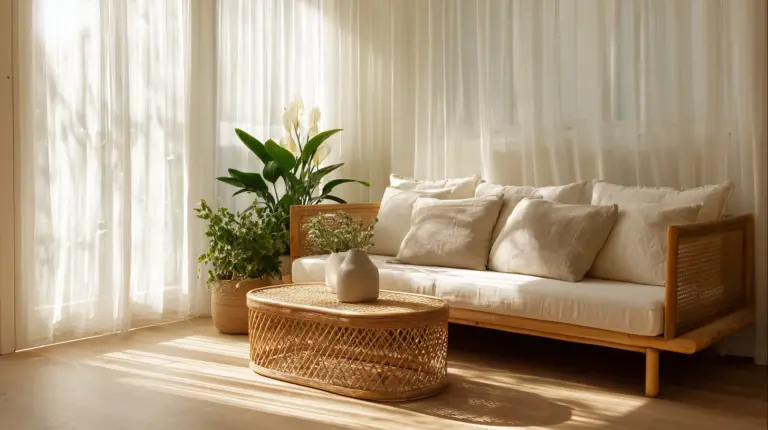
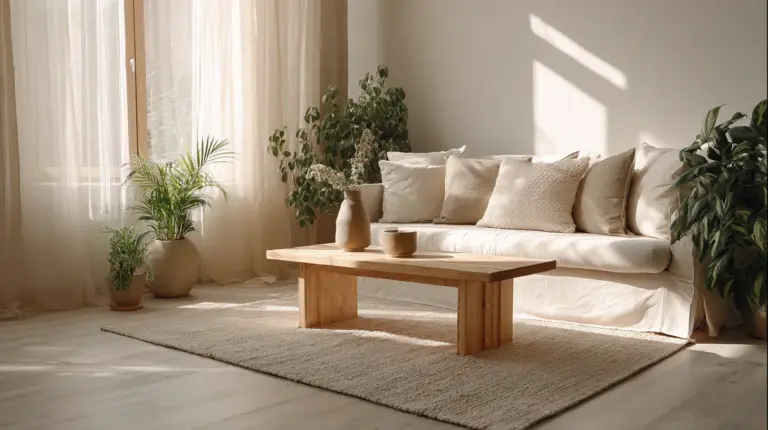
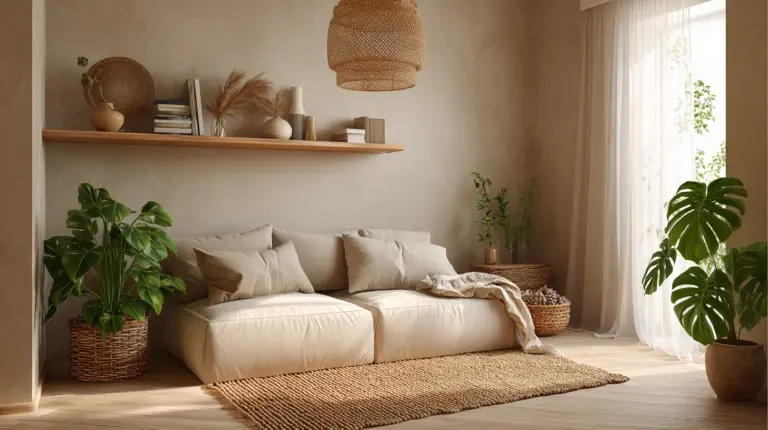
Think low-profile furniture in warm wood tones. Linen throws draped over organic cotton cushions. A ceramic vase holding a single dried stem. Clean lines softened by natural materials.
It’s functional without feeling clinical. Serene without being cold.
The Foundation: Neutral Palette Meets Natural Materials
Your color story starts with earth and sky.
Soft beiges, warm taupes, muted grays, and creamy whites form the base. These aren’t sterile shades—they’re living tones that shift with the light. Add depth with charcoal accents, black metal fixtures, or deep walnut wood.
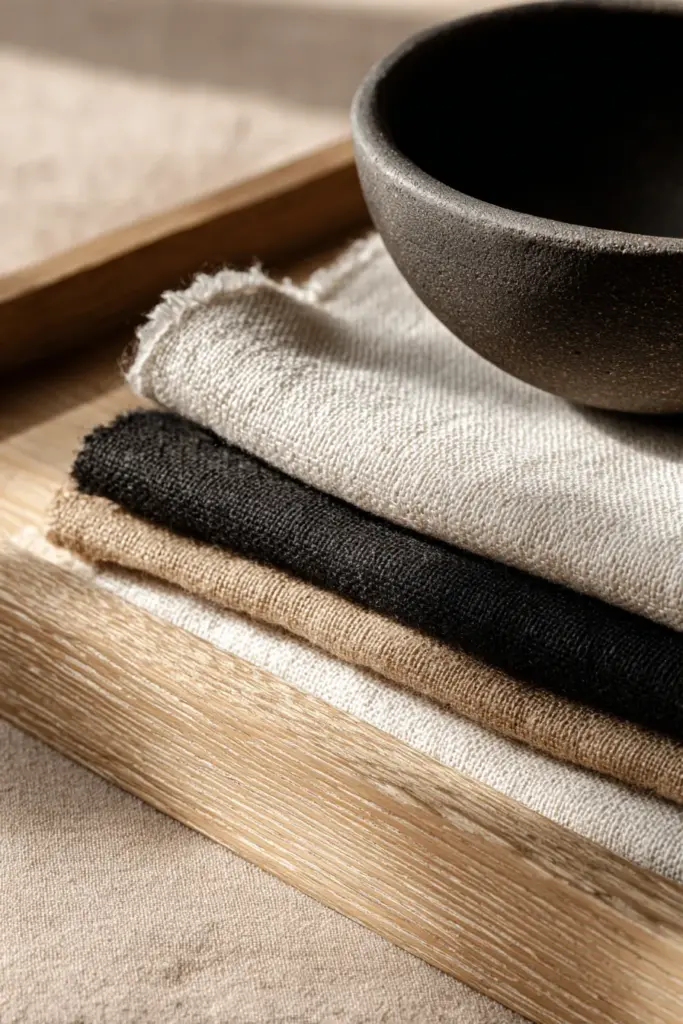
Materials anchor the palette. Light oak, rattan, bamboo, linen, cotton, wool, stone, clay. Each brings its own quiet texture.
In small spaces, this neutral foundation creates visual flow. Your eye travels smoothly from wall to furniture to floor, making the room feel larger and more cohesive.
Avoid heavy patterns or loud colors. If you crave contrast, let it come from texture—a chunky knit blanket against smooth leather, rough-hewn wood beside soft fabric.
Furniture That Breathes: Low-Profile and Multifunctional
In a cozy small Japandi living room, furniture should feel grounded and purposeful.
Choose low-profile pieces: sofas with slim arms, platform coffee tables, leggy side tables that don’t block sightlines. This keeps the space open and airy.
Multifunctional furniture is your secret weapon. A sleek storage bench doubles as seating. A nesting table set expands when needed, tucks away when not. Floating shelves replace bulky bookcases.
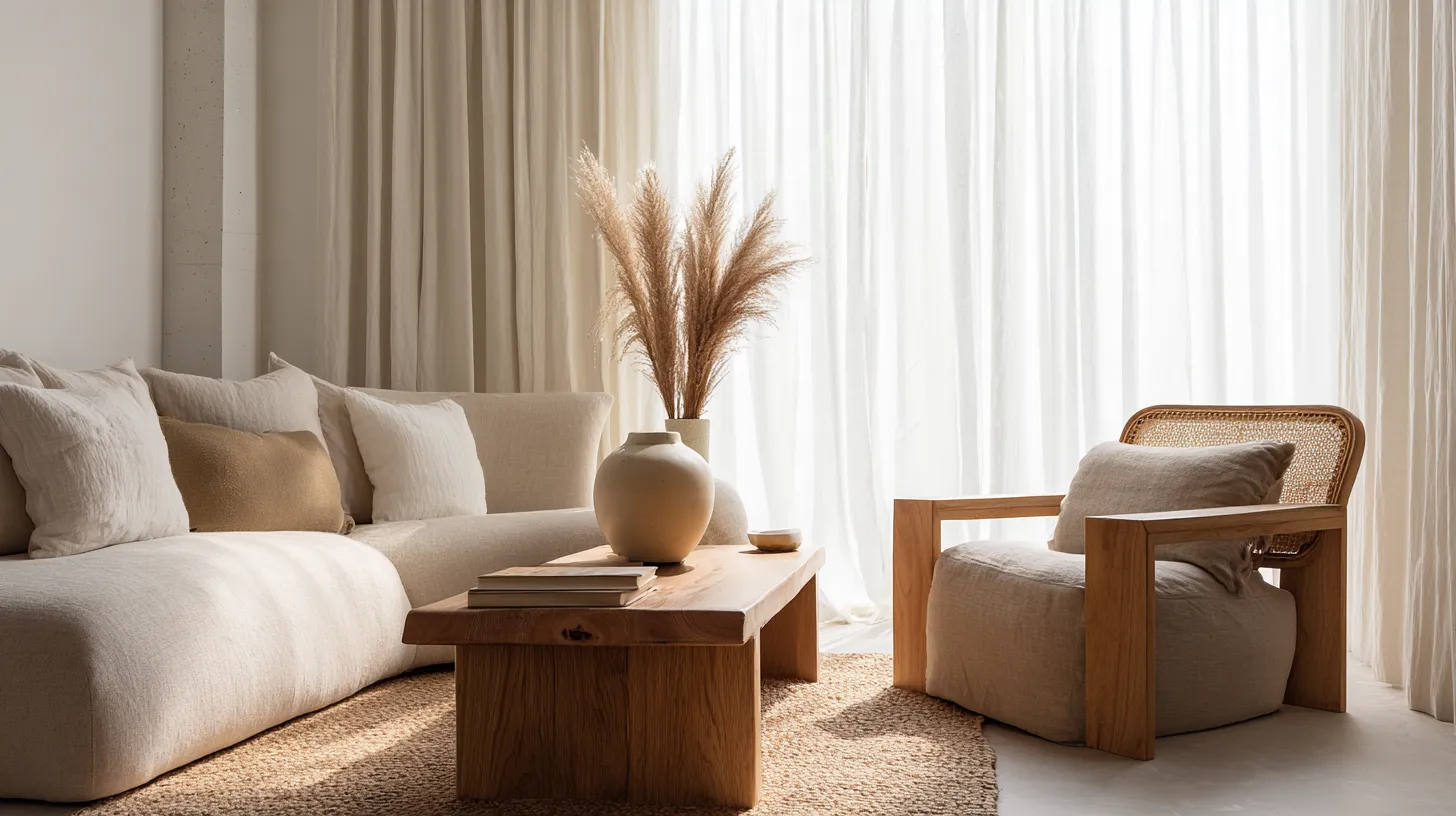
Look for clean lines and natural finishes. A light oak media console with hidden storage. A rattan armchair with linen cushions. A minimalist sofa in oatmeal fabric that grounds the room without overwhelming it.
Philippine-specific tip: Consider local woods like narra or molave for custom pieces. They’re durable in humid climates and add warm, rich tones that align perfectly with Japandi aesthetics.
Scale matters in small rooms. Measure twice, choose once. Leave breathing room around each piece.
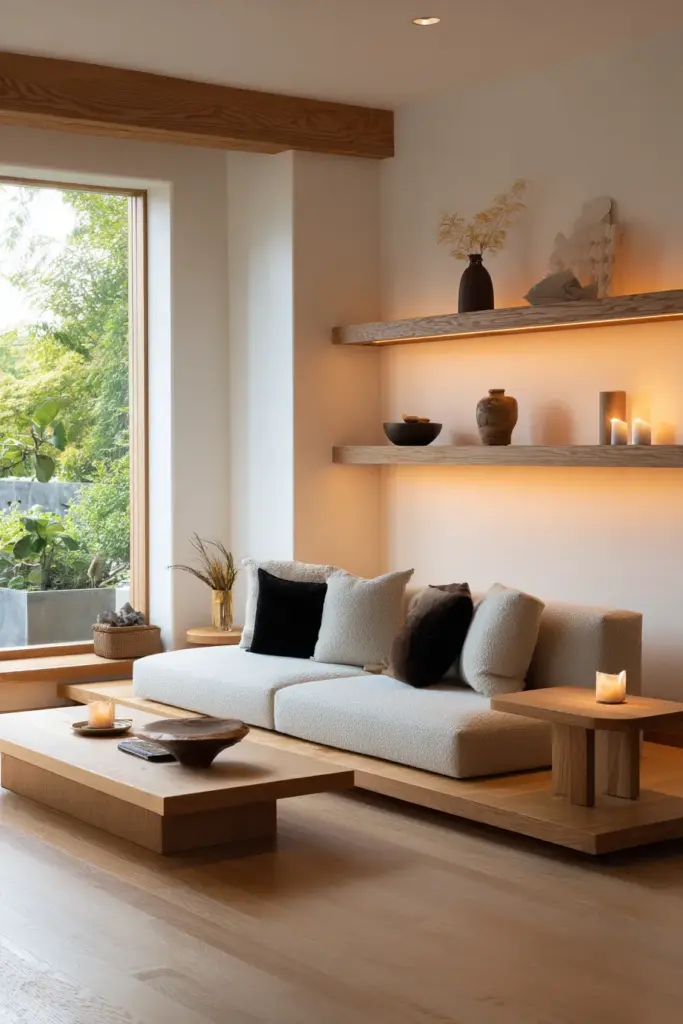
Creating Warmth in Minimalist Spaces
Minimalism and coziness aren’t opposites—they’re partners when you layer thoughtfully.
The key is intentional warmth: carefully chosen textiles, ambient lighting, and personal touches that invite you to settle in.
Layered Textures: The Soul of Cozy Japandi
Texture is how minimalism becomes livable.
Start with your sofa: drape a chunky knit throw in cream or soft gray over one arm. Add linen cushions in varying sizes—18″, 20″, 22″—mixing solids and subtle weaves.
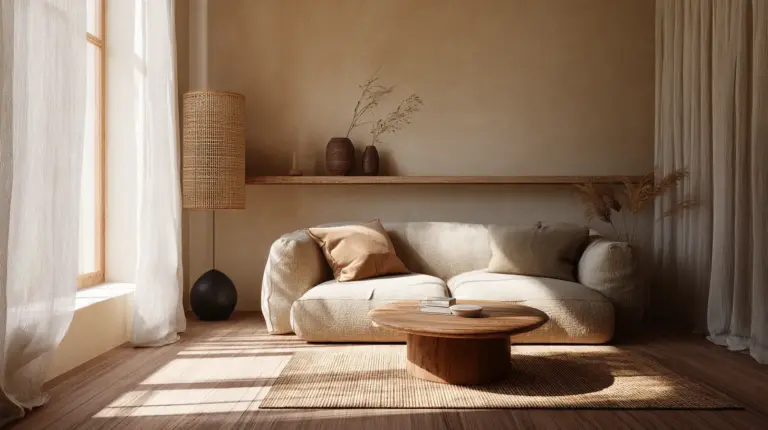
Underfoot, a natural fiber rug grounds the seating area. Jute, sisal, or wool in neutral tones add warmth without visual clutter. In humid Philippine climates, opt for low-pile or flat-weave rugs that resist moisture and are easier to maintain.
Layer in softer elements: a cotton floor cushion for casual seating, a wool pouf as a footrest, sheer linen curtains that filter tropical sunlight into soft, diffused glow.
Each texture should feel good to touch. Run your hand over them when shopping. If it doesn’t make you want to curl up, keep looking.
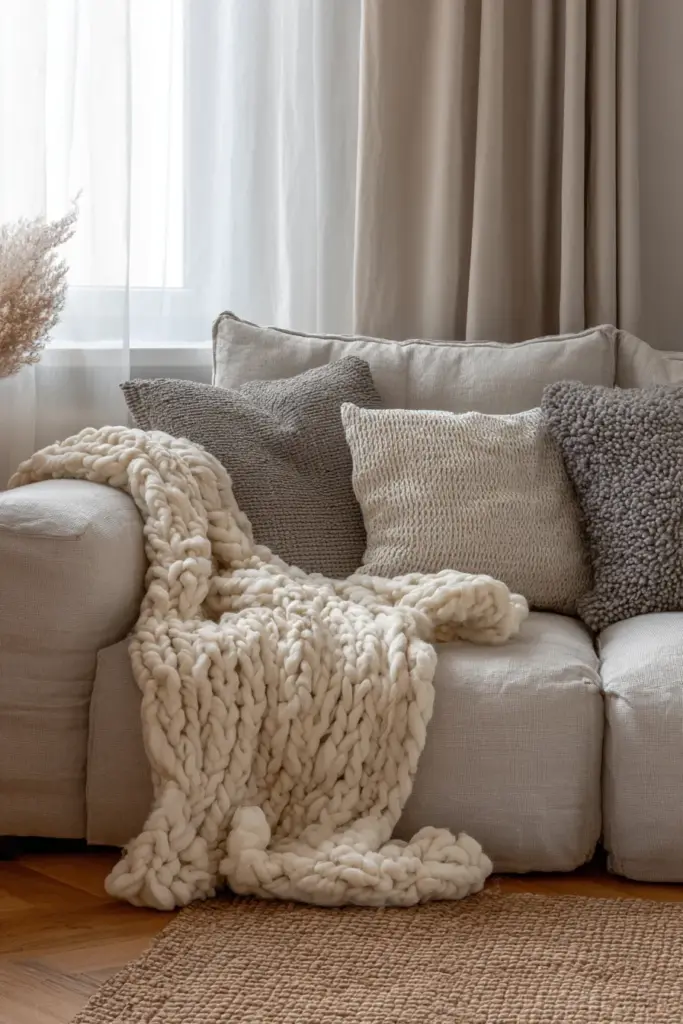
Lighting: Soft, Diffused, and Deeply Inviting
Harsh overhead lighting destroys Japandi’s calm. You want light that pools and glows.
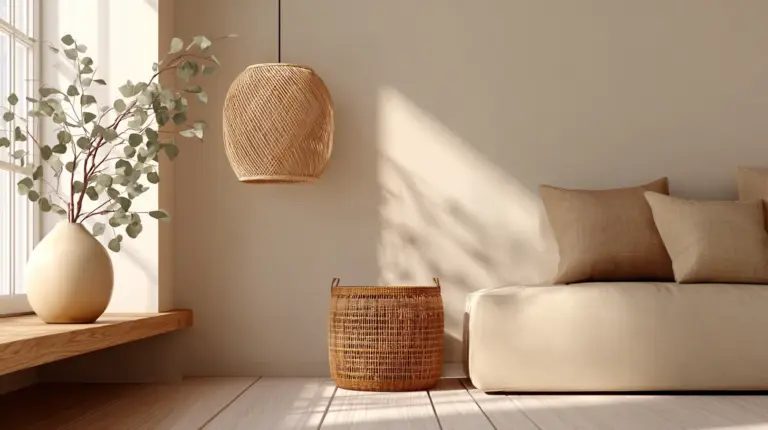
Ambient lighting: Rice paper pendant lamps or fabric drum shades cast gentle, even light. Position them off-center or over specific zones rather than directly overhead.
Task lighting: Adjustable floor lamps with linen or bamboo shades beside reading chairs. Wall-mounted swing-arm sconces near the sofa for flexible light.
Accent lighting: LED strip lights behind floating shelves or under furniture create soft ambient glow. Warm white (2700-3000K) mimics candlelight.
Candles: The ultimate hygge element. Group pillar candles in ceramic holders on your coffee table. The flicker adds life and warmth that no bulb can replicate.
For budget-conscious makeovers, affordable LED strips from Shopee or Lazada (PHP 200-500) can transform your space. Look for dimmable options to adjust the mood.
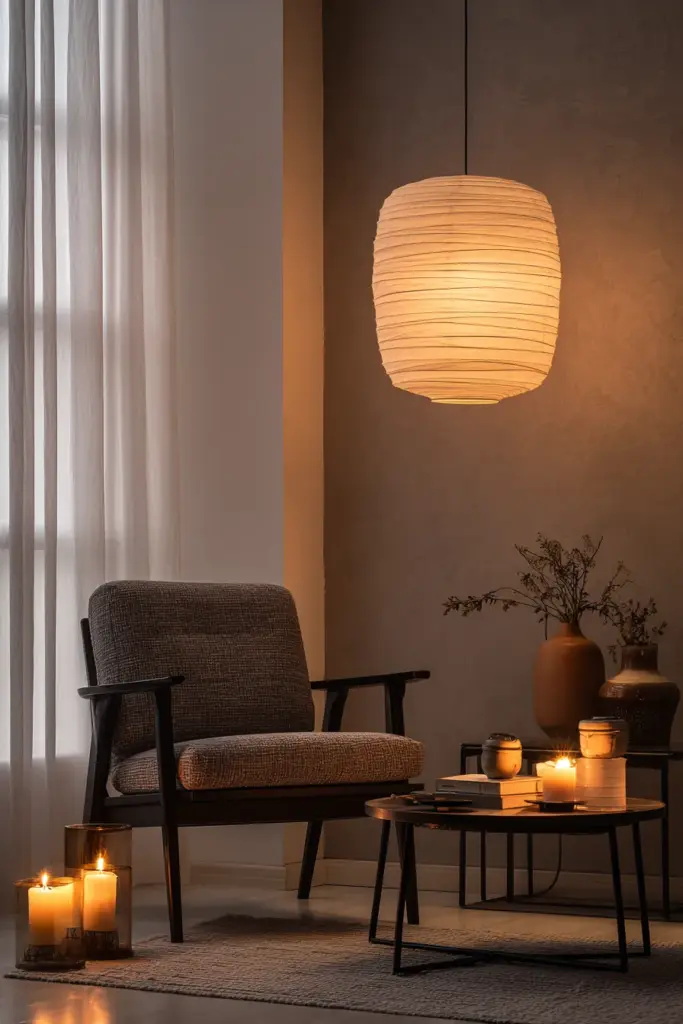
Small-Space Japandi Strategies That Actually Work
Designing a cozy small Japandi living room requires smart spatial choices and visual tricks.
Vertical Thinking: Use Your Walls
When floor space is limited, look up.
Floating shelves in light wood display minimal décor—a small plant, a handmade bowl, a single art print. Keep them sparse; negative space is intentional here.
Wall-mounted planters bring nature indoors without crowding surfaces. Choose trailing plants like pothos or philodendron that soften vertical lines.
Floor-to-ceiling sheer curtains make ceilings feel higher. Install rods close to the ceiling, let fabric pool slightly on the floor.
Vertical storage cabinets with clean façades hide clutter while maintaining the minimalist aesthetic. Choose door-free shelving for displaying beautiful objects, closed cabinets for everything else.
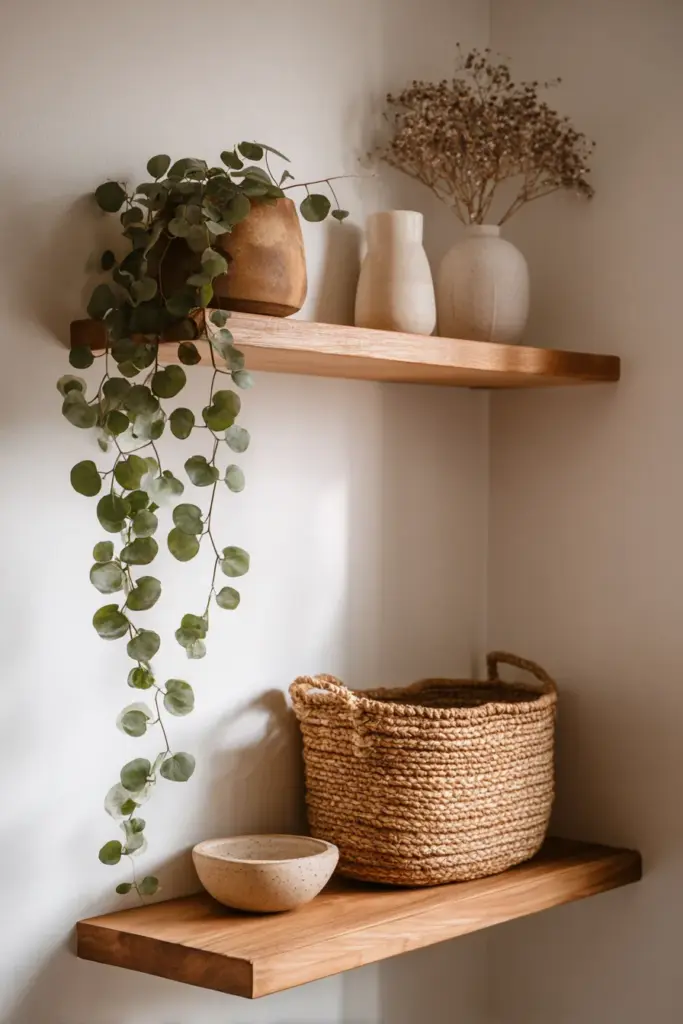
The Edit: What to Keep, What to Release
Japandi thrives on restraint.
Each item in your small living room should earn its place through beauty, function, or both. A handwoven basket that holds throws. A ceramic vase that brings joy. A coffee table book you actually read.
Clear surfaces feel calming. Keep your coffee table minimal: perhaps a small tray with a candle and one decorative object. That’s it.
Apply the “one in, one out” rule. New cushion? Donate an old one. This maintains balance and prevents creep.
Declutter zones: Use hidden storage ruthlessly. Baskets under console tables. Storage ottomans. Closed cabinets with no visible hardware.
Smart Furniture Placement for Flow
In rooms under 30 square meters, furniture arrangement makes or breaks the space.
Float your sofa slightly away from the wall if possible—even 10-15 cm creates depth and makes the room feel larger. Anchor it with a rug that extends beyond the seating area.
Create conversation zones with furniture facing each other, but keep pathways clear (at least 60-70 cm wide).
Use mirrors strategically. A large round mirror opposite a window reflects natural light and visually doubles space. Choose simple wood or black metal frames that align with Japandi aesthetics.
Avoid blocking windows or natural light sources with tall furniture. Low-profile pieces preserve sightlines and keep energy flowing.
Bringing Nature Indoors: Plants and Organic Elements
Nature isn’t decoration in Japandi—it’s essential.
The Right Plants for Small Spaces
Choose plants with sculptural simplicity and low maintenance.
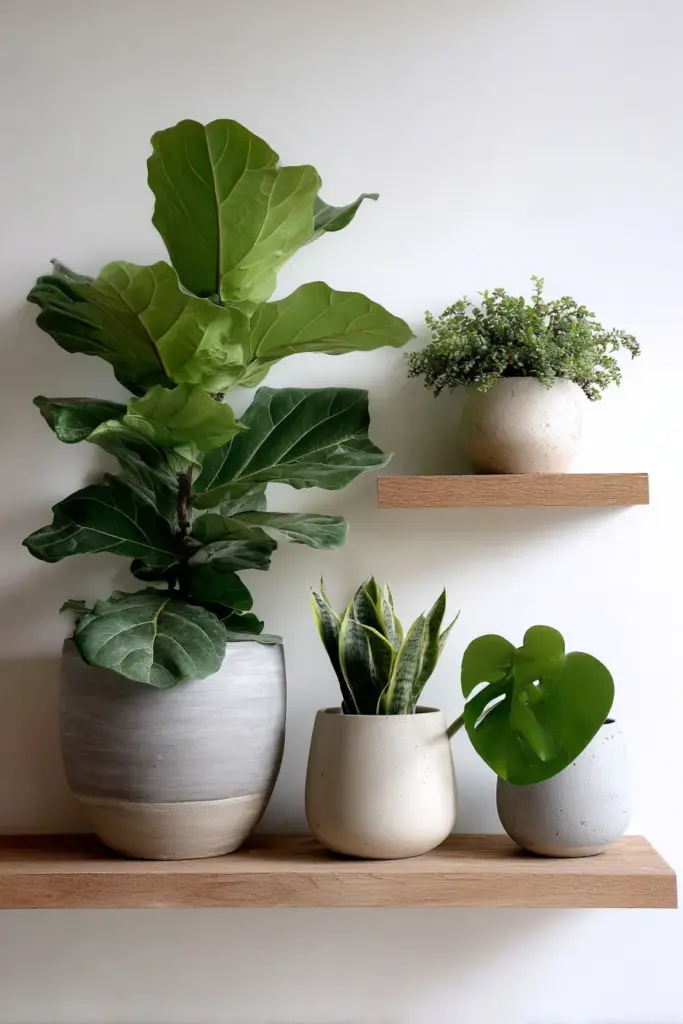
Statement plants: A single fiddle leaf fig in a ceramic planter. Snake plant in a minimalist concrete pot. Monstera deliciosa for tropical climates.
Smaller accents: Pothos trailing from floating shelves. Small succulents in handmade clay vessels. Air plants in geometric holders.
For humid Silang climate, spider plants, ZZ plants, and peace lilies thrive with minimal fuss. They also help purify indoor air in compact spaces.
Group plants in odd numbers (1, 3, 5) for visual balance. Vary heights but keep containers within the neutral palette—earth tones, matte finishes, natural materials.
Organic Touches That Ground Your Space
Wood tones: Mix light and medium woods. A teak coffee table with oak shelving creates depth without chaos.
Stone and clay: A marble tray on the coffee table. Ceramic bowls for keys. A small stone sculpture.
Natural fibers: Rattan baskets for storage. Bamboo blinds for privacy. Woven wall hangings (kept minimal).
Dried botanicals: Pampas grass in a floor vase. Dried eucalyptus stems. A single branch in a tall ceramic holder.
These elements connect you to the natural world, even in urban Manila apartments. They’re grounding, calming, and deeply Japandi.
Budget-Friendly Japandi for Philippine Homes
Creating this aesthetic doesn’t require premium imports.
Under PHP 50,000: A Complete Small Living Room
| Item | Estimated Cost (PHP) | Where to Find |
|---|---|---|
| Low-profile sofa (local fabric) | 15,000-20,000 | Mandaue Foam, local carpenters |
| Coffee table (wood/rattan) | 3,000-5,000 | Shopee, Lazada, Blims |
| Rug (jute/cotton, 160x230cm) | 2,500-4,000 | Dapitan Arcade, online shops |
| Cushions & throws (4-5 pcs) | 2,000-3,500 | SM Home, Wilcon Depot |
| Lighting (2-3 fixtures) | 3,000-5,000 | True Value, ACE Hardware |
| Storage baskets (3 pcs) | 1,500-2,500 | Divisoria, Dapitan |
| Plants & planters (5 pcs) | 1,500-3,000 | Local nurseries, online |
| Floating shelves (2-3 pcs) | 1,500-2,500 | Wilcon, DIY |
| Décor & finishing touches | 3,000-5,000 | Thrift shops, local artisans |
| Total | 33,000-50,500 |
DIY Japandi Touches
Custom floating shelves: Use light plywood (PHP 400-600 per sheet) and simple brackets. Sand, stain, seal.
Fabric dye transformation: Turn bright cushions neutral with beige or gray fabric dye (PHP 100-200 per pack).
Handmade planters: Use concrete mix (PHP 150-300) and silicone molds for minimalist pots.
Macramé plant hangers: YouTube tutorials and cotton rope (PHP 200-400) create vertical greenery.
Local craftspeople can custom-build low-profile furniture at fraction of retail costs. Communicate your vision with reference photos and measurements.
Maintaining Your Cozy Japandi Living Room
Living in tropical humidity requires specific care strategies.
Climate Considerations for Philippine Homes
Wood furniture: Apply wood conditioner every 3-4 months to prevent cracking. Use dehumidifiers during rainy season if needed.
Textiles: Choose washable covers. Air out cushions and throws monthly. Vacuum rugs weekly to prevent moisture buildup.
Plants: Don’t overwater. Ensure good drainage. Wipe leaves monthly to prevent dust accumulation.
Metal accents: Wipe down regularly to prevent rust, especially near windows or in high-humidity areas.
The Weekly Reset
Every Sunday, take 15 minutes:
- Clear surfaces completely
- Fluff cushions, refold throws
- Wipe down wood and metal surfaces
- Water plants as needed
- Light a candle, sit in your space
This ritual maintains order and reconnects you with your intentional design.
Key Takeaways: Your Cozy Small Japandi Checklist
- Color palette: Stick to neutrals—beige, taupe, gray, cream, black accents
- Materials: Natural only—wood, rattan, linen, cotton, stone, clay
- Furniture: Low-profile, multifunctional, clean-lined pieces in warm wood tones
- Lighting: Layered and soft—pendants, floor lamps, LED strips, candles
- Texture: Layer intentionally—knits, weaves, natural fibers for warmth
- Plants: Choose sculptural, low-maintenance varieties in neutral planters
- Storage: Hidden and minimal—baskets, closed cabinets, floating shelves
- Décor: Edit ruthlessly—display only what you love and use
- Maintenance: Weekly resets, climate-appropriate care for tropical humidity
Closing Thoughts: Your Sanctuary Awaits
A cozy small Japandi living room isn’t about following rules—it’s about creating space that holds you gently.
It’s the soft glow of candlelight after a long day. The weight of a linen throw across your lap. The quiet beauty of a single stem in perfect light.
In small spaces, every choice becomes more meaningful. Every texture more felt. Every moment more intentional.
This is your invitation to slow down, to breathe, to create a home that feels like exhaling.
Welcome home to your serene sanctuary. It’s been waiting for you.
Frequently Asked Questions
What is Japandi style in living rooms?
A: Japandi blends Scandinavian hygge (warmth, coziness) with Japanese wabi-sabi (simplicity, natural beauty). It features neutral palettes, natural materials like wood and linen, low-profile furniture, and minimalist décor that still feels inviting and warm.
How can I make a small Japandi living room feel cozy without clutter?
A: Layer textures thoughtfully—knit throws, linen cushions, natural fiber rugs—while keeping surfaces clear. Use soft, diffused lighting from multiple sources. Add warmth through wood tones and a few carefully chosen plants. Quality over quantity is key.
What furniture works best for small Japandi living rooms?
A: Choose low-profile pieces like platform sofas, slim-arm seating, and leggy tables that don’t block sightlines. Multifunctional furniture (storage ottomans, nesting tables) maximizes space. Look for clean lines in light oak, walnut, or rattan with neutral upholstery.
What’s the ideal color palette for a cozy Japandi space?
A: Build on warm neutrals: soft beige, taupe, cream, warm gray, and off-white. Add depth with charcoal, black metal accents, or deep wood tones. Avoid bright colors; let texture and natural materials create visual interest instead.
How do I add warmth to minimalist Japandi design?
A: Layer natural textiles (linen, cotton, wool), use warm lighting (2700-3000K bulbs, candles), incorporate varied wood tones, add living plants, and include handmade or organic elements like ceramic vases or woven baskets. Minimalism feels warm when materials are tactile and lighting is soft.