
Table of Contents
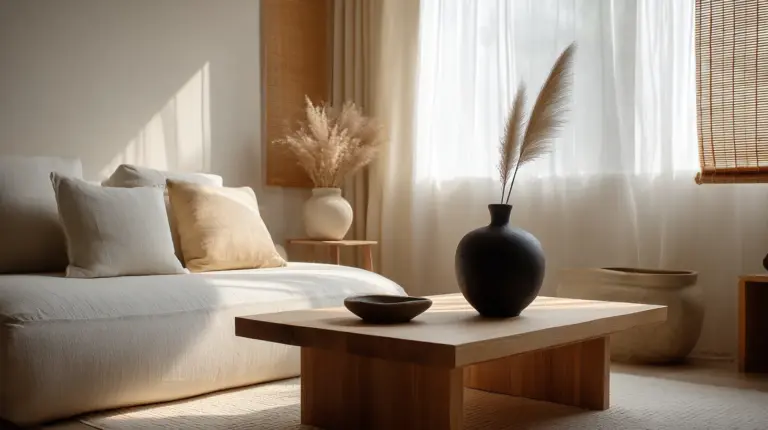
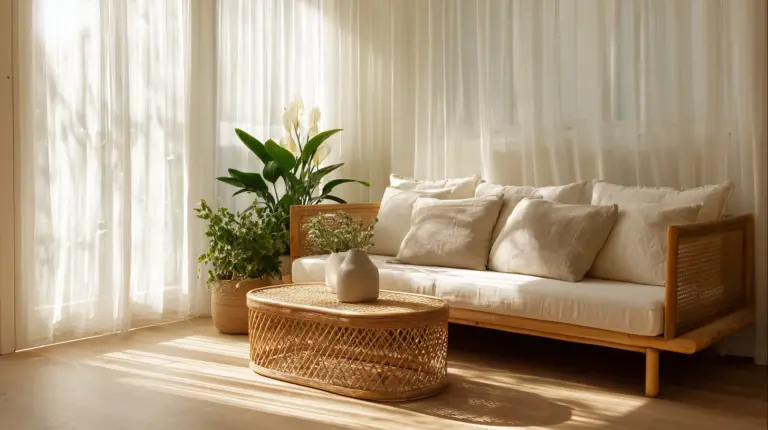
There’s something quietly transformative about a small Japandi living room. It doesn’t shout. It doesn’t overwhelm. Instead, it whispers—through the grain of natural wood, the softness of linen, the way afternoon light pools across a low-profile sofa.
Japandi is where Scandinavian hygge meets Japanese wabi-sabi. It’s warmth wrapped in restraint. And in small spaces, this design philosophy becomes more than aesthetic—it becomes essential.
When every square meter matters, Japandi teaches us to choose with intention. To let negative space breathe. To find beauty not in excess, but in the perfect placement of a single ceramic vase or the quiet strength of a handwoven rattan screen.
This guide will walk you through creating a small Japandi living room that feels expansive, grounded, and wholly yours—no matter your budget or square footage.
Understanding Japandi: The Soul Behind the Style
Japandi isn’t just a design trend—it’s a lifestyle philosophy born from two cultures that honor simplicity, craftsmanship, and connection to nature.
The Scandinavian side brings hygge: cozy textiles, soft lighting, and spaces that invite you to linger with a warm cup of tea. The Japanese influence offers wabi-sabi: the acceptance of imperfection, the celebration of natural materials aging gracefully, and the power of emptiness as design.
In small living rooms, this fusion becomes your greatest ally. Every piece serves a purpose. Every texture tells a story. And every corner invites calm rather than clutter.
The Japandi Color Palette for Small Spaces
Start with Nature’s Neutrals
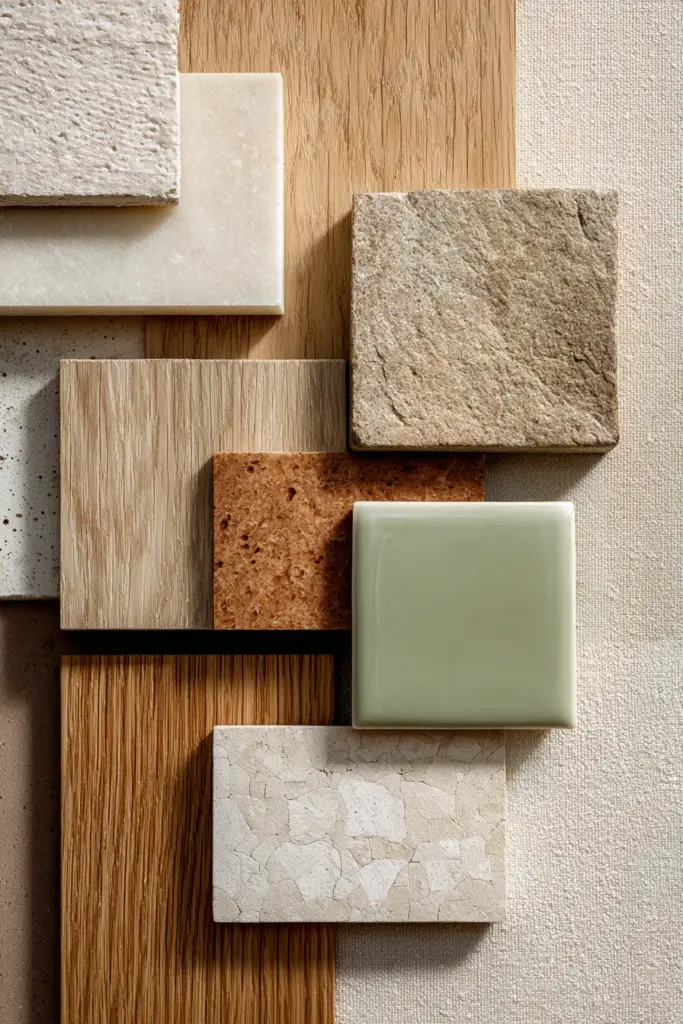
Your foundation is earth itself. Think warm whites like eggshell and cream, soft greys that shift with the light, and taupes that ground the room without weighing it down.
These aren’t cold neutrals. They’re the color of sand at dawn, of fog lifting over rice fields, of unbleached linen drying in sunlight.
Layer in natural wood tones—oak, ash, walnut—through furniture and accents. The grain becomes your pattern, the knots your artwork.
Add Depth Through Muted Accents
Introduce subtle color through nature’s own palette: sage green from tea leaves, dusty blue from evening skies, charcoal from river stones.
These accents appear in throw pillows, a single ceramic piece, or the binding of books on a shelf. They’re whispers, not statements.
In a 12-square-meter living room, this restrained palette makes walls recede and ceilings lift. Light bounces between surfaces, multiplying the sense of space.
Color Strategy Checklist:
- Base: warm white or soft grey walls
- Wood tones: light to medium (oak, bamboo, ash)
- Accents: 1-2 muted earth tones maximum
- Avoid: high-contrast patterns, saturated colors
Furniture Selection: Low, Light, and Purposeful
Choose Low-Profile Seating
Japandi furniture sits close to the ground, creating visual airflow above and making ceilings feel higher.
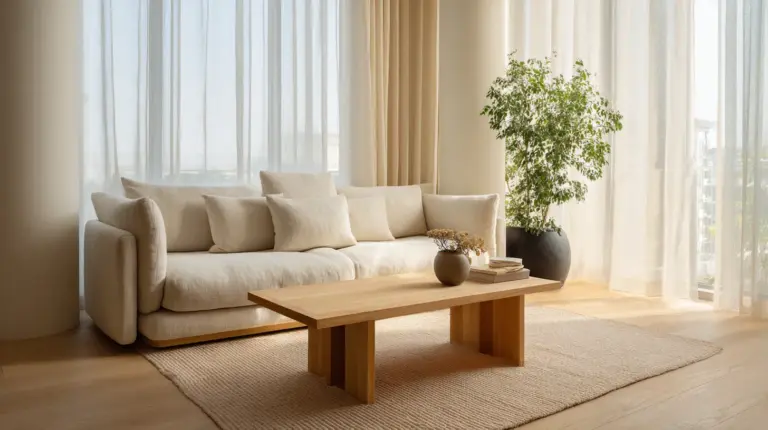
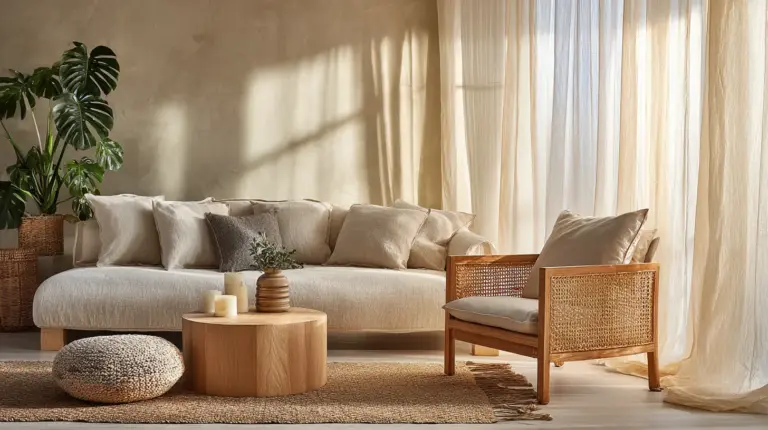
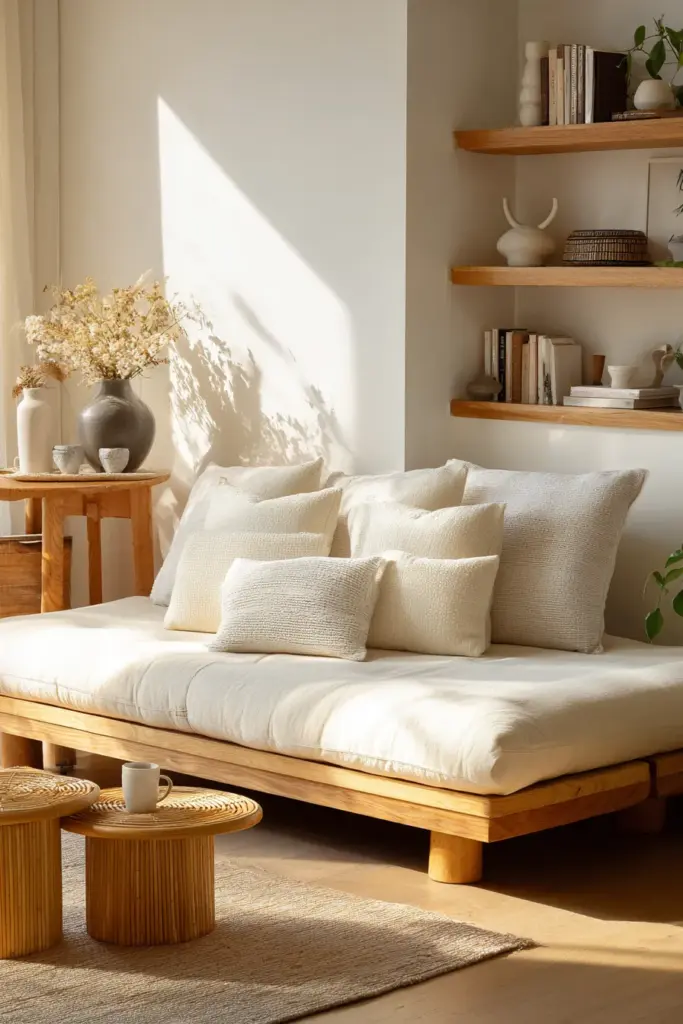
A low-slung sofa in natural linen or a platform daybed with clean lines becomes your anchor. Pair it with floor cushions in neutral tones for flexible seating that tucks away when not needed.
Look for pieces with exposed wooden legs—they allow light to pass underneath, preventing the heaviness that overstuffed furniture brings to small rooms.
Embrace Multifunctional Design
Every piece should earn its place through function, not just form.
A coffee table with hidden storage keeps remotes and magazines from cluttering surfaces. A wooden bench serves as seating, a side table, or a display for a trailing pothos plant.
Nesting tables in light wood slide apart when you need surfaces, then disappear into each other when you don’t. Folding rattan screens divide space without permanent walls—beautiful and practical.
Smart Storage That Disappears
Storage in Japandi spaces is hidden or beautiful enough to double as decor.
Floating shelves in light oak display three carefully chosen objects: a ceramic bowl, a small plant, a single art book. Wall-mounted cabinets with smooth, handleless doors maintain clean lines while concealing clutter.
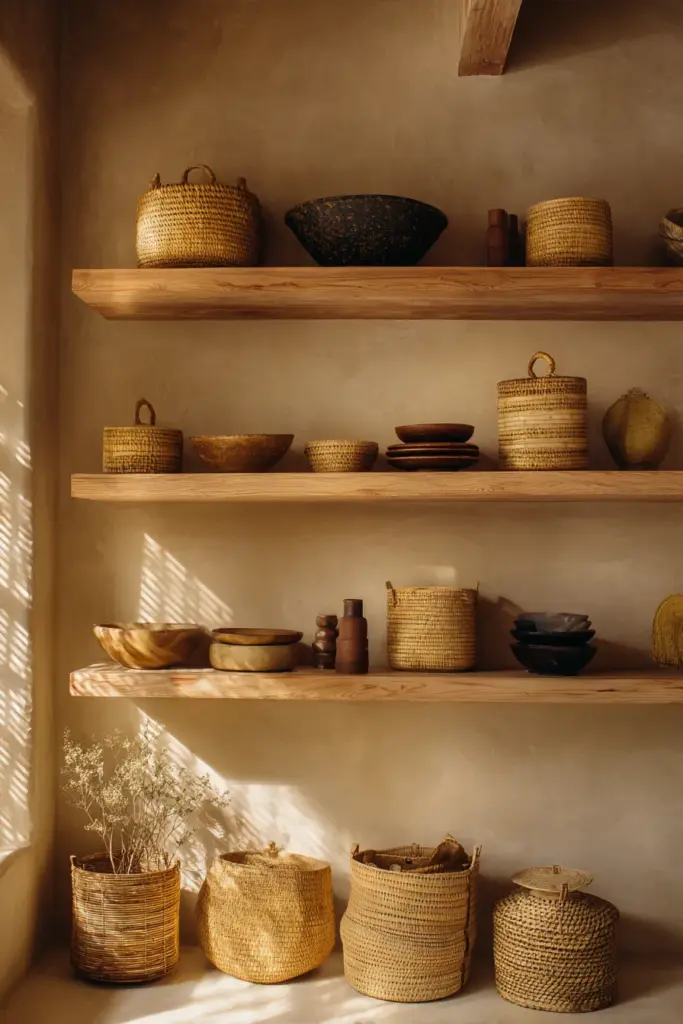
In the Philippines, locally sourced rattan baskets (₱800-2,000 from Calabarzon artisans) provide textural storage that feels organic, not industrial.
Furniture Essentials:
- Low sofa or daybed with wooden legs
- Coffee table with storage (15-20cm height ideal)
- 2-3 nesting tables or modular pieces
- Floating shelves (2-3 maximum)
- Rattan or woven storage baskets
Lighting: Layering Warmth and Shadow
Honor Natural Light First
In Japandi design, daylight is sacred. Keep windows as unobstructed as possible.
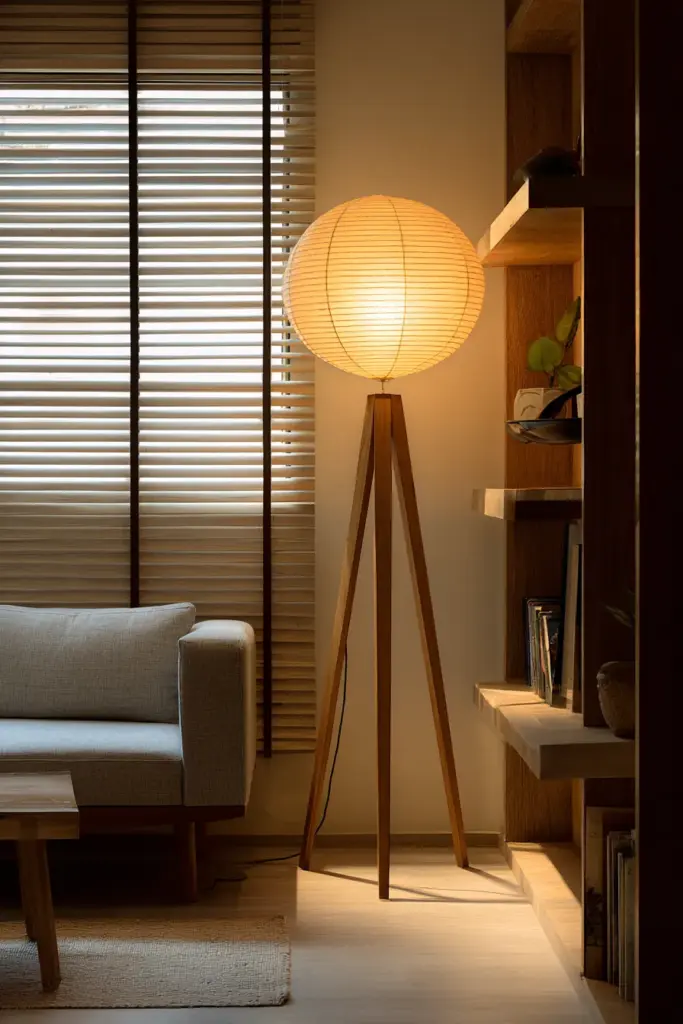
Choose sheer linen curtains in oatmeal or soft white—they filter harsh afternoon sun while letting morning light flood through. Or go with woven bamboo blinds that create beautiful shadow play across walls.
Position mirrors opposite windows to double natural light. A simple round mirror with a wooden frame reflects and expands without competing for attention.
Layer Ambient and Accent Lighting
As evening falls, transition to warm artificial light (2700K-3000K kelvin temperature).
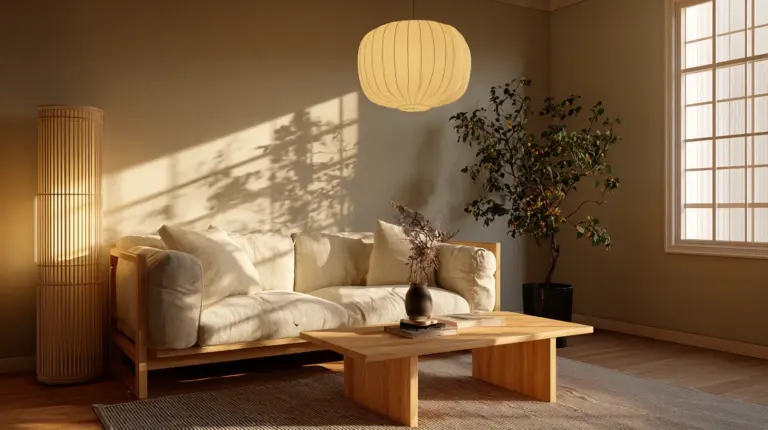
A rice paper pendant lamp casts soft, diffused light that eliminates harsh shadows. At ₱2,500-4,000, these fixtures bring authentic Japandi warmth to small spaces.
Add floor lamps with wooden tripod bases or sculptural ceramic table lamps in cream or charcoal. LED strip lighting (₱500-800) hidden behind floating shelves creates gentle ambient glow without taking physical space.
Create Zones with Light
In a compact room, lighting defines areas without walls.
A reading corner gets a dedicated floor lamp. The sofa area receives overhead pendant light. This layering makes 15 square meters feel like distinct yet connected spaces.
Lighting Formula:
- Primary: soft overhead (pendant or flush mount)
- Secondary: one floor lamp for reading zone
- Accent: LED strips behind shelves or under cabinets
- All bulbs: warm white 2700-3000K
- Avoid: harsh overhead fluorescents, multiple ceiling lights
Textures That Ground and Soothe
Japandi lives in the details you touch and feel.
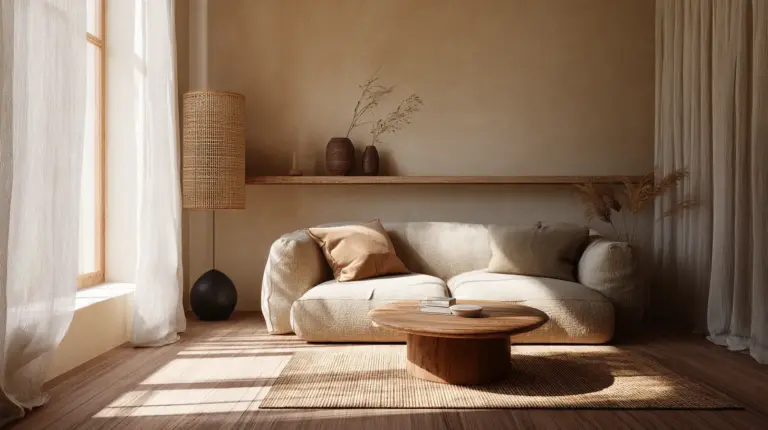
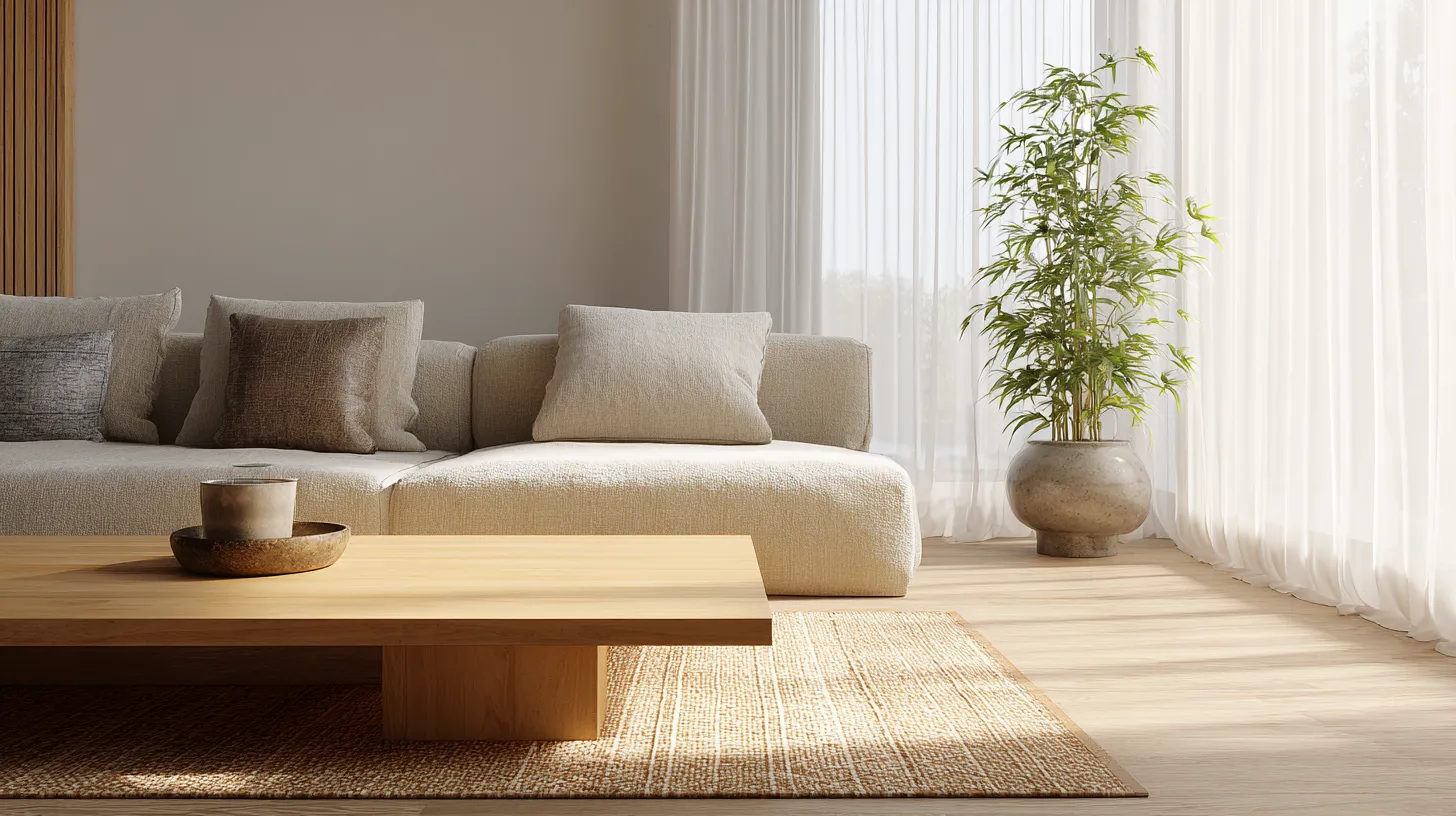
Layer a jute rug (160x230cm for small rooms) beneath a low coffee table. Its natural texture grounds the space while staying neutral enough to anchor varied furniture.
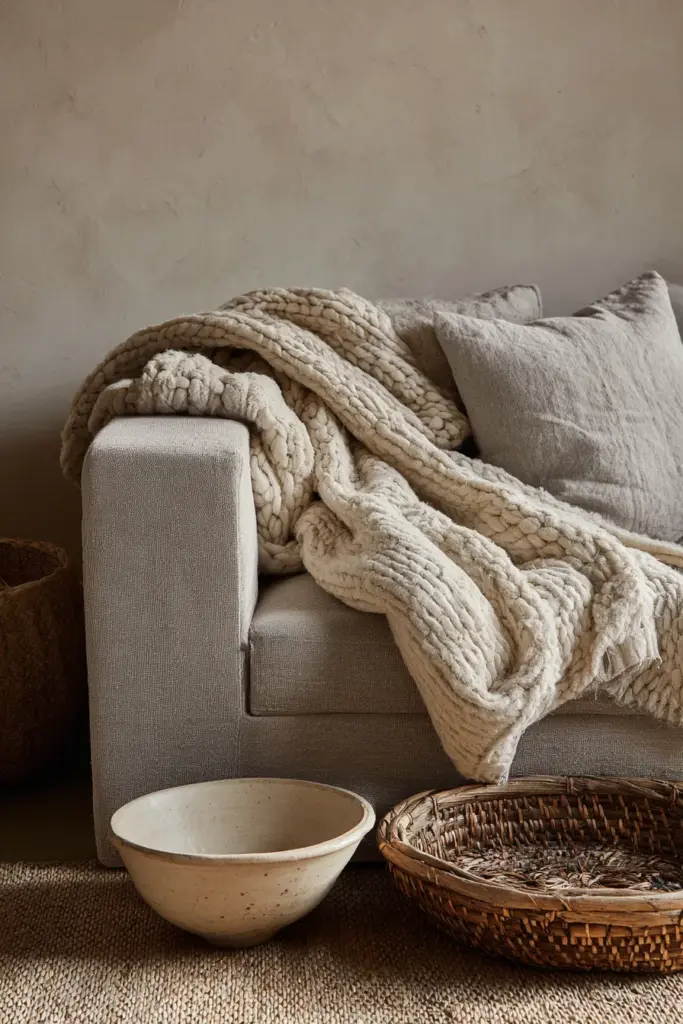
Drape a chunky knit throw in oatmeal or grey across your sofa—machine-washable cotton blends (₱1,500-3,000) offer Japandi texture with practical care.
Add linen cushions in varied sizes. Mix smooth weaves with slightly slubbed textures, all within your neutral palette. These layers create visual interest without pattern chaos.
Introduce one piece of woven texture: a rattan chair, a bamboo side table, or a macramé wall hanging. It’s your nod to handcraft and natural material.
Texture Layering Guide:
| Element | Material | Purpose |
|---|---|---|
| Rug | Jute, wool, or cotton | Grounds space, defines seating area |
| Sofa/Seating | Linen, cotton canvas | Main tactile experience |
| Throws | Chunky knit, waffle weave | Warmth, visual weight |
| Cushions | Linen, cotton | Layered softness |
| Accent | Rattan, bamboo, ceramic | Natural texture contrast |
The Art of Negative Space
In small Japandi rooms, emptiness isn’t lack—it’s luxury.
Leave walls mostly bare. One piece of artwork is enough: a simple line drawing, a botanical print, or a framed textile in natural fiber.
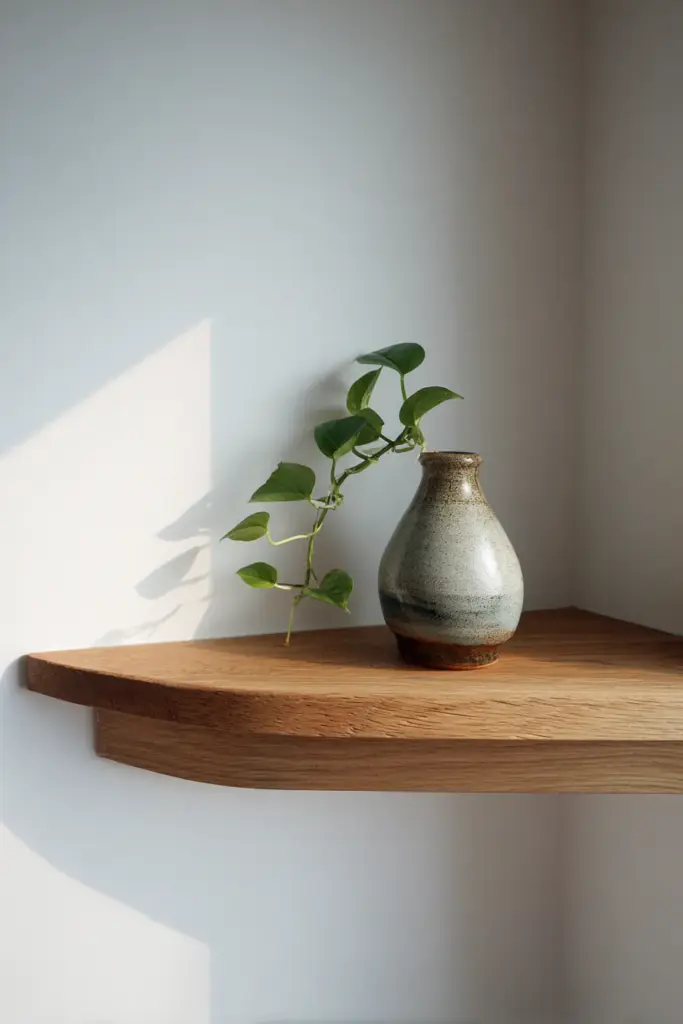
Clear your coffee table down to one small object—a ceramic dish, a small succulent, a hand-thrown mug. This restraint lets each item breathe and be truly seen.
Resist the urge to fill every corner. That empty space beside the window? It makes the room feel twice as large.
Budget-Friendly Japandi: DIY and Local Sourcing
Philippine-Specific Solutions
You don’t need Scandinavian imports to achieve Japandi beauty in Silang or anywhere in the Philippines.
Local rattan furniture from Calabarzon craftspeople (₱3,000-8,000 for chairs and tables) brings authentic natural texture at a fraction of imported costs.
Bamboo blinds from local markets (₱800-1,500) offer the same light-filtering quality as expensive linen curtains.
IKEA Hacks for Japandi Style
Transform affordable basics into Japandi pieces with simple updates.
Paint a basic IKEA shelf unit in warm white or soft sage using low-VOC paint (₱600-900 per liter). Replace industrial hardware with wooden or leather pulls (₱150-300 each).
A simple white IKEA sofa becomes Japandi with the addition of natural linen slipcovers (₱2,500-4,500) and neutral cushions.
DIY Projects That Transform
Create your own floating shelf from reclaimed wood planks (₱500-800 per shelf). Sand them smooth, apply natural oil finish, and mount with hidden brackets.
Upcycle glass jars into minimalist vases. Paint wooden boxes in neutral tones for stackable storage that looks intentional, not cluttered.
Budget Breakdown (15sqm Living Room):
- Seating: ₱15,000-25,000 (local rattan or basic sofa with covers)
- Coffee table: ₱3,000-6,000 (DIY or local wood)
- Lighting: ₱5,000-8,000 (pendant + floor lamp)
- Textiles: ₱5,000-8,000 (rug, cushions, throw)
- Storage: ₱3,000-5,000 (rattan baskets, DIY shelves)
- Total: ₱31,000-52,000
Living with Kids and Pets in Japandi Spaces
Practical Adaptations
Japandi and family life aren’t opposites—they just require thoughtful choices.
Choose performance fabrics that mimic linen’s texture but withstand spills: cotton-poly blends or treated natural fibers. These maintain the aesthetic while surviving daily life.
Modular storage becomes essential. Low open shelving with labeled rattan baskets lets children access toys while keeping the overall look cohesive.
Washable Everything
Invest in slipcovers and removable cushion covers. When everything can go in the wash, you maintain the pristine Japandi look without constant stress.
Jute rugs feel natural but trap pet hair. Consider flatweave cotton rugs (₱2,500-5,000) that vacuum easily and machine wash when needed.
Sustainable Japandi: Materials That Last
Both Scandinavian and Japanese design traditions honor longevity over trends.
Choose solid wood over particle board. Oak and bamboo furniture lasts decades and develops beautiful patina with age—true wabi-sabi.
Look for low-VOC paints and finishes (Benjamin Moore Eco Spec, available in Manila at ₱1,800-2,500/gallon). They’re healthier for small spaces and better for the environment.
Natural materials like rattan, jute, and linen biodegrade at end of life. They’re the opposite of fast furniture that ends in landfills.
Material Longevity Guide:
- Oak furniture: 50+ years
- Bamboo pieces: 20-30 years
- Quality linen textiles: 15-20 years
- Rattan/wicker: 10-15 years indoors
- Jute rugs: 5-10 years with care
Layout Strategies for Maximum Flow
Create Pathways
Even in 10-12 square meters, maintain clear walking paths at least 60cm wide.
Float your sofa away from the wall if possible—even 20cm creates depth and allows air circulation. Position it perpendicular to the longest wall to make the room feel wider.
Use Corners Wisely
Corners are goldmines in small Japandi spaces. A tall plant in a ceramic pot draws eyes upward. A ladder shelf in light wood provides vertical storage without bulk.
The 60-30-10 Rule
This principle guides Japandi layout: 60% open floor space, 30% furniture, 10% decor. It’s the formula for rooms that feel spacious rather than cramped.
Floor Plan Tips (12-15sqm Room):
- Sofa: along longest wall, 50-70cm from wall
- Coffee table: 40-50cm from sofa front
- Side table: nestled beside sofa arm
- Floor lamp: corner behind seating
- Open space: center of room for flow
Bringing Nature Inside
Japandi connects interior to exterior through intentional greenery.
Choose low-maintenance plants that suit low-light conditions: pothos, snake plants, peace lilies. Their organic shapes soften hard edges.
Display plants in simple ceramic pots—terracotta, matte white, or soft grey. Three plants maximum in a small room: one floor plant, one on a shelf, one on a side table.
A small bonsai or carefully pruned jade plant becomes a living sculpture—meditation and decor in one.
Essential Japandi Living Room Checklist
Foundation Elements:
- Neutral wall color (warm white, soft grey)
- Natural wood flooring or area rug
- Sheer window treatments or bamboo blinds
Furniture Core:
- Low-profile sofa or seating
- Multifunctional coffee table with storage
- 1-2 nesting or side tables
- Floating shelves or minimal bookcase
Lighting Layers:
- Soft overhead fixture (rice paper pendant ideal)
- One floor or table lamp
- Optional LED accent lighting
Textiles & Texture:
- Natural fiber rug (jute, wool, cotton)
- Linen or cotton cushions (4-6)
- One throw blanket
- Organic curtains or blinds
Living Touches:
- 2-3 plants in simple pots
- 1-2 decorative objects (ceramic, wood)
- Optional artwork (one piece maximum)
Hidden Storage:
- Rattan baskets or woven bins
- Closed cabinets or concealed shelving
Conclusion: Your Sanctuary Awaits
A small Japandi living room isn’t about what you add—it’s about what you choose to keep.
Every piece matters. Every texture soothes. Every empty space allows you to breathe deeper, to notice the way morning light touches your woven rug, to actually taste your tea instead of scrolling past the moment.
This is design that holds you gently. That welcomes you home after chaotic days. That proves you don’t need more square meters—just more intention.
Start small. Choose one natural element. Clear one surface. Let one ray of light guide your arrangement.
Your sanctuary is already here, waiting beneath the clutter. Japandi simply helps you see it.
Frequently Asked Questions
What is Japandi style in living room?
Japandi blends Scandinavian hygge (cozy comfort) with Japanese wabi-sabi (imperfect beauty). It features neutral colors, natural materials like wood and linen, low-profile furniture, and minimalist design. The style emphasizes functional simplicity, negative space, and connection to nature—perfect for creating calm, uncluttered living spaces.
How to create a Japandi living room on a budget?
Start with neutral paint (₱600-900/liter), add local rattan furniture from Philippine craftspeople (₱3,000-8,000), and use affordable jute rugs (₱2,000-4,000). DIY floating shelves from reclaimed wood (₱500-800 each), hack basic furniture with linen slipcovers, and source bamboo blinds locally (₱800-1,500). Focus on fewer, quality pieces rather than filling space.
What furniture is best for Japandi living room?
Choose low-profile sofas or daybeds with exposed wooden legs, multifunctional coffee tables with storage, and nesting tables in light wood. Prioritize pieces that serve multiple purposes—benches that double as tables, storage ottomans, and modular seating. Look for clean lines, natural materials (oak, bamboo, rattan), and furniture that maintains visual airflow.
What colors are best for Japandi living room?
Stick to warm whites, soft greys, beige, and taupe as your base. Layer in natural wood tones from light to medium (oak, ash, bamboo). Add 1-2 muted accent colors from nature: sage green, dusty blue, charcoal, or terracotta. Avoid high-contrast combinations or saturated hues—Japandi palette stays earthy and restrained.
What is the best lighting for Japandi living room?
Layer three types: soft overhead lighting like rice paper pendants, one floor or table lamp for reading zones, and optional LED strips for ambient glow. Use warm white bulbs (2700-3000K kelvin temperature) exclusively. Maximize natural light with sheer curtains or bamboo blinds. Avoid harsh fluorescents or multiple ceiling lights that create glare.