
Table of Contents
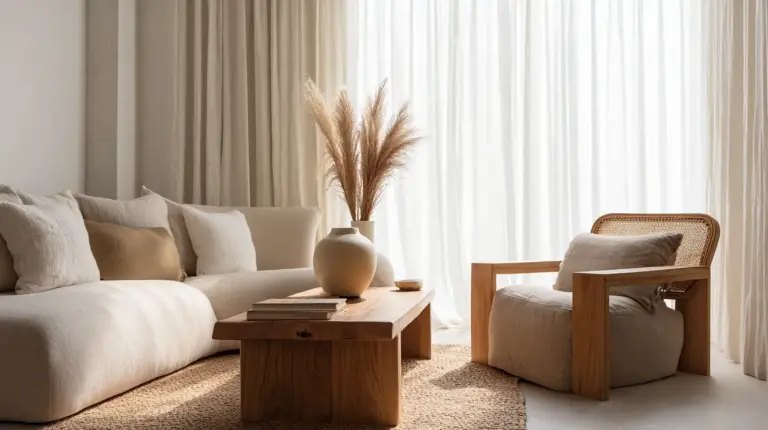
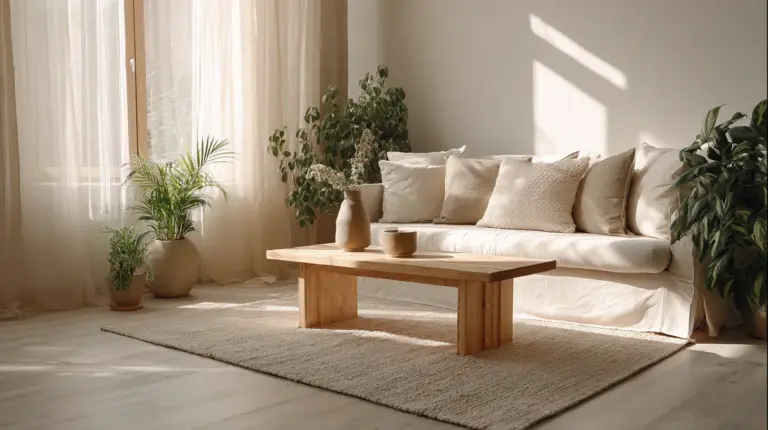
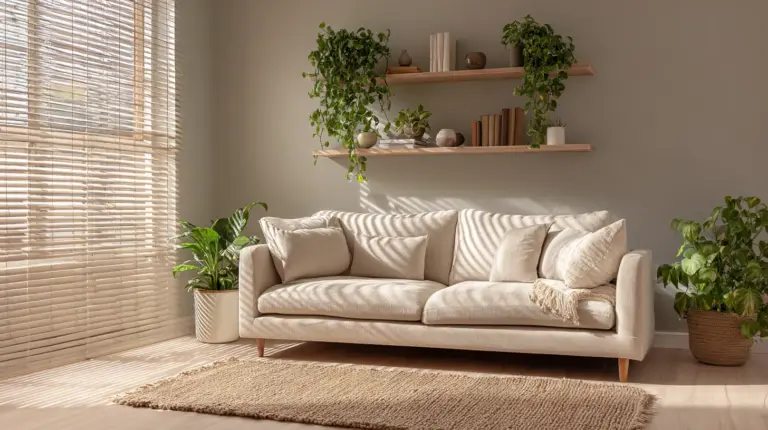
There’s a certain hush that falls over a small Japandi living room. It’s the kind of space that invites you to exhale — where every cushion, every ceramic cup, every blade of light through linen feels intentional yet effortless.
Born from the marriage of Japanese minimalism and Scandinavian warmth, Japandi has become the design language of modern calm. But how does it truly stack up against other popular styles when your square footage is limited and every choice must earn its place?
In a small living room, style isn’t just aesthetic — it’s survival. The wrong palette can shrink your space. The wrong furniture can block your flow. But the right design philosophy transforms constraint into poetry.
Let’s explore how small Japandi living rooms hold their own against Bohemian maximalism, modern farmhouse charm, mid-century modern classics, and minimalist austerity — and why, for many of us, Japandi might just be the answer.
What Makes Japandi Different in Small Spaces
Japandi thrives on the principle of functional beauty. Unlike styles that lean heavily into decoration or starkness, Japandi finds its power in the middle ground — where less is more, but warmth is never sacrificed.
In a small living room, this balance becomes essential. You’re working with limited breathing room, so every piece must serve dual purposes: aesthetic grace and everyday utility. A low oak coffee table isn’t just beautiful; it keeps sightlines open and anchors the room without dominating it.
The color palette alone sets Japandi apart. Think muted earth tones — warm grays, soft beiges, gentle whites, charcoal accents. These shades recede visually, creating the illusion of space rather than closing it in.
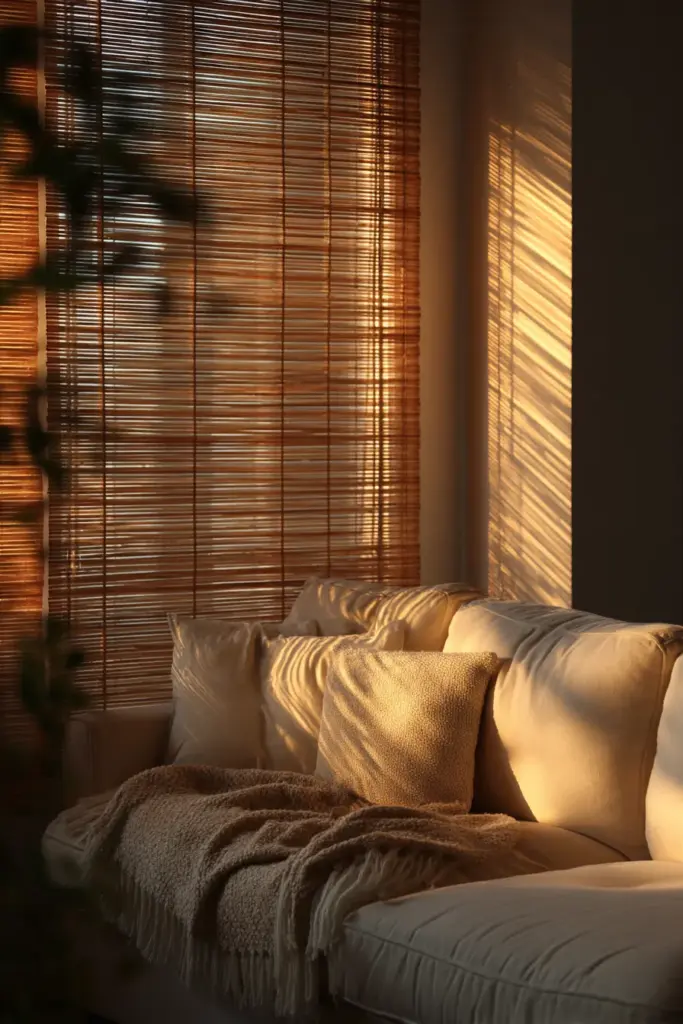
Natural materials dominate: linen drapes that soften morning light, bamboo blinds that whisper when they move, cotton textiles that age gracefully. In humid climates like Manila, these breathable fabrics actually work with your environment rather than against it.
Small Japandi Living Room Vs Bohemian Style
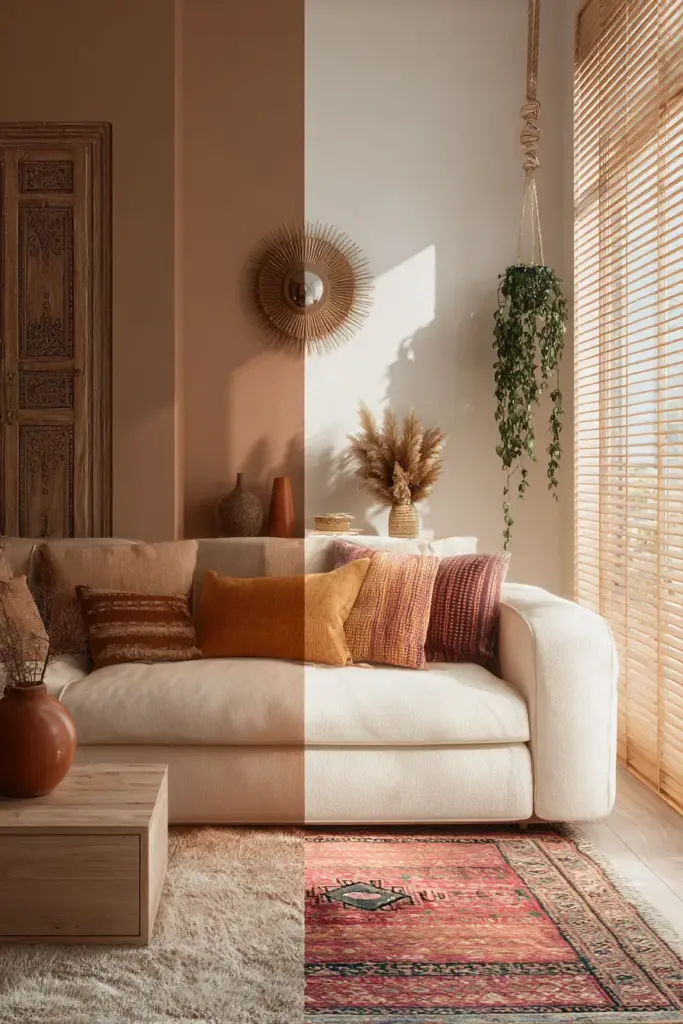
Bohemian spaces celebrate abundance. Layered rugs, cascading plants, tapestries, collected treasures from travels — all beautiful, all meaningful, but in a small living room, potentially overwhelming.
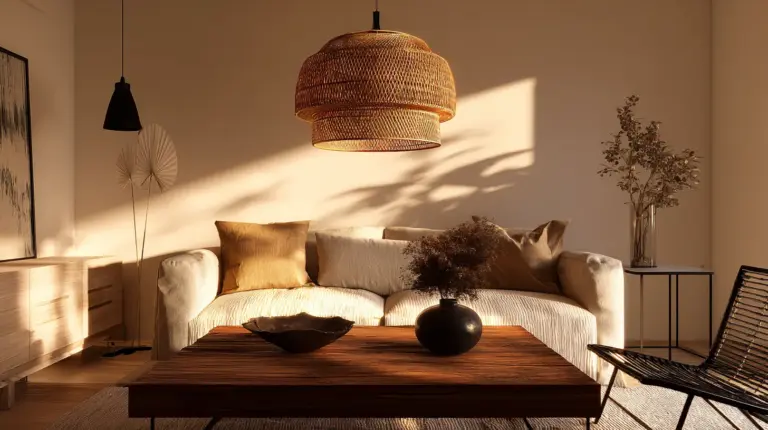
A Bohemian approach invites color — jewel tones, burnt oranges, deep teals. These hues create warmth but can visually shrink a compact space. Japandi opts for restraint: a single terracotta vase against a cream wall makes more impact than five competing patterns.
Where Bohemian wins: Personality and storytelling. If your small living room is your gallery of lived experiences, Boho gives you permission to display it all. The eclectic energy can make a tiny space feel like a cozy world unto itself.
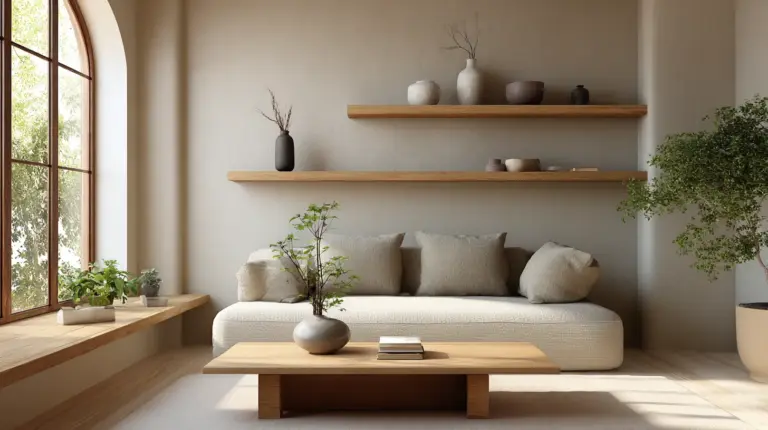
Where Japandi excels: Visual breathing room. By limiting your palette and editing rigorously, Japandi creates pockets of calm that make small spaces feel larger. One sculptural plant in a handmade pot carries more weight than a jungle of greenery competing for attention.
The Material Question
Bohemian leans into textural maximalism — velvet, macramé, woven baskets, beaded curtains. Japandi prefers singular, quality textures: raw linen curtains, a single wool throw, smooth ceramic vessels. In small quarters, this selectivity prevents sensory overload.
If you crave both warmth and space, consider a Japandi foundation with carefully curated Boho accents — perhaps one patterned cushion or a single vintage rug that tells a story without shouting.
Small Japandi Living Room Vs Modern Farmhouse
Modern farmhouse has captured hearts with its blend of rustic charm and contemporary livability. Shiplap walls, distressed wood, open shelving filled with mason jars and enamelware — it’s comfort personified.
But in a small living room, farmhouse elements can feel heavy. Dark wood beams, chunky furniture, and busy displays of kitchenware-turned-décor can crowd your sightlines and weigh down the atmosphere.
Where Modern Farmhouse wins: Cozy nostalgia. There’s an undeniable warmth to farmhouse style that makes you want to curl up with a quilt and homemade bread. The lived-in, collected-over-time aesthetic has soul.
Where Japandi excels: Lightness and openness. Japandi uses natural wood too, but in cleaner lines and lighter finishes — think white oak instead of dark walnut, low-profile furniture instead of overstuffed sectionals. The result feels airier, more conducive to small-space living.
Window Treatments Tell the Story
Modern farmhouse often features café curtains, gingham panels, or no curtains at all — prioritizing views over privacy. Japandi approaches windows as opportunities for light meditation: sheer linen panels that diffuse without blocking, bamboo roller blinds that create gentle shadows, even bare windows framed by minimalist architecture.
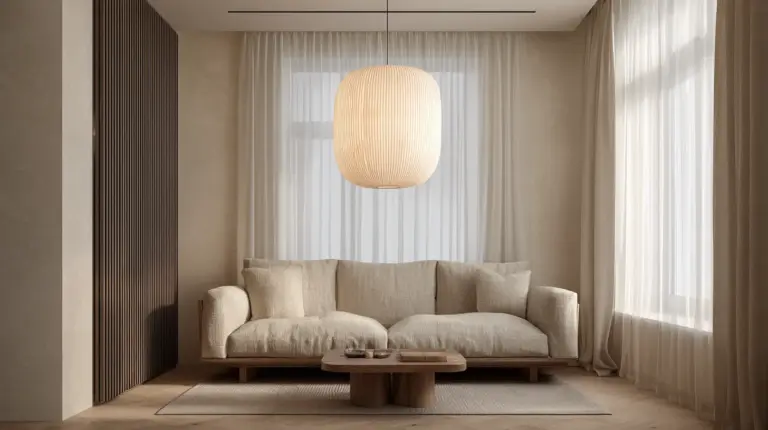
For small spaces, Japandi’s window philosophy creates depth. Floor-length sheers elongate walls visually. Natural bamboo blinds add texture without bulk. The light becomes part of the design rather than something to control or showcase.
Small Japandi Living Room Vs Mid-Century Modern
Mid-century modern shares DNA with Japandi — both prize clean lines, organic forms, and functional design. The famous Eames chair would feel at home in either aesthetic.
The key difference lies in personality. Mid-century modern celebrates iconic furniture pieces, bold accent colors (think mustard yellow or burnt orange), and statement lighting. It’s playful, optimistic, retro-future.
Where Mid-Century Modern wins: Character and conversation starters. That vintage credenza or Sputnik chandelier becomes the room’s personality. In a small space, this focused drama can work beautifully if you have restraint everywhere else.
Where Japandi excels: Timelessness and tranquility. Japandi doesn’t chase trends or nostalgia — it exists in a perpetual present. The neutral palette and natural materials won’t feel dated in five years, and the calm atmosphere supports mental wellbeing in ways bold colors may not.
Furniture Scale and Proportion
Both styles favor low-profile seating, but mid-century pieces often feature tapered legs and lifted frames, creating visual lightness through negative space underneath. Japandi furniture sits closer to the ground with solid, grounded forms that feel stable and zen.
In a small living room, this choice affects perception. Mid-century’s lifted furniture shows more floor, potentially making the room feel larger. Japandi’s grounded pieces create psychological safety and stillness — choose based on whether you need energizing space or calming sanctuary.
Small Japandi Living Room Vs Pure Minimalism
On the surface, Japandi is minimalism. Both eliminate clutter, prize negative space, and follow the “less is more” philosophy. But there’s a crucial emotional difference.
Pure minimalism can feel clinical — all white surfaces, hidden storage, no personal objects in sight. It’s the aesthetic of gallery spaces and tech showrooms, beautiful but sometimes sterile.
Where Pure Minimalism wins: Ultimate space maximization. By ruthlessly eliminating decorative elements, you achieve maximum visual square footage. This works brilliantly in truly tiny apartments where function must triumph.
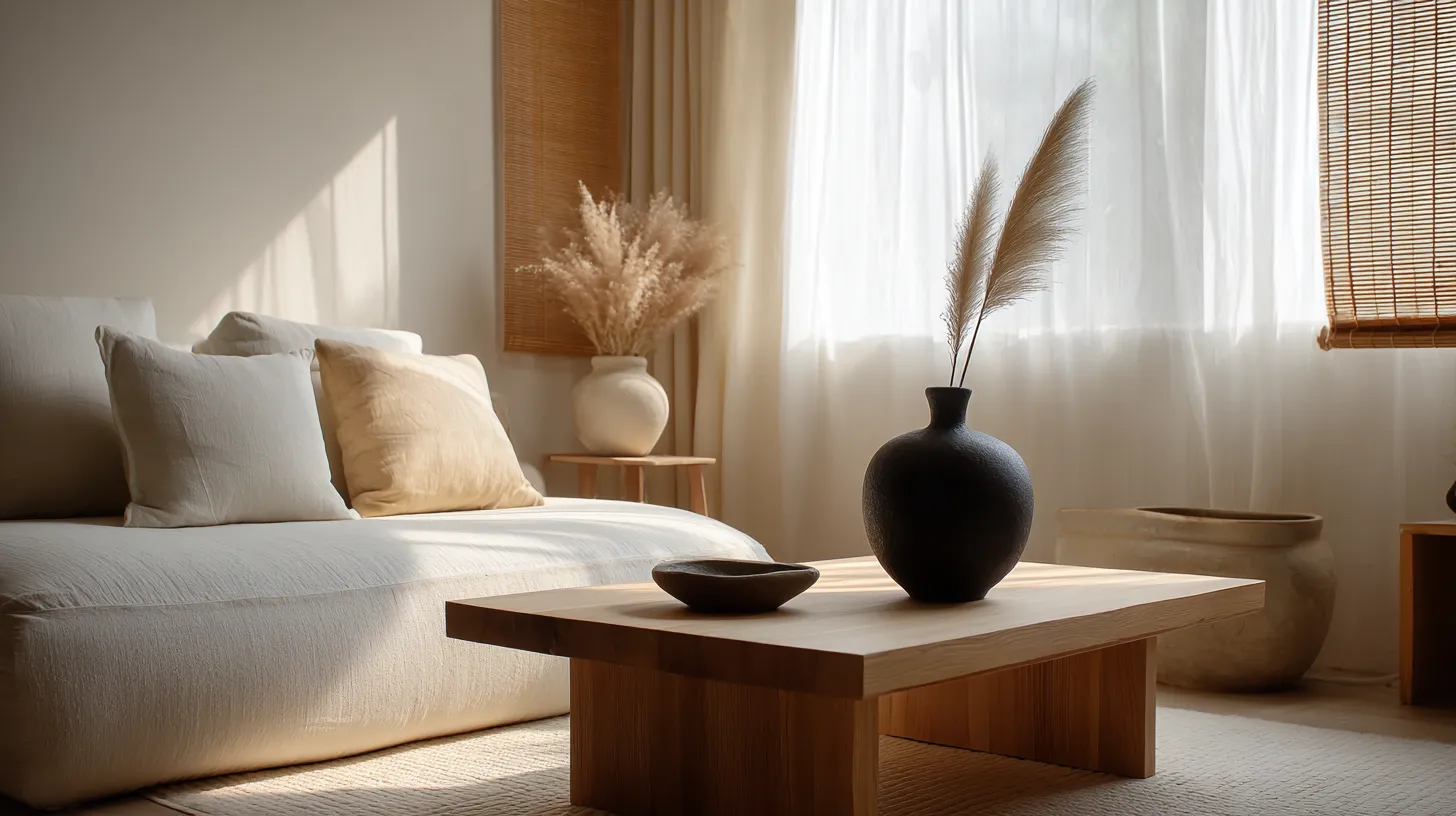
Where Japandi excels: Human warmth. Japandi adds the wabi-sabi philosophy — finding beauty in imperfection and age. That handmade ceramic bowl with the irregular glaze, the linen curtain that wrinkles naturally, the vintage wooden stool with its patina — these elements bring soul without clutter.
The Comfort Factor
Pure minimalist living rooms sometimes sacrifice comfort for aesthetics — think hard seating, no textiles, cold surfaces. Japandi insists on coziness within simplicity: soft cushions in natural fabrics, wool throws draped just-so, tactile materials that invite touch.
In a small space where you actually live, this distinction matters deeply. Your living room shouldn’t feel like a museum. Japandi’s version of minimalism lets you breathe while still feeling held.
Material Choices That Define Small Japandi Spaces
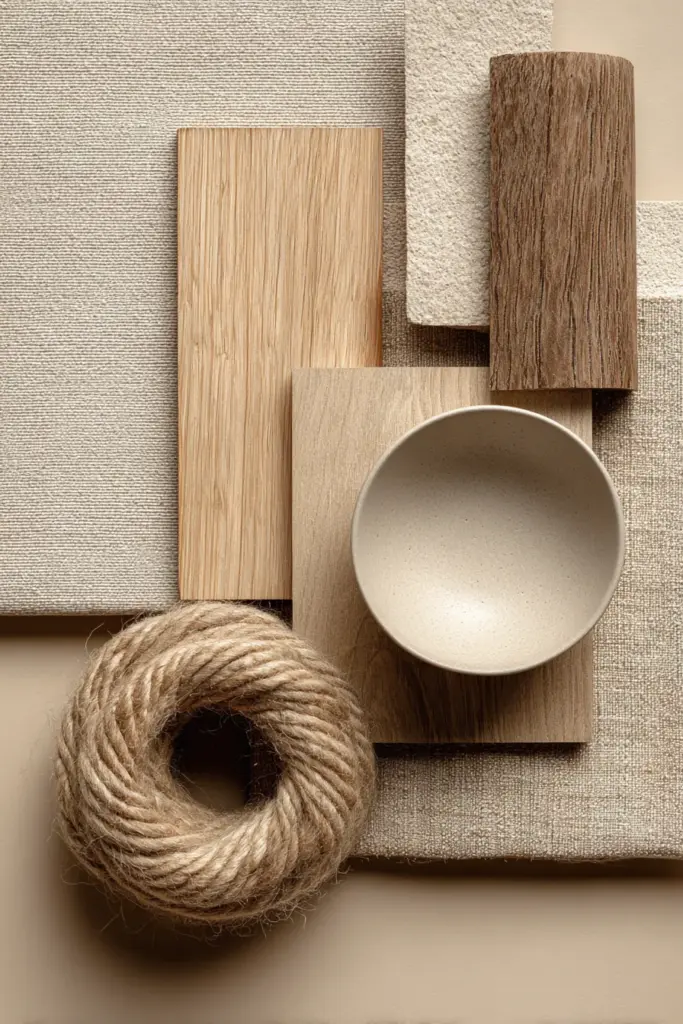
The Japandi material palette is specific and intentional, chosen for both beauty and small-space functionality.
Natural wood — white oak, ash, or light pine — keeps rooms bright while adding warmth. Avoid heavy, dark woods that absorb light. In Manila’s climate, consider locally sourced bamboo for sustainability and humidity resistance.
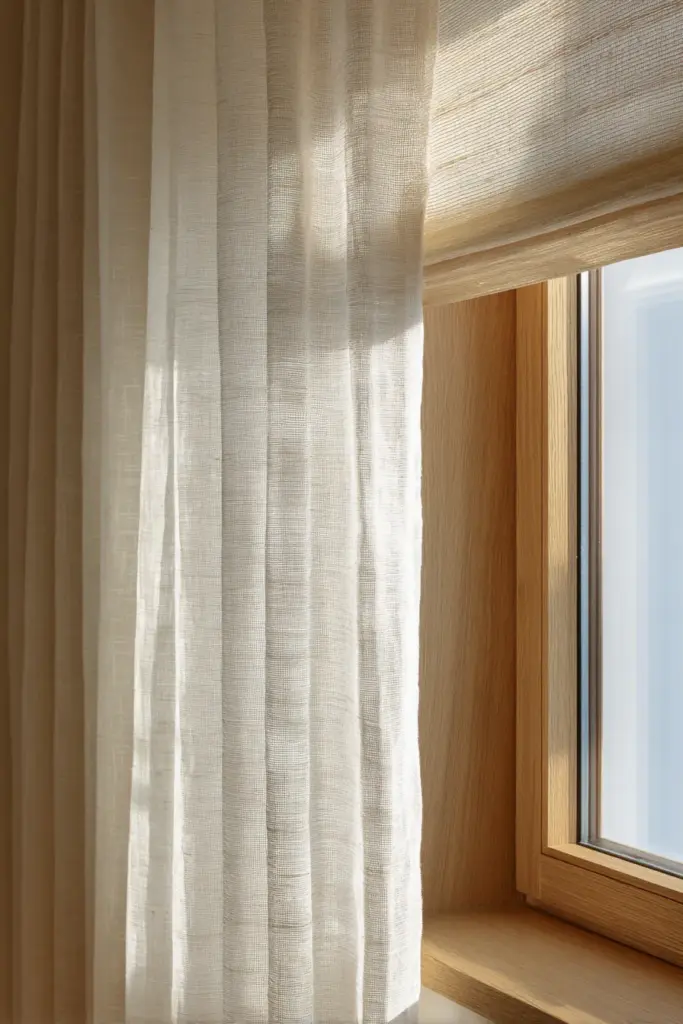
Linen and cotton textiles — these breathable, natural fabrics regulate temperature and soften acoustics in compact rooms. Sheer linen curtains become light sculptures, transforming harsh tropical sun into gentle, diffused glow.
Ceramic and stone — handmade vessels, matte finishes, organic shapes. These grounding elements connect you to earth and craft traditions without visual weight.
Sustainable materials — rattan, jute, bamboo. Beyond aesthetics, these speak to Japandi’s environmental consciousness and work beautifully in humid environments where synthetics might deteriorate.
Window Treatments: The Japandi Small-Space Secret Weapon
Windows in small Japandi living rooms deserve special attention. The right treatment can visually double your space; the wrong one can shrink it instantly.
Sheer linen curtains floor-to-ceiling create vertical lines that elongate walls. The key is hanging them above the window frame and letting them puddle slightly at the floor — this trick makes ceilings appear higher and windows larger.
Bamboo roller blinds offer privacy and light control without bulk. Unlike heavy drapes, they disappear when raised and add subtle texture when lowered. Look for natural, untreated bamboo that ages beautifully.
Shoji screens bring authentic Japanese minimalism but work best in specific contexts — perhaps as room dividers rather than traditional window treatments in very small spaces. They filter light exquisitely but require depth.
Bare windows framed by clean architecture can work if you have privacy and beautiful views. This ultimate minimalist approach maximizes light and space but isn’t for everyone.
Budget-Friendly Options for PH Apartments
You don’t need to spend ₱10,000 on imported curtains to achieve Japandi elegance. Local Manila markets offer beautiful options.
IKEA bamboo blinds (under ₱2,000) can be customized with natural dye or left raw. Divisoria fabric shops sell linen-blend yardage perfect for DIY curtain panels. Even simple white cotton curtains from home stores work when hung with intention.
Upcycling is deeply Japandi — that vintage fabric from your lola’s storage becomes window panels with history and soul. The imperfect hand-stitching adds wabi-sabi character.
Color Psychology in Small Japandi Living Rooms
Japandi’s muted palette isn’t just aesthetic — it’s psychologically strategic for small spaces.
Warm whites and creams reflect maximum light while feeling softer than stark white. They recede visually, pushing walls outward in perception. In tropical climates, opt for warm undertones to prevent sterile coldness.
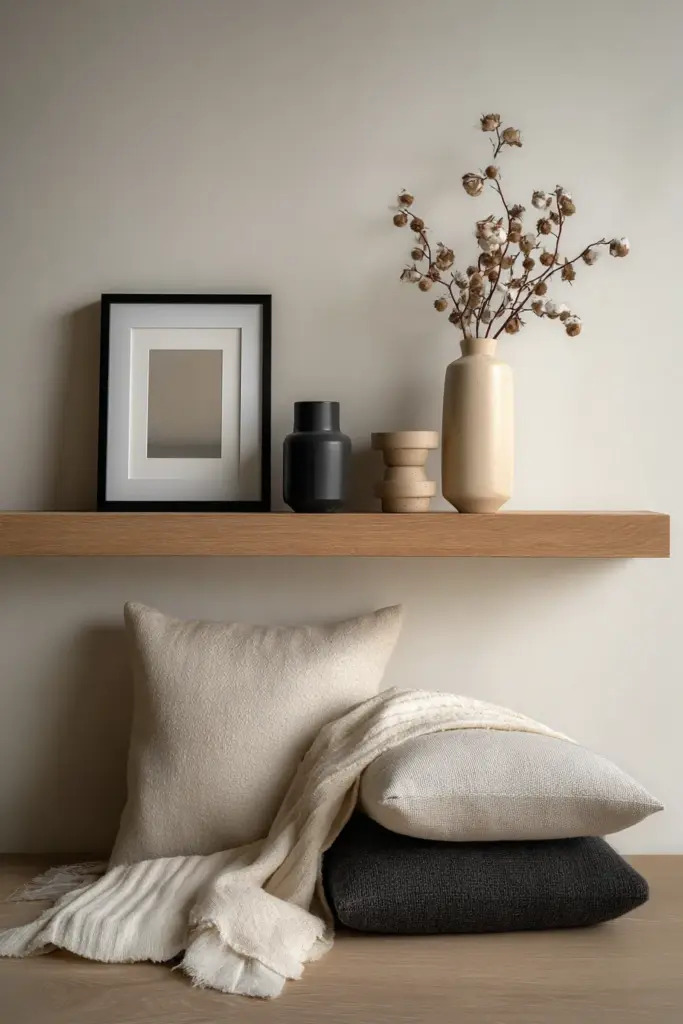
Soft grays and taupes add depth without darkness. These sophisticated neutrals ground a space and provide subtle contrast against lighter elements. Think charcoal linen pillows against a cream sofa.
Black accents in small doses — a matte black picture frame, wrought iron curtain rod, dark ceramic vase — create visual anchors that give the eye resting points without overwhelming.
Natural wood tones bring warmth and connection to nature, essential for wellbeing in compact urban environments. The grain patterns add organic visual interest without introducing color chaos.
Furniture Selection for Small Japandi Living Rooms
Every piece must justify its existence through beauty and function.
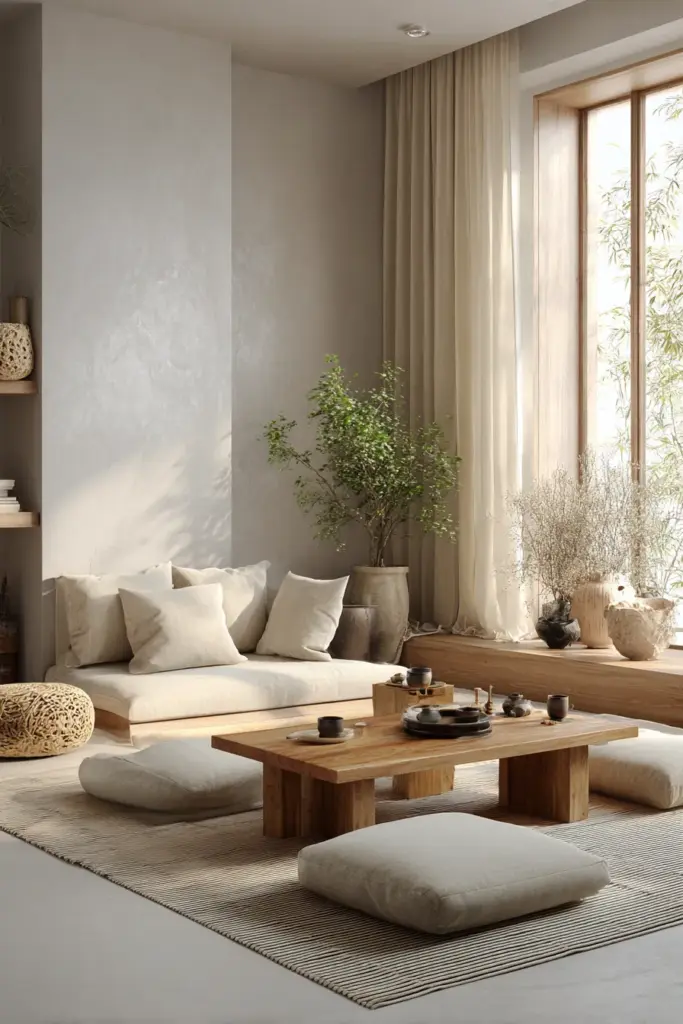
Low-profile seating — floor cushions, low sofas, poufs — keeps sightlines open and creates the illusion of higher ceilings. This Japanese-inspired approach to furniture height is transformative in small spaces.
Multifunctional pieces — storage ottomans, nesting tables, sofa beds. Japandi embraces intelligent design where one item serves multiple needs without looking utilitarian.
Open-leg furniture — tables and seating with visible space underneath feel lighter than skirted or solid-base pieces. This transparency allows light and sightlines to flow, preventing visual blockage.
Minimal ornamentation — clean lines, simple forms, no unnecessary decorative elements. The beauty comes from proportion, material quality, and craftsmanship rather than applied decoration.
Small Japandi Living Room Style Comparison
| Style Element | Japandi | Bohemian | Modern Farmhouse | Mid-Century Modern | Pure Minimalism |
|---|---|---|---|---|---|
| Color Palette | Muted earth tones, warm neutrals | Jewel tones, rich colors, patterns | Whites, grays, rustic wood | Bold accents, organic neutrals | Monochrome, stark whites |
| Furniture Profile | Low, grounded, simple lines | Eclectic, layered, varied heights | Chunky, substantial, rustic | Elevated on legs, iconic pieces | Sparse, geometric, hidden storage |
| Material Focus | Natural linen, bamboo, light wood | Velvet, macramé, global textiles | Distressed wood, metal, enamel | Molded plywood, leather, glass | Glass, steel, concrete |
| Pattern Use | Minimal, organic textures only | Abundant, mixed patterns | Gingham, stripes, farmhouse prints | Geometric, retro graphics | None or extremely subtle |
| Window Treatments | Sheer linen, bamboo blinds, bare | Beaded, layered, colorful drapes | Café curtains, burlap, none | Minimal panels, horizontal blinds | Motorized, hidden, or none |
| Space Feel | Calm, open, grounded | Cozy, collected, intimate | Warm, nostalgic, lived-in | Energetic, optimistic, airy | Spacious, clinical, orderly |
| Best for Small Rooms | ⭐⭐⭐⭐⭐ Excellent balance | ⭐⭐⭐ Needs editing | ⭐⭐⭐ Can feel heavy | ⭐⭐⭐⭐ Very functional | ⭐⭐⭐⭐ Maximum space |
| Warmth Factor | ⭐⭐⭐⭐ Natural warmth | ⭐⭐⭐⭐⭐ Maximum coziness | ⭐⭐⭐⭐⭐ Rustic comfort | ⭐⭐⭐ Moderate | ⭐⭐ Can feel cold |
Quick Checklist: Is Japandi Right for Your Small Living Room?
Choose Japandi if you:
- Crave calm and visual breathing room in your compact space
- Appreciate quality over quantity in furniture and décor
- Want a style that won’t feel dated in five years
- Live in a humid climate where natural, breathable materials make sense
- Prefer neutral palettes with subtle texture over bold color statements
- Value sustainability and natural materials
- Need multifunctional furniture that doesn’t look utilitarian
- Find peace in minimalism but need warmth to feel at home
- Want window treatments that enhance natural light rather than block it
- Appreciate the wabi-sabi philosophy of imperfect beauty
Consider other styles if you:
- Express yourself through bold colors and collected objects (Bohemian)
- Want rustic, nostalgic warmth (Modern Farmhouse)
- Love iconic furniture pieces as conversation starters (Mid-Century Modern)
- Need absolute maximum space with no decorative elements (Pure Minimalism)
Conclusion: The Quiet Power of Small Japandi Living
In the end, choosing a style for your small living room isn’t about trends or Instagram worthiness. It’s about coming home after Manila’s chaotic streets and feeling your shoulders drop, your breathing slow, your mind clear.
Japandi offers that gift — a space that holds you without overwhelming you, that feels curated without being precious, that welcomes natural light like a meditation practice.
Where other styles might compete for attention in limited square footage, Japandi creates harmony through editing, intention, and respect for both Japanese simplicity and Scandinavian warmth. It’s the design equivalent of the perfect haiku — every element essential, nothing wasted, beauty in the spaces between.
Your small living room, when approached with Japandi principles, becomes more than a place to sit. It becomes a daily practice of noticing light through linen, appreciating the grain in oak, finding peace in cream and shadow and the quiet click of bamboo blinds at dusk.
And perhaps that’s the truest luxury of all.
Frequently Asked Questions
What are the best Japandi window treatments for small living rooms?
Sheer linen curtains hung floor-to-ceiling create vertical lines that elongate small spaces while diffusing harsh light beautifully. Bamboo roller blinds offer a close second — they provide privacy and texture without visual bulk. For authentic Japanese minimalism, consider shoji screens as room dividers rather than traditional window treatments. The key is choosing materials that feel light and natural rather than heavy or synthetic.
How to choose Japandi curtains for natural light in small spaces?
Prioritize sheer or semi-sheer fabrics in natural fibers like linen or cotton that allow light to filter through softly rather than blocking it completely. Avoid blackout materials unless absolutely necessary for sleep. Hang curtains as high and wide as possible — mount rods above window frames and extend beyond the actual window width to create the illusion of larger windows and taller ceilings. Choose warm white or natural beige tones that reflect light back into the room.
Are shoji screens suitable for Japandi living room windows?
Shoji screens bring authentic Japanese aesthetics and create beautiful diffused light, making them excellent for Japandi style. However, in very small living rooms, they work best as room dividers or decorative panels rather than primary window treatments, as they require installation depth that might not suit all window types. They excel at creating privacy while maintaining luminosity, perfect for ground-floor apartments or spaces facing neighbors. Consider pairing them with simple blinds for complete light control.
Budget-friendly Japandi blinds for apartments?
IKEA offers bamboo roller blinds under ₱2,000 that capture Japandi aesthetics beautifully. For even more affordable options, check Divisoria or local Manila markets for natural bamboo or rattan blinds that can be customized. Simple white or cream cotton roller blinds from hardware stores work when styled minimally. DIY enthusiasts can create custom linen panels using affordable fabric from Divisoria — the hand-sewn imperfections actually enhance the wabi-sabi character central to Japandi design.
DIY Japandi window treatments for small rooms?
Transform affordable linen or cotton fabric into floor-length curtain panels using basic sewing or even fabric glue for no-sew options. Upcycle vintage sheets or tablecloths from thrift stores — the aged texture adds character. Create simple bamboo or wooden curtain rods from hardware store dowels stained in light oak. For renters, use tension rods that don’t require wall drilling. Window film in rice paper or frosted patterns offers privacy on a budget while maintaining the clean Japandi aesthetic. The imperfect, handmade quality actually strengthens the wabi-sabi philosophy at Japandi’s heart.