
Table of Contents
There is a particular kind of peace that lives in a well-edited room.
It exists in the quiet space between a linen cushion and a smooth wooden shelf. It breathes in the morning light that falls across bare floorboards and a single ceramic cup of tea. This is the world of Japandi — and it is more within reach than you think.
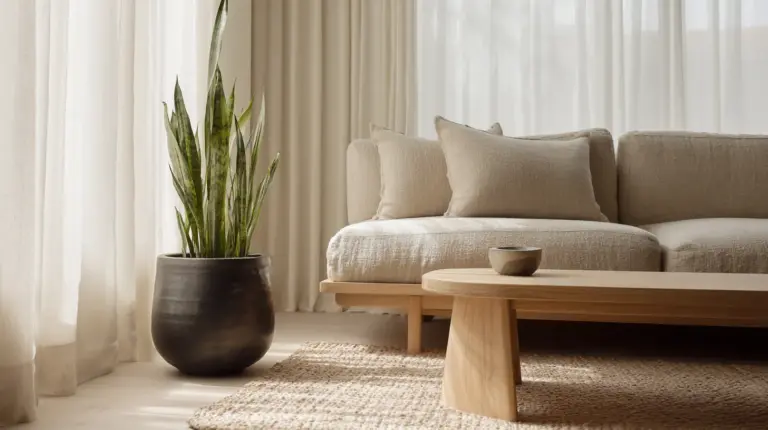
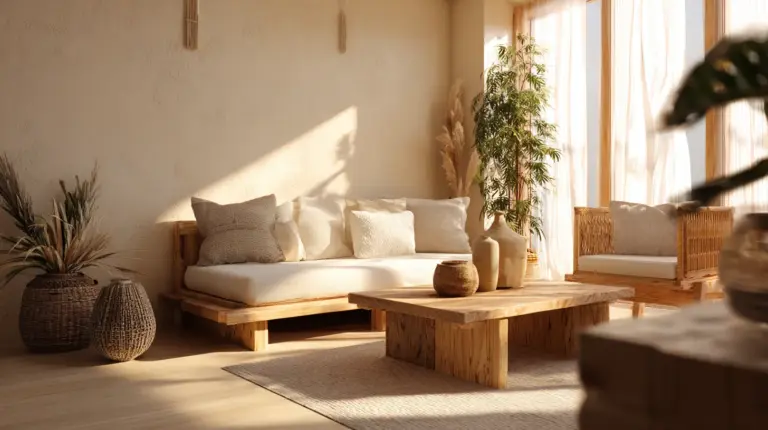
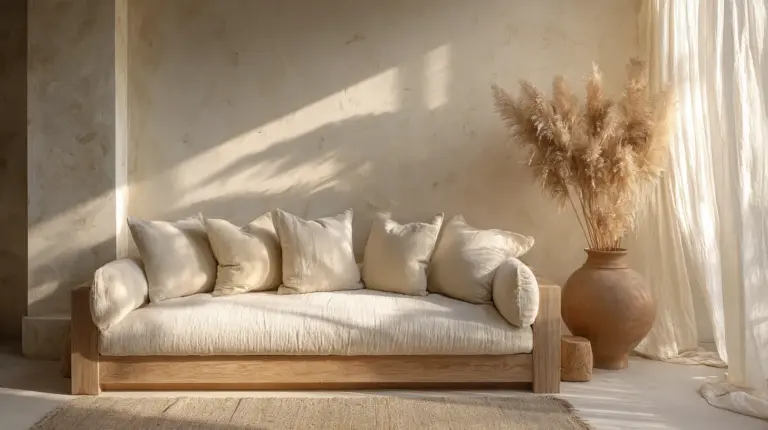
Japandi is the design philosophy born from the union of Japanese minimalism and Scandinavian warmth. It values what is real, what endures, and what brings genuine comfort. And because its soul is rooted in less, a Japandi sustainable budget is not a compromise. It is the point.
This guide is your steady companion through every step — from understanding the essentials to sourcing beautiful, eco-conscious pieces without financial strain. Whether you are starting from scratch or gently reshaping a space you already love, we will walk through it together.
Let’s begin.
What Is Japandi Style? The Essentials Before You Spend
Before you spend a single peso, it helps to understand what Japandi actually is — and what it is not.
Japandi draws from two deeply considered design traditions. Japanese aesthetics bring wabi-sabi — the beauty of imperfection, age, and natural irregularity. Scandinavian design brings hygge — the warmth of coziness, function, and gentle light. Together, they produce spaces that feel honest, grounded, and deeply restful.
The core principles:
- Neutral, muted colour palettes — warm whites, soft greys, earthy taupes, and deep charcoals
- Natural materials — solid wood, rattan, linen, bamboo, stone, and ceramic
- Functional furniture with clean lines and no decorative excess
- Clutter-free surfaces with intentional, curated objects
- Soft, layered lighting — no harsh overhead fluorescents
Understanding these principles protects your budget. It means you will never buy something “for the aesthetic” and then replace it. Every purchase becomes deliberate.
Can You Do Japandi on a Budget?
Yes — and here is why Japandi is actually designed for budget living.
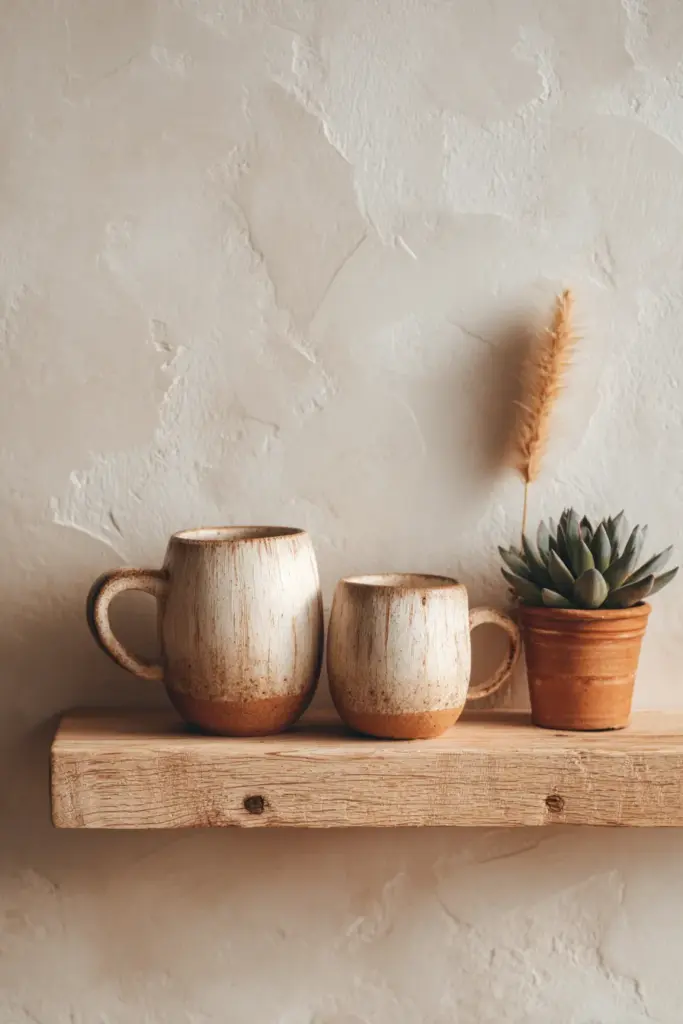
Japandi’s philosophy of quality over quantity means you need fewer things, not more expensive ones. A single raw-wood shelf styled with two ceramic vessels is more Japandi than a room full of fast-furniture pieces trying too hard. The style rewards patience, restraint, and smart sourcing.
The honest answer:
- You do not need to replace all your furniture at once
- You can retrofit existing pieces with neutral paint, natural textiles, and edited styling
- Second-hand and upcycled pieces are not a budget compromise — they are philosophically Japandi
- A truly Japandi room can be built over months, not purchased in one weekend trip
The greatest cost of Japandi is not money. It is the willingness to let go of excess.
Japandi Sustainable Budget: The Three-Tier Approach
One of the most useful ways to approach a Japandi sustainable budget is to think in tiers. Not every piece needs to be an investment. Not every corner needs to be redesigned at once. Build slowly, with intention.
Tier 1 — Under ₱3,000: The Foundation Layer
This is where most sustainable Japandi journeys begin — and it is more powerful than it sounds.
What to do at this tier:
- Declutter first. Remove anything synthetic, brightly coloured, or purely decorative with no function. This is free.
- Repaint existing furniture in warm white, off-white, or charcoal using low-VOC paint (available at most local hardware stores for ₱300–₱600 per litre)
- Source thrift-store ceramics, earthenware pots, and woven baskets from ukay-ukay or local palengke finds
- Add one or two potted plants in terracotta or concrete pots (avoid plastic; many local nurseries sell simple clay pots for ₱50–₱150 each)
- Fold and display one piece of natural-fibre textile — a plain linen or cotton throw in a neutral tone costs ₱200–₱600 at tiangge markets or fabric shops in Divisoria
The power of Tier 1 is editing, not adding.
Tier 2 — ₱3,000–₱15,000: The Mid-Range Sustainable Layer
At this level, you begin investing in pieces made from genuinely natural materials that will last.
What to prioritise:
- A local rattan chair or stool — rattan is the most Japandi-aligned material available in the Philippines, and locally made pieces typically range from ₱1,500–₱5,000 per chair. Look for sellers in Cavite, Cebu, or online marketplaces like Shopee and Lazada from verified local artisans
- Plywood or rubberwood shelving with a raw or whitewash finish — local carpenters can build a simple wall shelf for ₱800–₱2,500 in materials and labour
- Linen-blend cushion covers in muted tones (sage, sand, charcoal, or warm white) — these can be found at local fabric markets or ordered online for ₱300–₱800 per cover
- A jute or seagrass rug to anchor a sitting area — locally sourced, these run ₱1,500–₱6,000 depending on size
When sourcing at this tier, ask suppliers if the wood is reclaimed, off-cut, or FSC-adjacent. Many local sawmills and lumber yards in areas like Bulacan, Laguna, and Pampanga sell surplus wood at significantly reduced prices — and these off-cuts carry the beautiful imperfection that wabi-sabi celebrates.
Tier 3 — ₱15,000 and Above: The Investment Piece Layer
Every Japandi home deserves one or two investment pieces — items you buy once, care for well, and keep for decades.
Where to spend with intention:
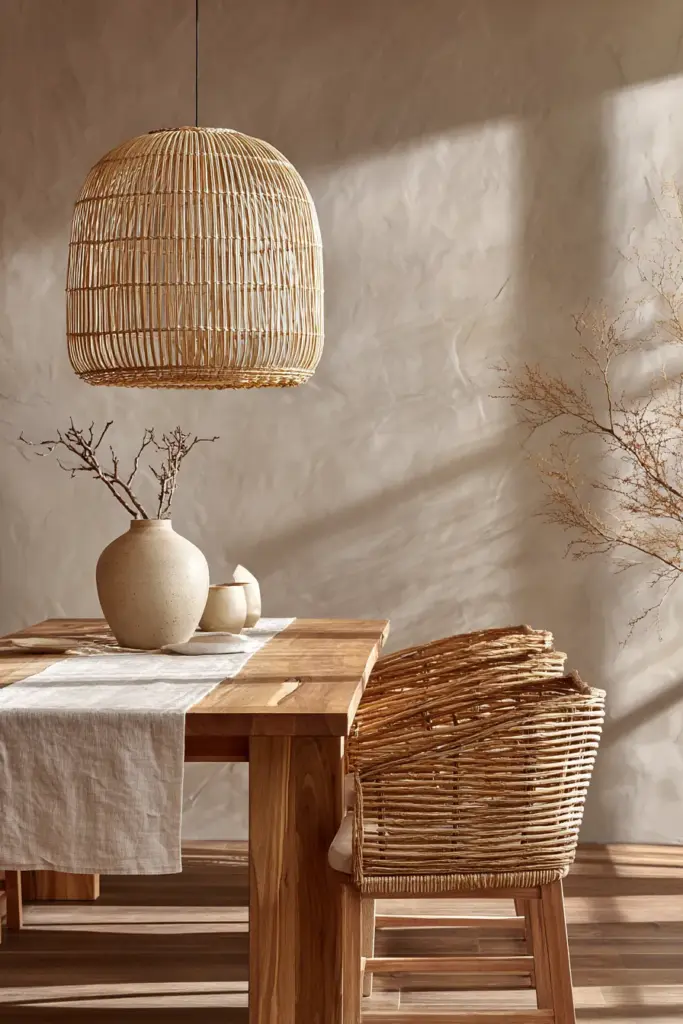
- A solid-wood dining table in narra, acacia, or molave — these are enduring Filipino hardwoods that deepen in beauty with age. Local furniture makers in Pampanga, Batangas, and Cebu can craft custom pieces starting at ₱15,000–₱40,000
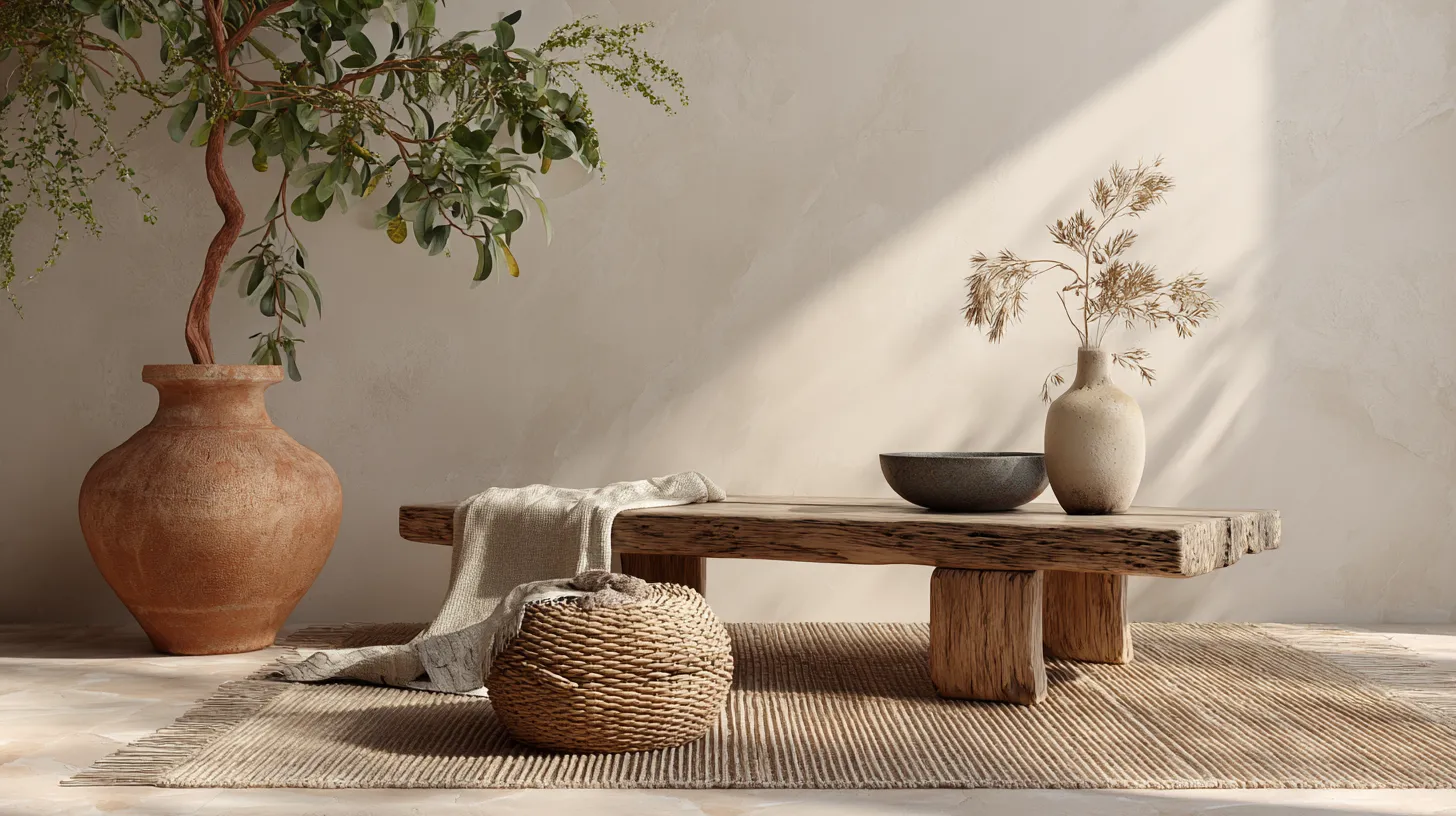
- A handcrafted low Japandi bench in rattan and wood — functional, beautiful, and adaptable across rooms
- A muted-timber credenza or sideboard — the centrepiece storage unit that anchors a living or dining room with calm authority
Think of Tier 3 pieces as heirlooms, not furniture. Choose craftsmanship, repairability, and honest materials every time.
Sustainable Japandi Decor Ideas: Material Guide
The materials you choose are the foundation of both your aesthetic and your sustainability.
Wood
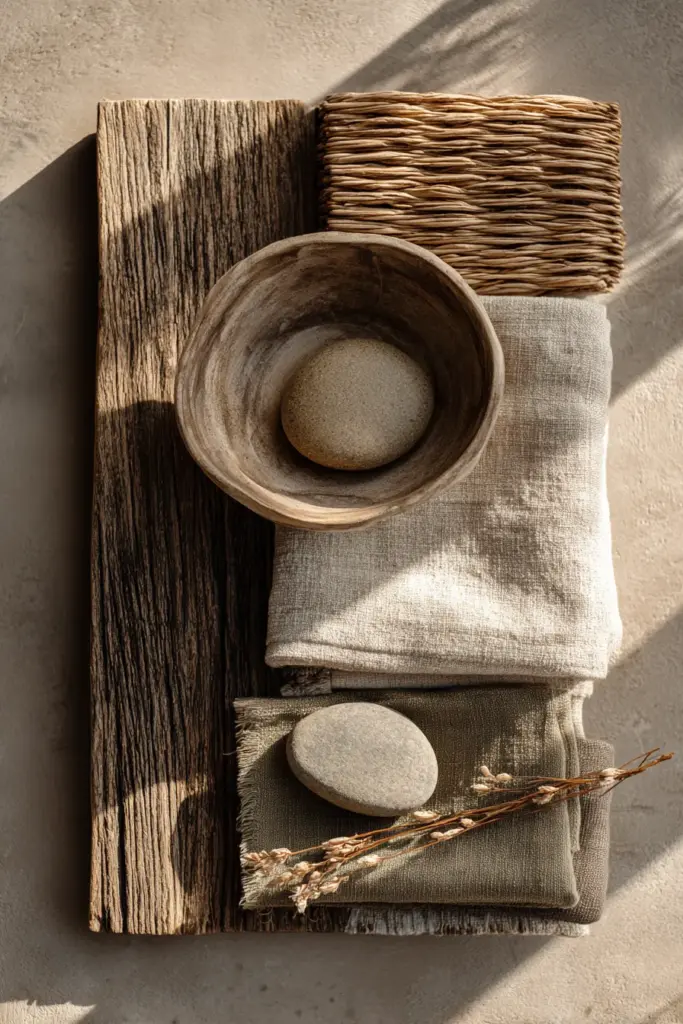
Nothing grounds a Japandi space like wood. In the Philippines, locally sourced hardwoods — narra, acacia, molave, and bamboo composite — are beautiful, available, and often more sustainably produced than imported alternatives. Ask specifically for reclaimed lumber, off-cuts from sawmills, or pieces certified by local environmental bodies.
When solid wood is beyond budget, use solid-wood frames with plywood panels. This keeps the structural integrity natural while reducing cost. Avoid engineered boards with formaldehyde-heavy binders; look for low-emission plywood instead.
Rattan and Bamboo
Rattan and bamboo are the Philippines’ great gifts to Japandi design. Both are fast-growing, require minimal processing, and age with extraordinary grace. A rattan side chair or bamboo tray is not a budget compromise — it is the correct choice, philosophically and aesthetically.
Support local weavers and artisans wherever possible. Their work carries not just material integrity but cultural meaning — which is deeply aligned with Japandi’s reverence for craft.
Linen and Natural Textiles
Linen is the gold standard for Japandi textiles — its texture, weight, and drape are unmatched. When linen is out of budget, 100% cotton in charcoal, oat, or sage is a strong alternative. Avoid synthetic fibres entirely; they disrupt the tactile honesty that Japandi spaces depend on.
Stone and Ceramic
A single stone tray or handmade ceramic bowl carries enormous visual weight in a Japandi space. Source these from local potters, craft fairs, and ukay-ukay. Imperfection is not a flaw — it is the point.
Japandi Sustainable Budget Decision Matrix
| Scenario | Sustainable Budget Pick | Why |
|---|---|---|
| Can’t afford solid-wood furniture frame | Solid-wood frame + plywood or off-cut panels | Keeps structure natural, lowers cost significantly |
| Can’t afford organic linen | 100% cotton in charcoal or oat tones | Natural fibre, timeless colour, widely available |
| Can’t afford rattan chairs | Low plywood shelf + floor cushions as seating | Achieves Japandi form and material honestly |
| Can’t afford a new rug | Thrifted jute or woven mat, re-edged if needed | Natural material, unique character from age |
| Can’t afford new ceramics | Repurposed mason jars or plain clay pots | Simple, honest, zero-waste |
| Can’t afford statement lighting | Paper lantern or bamboo pendant shade | Soft diffused light, fully natural material |
How to Create a Japandi Living Room on a Budget
The living room is where Japandi does its most important work — slowing you down.
Begin with the sofa. If replacing it is not possible, reupholster in a natural linen or cotton canvas, or simply drape a large neutral throw across it. Then remove everything from the coffee table except one or two objects — a ceramic tray, a small plant, a single candle.
A simple Japandi living room formula:
- 50% of your room budget on the sofa or primary seating — invest here, because it anchors everything
- 20% on storage (a credenza, shelf, or woven basket set) — Japandi needs a home for every item
- 15% on textiles (rug, cushions, throw) — texture is warmth
- 10% on lighting — a warm-toned bulb in a natural-material shade transforms a room
- 5% on living elements — one or two plants in honest pots
Keep one wall bare. Keep one corner empty. The space itself is part of the design.
Japandi Sustainable Budget Living Room: Before and After
Meet Maya.
Maya lives in a small apartment in Cavite. Her living room had mismatched furniture, bright synthetic cushions, and a plastic shelving unit she had been meaning to replace for two years. Her total budget: ₱8,000.
What she did:
She decluttered first — this was free. She repainted the plastic shelf white (₱400 in low-VOC paint) and styled it with a trailing pothos in a thrifted clay pot (₱120) and two old ceramic mugs she repurposed as pencil and stem holders. She bought a jute rug from a tiangge for ₱1,800, a set of two rattan stools from a local artisan market for ₱3,200, and a linen-blend throw in warm oat from a fabric shop in Dasmarinas for ₱600.
Total spent: ₱6,120. What she created: a room that breathes.
That is Japandi on a sustainable budget.
Eco Mistakes to Avoid in Your Japandi Home
Sustainability in design is not just about what you buy — it is about what you refuse.
Do not:
- Buy ultra-cheap plastic furniture even if the colour is neutral. Plastic disrupts both the aesthetic and the environmental integrity of a Japandi space
- Repaint natural wood with glossy, solvent-based finishes. Use water-based, low-VOC options that allow the wood to breathe
- Hoard inexpensive decor pieces “for the vibe” and then discard them in six months
- Ignore repairability. Choose furniture with replaceable cushions, tightenable joints, and materials that can be refinished
- Treat sustainability as a one-time purchase. It is an ongoing practice — repair, resell, repurpose, and source locally whenever possible
Japandi Sustainable Budget Checklist
Save this. Return to it.
- Define your total budget and assign a room-by-room cap before shopping
- Identify 1–2 staple investment pieces (sofa, dining table, or bed frame) and protect their budget allocation
- Choose at least two Japandi-aligned natural materials: wood, rattan, linen, bamboo, stone, or ceramic
- Source at least one item second-hand, upcycled, or from a local artisan
- Select a neutral base palette and allow only one soft accent colour — terracotta, sage, muted navy, or dusty rose
- Add living elements: one or two plants in ceramic, terracotta, or concrete pots (no visible plastic)
- Keep one wall bare and one corner intentionally empty
- Choose lighting with warm-toned bulbs (2700K–3000K) in natural-material shades
- Ask suppliers about reclaimed, off-cut, or sustainably sourced materials
- Commit to buying less and repairing more
A Final Word from ERYLIN
Beautiful living does not require a large budget. It requires a clear eye and a willing heart.
Japandi sustainable design teaches us that the most considered spaces are not the most expensive ones. They are the most honest. They are rooms where every object earns its place, where natural materials speak quietly but powerfully, and where the absence of clutter creates a kind of breathing room the soul genuinely needs.
Build your Japandi home slowly. Source locally. Repair before you replace. Choose one beautiful, lasting thing over five forgettable ones.
This is the ERYLIN way — and it is always within reach.
Frequently Asked Questions
Is Japandi sustainable design expensive?
Not inherently. Japandi’s philosophy of quality over quantity means you need fewer pieces, not costlier ones. A well-sourced rattan chair, a repainted shelf, and a single linen throw can transform a space for under ₱5,000. The investment is in intention, not volume.
What materials are used in Japandi design?
The signature Japandi materials are natural wood (especially raw or matte-finished hardwoods), rattan, bamboo, linen, cotton, stone, and ceramic. In the Philippines, locally sourced rattan, reclaimed wood, and handmade ceramics are ideal — beautiful, sustainable, and aligned with the aesthetic’s reverence for craft.
Is Japandi good for small spaces?
Exceptionally so. Japandi’s clutter-free ethos, functional furniture, and low-profile pieces make small spaces feel larger and more serene. A low sofa, open shelving, and one well-placed plant can entirely redefine a compact room without structural changes.
How do I mix Japandi with furniture I already own?
Start by editing, not replacing. Remove items that are brightly coloured, synthetic, or purely decorative. Repaint or re-cover existing pieces in neutral tones. Add one or two natural-material accents — a rattan tray, a linen cushion, a ceramic vessel. Japandi is a practice of subtraction as much as addition.
Where can I buy Japandi furniture on a budget in the Philippines?
Look beyond large retailers. Local artisan markets, ukay-ukay shops, tiangge stalls, and surplus lumber yards often carry pieces with more character and better material integrity than fast-furniture stores. Online platforms like Shopee and Lazada have verified local artisan sellers for rattan and bamboo pieces. For custom wood furniture, reach out to local carpenters in Pampanga, Bulacan, or your nearest craft district.