
Table of Contents
By ERYLIN — Home Décor & Interior Styling
There is a kind of quiet beauty in a home that feels intentional. Not styled for an audience, but composed for the soul — where every object earns its place, and every corner breathes.
That is the heart of Japandi. A seamless blend of Japanese wabi-sabi and Scandinavian hygge, this aesthetic celebrates imperfection, function, and the unhurried rhythm of nature. And despite what many assume, living beautifully in this way does not require a large budget.
What it requires is a different kind of thinking. Instead of constantly buying new, you learn to rotate, refresh, and reimagine what you already own. You follow the seasons — not the trends. And slowly, your home becomes something rare: a space that truly feels like you.
This guide is your seasonal companion for doing exactly that. Whether you are starting from scratch or refining a space you already love, we will walk through how to maintain a soulful Japandi interior all year long — without the financial strain.
Is Japandi Style Actually Expensive?
This is the question we hear most often, and the answer might surprise you.
Yes, individual Japandi pieces — a handthrown ceramic bowl, a solid oak bench, a hand-woven linen throw — can carry a premium price. But the philosophy behind Japandi is inherently cost-conscious. The entire aesthetic is built around owning fewer, better things.
There are no gallery walls crowded with frames. No shelves layered with decorative clutter. No seasonal hauls from a big box store. Japandi asks you to slow down, choose with care, and let each item breathe.
When you approach it this way, Japandi becomes one of the most economical aesthetics you can adopt. A single matte clay vase. A natural fiber rug. One good lamp. That is enough — and that is the point.
The Japandi Seasonal Transition Calendar
One of the most powerful tools in budget Japandi styling is the seasonal rotation. Instead of buying new décor four times a year, you simply shift what you already own to mirror the energy of each season.
This is not just practical. It is deeply aligned with the Japandi philosophy of living in harmony with nature’s rhythms.
Spring: Linen, Light, and Waking Up
Swap heavy textures for breathable ones. Let the light back in.
Spring in a Japandi home feels like a long exhale. Remove the thick wool blankets from your sofa and replace them with loosely woven linen throws in warm white or soft sage. Pull curtains back as far as they go. Let the pale morning light do the decorating.
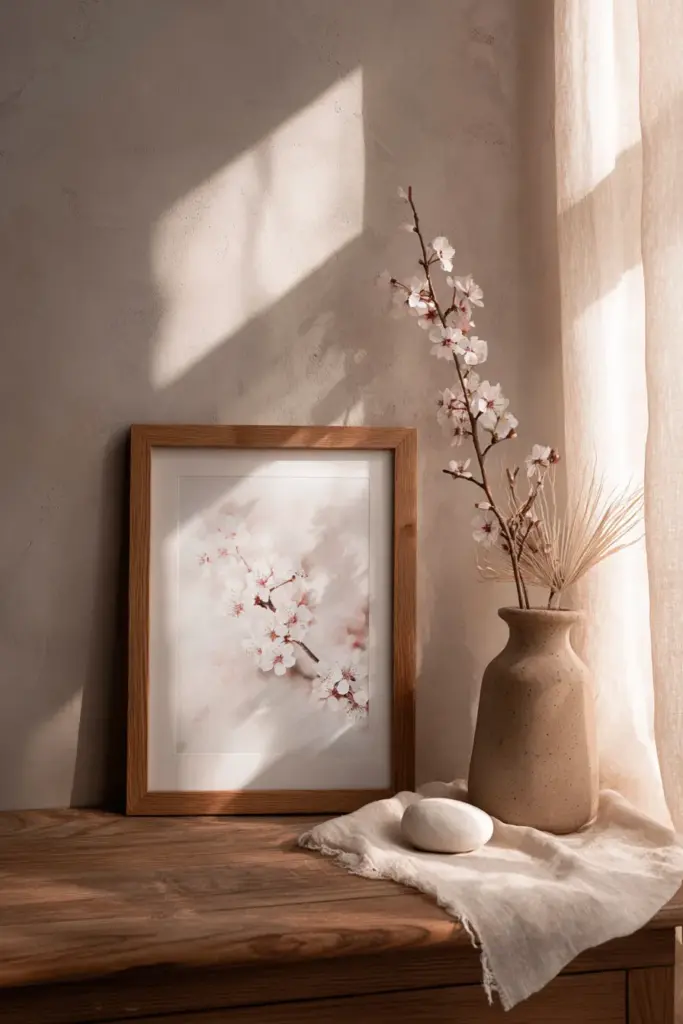
Bring in a few branches of cherry blossom, eucalyptus, or budding willow from your garden or a nearby market. Arrange them loosely in a tall, narrow vessel — asymmetry is intentional here. This single gesture signals a new season without spending more than a few dollars.
Spring texture checklist:
- Linen cushion covers in off-white, dusty sage, or pale clay
- Lightweight cotton throws, folded loosely on a chair
- A single ceramic vessel with fresh or dried branches
- Sheer linen panels instead of heavier drapes
Summer: Rattan, Warmth, and Slow Afternoons
Celebrate texture. Invite the outdoors in.
Summer Japandi leans into natural materials — rattan, bamboo, seagrass. If you have a rattan chair or woven basket, now is the time to bring it forward. These pieces carry warmth without visual weight, which keeps spaces feeling airy even on the hottest days.
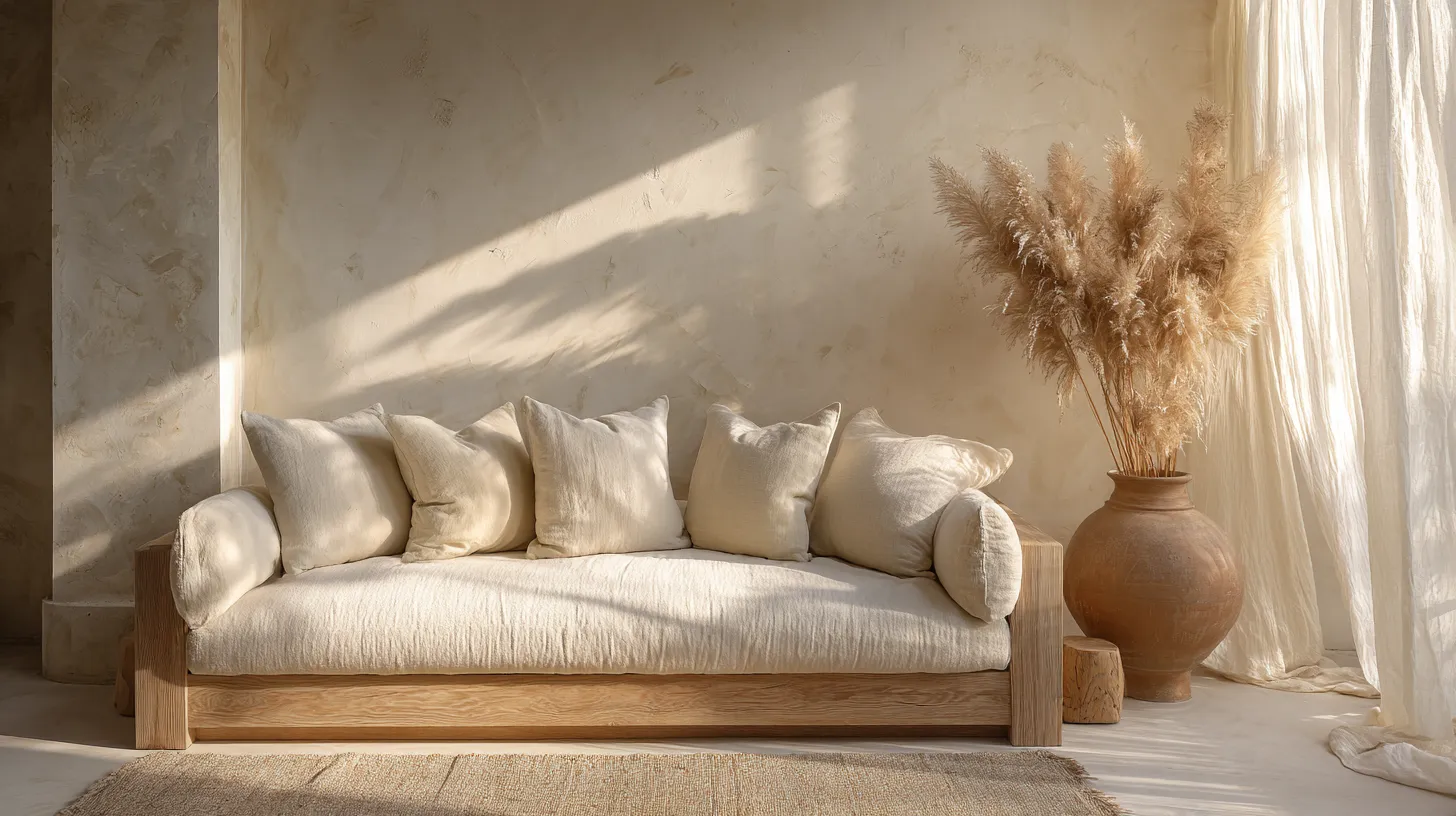
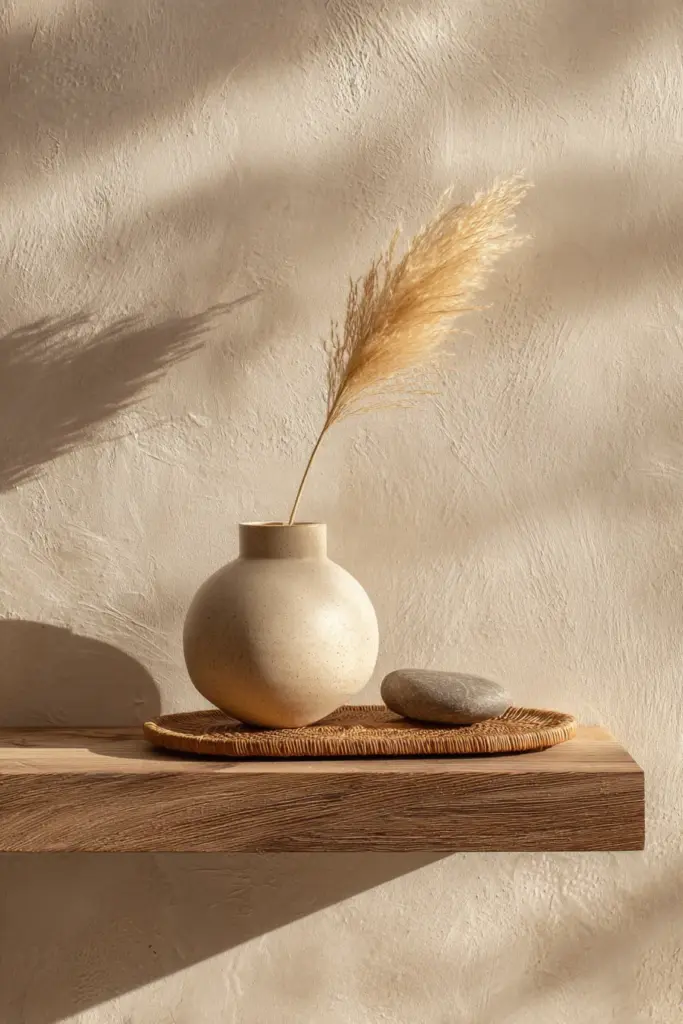
On your surfaces, shift to dried botanicals: pampas grass, dried seed pods, sun-bleached feathers. These cost almost nothing if you forage or dry your own, and they last for months. A cluster of dried lavender tied with linen cord is a complete décor statement.
Lighting shifts too. In summer, swap heavy amber bulbs for cooler, soft white ones that mimic long, golden afternoons.
Summer texture checklist:
- Rattan baskets, trays, or accent chairs
- Dried pampas grass or seed heads in wide, low vessels
- Bamboo placemats and coasters for your dining table
- Sheer cotton panels to diffuse bright afternoon light
Autumn: Wool, Amber, and Coming Home
Layer warmth back in. Shift toward amber and earth.
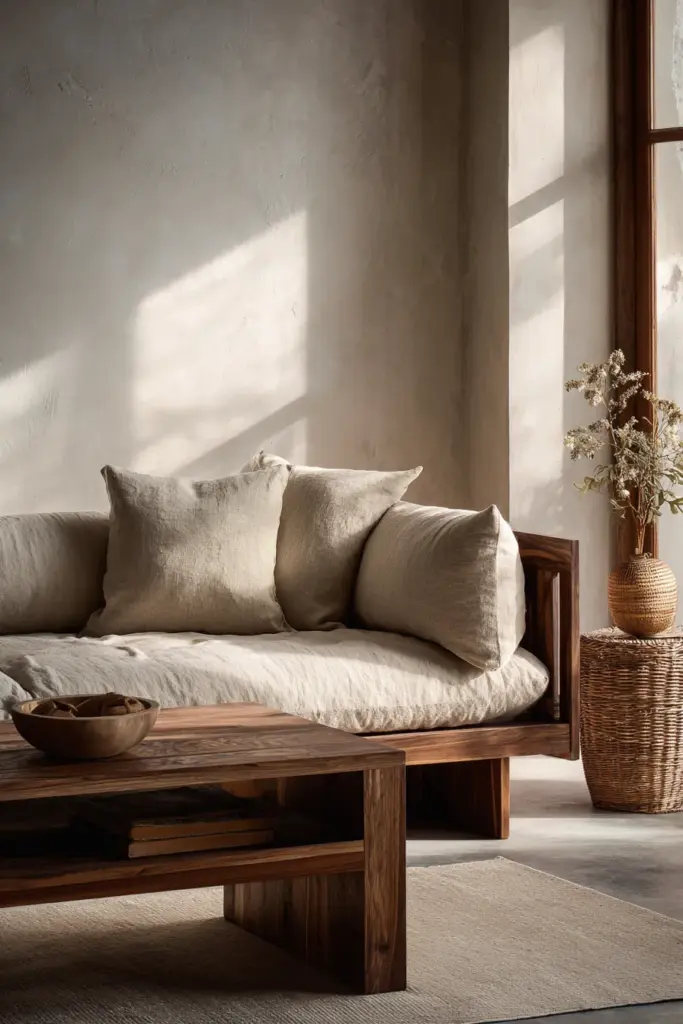
Autumn is the most sensory Japandi season. This is when you reintroduce wool — a chunky knit throw draped over the arm of a chair, a heavier rug layered under a lighter one. The tactile richness of these materials creates the feeling of shelter without changing a single piece of furniture.
Shift your lighting toward amber. Swap cooler bulbs for warm-toned ones, or simply introduce more candles — unscented beeswax or soy taper candles in muted tones work beautifully. Add a small ceramic bowl of smooth river stones or dried moss as a grounding element on your coffee table.
Colours deepen slightly: terracotta, warm beige, deep forest green. A single terracotta pot moved from a shelf to the floor, filled with a sculptural dried branch, transforms a corner completely.
Autumn texture checklist:
- Chunky wool or boucle throws in warm beige or oat
- An additional layered rug for softness underfoot
- Warm amber bulbs or beeswax taper candles
- Terracotta vessels with dried autumnal foliage
Winter: Stillness, Depth, and Candlelight
Pare back. Let stillness be the aesthetic.
Winter Japandi is perhaps its most pure expression. The season invites you to remove rather than add. Clear surfaces of anything non-essential. Keep only what brings genuine calm — a favourite book, a single candle, a smooth stone.
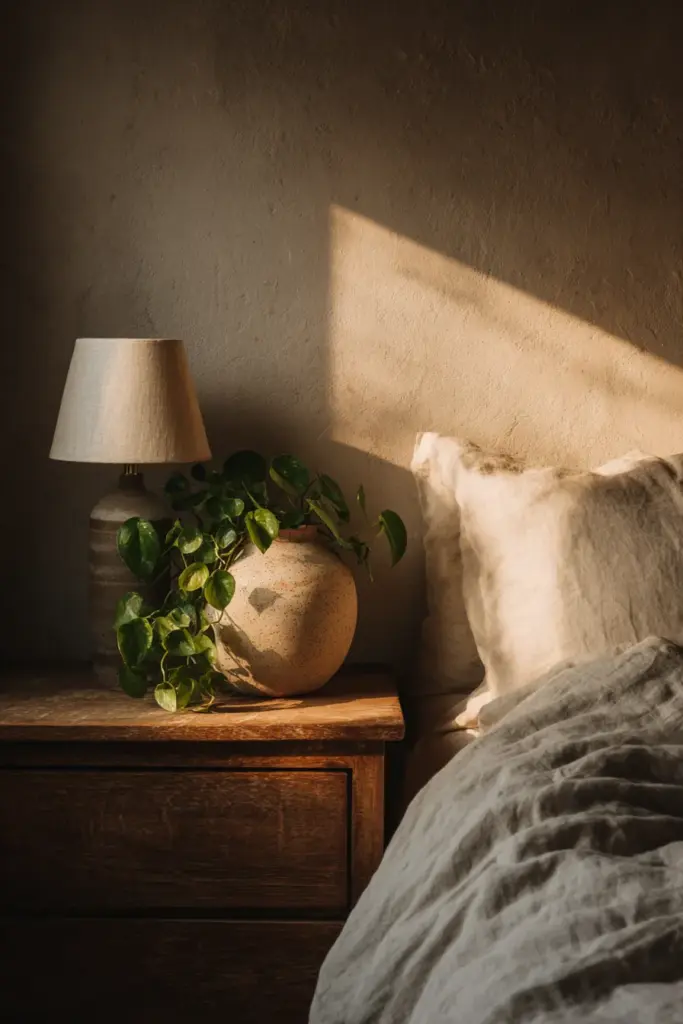
Layer your warmest textiles: linen over cotton, wool over linen. The layering creates visual depth and genuine warmth. A sheepskin draped over a chair, a heavyweight linen duvet folded at the foot of the bed — these small gestures feel luxurious at minimal cost.
In winter, light is everything. Cluster three or five candles of varying heights on a wooden board. Arrange them near a window so their reflection doubles the glow. This is Japandi candlelight at its most meditative.
Winter texture checklist:
- Sheepskin or faux-sheepskin accent throw
- Clustered candles on a raw wood or slate board
- Heavy linen or flannel bedding in bone, charcoal, or deep green
- A single evergreen sprig or pinecone arrangement
Seasonal Décor Cost: Buying New vs. DIY Upcycling
| Item | Buy New (Avg.) | DIY / Upcycle (Avg.) | Savings |
|---|---|---|---|
| Linen cushion covers (set of 2) | $45–$80 | $12–$20 (fabric + sewing) | Up to $60 |
| Rattan pendant light shade | $60–$120 | $25–$40 (kit or thrift repaint) | Up to $80 |
| Ceramic vase, medium | $35–$70 | $8–$15 (thrift + sand/seal) | Up to $55 |
| Wooden side table | $150–$300 | $20–$50 (thrift + light sanding + wax) | Up to $250 |
| Seasonal dried botanicals | $25–$50 per bunch | $0–$5 (foraged or home-dried) | Up to $50 |
| Wool throw blanket | $80–$200 | $30–$60 (vintage/secondhand) | Up to $140 |
The numbers speak clearly. A seasonal refresh done through upcycling and foraging costs a fraction of buying new — and often produces pieces with far more character.
How to Upcycle Non-Japandi Furniture the Right Way
Most people already own furniture that can be quietly transformed into something Japandi-adjacent. You do not need to replace everything — you need to edit it.
The Light Wood Transformation
Dark, heavy wood furniture is the most common barrier people see between their current home and a Japandi one. But it is also the easiest to address. Light sanding followed by a wash of white or warm grey chalk paint dramatically shifts the visual weight of a piece. Finish with a natural beeswax to protect the surface and add a soft, matte sheen.
Replace drawer hardware with simple brass pulls, matte black handles, or raw wooden knobs. This single update costs under $20 and changes everything.
DIY Slatted Wood Details
Slatted wood is one of the most recognisable Japandi design elements — found in furniture fronts, room dividers, and headboards. You can create a simplified version by attaching thin wooden dowels or craft laths to the front of a plain dresser or wardrobe using strong adhesive. Sand smooth, apply a light stain, and the transformation is striking.
Painting Grout and Tiles
If your bathroom or kitchen has dated tiles in a pattern that feels too busy, a coat of specialist tile paint in warm white or pale clay can bring it quietly into a Japandi palette. This is one of the highest-impact, lowest-cost transformations available — and entirely reversible if you rent your home.
Biophilic Décor on a Budget: Growing Your Own Japandi Garden
Japandi and biophilic design are inseparable. Nature is not an accessory in this aesthetic — it is the foundation. But you do not need expensive, curated plants to achieve this. You need intention.
Propagating Your Own Plants
Many of the most visually perfect Japandi plant companions — pothos, monstera, rubber plants, snake plants — propagate easily from cuttings. Ask a friend, visit a plant swap, or simply take a cutting from your own existing plant. Within weeks, you have a new specimen to place in a simple ceramic or terracotta pot.
A cluster of three propagating cuttings in small bud vases on a windowsill is one of the most purely Japandi vignettes you can create — and it costs virtually nothing.
Seasonal Foraging for Décor
Foraging is deeply aligned with the Japandi spirit. In spring, gather cherry or apple blossoms. In summer, dry your own lavender or chamomile. In autumn, collect seed heads, pine cones, and copper-toned leaves. In winter, snip a few sprigs of rosemary, eucalyptus, or holly.
Displayed simply — a single branch in a tall vase, a handful of pine cones in a wooden bowl — these foraged elements bring a living, seasonal quality to your home that no shop-bought item can replicate.
Low-Maintenance Plant Choices for Japandi Spaces
- Monstera deliciosa — bold, architectural, thrives on neglect
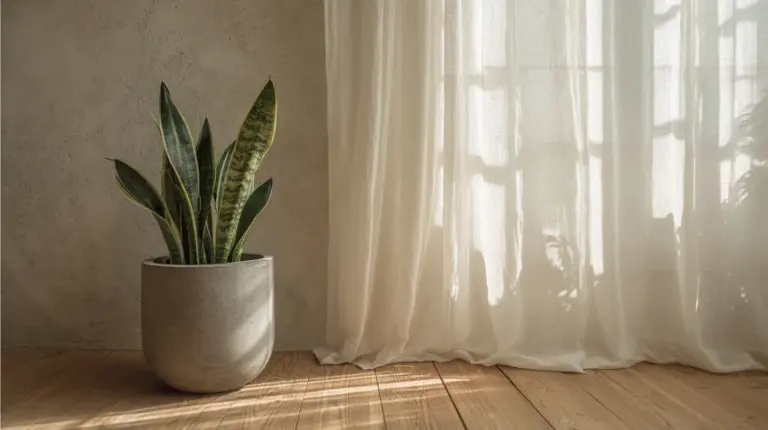
- Snake plant (Sanseveria) — graphic silhouette, virtually indestructible
- Pothos — trailing, light-filtering, propagates endlessly
- ZZ plant — deep green, glossy, low light friendly
- Dried pampas or bunny tail grass — zero maintenance, lasts a full season
How to Care for Budget Japandi Materials So They Last
Buying affordable materials is only half the equation. The other half is maintaining them with care — because Japandi is ultimately a sustainable philosophy.
Bamboo and rattan: Wipe with a damp cloth and a drop of natural oil (linseed or coconut) every few months to prevent drying and cracking. Keep out of direct sunlight for extended periods.
Linen textiles: Wash in cold water on a gentle cycle. Tumble dry briefly then air dry flat to prevent shrinkage. Linen actually softens and improves with every wash.
Light-toned laminate furniture: Avoid harsh chemical cleaners. A microfibre cloth with warm water and a drop of dish soap keeps surfaces pristine. For scratches, a furniture touch-up pen in the closest wood tone works wonders.
Terracotta pots: Seal the inside with a terracotta sealant before planting to prevent moisture damage. Wipe the outside with a dry brush to maintain the matte, natural appearance.
Unfinished or waxed wood: Reapply beeswax every six to twelve months to maintain protection and sheen. Buff with a soft cloth for a low, natural glow.
Budget-Friendly Japandi Must-Haves: Your Essential Checklist
- Linen throw in a neutral — oat, white, or warm grey
- One ceramic or terracotta vase, matte finish
- A natural fibre rug — jute, sisal, or cotton flatweave
- At least one rattan or bamboo element (basket, tray, lamp)
- A wooden cutting board or tray for surface styling
- Beeswax or soy candles in muted tones
- A low-maintenance plant in a simple pot
- Linen or cotton cushion covers in earthy tones
- A secondhand or upcycled wooden side table or stool
- Warm-toned Edison or filament bulbs for ambient lighting
Conclusion
A Japandi home is not built in a weekend shopping trip. It is assembled slowly, seasonally, and with great care — the way a garden grows, the way a friendship deepens.
The beauty of this aesthetic is that it asks less of your wallet and more of your attention. It invites you to notice what is already beautiful in your space, to honour the texture of a worn wooden surface, the curve of a simple bowl, the way afternoon light pools across a linen cushion.
You do not need more. You need to see what you have differently.
At ERYLIN, we believe that a beautiful home is not a luxury — it is a practice. And every season offers a quiet invitation to begin again.
Frequently Asked Questions
Is Japandi style expensive to achieve?
Japandi can be as budget-friendly or as premium as you choose. The philosophy of u0022fewer, better thingsu0022 actually makes it one of the most cost-effective aesthetics — you buy less, but with more intention. Most of the look can be achieved through upcycling, foraging, and seasonal textile swaps.
How do I transition my Japandi décor between seasons without buying new things?
The key is a seasonal rotation system. Swap heavy wool textiles for lighter linen in spring and summer, and bring them back in autumn and winter. Change out botanicals with what is growing or drying in each season — cherry blossoms in spring, dried seed heads in autumn. Move the same objects to different positions in your home for a fresh perspective.
What are the key elements of Japandi interior design?
Japandi is defined by natural materials (wood, linen, rattan, clay), a muted and earthy colour palette, functional furniture with clean lines, and meaningful negative space. The aesthetic balances Japanese minimalism and imperfection with Scandinavian warmth and cosiness.
Can DIY projects help achieve the Japandi look?
Absolutely — DIY is central to an authentic Japandi approach. Painting furniture with chalk paint, replacing hardware with natural materials, creating slatted wood details, propagating cuttings, and drying your own botanicals are all accessible ways to bring the aesthetic into your home at very low cost.
Where can I find affordable Japandi-style furniture?
Thrift stores and secondhand marketplaces are the best starting points — a plain solid wood piece is far more transformable than a cheap flatpack. Look for simple silhouettes in light or natural-toned wood. Online marketplaces like Facebook Marketplace, Depop, and local charity shops often have exactly what you need for a fraction of the retail price.