
Table of Contents
By ERYLIN — Your Home, Your Sanctuary
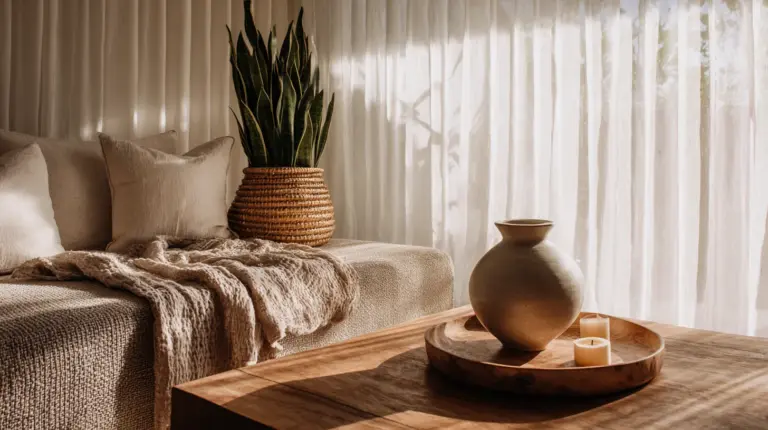
There is a certain kind of room that stops you at the door. Not because it is grand or expensive — but because it breathes. The light falls softly, the surfaces are uncluttered, and every object seems to belong exactly where it sits. That feeling has a name: Japandi.
Japandi is the quiet marriage of Japanese wabi-sabi and Scandinavian hygge — two philosophies that arrived at the same truth from opposite corners of the world. Beauty lives in simplicity. Comfort is found in restraint. And a well-lived home does not need to cost a fortune to feel like one.
At ERYLIN, we believe that good design is not a luxury. It is a practice — something you build slowly, intentionally, and beautifully, even on a modest budget. Whether you are starting from scratch or refreshing a room you have lived in for years, this guide will walk you through everything you need to know about affordable Japandi design in 2026.
So take a slow breath. Pour something warm. Let’s build something beautiful together.
What Is Japandi Interior Design?
Japandi is not a trend. It is a philosophy made visible.
It blends the minimalist warmth of Scandinavian design — think pale woods, soft textiles, and cozy functional furniture — with the earthy restraint of Japanese aesthetics, where negative space, natural imperfection, and craftsmanship take center stage.
The result is a home that feels both airy and grounded. Light, but never cold. Simple, but never bare.
The Core Principles of Japandi Style
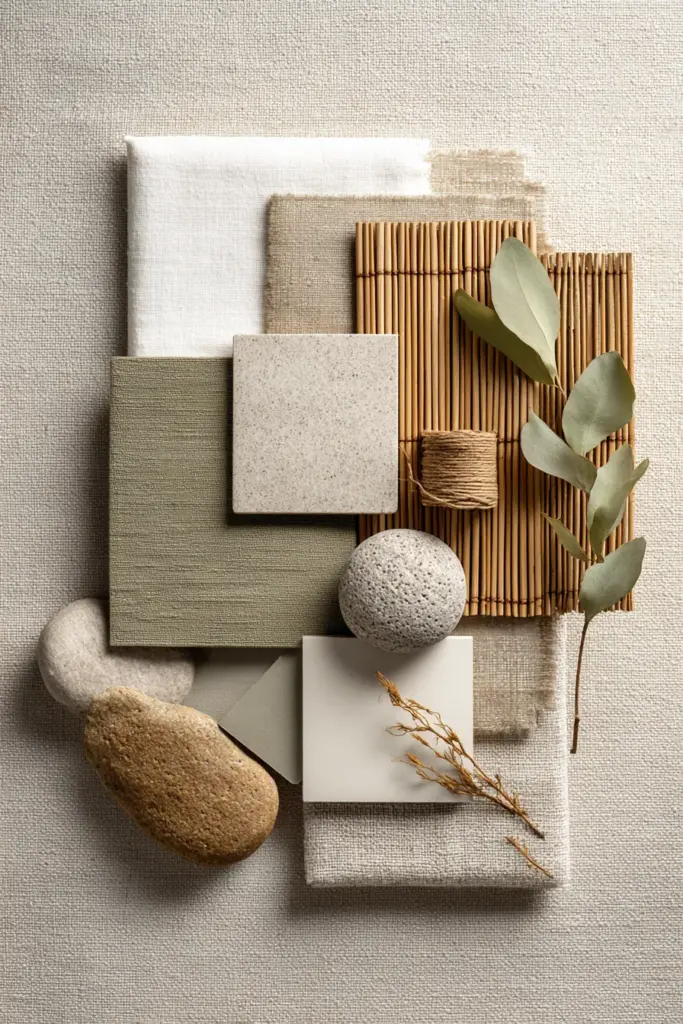
- Neutral, nature-drawn color palettes — warm whites, stone beige, muted sage, soft charcoal
- Natural materials — wood, bamboo, rattan, linen, jute, stone, ceramic
- Clean, low-profile furniture with honest craftsmanship and gentle curves
- Intentional negative space — let rooms breathe; empty is not lacking
- Biophilic touches — living plants, dried botanicals, natural light
- Functional beauty — every piece earns its place
The beauty of Japandi is that its very essence is anti-excess. You do not need more — you need better chosen.
Is Japandi Design Expensive?
This is the question we hear most often — and the honest answer is: it does not have to be.
Japandi is actually one of the most budget-friendly aesthetics you can pursue, because it asks you to buy less, not more. A single well-made wooden stool. A linen throw in the right shade of oat. One ceramic vase on an open shelf.
The expensive version of Japandi exists, yes. But so does the ₱5,000 version, the thrift-store version, the Shopee-find version. The philosophy does not change — only the source of the pieces does.
How to Achieve Japandi Style on a Budget: Room by Room
The Japandi Living Room
The living room is where Japandi reveals itself most fully — and where a few smart choices go the furthest.
Furniture
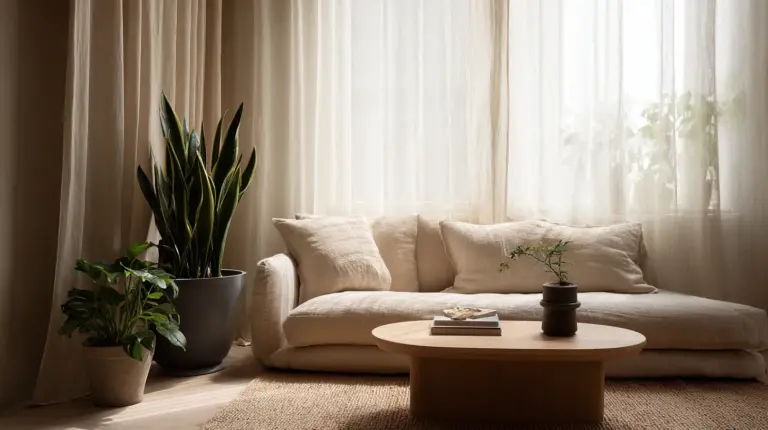
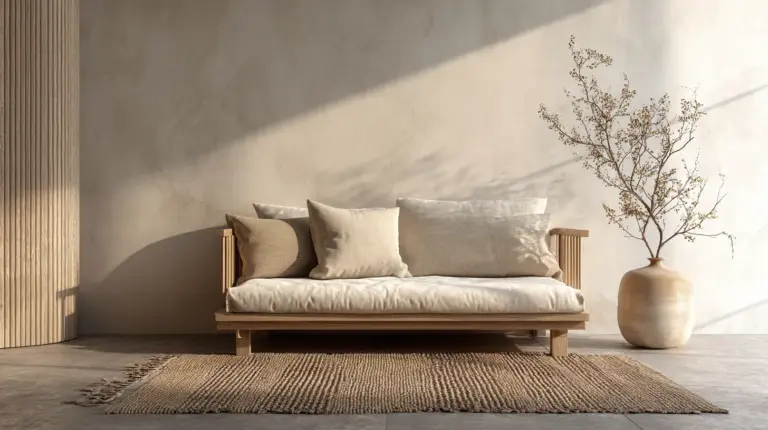
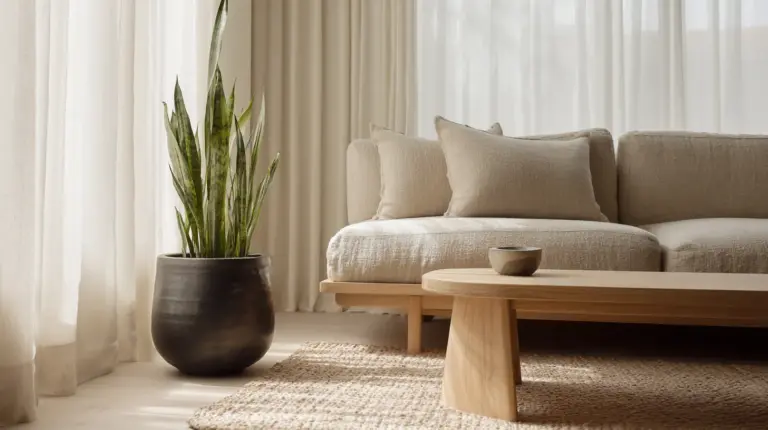
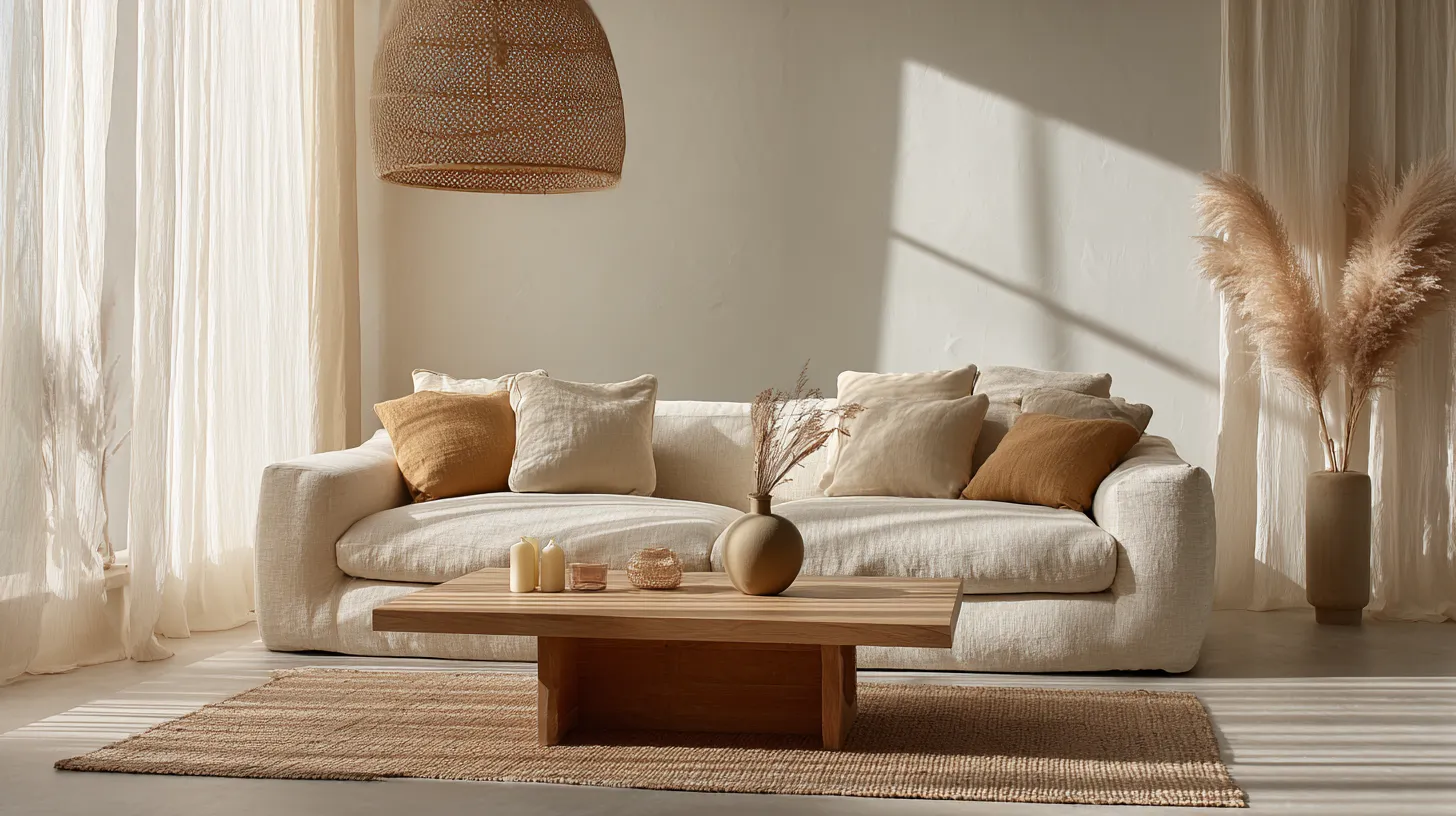
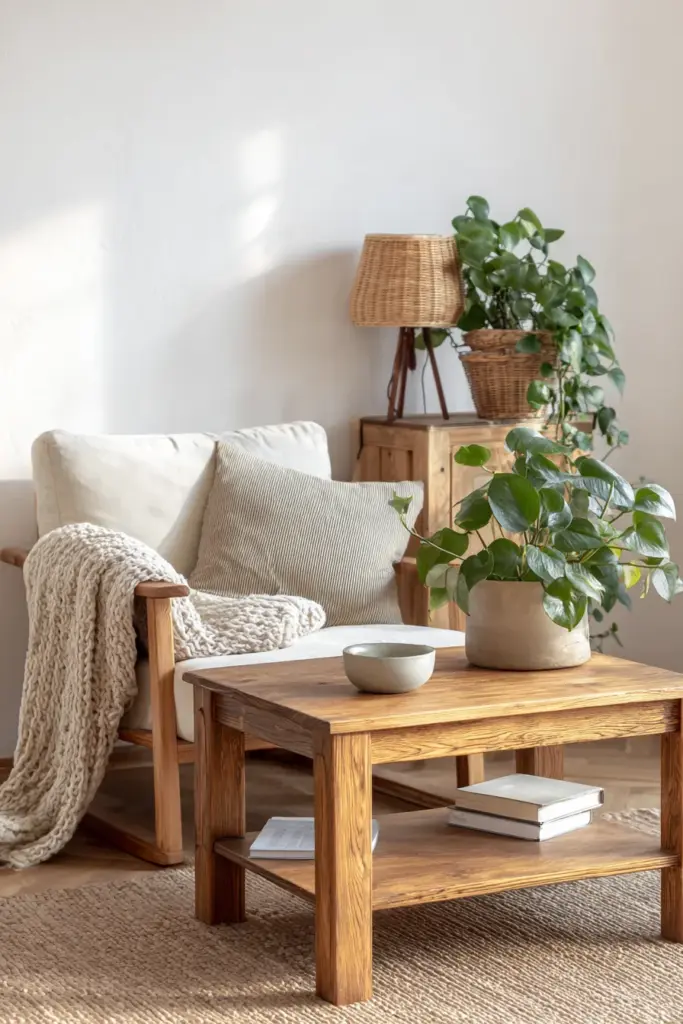
Start with your sofa. A low-profile sofa in linen, boucle, or plain cotton in off-white, warm grey, or camel sets the entire tone of a Japandi living room. Look for clean-lined options on Shopee PH or IKEA — the KIVIK and ÄPPLARYD lines translate beautifully into this aesthetic at an accessible price point.
Pair it with a low wooden coffee table — solid mango wood, acacia, or bamboo. Local furniture makers in Pampanga and Cebu often produce these at a fraction of branded prices. Secondhand finds from Facebook Marketplace or tiangge runs can also surface real gems.
Avoid heavy, ornate, or dark furniture. Japandi furniture is honest: it shows its material, sits close to the floor, and does not shout.
Budget Breakdown: Living Room Japandi
| Item | Estimated Cost (PHP) | Where to Find |
|---|---|---|
| Low-profile sofa (linen/cotton) | ₱8,000–₱18,000 | Shopee PH, IKEA |
| Wooden coffee table (mango/acacia) | ₱2,500–₱6,000 | Divisoria, Lazada, local makers |
| Jute or woven area rug | ₱1,200–₱3,500 | Shopee PH, tiangge |
| Ceramic vase (1–2 pieces) | ₱300–₱900 | Divisoria, Kultura |
| Linen throw blanket | ₱500–₱1,500 | Shopee PH |
| Rattan pendant light | ₱800–₱2,000 | Shopee PH, hardware tiangge |
| Potted plant (snake plant, peace lily) | ₱150–₱500 | local plant markets |
| Estimated Total | ₱13,450–₱32,400 |
A beautifully Japandi-styled living room in the Philippines is absolutely achievable under ₱25,000 — and even less if you thrift or DIY.
Lighting
Lighting is everything in Japandi. You want warm, layered light — never harsh overhead fluorescents.
Swap ceiling bulbs for warm-white LEDs (2700K–3000K). Add a rattan or woven pendant light over a corner or dining nook. A simple paper lantern or bamboo floor lamp adds height and softness without overwhelming the space.
In the Philippines, humidity makes natural fiber lamp shades an especially grounding choice — they age beautifully and connect your interior to the tropical landscape just outside your window.
Texture and Soft Furnishings
Layer your textures the way you would layer flavors — each one distinct, but harmonious together.
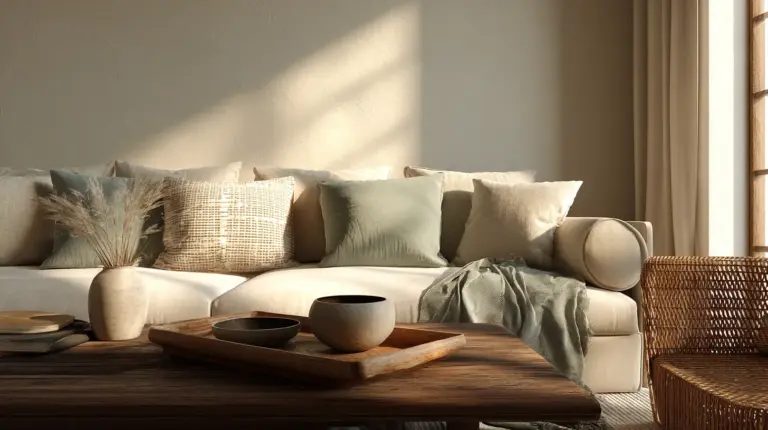
A jute rug underfoot. A linen cushion with a quiet geometric print. A knit throw draped loosely over the sofa arm. These are the details that make a room feel lived-in and loved.
Stick to your palette: warm whites, oatmeal, dusty sage, soft charcoal, warm terracotta accents. Let the materials provide the visual interest.
The Japandi Bedroom
The bedroom in Japandi philosophy is a place of true rest — a room that asks nothing of you.
The Bed and Linens
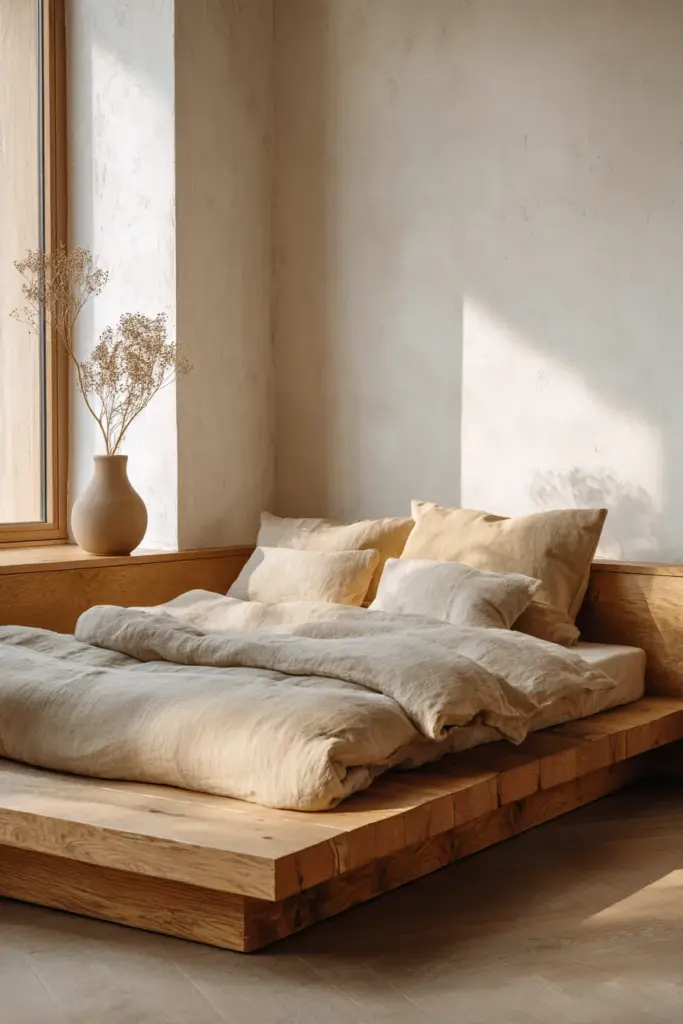
Choose a platform bed frame in solid wood or bamboo, ideally low to the ground. The simplest frames — clean lines, no ornamentation — are often the most affordable and the most Japandi.
Dress it in linen or cotton-linen blend bedding in warm whites or soft stone. Linen breathes beautifully in tropical climates, making it a practical as well as a beautiful choice for Filipino homes. Shopee PH carries excellent budget-friendly linen bedding sets that photograph just like the Pinterest boards you’ve been saving.
Negative Space as Decor
In a Japandi bedroom, resist the urge to fill every surface. Leave your bedside table mostly bare — perhaps a small ceramic lamp, a single book, one smooth stone or dried stem in a slender vase.
Empty wall space is not wasted space. It is quiet. And quiet is deeply luxurious.
DIY Japandi: Pallet Wood Shelving
One of the most impactful and affordable Japandi touches you can add to a bedroom is open shelving in raw or lightly stained wood. Reclaimed pallet wood, sanded smooth and sealed with clear matte varnish, creates a beautiful floating shelf for ₱300–₱800 in materials.
Style it with: a small trailing plant, two or three paperback books stood upright, and one small handmade ceramic piece. That is all it needs.
The Japandi Kitchen and Dining Area
The kitchen and dining space in a Japandi home is where function and beauty truly fuse.
Surfaces and Organization
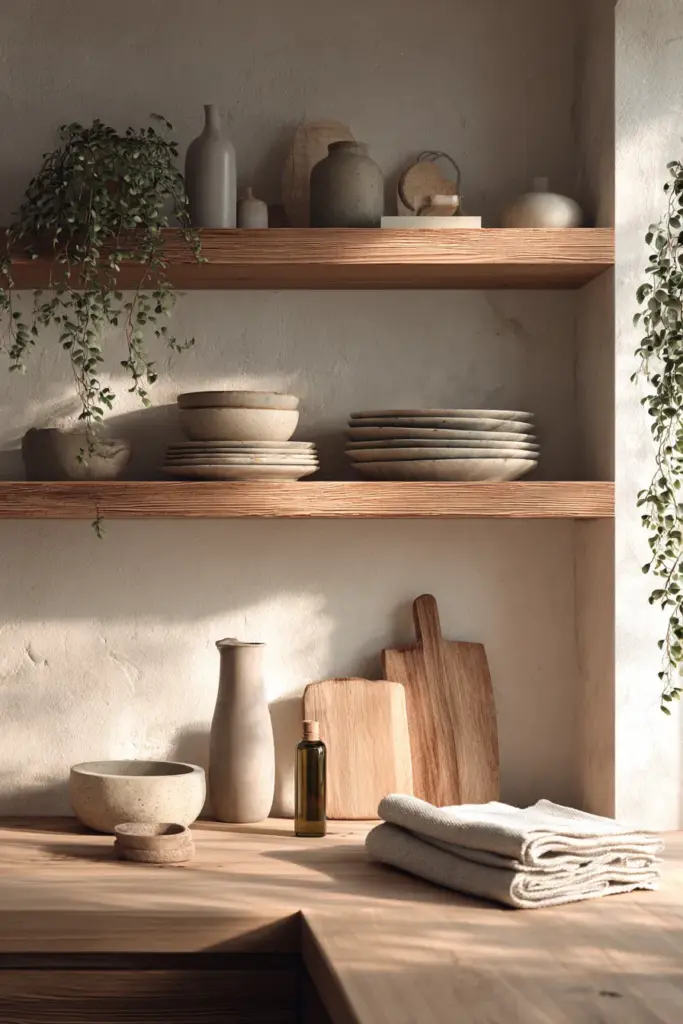
Clear your countertops as much as possible. Store everyday items behind closed cabinets or in woven baskets on open shelves. What remains on the counter — a wooden cutting board, a small plant in a clay pot, a matte ceramic oil bottle — should feel curated, not cluttered.
Open shelving in the kitchen is both practical and beautiful in Japandi design. Wooden floating shelves styled with matching ceramic or stoneware dishes, linen dish towels, and one trailing pothos or fern create an instant sense of intentional living.
The Dining Table
A solid wooden dining table in natural or lightly oiled finish is the heart of a Japandi dining area. Pair it with rattan chairs or simple wooden benches for a relaxed, organic feel.
In the Philippines, solid wood dining tables from Pampanga or Cebu craftsmen offer exceptional quality at local pricing — and supporting local makers is deeply aligned with Japandi’s philosophy of valuing honest craftsmanship.
The Japandi Bathroom
Even the smallest bathroom can carry Japandi’s spirit with just a few thoughtful additions.
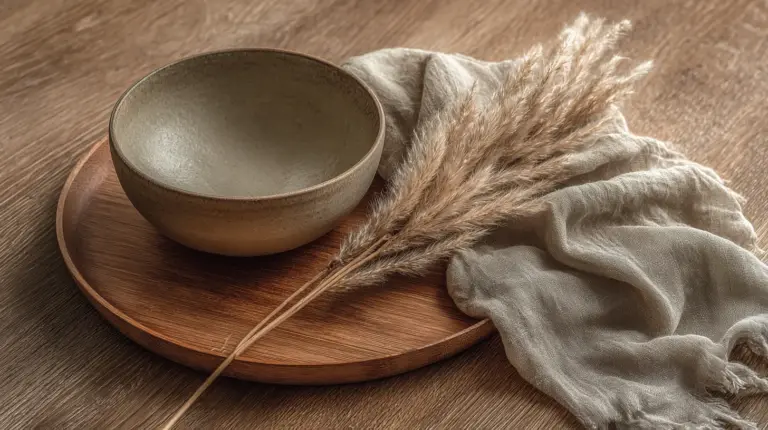
Swap plastic accessories for bamboo or wood soap dishes, toothbrush holders, and bath mats woven from cotton or jute. Add a single dried pampas grass stem or eucalyptus bundle in a tall, slender vase. Fold your towels neatly in a muted tone — soft grey, off-white, or warm taupe.
Remove everything from the counter that does not serve a purpose. What remains should feel intentional, calm, and clean.
Japandi Plants: Bringing Life to the Palette
Biophilic design — the integration of nature into interior spaces — is fundamental to Japandi. And in the Philippines, we are exceptionally well-placed to do it beautifully.
Best Japandi Plants for Philippine Homes
- Snake plant (Sansevieria) — thrives in low light and high humidity, almost no maintenance
- Peace lily — elegant, air-purifying, loves indirect light
- Pothos — fast-growing, trailing beautifully from shelves and high planters
- ZZ plant — glossy, sculptural, nearly indestructible
- Bamboo — a natural Japandi icon; grow in water or soil in a tall, narrow vase
Propagate your pothos and snake plants in water to build your plant collection for free. Cut a stem with a node, place in a clear glass jar of water on your windowsill, and roots will appear within weeks. One plant becomes five, becomes fifteen.
DIY Japandi Projects Under ₱1,000
You do not need to buy everything. Some of the most beautiful Japandi elements are made by hand.
- Pallet wood floating shelves — sand, seal, mount. ₱300–₱700 in materials.
- Linen curtains from raw fabric — buy linen fabric by the meter from Divisoria and hem it yourself. ₱400–₱900 for a full window.
- Wabi-sabi ceramic painting — purchase plain white ceramic pots from the market and paint abstract, imperfect brushstroke patterns in matte earth tones. ₱150–₱400.
- Rope-wrapped planters — wrap inexpensive plastic pots in natural jute rope using craft glue. ₱80–₱200.
- Driftwood art — collect driftwood from the beach and arrange pieces against the wall or on a shelf for a free, beautifully organic display.
Japandi Shopping in the Philippines: Where to Find Budget Pieces
Online
- Shopee PH — search “Japandi furniture”, “rattan pendant light”, “linen bedding”, “wooden shelf”. Excellent dupes exist at a fraction of import pricing.
- Lazada PH — similar range; useful for larger furniture pieces with delivery.
- Facebook Marketplace — for secondhand solid wood furniture, lamps, and decor at deeply reduced prices.
In-Store
- Divisoria, Manila — ceramic pots, woven baskets, wooden frames, fabric by the meter. Go early and bring cash.
- Local tiangge and ukay-ukay — genuine Japandi treasure hunting. Solid wood pieces, ceramic ware, linen fabrics, rattan accessories.
- Kultura Filipino (SM) — beautifully crafted local pieces including woven baskets, ceramics, and natural fiber home goods.
- Craftsmen in Pampanga and Cebu — solid wood furniture made to order at competitive local pricing.
Japandi Blend Budget: Your Quick Checklist
- Choose a neutral palette: warm white, oat, warm grey, soft sage, terracotta accent
- Invest in one solid wood furniture piece (bed frame, coffee table, or dining table)
- Layer natural textures: linen, jute, rattan, bamboo, stone, ceramic
- Source lighting in warm white (2700K–3000K); add rattan or woven pendant
- Add 2–4 plants; propagate for free greenery over time
- Practice negative space — empty surfaces are a design choice, not a failure
- Shop Shopee PH, Divisoria, Kultura, and local ukay-ukay before buying new
- DIY one element: a shelf, a linen curtain, a rope planter
- Remove what does not serve a purpose; add only what you love
Conclusion
Japandi does not ask you to spend more. It asks you to choose more carefully.
A home shaped by this philosophy is not a showroom. It is a sanctuary — built quietly, over time, with objects that earn their place and light that lands softly on surfaces you love.
In the Philippines, we are surrounded by the natural materials that Japandi celebrates: bamboo, rattan, mango wood, woven fibers, clay. We have markets rich with hidden finds, craftsmen who build with care, and a climate that makes linen and natural texture a practical joy.
You do not need to wait until you have more money, more space, or more time. You can begin today — with one plant, one cleared surface, one warm light.
Start small. Stay intentional. Let the calm come.
With love and considered design,
ERYLIN
Frequently Asked Questions
What is Japandi interior design?
Japandi is a design style that blends Japanese minimalism and wabi-sabi aesthetics with Scandinavian warmth and functionality. It emphasizes natural materials, neutral color palettes, clean lines, and intentional simplicity — creating spaces that feel calm, grounded, and beautifully livable.
Is Japandi design expensive?
Not at all. Japandi’s core philosophy — buy less, choose well — actually makes it one of the most budget-friendly aesthetics to pursue. Because the style asks for fewer, simpler pieces, you spend thoughtfully rather than abundantly. In the Philippines, Shopee PH, Divisoria, Kultura, and local secondhand markets offer excellent budget-friendly Japandi finds.
Can I do Japandi on a small budget in the Philippines?
Absolutely. A Japandi-styled living room in the Philippines can be achieved for under ₱25,000, and even less with thrift shopping and DIY projects. The style rewards restraint — fewer, better-chosen pieces over many inexpensive ones. Local materials like bamboo, rattan, and Philippine hardwoods are inherently Japandi and widely available at accessible price points.
What are the best affordable Japandi furniture or decor ideas?
Start with a low-profile wooden coffee table, a linen throw, and a jute rug. Add a rattan pendant light and a simple ceramic vase with a dried stem. Propagate free plants from cuttings. DIY a pallet wood shelf. These small, layered additions create an unmistakably Japandi atmosphere without significant investment.
What is the difference between Japandi and Scandinavian (Scandi) design?
While both styles share a love of minimalism, natural materials, and functional furniture, they differ in feeling. Scandi design tends toward brighter, lighter spaces with a focus on hygge (coziness) and sometimes pops of color. Japandi is quieter and more restrained, drawing from Japanese wabi-sabi — the beauty of imperfection, aged materials, and intentional emptiness. Japandi palettes tend to be warmer and earthier, with a deeper sense of stillness.