
Table of Contents
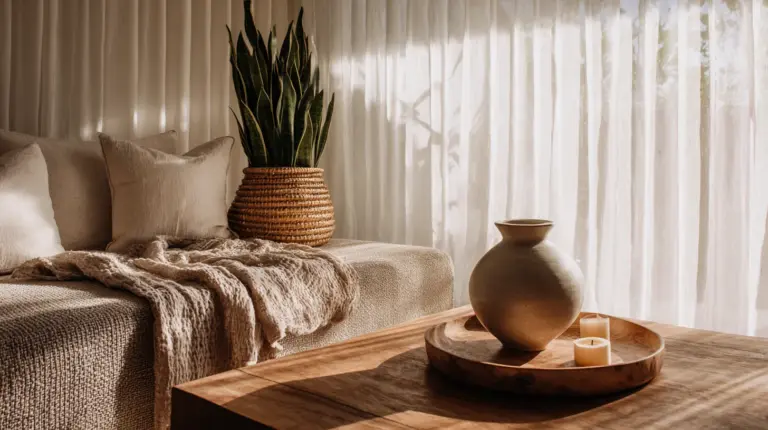
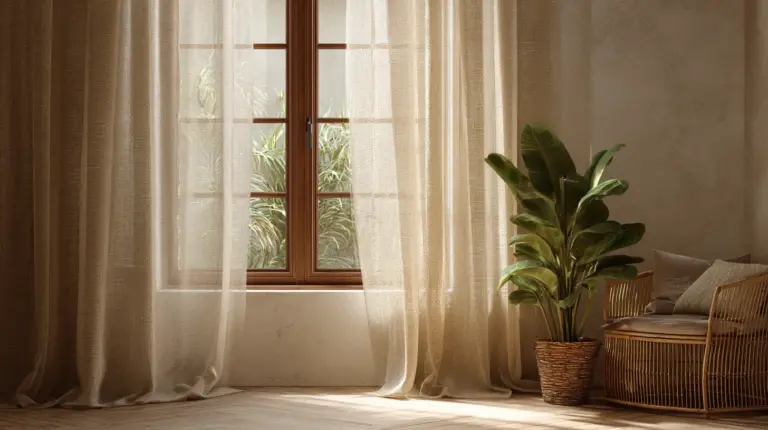
There is a kind of quiet that feels like a deep exhale. The moment you step into a room where everything is intentional — the soft light pooling on a linen cushion, the grain of a wooden coffee table, the single green stem in a ceramic vase — you feel it. That is the Japandi living room.
Japandi is the design world’s most soulful hybrid: the meeting of Japanese wabi-sabi minimalism and Scandinavian hygge warmth. It asks you to keep only what is beautiful, only what is useful, and to let those two things be the same.
At ERYLIN, we believe your home should feel like a sanctuary — not a showroom. And whether you live in a compact apartment in Quezon City or a studio in Makati, this guide will walk you through every element of a minimalist Japandi living room: color, furniture, layout, lighting, plants, and budget-conscious choices that do not sacrifice soul.
Let us begin.
What Makes a Living Room Truly Japandi?
A Japandi living room is not simply a room with beige walls and one plant. It is a philosophy made physical. It draws from two traditions — Japanese minimalism, which honors imperfection and emptiness, and Scandinavian design, which celebrates comfort, natural materials, and light — and blends them into something that feels quietly alive.
Key Features of a Japandi Living Room
The key features that define this style are not trends. They are timeless principles.
| Feature | Japanese Influence | Scandinavian Influence |
|---|---|---|
| Palette | Muted earth tones, charcoal, stone | Warm whites, soft greys, oat |
| Materials | Bamboo, washi, clay | Oak, linen, wool |
| Furniture | Low-profile, spare, crafted | Functional, cozy, clean-lined |
| Decor | Intentional, singular, imperfect | Minimal, natural, meaningful |
| Mood | Contemplative, still | Warm, lived-in |
When these two sensibilities meet, you get a room that breathes. Calm without being cold. Minimal without being empty.
Is Japandi the Same as Pure Minimalism or Scandinavian Style?
Not quite. Pure minimalism strips everything away, sometimes to the point of sterility. Scandinavian design leans cozier — think plaid throws and candlelight. Japandi sits at their intersection: it keeps the warmth of hygge but adds the restraint and craft-consciousness of wabi-sabi. The result feels deeply human.
Decluttering with Japandi Principles
The first step to a Japandi living room is not shopping. It is releasing. Japandi begins with subtraction.
Look at your living room and ask: Does this object earn its place? If something is purely decorative without beauty, or purely functional without grace, it may need to go. Japandi does not believe in clutter hiding behind closed cabinets — it believes in owning less, choosing better.
How to Declutter the Japandi Way
- Keep surfaces mostly clear. One tray. One book. One small plant. Let the surface breathe.
- Edit your shelves. Group items in odd numbers (three, five) and vary heights. Leave deliberate gaps.
- Store with intention. Use closed storage — rattan baskets, low wooden credenzas — to keep daily items out of sight without banishing them.
- Let walls rest. Japandi walls are calm. One piece of art, or none at all.
The goal is not a bare room. The goal is a room where every object is felt.
Choosing the Right Japandi Color Palette
Color sets the emotional temperature of a room. In a Japandi living room, the palette is warm, muted, and layered — never stark, never bold.
Best Colors for a Minimalist Japandi Living Room
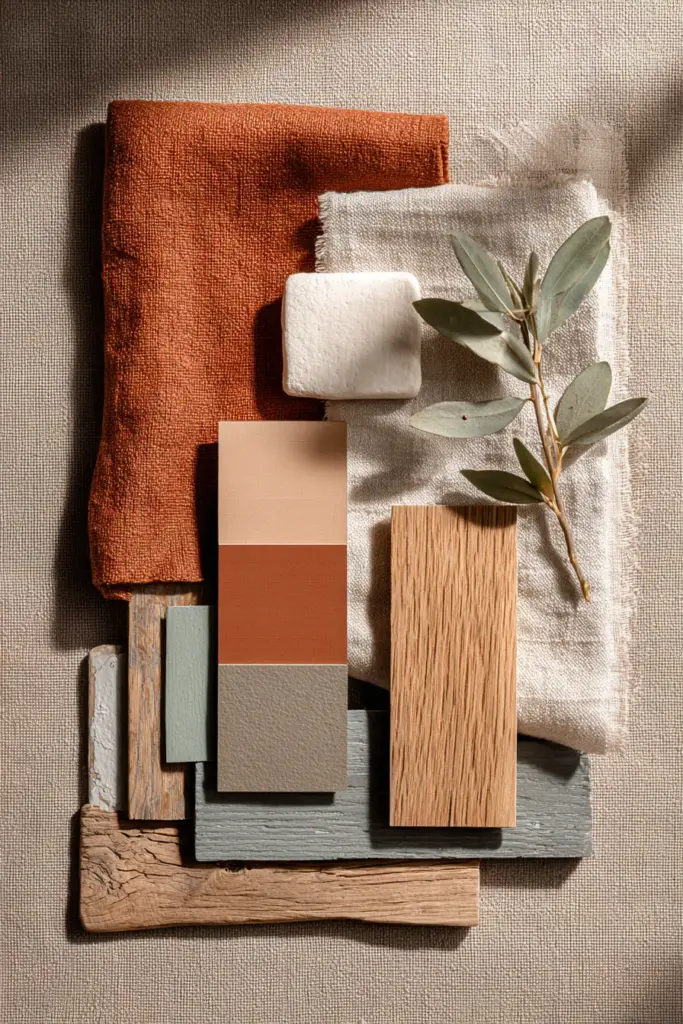
Think of the colors found in nature at dusk: creamy stone, soft charcoal, warm sand, dusty sage, pale clay. These are your anchors.
Warm neutrals — oat, linen white, warm greige — work beautifully on walls and large upholstered pieces. They make rooms feel sunlit even on overcast days.
Deep earth tones — terracotta, umber, moss — function as accents. A single cushion in dusty terracotta against a linen sofa transforms the entire room.
Charcoal and soft black — used sparingly in furniture legs, lamp bases, or frames — ground the space and add quiet drama.
Japandi Color Palette at a Glance
| Role | Colors |
|---|---|
| Wall base | Warm white, oat, greige |
| Large furniture | Sand, stone, oatmeal linen |
| Accent pieces | Dusty sage, terracotta, clay |
| Anchors | Charcoal, matte black, dark walnut |
Avoid bright whites, cool greys, or any color that feels clinical. Japandi warmth lives in the undertones.
Furniture Layout Rules for Small Apartments
This is where Japandi truly shines. Its philosophy of functional minimalism is made for compact living — the kind of apartment living that most of us in Metro Manila know well.
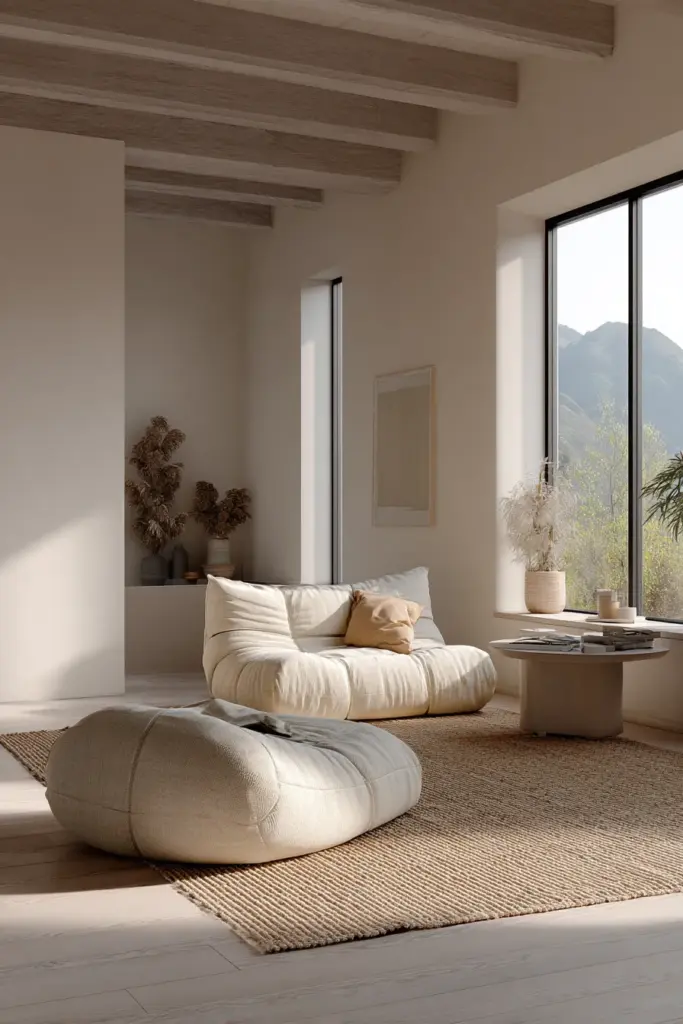
How to Make a Small Japandi Living Room Look Bigger
The secret is not mirrors (though a single, well-placed one helps). It is restraint in scale and clarity in zones.
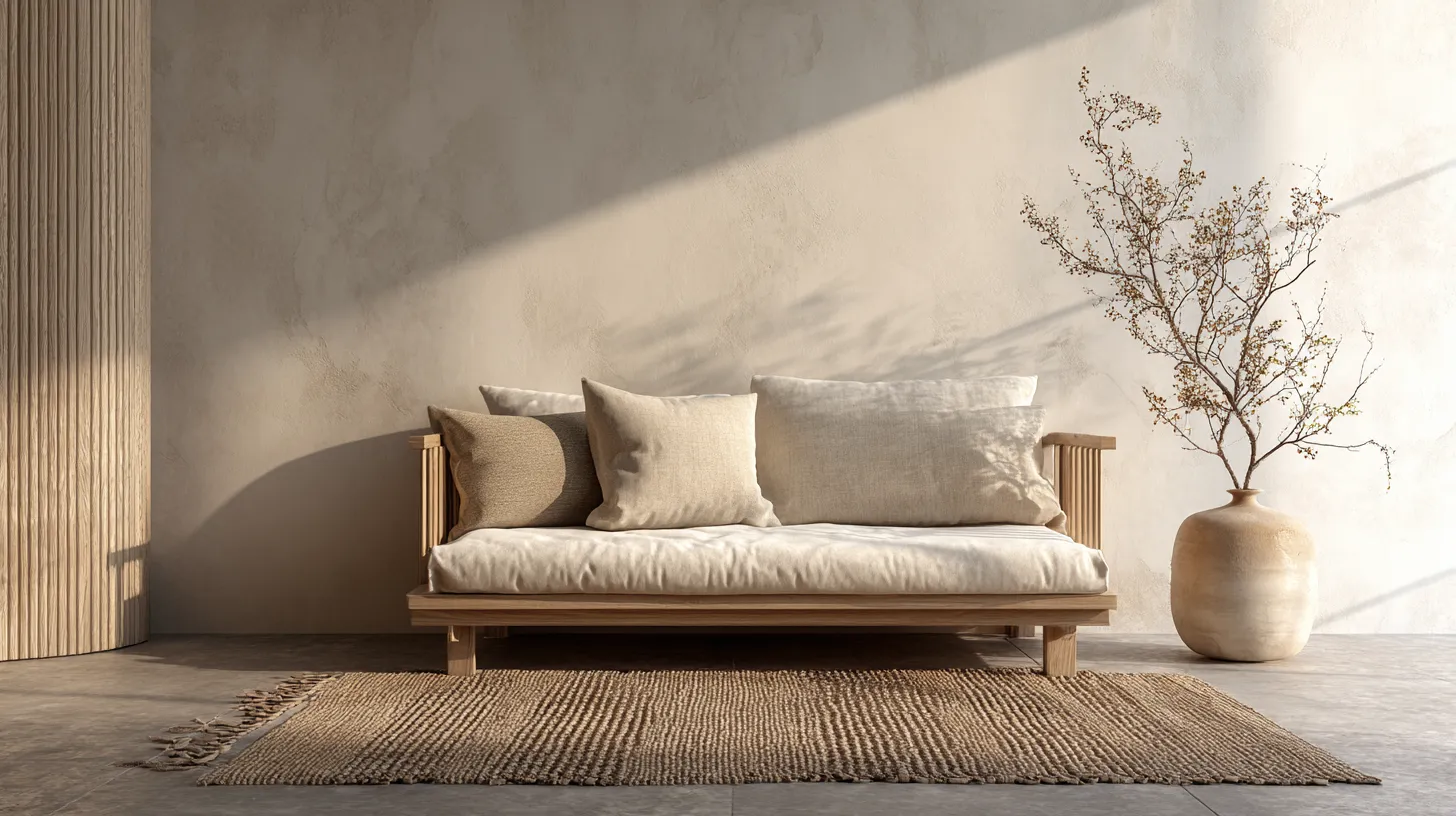
- Choose low-profile furniture. A low sofa — seat height around 16–18 inches — keeps sightlines open and makes ceilings feel higher.
- Float furniture away from walls. It sounds counterintuitive, but pulling your sofa 6–12 inches from the wall creates visual depth.
- Define zones without dividers. Use a natural fiber rug to anchor the seating area. Let the rug do the work that walls cannot.
- Prioritize multi-functional pieces. An ottoman with hidden storage. A bench that doubles as a side table. A nesting coffee table that tucks away.
Japandi Living Room Layout Tips for One-Bedroom Apartments
In a typical Filipino apartment living room — often rectangular, 12–18 square meters — follow this simple formula:
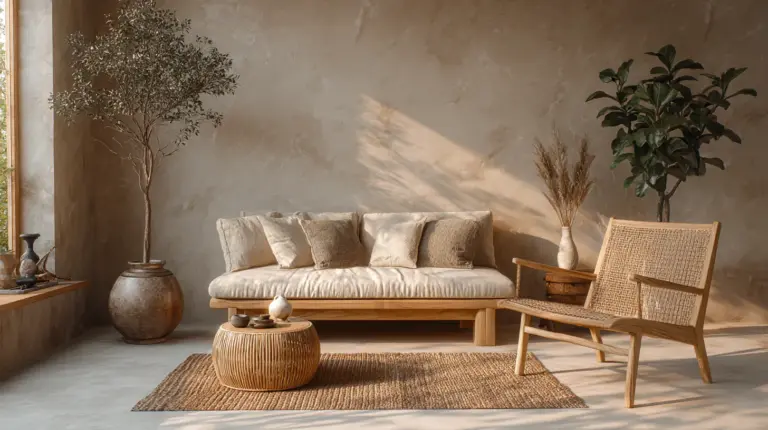
- One anchor sofa placed against the longest wall, or slightly floated.
- One low coffee table centered. Wood or stone finish preferred.
- One accent chair at an angle. This creates conversation and visual interest.
- One vertical element — a tall plant, a slim floor lamp — to draw the eye upward.
- Open floor space preserved. Do not fill every corner.
Less is genuinely more. The room needs room to breathe.
Textiles, Lighting, and Plants That Complete the Look
Once your bones are in place — the palette, the furniture, the layout — you layer in the soul of the room. This is where Japandi becomes felt.
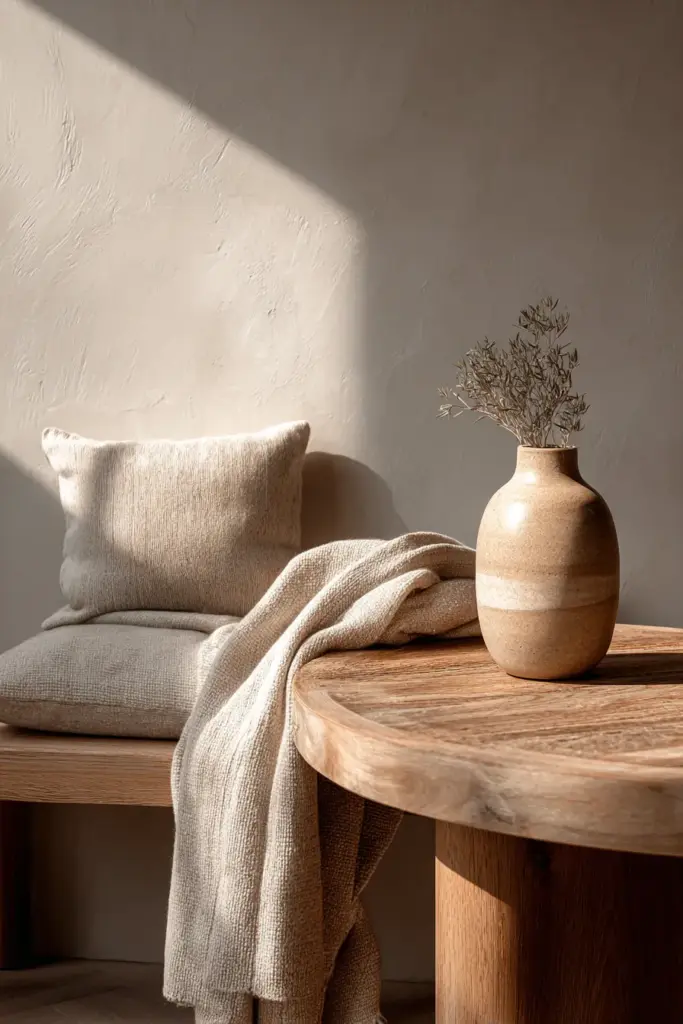
How to Keep a Japandi Living Room from Feeling Cold
The most common fear with minimalist spaces is sterility. The answer is texture. When you remove pattern and color, texture becomes the language of warmth.
- Layer textiles. A chunky linen throw draped over one sofa arm. A wool cushion beside a cotton one. A jute rug beneath a smaller sheepskin.
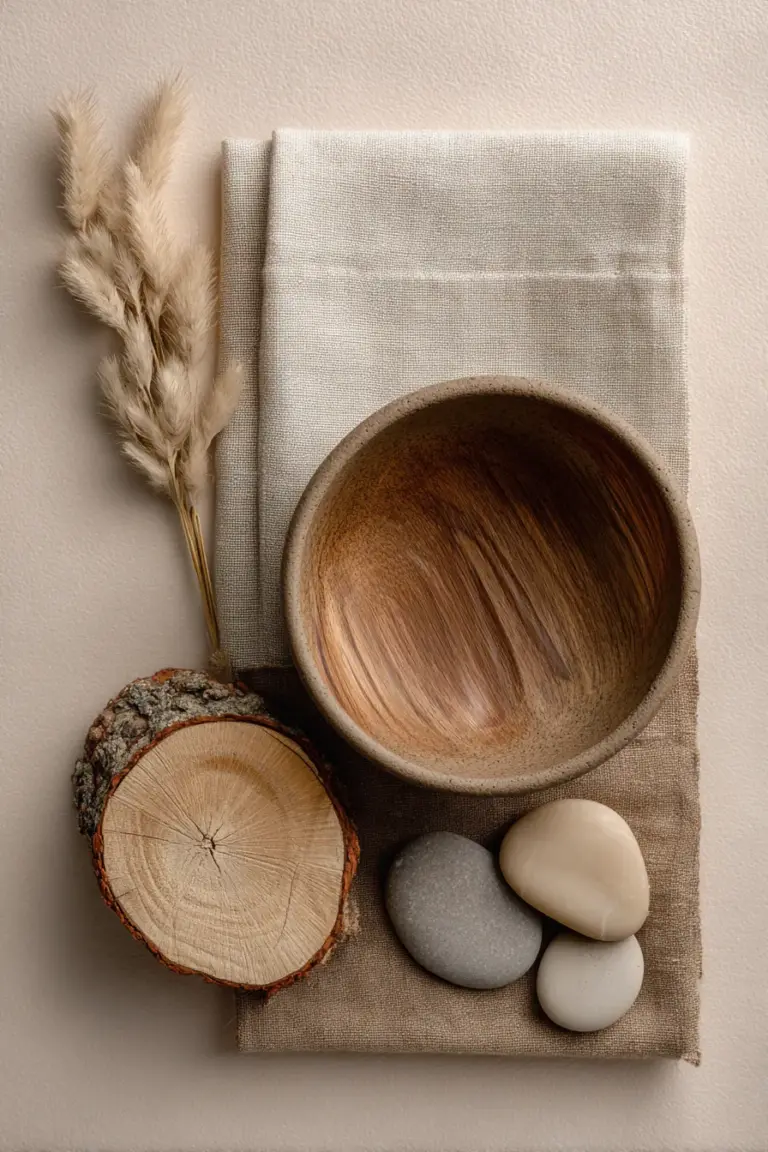
- Choose matte finishes. Matte clay vases, unglazed ceramics, and raw wood speak to the senses more than shiny surfaces.
- Bring in scent. A cedar or hinoki candle, or a small diffuser with sandalwood or bamboo. Scent is an invisible layer of warmth that changes how a room feels.
Lighting Ideas for a Japandi Living Room
Lighting is never an afterthought in Japandi design. It is a material.
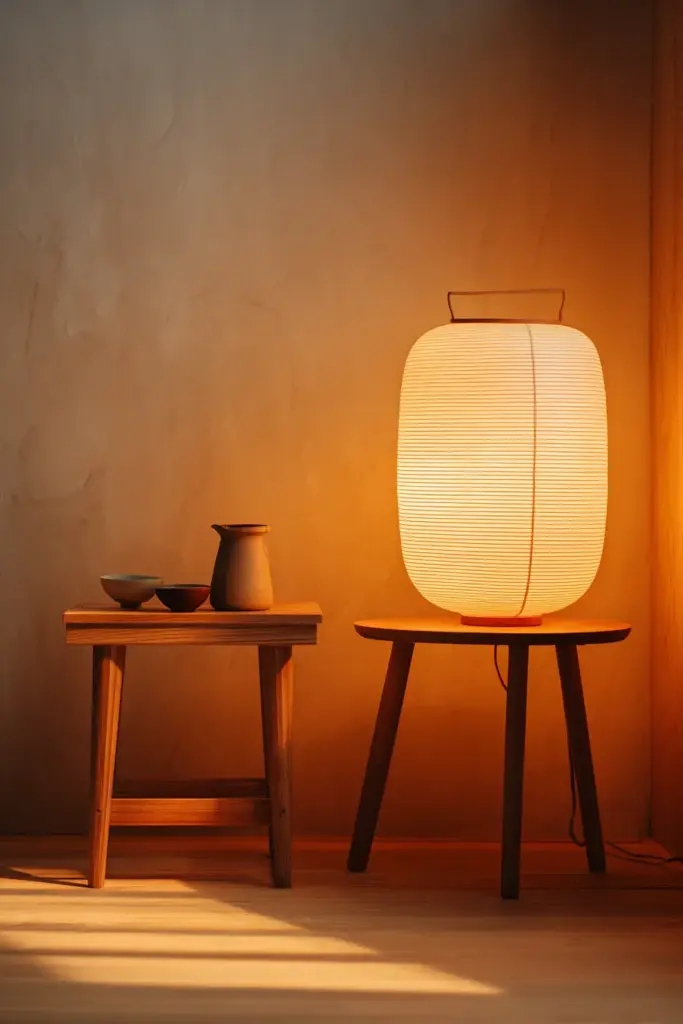
- Layer three types of light: ambient (ceiling or floor lamp), task (reading lamp), and accent (small table lamp or candlelight).
- Choose warm bulbs. 2700K–3000K color temperature. This is the difference between a room that glows and one that simply illuminates.
- Use paper or rattan shades. They diffuse light softly and add natural texture.
- Embrace the unplugged. A cluster of beeswax candles on a wooden tray creates the most honest Japandi light there is.
How to Style a Japandi Living Room with Plants
Plants are not decoration in a Japandi space. They are presence. One well-chosen plant says more than a shelf of trinkets.
- Choose structural, low-maintenance greenery: Snake plant, ZZ plant, monstera, or a potted fig. These thrive in Manila’s warmth.
- Use simple vessels. Terracotta pots, matte white ceramics, or a rough stone planter. No plastic nursery pots.
- Think in odd numbers. One tall plant in a corner. Two small ones on a shelf. Three stems in a bud vase.
- Let leaves breathe. Do not crowd plants. Give each one space to be seen.
Budget Tips for a Japandi Living Room in Manila
Japandi on a budget is entirely possible — and perhaps more authentic for it. The style was never about expensive labels. It was always about choosing wisely.
How to Achieve Japandi Style on a Budget in Metro Manila
Here is where to look, and how to think:
- Shop secondhand first. Ukay-ukay finds, Facebook Marketplace, and Carousell Philippines regularly yield solid wood furniture, ceramic pieces, and linen textiles at a fraction of retail price.
- Invest in one quality anchor piece. Save for a good sofa in a neutral linen or cotton blend. Everything else can be budget-conscious.
- IKEA for bones, local for soul. IKEA’s KALLAX, LACK, and STOCKHOLM lines align well with Japandi proportions. Layer in locally made ceramics, woven baskets from Divisoria, and handmade pieces from Anthill Fabric Gallery or local craft markets.
- Paint is your most affordable transformation. A warm greige or oat white on your walls changes the entire emotional register of a room.
- Make your own textiles. A length of unbleached cotton muslin from Divisoria, hemmed simply, becomes a throw. Texture does not need a price tag.
| Japandi Element | Budget Option | Where to Find |
|---|---|---|
| Low sofa | IKEA KIVIK or secondhand | IKEA PH / Carousell |
| Wooden coffee table | Upcycled or solid wood local | Facebook Marketplace |
| Neutral rug | Jute or seagrass rug | Shopee, Lazada, Habitat |
| Ceramic decor | Local potter or Ukay-ukay | Salcedo Market, Craftivity |
| Plants | Snake plant, ZZ plant | Local garden centers |
| Linen cushions | Plain cotton or linen covers | Divisoria fabric stalls |
Japandi Living Room Checklist
Before you consider your room complete, run through these essentials:
- Walls in warm neutral — oat, greige, or warm white
- Furniture with clean lines and natural materials (wood, rattan, linen)
- Low-profile sofa or seating — seat height under 18 inches
- Surfaces mostly clear — one or two intentional objects only
- Layered lighting — ambient, task, and accent
- Textiles in matte, natural fibers — linen, cotton, jute, wool
- One or two plants in simple, natural vessels
- Muted accent color — terracotta, sage, or clay in one or two pieces
- Open floor space — at least one-third of floor visible
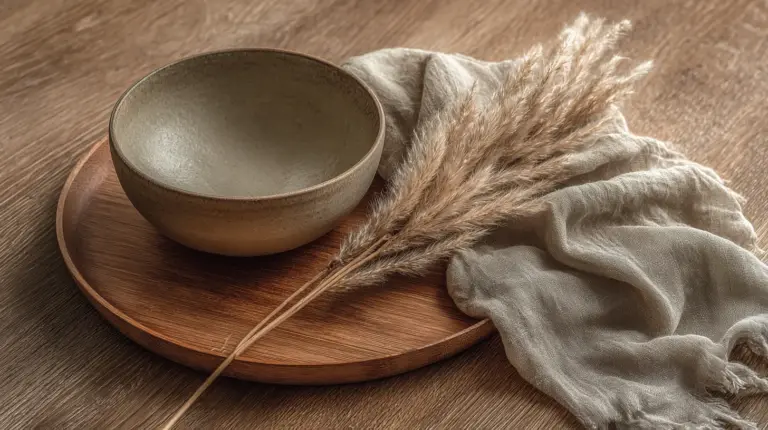
- One meaningful decor object — a bowl, a branch, a stone
A Closing Thought
There is no rush in a Japandi living room. That is, perhaps, the greatest gift it gives. A space designed around restraint and warmth does not demand attention — it simply holds you. Quietly. Steadily.
You do not need to transform everything at once. Start with one corner. One surface. Let it breathe. Add one plant. Swap one pillow. Sit with the room and listen to what it needs.
At ERYLIN, we believe that the most beautiful home is the one that feels like you — calm, considered, and deeply at ease. The Japandi minimalist living room is not a style to perform. It is a way of being at home.
Begin simply. Go slowly. Stay warm.
Frequently Asked Questions
What is a Japandi living room?
A Japandi living room blends Japanese minimalism — spare, intentional, wabi-sabi — with Scandinavian warmth — natural materials, layered textures, cozy furniture. The result is a space that feels both calm and deeply livable.
How do you create a minimalist Japandi living room on a budget?
Focus on neutral paint, secondhand solid wood furniture, and natural fiber textiles. Invest in one quality anchor piece — a good sofa or rug — and source everything else from local markets, Ukay-ukay, or budget retailers like IKEA. Local ceramics and plants complete the look affordably.
What colors work best for a Japandi living room?
Warm neutrals like oat, sand, greige, and warm white work best for walls and large furniture. Layer in muted earth tones — dusty sage, terracotta, clay — as accents. Avoid cool whites or bright colors.
How do you keep a Japandi living room from feeling cold or sterile?
Layer natural textures: linen throws, wool cushions, jute rugs, unglazed ceramics, and matte wood. Warm-toned lighting (2700K–3000K bulbs) and the presence of one or two plants immediately soften a minimal space.
What plants suit a Japandi living room in the Philippines?
Low-maintenance, structural plants work best: snake plants, ZZ plants, monsteras, and potted figs thrive in Manila’s climate. Display them in terracotta, matte ceramic, or stone vessels and give each plant breathing room.