
Table of Contents
By ERYLIN — Home Décor & Interior Styling
There is something deeply personal about an eclectic living room. It tells the story of a life well-lived — the vintage lamp found at a Saturday market, the velvet cushion in a color you couldn’t resist, the worn leather chair passed down from someone you loved.
Eclectic design isn’t about collecting everything you like and placing it in one room. It’s about curation. It’s about learning how to let different eras, textures, and personalities share the same quiet, beautiful space.
The good news? You don’t need a designer or a large budget. With the right framework — and a few smart decisions made before you ever step foot in a shop — you can create an eclectic living room that feels layered, intentional, and completely, unmistakably you.
This guide walks you through the full DIY process: from defining your base to layering the final finishing touches, with honest budget notes, a before-you-buy checklist, and a few mistakes to leave behind.
What Is an Eclectic Living Room, Really?
Eclectic style is often misunderstood as “anything goes.” But the most beautiful eclectic rooms follow a quiet set of rules — they just break the obvious ones.
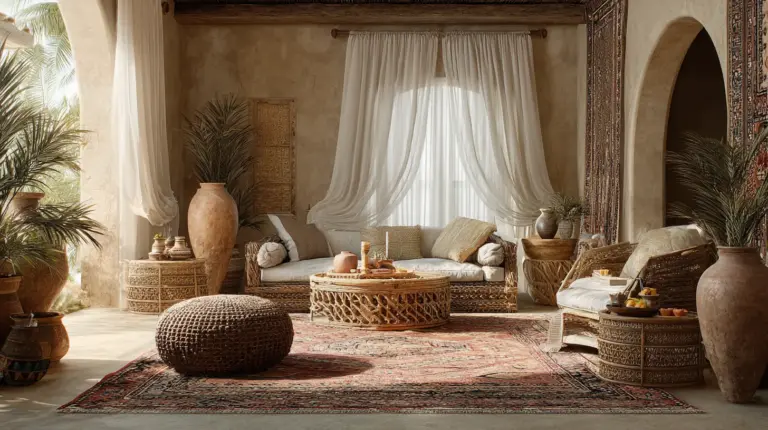
An eclectic living room mixes furniture, décor, and materials from different periods, styles, and origins in a way that feels intentional rather than chaotic. Think a mid-century modern sofa beside a hand-carved wooden coffee table, softened by a Moroccan rug and warm Edison bulb lighting.
The key word is cohesion. Each piece can come from a different world, but they all speak the same visual language — usually through a shared color palette, repeated texture, or consistent scale.
Step 1 — Choose Your Base Color Before You Buy Anything
Color is the invisible thread that ties an eclectic room together. Without a base, even the most beautiful individual pieces will fight each other.
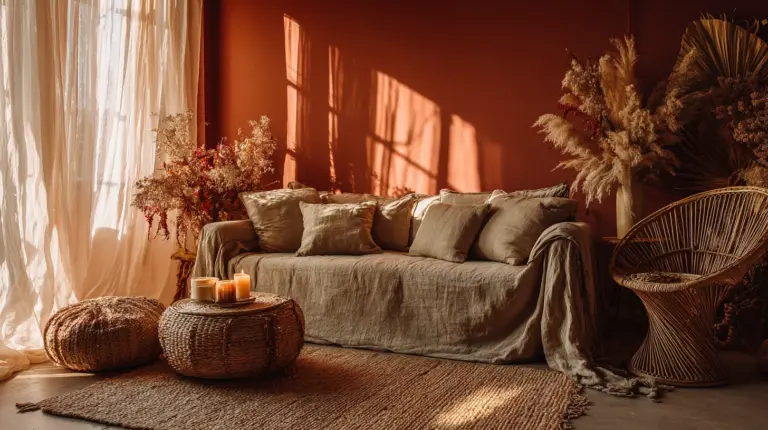
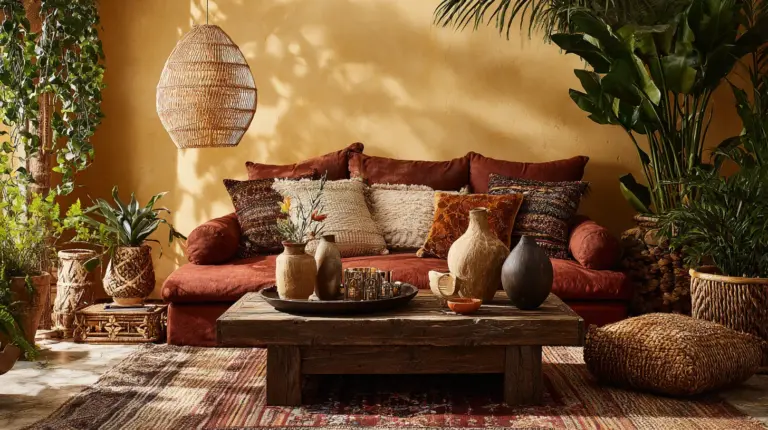
Start by choosing one anchor color for your walls or your largest furniture piece. Warm neutrals — linen, warm white, aged terracotta, soft sage — give you the most flexibility for layering. Cooler tones like dusty slate or deep charcoal can work beautifully too, but they require more intentional contrast.
How to Build Your Color Story
| Layer | Role | Example |
|---|---|---|
| Base color | Walls or sofa | Warm white, linen, sage |
| Secondary color | Rugs, curtains | Terracotta, navy, ochre |
| Accent color | Cushions, vases | Rust, forest green, blush |
| Metallic | Lighting, frames | Brass, matte black, bronze |
Once you have your base, everything you bring into the room should either belong in that palette or contrast it beautifully — never accidentally.
Step 2 — Identify Your Focal Point First
Every strong eclectic room has one hero. Before you style anything else, decide what that focal point will be.
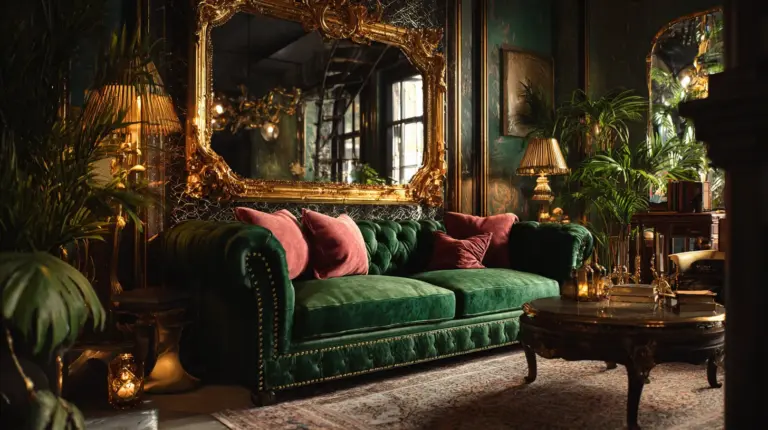
It might be a fireplace dressed with layered candlesticks and a large statement mirror. It could be a gallery wall of mismatched frames in the same finish, or a single dramatic piece of furniture — a bold velvet sofa in a deep jewel tone that anchors the entire space.
Common Focal Point Ideas for Eclectic Rooms
- A large-scale piece of art or print, leaning casually against the wall
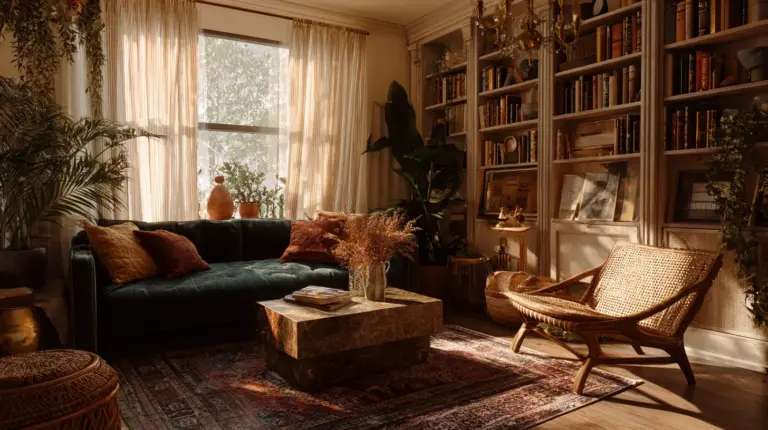
- A statement bookcase styled with books, plants, and objects of varying height
- A vintage or antique fireplace mantle with a layered, seasonal display
- A textured accent wall — think limewash plaster, reclaimed wood panels, or bold wallpaper
Once your focal point is established, everything else in the room supports it rather than competing with it. This is the secret that makes the difference between a room that feels curated and one that feels cluttered.
Step 3 — Anchor the Room with the Right Furniture
Furniture is where most eclectic DIYers either get it beautifully right or spend money in the wrong order.
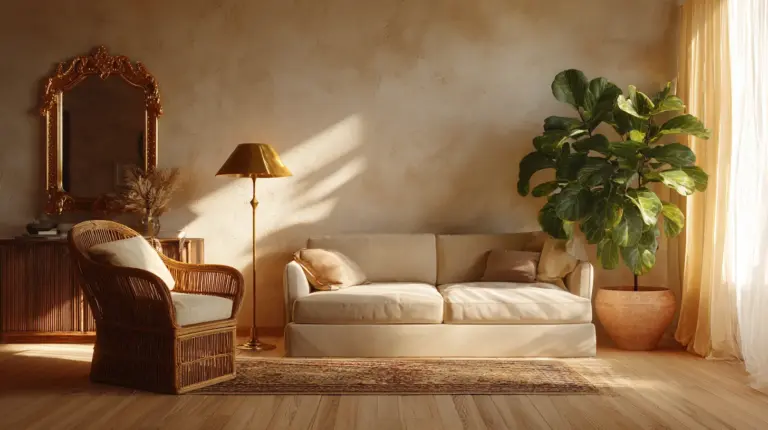
The golden rule: your largest furniture pieces should be relatively neutral and well-made. A simple, quality sofa in a warm neutral fabric becomes the canvas. The personality comes from what you layer over, under, and beside it.
Mixing Furniture Eras Without the Room Looking Confused
Pair at least one piece from each of three different periods or styles. A good starting trio might look like:
- Anchor piece — mid-century modern sofa or armchair with clean lines
- Contrast piece — antique or vintage side table, a carved wooden chest, or a rattan accent chair
- Modern edge — a minimalist floor lamp, a concrete planter, or geometric shelving
The trick is scale. Mix tall with low, heavy with light, solid with airy. When scale is balanced, the eye reads the room as intentional rather than accidental.
Step 4 — Layer Textures Like You Layer Clothing
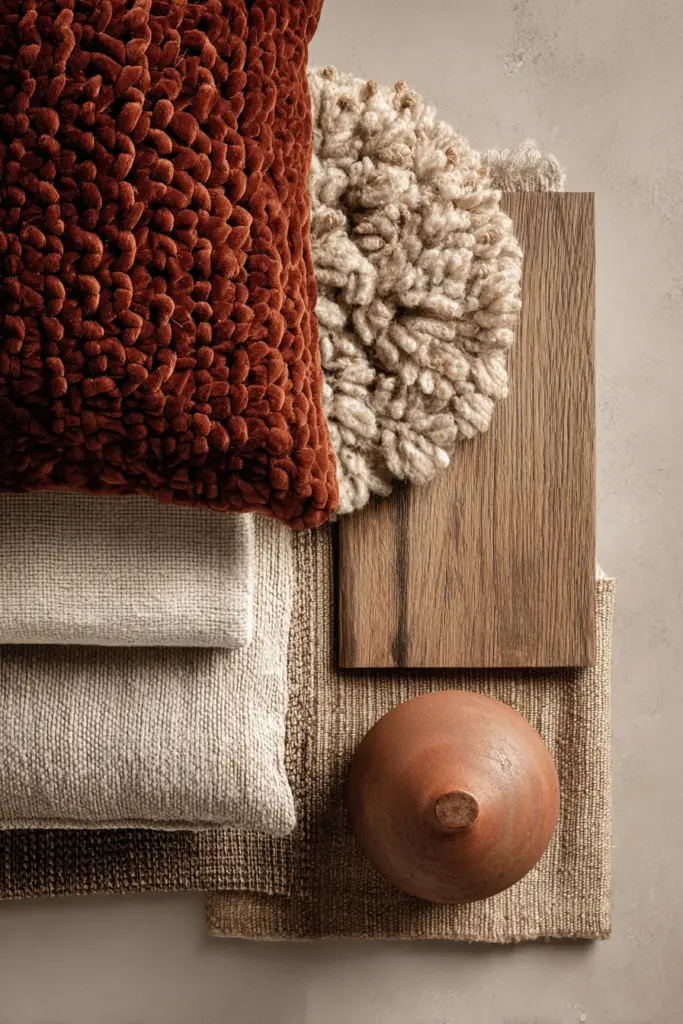
Texture is what makes an eclectic room feel warm and alive rather than styled and cold. Think of it like layering — you start with a base and build.
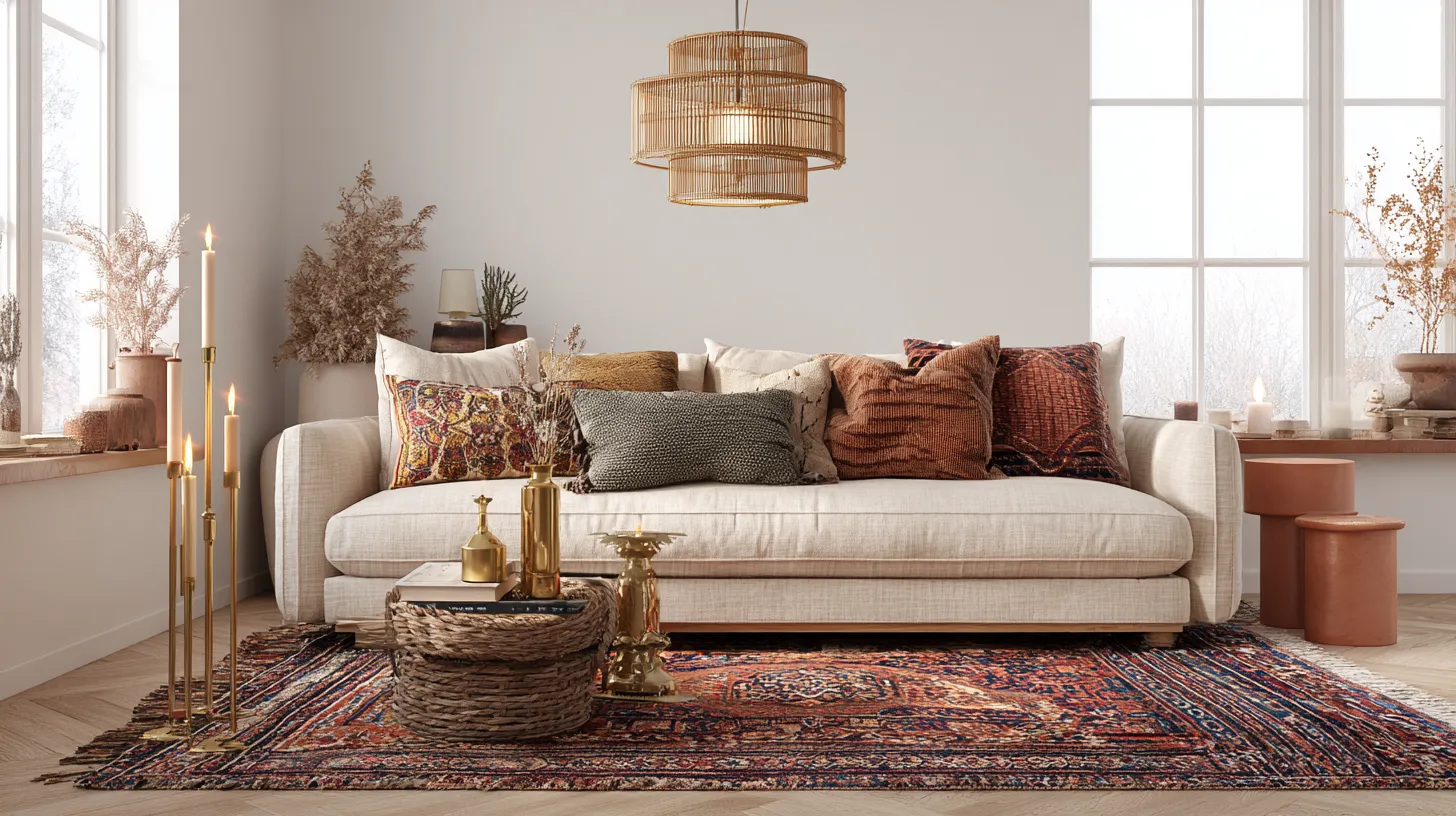
A linen sofa becomes richer with a chunky-knit throw and a mix of cushions: one velvet, one embroidered, one simple cotton. A smooth concrete floor softens beautifully under a vintage-style wool rug with fringed edges. A sleek glass side table gains warmth beside a rough-hewn ceramic lamp base.
A Simple Texture Checklist
- At least one soft textile per seating area (throw, rug, cushion)
- One natural material — wood, rattan, stone, clay, jute
- One reflective surface — mirror, glass, polished metal, brass
- One matte or rough element to ground the sheen — linen, plaster, raw wood
Resist the urge to match everything. A room where every surface is glossy, or every cushion matches, loses the layered richness that makes eclectic design so compelling.
Step 5 — Light the Room in Layers
Lighting transforms a room more than almost any other element — and it’s one of the most overlooked parts of eclectic living room DIY.
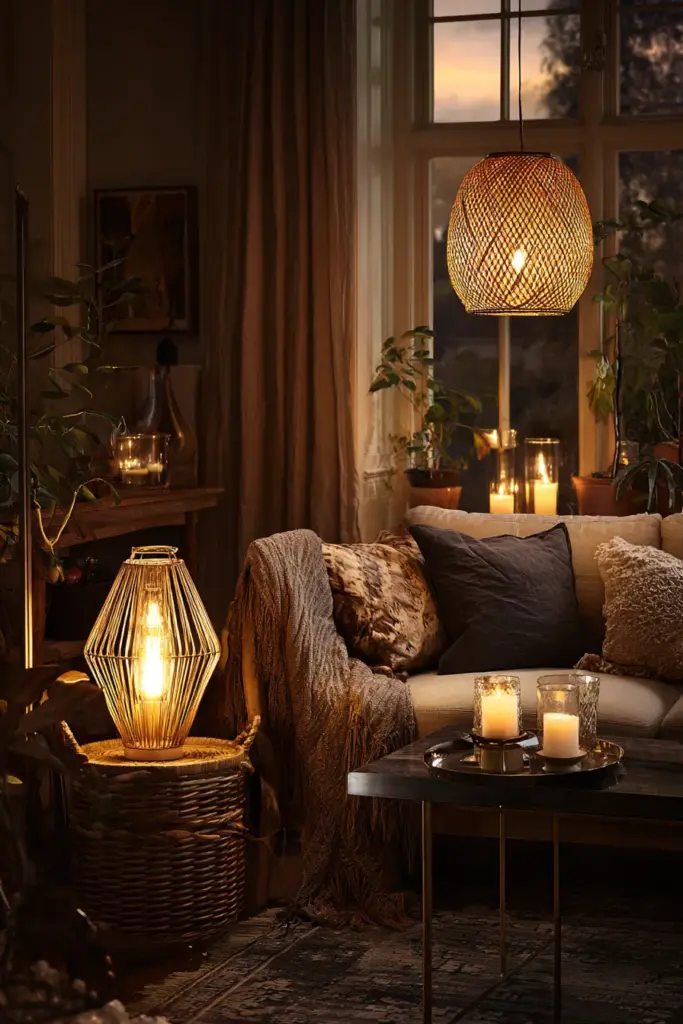
Avoid relying on a single overhead light. Instead, build three layers: ambient (ceiling or wall), task (reading lamps, desk lamps), and accent (candles, fairy lights, a picture light above your artwork).
Warm-toned bulbs — 2700K to 3000K — bring out the richness in wood, brass, and textile tones. Edison-style filament bulbs add a soft, nostalgic glow that suits eclectic spaces beautifully.
Budget-Friendly Lighting Swaps
- Replace a flat overhead fixture with a woven rattan pendant or a simple drum shade in linen
- Add a brass or matte-black floor lamp beside your reading chair
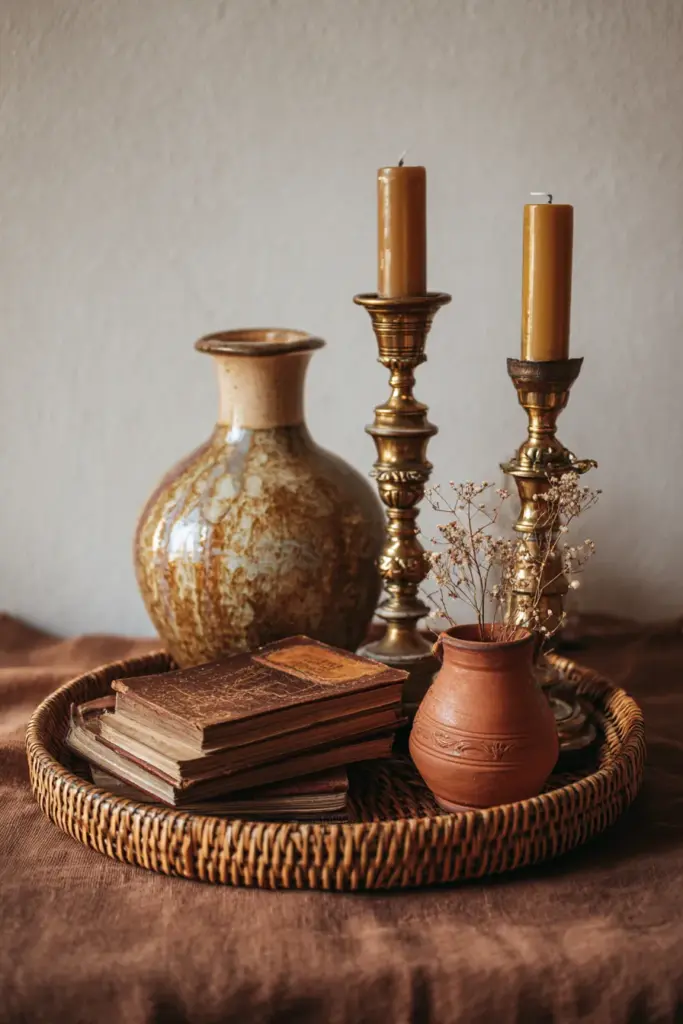
- Use a cluster of mismatched candlesticks on a tray for instant mood on a side table
- String warm fairy lights along a bookshelf or behind a sheer curtain for soft ambient glow
Good lighting costs far less than new furniture and makes everything else in the room look better.
Step 6 — Shop Smart: Thrift, Secondhand, and New
Eclectic style was practically made for budget decorating. Mixing eras means you’re not locked into one retailer or one price point — you’re free to find beauty anywhere.
A useful rule of thumb: spend more on the pieces you live with daily (sofa, rug, lighting) and less on the accessories and accents you’ll change seasonally or on a whim.
A Simple Budget Framework
| Category | Suggested Spend | Where to Find |
|---|---|---|
| Sofa or anchor seating | 40–50% of your room budget | Secondhand stores, Facebook Marketplace, sale retailers |
| Rug | 15–20% | Thrift stores, online vintage sellers, end-of-line sales |
| Lighting | 10–15% | Thrift stores, IKEA with styling upgrades, estate sales |
| Accent furniture | 10% | Thrift, markets, antique fairs |
| Accessories & textiles | 10–15% | Markets, craft shops, small makers, charity shops |
Don’t overlook the power of paint. A secondhand side table in the wrong color becomes a perfect piece with a coat of chalk paint in the right tone. A worn picture frame updated with gold leaf becomes an accent piece worthy of a feature wall.
What Most Eclectic DIY Articles Leave Out
The articles that stop at “mix what you love” skip the practical details that actually determine whether a room works.
Scale matters more than style. A room full of small pieces — regardless of how beautiful each one is — will always feel fussy and unsettled. Aim for variety in scale: one large piece, two medium, several small.
Edit ruthlessly. Eclectic doesn’t mean every surface filled. The spaces between objects are what give each piece room to breathe and be seen. Step back from your styling and remove one thing — chances are, the room improves.
Think about storage. Cables, remote controls, everyday clutter — these are the quiet enemies of a beautiful room. A vintage trunk as a coffee table, a wicker basket tucked beside the sofa, a wall-mounted rail for throws — storage can be part of the aesthetic.
Renter-safe updates. If you rent, you’re not without options. Peel-and-stick wallpaper, removable picture-hanging strips, freestanding shelving, and large-format art leaned against walls can all transform a space without leaving a mark.
Before You Buy Anything: Your Eclectic Living Room DIY Checklist
- Define your base color and secondary palette before shopping
- Choose your focal point — one clear hero for the room
- Measure your space and sketch a rough layout — note traffic flow and natural light
- Decide on your anchor furniture first — sofa, rug, main seating
- Identify the three eras or styles you want to blend
- Set a budget and allocate it across categories before you start spending
- Plan your lighting layers — ambient, task, and accent
- Shop secondhand first for accent furniture and accessories
- Choose at least four different textures to layer throughout the room
- Edit your styling — remove at least one item from every surface
Conclusion
An eclectic living room is, at its heart, a love letter to everything that moves you. It doesn’t demand a single era or aesthetic — it asks only that you bring intention, restraint, and a little courage.
Start with one good decision: your base color, your focal point, your anchor piece. Then build slowly, thoughtfully, one beautiful layer at a time. Buy the lamp that makes you smile every time you turn it on. Keep the chair that has held a hundred conversations. Let your room tell your story.
That is what eclectic design really is. Not a trend. Not a style. A way of living beautifully with the things that matter most.
At ERYLIN, we believe that the most soulful rooms are built gradually — not purchased all at once. Take your time. Trust your instincts. And enjoy every single step of the process.
Frequently Asked Questions
How do you decorate an eclectic living room?
Start with a base color and one clear focal point, then layer furniture from different eras, textures, and styles around it. The key is to choose pieces that share at least one quality — color, material, or scale — so the room feels curated rather than random.
How do you make an eclectic room look cohesive?
Cohesion in eclectic design comes from a consistent color palette, repeated textures, and balanced scale. Limit your palette to three or four colors, repeat each color at least twice in the room, and vary the scale of objects so nothing feels uniformly sized.
What colors work best in an eclectic living room?
Warm neutrals — linen, warm white, aged terracotta, and soft sage — give the most flexibility for layering. Deep jewel tones like teal, rust, and forest green work beautifully as secondary or accent colors against a warm neutral base.
How do you mix patterns and textures in eclectic décor?
Vary the scale of your patterns — one large, one medium, one small — and keep them linked by color. For texture, aim for at least one soft textile, one natural material, one reflective surface, and one matte or rough element in every seating area.
How do you start an eclectic living room makeover on a budget?
Begin by shopping secondhand for accent furniture and accessories, then invest in one or two quality anchor pieces like a good sofa or a substantial rug. Refresh existing pieces with paint, new hardware, or reupholstery before replacing them. Lighting upgrades and textile layering are the most affordable ways to transform the feel of a room instantly.