
Table of Contents
There is something quietly powerful about a well-lit room. Light doesn’t just illuminate — it shapes how a space feels, how it breathes, and how generously it welcomes you at the end of a long day.
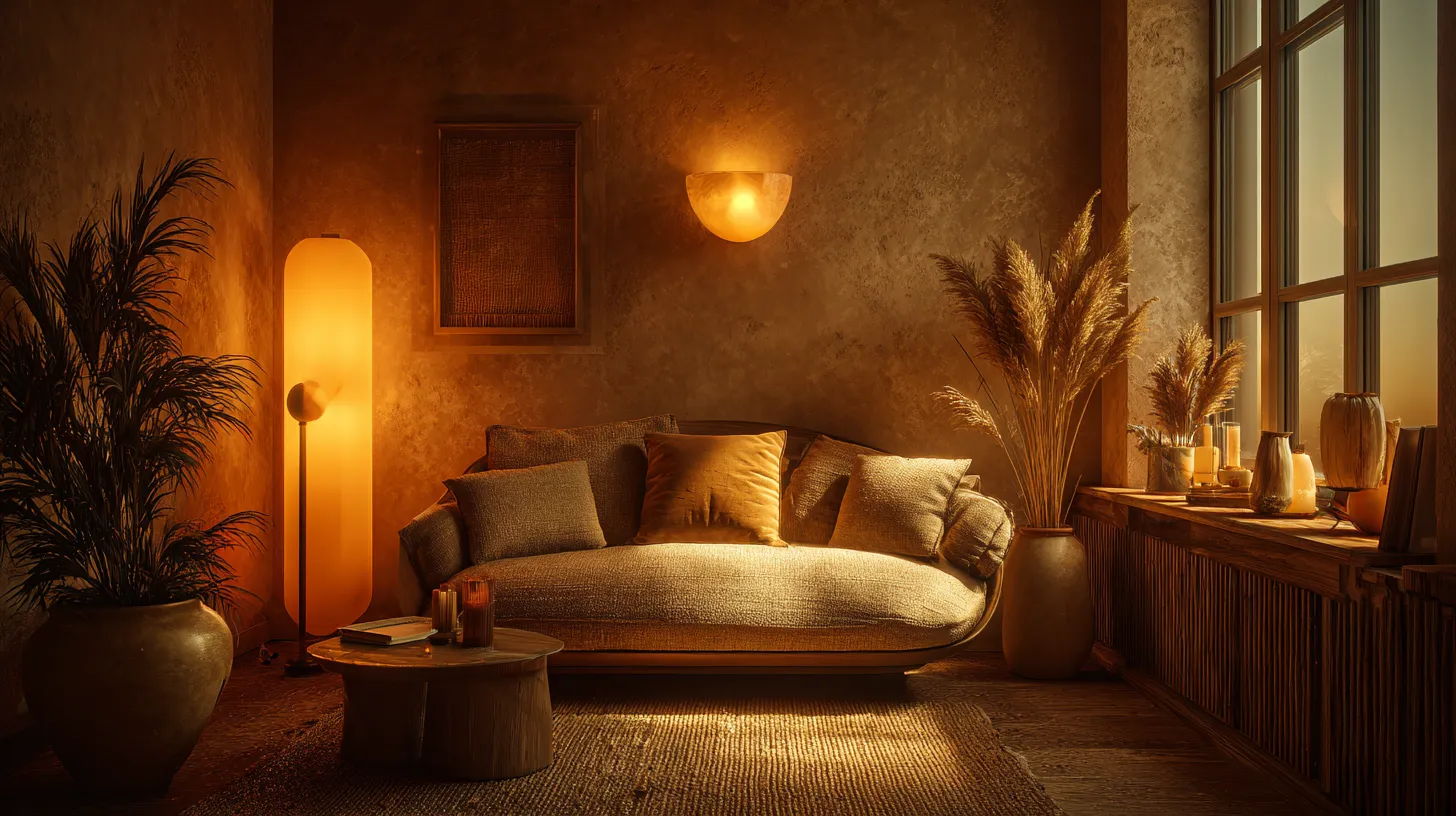
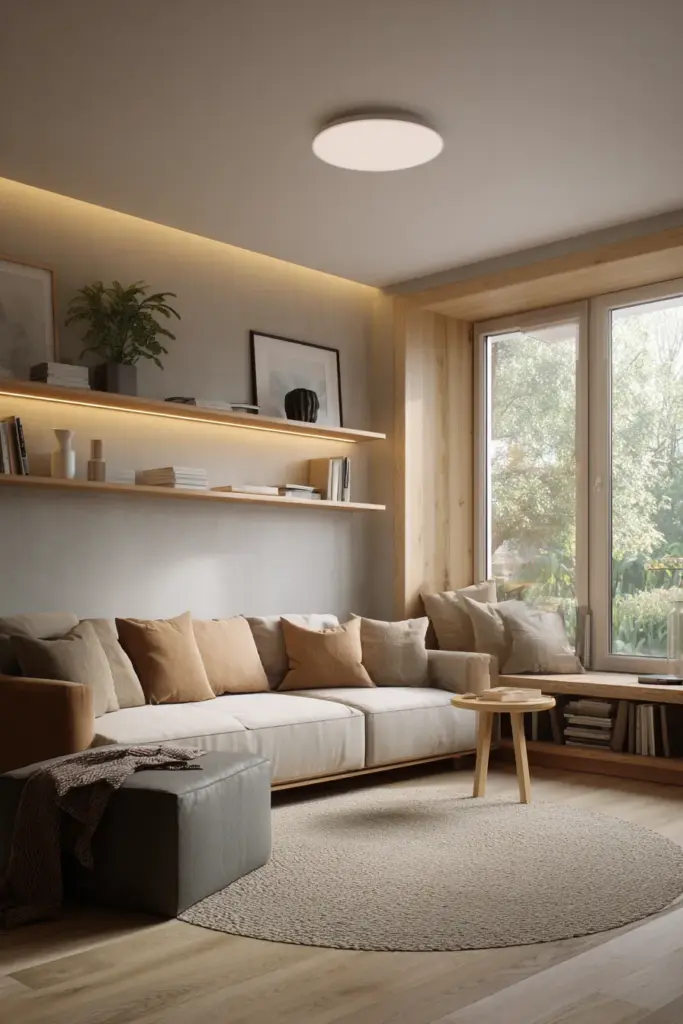
In a small living room, lighting becomes even more intentional. A single ceiling fixture left to do all the work creates a flat, shadowy space that feels smaller than it actually is. But layer in a warm floor lamp, a glowing sconce, and a strip of concealed light along a shelf — and suddenly, the room opens.
At ERYLIN, we believe that thoughtful lighting is one of the most transformative (and underrated) design moves you can make. It costs less than a new sofa, takes a weekend to set up, and changes everything about how a room feels.
This guide will walk you through the best small living room lighting ideas — from fixture types and placement rules to bulb specs, layout formulas, and the mistakes that make small spaces feel even smaller.
Why Layered Lighting Changes Everything
Most small living rooms rely on one overhead light. It’s functional, yes — but it’s also the reason so many rooms feel institutional rather than inviting.
Layered lighting means building your light from three distinct sources: ambient, task, and accent. Together, they create depth, warmth, and the illusion of a much larger space.
The Three Layers of Light
Ambient lighting is your foundation — the overall glow that fills the room. Think flush mounts, semi-flush pendants, or recessed lighting that casts a soft, even wash across the ceiling and walls.
Task lighting serves a purpose. A floor lamp angled over your reading chair, a table lamp next to the sofa, or a focused sconce above a console — these lights help you do things without straining your eyes.
Accent lighting is where personality lives. A LED strip behind your TV unit, a picture light over a framed print, or uplighting tucked behind a tall plant — these touches add visual interest and make the room feel curated rather than crowded.
When all three layers work together, your small living room stops feeling like a box and starts feeling like a place.
Choosing the Right Fixtures for a Small Living Room
The fixtures you choose matter as much as how you place them. In a compact space, scale, proportion, and visual weight all come into play.
By Ceiling Height
| Ceiling Height | Best Fixture Choices | Avoid |
|---|---|---|
| Under 2.4m (8 ft) | Flush mounts, semi-flush, wall sconces, floor lamps | Hanging pendants, chandeliers |
| 2.4m–2.7m (8–9 ft) | Semi-flush mounts, low-hanging pendants, recessed lighting | Large statement pendants |
| Above 2.7m (9+ ft) | Pendants, chandeliers, track lighting | Nothing — enjoy the height |
For low ceilings, flush mount fixtures are your best friend. Look for ones with a wide, shallow profile — they push light outward rather than downward, making walls feel taller and the room feel less compressed.
If your ceilings are higher, a single semi-flush pendant centred in the room adds visual drama without overwhelming the space. Choose one with an open shade so light scatters softly in every direction.
Wall Sconces: Placement Rules That Actually Work
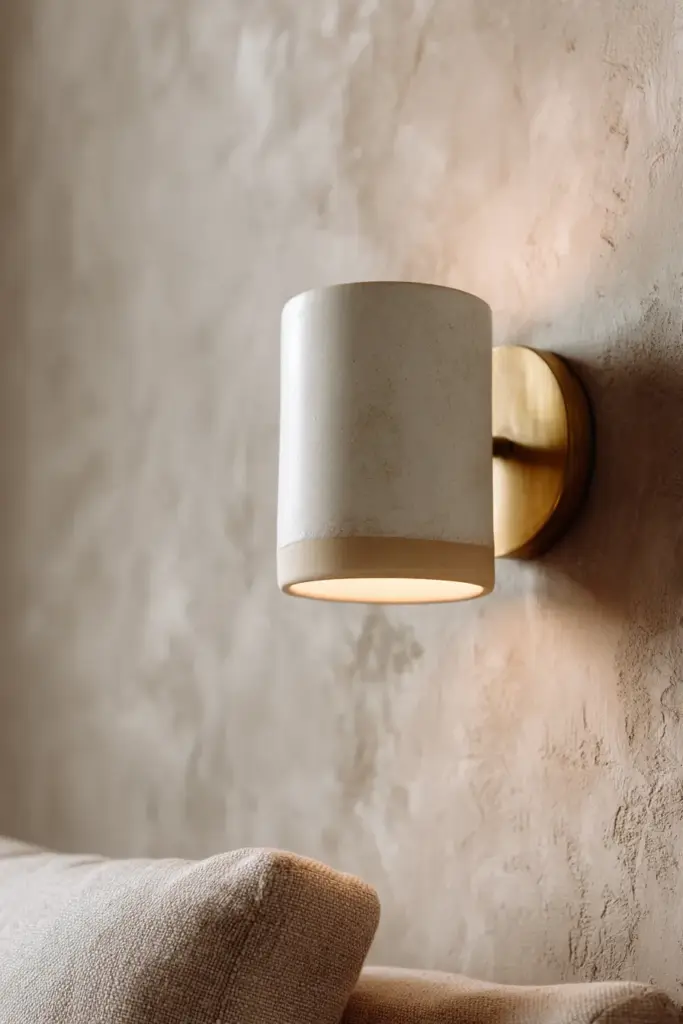
Wall sconces are one of the most space-saving and elegant choices for small living rooms — they free up floor space, eliminate cords draped across the room, and add architectural interest to blank walls.
Place sconces 1.5 to 1.7 metres (5 to 5.5 feet) from the floor — roughly eye level when standing. Flank them on either side of a sofa, a media unit, or an artwork for a symmetrical, composed look. If you’re placing a sconce near a reading chair, aim it slightly forward so light falls onto the page rather than creating glare.
For renters who can’t hardwire, plug-in wall sconces are a beautiful and practical option. They look identical to wired versions and can be mounted with adhesive strips or a single hook.
Floor Lamps: More Than a Corner Filler
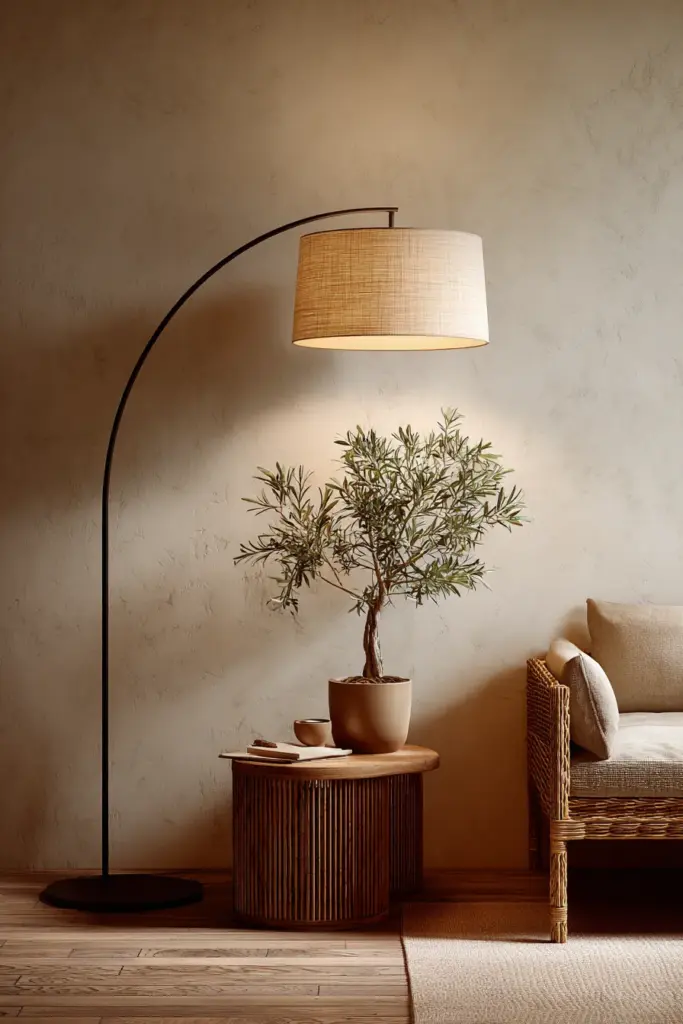
A well-placed floor lamp does more work than most people realise. It adds height, draws the eye upward, and fills corners with warm, ambient light that a ceiling fixture simply can’t reach.
Choose a lamp with an upward-facing shade for rooms that feel too low or enclosed — the upward throw of light creates the illusion of a taller ceiling. Arc floor lamps work beautifully over a reading chair or sofa, curving overhead without taking up extra floor space.
Avoid clustering multiple floor lamps in the same corner. One anchored near seating, one in a darker corner — that balance keeps the light feeling natural rather than over-produced.
Bulb Specs: What the Numbers Actually Mean
Getting the fixture right is only half the equation. The bulb inside determines everything about how the light feels.
Colour Temperature
Colour temperature is measured in Kelvin (K). For a small living room, 2700K to 3000K is the sweet spot. This range produces a warm, amber-leaning light that feels intimate and cosy — the kind of glow you associate with candlelight or a well-loved café.
Avoid anything above 4000K in a living space. Cool white and daylight bulbs (5000K+) are energising and clinical — great for home offices, not for a room where you want to relax.
Lumens
Lumens measure brightness. As a general guide, a small living room of around 15–20 square metres needs approximately 1,500 to 3,000 lumens in total — spread across all your light sources, not from a single fixture.
- A ceiling fixture: 800–1,200 lumens
- A floor lamp: 400–800 lumens
- A table lamp or sconce: 200–400 lumens
Layer these together and you’ll have a room that’s bright when you need it, and softly glowing when you don’t.
CRI and Dimmability
CRI (Colour Rendering Index) measures how accurately a bulb renders colour. Look for a CRI of 90 or above — it makes textiles, artwork, and wood tones look richer and more true to life.
Always choose dimmable LEDs if your fixtures support a dimmer switch. Dimmable light is the single biggest upgrade you can make to a small living room. It lets the same space function as a bright afternoon reading room and a soft, cinematic evening space — without changing a single fixture.
Lighting Layout by Room Shape
Not all small living rooms are the same shape, and the lighting strategy that works in a square room may fall flat in a long, narrow one.
Square Rooms
A square room is the most forgiving. Centre one ambient fixture overhead, then layer in sconces or lamps near the corners to draw light outward and make the walls feel further apart.
Narrow or Rectangular Rooms
In a narrow room, avoid placing all your light at one end — it shortens the visual length of the space. Instead, space fixtures along the length of the room: a pendant or flush mount at each third of the ceiling, or wall sconces placed at intervals along the longer walls. This creates rhythm and guides the eye from end to end.
Open-Plan Corners
If your living room shares space with a dining area or kitchen, use lighting to define each zone. A pendant or cluster of lights over the seating area signals this is the lounge without the need for walls or dividers. Warm, lower-intensity light in the living zone versus brighter task light in the dining zone creates a sense of separation and purpose.
Lighting the TV Wall Without Glare
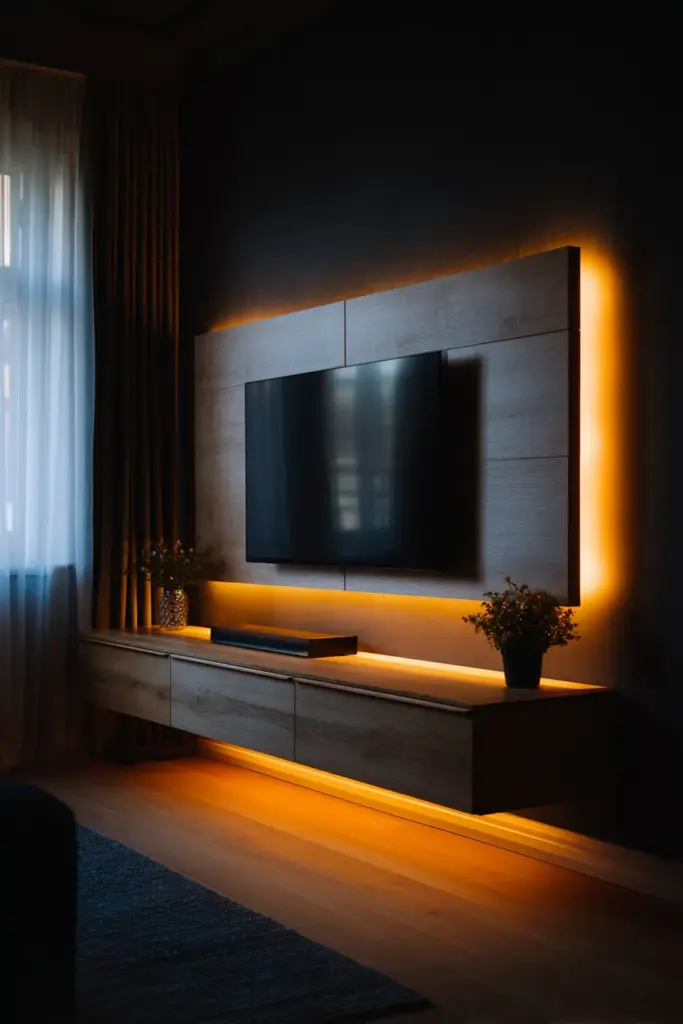
The TV wall is often the most neglected part of small living room lighting — and the most problematic. A dark room with a bright screen strains your eyes. An overly bright room creates glare and reflection on the screen.
The solution is bias lighting: a strip of warm LED light placed behind the television, aimed at the wall. It reduces the contrast between the bright screen and the dark room, making long viewing sessions gentler on the eyes. Choose a strip in the 2700K–3000K range so it doesn’t compete with the screen.
Avoid placing a floor lamp or sconce directly beside the TV where it might reflect off the screen. Side-angled lighting works better than anything positioned directly in line with the viewer.
Day-to-Night Lighting Plan
A small living room needs to do different things at different times of day. Planning for this in advance means you never have to choose between too bright and too dark.
| Time of Day | Lighting Mode | Fixtures in Use |
|---|---|---|
| Morning / Daytime | Bright and energising | Ceiling light on full, curtains open |
| Afternoon / Work | Focused and clear | Task lamp, ceiling at mid-dim |
| Evening / Relaxing | Warm and ambient | Floor lamp, sconces, ceiling dimmed low |
| Movie Mode | Minimal, bias-lit | TV bias light only, all others off |
A simple dimmer switch — or a smart bulb system like Philips Hue or IKEA Trådfri — makes this effortless. Set scenes in advance and shift the entire room’s mood with a single tap.
Rental-Friendly and Budget-Wise Options
You don’t need to own your space to light it beautifully. These options require no rewiring and leave no lasting marks.
- Plug-in wall sconces — mount with a single hook, cord hides along the wall
- Rechargeable table lamps — no cord, fully portable, increasingly design-forward
- LED strip lights — peel-and-stick adhesive, perfect for shelves and TV walls
- Clamp lamps — clip to shelves or furniture for targeted task light
- Smart bulbs in existing fixtures — upgrade without changing a single fitting
Budget Tiers at a Glance
| Budget | Approach |
|---|---|
| Under ₱2,000 | LED bulb upgrade + plug-in sconce or clamp lamp |
| ₱2,000–₱8,000 | Dimmable flush mount + one quality floor lamp |
| ₱8,000–₱20,000 | Full layered setup: flush mount, sconces, floor lamp, LED strips |
| Premium | Smart lighting system with scene control + statement fixture |
Common Mistakes That Make Small Rooms Feel Smaller
Even the most thoughtfully furnished room can feel wrong if the lighting is off. These are the most common errors — and the easy fixes.
- Using only one overhead light. It creates flat, shadowless light that flattens the room. Add at least one secondary source.
- Cool white bulbs. Anything above 4000K makes a small room feel clinical and stark. Switch to 2700K–3000K.
- Pointing light downward only. Uplighting and wall washing make ceilings feel higher and rooms feel larger. Include at least one upward-facing source.
- Too many tiny fixtures. A cluster of small mismatched lamps creates visual noise. Choose fewer, better pieces.
- Ignoring corners. Dark corners shrink a room visually. A single lamp or LED strip in a corner adds warmth and perceived depth.
- No dimmer control. Fixed-brightness lighting forces you to live at one intensity all day. A dimmer costs very little and changes everything.
Quick Decision Guide: Choose This If…
You’re a renter: Plug-in sconces, rechargeable table lamps, peel-and-stick LED strips, and smart bulbs in existing fittings.
You have low ceilings: Flush mount ceiling lights, wall sconces, and floor lamps with upward shades only. No pendants.
Your room is very dark: Prioritise wall washing, mirrors positioned to reflect light sources, and warm LEDs with a CRI of 90+.
You want a cosy, intimate feel: Dim the overhead light, lean on floor lamps and sconces, and use 2700K bulbs throughout.
You’re working with a very tight space: Wall sconces and a single arc floor lamp over the sofa keep the floor clear while layering the light beautifully.
Checklist: Small Living Room Lighting Done Right
- Ambient light source: flush mount, semi-flush, or recessed
- At least one task light: floor lamp, table lamp, or reading sconce
- At least one accent light: LED strip, picture light, or uplight
- All bulbs at 2700K–3000K for warm, cosy light
- CRI 90+ for rich, true-to-life colour rendering
- Dimmable bulbs and at least one dimmer switch
- No single fixture doing all the work
- TV bias lighting if you watch in a darkened room
- Corner light to open up the full depth of the room
- Fixture scale matched to ceiling height
Conclusion
Good lighting doesn’t shout. It settles. It finds the edges of the room, softens them, and draws everything inward into something that feels like ease.
In a small living room, lighting is not just functional — it’s the quiet architecture behind every warm evening and every room that feels bigger than it measures. Layer it with care, choose bulbs that flatter rather than glare, and let the light do the slow, beautiful work of making your space feel exactly like home.
At ERYLIN, we believe your home deserves to be lit like the sanctuary it already is.
Frequently Asked Questions
How do you light a small living room properly?
Use layered lighting: one ambient source (ceiling), one task light (floor or table lamp), and one accent light (LED strip, sconce, or uplight). Aim for 2,000–3,000 total lumens across all sources and keep bulbs in the 2700K–3000K range for warmth.
What lighting makes a small room look bigger?
Wall washing, uplighting, and mirrors positioned to reflect light sources all help expand a room visually. Avoid downward-only lighting and dark corners. Warm, layered light with dimmer control makes walls recede and the room feel more open.
What kind of ceiling light is best for a small living room?
A flush mount or semi-flush ceiling light is the safest choice. They sit close to the ceiling, don’t crowd the room, and throw light outward rather than downward. For ceilings above 2.7 metres, a low-hanging pendant works beautifully.
What colour temperature is best for a small living room?
2700K to 3000K — the warm white range. This produces a soft, golden light that feels cosy and inviting. Avoid cool white (4000K+) in living spaces as it can make a room feel sterile and smaller.
Are wall lights better than floor lamps in small spaces?
Both have a place. Wall sconces free up floor space and add architectural elegance, but require either wiring or a plug-in solution. Floor lamps are more flexible, easier to reposition, and better for renters. Ideally, use both — a sconce for ambient or accent light, a floor lamp for task or reading light.