
Table of Contents
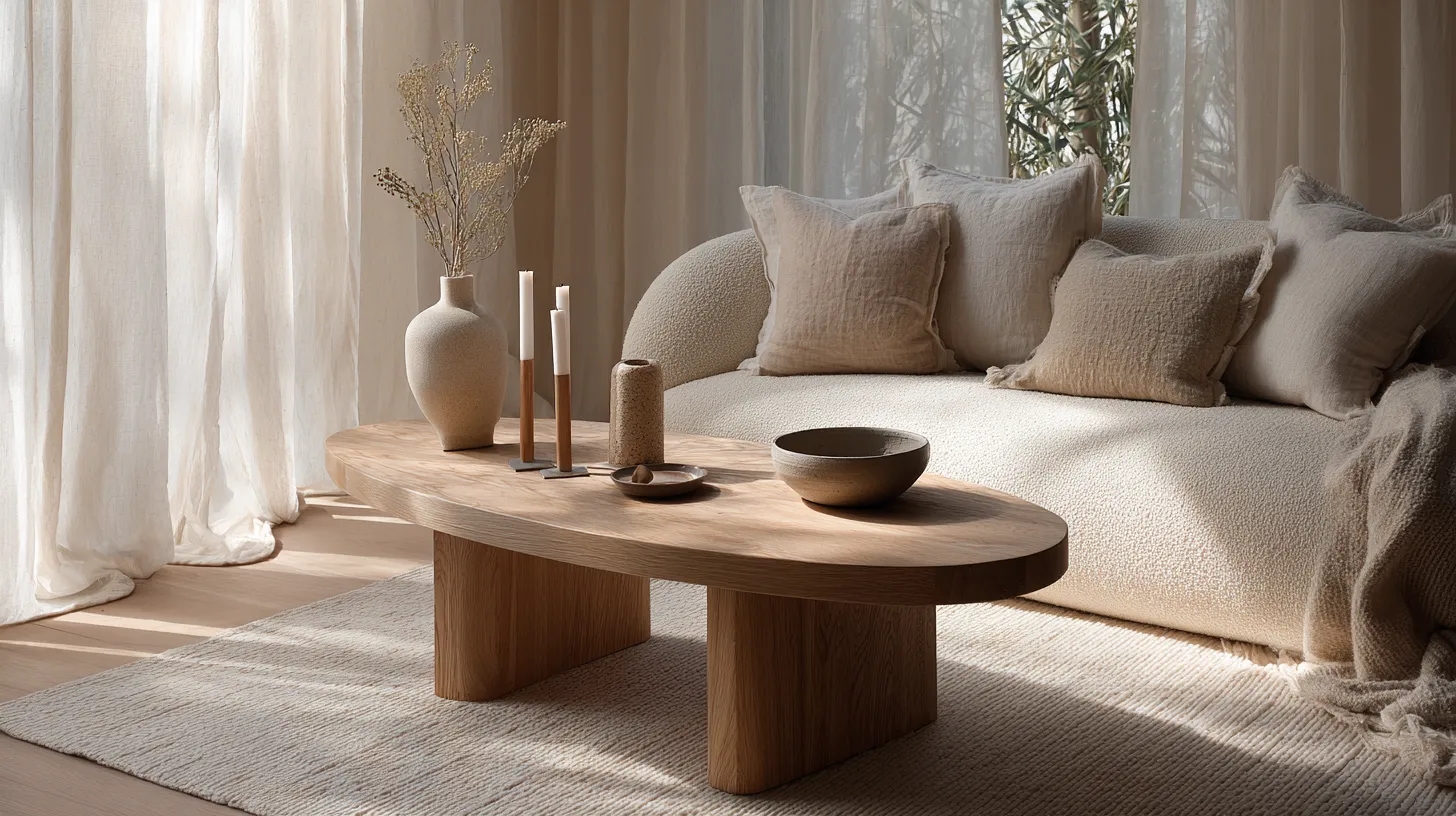
There’s a quiet magic in a well-chosen coffee table. It holds your morning cup, anchors your living room, and says something about who you are — all without saying a word.
It’s the piece your guests notice first. The surface that collects Sunday afternoons, candlelight, open books, and lazy conversations. And yet, so many of us settle for something that almost works, not quite right in scale, material, or spirit.
At ERYLIN, we believe your coffee table should feel chosen, not just placed. Whether you’re furnishing a compact apartment in the city or layering warmth into a family room, this guide will help you find the one that truly belongs.
Let’s begin.
Why the Coffee Table Is the Heart of Your Living Room
Most people treat the sofa as the centerpiece of their living room. But it’s actually the coffee table that holds everything together.
It defines the conversational zone. It determines how your sofa grouping feels — open or cozy, formal or relaxed. Get the table right, and the whole room clicks into place.
A modern living room coffee table isn’t just furniture. It’s a mood setter, a functional anchor, and one of the easiest ways to elevate your space without a full renovation.
Choosing the Right Size: The Proportions That Actually Work
The Golden Ratio Rule
Scale is everything. A coffee table that’s too small floats awkwardly in the room; one that’s too large creates a stumbling block rather than a sanctuary.
The two-thirds rule is your starting point: your coffee table should be roughly two-thirds the length of your sofa. For a 90-inch sofa, that means a table around 60 inches long feels balanced and intentional.
Clearance and Height
Always leave 17 to 18 inches of clearance between the edge of the table and your sofa. This gives legs room to breathe and makes the space feel generous rather than cramped.
For height, aim for a table that sits level with — or just slightly below — your sofa seat cushions. The sweet spot is typically 16 to 18 inches tall. This keeps things visually grounded and ergonomically comfortable.
Small Space Sizing Guide
| Living Room Size | Recommended Table Length | Ideal Shape |
|---|---|---|
| Under 20 sqm | 36–48 inches | Round or oval |
| 20–30 sqm | 48–60 inches | Oval or rectangular |
| 30+ sqm | 60–72 inches | Rectangular or square |
For compact spaces, a round or oval table removes sharp corners from the equation — literally. It improves flow, feels softer, and is noticeably kinder to shins and small children.
Shape Guide: Round, Oval, Rectangular, or Square?
Round and Oval Tables
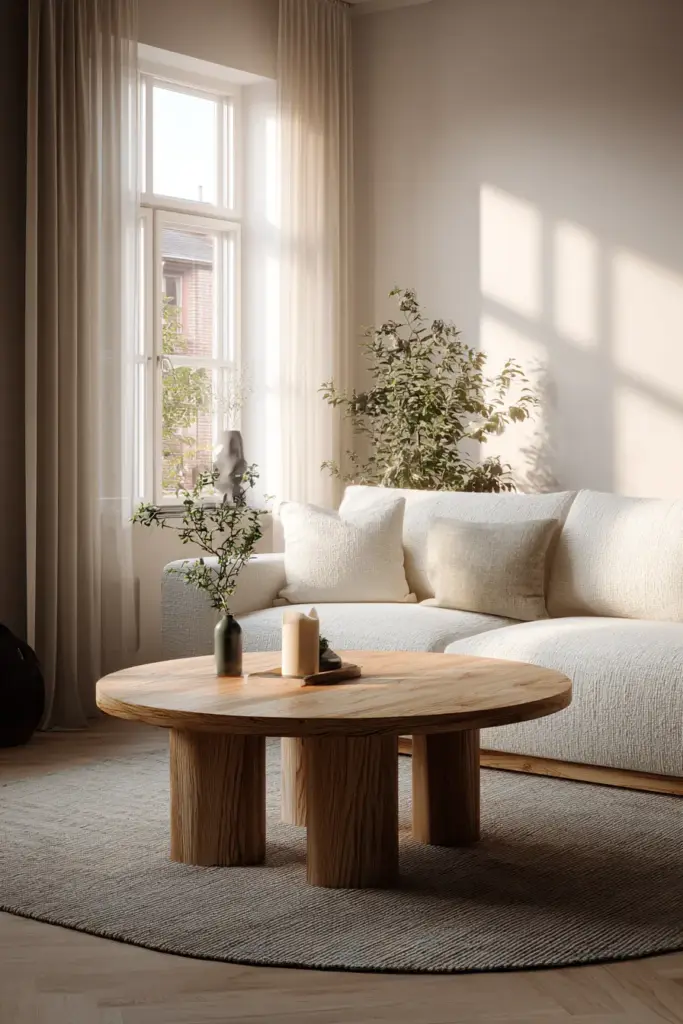
Round coffee tables are the sociable option. They encourage eye contact across the table and work beautifully in rooms where traffic flows from multiple directions.
Oval tables carry the same warmth with a slightly more elongated silhouette — perfect for longer sofas or sectionals. Both shapes feel approachable and organic, especially in Japandi or Scandinavian-inspired rooms.
Rectangular Tables
The classic choice. Rectangular tables mirror the sofa’s line and feel structured and anchored. They’re ideal for symmetrical layouts and work well in mid-century modern or contemporary rooms where clean geometry is part of the design language.
They also offer the most surface area, which matters if you’re a stacker — books, trays, candles, and a plant can all coexist without crowding.
Square Tables
Square tables suit square seating arrangements beautifully. If you have a large sectional or a U-shaped sofa grouping, a square table fills that center space with satisfying symmetry.
They feel bold and intentional — a statement rather than a background piece.
The Best Materials for a Modern Coffee Table
The material you choose determines not just how your table looks, but how it lives in your space.
Solid Wood and Natural Oak
Wood is timeless. Natural oak, walnut, and birch bring warmth, grain, and texture that no other material quite replicates. In a modern rustic room, a solid wood table grounds the space with organic authenticity.
For a Japandi aesthetic — that beautiful blend of Japanese minimalism and Scandinavian function — look for low-profile tables in pale oak or ash, with clean edges and no ornamentation. These feel close to the floor, connected to the earth.
Marble and Stone
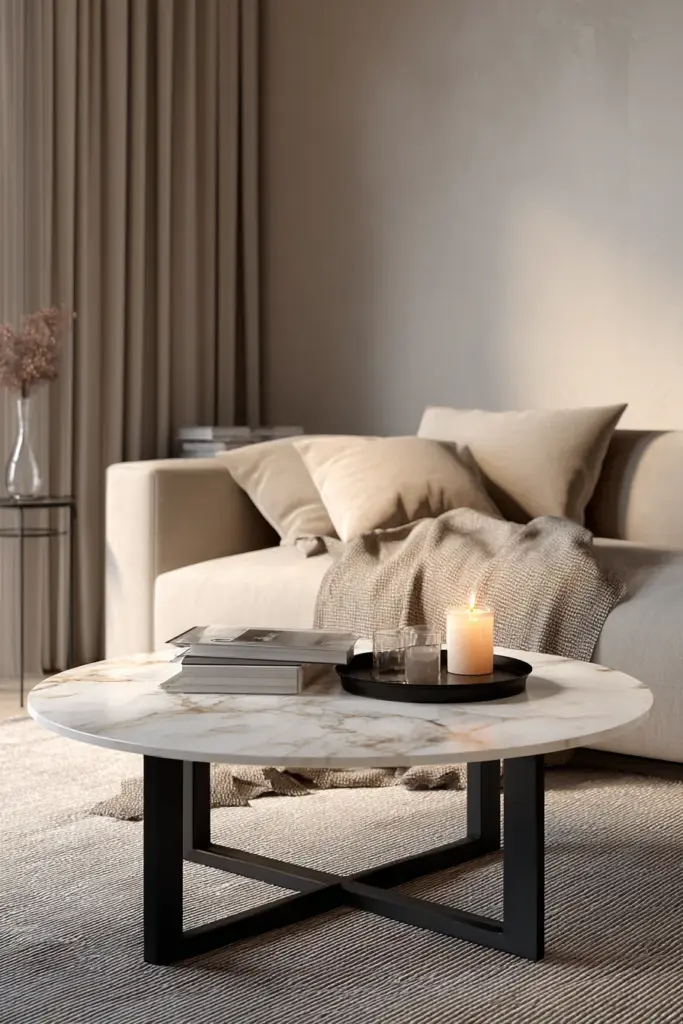
A marble-topped coffee table introduces luxury without effort. The cool, smooth surface catches light differently throughout the day — bright and sharp in the morning, soft and luminous in candlelight.
Pair marble with a dark metal base for contrast, or warm it up with a wooden frame for something more organic and grounded.
Glass
Glass is the space-saver’s best friend. A glass-topped table visually disappears in a small room, making it feel larger and lighter. It’s especially useful when your rug, floor, or lower furniture deserves to be seen.
The trade-off: glass shows fingerprints and smudges readily. It rewards regular, simple cleaning — a soft cloth and glass cleaner is all it needs.
Metal and Mixed Materials
Brushed brass, matte black steel, and antique bronze are having a long, well-deserved moment. Metal frames paired with wood, stone, or glass tops create visual interest through contrast.
Mixed-material tables feel modern without feeling cold. They layer the room with depth — the kind you notice without quite knowing why.
Lucite and Acrylic
Transparent lucite tables carry the same light-passing quality as glass but with a more sculptural feel. They suit eclectic and contemporary rooms equally well.
One practical note: lucite shows dust very clearly. A quick, frequent dust is part of the deal — but for small rooms that need to breathe, it’s worth it.
Storage Coffee Tables: Function Meets Design
If your living room doubles as a reading nook, family gathering space, or home office overflow zone, storage is not a luxury — it’s a necessity.
Modern coffee tables now come with hidden compartments, lift-top surfaces, and under-table shelving that keep clutter out of sight without sacrificing style. A lift-top table, for instance, can serve as a desk, a dining surface, or an extra workspace — transformative in small apartments.
What to look for in a storage coffee table:
- Lift-top mechanism that opens smoothly without scratching floors
- Hidden compartments with enough depth for remotes, throws, and books
- Under-shelf space for baskets or trays
- Drawers with soft-close guides for a refined feel
Homary and similar contemporary retailers have made this category beautiful. You no longer have to choose between storage and style.
Budget Tiers: What You Can Expect to Spend
| Budget | What You Get | Where to Look |
|---|---|---|
| Under ₱5,000 | Basic MDF or laminate; functional but minimal warmth | Thrift stores, IKEA, secondhand platforms |
| ₱5,000–₱15,000 | Solid wood veneer, metal frames, mid-century replicas | IKEA higher range, local furniture shops |
| ₱15,000–₱40,000 | Real wood, marble tops, designer-adjacent quality | Homary, Article, local custom makers |
| ₱40,000+ | Heirloom-quality, custom finishes, premium stone | 2Modern, bespoke local craftspeople |
The honest truth: some of the most beautiful living rooms are built on thrifted finds and thoughtful styling. The table itself matters less than the intention you bring to it.
The Japandi Coffee Table: A Niche Worth Knowing
Japandi design — the serene intersection of Japanese wabi-sabi and Scandinavian hygge — has quietly become one of the most liveable aesthetics of our time.
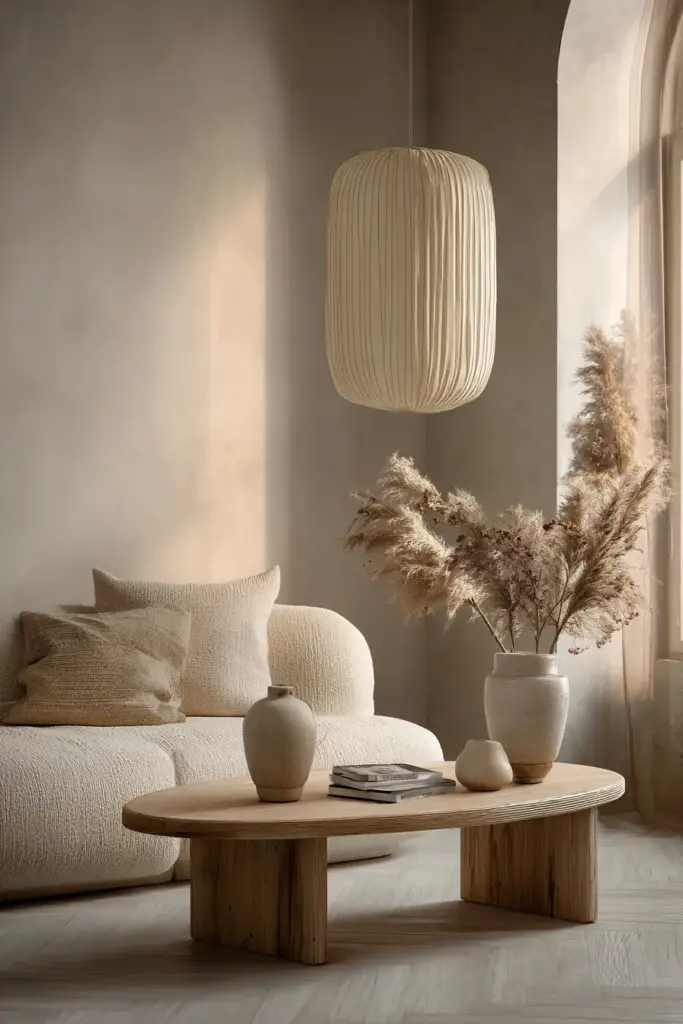
A Japandi coffee table tends to sit lower to the ground, with gentle rounded edges, pale natural wood, and an almost meditative simplicity. It says nothing loudly and everything softly.
For compact urban apartments, this style is particularly well-suited. It visually lowers the center of gravity in a room, making ceilings feel taller and spaces feel calmer.
Key Japandi table features to look for:
- Low profile (12–14 inches tall)
- Oval or softly rectangular silhouette
- Pale oak, birch, or ash wood
- No hardware or ornamentation
- Matte, natural finish
DIY and IKEA Hacks: Beauty on a Budget
One of the most satisfying things in home design is making something beautiful from something simple.
The IKEA KVISTBRO table, for instance, is a humble wicker-based table that transforms beautifully with a coat of natural wood stain and new woven detailing. Nesting tables from IKEA can be staggered, painted, and styled into a dynamic, layered centerpiece.
Simple DIY upgrades to consider:
- Repaint a dated wooden table in warm white or sage green
- Replace glass tops with a custom-cut marble contact paper overlay
- Add hairpin legs to a thrifted tabletop for an instant mid-century update
- Stack two IKEA crates for an open-shelf coffee table with character
Upcycling isn’t just budget-friendly — it’s an act of intention. A piece you’ve transformed carries a story. That story is part of what makes a home feel like yours.
How to Style Your Coffee Table Like a Designer
The surface of your coffee table is a small stage. What you place on it — and how — tells the story of your living room.
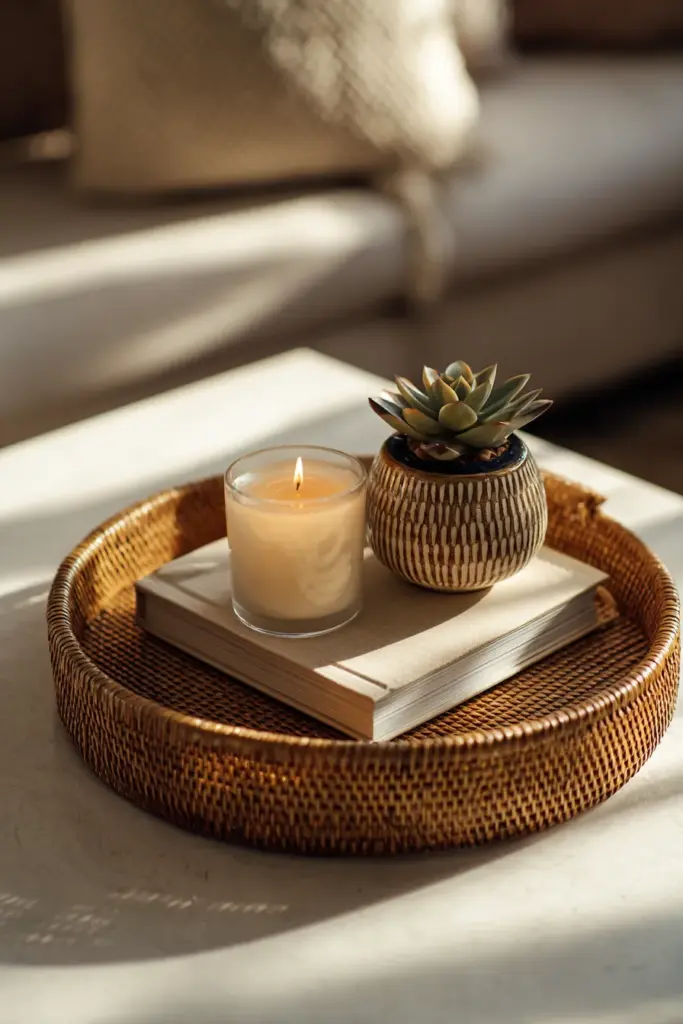
The Rule of Three
Group objects in odd numbers. Three items read as intentional; two read as symmetrical and stiff; four become cluttered.
The classic trio:
- A stack of beautiful books (horizontal, with a small object on top)
- A candle or sculptural object with texture
- A living element — a small plant, a sprig of eucalyptus, a bowl of stones
Use a Tray as an Anchor
A tray corrals small items and gives the eye a resting point. Choose one in natural wood, marble, or rattan. Everything inside the tray becomes a vignette; everything outside it is intentional negative space.
Vary Height and Texture
Layer a tall candle with a low, wide bowl. Place rough-textured objects next to smooth ones. The contrast creates visual rhythm — the same principle that makes a well-designed room feel alive rather than staged.
Leave Space
The most common styling mistake is filling every inch. Let your table breathe. Negative space isn’t emptiness — it’s relief. It’s where the eye rests before it moves again.
Material Care Guide: Keeping It Beautiful
| Material | Daily Care | Monthly Care | Avoid |
|---|---|---|---|
| Wood | Dry cloth dust | Furniture wax or oil | Wet cloths, direct heat |
| Marble | Soft damp cloth | Stone-safe cleaner | Acidic cleaners, wine, citrus |
| Glass | Microfibre cloth | Glass cleaner spray | Abrasive sponges |
| Lucite/Acrylic | Frequent dry dusting | Plastic-safe polish | Paper towels (scratching) |
| Metal | Dry dust | Mild soap, dry thoroughly | Harsh chemicals |
Eco-Friendly and Sustainable Choices
The most beautiful coffee table is one you can feel good about. FSC-certified wood ensures your piece comes from responsibly managed forests. Bamboo is a fast-renewing alternative that ages gracefully and carries a soft, natural warmth.
When shopping, look for brands that are transparent about their sourcing, use water-based finishes, and ship with minimal plastic packaging. Choosing secondhand is always the greenest option of all.
Coffee Table Alternatives for Very Tight Spaces
Sometimes, the traditional coffee table simply doesn’t fit — and that’s not a problem, it’s an invitation to be creative.
Alternatives that work beautifully:
- Ottoman with a tray — soft, multifunctional, kid-safe
- Nesting tables — pull one out when needed, tuck away when not
- Side tables in a cluster — flexible, individualistic, easily rearranged
- Poufs or floor cushions — low, warm, incredibly adaptable
- A single sculptural stool — minimal footprint, maximum personality
Key Takeaways
- Follow the two-thirds rule: your table should be roughly two-thirds the length of your sofa
- Keep 17 inches of clearance on all sides for comfortable movement
- Choose your shape by room flow: round for open traffic, rectangular for linear arrangements
- Match your material to your lifestyle: marble for aesthetics, wood for warmth, glass for small spaces
- Use the rule of three when styling: books, a candle, and a living element
- Consider storage tables if your living room is also your everything room
- Japandi-style low tables are ideal for compact, calm spaces
- Don’t underestimate DIY and thrifted pieces — intention transforms them
- Look for FSC-certified or sustainably sourced materials when possible
Conclusion
A coffee table, chosen with care, becomes more than furniture. It becomes the quiet center of your home’s daily life — the place where mornings happen, where evenings slow down, where guests lean in and conversations open up.
At ERYLIN, we believe that the most beautiful interiors are the ones built with intention. Not perfectly styled, but thoughtfully lived in. Your coffee table doesn’t need to be expensive or rare. It needs to feel like you.
So take your time. Trust your instincts. Choose the piece that makes you want to sit down, light a candle, and stay a while.
That’s the one.
Frequently Asked Questions
What size coffee table should I get for my living room?
Aim for a table that’s roughly two-thirds the length of your sofa. Leave at least 17 inches of clearance between the table and your seating. For small rooms under 20 square meters, a round or oval table between 36 and 48 inches works well.
What is the best shape for a modern coffee table?
Round and oval tables suit smaller, high-traffic spaces and feel warm and social. Rectangular tables work best in linear, contemporary rooms with longer sofas. Square tables are ideal for sectional or U-shaped seating arrangements.
How high should a coffee table be?
Your coffee table should sit at the same height as — or just slightly below — your sofa seat cushions. This typically means a table between 16 and 18 inches tall for most standard sofas.
How do I style a coffee table in a modern living room?
Use the rule of three: a stack of books, a candle or sculptural object, and a living element like a small plant. Anchor everything with a natural tray. Vary heights and textures, and always leave some negative space so the arrangement feels curated, not crowded.
How do I care for different coffee table materials?
Wood benefits from regular dry dusting and occasional furniture oil. Marble needs a soft damp cloth and a stone-safe cleaner — avoid anything acidic. Glass and lucite clean up easily but show dust quickly, so a light daily wipe keeps them looking their best. Always check manufacturer guidelines for specific finishes.