
Table of Contents
By ERYLIN — Updated June 2026
There is something quietly powerful about the way light enters a room. It shapes how we feel the moment we step inside — whether the space feels expansive or intimate, warm or cool, alive or still. And nothing controls that experience more directly than your window treatments.
In the modern living room, windows are no longer just openings. They are the soul of the space. The right treatment honors that — filtering golden afternoon light into something soft and painterly, or drawing the room closed at night with layers of warmth and texture.
This guide is for those who want their living room to feel intentional. Whether you’re starting fresh or rethinking what’s already hanging, we’ll walk you through every option, every texture, and every quiet detail that makes a window treatment feel like it belongs.
Welcome. Let’s begin.
Understanding Modern Window Treatments: What “Modern” Actually Means
Modern doesn’t mean cold. It doesn’t mean bare or stark. In today’s living rooms — especially those leaning toward Japandi, Scandi-rustic, or earthy contemporary aesthetics — modern means clean, considered, and deeply tactile.
It means choosing a woven bamboo shade because you love how the light moves through it like sunlight through leaves. It means layering sheer linen over a roller shade because you want both poetry and privacy.
Modern window treatments are defined by a few core qualities: clean lines, natural or nature-inspired materials, minimal hardware that doesn’t compete with the room, and an honest relationship with light.
The Core Principles to Design By
- Less visual noise — minimal patterns, calm neutrals, or soft earth tones
- Texture over ornamentation — let the weave of the fabric do the talking
- Function built in — privacy, light control, and energy efficiency are non-negotiable
- Layering where it counts — one treatment can do its job; two can do something beautiful
The Best Modern Window Treatments for Living Rooms
Roller Shades: The Clean-Lined Classic
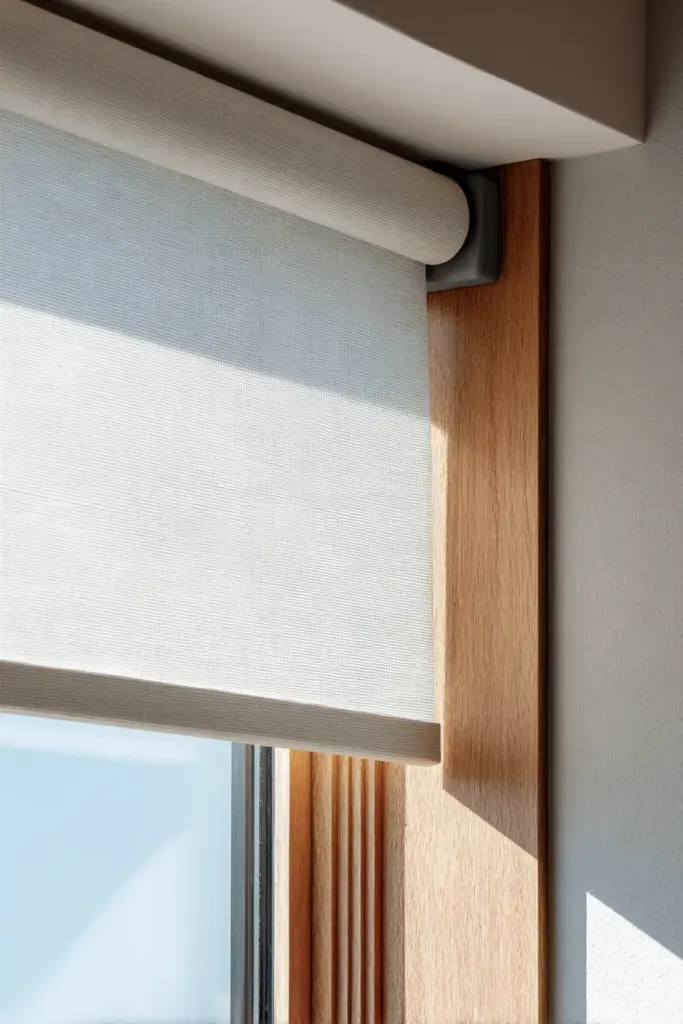
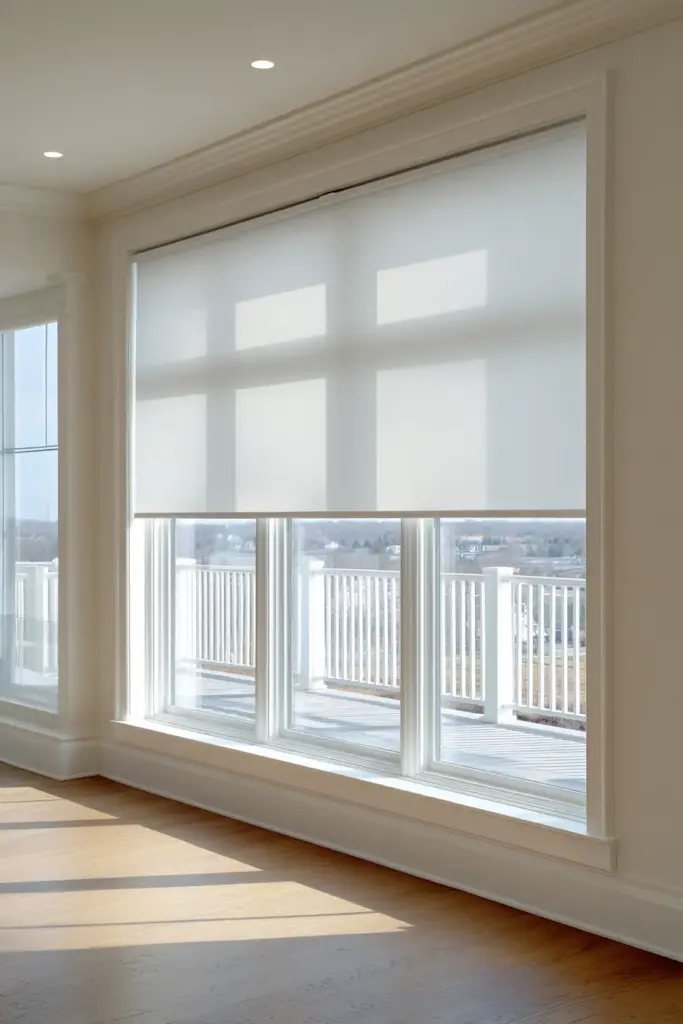
Roller shades are the quiet workhorse of the modern living room. They sit flush against the window, require no fuss, and deliver precise light control with a single pull.
In a natural linen or light-filtering fabric, a roller shade catches morning light and turns it into something ambient and golden. Choose a wider cassette housing in a matte white or warm sand finish, and the hardware almost disappears.
Best for: Minimalist, Japandi, or Scandi interiors. Rooms where you want the window itself to feel effortless.
Cost range: $50–$180 per shade for off-the-shelf; $120–$350 for custom sizing.
Tip: Mount them as close to the ceiling as possible — even touching the crown moulding — to make windows appear taller.
Roman Shades: Structured Softness
A flat Roman shade folds into clean horizontal pleats when raised, creating that signature sense of architectural softness that many minimalist interiors crave. When lowered, it sits smooth and unbroken — no fussy layers, just a calm, fabric-covered pane.
Choose a textured cotton-linen blend in warm ivory, sage, or terracotta. The fabric’s weight alone carries the room.
Best for: Living rooms that want a tailored look without heavy drapery. Pairs beautifully with exposed wood beams or natural stone accents.
Cost range: $80–$250 per shade depending on fabric and size.
Sheer Linen Curtains: The Romantic Layer
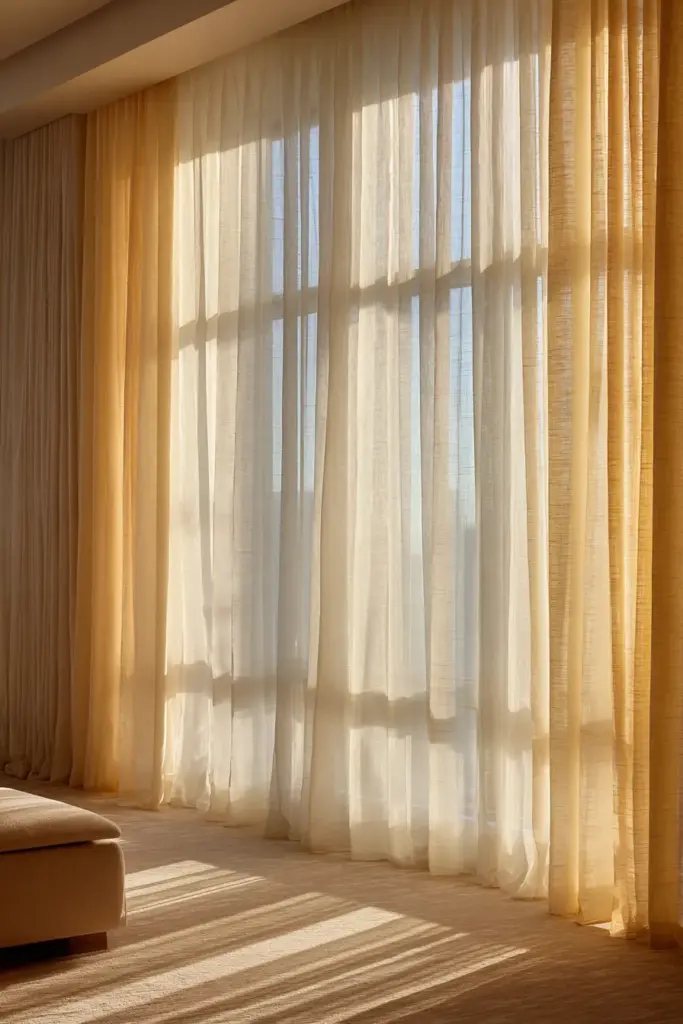
There is no softer way to filter daylight than through sheer linen. It diffuses harshness, wraps the room in a warm glow, and moves with the slightest breeze — making your living room feel genuinely alive.
Sheer linen panels work best hung from ceiling to floor, even if your windows don’t reach that far. The extra length grounds the space and adds an elegance that is entirely effortless.
Best for: Layering over roller shades or cellular shades. Japandi and coastal modern spaces. Rooms that need to feel larger.
Cost range: $30–$120 per panel for quality linen sheers.
Woven Wood and Bamboo Shades: Nature in the Window
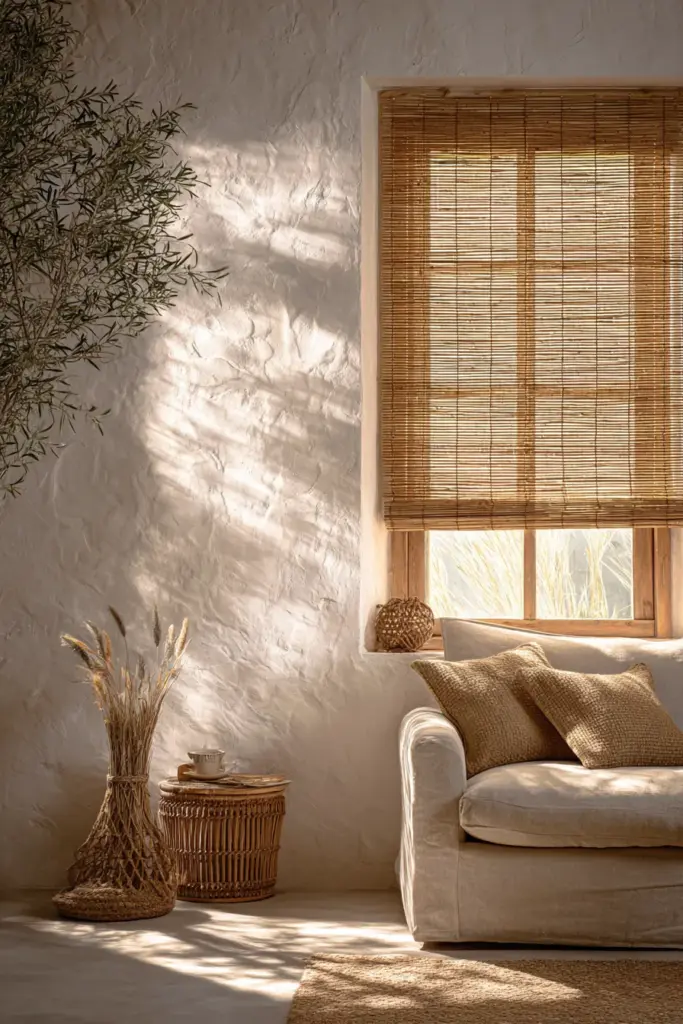
Woven wood shades are made from reeds, grasses, bamboo, or jute — each one slightly different, like something you found at a beautiful market. When light passes through them, it creates a dappled, organic pattern on the walls that no other treatment replicates.
They are the defining element of a Japandi or biophilic living room. Pair them with linen sheers for privacy, or a blackout liner for rooms that need both beauty and darkness.
Best for: Nature-forward interiors, Japandi and bohemian spaces, rooms with wooden floors or rattan furniture.
Cost range: $60–$220 per shade.
Sustainability note: Look for OEKO-TEX certified bamboo and reed shades or those with GRS (Global Recycled Standard) certification for eco-conscious sourcing.
Cellular (Honeycomb) Shades: The Quiet Performer
Cellular shades are the ones doing the most work behind the scenes. Their honeycomb structure traps air, creating a pocket of insulation between your window and your room — keeping warmth in during winter and heat out during summer.
They operate smoothly, come in cordless options for homes with children or pets, and are available in light-filtering or blackout varieties. Aesthetically, they lean clean and contemporary — ideal as a foundation layer beneath sheer panels.
Best for: Energy-conscious homeowners, families with young children, rooms with large south- or west-facing windows.
Cost range: $70–$200 per shade.
Ripple Fold Drapery: Effortless Drama
Ripple fold drapery is the panel curtain grown up. Instead of gathering randomly, the fabric folds into consistent, evenly-spaced waves — uniform, structured, deeply satisfying to look at.
Hung from a slim track system, it glides smoothly from one side to the other. In a heavyweight linen or cotton twill, it adds genuine presence to a room without asking for attention.
Best for: Living rooms with high ceilings, large windows, or an architectural feature worth framing. Contemporary, transitional, and Japandi interiors.
Cost range: $150–$450 per panel for custom ripple fold drapery.
Window Treatment Ideas for Specific Living Room Situations
For Small Living Rooms: Make Every Inch Count
In a smaller space, your window treatments are doing double duty — they need to let in light and make the room feel bigger.
The single best trick: hang curtain rods as high as possible and let panels drop to the floor. This vertical line draws the eye upward and creates the illusion of height. Choose light, airy fabrics in soft neutrals — nothing heavy, nothing dark.
A slim-profile roller shade in a pale linen tone is ideal for tight window recesses where bulky hardware simply won’t fit.
- Mount treatments at ceiling height, not window height
- Choose light-filtering over blackout where privacy allows
- Use vertical stripe patterns to elongate walls
- Stick to one or two tones — too much contrast will visually shrink the space
For Large Windows and Sliding Doors
Large windows are a gift — and the right treatment makes them a centerpiece. For panoramic windows or floor-to-ceiling glass, vertical panel track blinds offer clean, unobtrusive coverage that glides elegantly to the side.
For sliding glass doors, consider a single large roller shade mounted inside the door frame, or ripple fold drapery on a full-width track that clears completely to the side when open.
UV-blocking fabrics are essential here. A south-facing window with no UV protection will fade hardwood floors and furniture within a few years — look for fabrics rated UV 50+ or with a high solar reflectance rating.
For Families with Kids and Pets: Safety-First Design
Cordless operation isn’t just aesthetically cleaner — it’s the safest choice for homes with young children and pets. All major manufacturers now offer cordless lift systems for roller shades, Roman shades, and cellular blinds.
Beyond cordless, look for:
- Breakaway tassels on older-style pull cords that disconnect under pressure
- Tamper-resistant motorized controls that keep the mechanism out of reach
- Washable fabric panels — linen and cotton blends typically machine-wash well on a gentle cycle
- Avoid delicate fabric weaves in high-traffic areas; a tighter weave or vinyl-coated fabric holds up better over time
Motorized and Smart Window Treatments: Worth the Upgrade?
Motorized window treatments have crossed from luxury into genuine practicality. For large windows you can’t easily reach, for blackout shades you want closed before the sun hits at 6am, or simply for the ease of adjusting every window from your phone — motorization makes daily life measurably smoother.
Popular smart home integrations include:
- Lutron Serena — integrates with Apple HomeKit, Amazon Alexa, and Google Home; known for quiet motors and reliable scheduling
- IKEA Fyrtur — budget-friendly motorized roller shades with Zigbee connectivity; works with the IKEA Dirigera hub and most smart home ecosystems
- Somfy — professional-grade motors used by custom window treatment companies; supports voice control and app scheduling
Energy scheduling is one of the most underused features. Program your cellular shades to lower automatically in the afternoon when western sun peaks, then raise again at sunset — reducing air conditioning load without you thinking about it.
Cost for motorization: Add $100–$300 per shade for a basic motor; $250–$600+ for premium quiet motors with app control.
Layering Window Treatments: The Art of Doing Two Things at Once
Layering is where window treatments become genuinely expressive. The combination of a functional shade and a decorative curtain gives you the best of both worlds — precise light control and visual softness.
The Classic Layer: Roller Shade + Sheer Panel
Mount a light-filtering roller shade inside the window recess, then hang sheer linen panels just outside the frame, floor to ceiling. During the day, the sheers soften the light and the shade handles glare. At night, lower the shade for privacy and let the panels frame the window like a painting.
The Warm Layer: Woven Wood Shade + Linen Drape
A woven bamboo shade paired with a weighted linen panel in warm cream or sand creates the kind of layered texture that makes a room feel lived-in and loved. The contrast of organic weave against smooth fabric is quietly stunning.
The Functional Layer: Blackout Roller + Sheer Panel
For living rooms that double as media rooms or afternoon nap spaces, a blackout roller shade hidden behind airy sheer panels is the perfect solution. The sheers look effortless during the day; the blackout shade disappears behind them until you need it.
The Acoustic Benefit Nobody Talks About
Window treatments do more than control light. Heavy fabrics absorb sound — a detail that matters enormously in urban apartments, rooms facing busy streets, or open-plan living spaces where every sound travels.
Cellular honeycomb shades create an air buffer that dampens outside noise. Velvet or heavyweight linen drapes are particularly effective at absorbing ambient sound — the denser the fabric, the greater the acoustic benefit.
For a room that doubles as a home office or media space, layering a cellular shade with full-length lined drapes can make a noticeable difference in how the room sounds and feels.
Seasonal Swaps: Dressing Your Windows for the Year
Your window treatments don’t have to be permanent. Many homeowners keep two sets — lighter panels for warmer months and heavier, insulated treatments for winter.
| Season | Treatment Choice | Why It Works |
|---|---|---|
| Spring / Summer | Sheer linen panels, woven wood shades | Maximizes light, allows airflow, feels breezy |
| Autumn | Linen-cotton blend Roman shades | Adds warmth without heaviness |
| Winter | Cellular honeycomb shades + lined drapes | Insulates, reduces heat loss, darkens evenings |
Storage tip: Roll fabric panels around a cardboard tube (rather than folding) to prevent permanent crease lines during off-season storage. Keep in a breathable cotton bag, away from direct sunlight.
Window Treatment Comparison: A Quick Reference Guide
| Treatment | Light Control | Privacy | Insulation | Best Style Fit | Price Range |
|---|---|---|---|---|---|
| Roller Shade | ★★★★☆ | ★★★★☆ | ★★☆☆☆ | Minimalist, Japandi | $50–$350 |
| Roman Shade | ★★★★☆ | ★★★★☆ | ★★★☆☆ | Contemporary, Transitional | $80–$250 |
| Sheer Linen Panels | ★★☆☆☆ | ★★☆☆☆ | ★☆☆☆☆ | Japandi, Coastal, Romantic | $30–$120/panel |
| Woven Wood / Bamboo | ★★★☆☆ | ★★★☆☆ | ★★☆☆☆ | Japandi, Biophilic, Boho | $60–$220 |
| Cellular / Honeycomb | ★★★★★ | ★★★★★ | ★★★★★ | Modern, Family Homes | $70–$200 |
| Ripple Fold Drapery | ★★★☆☆ | ★★★★☆ | ★★★☆☆ | Architectural, High Ceilings | $150–$450/panel |
| Motorized Shade | ★★★★★ | ★★★★★ | ★★★☆☆ | Smart Homes, Large Windows | $150–$600+ |
Quick Checklist: How to Choose Your Living Room Window Treatment
Before you buy, work through these questions:
- How much natural light do you want? Sheer or light-filtering fabrics maximize it; blackout or room-darkening fabrics minimize it.
- Do you need privacy? Consider how close your neighbors are and whether the room faces a street.
- Do you have children or pets? Prioritize cordless or motorized options.
- What is your room’s aesthetic? Match the treatment to your existing palette — neutrals, naturals, and earthy tones work in almost any modern interior.
- Are your windows a standard size? If not, budget for custom sizing.
- Do you want to layer? Decide whether you need two treatments or one.
- What is your energy concern? If insulation matters, cellular shades are your answer.
- Is sustainability important? Seek OEKO-TEX, FSC, or GRS-certified products.
A Soft Conclusion
The living room is where you exhale. It is where the day loosens its hold on you — where morning light lands on a warm floor, where the evening closes gently around familiar things.
The right window treatment is part of that feeling. It is the quiet detail you may not consciously notice, but you will always feel. The way the afternoon light diffuses through linen, the sound of the city softened by a cellular shade, the warmth of a woven bamboo panel catching low winter sun.
Choose slowly. Choose honestly. Choose something that feels like yours.
At ERYLIN, we believe beautiful spaces begin with intentional choices — and that the most meaningful ones are often the quietest.
Frequently Asked Questions
What are the best window treatments for a modern living room?
The best modern living room window treatments combine clean aesthetics with genuine function. Roller shades in light-filtering linen, woven bamboo shades, flat Roman shades, and ripple fold drapery are all strong choices. For most rooms, layering a light-filtering shade with sheer linen panels delivers both versatility and beauty.
What window coverings are trending in 2025–2026?
Japandi-inspired treatments are leading the trend cycle: woven bamboo and reed shades, sheer linen panels in warm neutrals, and motorized roller shades in matte, earthy tones. Sustainability is also central — OEKO-TEX certified fabrics and FSC-certified natural materials are increasingly in demand.
How much do modern window treatments cost?
Costs vary widely by type and whether you choose off-the-shelf or custom sizing. Roller shades typically run $50–$350; Roman shades $80–$250; woven wood shades $60–$220; sheer linen panels $30–$120 per panel; cellular shades $70–$200; and ripple fold drapery $150–$450 per panel. Motorization adds $100–$600 per window depending on the system.
Are motorized window treatments worth it for living rooms?
For large windows, hard-to-reach treatments, or smart home households, motorized shades are absolutely worth the investment. They offer effortless daily use, energy scheduling, and seamless integration with Alexa, Google Home, and Apple HomeKit. The Lutron Serena and IKEA Fyrtur systems offer strong performance at different price points.
What window treatments work best with large living room windows?
For large or floor-to-ceiling windows, vertical panel track blinds or wide ripple fold drapery offer clean coverage that doesn’t visually fragment the glass. UV-blocking fabric is essential to protect furniture and flooring from sun damage. Motorization is particularly practical at this scale, allowing easy full-window coverage at the touch of a button.