
Table of Contents
There is something deeply satisfying about a room that feels considered — not just decorated, but designed from the bones out.
Walk into a living room that has been thoughtfully shaped by its architecture, and you feel it before you name it. The way light pours through a generous window. The quiet drama of a textured wall. The sense of shelter that a lowered ceiling or a deep niche gives you. These are not accidents. They are architectural features doing exactly what they were made to do.
At ERYLIN, we believe that great interior design begins with understanding the structure around you — then working with it, not against it. Whether you live in a wide-open house or a compact urban apartment, your space has a story written in its walls, ceilings, and windows. This guide will help you read it, highlight it, and make it yours.
You do not need a massive renovation budget. You need clarity, intention, and a few well-chosen moves.
What Are Architectural Features in a Modern Living Room?
Architectural features are the structural and built-in elements that give a room its shape, scale, and character. They exist before the furniture arrives and remain when it leaves.
In a modern living room, these features include exposed beams, statement ceilings, large windows, fireplace surrounds, built-in shelving, niches, columns, and media walls. They define how light moves, how sound behaves, and how comfortable a room feels at its core.
The distinction matters because you can change your sofa on a whim, but a ceiling height or a window placement changes the entire emotional register of a space. Working with these elements — rather than decorating over them — is what separates a styled room from a truly designed one.
Audit Your Living Room First
Before you add anything, look at what you already have.
Your Existing Feature Checklist
Walk through your living room slowly and note:
- Ceiling: Height, shape, exposed beams, coffers, or tray details
- Windows: Size, placement, how much natural light enters and at what time of day
- Walls: Any alcoves, niches, exposed brick, original molding, or paneling
- Floor: Material transitions, sunken areas, or raised platforms
- Built-ins: Existing shelves, fireplaces, media walls, or cabinetry
- Structural columns or load-bearing elements that cannot be removed
Once you have your inventory, you face three choices for each feature: highlight it, soften it, or add to it. Everything in this guide follows that framework.
The Core Architectural Features of a Modern Living Room
Statement Ceilings
The ceiling is the most underused surface in most homes. In modern design, it has become one of the most powerful.
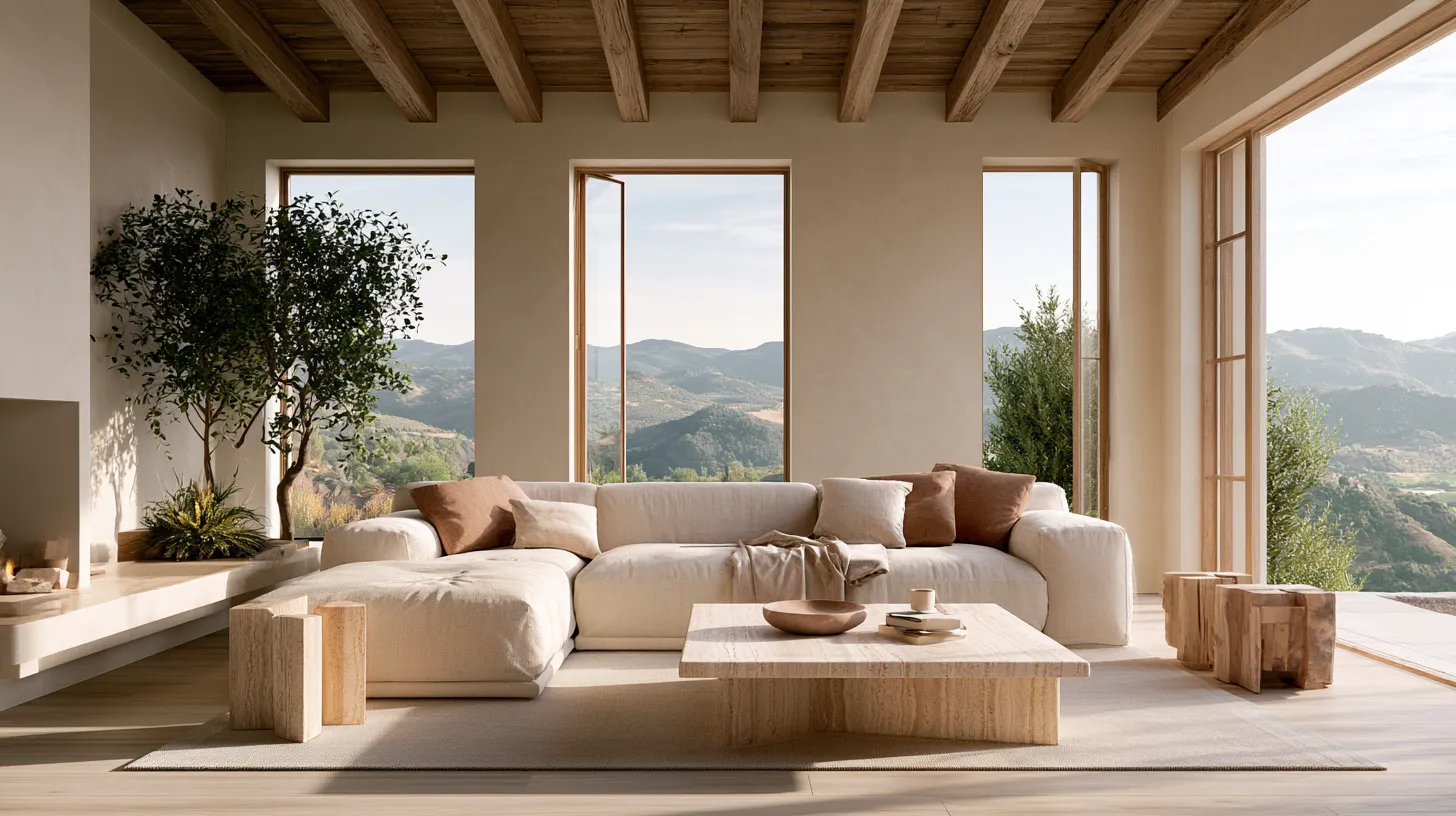
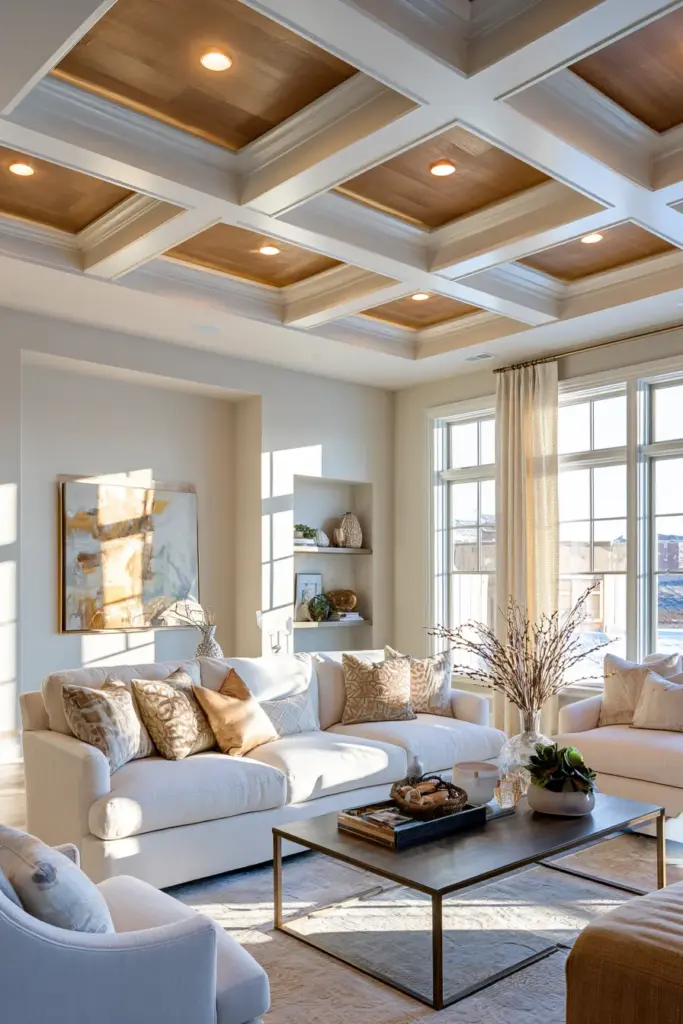
A tray ceiling adds quiet geometry — recessed inward with a rim of shadow that makes the room feel taller and more considered. A coffered ceiling brings a sense of weight and history without heaviness when kept in neutral tones. And exposed beams — whether original timber or MDF wrapped to mimic it — bring warmth and structure that no piece of furniture can replicate.
If your ceiling is low, paint it the same color as the walls and let cove lighting do the work. The soft glow pushed upward creates an illusion of lift that is genuinely convincing.
Ceiling Ideas by Budget
| Budget Level | Approach |
|---|---|
| Low | Paint ceiling a tone lighter; add LED strip cove lighting |
| Mid | Add faux MDF beams or a simple tray ceiling with recessed lights |
| High | Coffered ceiling, timber beams, custom plaster or acoustic panels |
Floor-to-Ceiling Windows and Natural Light
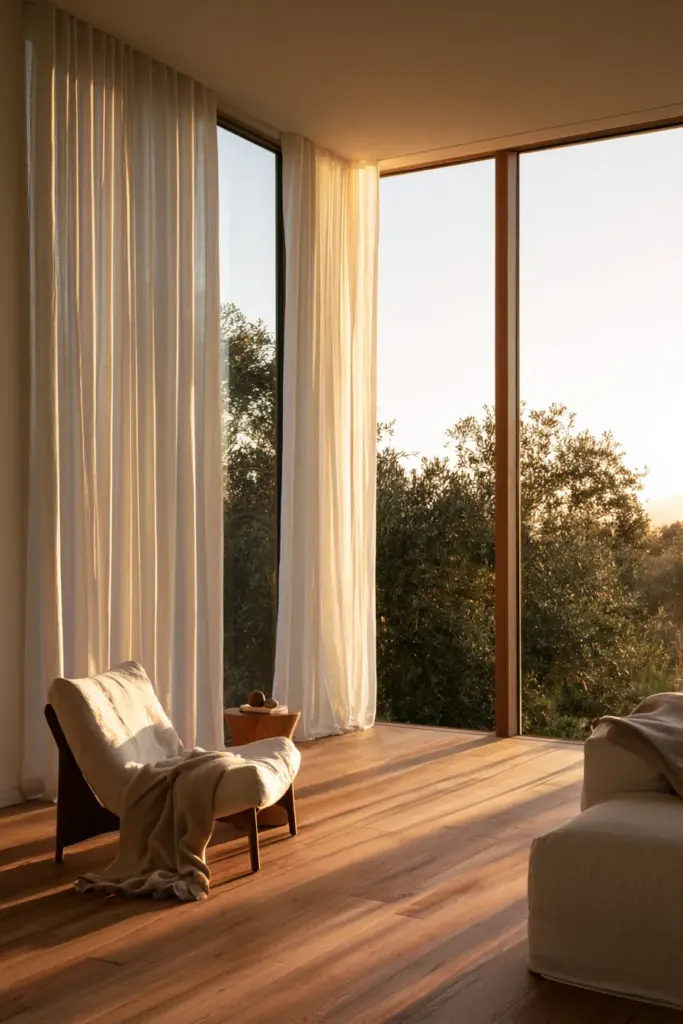
Nothing transforms a modern living room like generous glazing. Floor-to-ceiling windows dissolve the boundary between interior and exterior, pulling in landscape, sky, and shifting daylight that makes a room feel alive at every hour.
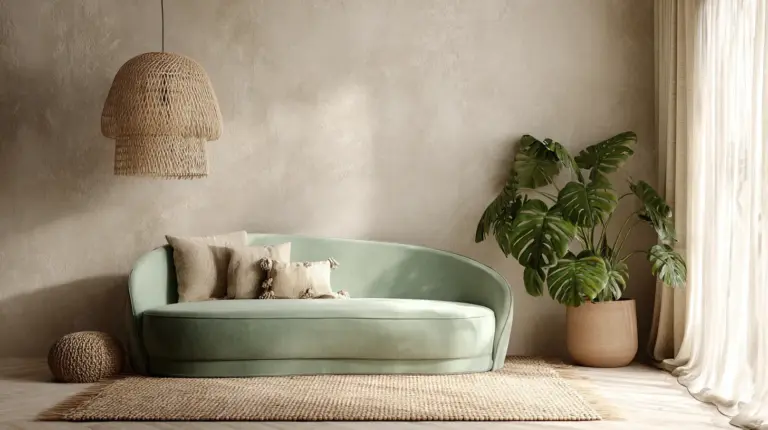
If you cannot install new windows, maximize what you have. Remove heavy curtains in favor of sheer linen panels that filter light without blocking it. Paint the window reveals white to bounce light deeper into the room. Keep the sill clear and let it function as a quiet ledge for a plant or a stack of books.
In tropical climates — where intense afternoon sun is as much a challenge as a gift — deep window reveals, slatted shutters, or adjustable louvers allow you to control light and heat without losing the connection to the outside. This is architecture doing exactly what it should: responding to where you live.
The Fireplace as a Focal Point
A fireplace is the original architectural anchor of the living room. In modern interiors, it has evolved far beyond function.
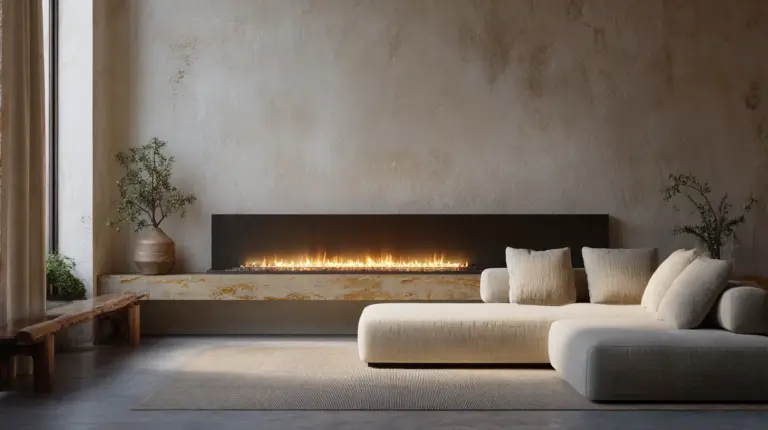
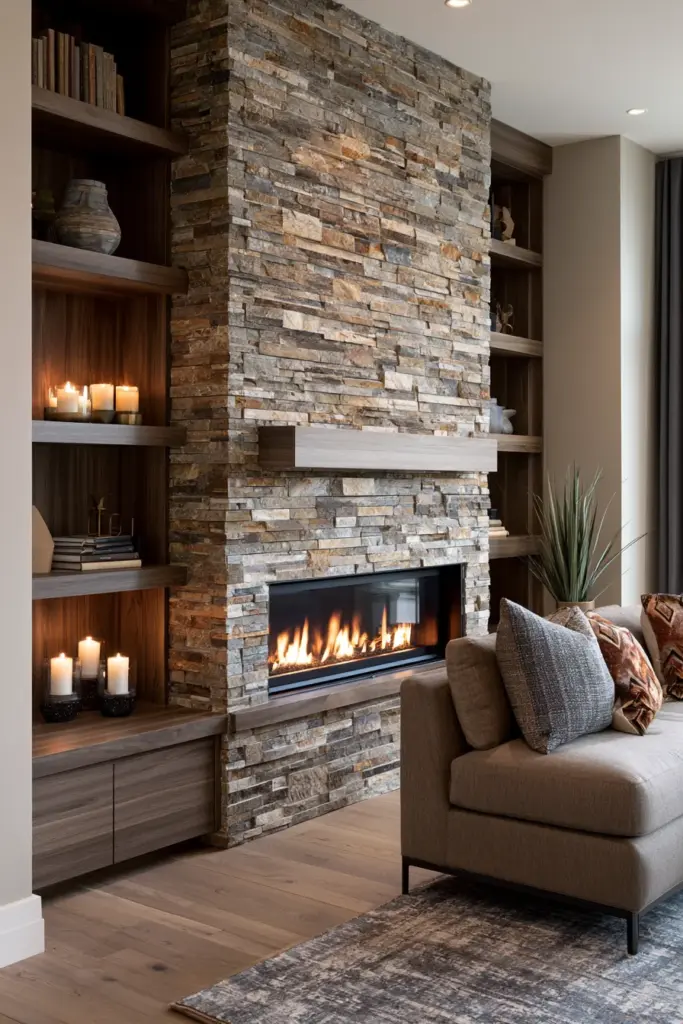
A sleek stone or microcement surround with a linear flame brings warmth without fuss. A floor-to-ceiling feature wall built around the fireplace — in natural stone, wood paneling, or textured plaster — creates the kind of focal point that grounds all the furniture around it. Even a non-working fireplace can be restored as a design element: backlit with warm LEDs, filled with stacked logs, or framed with a custom plaster hood.
The key is to treat the fireplace not as a single object but as the center of a composed wall — integrating shelving, niches, or paneling to either side so the whole wall tells one coherent story.
Built-In Shelving and Media Walls
Built-ins are one of the most transformative architectural investments you can make in a living room. They turn dead wall space into a living composition of texture, light, and function.
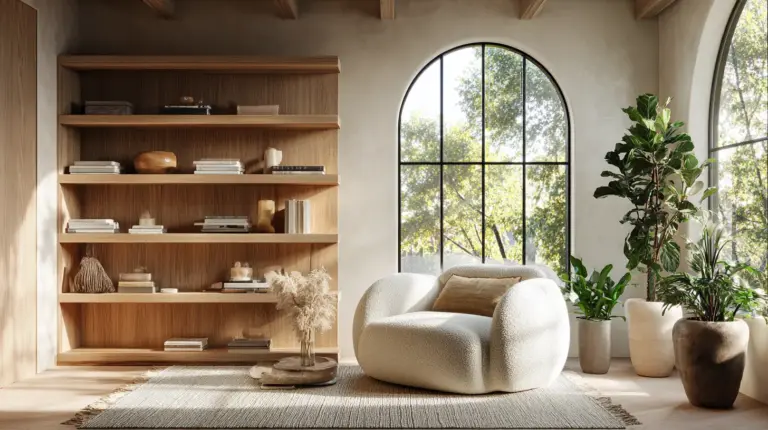
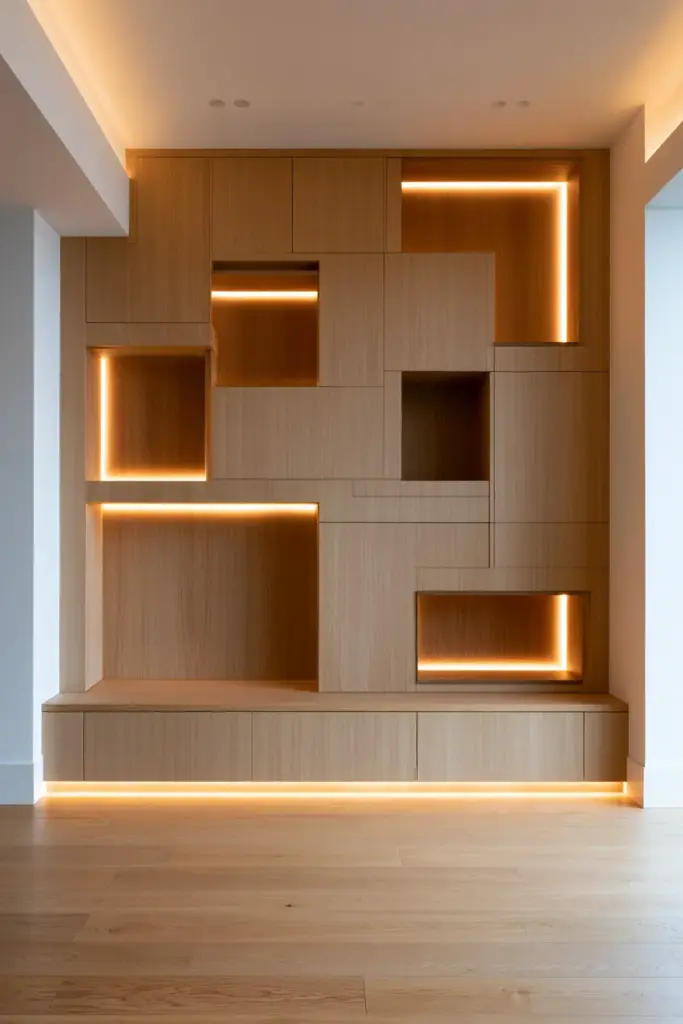
A media wall with integrated cabinetry conceals cables, speakers, and clutter while presenting the television as part of the architecture rather than an afterthought. Flanking shelves at different depths — some open, some closed — add rhythm and depth. Backlit niches within the wall make the whole composition glow softly at night.
For smaller spaces, floor-to-ceiling built-ins on a single wall create the illusion of greater height and dramatically increase storage without taking up floor space. In local carpentry markets, this is often more affordable than people expect — and the visual return is extraordinary.
Niches, Alcoves, and Reading Nooks
These are the most intimate of architectural features — small, sheltered spaces that invite you to pause.
A recessed niche in a wall, backlit with warm LEDs, becomes a natural display space for objects that deserve to be seen. An alcove with a built-in bench and cushion becomes a reading corner, a morning coffee seat, a place where the room slows down. Even a shallow recess — just 15 cm deep — can hold a row of art objects or books that feel composed rather than cluttered.
If your walls are solid and recessing is not possible, you can create the suggestion of a niche by building a floating shelf unit slightly proud of the wall and lighting it from above with a recessed spot. The shadow below and the light above do the rest.
Wood Paneling and Textured Walls
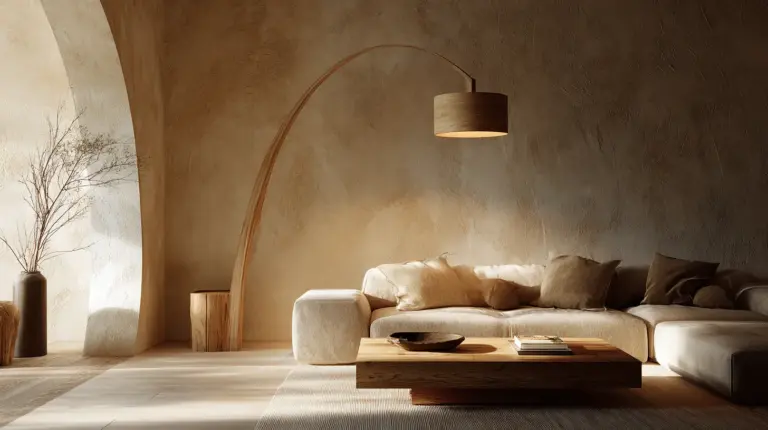
A plain flat wall is a missed opportunity. In modern living rooms, vertical wood slat panels, limewash plaster, microcement, and wainscoting bring materiality and depth that changes how a room feels to inhabit.
Wood slat panels — in ash, oak, or bamboo — run vertically to draw the eye upward and create a warm acoustic softness. They suit both Japandi-influenced minimalism and warmer, more rustic palettes. Limewash paint gives a wall the texture of aged plaster — matte, slightly uneven, organic — at a fraction of the cost of true plasterwork. And microcement brings an industrial-modern smoothness that suits open-plan spaces where walls, floors, and kitchen surfaces flow together.
These are feature walls in the truest sense: not just a painted accent color, but a material choice that adds dimension and tactile interest.
How to Highlight Existing Architectural Features Without Renovating
The best architectural detail is often already there, waiting to be noticed.
Simple Moves That Make a Big Difference
- Paint trim and moldings in a contrasting tone — even a soft white against warm greige walls makes original moldings read as intentional design
- Add lighting directed at a textured wall to reveal depth that flat overhead light hides
- Remove clutter from window sills and frames so the architecture of the opening can be seen clearly
- Expose what was hidden — brick behind plaster, original floorboards under carpet, beams beneath a false ceiling
- Use furniture to frame, not compete — place a sofa facing toward the fireplace or window, not across it
For Rental and Apartment Spaces
You can create the feel of architectural features without touching a wall permanently:
- Peel-and-stick molding panels add instant wainscoting or picture-frame paneling
- Freestanding bookshelves styled floor-to-ceiling mimic built-in proportions
- LED strip lighting behind furniture or along ceiling edges creates cove lighting effects without installation
- Large-format wallpaper with architectural pattern — stone, linen, wood grain — gives texture without commitment
- Vertical shiplap-effect adhesive panels on a single wall create instant architectural interest in condominiums and apartment rentals
Lighting Strategies for Architectural Features
Lighting is how you make architectural features visible after the sun goes down. It is also how you sculpt the mood of your living room hour by hour.
| Feature | Lighting Technique | Effect |
|---|---|---|
| Textured wall (brick, stone) | Grazing light angled close to surface | Reveals depth and shadow |
| Smooth feature wall | Wall washing from above | Even, soft glow |
| Ceiling beams or coffers | Warm recessed spots between beams | Defines structure with warmth |
| Niche or alcove | Warm LED strip at back or top | Creates depth and focus |
| Fireplace surround | Accent spots above or flanking | Drama and definition |
| Built-in shelving | LED strip at back of shelves | Transforms shelves into display cases |
Color temperature matters deeply. For wood, stone, and warm neutrals, use 2700K–3000K warm white light. For concrete, microcement, or cool grey palettes, 3000K–3500K works better. Avoid cool daylight (5000K+) in living rooms — it flattens texture and removes warmth.
Layer your lighting: ambient (recessed or cove) for general light, accent (spots or strips) for features, task (floor or table lamps) for reading and intimacy. Each layer should be dimmable so you can adjust the scene from bright and active to soft and restorative.
Architectural Features for Small Modern Living Rooms
Small rooms require more precision, not less ambition.
The most powerful move in a small living room is verticality. Tall built-ins, floor-to-ceiling curtains hung close to the ceiling, and vertical paneling all train the eye upward and create a sense of height that the actual dimensions do not provide.
False ceilings with cove lighting — a band of recessed ceiling with LED strips at the edges — are enormously effective in compact spaces. The floating ceiling with glowing edges makes the room feel like a deliberate composition rather than a box.
One strong feature wall is better than four busy ones. Choose one wall — typically the one you face when seated — and give it everything: texture, light, built-ins, or a composed niche. Keep the other three walls calm and clean. The contrast between complexity and restraint is what makes a small room feel sophisticated rather than crowded.
In Philippine condominiums and compact urban homes, this approach is particularly effective. Local artisans and carpenters can execute beautiful built-in work at accessible cost — the investment in one wall can transform an entire living room.
Integrating Architectural Features with Modern Living Habits
A beautiful room that does not support how you actually live will always feel slightly wrong.
For media and technology: Build your television into the architecture. A media wall niche recessed to the exact depth of the screen makes the TV feel intentional rather than added. Integrated cable management, hidden speakers within the wall, and closed storage below for streaming boxes and remotes keep the visual calm.
For work-from-home: An architectural alcove or a deep niche can be fitted with a floating desk to create a subtle work zone without a separate room. Beams or a change in ceiling treatment can define the space without walls, giving psychological separation while keeping the room open.
For social living: Use your architectural features to define zones naturally. The fireplace creates one conversation area; a window seat creates another. Furniture arranged to face these features — rather than arranged around the television only — gives the room multiple centers and makes it work for both intimate evenings and larger gatherings.
Key Takeaways: Your Modern Living Room Architectural Feature Guide
- Start with an audit — know what you have before you add anything
- Ceilings are underused — beams, trays, cove lighting, and painted treatments all have high visual impact
- Windows are the most powerful natural feature — maximize light, consider reveals, control heat in warm climates
- Built-ins transform a room — media walls, shelving, and niche work are the most valuable investments
- Lighting reveals architecture — without deliberate lighting, even beautiful features go unseen at night
- Small rooms need vertical thinking — height, built-ins, and one strong feature wall work best
- You do not always need to renovate — peel-and-stick molding, LED cove strips, and freestanding shelves go a long way in rentals and apartments
- Material matters — wood slats, limewash, microcement, and natural stone each bring a different kind of warmth and depth
- Layer your lighting — ambient, accent, and task, all dimmable
A Closing Thought
The most beautiful living rooms we have ever admired are not the ones with the most objects. They are the ones where you can feel the bones of the space — where the architecture itself is generous and quiet and good.
You do not need a villa. You need a room that knows what it is. Start with one wall, one ceiling, one window treatment that honors the light it admits. Work from the structure outward, and let the furniture follow.
That is the ERYLIN way: calm, intentional, rooted in material truth. Your living room is already more architectural than you think. This is simply the moment to let it show.
Frequently Asked Questions
What are the architectural features of a living room?
Architectural features are the structural and built-in elements that define a room’s shape and character — including ceilings, beams, windows, fireplaces, niches, columns, and built-in shelving. They exist independently of furniture and form the permanent framework of the space.
What makes a living room look modern?
Modern living rooms are defined by clean lines, intentional materiality, and restrained decoration. Architectural elements like flush built-ins, linear fireplaces, large windows, and textured feature walls create a modern feel more effectively than furniture alone. The emphasis is on composition and quality over quantity.
How can I add architectural interest to my living room without renovating?
Peel-and-stick molding, LED cove lighting along ceiling edges, floor-to-ceiling freestanding shelves, and large-format textured wallpaper all create architectural interest without structural work. These are especially useful in rentals and condominiums where permanent changes are not permitted.
What lighting works best for architectural features in a living room?
Grazing light (angled close to the surface) works best for textured walls like brick or stone. Cove lighting creates ceiling height and ambient warmth. Backlit niches and shelves use warm LED strips. Always use warm white (2700K–3000K) for wood and natural materials, and make all layers dimmable.
How do I use architectural features in a small modern living room?
Focus on verticality: tall built-ins, floor-to-ceiling curtains, and vertical wall paneling all make small rooms feel taller. Choose one strong feature wall and keep the others calm. A false ceiling with cove lighting adds perceived height. In compact spaces, one well-designed architectural moment does more than many small details scattered around the room.