
Table of Contents
There is a quiet magic in a room that feels both full and free.
You walk in and exhale. The light is warm, the air moves gently, and everything you see has a reason to be there. This is what a well-designed modern living room small spaces can feel like — not a compromise, but a curated choice.
Small doesn’t mean sparse. It doesn’t mean sacrificing softness or style. It means learning to edit with care, choose with intention, and layer beauty in ways that make every square meter work twice as hard.
At ERYLIN, we believe that the most soulful rooms are often the most compact ones. Here is our complete guide to creating a modern small living room that breathes, inspires, and feels entirely like home.
The Foundation: Color and Light
What Colors Make a Small Living Room Look Bigger?
Color is the first language a room speaks. In a small living room, it sets the entire emotional tone before a single piece of furniture is placed.
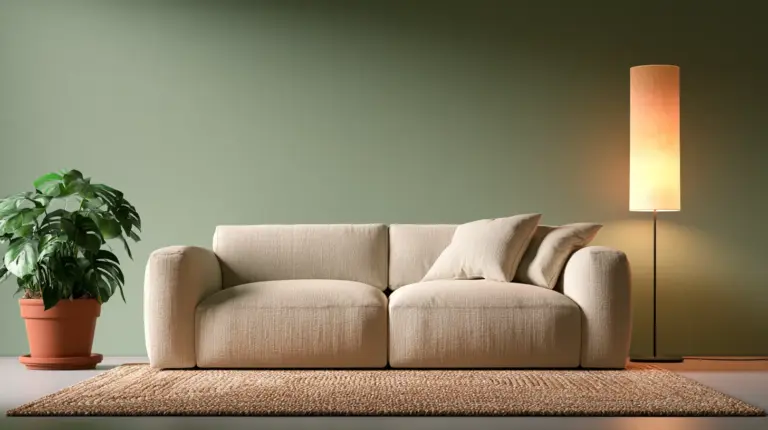
Lean into a neutral palette rooted in warmth — think greige (grey + beige), soft white, warm linen, and dusty sage. These tones reflect light naturally and make walls feel like they gently recede.
The 60-30-10 color rule is your most reliable tool here. Use your dominant neutral for 60% of the room (walls, large sofa, rug), a secondary tone for 30% (curtains, cushions, shelving), and one accent for 10% (a ceramic vase, a woven throw, a single piece of wall art). This proportion keeps the eye moving without feeling cluttered.
Avoid cold greys and stark whites in tropical climates like the Philippines — they can feel clinical under harsh sunlight. Instead, choose warm white (LRV 85+) or a soft greige like Benjamin Moore’s White Dove or local equivalents from Davies or Boysen.
How to Light a Small Living Room
Lighting is not decoration. It is architecture you can adjust.
Layer your light in three levels: ambient, task, and accent. Ambient light (your main ceiling source) should be warm — aim for 2700K to 3000K LED bulbs that mimic the golden hour. Avoid cool white fluorescents; they flatten a room and strip it of warmth.
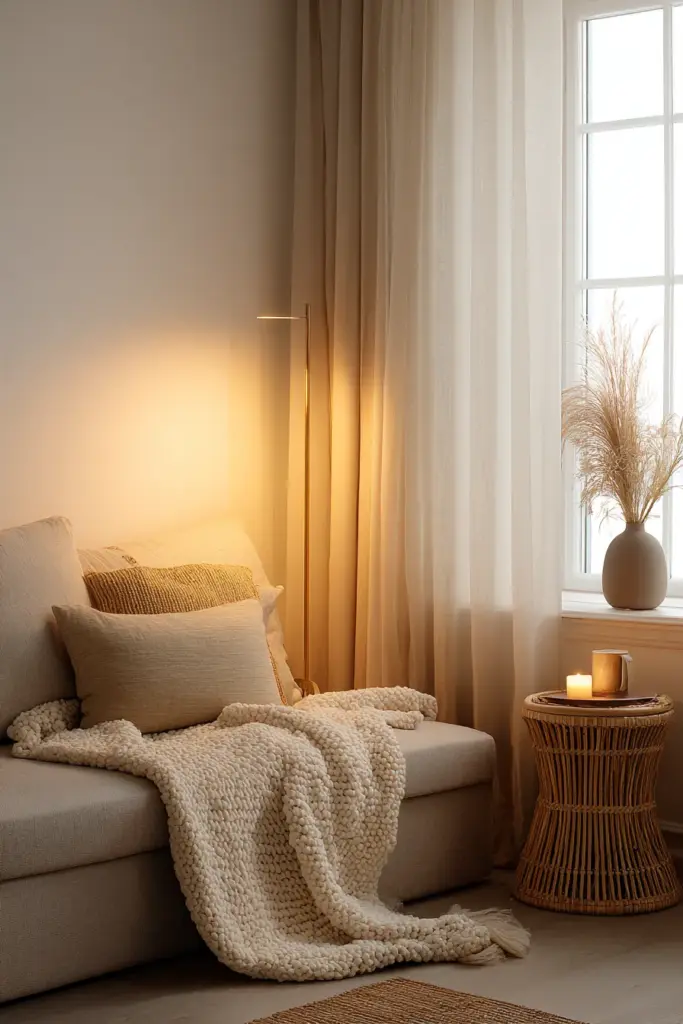
Add a floor lamp in a dim corner to lift shadows and create depth. Use LED strip lights behind shelving or under a console table for accent warmth that makes the room glow rather than glare. Sheer curtains in linen or cotton diffuse natural light beautifully while maintaining privacy.
In the Philippines, where sunlight is intense, position sheer panels on east- and west-facing windows to soften harsh afternoon rays without blocking the breeze.
Furniture Strategy: Less, but Better
What Furniture Is Best for a Small Living Room?
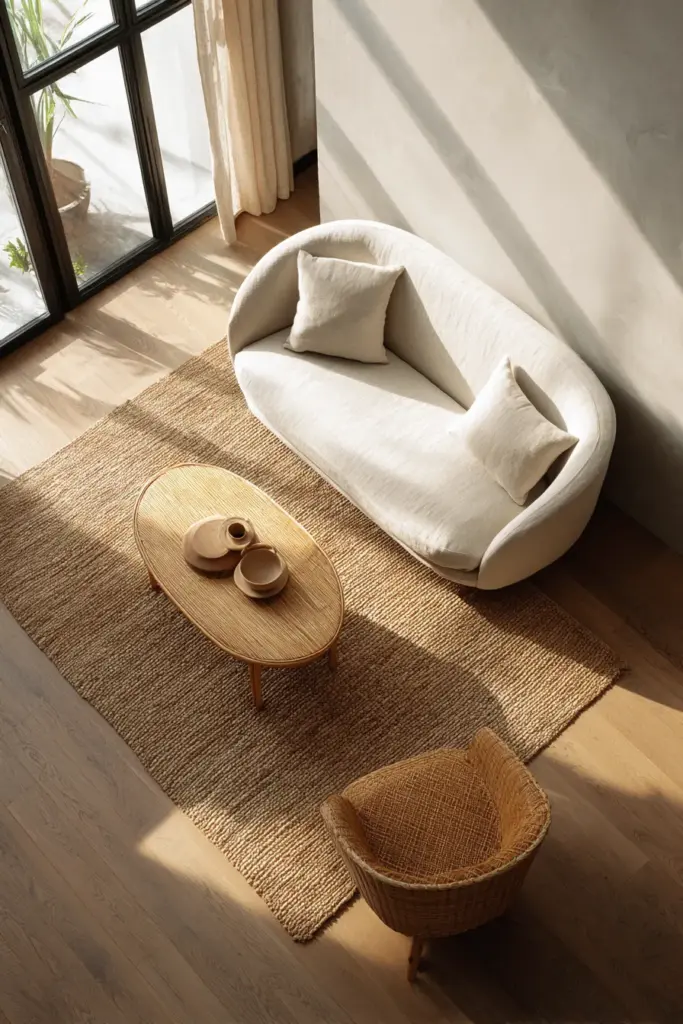
The right furniture doesn’t just fit — it breathes. Choose pieces with exposed legs (sofas, chairs, coffee tables) so the floor remains visible. Visible floor equals perceived space.
Low-slung furniture in the Japandi style — sofas that sit closer to the ground, minimalist armchairs, flat-profile shelving — keeps the upper half of the room open and airy. This draws the eye upward, making ceilings feel taller.
Prioritize rounded edges over sharp corners. A curved sofa or oval coffee table reduces visual tension and allows easier movement in tight spaces. It also softens the modern aesthetic into something warmer and more livable.
What Are the Best Multi-Functional Furniture for Small Living Rooms?
Every piece in a small living room should earn its place — ideally by doing two jobs.
| Furniture Piece | Primary Use | Hidden Function |
|---|---|---|
| Ottoman with storage | Seating / footrest | Blanket or book storage |
| Nesting coffee tables | Surface space | Tuck one away when not needed |
| Sofa bed or daybed | Seating | Guest sleeping area |
| Storage bench | Entryway seating | Shoe or cushion storage |
| Floating media console | TV stand | Keeps floor clear, adds shelf storage |
| Extendable dining table | Dining surface | Compact when not in use |
Look for these at IKEA Philippines (KALLAX shelving, BRIMNES ottomans), or explore local furniture makers in Laguna and Cebu for budget-friendly, made-to-measure pieces.
What Is the Best Furniture Layout for a Small Living Room?
The biggest furniture mistake in small spaces is pushing everything against the walls. It feels logical, but it actually makes the room look smaller and creates an awkward, empty center.
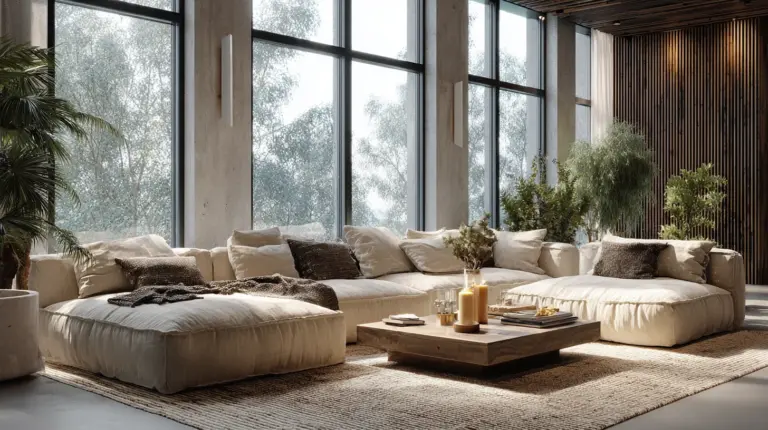
Float your sofa slightly away from the wall — even 15–20cm creates an illusion of depth. Anchor the seating area with a rug that fits at least the front legs of all furniture. This grounds the space and defines the “living zone” visually.
For a 10m² living room, consider this layout:
- One compact 2-seater sofa (180cm wide max) positioned facing the window or TV wall
- One accent chair at an angle across from the sofa
- One oval or round coffee table (80cm diameter) at center
- One floating shelf or console behind the sofa as a room divider if open-plan
Avoid L-shaped sofas in very tight rooms — they dominate. If you love an L-shape, ensure at least 90cm of clearance on all walking paths.
The Japandi Edge: Your 2026 Competitive Aesthetic
Japandi for Small Spaces
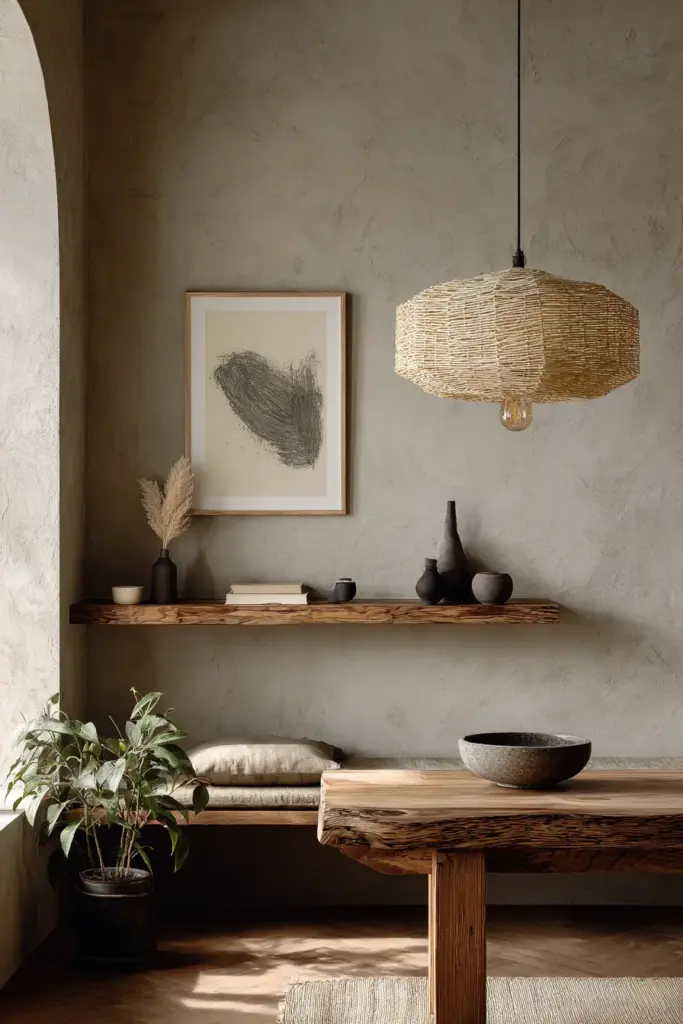
Japandi — the quiet marriage of Japanese minimalism and Scandinavian warmth — is the most natural aesthetic for modern small living rooms. It embraces emptiness as beauty.
The 70% empty rule is Japandi’s quiet principle: leave 70% of your surfaces, shelves, and visual field intentionally bare. This is not minimalism for minimalism’s sake — it is restraint that allows what remains to truly be seen.
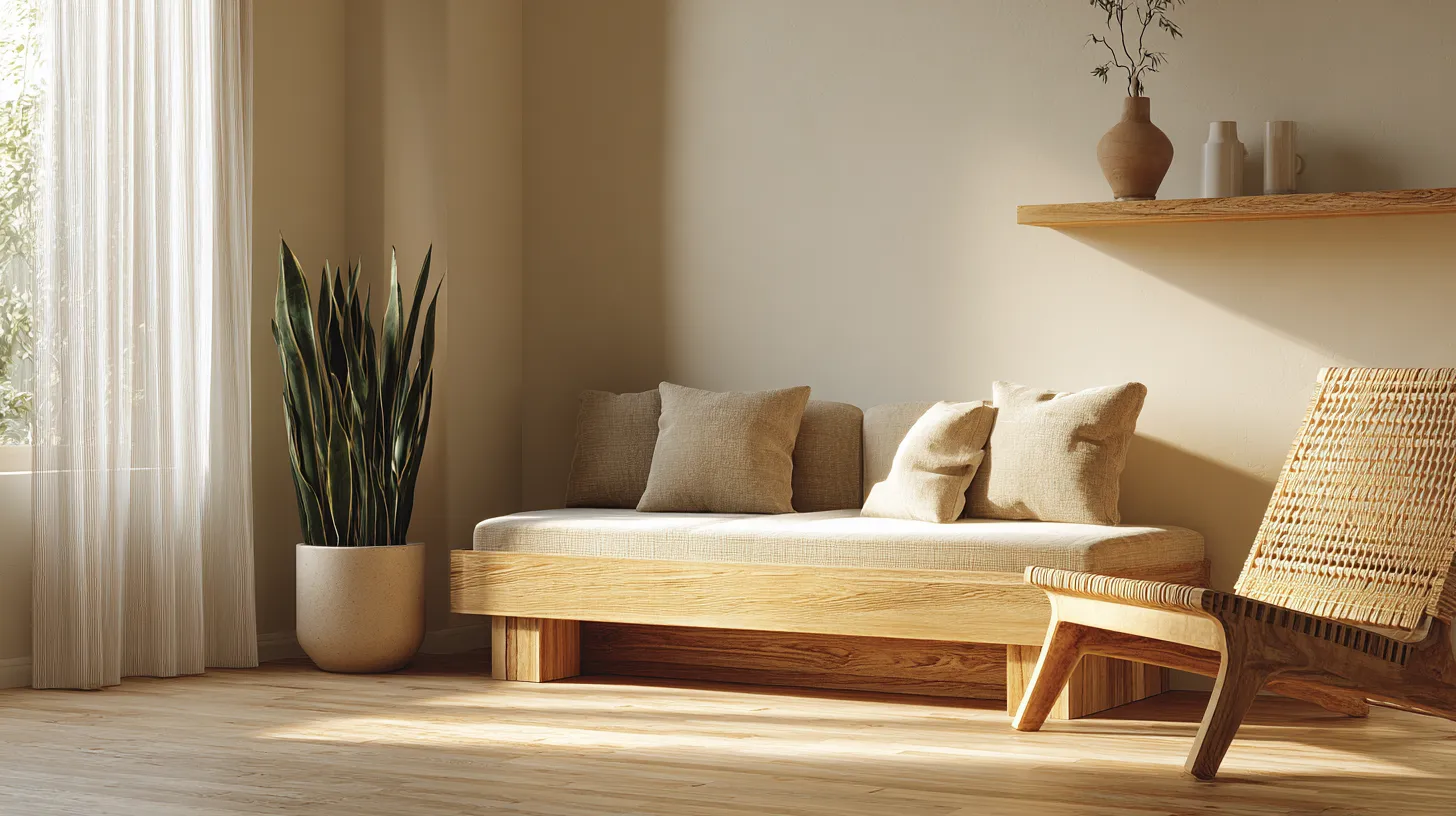
Choose a greige or warm oat palette for walls. Furniture in natural oak, rattan, or bamboo. Textiles in undyed linen, chunky cotton, or soft bouclé. One statement piece of wall art — a single framed print, a woven textile, or a ceramic wall sculpture — rather than a gallery of many.
In the Philippines, bamboo and rattan furniture align perfectly with both the Japandi aesthetic and the tropical climate. They allow air to flow, resist humidity better than upholstered foam pieces, and bring natural texture without visual weight.
Storage: Vertical, Hidden, Intentional
How to Maximize Storage in a Small Living Room
When floor space is limited, look up. Vertical shelving — floor-to-ceiling or mounted at eye level — draws the eye upward and creates storage without stealing square footage.
Use shelving with purpose: books, one or two plants, a candle, a small bowl. Avoid filling every inch. The negative space on a shelf is as important as what sits on it.
Hidden storage is your best friend. Ottomans, lift-top coffee tables, sofa bases with drawers, and floating TV consoles with closed compartments keep visual clutter off surfaces while holding life’s practical items out of sight.
For renters, over-the-door organizers, removable adhesive hooks (Command strips), and freestanding shelving units are damage-free solutions that add significant storage without a single nail in the wall.
Rental-Friendly Solutions: No Damage, Full Style
Most design articles ignore renters entirely. We don’t.
If you’re renting in the Philippines, you likely can’t paint, drill, or make permanent changes. Here is what you can do:
- Peel-and-stick wallpaper in linen textures or soft geometric prints adds a designer backdrop without permanence
- Large area rugs cover worn tiles or dated floors and anchor the whole room’s palette
- Freestanding room dividers in rattan or wood-slat panels define zones in open-plan layouts
- Removable adhesive picture strips hold lightweight frames and mirrors
- Tension rod curtain systems install without drilling and allow floor-to-ceiling draping for the illusion of height
A well-styled rental can look every bit as intentional as an owned home.
Mirrors, Plants, and the Illusion of Space
How to Make a Small Living Room Look Bigger
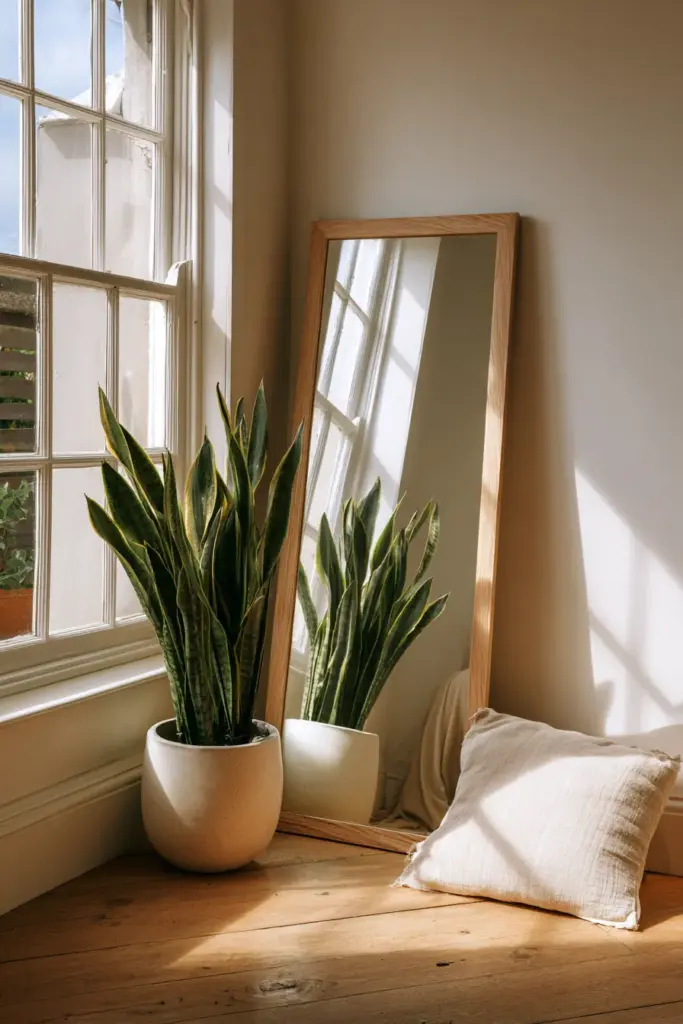
Mirrors are the oldest trick in the design book — and the most effective. A large mirror (at least 60cm × 90cm) placed opposite a window doubles the natural light in a room and makes the wall behind it disappear.
Lean a full-length mirror against a wall rather than mounting it for a rental-friendly, editorial look. Choose a frame in natural wood or aged brass to keep it warm.
Plants add life, oxygen, and organic texture that softens modern furniture’s clean lines. In a small space, choose vertical growers: a snake plant (Sansevieria) in a corner, a ZZ plant on a low shelf, or trailing pothos from a hanging planter.
In the Philippines’ humid climate, both the snake plant and ZZ plant are nearly indestructible — they tolerate irregular watering, low light, and heat. They are the quiet companions of a well-designed tropical home.
Tropical Climate Considerations
Designing for Philippine Heat and Humidity
Western design articles are written for temperate climates. Our homes breathe differently.
Cross-ventilation is your first design priority. Arrange furniture so airflow from windows and doors is not blocked. Avoid placing large sofas directly against exterior walls where air enters — leave a gap, or position seating perpendicular to the breeze.
Choose moisture-resistant materials: rattan, bamboo, teak, powder-coated metal, and performance fabrics rated for humidity. Avoid particle board in high-humidity rooms — it swells and deteriorates faster in tropical conditions.
Heat-reflective colors (light walls, sheer curtains, reflective accents in brass or white ceramic) keep a room feeling cooler without air conditioning doing all the work.
Layout Mistakes to Avoid
Even beautiful furniture fails in the wrong arrangement. Avoid these common missteps:
- Pushing all furniture against walls — it creates a hollow center and makes the room feel like a waiting room
- Choosing an oversized sofa — measure twice; a sofa wider than half your room’s length dominates the space
- Too many patterns competing — in a small room, limit bold patterns to one surface (one printed cushion, one patterned rug, not both)
- Ignoring scale — tall, heavy wardrobes in a low-ceilinged room crush the vertical space; choose furniture with a lower profile
- Skipping the rug — a bare floor makes a room feel unfinished and smaller; even a modest-sized rug in a warm tone changes everything
Budget Breakdown (Philippine Peso Guide)
| Item | Budget Option | Mid-Range | Where to Buy |
|---|---|---|---|
| 2-seater sofa | ₱8,000–₱15,000 | ₱20,000–₱40,000 | IKEA PH, Shopee, local ref |
| Area rug (160×230cm) | ₱2,500–₱5,000 | ₱8,000–₱15,000 | IKEA PH, Lazada, Divisoria |
| Floor lamp | ₱1,500–₱3,000 | ₱5,000–₱10,000 | IKEA PH, hardware stores |
| Floating shelf set | ₱800–₱2,000 | ₱3,000–₱6,000 | IKEA LACK, thrift/ukay |
| LED warm bulbs (set) | ₱300–₱600 | ₱800–₱1,500 | Ace Hardware, Handyman |
| Large mirror | ₱1,500–₱3,500 | ₱5,000–₱12,000 | IKEA HOVET, thrift stores |
| Rattan accent chair | ₱3,500–₱7,000 | ₱10,000–₱18,000 | Bamboo/rattan shops, Bulacan |
Thrift markets in Cubao, Marikina, and Cebu often carry imported furniture pieces at a fraction of retail price.
Quick Checklist: Your Small Living Room Essentials
- Use a warm neutral palette anchored by the 60-30-10 rule
- Choose warm white LED lighting at 2700–3000K for all ambient sources
- Layer three types of light: ambient, task, accent
- Select multi-functional furniture (storage ottomans, nesting tables, sofa beds)
- Float furniture away from walls and anchor with a rug
- Apply the Japandi 70% empty rule to all surfaces and shelves
- Use vertical shelving to maximize storage without floor space
- Place a large mirror opposite a window to double light and perceived depth
- Add low-maintenance tropical plants (snake plant, ZZ plant, pothos)
- In rentals, use Command strips, peel-and-stick wallpaper, and tension rods
- Design for cross-ventilation and choose humidity-resistant materials
- Stick to one bold pattern maximum across all textiles
A Final Note from ERYLIN
Small rooms ask us to slow down and choose well.
When you live in a compact space, every object you invite in becomes more visible, more felt. The grain of a wooden shelf. The weight of a linen throw. The soft gold of a lamp at dusk. These are not details — they are the whole experience.
We hope this guide gives you both the tools and the permission to love the space you are in right now. Because a beautiful home was never about square footage.
It was always about how it makes you feel.
Frequently Asked Questions
How to make a small living room look bigger?
Use light, warm wall colors (greige or soft white), a large mirror opposite your main window, and furniture with exposed legs. Float your sofa slightly from the wall, layer warm lighting, and embrace negative space — empty areas on shelves and surfaces are part of the design, not a gap to fill.
What is the best furniture layout for a small living room?
Float your sofa 15–20cm from the wall, facing the TV or main window. Place one accent chair at a 45-degree angle across from it. Anchor both with a rug that sits under the front legs of all pieces. Keep clear walking paths of at least 90cm on all sides.
How to maximize storage in a small living room?
Go vertical with wall-mounted shelving, choose furniture with hidden storage (lift-top tables, storage ottomans), and use closed media consoles. For renters, over-the-door organizers and freestanding shelving units add storage without damage.
What colors make a small living room look bigger?
Warm neutrals — soft white, linen, greige — reflect light and create an open feel. Apply the 60-30-10 rule: 60% dominant neutral, 30% secondary tone, 10% accent. Avoid dark, cool-toned walls in small rooms unless balanced with abundant natural light.
What furniture is best for a small living room?
Compact sofas with exposed legs, round or oval coffee tables, nesting tables, storage ottomans, and floating media consoles. Prioritize pieces that serve two functions and have a lighter visual profile.
How to decorate a small living room on a budget?
Start with a warm rug to anchor the room (Lazada or Divisoria have affordable options), add warm LED bulbs throughout, and source a large mirror from thrift markets. DIY open shelving using basic pine boards and brackets keeps costs low while adding storage and display space.
Should you put furniture against the wall in a small living room?
No — floating furniture slightly away from the wall creates visual depth and makes a room feel larger. Even a small gap of 15–20cm transforms the spatial quality of the room significantly.
How to light a small living room?
Use three layers: ambient light (ceiling or pendant at 2700–3000K), task light (floor or table lamp), and accent light (LED strips behind shelving or under a console). Sheer curtains diffuse natural light without blocking it.
What size rug for a small living room?
In a small living room, a 160×230cm rug works well for most layouts. All front legs of your furniture should rest on the rug. A rug that is too small floats awkwardly and makes the room feel disjointed.
How to make a small living room cozy?
Layer textures: a bouclé throw on the sofa, a jute or wool rug underfoot, linen cushions in warm tones. Use warm lighting (2700K), add one or two plants, and keep surfaces edited but not empty. Coziness is created by warmth, softness, and the sense that the room has been thoughtfully lived in.
Can you have a TV in a small living room?
Yes — wall-mounting the TV is the most space-efficient solution. It eliminates a TV stand, frees up floor space, and allows you to run cables inside the wall or through a cable raceway. Position it at eye level when seated, and keep the wall around it simple and uncluttered.
What are the best multi-functional furniture for small living rooms?
Storage ottomans, nesting coffee tables, sofa beds, extendable dining tables, and floating shelves with closed compartments. Each piece should serve at least two purposes in a compact room.