
Table of Contents
There’s a particular kind of room that makes you exhale the moment you walk in. The light falls soft through linen curtains. A worn wooden table sits beside a clean-lined sofa. Nothing matches perfectly, and yet everything belongs.
That’s the quiet magic of cozy living room decor mixing old and new. It isn’t about following a single style rulebook. It’s about letting a grandmother’s chair sit comfortably beside a modern lamp, and trusting that the contrast is what makes the room feel real.
At ERYLIN, we believe a home should hold your story, not erase it. Mixing old and new isn’t a trend to chase — it’s a way of decorating that honors both memory and momentum.
This guide gives you more than inspiration. You’ll get a repeatable formula, real room combinations, budget-friendly strategies, and the mistakes to avoid, so your living room feels curated instead of cluttered.
Cozy vs. Transitional vs. Eclectic: What’s the Difference?
Before you start pulling pieces together, it helps to know what you’re actually aiming for. These three styles get blurred together often, but each has a distinct feeling.
| Style | Core Feeling | Best For |
|---|---|---|
| Cozy old-and-new | Warm, textural, emotionally personal | Homes that want comfort first, style second |
| Transitional | Balanced, refined, architecturally clean | Homes that want polish with a soft edge |
| Eclectic | Bold, expressive, collector-driven | Homes that want personality over restraint |
Cozy mixing borrows warmth from transitional design and personality from eclectic style, but it’s held together by comfort. The goal isn’t a showroom. It’s a room you never want to leave.
The Cozy Mixing Formula: A Simple Ratio That Works
Most articles show you pretty rooms without explaining why they work. Here’s the formula we use with every ERYLIN-inspired space.
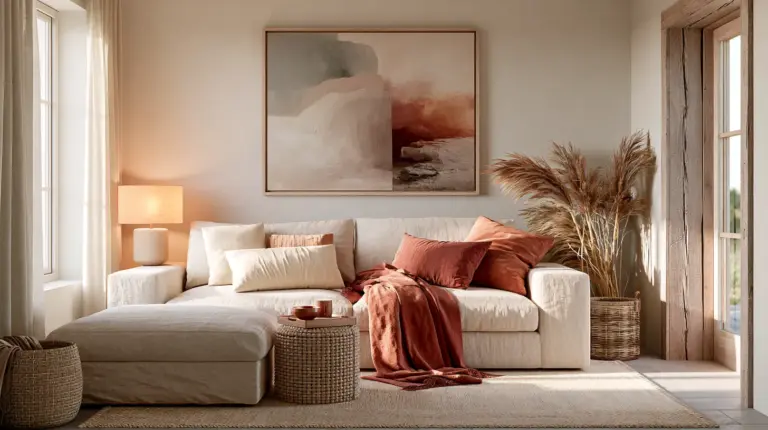
70% warm neutral base. This includes your sofa, walls, rug, and large furniture. Think oat, sand, warm white, and soft greige.
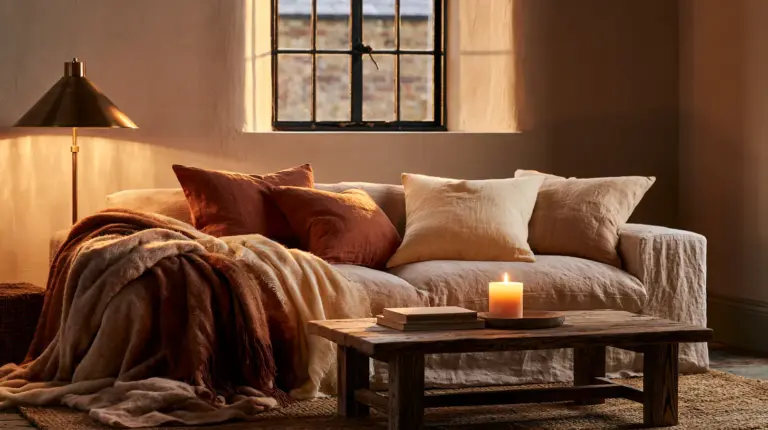
20% vintage character pieces. A weathered coffee table, a brass floor lamp, an antique mirror, or a hand-carved side table. These carry history and texture.
10% modern accents. A sculptural vase, a clean-edged side table, or a contemporary art print. This keeps the room from feeling like a time capsule.
This ratio matters because it gives your eye a resting place. Without a dominant neutral base, old and new pieces compete instead of collaborating.
Why the Ratio Beats Random Mixing
Random mixing often results in a room that feels busy rather than curated. When you commit to a ratio, every piece has a clear role instead of fighting for attention.
Think of your neutral base as the sentence, your vintage pieces as the emotion, and your modern accents as the punctuation. Each one needs the others to make sense.
Real Room Combinations That Bring Old and New Together
Seeing the formula in action makes it easier to apply at home. Here are combinations that consistently create that soulful, layered warmth.
The Heirloom Anchor
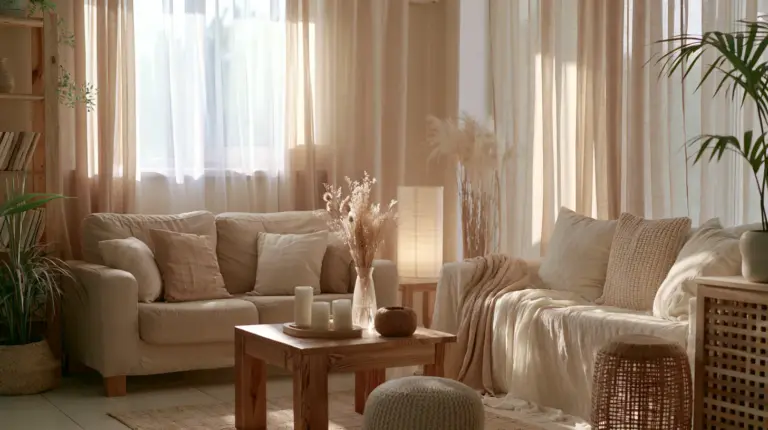
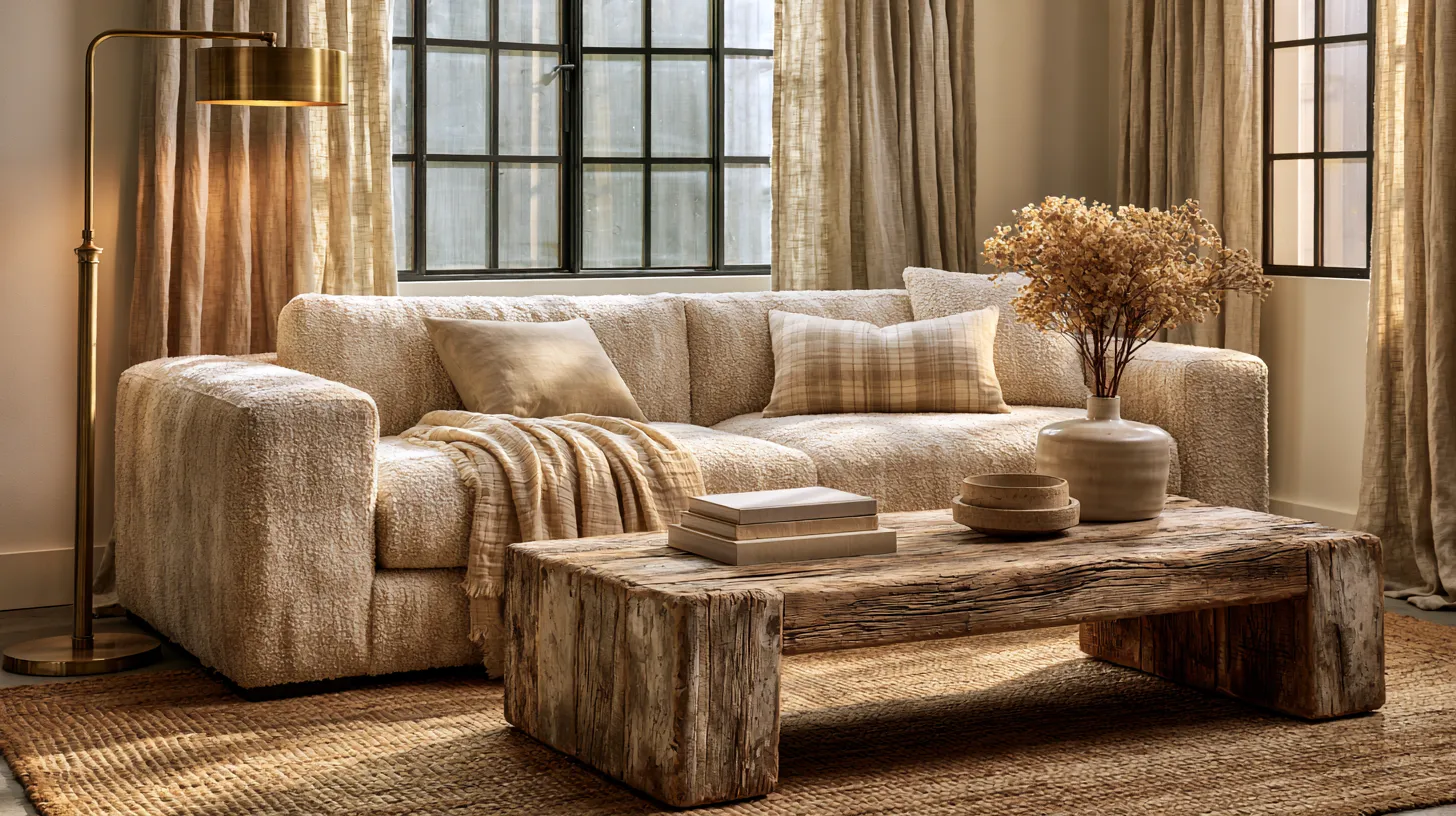
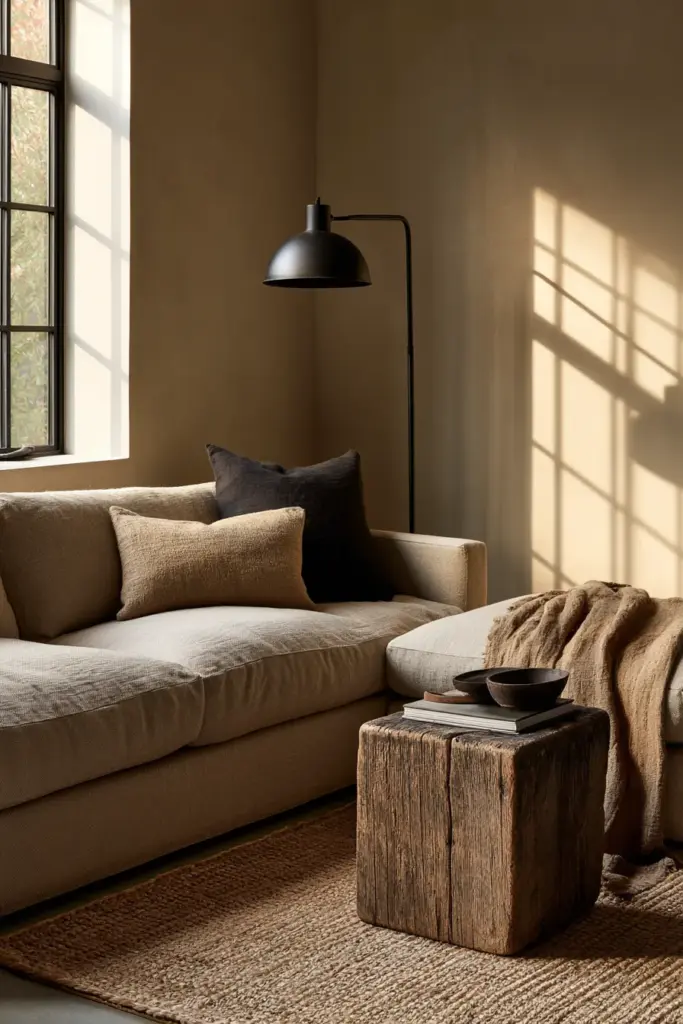
Pair a modern boucle sofa in warm oatmeal with a weathered wood coffee table passed down through generations. Add a jute rug underneath for grounding texture, then finish with a sleek matte-black floor lamp for contrast.
The Gallery Softening
Hang a small gallery wall mixing vintage oil paintings with one or two modern line-art prints. Keep the frames in varied wood tones, but stick to a single warm color family so the wall feels intentional, not chaotic.
The Layered Textile Corner
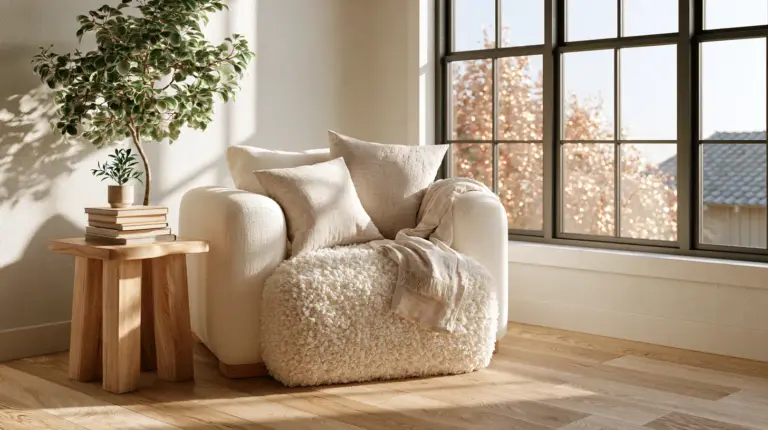
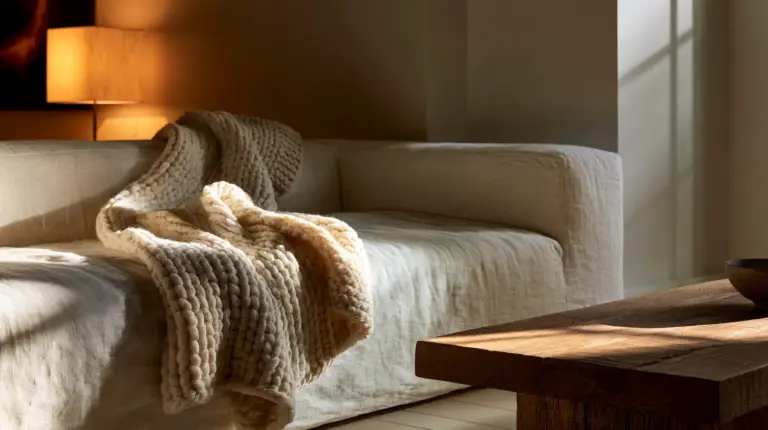
Drape a chunky knit throw over a clean-lined accent chair, then layer a vintage kilim pillow on top. This single corner does more to create coziness than an entire room of matching furniture.
Good lighting ideas make every one of these combinations feel warmer instantly, especially when you layer ambient, task, and accent light instead of relying on one overhead fixture.
Lighting Layers: The Secret to Coziness Most Guides Skip
Furniture creates the frame, but light creates the feeling. Most cozy living room posts mention lighting briefly. We want you to actually understand it.
Ambient light is your base layer, like a dimmable overhead fixture or soft ceiling wash. It sets the general mood of the room.
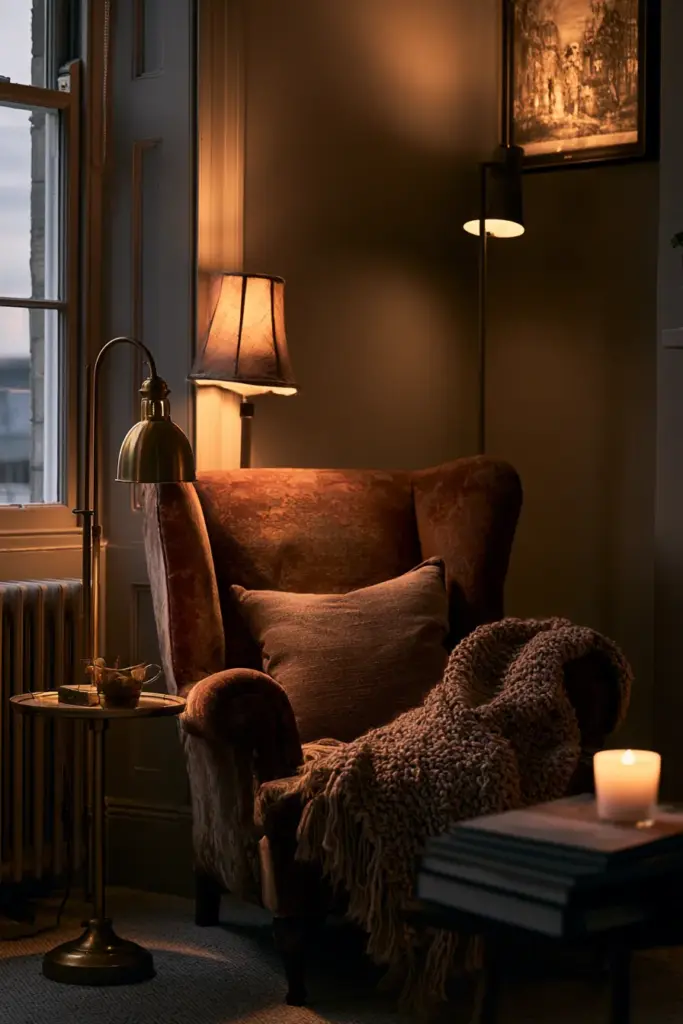
Task light supports specific activities, such as a reading lamp beside a vintage armchair or a floor lamp near a sofa nook.
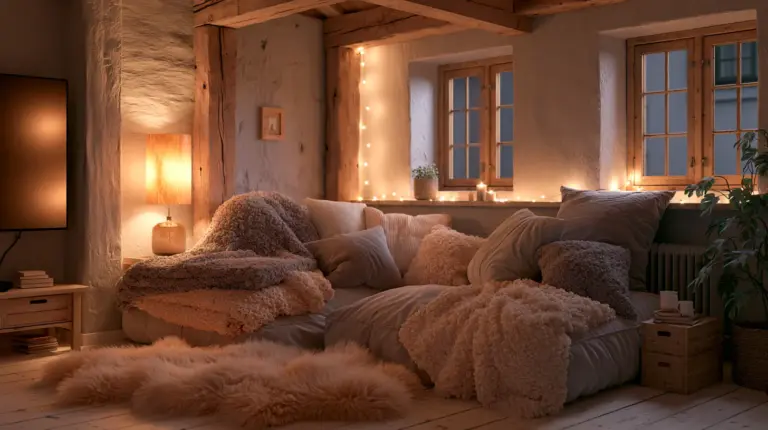
Accent light adds emotional depth, like a small table lamp with a warm bulb, or candlelight glowing near a stack of books.
When all three layers work together, even a room full of contrasting furniture feels calm and intentional. Warm bulbs, in the 2700K to 3000K range, are essential for that golden, candlelit glow.
Color Palette Guide for Mixing Old and New
Color is what quietly ties vintage and modern pieces together, even when their shapes and eras differ.
| Palette Role | Color Examples | Purpose |
|---|---|---|
| Warm neutral base | Oat, ivory, warm greige | Grounds the room |
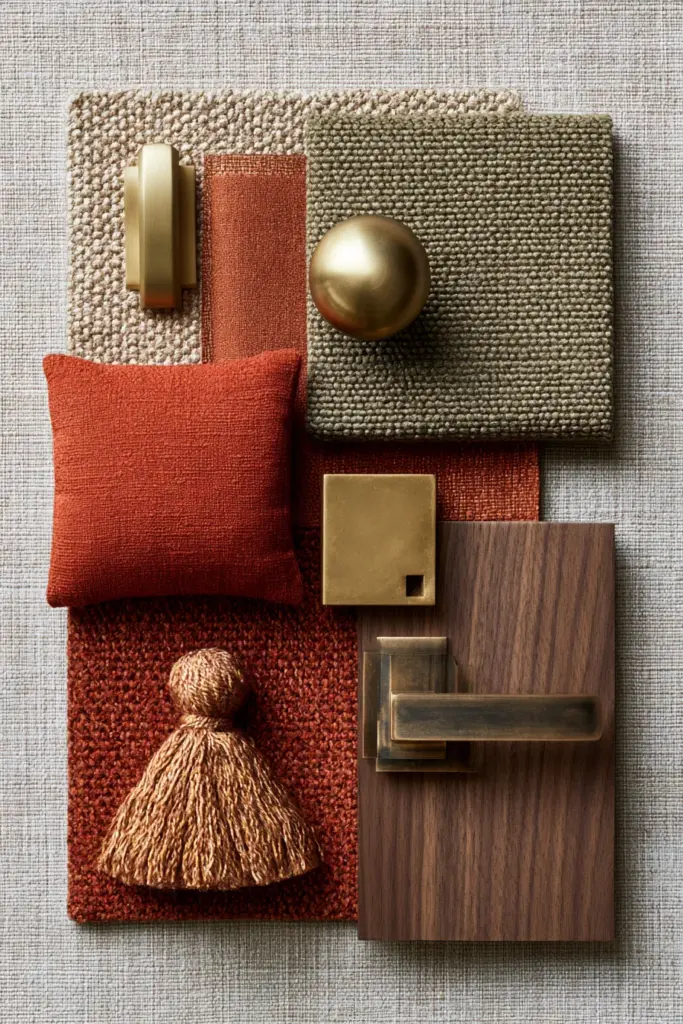
| Earthy accent | Terracotta, rust, olive | Adds vintage warmth |
| Modern contrast | Charcoal, matte black, deep walnut | Sharpens the mix |
| Metal accent | Brass, aged bronze | Bridges old and new finishes |
Undertone consistency matters more than exact color matching. If your vintage wood pieces lean warm, choose modern furniture with warm undertones too, even if the finish is different.
How to Avoid a Cluttered Look
The biggest fear people have when mixing old and new is ending up with a room that feels chaotic instead of collected. A few intentional habits keep that from happening.
- Choose one dominant wood tone and let other wood pieces play a supporting role
- Limit your color palette to three to four core tones throughout the room
- Give every vintage piece breathing room, rather than clustering several together
- Repeat one material or finish — like brass or linen — at least three times in the space
- Edit before you decorate, removing anything that doesn’t serve comfort or story
Cozy rooms feel abundant, not crowded. There’s a meaningful difference between a room that’s layered with intention and one that’s simply full.
Budget, Mid-Range, and Thrifted Styling Strategies
You don’t need a large budget to create this look. You need a clear strategy for where to spend and where to save.
Thrifted approach. Source your vintage 20% from estate sales, secondhand shops, or family pieces you already own. Pair them with budget-friendly cozy furniture basics for your neutral base.
Mid-range approach. Invest in one quality vintage-inspired piece, like a solid wood coffee table, and balance it with affordable textiles and one modern accent chair.
Elevated approach. Splurge on a statement antique or heirloom piece as your room’s centerpiece, then keep everything else simple so that piece can shine.
Whatever your budget, the ratio formula still applies. Spending more doesn’t mean adding more pieces — it means investing in fewer, better ones.
Small Space and Rental-Friendly Adjustments
Mixing old and new can feel intimidating in a small apartment or a rental with restrictions, but the same formula scales down beautifully.
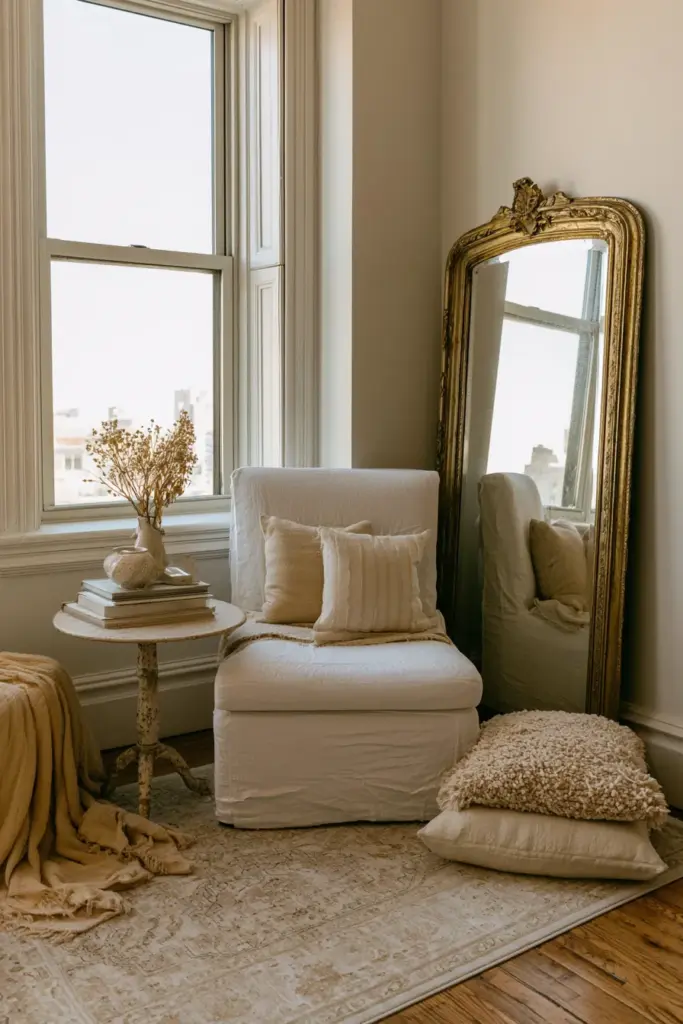
Choose a smaller-scale vintage piece, like a petite side table instead of a large armoire, so it doesn’t overwhelm the room. Use removable elements such as area rugs, plug-in sconces, and slipcovers to add character without permanent changes.
Vertical layering, like a tall vintage mirror or a floor lamp, adds visual interest without taking up valuable floor space. In small rooms, restraint is your best design tool.
Common Mistakes to Avoid
Even well-intentioned mixing can go wrong. These are the missteps we see most often.
- Combining too many competing wood tones without a dominant one
- Mixing warm and cool undertones without realizing it
- Adding vintage pieces without a modern element to balance them
- Overcrowding a single wall or corner instead of spreading interest evenly
- Skipping soft textiles, which are what make a room feel cozy rather than just styled
Maintenance and Everyday Livability
A beautiful room only stays beautiful if it can handle real life. This is especially true for households with pets, kids, or simply a lot of daily use.
Choose performance fabrics like tightly woven linen blends or washable slipcovers for high-traffic seating. Seal or wax vintage wood pieces to protect them from spills and scratches over time.
Rotate soft textiles seasonally, swapping heavier knits for lighter linens, to keep the room feeling fresh without buying new furniture. A cozy room should feel effortless to live in, not fragile to maintain.
Quick Summary: Your Cozy Mixing Checklist
- Follow the 70-20-10 formula: neutral base, vintage character, modern accent
- Choose one dominant wood tone and one consistent undertone
- Layer ambient, task, and accent lighting for warmth
- Keep your palette to three or four core colors
- Repeat one material, like brass or linen, throughout the room
- Give each vintage piece room to be noticed
- Mix budget levels intentionally, not randomly
- Prioritize washable, durable textiles for real-life living
A Final, Softer Thought
The most beautiful living rooms aren’t the ones that look untouched. They’re the ones that hold a little bit of everywhere and everyone who’s passed through them.
When you let an old chair sit beside a modern lamp, you’re not breaking a design rule. You’re telling the truth about how a home actually grows over time.
Let your living room be layered, warm, and a little imperfect. That’s not a compromise. That’s coziness, done right.
Frequently Asked Questions
How do you mix old and new in living room decor?
Start with a warm neutral base for your major furniture, then add vintage pieces for character and a few modern accents for contrast. The 70-20-10 formula keeps the mix balanced instead of chaotic.
How do you keep mixed decor from looking cluttered?
Limit your color palette, commit to one dominant wood tone, and give each vintage piece enough visual space. Editing is just as important as decorating.
What color palette works best when mixing old and new?
Warm neutrals paired with earthy accents like terracotta or olive, balanced by a modern contrast tone like charcoal or walnut, tend to work best. Consistent undertones matter more than matching shades.
What is the difference between transitional and eclectic style?
Transitional style leans balanced and refined, while eclectic style leans bold and expressive. Cozy old-and-new mixing sits between the two, prioritizing warmth and comfort above all.
How do you make a living room feel cozy while mixing styles?
Layer your lighting across ambient, task, and accent sources, add soft textiles like knits and linen, and repeat one material throughout the room. Warmth comes from texture and light as much as from furniture choices.