
Table of Contents
There is a particular kind of quiet that settles over a home when one corner is made just for you. A chair that fits your body. A lamp that glows instead of glares. A blanket within arm’s reach.
That is what a reading nook offers — not a whole room, just a few square meters of intention. It is proof that comfort does not need square footage, only thoughtfulness.
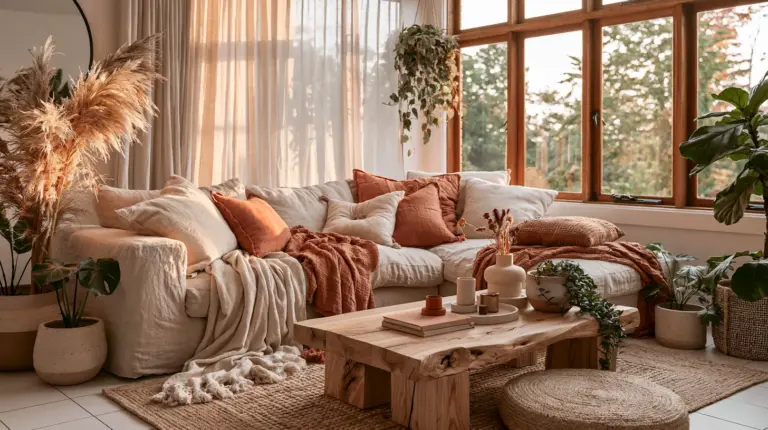
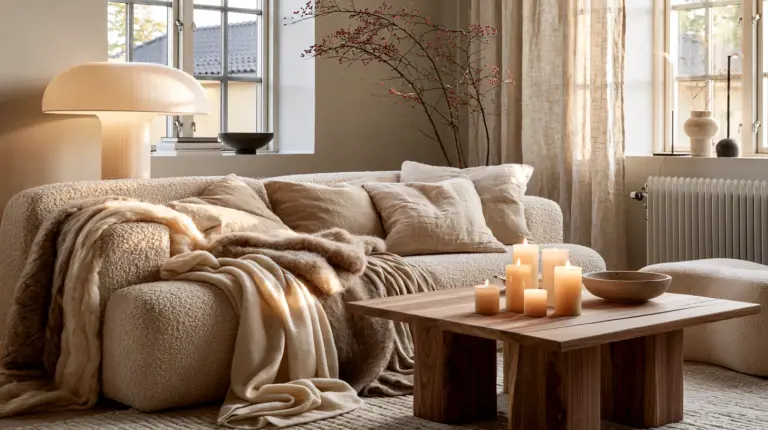
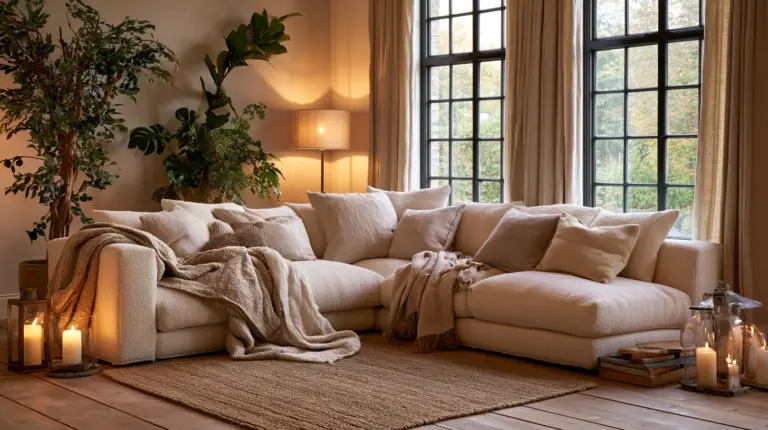
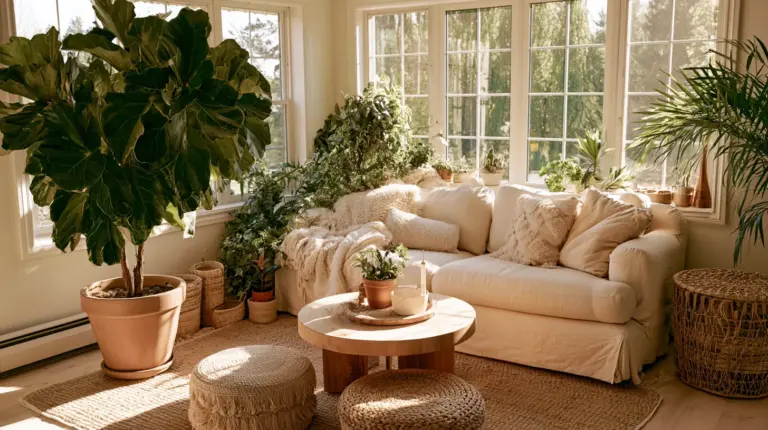
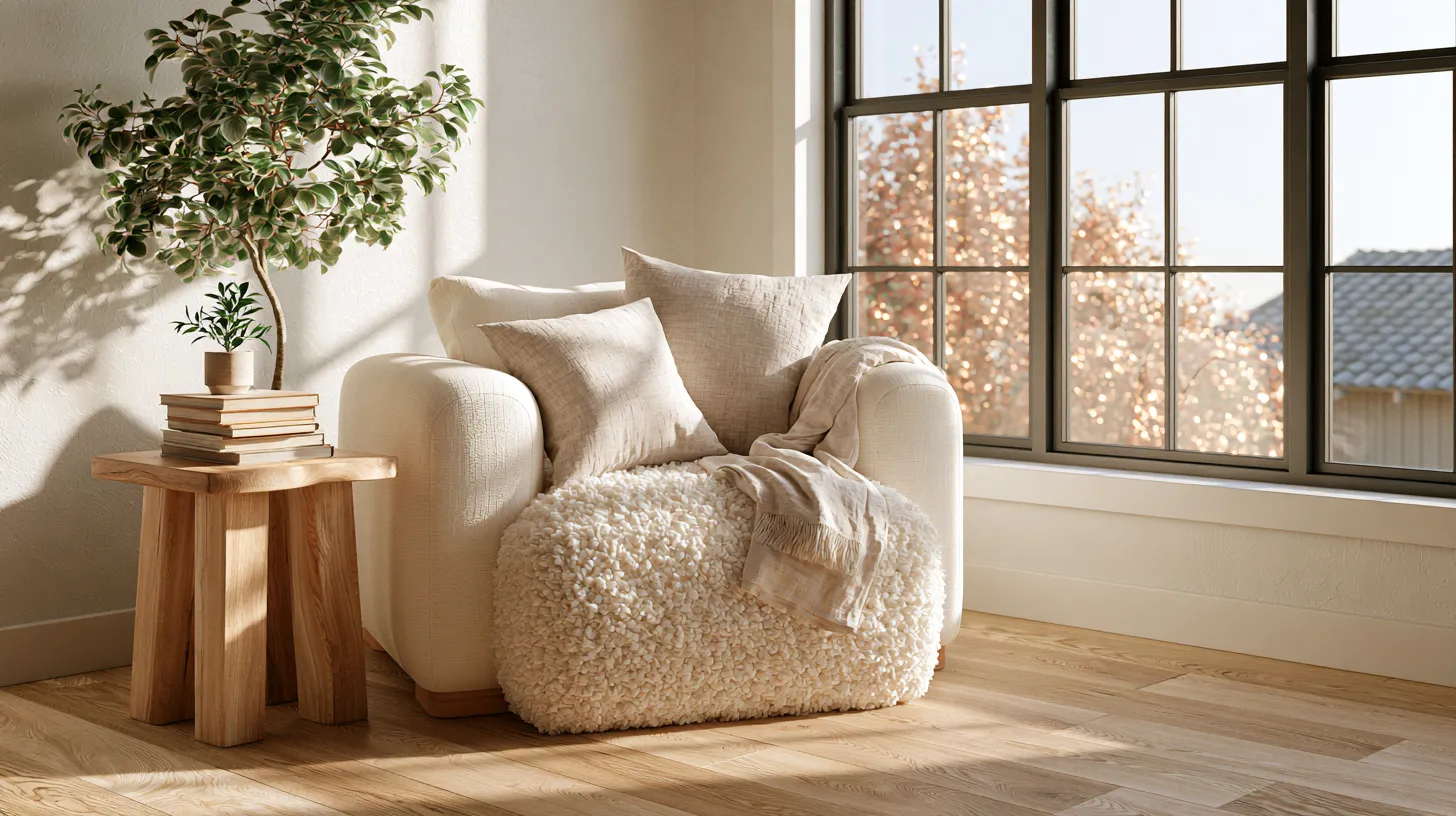
At ERYLIN, we believe cozy living room decor starts small. A reading nook is often the first step toward a home that feels calm, layered, and lived-in, rather than staged. It is where light woods meet soft textiles, where natural light meets warm lamplight, and where a busy day is allowed to slow down.
This guide walks you through everything the glossy inspiration boards leave out — real measurements, real lighting numbers, real budgets — so you can build a reading nook in your living room that actually works for your space.
How Do You Create a Cozy Reading Nook in a Living Room?
Building a reading nook is less about buying furniture and more about following a sequence. Skip a step, and the corner ends up feeling like leftover space instead of a destination.
The process is simple:
- Choose your spot — a window corner, an alcove beside the sofa, or the quiet end of a hallway off the living room
- Measure the space — know your footprint before you shop
- Pick the core seat — an armchair, a window seat, or a built-in bench
- Plan the lighting — warm, layered, and glare-free
- Add textiles — rug, cushions, and a throw
- Include storage — for books, blankets, and clutter
- Style it — plants, art, and a small stack of favorites
Each step builds on the last, so a nook that looks effortless is really just well-sequenced.
How Much Space Do You Actually Need?
This is the question most inspiration galleries skip entirely — and it is the one that matters most. A nook does not need a spare room; it needs a clearly defined pocket of space with room to move around it.
Here is a simple reference for common nook types:
| Nook Type | Minimum Footprint | Recommended Clearance |
|---|---|---|
| Compact armchair nook | 1.2 m × 1.2 m | 75–90 cm walking path around it |
| Window seat nook | Window width + 30–40 cm on each side | 40–50 cm between seat and side table |
| Under-stairs / landing nook | 1 m × 1.5 m | 60 cm minimum headroom clearance |
For a studio or one-bedroom unit, a single compact armchair with a slim side table is usually the honest choice. For larger two- to three-bedroom apartments, a window seat or built-in bench can anchor a proper living room corner without crowding the rest of the furniture arrangement.
What Furniture Do You Need for a Reading Nook?
The right seat is the heart of the nook. Everything else — lighting, textiles, storage — exists to support it.
The Seat
Choose one of these, depending on your space and style:
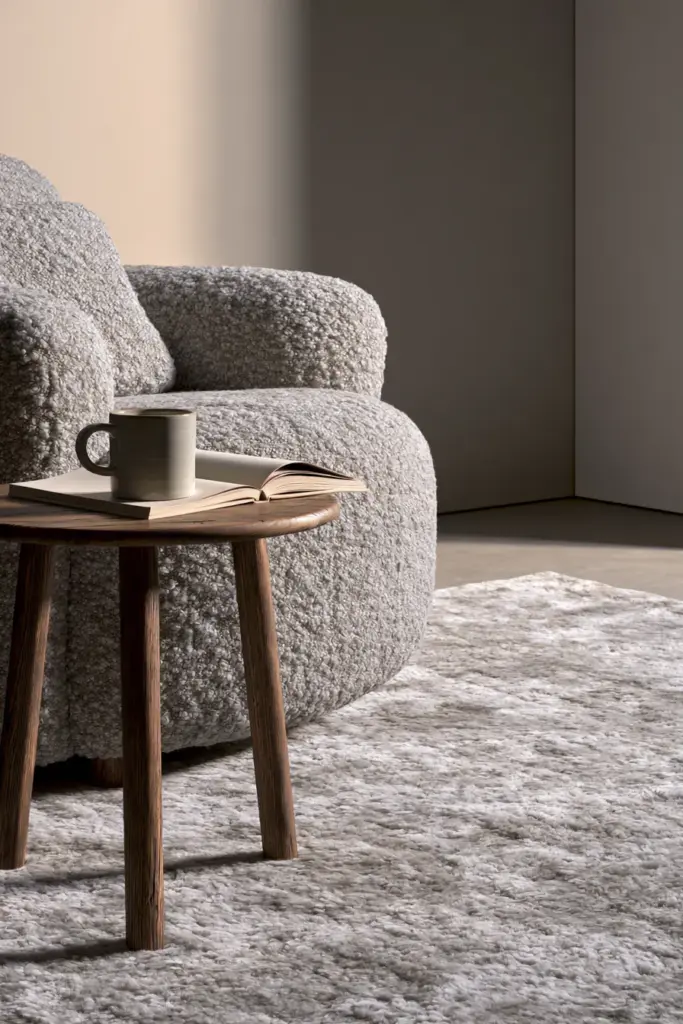
- Armchair or accent chair — the most flexible option for small living rooms
- Chaise lounge — for stretching out with a book for hours
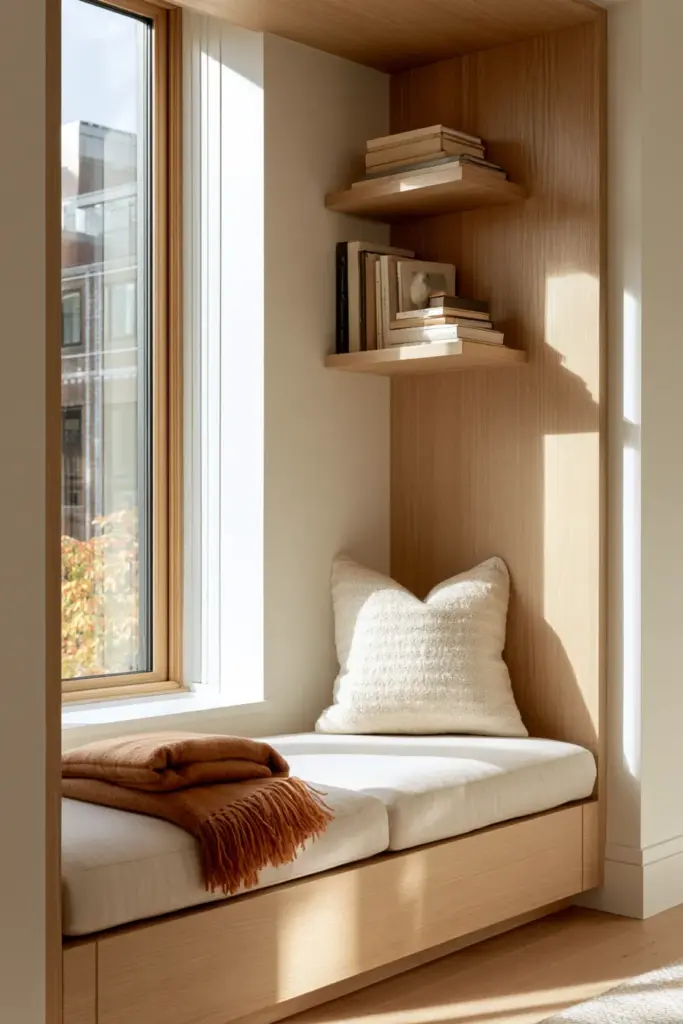
- Window seat or banquette — built-in and space-efficient, ideal for alcoves
- Built-in bench — best for under-stairs or landing nooks
For ergonomics, look for a seat height of around 40–45 cm and a seat depth of 55–60 cm for most adult frames. Your back should meet real support, not just a decorative cushion.
The Side Table
Keep it slim — 30–40 cm wide is enough for a mug and a book. Place it 40–50 cm from the seat so you can reach it without leaning.
What Is the Best Lighting for a Reading Nook?
“Add good lighting” is where most articles stop. We think the details matter more than the advice itself.
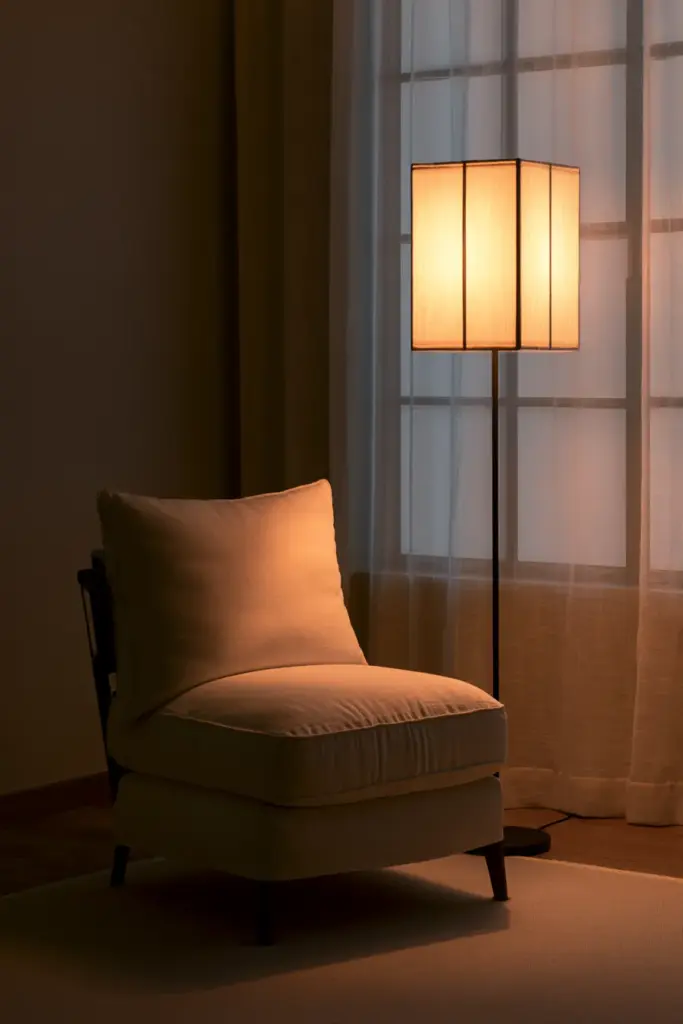
For a warm, cozy feel, aim for a color temperature of 2700–3000K — this is the soft, golden light that makes a corner feel like a retreat rather than an office. If the nook will double as a workspace, 3500–4000K gives a slightly crisper, more alert light.
Brightness matters too. Look for a reading lamp delivering 400–800 lumens directed at the page, ideally with a dimmer so the mood can shift from afternoon to evening.
Placement tips worth following:
- Floor lamp: positioned 30–45 cm behind or beside the chair
- Wall sconce: mounted roughly 140–150 cm from the floor
- Windows: soften direct glare with sheer curtains or adjustable blinds
Layer this artificial light with whatever natural light the spot already receives, and you get a nook that feels good morning, noon, and night. For more on layering light throughout a room, our lighting ideas guide goes deeper.
What Should You Put in a Reading Nook?
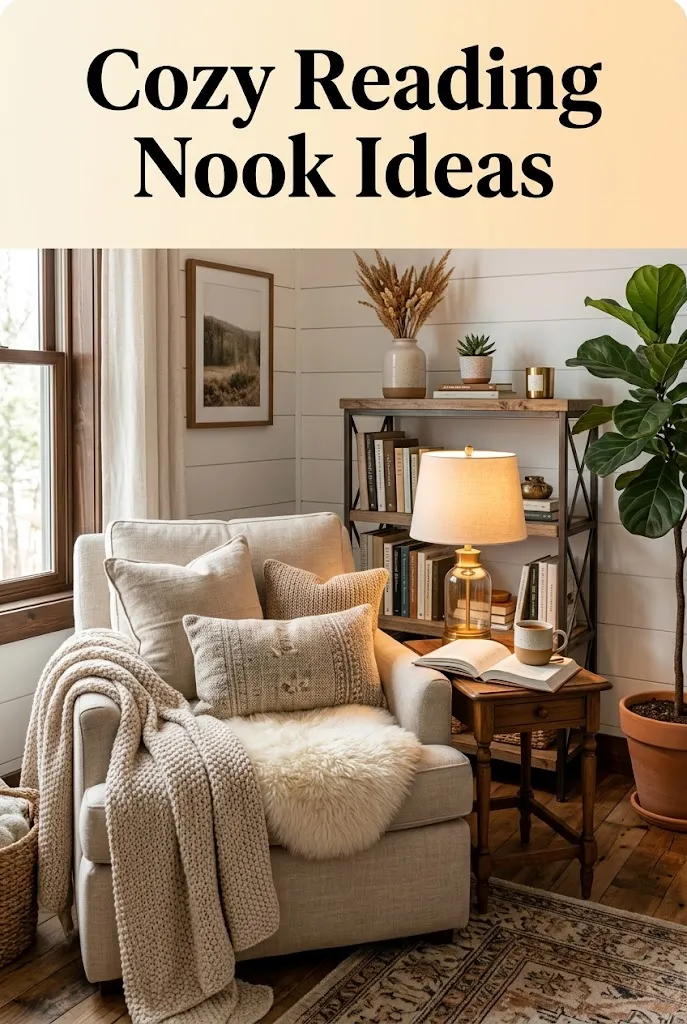
Once the seat and lighting are settled, texture does the rest of the emotional work. This is where cozy living room decor really comes alive.
- A soft rug underfoot, even a small one, to define the space
- Throw pillows in mixed textures — linen, bouclé, or nubby cotton
- A blanket or throw draped within reach
- Floating shelves or a small bookcase for your current stack
- A storage basket or ottoman to keep clutter contained
- One plant, to bring in a breath of green
Fabric Choices for Humid Climates
If you live somewhere warm and humid, fabric choice is not just aesthetic — it is practical. Breathable linen and cotton blends stay cool and resist that clammy feeling that heavy velvet can trap against skin. Save velvet accents for a single throw pillow rather than the whole seat.
Cushion density matters too — firm enough to hold its shape through long reading sessions, soft enough that you do not feel the frame beneath.
Small Living Room Reading Nook Ideas
Not every home has a spare corner waiting to be claimed. These small-space solutions make room where none seemed to exist.
- Beside the sofa — a single armchair angled toward the window
- Under a loft or stairs — low seating with a floor cushion
- Hallway off the living room — a slim bench with a wall sconce above it
- Corner by the window — the most classic and often the easiest to light naturally
Space-saving swaps that help every option above work harder:
- Floating shelves instead of a bulky bookcase
- A foldable or wall-mounted drop-leaf side table
- A storage ottoman that hides blankets and doubles as a footrest
How to Create a Reading Nook on a Budget
A cozy corner does not require a designer budget. It requires knowing where to spend and where to save.
| Tier | What’s Included | Approx. Cost (PHP) | Where to Source |
|---|---|---|---|
| Low-budget | Secondhand chair, floor cushion, thrifted lamp, DIY floating shelf | ₱2,000–5,000 | Facebook Marketplace, Carousell PH, thrift shops |
| Mid-range | New armchair, proper side table, dimmable reading lamp, simple shelving | ₱8,000–18,000 | Shopee, Lazada, local furniture stores |
| Higher-end | Custom built-in seat, designer chair, layered lighting, curated decor | ₱25,000+ | Local furniture hubs, custom carpenters, boutique decor shops |
For a DIY approach, rattan and reclaimed wood pallets are widely available locally and suit a Japandi or modern eclectic look beautifully — a wood pallet base with a cushioned top can become a window seat for a fraction of retail cost.
Style-Specific Reading Nook Guides
A reading nook should feel like an extension of the rest of your home, not an afterthought bolted onto a corner.
Japandi Reading Nook
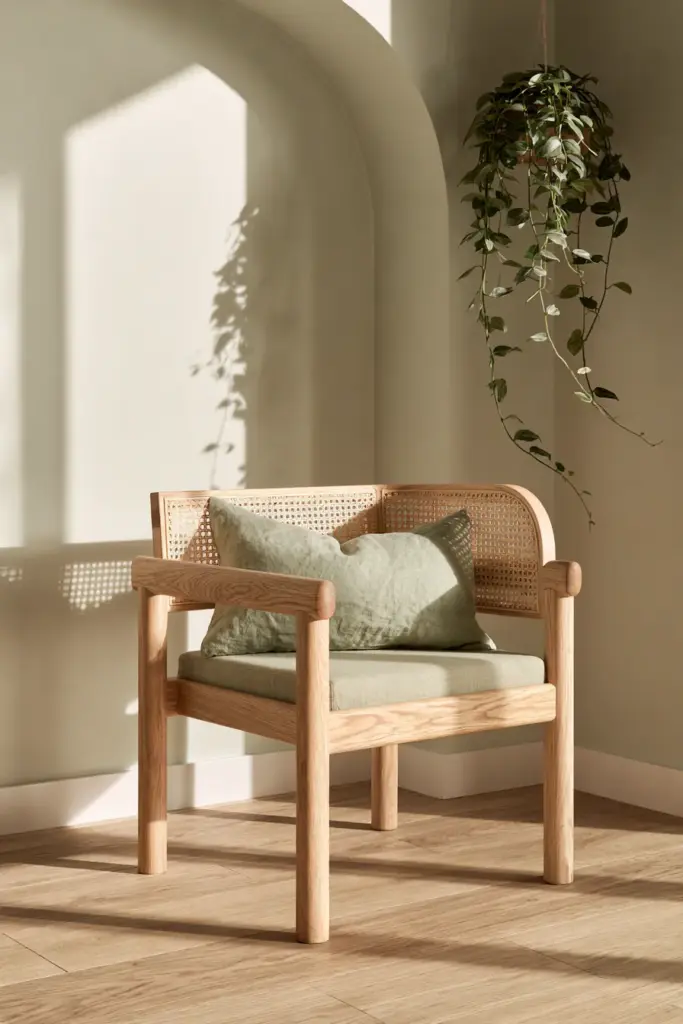
Think warm neutrals, soft greys, and muted greens. Favor light woods, natural fibers like jute or linen, and minimal decor — one plant, one lamp, one stack of books is often enough. This is the quietest, most restorative version of the cozy reading nook.
Modern Eclectic Reading Nook
Mix patterns and textures deliberately, not randomly. Pair a vintage rug with a contemporary chair, or a mid-century lamp with modern cushions. The trick is repeating one color across the mismatched pieces to hold the look together.
Mid-Century / Boho Fusion
Look for a chair with sculptural, tapered legs, a patterned rug with movement, and layered plant styling — a trailing pothos or a tall fiddle-leaf fig adds life without adding clutter.
Multi-Function Reading Nooks
In smaller homes, a nook often needs to earn its keep beyond just reading.
- Work-from-home micro-office — laptop-friendly table height, with a small basket for cables
- Meditation or journaling corner — a low basket for cushions, journals, and candles
- Kids’ story corner — low shelves, floor cushions, and easy-clean fabrics
Keeping Your Reading Nook Comfortable and Clean
A nook only stays cozy if it stays cared for. A few habits keep it from sliding into clutter.
- Wash throws and pillow covers every 2–3 weeks, more often in humid climates
- Vacuum fabric chairs and rugs weekly to prevent dust buildup
- Dust books and shelves with a soft, dry cloth to avoid damaging spines
- Add a hook or small basket nearby so the nook never becomes a clothes dump
Reading Nook Checklist
Before you call your corner finished, run through this list:
- Spot chosen with at least 75–90 cm of walking clearance
- Seat with proper height (40–45 cm) and depth (55–60 cm)
- Side table within 40–50 cm reach
- Warm lamp at 2700–3000K, 400–800 lumens, with a dimmer
- Rug, cushions, and a throw in breathable fabric
- Storage for books and blankets
- One plant and a small styled stack of decor
- Budget tier decided before shopping
A Soft Place to Land
A reading nook is never really about the chair, or the lamp, or the rug. It is about giving yourself permission to sit still for a while.
When the light is warm and the cushions know the shape of you, that corner becomes more than cozy living room decor — it becomes a small, quiet ritual you return to, again and again.
May your nook be the one place in the house that asks nothing of you but rest.
FAQs
What is the best chair for a reading nook?
An armchair or accent chair with a seat depth of 55–60 cm offers the best balance of comfort and space efficiency for most living rooms.
How much space do you need for a reading nook?
A compact nook needs roughly 1.2 m × 1.2 m, plus 75–90 cm of walking clearance around it.
What is the best lighting for a reading nook?
A warm-toned lamp at 2700–3000K delivering 400–800 lumens, placed 30–45 cm beside the chair, works best for long reading sessions.
How can I create a reading nook on a budget?
Start with a secondhand chair, a thrifted lamp, and a floor cushion — a full low-budget setup can come together for around ₱2,000–5,000.
Can you create a reading nook without a dedicated room?
Yes — a corner beside the sofa, a window alcove, or even a hallway off the living room can all become a proper reading nook with the right seat and lighting.