
Table of Contents
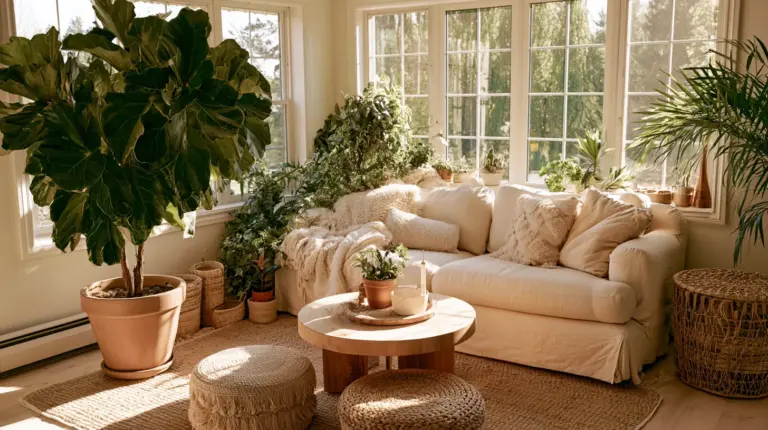
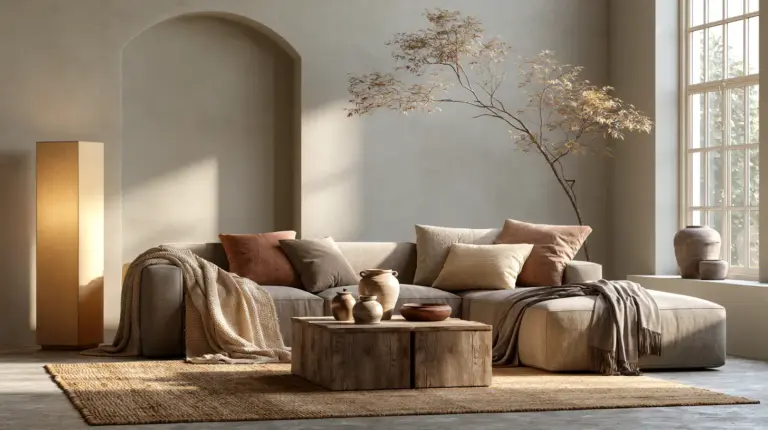
There’s a particular kind of quiet that settles into a room done right. It isn’t silence exactly — it’s the hush of a space that holds you gently, where every surface invites your hand or your gaze to linger a little longer.
That feeling has a name in design, and it isn’t paint color or furniture style. It’s texture — the tactile language a room speaks before you even sit down.
At ERYLIN, we believe cozy living rooms aren’t built from more stuff. They’re built from the right combination of rough and soft, matte and warm, structured and slouchy. Texture is the difference between a room that looks cozy and one that actually feels it.
This guide breaks down exactly which textures create warmth, where to place them, and how to layer them so your living room feels rich and inviting — never heavy, never cluttered.
What Texture Actually Does in a Room
Before choosing materials, it helps to understand what job each texture is doing. Every surface in your living room is either softening, warming, grounding, brightening, or balancing the space.
Once you see texture through this lens, decorating stops feeling random. You start choosing pieces with purpose instead of just “more coziness.”
The Five Functions of Texture
- Softening — plush textiles that reduce visual and physical hardness (bouclé, faux fur, chunky knits)
- Warming — materials that read as heat-retaining, even visually (wood, wool, warm lighting)
- Grounding — heavier, structured pieces that anchor a room (jute rugs, leather, stone)
- Brightening — reflective or pale textures that lift a space (linen, ceramics, light oak)
- Balancing — smooth or matte finishes that offset busier textures (plaster walls, matte pottery)
A cozy room needs a little of each. Too much softening alone tips into fussy. Too much grounding alone tips into heavy. The magic is in the mix.
Layering Textures by Zone
Rather than thinking “add texture” everywhere, work zone by zone. This keeps the room cohesive and stops you from overcrowding one area while neglecting another.
Seating: Where Softness Lives
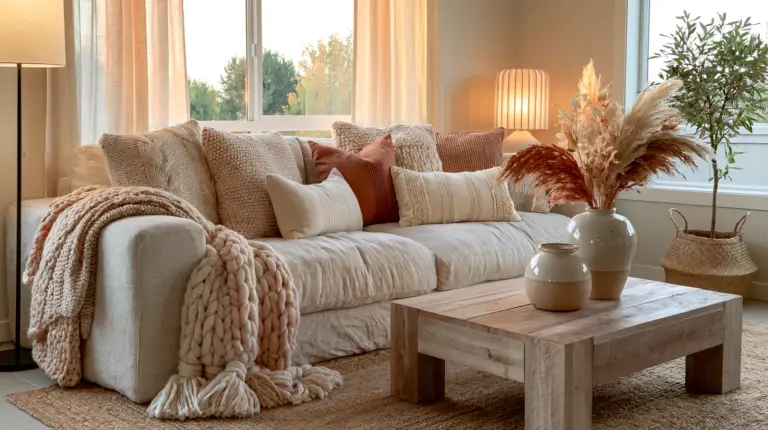
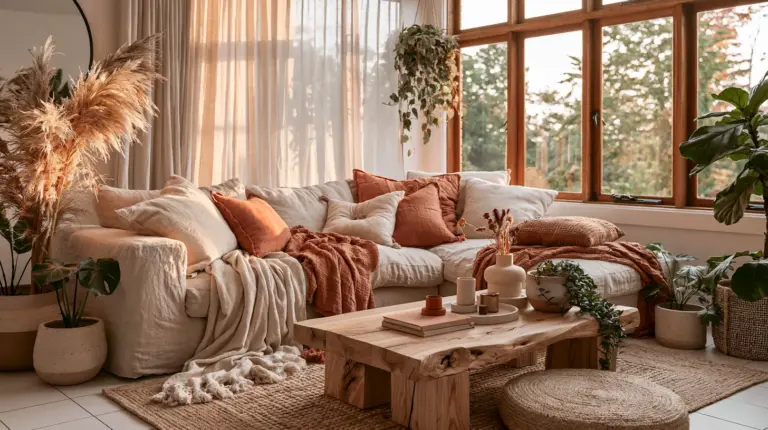
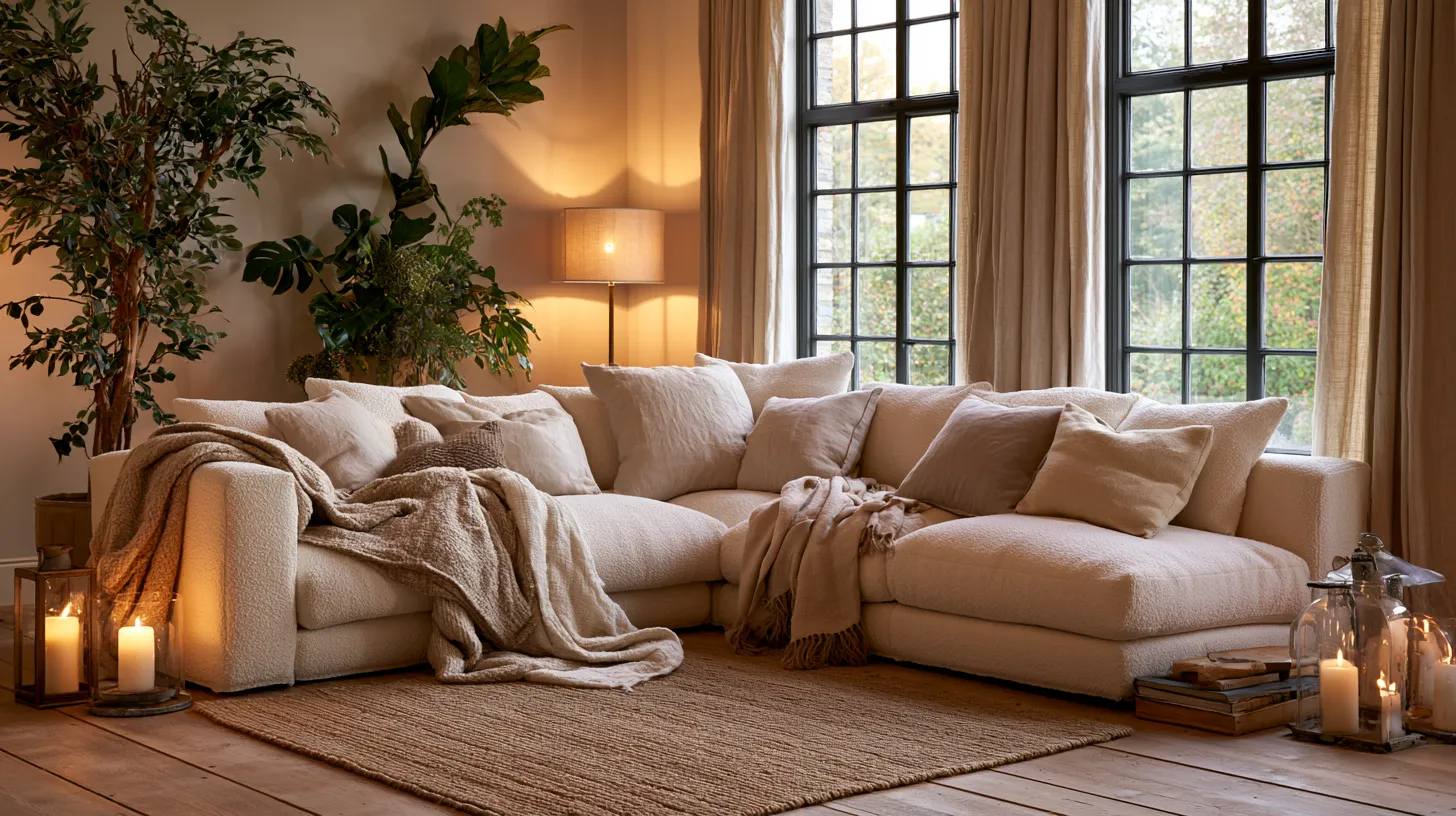
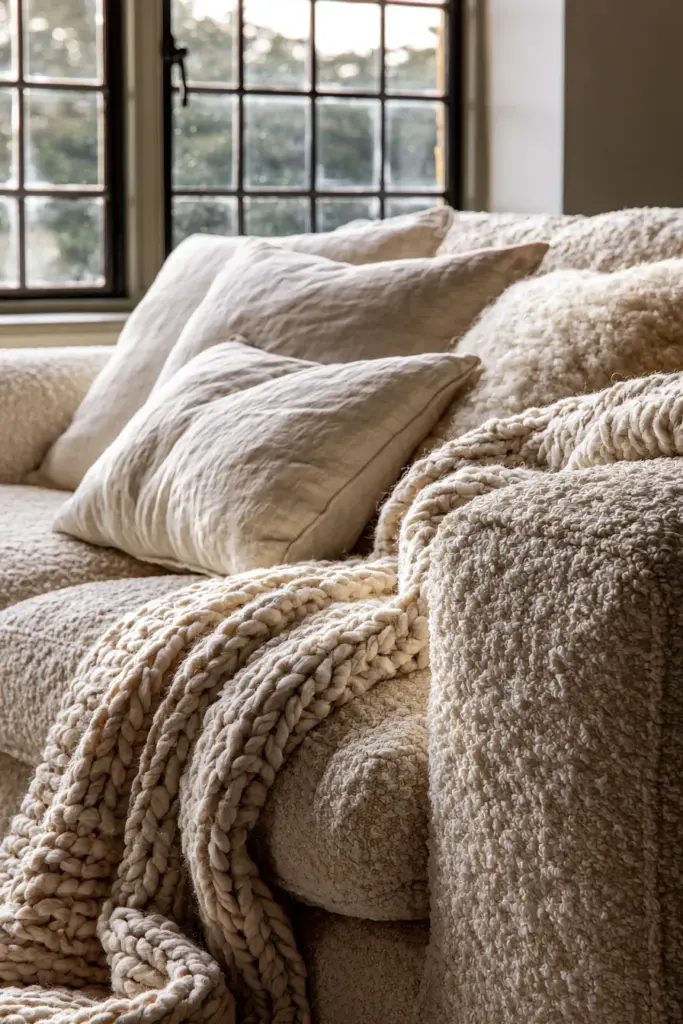
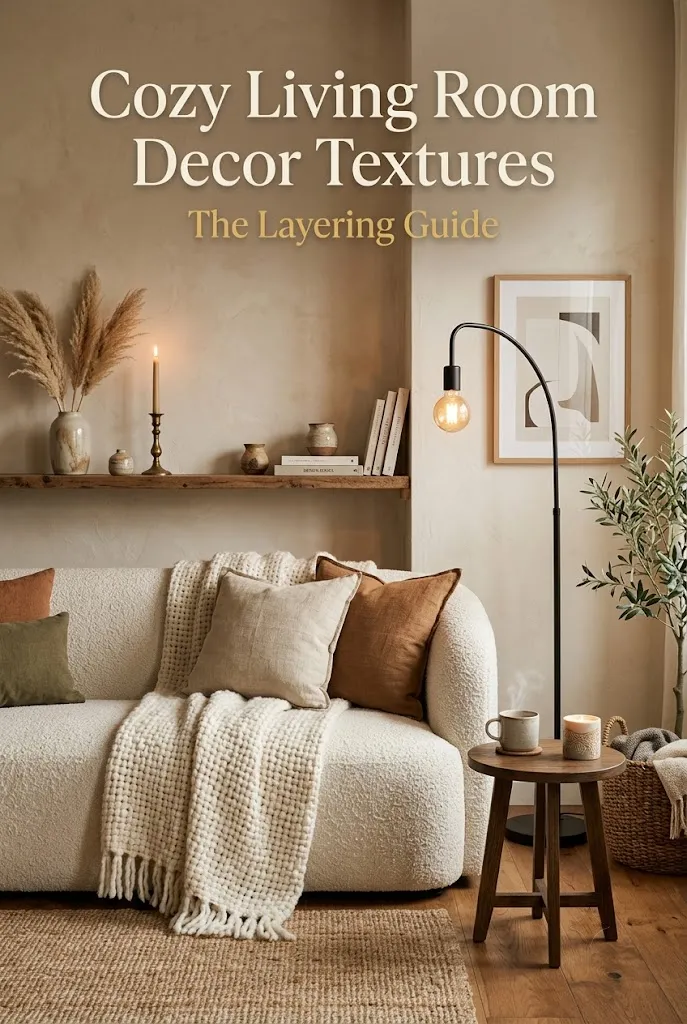
Your sofa and chairs carry the most tactile weight in the room, so this is where soft textures earn their keep. A velvet or bouclé sofa paired with a chunky knit throw and a mix of cushion covers — linen, wool, faux fur — creates layered softness without matching everything.
The rule of thumb: one dominant fabric on the sofa, two to three supporting textures in cushions and throws. Anything more starts to compete rather than complement.
Floor: Where Warmth is Grounded
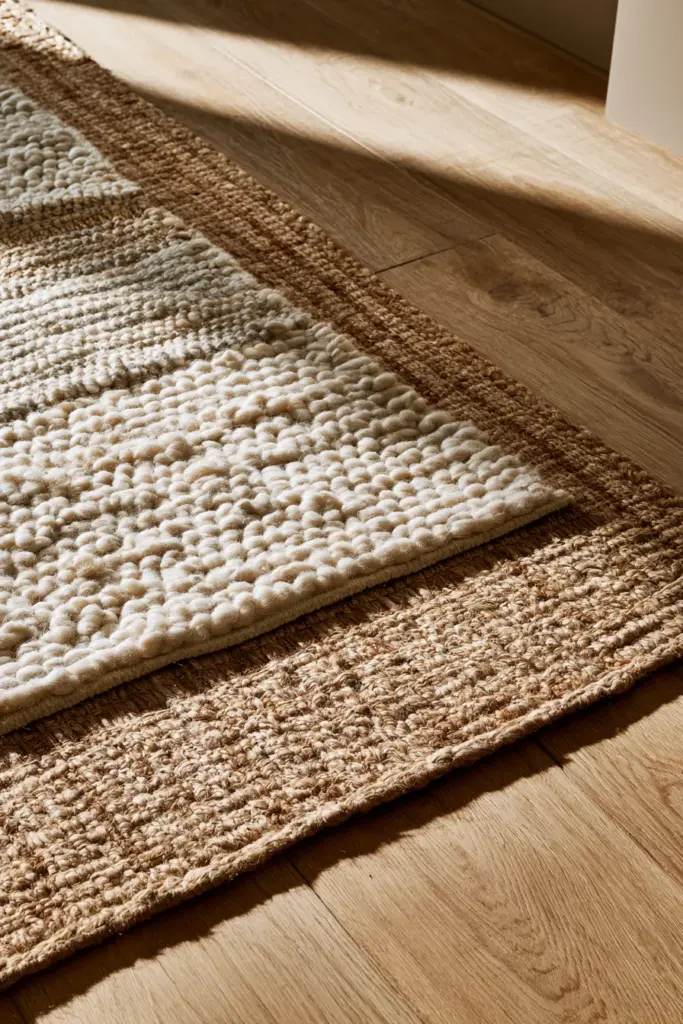
A bare floor reads cold no matter how warm your walls are. Wool rugs bring density and warmth underfoot, while jute or sisal adds an earthy, textural base layer for a more relaxed, natural look.
High-pile rugs feel indulgent in a reading corner; flatweave works better under a coffee table where traffic is heavier. Layering a smaller patterned rug over a larger neutral one is an easy way to add depth here too.
Windows: Where Light Gets Softened
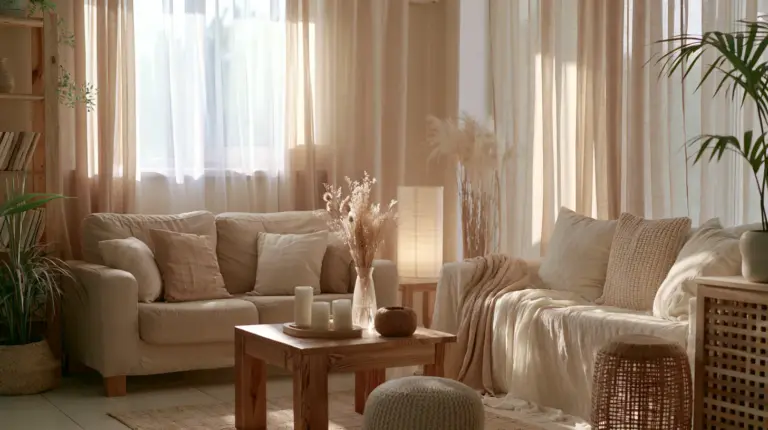
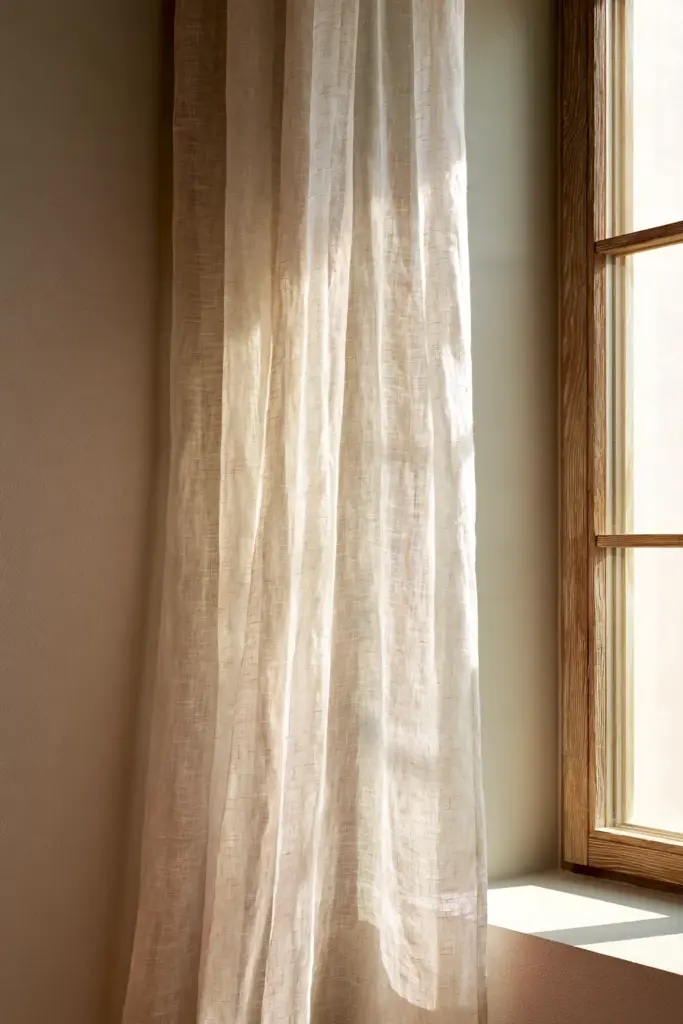
Heavy drapery does more than block light — it changes how sound and warmth move through a room. Linen curtains soften daylight beautifully, while heavier wool or velvet drapes absorb sound and add insulation in cooler months.
For a lighter, apartment-friendly touch, layered sheers under a structured curtain rod give you softness without the bulk.
Walls: Where Depth is Built
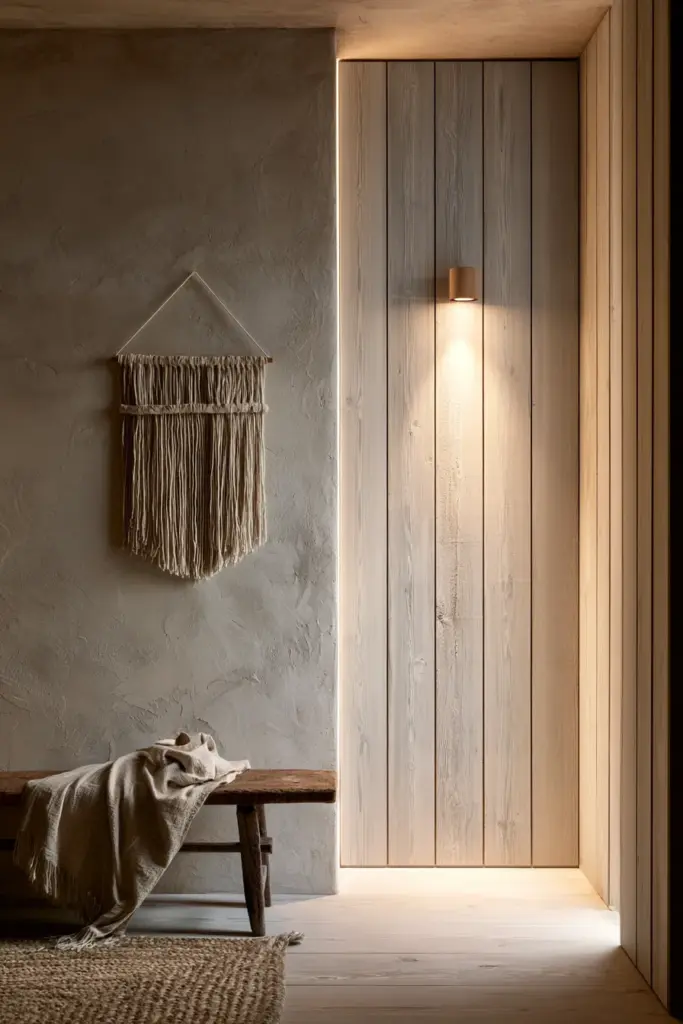
This is the texture zone most rooms skip — and it’s where a lot of your lighting ideas can really shine. Limewash or plaster finishes add subtle depth without pattern, while wood paneling or slatted wall details bring warmth and architectural interest.
Even without renovation, textured wall art, woven hangings, or a gallery of natural-material frames can achieve a similar layered effect.
Lighting: Where Mood is Made
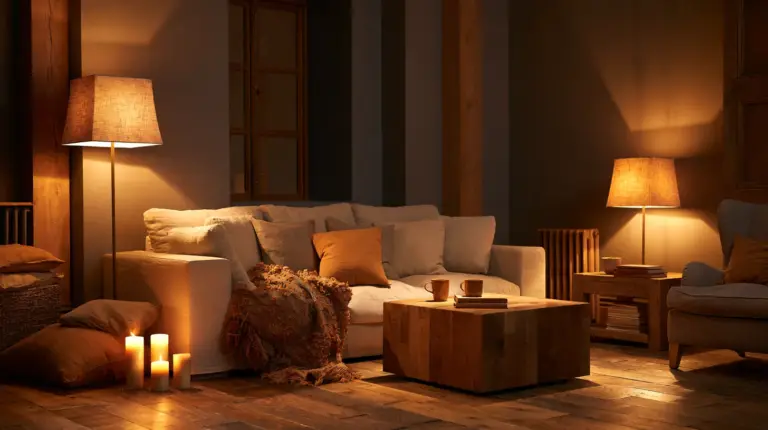
Texture looks entirely different under daylight than under a warm lamp glow. Matte lampshades diffuse light gently, while rattan or paper pendant fixtures cast dappled, cozy shadows across the room.
Candles matter here too — their flicker adds a living texture of light that no bulb can fully replicate. Pair a few unscented pillar candles with one lightly fragranced one for warmth without overwhelming the senses.
Decor: Where Personality Textures Show
Ceramics, woven baskets, and natural-fiber trays bring in smaller doses of texture that finish a room. Rattan trays, hand-thrown pottery, and woven baskets for storage all add tactile variety at low cost and low commitment.
Style Translations: Texture by Aesthetic
Texture choices shift depending on the overall style you’re leaning into. Here’s how the same “cozy” goal looks across a few popular directions.
| Style | Signature Textures | Best For |
|---|---|---|
| Japandi | Oak, linen, wool, plaster, ceramic | Calm, low-contrast rooms |
| Modern Eclectic | Bouclé, rattan, velvet, brass | Layered, collected spaces |
| Boho | Jute, macramé, chunky knits, cane | Relaxed, textural abundance |
| Mid-Century | Leather, walnut, wool, tweed | Warm but structured rooms |
| Apartment-Friendly | Removable rugs, throws, curtain layers | Renters, small footprints |
Best Texture for Every Use Case
Sometimes the easiest way to choose is by starting point rather than style. Use this as your quick-reference decision guide.
- Best texture for a sofa: velvet, linen, or bouclé
- Best texture for a rug: wool, jute, high-pile, or flatweave
- Best texture for warmth: wood, wool, bouclé, and dim lighting
- Best texture for small spaces: linen, cane, bouclé accents, low-contrast layering
- Best texture for a Japandi look: oak, linen, wool, plaster, ceramic
Texture for Small Living Rooms
Small spaces get crowded fast when every texture is heavy. Lean into low-contrast layering — keep tones similar and vary texture instead of color, so the room feels rich but not busy.
Choose one plush moment (a knit throw), one grounding moment (a jute rug), and let everything else stay quiet and matte.
Texture for Hot Climates
Heavy winter materials can make a warm-climate room feel stifling rather than cozy. Swap in linen, cotton, cane, and matte ceramics — breathable materials that still carry visual warmth without physical heaviness.
Cozy doesn’t have to mean heavy. It can mean soft light, natural fiber, and a relaxed hand-woven texture instead of fur and velvet.
Texture for Rental-Friendly Decorating
You don’t need permanent finishes to build a textural room. Removable rugs, curtains, throws, and wall art let you layer texture fully while keeping your security deposit intact.
This is often the fastest way to transform a rented space — and pairs well with modular, cozy furniture pieces you can take with you when you move.
Texture Maintenance: The Practical Side
Beautiful texture only stays beautiful if it holds up to daily life. Here’s what to consider before you commit.
- Faux fur and bouclé show pet hair easily — vacuum-friendly fabrics work better in pet homes
- Linen wrinkles but resists staining and breathes well
- High-pile rugs trap dust and need more frequent vacuuming than flatweave
- Velvet crushes with heavy use; best for lower-traffic seating
- Jute and cane are low-maintenance but can fray at edges over time
Texture Balance Rules
A simple formula keeps any room from tipping into either sterile or overstuffed: one rough surface, one soft surface, one structured surface in every vignette.
Think a jute rug (rough), a bouclé cushion (soft), and a wooden side table (structured). That trio alone can anchor an entire seating area.
Common Texture Mistakes to Avoid
Even well-intentioned coziness can go wrong. Watch for these patterns.
- Using too many fuzzy materials with nothing matte to ground them
- Matching every fabric instead of varying texture within a color family
- Mixing several shiny or reflective finishes with no grounding surface
- Skipping floor and wall texture while overloading the sofa
- Choosing warmth-only materials in a climate where breathability matters more
The 3-Layer Texture Formula
If you remember one framework from this guide, make it this one: base texture + soft texture + accent texture.
Your base is structural — a rug, a sofa fabric, a wood floor. Your soft layer is the throw, the cushions, the drapery. Your accent is the smallest, most personal touch — a ceramic vase, a woven tray, a candle glow. Layer in that order, and coziness follows naturally.
Quick Checklist: Building a Cozy, Textural Living Room
- Choose one dominant sofa fabric, then add two to three supporting cushion textures
- Layer a wool or jute rug for grounded warmth underfoot
- Soften windows with linen or wool drapery, layered over sheers if needed
- Add at least one wall texture moment — plaster, paneling, or woven art
- Choose lighting that diffuses warmly, and add candles for living texture
- Follow the base + soft + accent formula in every seating vignette
- Match texture choices to your climate and lifestyle, not just the season
- Keep small spaces low-contrast; vary texture more than color
A Room That Feels Like Home
The most beautiful living rooms don’t shout for attention. They simply feel right the moment you sit down — warm underfoot, soft under your hands, quietly grounded in every corner.
That’s the real goal of textural layering: not a look, but a feeling. A room that wraps around you the way a favorite sweater does on a slow Sunday morning.
Build it one honest layer at a time, and your living room won’t just look cozy. It will hold cozy, season after season.
FAQs
How many textures should a cozy living room have?
Aim for three to five distinct textures per zone rather than counting the whole room — this keeps layering intentional instead of overwhelming.
What is the difference between layered and cluttered?
Layered texture varies material while keeping tone and scale consistent; clutter happens when too many colors, patterns, and textures compete at once with no grounding surface.
Which textures work best for small spaces?
Linen, cane, and bouclé accents in low-contrast tones make small rooms feel cozy without visually shrinking them further.
Which textures are best for a warm, modern look?
Wood, wool, bouclé, and dim ambient lighting together create warmth that still feels current rather than rustic-heavy.
How do I choose textures for a Japandi or neutral living room?
Stick to natural, muted materials — oak, linen, wool, plaster, and ceramic — and let texture variation do the visual work instead of color contrast.