
Table of Contents
There’s a particular kind of quiet that settles into a room full of green. It’s not silence, exactly — it’s softness. A living room with the right plants simply feels held.
At ERYLIN, we believe coziness isn’t an accident. It’s built, layer by layer, from texture, light, and the small living things that make a house exhale. Plants are one of the fastest ways to get there.
This guide goes beyond “here are twenty pretty plants.” We’ll walk through how to actually read your living room — its light, its shade pockets, its personality — so every plant you bring home earns its place.
Whether you’re working with a sun-drenched window or a dim, no-window corner, a curious cat, or a tight apartment budget, you’ll leave with a plan you can start this weekend.
What Plants Are Best for a Cozy Living Room?
The best cozy living room plants share three traits: soft, rounded foliage, warm-toned pots, and a growth habit that fills space gently rather than sharply. Think trailing pothos, broad-leafed Monstera, and velvety Peperomia — plants that soften hard lines instead of adding more of them.
Spiky, architectural plants (like sansevieria) can feel modern, but they read as cool and structured. For coziness, lean toward plants with rounded, layered, or slightly imperfect leaves.
Floor-Level Statement Plants
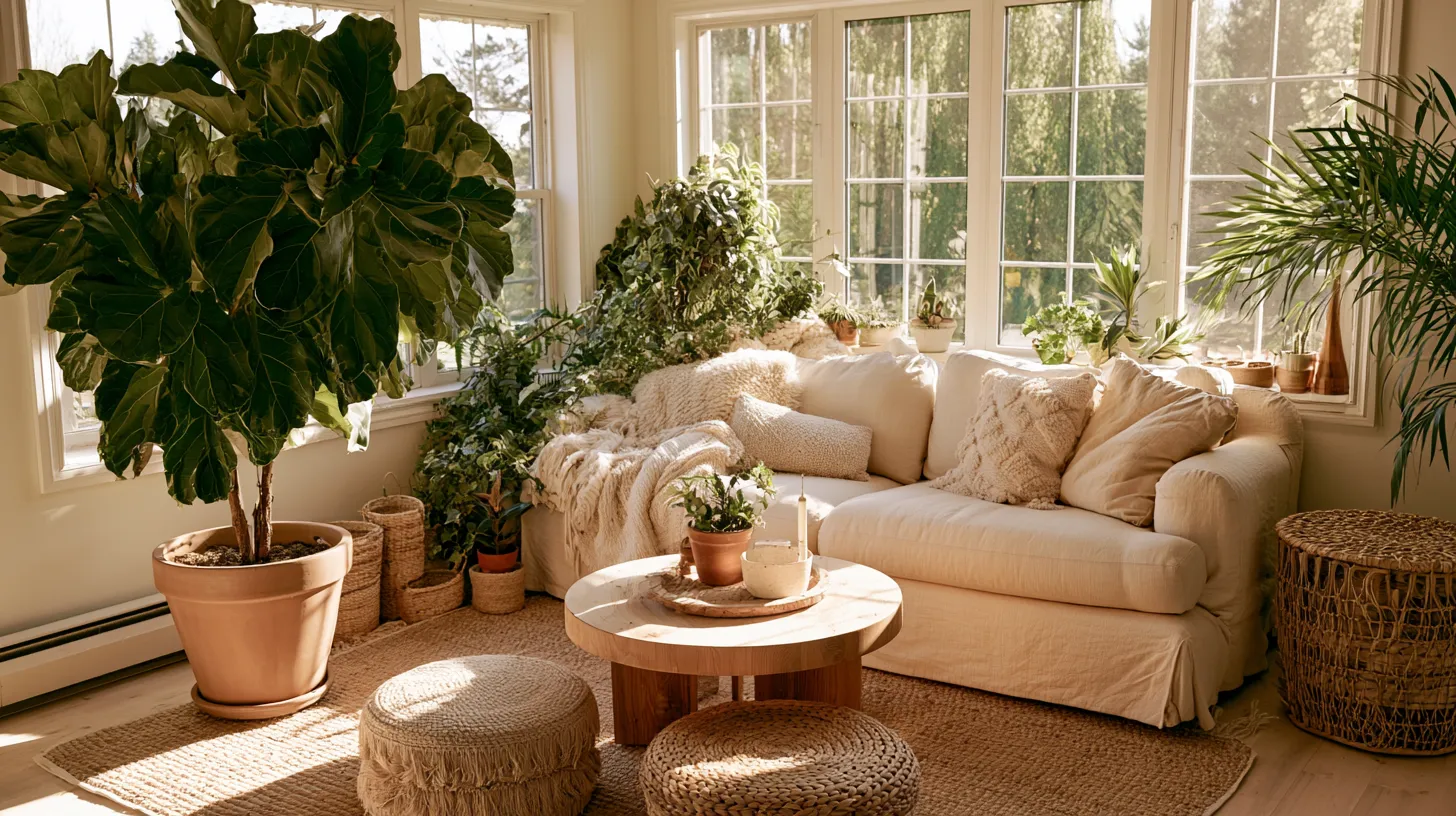
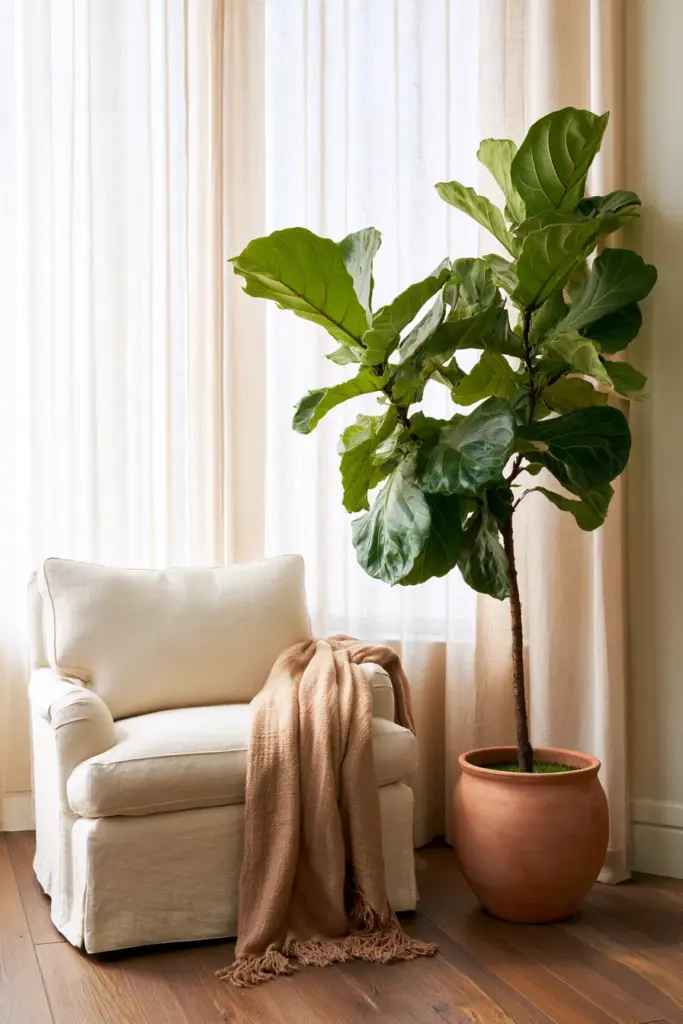
A large floor plant anchors a room the way a good armchair does — it gives the eye somewhere to rest.
- Fiddle Leaf Fig — bold, glossy leaves for bright corners
- Bird of Paradise — dramatic and warm-toned in terracotta
- Rubber Plant — deep green, forgiving of missed waterings
Mid-Level Shelf and Table Plants
These fill the “in-between” gaps that make a room feel layered rather than sparse.
- Peperomia — soft, touchable leaves that beg to be brushed against
- Calathea — patterned foliage that catches lamp light beautifully
- Pothos — trailing, near-indestructible, endlessly styleable
Trailing and Hanging Plants
Trailing greenery near windows softens hard architectural lines and adds gentle movement to the room.
- String of Pearls on a high shelf
- Swedish Ivy in a hanging macramé holder
- English Ivy cascading from a bookcase
Room Mapping: Reading Your Living Room Like a Plant Map
Before you buy a single plant, spend ten minutes mapping your room. This single habit prevents more plant deaths than any care guide.
Step 1 — Note your window direction. North-facing windows give soft, low light. South-facing windows give strong, direct sun. East and west fall in between, with morning or afternoon intensity.
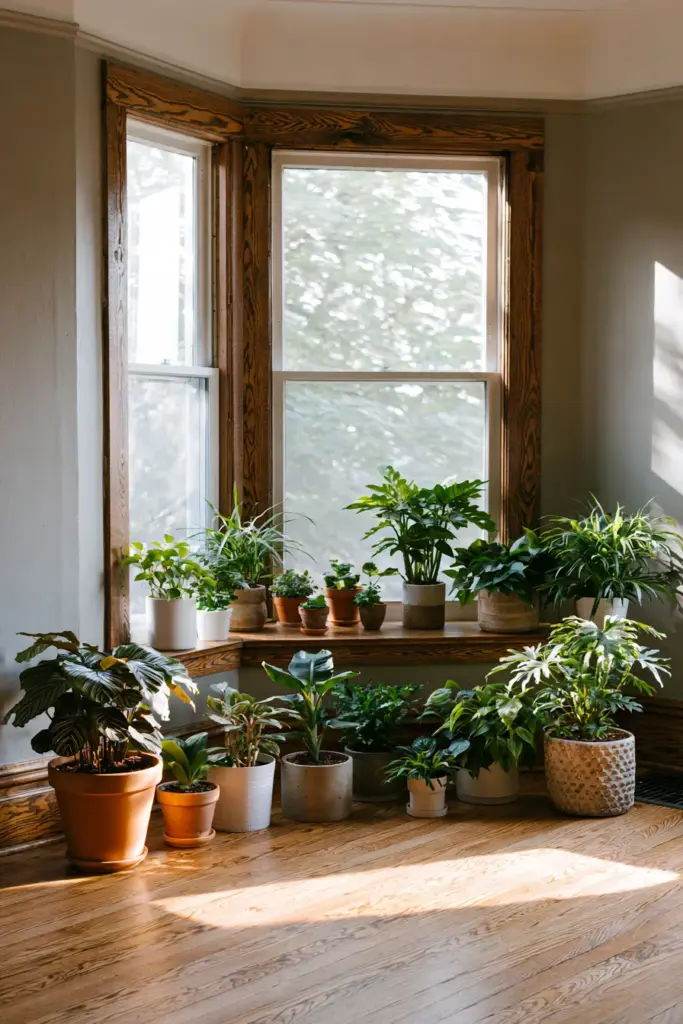
Step 2 — Mark three zones. Walk your room and label each area bright, medium, or low light based on distance from windows and furniture blockage.
Step 3 — Match plants to zones. Use the table below as your starting point.
| Zone | Distance from Window | Best Plant Matches |
|---|---|---|
| Bright | Within 2 feet, unobstructed | Fiddle Leaf Fig, Bird of Paradise |
| Medium | 3–6 feet, some furniture shading | Pothos, Calathea, Rubber Plant |
| Low | Beyond 6 feet or no direct window | ZZ Plant, Snake Plant, Parlor Palm |
Don’t forget to check for shade pockets — areas behind sofas, tall bookshelves, or media units that block light even in an otherwise bright room. And keep an eye on radiators, vents, and drafty windows, which quietly dry out or chill nearby plants.
Low-Light Plants for a Cozy Living Room
Low-light doesn’t mean no-light — nearly every living room has some usable brightness. The trick is choosing plants built for exactly that ambient glow.
The easiest low-light options are ZZ plants, snake plants (sansevieria), pothos, and parlor palms. They tolerate several feet of distance from any window and still hold their color.
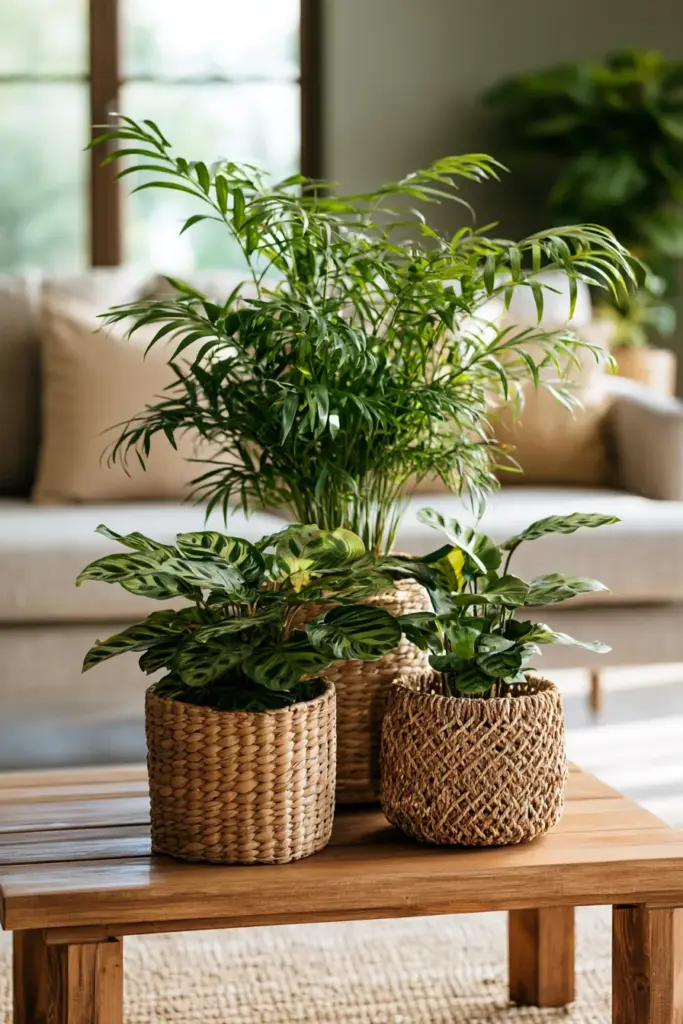
For a softer, cozier aesthetic in dim corners, pair a parlor palm’s feathery fronds with a woven basket planter. The texture contrast does more for warmth than the plant alone.
Pet-Safe, Low-Light Plants for Cozy Living Rooms
If you share your home with a curious dog or a plant-nibbling cat, safety comes before style — though thankfully, you rarely have to choose between them.
The following plants are non-toxic according to the ASPCA, tolerate low-to-medium light, and still bring soft, cozy texture into the room.
- Parlor Palm — feathery, pet-safe, low-light tolerant
- Calathea — patterned, safe, loves indirect light
- Boston Fern — lush and forgiving in humidity
- Spider Plant — easy, trailing, cat-curious but non-toxic
- Swedish Ivy — a safe stand-in for trailing greenery
If you already love the look of a toxic favorite, swap it for a safe lookalike instead of giving it up entirely.
| Toxic Favorite | Pet-Safe Swap |
|---|---|
| Monstera | Parlor Palm |
| Pothos | Swedish Ivy |
| Sago Palm | Ponytail Palm (mildly toxic, still safer) |
| Peace Lily | Boston Fern |
Coziness as a Design Outcome, Not Just a Vibe
“Cozy” isn’t vague — it’s measurable in design terms once you know what to look for.
Soften hard lines. Sofas, TV units, and shelving all have sharp edges. A trailing plant draped over a shelf corner or a rounded floor plant beside a media unit breaks up that rigidity instantly.
Choose warm-toned pots. Terracotta, woven rattan, and unglazed ceramic radiate warmth. Cold metal or glossy white planters, by contrast, push a room toward sleek rather than snug.
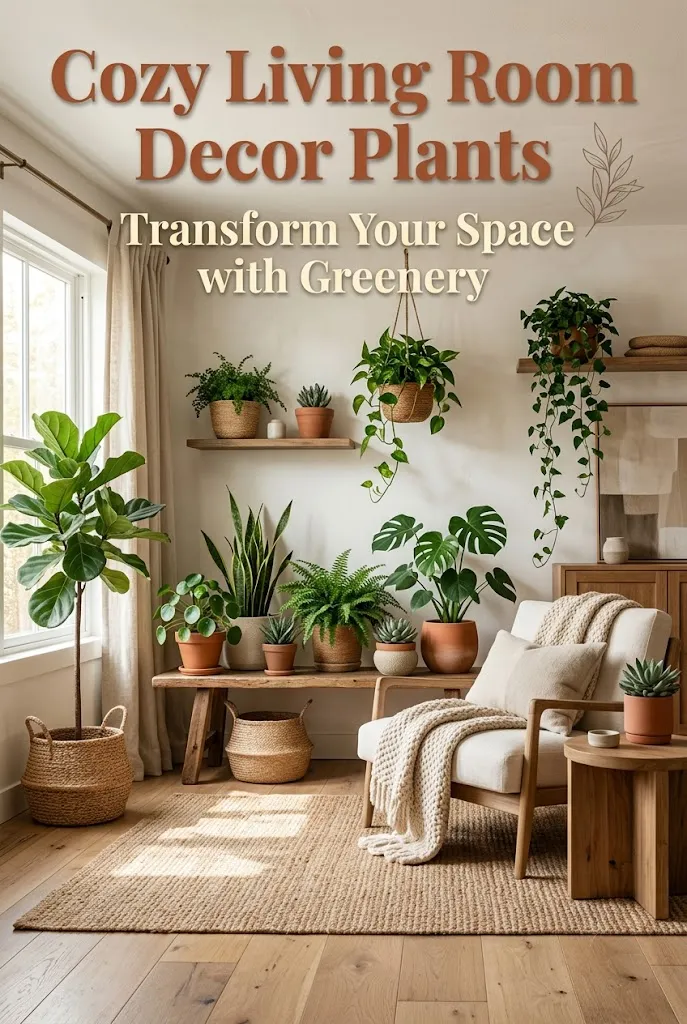
Layer your heights. Combine a tall floor plant, a mid-height shelf plant, and a trailing hanging plant in the same corner. This “nesting” effect is what separates a styled room from a room that simply has plants in it.
Mind your evening light. Under warm 2700–3000K bulbs, large, soft leaves catch gentle shadows and glow rather than glare. A small uplight tucked behind a big-leaf plant creates a quiet, flickering warmth after sunset — a detail most guides skip entirely.
Budget-Friendly Plant Decor Ideas
Coziness doesn’t require a designer plant budget. Some of the most inviting living rooms are built from cuttings, thrifted pots, and a little patience.
- Propagate pothos and spider plant cuttings in water to fill shelves for free
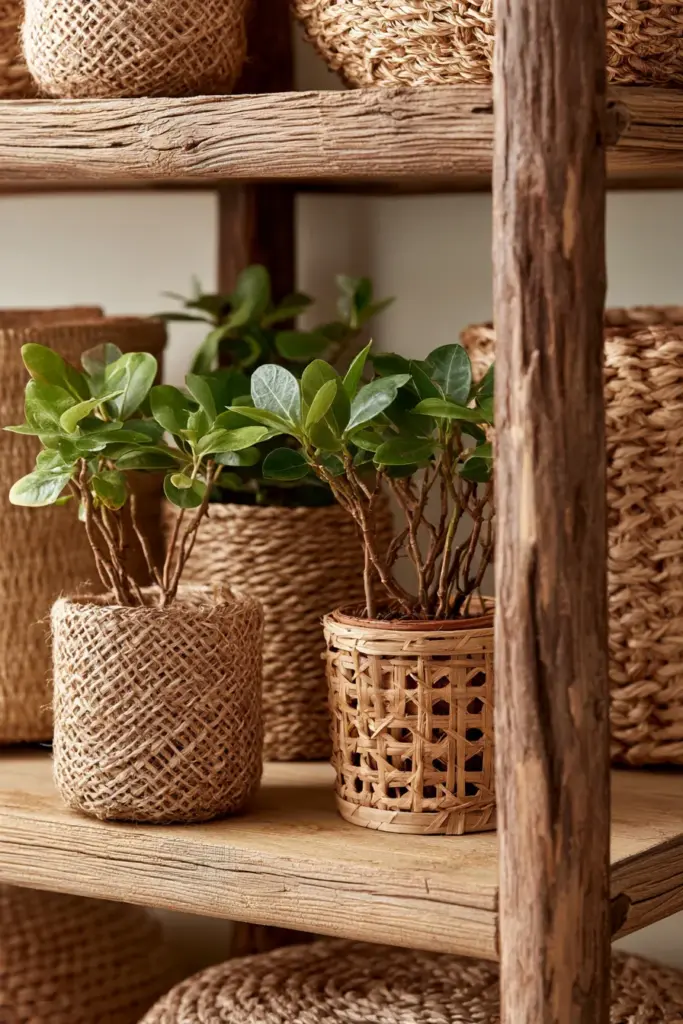
- Wrap plain plastic pots in raffia or rattan for an elevated, woven look
- Shop local markets or online marketplaces for budget-friendly terracotta
- Group three small plants instead of buying one large statement piece
Pair budget plant styling with a few cozy furniture pieces — a low bench, a woven ottoman — and the whole room starts to feel intentional rather than sparse.
Plants for Warm, Humid Tropical Living Rooms
Most plant guides are written for cool, dry climates. If you live somewhere warm and humid, your care routine looks different.
Watering — you’ll likely water less often, but watch closely for root rot in heavy, non-draining soil. Well-draining soil matters more here than almost anywhere else.
Pests — humid corners invite mealybugs and fungus gnats. Check the undersides of dense foliage like calathea and ferns regularly.
Cooling effect — large-leafed plants near sun-heavy windows, paired with sheer curtains, visually and physically cool a room without blocking the view.
How Do You Arrange Plants in a Small Living Room?
In a small space, plants should add softness without eating floor space. Lean on vertical styling: wall-mounted shelves, hanging planters, and tension-rod trailing plants near windows.
A single well-placed floor plant in an empty corner does more for a small room than five scattered small pots. Choose one statement piece, then layer smaller plants at different heights around it.
For renters, command-hook hanging systems and freestanding shelf units create the look of a built-in plant wall without a single drilled hole.
The Plant, Lighting, and Seating Triad
A cozy corner is rarely built from a plant alone — it’s a small trio working together.
Place a floor plant just behind an armchair, add a small side-table plant at seat height, and finish with a warm lamp nearby. That combination — greenery, texture, and gentle light — is what makes a reading nook feel like a retreat rather than just a chair by a window. Choosing the right lighting ideas for this corner makes all the difference between flat and inviting.
Minimum Viable Plant Care for Busy People
If your week doesn’t leave room for daily plant fussing, build your collection around a short weekly check instead.
- Sunday, 5 minutes — check soil moisture across all pots
- Choose “forgetful-proof” plants — ZZ plant, snake plant, pothos
- Know your two-week survivors — snake plant and ZZ plant handle two weeks of neglect without visible stress
Quick Reference: Cozy Living Room Plant Checklist
- Map your room’s light zones before buying any plant
- Choose soft, rounded foliage over spiky, architectural shapes
- Pair every plant with a warm-toned pot — terracotta, rattan, or woven
- Layer floor, shelf, and trailing plants together for a “nested” look
- Keep a pet-safe swap list handy if cats or dogs share your space
- In humid climates, prioritize drainage over frequent watering
- Use one statement plant per small room rather than many scattered pots
- Add warm evening lighting behind large leaves for nighttime coziness
A Softer Kind of Home
A living room doesn’t become cozy because of what’s in it — it becomes cozy because of how those things make you feel when you walk in tired and sit down anyway. Plants, chosen with care and placed with intention, do exactly that.
Start with one corner. One plant, one warm pot, one small patch of light. The rest of the room will follow its lead.
FAQs
What are the easiest cozy living room plants?
Pothos, ZZ plant, and snake plant are the easiest choices. They tolerate irregular watering and moderate-to-low light while still bringing soft, warm texture into the room.
Are big plants good for small living rooms?
Yes, one large floor plant often works better than several small ones. A single statement plant in an empty corner adds warmth without visually cluttering a tight space.
Which plants are safe for cats in low light?
Parlor palm, calathea, and spider plant are all non-toxic to cats and tolerate low-to-medium light, making them reliable picks for shaded living rooms with curious pets.
How often should I water living room plants?
Most living room plants need watering every one to two weeks, once the top inch of soil is dry. Humid climates and well-draining soil both reduce watering frequency.
How can I make my living room look cozy with plants?
Layer plants at different heights, choose warm-toned pots, and place at least one plant near your main seating area under warm lighting. This combination does more for coziness than plant quantity alone.