
Table of Contents
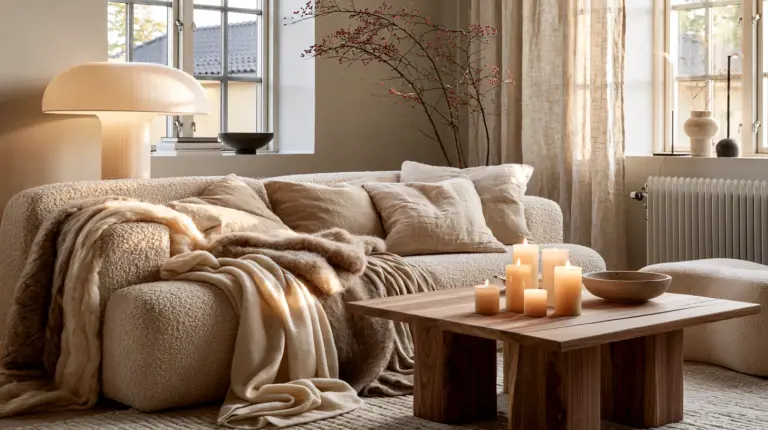
There’s a particular kind of quiet that settles over a room when the lighting is right. The overhead glare softens, the corners glow, and suddenly your living room feels less like a space and more like a sanctuary.
At ERYLIN, we believe lighting is the soul of a room’s mood. It’s not just about seeing — it’s about feeling held, warmed, and gently invited to slow down.
This guide walks you through the layers, tones, and textures that turn any living room into a cozy retreat. We’ll cover the science of warm light, budget-friendly swaps, smart lighting scenes, and style-specific plans for every kind of home.
By the end, you’ll know exactly how many lumens you need, which bulbs to avoid, and how to layer light the way a designer would. Let’s begin.
Why Warm Lighting Feels Cozy: Color Temperature & Human Response
Coziness isn’t just an aesthetic choice — it’s a biological one. Our bodies read light temperature as a signal for time of day, and that signal shapes mood more than most people realize.
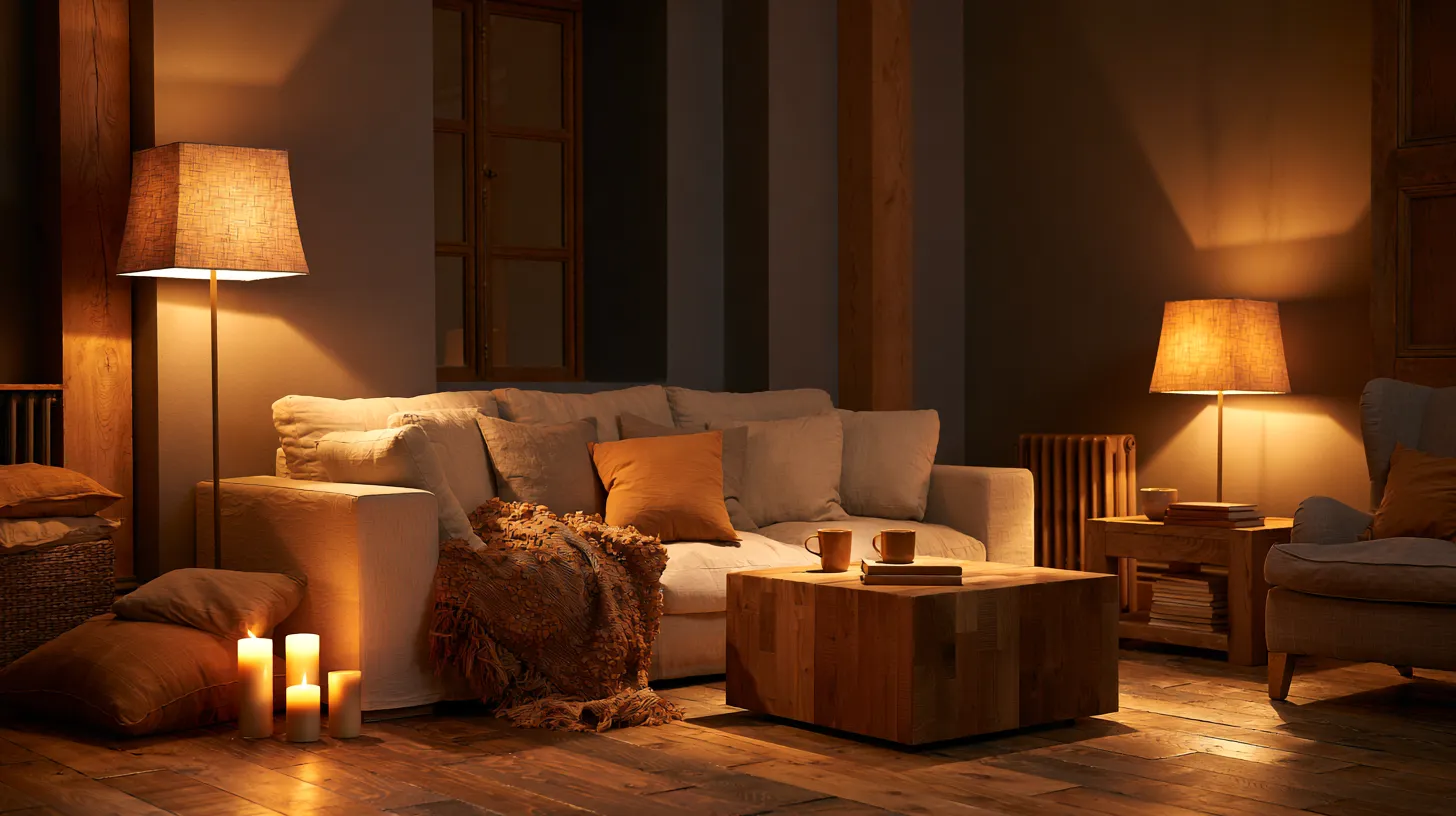
Warm white bulbs in the 2700K–3000K range mimic the golden hour glow of candlelight and sunset. This range slows the nervous system down and cues the brain that it’s time to relax.
Cooler bulbs at 4000K and above do the opposite. They mimic daylight, which is wonderful for a home office but jarring in a space meant for unwinding.
Quick reference: color temperature and mood
| Kelvin Range | Feeling It Creates | Best Used For |
|---|---|---|
| 2200K–2700K | Candlelit, intimate | Accent lighting, evening ambiance |
| 2700K–3000K | Warm, cozy, relaxed | Living rooms, bedrooms |
| 3500K–4000K | Neutral, balanced | Kitchens, hallways |
| 5000K+ | Bright, clinical | Offices, garages |
If you take away one rule from this whole guide, let it be this: stay under 3000K in every room meant for rest.
How Many Light Sources Does a Cozy Living Room Need?
A single overhead fixture can’t do the emotional work of a whole room. It flattens shadows and casts one uniform, often unflattering glow.
Aim for at least three light sources working at different heights. This creates depth the way candlelight and firelight once did, before ceiling bulbs existed.
A simple, reliable formula:
- Ambient light — a dimmable overhead fixture or recessed lighting for general visibility
- Task light — a reading lamp or under-shelf strip for focused activities
- Accent light — picture lights, LED trim, or candles for warmth and texture
Layering this way means you’re never stuck with one mood. You can dim the overhead, click on a floor lamp, and instantly shift from “family movie night” to “quiet solo evening.”
Layered Lighting, Explained Room by Room
Ambient Lighting: The Foundation
Ambient lighting fills the room evenly, without shadows or hot spots. Think recessed lighting, cove lighting along a ceiling edge, or a fabric-shaded flush mount.
Always put ambient fixtures on a dimmer. This single upgrade does more for coziness than almost any other change.
Task Lighting: Function With Warmth
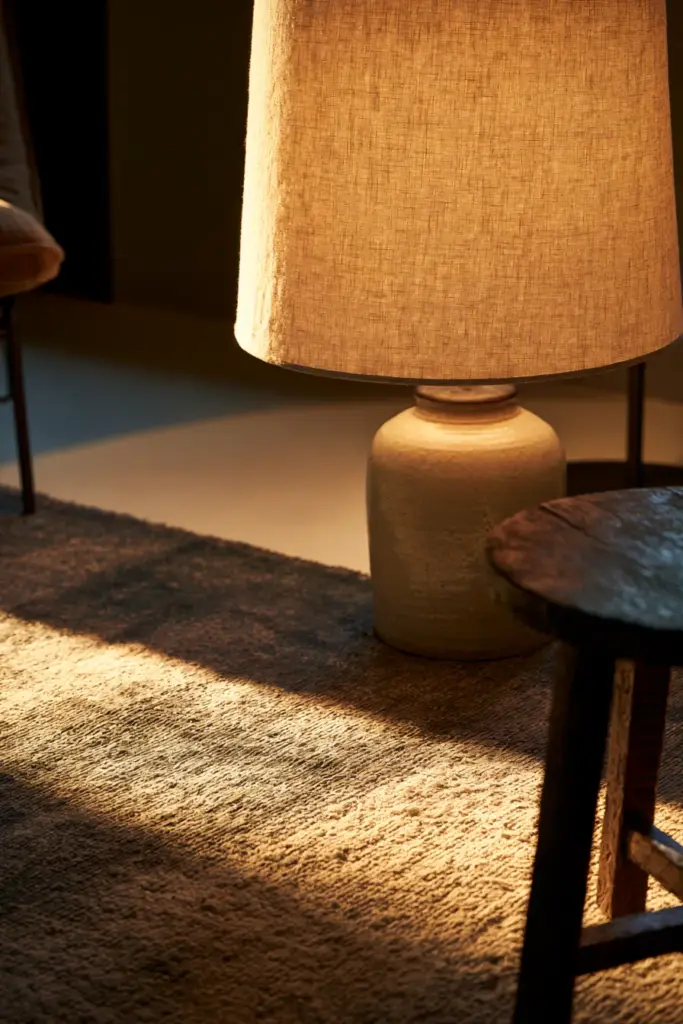
Task lighting supports what you’re actually doing — reading, working, or curling up with tea. A reading nook lighting setup deserves its own gentle spotlight, ideally a warm-toned floor lamp with an adjustable arm.
Pair it with a linen or paper shade. These materials diffuse light instead of projecting it in a hard beam, which keeps the glow soft on the eyes.
Accent Lighting: The Emotional Layer
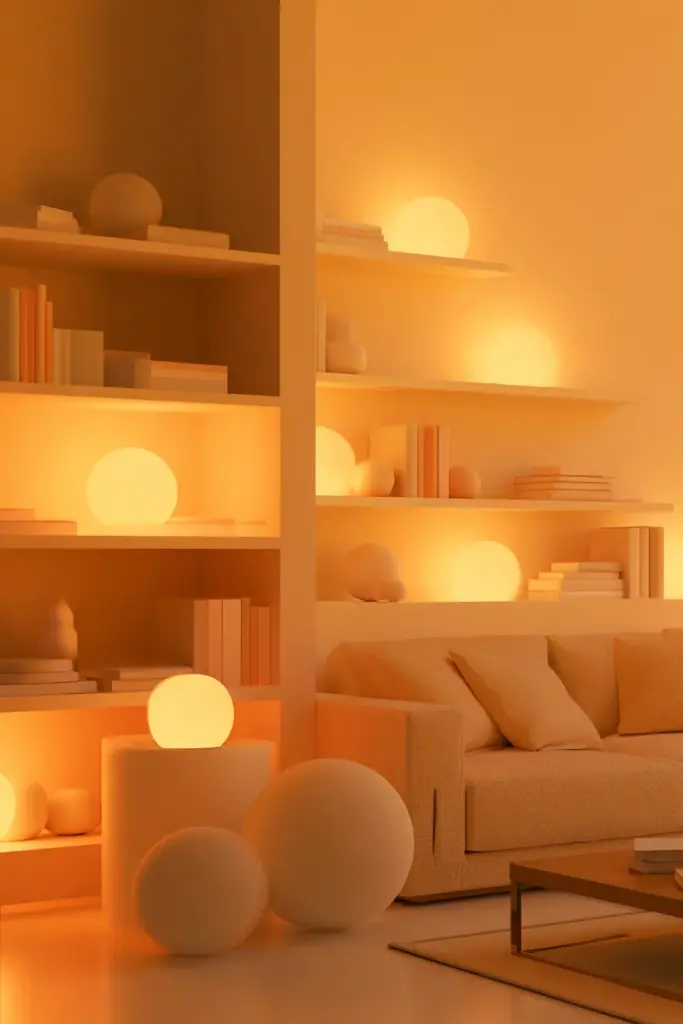
Accent lighting is where the magic lives. LED strips behind a shelf, a cluster of candles on a coffee table, or a small picture light over artwork all add depth without adding brightness.
This is also where texture matters most. A ceramic lamp base, a woven rattan pendant, or a linen shade all scatter light in ways that feel handmade and warm, never sterile.
Style-Specific Lighting Plans
Different aesthetics call for different fixtures. Here’s how to light four popular styles without losing their character.
Japandi Lighting
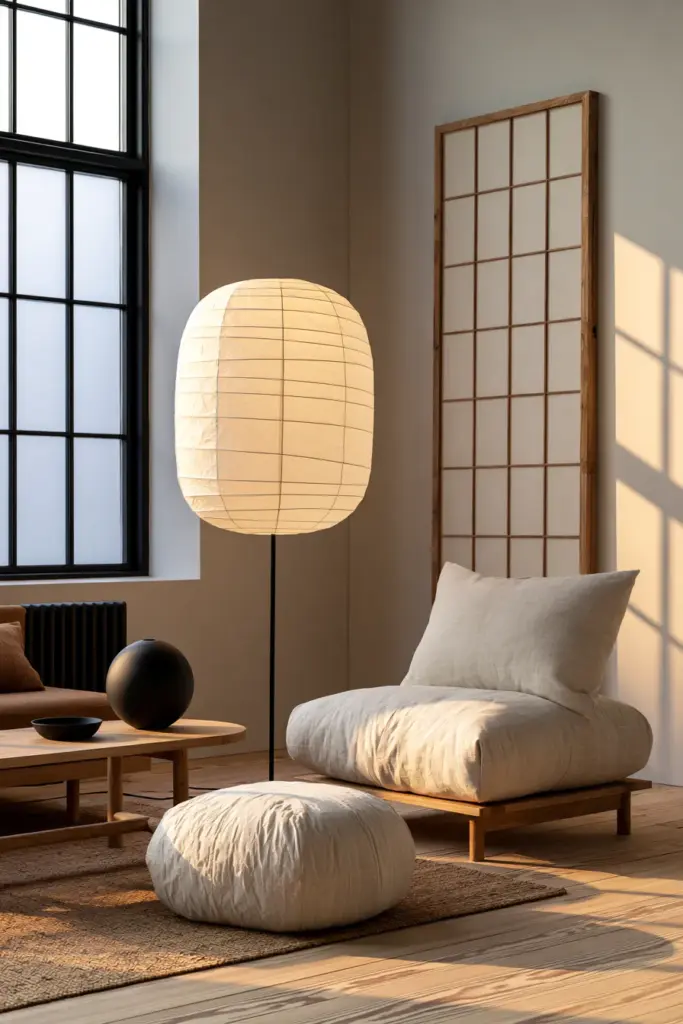
Japandi spaces favor restraint. Choose paper lanterns, low-profile wooden floor lamps, and minimal metal finishes in matte black or warm brass.
Keep bulbs strictly under 2700K here — the style lives and dies by softness.
Farmhouse Lighting
Farmhouse living rooms lean into rustic chandeliers, wrought-iron sconces, and exposed-beam pendant lights. Warm Edison-style bulbs with visible filaments add authentic charm.
Modern Eclectic Lighting
This style welcomes mixed metals and sculptural floor lamps as statement pieces. A single bold fixture can anchor the whole room, so let one lamp be the “art” and keep the rest supportive.
Bohemian Lighting
Boho spaces thrive on fairy lights, Moroccan-style lanterns, and layered textiles draped near lamp bases. Let light spill through patterned glass or woven shades for a dappled, dreamy effect.
Budget & Renter-Friendly Lighting Upgrades
You don’t need an electrician or a big budget to transform your lighting. Small, reversible changes make an enormous difference.
Budget lighting upgrades under $100
- Swap standard bulbs for warm LED bulbs (2700K–3000K)
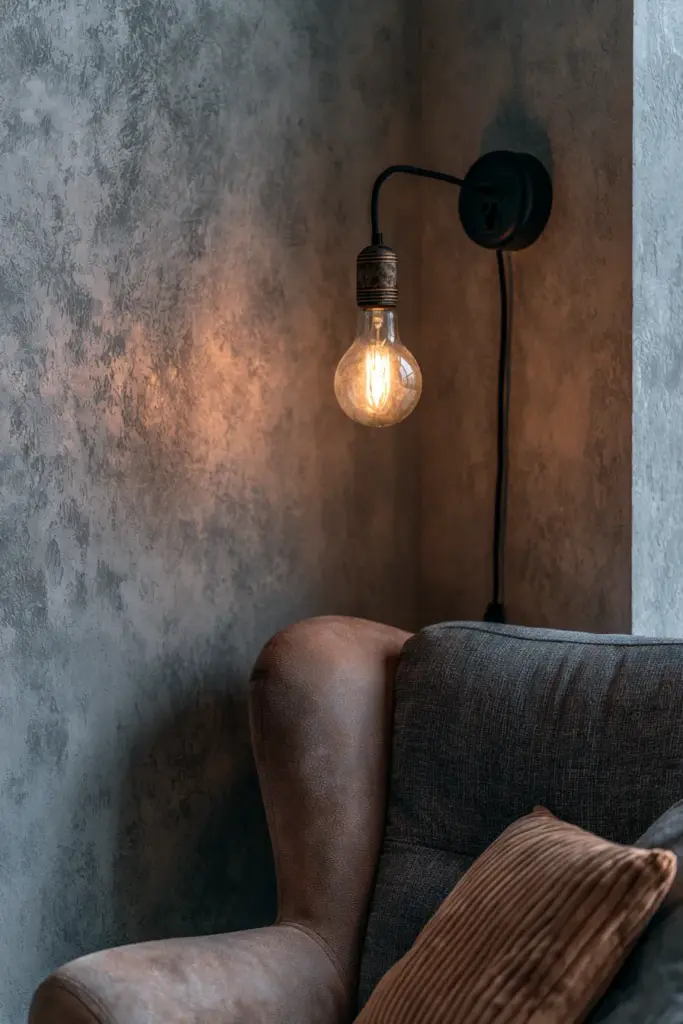
- Add a plug-in wall sconce near a reading chair
- Install a smart plug for instant dimming and scheduling
- Layer in a string of warm fairy lights along a shelf or headboard
Renter-Friendly Lighting: No Wiring, No Damage
Plug-in sconces with adhesive cord clips let you add wall-mounted warmth without touching the wiring. Battery-powered puck lights tucked under shelving work beautifully too, and they move with you when you do.
This is also where cozy furniture and lighting intersect — a plug-in sconce mounted beside a favorite armchair instantly creates a reading corner, no renovation required.
Smart Lighting for Effortless Coziness
Smart bulbs have quietly become one of the easiest ways to layer light without extra fixtures. Options like Philips Hue and LIFX let you adjust color temperature and brightness from your phone or by voice.
A simple evening routine might include:
- Setting living room bulbs to 2700K at sunset automatically
- Creating a “movie night” scene that dims ambient light and brightens accent lighting
- Using a voice assistant to say “goodnight” and fade all lights out over ten minutes
Smart dimmers also solve a common problem: not every fixture is dimmer-compatible out of the box, so check that your bulbs and switches are rated to work together before installing.
Lumens, Watts, and Getting the Math Right
Lighting math sounds intimidating, but it’s simpler than it looks. Lumens measure actual brightness, while watts measure energy used — and LED bulbs deliver far more lumens per watt than older incandescent ones.
As a general guide, living rooms benefit from 10–20 lumens per square foot of ambient light. A 12×15 room (180 square feet) typically needs somewhere between 1,800 and 3,600 total lumens across all fixtures combined, adjusted down if the space already gets strong natural daylight.
Beam angle matters too. Wider beams (100°+) suit ambient fixtures, while narrower beams (25°–40°) work best for task and accent lighting where you want a focused pool of light.
Common Lighting Mistakes to Avoid
Even well-decorated rooms can feel cold if the lighting works against them. Watch for these frequent missteps.
- Relying on a single overhead “big light” with no layering
- Choosing cool white or daylight bulbs (4000K+) for relaxation spaces
- Skipping dimmers, which locks you into one brightness all evening
- Leaving lampshades bare or opting for opaque plastic instead of fabric or paper
- Placing lamps only at eye level, which creates harsh, flat shadows
Seasonal Lighting Swaps
Cozy lighting shifts gently with the seasons, much like the light outside your window does.
In winter, lean into warmer bulbs, more candles, and amber-toned string lights to counter shorter days. In summer, you can afford slightly brighter, airier ambient light paired with sheer curtains that filter natural sunlight during the day.
Cozy Lighting Checklist
- Choose bulbs in the 2700K–3000K range for all main living spaces
- Layer at least three light sources: ambient, task, and accent
- Add dimmers or smart bulbs wherever possible
- Use fabric, linen, or paper shades to diffuse light softly
- Match fixtures to your style — Japandi, farmhouse, eclectic, or boho
- Avoid single-source overhead lighting as your only option
- Swap seasonally for warmer winter tones and airier summer light
- Explore our lighting ideas guide for curated fixture picks by room
A Final, Soft Glow
A cozy living room isn’t built in a single afternoon. It’s layered slowly, lamp by lamp, shade by shade, until the whole room feels like it’s exhaling.
Let your lighting be gentle, warm, and a little imperfect — the kind of glow that makes people want to stay a while longer. That’s the ERYLIN way: light that feels like home.

Frequently Asked Questions
u003cstrongu003eWhat makes lighting u0022cozyu0022 for a living room?u003c/strongu003e
Cozy lighting combines warm-toned bulbs (2700K–3000K), soft diffusion through fabric or paper shades, and layered sources like overhead, floor, table, and accent lights. Dimmable fixtures let you soften harsh glare as needed.
How many light sources should a cozy living room have?
Aim for at least three sources — typically an overhead fixture, a floor lamp, and an accent light — working together to create depth rather than one flat, uniform glow.
What are the best cozy lighting ideas for small living rooms?
Use multiple lamps at varying heights instead of one large overhead fixture, add plug-in wall sconces or fairy lights to save floor space, and choose curvy, dome-shaped lamps that soften sharp lines.
Should I avoid overhead lights for a cozy living room?
Not entirely. A dimmable overhead fixture with warm bulbs works well when paired with lamps and sconces, giving you a balanced, adjustable glow rather than one harsh source.
What color temperature is best for cozy living room lighting?
Warm white in the 2700K–3000K range is ideal for relaxation and intimacy. Cooler bulbs at 4000K or higher tend to feel sterile and can disrupt your evening wind-down.