
Table of Contents
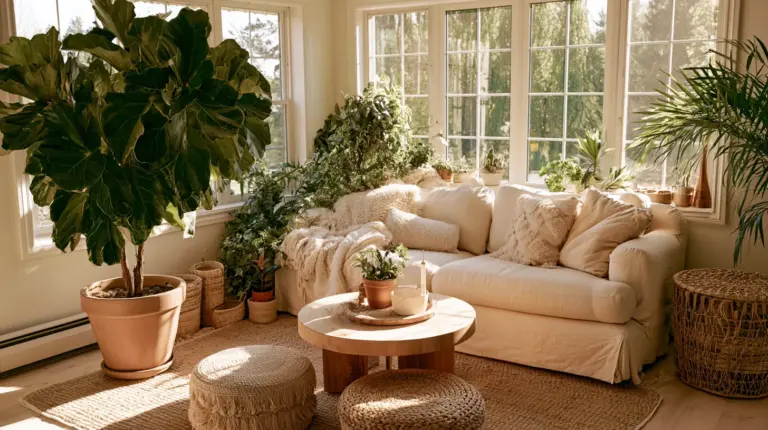
There’s a particular kind of quiet that settles into a room done right. Soft light pools on a linen throw. A candle flickers low on the side table. The world outside can wait.
That feeling has a name. Hygge (pronounced “hoo-ga”) is the Danish art of everyday coziness, and your living room is where it lives most fully.
At ERYLIN, we believe hygge isn’t a look you buy — it’s a rhythm you build. It’s the layering of texture, the warmth of a well-placed lamp, the calm of a room that finally feels like yours.
This guide goes beyond inspiration. We’ll walk through real layout logic, lighting layers, budget tiers, and small-space solutions — so your living room doesn’t just look cozy in photos. It feels cozy every single evening.
What Is a Hygge Living Room, Really?
A hygge living room is one designed around comfort first and aesthetics second — though the two end up working together beautifully.
It favors soft textures, warm and dim lighting, natural materials, and a slower, more intentional pace of living. Think fewer sharp edges, more folded blankets. Fewer trends, more permanence.
Hygge isn’t about buying more things. It’s about choosing pieces that invite you to stay a little longer.
The Hygge Design Framework
Rather than a scattered list of tips, think of your room in seven interconnected layers. Each one supports the others.
1. Seating That Invites You In
Your seating sets the emotional tone of the room before anything else does.
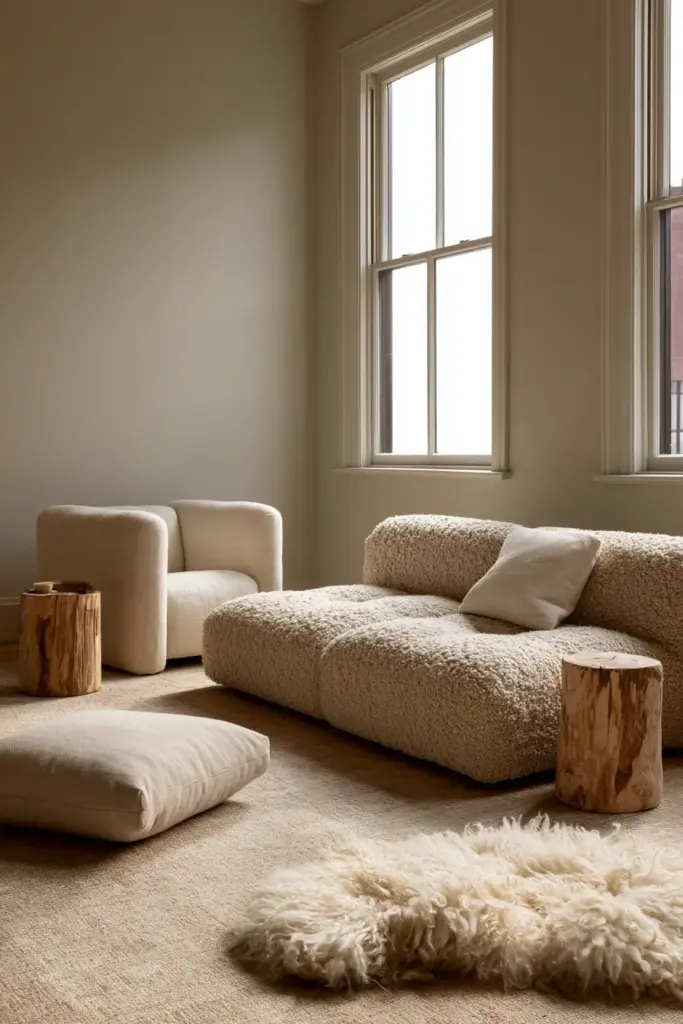
Choose a deep, low sofa with soft bouclé or brushed cotton upholstery over anything stiff or glossy. Add an oversized armchair angled toward the window or fireplace, not just facing the TV.
Layer in a floor cushion or pouf in the corner — it signals that sitting on the floor is welcome here too, which is a very hygge idea in itself.
2. Lighting in Layers, Not Just One Bulb
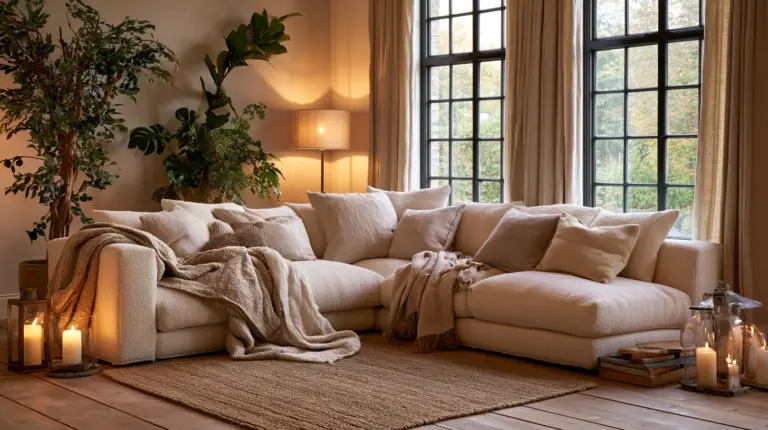
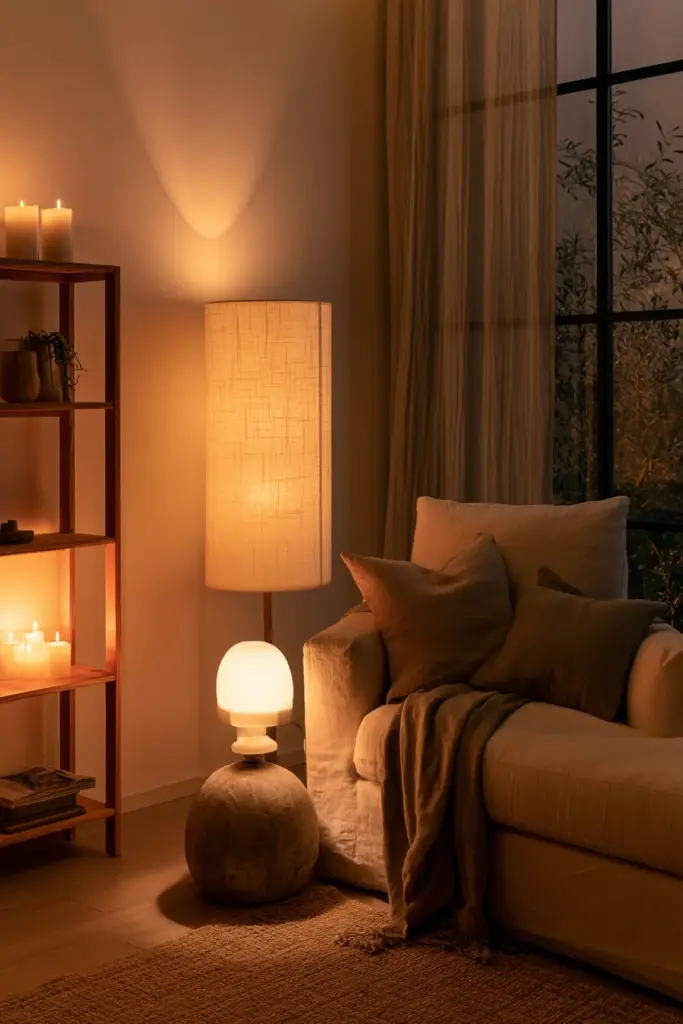
Harsh overhead lighting is the fastest way to kill a cozy mood. Hygge lighting works in at least three layers.
- Ambient layer: a warm-toned floor lamp (2700K bulbs, never cool white)
- Task layer: a smaller table lamp near your reading chair
- Flicker layer: candles, a lantern, or string lights along a shelf
Together, these layers create depth — soft shadows and warm pockets of glow instead of one flat wash of light. For more ideas on building this effect, our lighting ideas guide breaks down bulb temperature and placement room by room.
3. Textiles That Beg to Be Touched
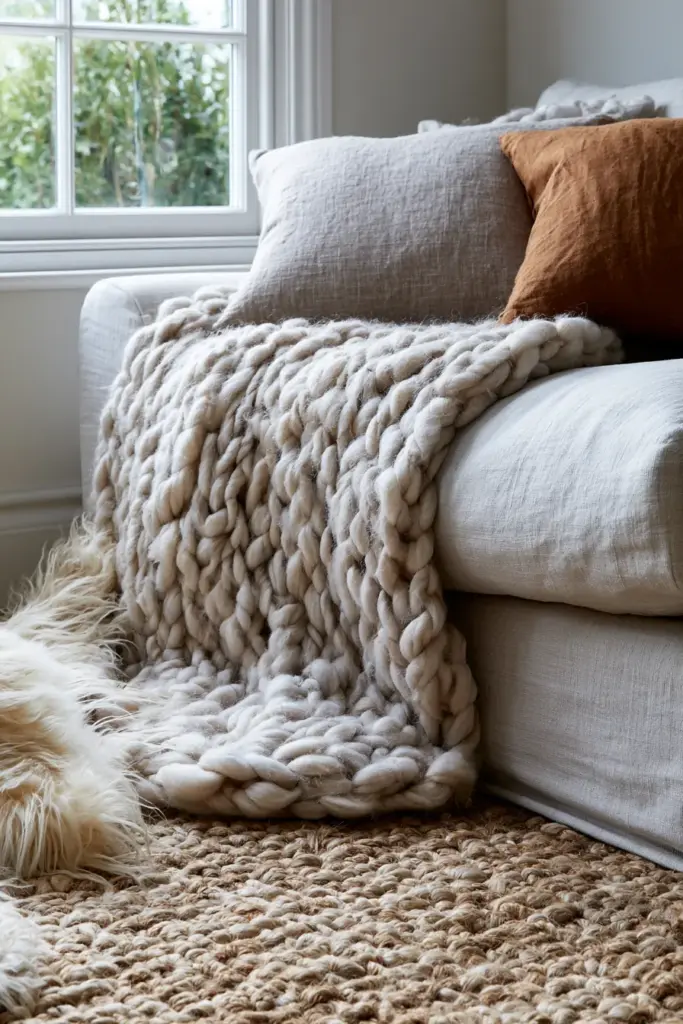
Texture is the soul of hygge. If a fabric doesn’t invite touch, it doesn’t belong in this room.
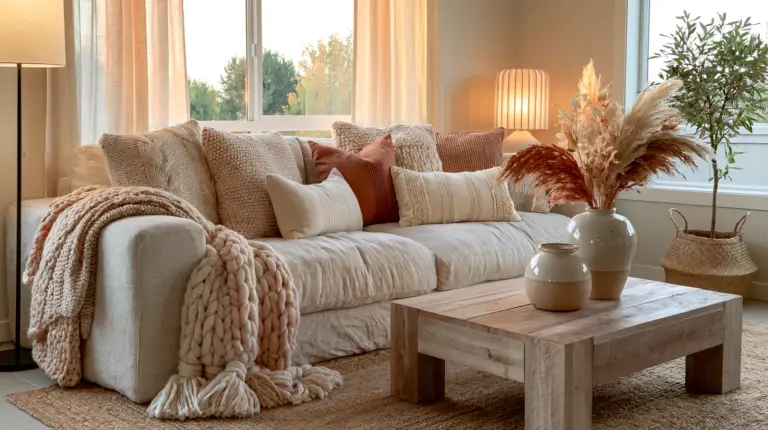
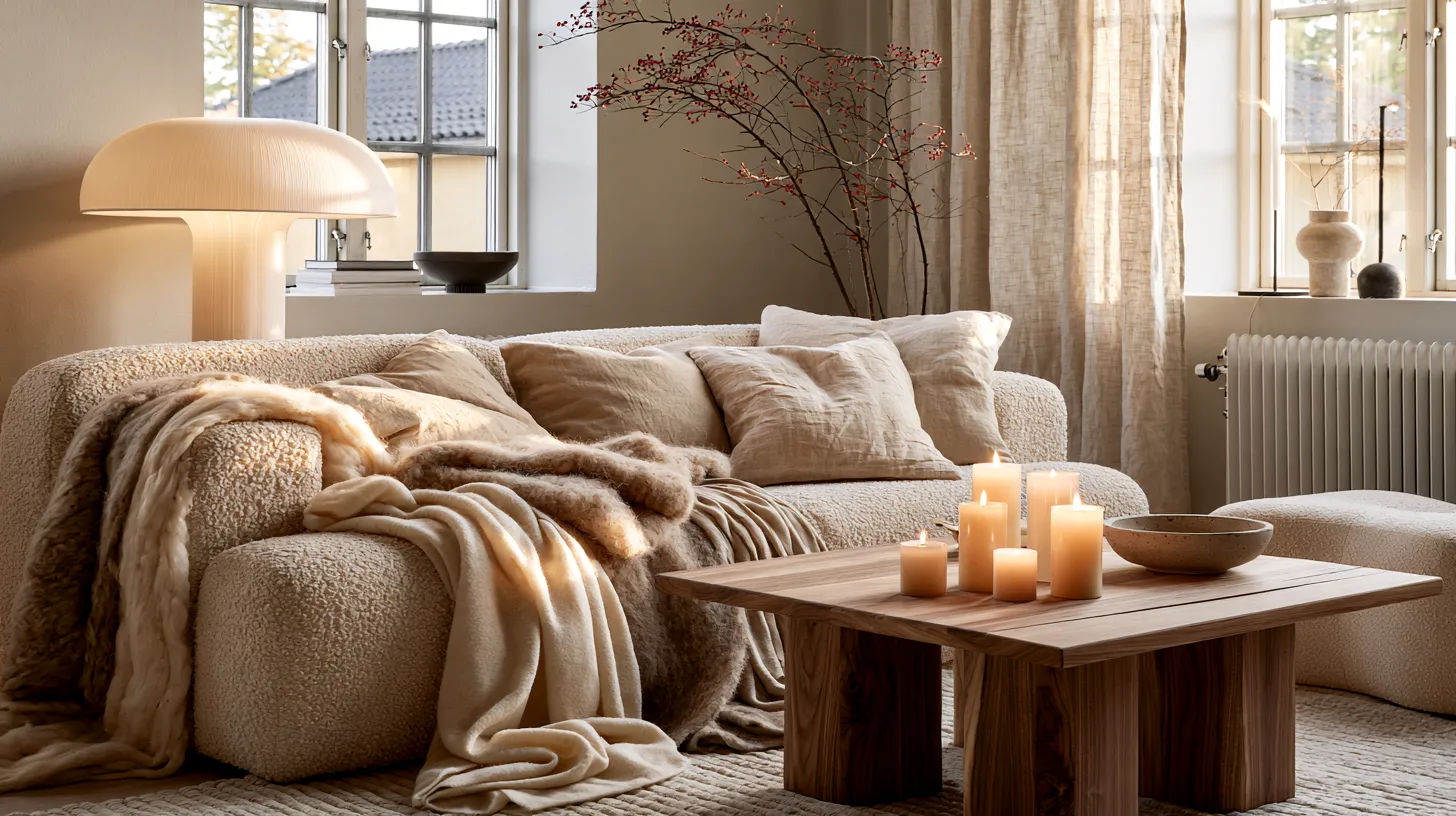
Layer a chunky knit throw over the sofa arm, a sheepskin across the armchair, and a wool or jute rug underfoot. Mix textures deliberately — smooth linen cushions against a nubby boucle sofa creates quiet visual interest.
Add at least three cushions of varying texture and size to any single seat. It sounds simple, but it changes how a room feels within seconds.
4. A Calm, Natural Color Palette
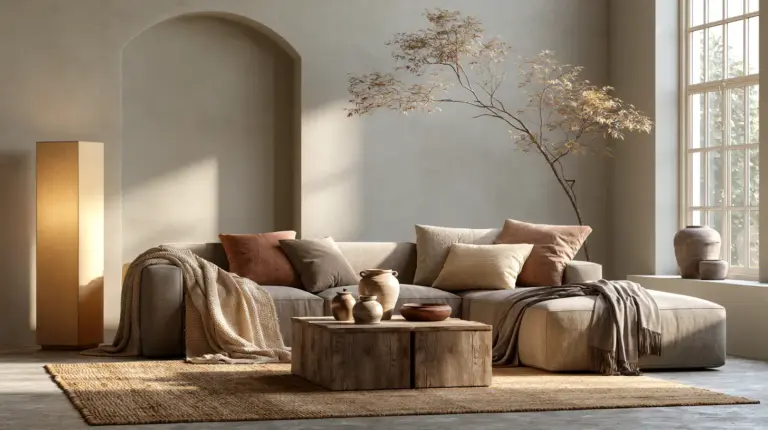
Hygge color palettes stay close to the earth. Think oatmeal, warm beige, soft gray, muted sage, and dusty blue.
Avoid stark white or cool-toned grays, which read clinical rather than calm. Instead, choose off-whites with a warm undertone, and let wood tones do the visual heavy lifting.
| Palette Role | Suggested Tones | Where to Use |
|---|---|---|
| Base | Warm white, oatmeal | Walls, large upholstery |
| Accent | Sage, terracotta, dusty blue | Cushions, throws |
| Grounding | Walnut, oak, rattan | Furniture, frames |
5. Natural Materials and Handcrafted Touches
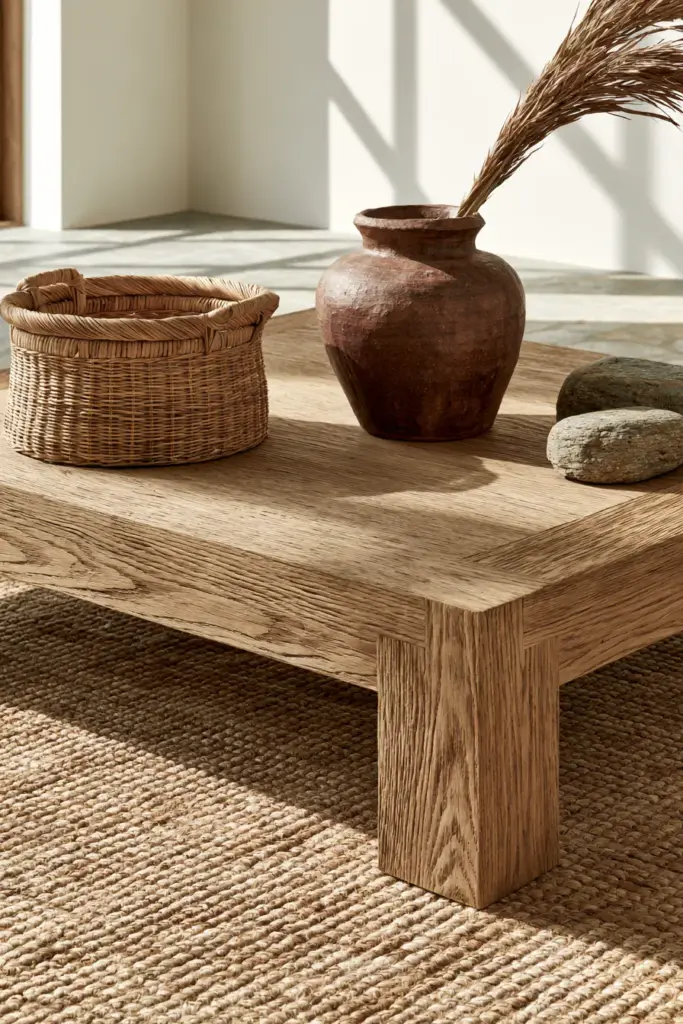
Wood, stone, ceramics, and woven fiber all carry a warmth that plastic and glass simply can’t replicate.
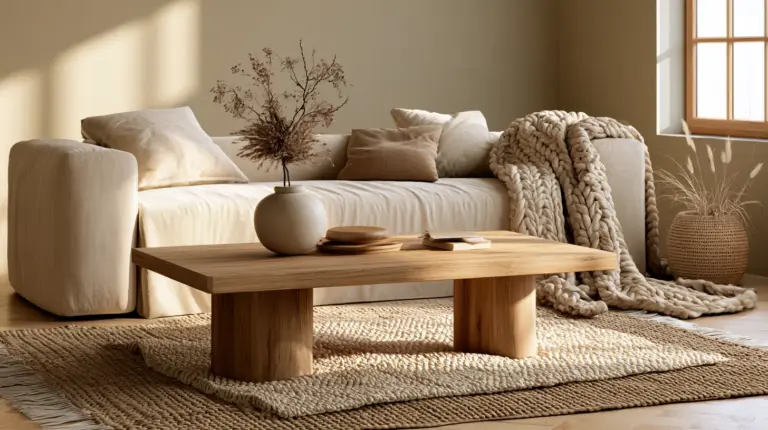
Choose a solid wood coffee table over glass. Add a handmade ceramic vase or ceramic bowl for keys and trinkets. A few imperfect, handcrafted pieces do more for a room’s soul than a dozen matching, mass-produced ones.
6. Layout and Flow (The Part Most Guides Skip)
Most articles talk decor and forget the room’s bones. But how furniture sits in a space determines whether it feels cozy or cramped.
Keep at least 30 inches of walking space between major furniture pieces. Angle chairs slightly inward, toward each other, rather than lining everything against the walls — this creates a natural, conversational pull.
Anchor the room around one focal point: a fireplace, a window, or a well-styled shelf. Everything else should orbit gently around it, not compete with it.
7. Scent and Sound
Hygge isn’t only visual. A quiet room with the right scent does something a beautifully styled photo never can.
Light a wood-wick candle for a soft crackle, or simmer cinnamon and orange peel on the stove during colder months. Add a small area rug or curtains to soften hard-floor echo and dampen outside noise.
Small-Space Hygge: Apartments and Rentals
Not everyone has room for an oversized sectional, and that’s more than fine.
- Choose a loveseat instead of a full sofa, and add a single deep armchair for flexibility.
- Use a round coffee table to open up walking paths in tight corners.
- Hang curtains higher and wider than the window frame to create the illusion of more space and softer light.
- For rentals, swap paint for removable wallpaper strips, plug-in sconces, and freestanding lighting instead of anything hardwired.
Climate-Specific Hygge
Traditional hygge leans into heavy wool and thick blankets — perfect for Scandinavian winters, but not always for warmer climates.
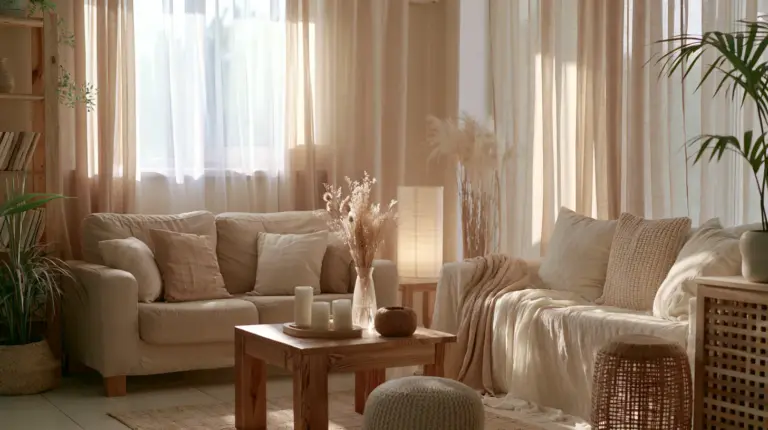
If you live somewhere warm, favor breathable linen throws over wool, sheer curtains that filter soft daylight, and rattan or cane furniture for natural texture without heaviness. Ceiling fans with warm-toned bulbs can replace some of the “fire glow” effect while keeping air moving.
The feeling of hygge — softness, warmth, calm — stays the same. Only the materials shift to match your climate.
Budget Tiers for Building a Hygge Living Room
You don’t need a full renovation to feel the shift. Here’s how the investment scales.
| Tier | Budget Focus | Example Additions |
|---|---|---|
| Low-cost | Textiles and light | Thrifted throw, warm bulbs, candles |
| Mid-range | Furniture pieces | Accent chair, wool rug, ceramic lamp |
| Premium | Full room upgrade | Bouclé sofa, custom lighting layers, built-in shelving |
Sustainable Hygge
Hygge and sustainability share the same root idea: slowing down and valuing what lasts.
Choose secondhand or thrifted wood furniture instead of flat-pack pieces. Look for natural-fiber textiles — wool, linen, cotton — over synthetic blends, since they age more gracefully and feel better against skin. A single vintage find often brings more warmth than several new items combined.
Family and Pet-Friendly Hygge
Cozy doesn’t have to mean fragile. Choose performance-weave fabrics that mimic linen or bouclé texture but resist stains, and layer a washable cotton throw over delicate upholstery for daily protection.
Opt for a low-pile wool rug rather than a shag style — it hides pet hair better and holds up under foot traffic while still feeling soft underfoot.
Day-to-Night Hygge Styling
A hygge living room should shift gently as the day does.
In daylight, let sheer curtains filter soft natural light and keep lamps off entirely. As evening falls, dim the overhead light first, then bring in lamps and candles gradually rather than flipping on every light source at once.
This small ritual — the slow transition from bright to warm — is often what makes a room feel truly lived-in rather than simply staged.
What Not to Do
A few common missteps quietly undo the hygge effect.
- Avoid over-styling shelves until they look like a showroom rather than a home.
- Don’t rely on cool-white bulbs; they flatten warmth instantly.
- Resist clutter creep — hygge is calm, not crowded.
- Skip glossy, cold materials like chrome or high-shine lacquer as focal pieces.
Keeping It Cozy: Maintenance Tips
A cozy room can slide into a cluttered one without a little upkeep.
Fold throws instead of leaving them bunched, rotate candles before they burn low and smoky, and shake out rugs weekly to keep natural fibers fresh. A cozy room still needs a rhythm of care to stay inviting rather than tired.
Quick Checklist: Building Your Hygge Living Room
- Choose warm-toned lighting layered across at least three sources
- Add natural materials: wood, wool, linen, ceramic
- Keep the palette earthy — oatmeal, sage, walnut, dusty blue
- Arrange furniture around one focal point with clear walking paths
- Layer at least three textures per seating area
- Add scent through candles or simmered spices
- Choose durable, natural fabrics if you have kids or pets
- Let the room shift gently from daylight calm to evening glow
- Avoid clutter, cold materials, and harsh overhead light
A Final Thought
A hygge living room isn’t finished when the last cushion is placed. It’s finished the first evening you sink into it, lamp glowing, blanket over your knees, and feel nothing left to fix.
That’s the quiet signature of a room built with care — not for how it photographs, but for how it holds you.
Frequently Asked Questions
What is a hygge living room?
A hygge living room is a space designed around warmth, comfort, and calm — using soft textures, warm lighting, and natural materials rather than trend-driven decor.
How do I make my living room feel more hygge?
Layer your lighting with warm bulbs and candles, add natural-fiber textiles like wool and linen, and arrange seating around one cozy focal point such as a window or fireplace.
What colors are best for a hygge living room?
Warm neutrals work best — oatmeal, soft beige, dusty blue, and sage green — paired with natural wood tones for grounding.
How do I make a small living room hygge?
Choose a loveseat over a full sofa, use a round coffee table for better flow, and hang curtains high and wide to soften the space without crowding it.
How do I decorate a hygge living room on a budget?
Start with textiles and lighting — a thrifted throw, warm-toned bulbs, and a few candles create most of the hygge effect before any furniture changes are needed.