
Table of Contents
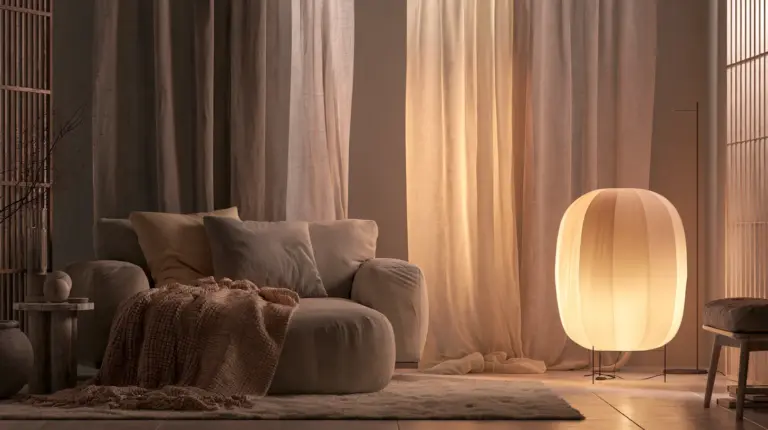
There’s a particular kind of quiet that settles into a room when the bookshelves are done right. Warm wood, soft light pooling across worn spines, a ceramic vase catching the afternoon sun. It feels lived-in, not staged.
At ERYLIN, we believe a bookshelf should feel like a small autobiography of your home. It holds what you love, lit the way you’d light a favorite corner, textured the way your favorite sweater feels.
Most guides to living room bookshelf ideas stop at shelf types — floating, built-in, ladder, corner. That’s only half the story. The real magic is in what you do with the shelf once it’s up.
This guide walks you through the styling system, the lighting strategy, and the small-space solutions that turn a bookshelf from clutter into comfort. Consider it your formula for cozy living room bookshelf decor that feels warm, intentional, and entirely yours.
What Makes a Bookshelf Feel Genuinely Cozy
A cozy shelf isn’t about having more things. It’s about giving each thing room to breathe.
The pages that rank well online show you dozens of shelf types. What they rarely explain is the feeling behind a shelf that makes you want to linger near it. That feeling comes down to three ingredients working together: warm light, layered texture, and intentional negative space.
Skip any one of these, and a shelf reads as either sterile or cluttered. Get all three right, and it becomes the quiet anchor of the room.
The One-Third Styling Rule
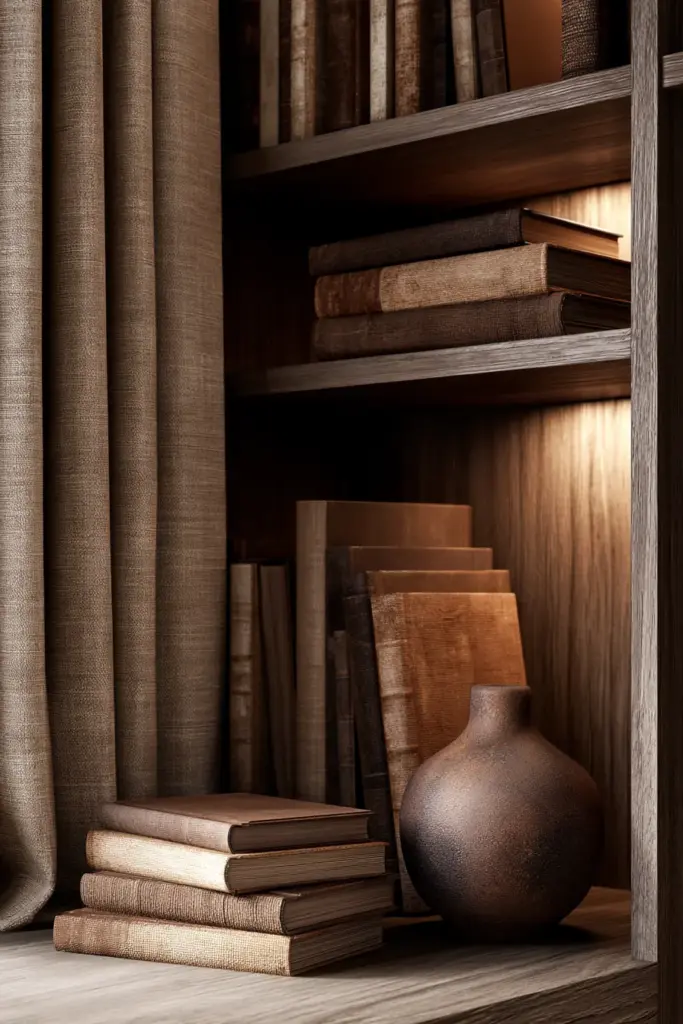
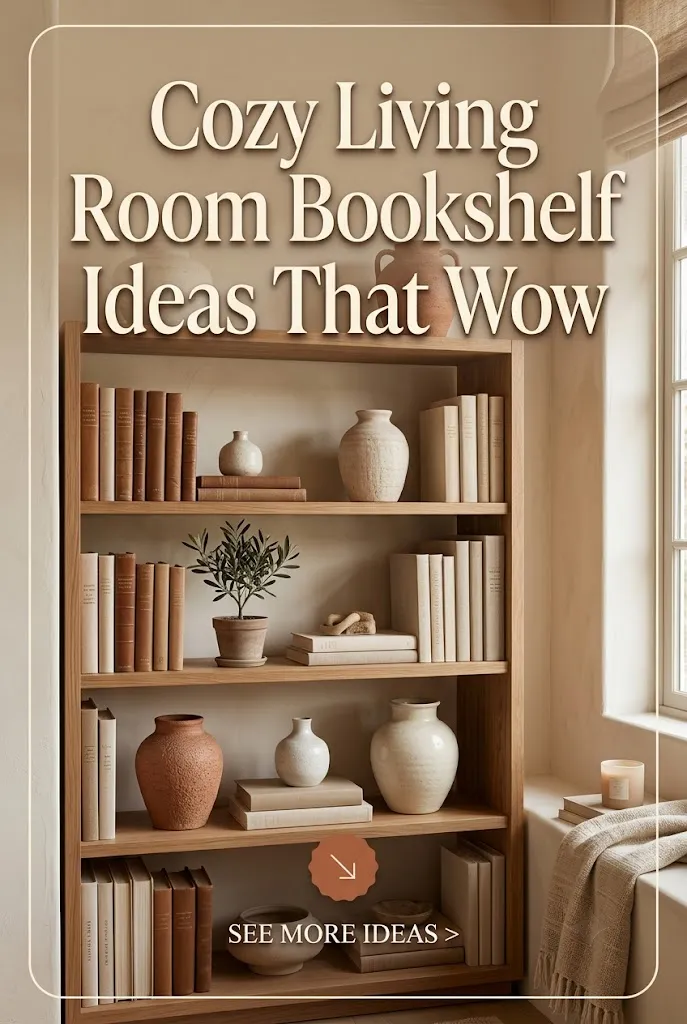
Here’s a simple formula: fill roughly one-third of each shelf with books, one-third with decorative objects, and leave one-third open.
That open space is doing more work than it looks like. It gives the eye somewhere to rest, and it keeps the whole wall from feeling like a wall of noise.
Try grouping books in short stacks of three to five, then leaning a small framed print against the stack instead of standing every book upright. It instantly feels more relaxed, more like a shelf someone actually uses.
What to Put on Shelves Besides Books
Books alone can start to look flat, no matter how beautiful the covers are. The richest shelves mix in a few other elements that add depth without adding clutter.
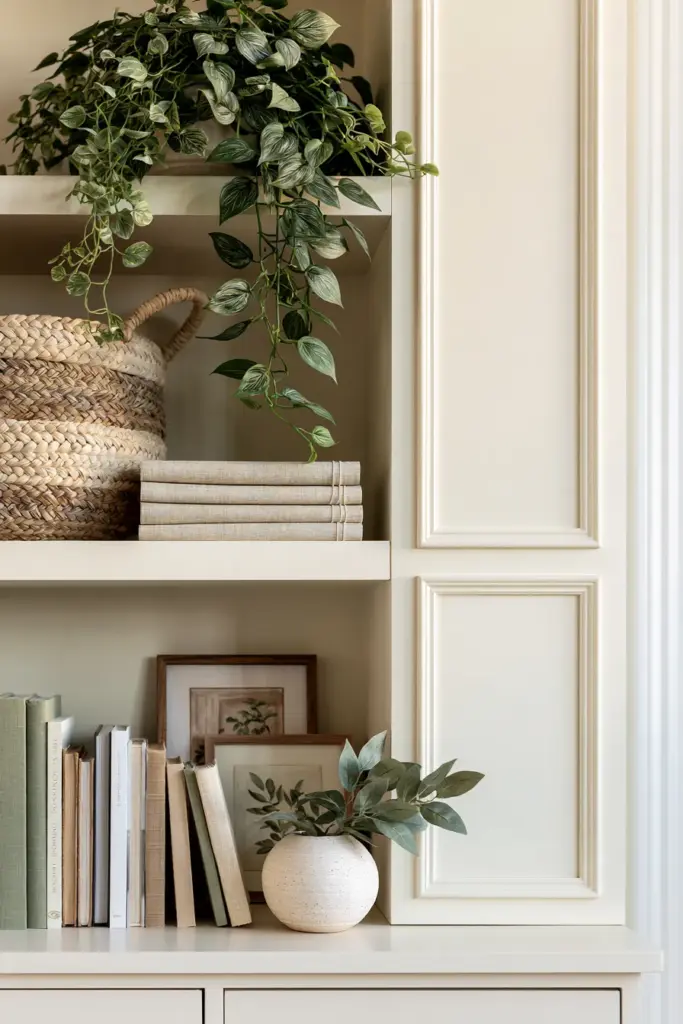
- Ceramic vessels in warm, matte glazes — cream, terracotta, sage
- A single trailing plant, like pothos or ivy, kept slightly away from open books to avoid overwatering damage
- Woven baskets for tucking away remotes, chargers, or coasters
- A small stack of linen-bound journals for texture variation
- One or two framed photos, leaned rather than hung upright
- A low, unscented candle for evening ambience
- A small dish or tray for keys, glasses, or everyday clutter
That last point matters more than most lists admit. A shelf that has to hide from real life stays pristine for about a week. A shelf that makes room for real life stays beautiful for years.
How to Style a Bookshelf Without Making It Look Cluttered
Clutter happens when every surface is full and every item competes for attention. The fix isn’t fewer things — it’s better grouping.
Group in Odd Numbers
Objects arranged in threes or fives read as curated. Pairs and even rows tend to look accidental, like they landed there rather than were chosen.
Color-Code with a Light Hand
Color-coded books can look striking, but full rainbow spines often feel more like a stunt than a home. Instead, group by warm-tone spines — cream, walnut, oat, muted green — and let a few bold colors act as accents rather than the whole show.
Vary Height, Never Symmetry
Uneven heights create visual rhythm. Stack some books flat, stand others upright, and let a taller vase or lamp break the line entirely. Perfect symmetry is what makes a shelf feel like a showroom instead of a home.
Layer Texture Intentionally
Wood grain against linen spines against a ceramic glaze creates the tactile richness that photographs and screens can’t quite capture, but your hands notice instantly. Reach for a woven basket beside a smooth stone bookend, and the shelf starts to feel three-dimensional rather than flat.
Lighting Strategy for Warm, Ambient Shelves
Lighting is the single most under-discussed part of shelf styling, and it’s often the difference between a shelf that photographs well and one that actually feels good to sit near in the evening.
| Lighting Type | Best For | Warm Effect |
|---|---|---|
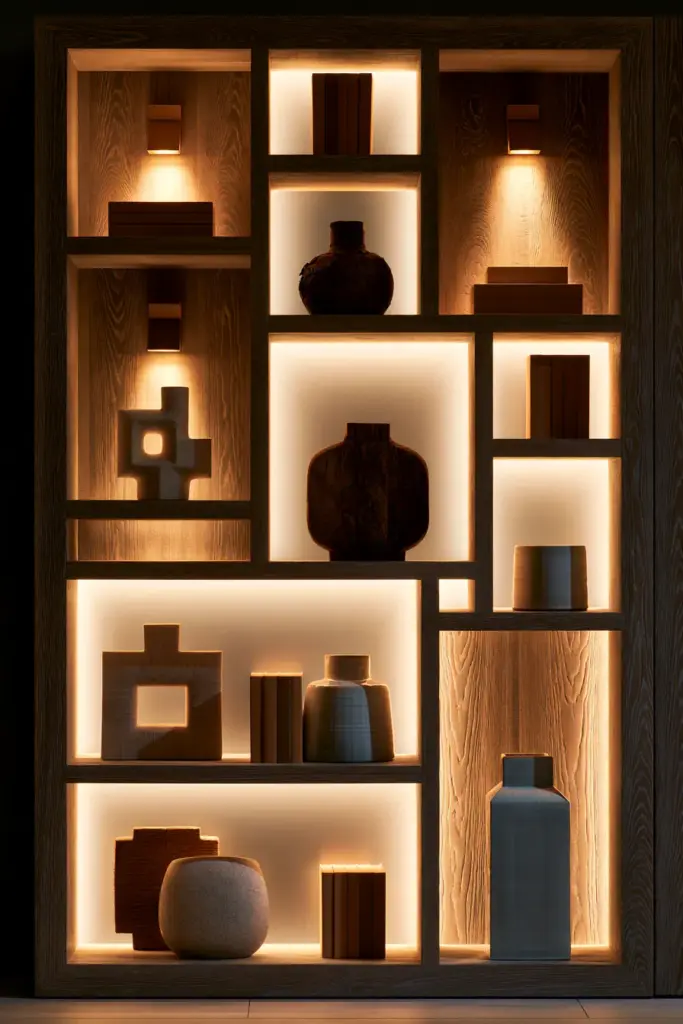
| Picture lights | Built-ins, art-forward shelves | Soft downward glow, gallery feel |
| LED strip lighting | Floating shelves, glass-fronted units | Even ambient wash, modern-cozy |
| Small table lamps | Open shelving with a reading corner | Warm pooled light, intimate |
| Battery puck lights | Rental-friendly, no-drill shelves | Flexible warm accents |
| Candles | Any shelf, evening use | Flicker and scent, softest ambience |
Choose bulbs in the 2700K–3000K range wherever possible. Anything cooler starts to feel clinical rather than cozy furniture styling should feel. If you’re exploring lighting ideas for the rest of the room, let your shelf lighting echo the same warm tone so the whole space feels connected rather than patched together.
Best Shelf Depth and Size for Small Living Rooms
Small rooms need shelving that earns its footprint. Depth and height both matter more than most people expect.
A shelf depth of 8 to 10 inches works well for most paperbacks, decorative objects, and small plants without eating into walking space. If you’re storing larger art books or a record collection, closer to 12 inches gives you breathing room without overwhelming a narrow living room.
Height is trickier. Shelving that runs to the ceiling can make a small room feel taller, but only if the top shelves stay lightly styled — a single vase, a trailing plant, negative space. Fully loaded top shelves in a small room start to feel heavy and closed-in rather than expansive.
Small-Space Placement Ideas
- Behind-sofa shelving units that double as a room divider
- Under-window shelves that use dead space without blocking light
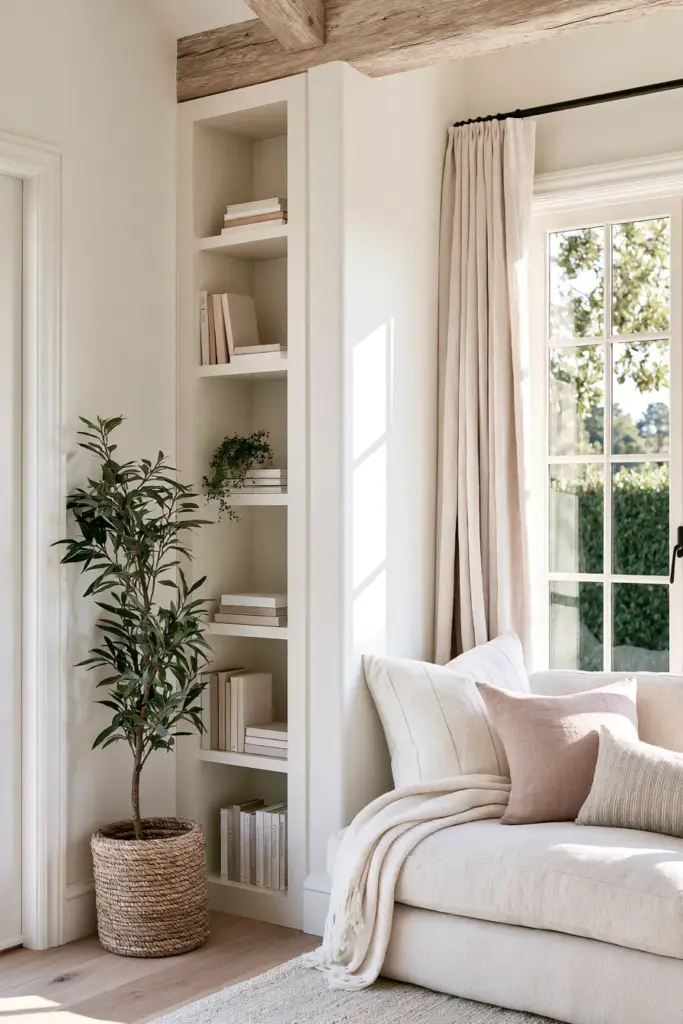
- Narrow vertical units tucked into corners
- Fireplace flanking shelves that frame the mantel
How to Create a Reading Nook with Bookshelves
A reading nook doesn’t need a whole room. It needs a shelf, a chair, and light in the right place.
Position a low bookshelf beside a comfortable armchair, angled slightly toward a window if natural light allows. Add a small side table for a mug and a soft throw, then layer in a warm lamp at shoulder height when seated, so the light falls onto the page rather than overhead.
Keep the shelf within arm’s reach stocked with what you’re actually reading, rather than your whole collection. A nook feels cozy because it’s edited, not because it’s complete.
Cozy Bookshelf Styling by Aesthetic
Modern Rustic
Lean into raw walnut or oak shelving, black metal brackets, and warm linen textures. Keep decor sparse — a single ceramic bowl, one plant, stacked books in earth tones.
Japandi-Inspired
Favor pale wood, muted neutrals, and a strong sense of negative space. Fewer objects, more breathing room, and one intentional focal piece per shelf.
Layered Cozy Maximalist
This style embraces fuller shelves, but still follows the one-third rule within each cluster. Mix patterned textiles, brass accents, and warm-toned art in tight groupings, then let a few open shelves balance the density.
Rental-Friendly and Budget Bookshelf Ideas
You don’t need built-ins to get a built-in look. No-drill leaning shelves, modular cube systems, and freestanding ladder shelves all create the same warm, layered effect without touching a wall.
Thrifted ceramics, secondhand frames, and a single well-chosen plant often do more for warmth than an entire set of new decor. Cozy is a styling choice, not a budget.
How Often Should You Restyle Your Shelves
A light refresh every season keeps a shelf feeling current without becoming a chore. Swap in seasonal texture — a chunkier throw-adjacent object in winter, lighter ceramics in summer — rather than overhauling the whole shelf.
If a shelf starts to feel stale, it’s usually not that it needs more. It’s that the same three groupings have been sitting untouched for too long. Move one object to a different shelf, and the whole wall feels new again.
Cozy Bookshelf Checklist
- Fill each shelf roughly one-third books, one-third decor, one-third open space
- Group objects in odd numbers for a curated feel
- Layer at least two textures per shelf: wood, linen, ceramic, or woven fiber
- Choose warm bulbs (2700K–3000K) over cool white lighting
- Keep one shelf lightly styled for everyday use — remotes, keys, chargers
- Vary height and avoid full symmetry
- Add one trailing plant, positioned away from open books
- Restyle lightly each season rather than overhauling all at once
A Final, Softer Thought
A bookshelf is never really finished, and that’s the beauty of it. It grows the way a home grows — one new book, one found object, one quiet evening at a time.
Style yours with warmth rather than perfection, and it will hold more than your favorite reads. It will hold the feeling of a room you never want to leave.
FAQs
What should I put on bookshelves besides books?
Ceramic vessels, a trailing plant, woven baskets, framed photos leaned rather than hung, and a small tray for everyday items like keys or chargers all add warmth without clutter.
How do I style a bookshelf without making it look cluttered?
Follow the one-third rule — books, decor, and open space in roughly equal measure — and group objects in odd numbers rather than filling every inch.
What bookshelf depth is best for a small living room?
Around 8 to 10 inches works well for most books and decor; go closer to 12 inches only if you’re storing larger art books or records.
How do I create a reading nook with bookshelves?
Pair a low shelf with a comfortable chair near natural light, add a side table and warm shoulder-height lamp, and keep the nearest shelf stocked only with what you’re currently reading.
How often should I restyle my bookshelves?
A light seasonal refresh — swapping textures or moving a few objects — keeps shelves feeling current without requiring a full overhaul.