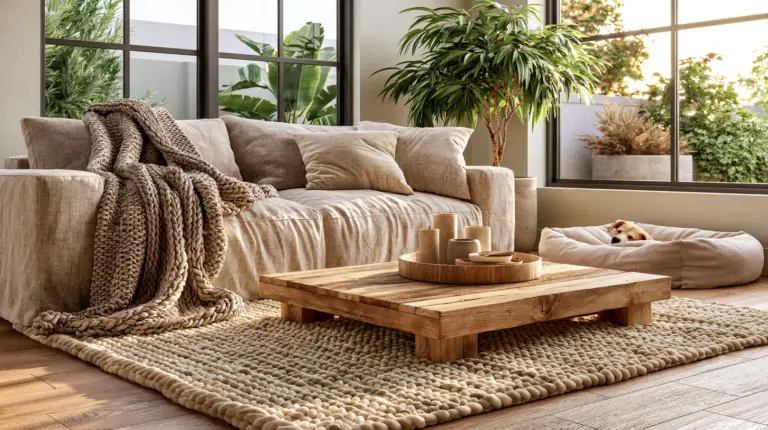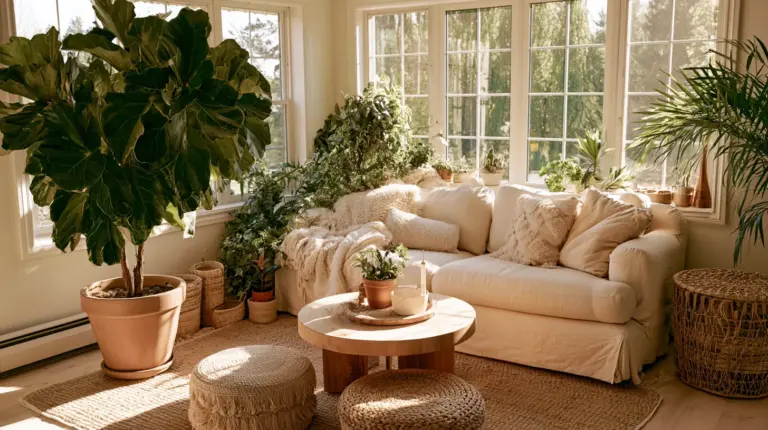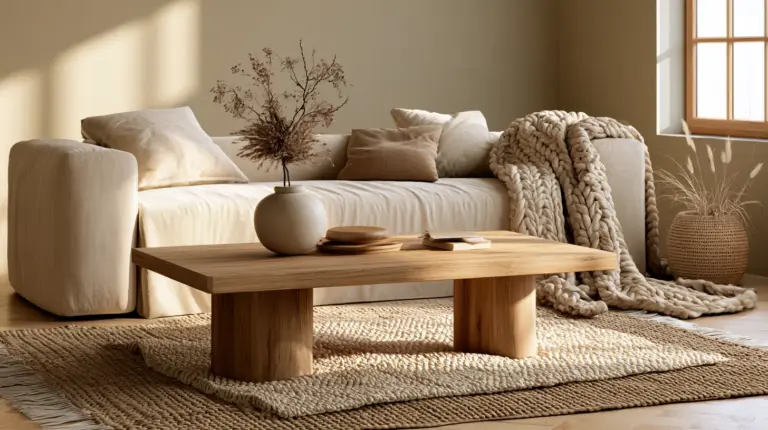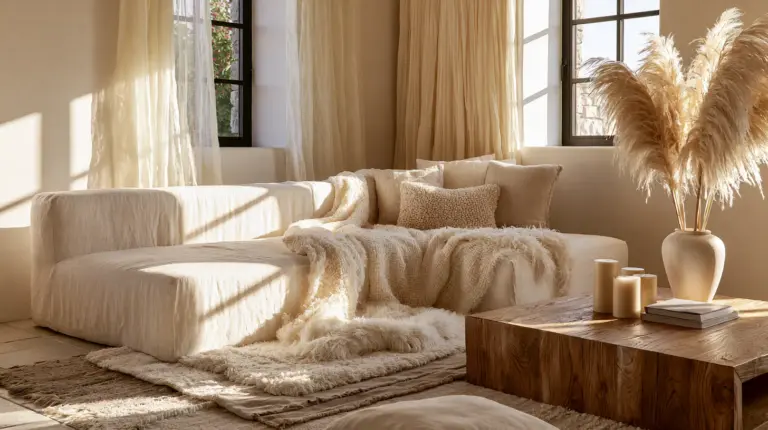

Table of Contents
Walk through your own front door tonight and pause for a second. What do you feel first — the light, the scent, the softness underfoot?
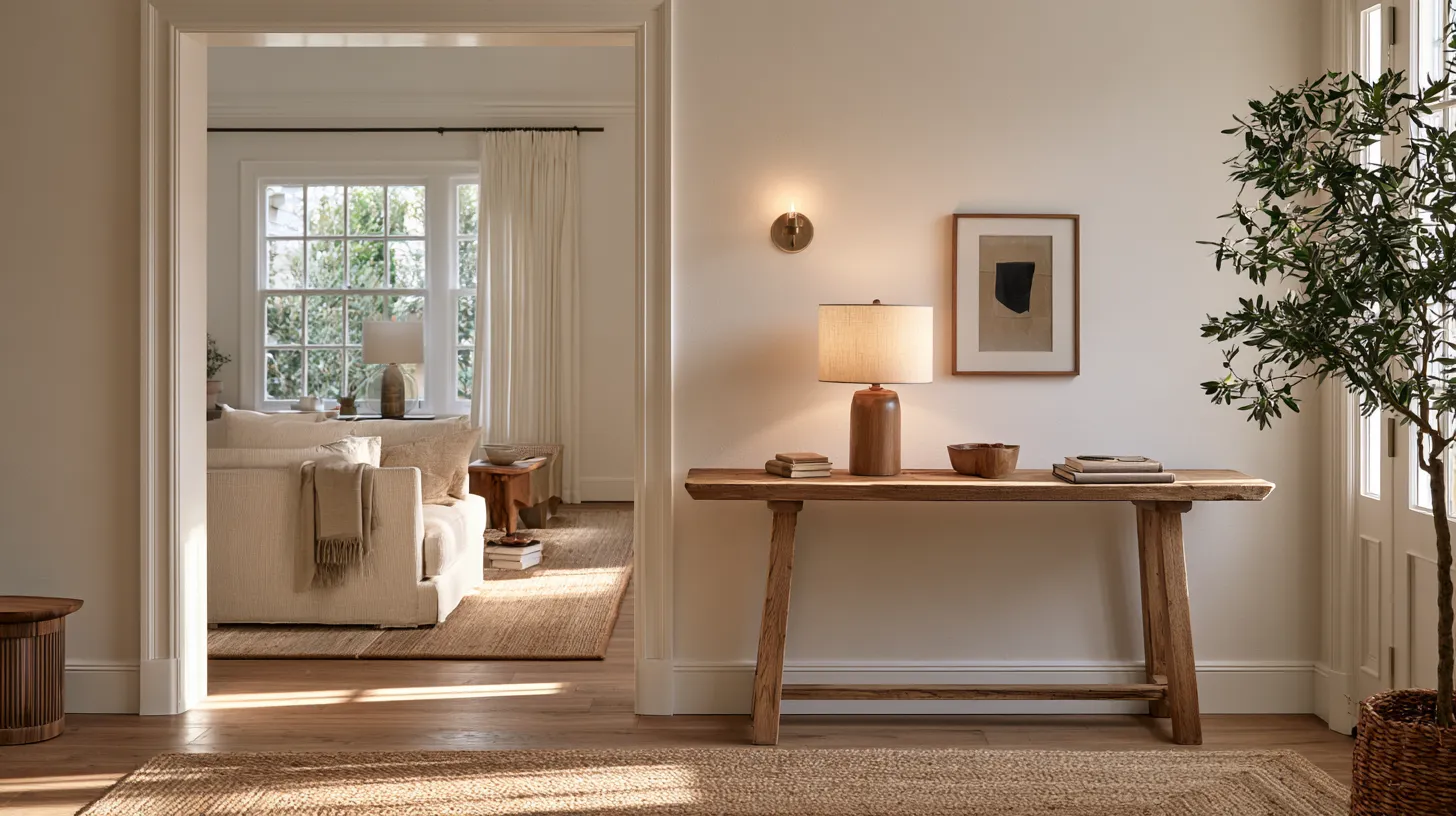
That first breath inside your home sets the tone for everything after it. A cozy entryway isn’t a separate project from your living room; it’s the opening line of the same story.
At ERYLIN, we believe the space between “outside” and “settled in” deserves as much care as the sofa you sink into. Done right, it whispers welcome home before you’ve even set down your bag.
This guide skips the generic mood board and gets specific: real measurements, real materials, and real solutions for making your entryway melt into your living room — whether you have six square feet or an open-plan dream.
Why the Entryway-to-Living-Room Transition Matters
Most homes treat the entryway as an afterthought — a place to drop keys and keep walking. But this transition zone shapes how the entire home feels.
When your entry and living room share a visual language, the whole space breathes easier. When they clash, even a beautifully decorated living room can feel disjointed.
The goal isn’t a hard boundary. It’s a soft handoff — one that guides the eye and the body naturally from door to hearth.
Best Layout Rules for Small and Open-Plan Homes
Layout is where most cozy-entryway advice gets vague. Let’s fix that with real numbers you can use today.
Small Entryway Measurements
Tight entries need discipline, not deprivation. A few working rules:
| Element | Recommended Size | Why It Matters |
|---|---|---|
| Console table depth | 12–16 inches | Keeps walking path clear |
| Bench seat depth | 14–18 inches | Enough for sitting, not blocking |
| Runner rug width | 24–30 inches | Fits most hallway widths |
| Walking path clearance | Minimum 30 inches | Comfortable two-way passage |
| Coat hook height | 60–66 inches | Reachable for most adults |
These aren’t arbitrary. A console that’s too deep turns a welcoming entry into an obstacle course.
Open-Plan Zoning Without Walls
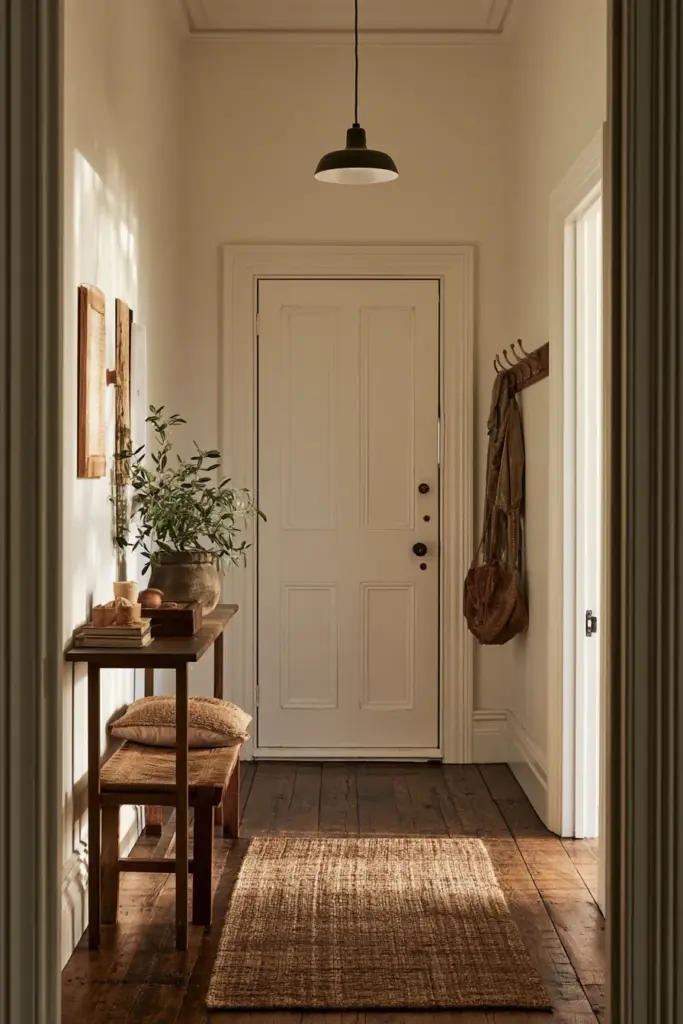
If your entryway flows directly into the living room, you don’t need drywall to define it — you need intention.
- Anchor the entry with a rug boundary that stops where the living room rug begins, leaving a few inches of visible flooring between them.
- Use a console table or slim bookshelf as a soft divider, low enough to keep sightlines and light open.
- Let an archway or ceiling beam, if you have one, do the visual work of separating without enclosing.
- Shift the flooring texture or rug pattern subtly — same tone family, different weave — so the eye registers a change without a jolt.
The trick is layering cues — rug, furniture, light — rather than relying on one dramatic gesture.
Storage That Still Looks Beautiful
Function and beauty aren’t opposites here. They’re the same design decision, seen from two angles.
The Daily Drop Zone
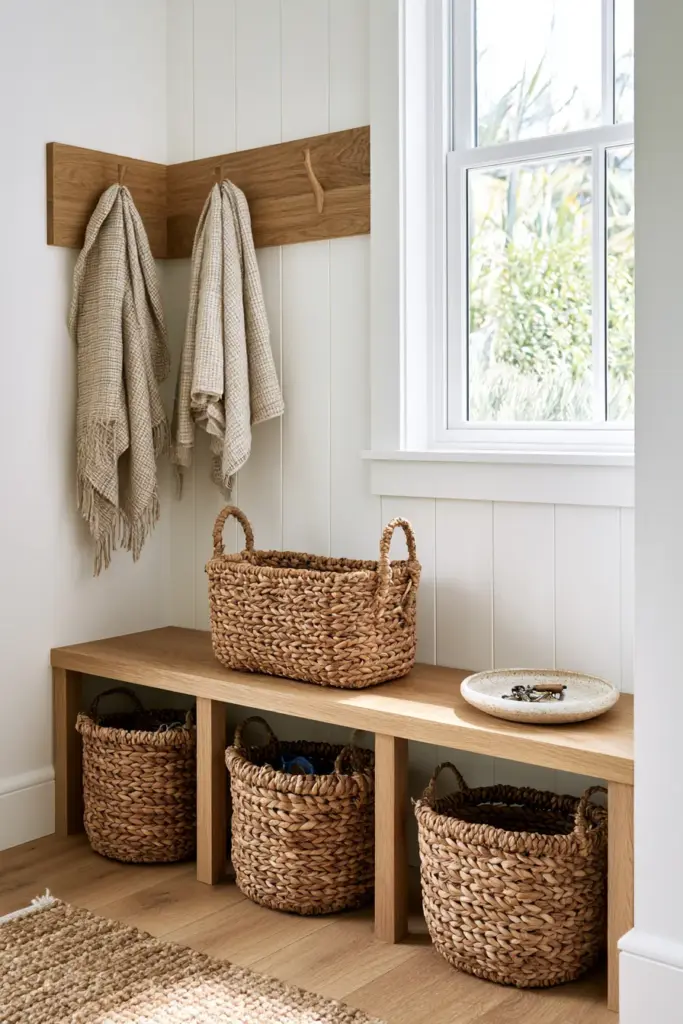
Every cozy entryway needs a system for the things that pile up. Build yours around four zones:
- Shoe zone — a low, slatted wood tray or woven basket, tucked under the bench.
- Bag zone — a single sturdy hook or a small bench-side hamper.
- Key and mail zone — a shallow ceramic or wood tray on the console, so nothing lands loose on the surface.
- Coat zone — hooks at 60–66 inches for adults, with a lower row around 40 inches for kids or a pet leash.
Keep the palette consistent — woven, wood, linen — so storage reads as styling, not clutter management.
Rental-Friendly Ideas
Renting doesn’t mean skipping the cozy factor. These additions are fully reversible:
- Peel-and-stick wall molding for instant architectural warmth.
- Removable wallpaper on a single accent wall near the door.
- No-drill hook strips and command-style shelving for coats and bags.
- A large area rug layered over existing flooring to soften sound and sightlines.
Small, reversible choices can carry the same emotional weight as permanent renovations.
Lighting, Rug, and Mirror Placement
These three elements do more to create warmth than almost anything else in the room — when they’re placed with care.
Lighting Temperature and Layering
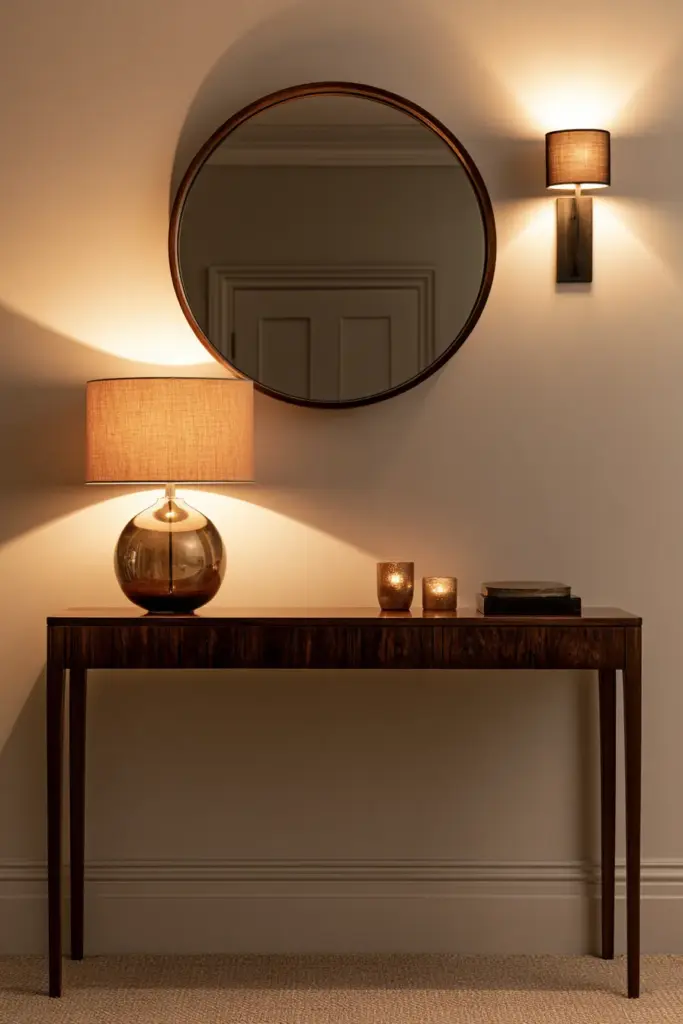
Harsh overhead light is the fastest way to undo a cozy entryway. Instead, layer your lighting ideas the way you would layer a sweater:
- Choose bulbs in the 2700K–3000K range — warm white, never cool or daylight-toned.
- Add a table lamp on the console for ambient glow at eye level.
- Use a wall sconce or pendant near the door for welcoming light without glare.
- Reserve any overhead fixture for functional moments only, dimmed low the rest of the time.
Mirror Placement
A well-placed mirror doesn’t just check your outfit — it multiplies light and depth.
Hang it opposite a window or light source, roughly 5–10 inches above your console table. This bounces natural light deeper into the space and makes a narrow entry feel noticeably wider.
Rug Placement
Your entry rug should sit just inside the door, allowing the door to swing freely over it, and stop short of your living room rug by a few inches. That small visible gap is what tells the eye “new zone” without a wall in sight.
Style Variations: Cozy, Modern, Japandi, Eclectic
Cozy doesn’t mean one look. Here’s how the same bones adapt across aesthetics.
Modern Rustic Elegance
Think warm wood tones, matte black hardware, and a boucle bench. Layer a chunky knit throw over a simple bench, and let a single dried-branch arrangement stand in for florals.
Japandi
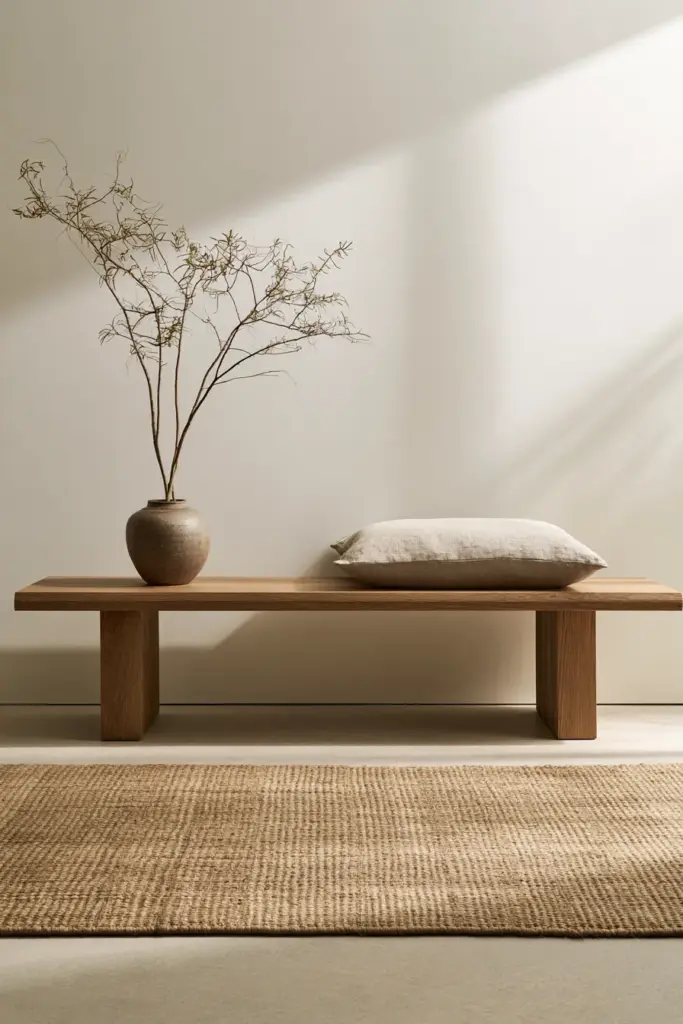
Pare it down to natural oak, linen, and negative space. A low wooden bench, one ceramic vase, and a woven rug in undyed tones say everything a Japandi entry needs to say.
Eclectic
Mix eras freely — a vintage brass hook rail beside a modern bench, a flea-market mirror above a clean-lined console. The warmth comes from personality, not matching sets.
Coastal-Cozy
Whitewashed wood, jute rugs, and linen in soft sand tones. Add a woven basket for shoes and a single glass vessel with dried grasses.
Seasonal Styling for the Transition Zone
Your entryway can shift with the seasons without a full redecoration.
- Fall and winter: Add a wool throw over the bench, swap in a deeper rug tone, and light a warm-scented candle — cedar or clove — near the door.
- Spring and summer: Lighten the rug, add a small vase of greenery on the console, and swap heavy textiles for linen.
A seasonal refresh takes an afternoon and changes how the whole entry feels for months.
Color Psychology for a Calm, Not Dull, Entry
Warm neutrals form the base — think oatmeal, clay, warm white. But a flat neutral palette can tip into lifeless if you stop there.
Add one grounding, deeper tone — rust, olive, or espresso — through a single piece: a bench cushion, a vase, or a framed piece of cozy furniture styling. That contrast keeps the calm from becoming beige.
Material Durability for High-Traffic Entries
Entryways take more abuse than any other room in the house. Choose accordingly:
- Washable wool or synthetic-blend rugs instead of delicate natural fiber underfoot at the door.
- Scuff-resistant, matte-finish paint on entry walls, which hides marks better than eggshell.
- Easy-clean boucle or performance fabric on any bench or seating.
- Sealed or oiled wood for consoles and benches that meet wet shoes and umbrellas daily.
Common Mistakes and Fixes
- Mistake: Overhead lighting only. Fix: Add a lamp and sconce for layered warmth.
- Mistake: Console too deep for the space. Fix: Stick to 12–16 inches in tight entries.
- Mistake: No visible boundary between entry and living room. Fix: Use a rug gap or low furniture divider.
- Mistake: Delicate, hard-to-clean materials at the door. Fix: Choose washable, scuff-resistant options.
- Mistake: Ignoring daily function. Fix: Build in a shoe, bag, key, and coat zone from day one.
Shopping and Styling Checklist
- Console table, 12–16 inches deep
- Warm-white bulbs (2700K–3000K) for lamp and sconce
- Washable entry rug with a visible gap from the living room rug
- Mirror hung opposite natural light
- Woven basket or tray for shoes
- Hook rail at 60–66 inches
- One grounding accent color, used sparingly
- Seasonal textile swap (wool throw / linen runner)
A Soft Landing, Every Time You Walk In
A cozy entryway isn’t about a perfect photograph. It’s about the small, quiet relief of stepping inside and feeling your shoulders drop.
When your entry and living room speak the same language — in warmth, in light, in texture — your whole home feels like one continuous exhale.
That’s the feeling ERYLIN designs for: not a showroom, but a place that holds you the moment you walk through the door.
FAQs
How do you make an entryway feel cozy?
Layer warm lighting, natural textures like wood and wool, and a washable rug, then add one personal touch — a scent, a photo, a favorite vase — that makes it feel like yours.
How do you decorate an entryway into a living room?
Use a rug boundary, a low console or shelf as a soft divider, and matching warm tones so the two spaces share a visual thread without a hard wall between them.
What makes a living room feel cozy?
Warm-toned lighting, layered textures like linen and boucle, and furniture arranged to encourage conversation rather than face a blank wall.
How do you make a small entryway functional?
Stick to slim furniture — 12–16 inch consoles, narrow benches — and build in dedicated zones for shoes, keys, and coats so nothing piles up on the floor.
How do you separate an entryway from a living room without a wall?
Layer visual cues: a rug that stops short of the living room rug, a console or slim shelf as a low divider, and a subtle shift in flooring or lighting tone.