
Table of Contents
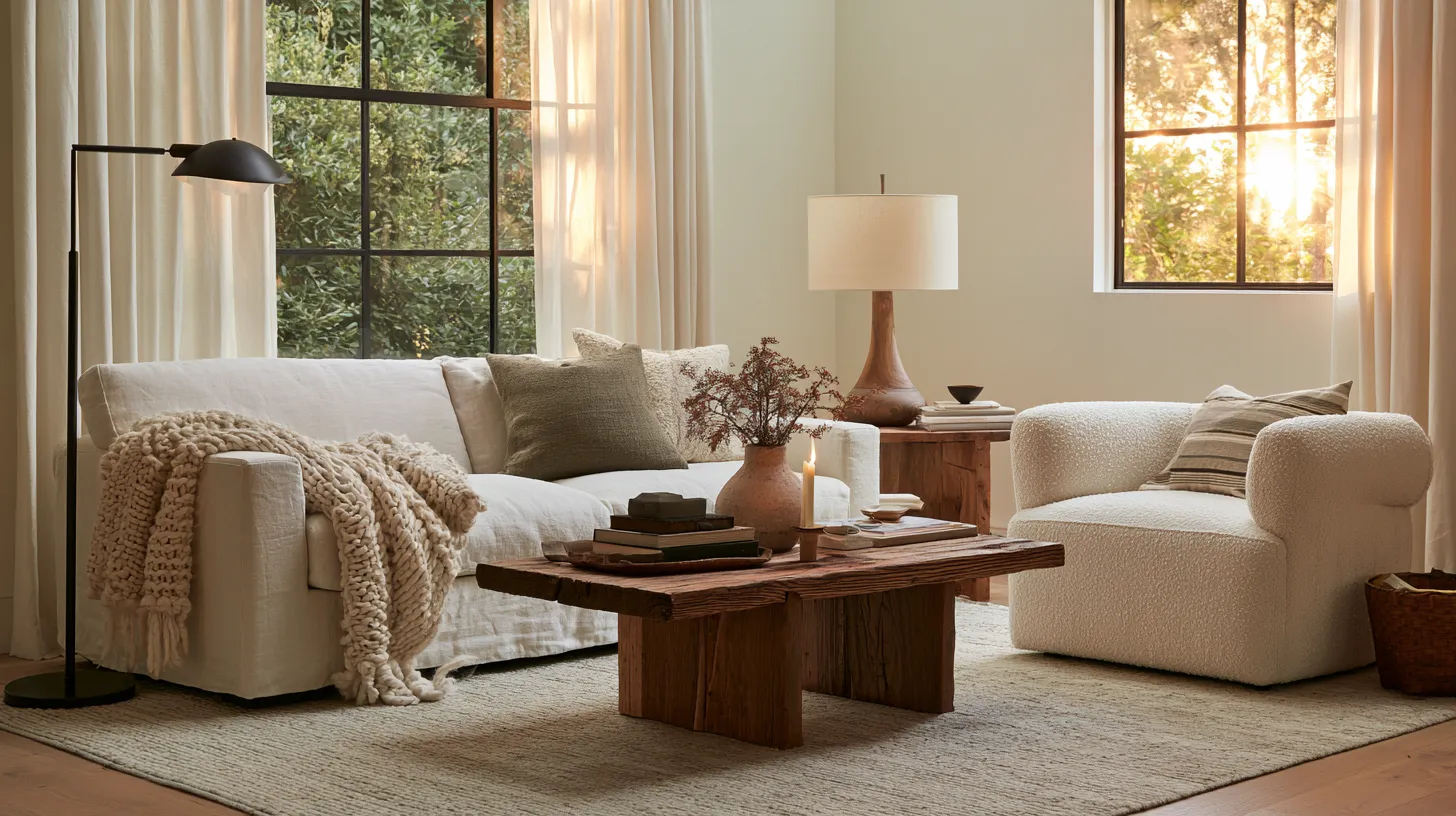
There’s a quiet reason some living rooms feel like a held breath let out slowly, while others — even beautifully furnished ones — feel oddly off. It usually isn’t the color palette or the price tag. It’s scale and proportion, the invisible math behind every space that feels right.
At ERYLIN, we believe coziness isn’t an accident. It’s a rhythm — of furniture sizes, light layers, and soft textures working in harmony with your room’s own dimensions.
This guide walks you through that rhythm in plain, practical terms. No design-school jargon, just the real measurements and sensory details that turn an empty room into a warm one.
By the end, you’ll know exactly how to size your sofa, rug, coffee table, and lighting so your living room feels intentional, comfortable, and unmistakably yours.
What Scale and Proportion Actually Mean (In Plain Language)
Scale is how a piece relates to the room around it — is that armchair too big for the corner, or does it fit like it was always meant to be there. Proportion is how pieces relate to each other — the sofa against the coffee table, the lamp against the side table, the art against the wall.
Think of your living room as a conversation. Scale is whether each guest fits comfortably in the room. Proportion is whether they’re all speaking at the same volume.
Get both right, and a space feels effortless. Get either wrong, and something feels itchy — even if you can’t name why.
The Cozy Living Room Version of the Classic Scale Rules
Most design articles stop at theory. We’re translating it into a cozy-specific action plan, because a technically “correct” room can still feel cold if warmth isn’t built into the sizing itself.
The Two-Thirds Rule, Softened for Comfort
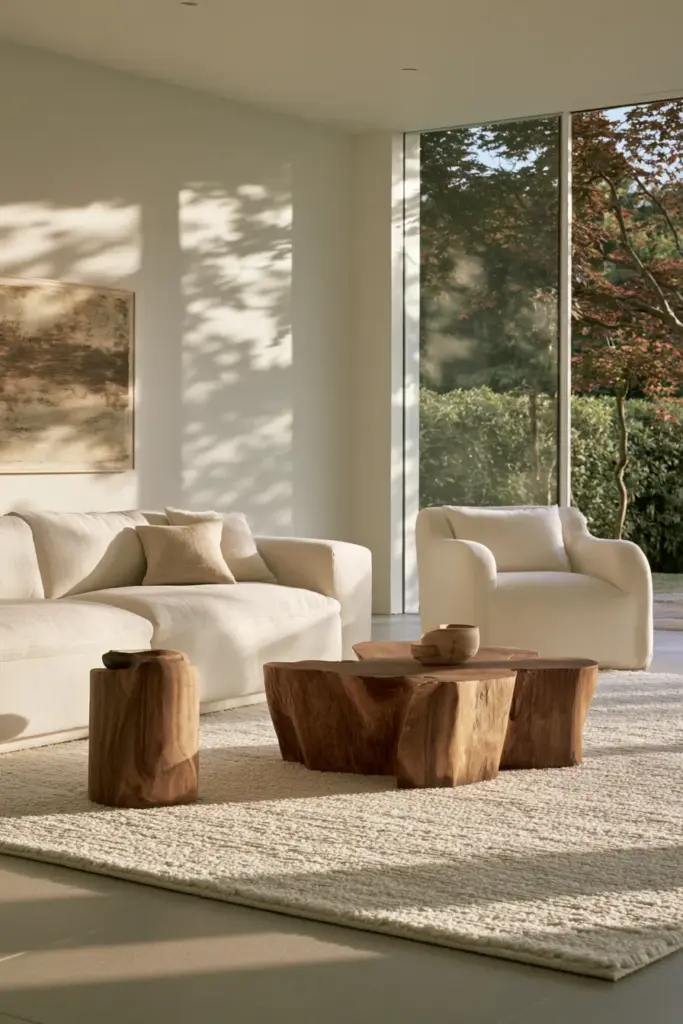
The classic rule says a piece should occupy about two-thirds the length of what it sits against — your rug should cover two-thirds of the floor, your art two-thirds the width of your sofa. For coziness, lean toward the fuller end of that ratio rather than the minimum.
A slightly larger rug or a slightly wider gallery wall reads as generous rather than sparse. In a cozy room, fullness — not emptiness — is often the feeling you’re chasing.
Exact Measurements for a Cozy, Well-Scaled Room
Here are the sizing relationships that keep a warm living room feeling grounded rather than cluttered or bare.
| Element | Cozy-Scale Guideline |
|---|---|
| Rug | Front legs of all seating on the rug, minimum; ideally all four legs |
| Sofa depth | 36–40 inches for a relaxed, sink-in feel |
| Coffee table height | Within 1–2 inches of sofa seat height |
| Coffee table distance | 14–18 inches from sofa for easy reach |
| Lamp height | Shade should sit at eye level when seated, roughly 58–62 inches total |
| Art above sofa | 6–12 inches above the sofa back, width 2/3 of sofa length |
| Curtains | Hung close to the ceiling, pooling slightly at the floor |
| Side table | Same height (or slightly lower) than the sofa arm |
These aren’t rigid laws. They’re a starting rhythm you can soften once the bones of the room feel balanced.
Texture Scale: The Missing Ingredient Most Guides Skip
Here’s what most competing articles miss entirely — texture changes how large or small something feels, independent of its actual size. This is where true coziness lives.
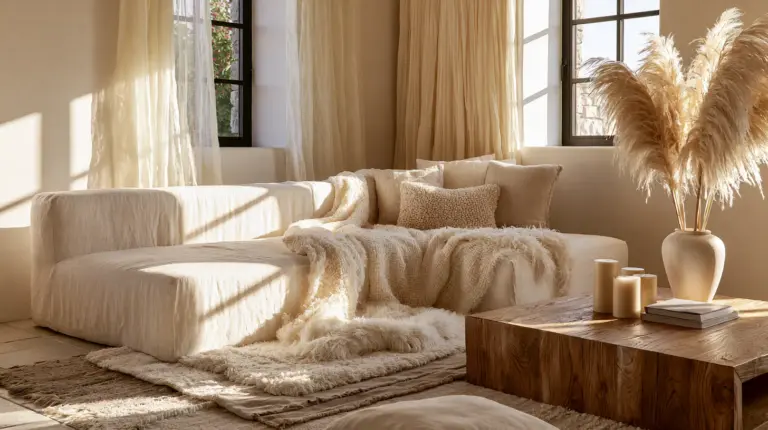
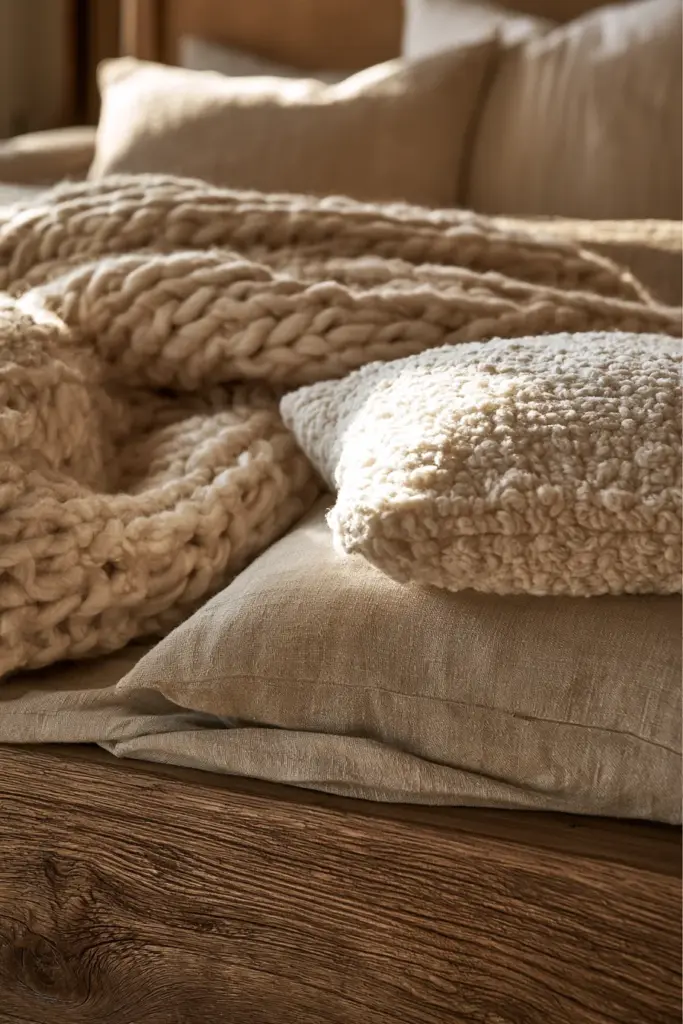
A chunky knit throw reads visually heavier than a flat linen one, even at the same dimensions. Boucle upholstery softens a sofa’s edges, making a large piece feel approachable rather than imposing.
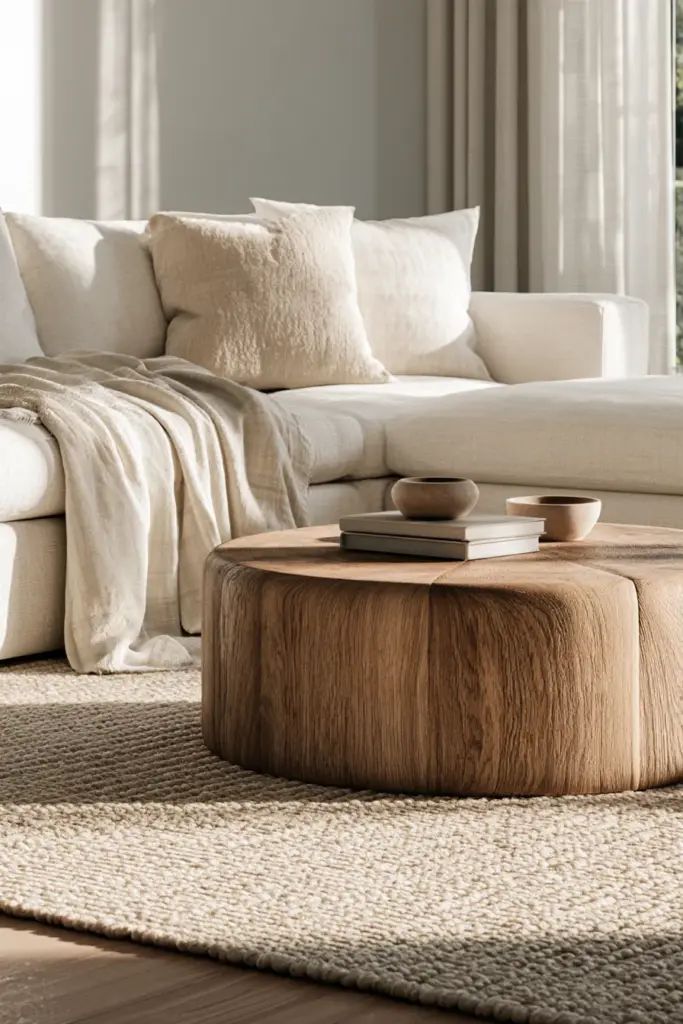
Mix a few textures at different weights — nubby wood grain, smooth ceramic, nubby wool — and the room gains depth without gaining clutter. This is the difference between a room that looks staged and one that feels lived in.
How Texture Corrects Visual Weight
If a piece feels too large for its spot, a lighter, looser texture — linen, rattan, unlacquered wood — helps it recede. If a piece feels too small or lost, a denser texture — velvet, boucle, heavy wool — gives it visual gravity to anchor the space.
Lighting Layers Change Perceived Proportion
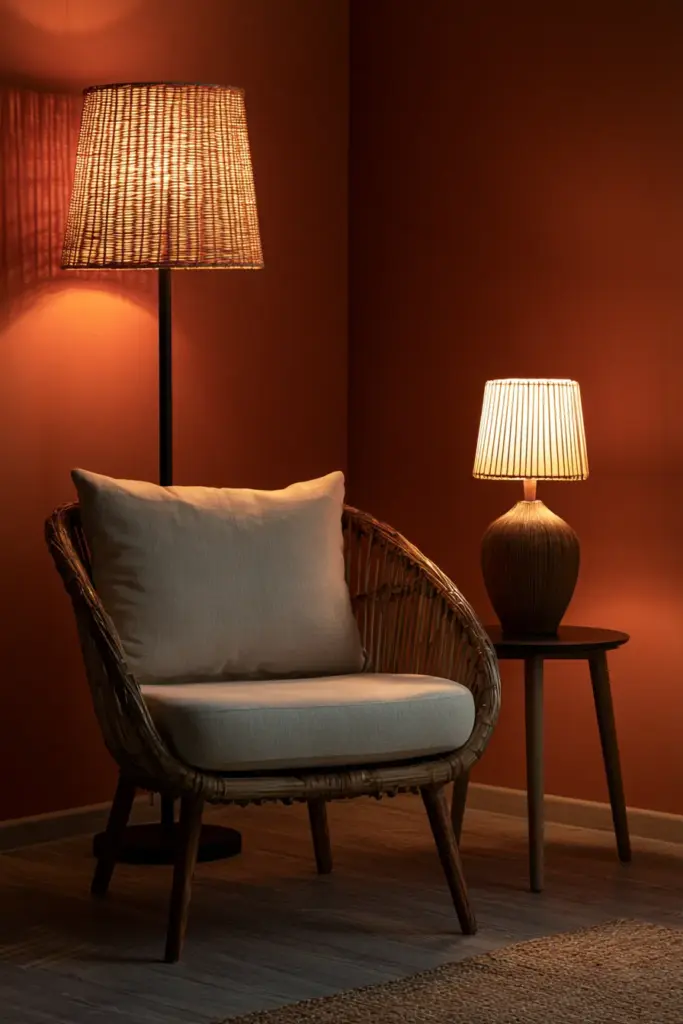
Lighting is proportion’s quiet partner. A single overhead fixture flattens a room and makes furniture feel scattered; layered lighting gives each zone its own sense of scale.
Build three layers: ambient light for the whole room, task light for reading corners, and accent light for warmth after dark. Our guide to lighting ideas walks through exact placements for each layer if you want to go deeper.
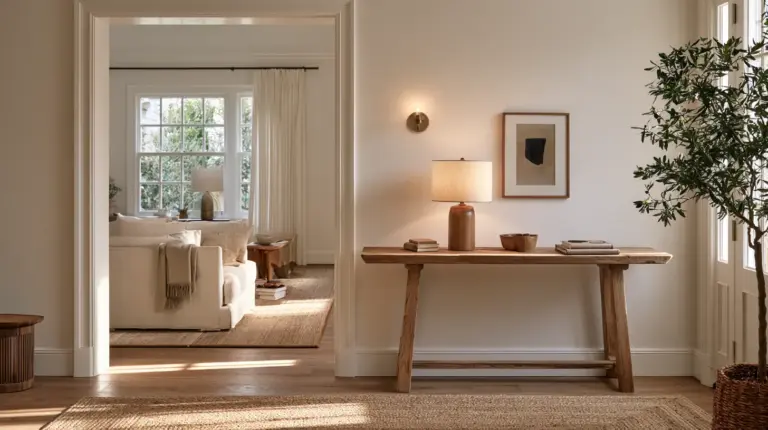
A floor lamp beside an armchair, a table lamp on a console, and a dimmed overhead fixture together do more for coziness than any single “statement” light ever could.
Soft Visual Balance: Pillows, Throws, and Curtains
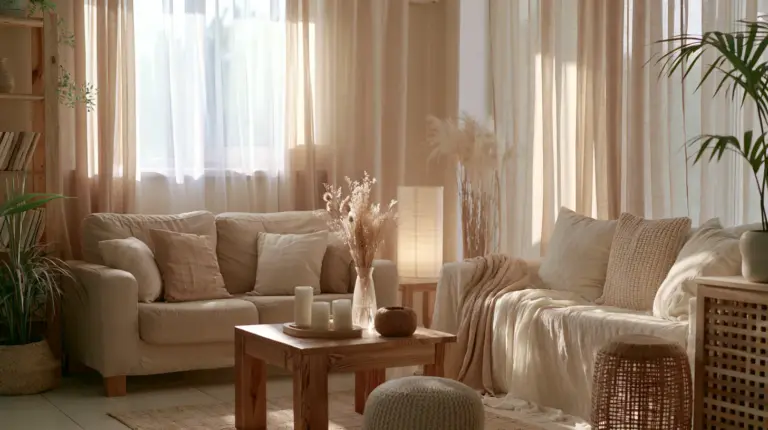
Small textiles carry more proportional weight than people expect. A pair of substantial pillows on a sofa reads as intentional; three mismatched, undersized ones read as an afterthought.
Curtains hung high and slightly wide beyond the window frame stretch a room’s vertical scale, making low ceilings feel taller. This single trick solves more proportion problems than almost any furniture swap.
Small-Space Cozy Rules
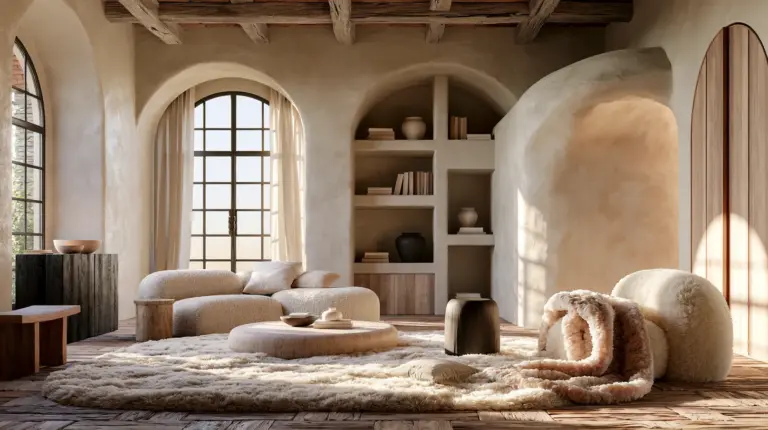
Oversized furniture is the biggest scale mistake in small living rooms — a deep sectional built for an open-plan home will swallow a compact space whole. In tight rooms, choose fewer, well-proportioned pieces over many small ones.
A single generously sized rug, one substantial anchor piece like a sofa or armchair, and vertical elements like tall curtains or a floor lamp do more to create cozy furniture arrangements than cramming in extra seating. Negative space is not empty space — it’s what lets the eye, and the room, exhale.
Awkward Layouts and Rental Rooms
In narrow or oddly shaped rooms, angle the sofa away from the wall to create a defined seating zone rather than pushing everything to the perimeter. This trick, borrowed from open-plan design, gives even a small rental living room a sense of intentional scale.
Human Comfort Scale: The Numbers Behind the Feeling
Coziness has a physical dimension, not just a visual one. Seat depth around 22–24 inches lets most bodies sink back comfortably. Ottoman height matched to sofa seat height turns it into a functional footrest, not just decoration.
Side tables should sit within easy arm’s reach — roughly 3 inches from the sofa arm — so a cup of tea never feels like a stretch. These human-scale details are what separate a beautiful room from a comfortable one.
Cozy Focal Points and Color Proportion
Every warm living room needs an anchor — a fireplace, a reading corner, or a media wall the furniture can gather around. Without a focal point, furniture tends to float, and floating furniture rarely feels cozy.
For color, the familiar 60-30-10 rule still holds, but cozy spaces benefit from a warm-to-cool balance too. Lean 70% warm neutrals, 20% mid-tone wood and texture, and 10% deeper accent color for the most enveloping effect. Explore more in our cozy furniture styling notes.
Mistakes That Make a Room Feel Cold, Empty, or Cramped
- Choosing a rug too small, leaving furniture legs floating off the edge
- Hanging art too high or too small above the sofa
- Using only one light source instead of layered lighting
- Skipping texture variety, leaving the room visually flat
- Overcrowding a small room instead of choosing fewer, well-scaled pieces
- Placing side tables out of comfortable arm’s reach
- Curtains hung too short or too tight to the window frame
Cozy Scale & Proportion Checklist
- Rug covers at least the front legs of all seating, ideally all four
- Sofa depth between 36–40 inches for a relaxed feel
- Coffee table height within 1–2 inches of the sofa seat
- Art hung 6–12 inches above the sofa, sized to two-thirds its width
- Three lighting layers: ambient, task, and accent
- At least two contrasting textures in every seating area
- Curtains hung near the ceiling, slightly wider than the window frame
- One clear focal point anchoring the furniture arrangement
- Side tables within easy arm’s reach of every seat
A Softer Kind of Precision
Scale and proportion sound like design-school terms, but really, they’re just the quiet mechanics of feeling at home. Once the sizing feels right, everything else — the candlelight, the worn linen, the low hum of evening — has room to settle in.
That’s the moment a living room stops being a collection of furniture and becomes a place you actually want to stay in.
FAQs
What is scale and proportion in interior design?
Scale refers to how a piece of furniture relates to the size of the room, while proportion refers to how pieces relate to one another, like a lamp to a side table or art to a sofa.
What is the difference between scale and proportion?
Scale compares an object to the room; proportion compares objects to each other. Both need to align for a space to feel balanced.
What is the two-thirds rule in interior design?
It suggests one element should span about two-thirds the length of what it sits against, such as a rug covering two-thirds of the floor or art spanning two-thirds of the sofa’s width.
How do you make a living room feel cozy without making it look crowded?
Choose fewer, well-scaled anchor pieces, layer soft textures at varying weights, and use layered lighting instead of adding more furniture to fill the space.
How high should art be hung above a sofa?
Aim for 6 to 12 inches above the sofa back, with the artwork’s width roughly two-thirds the length of the sofa for balanced proportion.