
Table of Contents
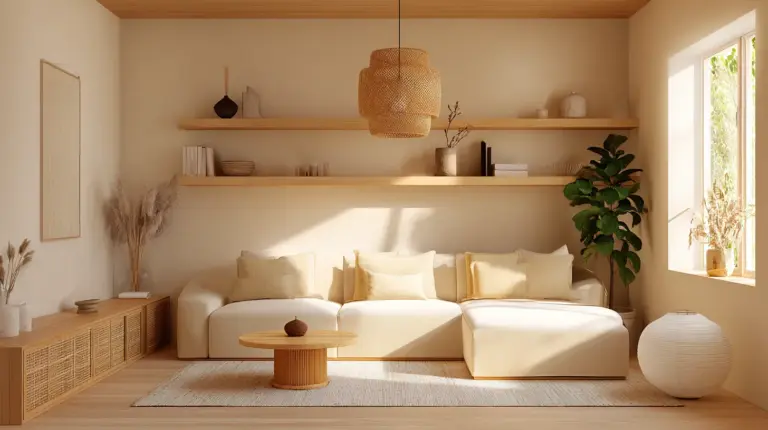
There’s a quiet magic that happens when you walk into a room and the light shifts just right. Not too bright, never harsh—just a soft, intentional glow that wraps around you like comfort itself. That’s the heart of Japandi design: the delicate balance between Japanese wabi-sabi simplicity and Scandinavian hygge warmth, now elevated with the thoughtful intelligence of smart lighting.
In your living room, light isn’t just functional. It’s the invisible hand that shapes mood, defines space, and brings your carefully curated textures to life. Imagine warm-toned LEDs that dim with the sunset, motion sensors that welcome you home, or voice commands that adjust ambiance while your hands stay wrapped around a cup of tea.
Smart lighting in a Japandi space doesn’t mean sacrificing serenity for technology. It means enhancing it—layering soft shadows with programmable precision, celebrating natural materials with adjustable warmth, and creating rituals of light that honor both stillness and innovation.
Let’s explore how to bring this harmonious fusion into your home, with practical guidance that respects your space, your budget, and the gentle philosophy at Japandi’s core.
Understanding Japandi Lighting Philosophy
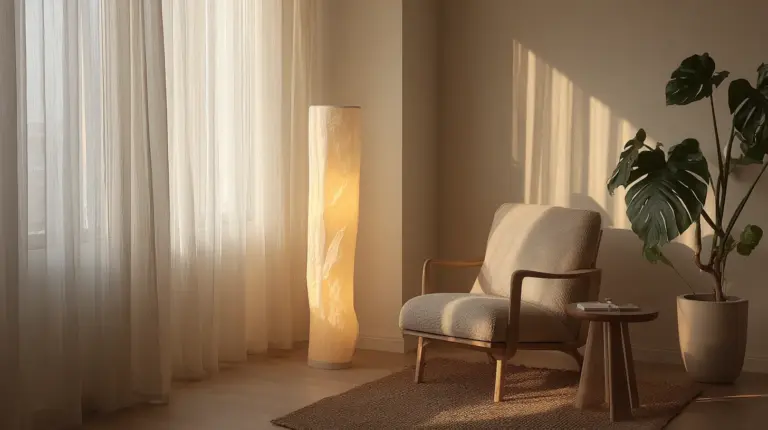
Japandi lighting begins with intention. It’s about honoring the interplay of light and shadow—what the Japanese call komorebi, that dappled sunlight filtering through leaves. In your living room, this translates to diffused illumination that never overwhelms, always invites.
The philosophy rejects harsh overhead glare. Instead, it embraces layered lighting: ambient washes from recessed fixtures, task lighting for reading nooks, and accent lights that highlight your favorite ceramic vase or that beautiful grain in your oak console. Each layer serves purpose without announcing itself.
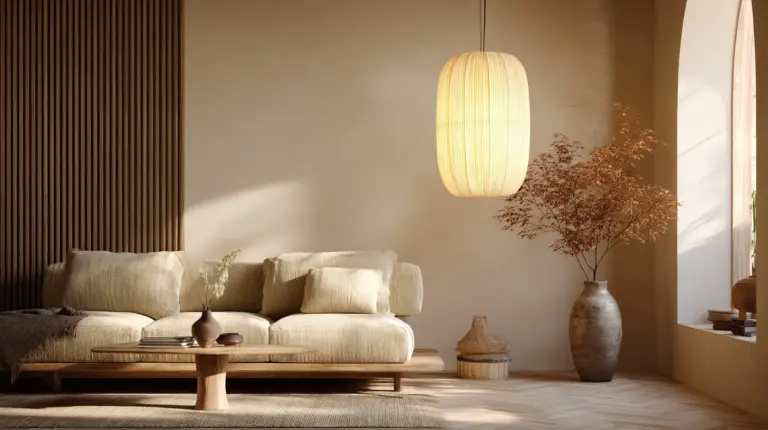
Natural materials remain paramount. Bamboo pendant lights, paper lanterns with rice paper shades, linen lampshades that filter light into buttery softness. When you introduce smart technology here, it should disappear into the design, not dominate it.
The Role of Warmth and Shadow
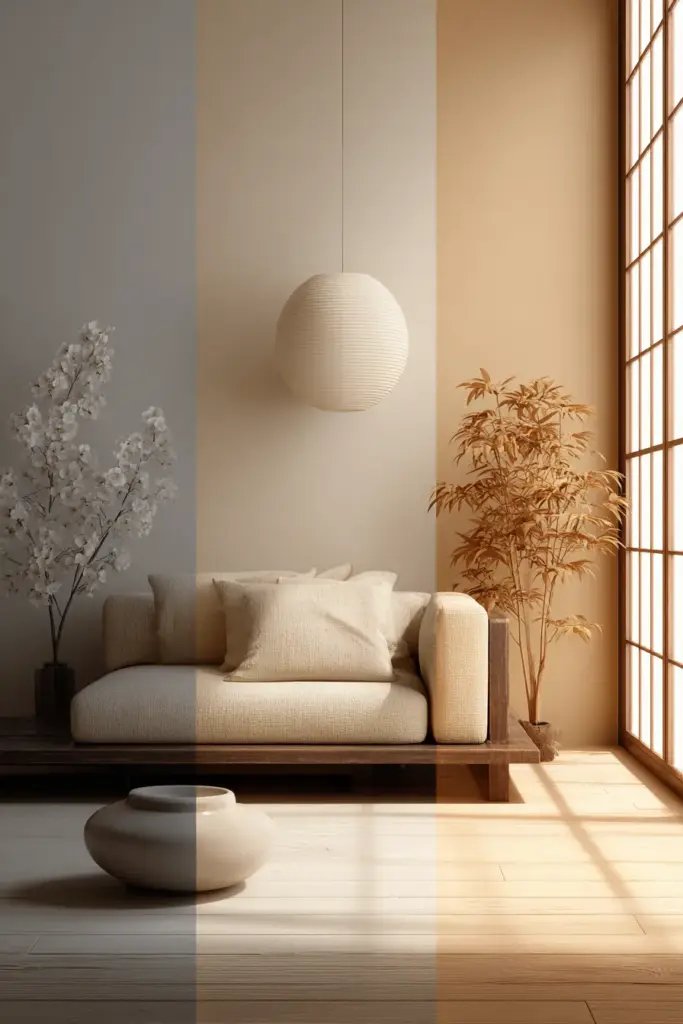
Warmth in Japandi spaces means choosing bulbs in the 2700K to 3000K range. This creates that golden-hour glow that makes neutral palettes—your beiges, warm grays, and soft whites—feel alive rather than clinical.
Shadow is equally important. Wabi-sabi teaches us to find beauty in imperfection, in the gradient from light to dark. Smart dimmable lights let you control this transition, creating pockets of brightness for activity and pools of gentle darkness for rest.
Why Smart Lighting Transforms Japandi Living Rooms
Smart lighting gives you something precious: control without clutter. No additional switches marring your clean walls, no fumbling with multiple remotes. Just seamless integration that respects your minimalist aesthetic while expanding what light can do.
Consider the rhythm of your day. Morning light that gradually brightens to ease you awake. Afternoon warmth that supports focus without strain. Evening dimming that signals your body toward rest. Smart systems like Philips Hue or Govee create these transitions automatically, syncing with your circadian rhythm.
There’s also the practical beauty of energy efficiency. LED smart bulbs consume 75% less energy than traditional incandescents, lasting years longer while delivering precise color temperatures that honor your design vision.
Automation That Feels Natural
The best smart lighting doesn’t feel smart—it feels intuitive. Motion sensors that illuminate your path to the kitchen at midnight, gentle enough not to jolt you awake. Geofencing that turns on your favorite “coming home” scene as you pull into the driveway.
Voice control becomes meditation rather than intrusion. “Alexa, set the living room to evening hygge” dims your lights to 40%, shifts to warm amber tones, and maybe even triggers your ambient playlist. All while you stay curled in your linen armchair.
Best Smart Lights for Japandi Aesthetic
Premium Options: Seamless Integration
Philips Hue White Ambiance bulbs offer the gold standard for Japandi spaces. Their 2200K to 6500K range lets you dial in that perfect sunset warmth, while the app’s scene creation mirrors the layered lighting philosophy central to this style.
Nanoleaf Elements hexagonal panels deserve special mention. Their wood-grain texture integrates with Japandi’s natural material focus while providing modular, customizable lighting art. Mount them behind your low-profile sofa or along a feature wall for indirect ambient glow.
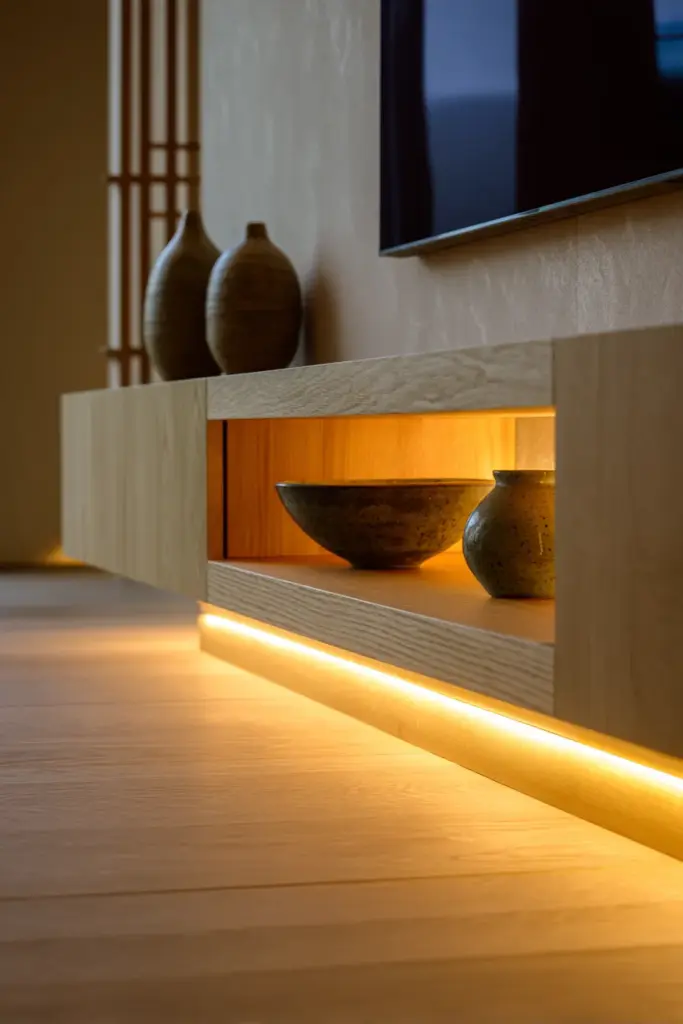
For hidden lighting that celebrates architectural simplicity, Govee LED strip lights work beautifully. Tuck them under floating shelves to highlight your ceramic collection, or behind your TV console for bias lighting that reduces eye strain during movie nights.
Budget-Friendly Philippines Solutions
You don’t need to spend ₱10,000 to achieve smart sophistication. Xiaomi Mi Smart LED Bulbs, available locally for around ₱500-800 each, offer excellent warm white tones and full app control compatible with 220V Philippine electrical systems.
Smart adapters transform existing fixtures. For under ₱2,000, you can retrofit your favorite paper lantern or bamboo pendant with smart functionality, preserving the aesthetic you love while gaining modern convenience.
Shopping platforms like Lazada and Shopee regularly feature local brands with Matter and Thread compatibility—future-proofing your setup as smart home standards evolve. Look for monsoon-resistant ratings if your living room gets humid during rainy season.
Creating Layered Smart Lighting Scenes
Ambient Foundation Layer
Your ambient lighting sets the room’s baseline mood. In Japandi design, this means soft, indirect sources—never a single bright ceiling fixture. Install warm-toned recessed LED downlights on dimmers, spacing them to create overlapping pools of gentle illumination.
Smart bulbs in these fixtures let you program scenes. “Morning Coffee” might be 60% brightness at 3000K. “Afternoon Reading” could shift to 80% at 2700K near your favorite chair while dimming elsewhere. “Evening Wind-Down” drops everything to 30% with the warmest tones available.
Consider upward-washing wall sconces with smart capabilities. Light bouncing off your ceiling creates volume and softness—especially effective in smaller Filipino living rooms where direct fixtures might overwhelm.
Task Lighting for Function
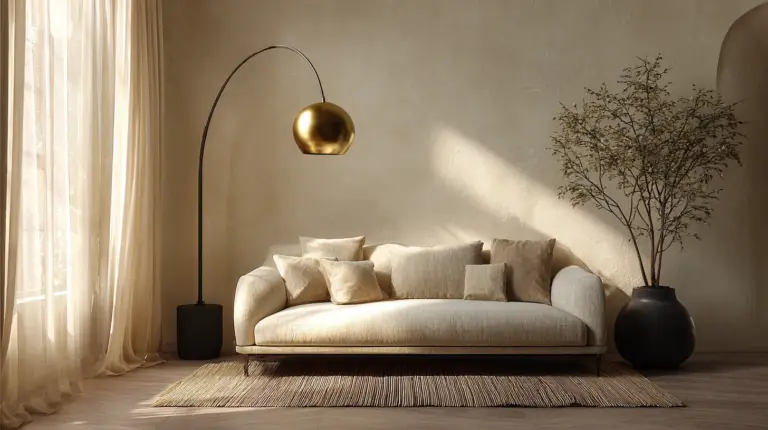
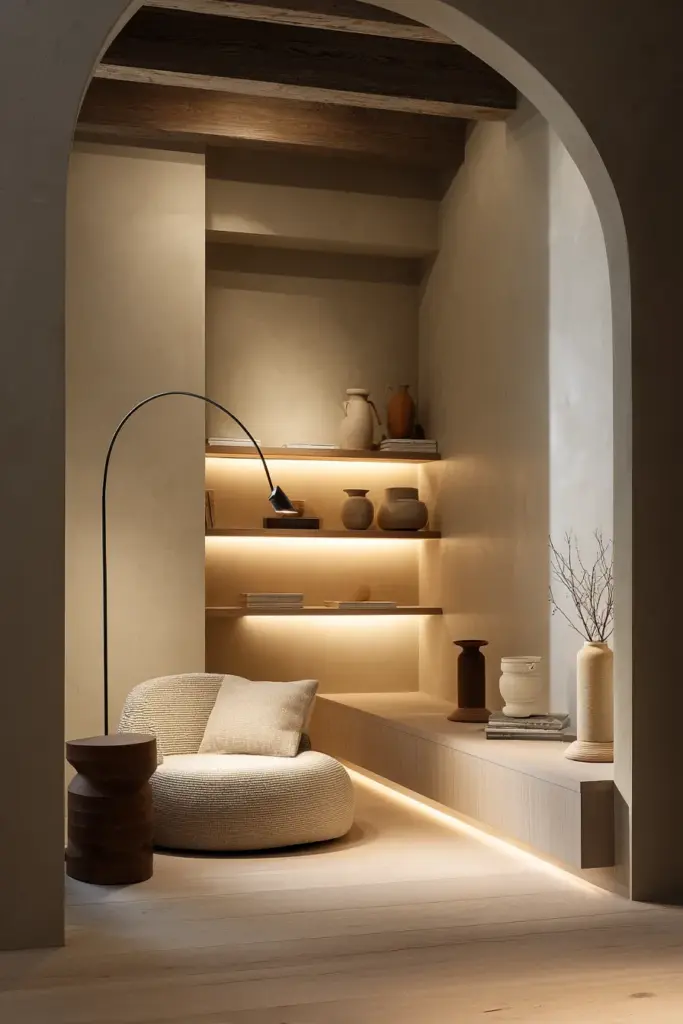
Task lighting serves specific activities without disrupting ambient harmony. A smart floor lamp with an arched design positions light precisely over your reading nook or workspace, adjustable via app without leaving your seat.
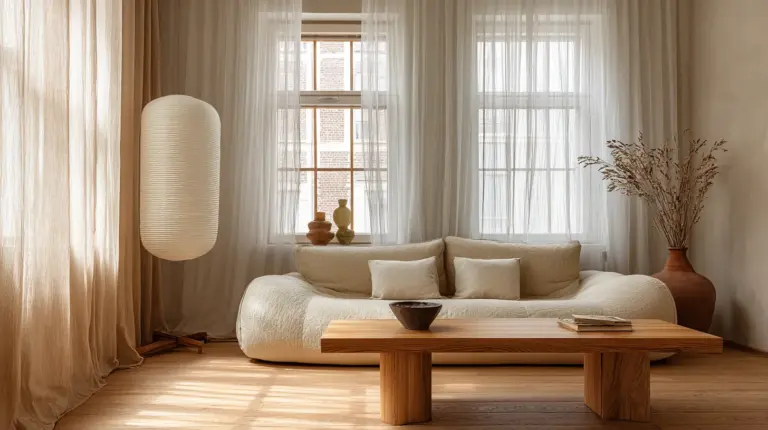
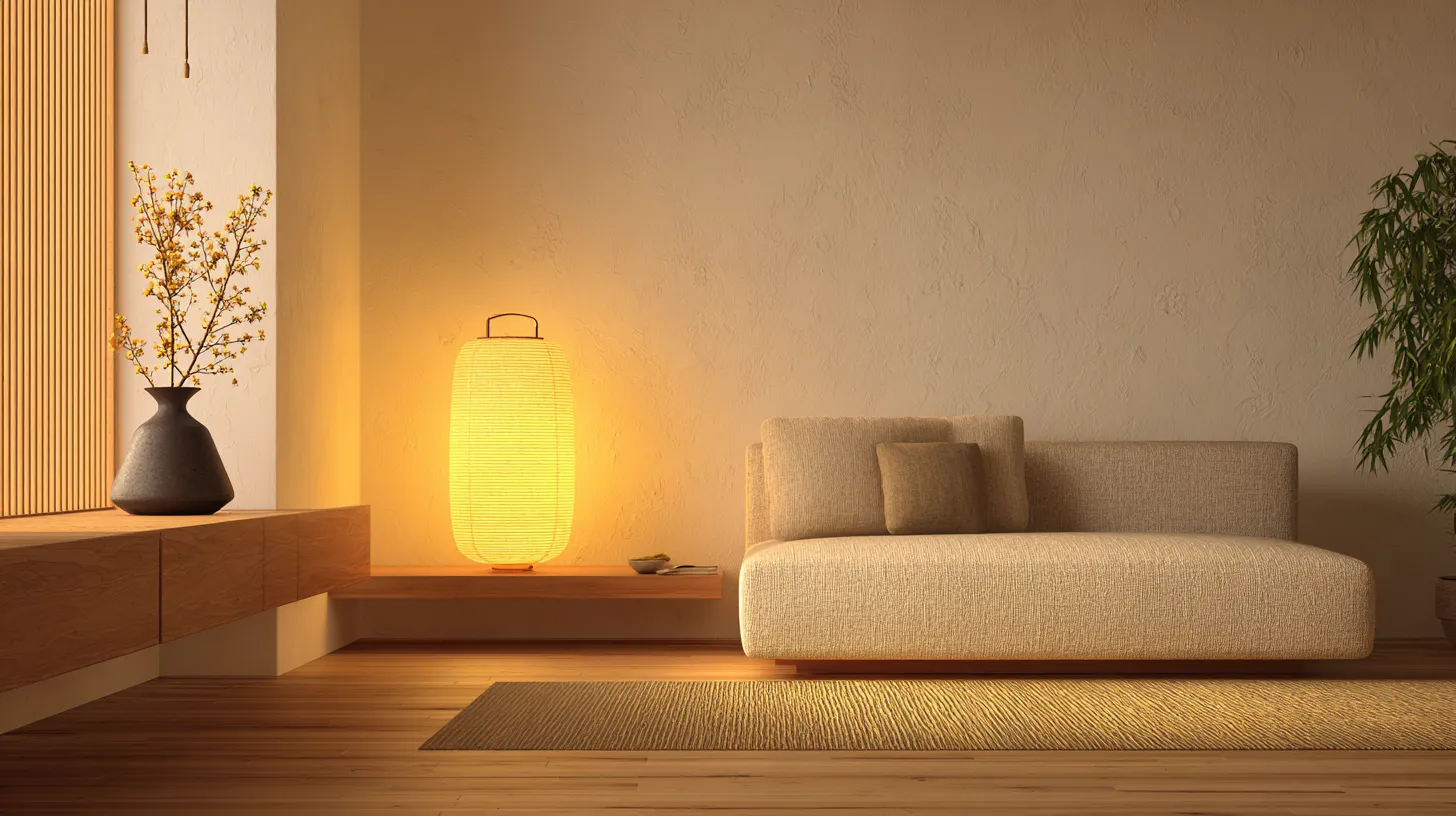
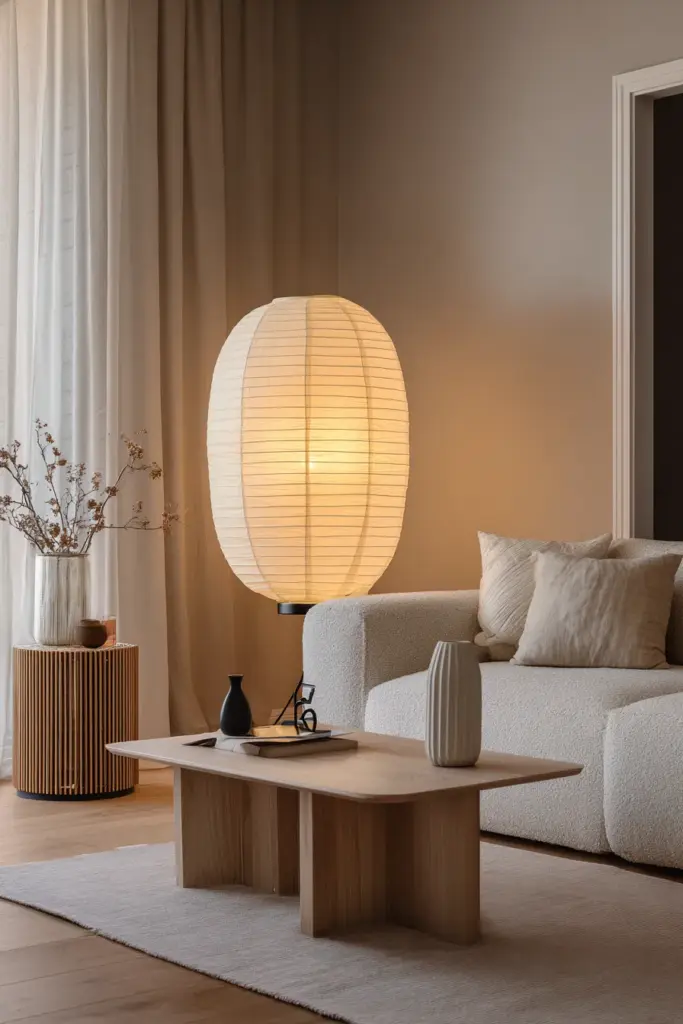
Japanese-inspired paper floor lamps with smart adapters offer the best of both worlds—handcrafted aesthetic with programmable functionality. Position them near low-profile furniture to maintain the horizontal emphasis characteristic of Japandi interiors.
Under-cabinet or shelf lighting, controlled independently, highlights your curated objects: that vintage pottery, your collection of design books, the houseplants you’re nurturing. Smart strips here can shift cooler during the day to showcase detail, warmer at night for atmosphere.
Accent Drama and Depth
Accent lighting creates visual interest and depth. In minimalist spaces, you have fewer decorative elements, so each deserves its moment. Smart spotlights directed at your feature wall—maybe that beautiful wood slat accent—add dimension and shadow play.
LED strips behind floating media consoles or low platform beds (if your living room doubles as a flexible space) create that floating effect beloved in modern design. Set them to sync with sunset times, gradually warming as natural light fades.
Don’t forget biophilic elements. Smart grow lights with programmable schedules keep your fiddle leaf fig thriving while adding living texture to your space. Systems like Soltech Solutions blend seamlessly with minimalist interiors.
Smart Lighting Setup Guide for Beginners
Choosing Your Ecosystem
Start by selecting your control platform. Google Home, Amazon Alexa, and Apple HomeKit all work with major smart bulb brands. Consider which voice assistant you already use—consistency simplifies daily interaction.
Matter protocol support future-proofs your investment. This universal standard, now supported by Philips Hue, Nanoleaf, and emerging brands, ensures your devices work together regardless of manufacturer.
For Philippine users, verify 220V compatibility and check if the brand offers local warranty and support. Xiaomi, Philips, and select Lazada vendors provide service centers in Metro Manila and major cities.
Installation Without Complexity
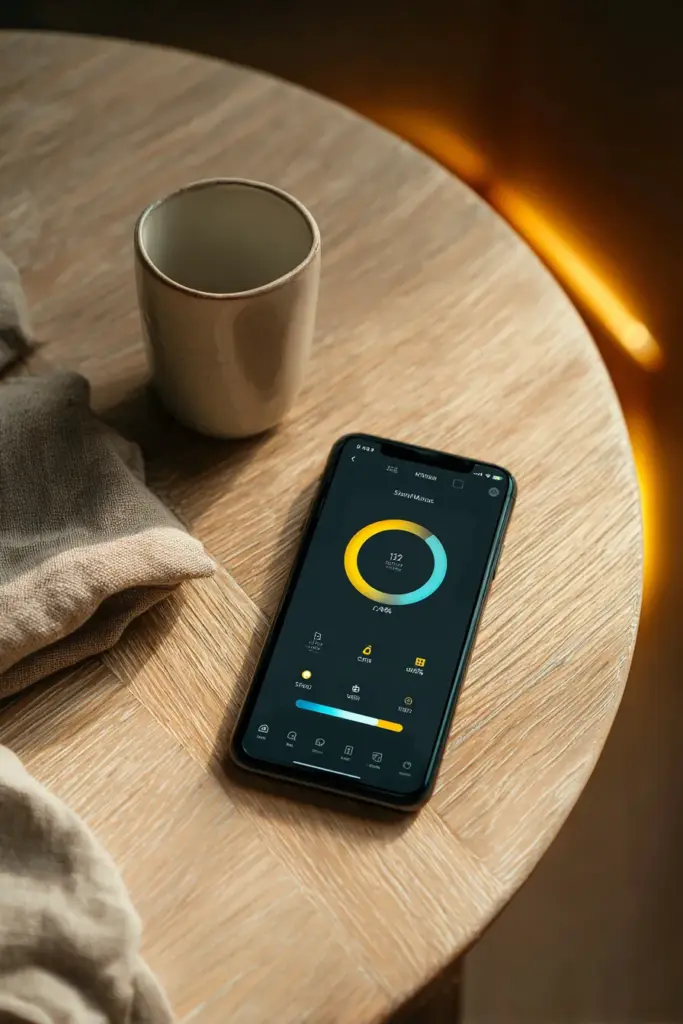
Most smart bulbs require only screwing them into existing fixtures—no electrician needed. Download the manufacturer’s app, create an account, and follow the pairing process. Keep your phone’s Bluetooth and WiFi enabled during setup.
LED strips need slightly more attention. Clean the mounting surface, measure twice, and use the included adhesive backing. For permanent installations behind heavy furniture, consider small cable clips for extra security during our humid months.
Smart switches offer another option if you prefer controlling multiple bulbs simultaneously. These replace existing wall switches but require basic electrical knowledge or professional installation to ensure safety.
Programming Your First Scenes
Begin simple. Create three foundational scenes: Morning (bright, cool-neutral), Afternoon (medium, warm), and Evening (dim, warmest). Most apps use sliders for brightness and color temperature—experiment until each feels right.
Scheduling automation comes next. Set your Morning scene to activate at 6:30 AM on weekdays, Evening at 7 PM daily. Geofencing can turn lights on when you arrive home, off when everyone leaves—though test this carefully if you have pets or irregular schedules.
Advanced users might explore IFTTT (If This Then That) for complex automations: “If motion detected after 11 PM, turn on pathway lights to 10% warm white for 2 minutes.” These recipes turn smart lighting into invisible hospitality.
Design Integration: Keeping Tech Invisible
Choosing Fixtures That Honor Materials
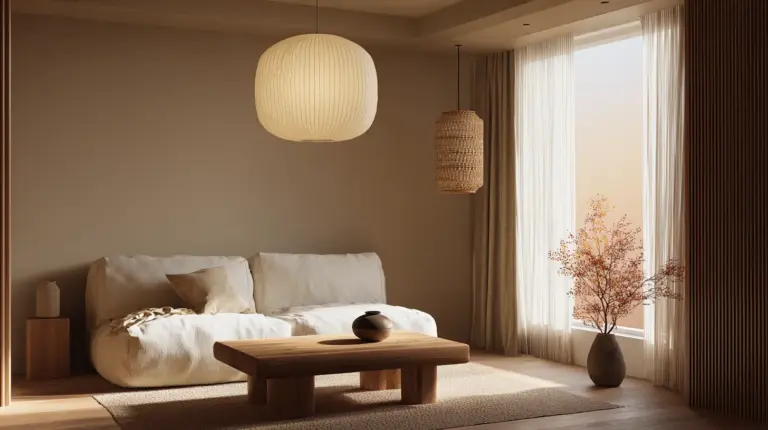
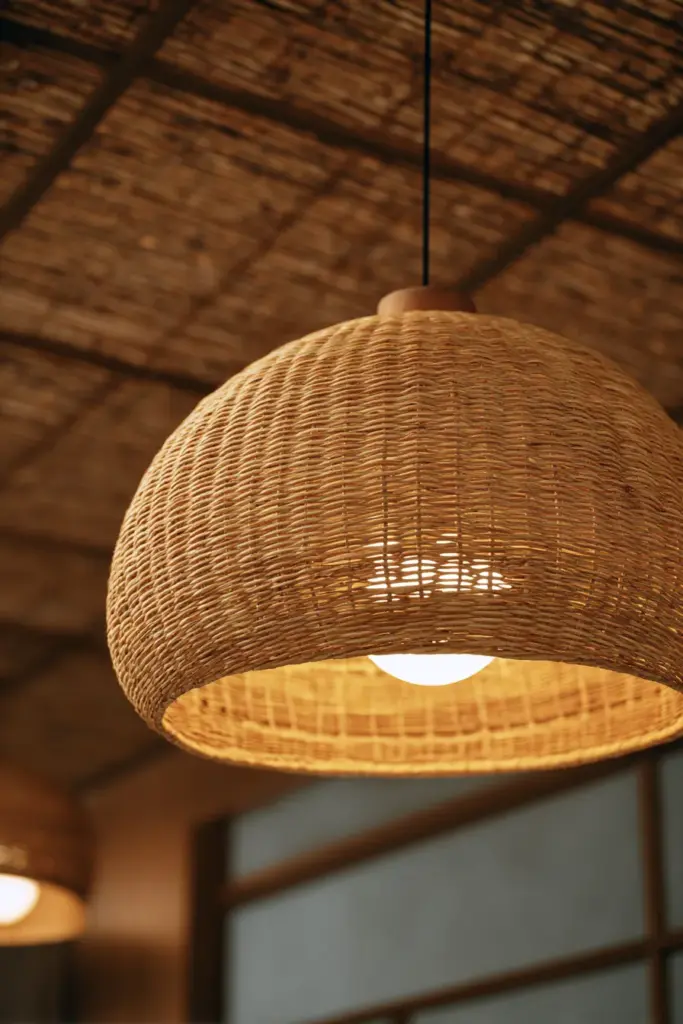
Smart technology hides best inside beautiful design. Seek out linen drum pendants, bamboo cage fixtures, or ceramic table lamps that accept standard E26/E27 smart bulbs. The fixture provides Japandi soul; the bulb provides intelligence.
Avoid futuristic metallic finishes or LED panels with visible grids. Instead, look for organic textures: rattan, wood veneer, frosted glass, stone bases. These materials diffuse light naturally while complementing your neutral palette and natural fiber textiles.
If your budget allows, commission local Filipino craftspeople to create custom fixtures. A capiz shell pendant from Cebu or a woven abaca floor lamp from Bicol becomes even more meaningful when paired with sustainable, efficient smart lighting.
Cable Management and Minimalism
Nothing breaks Japandi serenity faster than visible cords. Use cable raceways that match your wall color, or route wires behind furniture and along baseboards. Wireless charging pads for smart home hubs keep surfaces clear.
For floor and table lamps, choose models with cloth-wrapped cords in neutral tones—beige, gray, black. These blend into your aesthetic rather than screaming “electronics.” Some higher-end smart lamps now integrate batteries for hours of cordless operation.
Consider your WiFi router placement too. Smart lights need stable connection, so if your living room is far from your router, a mesh system like Google WiFi ensures reliable performance without adding visible antennas.
Energy Efficiency and Sustainability
Calculating Real Savings
A typical 60-watt incandescent bulb costs about ₱35 per month to run 5 hours daily at Philippine electricity rates (₱10-12/kWh). An equivalent 8-watt smart LED costs ₱6 monthly. Across 10 bulbs in your living room, that’s ₱290 saved every month—₱3,480 annually.
Smart features multiply these savings. Automated scheduling ensures lights never stay on unnecessarily. Dimming to 50% can reduce energy consumption by approximately 40%, as LEDs use power proportional to brightness.
The lifespan advantage matters too. Quality smart LEDs last 15,000-25,000 hours versus 1,000 for incandescents. Fewer replacements mean less waste, fewer trips climbing ladders, and reduced packaging ending up in landfills.
Supporting Circadian Health
Our bodies evolved with natural light cycles—bright blue mornings, warm amber evenings. Smart lighting synchronized to these rhythms supports better sleep, improved mood, and sustained energy throughout the day.
Program your Japandi living room to mimic sunrise: starting at 2700K amber, gradually shifting cooler and brighter until midday peaks around 4000K, then reversing the process toward sunset. Your biological clock receives proper cues even on overcast Manila days.
Studies show this approach reduces evening cortisol levels and increases melatonin production—essentially preparing your body for restorative sleep simply through thoughtful lighting design. It’s biophilic design applied through technology.
Eco-Certifications Worth Seeking
Look for Energy Star certified smart bulbs, which meet strict efficiency guidelines. Many Philips and GE options carry this designation, ensuring you’re choosing products with verified environmental benefits.
RoHS compliance (Restriction of Hazardous Substances) confirms your bulbs contain no dangerous mercury or lead. This matters particularly for safe disposal when they eventually reach end-of-life—important in the Philippines where electronic waste management is still developing.
Some brands now offer take-back programs or partner with local recycling initiatives. Supporting these companies aligns your purchasing with Japandi’s deeper philosophy: mindful consumption that considers impact beyond your own four walls.
Smart Lighting Troubleshooting Tips
Connection Issues and Quick Fixes
If bulbs won’t pair, first verify your WiFi operates on 2.4GHz—most smart bulbs don’t support 5GHz networks. Check your router settings or create a dedicated 2.4GHz network specifically for smart home devices.
Power cycling often resolves connectivity issues. Turn the bulb off for 10 seconds, then on for 10 seconds, repeating this 5 times. Most smart bulbs reset into pairing mode, allowing you to reconnect through your app.
Ensure your smartphone and bulbs are on the same WiFi network during setup. Guest networks or VPNs can interfere with device discovery. Temporarily disable VPN, pair your devices, then re-enable if needed.
Maintaining Performance Over Time
Dust accumulation reduces light output by up to 20% over a year. Gently clean your bulbs and fixtures monthly with a dry microfiber cloth—never when hot or still powered on.
Update firmware through your manufacturer’s app. These updates often improve compatibility, add features, and fix bugs. Enable automatic updates if available, though some prefer manual control to avoid unexpected changes.
If certain bulbs become unresponsive while others work fine, check for electrical issues at that fixture. Loose connections or voltage fluctuations can affect smart electronics. Consider having a licensed electrician inspect concerning outlets.
Japandi Smart Lighting on a Budget
DIY Upcycling Ideas
Transform existing paper lanterns into smart fixtures using screw-in smart adapters (₱800-1,500). This preserves the handcrafted aesthetic you love while adding app control and scheduling—perfect for vintage or heirloom pieces.
Create your own LED strip installations using affordable Govee or generic brands from Shopee (₱600-1,200 for 5 meters). Mount behind floating shelves, under cabinets, or along the perimeter of your low platform coffee table for custom ambient effects.
Retrofit floor lamps with smart plugs (₱400-800) if you love their design but they use non-replaceable bulbs. Smart plugs provide on/off and scheduling control—not dimming, but still useful for automation on a tight budget.
Prioritizing Your Purchases
Start with one or two key areas. A smart bulb in your primary floor lamp and LED strips behind your TV console create immediate impact for under ₱3,000. Experience how automation enhances your routine before expanding.
Buy during sale events—Lazada and Shopee’s monthly flash sales often discount smart lighting 30-50%. Stock up then, but only on bulbs you’ll actually use within the year. Technology evolves; buying too far ahead risks obsolescence.
Mix smart and dumb bulbs strategically. Not every light needs app control. Reserve smart functionality for your most-used fixtures and ambient sources, using standard warm LED bulbs in decorative fixtures you rarely adjust.
Room-Specific Smart Lighting Ideas
| Lighting Type | Recommended Product | Price Range (₱) | Best For | Smart Feature |
|---|---|---|---|---|
| Ambient Base | Xiaomi Mi Smart Bulb | 500-800 each | Ceiling fixtures, general illumination | App control, scheduling, warm dimming |
| Task Reading | Smart Floor Lamp | 3,000-8,000 | Reading nooks, workspaces | Brightness adjustment, color temperature |
| Accent Highlight | Govee LED Strips | 600-1,200 per 5m | Under shelves, behind furniture | Color options, music sync, scenes |
| Natural Integration | Paper Lantern + Adapter | 1,500-3,000 | Hanging fixtures, traditional aesthetics | Retrofit existing favorites with smart control |
| Pathway Safety | Motion-Sensor Bulb | 1,200-2,000 | Hallways, entryways | Auto-activation, energy-saving auto-off |
Seasonal Adjustments and Flexibility
Your lighting needs shift with seasons and occasions. During the rainy months, when natural light diminishes, program your morning scenes brighter and earlier to combat the gloom. Philippine summers might call for cooler tones during the hottest hours.
Create special occasion scenes too. “Dinner Party” might emphasize warm ambiance at 50% with accent lights showcasing your dining area. “Movie Night” dims everything except subtle bias lighting. These save as one-touch presets you’ll use again and again.
Holiday seasons benefit from scheduling too. Set lights to welcome guests during noche buena gatherings, or create a cozy New Year’s reflection scene without manually adjusting multiple switches. Smart lighting makes hospitality effortless.
The Future of Smart Japandi Lighting
Emerging technologies promise even deeper integration. AI-powered systems will learn your preferences automatically—no programming required. They’ll recognize you’re reading and adjust task lighting accordingly, or notice sunset and gradually warm your ambient sources.
Matter protocol adoption continues expanding, ensuring your 2025 purchases will work with 2027 innovations. This open standard means mixing brands freely without compatibility concerns—critical for curated Japandi spaces where aesthetic choice shouldn’t be limited by technical ecosystems.
Sustainability will drive innovation too. Solar-rechargeable smart fixtures, biodegradable lamp components, and carbon-neutral manufacturing are already emerging. Choosing these options aligns technology with Japandi’s mindful, nature-respecting philosophy.
Essential Japandi Smart Lighting Checklist
Before you begin your smart lighting journey, ensure you have these foundations:
- 2700K-3000K warm white bulbs for ambient sources throughout the room
- Layered approach combining ambient, task, and accent lighting at different heights
- Smart hub or compatible voice assistant (Google Home, Alexa, or HomeKit) for centralized control
- Reliable 2.4GHz WiFi coverage in your living room for stable device connectivity
- Matter-compatible devices when possible for future-proof integration across brands
- Natural material fixtures (bamboo, paper, linen, wood) that hide technology within beautiful design
- Dimming capability on all primary light sources to create flexible mood options
- Automated schedules matching your daily rhythm (morning energizing, evening calming)
- Motion sensors for nighttime pathway lighting that doesn’t disrupt sleep
- Budget allocation prioritizing high-impact areas first, expanding gradually as you experience benefits
Conclusion: Light as Daily Ritual
Your Japandi living room is more than a collection of carefully chosen furniture and natural textures. It’s a sanctuary—a space that holds you after long days, that welcomes friends with unspoken warmth, that shifts with your needs from energizing mornings to restorative evenings.
Smart lighting doesn’t complicate this simplicity. It deepens it, creating rituals of light that honor both ancient design wisdom and modern life’s demands. The soft glow that welcomes you home, the gradual dimming that signals rest, the perfect brightness that supports your creativity—these become gestures of self-care woven seamlessly into your environment.
As you layer warm LEDs behind handcrafted fixtures, as you program scenes that mirror the sun’s natural journey, you’re not just installing technology. You’re crafting an atmosphere that supports your wellbeing, respects the planet, and celebrates the quiet beauty found in thoughtful living.
Let your light be intentional. Let it be kind.
Frequently Asked Questions
What is Japandi lighting style?
Japandi lighting blends Japanese wabi-sabi simplicity with Scandinavian hygge warmth, emphasizing natural materials like bamboo and paper with diffused, layered LEDs. It celebrates the interplay of light and shadow rather than bright, uniform illumination, creating spaces that feel both serene and inviting through warm color temperatures and organic textures.
How do I incorporate smart lights in a Japandi living room without ruining the aesthetic?
Choose smart bulbs in the 2700K-3000K warm white range and hide them inside natural material fixtures like linen pendants, bamboo floor lamps, or paper lanterns. Use LED strips behind furniture for invisible ambient glow, avoid futuristic designs, and manage cables carefully with color-matched raceways or cloth-wrapped cords that blend into your neutral palette.
What are the best smart lights for Japandi aesthetic?
Philips Hue White Ambiance offers premium color temperature control, while Nanoleaf Elements provides wood-grain panels that match natural material focus. For budget-conscious Philippine homes, Xiaomi Mi Smart Bulbs (₱500-800) deliver excellent warm tones and 220V compatibility. Govee LED strips work beautifully for hidden accent lighting under shelves or behind consoles.
Can I achieve Japandi smart lighting on a budget in the Philippines?
Absolutely. Start with one or two Xiaomi smart bulbs in your most-used fixtures (under ₱2,000 total), add affordable LED strips from Shopee for ambient effects (₱600-1,200), and retrofit existing favorite lamps with smart adapters (₱400-800). Shop during Lazada flash sales for deeper discounts, and mix smart bulbs in key areas with standard warm LEDs elsewhere to keep costs manageable.
Do smart lights save energy compared to traditional lighting?
Smart LED bulbs use about 75% less energy than incandescent bulbs—an 8-watt smart LED replaces a 60-watt incandescent. At Philippine electricity rates, this saves approximately ₱290 monthly for 10 bulbs. Automation features like scheduling and dimming increase savings further, while 15,000-25,000 hour lifespans mean fewer replacements and less waste over time.