
Table of Contents
There’s something deeply comforting about a room that knows exactly what it needs to do—and does it beautifully. In Japandi living rooms, task lighting isn’t just about brightness. It’s about intention, warmth, and the quiet luxury of being able to read, work, or create without strain.
Task lighting in this style doesn’t shout. It whispers. It finds its place beside your favorite armchair, arcs gently over a reading nook, or tucks beneath a shelf where you keep your journals and tea collection.
The beauty of Japandi task lighting lies in its dual nature: minimalist restraint paired with functional warmth. Every fixture serves a purpose, yet each one feels like it belongs—natural materials meeting thoughtful design, soft LEDs casting pools of light exactly where you need them.
Let’s explore how to bring this balanced illumination into your living room, creating zones of focus that enhance rather than overwhelm your carefully curated space.
Understanding Task Lighting in Japandi Design
Task lighting is your workspace companion, your reading partner, your late-evening ally. Unlike ambient lighting that fills an entire room or accent lighting that highlights art, task lighting focuses on specific activities—reading, sketching, laptop work, crafting.
In Japandi spaces, this functional layer must harmonize with the style’s core principles: simplicity, natural materials, and uncluttered beauty. Think clean-lined table lamps with wood bases, adjustable floor lamps in matte black metal, or under-cabinet strips that illuminate without dominating.
The magic happens when these fixtures disappear into the background during the day, then emerge as essential tools by evening. They’re not decorative statements—they’re quietly elegant problem-solvers.
Why Task Lighting Matters in Minimalist Spaces
When you’ve edited your living room down to essentials, lighting becomes even more critical. Without excessive decor to absorb or reflect light, each fixture’s placement and quality directly impacts how the room feels.
Proper task lighting prevents eye strain during focused activities, especially important against Japandi’s signature neutral palettes of cream, beige, and soft gray. It creates intimate zones within open-plan layouts, defining a reading corner or workspace without physical walls.
Most importantly, it honors the functional minimalism at Japandi’s heart—beauty through purpose, nothing wasted, everything meaningful.
Choosing the Right Task Lighting Fixtures
Table Lamps: Your Bedside Companions
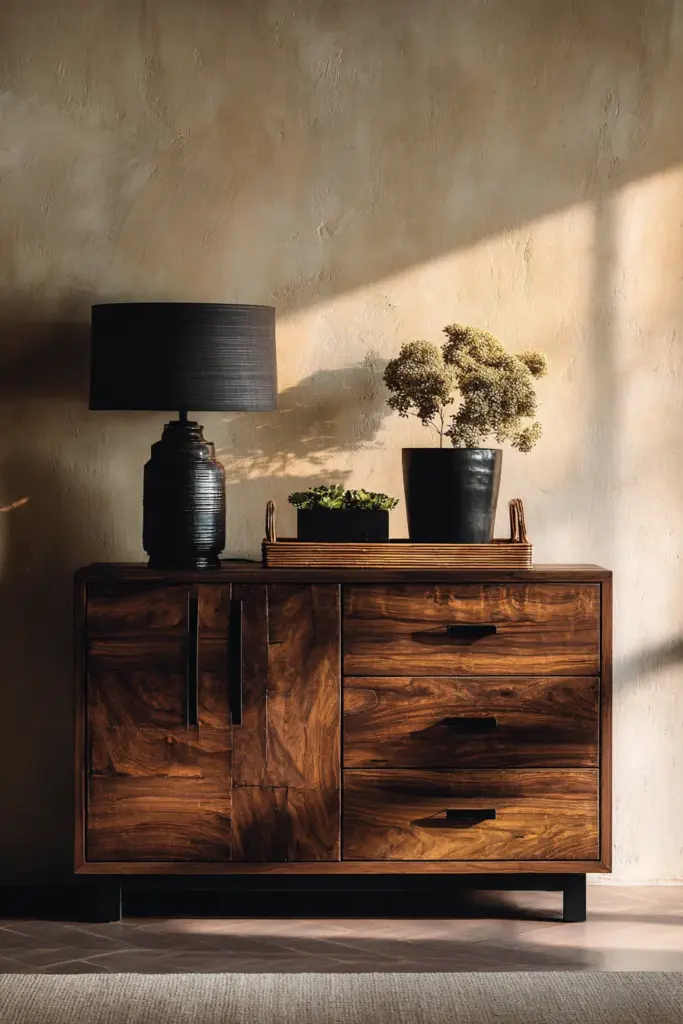
Wood-base table lamps with fabric shades in natural linen or cotton embody Japandi perfectly. Look for clean cylindrical or conical bases in oak, walnut, or bamboo—materials that age gracefully and bring organic warmth.
The shade should diffuse light gently, creating a soft glow rather than harsh downlight. Aim for 18-24 inches in height for side tables flanking sofas, ensuring the light reaches your book or device without glare.
Adjustable swing-arm table lamps offer flexibility for changing tasks. Choose matte black or brushed brass finishes with wooden accents—the metal provides structure while wood maintains the natural aesthetic.
Floor Lamps: Sculptural and Functional
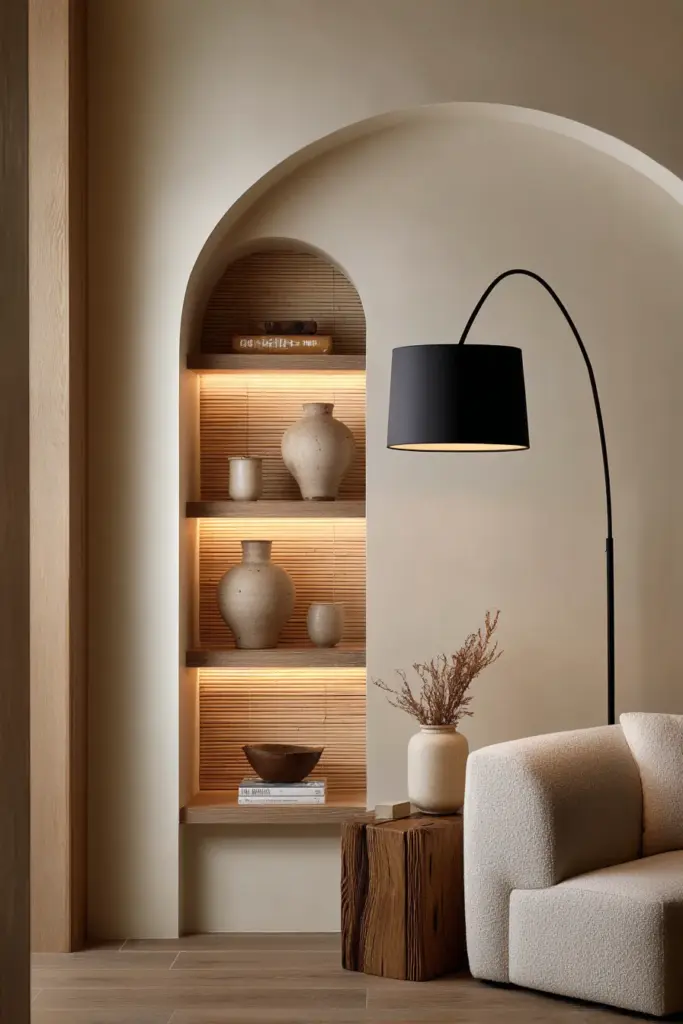
Arched floor lamps create dramatic task zones, curving gracefully over reading chairs or sofa corners. Select designs with weighted marble or wood bases for stability, paired with simple metal arms in black, bronze, or natural brass.
Tripod floor lamps with linen shades bring architectural interest while maintaining minimalist restraint. The three-legged silhouette feels sculptural yet functional, casting warm pools of light downward.
For ultimate versatility, consider adjustable floor lamps with rotating heads and telescoping arms. These allow you to redirect light as needed—perfect for multifunctional living rooms where activities shift throughout the day.
Wall Sconces: Space-Saving Elegance
Swing-arm sconces mounted beside seating areas save precious floor and table space while providing adjustable task lighting. Choose designs in matte black metal with wood or rattan accents, positioned 40-60 inches from the floor.
Under-cabinet lighting strips installed beneath floating shelves illuminate workspaces or display areas without visible fixtures. Opt for warm LED strips (2700K-3500K) that can be dimmed to match ambient lighting levels.
Wall-mounted reading lights with minimalist profiles work beautifully in tight spaces—slim fixtures that extend when needed, then fold flush against the wall when not in use.
Color Temperature and Light Quality
The Warmth Factor: 2700K-3500K Sweet Spot
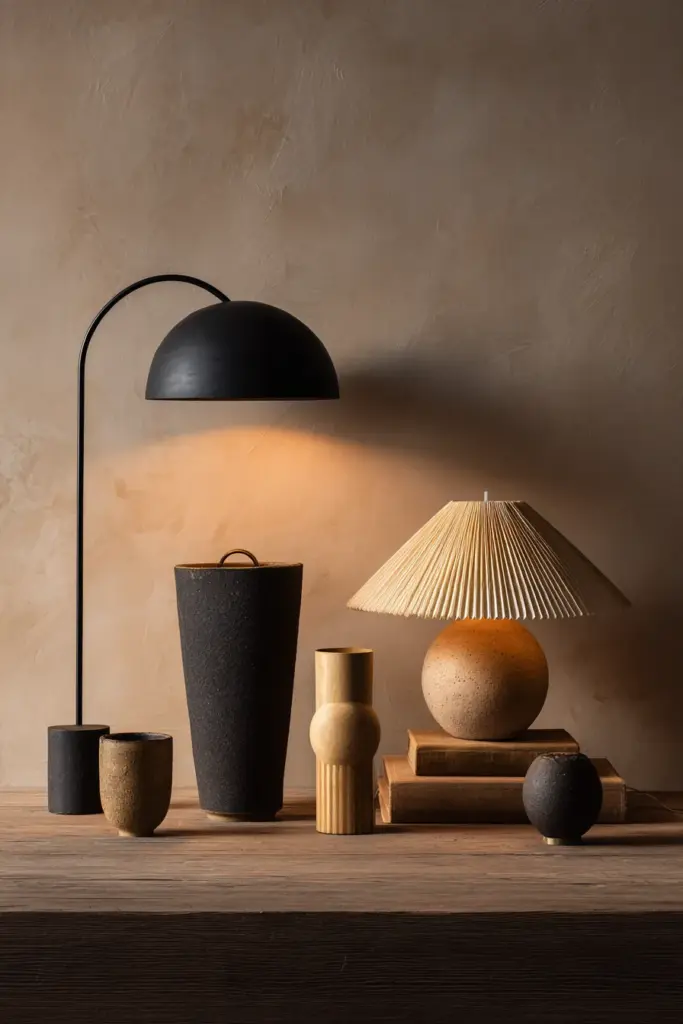
Color temperature dramatically affects how Japandi interiors feel. Task lights in the 2700K-3500K range emit warm, inviting light that complements natural wood tones and neutral textiles.
At 2700K, you get soft amber warmth—ideal for evening reading that doesn’t disrupt circadian rhythms. At 3500K, the light brightens slightly toward neutral white, better for detailed work like sketching or laptop tasks while still feeling cozy.
Avoid cool whites above 4000K in task fixtures. They create harsh contrasts against Japandi’s warm palette, making spaces feel clinical rather than serene.
CRI Matters: 90+ for True Colors
Color Rendering Index (CRI) measures how accurately light reveals true colors. For Japandi living rooms showcasing beautiful wood grains, woven textures, and subtle neutral variations, choose LED bulbs with CRI ratings of 90 or higher.
This ensures your walnut coffee table displays its rich chocolate tones, your linen sofa shows its true cream warmth, and your rattan accessories reveal their natural golden hues. Lower CRI bulbs muddy these details, flattening the carefully layered textures that make Japandi spaces feel alive.
High-CRI task lighting also reduces eye strain during close work, as colors appear more natural and contrast becomes clearer.
Layering Task Lighting with Ambient and Accent Light
Creating Zoned Illumination
The layered lighting approach combines three types: ambient (overhead general light), task (focused functional light), and accent (highlighting specific features). In Japandi living rooms, this creates depth without clutter.
Start with dimmable ambient lighting—perhaps a simple paper pendant or recessed ceiling lights. Layer in task fixtures at seating areas, workspaces, and reading nooks. Finish with subtle accent lights—a picture light above artwork or LED strips behind floating shelves.
Each layer should be independently controllable via dimmer switches or smart bulbs, allowing you to adjust the mood and functionality as activities change throughout the day.
Avoiding Over-Illumination
More light isn’t better in Japandi design—thoughtful light is. Each fixture should have clear purpose; anything redundant creates visual noise.
If your ambient lighting already illuminates a workspace adequately, skip the task lamp. If natural daylight floods your reading chair until evening, choose a task light you can switch on only when needed.
This restraint maintains the clean, uncluttered aesthetic while ensuring you have perfect illumination when activities demand it.
Smart Integration for Modern Functionality
Voice-Controlled Task Zones
Smart LED bulbs compatible with Matter, Philips Hue, or Govee systems bring invisible technology to minimalist spaces. Control task lighting via voice commands, smartphone apps, or automated schedules without adding visible switches or controls.
Set scenes that adjust all three lighting layers simultaneously—”Reading Mode” might dim ambient lights to 30%, brighten your floor lamp to 100%, and warm color temperature to 2700K with a single command.
Smart bulbs also offer circadian-supportive features, gradually warming or cooling light throughout the day to support natural sleep-wake cycles.
Wireless and Rechargeable Options
Battery-powered task lamps eliminate visible cords, maintaining Japandi’s clean aesthetic. Modern rechargeable LED lamps offer 8-20 hours of runtime on a single charge—perfect for occasional use or flexible placement.
Clip-on task lights work beautifully for renters or those avoiding permanent fixtures. Attach them to shelves, headboards, or furniture edges, then remove without damage when needs change.
Sustainable and Budget-Friendly Options
Eco-Conscious Fixture Choices
Seek task lamps crafted from FSC-certified woods, which ensure responsible forest management. Bamboo grows rapidly and regenerates quickly, making it an excellent sustainable choice for lamp bases and arms.
Aluminum fixtures with recyclable construction offer durability without environmental cost. Choose powder-coated finishes free from high-VOC paints that off-gas harmful chemicals.
LED bulbs consume 75% less energy than incandescents and last 15-25 times longer, dramatically reducing both electricity use and replacement waste over time.
Affordable DIY and Hacks
| Project | Materials | Cost Range | Difficulty |
|---|---|---|---|
| IKEA Pendant Hack | IKEA Knixhult pendant + wood stain | $25-40 | Easy |
| Upcycled Wood Task Lamp | Reclaimed wood, simple socket kit, Edison bulb | $30-50 | Medium |
| Bamboo Clip Light | Bamboo clips + LED gooseneck light | $15-25 | Easy |
| Under-Shelf LED Strip | Adhesive LED strips + dimmer | $20-35 | Easy |
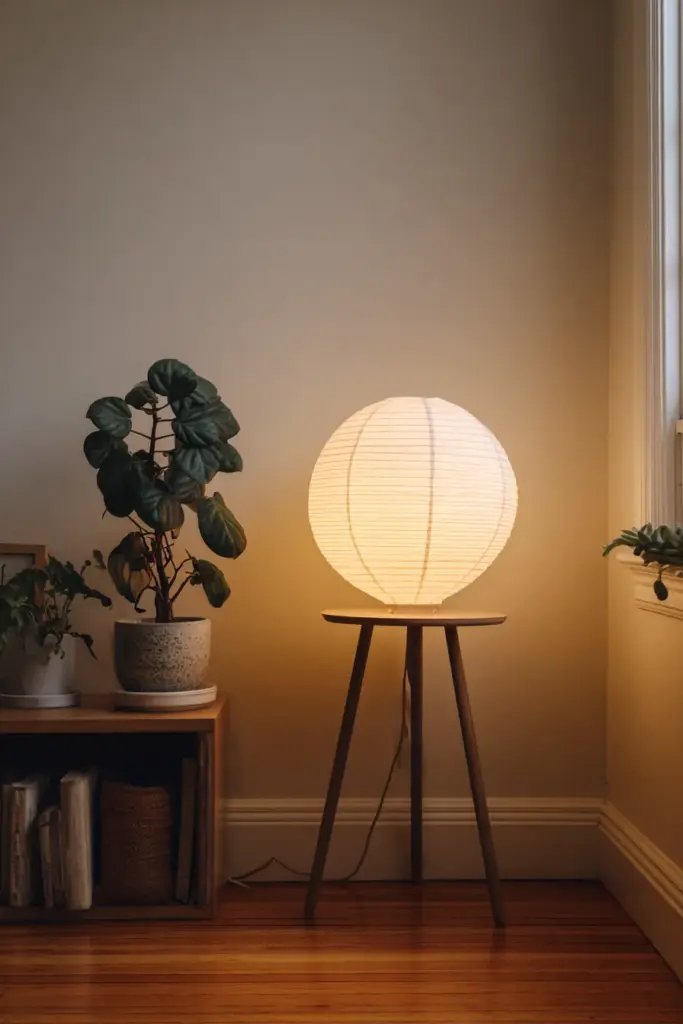
Paint affordable metal lamps with matte black spray paint, then add wooden beads or leather cord wraps for Japandi character. Transform basic IKEA pieces by replacing plastic shades with natural linen or rice paper versions.
Scour secondhand shops for vintage brass task lamps—they bring patina and history while perfectly complementing the Japandi ethos of quality pieces that endure.
Placement Guidelines for Optimal Function
Reading Nooks and Seating Areas
Position floor lamps or table lamps 18-24 inches above the seat surface for comfortable reading without neck strain. The light should fall over your shoulder, illuminating pages or screens without casting shadows.
For sofa-side reading, place table lamps slightly behind and to the side of where you sit—this creates a cone of light that reaches your book while avoiding glare in your peripheral vision.
Adjustable-arm fixtures let you fine-tune positioning as needed, especially useful in multipurpose seating areas where different people have different heights and preferences.
Work Surfaces and Desk Areas
Task lights for laptop work or writing should sit 15-20 inches above the desk surface, angled to minimize screen glare. Swing-arm desk lamps offer maximum flexibility, allowing you to adjust both height and direction.
Consider under-shelf lighting for desks positioned against walls with floating shelves above. This illuminates the workspace while keeping fixtures out of sight during the day.
Layer desk task lighting with gentle ambient light to reduce contrast between bright task areas and darker surroundings—this prevents eye fatigue during extended work sessions.
Side Tables and Console Surfaces
Flank sofas or beds with matching table lamps for symmetrical, balanced illumination. Choose slightly smaller fixtures (14-18 inches tall) for narrow side tables to maintain visual proportion.
On console tables behind sofas, taller lamps (22-28 inches) can provide ambient-task hybrid lighting—bright enough for nearby activities yet decorative enough to enhance the room’s overall aesthetic.
Maintain 36-48 inches between paired lamps to create balanced light distribution without crowding the visual space.
Material and Texture Considerations
Wood: The Japandi Foundation
Oak, walnut, ash, and bamboo bring natural warmth and organic texture to task lighting. Lighter woods like ash and oak suit Scandinavian-leaning Japandi, while darker walnut leans Japanese.
Wood grain becomes a design feature itself—each lamp base unique, each arm slightly different. This embrace of natural variation honors the Japanese concept of wabi-sabi, finding beauty in imperfection.
Combine wood with matte black metal for contrast, or pair different wood tones together—bamboo shades with walnut bases, oak arms with rattan accents.
Rattan and Woven Elements
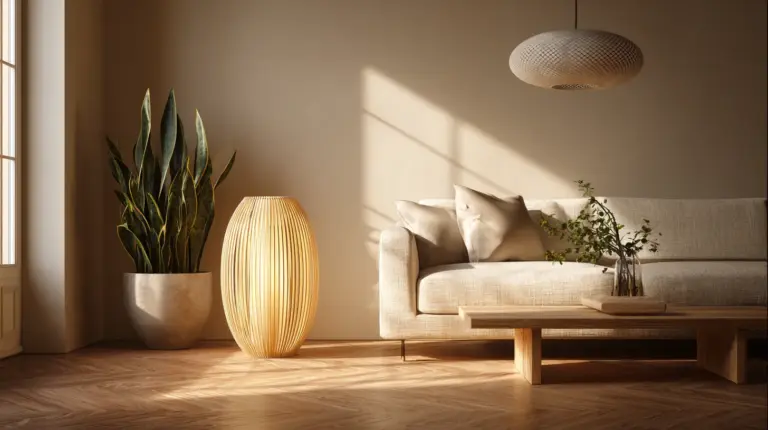
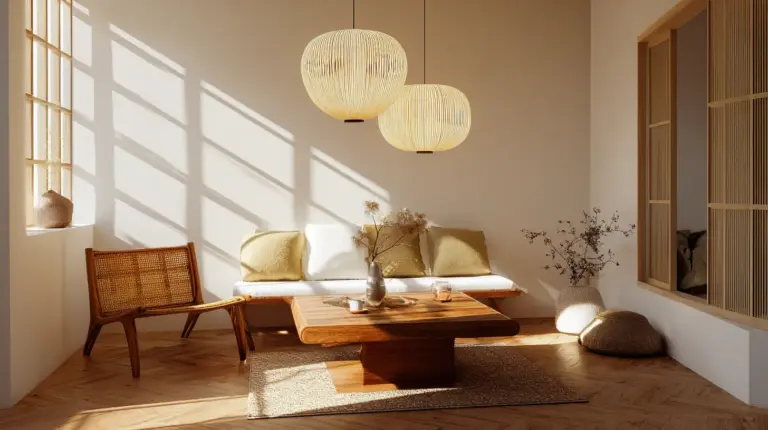
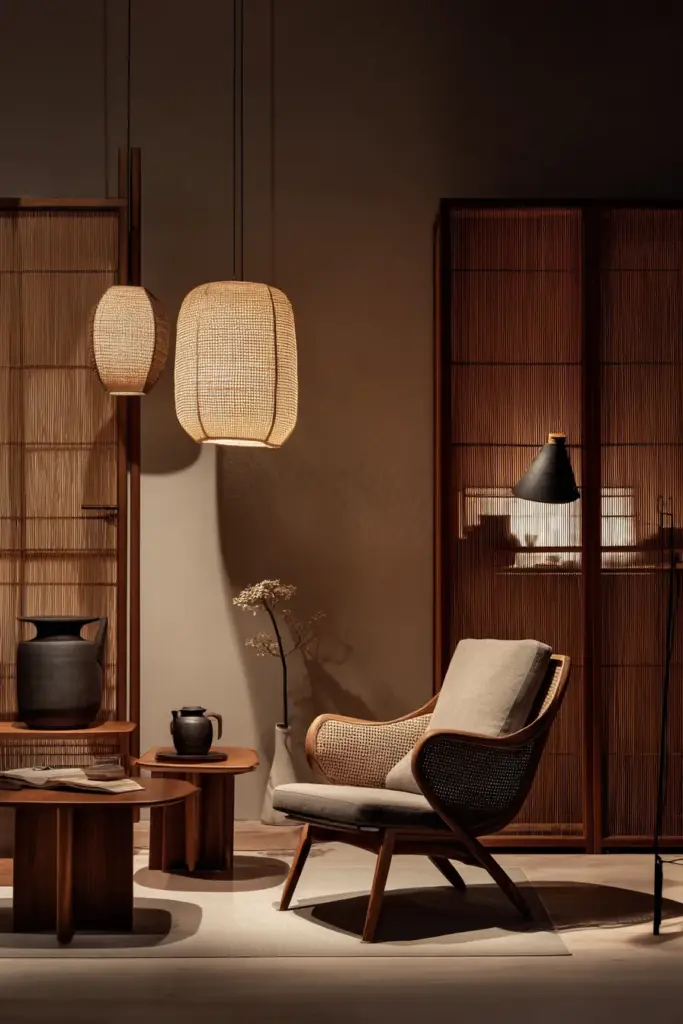
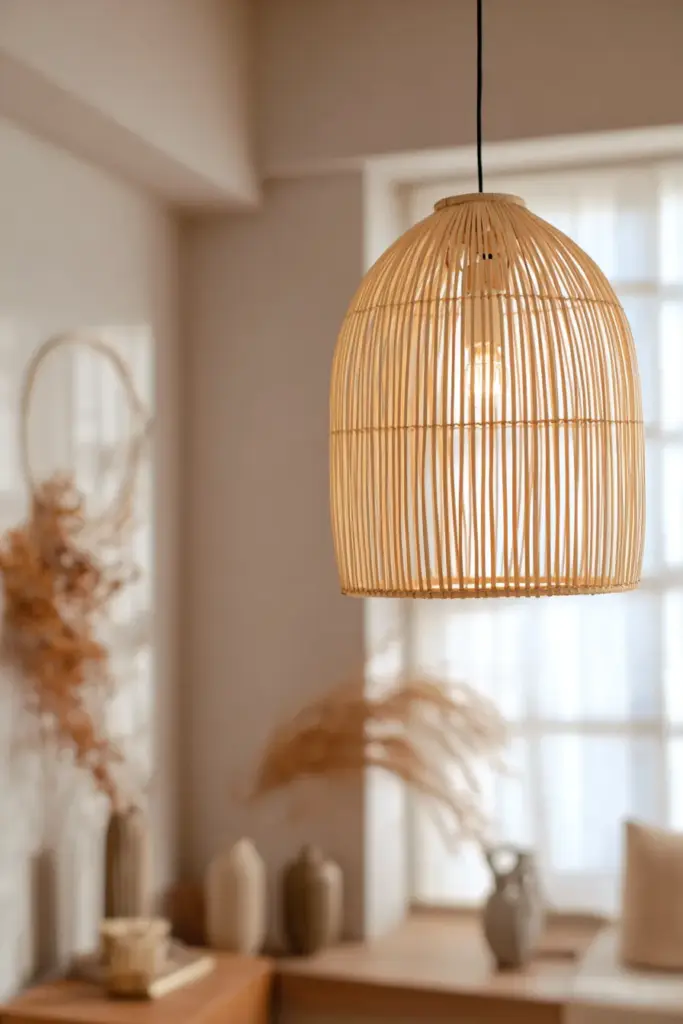
Woven rattan shades filter light beautifully, creating soft patterns and gentle shadows. They add texture and visual warmth while maintaining the natural material palette essential to Japandi.
Choose tightly woven rattan for more focused task light, or loosely woven for ambient-task crossover. The play of light through woven textures adds dimension to simple interiors.
Combine rattan with linen or cotton fabric liners to soften light further, creating warm glows perfect for evening reading or relaxation.
Metal: Structure and Restraint
Matte black, brushed brass, or oil-rubbed bronze metals provide structural contrast to wood and fabric elements. They add visual weight and modernity without overwhelming natural materials.
Choose simple metal forms—straight arms, clean joints, minimal ornamentation. The metal should serve function (articulation, support, electrical housing) rather than decoration.
Powder-coated finishes resist fingerprints and maintain their appearance over time, essential for frequently adjusted task lamps.
Common Mistakes to Avoid
Matching all fixtures creates monotony—vary heights, shapes, and materials while maintaining a cohesive color palette and design language.
Positioning task lights too far away reduces effectiveness. Light intensity follows the inverse square law; doubling distance quarters the illumination reaching your task.
Ignoring dimmer capability means missing out on mood flexibility. Even task lights benefit from dimming when you need softer illumination or want to reduce contrast with ambient layers.
Choosing purely decorative fixtures that don’t actually illuminate tasks well wastes both money and space in intentionally minimal rooms.
Quick Reference: Japandi Task Lighting Essentials
- Optimal color temperature: 2700K-3500K for warm, comfortable illumination
- Minimum CRI rating: 90+ for accurate color rendering and reduced eye strain
- Reading height: 18-24 inches above seating surface for comfortable posture
- Desk task height: 15-20 inches above work surface with adjustable positioning
- Essential materials: Natural wood, bamboo, rattan, matte black metal, linen
- Lighting layers: Combine dimmable ambient + focused task + subtle accent
- Smart features: Matter-compatible bulbs, circadian support, voice control
- Sustainability markers: FSC-certified wood, recyclable aluminum, low-VOC finishes
- Budget options: IKEA hacks, upcycled materials, secondhand brass fixtures
- Control systems: Individual dimmer switches or smart bulb integration
Bringing It All Together
The best Japandi task lighting feels inevitable—as if it always belonged exactly where you placed it. It doesn’t demand attention or interrupt the flow of your carefully curated space.
Instead, it quietly supports your life. It illuminates your favorite novel without glare. It lights your workspace with clarity. It creates a warm pool of light that makes evening tea feel like a ritual rather than a routine.
This is lighting that respects both your activities and your aesthetic, that serves without showing off, that blends Scandinavian efficiency with Japanese restraint into something beautifully, functionally whole.
When you switch on your task lamp and settle into your favorite chair, surrounded by natural materials and warm light, you’re not just turning on a fixture. You’re activating a moment—one of comfort, focus, and quiet contentment. That’s the true purpose of Japandi task lighting.
Frequently Asked Questions
What is task lighting in Japandi living rooms?
Task lighting provides focused, functional illumination for specific activities like reading, working, or crafting without disrupting the room’s overall serenity. In Japandi spaces, it emphasizes natural materials, warm LEDs (2700K-3500K), and adjustable fixtures that blend minimalist aesthetics with practical purpose.
What are the best task amps for Japandi style?
Look for wood or bamboo table lamps with linen shades, adjustable floor lamps in matte black with wooden accents, and swing-arm sconces that save space. Choose fixtures with warm LED bulbs, CRI 90+, and dimmable capability to maintain the style’s characteristic warmth and flexibility.
How do I layer lighting in a Japandi living room?
Combine three independent layers: dimmable ambient lighting (overhead pendants or recessed lights), focused task lighting (table lamps, floor lamps, sconces), and subtle accent lighting (shelf strips, picture lights). Control each layer separately to adjust mood and functionality throughout the day.
Can I find budget-friendly Japandi task lighting?
Absolutely. Try IKEA hacks using natural materials, upcycled wood lamps with simple socket kits, battery-powered clip-on lights, or secondhand brass fixtures refinished in matte black. Under-shelf LED strips offer affordable, renter-friendly task illumination starting around $20-35.
Should Japandi task lights be warm or cool white?
Always choose warm white LEDs between 2700K-3500K. This range complements natural wood tones and neutral textiles while reducing eye strain and supporting healthy circadian rhythms. Avoid cool whites (4000K+) which feel harsh against Japandi’s warm, organic palette.