
Table of Contents
Light doesn’t just illuminate a room—it shapes how you feel within it.
In Japandi design, where Japanese minimalism meets Scandinavian warmth, lighting becomes more than functional. It’s an emotional anchor. A quiet conversation between shadow and glow that invites calm, focus, and a deep sense of home.
Understanding the psychology behind your living room lighting transforms your space from merely beautiful to genuinely nourishing. The right bulb temperature can lower your stress hormones. The placement of a floor lamp can shift your entire evening rhythm. And the interplay of light and shadow? That’s where wabi-sabi—the beauty of imperfection—truly lives.
Let’s explore how Japandi living room lighting works on your mind, body, and soul.
The Science of Light and Emotion in Japandi Spaces
Your brain responds to light long before you consciously notice it.
When warm light at 2700K-3000K washes over your living room walls, your body begins producing melatonin earlier in the evening. Research suggests this color temperature can reduce cortisol—your stress hormone—by 15-20% compared to cooler, blue-toned bulbs. That’s not just ambiance. That’s biochemistry working in your favor.
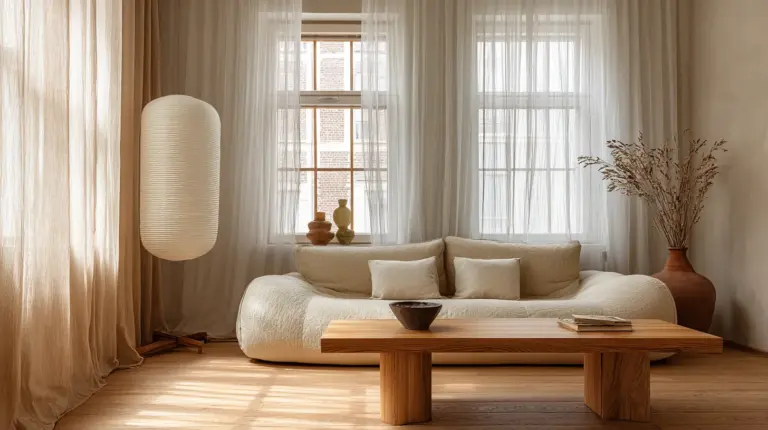
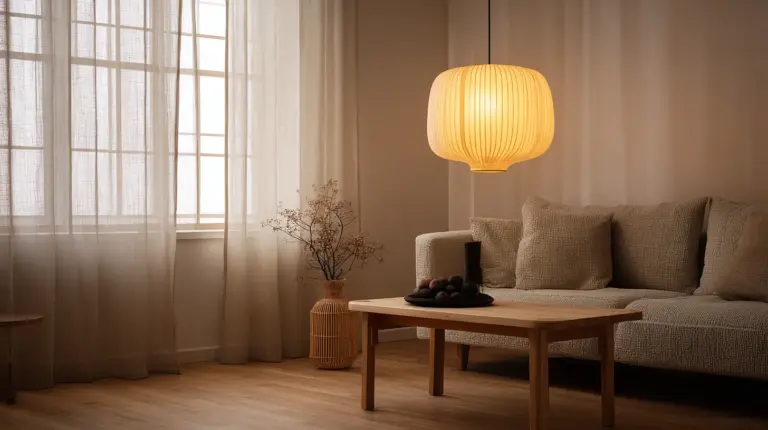
Japandi design harnesses this through intentional layering. Natural materials like bamboo and washi paper diffuse light gently, creating what designers call “soft illumination”—no harsh edges, no clinical glare. Just a steady, embracing warmth that tells your nervous system: you’re safe here.
The circadian rhythm connection is equally powerful. Your internal clock craves dimmer, amber tones as sunset approaches. Japandi lighting honors this ancient pattern by avoiding daylight bulbs (5000K+) in living spaces, reserving them only for task-focused reading nooks where alertness matters.
Why Warm White Bulbs Boost Hygge and Calm
Hygge—that Danish concept of cozy contentment—thrives under warm white light.
At 2700K-3000K, these bulbs mimic the glow of candlelight and early evening sun. Your pupils relax. Your breathing slows. Studies on environmental psychology show that people in warm-lit rooms report feeling 23% more comfortable during conversations than those in cool-lit spaces.
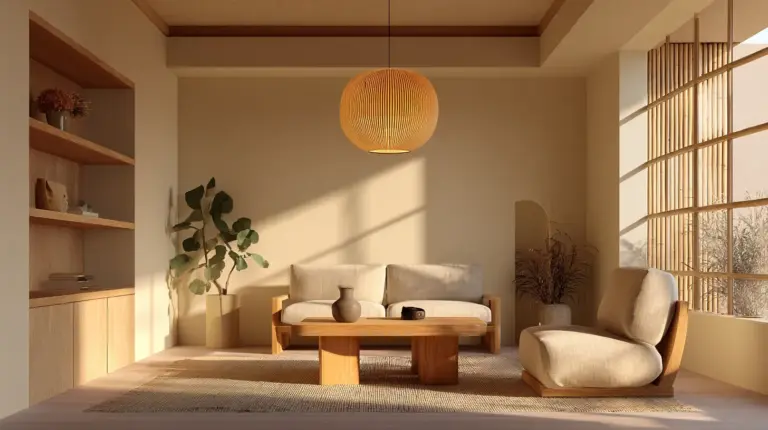
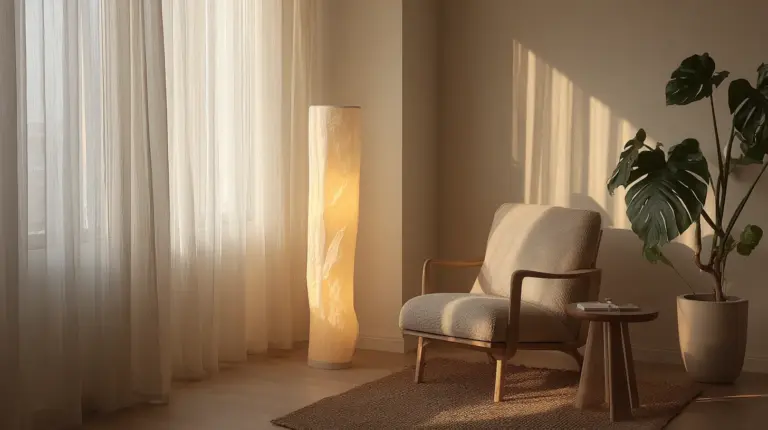
In a Japandi living room, this translates to floor lamps with linen shades casting pools of golden light across oak coffee tables. Picture a corner reading chair bathed in amber from a ceramic pendant, your book held in hands that feel less tense than they did an hour ago.
The psychological effect extends to social interaction. Warm light softens facial features, making family gatherings feel more intimate. It’s why Scandinavian homes glow at twilight—and why Japanese ryokans use lanterns to create sanctuary.
Layered Lighting: Building Emotional Depth Through Contrast
Single overhead lights flatten a room—and your mood with it.
Japandi design embraces layered lighting as emotional architecture. You need ambient light (the base), task light (the functional), and accent light (the soul). Each layer serves your psychology differently.
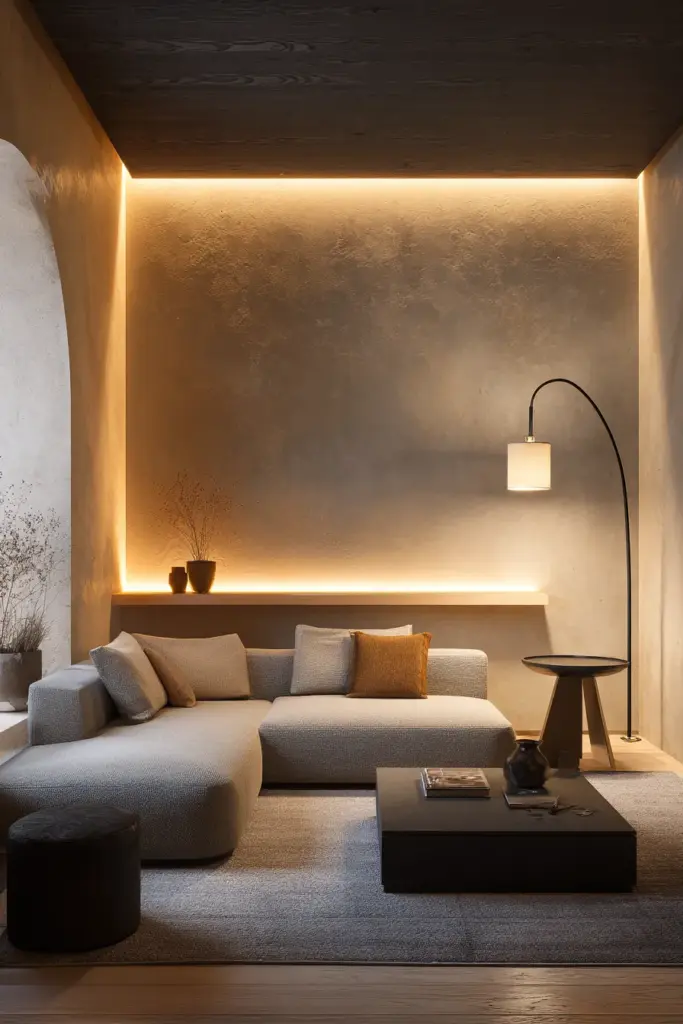
Start with indirect ambient lighting—perhaps LED strips behind floating shelves or uplights washing textured walls. This creates what lighting designers call “vertical illumination,” which expands perceived space and reduces anxiety by eliminating harsh shadows that trigger our primal fear responses.
Add task lighting where you actually live: a swing-arm lamp beside your sofa for reading, a dimmed pendant over your side table for journaling. These focused lights give your brain permission to concentrate without overstimulation.
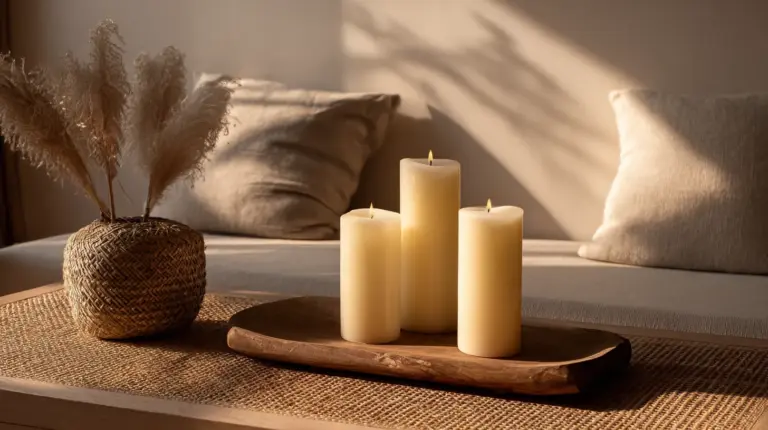
Finally, accent lighting—this is where shadow play becomes meditation. A small spotlight on a ceramic vase creates depth. A candle on your windowsill in a wooden holder adds flicker, which studies show can reduce blood pressure by signaling safety (fire = warmth, not threat, in our evolutionary wiring).
The Wabi-Sabi Magic of Shadow and Light
Perfection is sterile. Shadows are human.
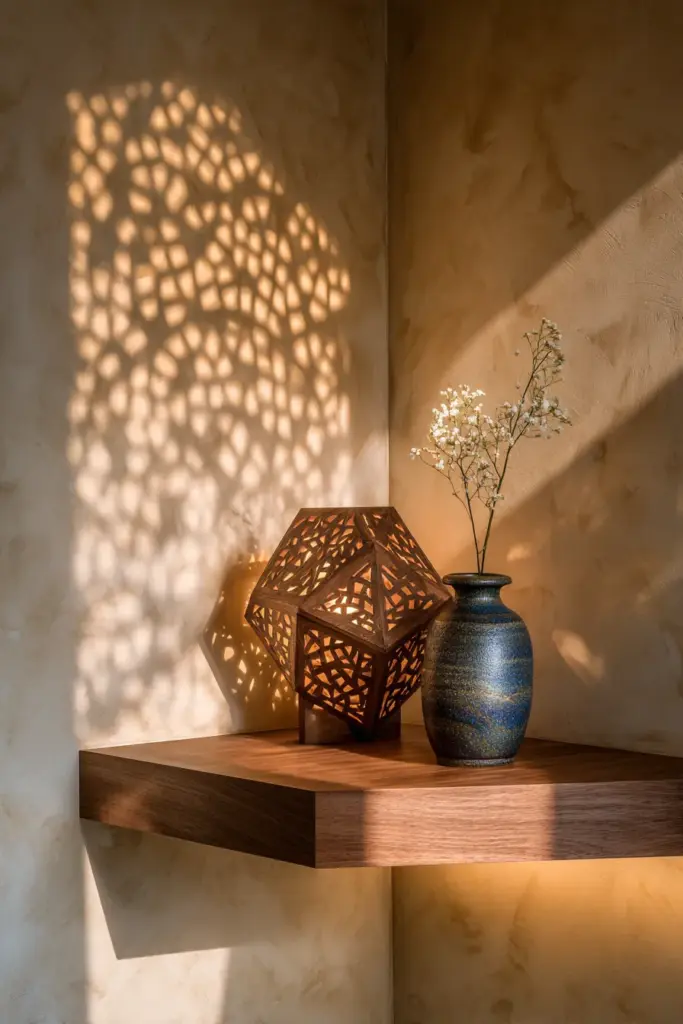
In Japanese aesthetics, wabi-sabi celebrates the imperfect, the incomplete, the transient. Japandi lighting psychology embraces this through deliberate shadow. A kumiko lamp—those geometric wooden screens—casts intricate patterns across walls, creating visual texture that invites contemplation.
Your mind needs this complexity. Research in environmental psychology shows that rooms with varied light and shadow patterns increase creative thinking by 17% compared to uniformly lit spaces. The brain stays gently engaged, not bored, not overwhelmed.
Try a bamboo floor lamp with cut-out designs near your seating area. As evening deepens, those shadows shift. You notice them without effort. This passive engagement is restorative—the opposite of doom-scrolling’s active strain.
The emotional payoff is profound: you feel present. Grounded. Aware of time passing in a way that soothes rather than stresses.
Color Temperature and Psychological Effects: A Practical Guide
Not all bulbs serve the same emotional purpose.
Here’s how different temperatures affect your Japandi living room experience:
| Bulb Type | Kelvin Range | Psychological Effect | Japandi Living Room Use |
|---|---|---|---|
| Warm White | 2700K-3000K | Calms anxiety, boosts hygge feelings, promotes melatonin production | Floor lamps, pendant lights for evening relaxation |
| Neutral White | 3500K-4100K | Maintains alertness without agitation, balances energy | Transitional spaces, multi-purpose areas |
| Daylight | 5000K+ | Increases alertness and focus (can disrupt sleep if overused) | Task reading spots only, home office corners |
| Amber Glow | 2200K | Enhances deep relaxation, prepares body for sleep | Dimmed accent lamps, bedside lighting |
For your living room, prioritize warm white as your foundation. Use it in all primary fixtures—your main floor lamp, any pendant over seating, wall sconces flanking your media console.
Reserve cooler tones for the single reading chair where you tackle challenging books. Your brain will appreciate the functional distinction: warm = rest, cool = focus.
And for those final hours before bed? Switch to amber glow using dimmer switches or smart LED bulbs. Your cortisol levels will thank you, and you’ll fall asleep 30% faster according to circadian rhythm studies.
Smart LED Integration for Dynamic Circadian Support
Modern technology can honor ancient rhythms.
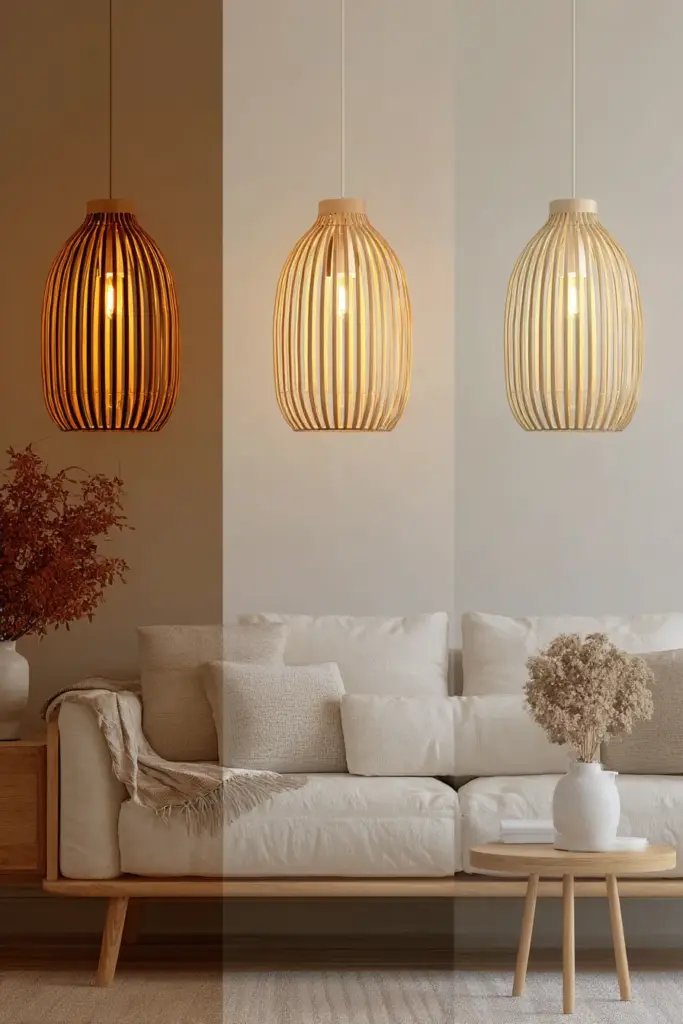
App-controlled smart LEDs let you shift color temperature throughout the day without changing bulbs. Start with 3500K in late afternoon, transition to 2700K by dinner, and dim to 2200K amber before bedtime.
This circadian lighting approach mirrors natural sunlight patterns, supporting your body’s internal clock. Users report improved sleep quality, reduced evening anxiety, and better morning alertness.
In Japandi design, pair these bulbs with natural material fixtures—a washi paper pendant with a Philips Hue bulb, a bamboo floor lamp housing a Kasa smart LED. The contrast is intentional: high-tech core, organic exterior. Function wrapped in soul.
Budget-friendly options exist. A basic smart bulb costs under $15, transforming your existing lamps into circadian-friendly tools. For Manila-based readers, local sustainable options like bamboo table lamps (₱1,500-₱2,000) pair beautifully with standard smart bulbs from Lazada or Shopee.
Biophilic Lighting: Combining Plants and Lamps for Serotonin Boost
Nature and light amplify each other’s psychological benefits.
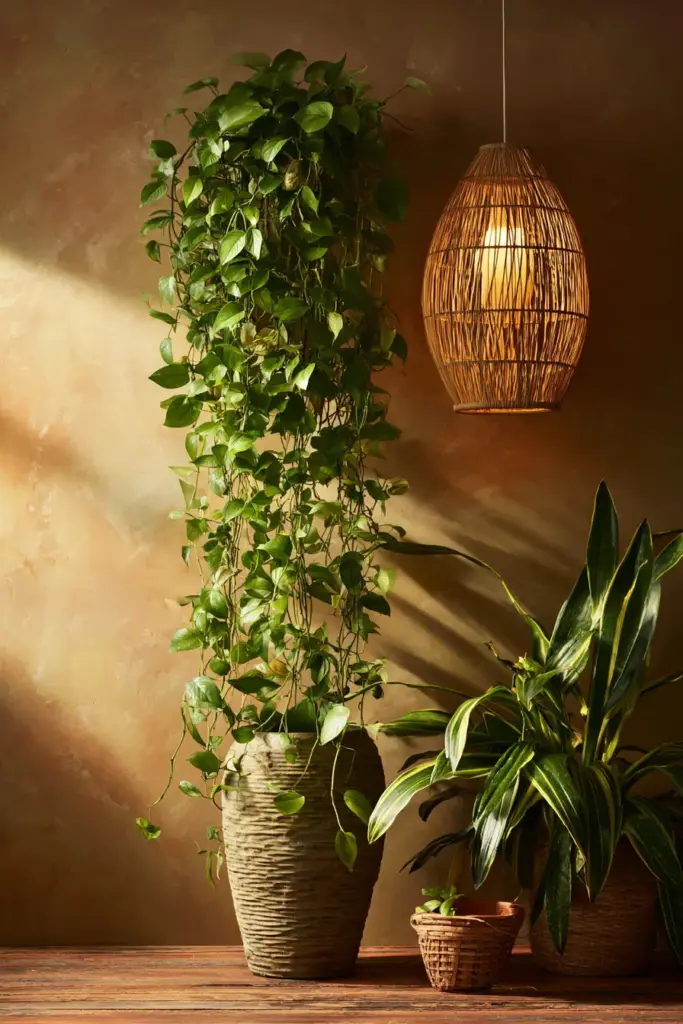
Biophilic design—integrating natural elements into interiors—shows measurable mental health improvements. Adding a pothos plant near a warm-lit floor lamp doesn’t just look beautiful. Studies suggest this combination can increase serotonin production by creating what researchers call “naturalistic focal points.”
Your eye seeks the plant. The warm light makes it glow. Your brain registers: life, growth, safety.
In a Japandi living room, try these pairings:
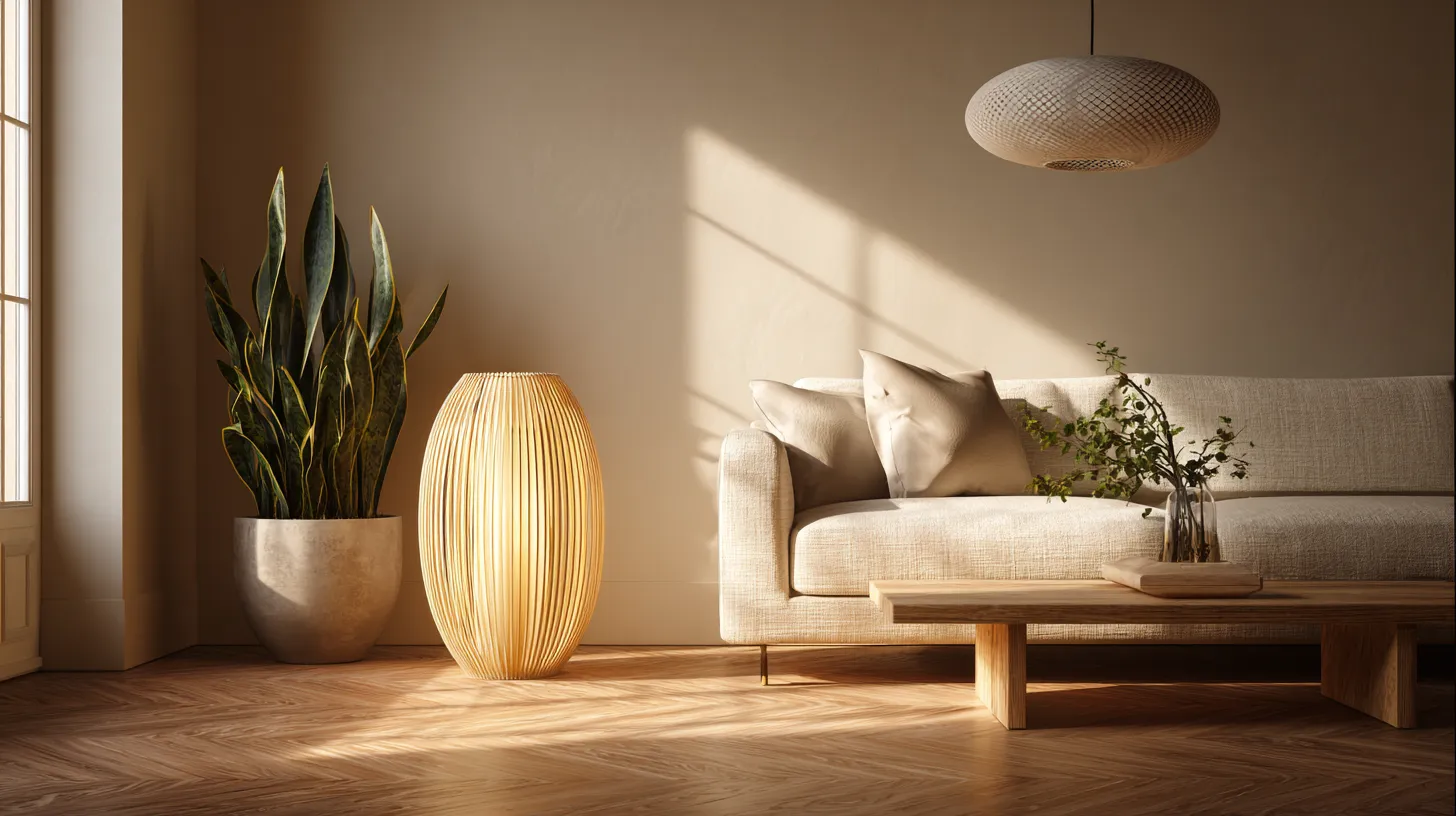
- A snake plant in a ceramic pot beside a linen-shaded lamp
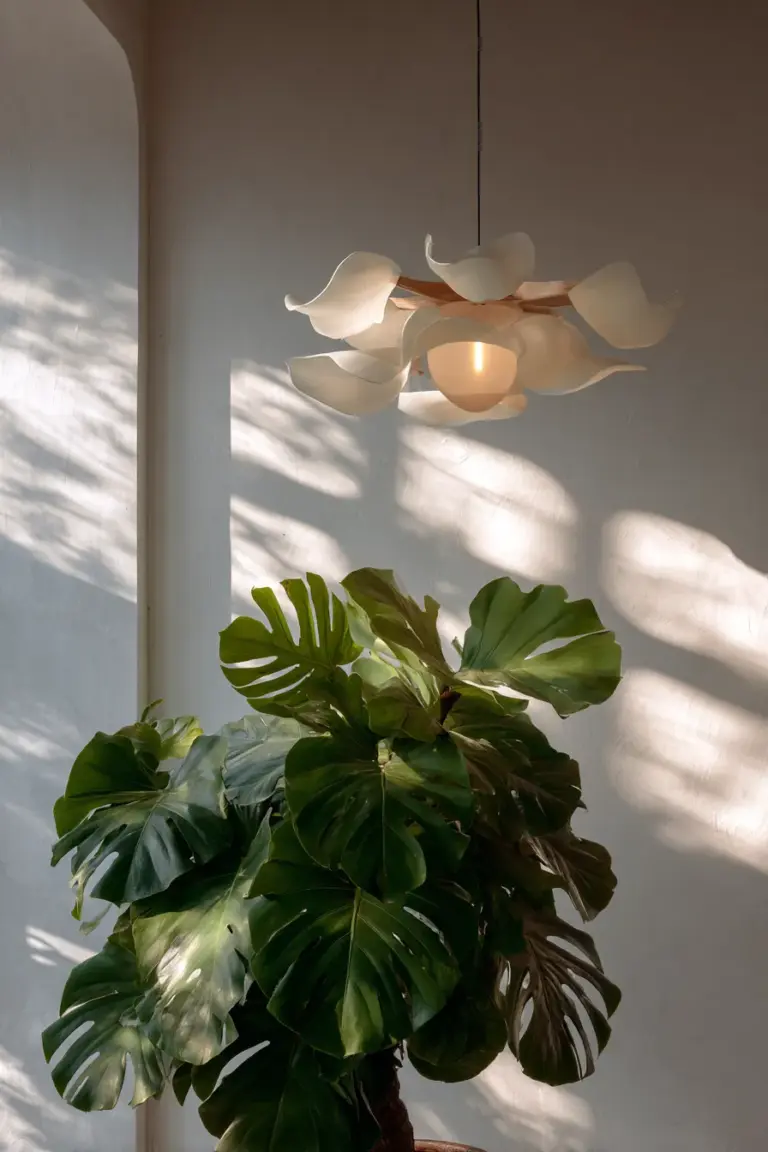
- Hanging pothos cascading near a washi pendant
- Fiddle leaf fig anchoring a corner with an arcing floor lamp
The leaves create natural shadow play as air moves them. This micro-movement is psychologically grounding—your nervous system recognizes it as “normal environmental variation,” which paradoxically calms hypervigilance.
Water your plants in the evening under warm light. The ritual becomes meditative, the sensory experience complete: damp earth scent, leaf texture, golden glow.
Japandi Lighting Ideas for Small Living Rooms
Limited space demands strategic light psychology.
Small rooms can feel cramped under harsh overhead lighting. Japandi design solves this through shadow-minimizing techniques that expand space psychologically without physical clutter.
Use indirect lighting exclusively. Uplights washing walls create vertical emphasis, making ceilings feel higher. LED strips behind floating shelves add depth without occupying floor space.
Choose multi-functional fixtures. A floor lamp with a built-in side table serves two needs. A pendant with adjustable height can shift from ambient to task lighting depending on your activity.
Avoid corner darkness—it shrinks perceived space and triggers mild spatial anxiety. Place a small ceramic table lamp in far corners, creating visual connectivity. Your brain reads the room as larger because light occupies the “unused” areas.
For Manila apartments averaging 30-50 square meters, prioritize one excellent floor lamp (₱3,000-₱5,000) over multiple cheap fixtures. Quality warm-white LED in natural material housing transforms the entire room’s emotional tone.
Shadow-Minimizing Tips for Compact Spaces
Strategic light placement prevents the closed-in feeling small rooms can create.
First, use multiple low-wattage sources instead of one bright bulb. Three 40-watt equivalent LEDs in different corners feel more spacious than one 120-watt overhead.
Second, bounce light off walls rather than aiming it downward. Wall-washing uplights create ambient glow that eliminates harsh shadows while preserving intimacy.
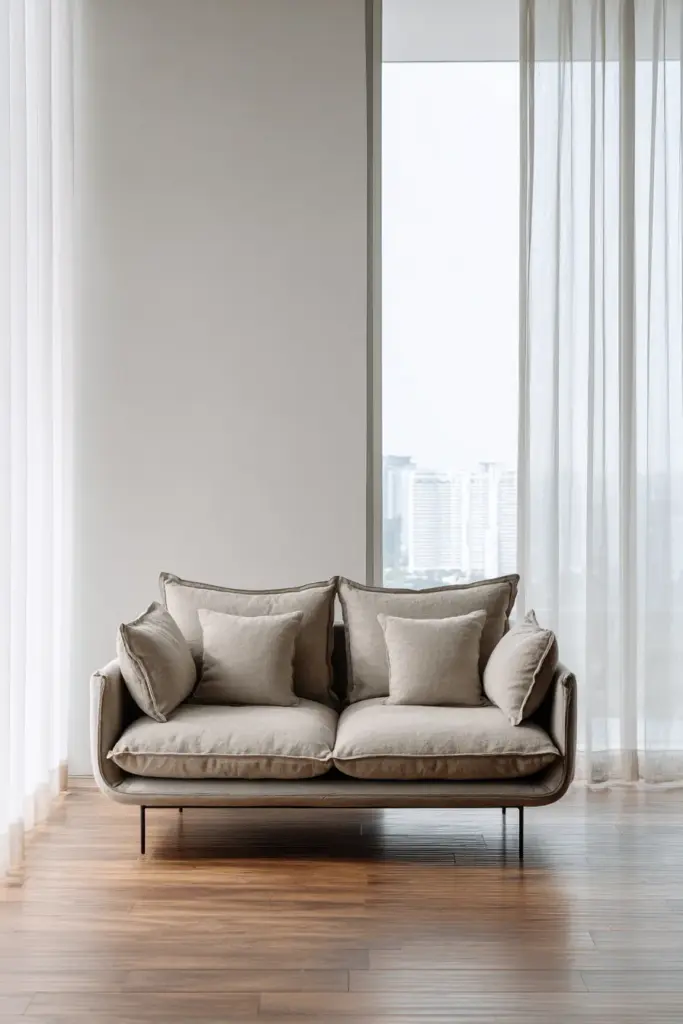
Third, incorporate reflective natural materials. A light oak coffee table reflects warm lamp light subtly. A cream linen sofa does the same. These materials diffuse light horizontally, filling visual gaps without adding fixtures.
Mirrors deserve mention but use them carefully. One large mirror opposite a window amplifies natural daylight—psychologically beneficial. Multiple mirrors can feel disorienting, disrupting the calm Japandi seeks.
Budget-Friendly DIY Japandi Lighting Hacks
Beautiful lighting doesn’t require luxury budgets.
Under ₱2,500, you can create psychologically nourishing Japandi lighting through creative sourcing. Start with basic materials: bamboo placemats (₱200 for four), hemp rope (₱150 per meter), rice paper (₱100 per sheet).
DIY Washi Pendant (under ₱1,000):
Purchase a paper lantern frame (₱300), apply rice paper with non-toxic glue (₱200), add warm white LED bulb (₱200), hang with bamboo-wrapped cord (₱150). Total: ₱850.
The psychological effect rivals ₱5,000+ designer pendants. Your brain responds to material quality and light diffusion, not price tags.
Bamboo Accent Lamp (under ₱1,500):
Buy bamboo placemat (₱200), roll into cylinder, secure with hemp rope (₱150), attach to basic IKEA lamp base (₱800), add 2700K bulb (₱200). Total: ₱1,350.
The handmade element adds psychological value—you touched it, built it, gave it intention. Studies on object attachment show DIY décor increases perceived comfort in spaces by 40% compared to store-bought equivalents.
For Manila makers, Divisoria offers bamboo and natural materials at fraction retail costs. Pair with smart bulbs from Shopee (₱400-₱600) for circadian functionality on a budget.
Key Takeaways: Japandi Living Room Lighting Essentials
Before we conclude, here are your core psychological lighting principles:
- Prioritize 2700K-3000K warm white bulbs for 80% of living room lighting to reduce stress hormones
- Layer three types of light—ambient, task, accent—to create emotional depth and visual interest
- Embrace shadow play through kumiko lamps or bamboo fixtures for wabi-sabi contemplation
- Use dimmer switches or smart LEDs to adjust color temperature throughout the evening
- Combine plants with warm lamps for biophilic serotonin boost and grounding focal points
- Choose indirect lighting in small spaces to expand perceived room size psychologically
- Invest in natural materials—bamboo, wood, washi, linen—that diffuse light organically
- Avoid cool daylight bulbs (5000K+) in relaxation zones to protect circadian rhythms
Each choice you make with light is a choice for your nervous system.
Conclusion: Light as a Language of Care
Your living room lighting speaks to you every evening, whether you’ve been listening or not.
By understanding Japandi lighting psychology, you’re not just decorating—you’re designing for your deepest human needs. For calm after chaotic days. For connection during family evenings. For the quiet moments when a book and a lamp feel like sanctuary.
The warmth of 2700K isn’t just a number. It’s your body remembering firelight from millennia ago, knowing it’s time to rest. The shadow from a bamboo lamp isn’t decorative—it’s your mind finding complexity to gently rest upon.
This is what thoughtful lighting offers: a home that holds you as carefully as you’ve chosen to hold it.
Start with one change. One warm bulb. One natural fixture. Notice how you feel in that new light.
And let your living room become what it was always meant to be—a place that doesn’t just look beautiful, but feels like coming home.
Frequently Asked Questions
What color temperature is best for Japandi living room lighting?
The ideal range is 2700K-3000K warm white. This temperature mimics natural evening light and candlelight, promoting melatonin production and reducing cortisol by up to 20%. It creates the hygge warmth central to Japandi design while supporting your circadian rhythm. Reserve cooler temperatures (5000K+) only for task reading areas where alertness matters.
How does lighting affect mood in Japandi design?
Japandi lighting reduces stress through diffused illumination and intentional shadow play. Warm-toned bulbs calm the nervous system, while natural materials like washi and bamboo create gentle light distribution without harsh glare. The wabi-sabi approach to shadow adds visual depth that keeps the mind engaged without overstimulation, promoting both relaxation and creativity.
What are Japandi lighting ideas for small living rooms?
Focus on layered, indirect lighting to expand space psychologically. Use uplights to wash walls vertically, LED strips behind floating shelves for depth, and one quality floor lamp rather than multiple fixtures. Choose multi-functional pieces and eliminate corner darkness with small accent lamps. This approach minimizes shadows that make rooms feel cramped while maintaining the intimate warmth Japandi design values.
Do dimmer switches really reduce anxiety?
Yes—dimmers allow you to adjust light intensity to match your body’s natural rhythms. Gradually lowering light as evening progresses signals your brain to produce melatonin, reducing cortisol and preparing you for rest. Smart LED dimmers with app control let you shift color temperature as well, moving from 3000K in early evening to 2200K amber before bed for optimal circadian support.
Can I achieve Japandi lighting on a budget?
Absolutely. Prioritize one excellent warm white LED bulb (₱200-₱400) in a natural material fixture over multiple cheap options. DIY washi pendants cost under ₱1,000 using rice paper and basic frames. Manila-based readers can find sustainable bamboo lamps for ₱1,500-₱2,000 locally. The psychological impact comes from light quality and material authenticity, not price—your nervous system responds to warmth and natural diffusion regardless of cost.