
Table of Contents
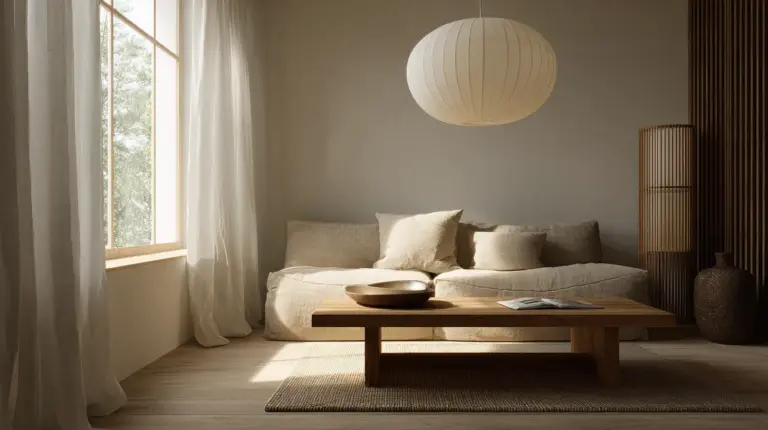
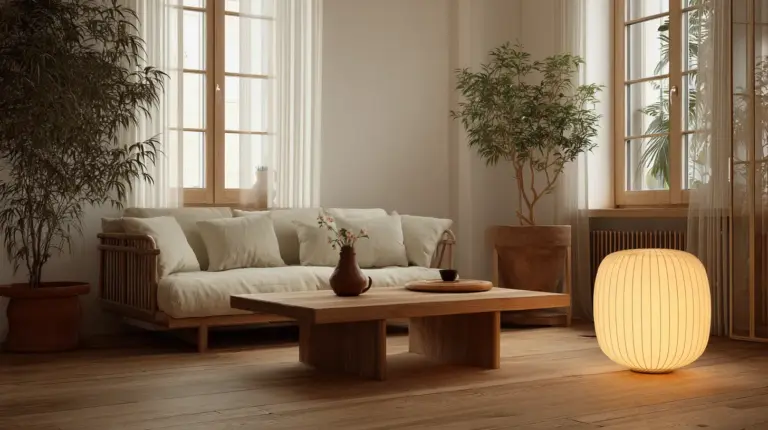
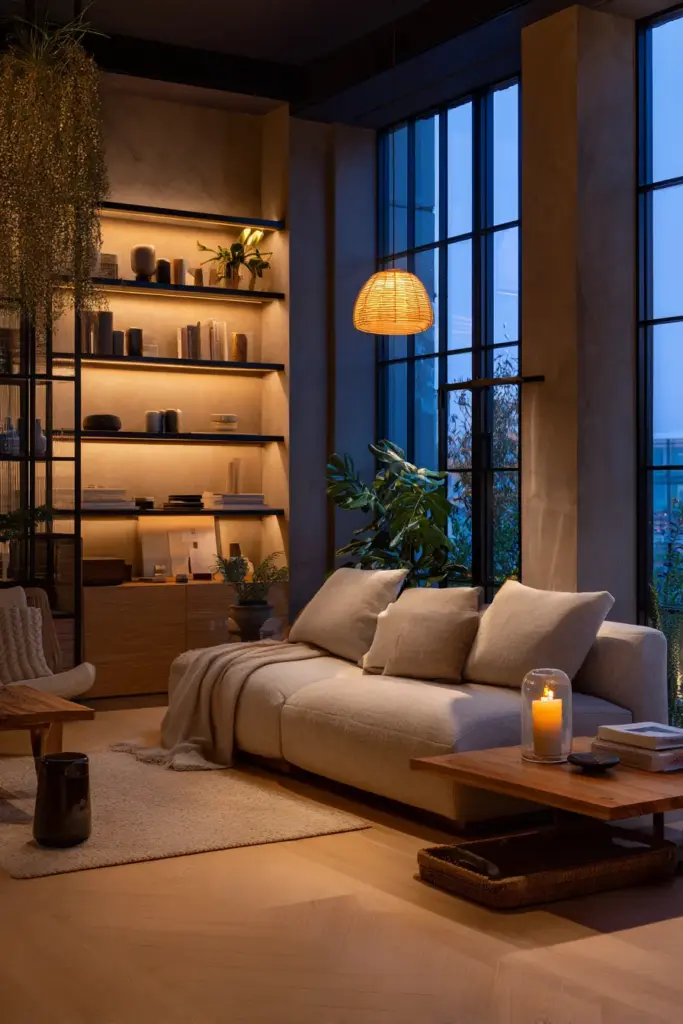
Imagine stepping into your living room at dusk. The warm glow from a washi pendant spills softly across textured linen, while a bamboo floor lamp pools light over your favorite reading nook. The air feels still, intentional—every corner alive with gentle illumination that breathes calm into the space.
This is the heart of Japandi lighting layering. It’s not about filling a room with brightness; it’s about sculpting light to honor both function and feeling. In Japandi design, lighting becomes a quiet conversation between Japanese minimalism and Scandinavian hygge—a dance of warmth, natural materials, and purposeful restraint.
Whether you’re styling a compact Manila condo or reimagining a spacious family sala, layered lighting transforms your living room into a sanctuary. Let’s explore how to build this luminous harmony, one thoughtful layer at a time.
Understanding the Three Essential Layers of Japandi Lighting
Layered lighting isn’t a trend—it’s an artful system that mirrors how we naturally experience light throughout the day. In Japandi spaces, this approach becomes even more intentional, blending soft ambient glow with focused task lighting and delicate accent moments.
Ambient Lighting: The Foundation of Calm
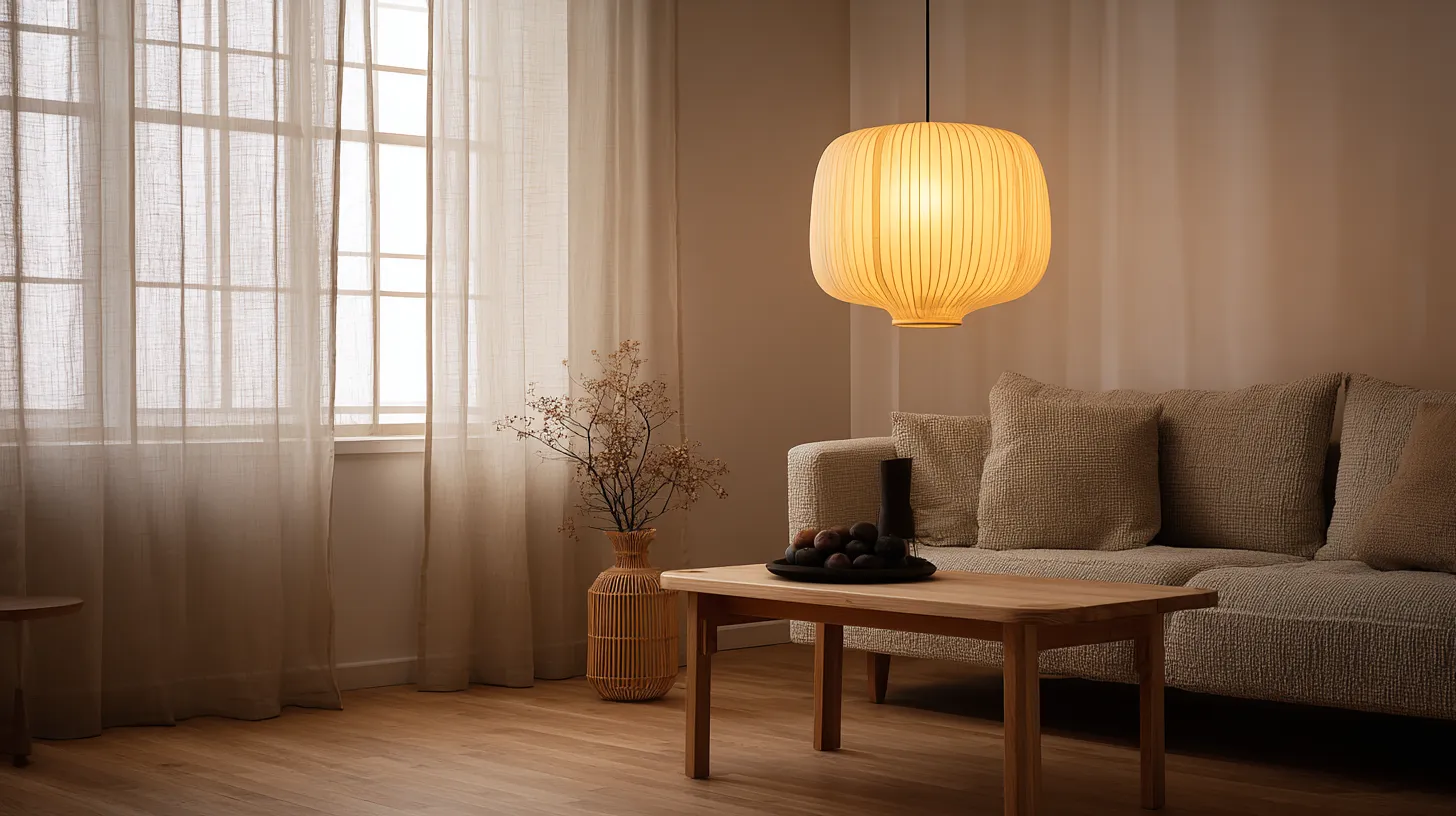
Ambient lighting sets the mood for your entire living room. Think of it as the gentle wash of morning light through sheer curtains—unobtrusive, enveloping, essential. In Japandi design, this layer favors indirect sources that diffuse rather than dominate.
Ceiling-mounted pendant lights crafted from washi paper or woven bamboo create this foundational glow beautifully. Choose warm-toned LED bulbs in the 2700K-3000K range to evoke the soft warmth of candlelight. These color temperatures boost serotonin by approximately 20%, transforming your space into a haven of well-being.
For smaller Manila condos where ceiling height matters, consider flush-mount fixtures in natural wood finishes. They provide essential illumination without overwhelming compact dimensions. Always pair with dimmer switches—this simple addition lets you shift from energizing afternoon light to cozy evening ambiance with a single touch.
Task Lighting: Function Meets Beauty
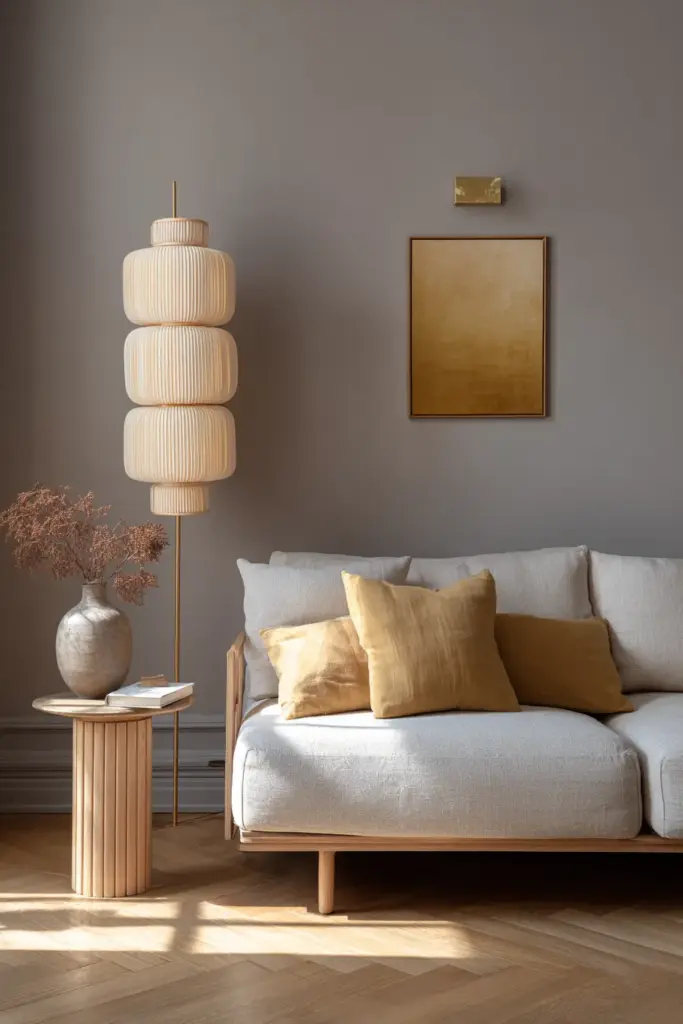
Task lighting serves your daily rituals—reading, working on a laptop, or enjoying coffee with a friend. But in Japandi aesthetics, even the most functional pieces carry quiet beauty. Bamboo floor lamps with linen shades, minimalist arc lamps in matte black, or ceramic table lamps with organic shapes all serve this dual purpose.
Position task lighting at varying heights to create visual rhythm. A tall floor lamp beside your sofa balances a lower table lamp on a wooden side table. This layered approach prevents monotony while ensuring every seating area has the focused light it needs.
Look for dimmable options here too. A reading lamp that shifts from bright task light to gentle glow extends its usefulness from afternoon productivity to evening relaxation. In humid Philippine climates, choose fixtures with moisture-resistant finishes—bamboo treated with natural oils or ceramics with sealed glazes resist the challenges of tropical weather beautifully.
Accent Lighting: Moments of Quiet Drama
Accent lighting whispers rather than shouts. It draws the eye to treasured objects, architectural details, or beloved plants—adding depth and personality without clutter. In Japandi living rooms, this layer celebrates the beauty of simplicity.
Wall sconces flanking a piece of wabi-sabi pottery create gentle pools of light that emphasize texture. LED strips tucked beneath floating shelves illuminate collections of handmade ceramics with a soft underglow. Small spotlights angled toward a fiddle-leaf fig or monstera plant cast dancing shadows that bring nature’s movement indoors.
The key is restraint. Choose one or two focal points rather than lighting everything. This selective approach honors the Japandi principle of ma—the intentional use of negative space that allows each element to breathe.
Choosing the Right Japandi Lighting Fixtures
Natural materials form the soul of Japandi lighting. Every fixture should feel like it emerged from the earth—crafted with intention, designed to age gracefully, chosen to complement rather than compete with your space.
Washi Paper Lanterns: Diffused Poetry
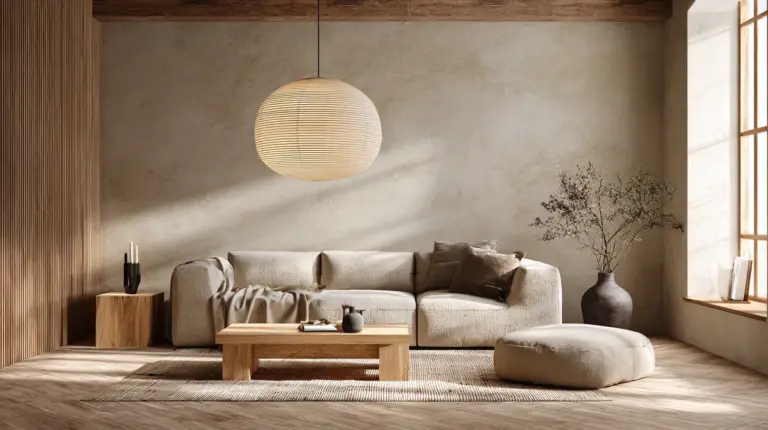
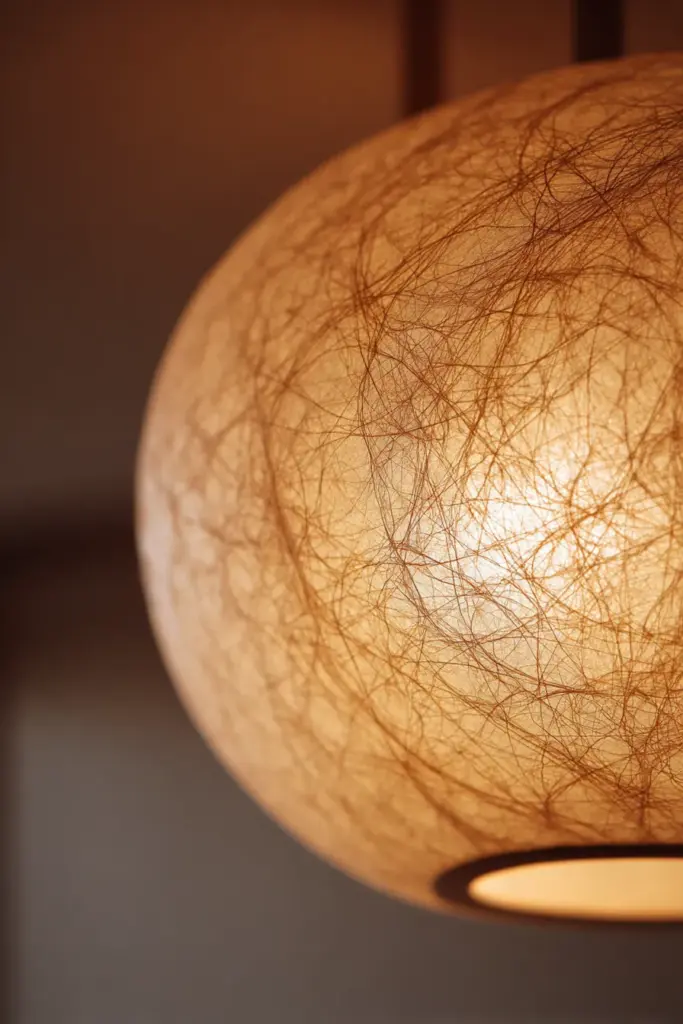
Washi paper lanterns remain iconic for good reason. These traditional Japanese fixtures filter light through delicate mulberry fibers, creating a diffused glow that softens every angle. The effect is ethereal—light becomes almost touchable, filling your room with gentle warmth.
Hang a large washi pendant as your primary ambient source, or cluster smaller versions at different heights for visual interest. In the Philippines, you can find beautiful options at local markets or online platforms like Shopee and Lazada, with quality pieces ranging from PHP 1,000 to PHP 3,000.
Maintain these treasures by dusting gently with a soft brush monthly. In humid climates, ensure adequate ventilation to prevent moisture buildup. The natural breathability of washi paper actually helps—but position fixtures away from direct moisture sources.
Bamboo and Wood Fixtures: Grounded Elegance
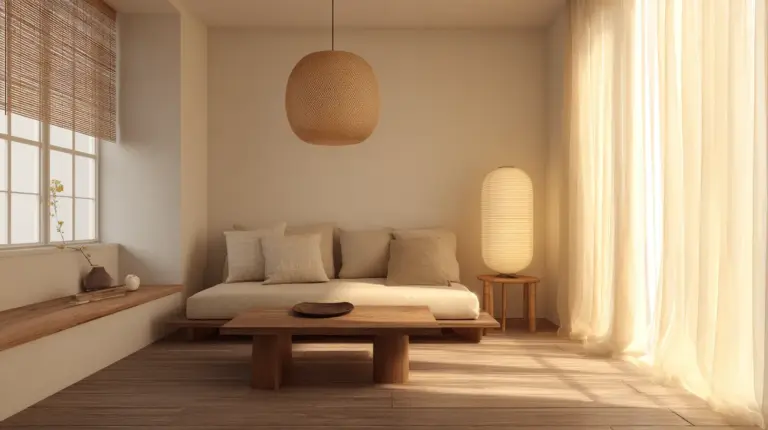
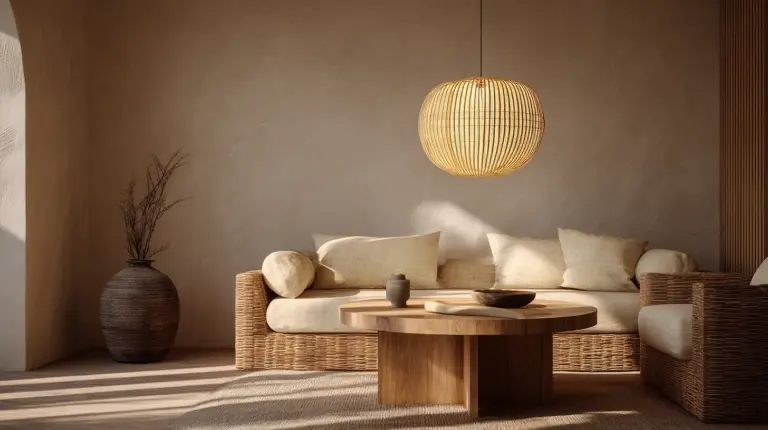
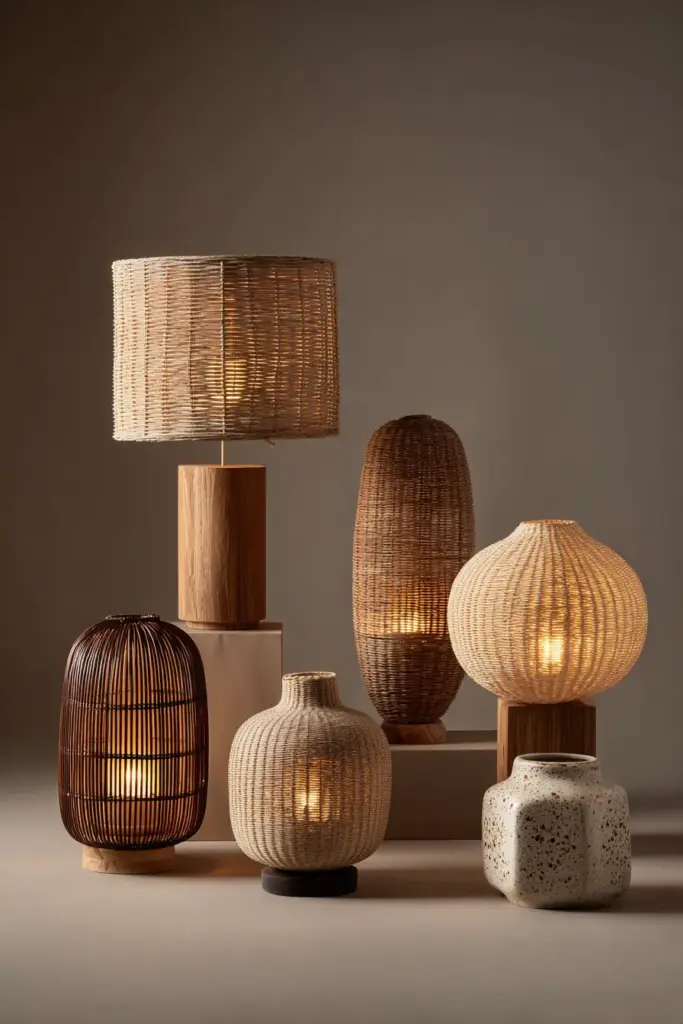
Bamboo lamps ground your lighting scheme in natural texture. Whether woven into intricate patterns or shaped into clean geometric forms, bamboo brings warmth without weight. Pair with warm LED bulbs to enhance the honey tones of the material.
Wood pendants in light oak, ash, or cypress offer Scandinavian simplicity with Japanese sensibility. Look for pieces with visible grain—these natural variations add character that mass-produced fixtures can’t replicate. In Manila’s humidity, choose bamboo treated with natural oils or wood sealed with water-resistant finishes.
Floor lamps with wooden tripod bases combine stability with sculptural beauty. They anchor seating areas while maintaining the airy, uncluttered aesthetic essential to Japandi design. Position them to cast light upward for ambient glow or downward for focused reading light.
Minimalist Metal and Ceramic: Modern Restraint
Not every Japandi fixture needs to be organic fiber. Matte black metal sconces, brushed brass arc lamps, or ceramic table lights in creamy neutrals all find their place in this aesthetic. The key is choosing pieces with clean lines and understated elegance.
Ceramic lamps offer particular versatility. Their smooth surfaces catch light beautifully, and neutral glazes—from soft whites to warm grays—complement both Japanese minimalism and Scandinavian warmth. Handmade pieces with subtle imperfections honor wabi-sabi philosophy while adding personal character.
Metal fixtures work best as accent or task lighting. A slim black wall sconce disappears against the wall during the day but becomes a striking silhouette when illuminated. Choose LED-compatible fixtures for energy efficiency—they’ll serve you well for years while keeping electricity costs manageable.
Layering Lighting in Small Manila Condos
Limited space demands creative solutions. The good news? Japandi’s minimalist approach actually thrives in compact living rooms. The strategy shifts from multiple floor lamps to space-saving wall mounts, multifunctional pieces, and clever vertical thinking.
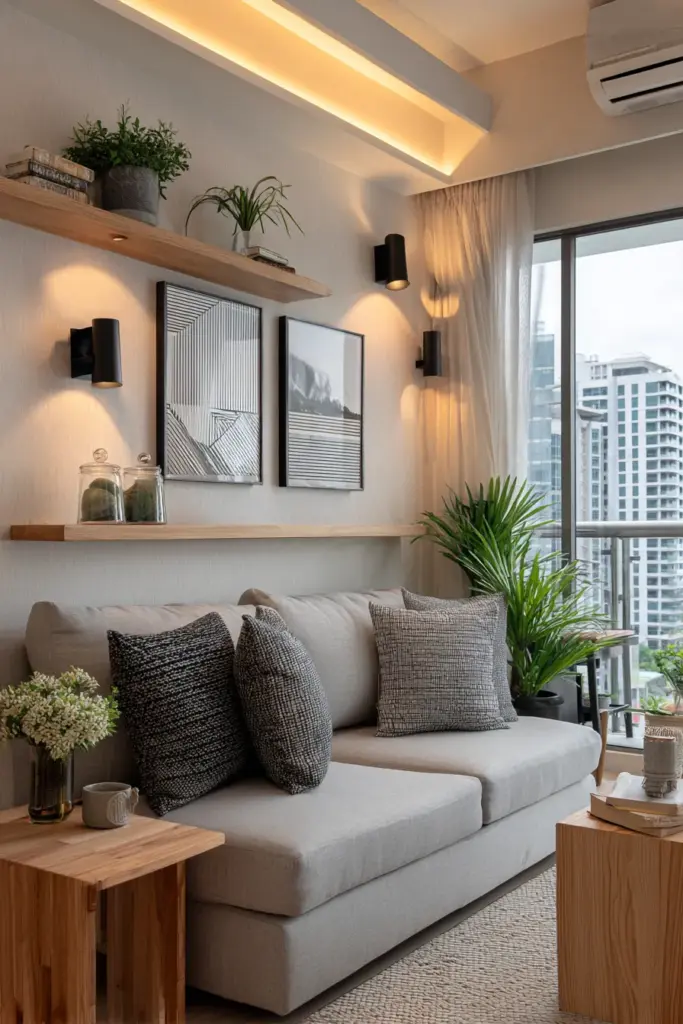
Wall-mounted sconces free precious floor space while providing essential task and accent lighting. Position them 60-65 inches from the floor for optimal reading light beside a sofa. Choose swing-arm versions for adjustability—they extend when needed and tuck away when not in use.
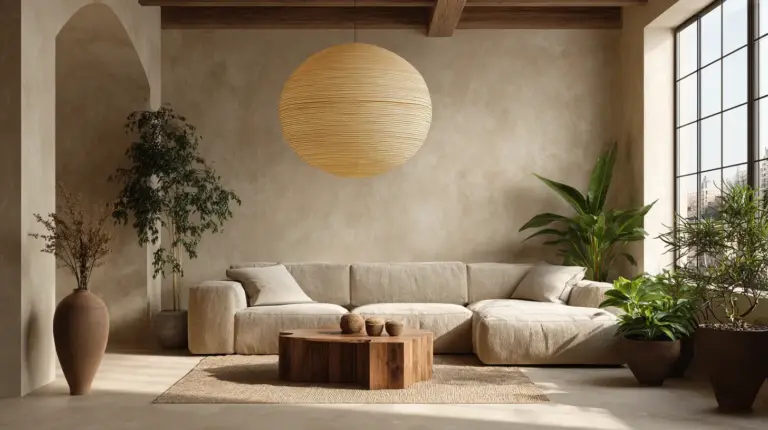
Replace bulky floor lamps with slim pendant lights hung at varying heights. This vertical layering draws the eye upward, making your ceiling feel higher while saving valuable square meters. In studio condos, a single statement pendant over your living area can serve as both ambient light and visual anchor.
Dimmable LED strips offer another space-saving solution. Install them beneath floating shelves, behind your TV console, or along crown molding for indirect ambient glow. Smart versions controlled via phone apps let you adjust brightness and even color temperature—shifting from energizing 4000K for daytime productivity to soothing 2700K for evening relaxation.
Budget-Friendly Japandi Lighting in the Philippines
Creating layered Japandi lighting doesn’t require emptying your savings. Strategic shopping and thoughtful prioritization let you build a beautiful lighting scheme within realistic budgets. Here’s how to maximize impact while minimizing cost.
Top 10 Affordable Japandi Fixtures (PHP 1,000-5,000)
| Fixture Type | Price Range | Where to Find | Pros | Cons |
|---|---|---|---|---|
| Washi Paper Pendant | PHP 1,200-2,500 | Shopee, Lazada | Authentic diffused glow, lightweight | Requires gentle care in humidity |
| Bamboo Table Lamp | PHP 1,500-3,000 | Local markets, Dapitan | Natural texture, sturdy | Limited height options |
| Linen Shade Floor Lamp | PHP 2,800-4,500 | Mandaue Foam, Our Home | Soft light, neutral palette | Fabric needs occasional cleaning |
| Black Metal Wall Sconce | PHP 1,800-3,200 | Wilcon, Ace Hardware | Space-saving, modern | May require hardwiring |
| Ceramic Table Light | PHP 1,400-2,800 | SM Home, Rustans | Versatile, easy to clean | Heavier for moving |
| LED Strip Kit | PHP 800-1,800 | Ace Hardware, Shopee | Flexible placement, dimmable | Less authentic Japandi feel |
| Wooden Pendant Light | PHP 2,200-4,200 | Banawe, online shops | Warm tones, durable | Installation may need electrician |
| Paper Lantern Set (3pc) | PHP 1,500-2,800 | Divisoria, Cartimar | Affordable layering | Shorter lifespan |
| Rattan Floor Lamp | PHP 2,500-4,000 | Landmark, Ayala Malls | Filipino touch, textured | Bulkier footprint |
| Minimalist Arc Lamp | PHP 3,500-5,000 | IKEA, online retailers | Statement piece, adjustable | Higher price point |
DIY Upcycling: Transform What You Already Own
That basic IKEA REGOLIT pendant? Transform it with washi paper panels from craft stores for under PHP 500. The simple HOLMÖ floor lamp becomes Japandi-perfect with a natural linen shade replacement (PHP 300-600 at fabric shops in Divisoria).
Wrap existing lamp cords in jute twine or linen strips for organic texture. Swap harsh white bulbs for warm-toned LED versions—this single change costs PHP 150-300 per bulb but dramatically shifts the entire ambiance. Look for energy-efficient options that save on electricity bills over time.
Repurpose bamboo placemats or rattan chargers as pendant shade alternatives. Secure them with simple hardware from Ace Hardware, add a bulb socket, and you’ve created a custom fixture for under PHP 800. These DIY projects honor Japandi’s appreciation for craftsmanship while keeping costs accessible.
Smart Integration for Modern Japandi Living
Technology and tradition merge beautifully when approached with Japandi sensibility. Smart lighting systems like Philips Hue or local alternatives offer unprecedented control over your layered lighting scheme—all while maintaining the aesthetic calm you’re creating.
Dimmable smart bulbs let you program lighting scenes throughout the day. “Morning Energize” at 4000K helps you wake gently. “Afternoon Focus” at 3500K supports productivity. “Evening Unwind” at 2700K signals your body to relax. These shifts mirror natural circadian rhythms, supporting both wellness and ambiance.
Voice control through Google Home or Alexa means you adjust lighting without reaching for switches—essential when you’re curled up with a book or hosting guests. Set timers so lights gradually brighten before your alarm or dim as you prepare for sleep.
Choose smart fixtures in neutral finishes—white, black, bamboo, or natural wood. The technology should disappear into the design, not announce itself. Look for energy monitoring features that help reduce consumption—a practical benefit aligned with Japandi’s sustainable ethos.
Maintenance Tips for Humid Philippine Climates
Tropical weather presents unique challenges for natural lighting materials. Moisture, dust, and humidity require proactive care to keep your Japandi fixtures looking beautiful year after year. These simple maintenance rituals protect your investment.
Dust bamboo and washi fixtures weekly with a soft, dry microfiber cloth. For deeper cleaning, use a barely damp cloth followed immediately by a dry one—never saturate natural materials. Position fixtures away from windows where rain might splash or areas prone to condensation.
Treat untreated bamboo annually with natural tung oil or mineral oil. This prevents cracking from humidity fluctuations while enhancing the natural honey tones. For washi paper, consider applying a light misting of fabric protector spray designed for delicate materials—test on an inconspicuous area first.
Ensure proper ventilation in your living room. Ceiling fans, open windows during dry days, or a small dehumidifier in particularly humid seasons all help. If you notice mold forming (rare but possible), address it immediately with a dry brush and relocate the fixture to a better-ventilated spot.
Creating Rhythm Through Light Height and Placement
The magic of layered lighting emerges not just from fixture choices but from their spatial relationship. Varied heights, strategic placement, and intentional clustering create visual rhythm that guides the eye and shapes how you experience the room.
Position your primary ambient pendant 30-36 inches above your coffee table for optimal light distribution. Flank your sofa with matching table lamps at 24-28 inches tall, creating symmetrical calm. Add a taller floor lamp (55-65 inches) in a reading corner for vertical variation.
In open-concept spaces, use lighting to define zones. A pendant above your seating area, wall sconces in your dining nook, and a floor lamp by your desk subtly separate functions without physical barriers. This approach maintains the flow essential to Japandi design while providing practical illumination for each activity.
Leave breathing room between light sources. Not every corner needs a fixture. Remember ma—those intentional pauses that let each element shine. A room with three thoughtfully placed lights often feels more complete than one with six randomly positioned fixtures.
Color Temperature: The Invisible Design Element
Color temperature transforms mood more powerfully than any other lighting characteristic. Yet it’s often overlooked in favor of fixture aesthetics. Understanding Kelvin ratings unlocks your ability to craft the exact ambiance your Japandi living room deserves.
Warm white (2700K-3000K) mimics candlelight and sunset—perfect for evening relaxation. This range enhances wood tones, makes skin look healthy, and promotes melatonin production for better sleep. Use these bulbs in your ambient pendants and task lamps for that signature Japandi warmth.
Neutral white (3500K-4000K) offers energizing clarity without harsh coolness. Reserve these for specific task areas if you work from your living room during the day. A desk lamp or reading light at 3500K provides focus without disrupting your evening ambiance when you switch to warmer sources.
Never mix color temperatures within the same visual zone. If your pendant is 2700K, keep nearby table lamps in the same range. Different temperatures create visual tension—exactly what Japandi design seeks to eliminate. Buy bulbs in batches from the same brand to ensure consistency.
The Role of Accent Lighting in Japandi Storytelling
Every Japandi living room holds stories—in the handmade ceramic vase from your weekend market find, the vintage poster from your travels, the fiddle-leaf fig you’ve nurtured for three years. Accent lighting honors these narratives by drawing gentle attention to what matters most.
Install a small picture light above your favorite art piece. The focused beam creates a gallery-like moment that elevates the entire wall. Choose battery-operated LED versions for rental-friendly installation—they’re available at hardware stores for PHP 800-1,500.
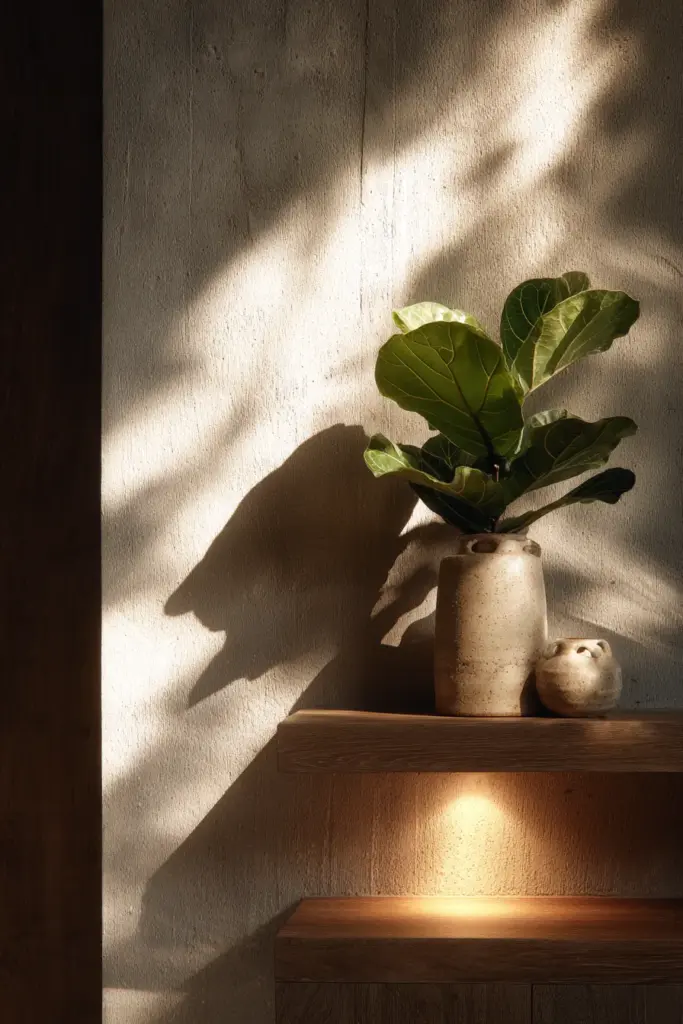
Uplighting transforms potted plants into living sculptures. Place a small spotlight or LED bulb in a simple ceramic holder at the base of your monstera or snake plant. The light travels up through leaves, casting organic shadows on the wall behind. This creates movement and life—biophilic design that connects you to nature indoors.
Backlit shelving showcases your curated objects while adding ambient glow. LED strips behind floating shelves cost under PHP 1,000 and install in minutes. The soft underglow makes books, pottery, and plants appear to float—adding depth and mystery to your display.
Seasonal Adjustments: Lighting Through the Filipino Year
The Philippines may not have four distinct seasons, but your living room’s lighting needs shift between wet and dry months, between hot afternoons and cool December evenings. Smart adjustments honor these natural rhythms while maintaining your Japandi aesthetic.
During the rainy season (June-November), maximize your layered lighting to compensate for overcast skies. Keep dimmer switches at higher settings during the day, add a small task lamp to dark corners, and embrace the cozy hygge that rain naturally invites. This is when your warm 2700K bulbs shine brightest.
In dry season’s intense afternoon light (March-May), rely more on natural daylight streaming through sheer curtains. Dim or turn off artificial lights until evening. This not only reduces electricity costs but also prevents your space from feeling stuffy or over-lit. Let sunset signal the gradual illumination of your layered scheme.
December’s cooler evenings call for your coziest lighting moments. Add a few more candles (real or LED), dim everything slightly lower, and enjoy how warm light transforms familiar spaces into something new. This seasonal mindfulness aligns perfectly with Japandi’s connection to nature’s rhythms.
Layering Lighting Audit Checklist
Before you finalize your Japandi lighting layering scheme, run through this practical checklist. It ensures you’ve addressed both aesthetic beauty and functional needs—the hallmark of successful Japandi design.
Ambient Layer:
- Primary ceiling fixture provides overall glow (washi pendant, flush mount, or recessed)
- Warm-toned LED bulbs 2700K-3000K installed
- Dimmer switch controls ambient brightness
- Light distribution reaches all corners evenly
- Fixture complements room’s natural materials and neutral palette
Task Layer:
- Reading lamp beside each seating area
- Floor or table lamp positioned at varied heights
- Bulbs bright enough for tasks (minimum 500-800 lumens)
- Adjustable or dimmable options for flexibility
- Shades diffuse light without glare
Accent Layer:
- 1-2 focal points highlighted (art, plants, architecture)
- Wall sconces or spotlights create visual interest
- LED strips or small uplights add depth
- Accent lighting doesn’t compete with ambient glow
- Negative space respected between light sources
Practical Considerations:
- All fixtures humidity-rated for Philippine climate
- Energy-efficient LED bulbs reduce electricity costs
- Maintenance plan in place for natural materials
- Smart controls installed if desired
- Total lighting budget respected
Conclusion: Light as Sanctuary
Your Japandi living room’s layered lighting is more than illumination—it’s an invitation to pause, to breathe, to find beauty in simplicity. Each carefully chosen fixture, every warm-toned bulb, all those intentional moments of shadow and glow work together to create something rare: a space that truly feels like home.
As you build your lighting layers, remember that perfection isn’t the goal. Wabi-sabi teaches us to embrace the beauty of imperfection—the slightly asymmetrical pendant, the vintage lamp with its subtle patina, the play of natural light that changes with every cloud. These are not flaws; they’re the soul of your space.
Let your living room’s light shift with your needs and moods. Dim everything for movie nights, brighten task lamps for Sunday afternoon reading, accent that new ceramic piece you fell in love with at the market. This flexibility—this responsiveness to life as it unfolds—is what makes Japandi lighting layering truly transformative.
Welcome the glow. Trust the shadows. Create your sanctuary.
Frequently Asked Questions
What are the three essential Japandi lighting layers?
Japandi lighting layering consists of ambient (overall room glow from ceiling fixtures), task (focused light for reading and activities via floor/table lamps), and accent (highlighting art, plants, or architecture with spots and sconces). Each layer uses warm 2700K-3000K LED bulbs in natural material fixtures—washi paper, bamboo, wood, or minimalist ceramics. The key is balancing all three rather than relying on a single overhead light. This creates depth, functionality, and the signature hygge warmth central to Japandi aesthetics.
How do I layer lighting in a small Manila condo living room?
Small spaces benefit from wall-mounted sconces and pendant lights instead of bulky floor lamps, saving precious square meters while providing essential illumination. Install dimmable LED strips beneath shelves or behind your TV console for space-saving ambient glow. Choose multifunctional pieces like swing-arm wall lamps that adjust for reading then tuck away. Vertical layering—pendants at different heights—draws the eye upward, making ceilings feel taller. Stick to 3-5 total fixtures maximum to avoid clutter, and always use warm bulbs (2700K-3000K) to expand the visual space through cozy ambiance.
What are the best affordable Japandi lighting fixtures in the Philippines?
Washi paper pendants (PHP 1,200-2,500) from Shopee or Lazada offer authentic diffused glow on a budget. Bamboo table lamps (PHP 1,500-3,000) from Dapitan or local markets bring natural texture. Black metal wall sconces (PHP 1,800-3,200) from Wilcon save space in condos. LED strip kits (PHP 800-1,800) provide flexible ambient lighting. You can also upcycle IKEA basics with natural linen shades or washi paper for under PHP 500. Focus on warm LED bulbs first—they transform any fixture into Japandi style for just PHP 150-300 per bulb.
How do I maintain Japandi lighting fixtures in humid Philippine weather?
Dust bamboo and washi fixtures weekly with a soft, dry microfiber cloth to prevent moisture buildup. Treat untreated bamboo annually with natural tung oil to prevent cracking from humidity. Position all fixtures away from windows where rain might splash and ensure proper ventilation through ceiling fans or occasional dehumidifier use. For washi paper, lightly mist with fabric protector spray (test first) to resist moisture. Choose fixtures with moisture-resistant finishes when possible—sealed wood, treated bamboo, or ceramics. If mold appears, address immediately with a dry brush and relocate to a better-ventilated area.
What color temperature is best for Japandi living room lighting?
Warm white 2700K-3000K is ideal for Japandi living rooms, mimicking candlelight and sunset while enhancing natural wood tones and creating hygge ambiance. This range promotes relaxation by boosting serotonin and supporting melatonin production for better sleep. Avoid mixing temperatures—if your pendant is 2700K, keep table lamps in the same range for visual harmony. For work-from-home areas, you might use 3500K in a single task lamp, but switch to warmer sources in the evening. Buy bulbs from the same brand in batches to ensure consistent color across your layered lighting scheme.