
Table of Contents
There’s something magical about walking into a room where the light feels like a gentle embrace. Not harsh. Not cold. Just warm, diffused, and perfectly balanced between intention and ease.
That’s the heart of Japandi lighting—a beautiful marriage of Japanese wabi-sabi and Scandinavian hygge. It’s about creating softness in simplicity, where every glow serves a purpose and every shadow tells a story.
In this guide, we’ll explore how to layer lighting in your Japandi living room with materials that breathe, fixtures that ground, and warmth that lingers. Think paper lanterns casting gentle patterns. Wood-toned lamps that feel like old friends. Light that makes you want to stay.
What Makes Japandi Lighting Different?
The Philosophy Behind the Glow
Japandi lighting isn’t about brightness—it’s about presence. It draws from the Japanese concept of ma (negative space) and the Scandinavian love of lagom (just enough).
The result? Lighting that honors natural rhythms and invites quiet moments. No overhead glare competing for attention. Just layered, intentional illumination that shifts with your mood and the time of day.
Natural Materials, Honest Textures
Bamboo. Rattan. Rice paper. Linen. These aren’t just decorative choices—they’re essential to the Japandi aesthetic.
When light filters through a woven bamboo shade or a handmade paper lantern, it transforms. The glow becomes softer, warmer, almost alive. These materials diffuse harshness and add texture to your space without saying a word.
How to Layer Lighting in a Japandi Living Room
The Three-Layer Approach
Layering is the secret to cozy Japandi lighting. Think of it as building a conversation between ambient, task, and accent light—each with its own role, all working in harmony.
Ambient lighting sets the foundation. This is your overhead pendant or a sculptural ceiling fixture in matte black or warm wood. Choose clean lines and natural finishes.
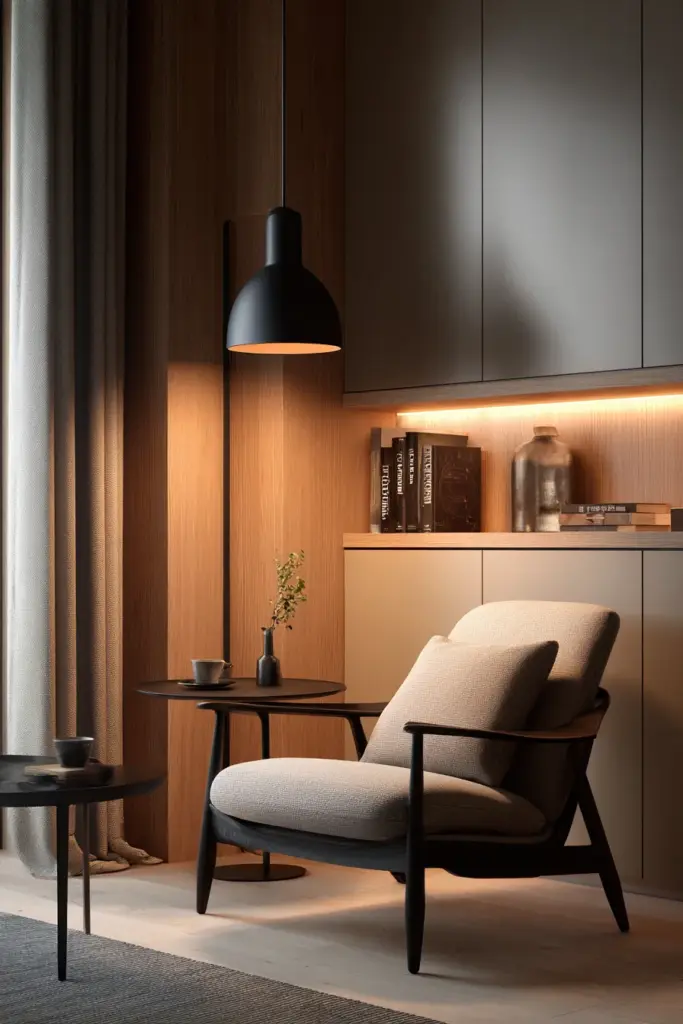
Task lighting brings function. A minimalist floor lamp beside your reading chair. A simple table lamp on a low sideboard. These should cast warm, focused light without overwhelming the room.
Accent lighting adds soul. LED strips behind floating shelves. A small ceramic lamp highlighting a handmade vase. Dimmers that let you shift the mood from morning clarity to evening softness.
Choosing the Right Fixtures
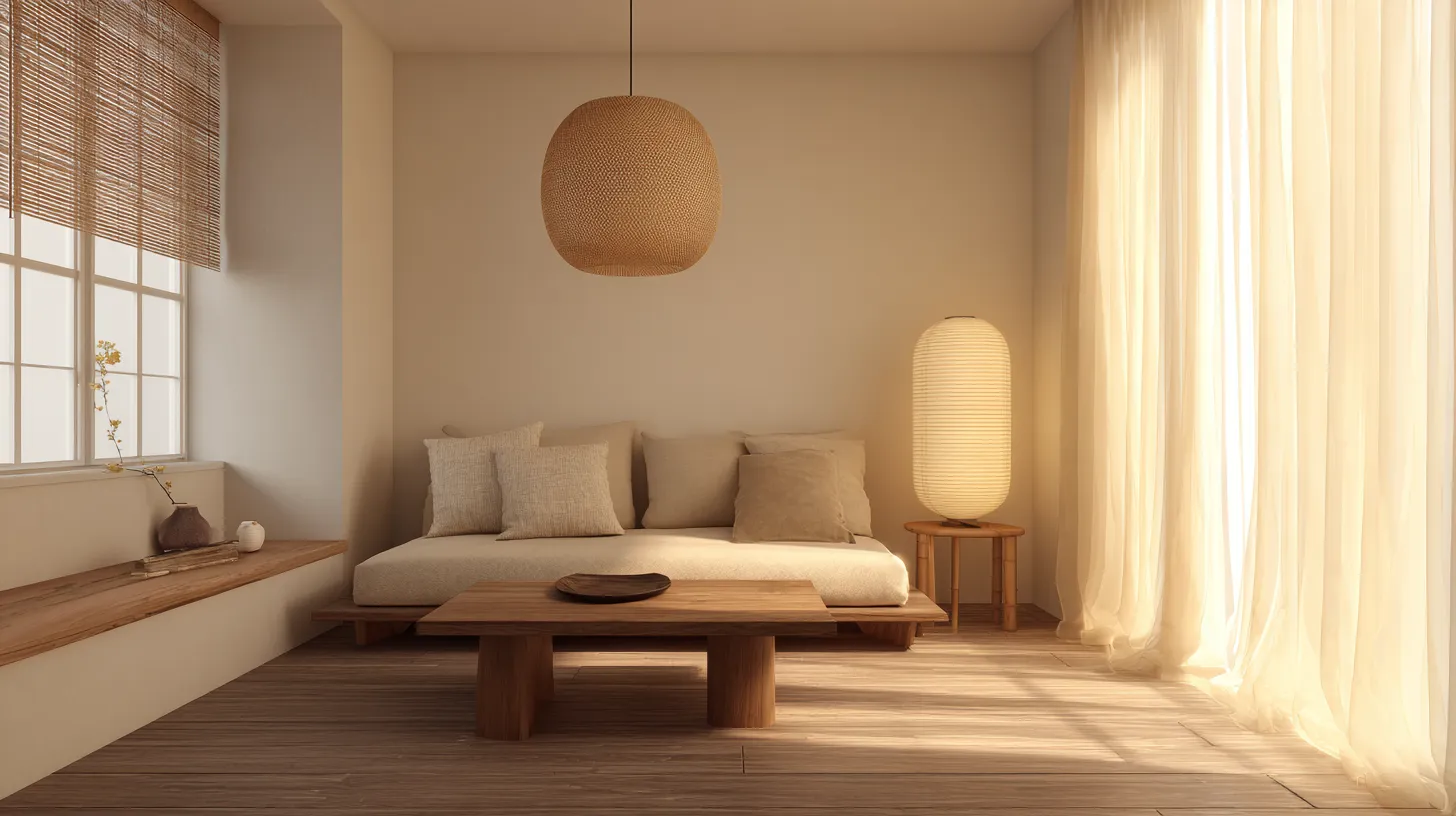
Start with pieces that feel grounded. A rattan pendant lamp brings organic warmth overhead. A wood-base floor lamp with a linen shade offers adjustable task light that still feels soft.
Look for matte finishes over glossy. Natural over synthetic. Simplicity over embellishment. The fixture itself should almost disappear, letting the quality of light take center stage.
The Perfect Color Temperature for Cozy Japandi Spaces
Why 2700K-3000K Matters
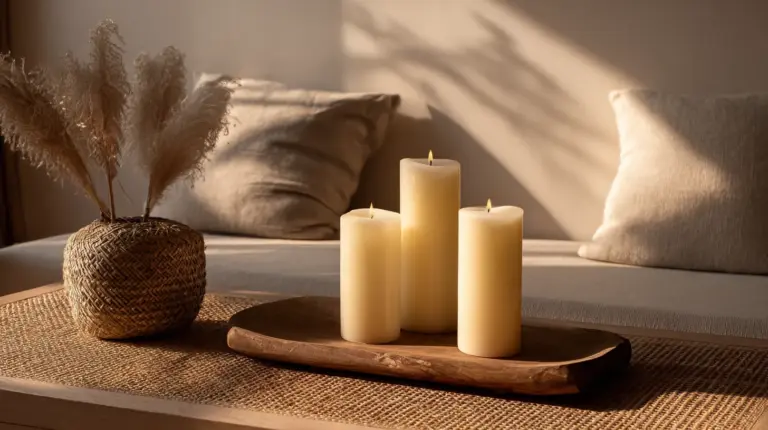
Color temperature is measured in Kelvin—and for Japandi spaces, warm white LEDs between 2700K and 3000K are your best friends. This range mimics the gentle glow of sunset or candlelight, creating instant coziness.
Avoid cool white bulbs (4000K and above). They read as clinical and disrupt the warm, earthy palette that defines Japandi design. Your neutrals—beiges, taupes, soft grays—deserve light that enhances their warmth, not washes them out.
Boosting Texture with High CRI
Color Rendering Index (CRI) matters more than most people realize. Aim for bulbs with a CRI of 90 or higher to make natural materials truly pop.
High-CRI light reveals the grain in your wood furniture, the weave in your linen throws, the subtle variations in your ceramic pieces. It’s the difference between flat and dimensional—and in Japandi design, dimension is everything.
Japandi Lighting Fixtures That Create Instant Warmth
Paper Lanterns and Washi Pendants
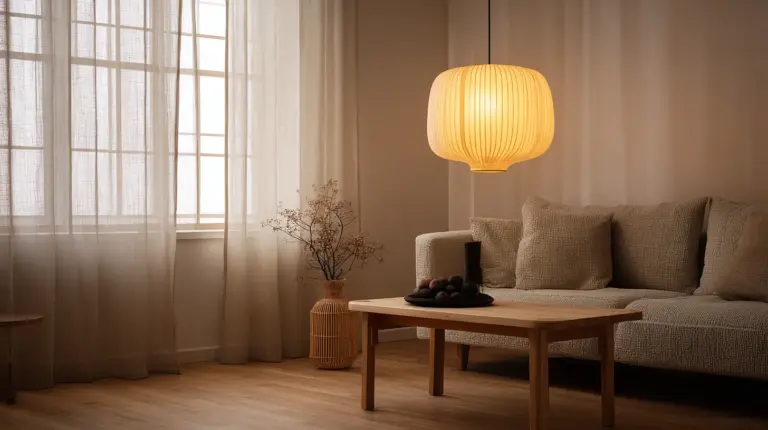
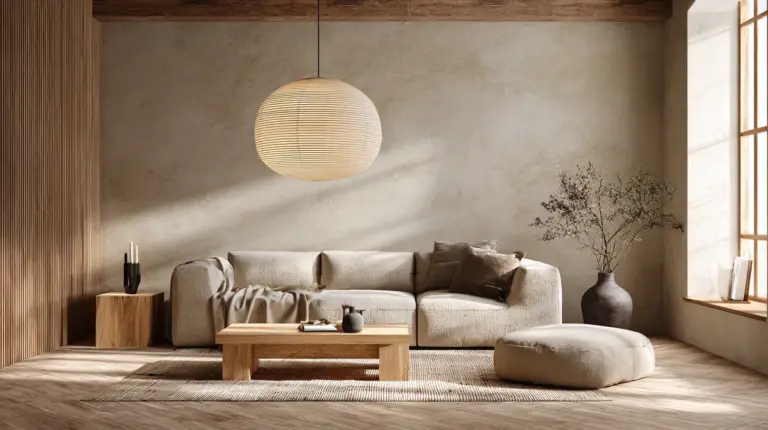
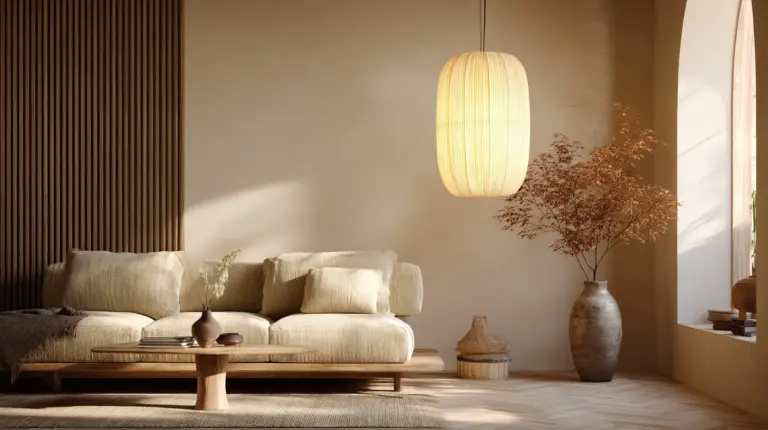
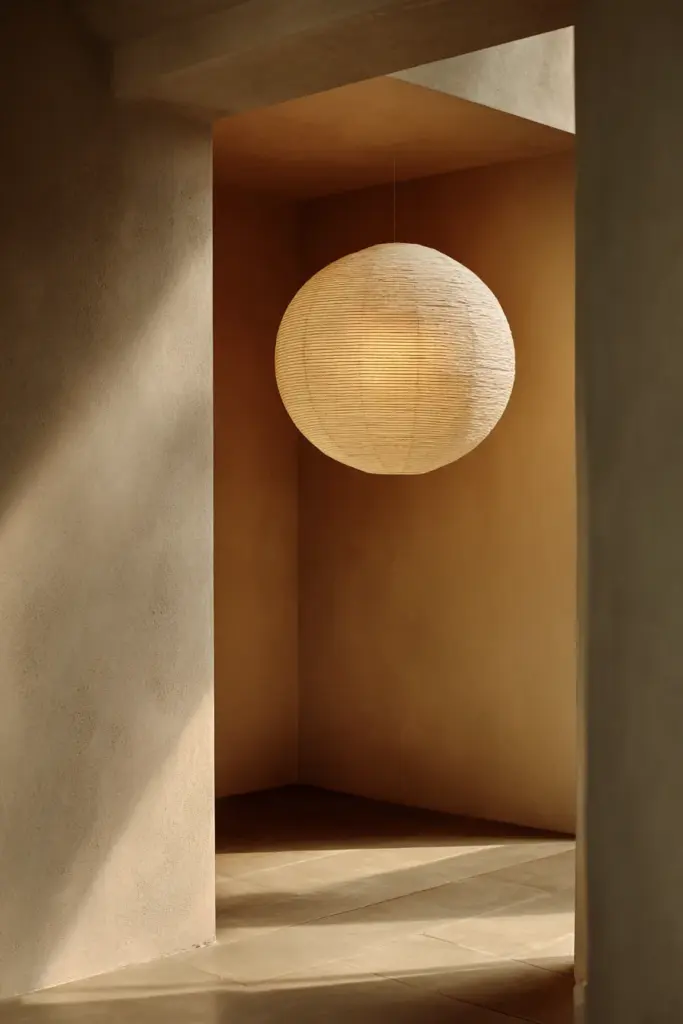
Few things soften a room like a Japanese paper lantern. The light glows through rice paper or washi, creating a diffused radiance that feels almost meditative.
Hang one above your coffee table or in a corner that needs gentle illumination. Choose spherical shapes for softness or cylindrical forms for modern edge.
Bamboo and Rattan Fixtures
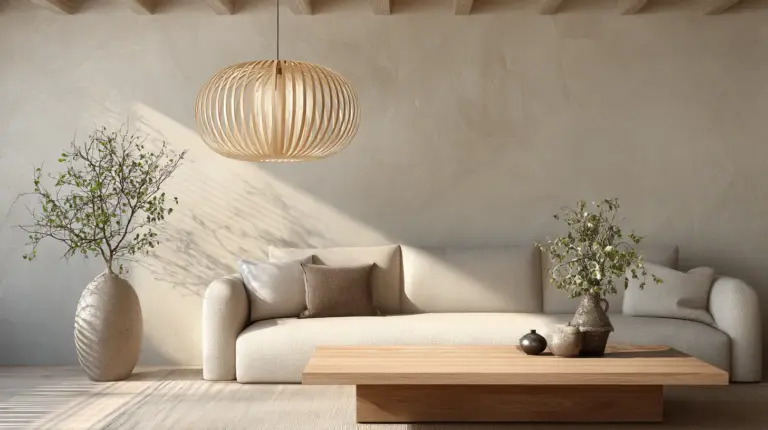
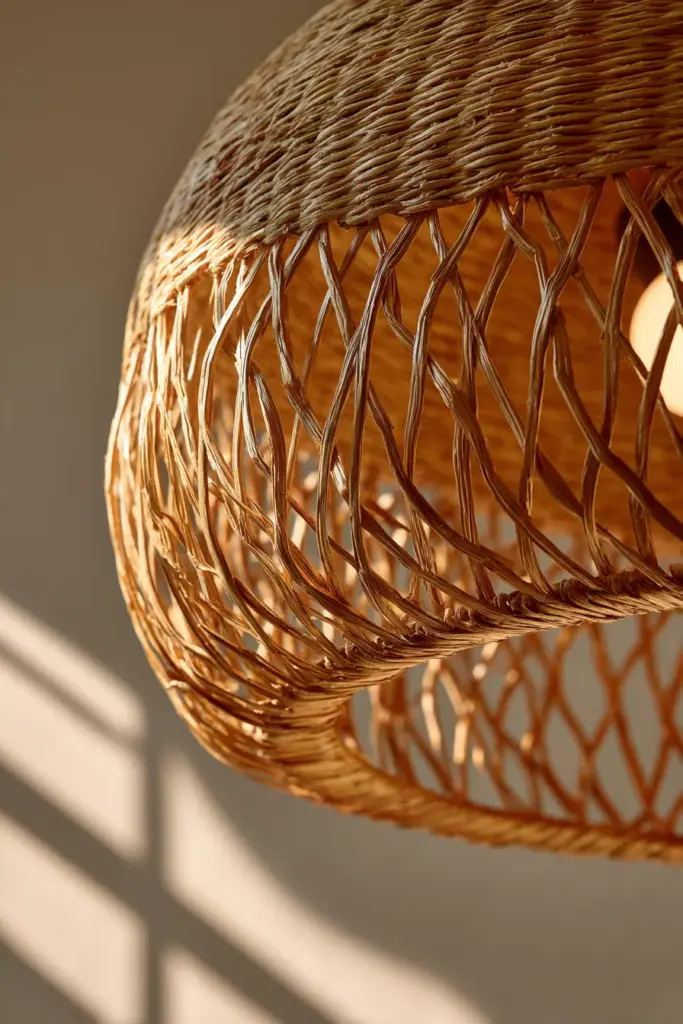
Woven bamboo or rattan shades bring texture and warmth in equal measure. They cast intricate shadow patterns on walls and ceilings, adding visual interest without clutter.
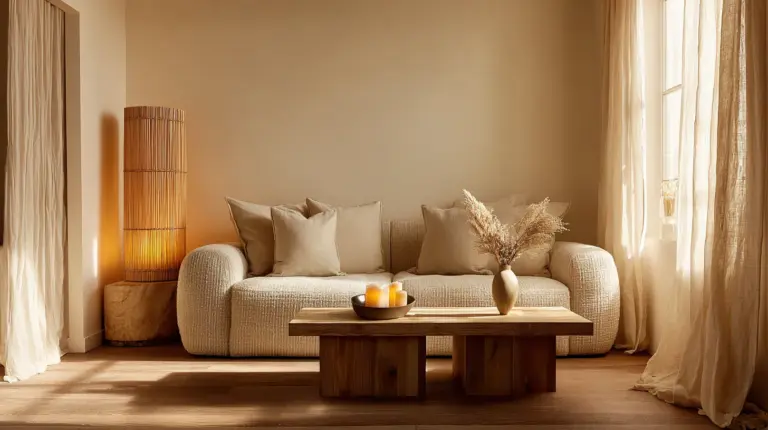
A rattan floor lamp beside a neutral sofa. A bamboo pendant over a minimalist side table. These pieces ground your space while keeping it light and breathable.
Minimalist Floor and Table Lamps
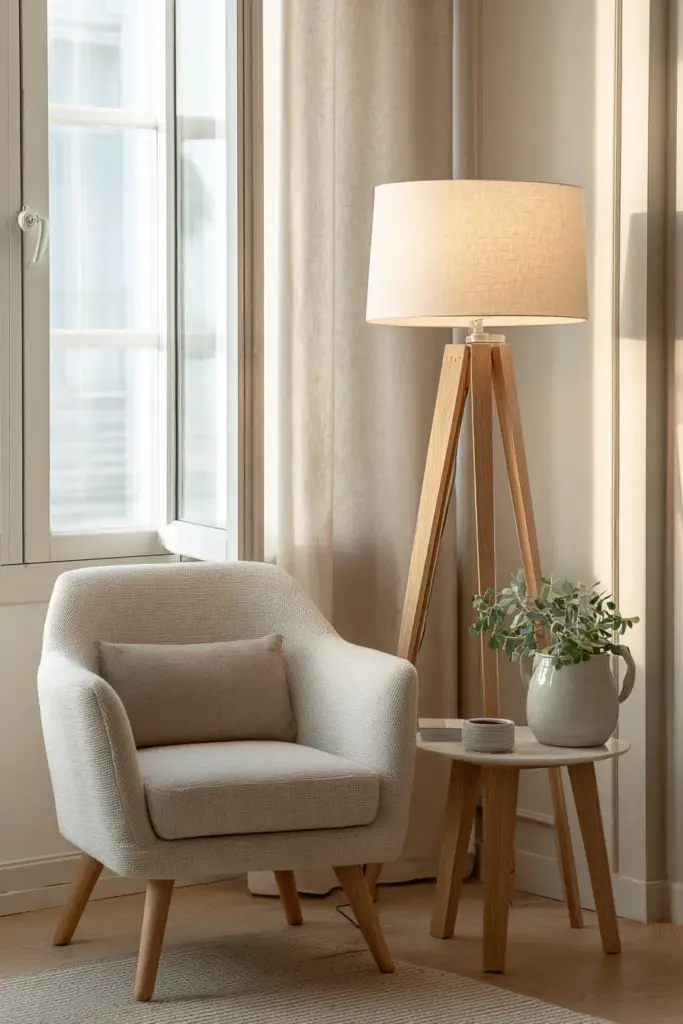
Look for lamps with clean silhouettes and natural materials. A tripod floor lamp in light oak. A ceramic table lamp with a linen drum shade.
These should blend seamlessly into your space—functional, beautiful, and quietly present. Bonus points if they have dimmers or three-way switches for adjustable warmth.
Accent Pieces That Whisper
Small ceramic or stone lamps add sculptural interest. LED strips tucked behind floating shelves or beneath low credenzas create ambient glow without visible sources.
Think of these as finishing touches—the soft highlights that make a room feel complete without trying too hard.
Smart Lighting for Japandi Living Rooms
Dimmable LEDs and Color-Shifting Options
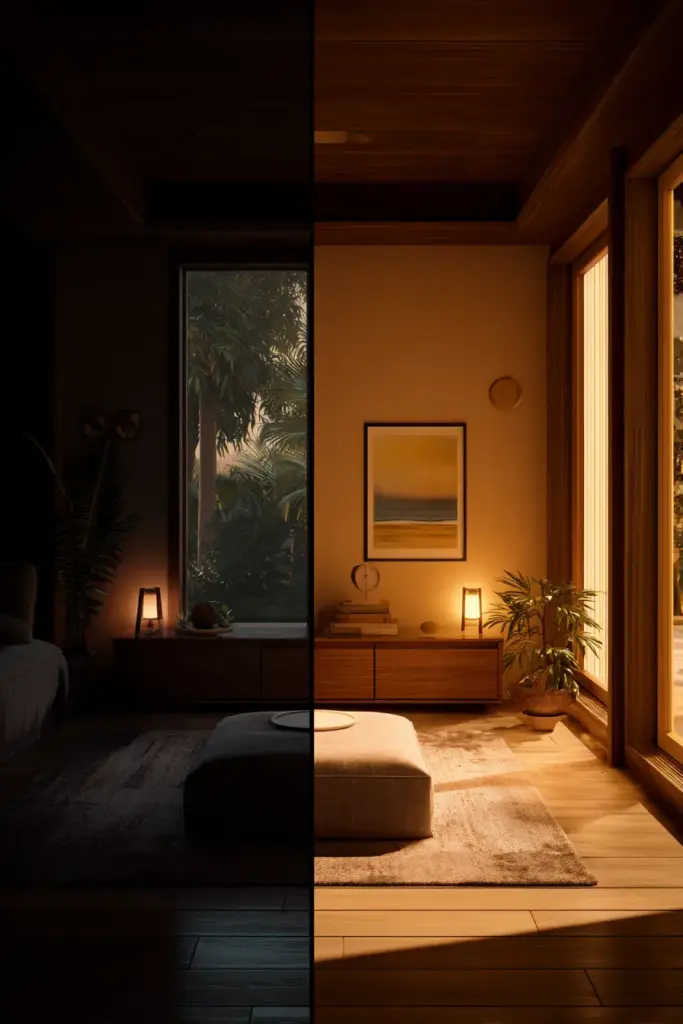
Smart bulbs like Philips Hue in wood-finished lamps give you complete control over warmth and intensity. Program them to shift from bright morning light to amber evening glow.
This isn’t about high-tech flash—it’s about adapting your space to natural rhythms. Warmer light as the sun sets. Softer light when you’re unwinding. Technology in service of comfort.
Voice and App Control for Seamless Adjustments
Control your lighting from your phone or with a simple voice command. Dim the lights without leaving your seat. Set scenes that match your mood.
The goal is ease, not complexity. Your lighting should respond to you, not demand attention.
Budget-Friendly Japandi Lighting Ideas
DIY Lantern Hacks Under $50
Transform a basic paper lantern with bamboo accents or fabric wrapping. Upcycle vintage lamps with linen shades and matte spray paint.
Local markets often carry affordable rattan pieces that just need the right bulb to shine. Don’t overlook secondhand finds—vintage wood lamps can be perfect for Japandi spaces.
Sourcing Natural Materials Locally
In the Philippines, rattan and bamboo are accessible and affordable. Visit local artisan markets in Cebu or Manila for handwoven shades and fixtures.
Supporting local craftsmanship aligns perfectly with Japandi values—authentic materials, honest construction, and pieces with soul.
Maintaining Your Japandi Lighting
Caring for Natural Materials
Bamboo and rattan need occasional dusting with a soft brush or dry cloth. Avoid harsh cleaners that strip natural oils.
In humid climates, ensure good air circulation around woven fixtures to prevent moisture buildup. A gentle wipe-down every few months keeps them fresh.
Energy Efficiency in Warm Climates
LED bulbs are essential in tropical environments—they produce minimal heat while offering maximum efficiency. This matters when you’re layering multiple light sources.
Calculate your energy savings: swapping five incandescent bulbs for LEDs can reduce lighting costs by up to 80%. Better for your budget and the planet.
Pairing Lighting with Biophilic Elements
Plants That Love Soft Light
A fiddle leaf fig beside a warm floor lamp. A pothos trailing above a pendant light. Plants and lighting create beautiful partnerships in Japandi spaces.
Choose greenery that thrives in moderate, indirect light—snake plants, ZZ plants, philodendrons. The interplay between living texture and warm glow adds instant coziness.
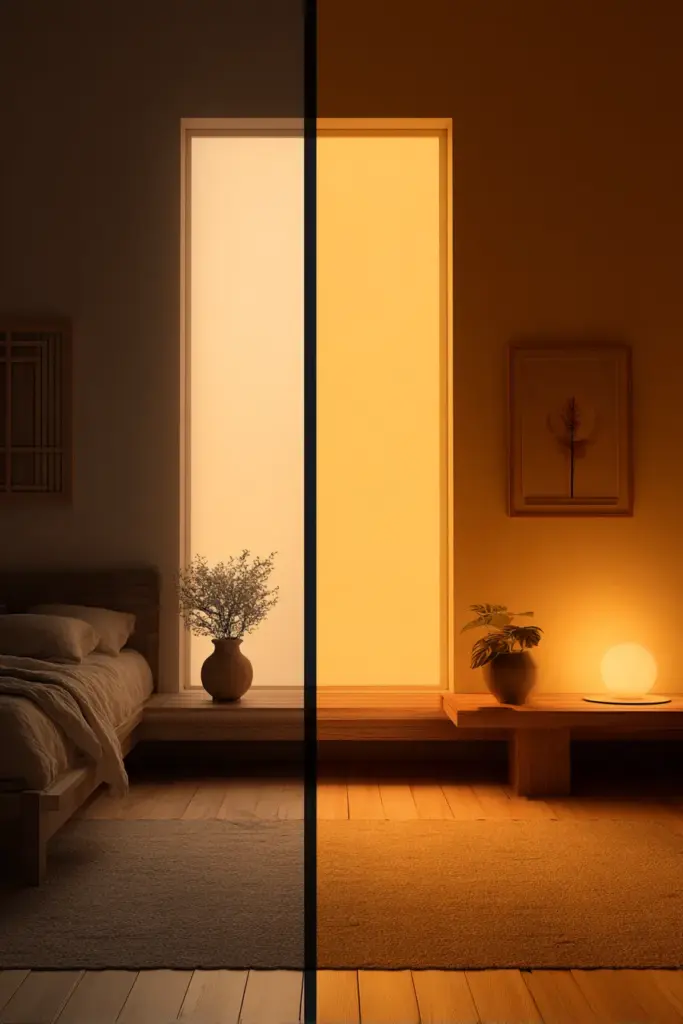
Creating Cozy Micro-Environments
Think in zones. A reading nook with a dedicated lamp and a small plant. A meditation corner with a paper lantern and low seating.
Each area should feel intentional, lit just enough to support its purpose without bleeding into the whole room.
Color Psychology and Warm Lighting
How Light Affects Mood in Neutral Palettes
Warm lighting boosts serotonin and creates feelings of safety and comfort. In Japandi spaces dominated by beiges, grays, and natural wood, the right light makes everything feel more inviting.
Cool light can make neutral spaces feel sterile. Warm light makes them feel alive, textured, and deeply human.
Avoiding Common Lighting Mistakes
Don’t over-light. Japandi design thrives on contrast—let some corners fade softly into shadow.
Don’t mix color temperatures haphazardly. Stick to warm tones throughout for cohesion. And never sacrifice comfort for aesthetics—if a light doesn’t make you feel good, it’s not working.
2026 Japandi Lighting Trends
AI-Adaptive Bulbs for Mood-Responsive Spaces
Emerging smart bulbs adjust color and intensity based on time of day, weather, or even your calendar. Morning meetings? Brighter, focused light. Evening meditation? Soft amber warmth.
These technologies honor the Japandi principle of living with natural rhythms—just with a modern assist.
Sustainable and Upcycled Fixtures
More designers are creating lighting from reclaimed wood, recycled paper, and ethically sourced materials. Look for pieces with transparency about origin and production.
This aligns beautifully with wabi-sabi—finding beauty in imperfection and valuing objects with history.
Your Japandi Lighting Checklist
Before you finalize your living room lighting, run through this quick audit:
- Layering: Do you have ambient, task, and accent lighting?
- Warmth: Are all bulbs between 2700K-3000K?
- Materials: Have you incorporated at least one natural material (bamboo, rattan, linen, paper)?
- Dimmers: Can you adjust intensity for different times of day?
- CRI: Are your bulbs rated 90+ for true color rendering?
- Balance: Does each zone feel intentionally lit without overlap or glare?
- Sustainability: Are your fixtures energy-efficient and thoughtfully sourced?
Conclusion
Japandi lighting isn’t about following rules—it’s about creating a space that feels like a deep breath. Where warmth meets restraint. Where every light source has meaning, and the shadows are just as important as the glow.
Start with one fixture that speaks to you. A paper lantern. A bamboo floor lamp. A simple dimmer switch. Then layer slowly, listening to your space as it transforms.
Because the most beautiful rooms aren’t the ones that shout—they’re the ones that whisper, stay a while. And in that gentle invitation, lit just right, you’ll find the true heart of Japandi living.
FAQs
What type of lighting is best for a Japandi living room?
Layered lighting works best—combine ambient fixtures like rattan pendants, task lights such as minimalist floor lamps, and accent pieces like LED strips. Focus on diffused, warm sources that create soft shadows and highlight natural textures.
What color temperature should I use for Japandi lighting?
Choose warm white LEDs between 2700K and 3000K. This temperature range mimics natural candlelight and enhances the earthy, neutral palette typical of Japandi interiors. Avoid cool white bulbs (4000K+) as they feel too clinical.
How do I create cozy lighting in Japandi style on a budget?
Start with affordable paper lanterns and bamboo shades from local markets. Upcycle vintage lamps with linen shades and warm LED bulbs. DIY solutions like fabric-wrapped pendants or reclaimed wood lamp bases can achieve the look for under $50.
Can I use smart lighting in a Japandi living room?
Absolutely. Dimmable smart bulbs in warm tones and natural-finish fixtures let you adjust ambiance throughout the day. Choose wood-finished or matte designs to maintain the minimalist aesthetic while gaining modern control.
How do I maintain bamboo and rattan lighting fixtures?
Dust regularly with a soft, dry cloth or brush. Avoid harsh chemical cleaners that can damage natural fibers. In humid climates, ensure good ventilation around fixtures to prevent moisture buildup and extend their lifespan.