
Table of Contents
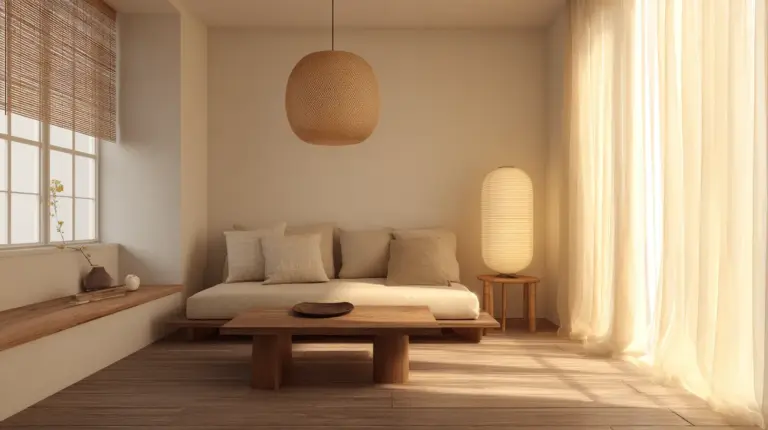
There’s something quietly powerful about the way light moves through a room. It brushes against woven textures, pools softly in corners, and transforms bare walls into canvases of shadow and glow. In Japandi design, lighting isn’t just functional—it’s the heartbeat of the space.
Japandi living room lighting trends celebrate the marriage of Japanese minimalism and Scandinavian hygge. This fusion creates interiors that feel both serene and lived-in, where every lamp, pendant, and sconce serves a purpose while honoring beauty. The result? A home that breathes with you.
In this guide, we’ll explore how to bring this philosophy into your own living room. From layered ambient lighting to the tactile warmth of natural materials, you’ll discover practical ways to craft a space that feels timeless, grounded, and effortlessly elegant.
What Is Japandi Lighting Style?
Japandi lighting is the art ofbalancing light and shadow with intention. It draws from Japanese wabi-sabi—the acceptance of imperfection—and Scandinavian hygge, the pursuit of cozy contentment. Together, they create illumination that’s soft, diffused, and deeply comforting.
Think warm-toned LEDs glowing through washi paper shades. Picture bamboo pendants casting delicate patterns on whitewashed walls. These fixtures don’t shout for attention; they whisper, inviting you to slow down and notice the textures around you.
The magic lies in restraint. Japandi spaces reject harsh overhead lighting in favor of multiple, thoughtfully placed sources. Each light serves a role—ambient, task, or accent—creating layers that mimic the gentle rhythm of natural daylight.
Why Japandi Living Room Lighting Matters in 2026
As we move deeper into 2026, homeowners are craving spaces that offer sanctuary from digital overwhelm. Japandi lighting trends answer this need by prioritizing wellness, sustainability, and timeless design over fleeting aesthetics.
Warm lighting temperatures between 2700K and 3000K have been shown to support circadian rhythms and boost serotonin levels. Paired with biophilic elements like indoor plants, these fixtures create environments that nurture mental clarity and calm. The glow becomes medicine.
Sustainability also takes center stage. Recycled ocean plastic fixtures and energy-efficient LEDs (which save up to 80% on power costs) align with conscious living values. In Manila apartments and beyond, homeowners are choosing lighting that honors both the planet and their electric bills.
How to Layer Lighting in a Japandi Living Room
Layered lighting is the cornerstone of Japandi design. It creates depth, flexibility, and visual interest while maintaining the style’s signature simplicity. Here’s how to build your three essential layers.
Ambient Lighting: The Foundation
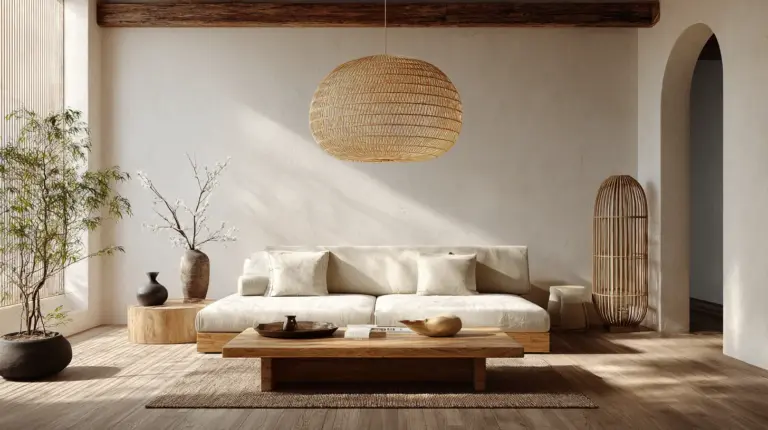
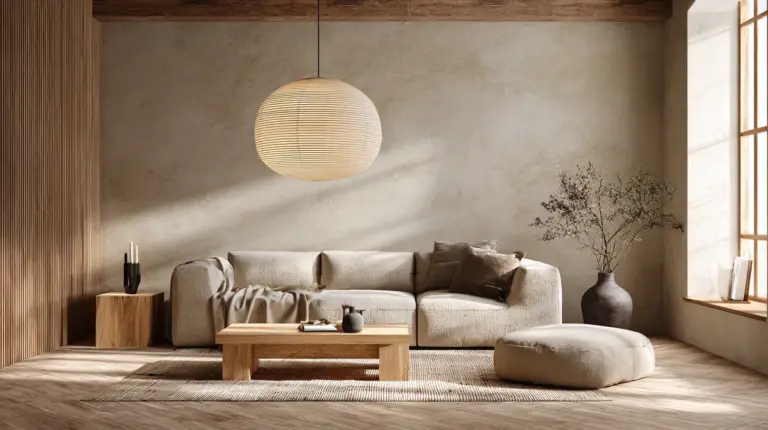
Ambient lighting sets the room’s overall mood. In Japandi spaces, this often comes from minimalist pendant lights with natural materials like bamboo, rattan, or wood veneer. Hang a statement pendant over your seating area—its soft downward glow anchors the room without overwhelming it.
Consider rice paper drum shades or ceramic pendants that diffuse light evenly. These fixtures eliminate harsh shadows while adding sculptural beauty. Dimmable options let you adjust brightness from morning coffee to evening wind-down.
For smaller Manila apartments or open-plan layouts, recessed LED panels with warm color temperatures provide seamless ambient light. They disappear into ceilings, preserving that coveted sense of spaciousness.
Task Lighting: Purposeful Illumination
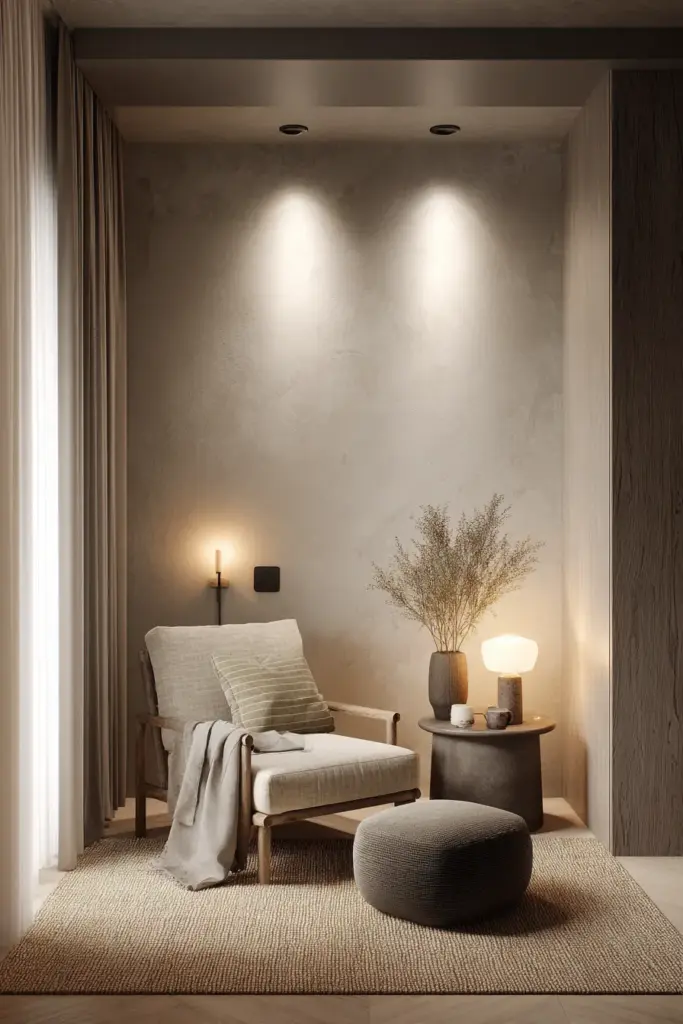
Task lighting serves specific activities—reading, working, or highlighting decor. Wall-mounted sconces in matte black or natural wood finish frame armchairs or side tables beautifully. Choose adjustable arms for flexibility without sacrificing clean lines.
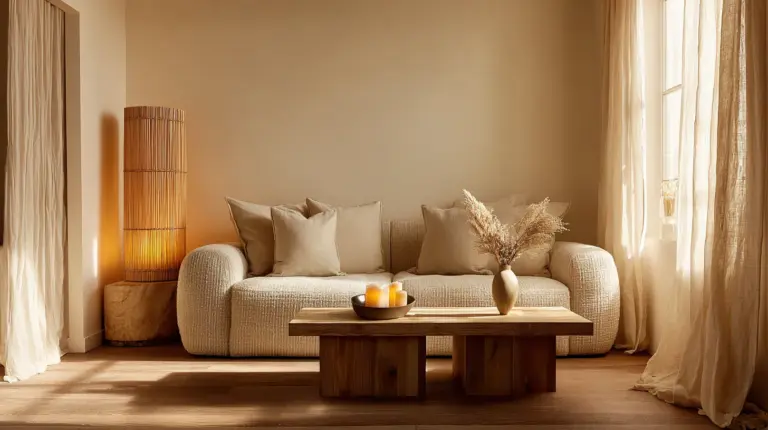
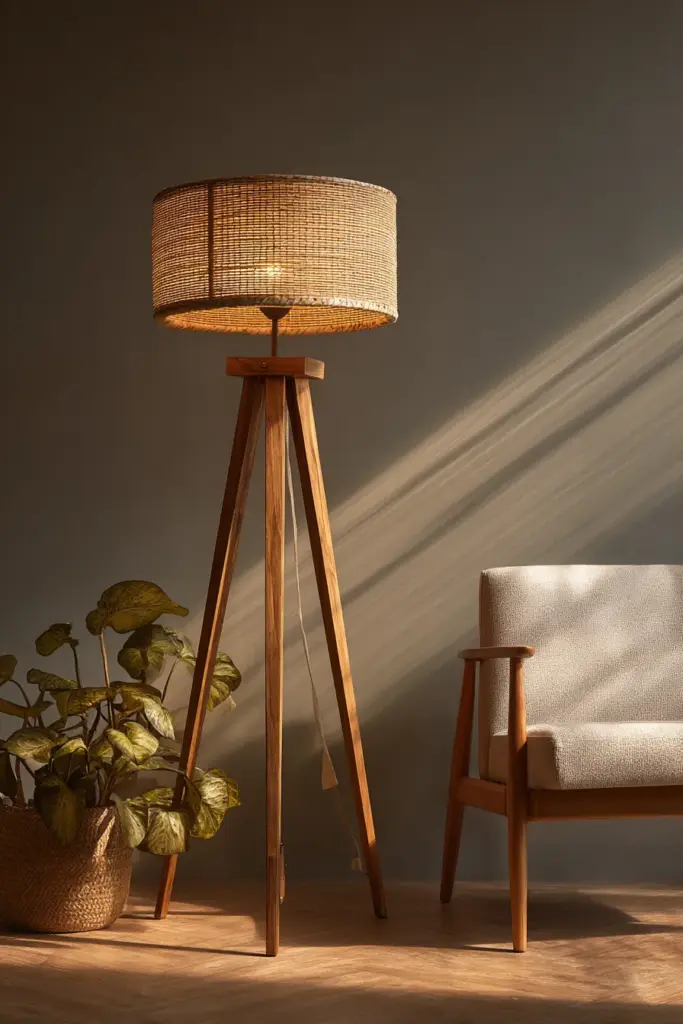
Floor lamps with tripod bases and linen shades offer portability and tactile warmth. Position one beside a low-slung sofa or next to a meditation corner. The key is directing light where you need it while keeping the fixture itself understated.
Don’t overlook LED strip lighting tucked beneath floating shelves. This indirect glow showcases ceramics, books, or dried pampas grass arrangements—transforming everyday objects into quiet focal points.
Accent Lighting: Creating Atmosphere
Accent lighting adds drama and personality. Use directional spotlights to wash textured walls with light, emphasizing the grain of reclaimed wood or the weave of a jute tapestry. The interplay of light and shadow is pure Japandi poetry.
Candle lanterns in blackened steel or raw concrete bring flickering warmth during evening gatherings. Battery-operated LED candles offer the same ambiance without fire hazards—ideal for families or small spaces.
Table lamps with organic forms—think curved ceramic bases or hand-thrown pottery—double as sculpture. Place them on low side tables or windowsills, allowing their shapes to shine both day and night.
Best Materials for Japandi Lamps and Fixtures
Material choice defines Japandi’s tactile richness. These natural elements connect your home to the outside world, grounding spaces in authenticity.
Bamboo and Rattan
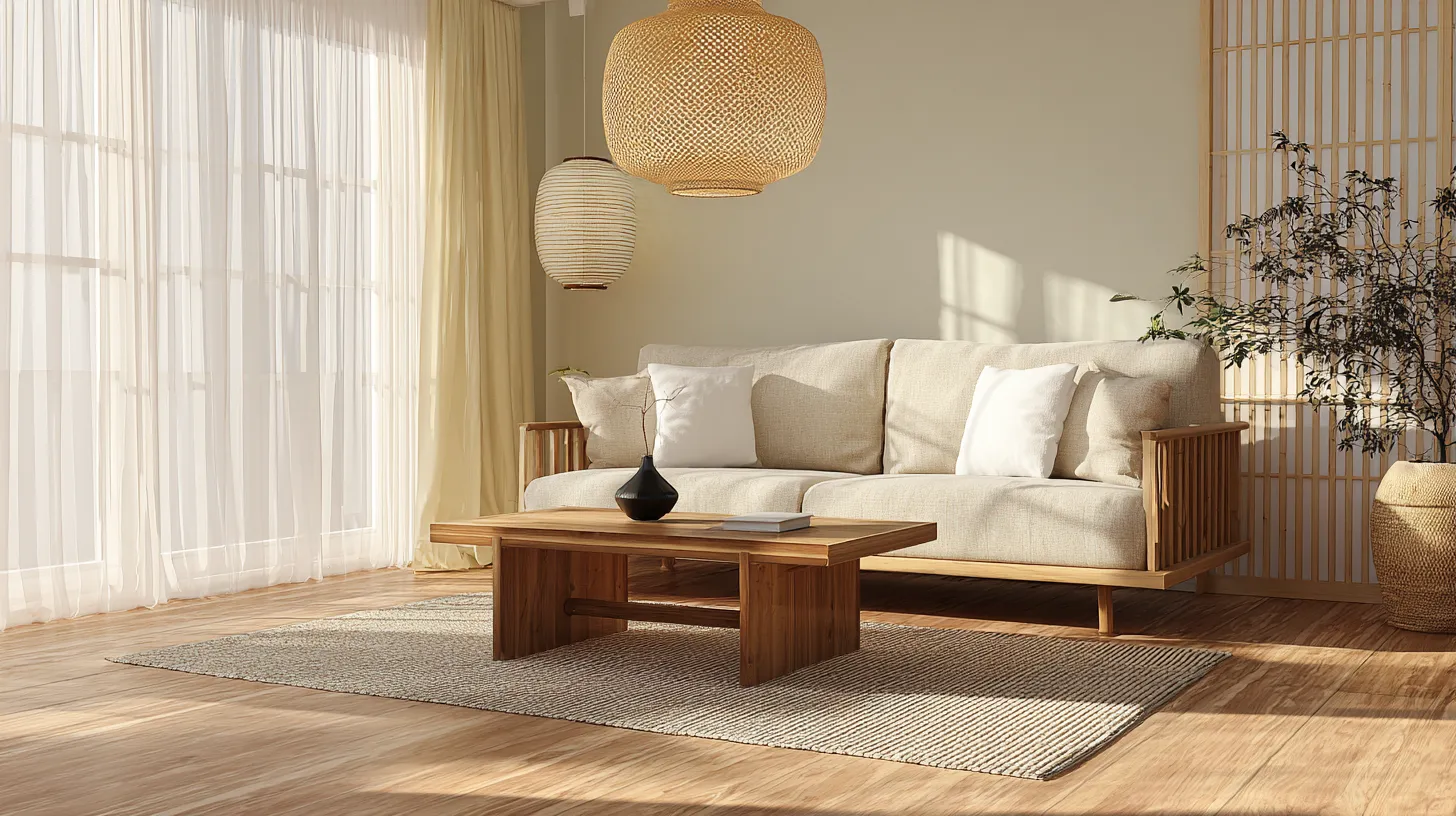
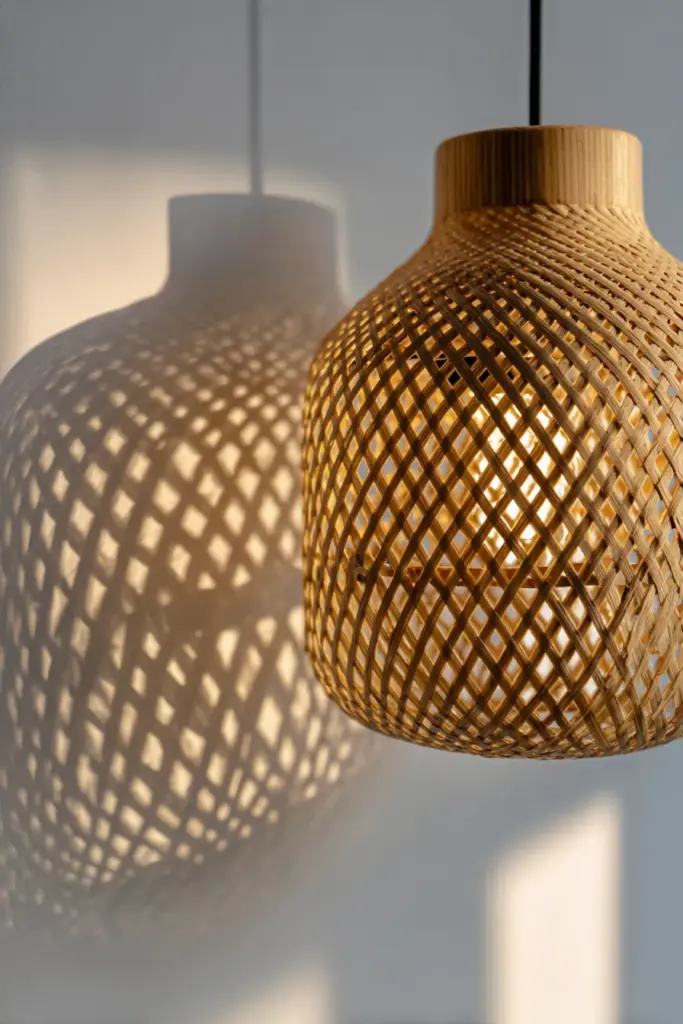
Bamboo pendant lights filter sunlight beautifully during the day and cast intricate shadows at night. Their sustainability credentials are impeccable—bamboo grows rapidly and requires minimal resources. Rattan chandeliers add bohemian warmth while maintaining Japandi’s minimalist ethos.
Look for handwoven designs with visible craftsmanship. Imperfections aren’t flaws here; they’re proof of human hands shaping something real.
Washi Paper
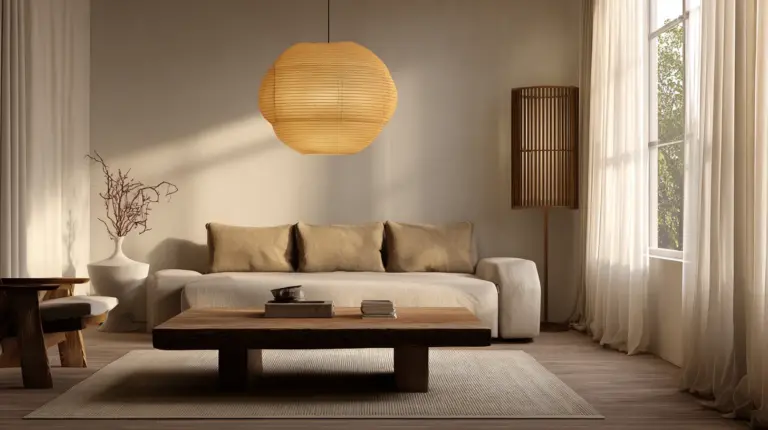
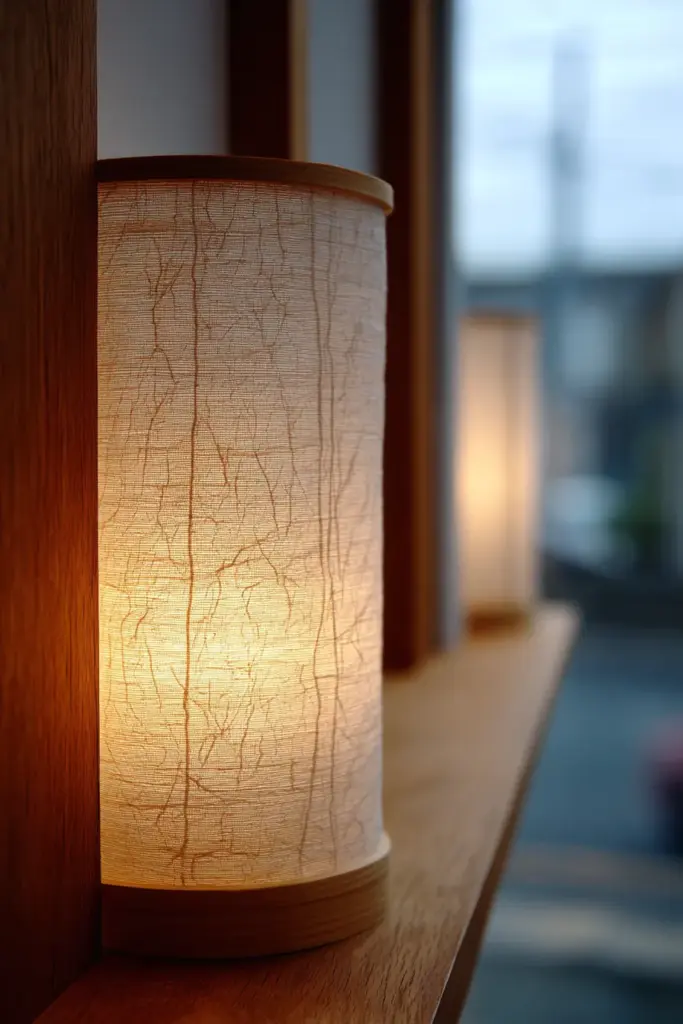
Traditional Japanese washi paper softens light like nothing else. Lanterns wrapped in this translucent material create an ethereal glow that feels almost spiritual. Pair washi shades with simple wooden frames for fixtures that honor both cultures.
These lamps work beautifully in meditation corners or above low dining tables. Their gentle illumination encourages conversation and presence.
Wood and Ceramic
Solid wood fixtures—whether ash, oak, or walnut—bring warmth and longevity. Geometric wooden pendants or linear chandeliers add architectural interest without clutter. Choose FSC-certified timber for eco-conscious peace of mind.
Ceramic lamps in matte white, sand, or charcoal tones ground rooms with earthy weight. Their smooth surfaces invite touch, reinforcing Japandi’s sensory philosophy.
Muted Metal Accents
While natural materials dominate, matte black or brushed brass hardware adds subtle sophistication. Metal sconce arms or pendant cords provide contrast against woven shades, creating visual tension that keeps spaces from feeling too soft.
Avoid shiny finishes—opt for powdered, oxidized, or hand-rubbed metals that show character over time.
Japandi Pendant Light Ideas for Living Rooms
Pendant lights act as jewelry for your ceiling. In Japandi design, they balance form and function with quiet confidence.
Over Seating Areas
Suspend a large bamboo globe pendant above your coffee table or sectional. The scale commands attention while the material keeps it approachable. Aim for fixtures 24-36 inches in diameter for standard living rooms—larger for high ceilings.
Multi-pendant installations work for longer spaces. Hang three cylindrical washi lanterns in a row, spaced evenly over a bench or console. This repetition creates rhythm without monotony.
Sculptural Statements
Choose pendants with organic, irregular shapes—like hand-blown glass globes or crumpled paper spheres. These become conversation starters while honoring the wabi-sabi appreciation for imperfection.
Cluster different-sized pendants at varying heights for a curated, collected-over-time feel. This approach adds dimension and prevents the space from feeling too matchy.
Smart Integration for Modern Living
Pair traditional Japandi materials with smart LED bulbs like Philips Hue for app-controlled layering. Program your bamboo pendant to shift from energizing 4000K mornings to soothing 2700K evenings. Circadian rhythm syncing supports your body’s natural clock.
Voice-activated dimming means you can adjust ambiance without breaking the meditative flow of your space. Technology disappears into the background, as it should.
Warm Lighting Temperature: The Secret to Japandi Glow
Color temperature transforms the emotional quality of light. In Japandi living rooms, 2700K to 3000K is the sweet spot—warm enough to evoke hygge coziness, neutral enough to maintain Japanese clarity.
This range mimics candlelight and golden-hour sun. It makes skin tones flattering, enhances wood grains, and encourages relaxation after long days. Avoid cool-toned LEDs above 3500K—they feel clinical and undermine the warmth you’re cultivating.
Layer different temperatures strategically. Use 2700K for ambient pendants and table lamps, then bump up to 3000K for task sconces near reading nooks. The subtle variation adds depth without clashing.
The Psychology of Warm Light
Warm lighting stimulates serotonin production, supporting mood stability and sleep quality. When combined with biophilic design—plants, natural fibers, earthy palettes—your living room becomes a wellness retreat.
Studies show that 2700K lighting reduces eye strain during evening hours, signaling your body to wind down naturally. This is hygge science at work.
Budget Japandi Lighting Options and DIY Ideas
Achieving Japandi lighting doesn’t require designer price tags. Smart sourcing and simple DIY projects deliver authentic results for under $50 per fixture.
Thrift and Upcycle
Hunt vintage shops for simple wooden or ceramic lamps. Strip outdated shades and replace them with DIY rice paper wraps or linen fabric. A $10 thrift lamp becomes a Japandi treasure with minimal effort.
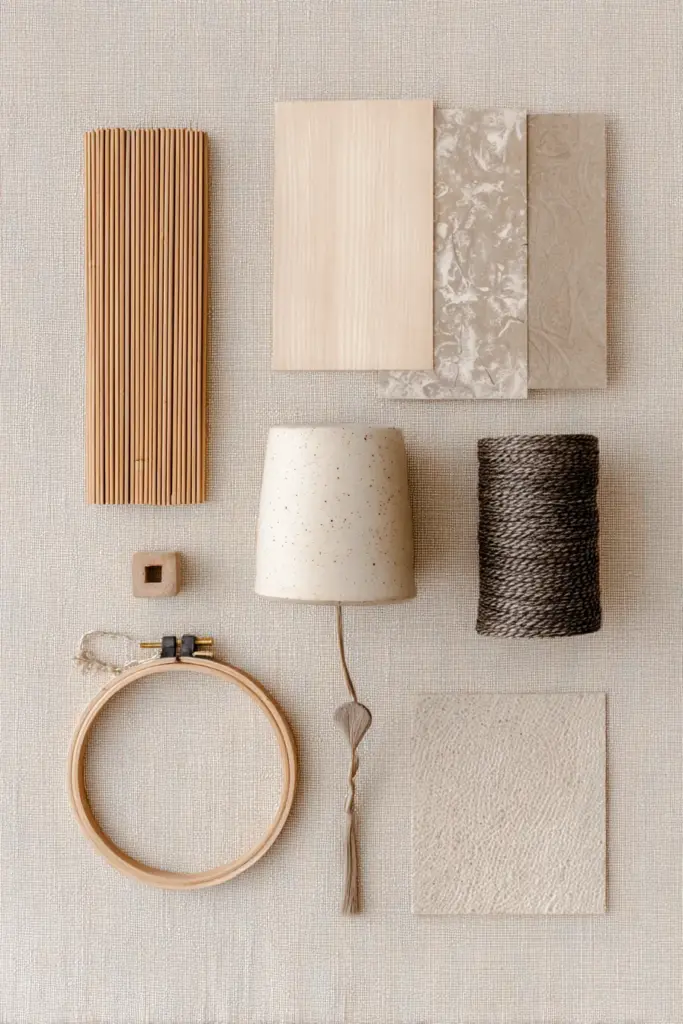
Repurpose bamboo placemats into pendant shades by rolling them into cylinders and securing with natural jute twine. Add a simple cord kit from hardware stores, and you’ve got a custom fixture for under $30.
Affordable Natural Materials
IKEA’s paper lanterns work beautifully in Japandi spaces when styled correctly. Pair their REGOLIT pendant with a warm LED bulb and suddenly it’s not budget lighting—it’s intentional minimalism.
Search Etsy or local Manila artisans for handwoven rattan shades. Supporting makers adds meaning to your purchases while keeping costs reasonable.
Step-by-Step DIY Pendant
Materials needed: Wooden embroidery hoop (12-inch), rice paper sheets, mod podge, LED cord kit, scissors.
Stretch rice paper over the hoop and secure with mod podge. Let dry completely. Attach the cord kit through the center. Hang at varied heights for layered interest. Total cost: $25-$40.
This project takes 2 hours and creates a one-of-a-kind piece that honors traditional Japanese craft.
Japandi Lighting for Small Manila Apartments
Limited square footage demands creative lighting solutions. Japandi principles actually thrive in compact spaces when applied thoughtfully.
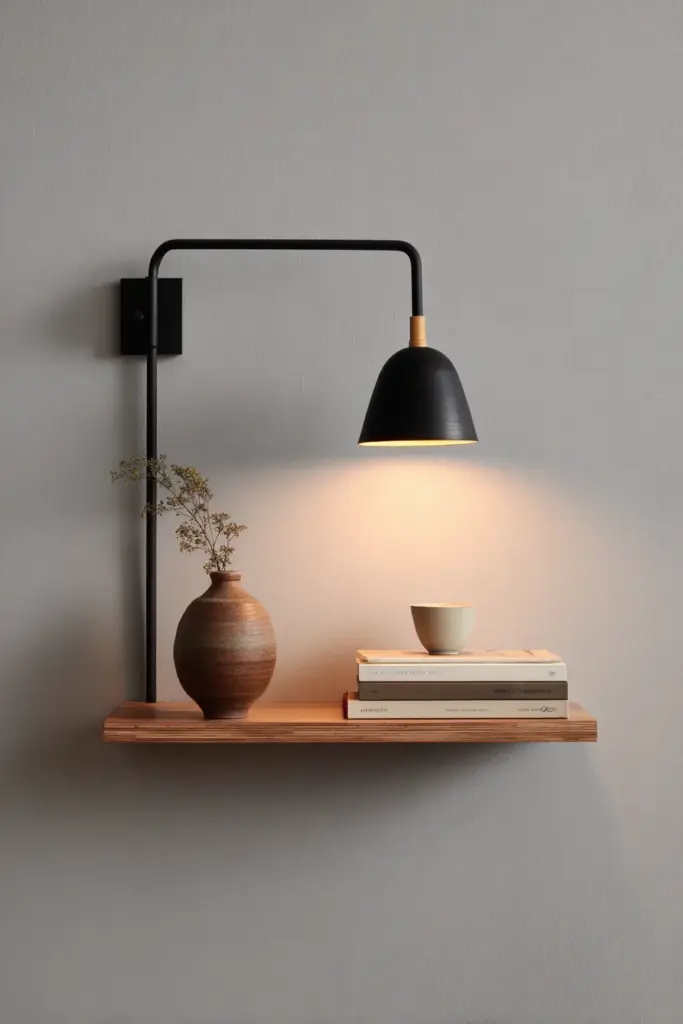
Wall-Mounted Solutions
Replace bulky floor lamps with swing-arm sconces that fold flat when not in use. Mount them beside beds or sofas to free up precious floor space. Choose bamboo or wood finishes to maintain warmth.
Vertical picture lights above shelving units draw the eye upward, making ceilings feel taller. This trick adds dimension to studio apartments.
Modular and Multi-Functional
Invest in magnetic track lighting with adjustable Japandi-style heads. Reposition spotlights as your layout evolves—perfect for renters who can’t install permanent fixtures.
Cordless LED table lamps offer flexibility for balconies, dining surfaces, or bathroom counters. Rechargeable options eliminate outlet constraints.
Mirrors and Reflection
Strategically place mirrors opposite windows or key light sources. This doubles the perceived light while maintaining Japandi’s uncluttered aesthetic. Choose simple wooden or black metal frames.
2026 Japandi Lighting Trends to Watch
The evolution of Japandi design embraces innovation without abandoning its soul. Here are emerging trends shaping living rooms this year.
Recycled Ocean Plastic Fixtures
Designers are crafting pendants and sconces from reclaimed ocean waste. These fixtures marry environmental activism with Japandi’s sustainability values. Look for translucent shades in soft blues and grays that reference their aquatic origins.
Brands are increasingly transparent about material sourcing—choose options with verified ocean cleanup partnerships.
AI-Adaptive Dimming
Smart sensors now adjust lighting based on natural daylight levels and room occupancy. Your Japandi pendants brighten on overcast Manila afternoons and dim during sunny mornings—automatically maintaining optimal illumination.
This technology reduces energy waste while honoring the Japandi principle of living in harmony with natural rhythms.
Biophilic Integration
Fixtures incorporating living elements—like pendant planters with built-in grow lights—blur the line between lighting and nature. Imagine a bamboo chandelier cradling trailing pothos vines.
This trend deepens the connection between Japandi interiors and the natural world.
Japandi Lighting Checklist: Key Takeaways
- Layer three types: Ambient pendants, task sconces, and accent spots for depth and flexibility
- Choose warm temperatures: 2700K-3000K LEDs for cozy, sleep-friendly illumination
- Embrace natural materials: Bamboo, rattan, washi paper, wood, and ceramic for authentic texture
- Prioritize dimming: Install dimmers or smart bulbs for customizable ambiance throughout the day
- Think sustainability: LED efficiency, recycled materials, and FSC-certified wood reduce environmental impact
- Scale appropriately: Larger pendants (24-36 inches) for standard rooms; wall sconces for compact apartments
- Mix textures: Combine smooth ceramic with rough rattan, matte metal with soft linen for sensory richness
- Position purposefully: Light where you live—reading corners, dining areas, art displays
- DIY affordably: Thrift upcycles and rice paper projects achieve the look for $25-$50
- Update seasonally: Swap warm 2400K in winter for 3000K in summer to align with shifting daylight
Bringing It All Together: Your Japandi Lighting Journey
Creating a Japandi living room is less about following rigid rules and more about listening to how light makes you feel. Notice where shadows fall at different times of day. Observe which corners crave illumination and which spaces breathe better in gentle dimness.
Start small—perhaps a single bamboo pendant above your favorite chair, or a pair of ceramic table lamps flanking a low console. Let each addition feel intentional, earned. Japandi design unfolds slowly, like trust or friendship.
The beauty of this approach is its longevity. These aren’t trendy fixtures you’ll tire of next season. They’re investments in daily comfort, in evenings that restore rather than drain, in homes that hold you gently at the end of long days.
May your living room become a sanctuary of warmth and light. May every switch you flip remind you that beauty and simplicity can, indeed, coexist.
Frequently Asked Questions
What is Japandi lighting style?
Japandi lighting blends Japanese minimalism with Scandinavian hygge, emphasizing soft, diffused warm light through natural materials like bamboo, washi paper, and wood. It rejects harsh overhead fixtures in favor of layered ambient, task, and accent lighting that creates serene, cozy environments. The style prioritizes quality over quantity, with each light source serving both functional and aesthetic purposes.
How do I layer lighting in a Japandi living room?
Start with ambient lighting from minimalist pendants or recessed LEDs for overall illumination. Add task lighting through wall sconces or floor lamps near reading areas and workspaces. Finish with accent lighting—spotlights washing textured walls, LED strips beneath shelves, or table lamps highlighting decor. Use dimmers and warm 2700K-3000K LEDs throughout to maintain cohesive warmth and flexibility.
What are the best materials for Japandi lamps?
Bamboo, rattan, washi paper, solid wood (oak, ash, walnut), and ceramic dominate authentic Japandi lighting. These natural materials add tactile warmth and connect interiors to nature. Matte black or brushed brass metal accents provide subtle contrast without overpowering the organic palette. Choose sustainable options like FSC-certified wood and handwoven rattan for eco-conscious design.
Can I achieve Japandi lighting on a budget?
Absolutely. Thrift vintage wooden or ceramic lamps and update shades with rice paper or linen. Create DIY pendants using bamboo placemats, embroidery hoops, and cord kits for under $50. Shop affordable retailers like IKEA for paper lanterns, then pair with warm LED bulbs. Support local Manila artisans for handwoven rattan shades at reasonable prices while adding meaningful craftsmanship to your space.
What lighting temperature works best for Japandi living rooms?
Stick with warm-toned LEDs between 2700K and 3000K. This range mimics candlelight and golden-hour sun, supporting serotonin production and circadian rhythms while reducing evening eye strain. Use 2700K for ambient and relaxation areas, then 3000K for task lighting where slightly brighter illumination helps with reading or detailed work. Avoid cool tones above 3500K as they undermine the cozy warmth essential to Japandi design.