
Table of Contents
There’s something magical about the way light transforms a room. Not just illumination—but feeling. The soft amber wash of a pendant lamp at dusk. The gentle shadow cast by bamboo slats. Light that doesn’t announce itself but quietly whispers, stay awhile.
Japandi lighting is the art of this quiet conversation. It’s where Japanese wabi-sabi—the beauty of imperfection and natural aging—meets Scandinavian hygge, that soul-deep comfort we all crave. The result? Spaces that feel both minimalist and deeply warm, functional yet poetic.
In this guide, we’ll walk you through everything you need to create Japandi lighting that breathes life into your home. From choosing the right fixtures to mastering color temperature, layering light, and even smart integrations for modern living. Whether you’re redesigning your Manila apartment or simply seeking that zen ambiance, let’s discover how light can become your most powerful design tool.
Understanding Japandi Lighting Principles
Japandi isn’t just an aesthetic—it’s a philosophy of living. At its heart lies the Japanese concept of ma, the conscious use of negative space, and the Scandinavian pursuit of lagom, just the right amount. Your lighting should honor both.
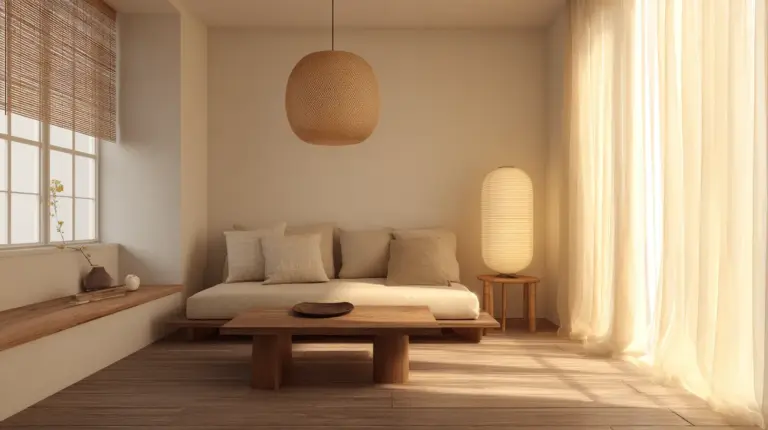
Think diffused, not direct. Harsh overhead lights have no place here. Instead, imagine paper lanterns that soften the glow, wooden pendants that cast dappled patterns, rattan shades that filter light like morning sun through leaves. The goal is to create layers of warmth that shift throughout the day.
Natural materials reign supreme. Bamboo, washi paper, raw wood, ceramic—these aren’t just fixtures but living elements that age gracefully. Each scratch, each patina mark becomes part of your home’s story.
The Science of Warmth: Choosing Your Color Temperature
Numbers might not feel poetic, but in Japandi design, 2700K to 3000K is your sweet spot. This warm white range mimics candlelight and sunset, creating instant comfort.
Cool white bulbs (4000K+) feel clinical, too bright, too sterile. They clash with the organic textures central to this style. Stick with warm-toned LEDs that complement natural wood grains and soft textiles.
Dimmable bulbs are non-negotiable. The ability to adjust brightness transforms your space from energizing morning light to intimate evening glow. Install dimmer switches or explore smart bulbs like Philips Hue, which let you program circadian rhythms—brighter blues in the morning, warm ambers at night—supporting your body’s natural wellness cycle.
Smart Lighting for Modern Japandi Homes
Technology and minimalism can coexist beautifully. Smart lighting apps give you control without cluttering your aesthetic. Set schedules for automatic dimming at sunset, create scenes for reading versus entertaining, all from your phone.
Consider motion sensors in hallways paired with warm accent lights. They add functionality while maintaining that serene, uncluttered Japandi feel. The key is making technology invisible, letting the warm glow take center stage.
Layering Light: The Three Essential Layers
Japandi spaces thrive on layered lighting—ambient, task, and accent working in harmony. This isn’t complicated; it’s intentional.
Ambient Lighting: Your Foundation
Start with soft, diffused ambient light. Think rice paper ceiling fixtures or recessed lights with warm bulbs. The goal is gentle, even illumination that doesn’t create harsh shadows.
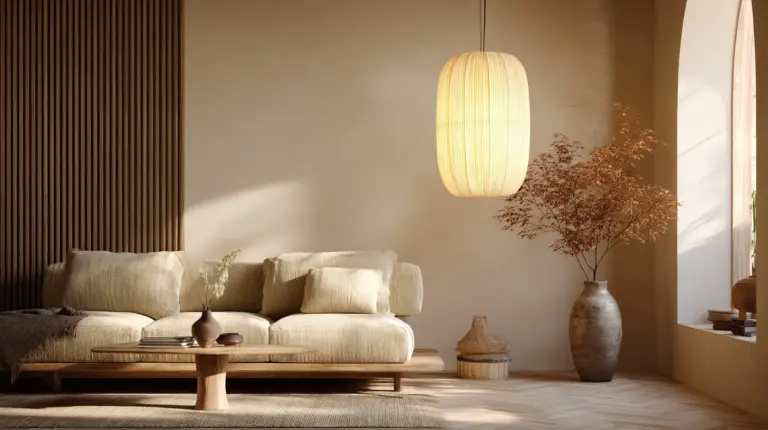
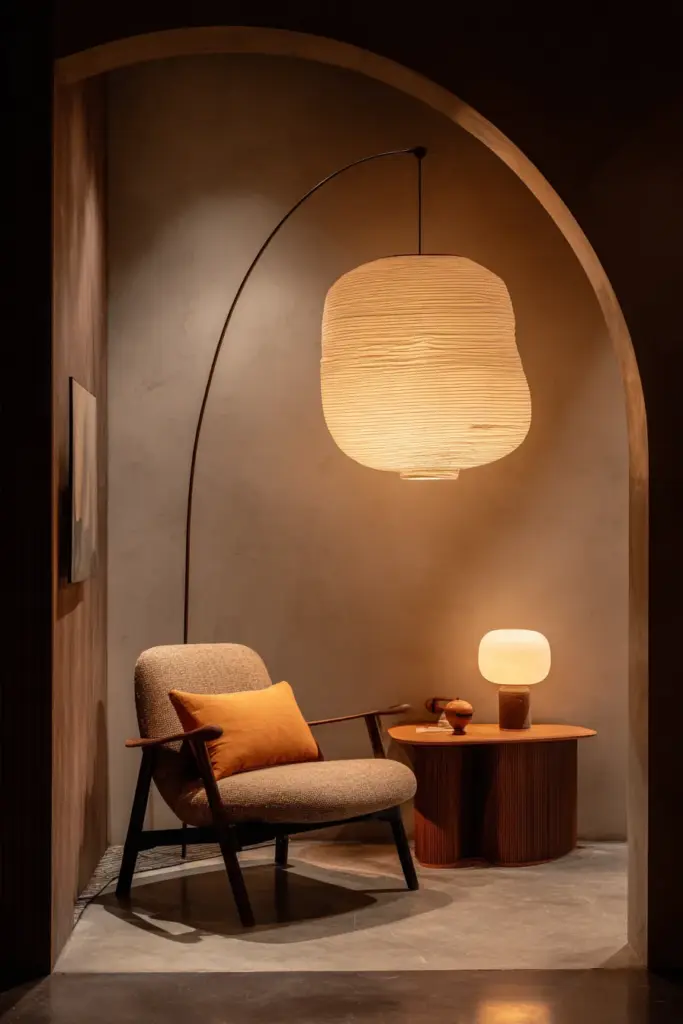
Shoji-inspired lanterns make exceptional ambient fixtures. Their paper screens scatter light beautifully, filling rooms with that signature soft glow. Pair with light-colored walls to maximize reflection without glare.
In larger living rooms, consider multiple ambient sources rather than one central fixture. Two medium pendants over a dining area, supplemented by wall sconces, create depth and visual interest.
Task Lighting: Functional Beauty
Task lighting serves purpose: reading, cooking, working. But in Japandi design, it must do so elegantly.
Arc floor lamps with linen or cotton shades bring light exactly where needed while maintaining clean lines. Position one beside your favorite reading chair with a warm 2700K bulb. The adjustable arm offers flexibility; the natural fabric shade ensures the light feels gentle, never glaring.
For kitchens, under-cabinet LED strips in warm white illuminate counters without overhead harshness. Choose aluminum or wood housings that blend with your cabinetry. Avoid bright whites—they disrupt the warmth you’re cultivating elsewhere.
Accent Lighting: Creating Atmosphere
This is where magic happens. Accent lights highlight textures, create shadow play, add drama to minimalist spaces.
Use compact uplights to graze textured walls or showcase a favorite ceramic vase. The indirect glow adds dimension without visual clutter. Bamboo table lamps with Edison-style warm bulbs work beautifully on consoles or side tables, their organic forms becoming sculptural elements during the day.
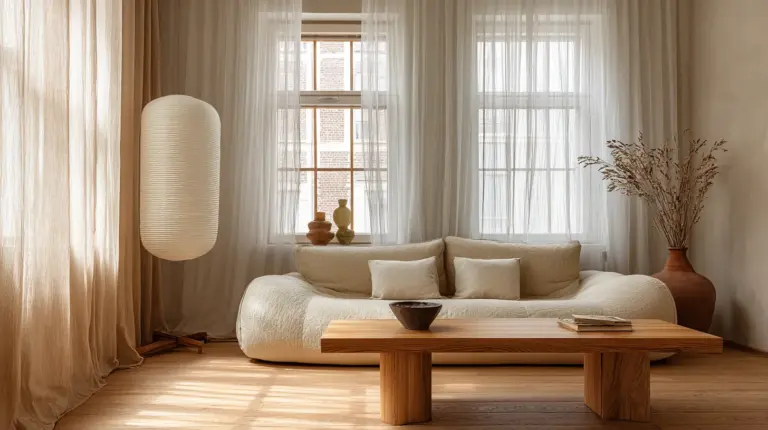
Don’t forget natural light. It’s your most powerful accent. Sheer linen curtains filter harsh Manila sun into soft, diffused daylight. Strategic mirrors multiply this natural glow, bouncing light into darker corners without adding fixtures.
Fixture Styles: Choosing Your Japandi Lights
Your fixtures are functional art. They set the tone the moment someone enters your space.
Pendant Lights: Statement Simplicity
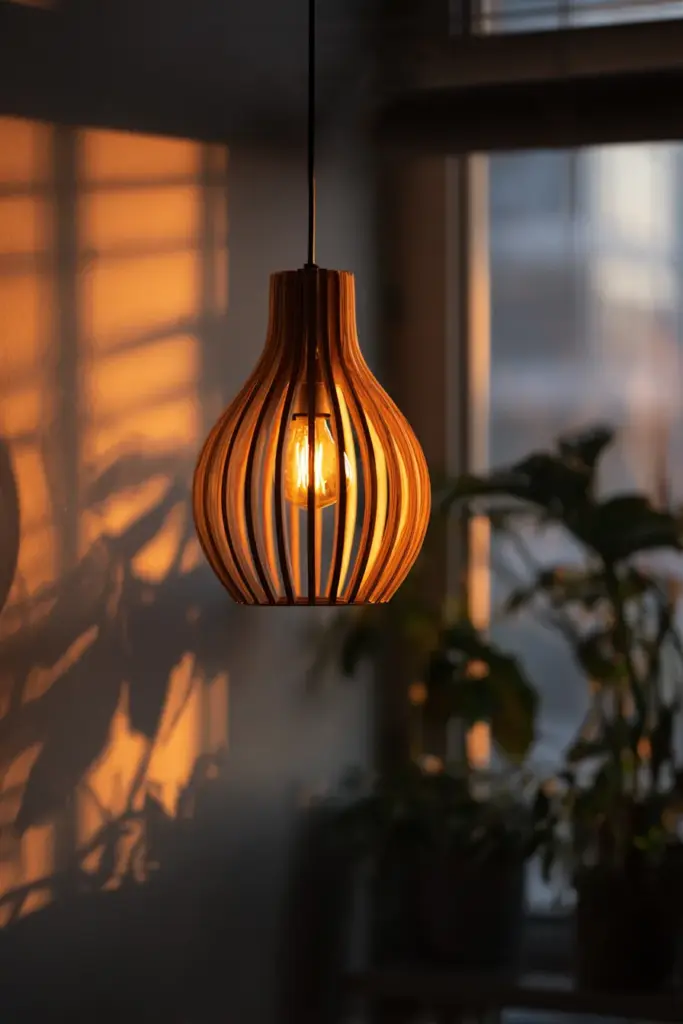
Wood pendants with clean geometric shapes—spheres, cylinders, bell forms—epitomize Japandi. Look for light or medium-toned woods like ash, oak, or bamboo. The grain should be visible, celebrating the material’s natural beauty.
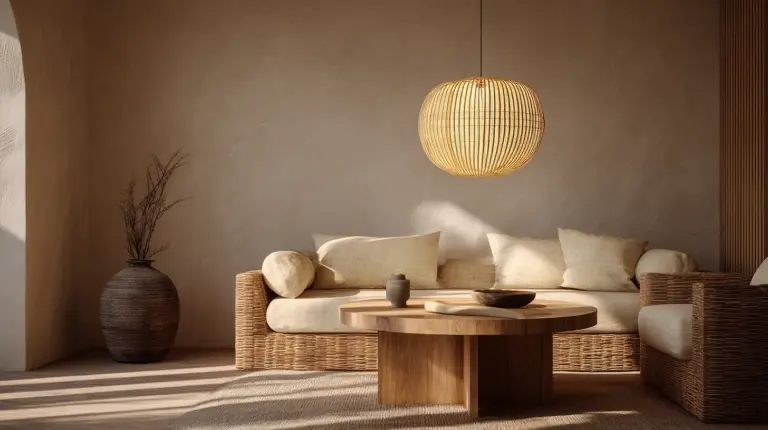
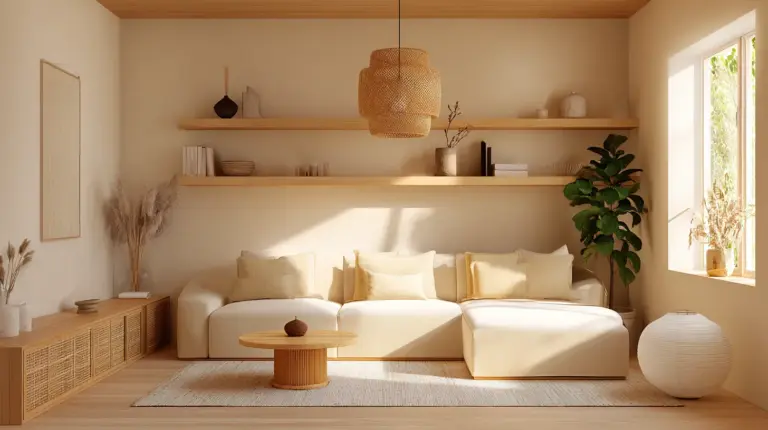
Woven rattan pendants offer texture and visual warmth. When lit, they cast intricate shadow patterns that dance across walls and ceilings, adding movement to stillness. Group three pendants of varying heights over a dining table for impact that remains minimal.
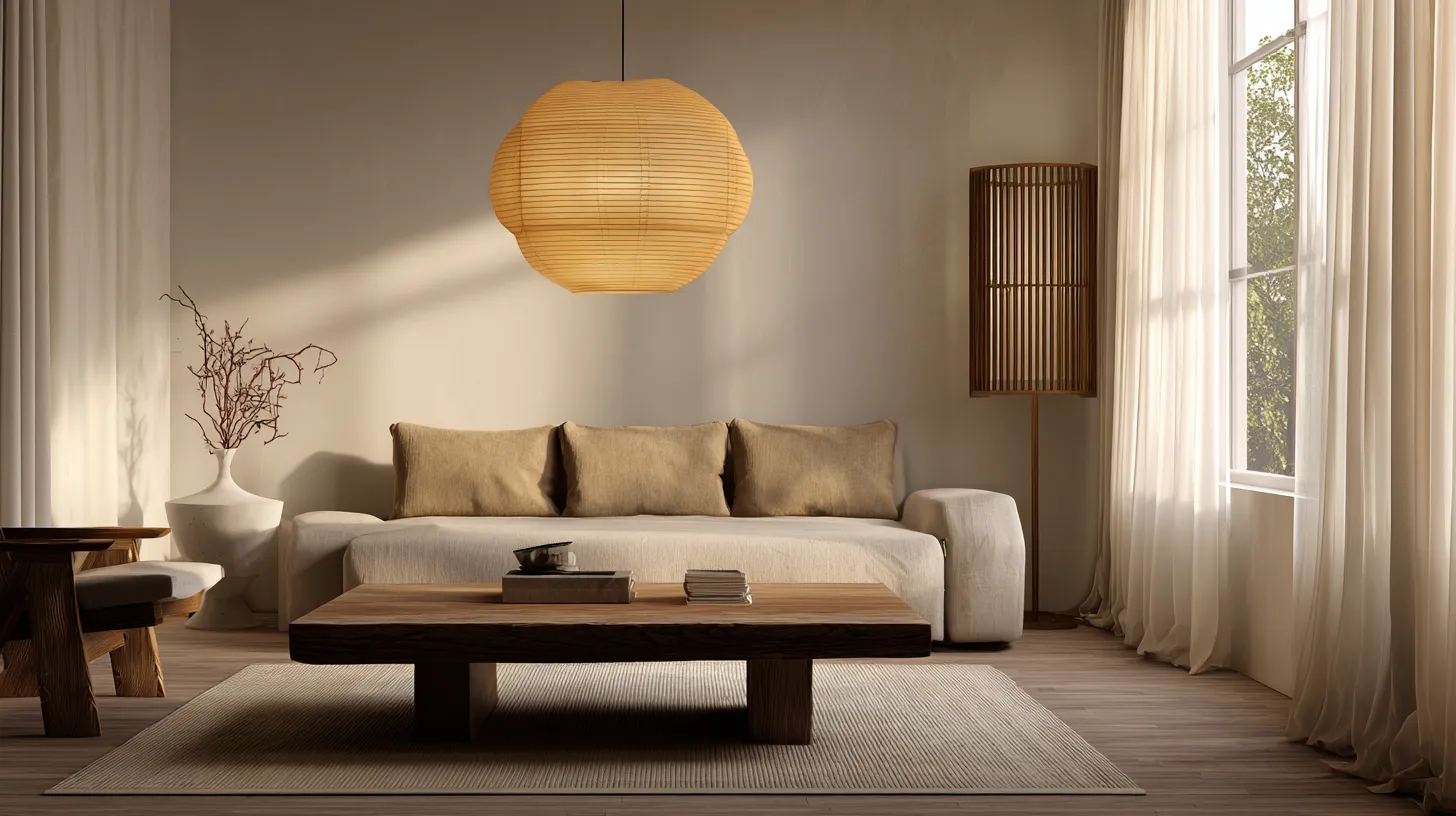
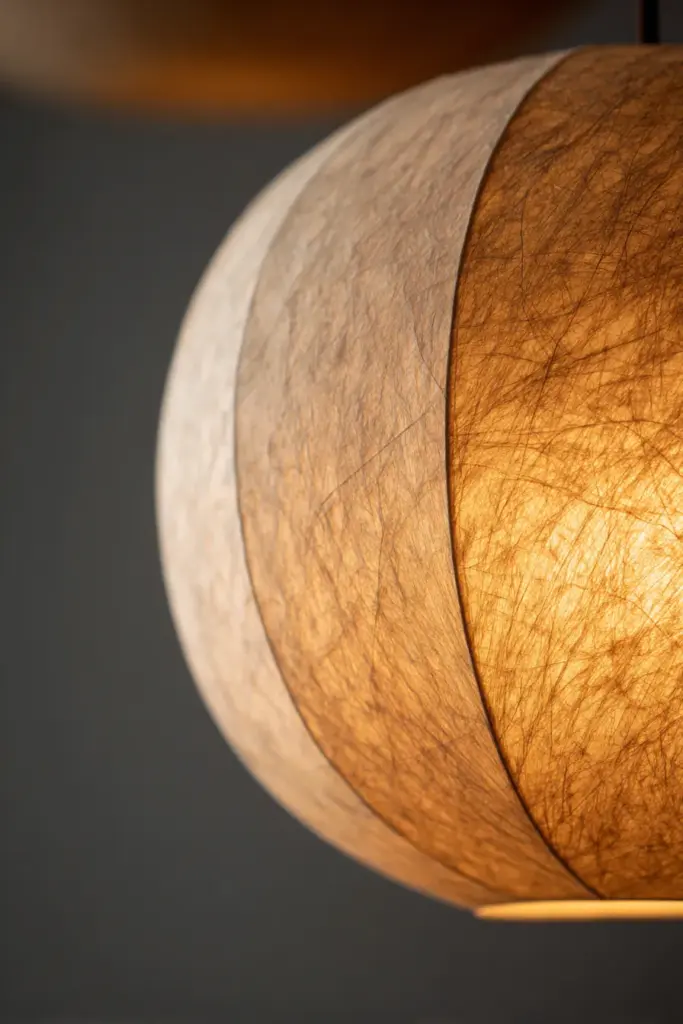
Washi paper lanterns bring authentic Japanese heritage. Their translucent glow is unmatched—soft, meditative, perfect for bedrooms or meditation corners. Available from budget options on Shopee starting at ₱800 to artisan pieces at ₱5,000+.
Floor Lamps: Grounded Elegance
Tripod floor lamps with wooden legs and neutral fabric shades blend Scandinavian functionality with Japanese restraint. Position near seating areas to create intimate reading zones.
Bamboo floor lamps with rice paper shades stand like vertical sculptures. They’re lightweight, affordable (Lazada offers options under ₱3,000), and cast that coveted warm, diffused glow upward and outward.
For smaller spaces, slim arc lamps in matte black or natural wood reach over furniture without taking floor space. They’re particularly effective in Manila apartments where square footage is precious.
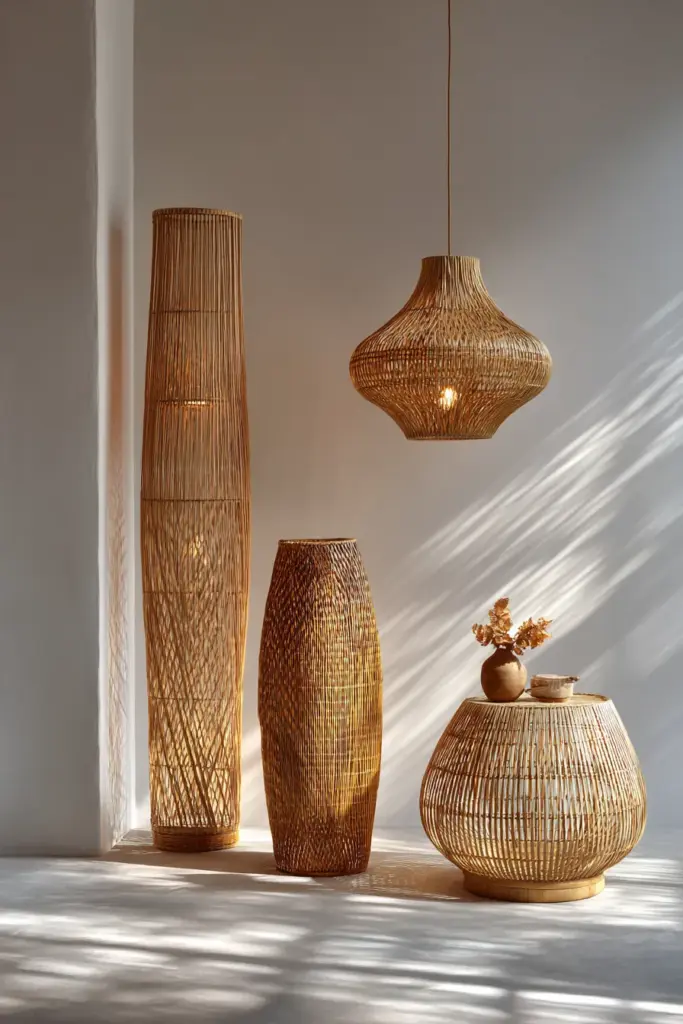
Table and Wall Lights: Subtle Touches
Ceramic table lamps in earth tones—terracotta, soft gray, cream—add organic texture. Choose simple, handmade-looking forms over ornate designs. The imperfections honor wabi-sabi principles.
Wall sconces with wooden backplates and frosted glass shades provide ambient light without floor clutter. Install them on either side of beds or flanking a console for symmetrical, calming aesthetics.
Room-by-Room Japandi Lighting
Different spaces demand different approaches, but the principles remain constant: warm, layered, natural.
Living Room: Layered Sanctuary
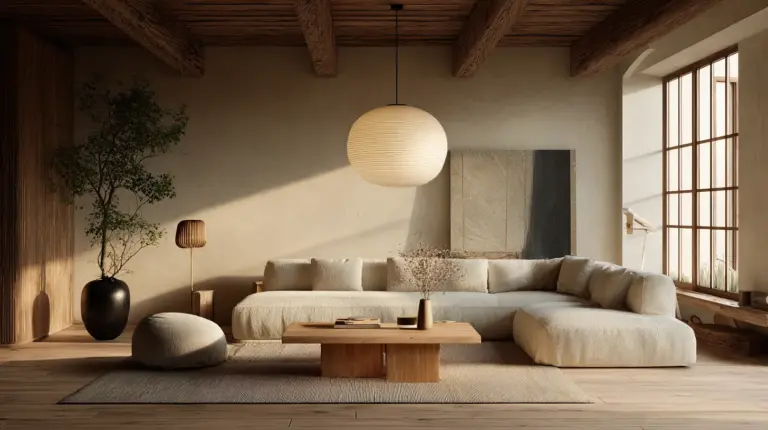
Start with a central pendant or two medium fixtures for ambient light. Add floor lamps in corners to eliminate dark zones. Include task lighting near seating—an arc lamp over your sofa, perhaps.
Accent lights should highlight architectural features or treasured objects. A small uplight behind a fiddle leaf fig creates living sculpture. Dimmable controls let you shift from bright family gatherings to intimate evenings seamlessly.
Maximize natural light with sheer curtains in ivory or sand. In Manila’s tropical climate, you’ll want to filter the intensity while preserving the warmth. A large mirror opposite your window doubles the effect.
Bedroom: Soft Refuge
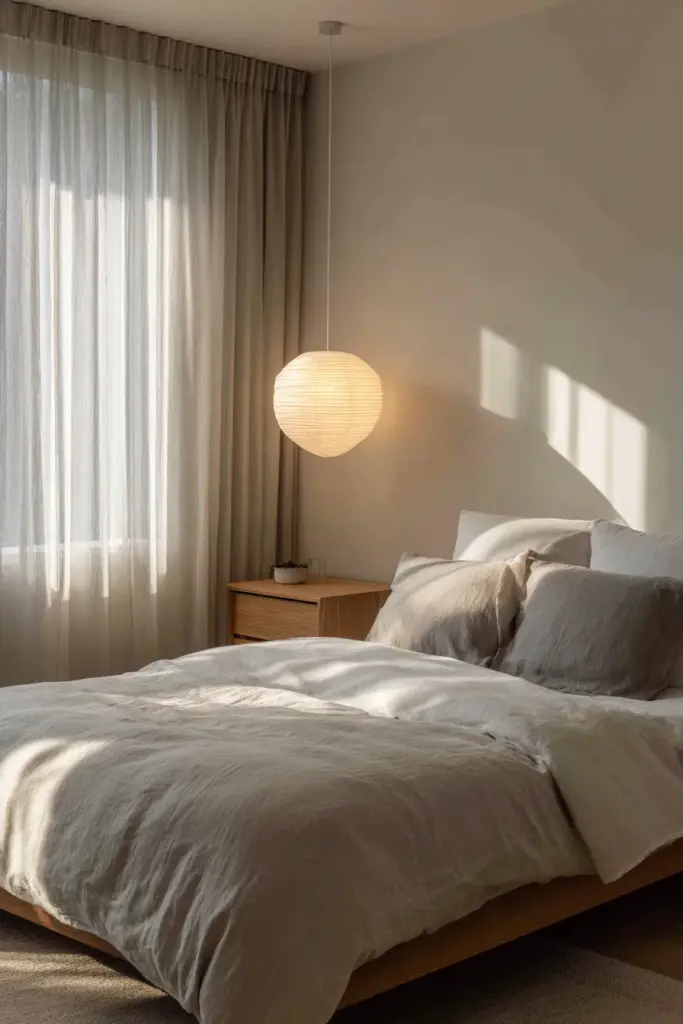
Bedrooms need calming, warm light exclusively. Skip bright whites entirely. Install a central pendant with a paper or fabric shade for soft ambient light, supplemented by bedside table lamps.
Wall-mounted reading lights with adjustable arms offer task lighting without nightstand clutter. Choose warm 2700K bulbs here—studies show warmer temperatures support better sleep.
Blackout curtains behind sheer layers give you control. Draw the sheers during the day for filtered natural light, the blackouts at night for complete darkness. This layering mirrors Japandi’s nuanced approach to everything.
Kitchen: Functional Warmth
Kitchens require brighter task lighting, but warmth still matters. Under-cabinet LEDs at 3000K provide ample workspace light while maintaining that cozy feel.
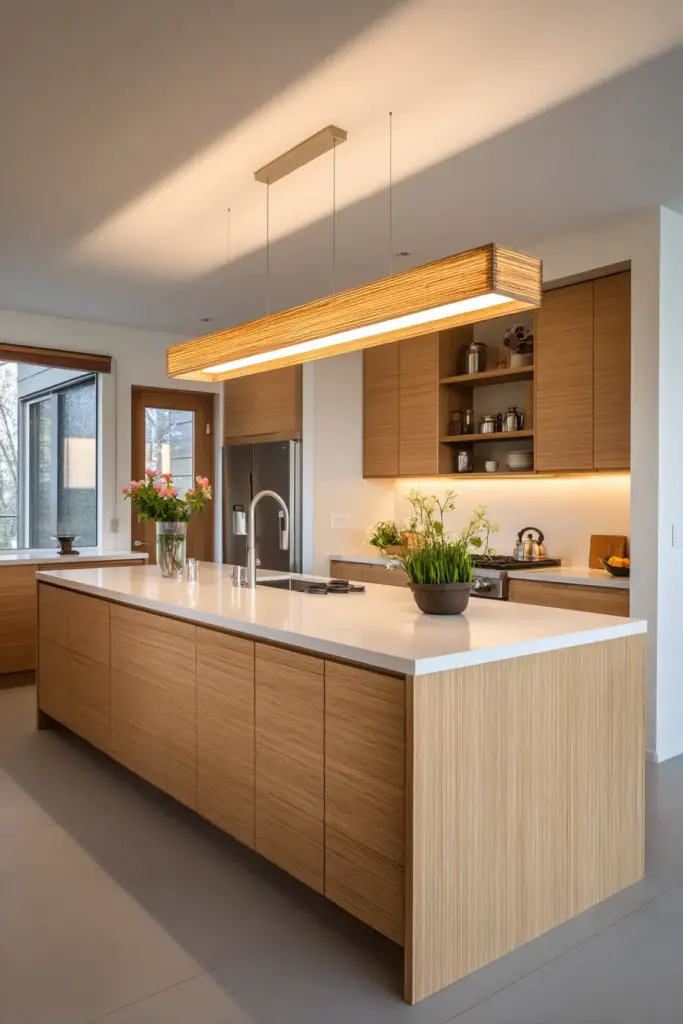
A linear pendant over an island or dining area anchors the space. Look for wood or bamboo bar pendants—they’re functional, sculptural, and quintessentially Japandi.
Avoid multiple recessed ceiling lights. They create that commercial kitchen vibe. Instead, use 2-3 larger pendants supplemented by under-cabinet task lights.
Budget-Friendly Japandi Lighting in the Philippines
Beautiful lighting doesn’t require luxury budgets. Smart shopping and DIY creativity go far.
Affordable Sources
IKEA offers excellent Scandinavian-minimalist options. Their SINNERLIG pendant (₱2,999) in bamboo or their HOLMÖ floor lamp (₱899) in rice paper are Japandi staples.
Shopee and Lazada have exploded with Japandi options. Search “bamboo pendant light” or “washi paper lamp” for options starting at ₱500. Read reviews carefully and check seller ratings.
Local markets in Manila like Dapitan Arcade offer bamboo and rattan fixtures at wholesale prices. You can find unique pieces for ₱1,500-₱3,500 that rival boutique offerings.
DIY and Upcycling
Transform plain IKEA pendants with natural elements. Wrap the cord in jute twine. Add wooden beads along the cable. These small touches add organic warmth for minimal cost.
Upcycle glass jars into pendant lights. Remove labels, add a pendant kit (₱200 on Shopee), install a warm LED Edison bulb. The result? Custom lighting under ₱500.
Thrift stores often have wooden lamp bases. Strip and oil them for natural grain, pair with a linen lampshade from a local seamstress. You’ve created a bespoke Japandi piece for under ₱2,000.
Sustainability: Lighting That Honors the Earth
Japandi philosophy extends beyond aesthetics to environmental consciousness. Your lighting choices can reflect this.
Energy-Efficient Options
LEDs are non-negotiable. They use 75% less energy than incandescent bulbs and last 25 times longer. Look for Energy Star certification—it guarantees efficiency standards.
Calculate lumens per watt to compare true efficiency. A good LED offers 80-100 lumens per watt. For Japandi spaces, you typically want 300-500 lumens for accent lights, 800-1100 for task lights, and 1600+ for ambient room lighting.
Smart bulbs with scheduling reduce waste. Program them to turn off when you typically leave for work. The energy savings add up, and it aligns with Japandi’s “just enough” ethos.
Sustainable Materials
Bamboo grows rapidly and sequesters carbon. Choosing bamboo fixtures supports regenerative agriculture. Ensure they’re finished with natural oils, not synthetic lacquers.
Reclaimed wood pendants give second life to materials. Ask local furniture makers in Manila if they craft lighting from salvaged wood. You’ll get unique, sustainable pieces while supporting local artisans.
Paper lamps should use sustainably sourced or recycled paper. Many modern washi alternatives come from renewable mulberry bark or recycled content. Check product descriptions.
Maintenance: Keeping Your Lights Glowing
Natural materials require gentle care, but it’s simple.
Cleaning Natural Shades
Dust bamboo and rattan weekly with a soft brush attachment on your vacuum. This prevents buildup in the woven crevices. For deeper cleaning, wipe with a barely damp cloth—never soak, as this can warp natural fibers.
Paper lanterns can’t be washed. Dust gently with a microfiber cloth. If stained, replacement is often cheaper than restoration. Budget options mean you can refresh every 2-3 years without guilt.
Wooden fixtures benefit from occasional oiling. Once yearly, wipe down with a cloth dampened with natural wood oil. This prevents drying and cracking, enhancing the grain’s beauty.
Bulb Longevity
Quality LED bulbs last 15,000-25,000 hours. At 3 hours daily use, that’s 13-22 years. Track installation dates in your phone to budget for eventual replacements.
Dimming LEDs to 50% brightness extends their life significantly while creating that perfect Japandi ambiance. It’s efficiency and aesthetics working together.
Keep spare bulbs of your chosen color temperature. Nothing disrupts Japandi cohesion faster than mismatched warm and cool bulbs when one burns out.
Common Japandi Lighting Mistakes to Avoid
Even with the best intentions, missteps happen. Awareness prevents them.
Too much overhead lighting creates flat, institutional spaces. Always layer with floor and table lamps instead of relying solely on ceiling fixtures.
Mixing color temperatures destroys warmth. Commit to 2700K-3000K throughout your space. The consistency is key to that cohesive glow.
Ignoring dimmers means missing the magic. Fixed brightness can’t adapt to morning energy or evening calm. Install dimmers on all main circuits.
Overcrowding with fixtures contradicts minimalism. Less is genuinely more. Three perfect lamps beat ten mediocre ones.
Neglecting natural light wastes your best resource. Before adding artificial lights, maximize windows with the right window treatments and mirror placement.
Quick Checklist: Creating Your Japandi Lighting Plan
- Choose warm LED bulbs (2700K-3000K) for all fixtures
- Install dimmer switches or smart bulbs for flexibility
- Plan three layers: ambient, task, and accent lighting
- Select fixtures in natural materials (wood, bamboo, paper, rattan)
- Position floor lamps in corners to eliminate dark zones
- Hang pendants 30-36 inches above dining tables
- Add sheer curtains to filter and diffuse natural light
- Place mirrors strategically to multiply available light
- Avoid overhead-only schemes; always supplement with lamps
- Opt for Energy Star LEDs for sustainability
- Keep color temperature consistent throughout your space
- Budget for quality over quantity—invest in fewer, better pieces
Conclusion: Lighting as Sanctuary
Light isn’t just something we see by. It’s what we feel in a space before we can name it. That inexplicable comfort when you enter a room and simply want to stay. The way your shoulders drop, your breathing slows, your mind quiets.
This is what Japandi lighting offers. Not perfection, but presence. Not showiness, but soul. Every warm glow from a paper lantern, every shadow cast by bamboo, every dimmed pendant at dusk—they’re invitations to slow down and savor the moment.
Your home should feel like coming home. And sometimes, all it takes is changing the light.
Frequently Asked Questions
What is Japandi lighting?
Japandi lighting blends Japanese minimalism with Scandinavian hygge, emphasizing warm, diffused light from natural materials like wood, bamboo, and washi paper. It focuses on creating cozy, functional spaces through layered lighting at 2700K-3000K color temperatures, avoiding harsh overhead lights in favor of soft, ambient glows that honor both wabi-sabi imperfection and Nordic simplicity.
What color temperature is best for Japandi style?
Stick to warm whites between 2700K and 3000K. This range mimics candlelight and sunset, creating the cozy, inviting atmosphere central to Japandi design. Avoid cool whites (4000K+) as they feel sterile and clash with the organic textures and materials that define this aesthetic. Dimmable bulbs in this range offer the most flexibility.
How do you layer lighting in Japandi interiors?
Use three layers: ambient (soft overhead fixtures like paper pendants or recessed lights), task (floor or table lamps for reading and work), and accent (uplights highlighting textures or objects). Supplement with natural light filtered through sheer curtains and multiplied by mirrors. This creates depth and adaptability, shifting from energizing mornings to calming evenings.
Where can I buy affordable Japandi lighting in the Philippines?
IKEA offers Scandinavian-minimalist fixtures like bamboo pendants (₱2,999+). Shopee and Lazada have budget options starting at ₱500—search u0022bamboo pendantu0022 or u0022washi paper lamp.u0022 Local markets like Dapitan Arcade in Manila sell rattan and bamboo fixtures at ₱1,500-₱3,500. For DIY, upcycle IKEA pieces with jute cord wrapping or create jar pendants using kits from Shopee.
What materials work best for Japandi light fixtures?
Prioritize natural, sustainable materials: bamboo for pendants and floor lamps, washi or rice paper for lanterns, light-toned woods (oak, ash) for structural fixtures, rattan for woven shades, and ceramic for table lamps. These materials age beautifully, develop patina over time, and filter light softly—honoring both wabi-sabi and Scandinavian principles while keeping your space warm and organic.