
Table of Contents
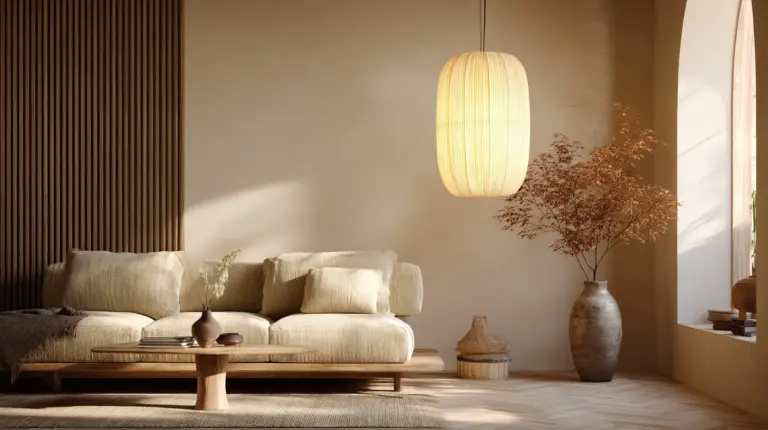
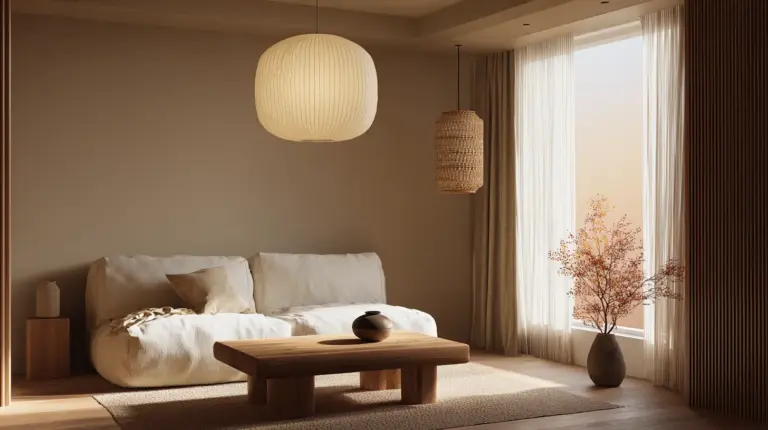
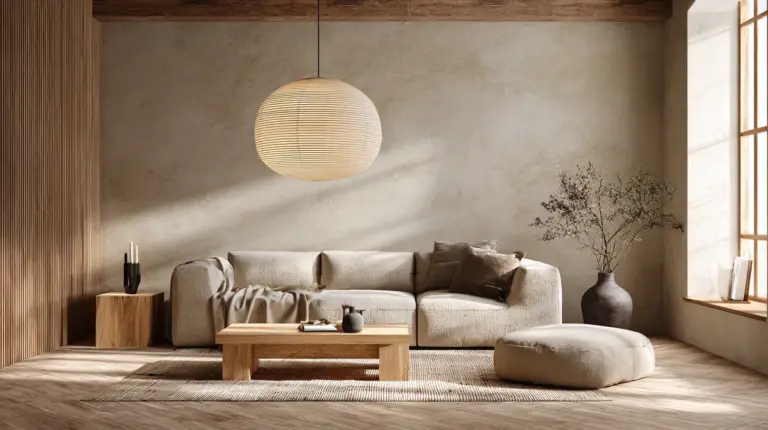
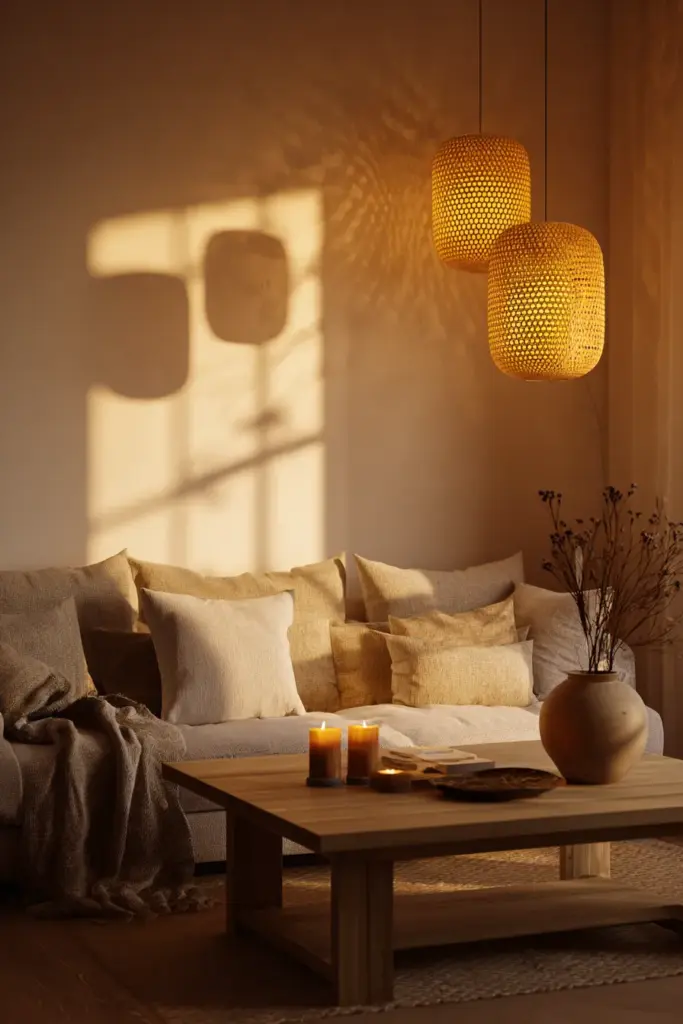
There’s a particular kind of stillness that settles into a Japandi living room when the light falls just right. It’s that golden hour glow stretching across woven textures, the soft pool of warmth beneath a paper pendant, the gentle shadow that makes minimalism feel alive rather than stark.
But what happens when your carefully curated space feels more clinical than calm? When overhead lights cast harsh shadows across your low-profile sofa, or when evening dimness swallows the room’s warmth whole?
You’re not alone in this. Lighting is where the Japandi philosophy of wabi-sabi meets practicality—and where many beautiful spaces stumble. The very principles that make this aesthetic so serene—natural materials, indirect glow, layered subtlety—can become sources of frustration when something goes technically wrong.
Consider this your gentle troubleshooting companion. We’ll walk through the most common lighting challenges in Japandi living rooms and, more importantly, how to restore that perfect balance of light and shadow that makes you want to linger with your evening tea.
Understanding Japandi Lighting Fundamentals
Before we dive into fixes, let’s ground ourselves in what Japandi lighting should feel like.
This design philosophy marries Scandinavian functionality with Japanese minimalism. Light here isn’t just illumination—it’s atmosphere, texture, emotion. Think warm LEDs at 2700K-3000K creating pools of honey-colored light. Imagine bamboo and washi paper diffusers softening every beam into a diffused glow that never glares.
The goal is layered lighting that mimics nature’s rhythms. Ambient light establishes the foundation, task lighting serves specific needs without dominating, and accent lighting adds sculptural drama to negative space. When this trinity falls out of balance, your living room loses its soul.
Fix #1: Your Living Room Feels Too Cool and Clinical
The Problem: Wrong Color Temperature
This is the most common Japandi lighting mistake, and thankfully, the easiest to fix.
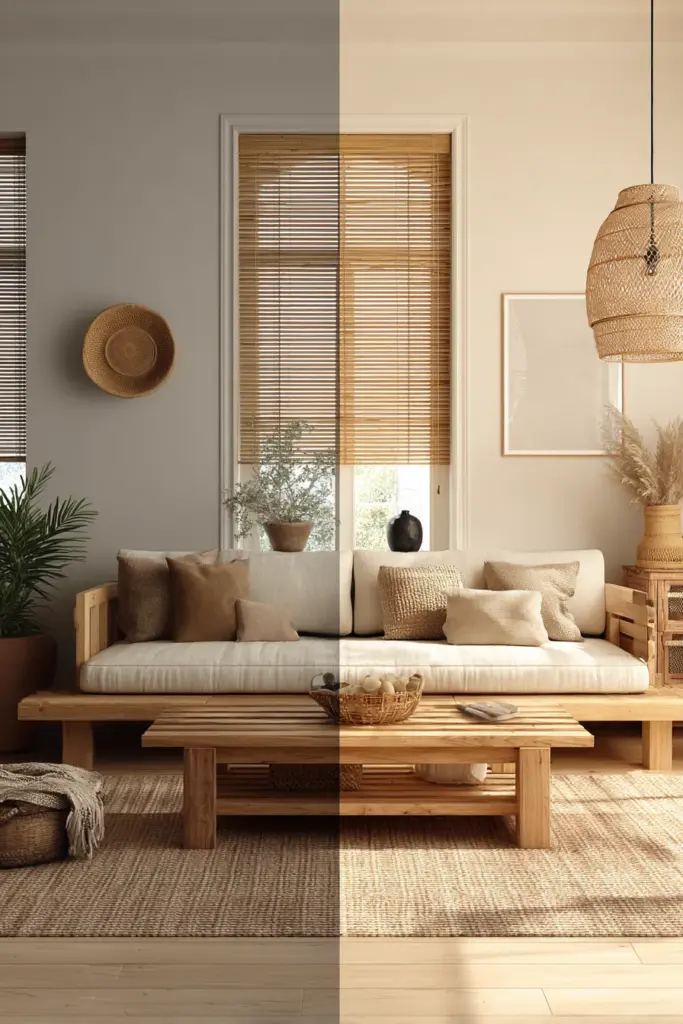
If your space feels more like a dentist’s office than a sanctuary, you’re likely using bulbs in the 4000K-5000K range—cool white or daylight temperatures that work against everything Japandi stands for. These tones flatten textures, make natural wood look washed out, and strip warmth from linen and cotton.
The Solution: Embrace Warm Tones Consistently
Replace all bulbs with 2700K-3000K warm white LEDs. Yes, all of them. Color temperature consistency is crucial in Japandi spaces where subtle gradations matter.
Start with your overhead fixture—likely a minimalist pendant or recessed lights. Swap to warm LEDs and immediately notice how your oak coffee table regains its amber undertones. Move to table lamps with linen shades, ensuring the same temperature range. The woven texture will now glow rather than merely illuminate.
For dimmable fixtures, invest in quality dimmable warm LEDs. Cheap alternatives often shift cooler when dimmed, defeating your purpose. Test bulbs at various settings before committing to multiples.
| Fixture Type | Recommended Temp | Wattage Equivalent | Dimmable? |
|---|---|---|---|
| Pendant (ambient) | 2700K | 60-75W | Yes |
| Floor lamp (task) | 2800K | 40-60W | Yes |
| Accent spotlight | 3000K | 25-40W | Optional |
Quick Check
Notice how light interacts with your natural materials. Bamboo blinds should look honey-toned, not gray. Rattan should cast warm, intricate shadows. If these elements appear flat or cool, your temperature is still off.
Fix #2: Harsh Shadows Behind Your Sofa Area
The Problem: Single-Source Overhead Lighting
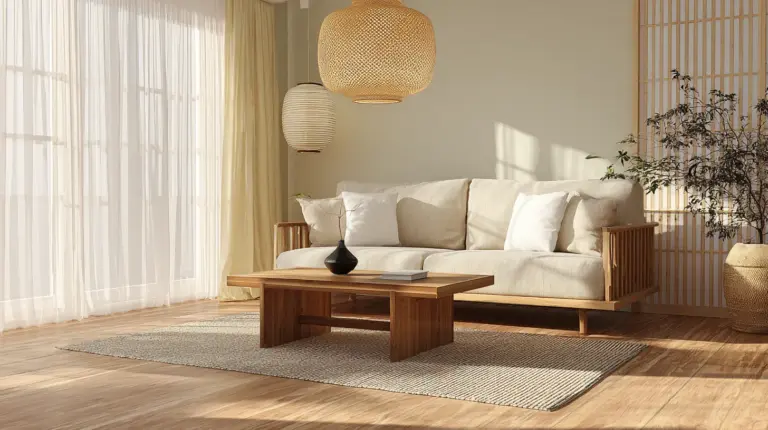
A lone ceiling fixture—even a beautiful Japanese-inspired pendant—creates dramatic shadows that work against Japandi’s soft minimalism.
You’ll notice this most in evening hours: sharp lines behind furniture, unflattering darkness pooling in corners, a general harshness that makes relaxation difficult. This happens because you’re relying solely on ambient lighting without proper layering.
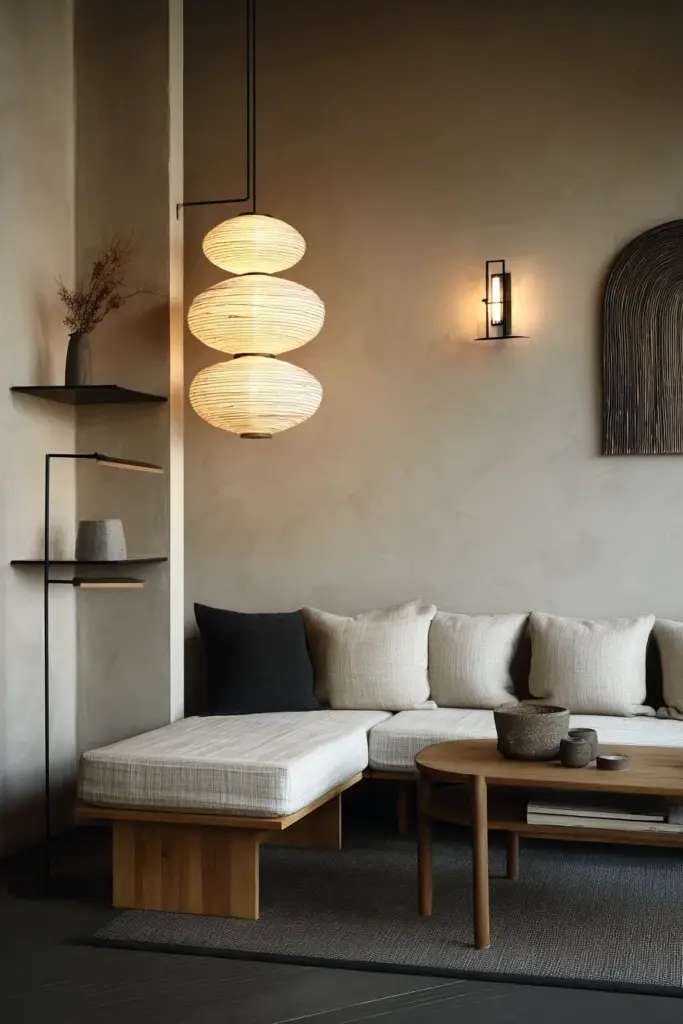
The Solution: Layer Your Light Sources
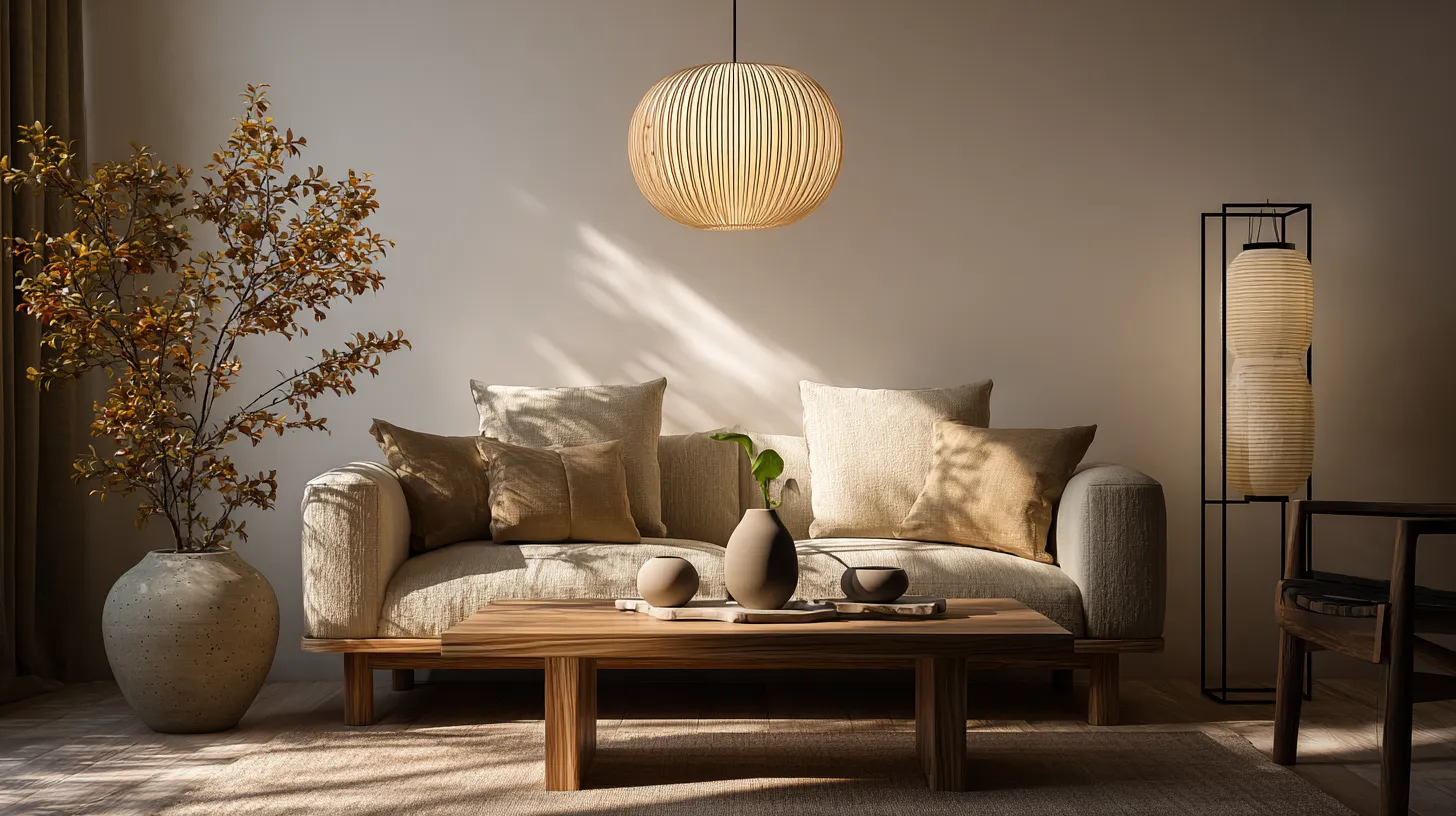
Add a floor lamp beside or behind your sofa. Choose minimalist designs in black metal or light wood with natural fabric shades. Position it to cast indirect light upward and outward, filling those shadow zones without creating new harsh spots.
Introduce wall sconces at mid-height (roughly 60 inches from floor) if your layout allows. These create gentle pools of light that bridge the gap between ceiling and floor sources. Opt for bamboo or frosted glass shades that diffuse rather than direct.
Use the 3-2-1 rule: Three light sources minimum (overhead, floor lamp, table lamp), at two different heights, creating one cohesive glow.
Addressing Smart Tech Glitches
If you’re using smart bulbs for dimming control, sync issues can create uneven lighting. Reset your app and ensure all bulbs share the same firmware version. Incompatibility between dimmers and warm LEDs often causes flickering—check that your dimmer switch is LED-compatible and rated for your total wattage load.
Fix #3: Evening Dimness Swallows the Room
The Problem: Insufficient Lumens for Living Space
Japandi embraces subtlety, but subtlety shouldn’t mean squinting at your book.
Many enthusiasts over-correct toward minimalism, installing fixtures with too few lumens. The result: a living room that’s perfect at dusk but uncomfortably dim after sunset. You find yourself hunching toward light sources or avoiding the space altogether in evenings.
The Solution: Calculate Proper Lumens
For living rooms, aim for 1,500-3,000 total lumens (about 20 lumens per square foot for a 12×15 foot space). This provides enough brightness when fully lit while allowing flexibility through dimmers.
Audit your current setup: A typical LED pendant might provide 800-1,200 lumens. Two table lamps at 400-600 lumens each. One floor lamp at 600-800 lumens. That’s roughly 2,200-3,000 lumens total—adjust as needed.
Strategic placement matters as much as quantity. Place task lighting (floor lamps, reading lights) near seating areas. Use ambient lighting (pendant, recessed) for overall glow. Add accent lighting (picture lights, uplighting) to highlight textures without contributing much functional brightness.
Check for Dimming Diffusers
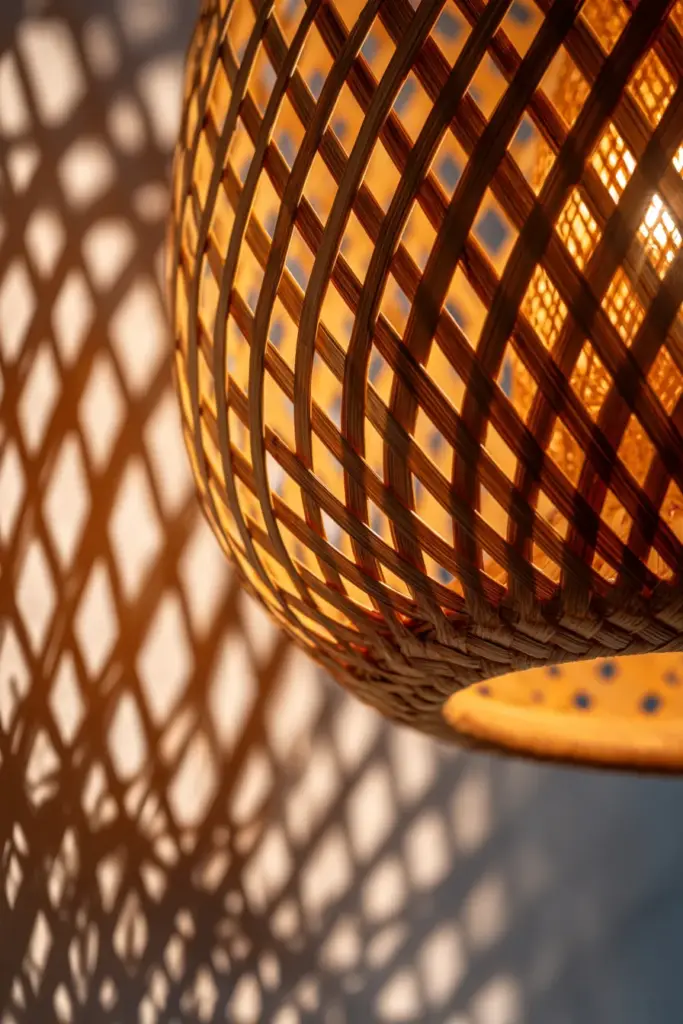
Bamboo shades, washi paper pendants, and rattan screens accumulate dust, especially in humid climates like Manila. This reduces light transmission by 20-30% over months. Establish a monthly cleaning routine: gently wipe bamboo with barely damp microfiber cloths, vacuum rattan through a stocking to prevent snags, and replace washi paper annually if it yellows.
Fix #4: Pendant Lights Create Wrong Scale or Shadows
The Problem: Height and Proportion Mismatches
A gorgeous Japanese-style pendant can still fail if hung incorrectly.
Too low, and it creates uncomfortable glare when seated, blocks sightlines, and makes low-ceilinged rooms feel cramped. Too high, and it loses impact, casting insufficient light downward while creating a disconnected feeling. Standard ceiling heights in many homes (8-9 feet) make this particularly tricky.
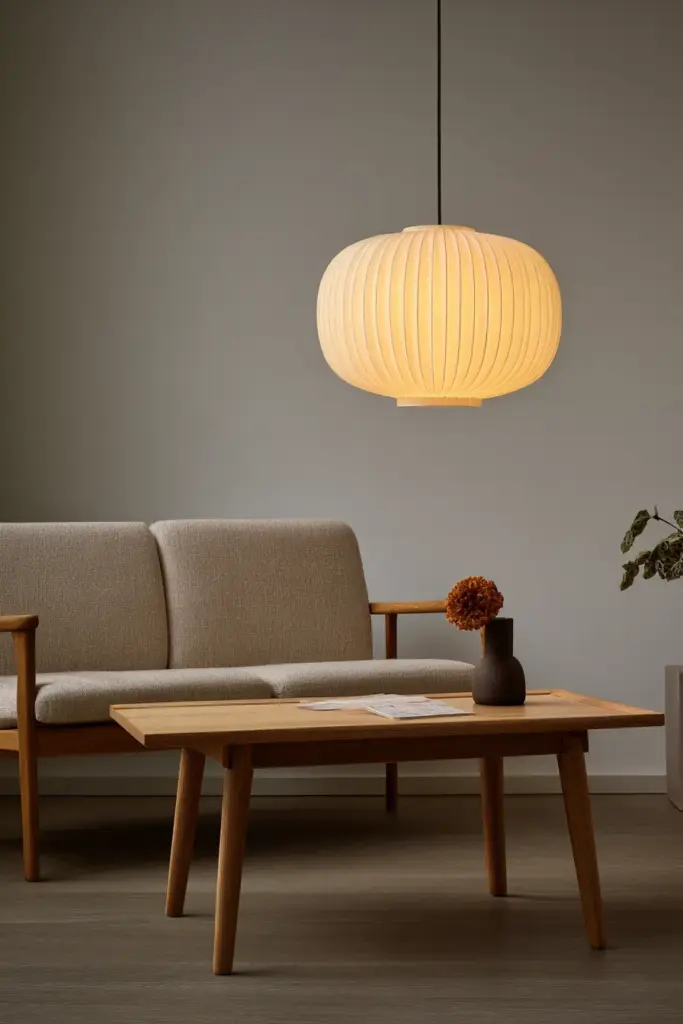
The Solution: Optimize Pendant Height
For pendants above coffee tables or seating areas: Hang the bottom of the fixture 30-36 inches above the table surface, or 7 feet from floor if there’s no table beneath. This creates soft downward light without glare.
For ambient ceiling pendants: In 8-foot ceilings, choose flush-mount or semi-flush designs (8-12 inches drop). In 9-10 foot ceilings, allow 16-24 inch drops for visual drama while maintaining 7 feet clearance.
Consider shade diameter relative to room size: A 12×15 foot living room balances well with an 18-24 inch diameter pendant. Too small looks lost; too large overwhelms the minimalist aesthetic.
| Ceiling Height | Pendant Drop | Clearance from Floor |
|---|---|---|
| 8 feet | 8-12 inches | 7 feet minimum |
| 9 feet | 16-20 inches | 7 feet minimum |
| 10+ feet | 24-30 inches | 7.5 feet minimum |
Shadow Analysis
Walk around your living room at different times. Japandi lighting should create soft shadows that add depth, not harsh lines that fragment space. If shadows look too defined, your bulb is likely too bright or too directional. Switch to lower-wattage bulbs with wider beam angles, or add diffusing material to shades.
Fix #5: Electrical Issues in Layered Setups
The Problem: Flickering, Buzzing, or Inconsistent Performance
When you’ve layered multiple fixtures, electrical issues often emerge—especially with LED strips hidden behind floating shelves or under low furniture, a popular Japandi technique.
Flickering usually indicates loose connections, incompatible dimmers, or voltage fluctuations. Buzzing suggests transformer issues in LED drivers. Intermittent failures point to circuit overload or poor wiring quality.
The Solution: Systematic Electrical Troubleshooting
Test for loose connections first. Turn off power at the breaker. Gently wiggle wire nuts and connections in junction boxes. Re-secure any that feel loose. This fixes 60% of flickering issues in layered lighting.
Verify dimmer compatibility. Not all LED bulbs work with all dimmers. Check that your dimmer is rated for LED loads and matches your total wattage. Leading-edge dimmers work better with most LEDs than trailing-edge models.
Check voltage with a multimeter if flickering persists. Hidden LED strips often receive inconsistent power through cheap transformers. Invest in quality LED drivers rated 20% above your actual load to prevent overheating and early failure.
When to Call an Electrician
If you notice warm outlets, burning smells, or frequent breaker trips, stop troubleshooting and consult a professional. Japandi’s preference for natural materials means any electrical fault near bamboo or wood requires immediate attention.
Fix #6: Natural Light Isn’t Maximized
The Problem: Blocking or Ignoring Daylight Potential
Japandi philosophy celebrates natural light as the ultimate source—yet many setups inadvertently block it.
Heavy furniture near windows, dark window treatments that stay closed, or simply failing to orient seating toward natural light sources all undermine your artificial lighting efforts. You end up compensating with more fixtures when the solution lies in embracing daylight.
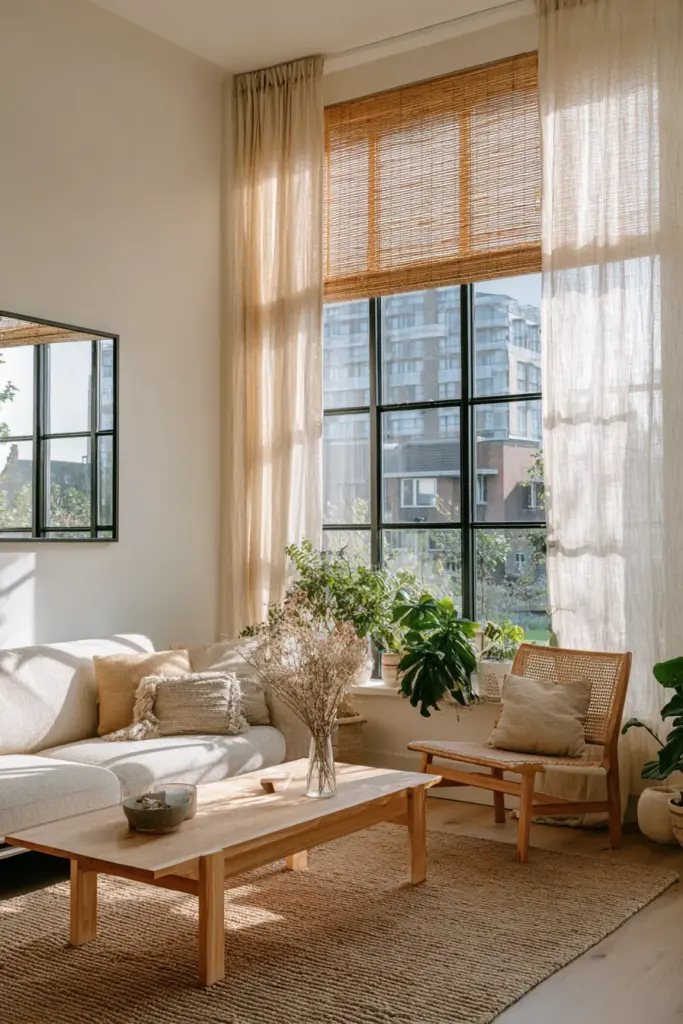
The Solution: Optimize Natural Light First
Clear window areas. Pull low-profile furniture back 18-24 inches from windows. Choose pieces in light wood or neutral tones that reflect rather than absorb incoming light.
Layer window treatments strategically. Use sheer linen curtains during day for diffused light, adding bamboo blinds for evening privacy. This gives you control without permanently blocking natural illumination.
Position mirrors thoughtfully. A large mirror opposite your main window effectively doubles natural light. Choose simple frames in black metal or light oak to maintain Japandi aesthetics while serving this functional purpose.
Paint walls in warm whites or soft creams rather than stark white. These tones warm natural light without darkening the space, creating that characteristic Japandi glow throughout the day.
Fix #7: Sustainability and Maintenance Issues
The Problem: Eco-Friendly Bulbs Burning Out Too Fast
Many Japandi enthusiasts choose LED bulbs for sustainability, then face frustration when they fail prematurely—especially concerning given the higher upfront cost.
This often traces to heat buildup in enclosed fixtures, humidity damage in coastal or tropical climates, or simply choosing bargain LEDs that can’t deliver their promised 15,000-25,000 hour lifespan.
The Solution: Smart Sustainable Choices
Match bulbs to fixtures. Enclosed fixtures (fully covered pendants, recessed cans with covers) require LEDs rated for enclosed use. Standard LEDs overheat and fail in these applications.
In humid climates, choose LEDs with higher IP ratings (IP44 or above) for better moisture resistance. Keep fixtures clean and ensure good air circulation around them.
Invest in quality over quantity. A reputable brand LED at ₱500-800 per bulb typically outlasts five budget bulbs at ₱150 each. Calculate total cost over 5 years, including replacement effort.
Create a maintenance schedule:
- Monthly: Dust all shades and diffusers
- Quarterly: Check for loose bulbs or connections
- Annually: Deep clean fixtures, replace yellowed or dimming bulbs
- Every 2 years: Assess if your lighting still serves your needs
Common Japandi Lighting Mistakes to Avoid
Let’s consolidate the warning signs that your lighting needs attention:
- All light sources at one height — Creates flat, uninspiring illumination
- Mismatched color temperatures — Fragments the cohesive warmth Japandi requires
- Only overhead lighting — Guarantees harsh shadows and poor functionality
- Ignoring natural materials in fixtures — Misses opportunity for textural depth
- Over-minimalism — Sacrificing comfort for aesthetics defeats the purpose
- Forgetting dimming capability — Rigid brightness levels don’t adapt to activities or moods
- Neglecting maintenance — Dust-dimmed fixtures waste energy and ambiance
Diagnostic Checklist: Is Your Japandi Lighting Working?
Walk through your living room and honestly assess:
Color & Warmth
- Do all bulbs fall within 2700K-3000K range?
- Does wood furniture look warm, not washed out?
- Do textiles (linen, cotton) appear soft rather than stark?
Layering & Function
- Can you identify at least 3 distinct light sources?
- Does task lighting reach your primary seating?
- Can you comfortably read anywhere you typically sit?
- Are there gentle pools of light rather than spotlight effects?
Technical Performance
- Zero flickering, buzzing, or inconsistent behavior?
- Dimmers work smoothly across full range?
- Smart bulbs respond reliably to commands?
Shadow & Scale
- Shadows are soft and add depth, not harsh lines?
- Pendant fixtures hang at proper heights?
- No glare when seated or moving through space?
Natural Integration
- Daylight reaches at least 6 feet into room?
- Window treatments allow light control without permanent blocking?
- Evening lighting complements rather than fights daytime feel?
Bringing It All Together
The most common thread through Japandi lighting challenges? Forgetting that this aesthetic is about feeling, not just rules.
Yes, technical specifications matter—color temperature, lumens, proper layering. But these serve the ultimate goal: creating a living room that feels like an exhale. Where you instinctively slow down, where materials reveal their texture, where the play of light and shadow makes minimalism feel abundant rather than austere.
When troubleshooting, return to this question: Does this space make me want to stay? If your answer is no, if you find yourself avoiding your living room in certain lighting conditions, trust that instinct. The light isn’t quite right yet.
Start with one fix—perhaps swapping to warmer bulbs, or adding a single floor lamp to soften shadows. Notice how the space transforms. Then build from there, layer by layer, until you’ve created that particular Japandi magic: a room bathed in light that feels like perpetual golden hour, where every element—the grain of wood, the weave of linen, the curve of a ceramic vase—comes alive in the glow.
This is lighting as an act of care. For your space, yes. But more importantly, for yourself and everyone who gathers here. May your living room always welcome you home with warm, gentle light.
Frequently Asked Questions
What color temperature is best for Japandi living room lighting?
Aim for 2700K-3000K warm white LEDs throughout your space. This range creates the honey-toned glow that makes natural materials like wood, bamboo, and linen appear warm and inviting. Avoid anything above 3500K, which reads as cool white and works against Japandi’s inherent warmth. For consistency, use the same temperature across all fixtures—even small variations become noticeable in this minimalist aesthetic where subtle details matter.
How do I fix harsh shadows in my Japandi living room?
Layer your lighting sources at multiple heights. Add a floor lamp behind or beside your sofa to fill shadow zones created by overhead pendants. Introduce wall sconces at mid-height (around 60 inches) to bridge ceiling and floor lighting. Follow the 3-2-1 rule: minimum three light sources, at two different heights, creating one cohesive ambient glow. Choose fixtures with diffusing shades—bamboo, washi paper, frosted glass—that soften light rather than creating sharp directional beams.
Why does my Japandi living room feel too dim in the evening?
You likely need more total lumens. Calculate 20 lumens per square foot—a 12×15 foot living room needs 1,500-3,000 lumens combined from all sources. Audit your current setup and add task lighting near seating areas. Also check if dust has accumulated on bamboo or rattan shades, which can reduce light transmission by 20-30%. Finally, ensure you have dimmable fixtures so you can adjust brightness for different activities and times of day.
How high should I hang a pendant light in a Japandi living room?
Above a coffee table or seating area, hang the bottom of the fixture 30-36 inches above the table surface. For ambient ceiling pendants, maintain 7 feet minimum clearance from floor. In standard 8-foot ceilings, choose flush or semi-flush mounts (8-12 inch drop). In 9-10 foot ceilings, allow 16-24 inch drops for visual impact. Choose pendant diameter proportional to room size—an 18-24 inch diameter works well for typical 12×15 foot living rooms.
What are the most common Japandi lighting mistakes?
The biggest mistakes include using cool-temperature bulbs (4000K+) instead of warm tones, relying solely on overhead lighting without layering, mismatched color temperatures across fixtures, and neglecting natural light sources. Many also choose fixtures that are too minimal, sacrificing adequate lumens for aesthetics. Finally, forgetting maintenance—dusty bamboo shades or dirty diffusers can reduce your lighting effectiveness by up to 30% while consuming the same energy.