
Table of Contents
There’s a particular magic that happens when you drape the right string lights across a Japandi living room. The glow softens everything—the clean lines, the natural wood, the quiet spaces between furniture. It’s not just illumination; it’s atmosphere.
Japandi design already whispers tranquility through its fusion of Japanese minimalism and Scandinavian hygge. But string lights? They add the warmth that makes minimalism feel lived-in, loved, and deeply inviting.
In this guide, we’ll explore how to choose, place, and style string lights that honor the Japandi philosophy—where less is more, but warmth is everything. From selecting the perfect 2700K glow to DIY installation ideas, you’ll discover how these delicate strands of light can transform your living room into a sanctuary.
What Makes String Lights Perfect for Japandi Living Rooms?
String lights might seem too playful for a style rooted in restraint. But in truth, they embody the very essence of wabi-sabi—the Japanese appreciation for imperfect, organic beauty. When chosen thoughtfully, they create ambient layers that complement Japandi’s natural textures without overwhelming the space.
The key is intentionality. Instead of festive tangles, think of string lights as functional art—gentle accent lighting that enhances hygge (that Scandinavian sense of cozy contentment) while maintaining clean lines. They soften corners, highlight natural materials like bamboo and rattan, and provide warm pools of light that invite you to slow down.
The Philosophy Behind Japandi Lighting
Japandi lighting prioritizes natural light first, then layers in warm, adjustable artificial sources. String lights serve as the perfect “third layer”—after overhead fixtures and floor lamps—adding flexibility and intimacy. They’re especially powerful in small apartments where traditional lighting can feel harsh or limiting.
Choosing the Right String Lights for Japandi Aesthetics
Not all string lights belong in a Japandi space. The wrong choice—too bright, too colorful, too busy—can shatter the serene atmosphere you’re cultivating. Here’s what to look for.
Color Temperature: The Warmth You Need
Temperature matters profoundly in Japandi design. Aim for 2700K to 3000K—the warm white range that mimics candlelight and sunset. This creates the soft glow essential to both wabi-sabi and hygge philosophies, making natural wood tones richer and white walls feel creamy rather than clinical.
Avoid cool white (4000K+) or multicolored LEDs. They disrupt the organic, earthy palette that defines Japandi interiors. If you’re shopping in Manila, look for warm white LEDs on Shopee or Lazada specifically labeled “warm glow” or “soft white.”
Natural Materials and Organic Forms
The casings and cords should echo Japandi’s material vocabulary. Seek out string lights with:
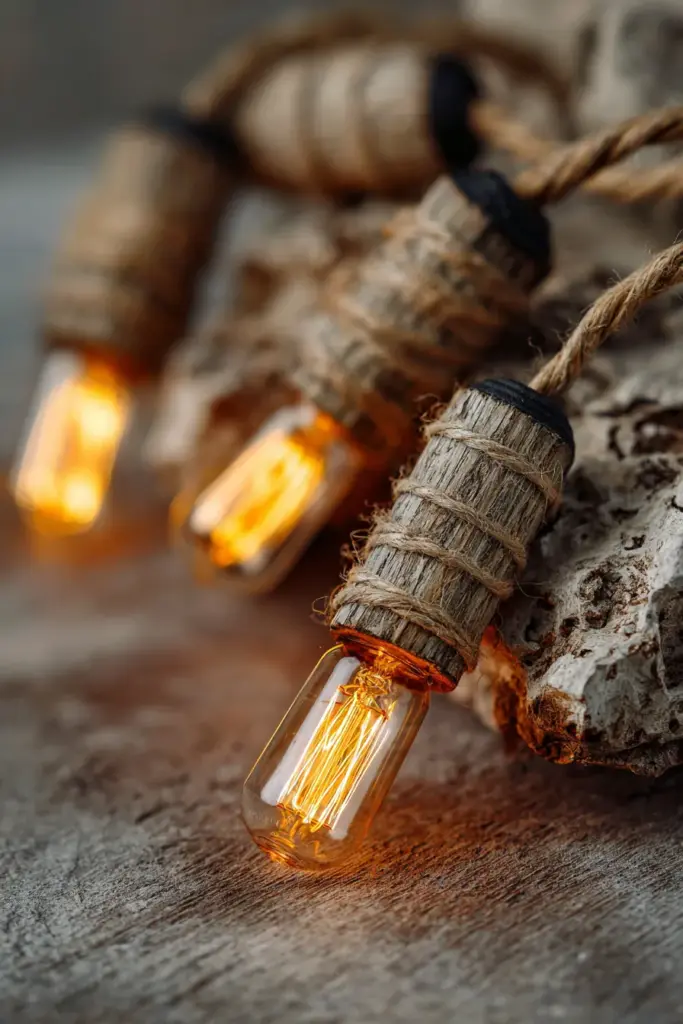
- Bamboo-wrapped bulbs that add texture
- Rattan or jute cord covers instead of plastic
- Exposed Edison-style filaments in clear glass (not frosted)
- Recycled materials for sustainability
Brands like Govee offer warm white LED strings with natural wrapping options. On Etsy, you’ll find handmade versions using sustainable rattan and organic cotton cords—perfect for those seeking artisan touches.
Bulb Specifications: A Practical Buyer’s Guide
Let’s get specific. Here’s what to check before purchasing:
| Specification | Japandi Ideal | Why It Matters |
|---|---|---|
| Color Temperature | 2700K–3000K | Warm, natural glow |
| Power Source | USB-C, battery, solar | Clean installation, no visible cords |
| Length | 10–30m for living rooms | Flexible zoning without excess |
| IP Rating | IP44+ for patios, IP20 indoor | Weather resistance if extending outdoors |
| Dimmer Compatible | Yes, with dimmer switch | Essential for adjustable ambiance |
| Energy Use | LED (80% less than incandescent) | Sustainable, low heat |
Budget tiers range from $20 for basic LED strings to $100+ for solar-powered artisan designs with bamboo fixtures.
Layout Ideas: Where to Hang String Lights in Your Japandi Living Room
Placement transforms string lights from decoration into design. In Japandi spaces, restraint guides every choice—you’re creating intentional focal points, not Christmas chaos.
Over the Sofa: Cozy Backdrop Lighting
Draping string lights horizontally above your sofa creates an intimate reading nook. Use adhesive hooks or small nails to secure the strand along the wall, about 20–30cm above the sofa back. This pools warm light downward, perfect for evening unwinding.
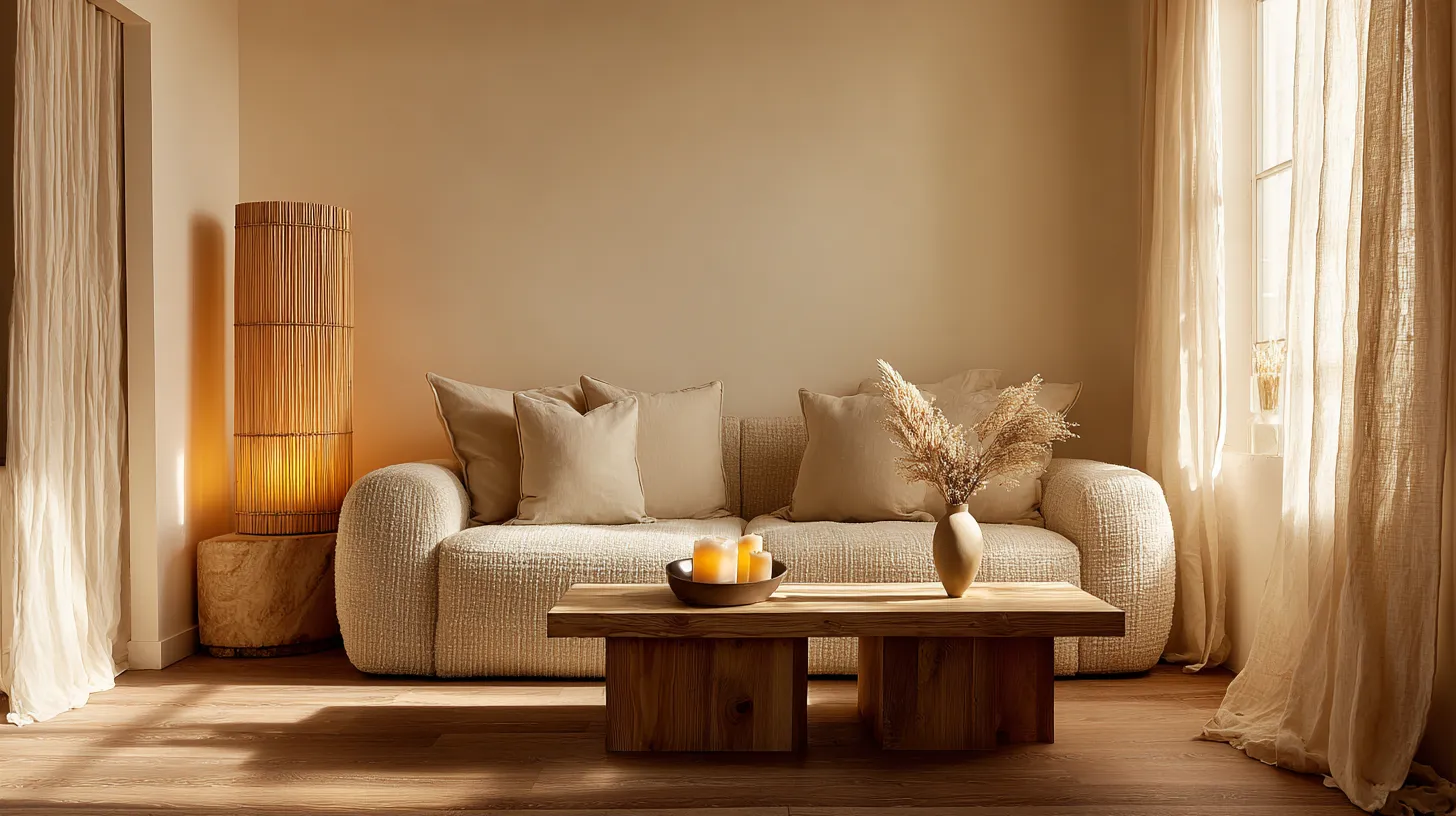
Pair this with a low wooden console table and a ceramic lamp for layered ambient lighting. The string lights become a soft halo that makes neutral linen cushions glow.
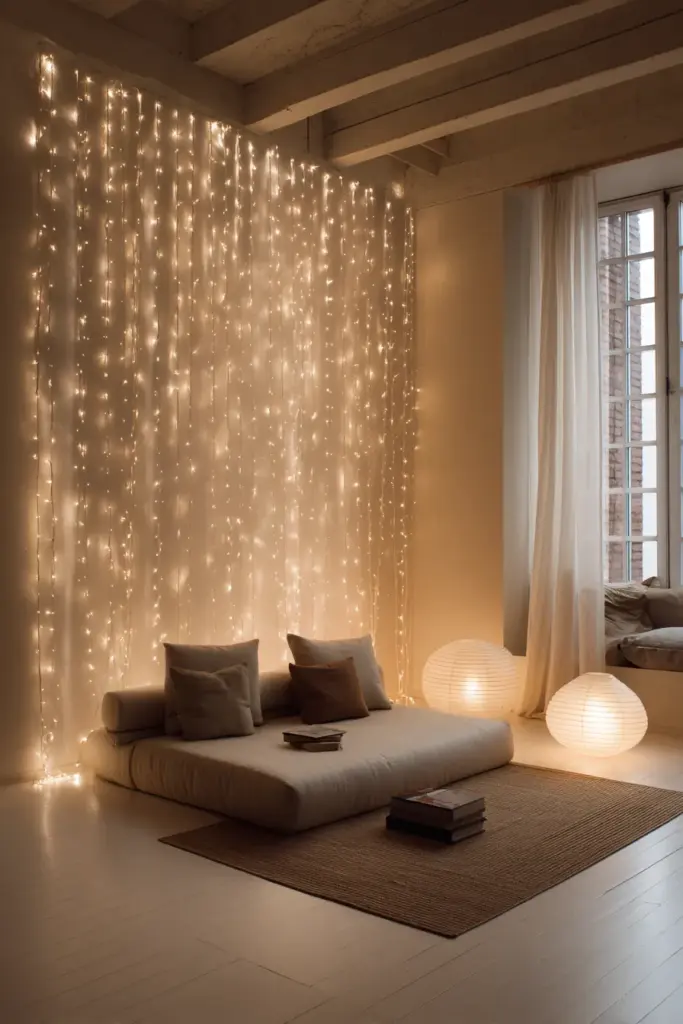
Ceiling-to-Wall Drapes for Small Apartments
In compact Manila apartments where floor space is precious, vertical draping maximizes impact. Run strings from ceiling corners down to wall hooks, creating gentle curtains of light. This draws the eye upward, making rooms feel taller and more open.
Use battery-powered strings to avoid visible cords snaking across ceilings. Choose lengths around 15–20m to create three or four vertical strands without overwhelming the space.
Accent Over Console Tables and Shelving
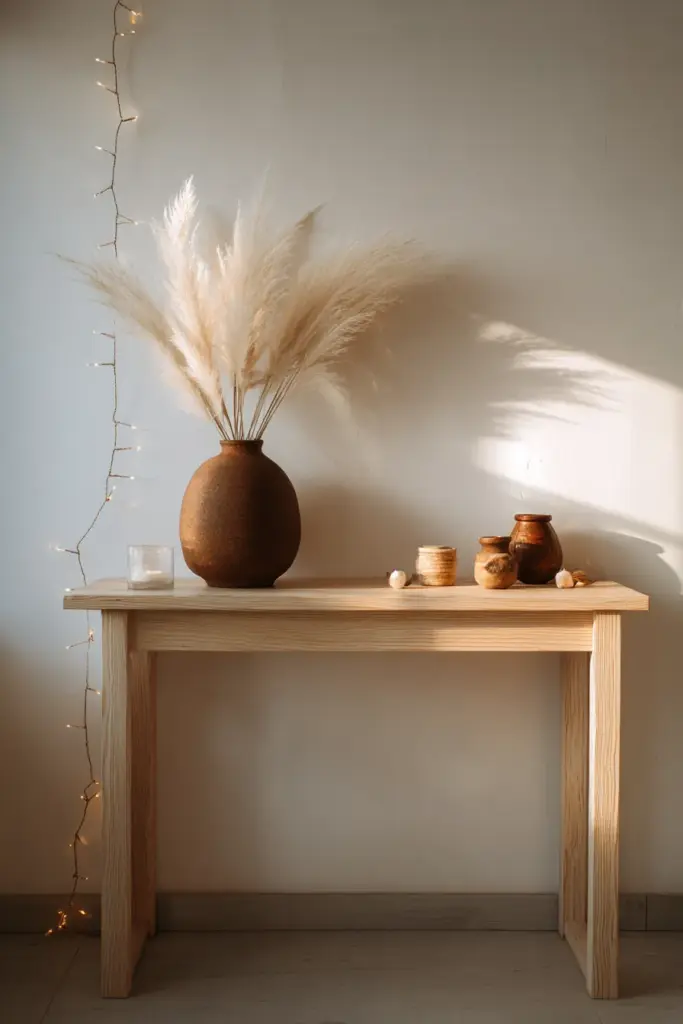
Frame your Japandi console table or open shelving with string lights tucked behind or above. The indirect glow highlights natural wood grain and ceramics without glare. Weave lights loosely through branches in a minimalist vase for an organic, sculptural effect.
This works beautifully with bamboo pendant lamps overhead—the string lights add depth while the pendant provides task lighting.
Perimeter Wall Lighting for Zoning
In open-plan living areas, use string lights to define zones subtly. Run a single strand along the perimeter of your seating area at picture rail height. This creates visual boundaries without walls or dividers, maintaining flow while establishing intimacy.
Combine with floor lamps near reading chairs and dimmer switches to adjust the mood from bright and social to soft and contemplative.
DIY Japandi String Light Installation: Step-by-Step
Creating your own Japandi string light installation is simpler than it seems. Here’s a beginner-friendly approach using natural materials.
Materials You’ll Need
- Warm white LED string lights (2700K, 15m length)
- Sustainable rattan cord or jute twine
- Natural wood branches (driftwood or fallen cherry)
- Adhesive wall hooks (clear or brass)
- Optional: Macramé plant holder for ceiling drape
Installation Steps
Step 1: Plan your layout. Sketch where you want light pools—over furniture, along walls, or draping from ceiling. Measure distances to determine string length needed.
Step 2: Attach wall hooks at measured intervals. For a horizontal sofa backdrop, place hooks 50–70cm apart along the wall. For vertical drapes, start at ceiling corners.
Step 3: If wrapping lights around branches, secure one end of the branch to a wall hook first. Gently weave the string lights through the branch’s natural curves, securing with rattan cord ties every 30cm.
Step 4: For ceiling drapes without drilling, use 3M Command hooks designed for ceilings. Ensure the string’s weight doesn’t exceed hook limits (check packaging).
Step 5: Connect to a dimmer switch or smart plug for adjustable brightness. Test the glow at different times—morning, afternoon, evening—to ensure it complements natural light shifts.
Pro Tips for Lasting Installations
Prevent fading by choosing UV-resistant LEDs if near windows. For pet-proofing, secure low-hanging strands with clear fishing line to walls, keeping them taut and out of reach. Calculate energy use: a 15m LED string uses approximately 10W—running 5 hours daily costs less than $2 monthly.
Japandi String Lights for Small Living Rooms
Small spaces demand smarter lighting strategies. String lights shine here—literally—by providing ambient warmth without consuming precious square footage.
Maximize Natural Light First
Before adding any artificial lighting, optimize windows. Use sheer linen curtains that diffuse daylight while maintaining privacy. Position mirrors opposite windows to reflect light deeper into the room. String lights then become evening companions, not daytime necessities.
Minimal Hardware, Maximum Impact
Choose battery-powered or USB-rechargeable strings to eliminate cords. This keeps surfaces clean and maintains Japandi’s uncluttered aesthetic. Mount a single 10m strand along one wall rather than multiple strands competing for attention.
Pair with one statement floor lamp in walnut or bamboo. The combination provides functional task lighting plus atmospheric glow without crowding the room.
Product Recommendations: Best String Lights for Japandi Living Rooms
Let’s get specific with products that honor Japandi principles.
Budget-Friendly: Govee Warm White LED String Lights ($22–35)
Pros: USB-powered, dimmable, 2700K color temperature, 10m length
Cons: Plastic cord (not natural material)
Best for: Renters or first-time Japandi decorators
Mid-Range: Bamboo-Wrapped Edison Bulb Strings ($50–75)
Available on Etsy from artisan shops. These feature exposed filament bulbs with bamboo sleeves, jute cords, and solar power options.
Pros: Authentic materials, sustainable, unique aesthetic
Cons: Higher price, limited availability in Manila (shipping from international sellers)
Best for: Eco-conscious design enthusiasts
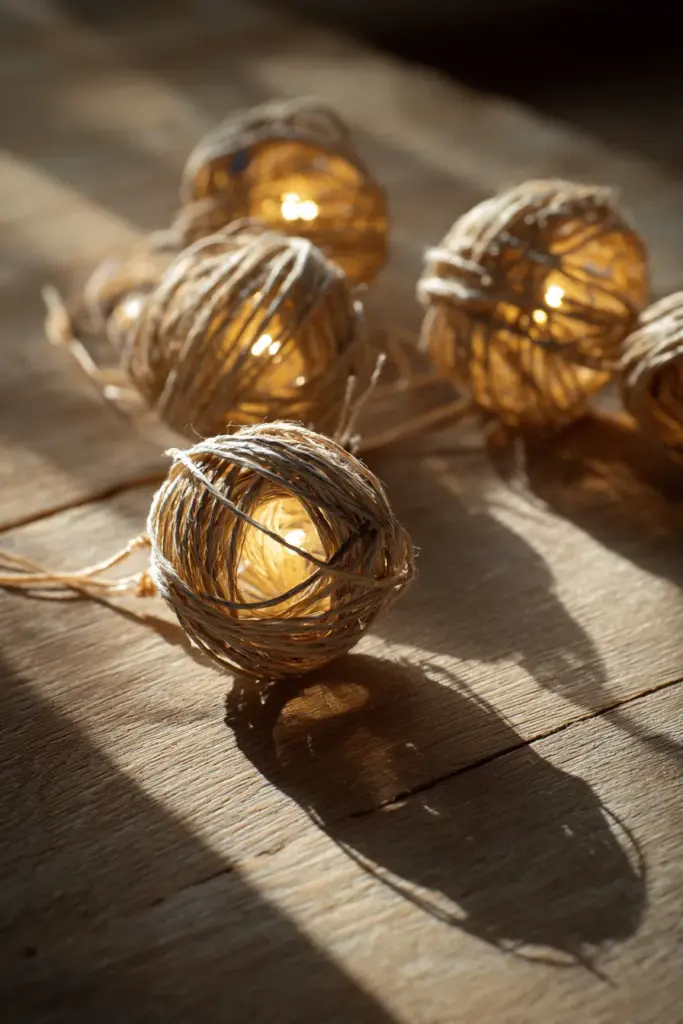
Premium: Customizable Rattan String Lights with Smart Controls ($85–120)
App-controlled brightness and scheduling, hand-woven rattan covers, outdoor-rated IP65.
Pros: Full control, durable, stunning texture
Cons: Investment price
Best for: Long-term installations, tech-integrated homes
Sustainability and Energy Considerations
Japandi design values the earth as much as aesthetics. Your string lights should reflect this commitment.
LED Efficiency: The Numbers
LED string lights consume 80% less energy than traditional incandescent bulbs. A 15m LED strand uses roughly 10W compared to 50W for incandescent equivalents. Over a year of nightly use (5 hours daily), LEDs save approximately 73 kWh—reducing both bills and carbon footprint.
Eco-Material Options
Seek recycled materials: rattan cords made from reclaimed fibers, bulbs with recycled glass, or biodegradable packaging. Some Etsy sellers even offer compostable cord wraps made from organic cotton and plant-based dyes.
Support local Manila makers when possible—shorter shipping distances mean lower emissions. Check Shopee and Lazada for Philippines-based sellers using sustainable materials.
Longevity and Waste Reduction
Quality LED strings last 25,000–50,000 hours. That’s roughly 13 years of daily 5-hour use. Choose replaceable bulb designs over sealed units to extend product life further. When strings eventually fail, recycle properly through e-waste programs.
Layering String Lights with Other Japandi Lighting
String lights never work alone in thoughtful Japandi design. They’re part of a layered symphony.
The Three-Layer Lighting Rule
Layer 1 – Ambient: Overhead pendant or ceiling fixtures in bamboo, paper, or wood. Provides general illumination.
Layer 2 – Task: Floor lamps or table lamps near reading areas. Adjustable, directional light for activities.
Layer 3 – Accent: String lights. Creates mood, highlights textures, adds warmth.
Use dimmer switches on all layers so you can orchestrate the perfect balance for any moment—bright for socializing, soft for meditation.
Pairing with Natural Elements
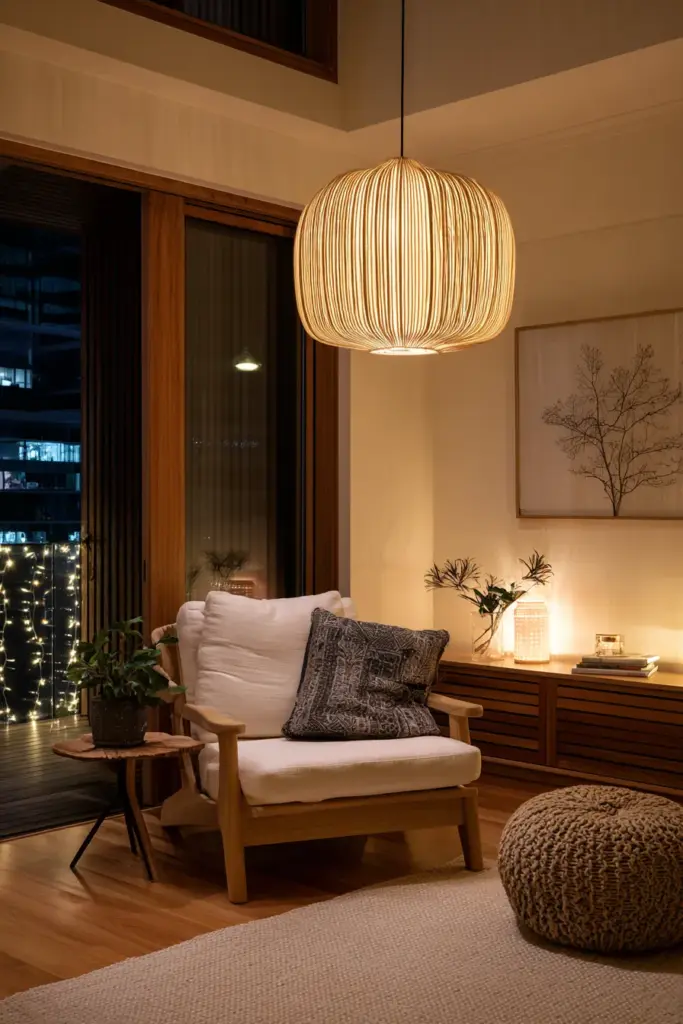
Combine string lights with:
- Floor lamps with linen shades to diffuse both light sources
- Ceramic table lamps on side tables for intimate pools
- Wooden pendant lights overhead for cohesive material stories
The warmth should feel graduated, never stark. String lights fill gaps, soften shadows, and invite lingering.
Troubleshooting Common Issues
Even with careful planning, challenges arise. Here’s how to solve them.
Fading Over Time
UV exposure near windows causes premature color shift. Use UV-resistant LEDs or reposition strings away from direct sunlight. Close curtains during peak sun hours to protect both lights and furniture.
Tangled or Sagging Strands
Secure every 40–50cm with adhesive hooks or clear wall clips. For ceiling installations, use fishing line to create tension points that keep strands taut and architectural.
Overpowering the Space
If string lights feel too bright or busy, reduce length. A single 10m strand thoughtfully placed beats three chaotic strands. Embrace negative space—it’s fundamental to Japandi.
Key Takeaways: Your Japandi String Light Checklist
- Choose 2700K–3000K warm white LEDs for authentic hygge glow
- Prioritize natural materials: bamboo, rattan, jute, recycled glass
- Plan placement intentionally: over sofas, along perimeters, vertical drapes
- Layer with floor and pendant lamps for balanced ambiance
- Use dimmers and smart controls for flexibility
- Calculate energy use: LEDs save 80% versus incandescent
- Secure properly to prevent sagging and pet hazards
- Source sustainably: support local Manila sellers, seek eco-materials
- Keep installations minimal: less is more in Japandi philosophy
Conclusion: Light as Intention
String lights in a Japandi living room aren’t about adding more—they’re about enhancing what already exists. The quiet beauty of natural wood. The soft texture of linen. The gentle interplay of shadow and warmth.
When you choose lights that respect this philosophy—warm, natural, restrained—you create spaces that feel like exhales. Rooms that welcome you home, that ask nothing but offer everything.
That’s the gift of thoughtful lighting. And that’s the heart of ERYLIN’s approach: beauty that serves life, not the other way around.
FAQs
Are string lights appropriate for Japandi style living rooms?
Yes, when chosen carefully. Opt for warm white LEDs (2700K–3000K) with natural material casings like bamboo or rattan. Use them sparingly as accent lighting rather than primary sources, maintaining the clean, uncluttered aesthetic central to Japandi design.
What color temperature is best for Japandi string lights?
2700K to 3000K delivers the warm, soft glow that embodies both hygge and wabi-sabi. This temperature range makes wood tones richer and creates inviting, candlelit ambiance without the clinical feel of cooler whites.
How do I install string lights in a small Japandi living room?
Choose battery-powered or USB strings to avoid visible cords. Create vertical ceiling-to-wall drapes to draw eyes upward and maximize perceived space. Use a single 10–15m strand along one wall rather than multiple competing strands.
Can I use string lights outdoors in Japandi-style patios?
Absolutely. Select IP65-rated weatherproof strings and solar-powered options for sustainability. Drape them along pergolas or wrap around natural bamboo structures, maintaining the organic material vocabulary of Japandi design.
Where can I buy sustainable Japandi string lights in Manila?
Check Shopee and Lazada for Philippines-based sellers offering warm LED strings with natural materials. Etsy provides international artisan options with bamboo wraps and rattan cords, though shipping times are longer. Prioritize local sellers when possible to reduce carbon footprint.