
Table of Contents
There’s a certain magic that happens when light filters through rice paper, casting soft shadows across natural wood and linen textures. It’s the same gentle warmth you feel watching afternoon sun pool on a stone floor, or candlelight dancing against whitewashed walls. This is the essence of Japandi living room lighting, a philosophy that transforms illumination from mere function into an art form that nurtures the soul.
Japandi design marries the serene minimalism of Japanese aesthetics with the cozy warmth of Scandinavian hygge, creating spaces that feel both calming and deeply livable. At the heart of this design philosophy lies lighting, the invisible thread that weaves together form, function, and feeling. When executed thoughtfully, your japandi lighting guide approach becomes more than decoration. It becomes the very atmosphere you breathe, the mood that greets you at day’s end, the gentle embrace that makes a house feel like home.
In this comprehensive exploration, we’ll journey through every aspect of creating luminous harmony in your living space. You’ll discover how to layer light with intention, choose fixtures that whisper rather than shout, and master the delicate balance between brightness and shadow that defines this beloved aesthetic. Whether you’re starting from scratch or refining an existing space, you’ll find practical wisdom paired with inspired possibility.
The beauty of Japandi lighting lies not in following rigid rules, but in understanding core principles that you can adapt to your unique space and lifestyle. We’ll explore everything from the philosophical foundations that guide fixture selection to the technical details that ensure your lighting serves both beauty and purpose. By the end, you’ll possess the knowledge to transform your living room into a sanctuary of balanced light, where every evening feels like a return to tranquility.
Understanding the Foundations of Japandi Lighting Philosophy
Before selecting a single fixture or bulb, it’s essential to grasp what makes Japandi lighting fundamentally different from other design approaches. This isn’t about trends or temporary aesthetics. It’s about cultivating an environment where light supports wellbeing, mindfulness, and genuine comfort.
Japanese design teaches us wabi-sabi, the art of finding beauty in imperfection and impermanence. In lighting terms, this translates to embracing natural variations in light throughout the day, celebrating the play of shadows alongside brightness, and choosing fixtures with organic materials that age gracefully. Scandinavian design, meanwhile, offers hygge, that untranslatable sense of cozy contentment often achieved through warm, intimate lighting during long dark winters.
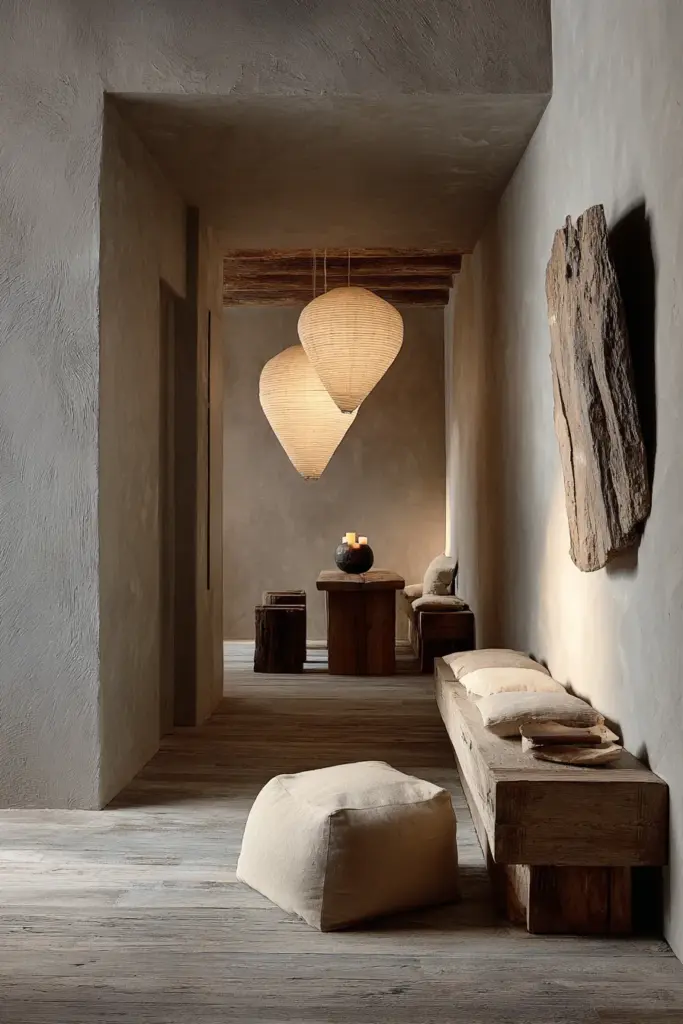
When these philosophies merge, you get something remarkable. A Japandi living room doesn’t fight against darkness or try to eliminate every shadow. Instead, it works with light’s natural rhythms, creating pockets of brightness where you need them while allowing restful dimness to define the edges of your space. Understanding japandi living room lighting psychology helps you see how thoughtful illumination directly impacts your mood, stress levels, and sense of home.
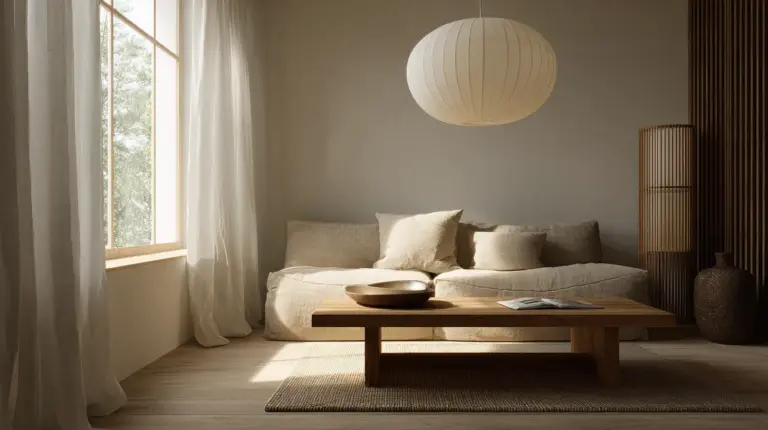
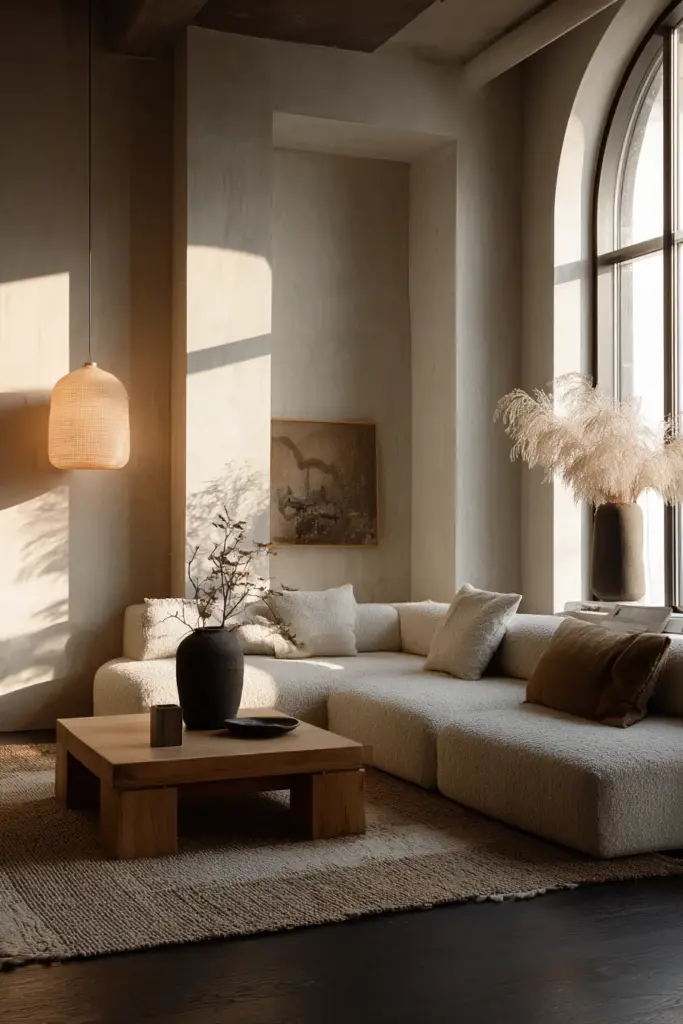
The relationship with japandi living room natural light forms the foundation of any successful lighting plan. During daylight hours, your space should drink in every ray of sunshine through unobstructed windows, perhaps filtered through sheer linen curtains that soften without blocking. This connection to the outside world, to changing weather and seasons, keeps you grounded in natural rhythms rather than isolated in artificial environments.
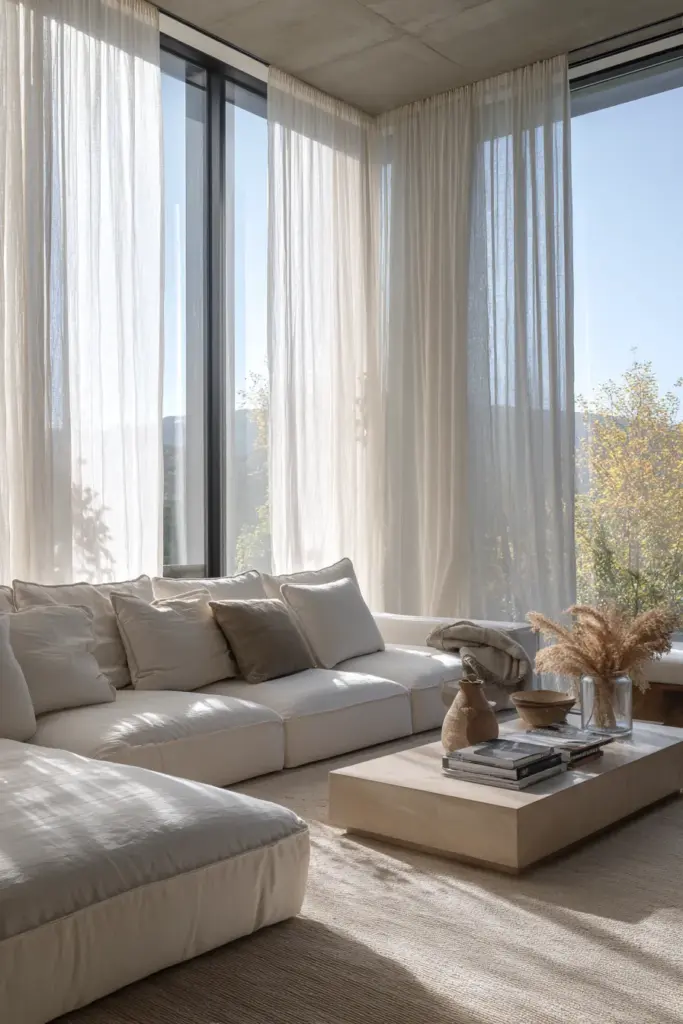
As evening approaches, your artificial lighting should echo the quality of fading daylight, never shocking the senses with harsh fluorescent glare. Think of twilight’s gentle transition from day to night. Your lighting should offer that same gradual, comforting shift. This isn’t about keeping things dim and gloomy, it’s about honoring the natural human need for varied light levels that support different activities and moods throughout the day.
The color palette of Japandi spaces naturally influences lighting choices. Warm woods, soft neutrals, and organic textures all respond differently to light. A fixture that looks stunning in a high-contrast modern space might feel jarring against the subtle tonal variations of Japandi design. Your lighting must complement rather than compete, enhancing the inherent beauty of natural materials without overpowering their quiet elegance.
Layering Light for Balance and Harmony
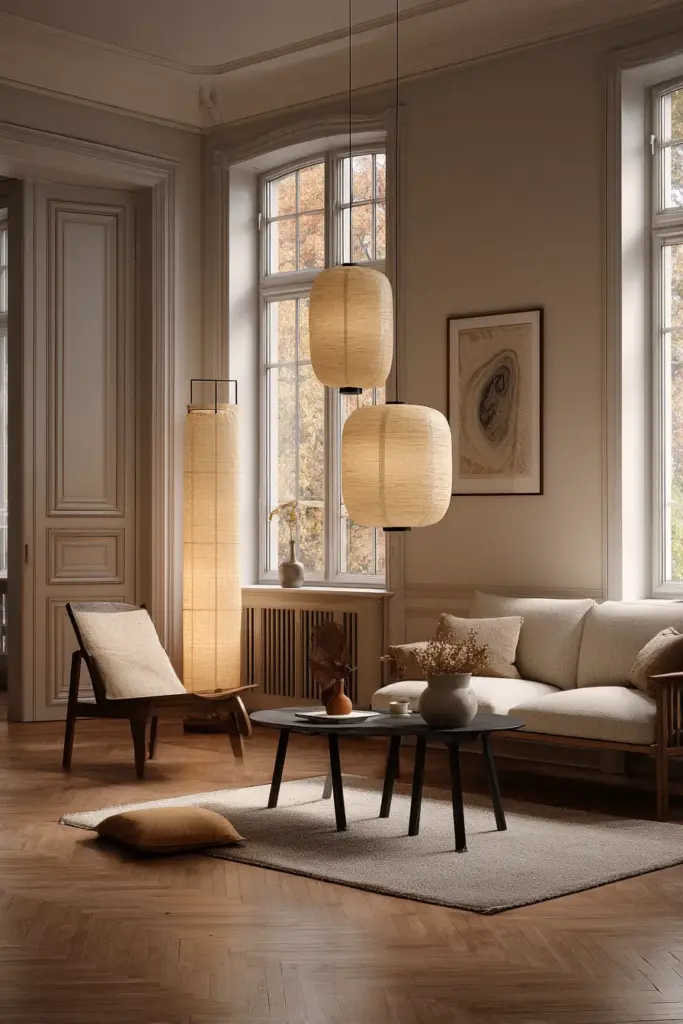
Successful Japandi lighting never relies on a single overhead fixture flooding the room with uniform brightness. Instead, it embraces the concept of layering, using multiple light sources at different heights and intensities to create depth, dimension, and flexibility. This approach transforms a flat, one-dimensional space into something rich with atmosphere and possibility.
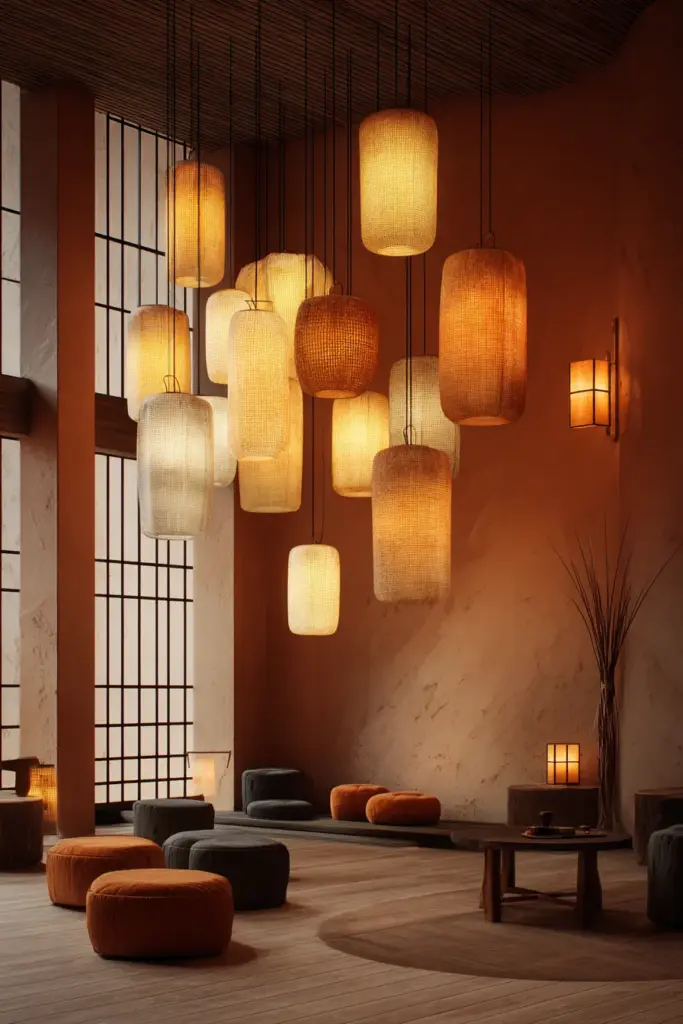
The art of japandi living room lighting layering begins with understanding three distinct types of illumination. Ambient lighting provides overall visibility, task lighting supports specific activities like reading or working, and accent lighting highlights architectural features or cherished objects. Each layer serves a purpose, but the magic happens when they work together seamlessly.
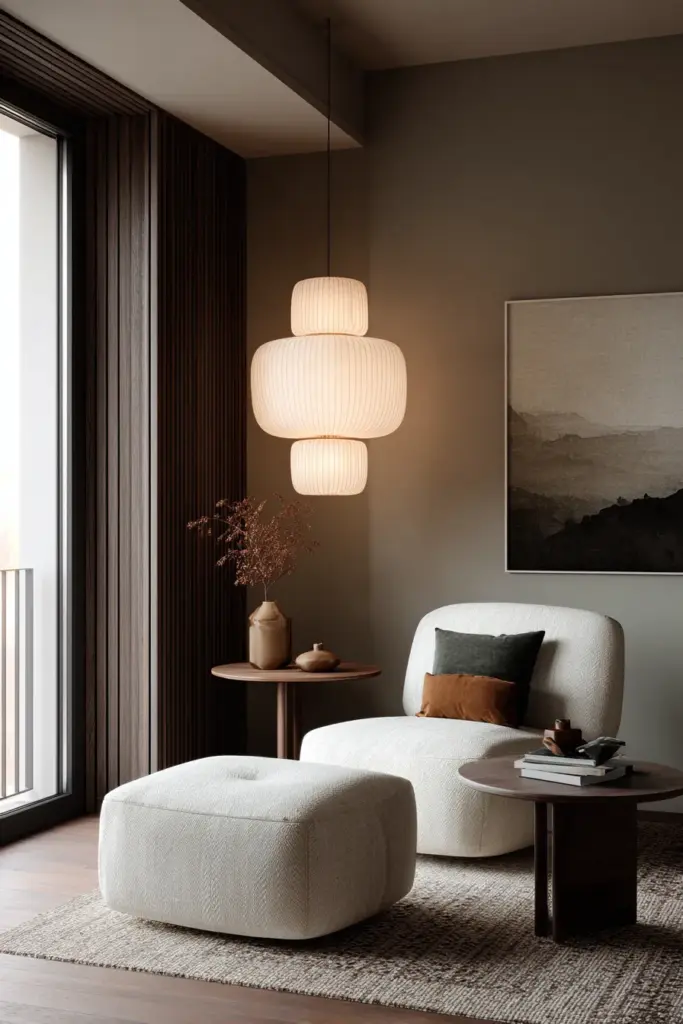
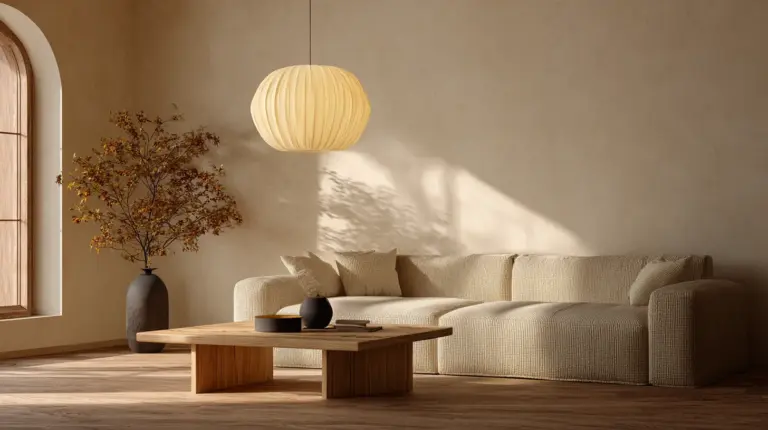
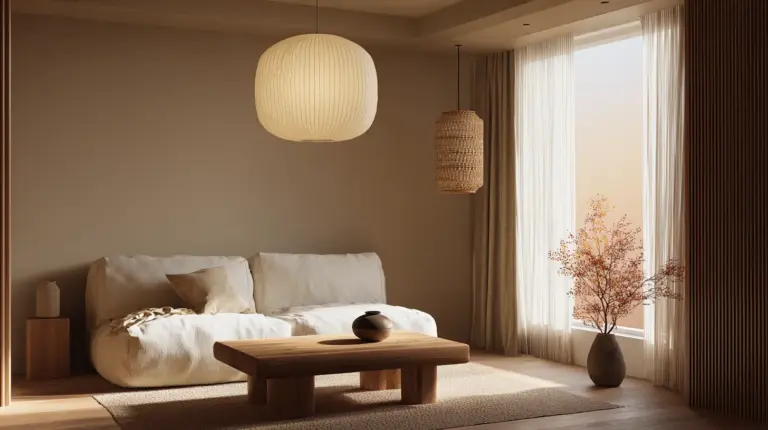
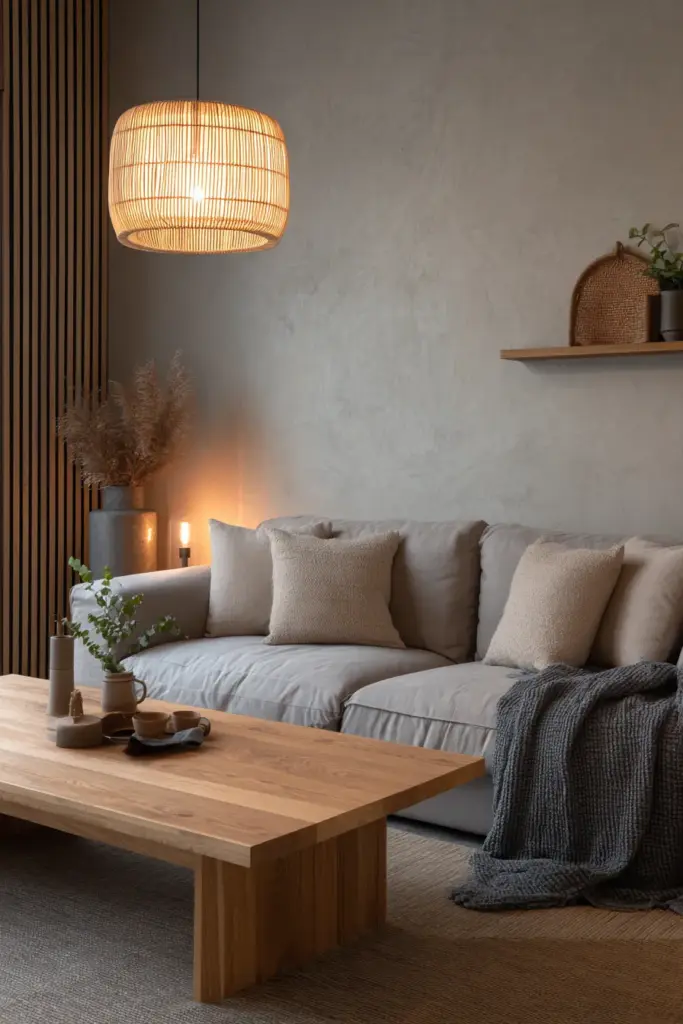
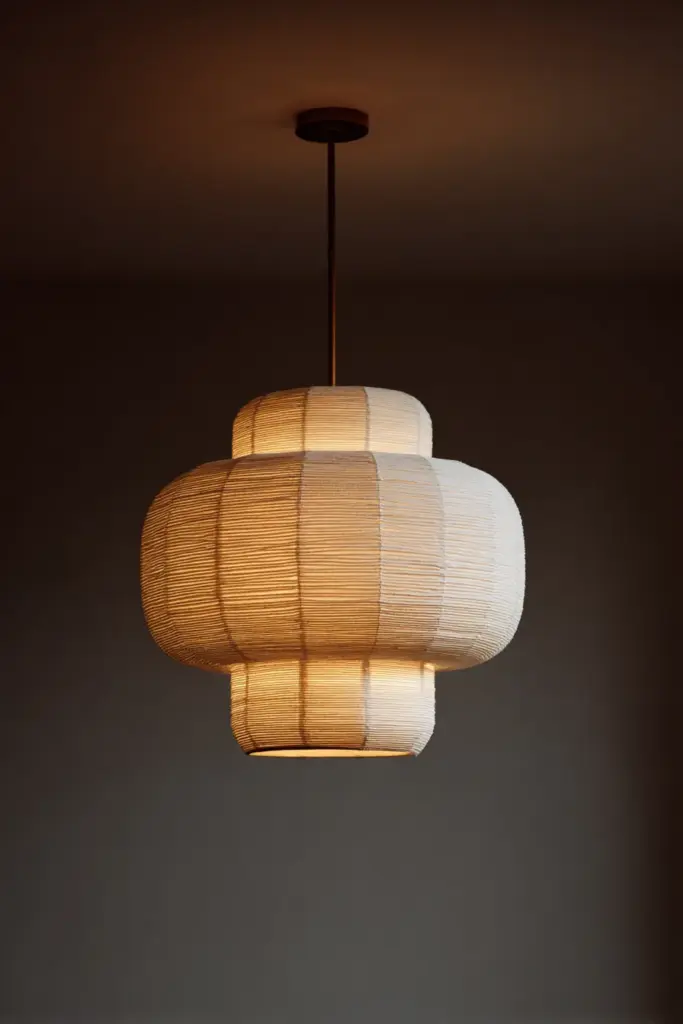
Your ambient layer often starts with japandi living room ceiling lights that establish a gentle baseline of illumination throughout the space. Unlike traditional chandeliers or flush mounts that dominate attention, Japandi ceiling fixtures tend toward understated elegance. Think paper lanterns casting diffused light, minimalist pendant lights with clean lines, or recessed fixtures that disappear into the architecture while providing essential visibility.
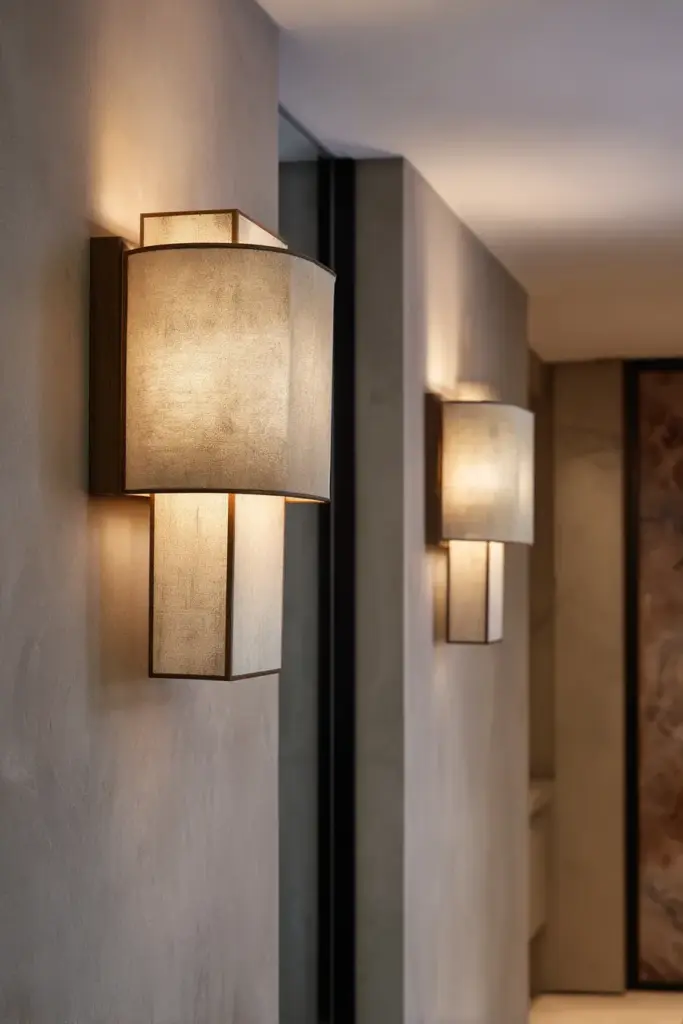
Building on this foundation, japandi living room accent lighting adds personality and visual interest without creating clutter or chaos. Wall sconces flanking a piece of art, uplights washing textured walls with soft illumination, or subtle strip lighting beneath floating shelves all contribute to a layered effect that feels intentional yet effortless. The key is restraint, choosing a few well-placed accent lights rather than dotting every surface with competing sources.
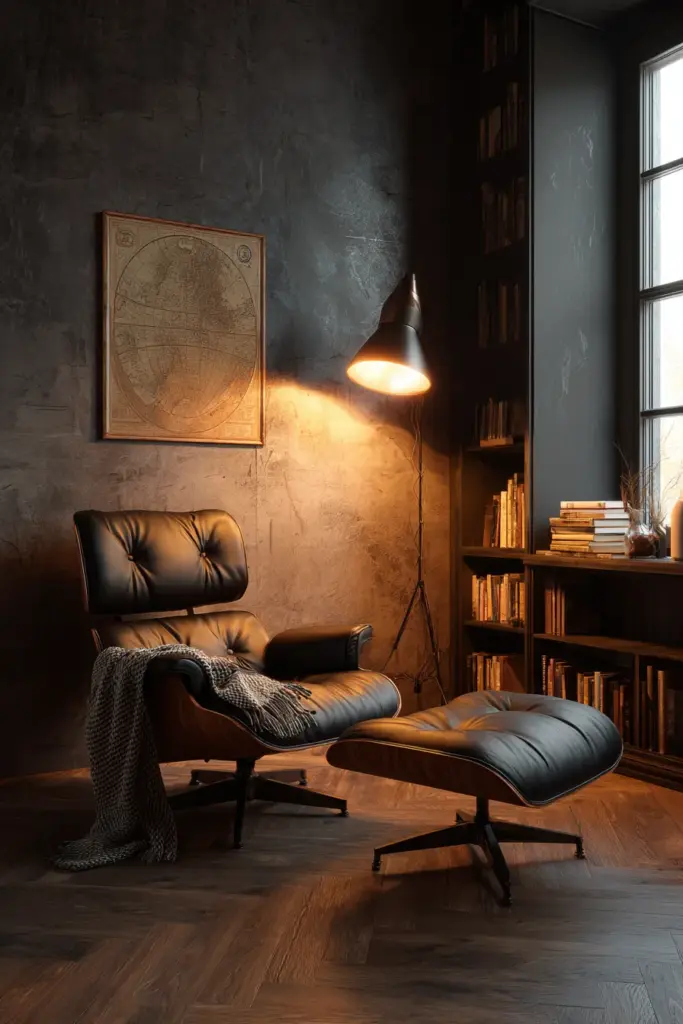
The final layer addresses practical needs through japandi living room task lighting that makes your space truly livable. A reading lamp beside your favorite chair, a carefully positioned desk lamp for evening work, or under-cabinet lighting if your living room flows into kitchen space. These focused light sources should be adjustable, allowing you to direct illumination exactly where needed without affecting the overall ambiance.
What makes layering truly work in Japandi spaces is the ability to control each layer independently. You might have ceiling fixtures on one switch, accent lights on another, and task lights that operate individually. This flexibility lets you adapt your lighting to changing needs throughout the day. Morning coffee might call for just natural light supplemented by a single task lamp. Evening entertaining could mean all layers working together at reduced intensity. Late night reading might use only your task light while the rest of the room rests in shadow.
Consider how these layers interact with your furniture arrangement and daily routines. Light should follow life, not dictate it. If you naturally gravitate toward a certain corner for afternoon tea, that spot deserves dedicated lighting for when daylight fades. If you practice yoga or meditation, perhaps that area benefits from softer, more diffused illumination. Layering isn’t just technical, it’s deeply personal, responding to how you actually use and move through your space.
The height variation between different light sources creates visual rhythm and prevents the flatness that comes from all illumination existing on a single plane. Floor lamps, table lamps, wall sconces, and ceiling fixtures establish a vertical dance of light that guides the eye and makes even modest spaces feel more generous and thoughtfully composed.
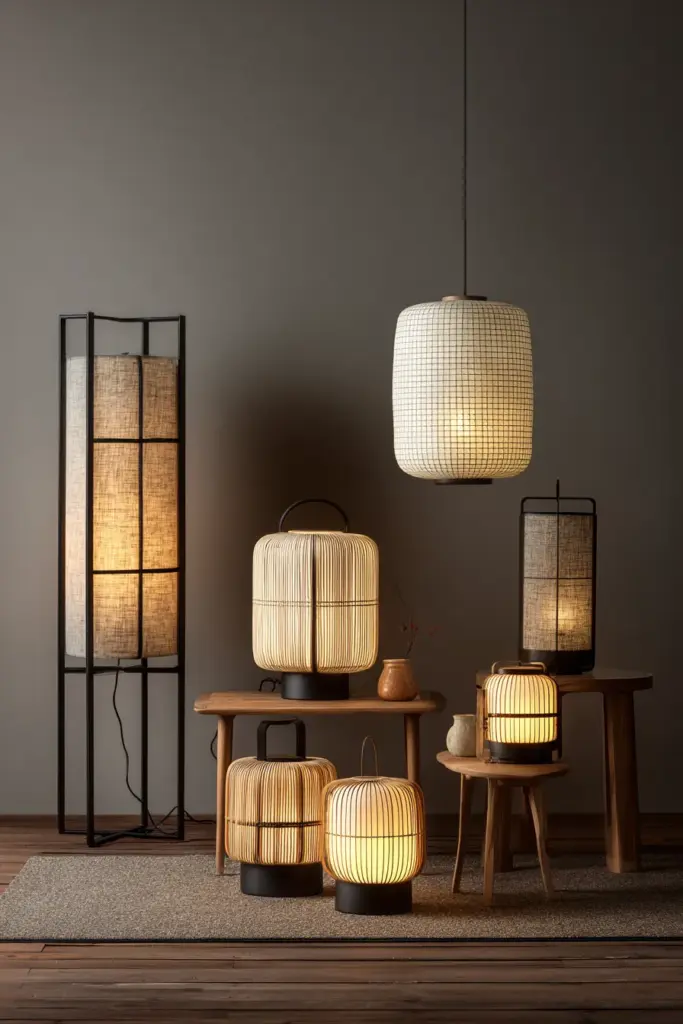
Choosing the Perfect Japandi Light Fixtures
Every light fixture you invite into your home makes a statement, whether whispered or shouted. Japandi design favors the former, selecting pieces that enhance rather than dominate, that serve beauty and function in equal measure. The right fixtures feel inevitable, as if they’ve always belonged exactly where they rest.
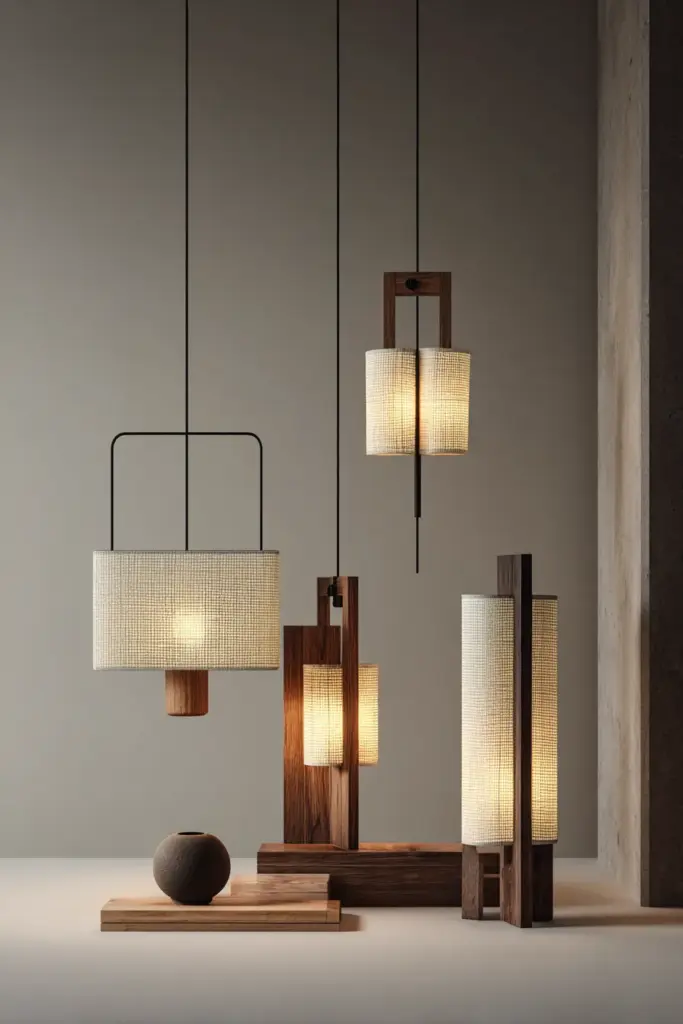
The appeal of japandi living room minimalist fixtures lies in their essential nature, stripped of unnecessary ornamentation but rich in craftsmanship and material beauty. Clean lines, honest construction, and forms that honor their materials define this aesthetic. A pendant light might feature exposed Edison bulbs suspended from simple black cords, or a geometric frame in brushed brass that creates interesting shadows without visual chaos.
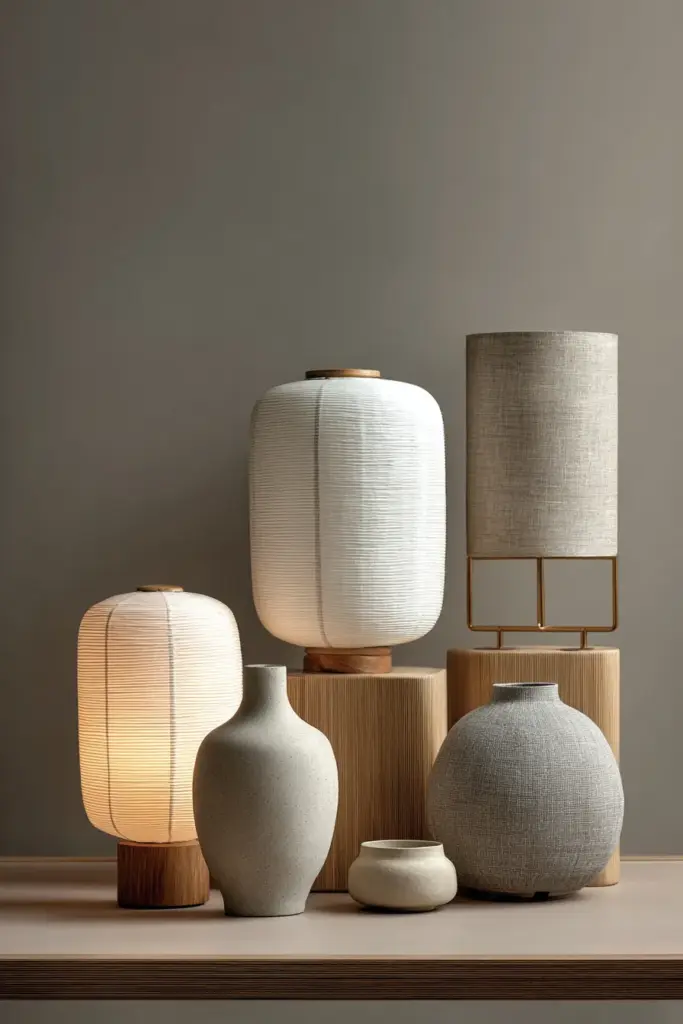
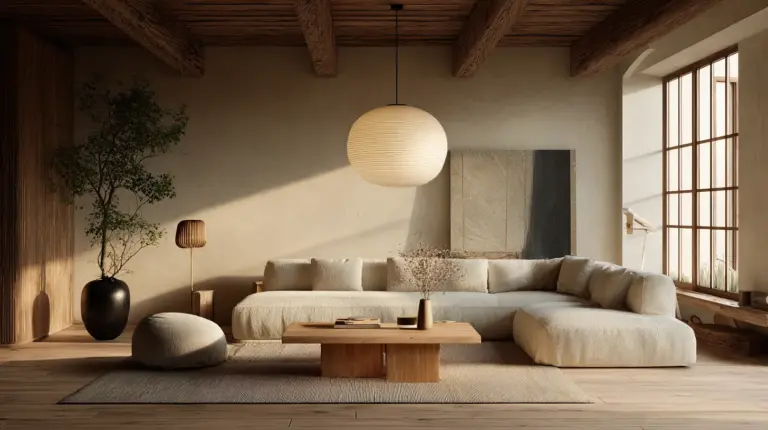
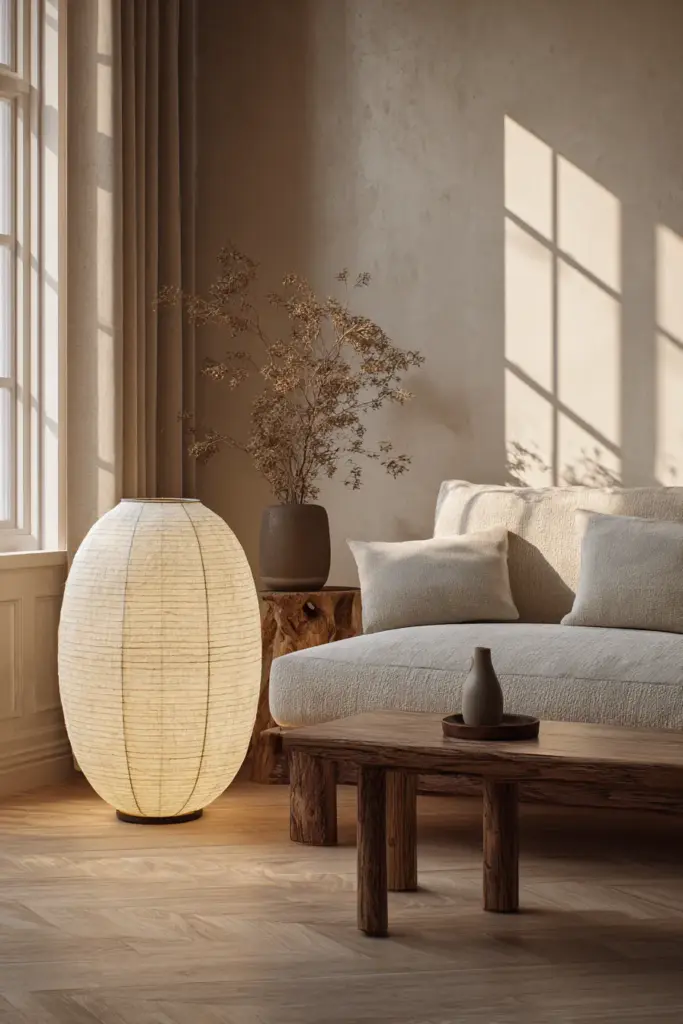
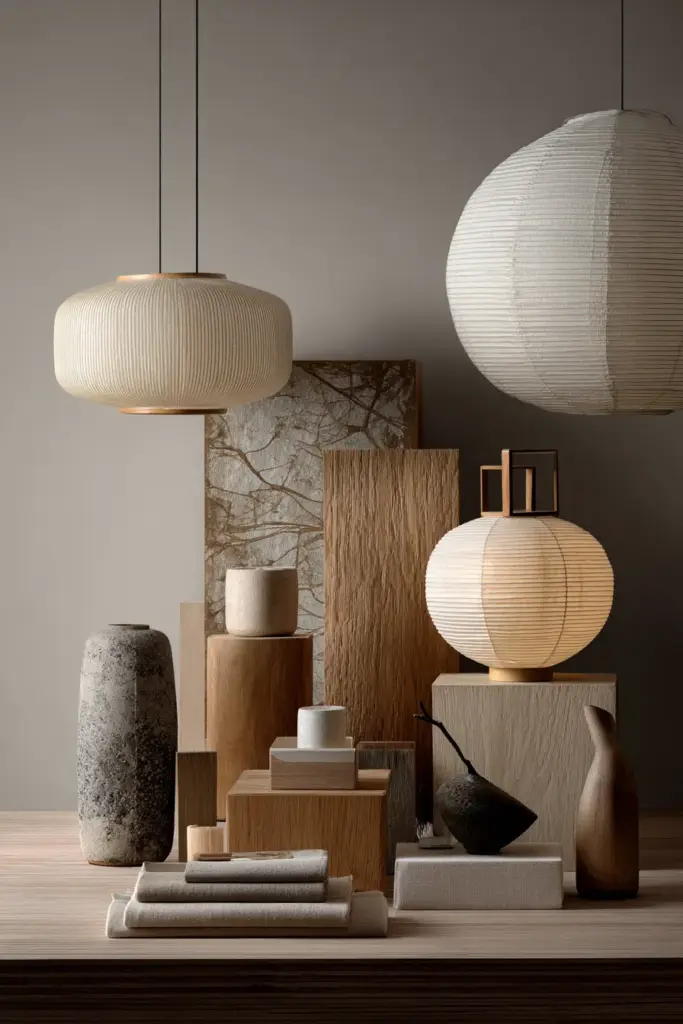
Perhaps nothing captures Japandi lighting quite like japandi living room rice paper lighting, those glowing orbs and cylinders that transform harsh electric light into something almost ethereal. Rice paper diffuses illumination beautifully, creating that signature soft glow that feels organic and gentle. These fixtures work equally well as ceiling pendants, table lamps, or floor lamps, their neutral presence allowing them to integrate seamlessly into various arrangements.

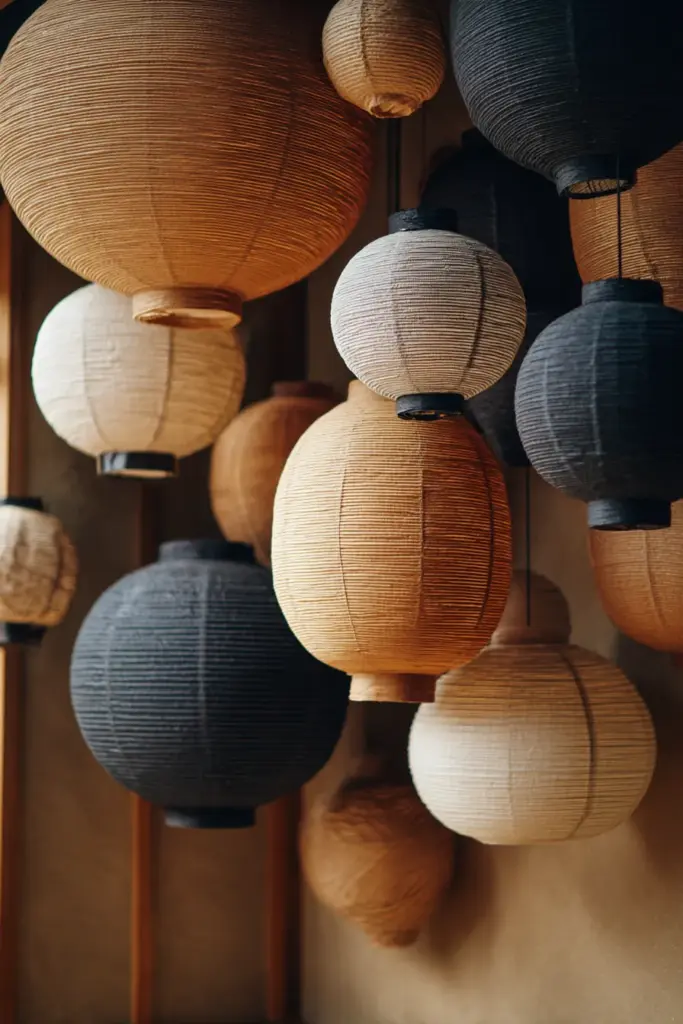
The timeless charm of japandi living room paper lanterns extends beyond traditional Japanese styles to include Scandinavian interpretations with similar materials and approaches. Whether you choose an Akari lamp’s sculptural elegance or a more Nordic paper shade with clean geometric forms, you’re tapping into centuries of wisdom about creating light that soothes rather than stimulates.
When vertical space allows, japandi living room floor lamps offer remarkable versatility and presence without permanent commitment. Arcing floor lamps can define reading nooks or provide downlight over seating areas without cluttering tables. Tripod designs in natural wood or matte black metal establish sculptural interest while maintaining the clean lines that Japandi demands. The beauty of floor lamps lies in their mobility, you can experiment with placement and easily adapt as your needs evolve.
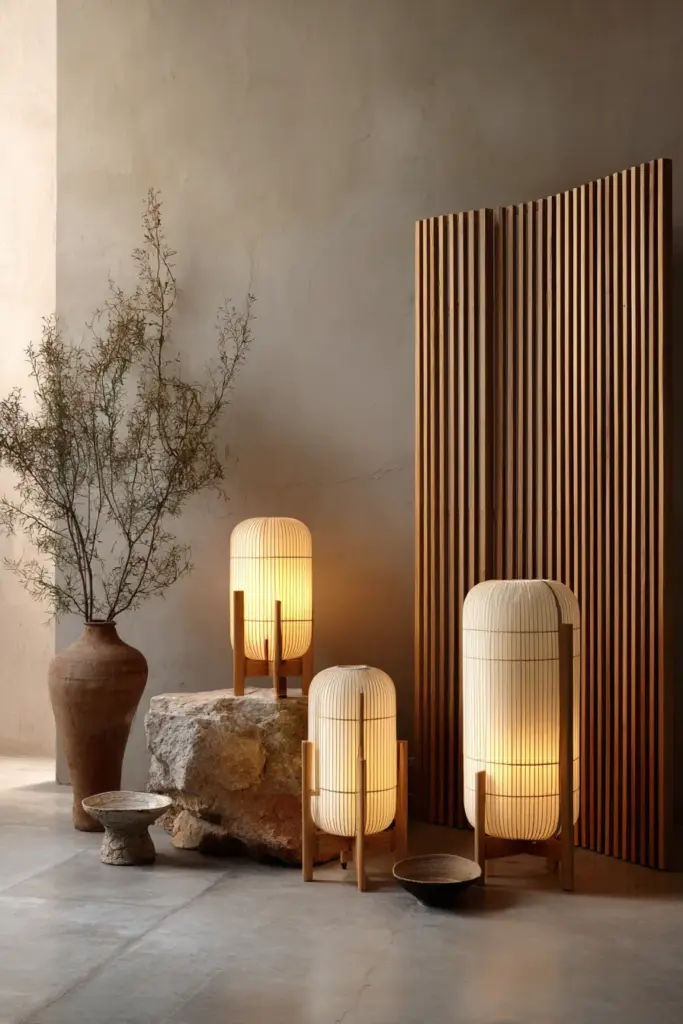
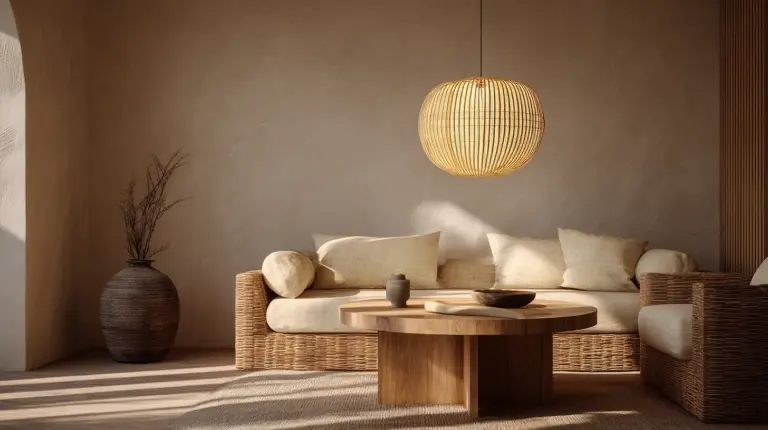
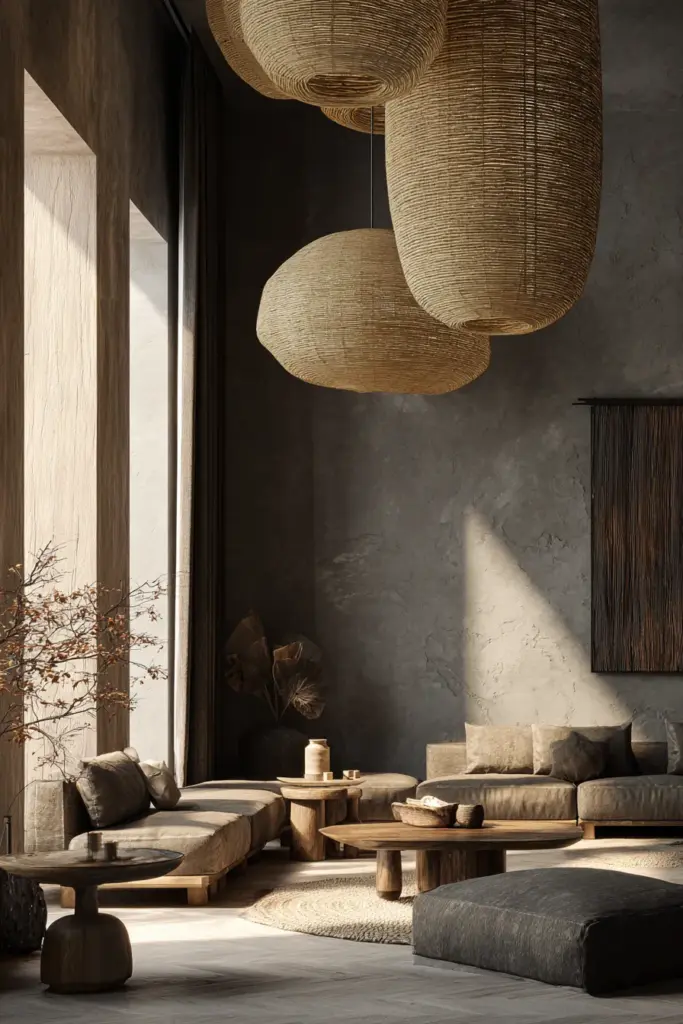
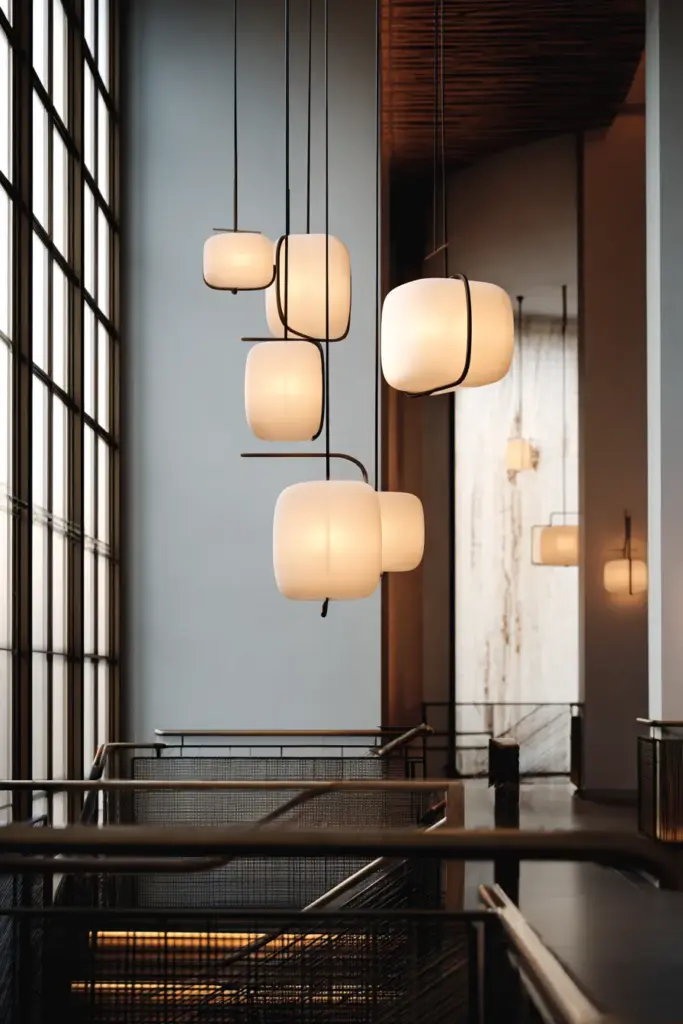
Occasionally, a space calls for japandi living room statement lighting that commands attention while respecting the aesthetic’s restraint. This might be an oversized woven pendant above a low coffee table, a dramatic arc lamp with organic materials, or a unique artisan piece that becomes a focal point. Even statement fixtures in Japandi design maintain connection to natural forms and materials, they simply do so at a scale or with a presence that elevates them beyond background elements.
Material selection profoundly impacts how fixtures integrate with your overall design. Natural woods, especially lighter species like bamboo, ash, or maple, echo the warmth of Scandinavian design. Matte black metals provide grounding contrast without the flash of chrome or polished finishes. Ceramic and stone bases offer textural interest and weight. Linen and cotton shades filter light with organic softness. Rattan and wicker bring textural richness and artisanal quality.
The finish and patina of materials matter as much as the materials themselves. Japandi embraces the honest aging of natural materials, so fixtures that will develop character over time feel more authentic than those striving for perpetual newness. A brass fixture allowed to age naturally, developing a soft patina, embodies wabi-sabi philosophy far better than one coated to resist change.
Scale and proportion require careful consideration, especially in homes where room sizes don’t always match Pinterest-perfect proportions. A fixture that looks perfectly balanced in a spacious loft might overwhelm a cozy apartment living room. When exploring japandi living room lighting small spaces, remember that fewer, well-chosen fixtures often create more impact than multiple competing elements. General guidance suggests ceiling fixtures shouldn’t exceed one-third of your table or seating area width, while maintaining adequate height clearance to prevent awkward head bumps or sight line interruptions.
Navigating Metal Finishes
One common question arises around metal finishes and whether different metals can coexist harmoniously. The practice of japandi living room lighting mixing metals actually works beautifully when approached thoughtfully. The key lies in choosing metals with similar undertones and finishes, matte black pairs well with aged brass, brushed nickel complements warm bronze, and raw steel harmonizes with copper accents. The rule of thumb suggests limiting your palette to two or three metal finishes maximum, allowing them to repeat throughout the space rather than introducing a new finish with every fixture.
Creating Atmosphere Through Light Quality and Control
Beyond choosing beautiful fixtures, true mastery of Japandi lighting comes from understanding and controlling light quality itself. The warmth of light, its color temperature, and your ability to adjust intensity all profoundly affect how a space feels and functions throughout changing hours and seasons.
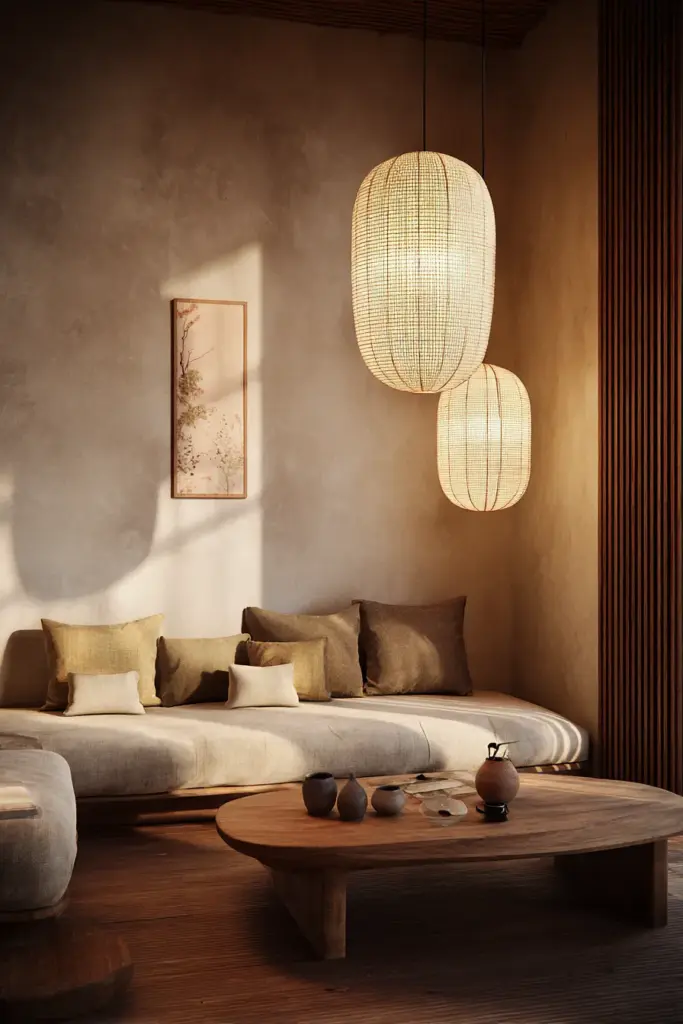
The spectrum between japandi living room warm cool lighting might seem technical, but it’s deeply experiential. Warm light, measured around 2700K to 3000K on the Kelvin scale, mimics candlelight and sunset, creating intimacy and comfort. Cooler light above 4000K feels more energizing but can seem clinical in residential settings. Japandi spaces almost universally favor warmer temperatures that support relaxation and the cozy hygge feeling central to this aesthetic.
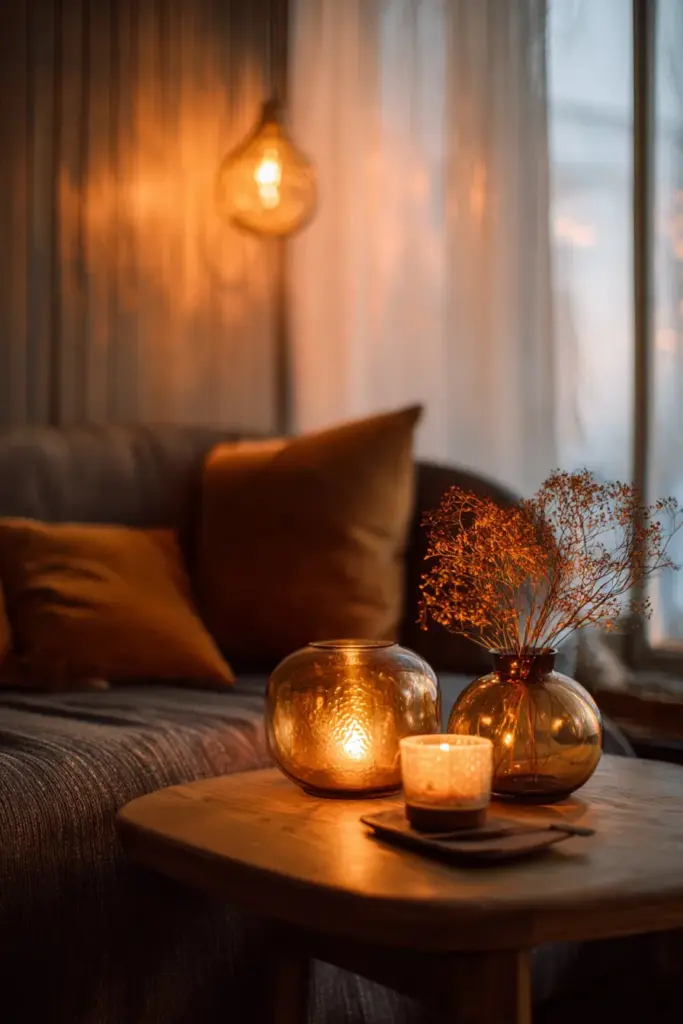
Your choice of japandi living room light bulbs determines not just energy efficiency but the entire character of your lighting. LED bulbs have evolved remarkably, now offering warm temperatures and excellent color rendering that doesn’t wash out the subtle beauty of natural materials. Look for high CRI ratings, ideally above 90, which ensures colors appear true and vibrant. Dimmable LEDs provide flexibility, though compatibility with your existing dimmers deserves verification before purchase.
The transformative power of japandi living room lighting dimmers cannot be overstated. A single fixture that can transition from bright task lighting to soft ambient glow offers more versatility than half a dozen fixed-intensity lights. Dimming doesn’t just reduce brightness, it fundamentally changes the mood and atmosphere of a space. Evening gatherings benefit from lighting dimmed to 40 to 60 percent of maximum, creating intimacy without strain. Dimming also extends bulb life and reduces energy consumption, practical benefits that align with Japandi’s sustainable ethos.
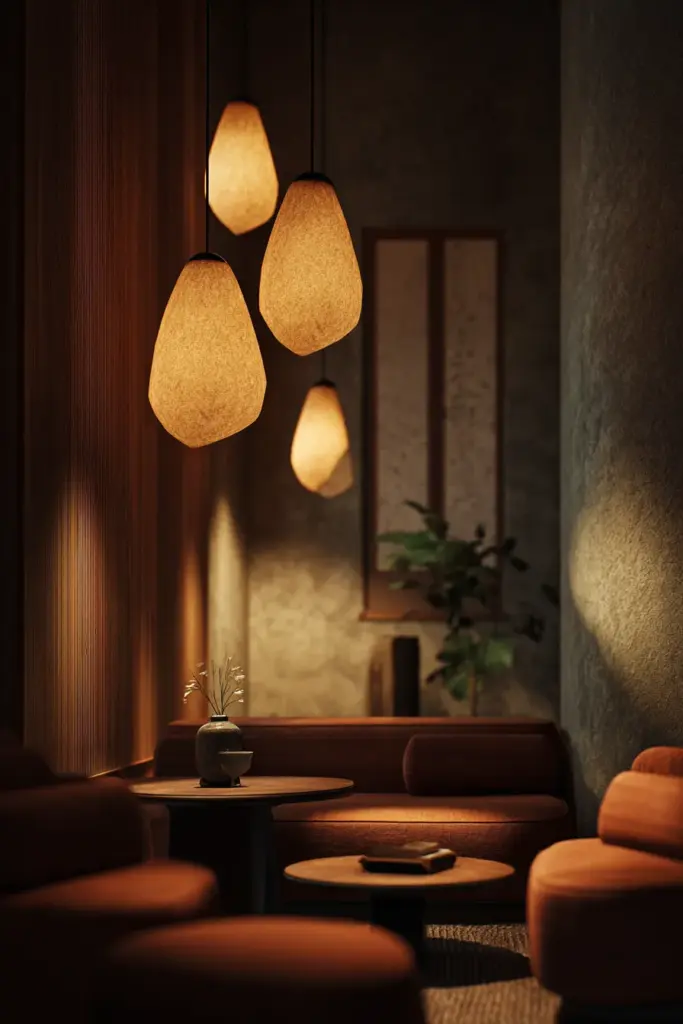
Understanding how to manipulate japandi living room lighting mood empowers you to orchestrate different atmospheres for various activities and times. Bright, even lighting supports active hours of cleaning, organizing, or energetic socializing. Medium levels work well for casual dining or conversation. Lower levels paired with strategic accent lighting create the perfect setting for movie nights, meditation, or intimate gatherings. The same space transforms dramatically based solely on how you deploy available light.
Creating that sought-after sense of japandi living room cozy lighting requires more than just dimming overhead fixtures. It’s about creating pockets of warm illumination at human scale rather than flooding spaces from above. Table lamps and floor lamps positioned at seating height naturally draw people together, their warm glow creating invisible boundaries of comfort and intimacy. Shadows become as important as illumination, defining space and creating depth rather than something to eliminate.
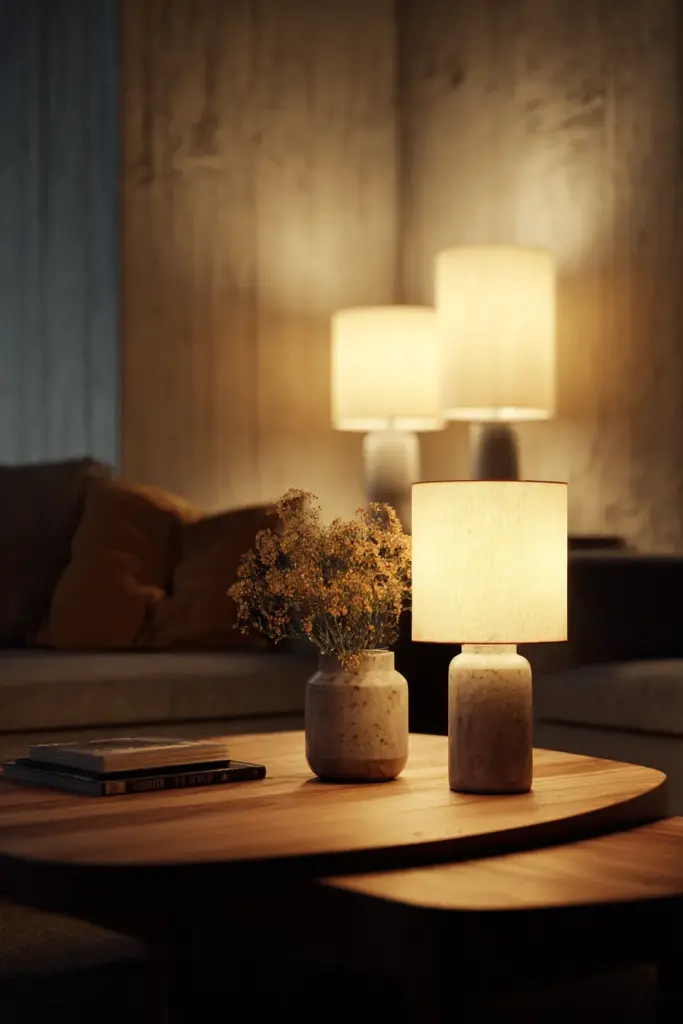
The interplay between light and shadow deserves intentional choreography. Harsh overhead lighting flattens three-dimensional spaces into lifeless uniformity. Layered lighting at varied heights casts interesting shadows that highlight texture and dimension. A nubby linen pillow, the grain in a wooden coffee table, the weave of a natural fiber rug, all these tactile elements come alive when light plays across their surfaces from multiple angles rather than one relentless source.
Seasonal adjustments to your lighting strategy honor the natural world’s rhythms. Summer evenings might need minimal artificial light until quite late, letting twilight linger. Winter demands earlier intervention, perhaps using timers or smart controls to have warm light waiting when you arrive home to darkness. This responsiveness to seasonal change connects you more deeply to the passage of time and cycles of nature, both central to Japanese design philosophy.
Modern Solutions and Technology Integration
While Japandi design draws from centuries-old aesthetic principles, it needn’t reject modern technology that genuinely improves quality of life. The key lies in integrating contemporary solutions in ways that serve the design rather than compromising it, keeping innovation invisible while reaping its benefits.
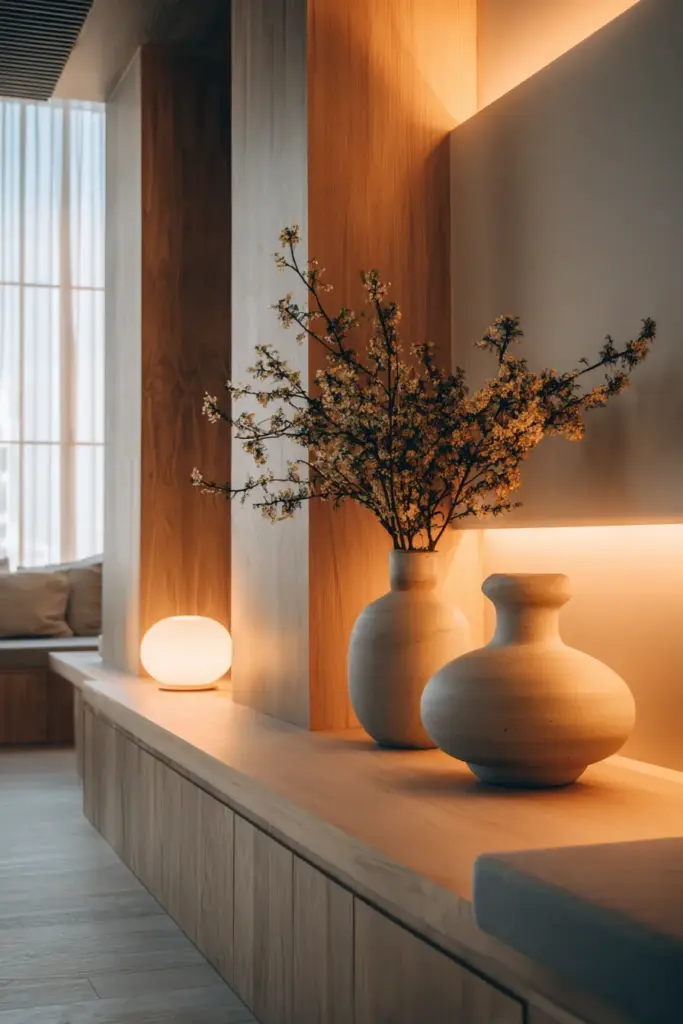
The rise of japandi living room smart lighting offers remarkable control and convenience when implemented thoughtfully. Smart bulbs and switches let you adjust lighting from your phone, set schedules that mimic natural light patterns, or create scenes for different activities with a single tap. The technology fades into the background while its effects enhance daily living. Imagine arriving home to find your living room glowing with warm welcome light, or having your lighting gradually brighten on weekend mornings like a gentle sunrise.
Even japandi living room string lights have evolved beyond holiday decorations into sophisticated design elements. Warm white LED string lights with minimalist fixtures can outline architectural features, drape along shelves, or create magical accents behind sheer curtains. The key is restraint and integration rather than creating a tangled mess of visible wires. Choose string lights with quality construction and warm color temperature, using them sparingly as accent elements rather than primary light sources.
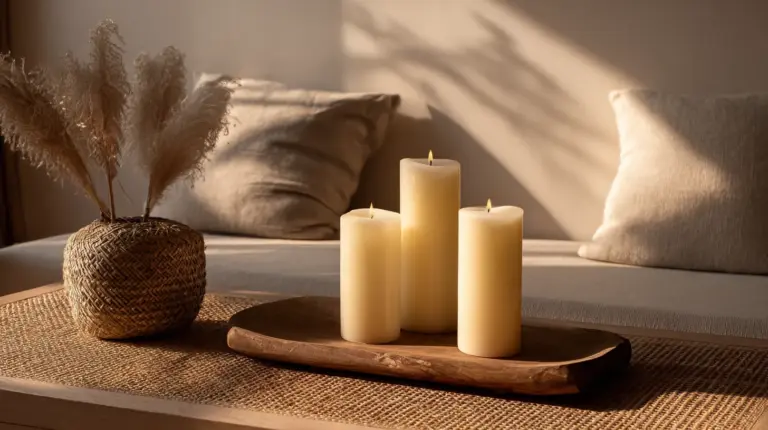
The enduring romance of japandi living room candles connects us to humanity’s oldest light source while offering incomparable ambiance. Real flame introduces movement and life that no electric light can fully replicate. Natural soy or beeswax candles in simple vessels, perhaps clustered on a wooden tray or floating in shallow ceramic bowls, provide flickering warmth that transforms ordinary evenings into something special. The ritual of lighting candles marks the transition from day to night, a mindful pause that honors the changing light.
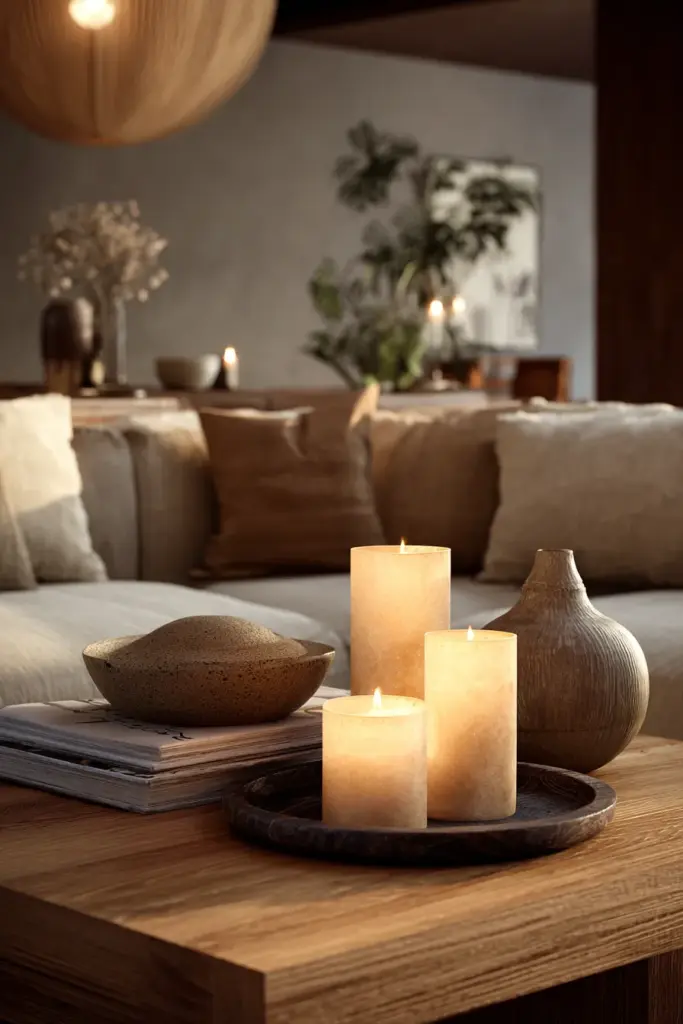
For the creatively inclined, exploring japandi living room lighting DIY projects offers opportunities to create truly unique pieces that reflect your personal aesthetic. Simple projects like wrapping natural jute rope around basic pendant cords, creating paper lamp shades from Japanese washi paper, or building minimalist wooden lamp bases let you customize lighting to your exact specifications while enjoying the meditative process of making. Even small personalized touches like replacing standard lamp pulls with leather cords or wooden beads add character that mass-produced fixtures lack.
Technology also enables better understanding of your lighting needs. Smart home systems can track which lights you use most frequently and at what times, helping optimize placement and intensity. Energy monitoring shows exactly how much your lighting costs, motivating thoughtful use. Motion sensors in low-traffic areas prevent wasted electricity while ensuring light is always available when needed. These invisible technological supports don’t compromise aesthetics, they simply make mindful living easier.
Practical Considerations and Problem Solving
Even the most beautiful lighting plan faces practical challenges. Addressing common obstacles early prevents frustration and ensures your lighting serves you reliably for years to come. From technical troubleshooting to budget management, practical wisdom supports your aesthetic vision.
When fixtures stop working or behave unexpectedly, having a resource for japandi living room lighting troubleshooting saves time and money. Most lighting issues have simple solutions, flickering often indicates loose bulbs or dimmer incompatibility, buzzing suggests incorrect bulb types with your dimmer, and complete failure might just mean a tripped breaker or blown fuse. Understanding basic troubleshooting empowers you to solve minor problems quickly rather than calling an electrician for every hiccup.
Avoiding common pitfalls requires awareness of japandi living room lighting mistakes that undermine even well-intentioned designs. Overlighting ranks among the most frequent errors, installing too many fixtures or choosing overly bright bulbs that create harsh rather than welcoming environments. Improper scale follows closely, with oversized fixtures overwhelming modest rooms or undersized pendants disappearing in spacious areas. Poor layering, relying solely on overhead lighting without task or accent sources, flattens spaces and limits functionality.
Creating beautiful lighting on a limited budget requires strategic thinking about where to invest and where to economize. The guide to japandi living room lighting budget planning helps prioritize spending on quality fixtures for high-impact areas while finding affordable solutions for secondary spaces. Sometimes a single stunning floor lamp makes more difference than three mediocre ceiling fixtures. Vintage and secondhand markets often yield remarkable Japandi-appropriate pieces at fraction of retail prices. DIY lamp shade updates can transform basic hardware store fixtures into custom pieces that feel expensive and unique.
Sustainability concerns naturally align with Japandi philosophy, making japandi living room lighting sustainability both ethical and aesthetic. Choose LED bulbs for their efficiency and longevity, reducing both energy consumption and waste from frequent replacements. Select fixtures made from renewable materials like bamboo, FSC-certified wood, or recycled metals. Support artisans and small manufacturers who prioritize ethical production over mass manufacturing. Consider the full lifecycle of your lighting choices, from production through eventual disposal or repurposing.
Staying current without chasing fleeting fads means understanding japandi living room lighting trends that have genuine staying power versus those destined for quick obsolescence. Current movements toward warmer light temperatures, organic materials, and multifunctional fixtures align perfectly with timeless Japandi principles. Trends worth adopting include sculptural paper fixtures, mixed material designs combining wood and metal, and increasingly sophisticated dimming technology. Avoid trendy finishes or overly specific styles that might date your space within a few years.
Trusted Resources and Brand Considerations
Quality lighting represents an investment in daily comfort and long-term satisfaction. Understanding which manufacturers consistently deliver products that honor Japandi aesthetics while providing reliable performance helps guide purchasing decisions. While specific recommendations evolve as companies change, certain characteristics signal quality worth seeking.
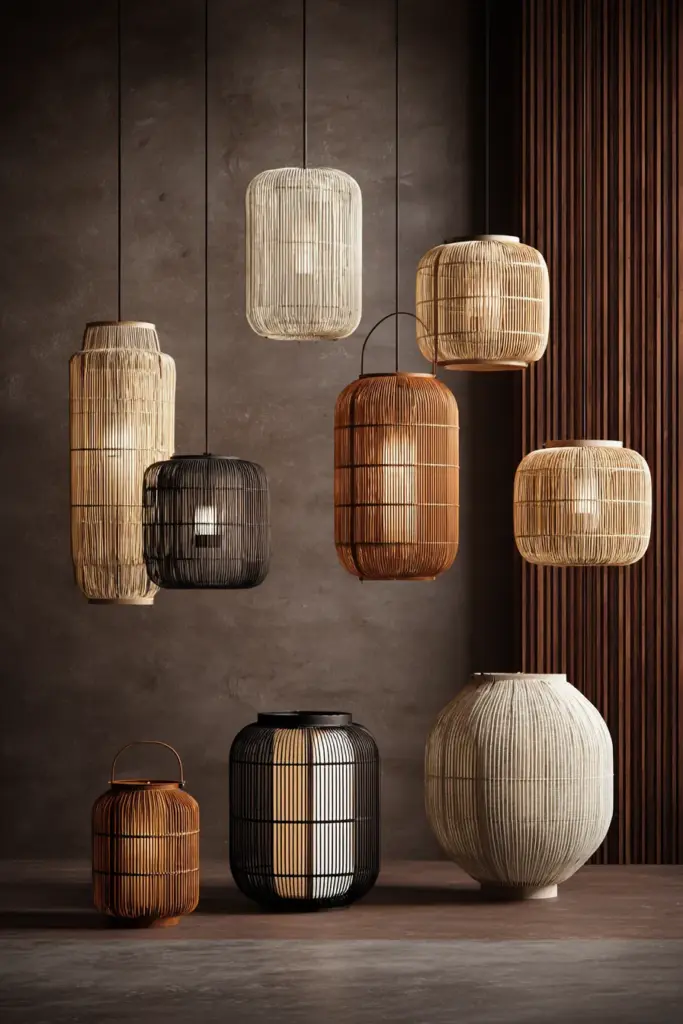
When researching japandi living room lighting brands, look for companies emphasizing natural materials, timeless design, and quality construction over trendy styling. Japanese manufacturers often excel at paper lanterns and minimalist fixtures with clean lines. Scandinavian brands typically offer excellent understated designs in natural woods and muted metals. Independent artisans and small production studios frequently create unique pieces with character and craftsmanship that mass manufacturers cannot match.
Consider also the company’s values and production practices. Brands committed to sustainability, fair labor practices, and transparent supply chains align with Japandi’s ethical foundations. Companies offering good warranties and customer support demonstrate confidence in their products and commitment to customer satisfaction. Online reviews from actual users provide insights beyond marketing claims, revealing real-world performance and durability.
Don’t overlook local lighting stores and showrooms where you can see and touch fixtures before purchasing. Photographs never fully convey scale, finish quality, or how light actually looks when fixtures illuminate. Many specialty lighting retailers employ knowledgeable staff who can answer technical questions about installation, compatibility, and maintenance. Building relationships with local vendors often yields insider knowledge about upcoming sales, special orders, and custom possibilities.
Expert Tips for Lighting Success
After exploring theory and options, these concentrated insights help translate knowledge into action. These aren’t rules to follow rigidly but principles to adapt thoughtfully to your unique circumstances.
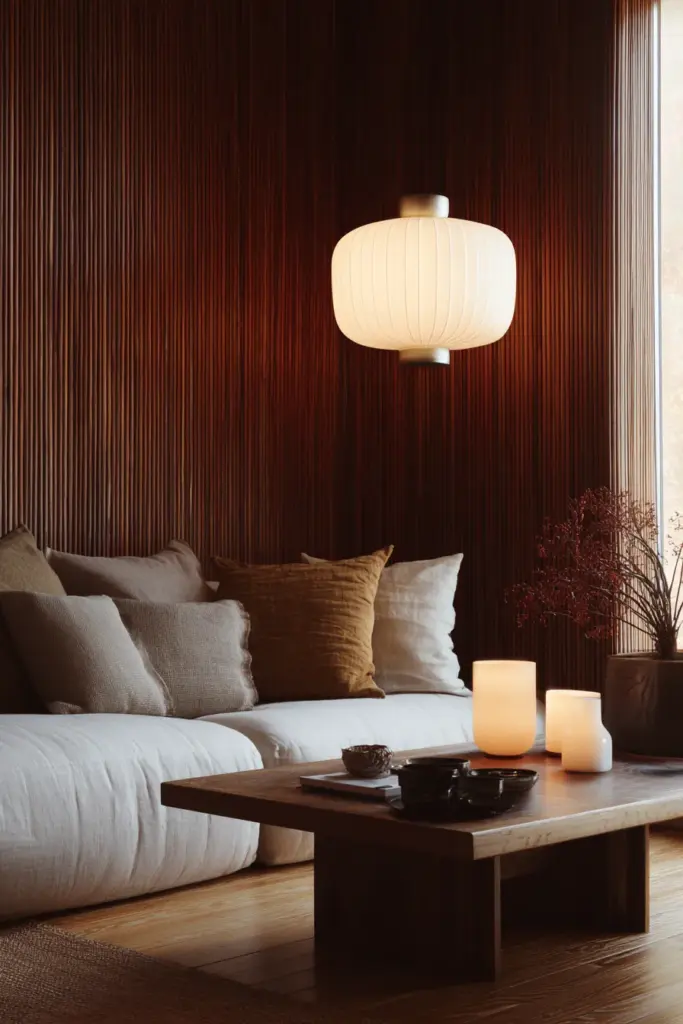
Always test lighting in your actual space before committing to permanent installation. Live with temporary setups, even if that means floor lamps plugged in where you plan ceiling fixtures. Notice how you actually use the space at different times. Your theoretical perfect lighting plan might not match real-world patterns. Adjust based on experience rather than assumptions.
Prioritize quality over quantity in fixture selection. Three exceptional lights create more impact than ten mediocre ones. Focus budget on pieces you’ll use daily and see constantly. Splurge on the living room floor lamp beside your reading chair. Economize on hallway fixtures that simply provide safe passage. This hierarchy of importance ensures resources go where they matter most.
Install dimmers on every circuit possible, even if you think you won’t use them. Future flexibility costs little upfront but provides immense value. Your needs and preferences will evolve. What feels right when you’re alone might not suit dinner parties. Morning lighting preferences differ from evening ones. Dimmers accommodate all scenarios without requiring new fixtures.
Consider the view from adjacent rooms when planning lighting. A beautifully lit living room might create harsh silhouettes or glare when viewed from your dining area or entryway. Walk through your home at various times, noting how lighting in one space affects others. Sometimes a slightly different fixture angle or lower wattage bulb solves problems you wouldn’t notice from within the lit space itself.
Embrace asymmetry and the unexpected. Matching table lamps flanking a sofa follow convention, but one floor lamp and one table lamp might serve the same function with more visual interest. A single pendant off-center above a coffee table can feel more dynamic than centered symmetry. Japandi design celebrates organic balance rather than rigid matching, so trust your intuition about what feels right.
Maintain fixtures regularly to preserve their beauty and function. Dust accumulates surprisingly quickly on lamp shades and bulbs, reducing light output and dulling appearance. Clean rice paper fixtures gently with a soft dry cloth or feather duster. Polish wood and metal finishes according to manufacturer recommendations. Replace bulbs promptly when they burn out rather than living with reduced lighting. This ongoing care shows respect for your investment and maintains the quality of light your space deserves.
Document your lighting setup with photos and notes. Record which bulbs work in which fixtures, where dimmers are installed, and any special settings for smart lights. This reference prevents frustration when replacing bulbs or troubleshooting issues months later. Note also what works well and what you’d change, insights that prove invaluable during future renovations or when helping friends with their own lighting projects.
Remember that lighting is never truly finished. Seasons change, needs evolve, new fixtures catch your eye. Give yourself permission to experiment and adjust. Moving a floor lamp across the room costs nothing but might dramatically improve function. Swapping bulbs from cool to warm temperature takes minutes and could transform atmosphere. The best lighting plans remain flexible, growing and changing as you do.
Conclusion
Creating beautiful, functional Japandi living room lighting is a journey of discovery, experimentation, and gradual refinement. There’s no single correct approach, only principles to guide you toward solutions that honor both aesthetic vision and practical reality. The interplay of light and shadow, the warmth of organic materials, the flexibility of layered illumination, these elements combine to transform houses into homes.
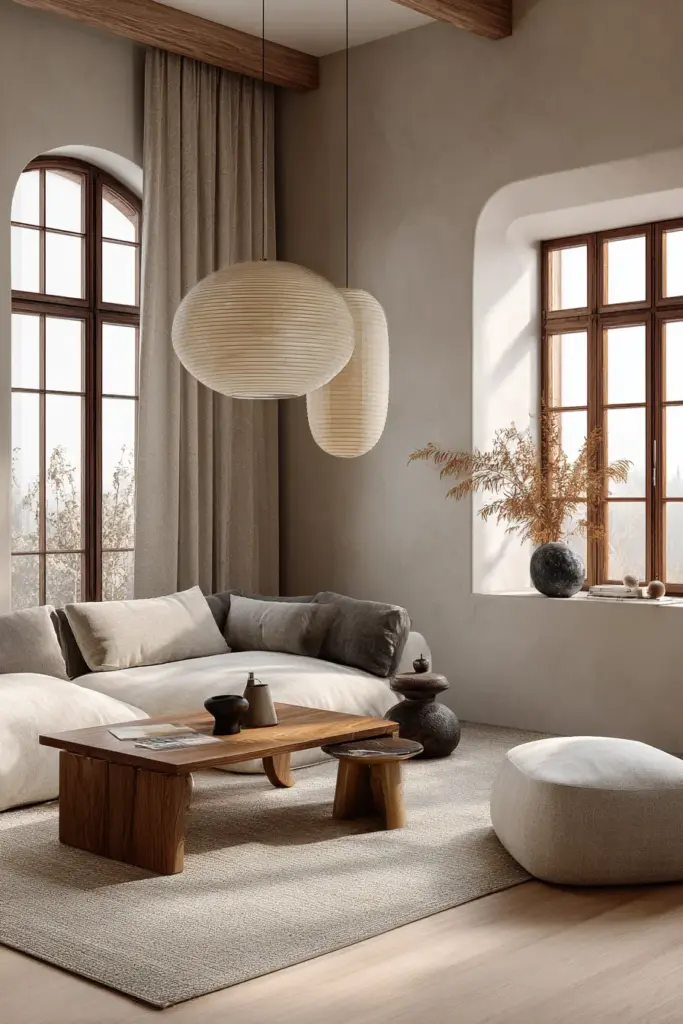
Remember that lighting serves life, not the other way around. Your fixtures and bulbs exist to support your daily rhythms, enhance your activities, and create atmosphere that nurtures wellbeing. Stay connected to how you actually live in your space, adjusting lighting to serve those realities rather than forcing yourself to adapt to rigid lighting schemes.
The beauty of Japandi design lies in its timelessness and adaptability. The principles we’ve explored, quality over quantity, natural materials, warm light temperatures, layered illumination, remain relevant regardless of changing trends. By grounding your choices in these enduring values, you create spaces that age gracefully, growing more beloved with time rather than feeling dated after a few seasons.
As you move forward in your lighting journey, trust your instincts and give yourself permission to experiment. Move fixtures, swap bulbs, try new arrangements. The most successful spaces evolve organically, shaped by attentive observation of what works and what doesn’t. Your living room lighting should grow with you, adapting to changing needs and deepening understanding.
Explore more design inspiration to continue your journey:
- Japandi Living Room Lighting Ultimate Guide
- Complete Japandi Lighting Guide
- Maximizing Natural Light in Japandi Living Rooms
Frequently Asked Questions
What makes Japandi lighting different from other design styles?
Japandi lighting emphasizes natural materials, warm color temperatures, and layered illumination that creates cozy atmosphere rather than uniform brightness. It combines Japanese minimalism with Scandinavian functionality, prioritizing quality, sustainability, and connection to natural light rhythms.
How many light sources should a typical living room have?
Most Japandi living rooms benefit from five to eight light sources including ambient ceiling fixtures, task lamps for reading or work areas, and accent lighting for visual interest. The exact number depends on room size, natural light availability, and how you use the space.
Should all my light fixtures match in style and finish?
No, Japandi design embraces organic harmony rather than rigid matching. Choose fixtures that share common elements like material warmth, matte finishes, or natural textures, but don’t feel obligated to buy matching sets. Subtle variety creates more interesting and personalized spaces.
What’s the ideal color temperature for Japandi spaces?
Warm white bulbs between 2700K and 3000K work best for Japandi aesthetics, mimicking the cozy glow of candlelight and supporting the hygge feeling central to this design philosophy. Avoid cool white or daylight bulbs above 3500K which feel clinical in residential settings.
Can I use Japandi lighting in small apartments?
Absolutely, Japandi lighting actually works exceptionally well in compact spaces. Focus on multi-functional fixtures like floor lamps that provide both ambient and task lighting, use wall sconces to save surface space, and choose light finishes that reflect rather than absorb illumination.
How do I avoid making my space too dark with Japandi lighting?
Layer multiple light sources at different heights and intensities rather than relying solely on overhead fixtures. Install dimmers for flexibility, choose warm white bulbs rather than amber tones that can appear dingy, and balance moody evening lighting with maximizing natural light during daylight hours.
What’s the best way to light artwork in Japandi spaces?
Use subtle accent lighting like adjustable track lights with narrow beams, picture lights with warm LEDs, or strategically placed uplights that wash walls with gentle illumination. Avoid harsh spotlights that create dramatic contrast, instead aim for soft highlighting that draws attention without overwhelming.
How often should I replace LED bulbs in my Japandi fixtures?
Quality LED bulbs typically last 15,000 to 25,000 hours, potentially 10 to 15 years with normal use. Replace bulbs when they burn out completely or if you notice significant dimming or color shift. Keep spare bulbs on hand so you can replace them immediately rather than living with reduced lighting.
Are smart lights compatible with Japandi design principles?
Yes, when implemented thoughtfully. Choose smart bulbs or switches that offer warm color temperatures and smooth dimming. Use the technology to enhance rather than complicate your space, setting schedules that mimic natural light patterns and creating scenes for different activities without cluttering your design with visible tech.
What lighting mistakes damage Japandi aesthetics most?
The most common errors include overlighting spaces with too many fixtures or overly bright bulbs, ignoring the importance of dimmers and layering, choosing trendy fixtures over timeless designs, and neglecting the relationship between artificial lighting and natural light throughout the day.
How can I achieve Japandi lighting on a tight budget?
Prioritize a few quality fixtures for high-impact areas and supplement with affordable options for secondary spaces. Shop secondhand markets for vintage pieces, try DIY lamp shade updates, invest in good bulbs for existing fixtures, and use natural elements like candles to add ambiance without electrical expense.
Should I hire a professional for Japandi lighting design?
For new construction or major renovations involving electrical work, professional consultation ensures safe installation and optimal placement. For refresh projects in existing spaces, you can likely succeed with research and experimentation, perhaps consulting an electrician only for installation of hardwired fixtures or dimmer switches.