
Table of Contents
There’s a moment when you walk into a room and just feel it — that quiet ease, the warmth of light spilling across clean lines, the soft glow illuminating natural textures. It’s not loud or cluttered. It’s intentional.
That’s the magic of Japandi design. And when it comes to ceiling lights in your living room, getting it right transforms everything.
This guide will walk you through choosing, styling, and installing Japandi ceiling lights that bring calm and beauty into your space. Whether you’re starting fresh or refining what you already love, we’ll cover materials, light temperature, layering techniques, and budget-friendly tips tailored to your home.
Let’s bring that gentle, grounded glow to life.
What Is Japandi Style Lighting?
Japandi is the beautiful marriage of Japanese minimalism and Scandinavian hygge — two design philosophies that share a reverence for nature, simplicity, and warmth.
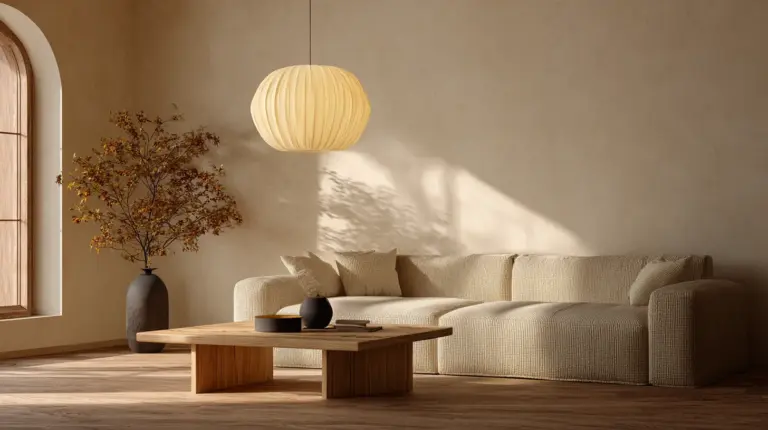
In lighting, this translates to fixtures that are understated yet sculptural. Think bamboo pendants with soft silhouettes, oak flush mounts that blend into the ceiling, walnut frames that add quiet elegance. The materials speak first: natural, sustainable, tactile.
Unlike stark modern lighting, Japandi fixtures prioritize ambient warmth. They create pools of soft light rather than bright, clinical beams. The goal is to make your living room feel like a sanctuary — a place where light doesn’t just illuminate, but comforts.
Why Ceiling Lights Matter in Japandi Living Rooms
Your ceiling light sets the foundation for the entire room’s atmosphere.
In Japandi design, ceiling fixtures provide about 60% of your ambient lighting. They create the baseline glow that makes everything else — your furniture, textiles, art — feel cohesive and calm. The remaining 40% comes from task and accent lighting like floor lamps or wall sconces.
When chosen thoughtfully, a Japandi ceiling light becomes part of the room’s personality. A rattan pendant casts intricate shadows at dusk. A dimmable flush mount adjusts to morning coffee or evening wine. These aren’t just functional pieces; they’re quiet design statements.
And in smaller living rooms or apartments, the right ceiling light can visually expand space while maintaining that cozy, grounded feel.
Key Features of Japandi Ceiling Lights
Clean Lines and Minimalist Silhouettes
Japandi fixtures avoid ornate detailing. Instead, they embrace geometric simplicity — circular flush mounts, linear pendant bars, spherical shades.
The beauty is in the form itself, not embellishment. A simple bamboo drum shade or a matte white dome with oak accents offers visual interest without clutter.
This restraint allows the materials and light quality to take center stage.
Natural and Sustainable Materials
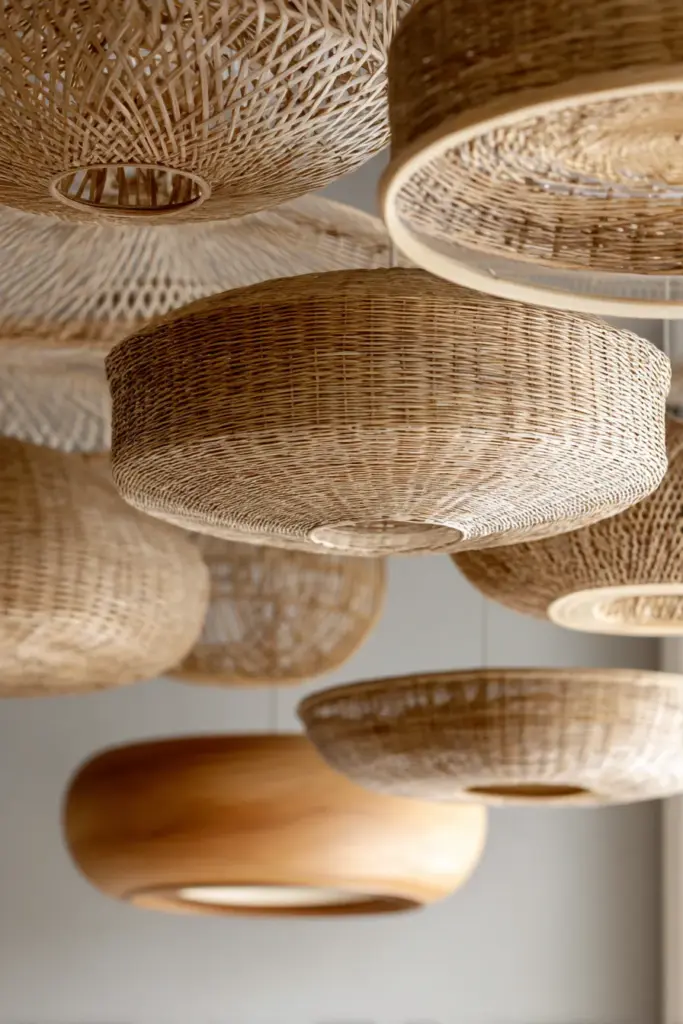
Wood, bamboo, rattan, linen, paper — these are the textures that define Japandi lighting.
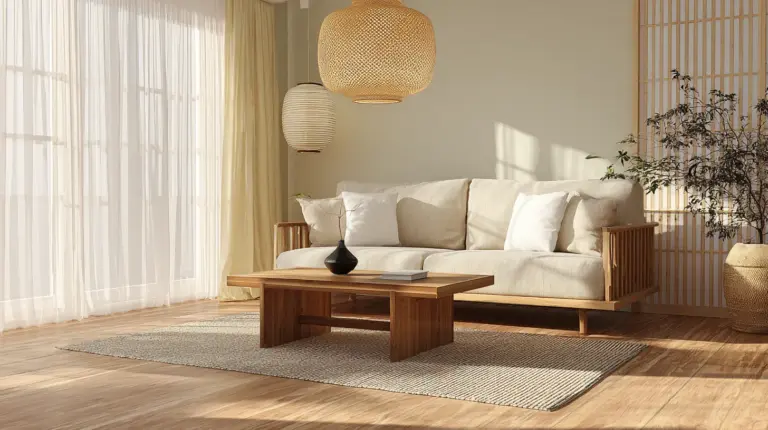
Bamboo pendants bring warmth and eco-consciousness. Oak or walnut frames add depth and organic grain patterns. Rattan weaves introduce subtle texture while diffusing light beautifully.
For tropical climates like the Philippines, look for humidity-resistant finishes on wood fixtures. A matte sealant protects against moisture while preserving the natural beauty of the material.
Warm, Soft Ambient Glow
Light temperature is everything in Japandi spaces.
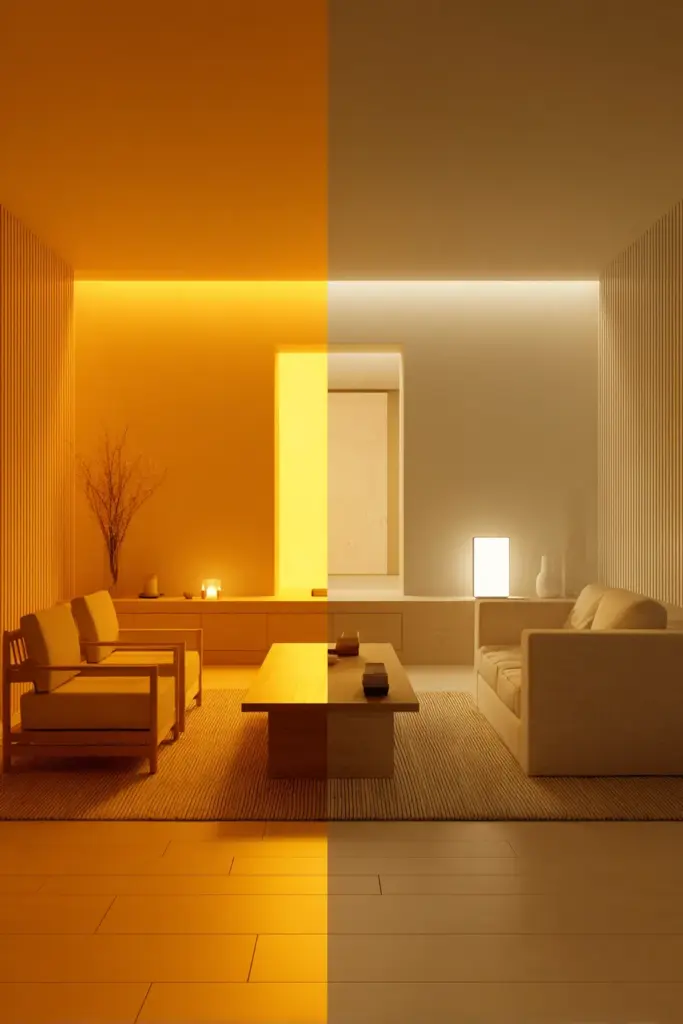
Choose LED bulbs in the 2700K to 3000K range — this warm white mimics candlelight and sunset tones. It softens shadows, flatters skin tones, and creates that wabi-sabi calm we’re aiming for.
Avoid cool daylight bulbs (4000K+), which feel clinical and disrupt the serene atmosphere. The goal is a gentle, inviting glow that makes you want to linger.
Dimmable and Energy-Efficient Options
Flexibility is key. A dimmable ceiling light lets you shift from bright morning energy to soft evening relaxation.
Pair your fixture with LED bulbs for energy efficiency — they use up to 80% less energy than incandescent bulbs and last significantly longer. This aligns with Japandi’s sustainable ethos while reducing your electricity costs.
Smart bulbs compatible with systems like Philips Hue allow you to adjust brightness and even warmth via app, perfect for multifunctional living spaces.
Choosing the Right Japandi Ceiling Light for Your Living Room
Consider Your Room Dimensions and Ceiling Height
For 8 to 10-foot ceilings (common in Philippine homes), flush mounts or semi-flush fixtures work beautifully. They sit close to the ceiling, maximizing vertical space while providing ample light.
If you have 10 to 12-foot ceilings, adjustable-height pendants shine. Hang them 30 to 36 inches above coffee tables or seating areas to create intimate lighting zones without overwhelming the room.
Measure your living room’s square footage. A general rule: for every 100 square feet, aim for about 1,500 to 3,000 lumens total from your ceiling fixture, depending on how layered your lighting scheme is.
Match Materials to Your Existing Décor
Look around your space. What materials dominate?
If you have a teak media console or mango wood shelving, an oak or walnut ceiling fixture creates cohesion. Bamboo or rattan lights pair beautifully with woven textiles, linen sofas, or wicker accents.
For monochrome or neutral spaces with whites, grays, and beiges, a simple white fabric pendant with wooden accents adds warmth without competing visually.
The idea is harmony — your ceiling light should feel like a natural extension of the room, not an afterthought.
Balance Functionality and Aesthetic
Ask yourself: What happens in this living room?
If it’s a multifunctional space — work, relaxation, entertaining — choose a dimmable fixture that adapts. Pendant lights with adjustable heights let you customize for different activities.
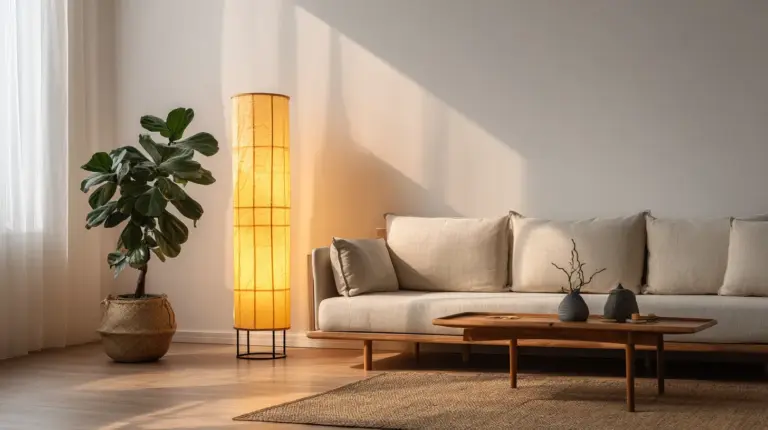
For smaller apartments, consider flush mounts with wide light dispersion to brighten the entire room evenly. Add floor or table lamps for reading nooks or accent lighting near plants like fiddle leaf figs.
Functionality doesn’t mean sacrificing beauty. Many Japandi fixtures blend both seamlessly.
Types of Japandi Ceiling Lights for Living Rooms
Pendant Lights
Pendants are the signature Japandi fixture — sculptural, warm, versatile.
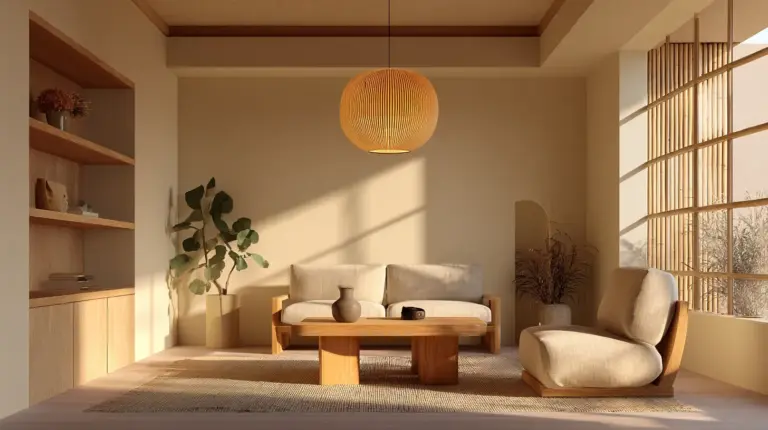
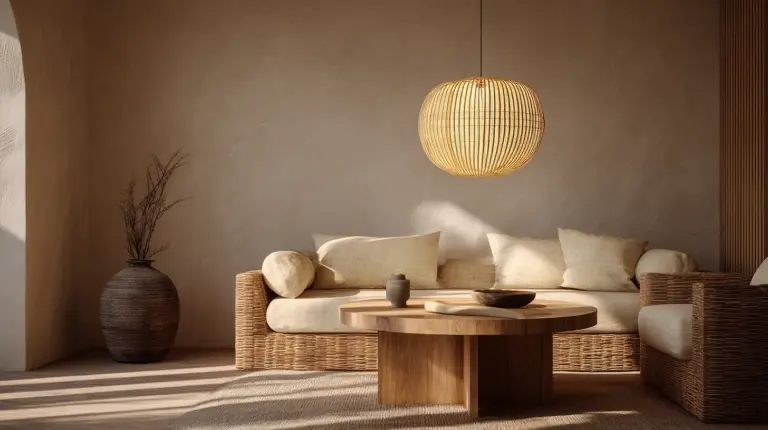
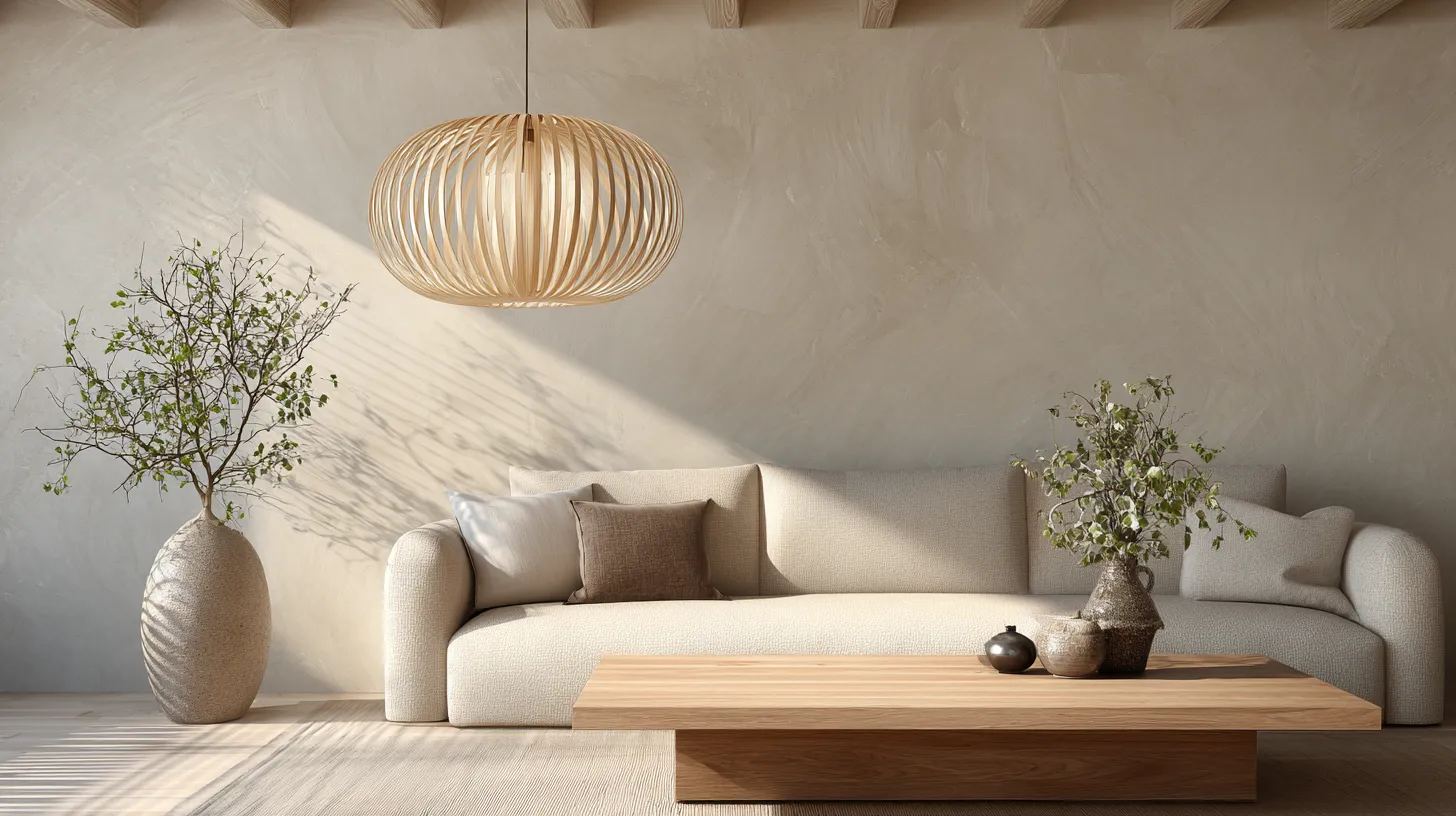
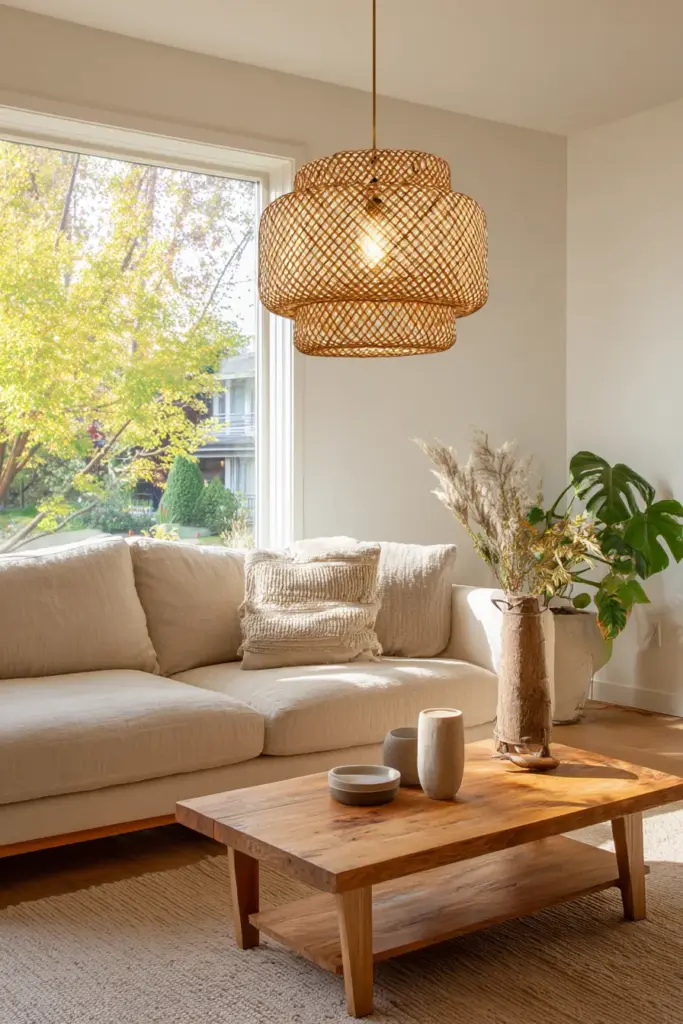
A bamboo drum pendant brings texture and a soft, diffused glow. Hang it centered over your seating area or coffee table. Paper lantern-style pendants add delicate, handcrafted charm and work especially well in smaller living rooms.
For larger spaces, cluster three pendants at varying heights. This creates visual interest while distributing light evenly.
Best for: Living rooms with higher ceilings, spaces where you want a focal lighting piece.
Flush Mount and Semi-Flush Lights
These sit snugly against or just below the ceiling, ideal for compact or lower-ceiling spaces.
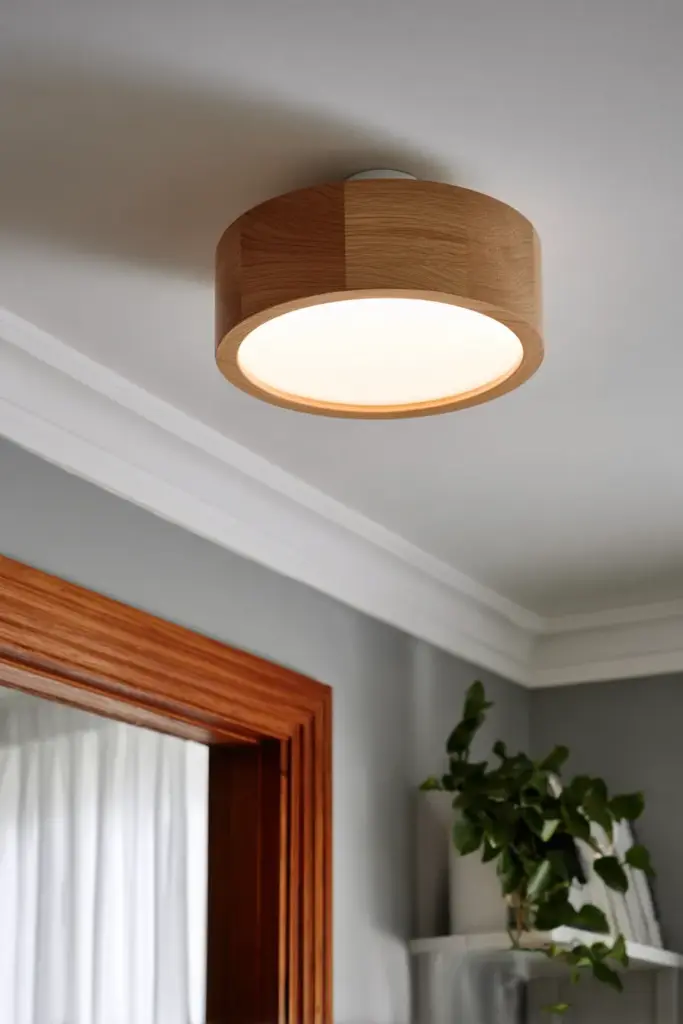
Look for oak or walnut-rimmed flush mounts with frosted glass or linen shades. They provide broad, even ambient lighting without taking up visual space.
Semi-flush fixtures drop slightly (6 to 12 inches), offering a bit more design presence while still being practical.
Best for: Smaller living rooms, apartments, or spaces where you prioritize clean sightlines.
Linear and Geometric Fixtures
Rectangular or linear fixtures suit longer living rooms or open-plan layouts.
A matte black or white linear pendant with wooden accents spans the length of a sectional sofa, balancing the room’s proportions. Geometric designs — hexagons, circles, abstract forms — add modern elegance while staying minimal.
These work beautifully above coffee tables or in combined living-dining areas.
Best for: Contemporary Japandi spaces, open layouts, rooms needing directional light.
Layering Your Japandi Living Room Lighting
Ceiling lights alone won’t create the full Japandi atmosphere. Layering is essential.
Ambient + Task + Accent
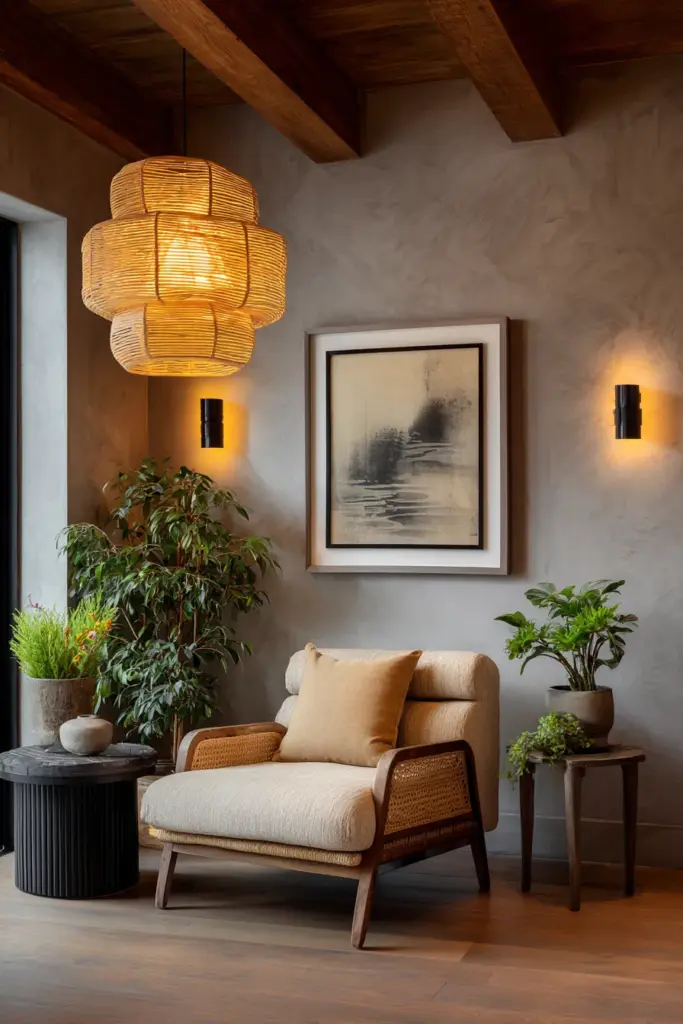
Ambient (60%): Your ceiling fixture provides overall glow. This is your baseline.
Task (30%): Floor lamps beside reading chairs, table lamps on side tables. These serve specific functions — reading, working, detail-focused tasks.
Accent (10%): Wall sconces highlighting artwork, LED strips under shelves, or uplights near plants. These add depth and visual intrigue.
Together, these layers create a dynamic, livable space that adapts throughout the day.
Incorporate Natural Light
Japandi design honors sunlight. During the day, let natural light do the heavy lifting.
Position mirrors to reflect daylight deeper into the room. Use sheer linen curtains to diffuse harsh afternoon sun while maintaining brightness.
Your ceiling lights take over as dusk falls, continuing that warm, natural feel.
Budget-Friendly Japandi Ceiling Lights for Philippine Homes
You don’t need to spend 20,000 PHP to achieve Japandi lighting.

Affordable Options Under 5,000 PHP
Search local suppliers for bamboo or rattan pendants in the 2,000 to 4,500 PHP range. Online marketplaces and eco-design shops often carry handmade options that support local artisans.
Ikea’s SINNERLIG pendant (bamboo) and KNIXHULT (bamboo/rattan) typically fall under 3,000 PHP and embody Japandi principles beautifully.
Pair budget fixtures with quality LED bulbs (2700K, dimmable) — invest here for better light quality and energy savings.
DIY and Upcycling Ideas
Thrift a plain drum-shade pendant and wrap it in rattan webbing or natural jute rope. Secure with matte adhesive for a custom, textured look.
Convert a simple white flush mount by adding a bamboo or wooden rim — available at craft stores. Paint metal fixtures in matte black or soft white for a cleaner, more cohesive aesthetic.
Upcycling aligns with Japandi’s sustainable ethos while keeping costs low.
Installation Tips for Japandi Ceiling Lights
Height and Placement Guidelines
For pendants: Hang 30 to 36 inches above coffee tables or seating zones. This creates intimacy without obstructing sightlines.
For flush mounts: Center in the room or above primary seating areas for even light distribution.
For dining-living combos: Align fixtures with furniture layouts — pendants over tables, flush mounts over sofas.
Adjust based on ceiling height. Higher ceilings can handle longer drops; lower ceilings need closer fixtures.
Wiring and Smart Integration
Hire a licensed electrician for hardwired installations, especially in Philippine homes where wiring standards vary.
If you want dimming or smart control, install a compatible dimmer switch or use smart LED bulbs. Check that your fixture supports dimmable bulbs — not all do.
For renters or those avoiding hardwiring, plug-in pendant kits with ceiling hooks offer flexibility. Pair with extension cords hidden along walls or corners.
Safety Considerations for Tropical Climates
Humidity is a factor in the Philippines. Choose fixtures with moisture-resistant ratings (IP20 or higher for indoor living rooms).
Apply clear matte sealant to wooden fixtures to prevent warping. Ensure proper ventilation around lights to avoid heat buildup, especially with enclosed shades.
Regularly dust bamboo and rattan to prevent mildew in humid months.
Sustainability and Energy Efficiency
Japandi design is rooted in mindful living.
LED vs. Incandescent: The Real Impact
Switching from incandescent to LED bulbs saves up to 80% on energy costs. Over a bulb’s lifetime, that’s approximately 1,200 kWh saved per bulb — significant in cumulative household use.
LEDs also last 15 to 25 times longer, reducing waste and replacement frequency. Choose bulbs from eco-certified brands when possible.
Lifecycle and Carbon Footprint
Bamboo and rattan fixtures have lower carbon footprints than metal or plastic alternatives. These materials grow rapidly, sequester carbon, and biodegrade naturally.
Support brands that disclose sourcing and production practices. Local artisans often use traditional, low-impact methods — plus, you’re reducing shipping emissions.
Eco-Conscious Shopping Checklist
- Material: Bamboo, rattan, FSC-certified wood, recycled metal
- Bulbs: LED, dimmable, 2700K-3000K
- Certifications: Energy Star, eco-labels
- Local sourcing: Philippine-made or regional suppliers
- Longevity: Durable construction, replaceable parts
Styling Your Japandi Living Room Around Ceiling Lights
Your ceiling light is the anchor. Build your space around it.
Complement with Furniture and Textiles
Pair a bamboo pendant with a low-profile linen sofa in oatmeal or charcoal. Add wool or cotton throws in muted tones — terracotta, sage, cream.
Keep furniture lines clean and low. Platform sofas, wooden coffee tables with tapered legs, and open shelving maintain visual simplicity.
Textures matter. Contrast smooth surfaces (glass, metal) with organic weaves (jute rugs, rattan baskets) for tactile richness.
Integrate Plants and Greenery
Japandi spaces thrive with greenery. Position ceiling lights to highlight plants below — fiddle leaf figs, monstera, snake plants.
Use uplights or small accent lights near larger plants to create evening drama. This layered approach makes the room feel alive and connected to nature.
Choose ceramic or terracotta planters in neutral tones to maintain the minimalist palette.
Color Palette and Wall Treatments
Stick to a base of whites, soft grays, warm beiges, or pale greens. These colors reflect light beautifully and create spaciousness.
Add depth with one accent wall in charcoal, sage, or terracotta. Matte finishes feel warmer and more sophisticated than glossy.
Let your ceiling light’s warm glow enhance these tones, especially during golden hour and evening.
Common Mistakes to Avoid
Choosing Overly Bright or Cool Bulbs
A 5000K daylight bulb in a Japandi space? That’s a hard no. It kills the warmth and comfort entirely.
Always opt for 2700K to 3000K. Test bulbs before committing if possible — light temperature drastically affects mood.
Ignoring Dimming Capabilities
Fixed brightness limits your room’s versatility. Dimmable fixtures let you transition from productive daytime light to cozy evening ambiance.
Invest in quality dimmer switches or smart bulbs — the flexibility is worth it.
Overcomplicating the Design
More isn’t better. One statement pendant or a simple flush mount is often enough.
Resist adding too many fixtures, excessive detailing, or clashing materials. Japandi thrives on restraint and intentionality.
Free Japandi Lighting Audit Checklist
Use this checklist to evaluate your living room lighting:
- Room Measurements: Length, width, ceiling height recorded
- Current Lumens: Calculate total output from all light sources
- Light Temperature: Verify bulbs are 2700K-3000K warm white
- Material Match: Ceiling fixture complements furniture and décor
- Dimmability: Fixtures and bulbs support dimming
- Layering: Ambient (60%), task (30%), accent (10%) lighting present
- Energy Efficiency: LED bulbs in use
- Humidity Resistance: Fixtures rated for tropical/humid climates
- Installation Safety: Proper wiring, height, and placement confirmed
- Sustainability: Materials are natural, eco-certified, or locally sourced
Download and print this checklist to guide your Japandi lighting journey.
Conclusion
Light isn’t just functional. It’s emotional, sensory, transformative.
When you choose the right Japandi ceiling light for your living room, you’re creating more than illumination. You’re crafting moments — quiet mornings with coffee and soft light, evenings curled up under a warm glow, gatherings where people feel at ease in your space.
It’s about honoring natural materials, embracing simplicity, and designing with intention. Every choice — from bamboo to oak, from 2700K warmth to dimmable flexibility — shapes how you live and feel at home.
Start small. Evaluate your space with fresh eyes. Choose one beautiful fixture that speaks to you. Layer thoughtfully. And watch as your living room becomes the calm, grounded sanctuary you’ve been craving.
Frequently Asked Questions
What is Japandi style lighting?
Japandi lighting blends Japanese minimalism and Scandinavian coziness, emphasizing natural materials like bamboo, oak, and rattan. Fixtures feature clean lines, warm 2700K-3000K light, and understated designs that prioritize ambient warmth over harsh brightness. The style creates serene, functional spaces that feel both modern and organic.
What color light is best for Japandi living rooms?
Warm white LEDs in the 2700K to 3000K range work best. This temperature mimics candlelight and sunset tones, creating soft ambiance that enhances the wabi-sabi calm central to Japandi design. Avoid cool daylight bulbs (4000K+), which feel clinical and disrupt the cozy atmosphere.
How do I choose the right size ceiling light for my living room?
For 8 to 10-foot ceilings, opt for flush or semi-flush mounts. For 10 to 12-foot ceilings, adjustable pendants hung 30 to 36 inches above seating areas work beautifully. Calculate lumens based on square footage (1,500-3,000 lumens per 100 sq ft) and consider layering with floor and table lamps for complete coverage.
Are Japandi ceiling lights expensive?
Not necessarily. Budget-friendly options exist under 5,000 PHP, especially bamboo or rattan pendants from local artisans or stores like Ikea. Pair affordable fixtures with quality LED bulbs for best results. DIY upcycling — adding rattan or wooden accents to plain fixtures — offers custom style at low cost while supporting sustainability.
What maintenance do bamboo and rattan ceiling lights need in humid climates?
Apply a clear matte sealant to protect against moisture and warping. Dust regularly to prevent mildew buildup, especially during humid months. Choose fixtures with humidity-resistant ratings (IP20+) and ensure proper ventilation around the light to avoid heat and moisture accumulation. These simple steps extend the life and beauty of natural materials.