
Table of Contents
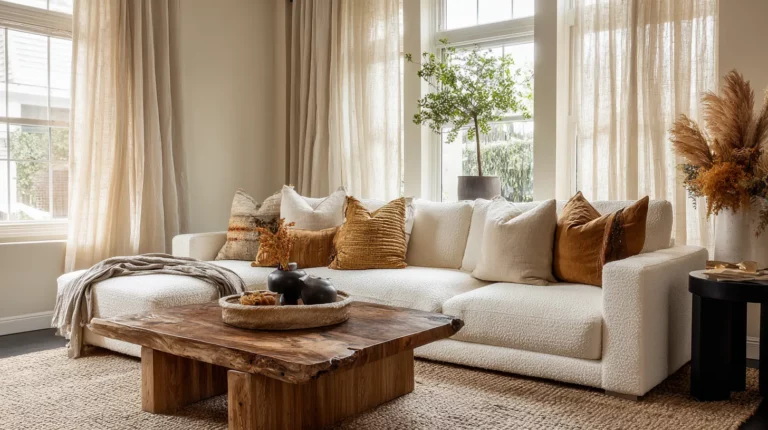
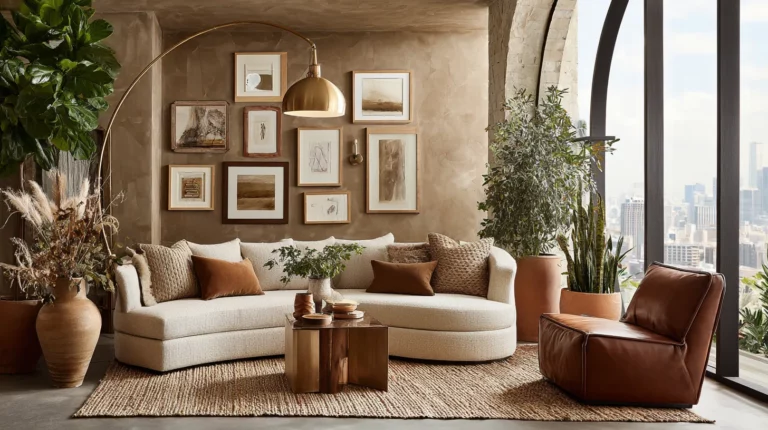
There’s something quietly transformative about a room that breathes with you. A living room where sunlight pools on natural wood, where greenery softens corners, where every texture whispers of earth and sky. This is biophilic design—not just a trend, but a return to what our souls have always known.
Your living room is more than a space. It’s where morning coffee feels sacred, where conversations linger, where you sink into softness after long days. When you weave nature into this space, something shifts. The air feels different. Your shoulders drop. You’re home in the truest sense.
Biophilic design is the art of inviting the natural world indoors. It’s living walls that purify the air, sustainable materials that tell stories, light that moves like it does through forest canopies. It’s designing spaces that honor our innate need to connect with nature—a need that science confirms reduces stress, lifts mood, and restores our weary spirits.
Let’s explore how to transform your living room into a green oasis that nurtures body, mind, and soul.
Understanding Biophilic Design: More Than Greenery
Biophilic design goes deeper than adding a few houseplants. It’s an intentional philosophy rooted in our biological connection to the natural world. Research shows that spaces incorporating natural elements can reduce stress by up to 60% and increase productivity and motivation significantly.
At its heart, biophilic design embraces natural materials, maximizes natural light, incorporates living plants, and creates visual connections to the outdoors. It considers texture, scent, sound, and even the psychological comfort of spaces that offer both prospect (open views) and refuge (cozy, protected areas).
Think of it as designing with nature, not just around it.
The Six Principles of Biophilic Design for Living Rooms
Understanding the foundational principles helps you create spaces that truly resonate. These six pillars guide every biophilic design choice:
1. Environmental Features
Bring living elements directly into your space. Living walls, potted plants, water features, and natural ventilation create tangible connections to nature. Even a small tabletop fountain adds the soothing sound of moving water.
2. Natural Shapes and Forms
Curves, organic patterns, and biomimicry—design inspired by nature’s geometry. Choose curved furniture over sharp angles, wallpaper with botanical motifs, or artwork featuring natural landscapes.
3. Natural Patterns and Processes
Incorporate elements that change with time and light. A room where morning sun creates different shadows than evening light, where plants grow and bloom seasonally, feels alive and connected to natural rhythms.
4. Light and Space
Maximize natural light through large windows, skylights, or strategic mirror placement. Create varied lighting that mimics daylight’s natural progression, bright and energizing by day, warm and restful by evening.
5. Place-Based Relationships
Use materials and colors native to your region. If you live near the coast, incorporate driftwood and sandy neutrals. Mountain dwellers might embrace stone and forest greens.
6. Evolved Human-Nature Relationships
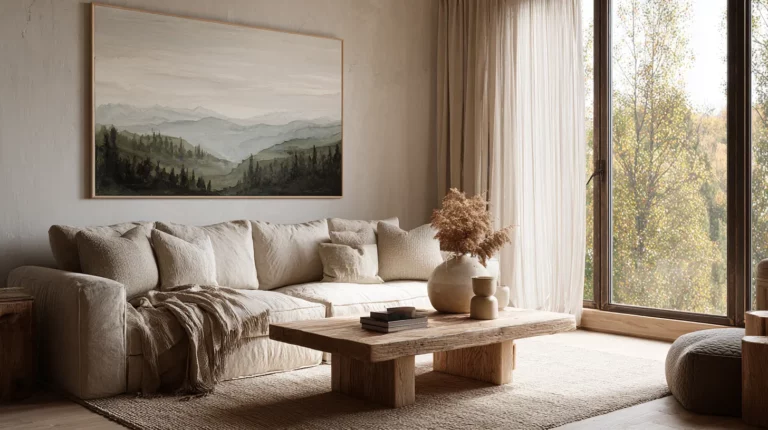
Design spaces that provide both prospect and refuge—open sightlines paired with cozy corners. This addresses our ancestral need to survey our environment while feeling protected.
Living Walls and Vertical Gardens: Nature as Architecture
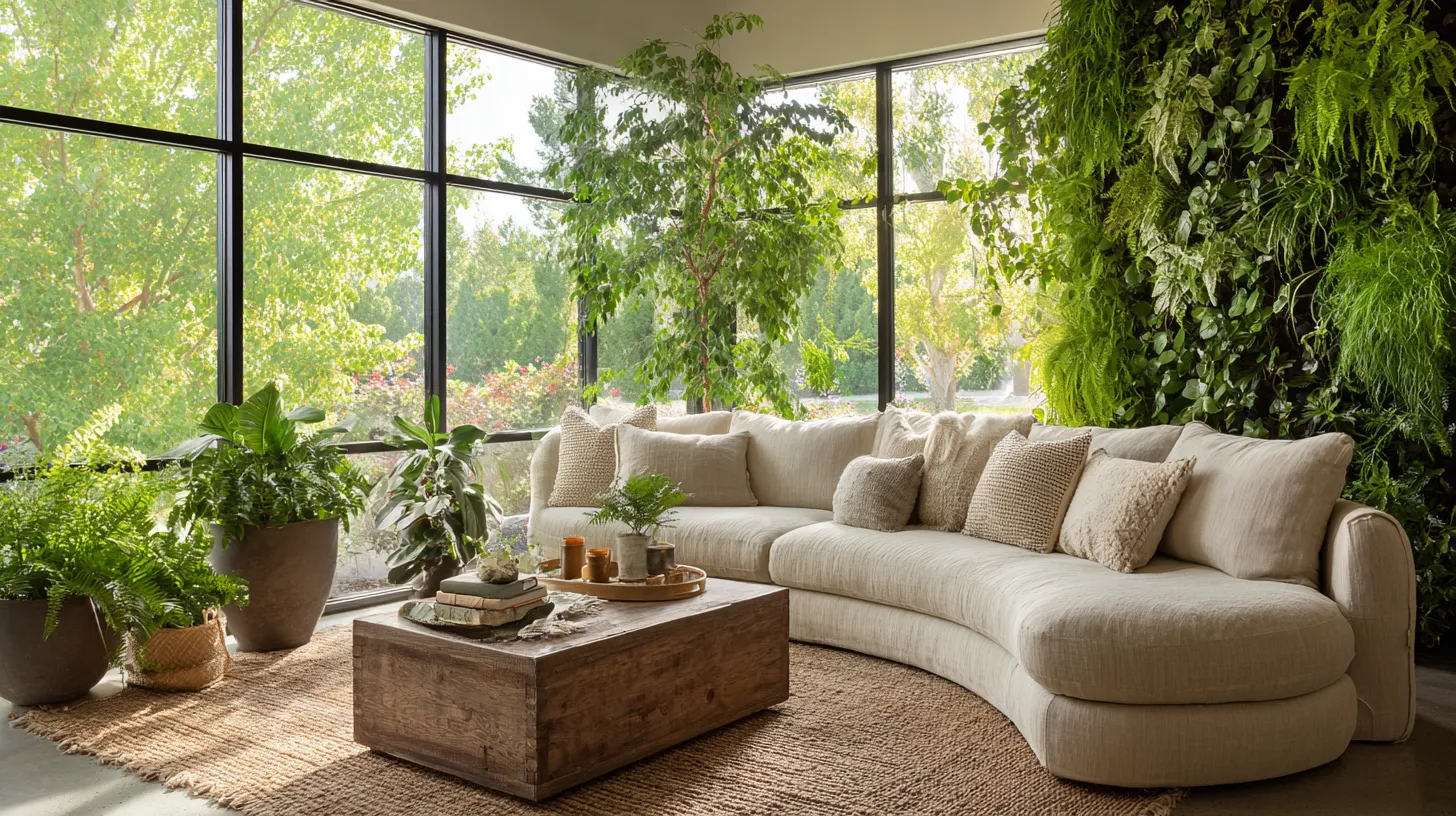
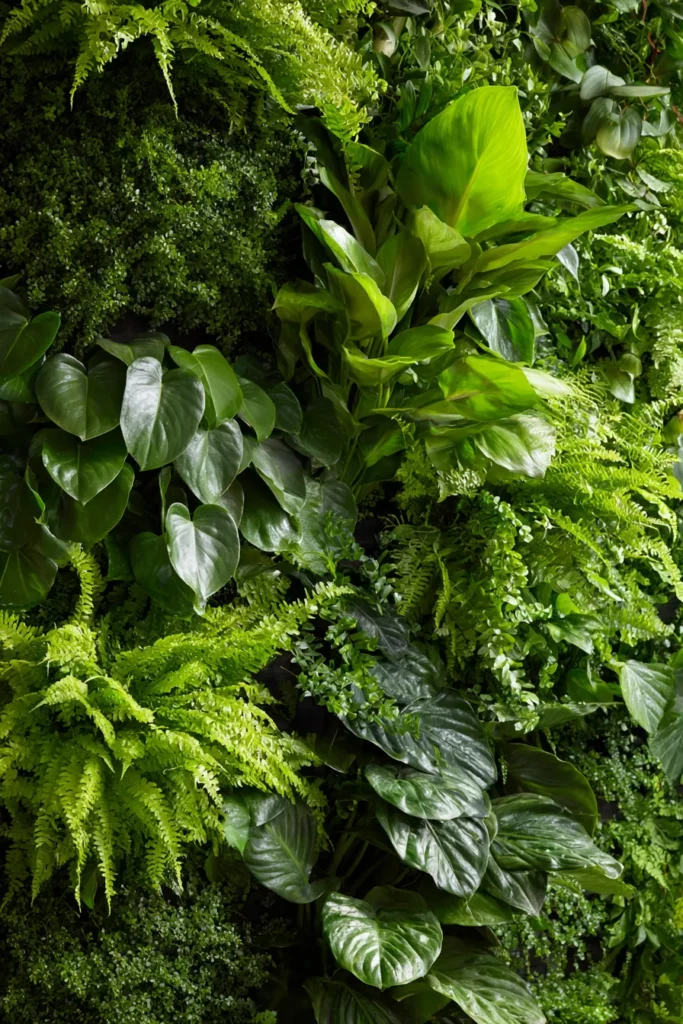
A living wall transforms a blank surface into breathing art. Vertical gardens purify indoor air, regulate humidity, and create stunning focal points that evolve with the seasons.
For smaller spaces, consider modular living wall systems with built-in irrigation. Herbs like basil and mint offer aromatic benefits, while pothos and philodendrons thrive with minimal fuss. Larger living rooms can accommodate dramatic floor-to-ceiling installations featuring ferns, mosses, and trailing plants.
Smart technology now enables automated watering systems with moisture sensors, making maintenance effortless. Position your living wall where it receives indirect natural light, or supplement with full-spectrum grow lights that mimic sunlight.
Even a simple vertical garden ladder with potted plants creates similar visual impact for budget-conscious design.
Natural Materials: The Foundation of Biophilic Spaces
Materials matter deeply. They’re what your hands touch, what your eyes rest upon, what grounds your space in authenticity.
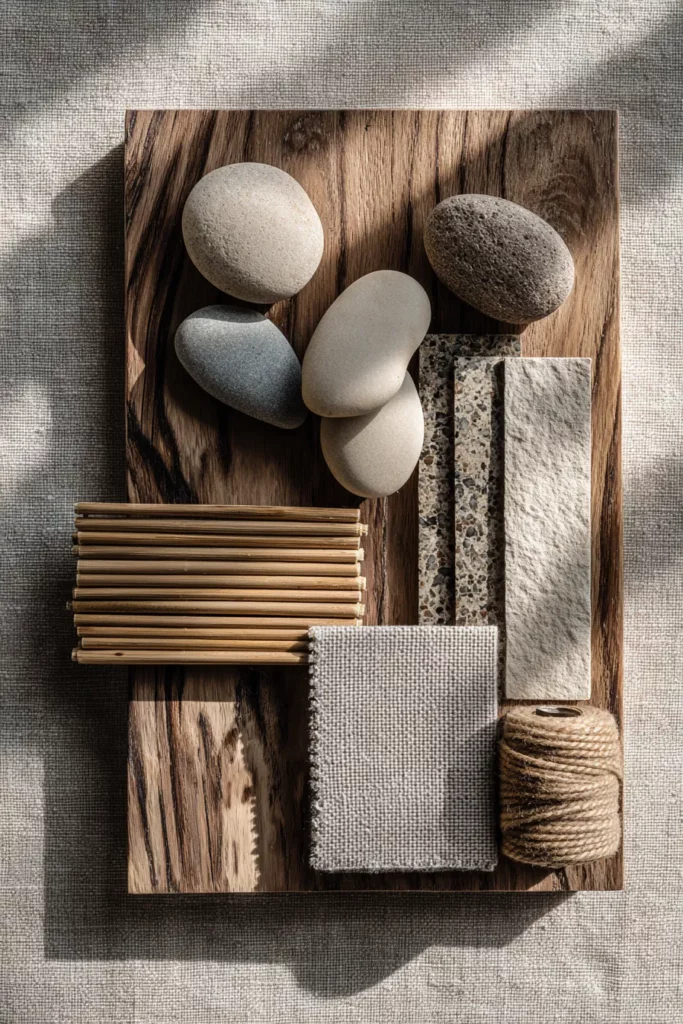
Wood: Warmth and Character
Reclaimed wood beams, live-edge coffee tables, bamboo flooring—wood brings instant warmth. Each grain pattern tells a story. Choose sustainably sourced options like FSC-certified hardwoods or rapidly renewable bamboo.
Wood tones should complement your lighting. Lighter woods like ash or maple brighten spaces, while walnut and teak add richness and depth.
Stone and Natural Minerals
Stone fireplace surrounds, marble side tables, or river rock accents connect your space to earth’s ancient beauty. These materials age gracefully, developing patinas that only enhance their character.
Organic Textiles and Fibers
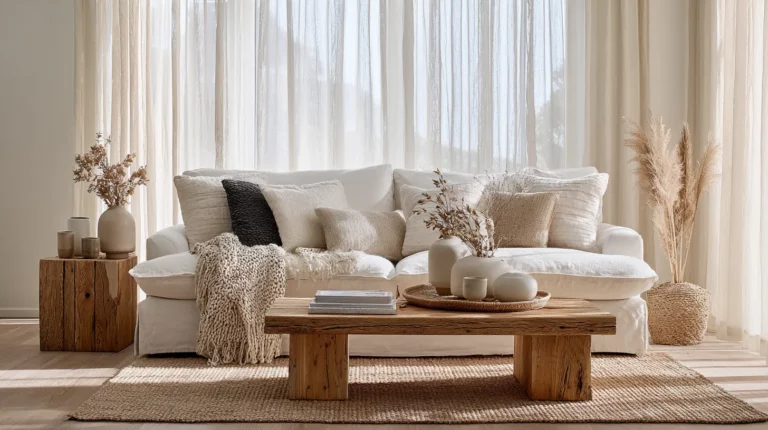
Linen curtains that sway with the breeze, jute rugs underfoot, cotton throws in natural dyes. These breathable materials add softness while maintaining a connection to their agricultural origins.
Layer textures thoughtfully—smooth leather against nubby wool, cool linen beside warm wood.
Maximizing Natural Light: The Soul of Biophilic Design
Light is life. Natural light regulates our circadian rhythms, boosts vitamin D, and makes every color in your room sing.
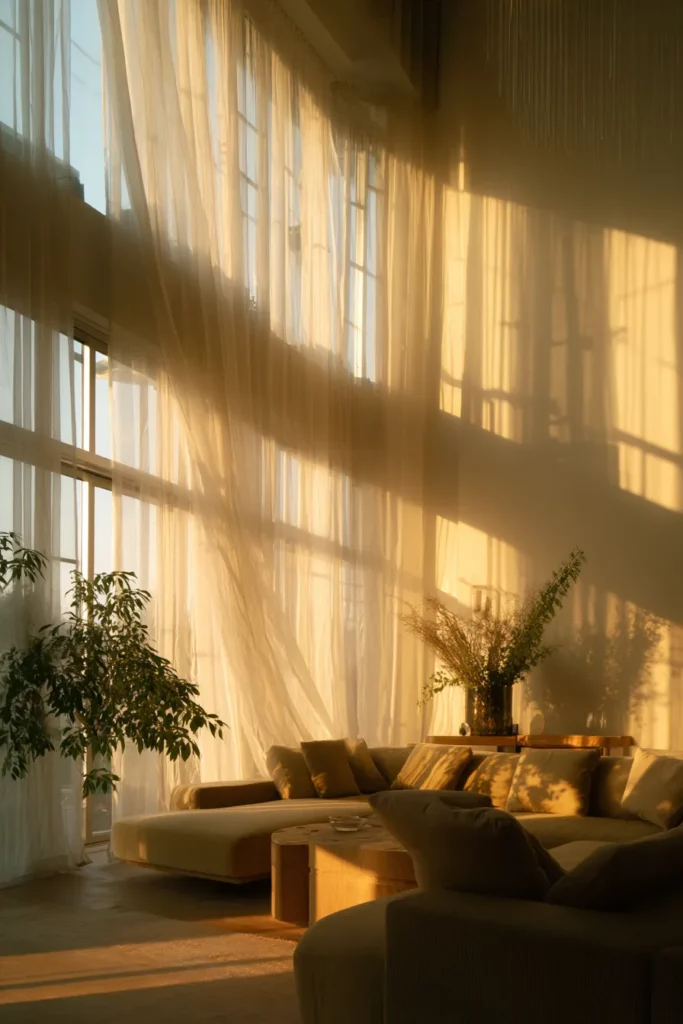
Strategic Window Treatments
Choose sheer curtains or woven shades that filter light rather than block it. During peak sunlight hours, allow light to pour in. As evening approaches, layer with heavier drapes for warmth and refuge.
Skylights and Light Wells
If architectural changes are possible, skylights transform rooms into light-filled sanctuaries. Position them to capture morning sun in east-facing rooms or soft afternoon light from the west.
Reflective Surfaces and Mirrors
Place mirrors opposite windows to bounce light deeper into your space. Light-colored walls in soft whites, creams, or pale earth tones amplify natural illumination.
Dynamic Lighting Systems
Smart lighting that adjusts color temperature throughout the day mimics natural light patterns. Cool, bright light in morning, warm amber tones by evening. This supports your body’s natural rhythms.
Color Palettes Inspired by Nature
Nature never clashes. Draw your palette from landscapes that move you—the colors already exist in perfect harmony.
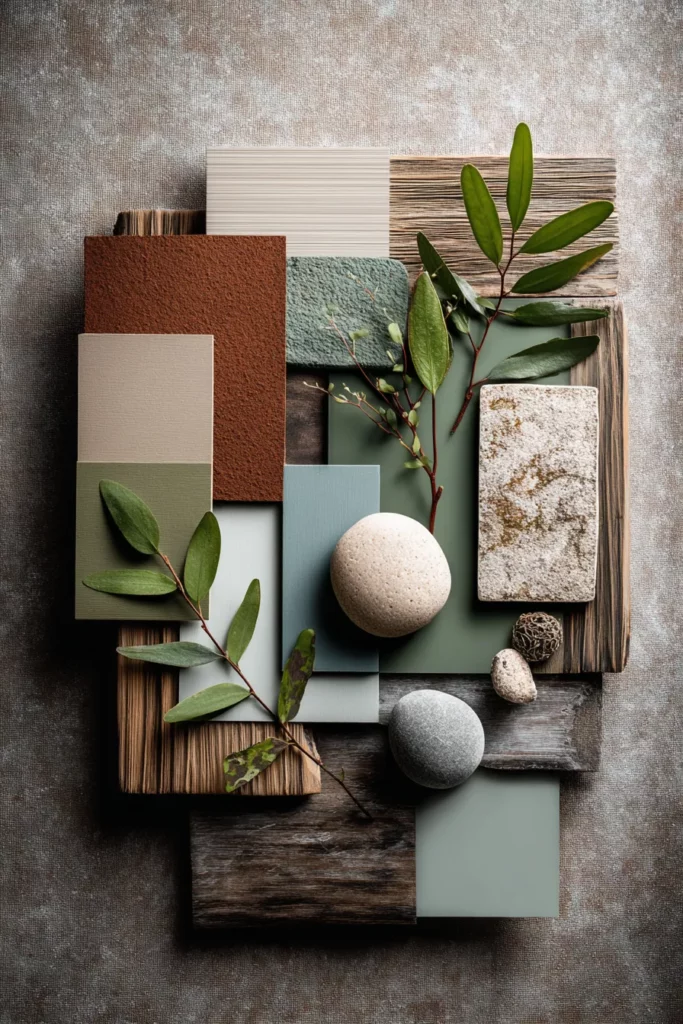
Earthy Neutrals
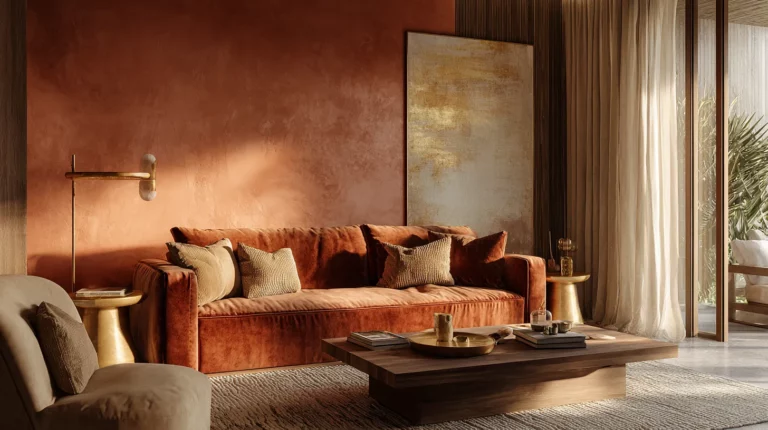
Warm taupes, soft terracottas, sandy beiges, and creamy off-whites create grounding foundations. These nature-inspired hues provide calm backdrops that let textures and greenery shine.
Forest and Botanical Greens
From sage to emerald, green tones bring immediate vitality. Use deeper greens for accent walls, lighter shades for larger surfaces. Pair with natural wood tones for organic cohesion.
Sky and Water Blues
Soft blue-grays evoke morning mist, while deeper teals suggest forest ponds. Blues create serene, meditative atmospheres perfect for living rooms meant for relaxation.
Accent Colors from Nature
Rust oranges like autumn leaves, deep plums like twilight, warm ochres like sun-baked clay—use these sparingly for visual interest.
Plant Selection and Placement: Living with Greenery
Plants are biophilic design’s most obvious element, yet choosing and placing them requires thought.
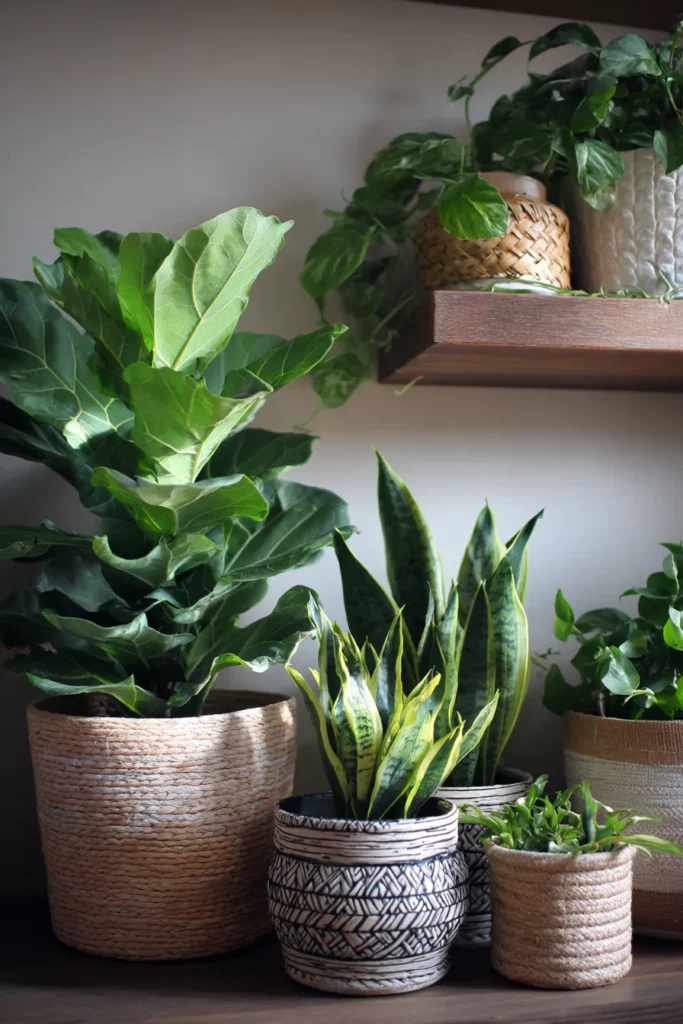
Air-Purifying Powerhouses
Snake plants, spider plants, and peace lilies actively filter toxins while requiring minimal care. Place them in corners that need softening or on shelves at varying heights.
Statement Plants
A mature fiddle leaf fig or dramatic bird of paradise becomes living sculpture. Position these architectural plants where they can be admired from multiple angles.
Aromatic Plants for Multi-Sensory Experience
Lavender, jasmine, and eucalyptus engage your sense of smell, adding another layer of sensory connection. Small potted herbs on windowsills or side tables release subtle fragrances when brushed.
Creating Plant Vignettes
Group plants in odd numbers at varying heights. Combine different leaf shapes and textures—the spiky drama of a snake plant beside soft, trailing pothos. Use natural fiber baskets or ceramic pots in earthy glazes.
Multi-Sensory Biophilic Elements: Beyond the Visual
True biophilic design engages all senses, creating immersive nature connections.
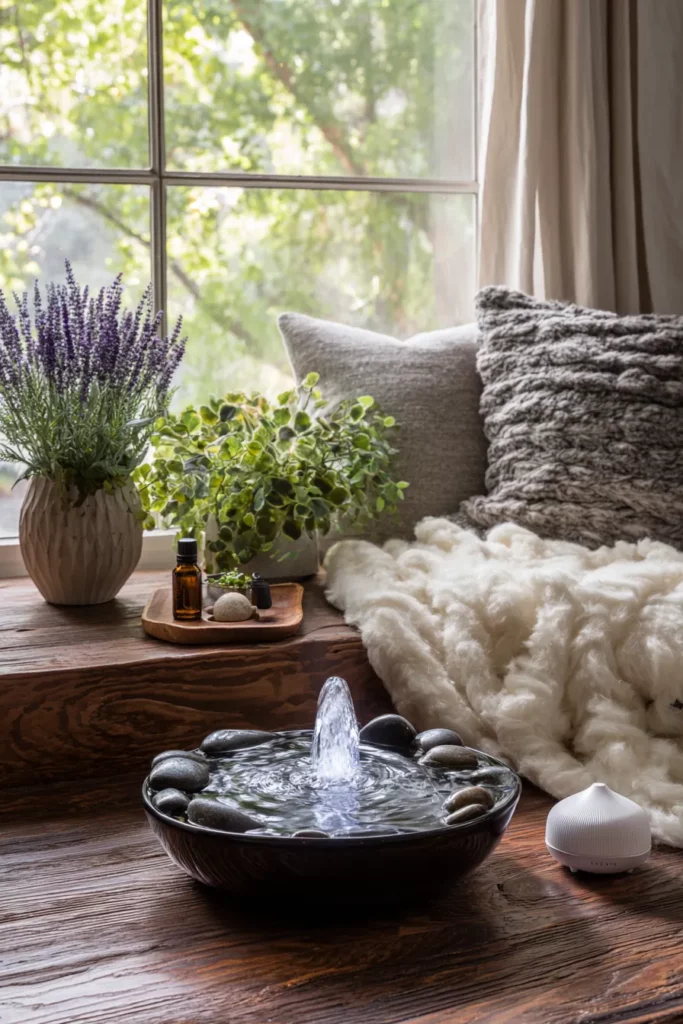
Soundscapes
Incorporate a small water fountain for gentle trickling sounds, or use nature sound systems that play forest ambience, rainfall, or birdsong. These auditory elements reduce stress and mask urban noise.
Scent and Aromatics
Beyond aromatic plants, use natural essential oil diffusers with eucalyptus, pine, or citrus scents. Avoid synthetic fragrances that disconnect from authentic nature experiences.
Tactile Experiences
Place furniture and objects where you’ll naturally touch them. Smooth river stones in decorative bowls, raw linen cushions, wool throws—textures that invite physical interaction.
Temperature and Airflow
Natural ventilation through operable windows connects you to outdoor temperatures and breezes. Ceiling fans with wooden blades maintain air circulation while reinforcing natural aesthetics.
Furniture Choices: Organic Forms and Sustainable Design
Furniture should echo nature’s curves and softness rather than imposing harsh geometry.
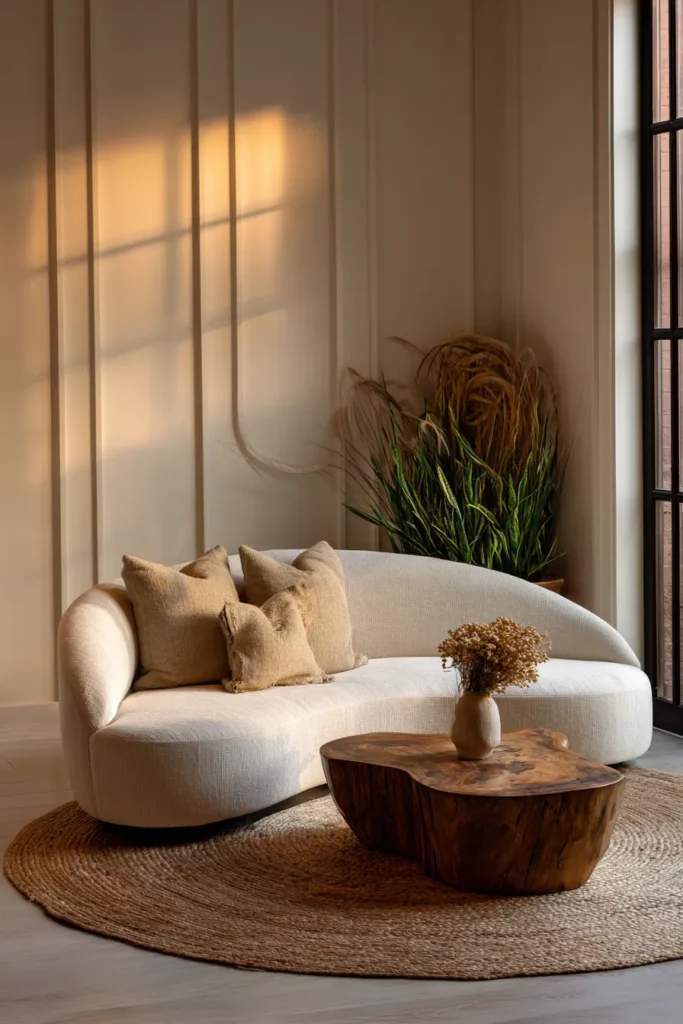
Curved and Organic Silhouettes
Choose sofas with rounded arms, circular coffee tables, or chairs with gentle curves. These forms feel more welcoming and align with nature’s preference for flowing lines over sharp angles.
Sustainable and Vintage Pieces
Vintage furniture embodies sustainability—reusing quality pieces reduces environmental impact while adding character. Look for mid-century modern designs in teak or walnut, or industrial pieces in reclaimed materials.
Natural Upholstery
Select fabrics in organic cotton, linen, or wool. Leather ages beautifully when ethically sourced. Avoid synthetic materials that off-gas chemicals and disconnect from nature.
Biophilic Design for Different Living Room Sizes
Your space size shouldn’t limit your nature connection.
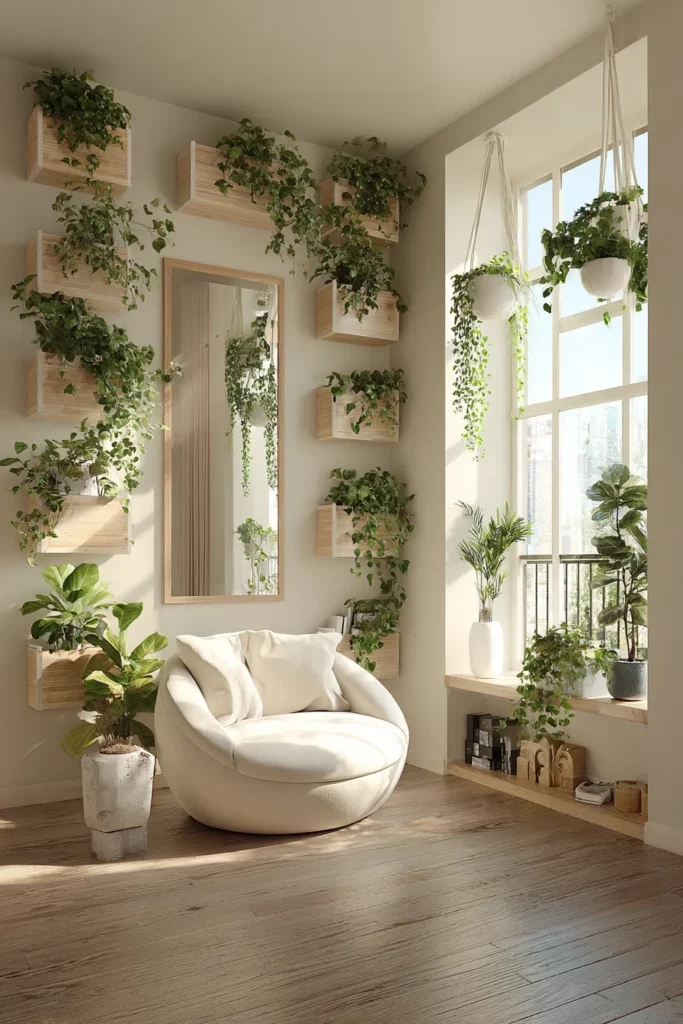
Small Urban Apartments
Vertical gardens maximize green space without consuming floor area. Wall-mounted planters, hanging plants, and tall, narrow plant stands draw eyes upward, making rooms feel larger.
Use mirrors strategically to reflect plants and light. Choose multi-functional furniture in natural materials—a wooden storage ottoman, a bamboo side table with shelf space.
Large Open-Concept Spaces
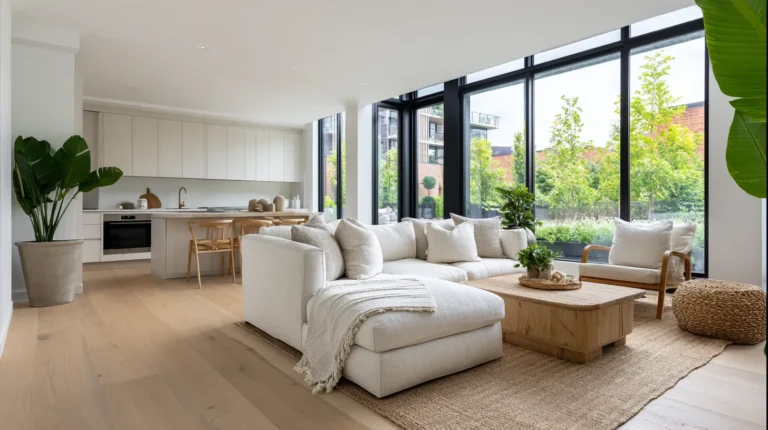
Create distinct zones using natural dividers like open shelving with plants, or a dramatic living wall that sections spaces without blocking light.
Large windows should remain unobstructed. If privacy is needed, use natural woven shades or botanical-print sheer curtains.
Architectural Enhancements for Indoor-Outdoor Flow
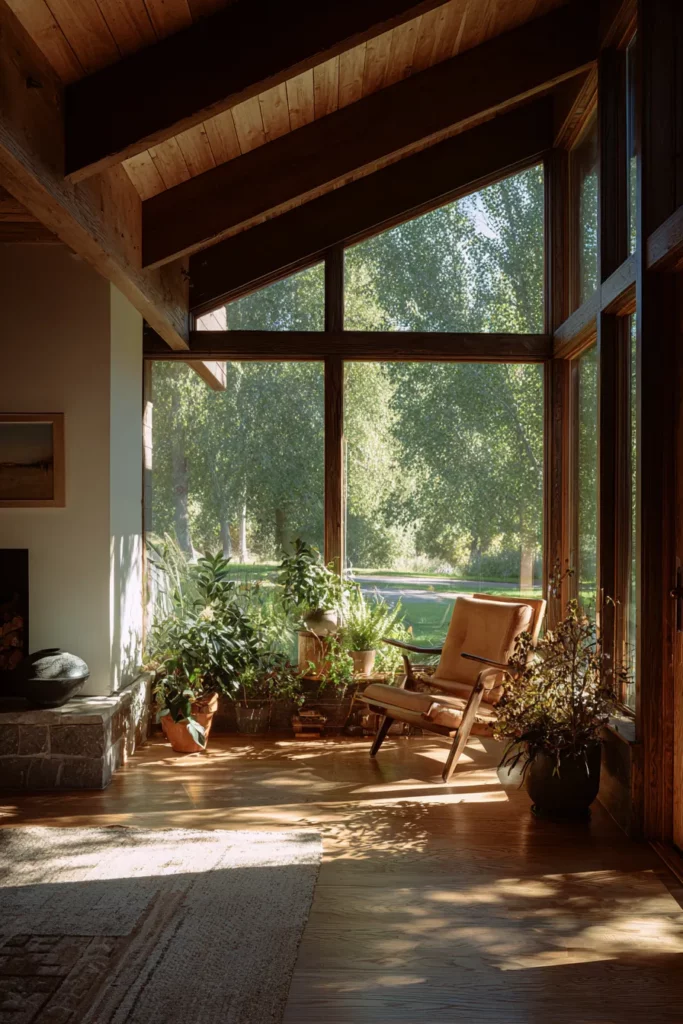
French doors opening to patios, floor-to-ceiling windows, or window seats that blur boundaries between inside and outside strengthen nature connections. If renovations are possible, these architectural elements provide maximum biophilic impact.
Budget-Friendly Biophilic Design Implementation
Connecting with nature doesn’t require luxury budgets.
Start with Plants
Affordable houseplants from local nurseries offer immediate impact. Propagate cuttings from friends’ plants for free greenery. Even a single statement plant transforms a space.
DIY Natural Accents
Create your own botanical wall art by pressing leaves or flowers. Frame natural objects like feathers or pinecones. Collect branches for dramatic floor vases.
Thrift and Vintage Finds
Second-hand stores offer solid wood furniture, natural fiber textiles, and unique pieces with character. Refinish or paint pieces in nature-inspired tones.
Maximize Existing Natural Light
Remove heavy curtains blocking windows. Clean windows thoroughly. Rearrange furniture to take advantage of light patterns.
Subtle Swaps
Replace synthetic throw pillows with cotton or linen versions. Swap plastic planters for terracotta or ceramic. These small changes accumulate into significant transformation.
Technology Meets Nature: Smart Biophilic Systems
Modern technology can enhance biophilic design without disrupting its natural essence.
Automated Plant Care
Smart irrigation systems with soil moisture sensors ensure plants thrive without constant monitoring. Some systems connect to weather forecasts, adjusting watering based on humidity.
Circadian Lighting
Smart bulbs that automatically adjust color temperature throughout the day support your natural rhythms. Program morning brightness to energize, evening warmth to promote relaxation.
Air Quality Monitors
Devices that track air quality help you understand how plants and natural ventilation improve your environment. Seeing measurable improvements reinforces your design choices.
The Psychological Benefits: Why Biophilic Design Works
Understanding the science deepens appreciation for these design choices.
Studies consistently show that biophilic design reduces cortisol levels, lowers blood pressure, and improves cognitive function. Hospital patients with views of nature recover faster. Office workers near windows report higher job satisfaction.
The concept of “prospect and refuge” explains why we crave both open views and cozy corners. Evolutionary psychology suggests our ancestors survived by scanning for threats (prospect) while maintaining safe retreats (refuge). Biophilic living rooms honor both needs—open sight lines paired with intimate seating nooks.
This isn’t decorating. It’s designing for human flourishing.
Biophilic Design Trends Comparison
| Element | Traditional Approach | Biophilic Approach | Key Benefits |
|---|---|---|---|
| Lighting | Overhead artificial only | Maximized natural light with dynamic supplements | Improved mood, better sleep, reduced energy costs |
| Materials | Synthetic, uniform finishes | Natural wood, stone, organic textiles | Healthier air quality, tactile comfort, aging beauty |
| Plants | Few artificial or neglected plants | Thoughtful living plant integration | Air purification, humidity regulation, stress reduction |
| Color | Trendy or arbitrary palettes | Nature-inspired earth tones and greens | Psychological calm, timeless appeal |
| Furniture | Sharp angles, synthetic materials | Curved organic forms, sustainable materials | Enhanced comfort, environmental responsibility |
Practical Biophilic Design Checklist
As you begin your transformation, use this guide to ensure you’re creating a truly nature-connected space:
- Natural Light: Maximize window exposure, use sheer treatments, add mirrors to reflect light
- Living Elements: Incorporate minimum 3-5 plants at varying heights and locations
- Natural Materials: Include at least two of the following: wood, stone, natural fibers, leather
- Organic Colors: Choose earth-inspired palette with 2-3 nature-derived tones
- Curved Furniture: Select pieces with soft, organic silhouettes over angular designs
- Multi-Sensory Elements: Add sound (water feature), scent (aromatic plants), or tactile elements
- Sustainable Choices: Prioritize vintage, reclaimed, or responsibly sourced materials
- Views to Nature: Arrange seating to capture outdoor views where possible
- Air Quality: Ensure natural ventilation or quality air circulation
- Prospect and Refuge: Create both open sight lines and cozy, protected seating areas
Bringing It All Together: Your Biophilic Living Room Journey
Start small. Choose one element that calls to you—perhaps a living wall, perhaps simply maximizing the light you already have. Notice how it changes the room’s energy. Then add another layer.
Biophilic design isn’t about perfection. It’s about intention. It’s about choosing materials that age with grace rather than deteriorate. It’s about mornings where sunlight reminds you that you’re part of something larger than walls and furniture.
Your living room should feel like exhaling. Like the best version of outside, brought in. Like a space that holds you gently while connecting you to earth, sky, and growing things.
This is what home should be—not separate from nature, but woven into it.
Frequently Asked Questions
How do you create a biophilic living room on a budget?
Start with affordable houseplants from local nurseries—even 3-5 well-placed plants create significant impact. Maximize existing natural light by removing heavy curtains and cleaning windows thoroughly. Source vintage wooden furniture from thrift stores and incorporate natural textiles like cotton or jute. DIY botanical art by framing pressed leaves or branches in floor vases. These small, budget-friendly choices accumulate into transformative change without significant investment.
What is the concept of prospect and refuge in biophilic design?
Prospect and refuge addresses our evolutionary need for both open views and protected spaces. Prospect provides clear sight lines across a room or views to outdoors, satisfying our ancestral need to scan for threats. Refuge creates cozy, enclosed areas—a reading nook with high-backed chairs, a corner with surrounding plants—where we feel safe and contained. Effective biophilic living rooms balance both, offering open, light-filled areas alongside intimate, sheltered spots.
What natural materials work best in biophilic living rooms?
Wood, stone, natural fibers, and organic textiles form biophilic design’s material foundation. Choose sustainably sourced hardwoods like oak or maple, bamboo for rapid renewability, or reclaimed wood for character and sustainability. Incorporate stone through fireplace surrounds or accent tables. Layer organic textiles—linen curtains, jute rugs, cotton or wool upholstery—that breathe naturally and develop beautiful patinas over time. Avoid synthetic materials that off-gas chemicals and lack nature’s authentic texture.
How can scents enhance biophilic design?
Scent creates powerful nature connections beyond visual elements. Incorporate aromatic plants like lavender, jasmine, eucalyptus, or potted herbs that release subtle fragrances. Use natural essential oil diffusers with pine, citrus, or forest-blend scents. Place herbs like rosemary or mint on windowsills where sunshine releases their oils. Avoid synthetic air fresheners that disconnect from authentic nature experiences. Gentle, natural scents reduce stress and create multi-sensory environments that engage you fully.
How does biophilic design reduce stress and improve well-being?
Scientific research confirms that biophilic design lowers cortisol levels, reduces blood pressure, and improves cognitive function. Natural elements activate our parasympathetic nervous system, triggering relaxation responses. Natural light regulates circadian rhythms, improving sleep quality and mood. Plants purify air and increase humidity, creating healthier environments. The psychological comfort of organic shapes, natural materials, and living greenery satisfies our innate need for nature connection, leading to measurable stress reduction and enhanced motivation. Hospital and workplace studies consistently show faster recovery and higher productivity in biophilic spaces.