
Table of Contents
There’s something about walking into a room and feeling it breathe. Not just exist, but truly come alive—where light catches on canvas, where color whispers against plaster, where texture invites your hand to reach out. Statement wall art does exactly that. It transforms blank space into conversation, empty walls into emotion.
Your living room is more than a place to sit. It’s where morning coffee tastes better in slanted sunlight, where friends gather and linger, where you curl into yourself at day’s end. The art you choose becomes the visual heartbeat of this space—a focal point that sets the mood, reflects who you are, and makes every moment feel just a little more intentional.
Whether you’re drawn to oversized abstracts, gallery walls that tell stories, or bold geometric patterns that command attention, statement wall art is about more than decoration. It’s about creating a room that feels unmistakably yours. A space that welcomes, inspires, and stays with you long after you’ve left it.
Let’s explore how to choose, place, and style wall art that doesn’t just fill space—it transforms it.
Understanding Statement Wall Art: More Than Just Decoration
Statement wall art serves as the anchor of your living room’s visual identity. Unlike smaller decorative pieces that complement, statement art commands—it’s the first thing eyes find when entering a room, the piece that sets the entire atmosphere.
Think of it as the difference between background music and a song that makes you pause. Statement art can be a single oversized canvas, a carefully curated gallery wall, or even a textured installation that plays with dimension and light. The key is intention: every piece should feel purposeful, never accidental.
The most successful statement walls balance boldness with harmony. They’re eye-catching without overwhelming, personal without being cryptic. They speak the language of your home’s aesthetic while adding something unexpected—a pop of color in a neutral palette, organic shapes in a modern space, or vintage finds in contemporary settings.
Choosing the Perfect Statement Wall Art for Your Living Room
Consider Your Room’s Natural Light and Architecture
Light changes everything. A piece that glows in south-facing afternoon sun might disappear in a dim, north-lit corner. Notice how light moves through your living room throughout the day—where it pools, where shadows fall, where it creates natural spotlights.
Art with metallic accents or glossy finishes reflects light beautifully, adding luminosity to darker spaces. Matte, textured pieces absorb light, creating depth and intimacy in sun-drenched rooms. Consider your ceiling height too: soaring walls can handle oversized art or vertical arrangements, while standard eight-foot ceilings often benefit from horizontal compositions that draw the eye outward.
Match Art Style to Your Living Room’s Mood
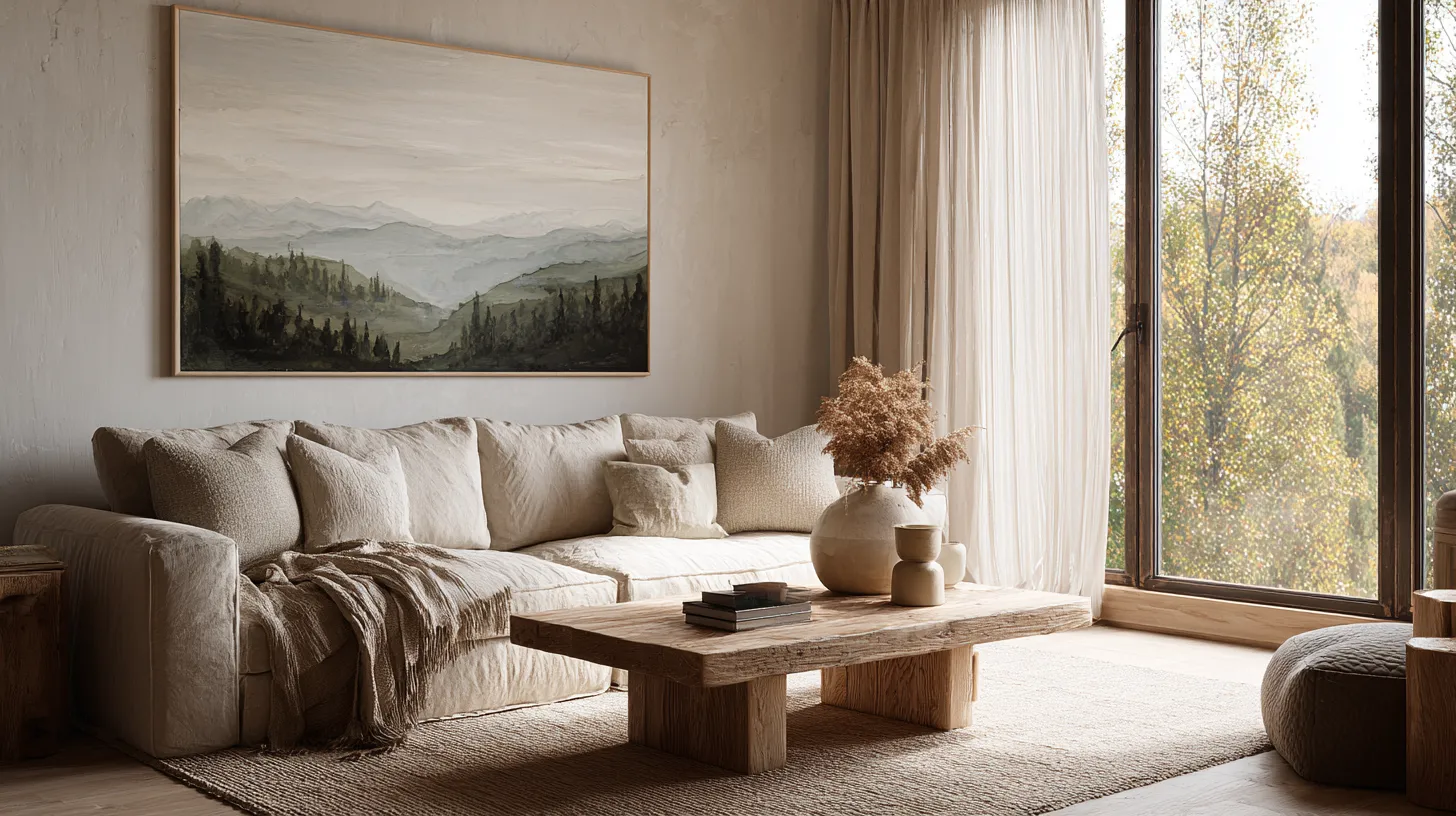
Your art should feel like it belongs, even if it surprises. In spaces with modern rustic elegance—think natural textures, warm woods, linen upholstery—look for pieces that bridge organic and refined. Abstract landscapes in earth tones, botanical prints with contemporary framing, or minimalist line drawings bring sophistication without coldness.
For bolder personalities, dramatic dark tones against light walls create striking contrast. Geometric patterns add structure and rhythm. Soft, flowing abstracts in muted colors invite calm and contemplation. The question isn’t what’s trendy—it’s what makes you pause and breathe a little deeper.
Size Matters: Proportions That Feel Right
A common mistake? Art that’s too small for its wall. As a general guideline, statement pieces should occupy 60-75% of the wall space above furniture. For a standard sofa (around 90 inches), think art that’s 60-75 inches wide, or a gallery arrangement within those dimensions.
Single oversized pieces (48 inches or larger) create drama and simplicity—one bold choice, perfectly placed. Multiple smaller pieces arranged strategically can achieve similar visual weight while adding variety and personality. The key is avoiding the “floating postage stamp” effect where art feels lost or tentative.
Statement Wall Art Styles That Transform Spaces
Oversized Canvas Art: Bold Simplicity
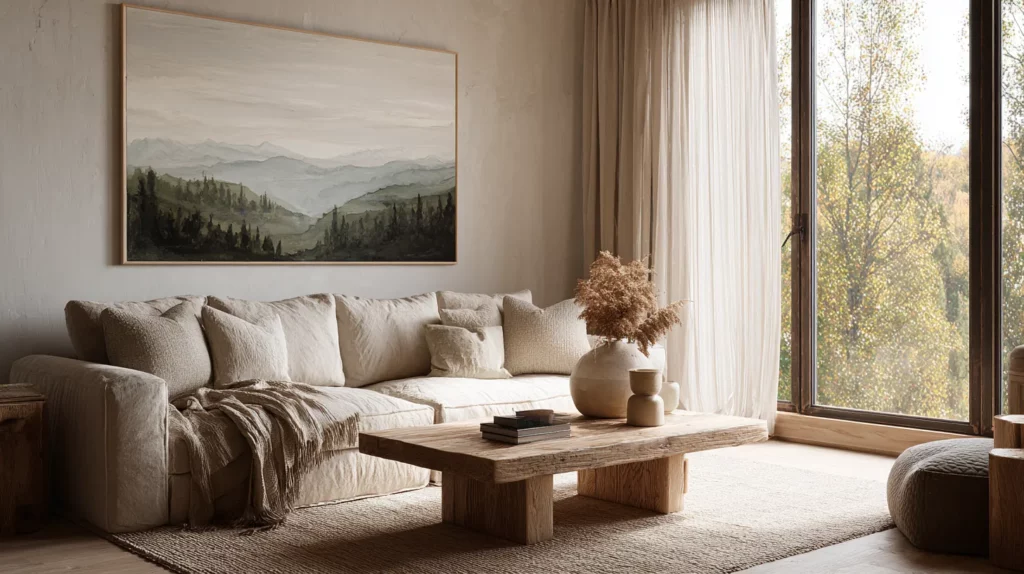
There’s undeniable power in a single large canvas. One sweeping abstract, one powerful photograph, one commanding painting—it anchors the entire room with confident simplicity. This approach works beautifully in minimalist spaces where you want maximum impact with minimal complexity.
Choose oversized art with colors that echo your existing palette or introduce an intentional accent. A soft blush abstract against greige walls adds warmth without overwhelming. A deep indigo landscape creates gravitas in all-white spaces. The simplicity of one large piece also makes styling easier—no arrangement decisions, just pure presence.
Gallery Walls: Curated Stories
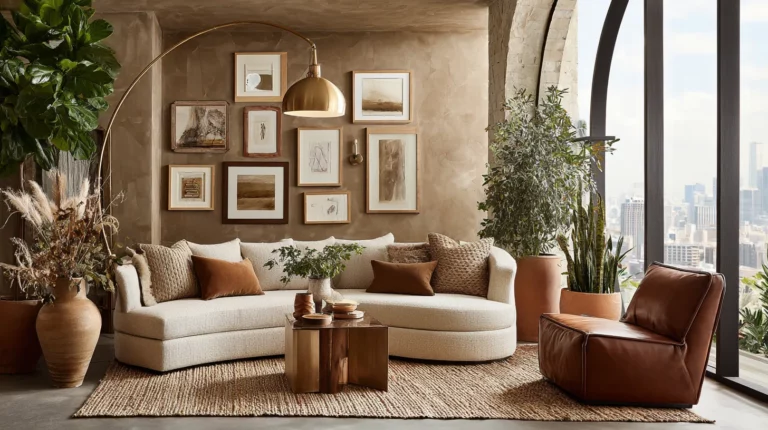
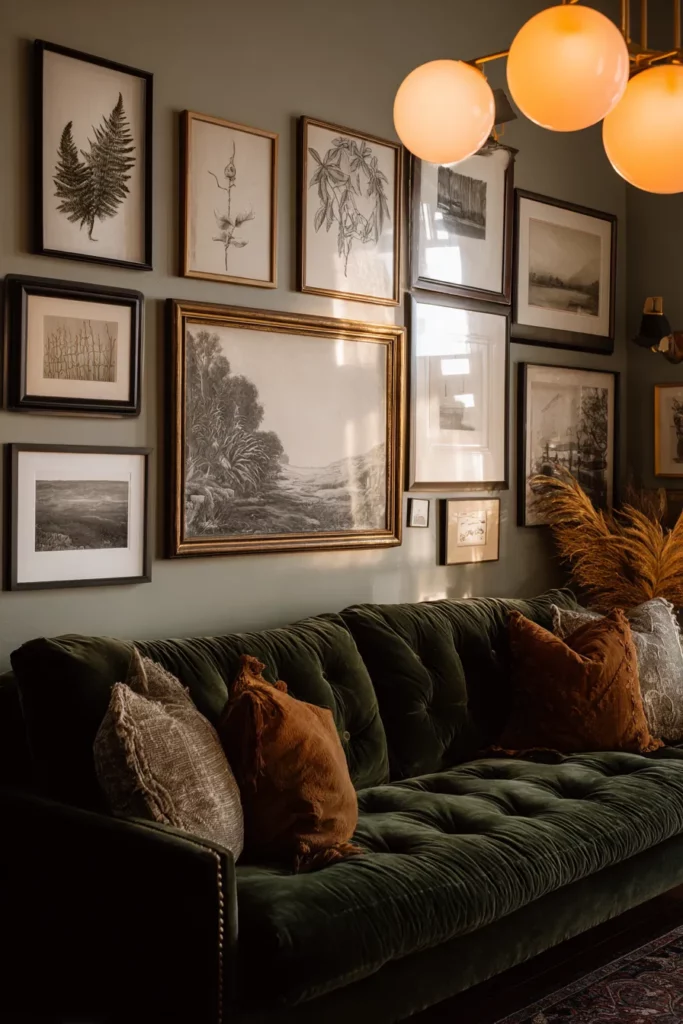
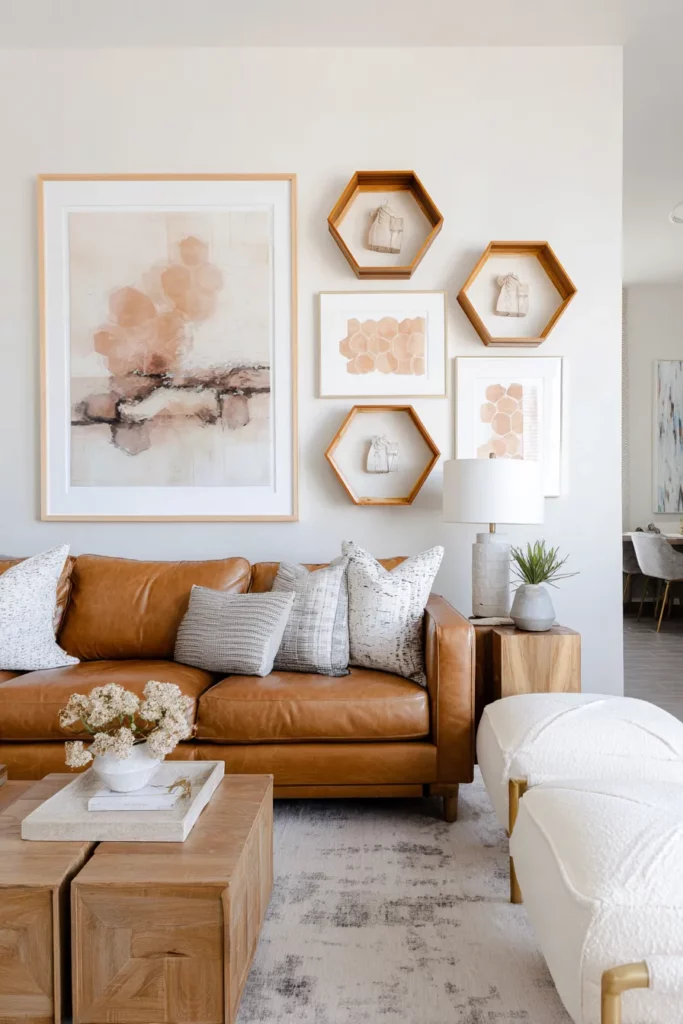
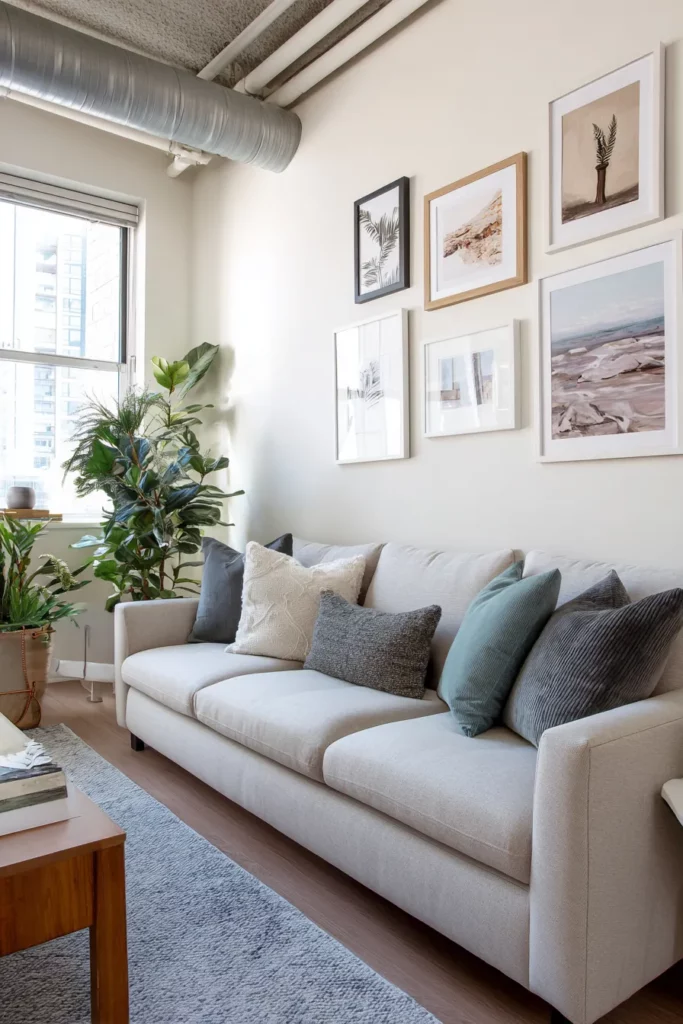
Gallery walls invite intimacy and discovery. Done well, they feel collected over time rather than purchased in a set. They let you mix mediums, styles, and eras—vintage botanical prints beside contemporary photography, abstract paintings alongside personal sketches.
Three main layout approaches work consistently well:
Grid Layout: Symmetrical arrangement with equal spacing creates order and calm. Perfect for modern, structured spaces. Use similar frame styles for cohesion.
Salon Style: Organic, asymmetrical grouping with varied frame sizes creates European elegance. Start with your largest piece slightly off-center, then build around it, maintaining 2-3 inches between frames.
Linear Layout: Pieces arranged in a straight line (or two parallel lines) work beautifully flanking doorways, along hallways, or above low furniture. Keep top or bottom edges aligned for clean visual flow.
Accent Walls with Integrated Art
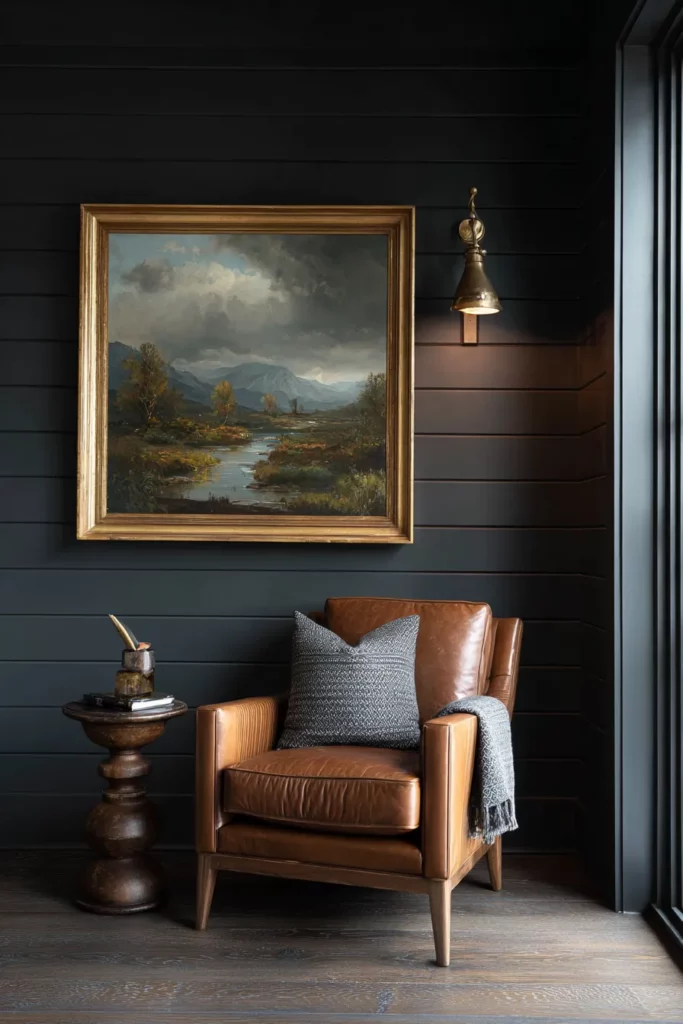
Sometimes the wall itself becomes the canvas. Wood paneling, textured wallpaper, or painted accent walls can work with art rather than against it. A dark moody wall (think charcoal, forest green, or navy) makes artwork pop dramatically, especially pieces with lighter tones or metallic elements.
Shiplap or board-and-batten adds architectural interest that complements rather than competes with art. Consider leaving breathing room—not every inch needs filling. Sometimes a single stunning piece on a textured accent wall creates more impact than a wall fully covered with art.
Innovative Approaches to Statement Wall Art
Multi-Sensory Wall Installations
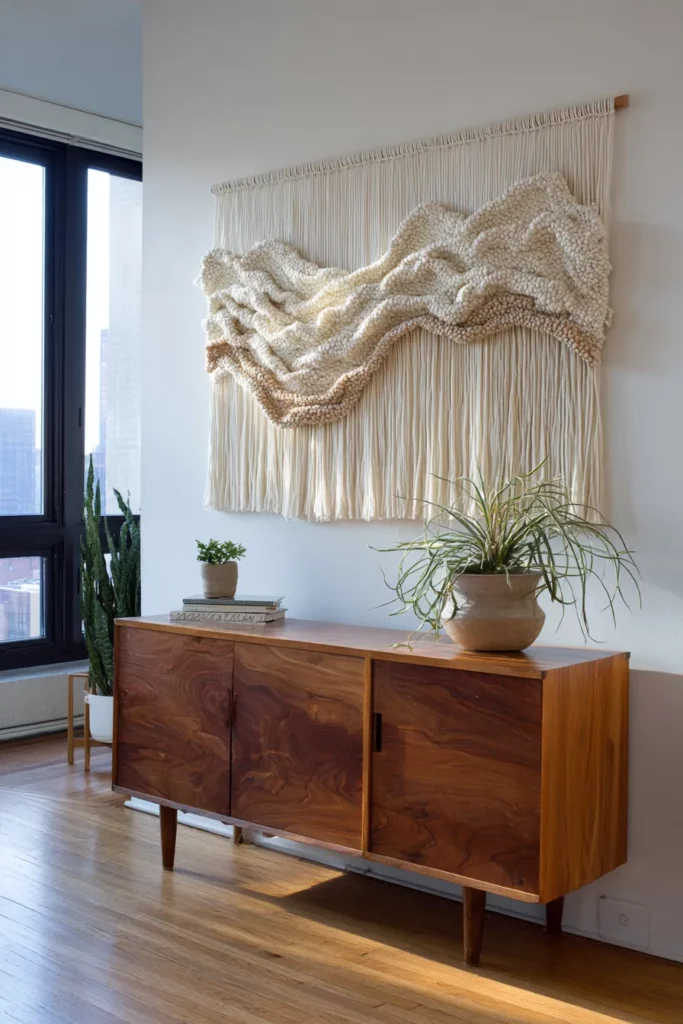
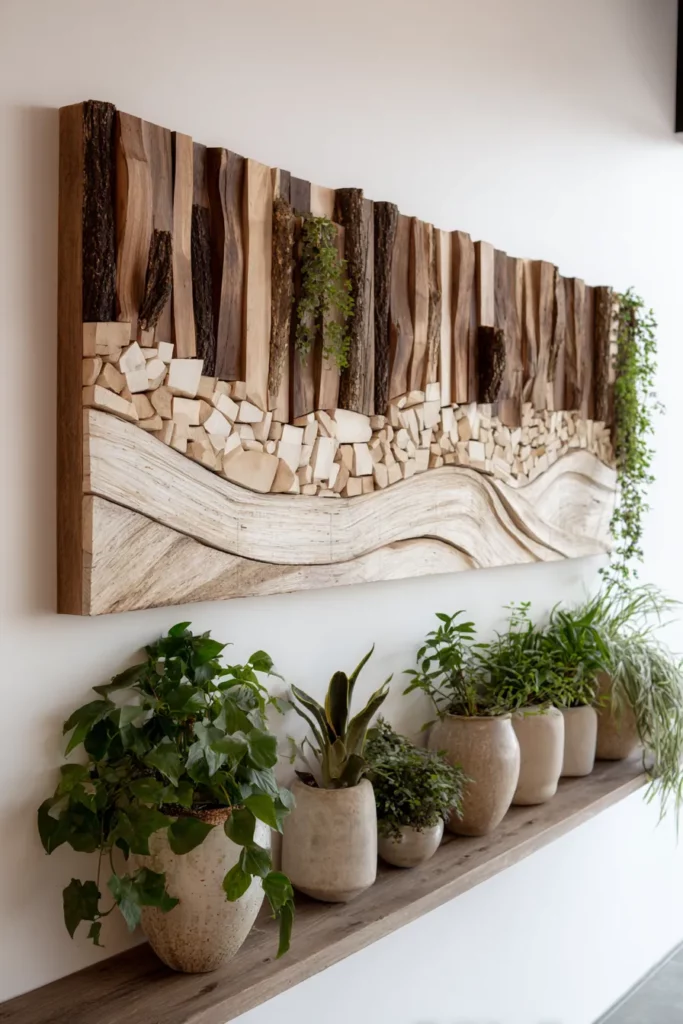
Art isn’t only visual. Textured pieces—woven fiber art, carved wood reliefs, metallic sculptures—invite touch and create dimension that flat art can’t achieve. These pieces catch light differently throughout the day, creating ever-changing visual interest.
Sound-absorbing panels can serve double duty as functional art in open-plan living rooms where echo is an issue. Botanical installations or herb wall gardens bring scent and life, engaging multiple senses while purifying air. These unexpected approaches add depth to the traditional concept of wall art.
Technology-Integrated Art Solutions
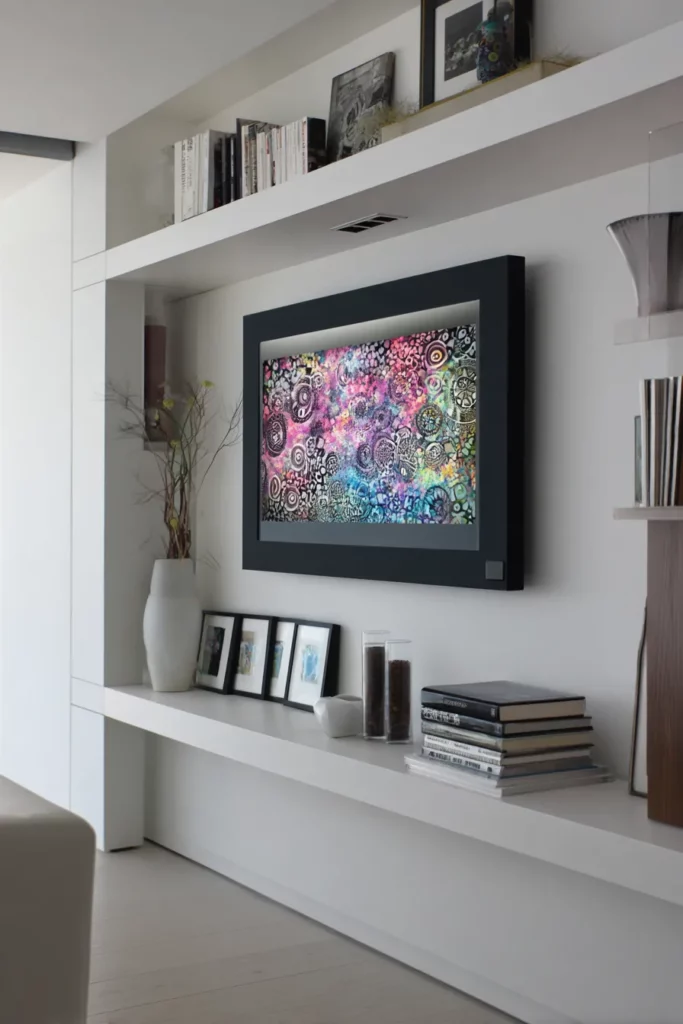
Digital art displays and smart frames bring gallery-quality rotating collections into your living room. Programs change with seasons, moods, or even time of day. Smart lighting systems can adjust to highlight your art optimally—warmer tones for evening, brighter for daytime, accent lighting for drama.
Interactive panels that respond to touch or movement add playful, contemporary energy. These tech-forward solutions work especially well in modern spaces and appeal to those who love variety without commitment to single permanent pieces.
Sustainable and Artisan Statement Art
More than ever, the story behind art matters. Commission local artists, support sustainable practices, choose pieces made from reclaimed or recycled materials. Upcycled wood installations, metal sculptures from repurposed materials, or prints on eco-friendly paper feel good in multiple ways.
Artisan pieces bring uniqueness that mass production can’t replicate. Handwoven textiles, pottery installations, or carved elements connect your space to human hands and traditional crafts. These choices reflect values while creating truly one-of-a-kind focal points.
Practical Placement and Installation Strategies
The Right Height Makes All the Difference
The standard rule: center your art 57-60 inches from the floor (average eye level). Above furniture, leave 6-12 inches between the furniture top and art bottom—enough space to avoid crowding but close enough to create connection.
In rooms with tall ceilings, you can go higher, but maintain visual relationship with furniture and human scale. If you’re arranging multiple pieces, treat the entire grouping as one unit and center that at eye level.
Creating Balance Without Symmetry
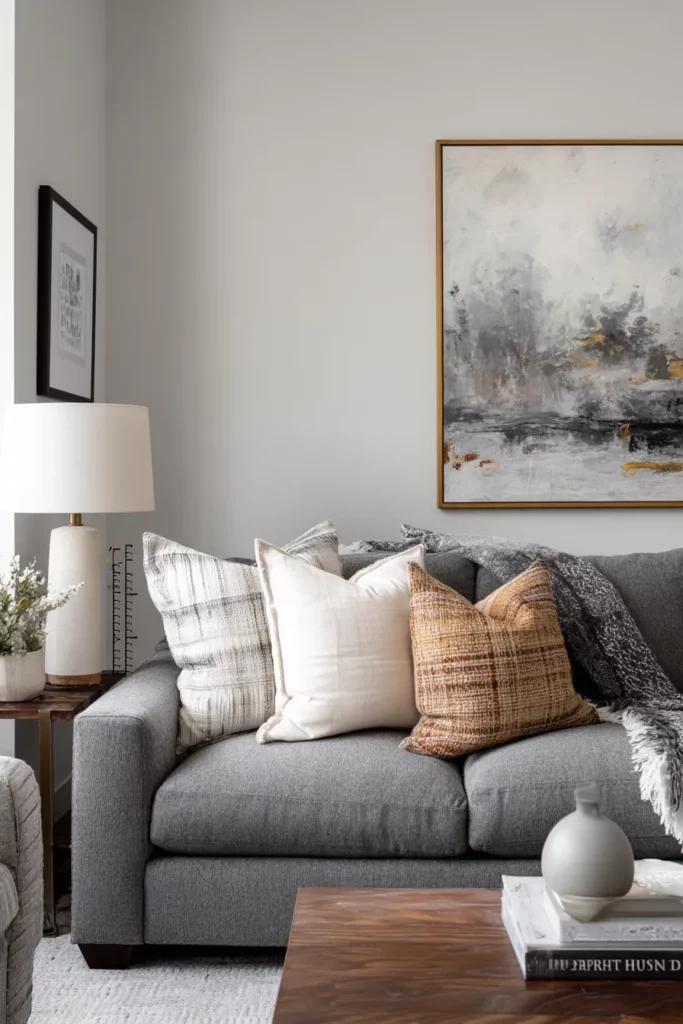
Statement walls don’t require perfect symmetry to feel balanced. Visual weight matters more than mirror imaging. A large piece on one side can balance multiple smaller pieces on the other. Dark colors carry more weight than light; textured pieces feel heavier than flat prints.
Step back frequently during arrangement. The piece should feel anchored, not floating or tumbling. If using multiple pieces, maintain relatively consistent spacing (2-3 inches works well) to create cohesion without rigidity.
Lighting Your Statement Art
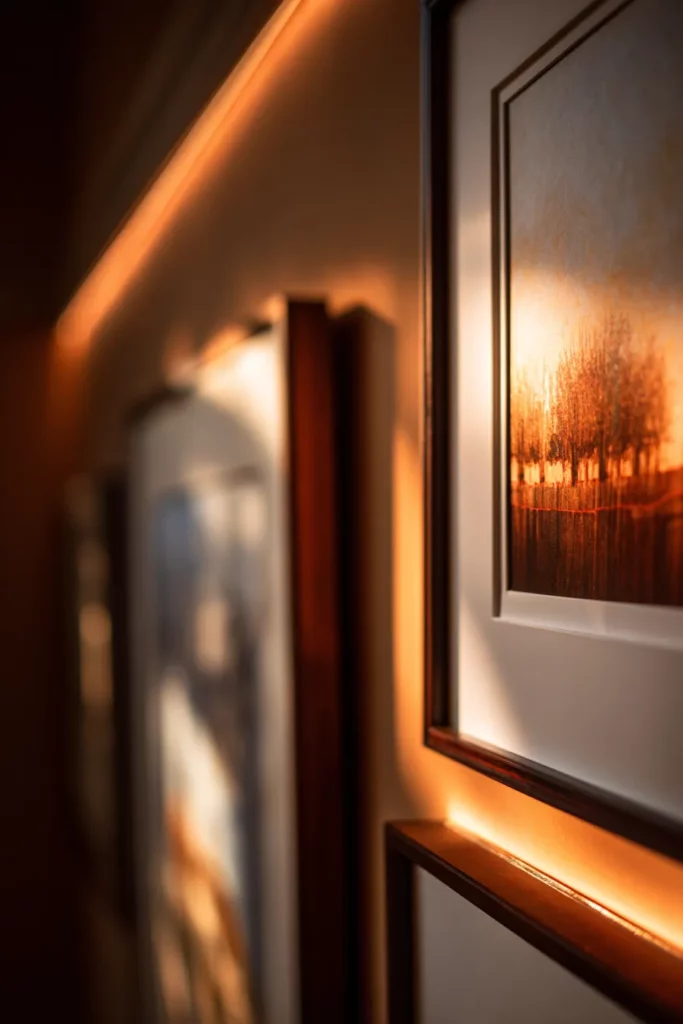
Proper lighting transforms good art into gallery-worthy presentation. Picture lights, track lighting, or recessed spotlights create focus and drama. Warm white LEDs (2700-3000K) work best for most art, avoiding the harsh blue cast of daylight bulbs.
Consider dimmer switches for flexibility—bright for entertaining, soft for evening relaxation. Natural light is beautiful but can fade art over time; UV-filtering glass or careful placement away from direct sun preserves longevity.
Common Statement Wall Art Challenges and Solutions
| Challenge | Solution | Pro Tip |
|---|---|---|
| Blank wall feels too big | Use oversized single piece or large-scale gallery wall arrangement | Aim for 60-75% wall coverage |
| Art feels disconnected from room | Echo 2-3 colors from art in throw pillows, blankets, or accessories | Pull accent colors, not dominant ones |
| Can’t commit to permanent installation | Use removable hanging strips or gallery rail systems | Perfect for renters and the indecisive |
| Mixing frame styles looks chaotic | Stick to 2-3 frame finishes maximum (e.g., natural wood + black) | Vary sizes, not materials |
| Art competes with TV | Create separate zones or frame TV with art | Use artwork with calming tones near screens |
Budget-Friendly Statement Art Ideas
You don’t need gallery prices to achieve gallery impact. Large-scale prints from independent artists on platforms like Society6 or Etsy offer affordable alternatives to originals. Frame them well (a good frame elevates any print), and few people will know the difference.
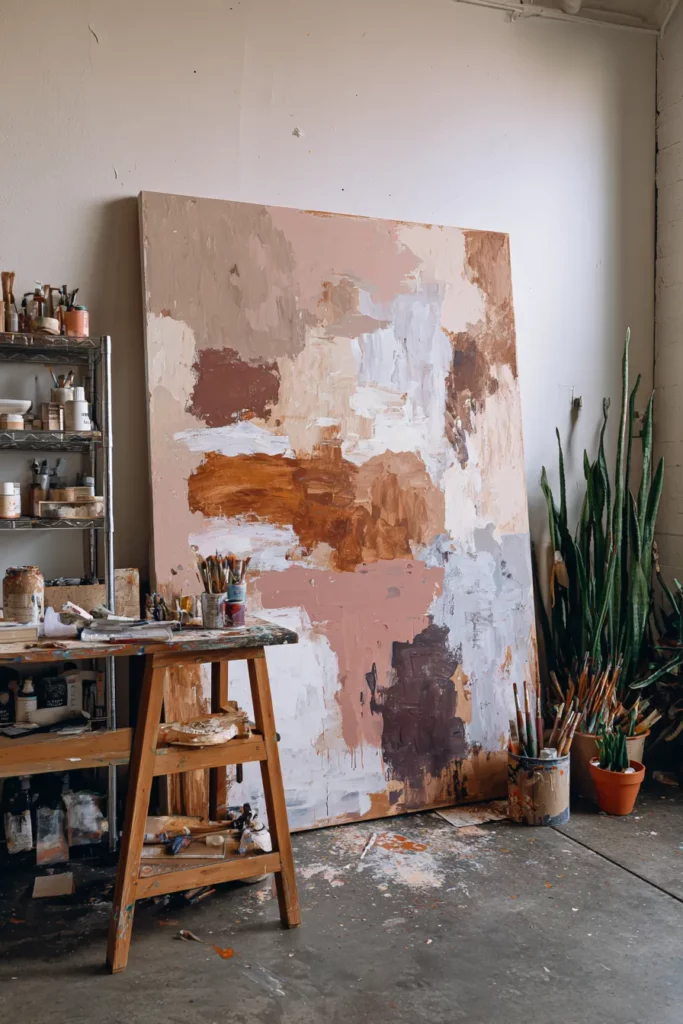
DIY approaches can create authenticity that purchased art lacks. Abstract paintings require more courage than skill—large canvases, bold brush strokes, colors you love. Blown-up family photographs become heritage art when beautifully framed. Vintage finds from estate sales or antique shops gain new life with fresh mats and frames.
Rental-Friendly and Temporary Solutions
Removable solutions have come far beyond basic command strips. Gallery rail systems let you hang and rearrange without wall damage. Freestanding room dividers or large-scale easels provide portable surfaces for statement art.
Peel-and-stick wallpaper can create accent walls that disappear when you move. Oversized tapestries or textile art hang easily on curtain rods. These approaches give renters and frequent movers the freedom to create impactful spaces without losing security deposits.
The Psychology of Statement Wall Art
Art isn’t just aesthetic—it’s emotional architecture. The pieces you choose actively influence mood, energy, and even social dynamics in your living room. Understanding these effects helps you curate spaces that support how you want to feel.
Warm colors (reds, oranges, golds) energize and stimulate conversation—perfect for social spaces and entertaining. Cool tones (blues, greens, lavenders) calm and focus, ideal for reading nooks or meditation corners. Neutrals with organic shapes create grounded, peaceful atmospheres that work universally.
Abstract art invites projection and interpretation, making guests feel welcomed into personal space. Representational art (landscapes, portraits, scenes) tells clearer stories but can feel more directive. Consider your living room’s purpose: is it primarily social, restful, inspirational, or all three?

Maintaining and Refreshing Your Statement Wall
Caring for Your Art Investment
Dust regularly with microfiber cloths or soft brushes—buildup dulls color and can damage surfaces over time. Keep art away from direct heat sources (fireplaces, radiators) and humid areas. For valuable pieces, consider UV-protective glass and consistent room humidity around 45-55%.
Canvas art can be gently vacuumed (low suction, brush attachment) to remove dust from textured surfaces. Avoid household cleaners; if cleaning beyond dusting is needed, consult professional art conservators. Prevention beats restoration—proper placement and care ensure statement pieces remain statement-worthy for years.
Seasonal and Long-term Updates
Your art doesn’t have to be permanent. Rotating pieces seasonally keeps your space feeling fresh and dynamic. Light, bright pieces for spring and summer; deeper, richer tones for fall and winter. This approach works especially well with digital frames or gallery rail systems that make swapping easy.
As your style evolves, your art can too. What spoke to you five years ago might not resonate now—and that’s okay. Transition pieces to bedrooms, home offices, or gift them onward. Your living room should reflect who you are now, not who you were when you bought the art.
Essential Statement Wall Art Checklist
Before committing to your statement wall, consider:
- Scale: Does the art occupy 60-75% of available wall space?
- Lighting: Is the piece properly illuminated with both natural and artificial light?
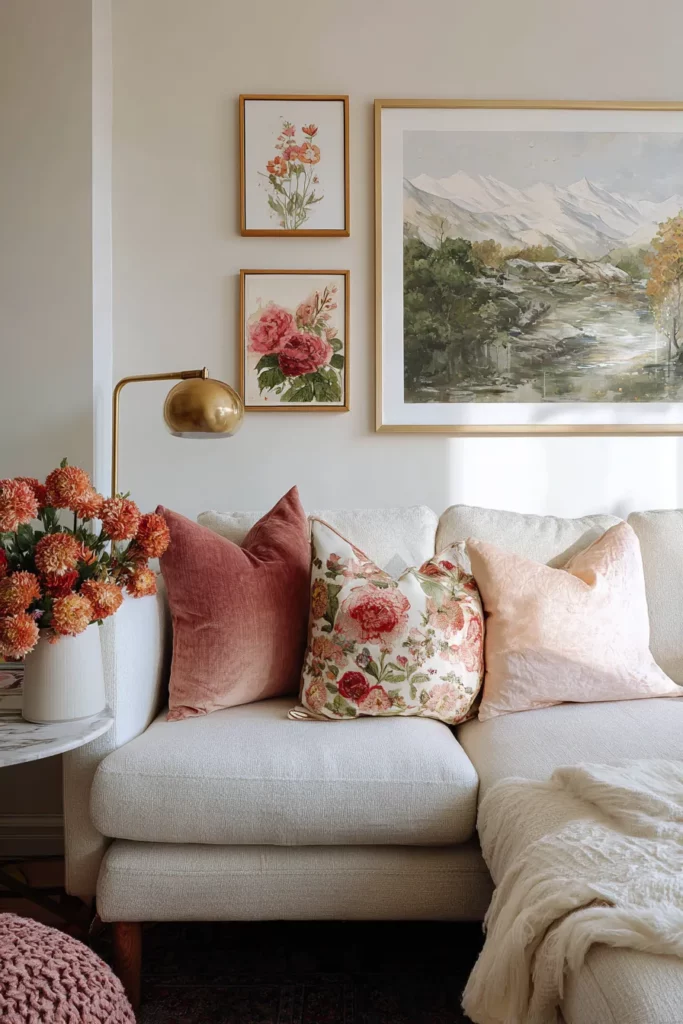
- Color harmony: Does it echo or thoughtfully contrast your existing palette?
- Personal connection: Do you love it enough to see it daily for years?
- Practical concerns: Is it properly secured, protected from sun damage, and positioned at the right height?
- Room balance: Does it anchor the space without overwhelming other elements?
- Story and meaning: Does it reflect your values, experiences, or aspirations?
- Quality materials: Will frames, hanging hardware, and art itself stand the test of time?
- Budget alignment: Are you investing appropriately for the impact level?
- Flexibility: If renting or frequently moving, is installation temporary-friendly?
Creating Your Personal Statement
At its heart, statement wall art is deeply personal. It’s the art equivalent of a signature—uniquely yours, instantly recognizable, meaningful beyond aesthetic. The most successful living room art isn’t what interior magazines dictate or what designers insist is “in.” It’s what makes you feel something.
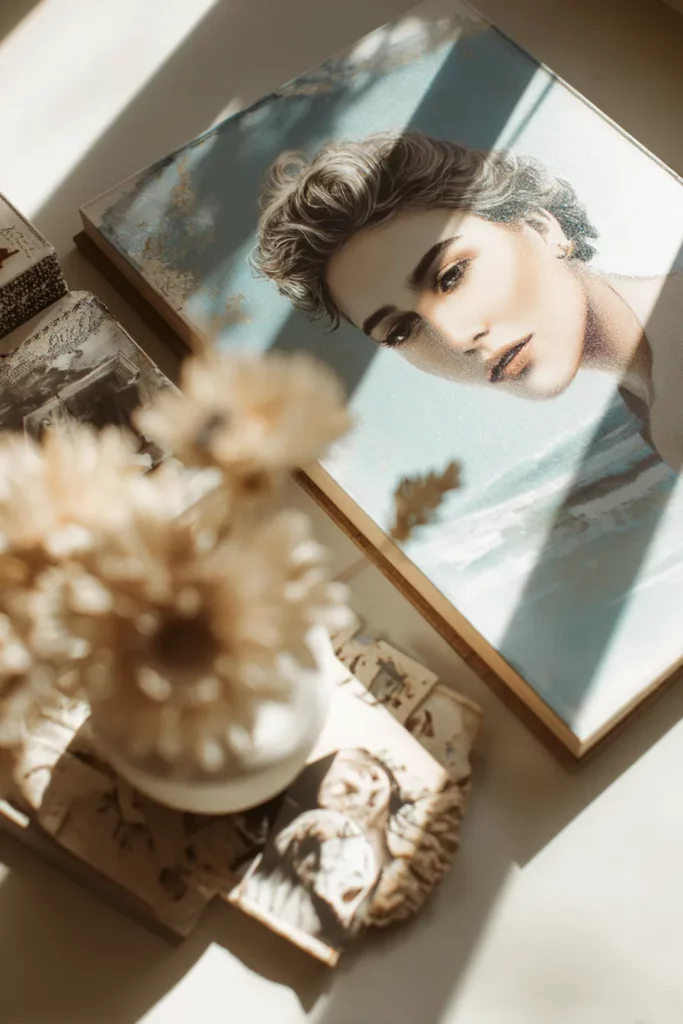
Maybe it’s a massive abstract that reminds you of ocean waves from childhood vacations. Perhaps it’s a gallery wall of black-and-white family photographs spanning generations. It could be a single vintage map of a city that changed your life, or botanical prints that bring the garden inside.
Whatever you choose, let it be intentional. Let it be yours. Because the best statement your walls can make is simply this: This is who lives here. This is what they love.
Conclusion: Where Walls Become Windows
Your living room walls hold possibility. They’re not barriers but canvases, not empty space but opportunity. Statement art transforms them into windows—into your personality, your memories, your aesthetic soul. It anchors a room while letting imagination soar.
Creating a statement wall isn’t about following formulas or copying showrooms. It’s about listening to what stirs something in you—whether that’s bold abstraction or quiet minimalism, vintage charm or contemporary edge. It’s about trusting that what moves you will resonate in your space, that authenticity creates beauty no trend can replicate.
So take your time. Live with ideas before committing. Let your walls speak slowly, thoughtfully, in a voice that sounds like home. Because the most powerful statement your art can make isn’t loud or flashy or expensive—it’s true. And truth, in design as in life, is always beautiful.
Frequently Asked Questions
How do you create a statement wall in a living room?
Start by identifying your focal wall—typically the wall behind your sofa or facing the main entrance. Choose between a single oversized piece (48+ inches) or a curated gallery wall arrangement. Ensure proper scale (art should occupy 60-75% of wall space), install at eye level (57-60 inches center height), and add appropriate lighting. The key is making a bold, intentional choice that anchors the entire room’s aesthetic.
What type of wall art is best for a living room?
The best wall art reflects your personal style while complementing your room’s existing aesthetic. Popular options include large-scale abstracts for modern spaces, gallery walls mixing prints and photographs for eclectic styles, landscape paintings for traditional rooms, and textured installations for contemporary settings. Consider your living room’s natural light, color palette, and mood—art should enhance, not fight, your space’s inherent character.
Where should wall art be placed in a living room?
Position statement art on the most visible wall, typically behind the sofa or opposite the main entrance. Hang pieces with centers at 57-60 inches from the floor (eye level), or 6-12 inches above furniture tops. In rooms with multiple seating areas, create balance with art on opposing walls. Avoid placing valuable art in direct sunlight or above heat sources. Corner spaces and areas flanking windows also offer excellent opportunities for vertical or smaller-scale statements.
What colors work best for living room wall art?
Choose colors that either complement your existing palette (pulling accent shades from furniture and textiles) or provide intentional contrast as a focal point. Warm tones (terracotta, gold, coral) energize and invite conversation. Cool blues and greens create calm, contemplative atmospheres. Neutrals with texture work universally and age gracefully. Consider the psychological impact: the colors you see daily influence mood, so choose what makes you feel how you want to feel in your living room.
Can DIY wall art make a good statement piece?
Absolutely. DIY statement art often carries more authenticity and personal meaning than purchased pieces. Large-scale abstract paintings require minimal technical skill—just bold color choices and confident brush strokes. Oversized family photo prints become heritage art with quality printing and framing. Textile projects like macramé or weavings add texture and warmth. The key is committing to size (go big), quality materials (good frames elevate everything), and designs that genuinely speak to your aesthetic rather than trying to replicate gallery work.