
Table of Contents
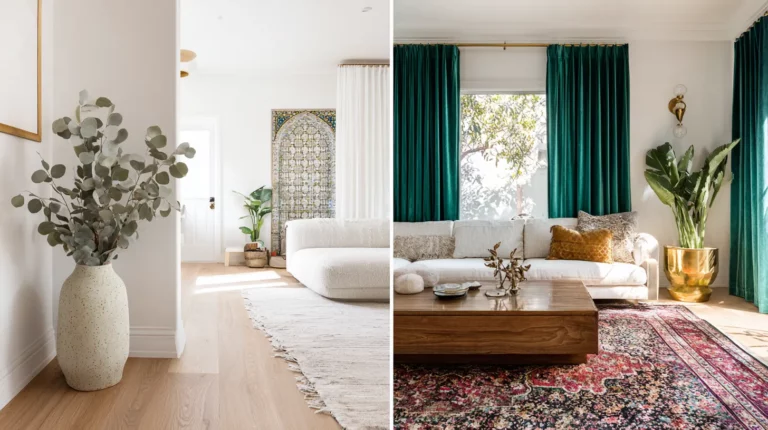
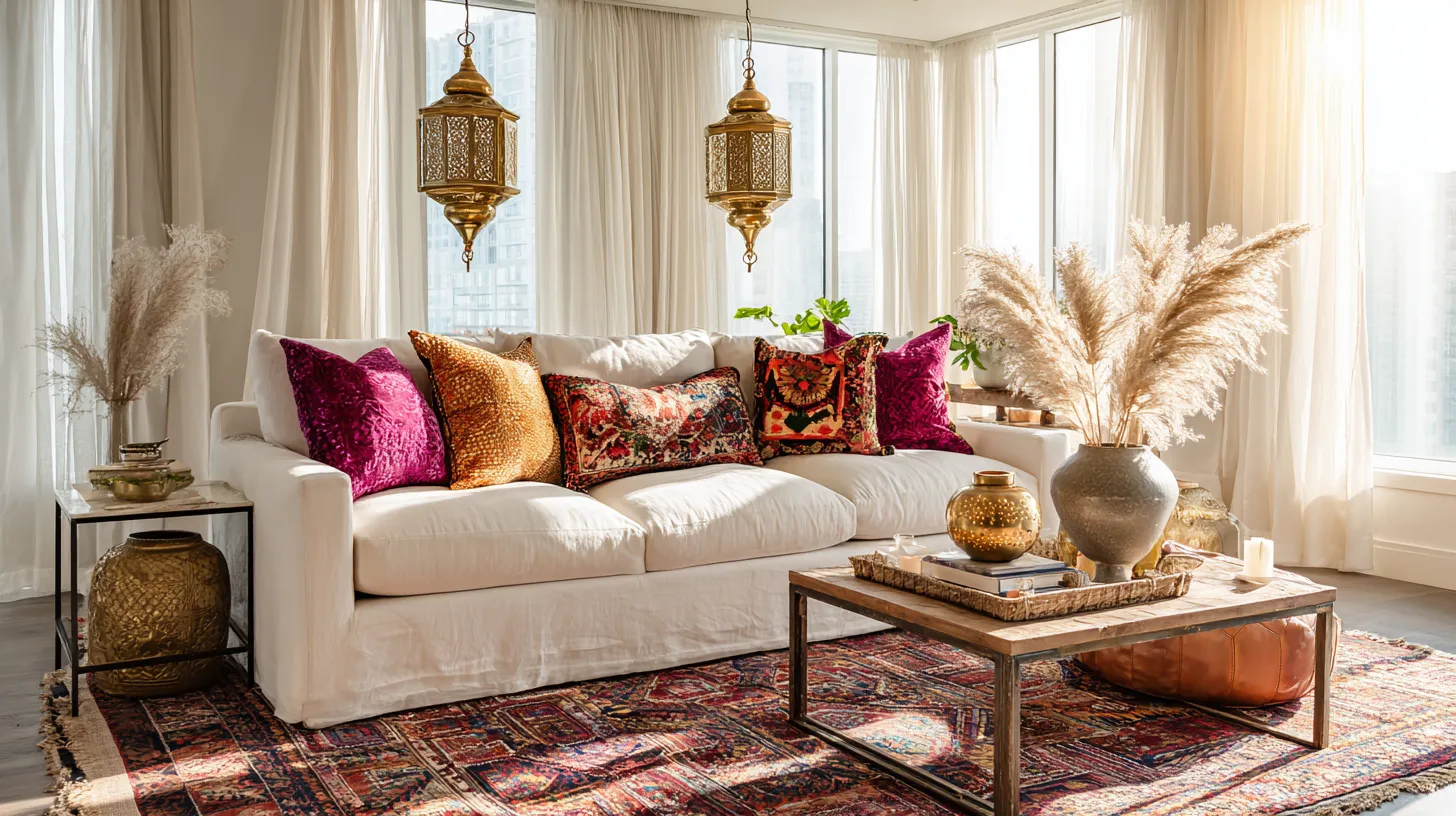
There’s something deeply soul-stirring about a home that tells more than one story. A space where Moroccan lanterns cast intricate shadows beside a sleek Scandinavian sofa, where Indian block-printed textiles drape over minimalist Danish chairs. This is the essence of Global Fusion Decor—a design philosophy that celebrates the beautiful collision of world cultures within your walls.
Global Fusion isn’t about randomly collecting souvenirs from your travels. It’s about weaving together diverse cultural threads with intention and respect, creating spaces that feel both worldly and deeply personal. Each piece carries its own narrative, its own history, its own whisper of distant places.
In a world that feels increasingly connected yet fragmented, our homes become galleries of shared human creativity. They remind us that beauty transcends borders, that craftsmanship speaks a universal language, and that comfort can be found in the harmonious blending of traditions.
Let’s explore how to bring this sophisticated, soulful aesthetic into your space—with authenticity, purpose, and grace.
Understanding Global Fusion Interiors
Global Fusion interior design is the artful practice of blending decorative elements, furniture styles, and design principles from multiple cultures into a cohesive, harmonious space. Unlike eclectic design—which can feel more spontaneous and personal—Global Fusion specifically draws from world cultures, honoring their aesthetic traditions while creating something entirely new.
The key lies in balance. You’re not recreating a Balinese resort or a Parisian apartment; you’re curating a dialogue between different design languages. A Japanese shoji screen might frame a doorway in a room anchored by a rustic Mexican console table, unified by a neutral color palette and consistent textural approach.
This style emerged as international travel and global connectivity expanded our design consciousness. We began craving spaces that reflected our broader understanding of beauty, our respect for diverse craftsmanship, and our desire for homes that feel collected rather than simply decorated.
The Soul of Cultural Fusion Design
Honoring Origins and Stories
Every object in a Global Fusion space should earn its place through meaning, not just aesthetics. That hand-carved Indonesian mirror carries the story of generations of woodworkers. Those Peruvian textiles represent ancient weaving techniques passed down through families.
Before introducing any cultural piece into your home, take time to understand its context. Research its traditional use, its symbolic meaning, its role in its culture of origin. This knowledge transforms decoration into celebration, preventing your space from feeling like a cultural grab bag.
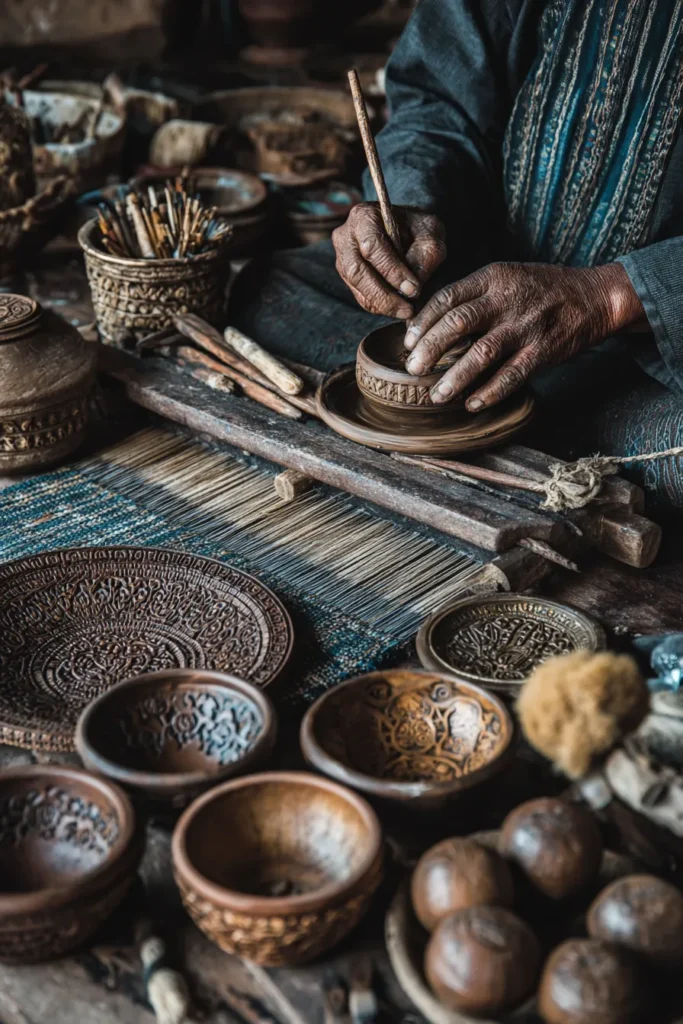
Authenticity matters deeply here. Seek out pieces created by artisans within their native traditions, supporting fair-trade practices and sustainable sourcing whenever possible. The energy of genuine craftsmanship—hands shaping clay, fingers working looms, tools carving wood—infuses your space with something mass production simply cannot replicate.
The Architecture of Balance
Creating harmony in Global Fusion requires a discerning eye and a light touch. Too few elements, and the space feels timid; too many, and it descends into chaos. The sweet spot lies in thoughtful curation.
Start with a neutral foundation—soft whites, warm beiges, gentle grays—that allows your global pieces to sing without competing. This backdrop acts as a gallery wall for your collected treasures, providing visual rest between moments of cultural richness.
Apply the rule of threes: group similar items in odd numbers for visual interest. Three Moroccan poufs in varying sizes, five Turkish ceramic bowls on a shelf, a trio of African masks arranged with intentional spacing. This creates rhythm without monotony.
Essential Elements of Global Fusion Decor
Textiles That Tell Tales
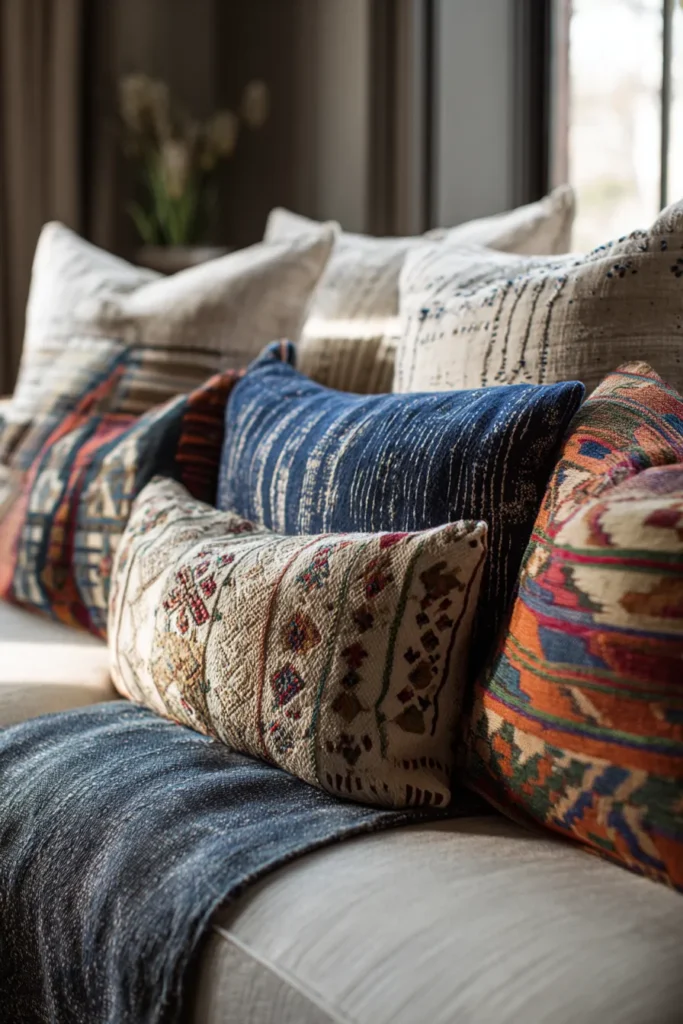
Fabric becomes the narrator in Global Fusion spaces. Layer textures and patterns from different traditions: a Japanese indigo-dyed throw over a couch dressed in neutral linen, Suzani pillows beside mudcloth cushions, a vintage Turkish kilim anchoring a room with Scandinavian minimalist furniture.
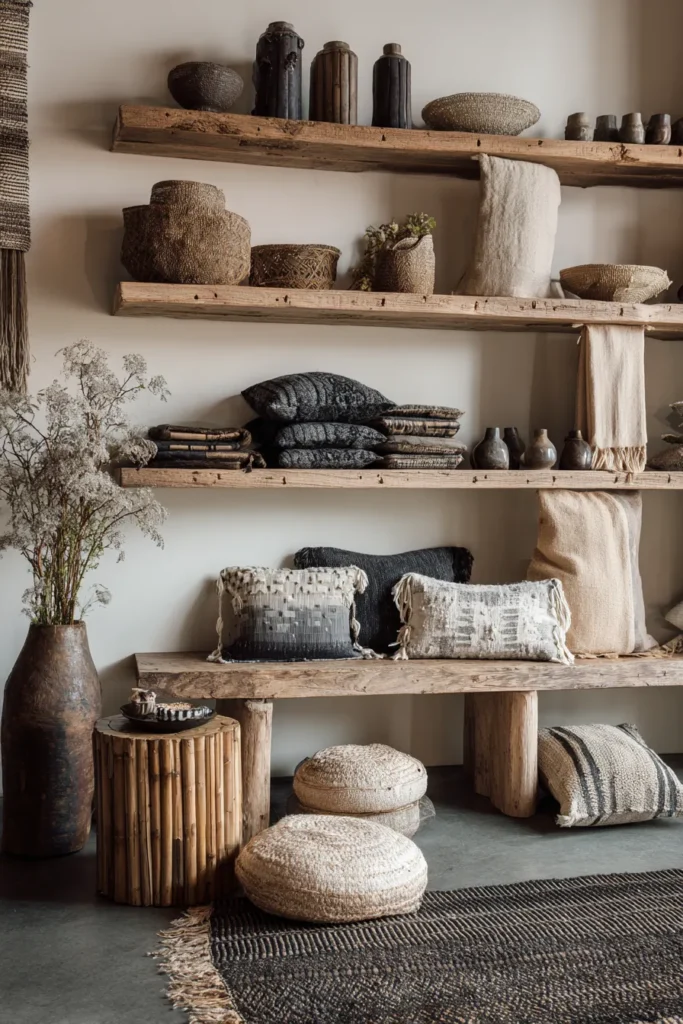
Natural fibers ground these spaces beautifully. Seek out hand-woven jute rugs, raw silk curtains, cotton dhurries, wool blankets with traditional patterns. These materials add warmth while maintaining sophistication, their organic textures creating subtle visual interest.
Pattern mixing requires confidence but follows clear principles. Vary the scale—pair large geometric prints with smaller, intricate patterns. Maintain a consistent color story that threads through all textiles, even if their cultural origins differ wildly. Let one bold pattern dominate while others play supporting roles.
Furniture with Passport Stamps
The furniture in Global Fusion interiors should feel collected over time, as if each piece found you during different life chapters. A low-slung Japanese platform bed might share a home with a carved Indian daybed, unified by similar wood tones and clean lines despite their cultural distance.
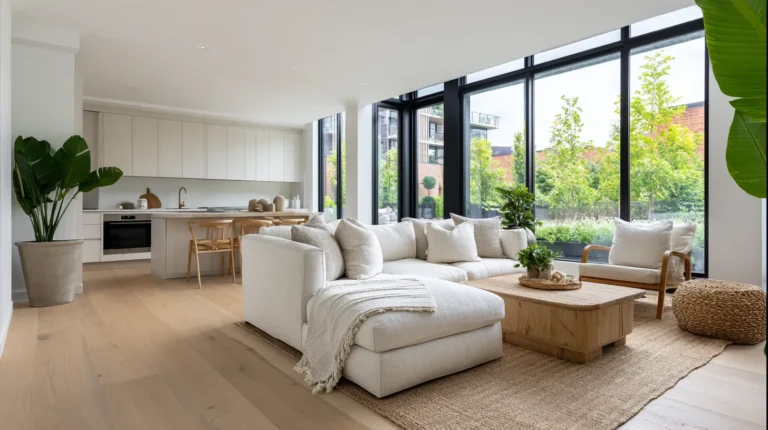
Mix traditional and modern silhouettes intentionally. A contemporary sectional gains character when paired with vintage rattan chairs from the Philippines. A minimalist dining table comes alive surrounded by mismatched chairs—perhaps a Moroccan inlaid stool, a Chinese Ming-inspired armchair, and a pair of sleek Danish modern seats.
Wood species and finishes matter tremendously. Dark teak from Thailand, light ash from Scandinavia, warm acacia from Africa—these can coexist when you maintain awareness of undertones. Cool woods pair with cool woods; warm with warm. Or deliberately contrast them for dramatic effect, but choose one approach and commit.
Lighting That Bridges Worlds
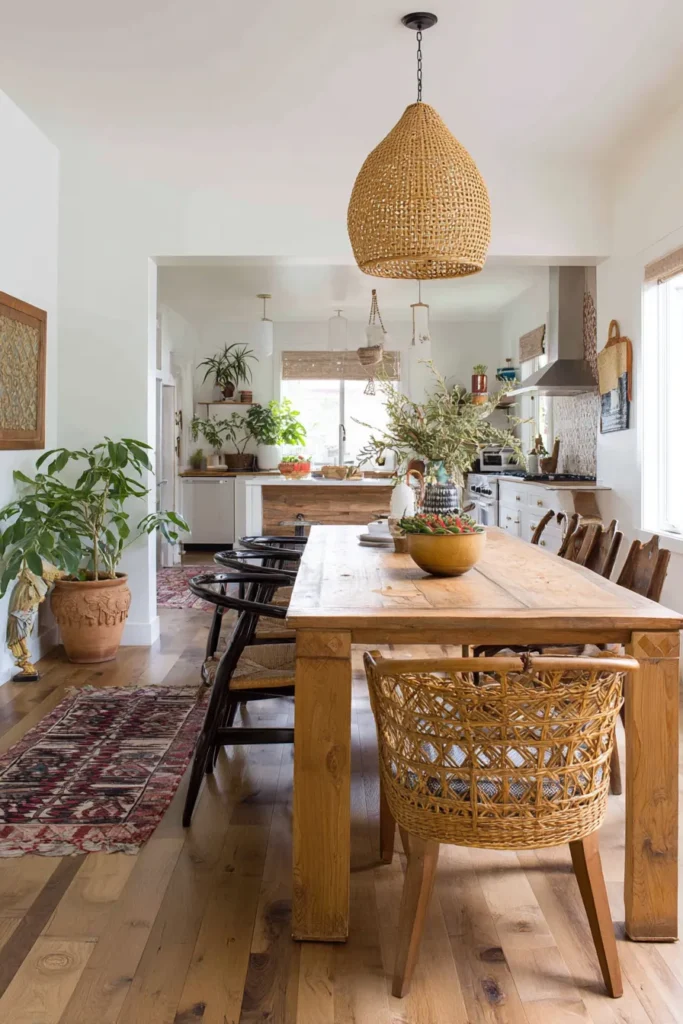
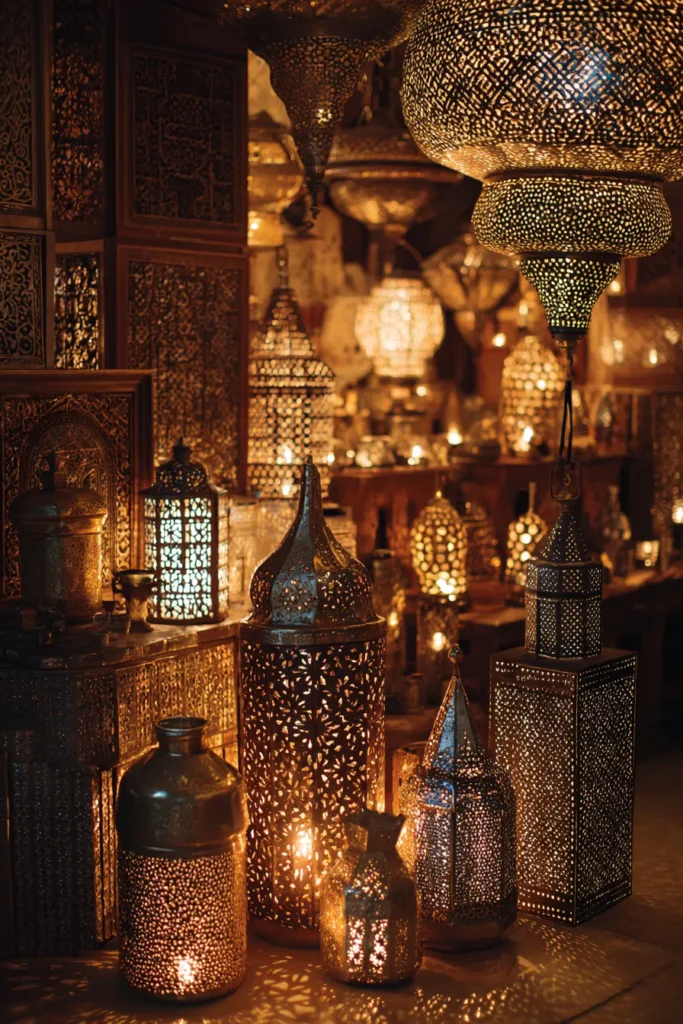
Lighting in Global Fusion spaces serves dual purposes: illumination and sculptural artistry. A Moroccan pierced metal lantern creates magical shadow play on walls. A Japanese paper lantern diffuses light with gentle simplicity. An industrial Edison bulb fixture adds contemporary edge to traditionally decorated rooms.
Layer your lighting sources thoughtfully. Overhead statement pieces—perhaps a Turkish mosaic chandelier or a bamboo pendant from Southeast Asia—provide ambient light and visual drama. Table lamps with ceramic bases featuring global patterns add task lighting and intimate warmth. Candles in hand-hammered brass holders from India create flickering romance.
Natural light remains your most precious resource. Keep window treatments simple to maximize daylight—perhaps sheer linen curtains or woven bamboo shades that nod to global traditions without overwhelming the view. Light transforms how colors appear and how textures reveal themselves throughout the day.
Color Palettes for Cultural Harmony
Earth-Centered Foundations
Ground your Global Fusion palette in nature’s vocabulary: terracotta, sand, stone, clay, wood bark, sage, and cream. These colors appear across cultures and geographies, providing a universal language that helps disparate elements communicate.
From this neutral base, introduce color through cultural accents. The deep blues of Moroccan zellige tiles, the vibrant oranges of Indian silks, the jade greens of Chinese ceramics—these become your punctuation marks, adding emphasis without overwhelming.
Consider how light affects color differently across regions. Mediterranean whites reflect intense sunlight; Scandinavian grays soften pale northern light. When borrowing from these palettes, consider your own natural light conditions and adjust accordingly.
Accent Colors with Purpose
Choose accent colors that appear in multiple cultural contexts to create subliminal connections. Red, for instance, holds significance in Chinese culture, appears in Turkish rugs, and dominates Masai beadwork. Using red as a threading color helps pieces from these traditions feel naturally related.
Metallic accents—brass, copper, bronze, hammered silver—add glamour while maintaining authenticity. These finishes appear in traditional crafts worldwide, from Indian thali plates to Moroccan tea sets to Scandinavian candle holders. They catch light beautifully and age gracefully, developing patinas that add character.
Don’t fear white space. In Global Fusion, emptiness serves as a crucial design element, giving the eye rest and allowing each curated piece to command attention. White space is where breathing happens, where the room finds its pause.
Practical Implementation: Room by Room
Living Spaces That Welcome the World
Your living room becomes a gathering place for global traditions. Anchor the space with a substantial rug—perhaps a vintage Persian, a geometric Moroccan Beni Ourain, or a striped Indian dhurrie. This grounds everything above it and defines the conversation area.
Seating should invite long conversations. A deep sofa in neutral linen might be flanked by a pair of leather poufs from Morocco and a carved wooden bench from Bali. Layer throw pillows that represent different traditions, but keep them within a cohesive color family.
Coffee tables offer prime real estate for cultural artifacts. A hammered brass tray from Turkey becomes a corral for books and candles. Hand-carved wooden bowls from Africa hold seasonal elements. A stack of vintage textiles adds height and texture.
Bedrooms as Global Sanctuaries
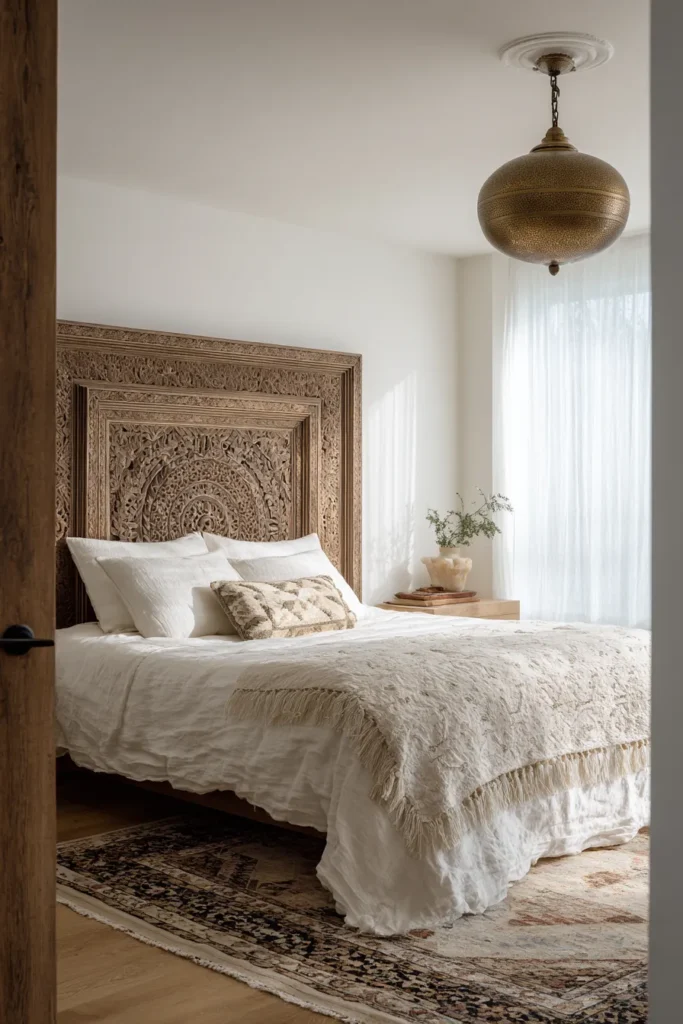
Bedrooms call for restraint in Global Fusion—this is where rest trumps visual stimulation. Choose one dramatic element as your focal point: perhaps a hand-carved headboard from India, a suspended Moroccan lantern, or a Japanese-inspired platform bed.
Textiles carry the cultural story here. Layer bedding in natural linens and cottons, adding texture through a vintage suzani coverlet or a hand-loomed throw. Keep patterns mostly confined to accent pieces, allowing the eye to rest.
Nightstands and dressers from different traditions can coexist beautifully when they share similar scale and wood tones. A Chinese apothecary chest beside a Scandinavian side table works if both pieces honor simplicity and craftsmanship.
Dining Areas for Cultural Celebration
Dining spaces naturally embrace Global Fusion, as meals themselves represent cultural exchange. A solid farmhouse table—perhaps reclaimed wood with rustic character—provides a neutral foundation for global chairs and tableware.
Mix dining chairs intentionally: upholstered hosts’ chairs at table ends, with simpler side chairs showing off carved details or woven seats. This creates visual interest while maintaining comfort and cohesion.
Tableware becomes your rotating exhibition. Collect ceramic plates from different pottery traditions—Japanese stoneware, Portuguese faïence, Mexican Talavera—and mix them for casual meals. This celebrates craftsmanship while creating tablescapes that feel collected and lived-in.
Sourcing Authentically and Sustainably
Finding Genuine Cultural Pieces
Authenticity in Global Fusion extends beyond aesthetics to ethics. Seek out fair-trade retailers, artisan cooperatives, and culturally-owned businesses that ensure makers receive fair compensation and work in safe conditions.
Vintage and antique markets offer treasure troves of authentic pieces with established patinas and genuine provenance. Estate sales, antique shops, and curated online platforms connect you with items that carry real history rather than mass-produced imitations.
Travel mindfully and purchase directly when possible. Visiting artisan workshops, craft markets, and small studios during travels creates meaningful connections and ensures your money supports traditional crafts directly. Each piece becomes a memory, not just decoration.
The Sustainability Imperative
Global Fusion aligns naturally with sustainable design principles. Choosing handcrafted items over mass production reduces environmental impact. Supporting traditional crafts helps preserve cultural heritage and provides economic alternatives to industrial manufacturing.
Look for natural materials processed using traditional methods: vegetable-dyed textiles, naturally finished woods, clay ceramics, hand-forged metals. These materials age beautifully, can be repaired rather than replaced, and eventually return to earth without leaving toxic residues.
Consider the carbon footprint of your global shopping. Balance international purchases with local finds, perhaps seeking immigrant-owned shops in your area that import cultural goods directly. Every choice becomes part of your design story and your ethical footprint.
Avoiding Cultural Appropriation
Respect as Design Foundation
Cultural appreciation differs fundamentally from appropriation. Appreciation involves learning, understanding context, honoring origins, and supporting source communities. Appropriation takes symbols out of context, often for profit, without regard for meaning or makers.
Sacred objects require particular sensitivity. Items used in religious ceremonies, spiritual practices, or cultural rituals may not belong in decor contexts. Research thoroughly before displaying anything with potential ceremonial significance. When in doubt, choose secular craft items instead.
Give credit and share stories. When guests admire a piece, share what you know about its origin, its maker, its traditional use. This transforms your space into an educational experience that honors rather than exploits culture.
Representation Matters
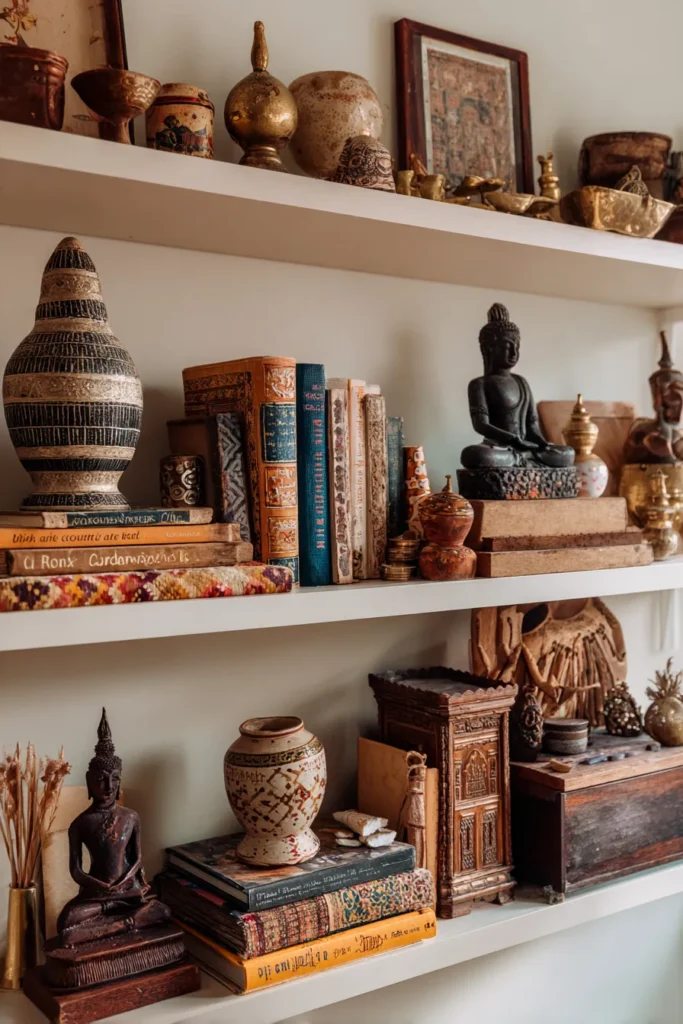
Ensure your Global Fusion approach represents cultures with depth rather than tokenism. Instead of one item from twenty countries, perhaps explore two or three cultural traditions more thoroughly, learning their design principles and collecting multiple pieces that show the breadth of their aesthetic traditions.
Support contemporary artisans from these cultures, not just historical or traditional pieces. This acknowledges that cultures evolve and that modern makers continue innovating within their traditions. A contemporary Indian textile designer deserves space alongside vintage pieces.
Avoid stereotypes and clichés. Not every Asian-inspired element needs to be red and gold; not every African piece must be tribal patterns. Explore the full spectrum of design within each culture, discovering unexpected palettes, forms, and approaches.
Emerging Trends in Global Fusion
Technology Meets Tradition
Modern technology enables more authentic Global Fusion than ever before. Virtual reality lets you preview pieces in your space before purchasing. AI-powered design tools help visualize how different cultural elements might interact, reducing costly mistakes.
Online platforms connect consumers directly with artisans worldwide, cutting out middlemen and ensuring fair compensation. You can commission custom pieces, communicate directly about colors and dimensions, and build relationships with makers across continents.
3D printing and digital design now merge with traditional crafts. Contemporary artisans blend ancestral techniques with modern technology—laser-cutting traditional patterns, using digital tools to preserve endangered craft knowledge, or creating innovative forms that honor cultural roots while pushing boundaries.
Eco-Consciousness in Global Design
Sustainability increasingly drives Global Fusion choices. Consumers seek pieces made from reclaimed materials, natural dyes, and renewable resources. Bamboo furniture from Asia, recycled metal art from Africa, and organic cotton textiles from India align aesthetic goals with environmental values.
Circular design principles enter the conversation: choosing pieces designed for longevity, repair, and eventual recycling. Handcrafted items naturally embody these values, as their quality construction and timeless appeal resist trend-driven disposal.
Carbon-conscious shipping matters too. Some designers now create “regional fusion” approaches—blending cultural influences within a geographic radius to reduce transportation impacts while still achieving global aesthetics through thoughtful sourcing and creative mixing.
Overcoming Common Challenges
When It Feels Like Too Much
The line between curated and cluttered can blur quickly in Global Fusion. If your space feels chaotic, implement the “edit ruthlessly” principle. Remove pieces one by one until the room breathes again. Often less truly offers more impact.
Create negative space intentionally. Use empty wall sections, clear countertops, and unadorned corners as visual pauses. These resting places allow eyes to recover before encountering the next cultural moment.
Establish zones of intensity and calm. Perhaps one wall features a dramatic collection of masks and textiles, while opposite walls remain minimal. This creates rhythm—crescendos and diminuendos—that guide the eye through the space musically.
Making It Feel Cohesive
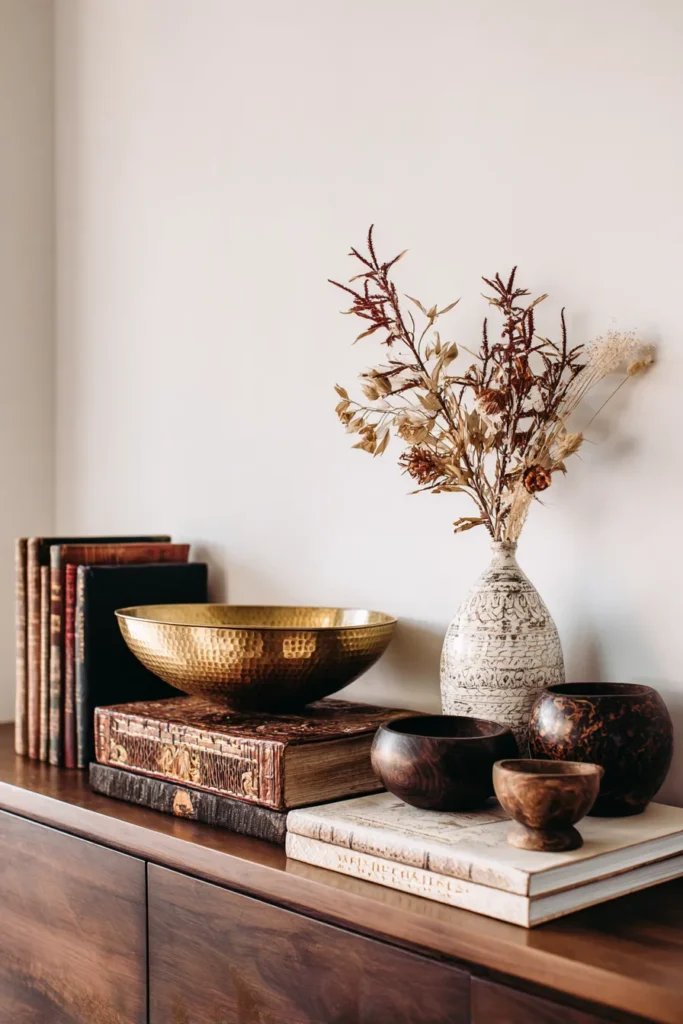
If your Global Fusion space feels disjointed, return to fundamentals: color, texture, and scale. Identify a unifying thread—perhaps all wood pieces share warm undertones, or all textiles include threads of indigo blue. Emphasize this connection.
Consider the role of repetition. If you love Moroccan style, let it appear in multiple ways: a lantern, a rug, a carved mirror. This repetition creates intentionality rather than randomness, suggesting thoughtful curation rather than haphazard collection.
Sometimes a fresh coat of paint works miracles. A cohesive wall color—perhaps a warm cream or soft gray—can suddenly make disparate elements feel like they’ve always belonged together, providing the neutral bridge that cultural pieces need.
Balancing Budget and Authenticity
Authentic artisan pieces carry investment-level pricing, but Global Fusion needn’t bankrupt you. Collect slowly and purposefully, adding meaningful pieces over time rather than filling rooms quickly with lower-quality alternatives.
Mix investment pieces with approachable finds. Perhaps splurge on an authentic vintage rug and a handcrafted lighting fixture, then fill in with secondhand furniture you refinish, or textiles from ethical but affordable sources.
DIY can honor traditions too. Learn basic crafts from different cultures—Japanese sashiko stitching, Moroccan stencil patterns, Indian block printing—and create your own textiles or wall art. This adds personal investment and deepens your connection to the traditions you’re celebrating.
Quick Reference: Global Fusion Essentials
Here’s your practical checklist for implementing Global Fusion Decor successfully:
Foundation Elements:
- Neutral wall colors (warm whites, soft grays, gentle beiges)
- Natural flooring (hardwood, stone, or neutral tile)
- Quality lighting fixtures from varied cultural traditions
- One substantial rug that anchors the main living space
Furniture Considerations:
- Mix of wood tones within warm or cool families
- Varied furniture heights to create visual interest
- Seating from at least two different cultural traditions
- One statement piece that commands attention
Textile Layers:
- Hand-woven natural fiber rugs
- Mix of solid and patterned throw pillows
- One dramatic textile (tapestry, vintage suzani, large mudcloth)
- Window treatments that maximize natural light
Decorative Accents:
- Authentic cultural artifacts with known origins
- Plants in globally-inspired vessels (ceramic, brass, woven baskets)
- Books about different cultures and design traditions
- Metallic accents in brass, copper, or hammered silver
Color Strategy:
- 60% neutral foundation
- 30% cultural accent colors
- 10% dramatic punctuation (deep blues, rich reds, vibrant oranges)
Sourcing Guidelines:
- Research provenance before purchasing
- Support fair-trade and artisan-owned businesses
- Mix vintage finds with contemporary pieces
- Collect slowly and meaningfully
The Emotional Architecture of Global Fusion
Beyond aesthetics, Global Fusion Decor creates emotional resonance. It reminds us that humans across time and distance share fundamental desires: beauty, comfort, meaning, connection. A home curated with global consciousness becomes a daily meditation on our shared humanity.
These spaces tell non-linear stories. Your grandmother’s embroidered textile beside a contemporary African basket, near a minimalist Japanese tea bowl—they create conversations across continents and generations. They suggest that time and geography collapse in the presence of beauty and craft.
Living within Global Fusion teaches appreciation for slowness in our accelerated world. Handmade objects carry the tempo of human hands, the patience of traditional techniques, the attention that rushed production cannot replicate. Your home becomes a sanctuary from mass production’s homogenizing effects.
Most profoundly, Global Fusion cultivates humility and openness. It acknowledges that no single culture holds a monopoly on beauty or wisdom. It celebrates diversity not as difference to overcome but as richness to embrace. Your walls become an argument for connection in divisive times.
Conclusion
Creating a Global Fusion home is less about following rules and more about following your heart across continents and cultures. It’s about recognizing beauty in unfamiliar forms, respecting craftsmanship wherever it originates, and weaving these threads into spaces that feel uniquely yours while honoring their diverse sources.
Start small. Perhaps a single textile, one handcrafted bowl, a vintage lantern. Let each piece teach you about its origins. Build slowly, thoughtfully, with intention and respect. Over time, your space will become a living museum of human creativity—not stuffy or static, but warm, lived-in, and alive with stories.
Your home can be a bridge between worlds, a quiet celebration of our beautiful, complex, interconnected human family. In blending traditions, you create something entirely new while honoring everything that came before. That’s the magic and meaning of Global Fusion Decor.
Let your walls whisper stories of distant places, skilled hands, and timeless beauty. Welcome the world home.
Frequently Asked Questions
What is Global Fusion in interior design?
Global Fusion interior design blends decorative elements, furniture styles, and design principles from multiple world cultures into cohesive, harmonious spaces. Unlike purely eclectic design, it specifically draws from international traditions—Moroccan lanterns with Scandinavian furniture, Indian textiles with Japanese minimalism—creating dialogue between cultural aesthetics while maintaining balance and intentionality.
How do you describe Global Fusion style?
Global Fusion style is sophisticated, curated, and culturally conscious. It combines elements from various traditions—perhaps Asian, African, Middle Eastern, Scandinavian, and Latin American influences—unified through consistent color palettes, complementary textures, and shared design principles. The result feels collected over time, worldly yet personal, honoring diverse craftsmanship while creating something entirely new.
What are some examples of Global Fusion interiors?
Common Global Fusion examples include: a Moroccan rug beneath Scandinavian furniture; Japanese shoji screens framing Mexican carved wood furniture; Indian block-printed pillows on a minimalist contemporary sofa; African baskets displayed on Danish modern shelving; Turkish ceramic lamps illuminating a room with clean-lined Asian-inspired pieces. The key is intentional mixing that respects each tradition while creating cohesion.
How can I incorporate Global Fusion in my home decor?
Start with a neutral foundation—soft wall colors and simple flooring—then layer in authentic pieces from different cultures through textiles, lighting, and furniture. Choose items with similar wood tones or complementary colors to create unity. Research each piece’s cultural context, source ethically from artisans or fair-trade retailers, and add slowly, allowing your collection to develop meaningfully over time.
What are the benefits of Global Fusion decor?
Global Fusion creates visually rich, personally meaningful spaces that celebrate human creativity across cultures. It supports traditional artisans and sustainable craftsmanship, offers unique character impossible to achieve with mass production, and educates household members and guests about diverse design traditions. These spaces feel collected and sophisticated rather than generic or catalog-driven, reflecting the owner’s values and global consciousness.