
Table of Contents
There’s a particular kind of magic that happens when you walk into a room that seems to understand you. The lights soften to your preferred warmth, the temperature adjusts without a thought, and your favorite playlist begins as if the space itself knows what your soul needs. This isn’t science fiction—it’s the beautiful reality of smart living room innovations, where technology dissolves into the background and pure comfort takes center stage.
We’re living in a moment where our homes can finally keep pace with our lives. Smart home devices have evolved beyond mere gadgets into thoughtful companions that anticipate, adapt, and enhance the way we live. The modern living room has become a canvas where IoT integration meets intentional design, creating spaces that feel both deeply personal and effortlessly sophisticated.
But here’s what matters most: these innovations aren’t about making your home feel like a tech showroom. They’re about crafting spaces that breathe with you, that understand the rhythm of your daily life, and that make the simple act of being home feel like the luxury it should be. Whether you’re a busy parent juggling remote work, a design enthusiast seeking seamless beauty, or someone who simply wants their home to work with them rather than against them—smart living room technology has quietly transformed from impressive to essential.
Let’s explore how to weave these innovations into your space with intention, warmth, and that signature ERYLIN blend of beauty and practicality.
The Foundation: Smart Lighting That Shapes Your Day
Lighting is the soul of any room, and smart lighting systems have revolutionized how we experience our living spaces throughout the day. Imagine waking to gentle amber tones that mimic sunrise, working under crisp daylight temperatures that keep you focused, and unwinding to warm, dimmed glows that signal your body it’s time to rest.
Smart bulbs and lighting controls go far beyond simple on-off switches. They integrate with voice-activated entertainment systems and home automation platforms to create scenes that match your activities. Movie night? Your lights automatically dim to the perfect theater ambiance. Reading in your favorite chair? A spotlight brightens just where you need it, while the rest of the room maintains a cozy glow.

Energy Efficiency Meets Ambiance
The beauty of smart lighting extends beyond aesthetics—it’s about conscious living. These systems learn your patterns and adjust accordingly, ensuring lights aren’t burning energy in empty rooms. Connected devices communicate with motion sensors and smart thermostats to create an ecosystem of efficiency.
LED smart bulbs last years longer than traditional options, and their energy consumption is remarkably low. Pair them with automated schedules, and you’re looking at energy savings that translate to both lower bills and a gentler environmental footprint.
Climate Control That Anticipates Your Comfort
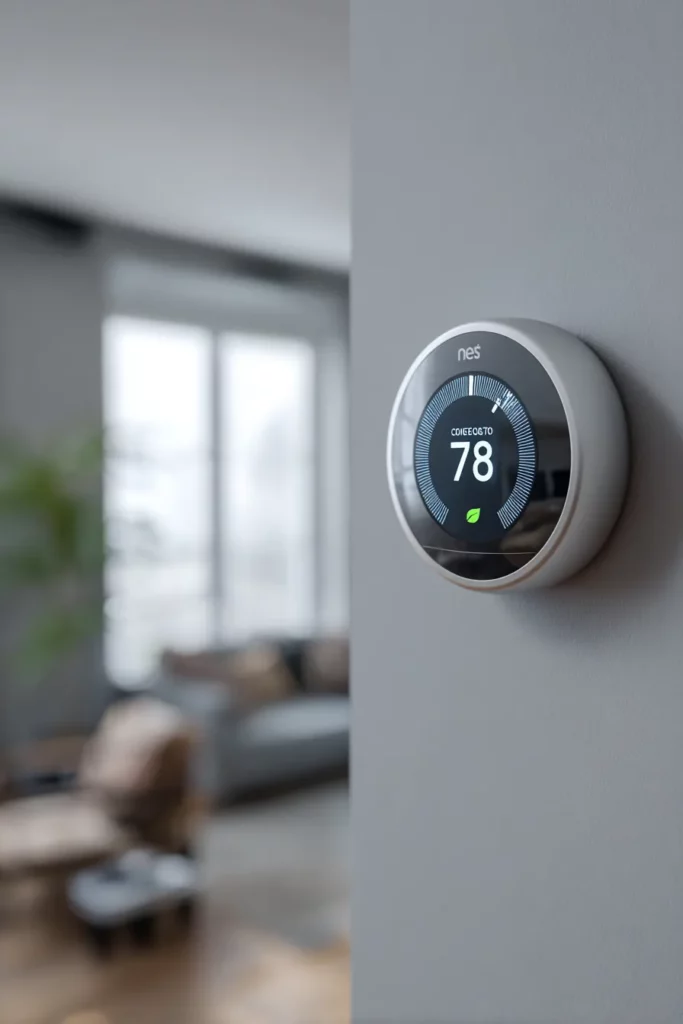
There’s something deeply satisfying about walking into a perfectly tempered room. Smart thermostats have transformed automated climate control from a luxury into an accessible reality, learning your preferences and adjusting throughout the day without any input from you.
These intelligent systems don’t just respond to temperature—they consider humidity, time of day, occupancy, and even weather patterns. If you’re heading home from work, your living room can be perfectly comfortable by the time you walk through the door. If you’ve dozed off on the couch, the system gently adjusts to your sleeping temperature preferences.
The Hidden Cost Benefits
Smart climate control offers remarkable long-term value. Most users see a 10-23% reduction in heating and cooling costs within the first year. The system identifies inefficiencies, suggests optimal settings, and eliminates the waste that comes from heating or cooling empty spaces.
For families, seniors, and remote workers who spend varying amounts of time at home, this adaptability becomes invaluable. The technology molds itself to your lifestyle rather than forcing you to remember complicated programming.
Voice Control: Your Invisible Assistant
The integration of voice control systems has made smart home interaction feel natural and intuitive. No more fumbling for remotes, light switches, or thermostats—your voice becomes the bridge between intention and action.
Whether you’re using Amazon Alexa, Google Assistant, or Apple HomeKit, these systems coordinate your smart devices into a unified experience. “Good morning” can open your smart curtains, start your coffee maker, adjust the lights, and queue your morning news. “Movie time” dims the lights, lowers the blinds, and powers up your entertainment system.

Accessibility Revolution
This technology has opened new possibilities for those with mobility challenges or visual impairments. Voice-activated entertainment and home controls mean independence for seniors aging in place and ease for anyone juggling armfuls of groceries, a sleeping baby, or simply wanting hands-free convenience.
The barrier to entry is remarkably low—most smart speakers cost under $50 and can control dozens of compatible devices throughout your living room.
Smart Furniture: Form Meets Function
Smart furniture represents where innovation gets truly subtle. These pieces look like beautiful, well-designed furnishings but hide remarkable functionality within their frames.
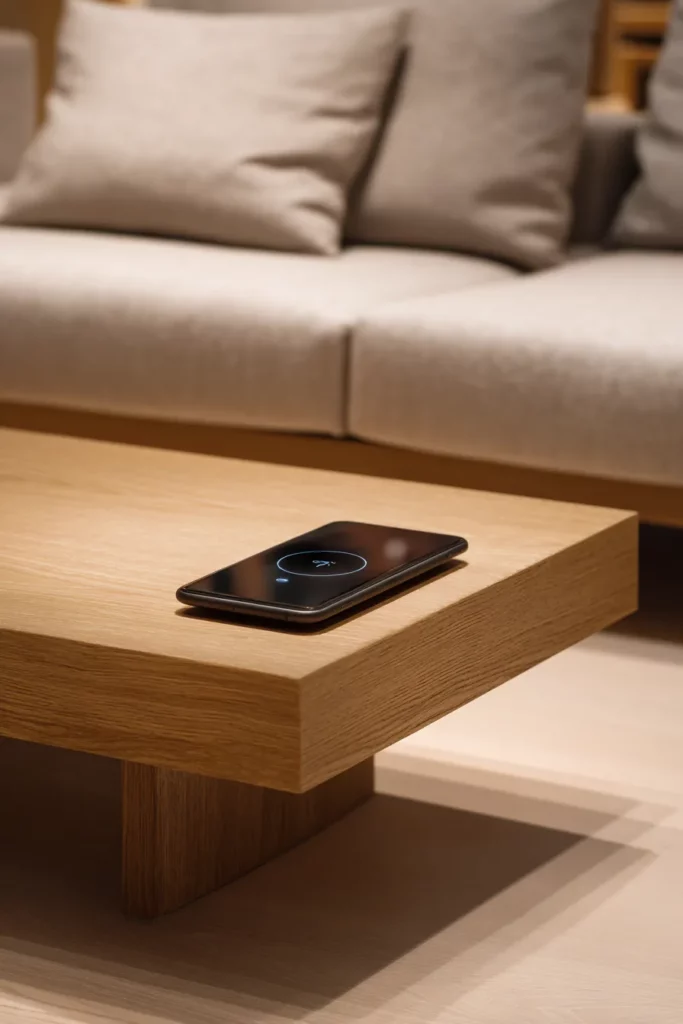
Coffee tables with built-in wireless charging pads keep devices powered without visible cords. Sofas with integrated USB ports and climate-controlled cushions offer comfort that adapts to seasons. Side tables with touch-sensitive lamps and built-in speakers become control centers that never compromise on aesthetic appeal.
The Design Integration Challenge
The key to successful smart furniture integration is choosing pieces that elevate rather than dominate your space. Look for clean lines, quality materials like natural wood or refined metals, and technology that’s invisibly embedded rather than flashy. Your living room should feel warm and inviting first, technologically advanced second.
Consider modular furniture that can adapt as your needs evolve. An ottoman with hidden storage and charging capabilities serves multiple purposes without cluttering your visual landscape.
Entertainment Systems That Disappear
Modern smart entertainment systems have mastered the art of invisibility. Ultra-thin televisions blend into walls or hide behind artwork. Soundbars deliver theater-quality audio from sleek profiles that don’t overwhelm your carefully curated space.
Streaming devices and connected appliances work in concert, allowing seamless transitions between content, music, and ambient displays. Your television can showcase digital art when not in use, or mirror your family photos in a slow, elegant rotation.

The Streaming Revolution
Smart TVs and streaming platforms have eliminated clutter—no more towers of devices with tangled cords. Voice-activated entertainment means asking for what you want to watch rather than navigating endless menus. Integration with smart lighting creates immersive experiences where your room’s ambiance matches your content.
Security and Privacy: The Foundation of Peace
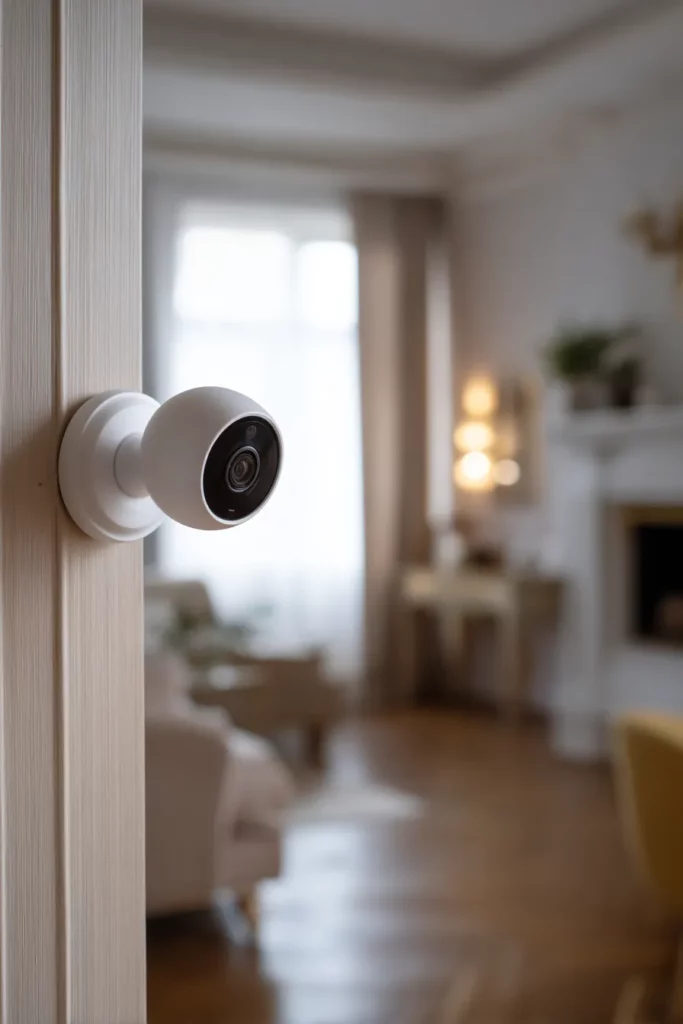
Smart security systems bring unprecedented peace of mind to your living room. Smart cameras with privacy shutters, video doorbells, and motion sensors create layers of protection without creating fortress-like aesthetics.
Addressing Privacy Concerns
Here’s what many articles skip: privacy protection is paramount when inviting connected devices into your home. Choose manufacturers with strong encryption standards and transparent data policies. Disable cameras and microphones when you need privacy. Use separate networks for IoT devices and personal computers.
Read privacy policies carefully—understand what data is collected, how it’s stored, and who has access. Many smart home devices offer local processing options that keep your information on your network rather than in the cloud. Prioritize brands with solid reputations for security updates and data protection.
Long-Term Security Maintenance
Smart security isn’t a set-it-and-forget-it solution. Regular firmware updates patch vulnerabilities. Change default passwords immediately. Enable two-factor authentication on all devices. Review connected device lists quarterly and remove anything you no longer use.
The Sustainability Question: Building Responsibly
As we embrace smart living room technology, we must address e-waste considerations and technological sustainability. The rapid pace of innovation can make devices obsolete quickly, creating environmental challenges.
Choose products designed for longevity rather than novelty. Look for manufacturers offering software updates that extend device lifespans. Consider modular systems where components can be upgraded rather than replacing entire units.

Practical Sustainability Actions
- Purchase refurbished smart devices when possible
- Research manufacturer take-back programs for recycling
- Invest in quality over quantity—fewer, better devices
- Prioritize energy-efficient certifications (Energy Star, WaterSense)
- Consider the full lifecycle: packaging, shipping, disposal
Smart devices that genuinely reduce energy consumption offset their production impact over time. Smart thermostats, lighting systems, and power management tools can significantly reduce your home’s carbon footprint.
Smart Living Room Setups for Every Lifestyle
For Families with Young Children
Smart baby monitors with breathing sensors, voice-controlled lighting for midnight feedings, and entertainment systems with robust parental controls create peace of mind. Smart speakers can play white noise, lullabies, or favorite stories on command. Automated door locks prevent little ones from wandering.
For Seniors Aging in Place
Voice control removes the need for manipulating small buttons or switches. Smart lighting prevents falls with motion-activated pathways. Video doorbells allow safe visitor screening. Emergency call systems integrate with smart speakers for instant help access.
For Remote Workers
Smart lighting with circadian rhythm support maintains focus and prevents eye strain. Automated “do not disturb” modes silence notifications during calls. Climate control maintains optimal productivity temperatures. Voice assistants manage timers, reminders, and task lists hands-free.

Cost-Benefit Analysis: Real ROI on Smart Investments
Let’s be honest about the investment. A fully smart living room can range from a few hundred to several thousand dollars, depending on your scope.
Starter Budget ($200-500)
- Smart speaker/hub: $50-100
- Smart bulbs (4-6): $60-120
- Smart plug strips: $30-60
- Streaming device: $30-50
- Basic smart thermostat: $100-150
This foundation provides voice control, lighting automation, and climate efficiency—covering 70% of daily smart home interactions.
Mid-Range Investment ($500-1500)
Add smart curtains, upgraded lighting systems, enhanced security cameras, and better integration between devices. This tier delivers significant quality-of-life improvements and measurable energy savings.
Premium Experience ($1500+)
Smart furniture, whole-room audio, advanced security systems, and seamless device integration. This level creates truly responsive living spaces that adapt intuitively to your needs.
The Return
Energy savings alone often cover smart thermostat and lighting costs within 2-3 years. Factor in added home value (smart homes sell faster and for 3-5% more), insurance discounts for security systems, and the immeasurable value of daily convenience—the ROI becomes compelling.
Interoperability: Making Everything Work Together
One of the biggest challenges in smart living room design is ensuring devices from different manufacturers communicate seamlessly. Here’s how to navigate compatibility concerns.
Choose a primary ecosystem (Google Home, Amazon Alexa, Apple HomeKit) and build around it. Check compatibility before purchasing any device. Look for products supporting multiple platforms when possible—this provides flexibility if you switch ecosystems.
The Matter Protocol Revolution
The new Matter protocol promises universal compatibility between smart home brands. Devices certified with Matter should work across all major platforms without complicated workarounds. When investing in new devices, prioritize Matter-certified options for future-proof integration.
Installation and Setup: From Intimidating to Intuitive
You don’t need to be tech-savvy to embrace smart living room innovations. Most modern devices install in minutes using simple smartphone apps and guided setup processes.
Easiest Smart Living Room Gadgets to Install
Smart bulbs simply screw into existing fixtures—no wiring required. Download the app, connect to WiFi, and you’re set.
Smart plugs turn any lamp or appliance smart by plugging between the device and wall outlet. Control anything through your phone or voice.
Smart speakers require only power and WiFi. They walk you through setup verbally and control other devices immediately.
Video doorbells with adhesive mounts need no drilling or hardwiring, perfect for renters.

When to Call Professionals
Smart thermostats, hardwired lighting systems, and whole-home audio often benefit from professional installation. The investment ensures safety, optimal performance, and warranty protection.
Emerging Trends: AI-Driven Customization
The future of smart living rooms lies in predictive behavior and environment adaptation. AI systems are learning not just to respond to commands but to anticipate needs before you articulate them.
Imagine your living room recognizing you’ve returned from a stressful commute (tracking time, route, and biometric data from your wearables) and automatically creating a calming environment—dim lights, soft music, perfect temperature—before you even cross the threshold.
These systems track patterns over weeks and months, understanding when you typically entertain guests, work late, or enjoy quiet evenings. They adjust lighting schedules for seasonal changes, suggest energy-saving opportunities, and alert you to unusual activities that might indicate security concerns.
Your Smart Living Room Checklist
Transform your living room with this thoughtful approach:
- Start with lighting: Smart bulbs offer immediate impact with minimal investment
- Add voice control: A smart speaker unifies device management
- Optimize climate: Smart thermostats deliver comfort and savings
- Secure your space: Basic smart security provides peace of mind
- Consider your lifestyle: Choose devices that match how you actually live
- Prioritize privacy: Review settings and understand data collection
- Plan for integration: Choose compatible devices within your ecosystem
- Think long-term: Invest in quality, upgradeable systems
- Budget strategically: Phase implementation to spread costs
- Stay updated: Regular maintenance keeps systems secure and efficient
| Smart Device Category | Initial Cost | Monthly Savings | Payback Period | Lifestyle Impact |
|---|---|---|---|---|
| Smart Lighting | $100-300 | $5-15 | 12-18 months | High: Daily use, mood setting |
| Smart Thermostat | $150-250 | $15-30 | 6-12 months | High: Comfort, energy savings |
| Voice Assistant | $30-100 | $0-5 | Convenience-based | Very High: Controls entire ecosystem |
| Smart Security | $100-400 | $5-10 (insurance) | 2-4 years | High: Peace of mind |
| Smart Entertainment | $200-1000 | Minimal | Quality of life | Medium: Enhanced experience |
Bringing It All Home
There’s a moment—usually a few weeks after embracing smart living room innovations—when you realize you’re no longer thinking about the technology at all. You’re simply living, and your space is supporting that life in invisible, beautiful ways.
The lights adjust as evening falls, and you don’t reach for a switch. The temperature is always comfortable, though you haven’t touched the thermostat in weeks. Your favorite music begins as you settle into your reading chair because the space has learned this is your evening ritual.
This is the true promise of smart home integration—not a showcase of gadgets, but a home that understands you deeply enough to disappear into the background. Technology at its best becomes invisible, leaving only comfort, beauty, and the pure joy of a space that feels completely, unmistakably yours.
The living room has always been where we gather, rest, and restore ourselves. Smart innovations simply ensure that this sacred space can be as responsive, thoughtful, and nurturing as the life you’ve built within it. Start small, choose thoughtfully, and let your space evolve naturally into something that feels less like technology and more like home.
Frequently Asked Questions
How can I turn my living room into a smart living room?
Start with a smart speaker to act as your central hub—Amazon Echo, Google Nest, or Apple HomePod work beautifully. Add smart bulbs to your most-used lamps and fixtures for instant lighting control. Install a smart plug or two for lamps and devices you want to control remotely. This foundation costs $100-200 and provides immediate voice control and automation. From there, expand based on your priorities: add a smart thermostat for climate control, smart curtains for light management, or a streaming device for entertainment. The key is starting simple and building as you discover what truly enhances your daily life.
What are the benefits of smart lighting in a living room?
Smart lighting transforms both ambiance and efficiency in your living room. You can adjust color temperature throughout the day—bright, energizing light for morning activities, warm tones for evening relaxation. Schedule lights to turn on before you arrive home or off when you leave, eliminating wasted energy. Create custom scenes for different activities: movie watching, reading, entertaining guests, or romantic evenings. Voice control means adjusting lighting without leaving your comfortable spot. Energy-efficient LED smart bulbs reduce electricity consumption by 75% compared to traditional bulbs, and their extended lifespan means fewer replacements. The combination of convenience, mood enhancement, and energy savings makes smart lighting one of the highest-impact upgrades you can make.
How do smart home assistants work in a living room setting?
Smart home assistants like Alexa, Google Assistant, or Siri act as the voice-controlled brain of your living room. They connect to your Wi-Fi network and communicate with compatible smart devices throughout the space. When you speak a command—“turn on the lights,” “play jazz music,” or “set the temperature to 72 degrees”—the assistant processes your request and sends instructions to the appropriate device. They can control lighting, climate, entertainment systems, security cameras, and even smart furniture simultaneously. You can create routines that trigger multiple actions with a single phrase: “movie time” might dim the lights, close the curtains, and turn on your television. The assistant learns your preferences over time, making suggestions and automating frequent requests. Most impressively, they integrate devices from different manufacturers, creating a unified system from diverse components.
Are there smart furniture options for the living room?
Absolutely, and they’re more sophisticated than ever. Smart coffee tables feature built-in wireless charging surfaces, Bluetooth speakers, and touch-controlled LED lighting—all while looking like beautiful, modern furniture. Smart sofas offer USB charging ports, integrated speakers, and even climate-controlled seats that warm or cool based on your preference. Adjustable smart tables raise or lower for different activities, from working on your laptop to dining. Ottoman storage pieces incorporate voice-controlled lighting and charging stations. Side tables with touch-sensitive surfaces control room lighting and display time or weather information. The best smart furniture seamlessly integrates technology without compromising aesthetic appeal—you see beautiful design first, discover functionality second. Look for pieces that complement your existing style while adding convenience that genuinely improves daily life.
How can smart technology improve accessibility in living rooms?
Smart technology has revolutionized accessibility for people with mobility challenges, visual impairments, or age-related limitations. Voice control eliminates the need to reach switches, remotes, or thermostats—everything from lighting to entertainment to window coverings can be controlled through simple verbal commands. Smart lighting with motion sensors ensures safe navigation without fumbling for switches in the dark, particularly helpful for nighttime movement or those with vision limitations. Video doorbells allow safe visitor screening without approaching the door. Smart speakers can make phone calls, set medication reminders, and call for emergency help hands-free. For those with hearing impairments, smart doorbells send visual notifications to smartphones or smart displays. Automated systems reduce repetitive physical tasks like adjusting thermostats or opening curtains. These technologies allow people to maintain independence in their homes longer, providing dignity, safety, and genuine improvement in quality of life.