
Table of Contents
There’s something deeply magnetic about a room wrapped in shadow and richness. A dark and moody living room doesn’t hide from boldness—it leans into it, creating a space that feels both intimate and dramatic.
This isn’t about making a room feel heavy or oppressive. It’s about crafting layers of texture, light, and color that invite you to sink deeper into comfort. Think velvet that catches lamplight, walls the color of midnight forests, and metallic accents that shimmer like quiet conversation.
If you’ve been hesitant to embrace darker hues, we’re here to guide you through it. A moody interior is surprisingly versatile, surprisingly warm, and endlessly sophisticated. Let’s explore how to bring this compelling aesthetic into your home with intention and ease.
Understanding the Dark and Moody Aesthetic
What Makes a Space Truly Moody?
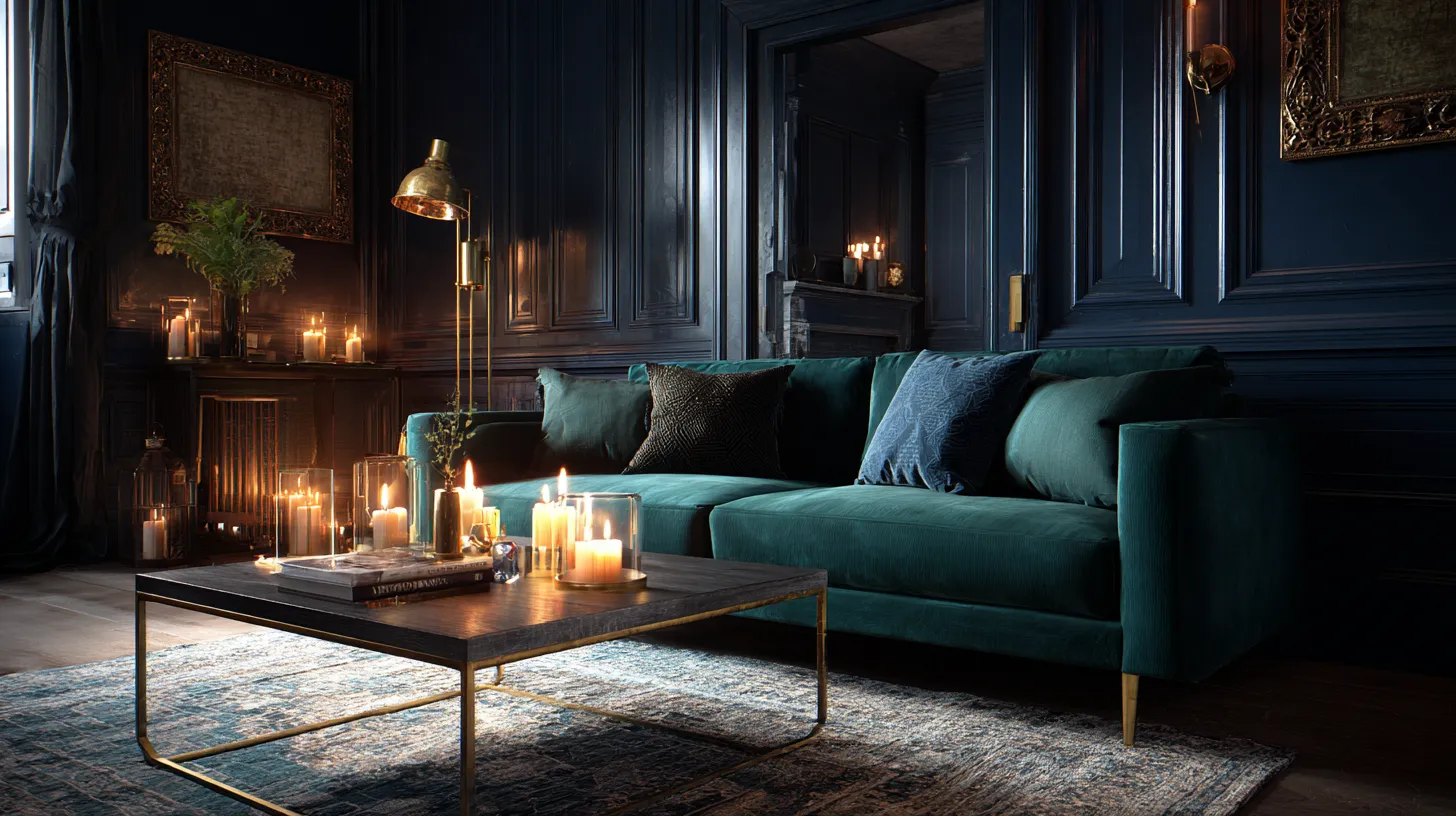
A dark and moody living room design centers on rich, saturated colors paired with thoughtful contrast. Navy walls meet brass picture frames. Hunter green velvet sofas anchor rooms filled with candlelight and texture.
This aesthetic draws from both modern gothic sensibilities and contemporary comfort. It’s maximalist in feeling but can work beautifully in minimalist spaces too. The key is depth—visual, tactile, emotional.
The Psychology Behind Dark Interiors
Dark spaces affect us differently than bright ones, and that’s not necessarily negative. Deep hues create enclosure, which our minds interpret as protection and privacy. A moody living room can actually reduce visual stress and promote relaxation.
Studies suggest that darker environments in the evening align with our natural circadian rhythms, helping us wind down. When balanced properly with warm lighting and soft textures, these spaces become retreats—places where you exhale and settle.
The emotional impact is personal, of course. Some find dark rooms cozy and sophisticated, while others need more brightness to feel energized. Consider how you want your living room to feel during the hours you use it most.
Choosing Your Color Palette
Deep, Saturated Wall Colors
Start with your walls—they set the entire mood. Charcoal gray offers versatility and pairs beautifully with both warm and cool accents. Navy blue brings depth without feeling as stark as black, while hunter green adds an organic, jewel-toned richness.
Consider deep plum, chocolate brown, or even true matte black for maximum drama. Paint finish matters too: matte absorbs light for intensity, while eggshell adds subtle dimension.
Don’t fear commitment. Dark walls create the backdrop that makes everything else in the room sing—your furniture, your art, your carefully chosen textures all gain presence against these bold foundations.
Complementary Accent Colors
Layer in lighter tones strategically to prevent monotony. Cream, champagne, and soft taupe provide breathing room. Dusty rose or terracotta warm up cooler base colors like navy or charcoal.
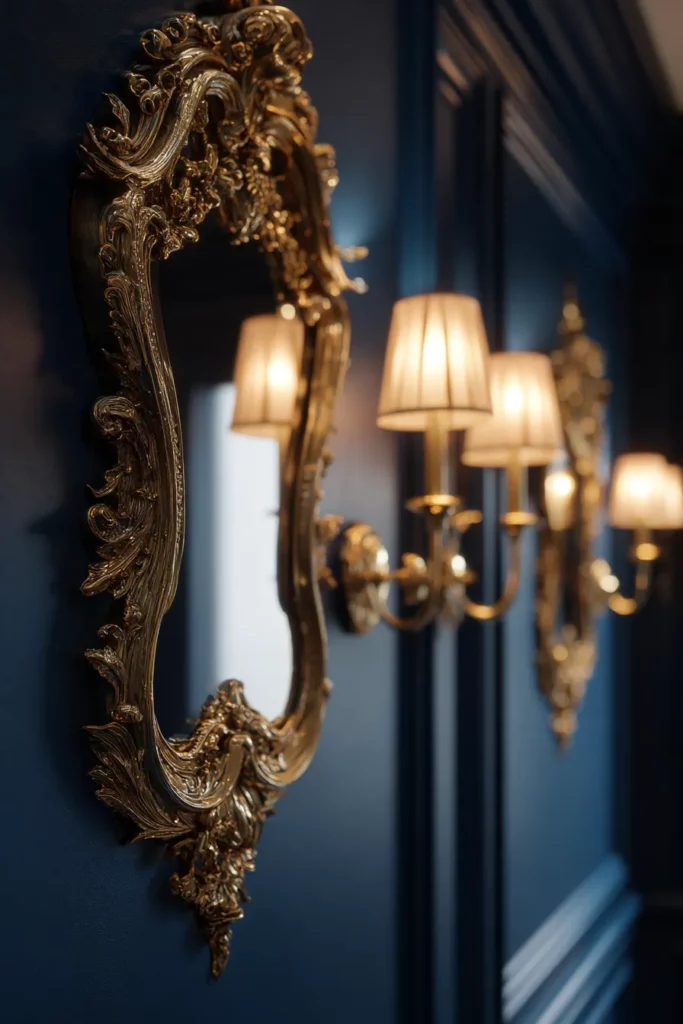
Metallic accents become crucial here. Brass, aged copper, and brushed gold catch light beautifully against dark backgrounds. Even aged silver or pewter can work for a more industrial feel.
Your accent colors should appear in throw pillows, artwork, ceramics, and small furniture pieces. Think of them as punctuation marks in a longer, darker sentence.
Creating a Cohesive Color Story
| Base Colors | Accent Colors | Metallic Finishes |
|---|---|---|
| Navy, Charcoal, Hunter Green | Cream, Blush, Terracotta | Brass, Aged Copper, Gold |
| Deep Plum, Chocolate Brown | Champagne, Sage, Gray | Brushed Nickel, Pewter |
| Matte Black, Forest Green | Ivory, Rust, Camel | Antique Bronze, Oil-Rubbed |
Choose one base, two to three accents, and one primary metallic finish. This restraint creates sophistication rather than chaos.
Mastering Light in Dark Spaces
Natural Light Enhancement
Dark walls don’t have to block natural light—they can actually make it more dramatic. Keep window treatments light and sheer during the day, or opt for Roman shades in linen that you can raise completely.
Position mirrors opposite or adjacent to windows to bounce light deeper into the room. A large aged brass mirror serves double duty, adding both metallic warmth and light reflection.
If privacy allows, leave windows unadorned. The contrast between dark walls and bright windows creates architectural interest that feels both modern and classic.
Layered Artificial Lighting
This is where moody rooms truly come alive. Never rely on a single overhead fixture. Instead, create zones of light at different heights and intensities.
Table lamps with warm-toned bulbs (2700K or lower) on side tables provide task lighting and ambiance. Floor lamps with adjustable arms let you direct light where needed. Consider wall sconces flanking a fireplace or artwork for symmetry and drama.
Dimmable fixtures are non-negotiable. Smart bulbs let you adjust both brightness and warmth throughout the day, shifting from energizing morning light to intimate evening glow.
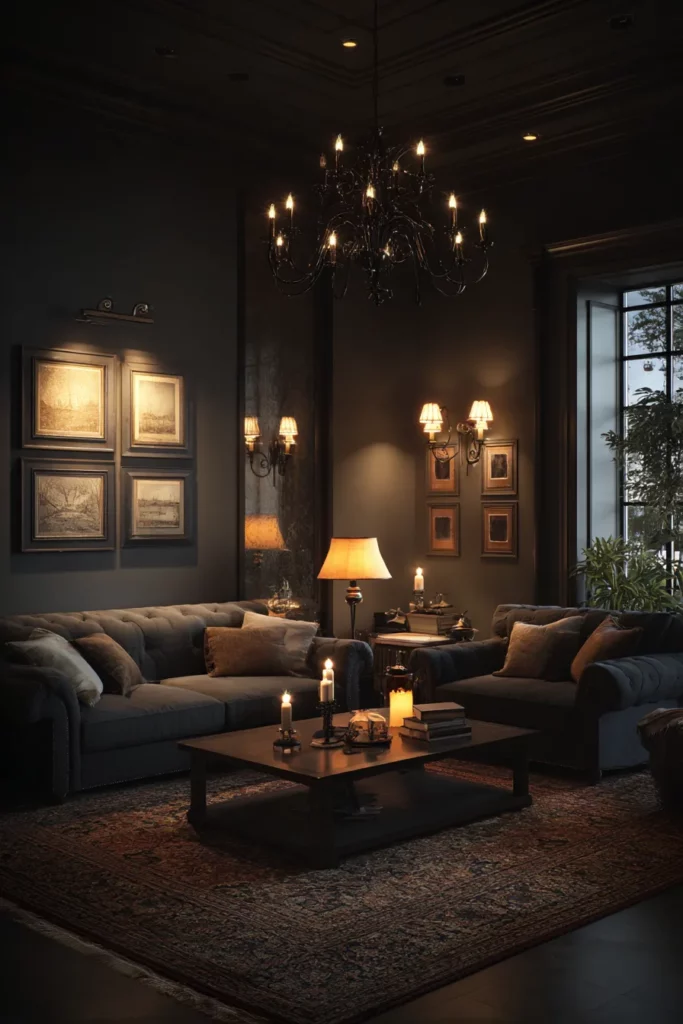
Statement Lighting as Jewelry
A modern gothic chandelier or aged brass pendant becomes sculpture when hung in a moody room. The fixture itself draws the eye upward, while the light it casts creates pools of warmth below.
Choose lighting with visual weight that matches your aesthetic. Industrial pendants with Edison bulbs work for urban lofts. Vintage-inspired chandeliers suit Victorian or maximalist spaces. Minimal brass fixtures ground contemporary designs.
The finish matters as much as the form. Matte black, aged metals, and brass all photograph beautifully against dark walls and create continuity with other room accents.
Selecting Furniture for Depth and Drama
Anchor Pieces in Rich Fabrics
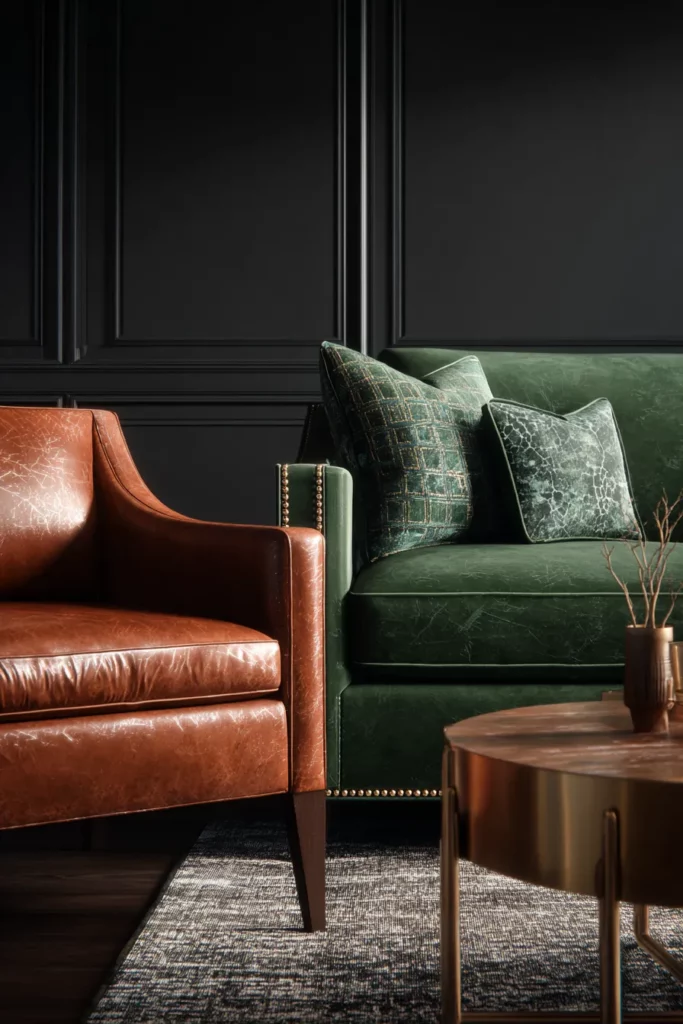
Your sofa is the room’s largest statement. A velvet sofa in deep emerald, burgundy, or even black creates instant sophistication. The pile of velvet catches light differently throughout the day, adding subtle movement.
Leather furniture ages beautifully in moody spaces. Choose distressed or aged leather over pristine for character. Both dark leather and cognac tones work, depending on whether you want cohesion or contrast.
For additional seating, consider a tufted leather armchair or channel-back velvet chair. Mix textures—pair smooth leather with plush velvet for tactile interest.
Wood Tones and Finishes
Medium to dark wood grounds a moody room without disappearing. Walnut, mahogany, and dark oak all complement deep wall colors. Even black-stained wood can work in modern spaces.
Coffee tables, console tables, and shelving in these finishes add warmth while maintaining the room’s sophisticated edge. Look for pieces with interesting grain or carved details that catch light.
If you have existing lighter wood furniture, don’t feel obligated to replace everything. A single natural oak piece can actually provide welcome relief and prevent the space from feeling too uniform.
Statement Pieces and Accent Furniture
Every moody room needs at least one conversation starter. A vintage bar cart in brass and glass. An oversized wingback chair in unexpected velvet. A lacquered black console with gold hardware.
These pieces give your room personality beyond the color palette. They’re where you can take risks—more ornate, more colorful, more unusual than your anchor furniture.
Scale matters too. Dark rooms can handle larger furniture because everything reads as one cohesive mass rather than individual pieces fighting for attention.
Layering Textures for Tactile Richness
Fabrics That Demand to Be Touched
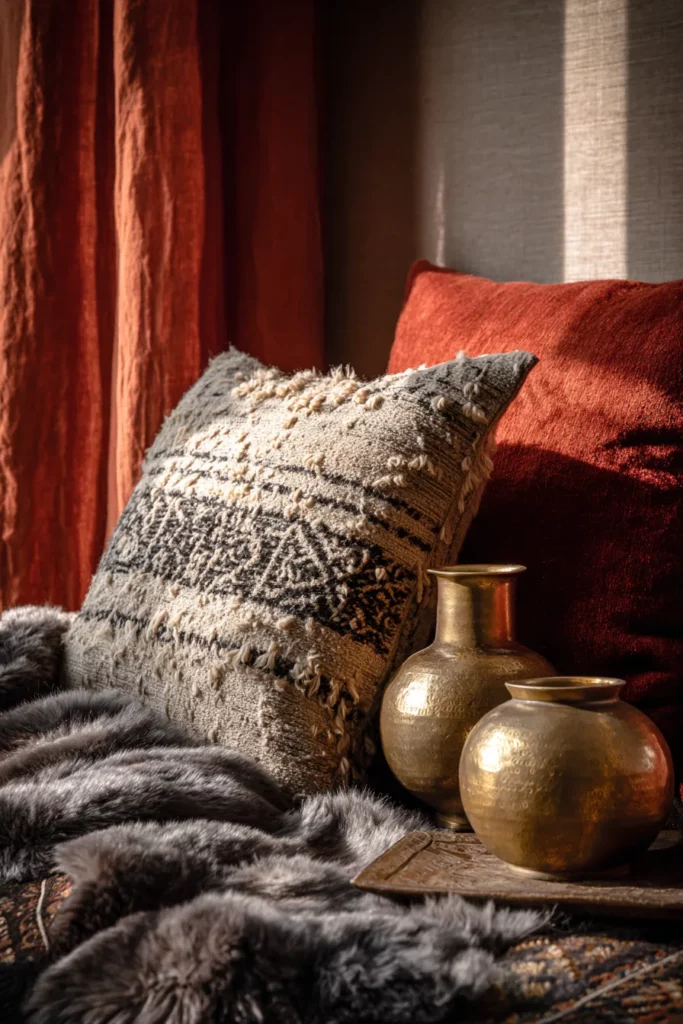
Texture becomes even more important when color is limited. Velvet, chenille, and mohair all catch light beautifully and add luxury. Layer them in throw pillows, blankets, and upholstery.
Faux fur throws draped over sofas or chairs introduce softness and visual warmth. Choose colors slightly lighter than your base palette—a camel-colored fur on a charcoal sofa, for instance.
Linen curtains in natural tones soften windows without blocking light. Their slight texture adds organic interest that prevents the room from feeling too polished or austere.
Material Mixing for Visual Interest
Combine smooth with rough, shiny with matte. A leather ottoman next to a velvet sofa. Marble side tables alongside woven baskets. Brass accents punctuating matte painted surfaces.
Consider incorporating natural stone elements—a marble fireplace surround, slate coasters, or stone bookends. These materials add weight and permanence that grounds the space.
Even your accessories should vary in texture. Ceramic vases, woven trays, glass hurricanes, and metal sculptures all contribute to the layered, collected feeling that makes moody rooms feel lived-in rather than staged.
Textiles and Soft Furnishings
| Texture Type | Example Items | Sensory Effect |
|---|---|---|
| Plush | Velvet pillows, Faux fur throws | Luxury, warmth, invitation |
| Woven | Linen curtains, Jute rugs, Basket storage | Organic, grounded, natural |
| Smooth | Leather upholstery, Marble surfaces | Sophistication, coolness, elegance |
| Metallic | Brass frames, Copper bowls | Reflection, glamour, punctuation |
Styling Your Dark and Moody Living Room
Accent Walls and Architectural Details
An accent wall in wallpaper creates instant drama. Consider Victorian floral patterns in deep jewel tones, textured grasscloth, or geometric designs in black and gold.
Don’t neglect architectural elements. Paint crown molding and baseboards in the same deep color as walls for a wrapped, cocoon-like effect. Or choose high-gloss white for crisp contrast.
Board and batten or picture frame molding painted dark adds dimension and texture without pattern. The play of shadow in the recesses creates subtle interest all day long.
Gallery Walls and Artwork
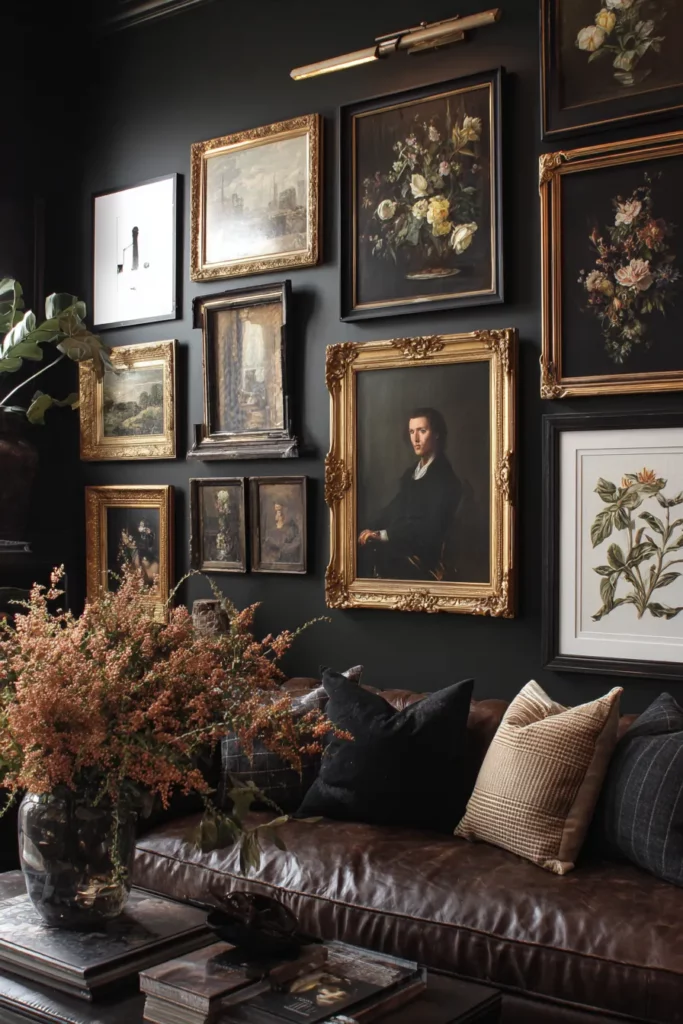
Art stands out powerfully against dark walls. Create a gothic gallery mixing vintage portraits, botanical prints, and abstract pieces in ornate brass or black frames.
Group artwork by frame color rather than subject matter for cohesion. All brass, all black, or all wood creates visual calm even when the art itself is varied.
Don’t hang everything at the same height. Create rhythm with pieces at different levels, with the largest works anchoring the arrangement at eye level.
Accessories and Finishing Touches
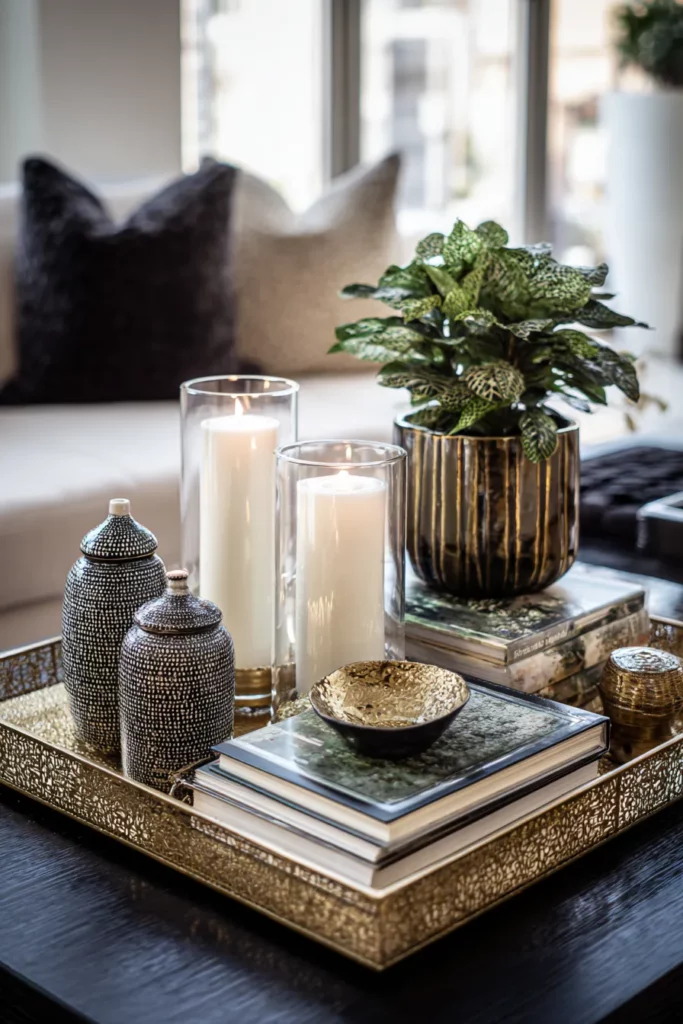
Choose accessories in metallics, glass, and natural materials. A brass tray corralling candles on a coffee table. Glass hurricanes with pillar candles. Ceramic vessels in cream or black.
Books become decor elements too. Stack coffee table books with rich covers—art, design, photography titles in complementary colors create casual elegance.
Living elements matter. Dark green plants like snake plants, rubber trees, or monstera add life without breaking the color story. Place them in matte black or brass planters for continuity.
Adapting Dark Design for Different Seasons
Winter: Embracing Maximum Coziness
Winter is when dark rooms truly shine. Layer in wool blankets, cable-knit throws, and faux fur pillows. Switch to flannel or velvet curtains if your budget allows.
Increase the number of candles—pillar candles in hurricanes, tapers in brass holders, votives clustered on trays. The flickering light against dark walls creates unmatched intimacy.
Add warmer-toned metals in winter—more brass and copper than silver. These finishes feel cozier and complement the season’s natural light quality.
Summer: Lightening Without Losing Mood
You don’t have to abandon your dark walls in summer. Instead, refresh soft furnishings with lighter textures. Swap velvet pillows for linen or cotton. Replace heavy curtains with sheer panels.
Introduce lighter accent colors—more cream, white, and natural tones in accessories and fresh flowers. White ceramics and light wood bowls brighten surfaces without permanent changes.
Maximize natural light by keeping windows uncovered during the day. The increased brightness naturally balances the darkness, making the space feel fresh rather than heavy.
Small Space Considerations
Making Dark Work in Compact Rooms
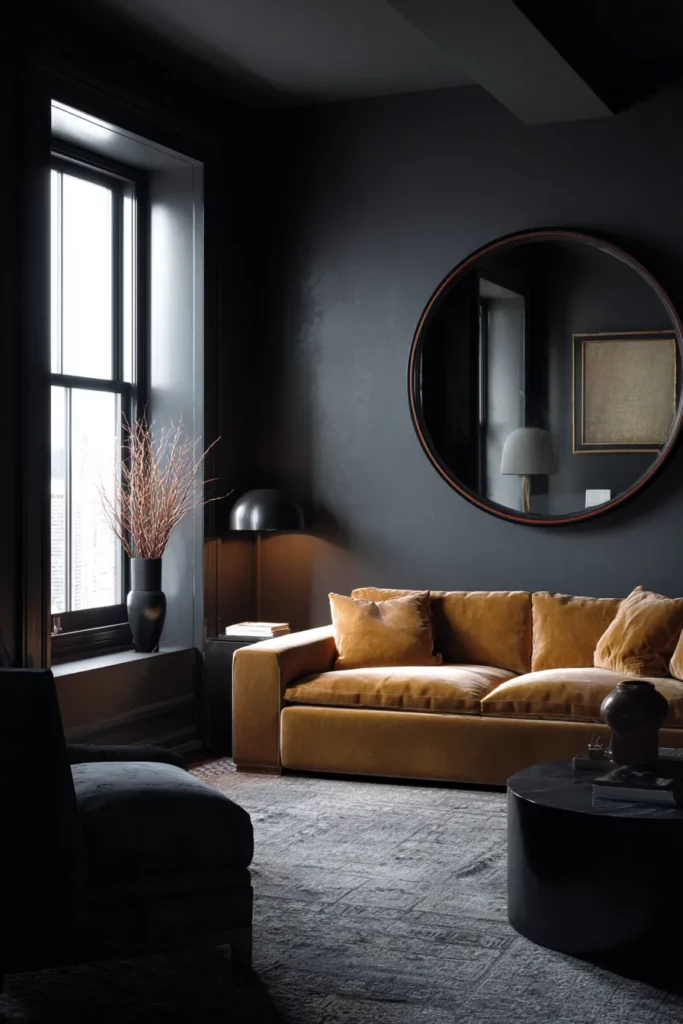
Dark colors can actually make small rooms feel more expansive by obscuring boundaries. When walls, ceiling, and trim share the same deep color, the room’s edges blur, creating depth.
Strategic mirror placement is crucial in small dark spaces. One large mirror can visually double your room’s size while bouncing precious light around.
Keep furniture to a minimum and ensure each piece earns its place. A small moody room should feel curated, not cluttered. Every item should be functional or deeply meaningful.
Vertical Space and Ceiling Treatments
Consider painting the ceiling the same color as walls to create an enveloping cocoon effect. This works especially well in rooms with good natural light or high ceilings.
In rooms with low ceilings, vertical stripes in subtle tones (like matte black with slight sheen) can draw the eye upward. Or use vertical paneling painted in your chosen dark color for architectural interest.
Floating shelves in dark wood or matte black maintain visual continuity while providing storage. Display items in varying heights to create vertical movement.
Practical Maintenance and Longevity
Caring for Dark Walls and Surfaces
Dark walls show dust and imperfections more readily than light ones. Use washable paint in high-traffic areas—eggshell or satin finishes clean more easily than matte.
Dust regularly with microfiber cloths to prevent buildup. For scuffs, keep extra paint for touch-ups. Most quality dark paints cover imperfections in one coat.
Dark furniture requires similar attention. Wipe leather regularly with appropriate conditioner. Vacuum velvet with a soft brush attachment to prevent dust from settling into the pile.
Sustainable Material Choices
Choose low-VOC or zero-VOC paints in your dark colors. Brands like Benjamin Moore Natura, Sherwin-Williams Harmony, and Clare offer deep hues without harmful off-gassing.
Select sustainably sourced wood furniture when possible. Look for FSC certification or vintage pieces that don’t require new resource extraction.
Natural textiles—organic cotton, linen, wool, jute—not only feel better but last longer than synthetics. They age beautifully in moody spaces, developing character rather than looking worn.
Essential Checklist for Your Dark and Moody Living Room
- Choose one deep base color (navy, charcoal, hunter green, or black)
- Select 2-3 lighter accent colors for balance and breathing room
- Incorporate at least one metallic finish (brass, copper, or aged metals)
- Layer 3-5 light sources at different heights (no single overhead lighting)
- Install dimmers on all fixtures for flexibility
- Mix textures deliberately—velvet, leather, linen, metal, wood, stone
- Include living plants in dark planters for organic life
- Place mirrors strategically to enhance natural light
- Choose washable paint finishes for easy maintenance
- Invest in quality dark furniture that will age gracefully
- Add personal statement pieces that reflect your unique style
- Consider seasonal textile changes to adapt the space year-round
Conclusion: Your Invitation to Bold Comfort
A dark and moody living room isn’t just a design choice—it’s an experience you come home to. It’s the feeling of being wrapped in richness, of stepping into a space that holds you without demanding anything.
This aesthetic rewards intentionality. Every texture you choose, every light you place, every color you layer contributes to something greater than decoration. You’re creating atmosphere, crafting mood, building a refuge.
So if you’ve been drawn to deeper hues but hesitated, consider this your gentle permission. Start with one wall, one velvet chair, one brass lamp. Let yourself discover how darkness, thoughtfully balanced, becomes the warmest welcome home.
Frequently Asked Questions
How do you create a dark and moody living room without making it feel small?
Paint walls, trim, and ceiling the same deep color to blur boundaries and create depth. Use large mirrors opposite light sources, incorporate multiple light layers at different heights, and keep furniture minimal but substantial. Choose reflective metallic accents and maintain at least one lighter accent color throughout the space.
What colors are best for dark and moody design?
Navy blue, charcoal gray, and hunter green are the most versatile base colors. Deep plum, chocolate brown, forest green, and matte black work for more dramatic applications. Pair these with cream, champagne, terracotta, or blush accents, and finish with brass, copper, or aged bronze metallics.
What lighting works best in a dark and moody living room?
Layer multiple light sources rather than relying on overhead fixtures. Use dimmable table lamps with warm bulbs (2700K), adjustable floor lamps, wall sconces, and statement chandeliers or pendants. Smart bulbs allow you to adjust both brightness and warmth throughout the day. Candlelight adds irreplaceable ambiance in evening hours.
What textures should I include in a moody interior?
Combine velvet and leather upholstery with linen curtains and throws. Add faux fur, mohair, or chenille for softness. Incorporate natural materials like marble, slate, wood, and jute. Mix smooth metallics (brass, copper) with matte painted surfaces. The variety in texture creates visual interest when color is restrained.
Can I adapt a dark and moody room for different seasons?
Absolutely. In winter, layer heavier textiles like wool blankets, velvet pillows, and increase candles and warm metallic accents. In summer, swap to linen and cotton textiles, introduce more cream and white accessories, maximize natural light with sheer curtains, and add fresh flowers in light-colored vessels. The walls stay the same while soft furnishings adapt.