
Table of Contents
There’s a particular quiet that settles into a room when it holds only what matters. Not emptiness, but intention. A modern minimalist living room breathes with purpose, where every texture whispers and every line guides the eye toward stillness.
This isn’t about deprivation or cold aesthetics. It’s about creating space for life to unfold—uncluttered mornings with coffee in hand, evenings where conversation flows without distraction, weekends where you actually notice the light shifting across your walls.
The modern minimalist living room has evolved beyond stark white boxes into something warmer, more human. It blends the Scandinavian love of natural wood with Japanese principles of intentional space, adding layers of texture that make minimalism feel like home rather than a showroom.
Let’s explore how to bring this tranquil, purposeful beauty into your own living space—whether you’re working with a sprawling room or a cozy urban apartment.
Understanding Modern Minimalist Style
Modern minimalist design emerged from two powerful traditions: Scandinavian functionality and Japanese Zen philosophy. Both cultures understood that simplicity creates space for what truly matters—connection, rest, and beauty in its most essential form.
The style rests on three pillars: intentional selection, functional beauty, and visual calm. Every piece earns its place not through decoration but through purpose, whether practical or emotional.
Key Elements of Minimalist Interior Design
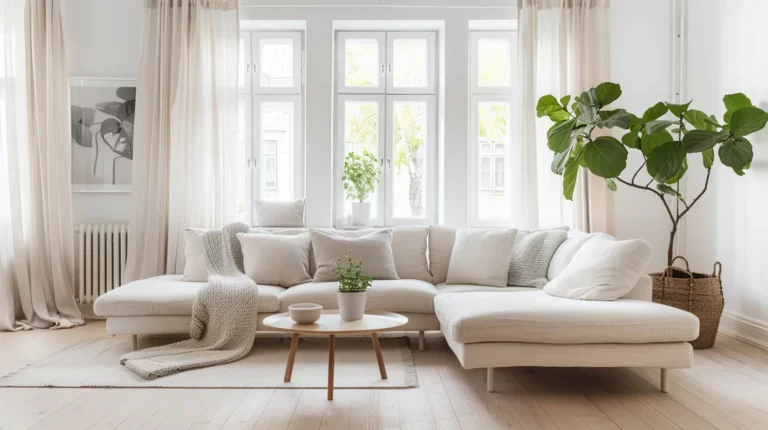
A minimalist living room reveals itself through specific characteristics. Clean lines dominate the furniture silhouettes—think low-profile sofas with exposed wooden legs, rectangular coffee tables without ornate details, and open shelving that displays only selected treasures.
Neutral color palettes form the foundation, but “neutral” has expanded beyond white and gray. Warm beiges, soft taupes, sage greens, and warm oak tones create inviting backdrops that feel grounded rather than clinical.
Functional layouts prioritize flow and purpose. Furniture floats away from walls, creating intimate conversation areas while maintaining open pathways. The goal is breathing room—physically and visually.
Natural materials anchor the space in authenticity. Oak, walnut, linen, wool, ceramic, and stone bring organic texture that prevents minimalism from feeling sterile.
Creating Your Minimalist Foundation
The Neutral Palette That Speaks
Color in a minimalist living room isn’t absence—it’s intention. Start with a base of warm whites or soft beiges that shift with natural light throughout the day. These hues create psychological calm, reducing visual noise that triggers mental clutter.
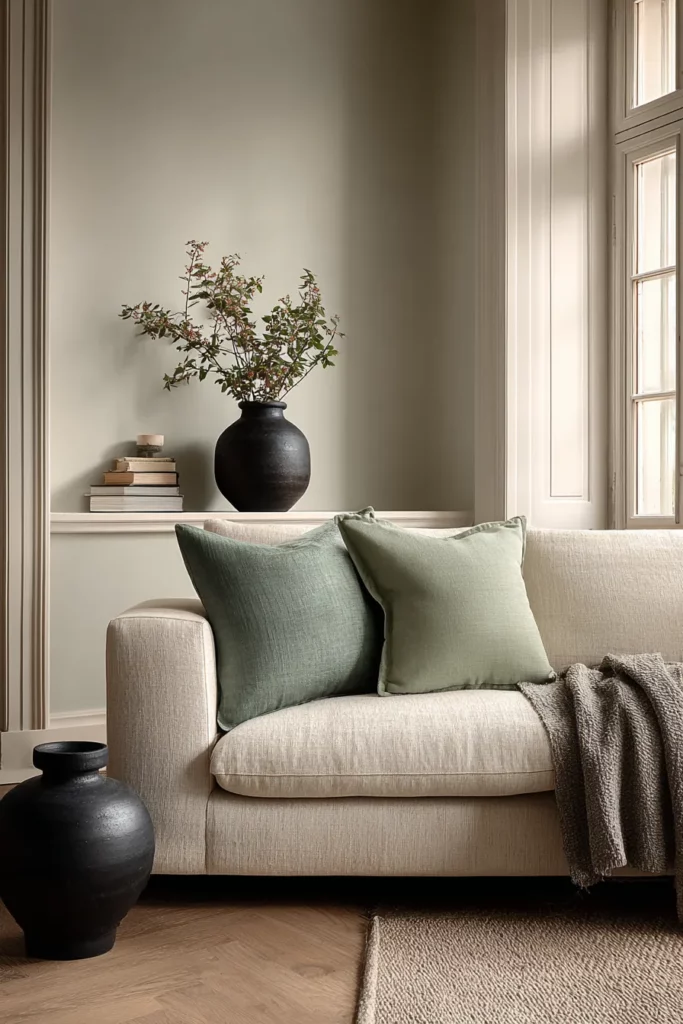
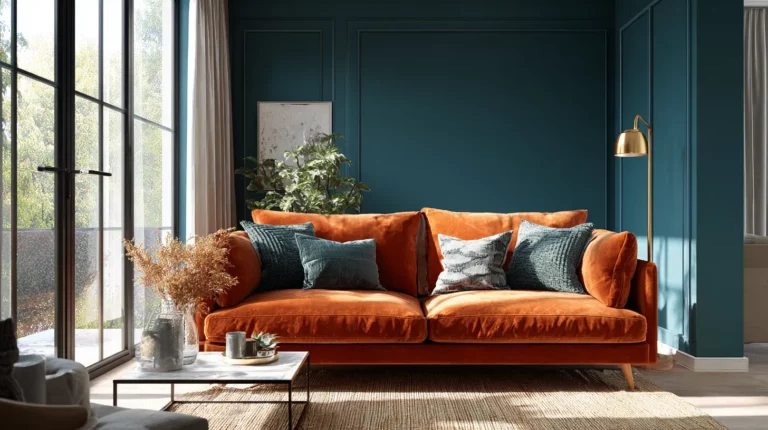
Layer in secondary neutrals for depth. A charcoal gray accent wall adds gravity without weight. Sage green introduces nature’s serenity. Warm terracotta whispers of earth and comfort.
Consider color psychology as you choose. White promotes spaciousness and clarity. Beige offers warmth and stability. Black provides grounding contrast. Soft greens enhance focus and renewal.
| Color | Emotional Impact | Best Use |
|---|---|---|
| Warm White | Spacious, clean, peaceful | Walls, ceilings |
| Beige/Taupe | Warm, stable, inviting | Primary surfaces |
| Charcoal | Grounding, sophisticated | Accent walls, frames |
| Sage Green | Calming, focused, natural | Textiles, plants |
| Natural Wood | Authentic, warm, timeless | Furniture, floors |
Selecting Furniture with Purpose
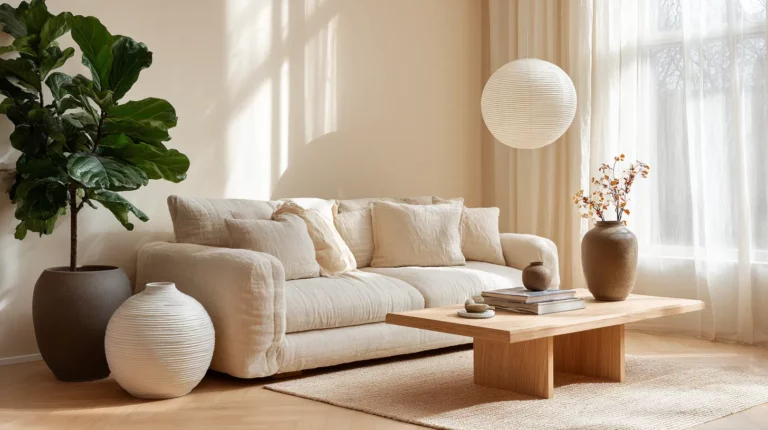
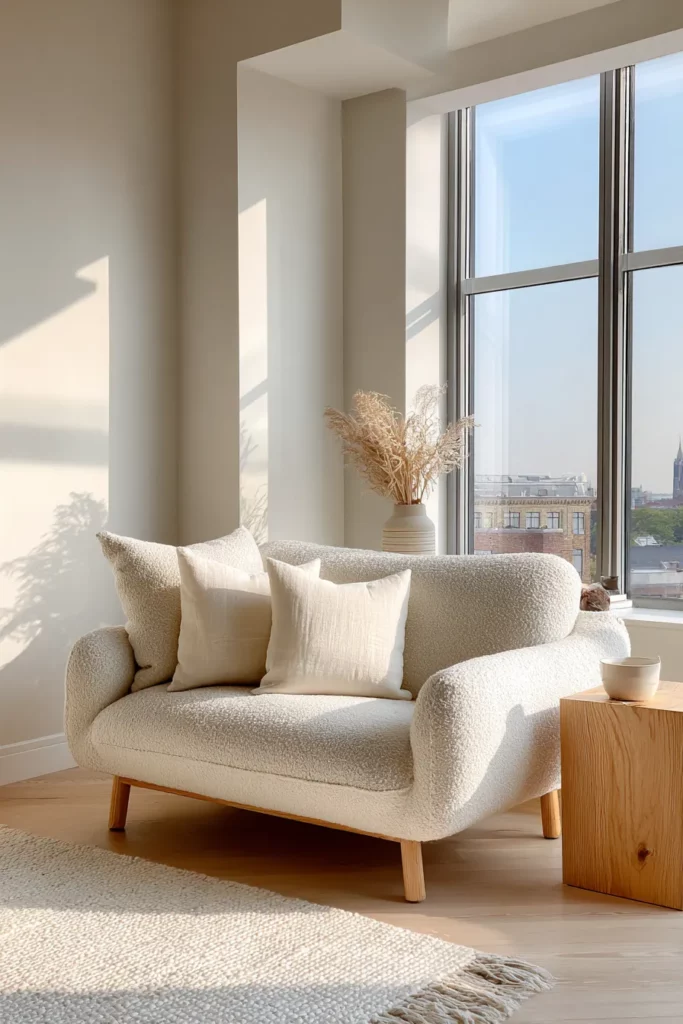
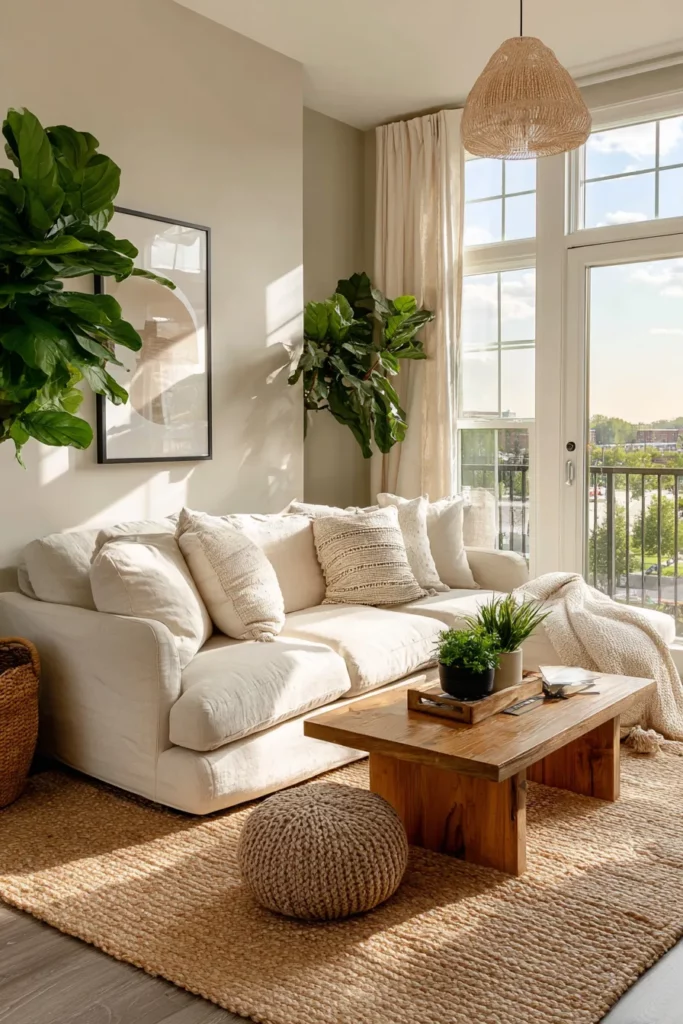
Begin with a sofa that defines the room’s character. Look for clean lines and quality construction—a low-profile design in natural linen or bouclé fabric, with exposed wooden legs that reveal rather than hide. This single piece sets your minimalist intention.
Choose a coffee table that serves without dominating. A simple rectangular design in light oak or a sleek concrete surface provides function while maintaining visual lightness. Avoid glass-topped tables with ornate bases—they conflict with minimalist principles.
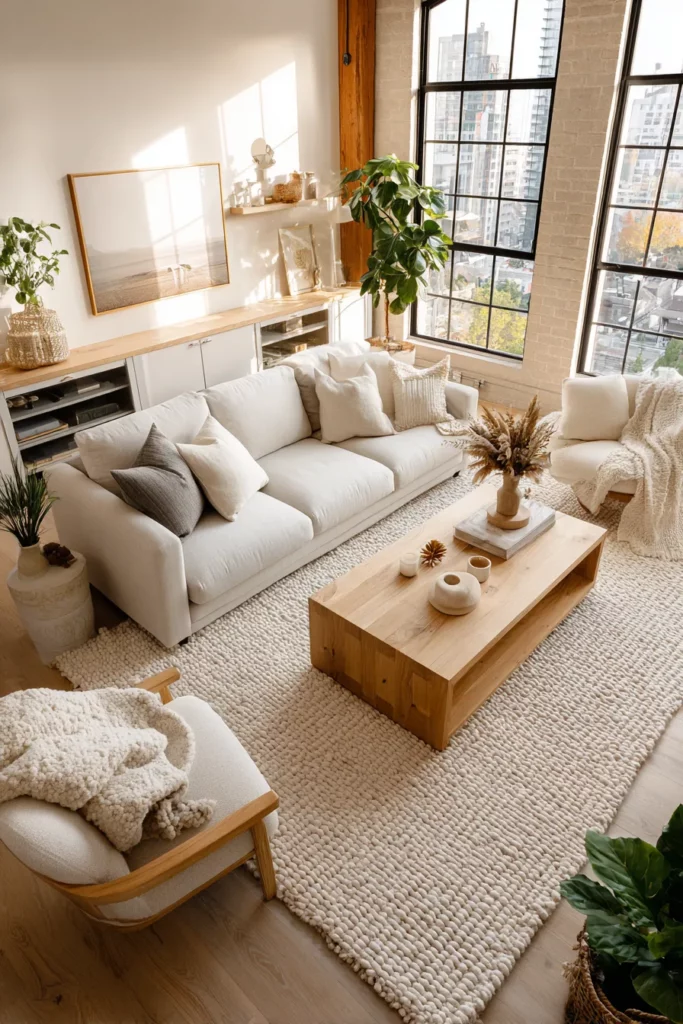
Add seating thoughtfully. One or two accent chairs in complementary neutral tones create conversation areas without crowding. Consider the Japandi approach: low-sitting furniture that emphasizes horizontal lines and connection to the ground.
Storage becomes part of the aesthetic. Built-in shelving with clean lines, low credenzas in natural wood, or modular systems that adapt to your needs keep belongings organized while maintaining the uncluttered look that defines minimalism.
Layering Texture for Warmth
Here’s where modern minimalism transcends its cold reputation. Texture is your secret weapon for creating cozy, inviting spaces within a simplified aesthetic.
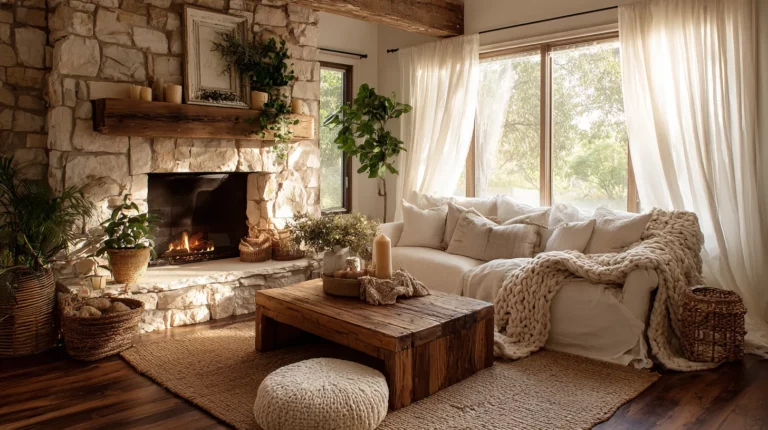
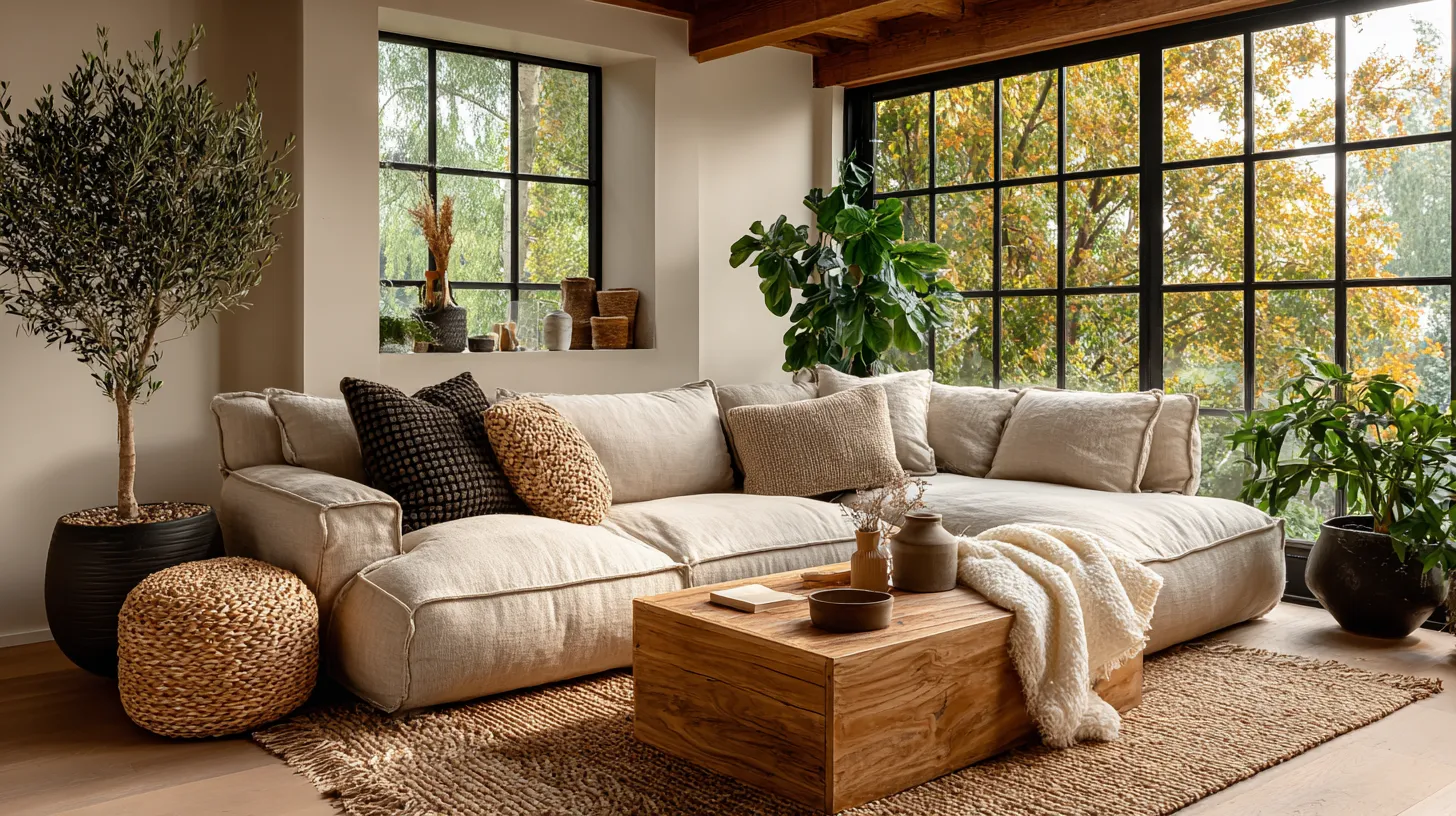
Introduce natural textiles generously. A chunky wool throw draped over your sofa adds tactile interest and invitation. Linen cushions in varying tones of oatmeal and sand create subtle depth. A jute or wool rug grounds the seating area with organic texture underfoot.
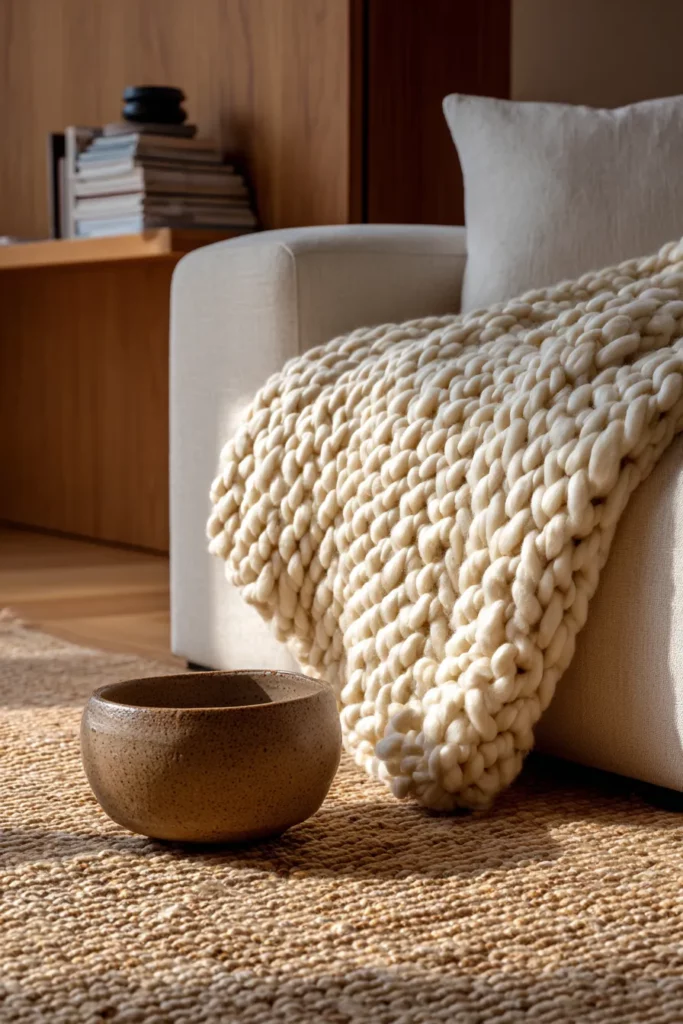
Mix material temperatures. Warm wood against cool concrete. Soft linen beside smooth ceramic. Raw stone next to woven baskets. These contrasts create visual interest without adding pattern or color complexity.
Consider the sensory experience. A cashmere throw invites touch. A nubby wool rug feels grounding. Smooth oak surfaces ask to be traced with fingertips. Minimalism shouldn’t mean sacrificing tactile pleasure—it means curating it intentionally.
Lighting as Emotional Architecture
Light shapes minimalist spaces more than any other element. It defines mood, highlights texture, and transforms a room throughout the day.
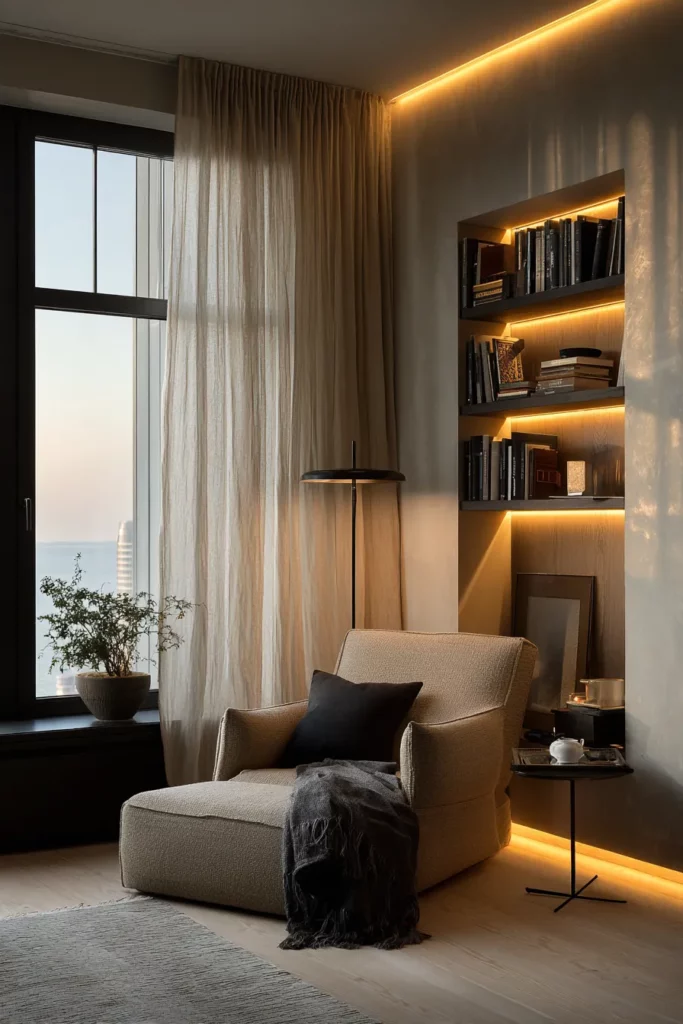
Layering Your Light Sources
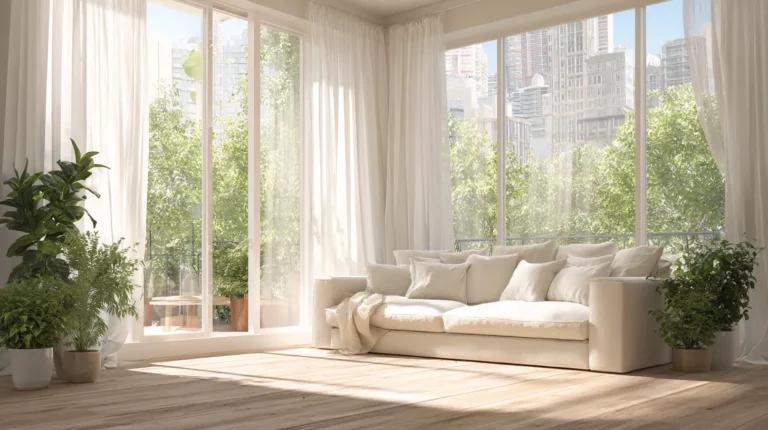
Natural light forms your foundation. Keep windows unobstructed or dress them simply with natural linen curtains that filter rather than block sunlight. Notice how morning light pools on your floor, how afternoon sun warms your walls.
Ambient lighting provides overall illumination. Recessed fixtures or simple track lighting in matte finishes maintain clean ceiling lines. Avoid ornate chandeliers that contradict minimalist principles.
Task lighting serves specific purposes. A sculptural floor lamp with a warm-toned shade beside your reading chair. Minimalist wall sconces flanking a focal point. Each light source should justify its presence through function.
Accent lighting creates atmosphere. Hidden LED strips beneath floating shelves. A single statement pendant in natural materials like paper or wood. Smart bulbs that adjust color temperature from energizing daylight to warm evening glow.
Smart Lighting Integration
Modern minimalism embraces technology when it disappears. Smart lighting systems allow you to adjust ambiance without visible controls. Program morning scenes with bright, cool light for energy. Transition to warm, dimmed light for evening relaxation.
Hide charging stations and cords with intention. Furniture with built-in USB ports. Cable management systems integrated into walls. The goal is function without visible technology cluttering your serene space.
Making Minimalism Work in Small Spaces
Urban apartments and compact homes benefit most from minimalist principles. When space is limited, intentional design becomes essential rather than aspirational.
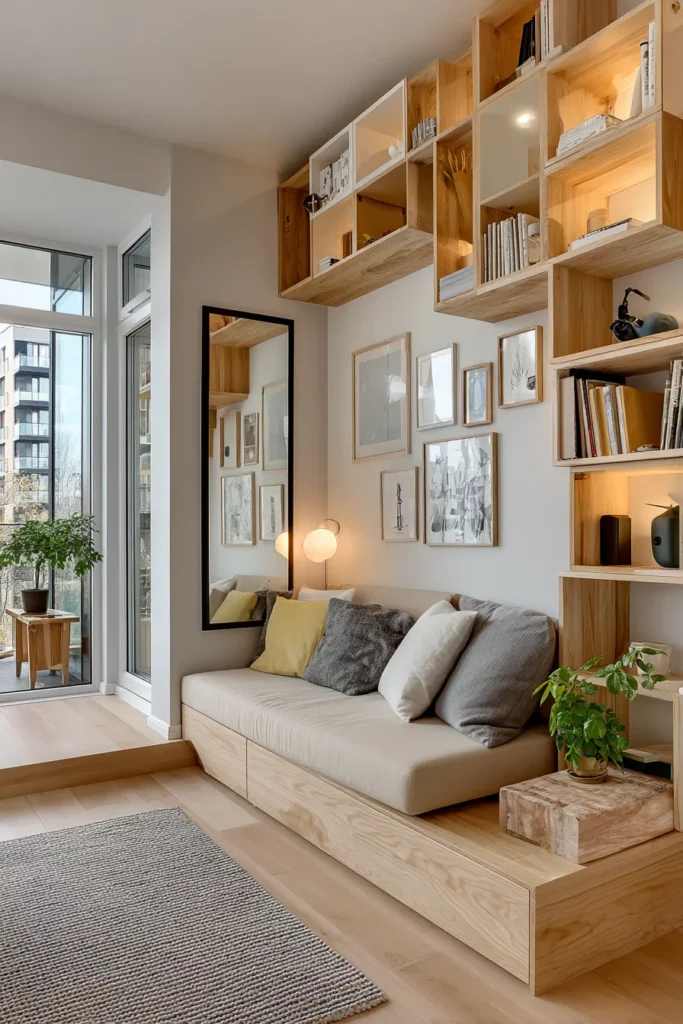
Spatial Optimization Strategies
Choose multifunctional furniture that earns its footprint. An ottoman with hidden storage. A console table that doubles as a workspace. A sofa bed for occasional guests. Each piece should serve multiple purposes.
Use vertical space wisely. Floor-to-ceiling shelving draws the eye upward, making rooms feel taller. Wall-mounted units free floor space while providing storage. Keep displays minimal—a few meaningful objects rather than filled shelves.
Mirrors expand perceived space. A large mirror opposite a window doubles natural light. Frameless or simply framed mirrors maintain minimalist aesthetics while creating spatial illusion.
Create distinct zones without walls. A low credenza between living and dining areas. A strategically placed rug defining the seating space. Open layouts feel larger when thoughtfully divided.
The Japandi Fusion Approach
The marriage of Japanese and Scandinavian design philosophies creates particularly soul-satisfying minimalism. Both traditions honor craftsmanship, natural materials, and the beauty of simplicity, but they approach it differently.
Scandinavian design emphasizes hygge—cozy contentment through warm textiles, candlelight, and gatherings. Japanese wabi-sabi finds beauty in imperfection and transience, celebrating aged wood, handmade ceramics, and natural asymmetry.
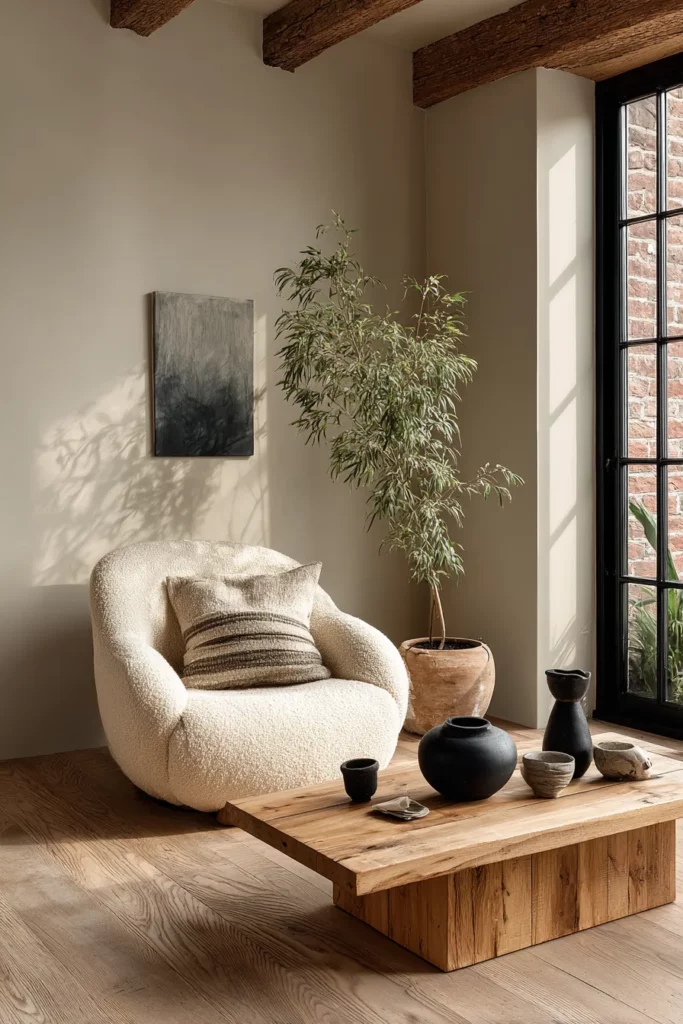
Blend these traditions intentionally. A low oak coffee table with clean Scandinavian lines. Handmade Japanese ceramics displayed on simple shelving. Natural linen textiles in warm neutrals. Black accents that reference Japanese interiors. The result feels both peaceful and inviting.
Sustainable Minimalism: Conscious Choices
Modern minimalism aligns naturally with sustainable living. Buying less, choosing better, and selecting enduring pieces reduces environmental impact while creating more meaningful spaces.
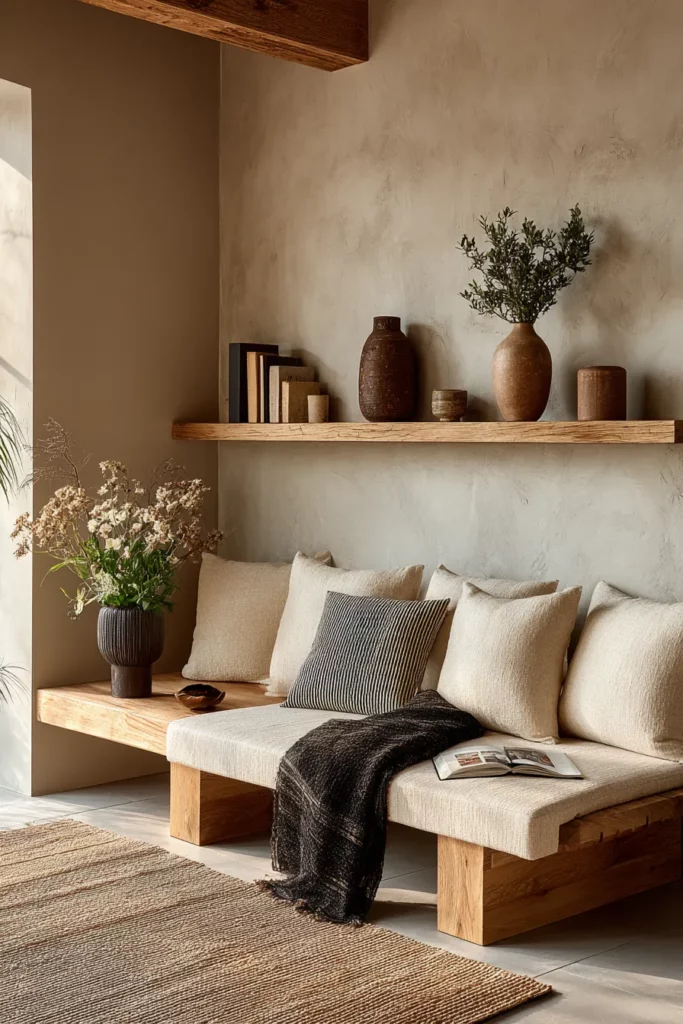
Materials That Matter
Prioritize sustainable sources. FSC-certified wood furniture. Organic cotton and linen textiles. Recycled metal and glass. Reclaimed wood accent pieces. These choices support responsible manufacturing while adding authentic character.
Invest in quality over quantity. A well-constructed oak sofa lasts decades. Fast furniture clutters landfills within years. The minimalist approach of “buy less, buy better” serves both aesthetics and environmental responsibility.
Consider secondhand and vintage. A midcentury credenza brings history and character. Vintage ceramics add unique texture. Estate sale artwork provides one-of-a-kind focal points. Sustainable minimalism honors existing resources.
Support artisan craftsmanship. Handwoven rugs. Locally thrown pottery. Custom woodwork from regional makers. These pieces carry stories and support sustainable, small-scale production.
Avoiding Common Minimalist Mistakes
The path to beautiful minimalism has its pitfalls. Understanding them helps you create spaces that feel intentional rather than incomplete.
Don’t confuse minimalism with deprivation. The goal isn’t emptiness but intentionality. If you love books, beautiful open shelving displaying curated favorites honors minimalist principles better than hiding them all away.
Avoid the all-white trap. Pure white spaces can feel sterile and unwelcoming. Layer warm neutrals, natural wood tones, and organic textures to prevent your living room from feeling like a waiting room.
Remember scale and proportion. In small spaces, appropriately scaled furniture prevents overwhelm. In large rooms, too-small pieces float awkwardly. Match furniture size to room dimensions for visual harmony.
Don’t sacrifice comfort for aesthetics. A beautiful sofa that’s uncomfortable to sit on fails minimalism’s functional requirement. Choose pieces that serve their purpose beautifully.
Seasonal Adaptability in Minimalist Design
Minimalist spaces can shift with seasons without abandoning their core principles. The key is thoughtful, temporary additions rather than complete overhauls.
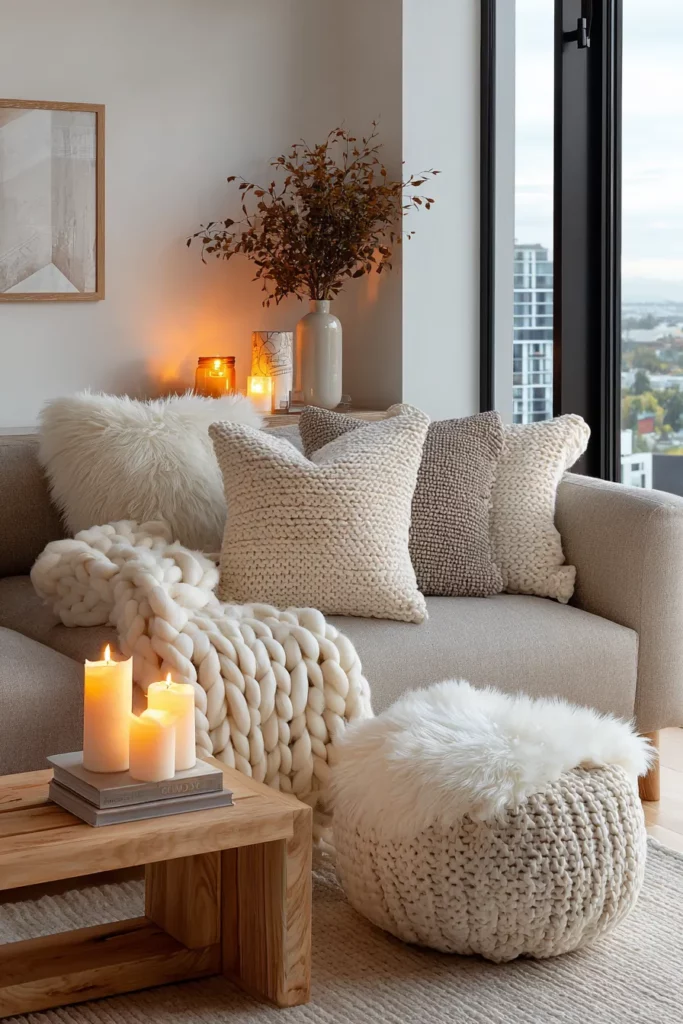
Warm Winter Minimalism
As temperatures drop, layer in cozy textures. Add a chunky knit throw in cream or charcoal. Swap lightweight linen cushions for wool or velvet in warm neutrals. Place a sheepskin rug over hardwood for tactile warmth.
Adjust lighting for shorter days. Increase warm-toned lamps. Add candles in simple holders. The goal is creating hygge within minimalist restraint.
Cool Summer Minimalism
When warmth returns, lighten the visual weight. Store heavy throws. Return to lightweight linen textiles in pale colors. Open windows for natural ventilation.
Bring nature inside. A single branch of greenery in a simple vase. Fresh flowers in white or cream. These temporary touches connect indoor and outdoor without permanent clutter.
Budget-Friendly Minimalist Makeover
Creating minimalist beauty doesn’t require luxury budgets. Strategic choices and DIY approaches make the style accessible.
Start with Decluttering
The most affordable minimalist transformation costs nothing—remove what doesn’t serve. Edit belongings ruthlessly. Donate, sell, or store items that don’t align with your vision. Empty space is free and immediately impactful.
Smart Shopping Strategies
Shop secondhand for quality pieces. Vintage midcentury furniture offers clean lines at fraction of new prices. Estate sales and online marketplaces yield minimalist-friendly finds.
Invest strategically. Buy one quality sofa rather than multiple cheap pieces. Choose a beautiful handmade rug over several machine-made ones. The minimalist principle of “less but better” naturally supports budget consciousness.
DIY simple solutions. Build basic floating shelves. Paint existing furniture in neutral tones. Create your own abstract art in minimalist colors. Simple projects aligned with minimalist aesthetics cost little but transform spaces.
Renter-Friendly Approaches
Create minimalist impact without permanent changes. Use furniture to define spaces rather than paint. Choose freestanding rather than built-in storage. Select removable solutions that travel with you.
Wall Styling in Minimalist Spaces
Walls in minimalist living rooms require thoughtful restraint. The temptation to fill blank space contradicts minimalist principles, but completely bare walls can feel unfinished.
Keep it minimal and meaningful. One large-scale artwork makes more impact than multiple small pieces. Choose abstract works in neutral tones that complement your palette.
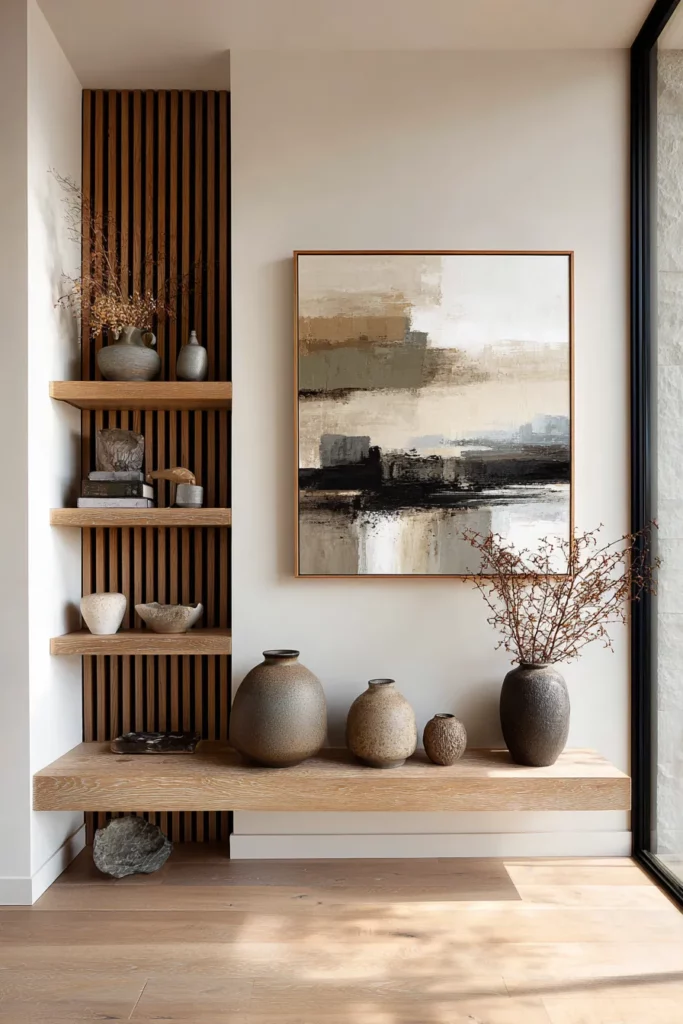
Consider natural materials. Wood slat wall panels add organic texture without busy patterns. A single floating shelf displaying handmade ceramics creates interest while maintaining simplicity.
Embrace negative space. In minimalism, empty wall space isn’t a problem to solve but a design element that allows the eye to rest. Trust that less truly can be more.
Technology Integration Without Visual Clutter
Modern living includes technology, but minimalist spaces shouldn’t showcase it. Strategic integration keeps function while maintaining aesthetic calm.
Conceal what you can. TVs hide in custom cabinetry or mount flush to walls. Sound systems integrate into ceilings. Charging stations tuck inside drawers or behind furniture.
Choose minimal devices. Opt for speakers in neutral colors. Select equipment with clean, simple designs. When technology must be visible, ensure it aligns with minimalist aesthetics.
Manage cords obsessively. Use cable management systems. Mount power strips behind furniture. Bundle and hide wires within furniture legs or along baseboards. Visible cords destroy minimalist calm.
The Psychology of Minimalist Living
Beyond aesthetics, minimalist living rooms impact mental and emotional wellbeing. Understanding this connection deepens your appreciation for the style.
Visual calm reduces mental clutter. When surroundings are simplified, the mind relaxes. Studies show reduced visual stimulation lowers stress hormones and improves focus.
Intentional spaces support intentional living. When your environment reflects thoughtful choices, you become more conscious in other life areas. The living room becomes practice ground for mindful decision-making.
Open space invites possibility. Unlike filled rooms that dictate specific uses, minimalist spaces adapt to your needs—yoga practice, children’s play, large gatherings, or quiet solitude. Flexibility reduces stress and increases satisfaction.
Bringing It All Together: Your Minimalist Living Room Checklist
Before we close, here’s a practical framework for creating your own modern minimalist sanctuary:
Foundation Elements:
- Neutral color palette with warm undertones (beige, taupe, soft white, sage)
- Quality sofa in natural fabric with clean lines
- Simple coffee table in wood or neutral material
- One or two accent chairs that complement without matching
- Minimal, functional storage that integrates with design
Texture & Warmth:
- Natural fiber rug (jute, wool, or sisal)
- Linen or wool throw blankets in neutral tones
- Mixed-texture cushions (avoid busy patterns)
- Wood elements in warm tones (oak, walnut, teak)
- One or two organic materials (stone, ceramic, woven baskets)
Lighting Strategy:
- Maximize natural light with simple window treatments
- Layer ambient, task, and accent lighting
- Choose fixtures in matte finishes and simple designs
- Consider smart lighting for adjustable ambiance
- Hide all cords and technical elements
Personal Touches:
- One meaningful artwork or large-scale piece
- Selected plants in simple planters (not cluttered groupings)
- A few handmade or artisan objects with history
- Books displayed intentionally, not filling every shelf
- Seasonal elements that can be easily swapped
What to Avoid:
- Excessive decorative objects without purpose
- Busy patterns or multiple competing colors
- Furniture that prioritizes style over comfort
- Technology displayed prominently
- Visible clutter or disorganized storage
A Final Thought on Mindful Spaces
Creating a modern minimalist living room is ultimately about making space for what matters to you. Not what design trends dictate, not what fills your Instagram feed, but what brings you peace when you walk through your door.
It’s the morning coffee tasting better in uncluttered calm. It’s conversations that flow easier when visual noise doesn’t compete. It’s finding your mind relaxing because your eyes have places to rest.
Minimalism isn’t about perfection or deprivation. It’s about intention, about choosing deliberately, about creating sanctuary in an overstimulated world. Your living room can breathe, and in its breathing, help you breathe too.
Start small. Remove one thing that doesn’t serve. Add one texture that invites touch. Notice how light moves through your space. Trust that less truly can hold more—more peace, more presence, more of what makes a house feel like home.
Welcome to your modern minimalist living room. Welcome home.
Frequently Asked Questions
What is a modern minimalist living room style?
Modern minimalist living room style emphasizes intentional simplicity through clean lines, neutral palettes, and functional design. It blends Scandinavian and Japanese design philosophies, focusing on quality over quantity with natural materials like wood, linen, and stone. Unlike stark minimalism, the modern approach incorporates warm textures and cozy elements that make spaces feel inviting rather than cold.
How can I make my living room look minimalist on a budget?
Start by decluttering thoroughly—removing excess items costs nothing and creates immediate impact. Shop secondhand for quality furniture with clean lines, which offers better value than new fast furniture. DIY simple projects like floating shelves or neutral paint treatments. Invest strategically in one or two key pieces like a quality sofa, then build around them slowly. Focus on multifunctional furniture that maximizes value.
How do you make a minimalist living room cozy and warm?
Layer natural textures generously—wool throws, linen cushions, jute rugs, and wooden accents prevent minimalist spaces from feeling cold. Use warm lighting with adjustable color temperature, creating amber-toned evenings that feel inviting. Choose warm neutrals like beige and taupe over stark white. Add living elements like plants or fresh branches. The key is tactile comfort within visual simplicity.
What colors work best in minimalist living rooms?
Warm whites, soft beiges, and taupes create inviting foundations. Sage green adds calming natural tones. Charcoal gray provides grounding contrast. Natural wood tones in oak or walnut bring warmth. The goal is a neutral palette with warm undertones that shifts beautifully in natural light. Avoid stark pure white or cool grays, which feel sterile rather than welcoming.
Can minimalism work in small living rooms?
Minimalism actually benefits small spaces by reducing visual clutter and maximizing function. Choose multifunctional furniture like storage ottomans or sofa beds. Use vertical storage to free floor space. Keep furniture appropriately scaled—oversized pieces overwhelm small rooms. Mirrors expand perceived space. The minimalist principle of “less but better” helps small rooms feel spacious rather than cramped.