
Table of Contents
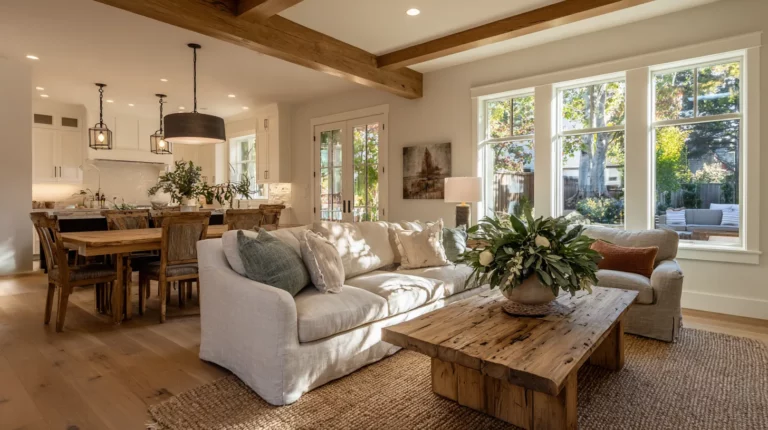
There’s something profoundly calming about stepping into a Scandinavian living room. The light seems softer here, pooling across pale wood floors and gathering in the folds of linen throws. The air feels quieter, uncluttered by excess.
This is design that breathes—minimalist but never cold, functional yet deeply comforting. Born from the long, dark winters of Northern Europe, Scandinavian interiors honor light, nature, and the simple joy of being home. They whisper rather than shout.
In this guide, we’ll walk you through the essential elements of creating your own Nordic-inspired sanctuary. From the colors that define these spaces to the textures that make them feel lived-in and loved, you’ll discover how to bring this timeless aesthetic into your own living room.
Whether you’re working with a sprawling open-plan space or a cozy apartment corner, Scandinavian design adapts beautifully to your needs.
What Defines a Scandinavian Living Room?
At its heart, Scandinavian design is about balance—between form and function, beauty and practicality, minimalism and warmth. It emerged in the mid-20th century across Denmark, Sweden, Norway, and Finland, shaped by harsh climates and a cultural emphasis on simplicity.
These living rooms reject ornamentation for its own sake. Instead, every piece serves a purpose while contributing to the overall sense of tranquility. Clean lines meet organic shapes; neutral palettes welcome natural textures.
The result is a space that feels intentional yet effortless, modern yet timeless. It’s design that supports daily life rather than demanding careful maintenance.
The Scandinavian Color Palette: Light, Neutral, and Natural
Foundation Colors
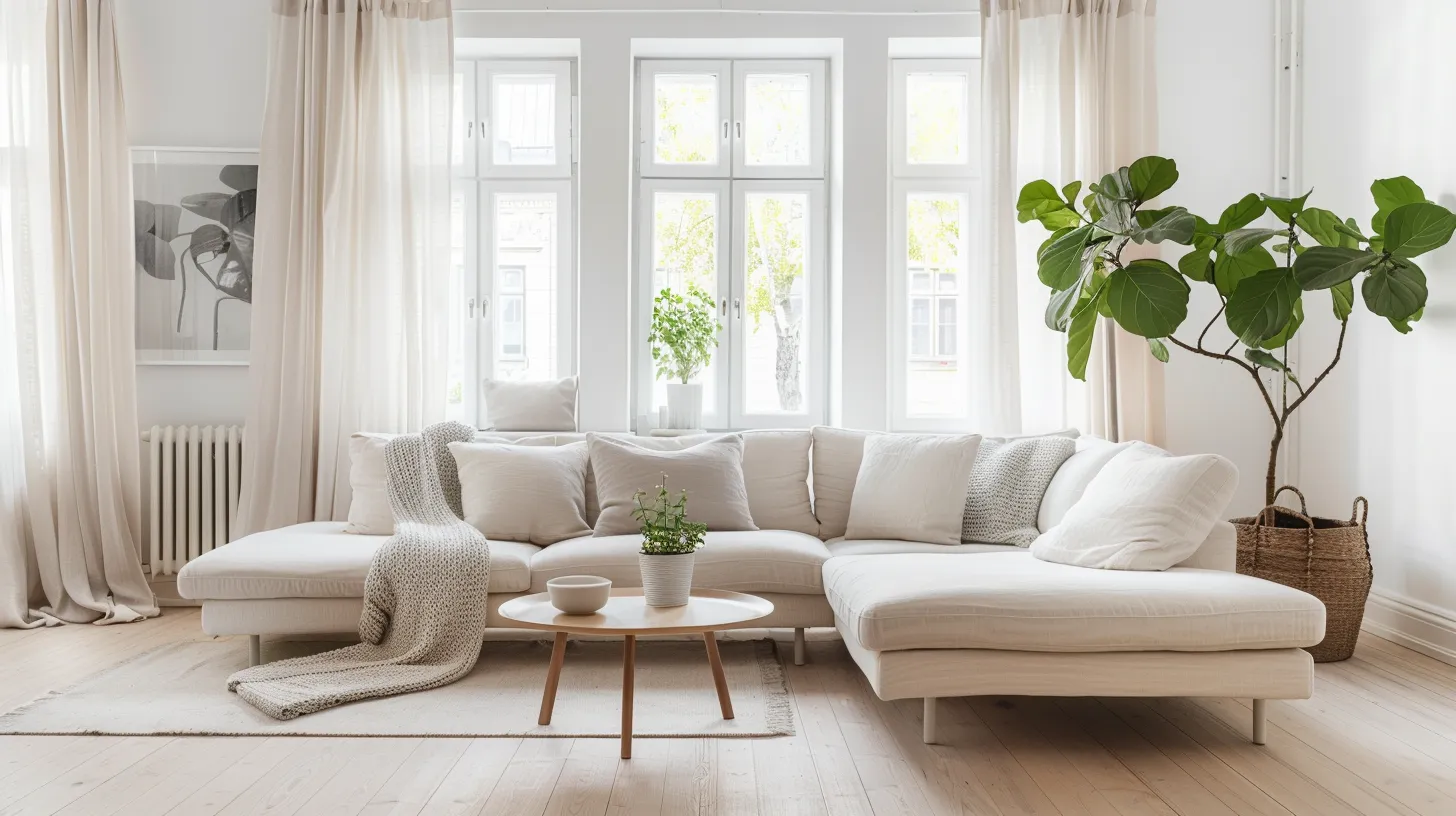
White walls form the backbone of most Scandinavian living rooms, but not the stark, sterile white of hospitals. Think warm whites with subtle undertones—cream, ivory, even the faintest hint of gray or beige.
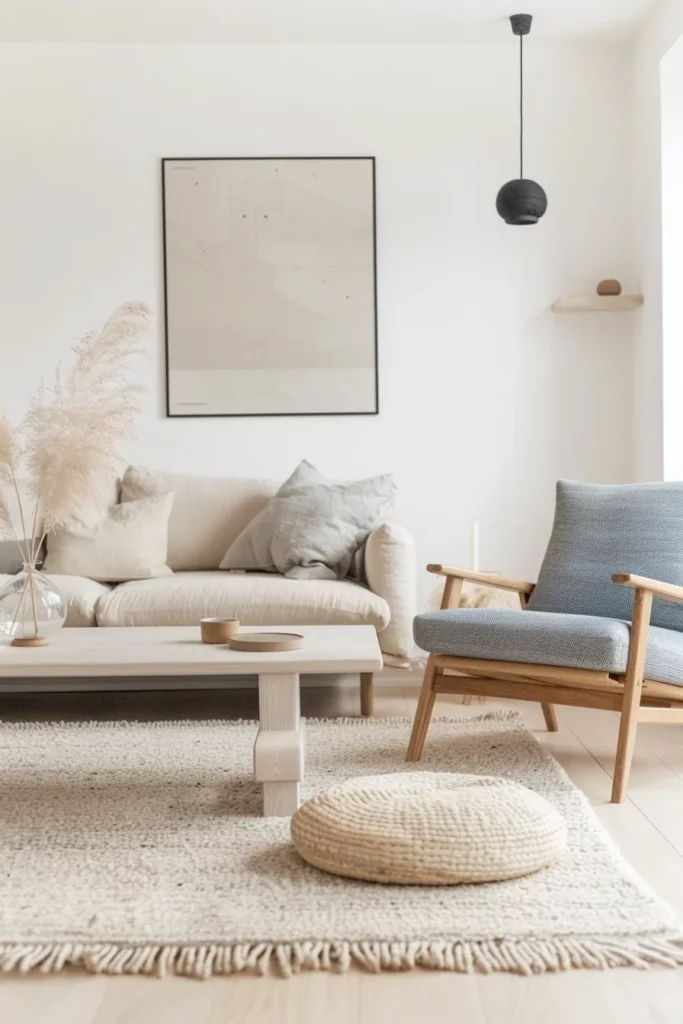
These pale surfaces maximize light reflection, crucial in regions where winter daylight is scarce. They also create a peaceful backdrop that allows furniture and accessories to shine without visual competition.
Accent Tones
While neutrals dominate, Scandinavian spaces aren’t afraid of color. Soft grays, muted blues, dusty greens, and warm terracotta add depth without overwhelming the senses. These hues appear in throw pillows, artwork, or a single statement chair.
Black provides essential grounding—perhaps in metal light fixtures, window frames, or the legs of a mid-century sofa. This dark contrast prevents the space from feeling washed out while maintaining the overall lightness.
Warm Woods
Natural wood tones bring life and warmth to the palette. Light oak, birch, ash, and pine appear in flooring, furniture, and decorative objects. These blonde woods catch and reflect light beautifully, creating that characteristic Scandinavian glow.
The grain and texture of wood add organic interest to otherwise minimal spaces, connecting the interior to the natural world outside.
Essential Furniture: Function Meets Beauty
The Scandinavian Sofa
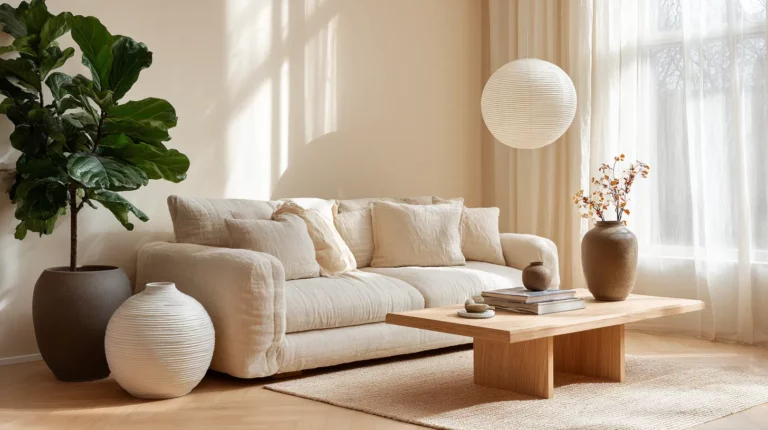
Your sofa should be clean-lined and comfortable, with low profiles and gently tapered legs. Think mid-century modern silhouettes upholstered in neutral linen, cotton, or wool. The frame might be light wood or left exposed to showcase craftsmanship.
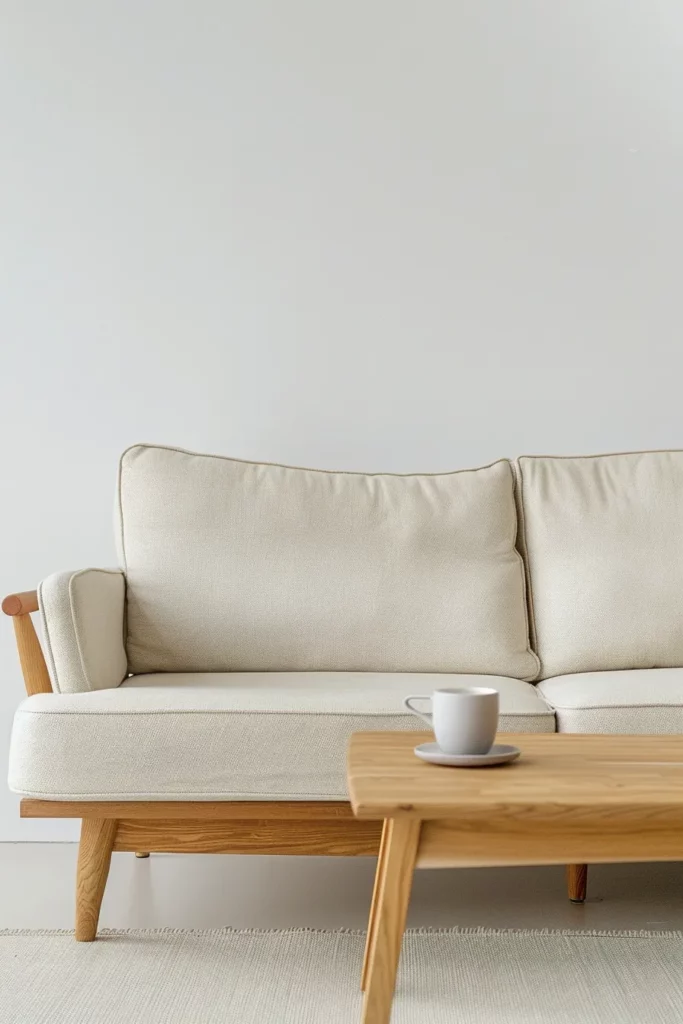
Avoid overly plush or ornate pieces. Scandinavian seating balances support with simplicity, inviting you to settle in without dominating the room.
Multi-Functional Pieces
Small spaces and practical living drive much of Scandinavian furniture design. Coffee tables with hidden storage, nesting side tables, and modular shelving units maximize functionality without adding visual clutter.
Look for pieces that serve multiple purposes—a bench that provides seating and storage, a console table that doubles as a desk. This efficiency reflects the Nordic concept of lagom, the Swedish philosophy of “just enough.”
Natural Materials
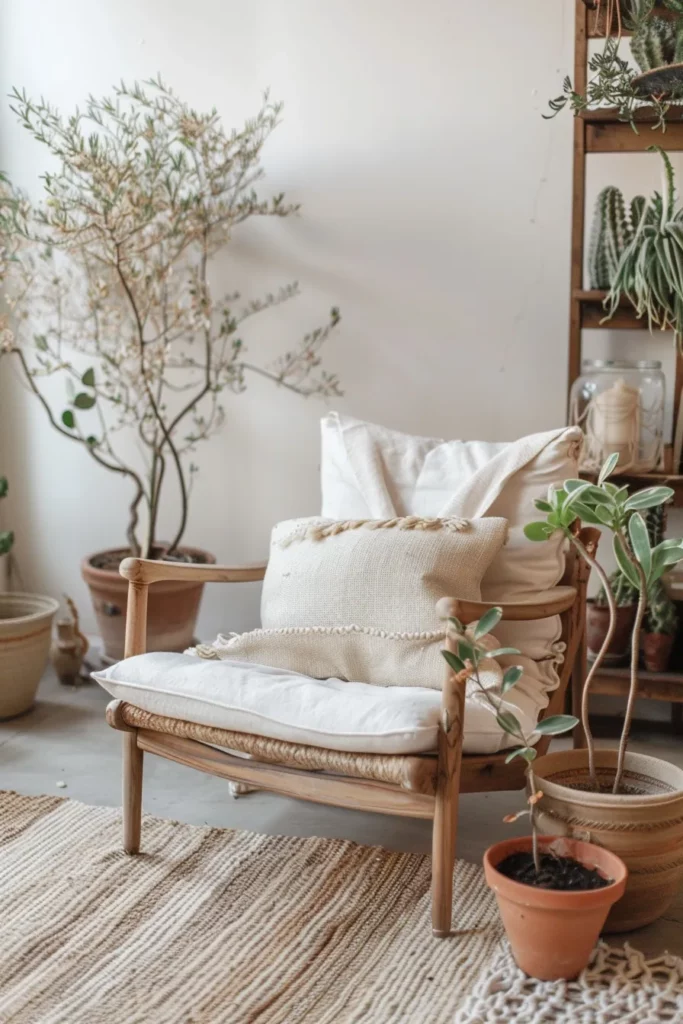
Wood remains the star, but woven materials like rattan, cane, and wicker add textural variety. A rattan armchair or woven basket brings warmth and handcrafted character to the space.
Metal accents in brass, copper, or matte black provide subtle industrial touches that keep the aesthetic from feeling too rustic or countryside.
Lighting: Maximizing Natural Light and Creating Warmth
Embrace Natural Light
In Scandinavian countries, natural light is precious. Leave windows unobstructed or dressed in sheer white curtains that diffuse rather than block sunlight. Avoid heavy drapes or dark window treatments that diminish brightness.
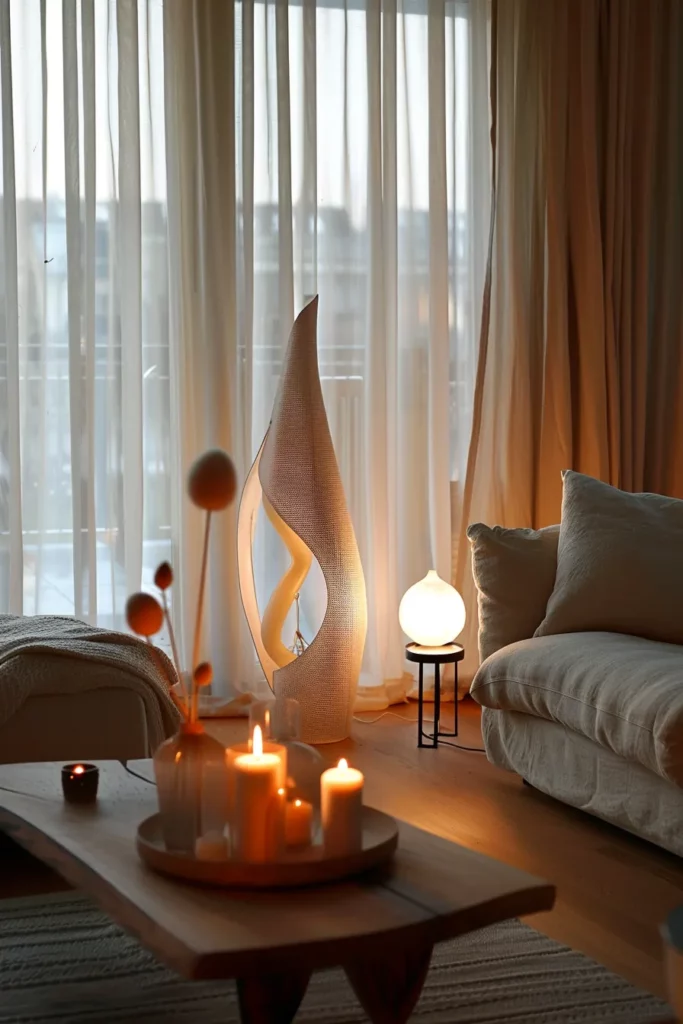
Position mirrors strategically to bounce light deeper into the room. A large mirror opposite a window effectively doubles the light while making the space feel more expansive.
Layered Artificial Lighting
As winter evenings stretch long, thoughtful artificial lighting becomes essential. Layer multiple light sources at different heights—overhead pendants, floor lamps, table lamps, and candles.
Choose fixtures with clean, sculptural designs in wood, metal, or ceramic. Iconic pieces like the PH lamp or Arco-style floor lamps embody the Scandinavian marriage of beauty and purpose.
The Hygge Factor
Candlelight is non-negotiable in creating hygge—that Danish concept of cozy contentment. Cluster pillar candles on your coffee table, arrange tea lights on shelves, use candlesticks in brass or ceramic holders.
The warm, flickering glow softens hard edges and creates an atmosphere of intimacy and relaxation that overhead lighting simply cannot match.
Textures and Textiles: Layering Comfort
Soft Furnishings
Scandinavian minimalism needs warmth, and textiles provide it. Layer your sofa with linen cushions, chunky knit throws, and sheepskin or faux fur accents. These soft elements invite touch and create visual interest through subtle pattern and texture.
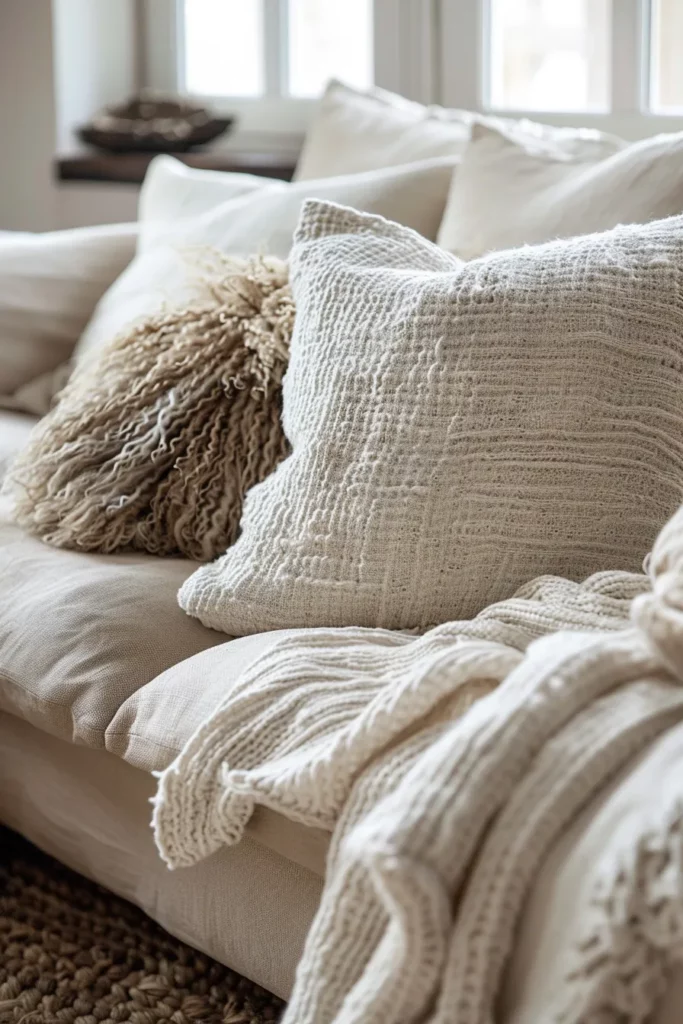
Choose natural fibers—cotton, wool, linen—in neutral tones or soft patterns like simple stripes or geometric designs. Quality matters more than quantity here.
Rugs as Anchors
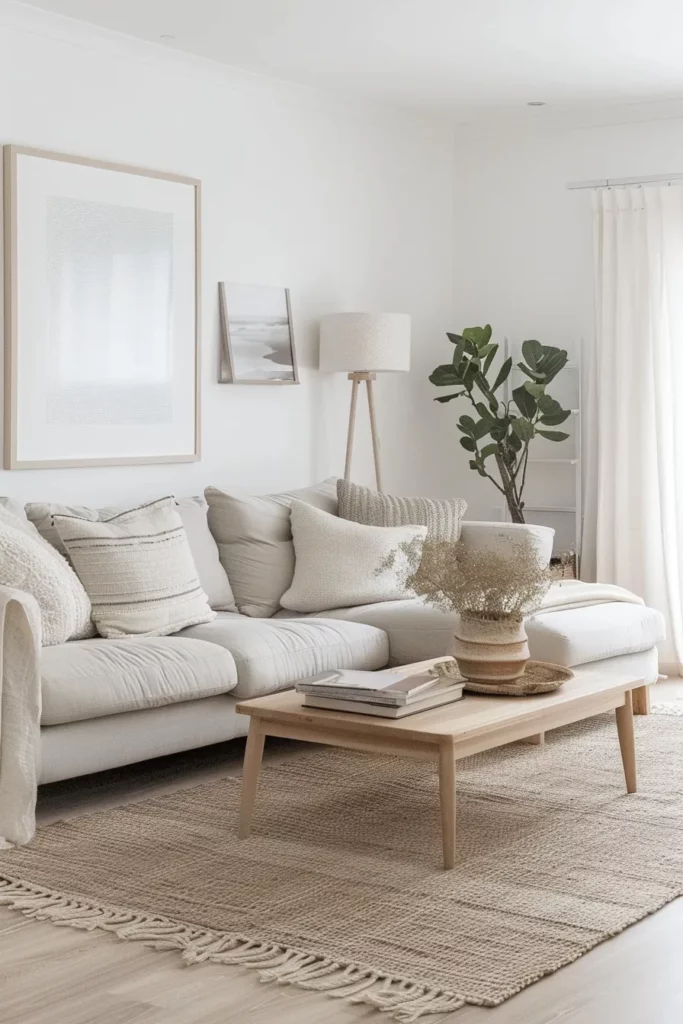
A beautiful rug grounds your seating area and adds comfort underfoot. Natural fiber rugs in jute or sisal work well, as do wool rugs in cream, gray, or subtle patterns.
The rug should be large enough to sit beneath all or most of your furniture, creating a cohesive zone within the larger room.
Window Treatments
Keep window dressings minimal. If privacy isn’t a concern, leave windows bare. Otherwise, opt for simple linen curtains in white or natural tones, hung from minimal rods that don’t draw attention.
The goal is always to maximize light while maintaining the clean, uncluttered aesthetic.
The Japandi Influence: Scandinavian Meets Japanese
What Is Japandi?
Japandi blends Scandinavian and Japanese design philosophies—both minimalist traditions that honor nature, craftsmanship, and functional beauty. The result feels slightly warmer and more earthy than pure Scandinavian style.
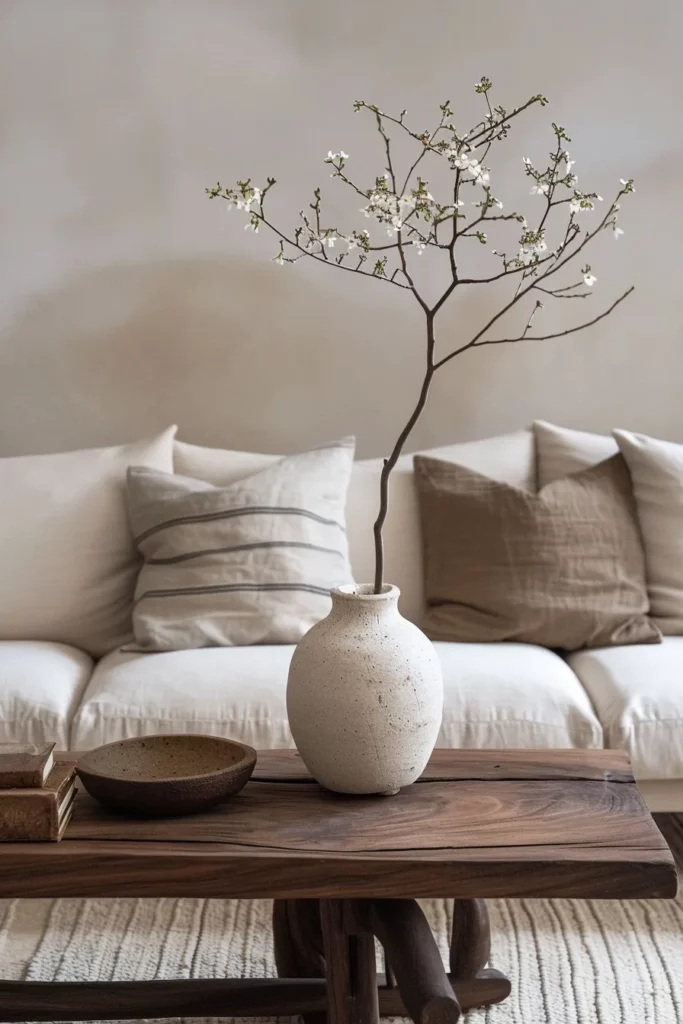
Japandi spaces incorporate lower furniture silhouettes, darker wood tones like walnut, and wabi-sabi elements that celebrate imperfection and age. Think handmade ceramics, organic shapes, and more muted color palettes.
Incorporating Japandi Elements
Add a low-profile wooden coffee table in rich walnut tones. Display simple ceramic vessels or a single branch in a handmade vase. Choose furniture with clean lines but softer, more organic curves.
This fusion works beautifully because both design traditions share core values—simplicity, natural materials, and mindful living.
Small Space Scandinavian Design
Making Compact Rooms Feel Spacious
Scandinavian design excels in small spaces. The light palette visually expands walls, while minimal furniture prevents cramped feelings. Every piece must earn its place.
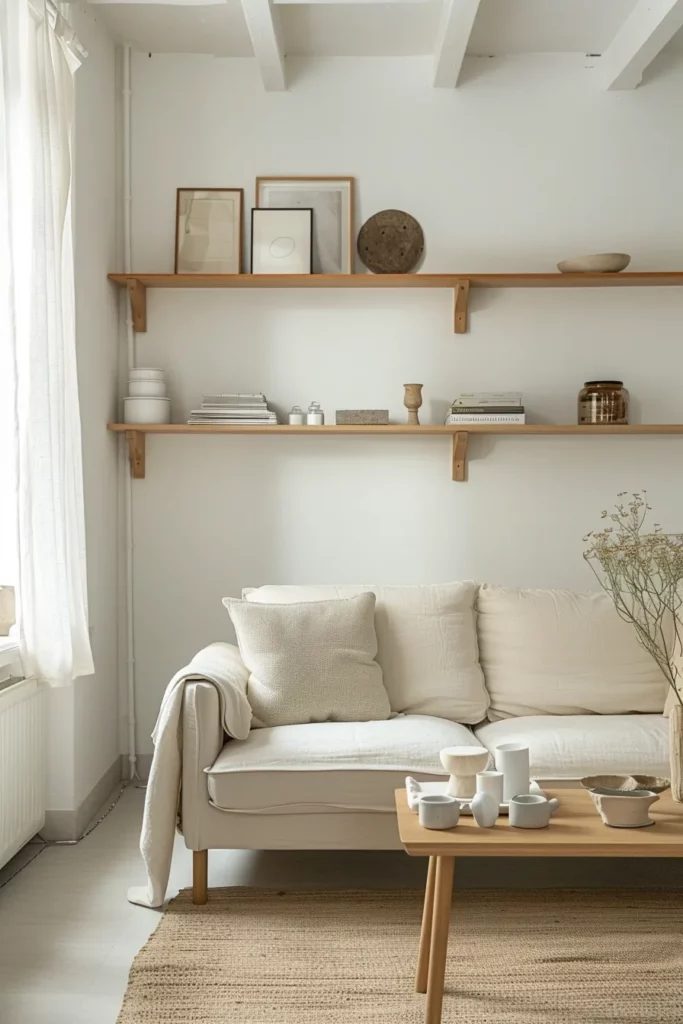
Choose furniture with visible legs rather than solid bases—this reveals floor space and creates an airier feeling. Wall-mounted shelving keeps surfaces clear while providing necessary storage.
Smart Storage Solutions
Built-in storage, floating shelves, and concealed compartments maintain the uncluttered look essential to Scandinavian style. Baskets in natural materials hide everyday items while adding texture.
Vertical space becomes crucial in small rooms. Tall bookshelves or floor-to-ceiling cabinets in light wood maximize storage without consuming precious square footage.
Multi-Purpose Furniture
In tiny apartments, your coffee table might need to lift into a dining surface. Your sofa might convert into guest sleeping. Scandinavian design embraces these practical solutions without sacrificing style.
Look for modular pieces that adapt to different needs throughout the day, supporting flexible modern living.
Sustainable and Eco-Friendly Choices
Natural and Renewable Materials
Scandinavian design has always prioritized sustainability—a natural extension of its connection to nature. Choose furniture made from sustainably harvested wood, organic textiles, and natural finishes.
Second-hand and vintage pieces fit perfectly into this aesthetic. A mid-century modern chair from a thrift store brings both character and environmental consciousness to your space.
Quality Over Quantity
The Scandinavian approach favors fewer, better things. Invest in well-crafted pieces that will last decades rather than disposable furniture that needs replacement every few years.
This philosophy reduces waste while creating spaces filled with items you genuinely love and value.
Smart Home Integration
Modern Scandinavian living rooms can embrace technology while maintaining minimalism. Smart lighting systems with warm, dimmable bulbs support both the aesthetic and the hygge atmosphere. Eco-thermostats and energy-efficient solutions align with Nordic environmental values.
The key is keeping technology invisible—hidden speakers, concealed charging stations, and devices that blend into the clean-lined aesthetic rather than disrupting it.
DIY and Budget-Friendly Scandinavian Ideas
IKEA Hacks and Affordable Options
IKEA, founded in Sweden, naturally aligns with Scandinavian design principles. Simple hacks transform basic pieces into custom-looking furniture—new handles on a plain dresser, wooden legs added to a basic cabinet.
Look for IKEA’s solid wood options like the IVAR storage system, which you can customize with paint or stain to suit your space.
Thrifted and Repurposed Décor
Scandinavian spaces value authenticity and patina. Vintage wooden bowls, second-hand vases, and thrifted artwork bring character without the premium price tag.
Sand and refinish an old wooden bench. Paint a dated side table in soft white or gray. These projects add personal touches while honoring the make-do-and-mend ethos of Nordic culture.
Simple DIY Projects
Create your own textile art by framing simple linen fabric in natural wood frames. Make concrete planters for greenery. Build basic floating shelves from light wood.
These handmade elements add warmth and individuality to your space while keeping costs manageable.
Plants and Natural Elements
Bringing Nature Indoors
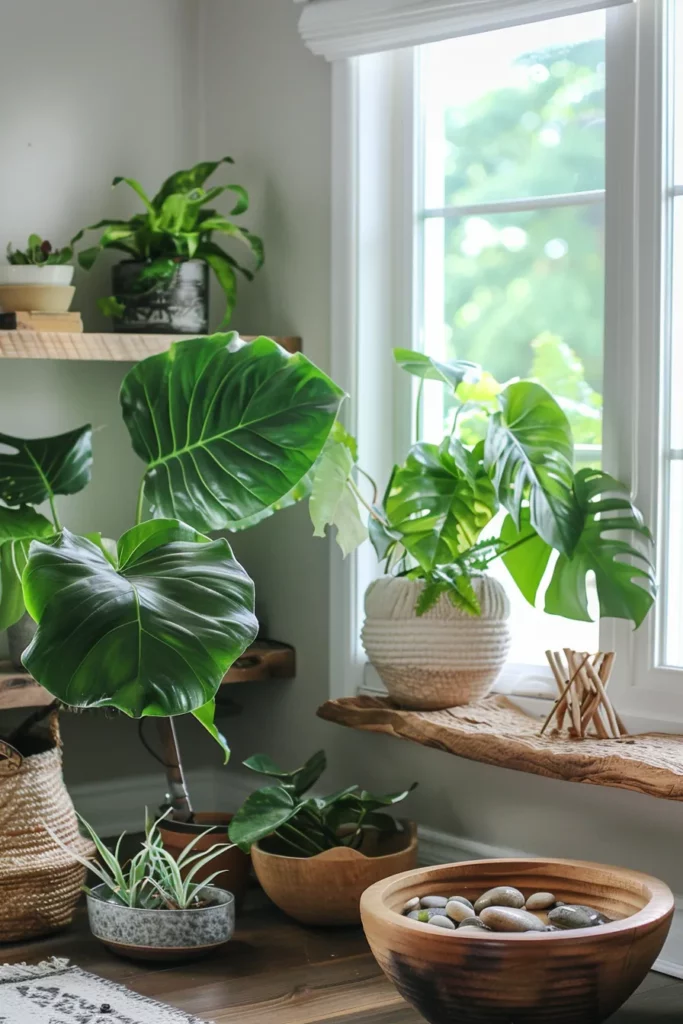
Greenery is essential in Scandinavian interiors, connecting inhabitants to the natural world during long, dark winters. Large statement plants like fiddle leaf figs or monstera deliciosa add drama and life.
Smaller plants—pothos, snake plants, succulents—cluster on shelves and windowsills. Choose simple ceramic or terracotta pots in white, gray, or natural clay.
Natural Decorative Objects
Display smooth stones collected from beaches, interesting pieces of driftwood, or pine cones arranged in wooden bowls. These organic elements cost nothing but bring authentic Nordic character.
Fresh or dried branches in simple vases provide sculptural interest and seasonal connection—birch in spring, eucalyptus in summer, bare branches in winter.
Cultural Depth: Hygge, Lagom, and Sisu
Hygge: Danish Coziness
Hygge (pronounced “hoo-ga”) describes the Danish art of creating warm, cozy moments. It’s lighting candles on a rainy afternoon, wrapping yourself in a soft blanket with hot tea, sharing simple meals with loved ones.
Your living room supports hygge through soft lighting, comfortable seating, warm textiles, and an atmosphere that encourages slowing down and being present.

Lagom: Swedish Balance
The Swedish concept of lagom means “just right”—not too much, not too little. It’s the philosophy behind Scandinavian minimalism, encouraging you to own only what serves you.
Apply lagom by editing ruthlessly, keeping surfaces clear, and ensuring every item in your living room has purpose and brings you joy.
Sisu: Finnish Resilience
Sisu represents Finnish determination and resilience—the strength to persevere through difficulty. While less directly expressed in design, sisu reminds us that Scandinavian interiors emerged from harsh climates where people created beauty and comfort despite challenging conditions.
Your living room becomes a refuge, a place of restoration that helps you face the world with renewed strength.
Scandinavian Living Room Design Checklist
Before we move to frequently asked questions, here’s a quick reference guide for creating your Scandinavian living room:
Color Palette:
- White or cream walls as foundation
- Soft grays, muted blues, or dusty greens for accents
- Light wood tones in oak, birch, or ash
- Black elements for contrast and grounding
Furniture:
- Clean-lined sofa in neutral upholstery
- Light wood coffee table with simple design
- Multi-functional storage pieces
- Mid-century modern inspired chairs
Lighting:
- Maximize natural light through unobstructed windows
- Layer multiple light sources at different heights
- Include sculptural floor and table lamps
- Add candles for hygge atmosphere
Textiles:
- Linen or cotton throw pillows
- Chunky knit blankets
- Sheepskin or wool accents
- Natural fiber or wool area rug
Decorative Elements:
- Indoor plants in simple pots
- Natural wood objects or stones
- Minimal artwork in neutral frames
- Woven baskets for storage
Key Principles:
- Function guides every choice
- Quality over quantity
- Natural materials preferred
- Uncluttered surfaces
- Connection to nature
Looking Ahead: Scandinavian Design Trends for 2025-2026
As we move forward, Scandinavian design continues evolving while honoring its core principles. Expect to see warmer minimalism—spaces that embrace more color and texture while maintaining clean lines. Curved furniture softens the aesthetic with organic shapes in sofas and chairs.
Sustainability deepens its importance, with increased focus on vintage pieces, natural dyes, and locally sourced materials. Smart home technology integrates more seamlessly, supporting the lifestyle without disrupting the visual calm.
The Japandi fusion continues growing, bringing richer wood tones and wabi-sabi appreciation for imperfection into traditionally lighter Scandinavian spaces. We’re also seeing more bold accent colors—terracotta, deep green, warm rust—appearing in otherwise neutral rooms.
Ultimately, Scandinavian design remains what it has always been: a thoughtful response to how we want to live—with beauty, simplicity, and deep comfort.
Conclusion: Your Sanctuary Awaits
Creating a Scandinavian living room isn’t about buying specific pieces or following strict rules. It’s about understanding a philosophy—that our homes should support us, that beauty and function can coexist, that less often gives us more.
It’s about the quality of light falling across pale wood floors. The weight of a linen throw in your hands. The quiet satisfaction of a space where everything has its place and purpose.
Your living room can become this sanctuary. A place where you breathe more deeply, think more clearly, rest more completely. Where the complications of the outside world soften and fade, and what remains is simple, genuine comfort.
Start small if you need to. A can of white paint. A thrifted wooden bowl. A plant on the windowsill. Let each choice build upon the last, guided by what truly serves your life and brings you joy.
The Scandinavians have spent centuries perfecting the art of creating beauty from simplicity, of finding light in darkness, of making home a place of true refuge. Their wisdom is yours to embrace, adapt, and make entirely your own.
Welcome home.
Frequently Asked Questions
What are the colors of Scandinavian living rooms?
Scandinavian living rooms center on whites, creams, and soft grays that maximize light reflection. Light wood tones in oak, birch, and ash add natural warmth without darkening the space. Accent colors appear sparingly—muted blues, dusty greens, warm terracotta, or soft blush—always in tones that feel gentle rather than vibrant. Black provides essential contrast in small doses through lighting fixtures or furniture legs.
How do you decorate a Scandi living room?
Start with a neutral foundation of white walls and light wood flooring. Choose clean-lined furniture in natural materials, keeping pieces minimal and functional. Layer soft textiles—linen cushions, wool throws, natural fiber rugs—to add warmth and texture. Maximize natural light through sheer or absent window treatments, and add layered lighting including candles. Incorporate plants and natural elements like wood bowls or stone objects. Keep surfaces uncluttered and let each piece breathe.
How do you create a hygge living room?
Hygge centers on warmth, comfort, and cozy contentment. Use soft, ambient lighting—think table lamps, floor lamps, and lots of candles rather than harsh overhead lights. Layer plush textiles including chunky knit throws, sheepskin rugs, and soft cushions. Create intimate seating arrangements that encourage conversation and relaxation. Add warm wood tones and natural textures. Keep the space uncluttered so it feels peaceful. Stock your living room with simple comforts—blankets within reach, space for hot drinks, perhaps books or gentle music.
Can you mix Scandi and modern design?
Absolutely. Scandinavian design is inherently modern, emerging from mid-20th-century modernist principles. The two styles share clean lines, minimal ornamentation, and functional focus. You can easily blend contemporary furniture with Scandinavian pieces by maintaining a neutral color palette and natural materials. Modern elements in metal, glass, or concrete complement Scandinavian wood and textiles beautifully. Just ensure any additions support rather than disrupt the calm, uncluttered aesthetic.
How do you make a small living room look Scandinavian?
Small spaces actually excel with Scandinavian design. Paint walls white or cream to visually expand the room. Choose furniture with exposed legs that reveal floor space rather than solid-base pieces. Use wall-mounted and floating storage to keep the floor clear. Select multi-functional furniture—storage ottomans, nesting tables, convertible pieces. Maximize natural light and add mirrors to reflect it. Keep décor minimal with just a few meaningful pieces. A large, light-colored rug can anchor the space without overwhelming it.