
Table of Contents
There’s something deeply calming about stepping into a cottage living room. The air feels softer here, weighted with the scent of worn wood and dried lavender. Light filters gently through linen curtains, and every surface whispers stories of simpler times.
A cozy cottage living room isn’t just a design choice—it’s a feeling you carry with you. It’s the crackle of a fire on a rainy afternoon, the warmth of a handknit throw, the way afternoon sun catches dust motes dancing above a vintage rug. This is where comfort meets intention, where beauty serves life rather than the other way around.
Creating this sanctuary doesn’t require a country home or unlimited budget. It asks instead for thoughtfulness: choosing pieces that speak to your soul, layering textures that invite touch, and honoring the imperfect beauty that makes a space truly yours. Whether you’re refreshing a tired room or starting from scratch, the cottage aesthetic welcomes you home.
Let’s explore how to craft a living room that holds you gently at day’s end.
Understanding Cottage Style Living Rooms
Cottage living room style draws from English countryside homes and coastal retreats, where practicality and beauty walk hand in hand. This isn’t about pristine showrooms—it’s about lived-in elegance that improves with age and use.
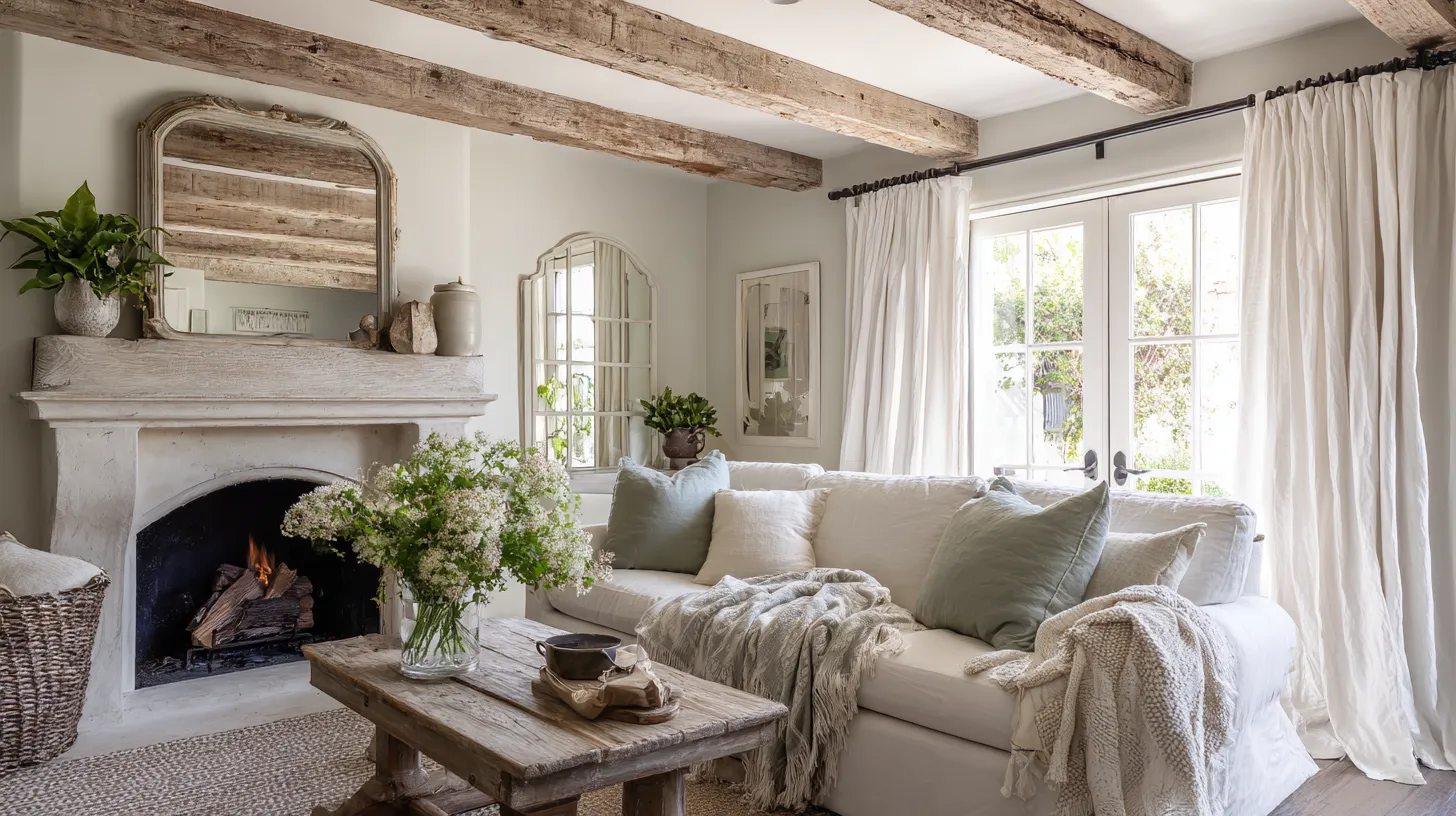
The hallmarks include natural materials, vintage or vintage-inspired furniture, soft color palettes, and an abundance of textiles. Think exposed beams meeting painted tongue-and-groove walls, faded florals alongside chunky knits, and collections displayed with casual intention. The cottage aesthetic celebrates craftsmanship, natural light, and the gentle patina that comes from years of love.
Modern cottage style has evolved to include sustainable choices and subtle conveniences without sacrificing charm. You might find reclaimed wood shelving beside smart lighting, or eco-friendly upholstery paired with heirloom quilts. The goal remains constant: creating spaces that nurture rather than impress.
Color Palettes That Wrap You in Warmth
Foundational Neutrals
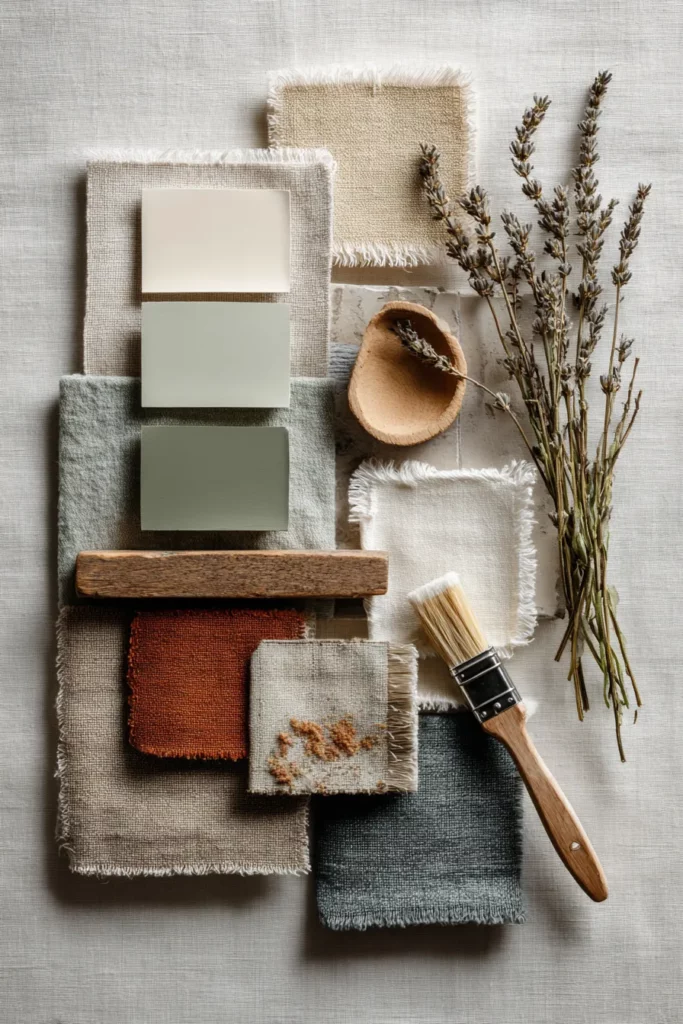
Start with walls in soft, warm whites—cream, ivory, or the palest butter yellow. These shades catch and hold natural light, making even small rooms feel expansive and welcoming. Avoid stark whites, which can feel cold and clinical against the cottage aesthetic’s inherent warmth.
Greyed sage, dusty blue, and barely-there blush also serve beautifully as wall colors. These hues reference nature without overwhelming, providing a gentle backdrop for layered textures and patterns. Consider how your chosen shade appears throughout the day—cottage style favors colors that shift gracefully from morning to evening light.
Accent Colors and Natural Inspiration
Introduce deeper tones through furniture and textiles: forest green, burgundy, navy, or rich terracotta. These colors ground your space and create cozy contrast against lighter walls. Draw inspiration from your surroundings—coastal cottages might lean toward weathered blues and sandy beiges, while woodland retreats embrace moss greens and bark browns.
Don’t shy from pattern, but choose wisely. Small-scale florals, gingham checks, ticking stripes, and faded toiles all belong here. Mix patterns by varying scale and keeping a consistent color story. A large floral sofa pairs beautifully with striped pillows and a small-print throw when they share underlying tones.
Furniture Selection: Character Over Perfection
Core Pieces with Soul
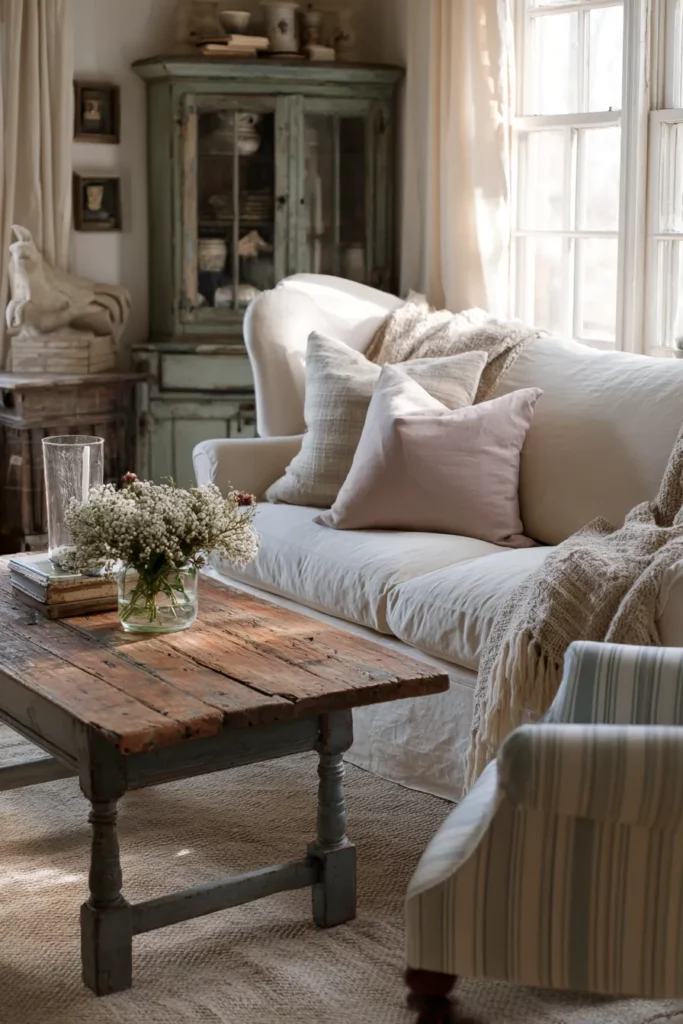
Your sofa sets the room’s tone—choose deep-seated comfort over sleek lines. Overstuffed cushions, rolled arms, and skirted bases all read authentically cottage. Linen, cotton canvas, and distressed leather upholstery wear gracefully and invite actual living. Slip covers offer practicality without sacrificing style, allowing seasonal changes and easy cleaning.
Wooden furniture should show its age, whether genuinely vintage or thoughtfully distressed. A pine coffee table with water rings tells stories. Mismatched side tables—perhaps one painted, one natural wood—add collected-over-time charm. Look for pieces with turned legs, beadboard details, or simple carved elements that reference traditional craftsmanship.
Seating That Invites Gathering
Beyond the sofa, layer in varied seating: a wingback chair reupholstered in ticking stripe, a weathered rocking chair with a sheepskin throw, a cushioned window seat built into the architecture. Cottage living rooms should accommodate both lively gatherings and solitary reading hours.
Consider scale carefully in smaller spaces. A loveseat plus two chairs often flows better than a full sectional. Furniture with exposed wooden legs creates visual lightness, while skirted pieces offer hidden storage—both valuable in compact cottage rooms.
Lighting: Layering Natural and Ambient Glow
Maximizing Natural Light
Natural light breathes life into cottage spaces. Keep window treatments simple and functional—white or natural linen curtains on wooden rods, roman shades in soft prints, or shutters painted to match your trim. Avoid heavy drapes that block precious daylight.
Position mirrors opposite windows to multiply light and create depth. An antique mirror with distressed silvering doesn’t just reflect—it adds another layer of history and charm. Keep windowsills clear or minimally decorated to allow maximum light penetration.
Artificial Lighting with Character
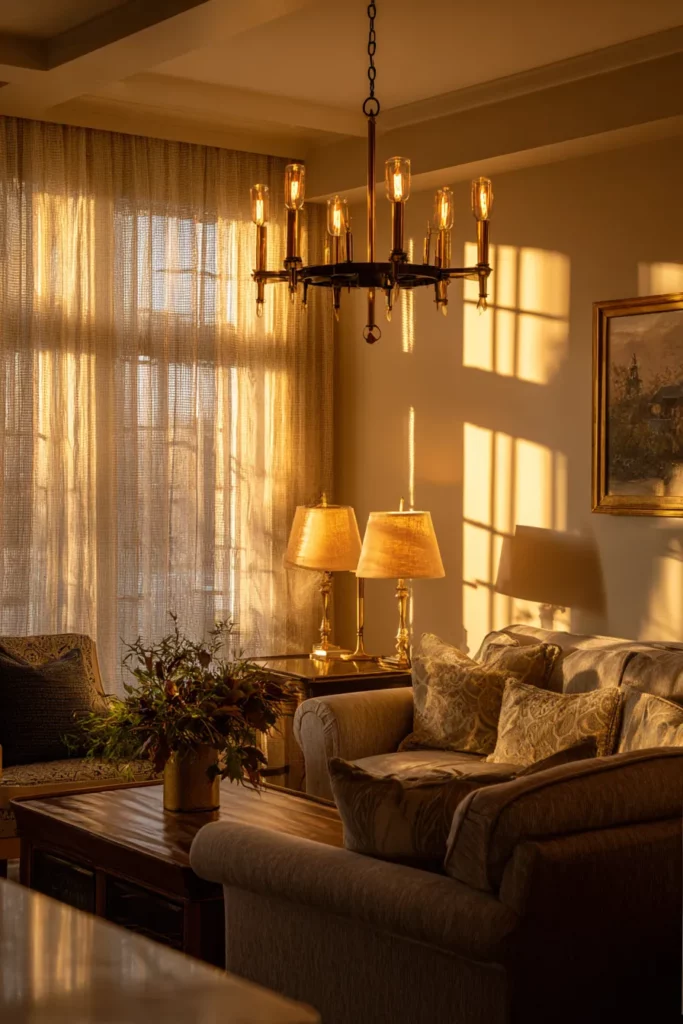
Layer lighting at multiple heights for warmth and functionality. A vintage-inspired chandelier or pendant with Edison bulbs provides overhead illumination with personality. Table lamps with fabric shades soften light and create pools of warmth in evening hours.
Incorporate task lighting thoughtfully: a brass reading lamp beside your favorite chair, under-cabinet lighting in built-in bookcases (if present), or LED candles on the mantel for flicker without fire risk. Dimmer switches allow you to adjust ambiance throughout the day, maintaining the gentle quality essential to cottage comfort.
Smart Integration Without Disruption
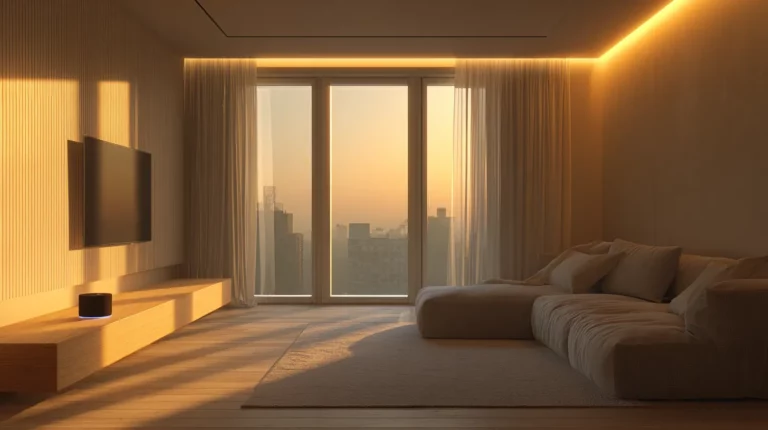
Modern smart bulbs can be hidden in vintage fixtures, giving you voice or app control while preserving authentic aesthetics. Choose warm white temperatures (2700-3000K) that mimic traditional incandescent glow. Program scenes for reading, entertaining, or winding down without visible technology disrupting your carefully crafted atmosphere.
Textures and Textiles: The Heart of Coziness
Layering for Depth and Comfort
Cottage style thrives on textile abundance. Start with an area rug—vintage Persian, braided wool, or faded Turkish styles anchor the space and define seating areas. Natural fiber rugs like jute or sisal work beautifully in high-traffic areas, adding organic texture underfoot.
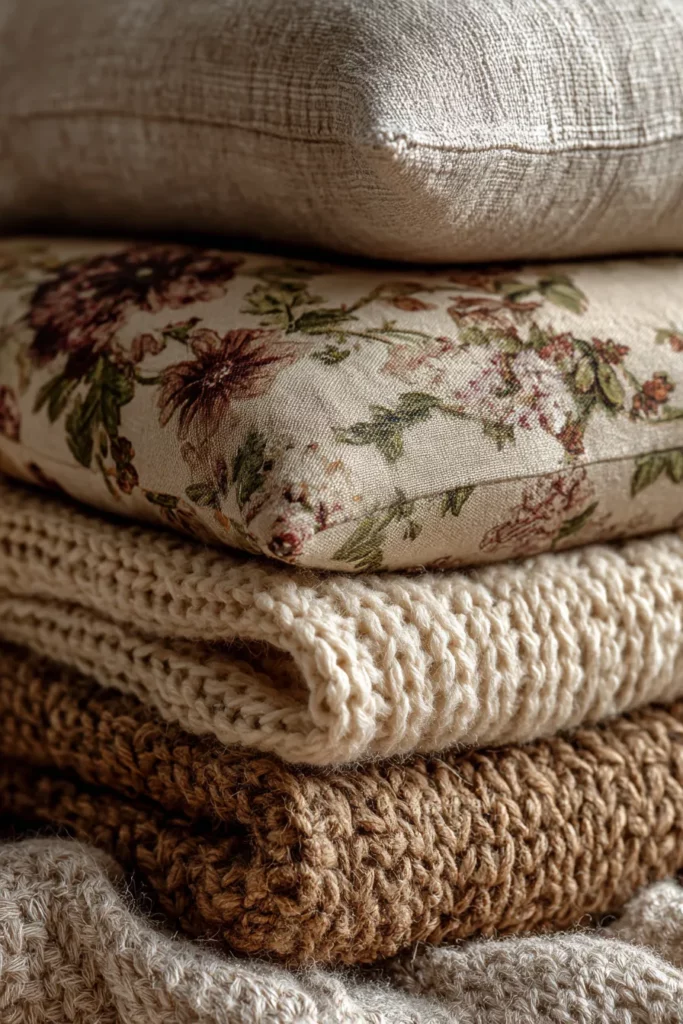
Layer throw pillows generously, mixing sizes, patterns, and textures. Combine linen with velvet, cotton with wool, smooth with nubby. A sofa might hold eight pillows comfortably—varying from 18 to 24 inches, in coordinating but not matching fabrics.
Throws and Soft Furnishings
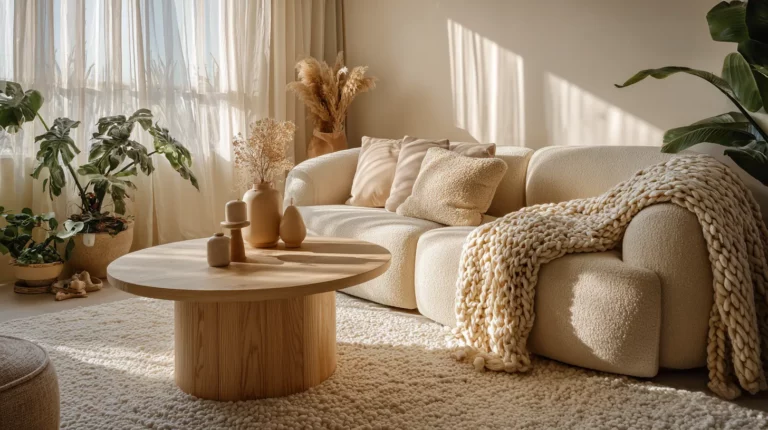
Drape knit throws over chair arms, fold quilts at sofa backs, and keep baskets nearby for extra blankets. These aren’t just decorative—they’re invitations to curl up and stay awhile. Choose natural fibers that improve with washing: cotton, linen, wool, and bamboo blends.
Window seats deserve special attention with custom cushions and bolster pillows. Upholster an ottoman in vintage fabric for a footrest that doubles as extra seating. Consider reupholstering inherited pieces in cottage-friendly materials rather than replacing them—the bones of quality furniture often outlive trends.
Fireplaces and Focal Points
If you’re blessed with a fireplace, honor it as your room’s heart. Paint brick surrounds in soft white or leave them naturally aged. A rough-hewn wooden mantel provides space for rotating displays: seasonal branches, vintage candlesticks, collected ironstone, or family photographs in mismatched frames.
Without a fireplace, create alternative focal points: a gallery wall of botanical prints and mirrors, a statement bookshelf styled with intention, or a picture window framed to emphasize garden views. The goal is drawing the eye to something meaningful that anchors the room’s arrangement.
Decorative Elements and Personal Touches
Curated Collections and Display
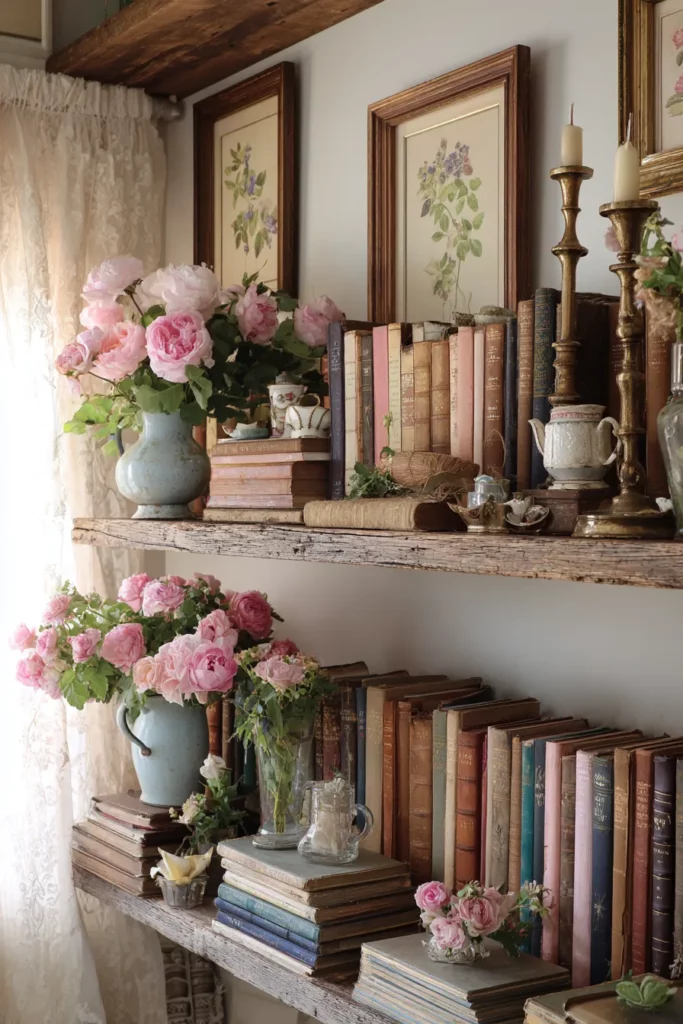
Cottage style celebrates meaningful objects displayed with casual grace. Group vintage books by color on open shelving. Arrange garden flowers in mismatched pitchers. Display your grandmother’s china on plate racks or in glass-front cabinets where light catches the curves.
Avoid matching sets—the beauty lies in the curated collection. Three different candlesticks look intentional; three identical ones feel corporate. Similarly, artwork should feel discovered rather than purchased as a set: botanical prints, vintage landscapes, your own watercolors matted simply and framed in weathered wood.
Bringing the Outdoors In
Fresh and dried botanicals connect your living room to surrounding nature. Keep garden roses in a simple pitcher, display seasonal branches in vintage crocks, or create dried lavender bundles tied with twine. Potted herbs on windowsills serve double duty—scent and sight.
If your cottage living room overlooks a garden, blur indoor-outdoor boundaries. Position seating to frame views, keep windows pristinely clean, and consider French doors that open to a patio. Even urban cottage dwellers can reference nature through botanical prints, pressed flowers under glass, and window boxes visible from inside.
Sustainable and Eco-Friendly Cottage Decor
Choosing Materials with Conscience
Modern cottage style aligns beautifully with sustainable living. Choose furniture crafted from reclaimed wood, FSC-certified timber, or vintage pieces that need no new resources. Upholstery fabrics in organic cotton, linen, or hemp offer durability and environmental responsibility.
Paint selection matters—low-VOC and natural paints maintain indoor air quality while achieving those soft cottage colors. Natural fiber rugs (wool, jute, seagrass) biodegrade eventually unlike synthetic alternatives, and they typically wear better over time.
The Beauty of Secondhand and Repurposed
Thrift stores, estate sales, and antique markets provide treasure troves for cottage styling. That slightly wobbly side table gains character through refinishing. Vintage quilts become throw pillows. Old windows transform into picture frames or decorative wall pieces.
Repurposing honors both budget and planet. It also ensures your cottage living room develops authentic, unreplicable character. The table you refinished yourself, the curtains sewn from grain sacks, the lamp rewired from your aunt’s attic—these pieces carry stories that new purchases cannot match.
Small Space Cottage Living Rooms
Maximizing Compact Footprints
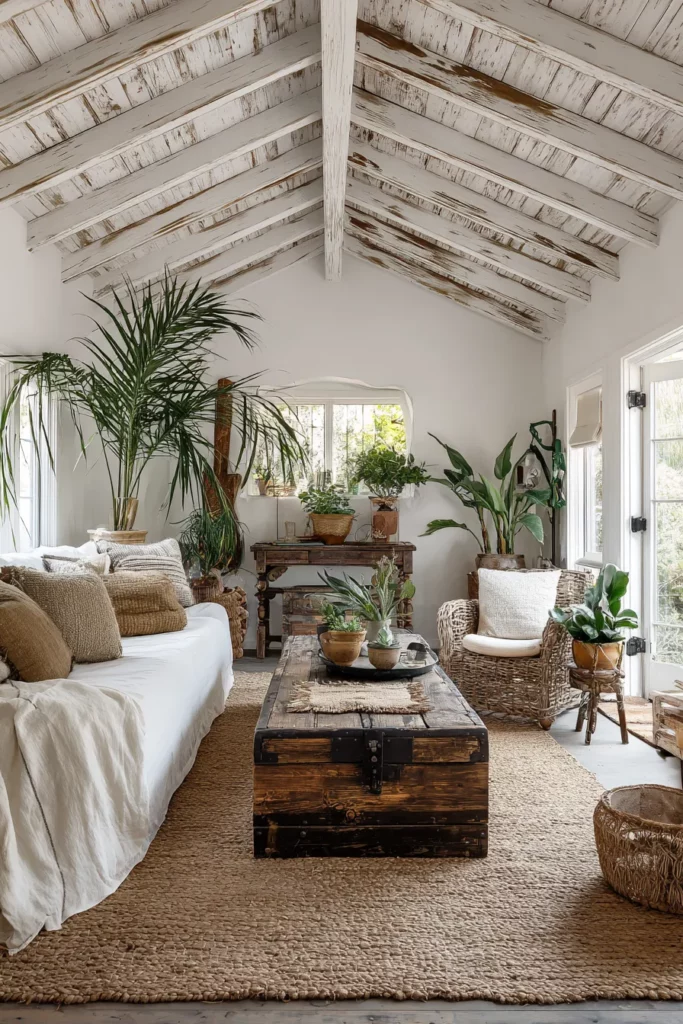
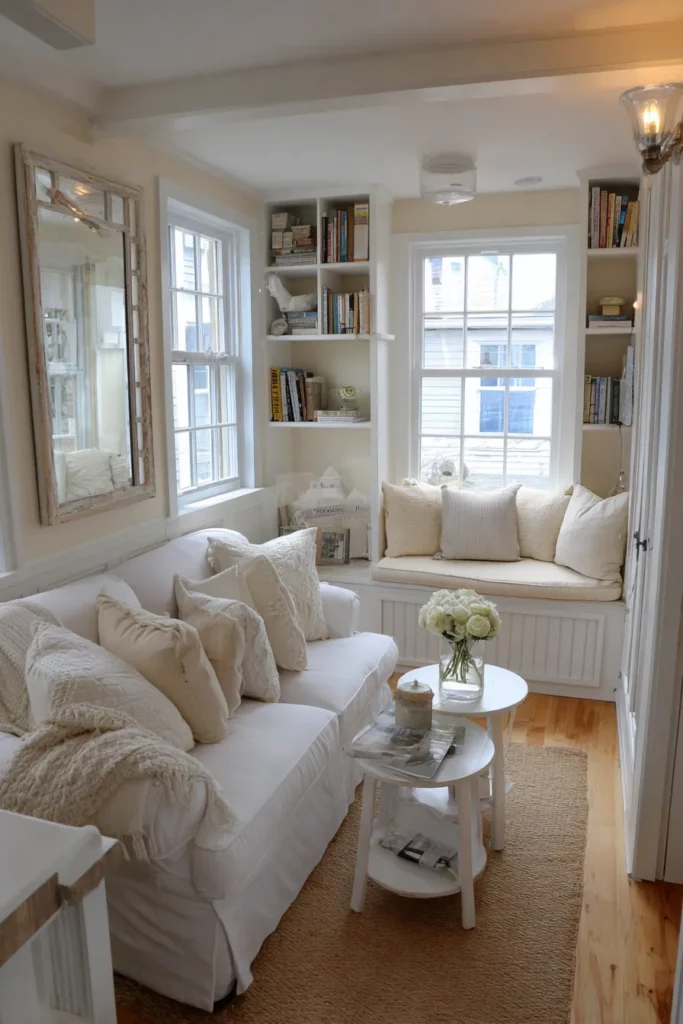
Small cottage living rooms demand thoughtful editing but can feel just as cozy as larger spaces. Choose furniture scaled appropriately—a loveseat rather than full sofa, nesting tables instead of one large coffee table, wall-mounted shelving to preserve floor space.
Light colors expand visually, while strategic mirrors add depth. Keep window treatments minimal to maximize light. Multifunctional furniture proves invaluable: ottomans with hidden storage, sofa tables that serve as desks, window seats concealing blanket storage beneath.
Vertical Thinking and Visual Tricks
Draw the eye upward with floor-to-ceiling shelving, tall narrow cabinets, or artwork hung higher than expected. Paint ceilings the same color as walls to blur boundaries and create spaciousness. Use consistent flooring throughout connected spaces to avoid visual chopping that makes rooms feel smaller.
Resist the urge to push all furniture against walls—floating a small sofa creates pathways and actually improves flow. Edit decorative objects ruthlessly, keeping only pieces you truly love. In small cottages, every item should earn its place through beauty, function, or sentiment.
Pet-Friendly Cottage Living Rooms
Practical Beauty for Animal Companions
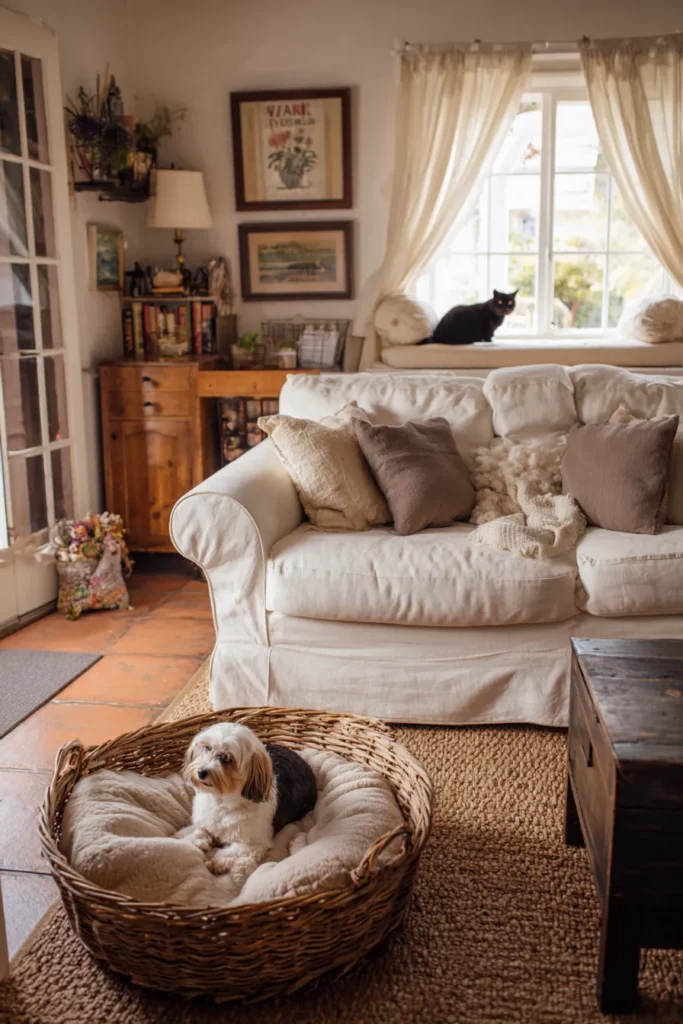
Cottage style accommodates pets naturally—its relaxed aesthetic already embraces lived-in comfort. Choose upholstery fabrics that resist stains and scratching: microfiber, outdoor-grade fabrics, or leather that patinas gracefully. Avoid delicate silks and loose weaves that snag easily.
Slipcovers become invaluable for pet owners, allowing quick removal and washing after muddy paws or shedding seasons. Keep extra throws handy to protect favorite napping spots. Choose darker colors or patterns that camouflage fur between cleanings.
Integrating Pet Needs with Style
Woven baskets hold pet toys while complementing cottage aesthetics. A vintage crate becomes a stylish dog bed with added cushions. Window seats provide perches for cats who love watching birds and squirrels outside.
Consider durable, easy-clean flooring like sealed hardwood or quality vinyl planks that mimic wood. Rugs should be machine-washable or easily spot-cleaned—natural fiber rugs generally withstand pet wear better than delicate antiques. Your cottage living room can honor both human comfort and animal happiness without compromise.
Seasonal Decorating in Cottage Rooms
Spring and Summer Freshness
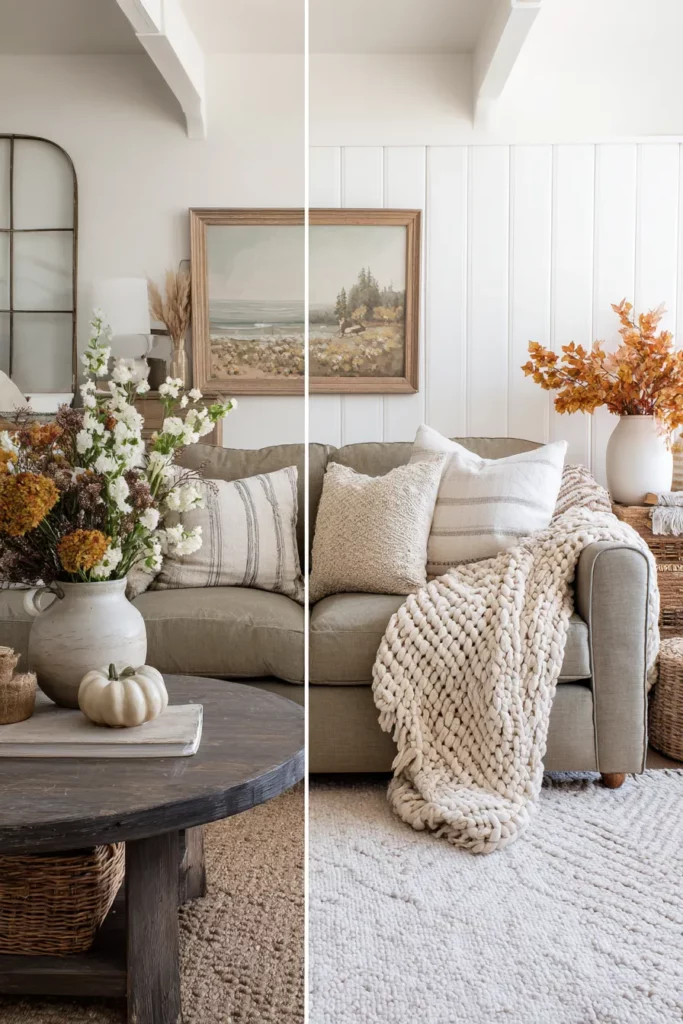
Lighten your cottage living room seasonally without complete overhauls. Spring invites pastel accents, fresh florals, and lighter textiles—swap heavy wool throws for cotton ones, display garden flowers, add lemon yellow or soft pink pillows.
Summer emphasizes breeziness: remove a layer of rugs, open windows wide, incorporate more whites and blues. Display seashells if near coast, or wildflower arrangements from countryside rambles. Keep rooms feeling fresh and airy during warmer months.
Autumn and Winter Coziness
As temperatures drop, layer back the warmth. Richer colors emerge—burgundy, forest green, burnt orange. Swap summer quilts for chunky knit throws. Display autumn leaves and branches, winter greenery and pinecones.
Candlelight becomes more important in shorter days—cluster varied heights on trays for safe ambiance. If you have a fireplace, stack attractive firewood nearby in a vintage basket. The cottage living room should feel like a refuge during cold months, inviting you to hibernate happily indoors.
Blending Modern and Traditional Cottage Elements
Finding Balance Between Old and New
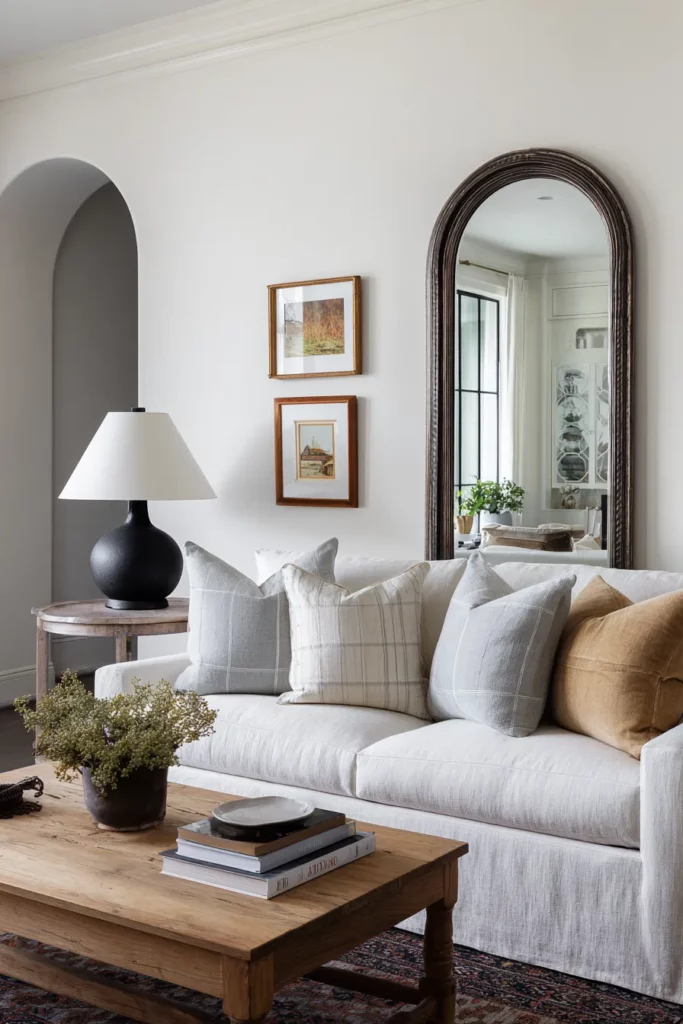
Contemporary cottage style honors tradition while embracing modern life. Pair your vintage coffee table with a sleek lamp. Position antique chairs beside a clean-lined sofa in cottage-appropriate fabric. The contrast creates interest while maintaining cohesive warmth.
Technology integration requires thoughtfulness—hide television screens in vintage armoires or choose frames that display art when not in use. Charge stations can nestle inside decorative boxes on side tables. Modern appliances like air purifiers come in neutral colors that fade into cottage palettes.
Updating Without Losing Soul
Renovation in cottage spaces should enhance rather than erase character. Preserve original architectural details—beams, moldings, built-ins—while updating paint and finishes. Choose modern furniture with traditional silhouettes rather than aggressively contemporary pieces.
If your cottage living room needs functional updates, consider how to integrate them sympathetically. In-floor heating beneath vintage rugs provides comfort without visible radiators. Updated electrical wiring powers modern lighting disguised in period-appropriate fixtures. The best cottage rooms feel timeless—impossible to date to a specific era because they honor both past and present.
Mental Wellness and the Cottage Aesthetic
The Psychology of Cozy Spaces
Cottage living rooms support mental health through intentional design. Soft textures activate calming sensory responses. Natural materials connect us to earth and sky, reducing stress inherent to modern life. Warm lighting promotes melatonin production, supporting healthy sleep cycles.
The cottage aesthetic’s emphasis on imperfection offers psychological relief from perfectionism. A room that welcomes wear and tear becomes a space where you can truly relax—no anxiety about coaster rings or pillow arrangement. This permission to simply be, without performance, provides deep restorative value.
Creating Sanctuary from Chaos
In increasingly digital, fast-paced lives, cottage living rooms offer analog refuge. Design spaces that encourage unplugging: comfortable reading chairs with excellent task lighting, baskets of magazines and books, writing desks positioned near windows. Create environments that support contemplation, conversation, and creative hobbies.
The act of maintaining cottage spaces—fluffing pillows, arranging flowers, lighting candles—provides meditative micro-rituals that ground us in present moments. These small acts of care for our environments become acts of self-care, building daily practices that support mental equilibrium.
Budget-Friendly Cottage Living Room Ideas
Strategic Spending and Creative Solutions
Achieving cottage style doesn’t require unlimited funds. Prioritize quality for high-use items like sofas and rugs, then supplement with budget-friendly accents. Thrift stores, yard sales, and online marketplaces provide vintage treasures at fractions of retail costs.
DIY projects add personality while saving money: paint existing furniture in cottage colors, sew pillows from fabric remnants, create art from pressed botanicals in thrifted frames. Slipcovers transform tired upholstery at lower cost than reupholstering. A gallon of paint refreshes entire rooms for minimal investment.
Free and Found Elements
Nature provides free decoration—branches, pinecones, stones, driftwood, wildflowers. Rearrange existing furniture to improve flow before buying new pieces. Shop your own home, moving items between rooms to refresh perspective.
Trade with friends who are redecorating, or inherit from relatives clearing attics. The most authentic cottage rooms often contain zero new purchases—every piece arrived through patience, creativity, and willingness to see potential in overlooked items.
Essential Cottage Living Room Checklist
Creating your cozy cottage living room becomes manageable with this curated checklist:
Foundation Elements:
- Comfortable, deep-seated sofa in natural fabric
- Wooden coffee table with character (vintage or distressed)
- Area rug in natural fibers or vintage pattern
- Varied seating options (chairs, stools, window seats)
Lighting Layers:
- Overhead fixture with vintage character
- Table lamps with fabric shades (at least two)
- Task lighting for reading areas
- Candles or LED candles for ambiance
Textiles and Softness:
- Multiple throw pillows in mixed patterns and textures
- Cozy throws in natural fibers
- Window treatments in light, natural fabrics
- Cushions for additional seating
Decorative Character:
- Fireplace or alternative focal point
- Mirrors to reflect light and add depth
- Curated collections (books, ceramics, botanicals)
- Artwork with cottage appeal (botanicals, landscapes)
- Fresh or dried flowers in simple vessels
Functional Considerations:
- Adequate storage (baskets, cabinets, shelving)
- Side tables near seating for convenience
- Good traffic flow between furniture groupings
- Pet-friendly materials if applicable
Optional Enhancements:
- Vintage or antique accent pieces
- Built-in shelving or cabinetry
- Window seat with storage beneath
- Sustainable and eco-friendly materials throughout
Conclusion: Your Cottage, Your Sanctuary
The most beautiful cottage living room is the one that welcomes you home completely. It’s where tea cools in forgotten cups because conversations run long. Where books lie open, spine-up, marking your place in both story and afternoon. Where light and shadow play across walls you’ve painted with your own hands, in colors that make your heart quiet.
Creating this space is less about following rules and more about listening—to what brings you peace, to which textures make you want to touch, to how your body relaxes when surrounded by particular colors and scents. The cottage aesthetic provides framework, but your life provides the soul.
Let your cottage living room evolve slowly, gathering pieces that speak to you rather than rushing to completion. The best rooms develop over years, accumulating layers of memory and meaning that no designer can replicate. This is where your life unfolds in its most comfortable moments—honor that by creating a space that truly holds you.
Welcome home, to the room that knows you best.
Frequently Asked Questions
How do I make a cottage living room cozy on a tight budget?
Start with paint—soft whites or warm neutrals transform spaces inexpensively. Scour thrift stores and yard sales for vintage furniture with good bones, then refresh with new upholstery or slipcovers. DIY projects like painted furniture, sewn pillows from thrifted fabric, and foraged botanical displays add cottage charm for minimal cost. Focus budget on one quality anchor piece like a comfortable sofa, then build around it with affordable secondhand finds and natural elements that cost nothing.
What colors work best for small cottage living rooms?
Light, warm neutrals—cream, ivory, soft white, pale grey—make small spaces feel larger and brighter. Add depth through textiles and accents in dusty blue, sage green, or soft blush rather than painting walls in dark colors. Keep a consistent color palette throughout to avoid visual fragmentation. Use darker tones sparingly in pillows, throws, or single accent pieces. Painting trim and ceilings the same color as walls creates seamless flow that expands perceived space.
How can I blend modern conveniences with cottage aesthetics?
Hide technology in vintage furniture—televisions in armoires, charging stations in decorative boxes. Choose modern pieces with traditional silhouettes, like a contemporary sofa in linen rather than leather. Smart home devices can be voice-controlled to avoid visible switches and screens. Select appliances and electronics in neutral colors that fade into cottage palettes. The key is balancing function with visual softness, ensuring modern additions serve your life without dominating your aesthetic.
What’s the easiest way to add vintage charm to a new cottage living room?
Incorporate genuinely old or vintage-inspired pieces: an antique mirror, weathered picture frames, vintage books displayed on shelves, reclaimed wood elements, or inherited textiles like quilts and tablecloths repurposed as throws. Shop estate sales and antique markets for lighting fixtures, side tables, and decorative objects with authentic patina. Even one or two real vintage pieces add instant character. Distress new furniture carefully with paint techniques, or choose manufacturers specializing in cottage-style reproductions with built-in aged character.
How do I maintain a cottage living room with pets and children?
Choose durable, cleanable fabrics like microfiber, outdoor-grade upholstery, or leather that ages gracefully. Slipcovers allow easy washing after spills and messes. Opt for darker colors or busy patterns that camouflage stains between cleanings. Use machine-washable rugs or natural fibers that spot-clean easily. Keep extra throws handy to protect furniture during messy activities. Embrace the cottage aesthetic’s acceptance of imperfection—a lived-in room with minor wear shows a space truly serving family life, which honors the cottage philosophy of comfort over perfection.