
Table of Contents
A luxury modern living room isn’t just about statement furniture or designer labels. It’s about creating a space that breathes with you—where light pools softly on linen, where textures invite touch, and where every corner feels intentionally calm yet undeniably elevated.
This is where your mornings begin with quiet coffee and evening conversations unfold without effort. It’s the room that welcomes guests with warmth and cradles your solitude with grace.
In this guide, we’ll explore how to craft a living room that balances modern sophistication with livable beauty. From bespoke furniture choices to sensory design elements, you’ll discover how luxury becomes not just visible, but felt.
Understanding Modern Luxury: Beyond the Surface
Modern luxury living room design has evolved far beyond stark minimalism or cold perfection. Today’s luxury spaces embrace warmth, personality, and a deep connection to how we actually live.
The hallmarks of modern luxury include clean architectural lines softened by organic materials, thoughtful negative space that allows the room to breathe, and a curated selection of furnishings that feel both timeless and current. Think rich walnut paired with brushed brass, or ivory bouclé nestled against charcoal stone.
What truly distinguishes luxury modern design is its emphasis on quality over quantity. Each piece serves a purpose, tells a story, or simply brings joy through its craftsmanship.
The Sensory Foundation
Your living room should engage all the senses. The soft give of a velvet cushion beneath your hand, the gentle hum of ambient lighting at dusk, even the subtle scent of natural wood oils in the air—these details create an atmosphere that photographs cannot capture but presence can feel.
Modern luxury prioritizes materials that age beautifully: full-grain leather that develops character, natural stone that tells geological stories, hand-woven textiles that carry the mark of their maker. These elements transform a room from styled to lived.
Furniture Selection: The Art of Purposeful Placement
Sofas and Seating as Anchors
Your sofa is more than furniture—it’s the emotional center of the room. In luxury modern spaces, look for low-profile silhouettes with clean lines, but don’t sacrifice comfort for form.
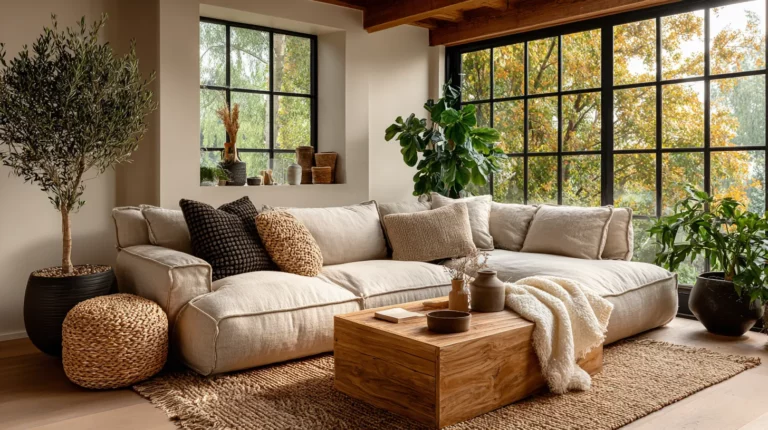
Consider a modular sectional in natural linen or a sculptural Italian sofa with deep seats and feather-down cushions. The frame should whisper quality: solid hardwood construction, eight-way hand-tied springs, and upholstery that invites you to sink in and stay.
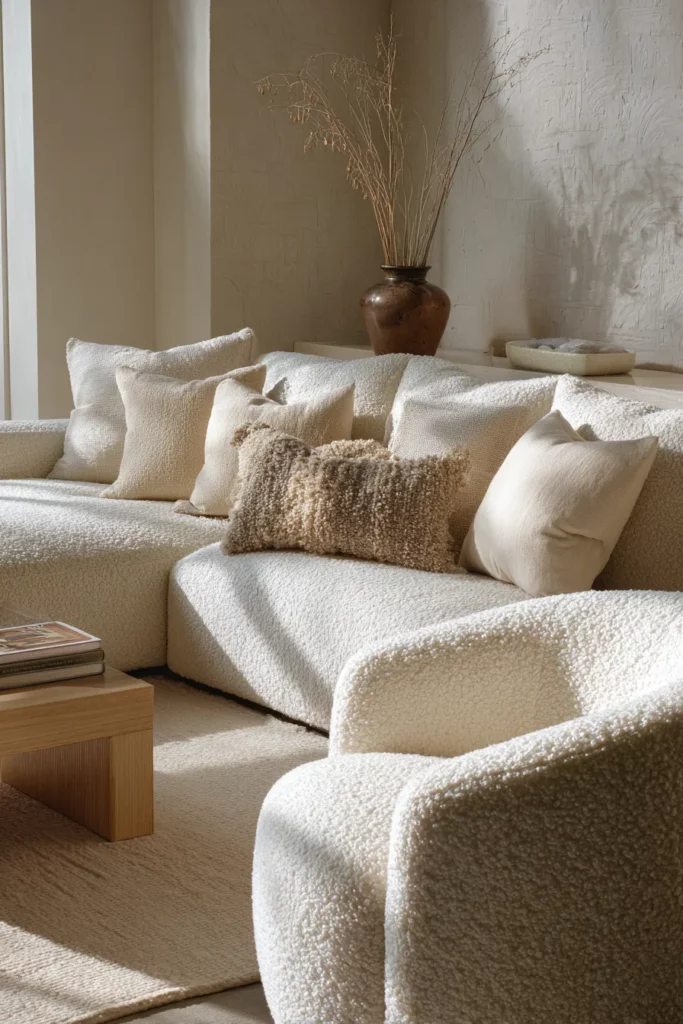
Complement your main seating with accent chairs that add visual interest. A midcentury leather lounge chair, a curved bouclé armchair in warm cream, or a pair of sculptural pieces in unexpected materials create conversation points without crowding the space.
Coffee Tables and Surface Design
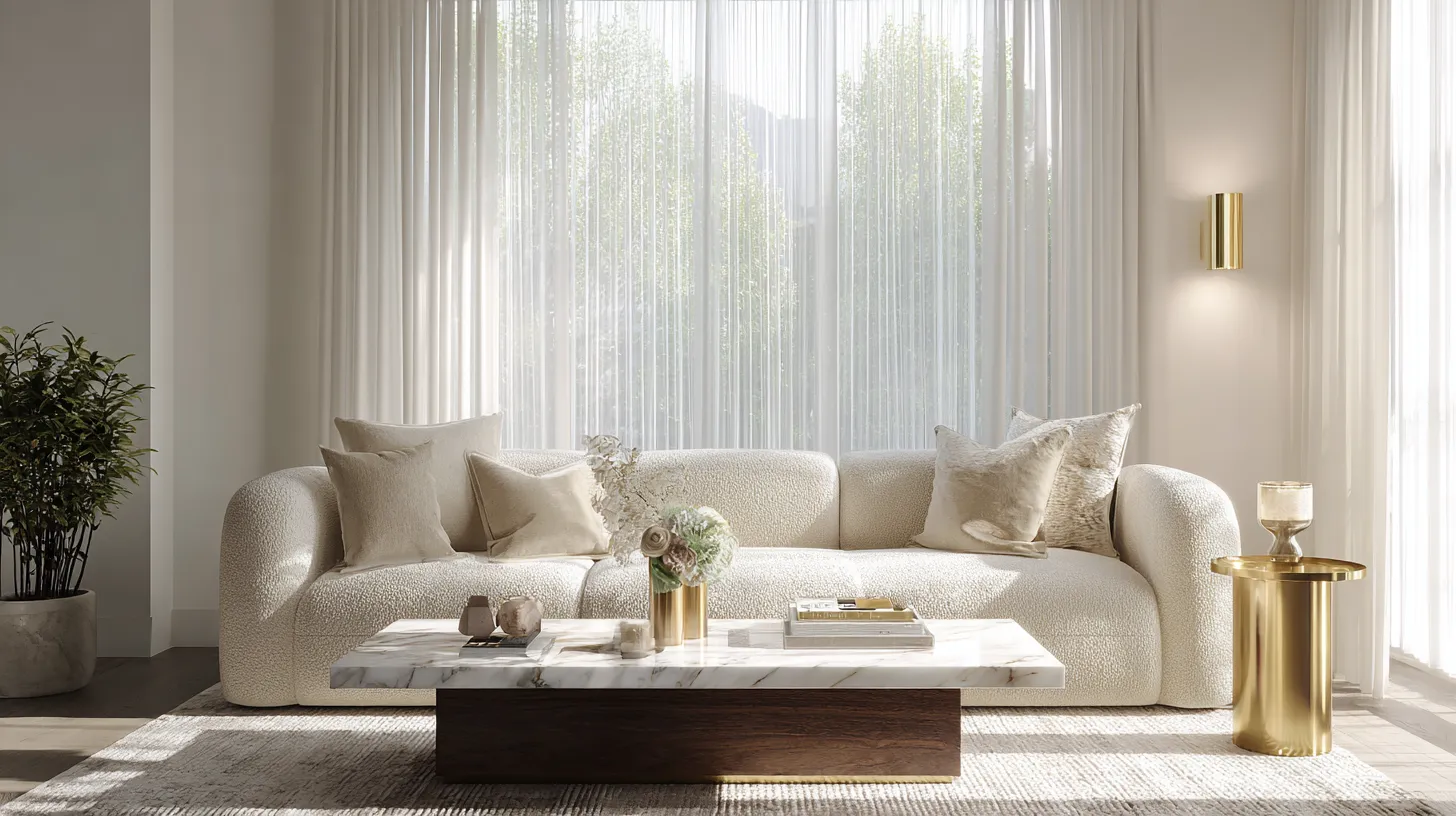
The coffee table grounds your seating arrangement while offering functional beauty. Modern luxury favors mixed materials: a marble top with blackened steel legs, reclaimed wood with brass inlays, or glass floating above a sculptural base.
Scale matters deeply here. Your coffee table should feel substantial without dominating—typically 18 inches from your sofa, with enough surface for a few art books, a small arrangement of greenery, and room for everyday living.
Consider nesting tables or a gallery of smaller surfaces rather than one large piece. This approach offers flexibility for entertaining while maintaining the clean lines modern design demands.
Material Palette: Textures That Tell Stories
Natural Elements as Foundation
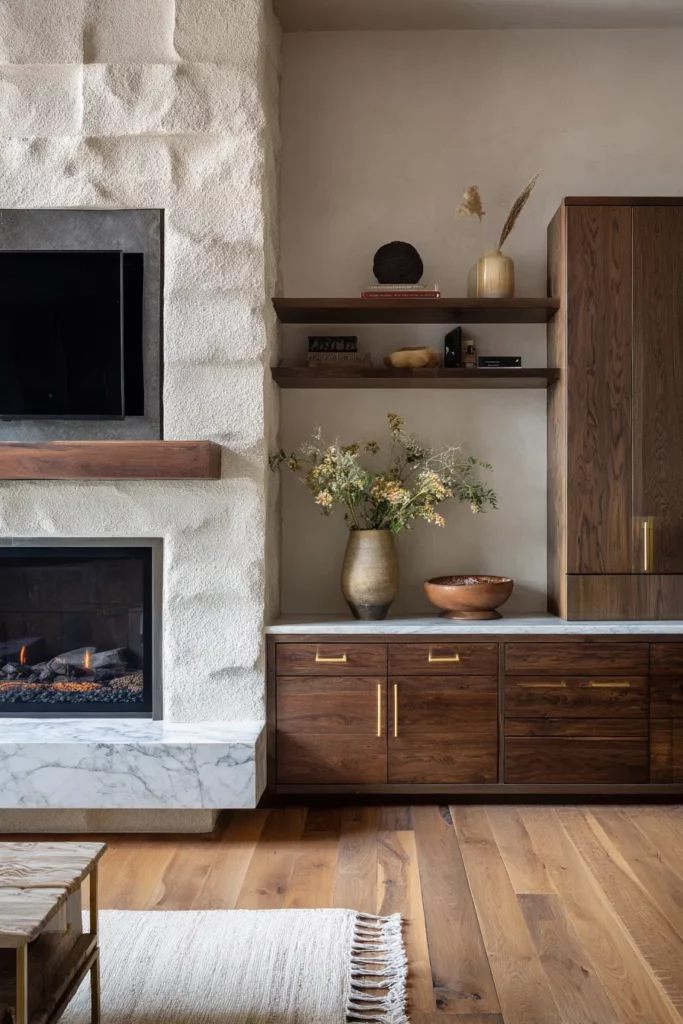
Luxury modern living rooms thrive when grounded in authentic materials. Wide-plank hardwood floors in matte finish, textured plaster walls, or natural stone accent walls create a canvas that feels both refined and rooted.
Introduce warmth through wood tones—not matchy-matchy, but harmonious. A walnut media console, oak shelving, and a teak side table can coexist beautifully when unified by undertone and finish quality.
Stone brings gravitas: think honed marble for a fireplace surround, travertine for a side table, or slate tiles defining a conversation area. These materials carry weight, history, and an unmistakable sense of permanence.
Textile Layering for Depth
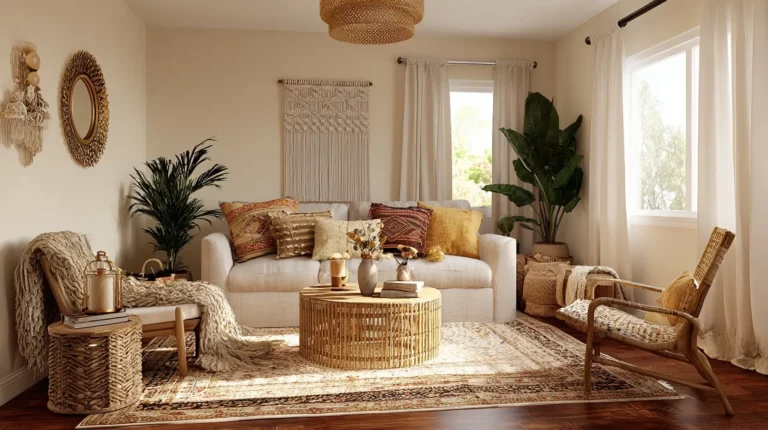
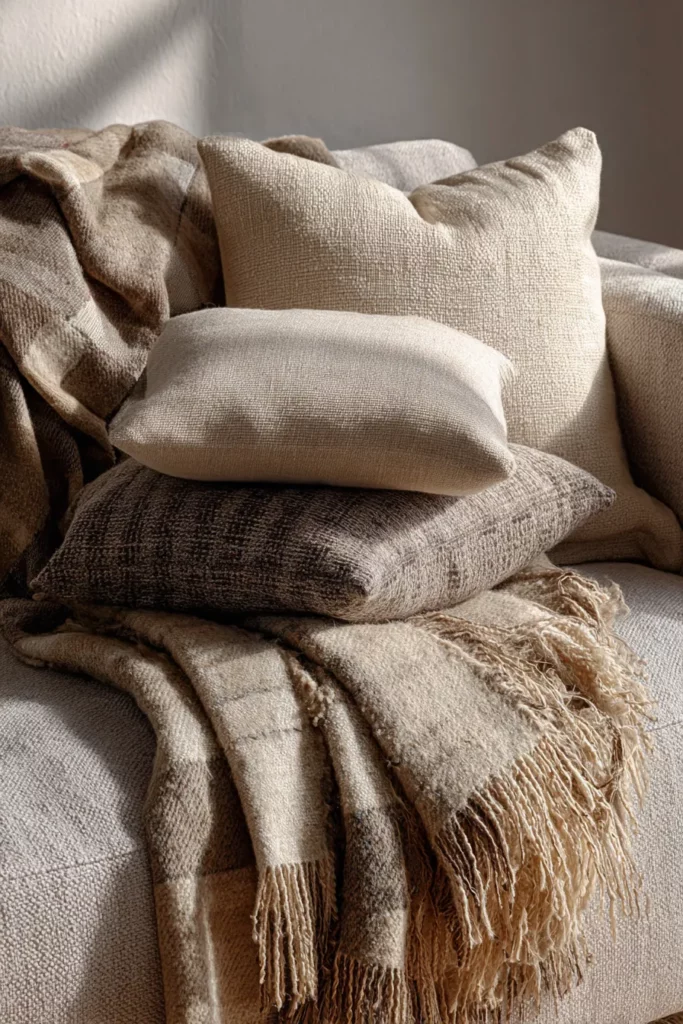
Textiles soften modern architecture and invite touch. Layer materials thoughtfully: a hand-knotted wool rug underfoot, linen drapery that puddles slightly at the floor, velvet cushions in varying textures, and a cashmere throw draped with studied casualness.
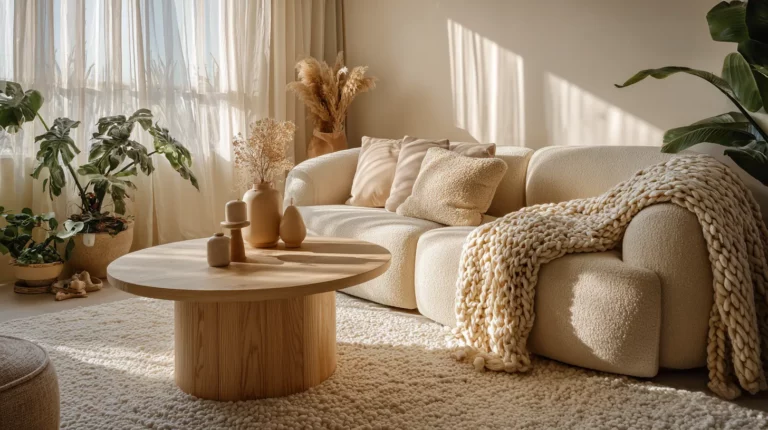
Choose a limited color palette but vary the textures within it. Ivory can appear in matte linen, glossy silk, nubby boucle, and smooth leather—each catching light differently, each offering a distinct tactile experience.
Don’t overlook sheers and lightweight fabrics. Gauzy curtains filter harsh sunlight into something ethereal, while maintaining the clean lines and sense of spaciousness modern luxury demands.
Lighting Design: The Invisible Architecture
Layered Illumination
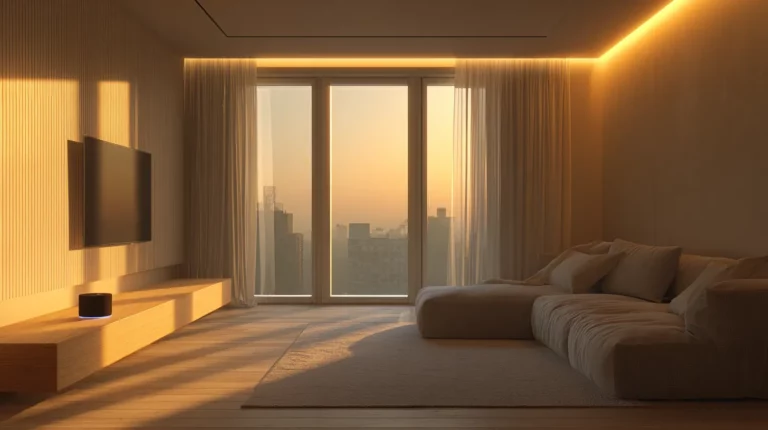
Lighting transforms luxury from static to dynamic. Begin with architectural lighting: recessed fixtures on dimmers, integrated LED strips beneath floating shelves, or cove lighting that washes walls with warmth.
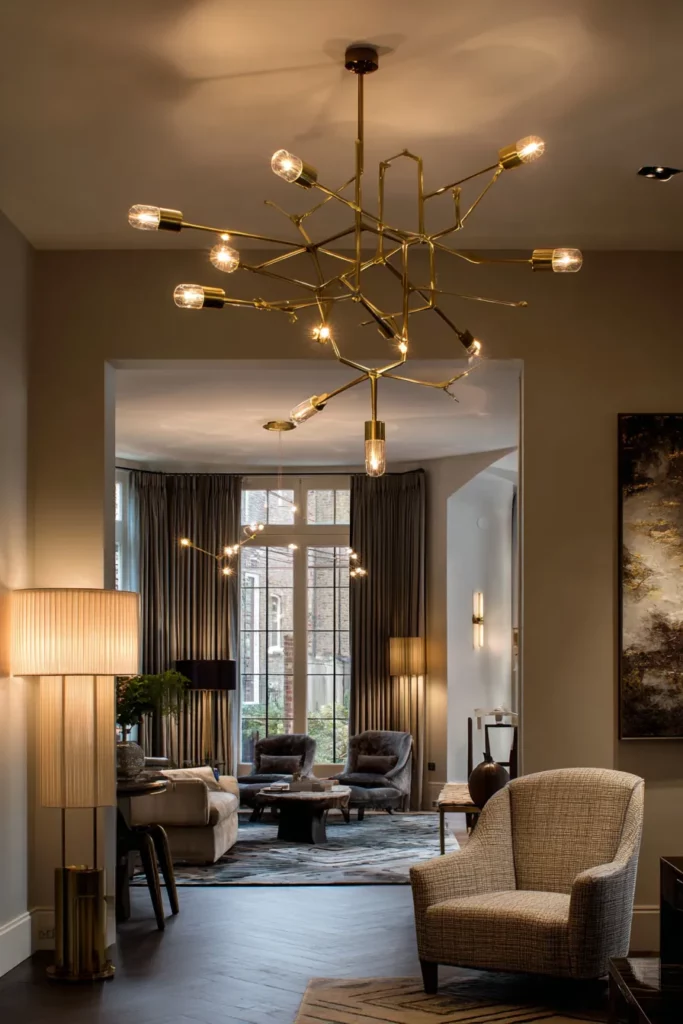
Add ambient layers through statement fixtures. A sculptural chandelier or pendant becomes functional art—consider organic forms in brushed brass, linear designs in blackened steel, or glass elements that refract light like captured water.
Task and accent lighting complete the story. Elegant floor lamps with linen shades, sleek reading sconces beside seating, or discrete picture lights illuminating artwork create pockets of purpose throughout the room.
Natural Light as Design Partner
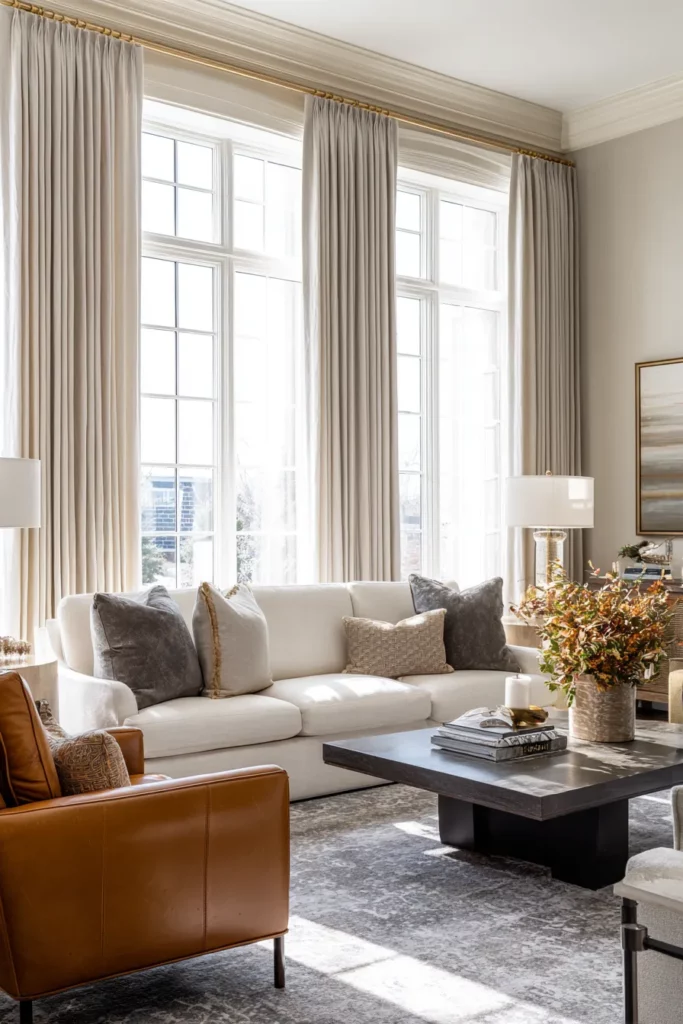
Window treatments in modern luxury spaces enhance rather than block light. Motorized sheer curtains offer privacy without sacrificing brightness, while layered with heavier linen or velvet panels for evening warmth.
Consider how natural light moves through your space across the day. Morning sun might highlight a reading nook, while afternoon rays could emphasize textural wall treatments. Design your layout to celebrate these shifting moments.
Large mirrors strategically placed multiply light and space, but keep them minimal and sophisticated—a single oversized floor mirror leaning against a wall, or a subtly antiqued mirror above a console, not a gallery wall of reflections.
Color Psychology: The Modern Luxury Palette
Neutral Foundations
Modern luxury favors sophisticated neutrals as foundation: warm whites, soft grays, warm beiges, and earthy taupes. These aren’t boring—they’re restrained, allowing materials and textures to become the visual interest.
Layer varying shades within your neutral palette. Pair ivory walls with cream upholstery, add depth with charcoal accents, introduce warmth through camel leather or cognac wood tones.
The goal is creating a cocoon of calm where the eye rests rather than darts. This restraint paradoxically makes the space feel more luxurious, not less.
Accent Colors as Moments
Introduce color strategically through art, accessories, and natural elements. A single burnt orange cushion, deep green velvet on an accent chair, or blues pulled from a statement painting can punctuate without overwhelming.
Consider bringing in color through living elements: a fiddle leaf fig in a sculptural planter, a vase of white anemones, or preserved branches in a floor vessel. Nature provides the most sophisticated color editing.
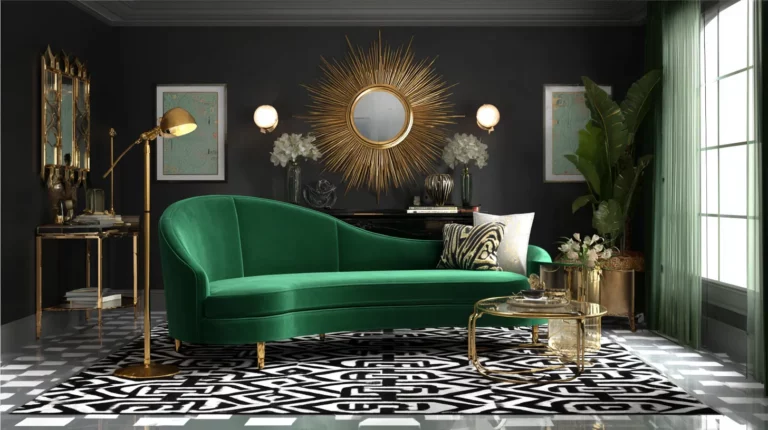
Metallic accents function as neutrals in modern luxury—brushed brass, aged bronze, polished chrome, or blackened steel add visual interest without reading as “color.”
Smart Technology Integration: Invisible Convenience
Seamless Smart Home Elements
Modern luxury embraces technology when it enhances comfort without disrupting aesthetics. Motorized window treatments, integrated sound systems, and smart lighting controls should disappear into the architecture.
Consider hidden charging stations within furniture, wireless charging surfaces integrated into side tables, or discreet cable management that keeps sightlines clean.
Your entertainment center can be beautiful and functional. Media consoles with soft-close doors conceal technology when not in use, while motorized lifts reveal screens only when needed.
Acoustic Design for Modern Living
Luxury modern living rooms often feature hard surfaces—wood, stone, glass—which can create echo. Address this invisibly through acoustic panels disguised as art, heavy curtains that absorb sound, and substantial upholstered furniture that dampens noise.
Integrated sound systems with architectural speakers provide rich audio without visible equipment. The experience should be immersive but the technology invisible.
Climate control matters too. Radiant floor heating, whisper-quiet HVAC systems, and programmable thermostats maintain comfort without the visual or auditory intrusion of traditional systems.
Sustainable Luxury: Conscious Material Choices
Eco-Friendly Elegance
Modern luxury increasingly means sustainable luxury. Choose furniture from makers who prioritize FSC-certified woods, low-VOC finishes, and transparent supply chains.
Natural materials align beautifully with sustainability: organic cotton and linen textiles, wool rugs from ethical sources, reclaimed wood furniture with documented provenance. These choices feel good to live with in every sense.
Invest in quality pieces designed to last decades, not seasons. This approach is inherently sustainable—fewer replacements, less waste, and furniture that can be reupholstered or refinished as your style evolves.
Vintage and Bespoke Integration
Incorporating vintage pieces adds character while reducing environmental impact. A restored midcentury credenza, antique brass accessories, or vintage art glass bring uniqueness no mass-produced item can match.
Bespoke furniture allows you to specify sustainable materials and support local craftsmanship. A custom sofa built to your exact specifications, using organic latex cushions and responsibly sourced fabrics, becomes both personal and principled.
These choices don’t compromise luxury—they elevate it by adding layers of meaning and authenticity to your space.
Creating Functional Zones Within Open Spaces
Defining Areas Without Walls
Modern living often means open floor plans. Create distinct zones through furniture arrangement rather than architectural division.
A substantial rug defines the primary seating area. A console table behind the sofa creates a subtle boundary while offering display space. Different lighting types signal different purposes—ambient for conversation areas, task lighting for reading nooks.
Consider traffic flow carefully. Pathways should feel intuitive, never forcing navigation around furniture. Leave at least 36 inches for primary walkways, 18-24 inches between furniture pieces.
Multifunctional Elegance
Luxury modern living rooms often serve multiple purposes. A sleek secretary desk folds away when not needed. Ottoman coffee tables with hidden storage keep the space tidy without sacrificing style.
Built-in shelving provides library, display, and storage without consuming floor space. Choose designs with varied shelf heights and depths to create visual interest while accommodating books, art objects, and hidden storage bins.
Murphy beds with sophisticated mechanisms can transform a living room into guest quarters without compromising daily aesthetics. When closed, they disappear behind seamlessly integrated cabinetry or become display surfaces.
Art and Accessories: The Curated Touch
Statement Art as Soul
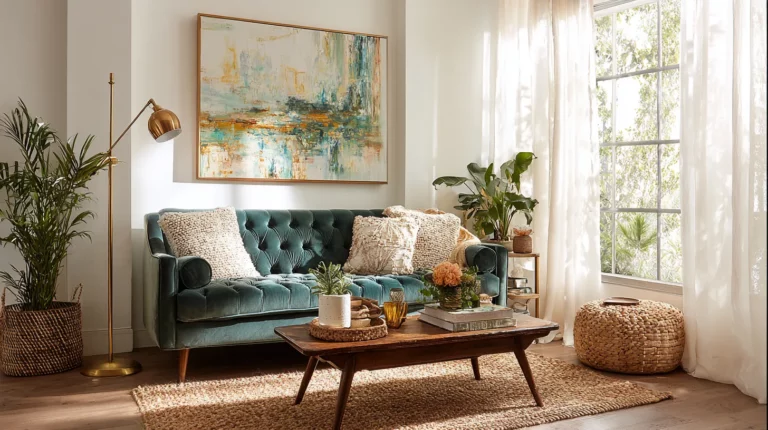
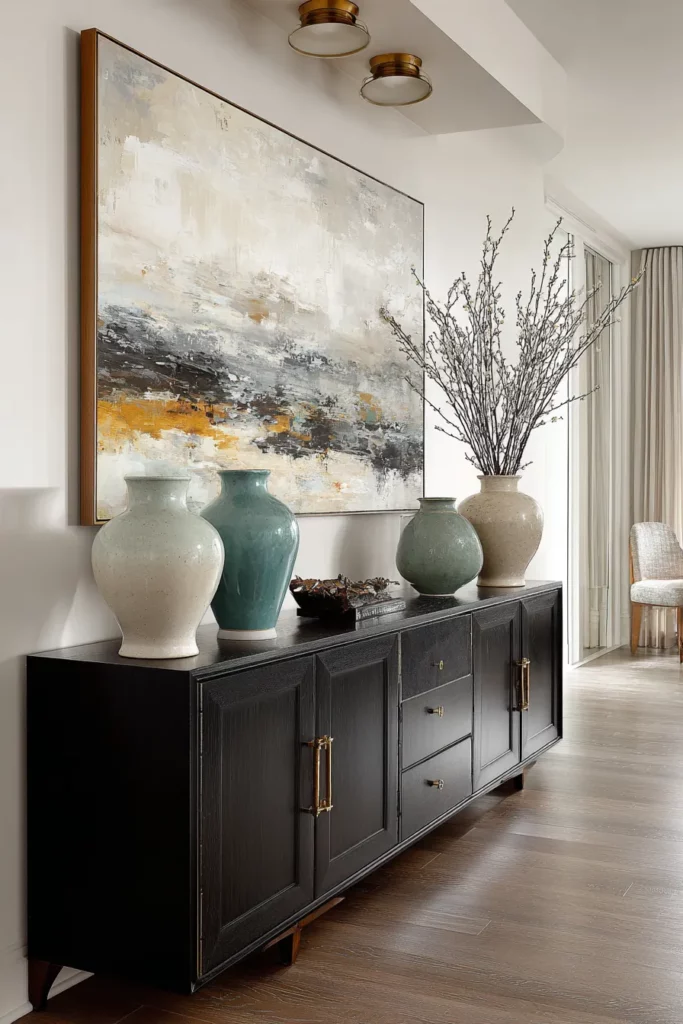
Large-scale art commands attention and provides the emotional center of a luxury modern living room. Whether abstract expressionism, photography, or contemporary portraiture, choose pieces that speak to you personally.
Scale matters: one substantial piece often creates more impact than a gallery wall. Consider proportions—art should typically span two-thirds to three-quarters of the furniture width below it.
Lighting art properly elevates both the piece and the room. Adjustable picture lights or gallery-style track systems allow you to highlight your collection while creating ambient glow.
Accessories with Intention
In modern luxury, less truly becomes more. Each accessory should justify its presence through beauty, function, or meaning.
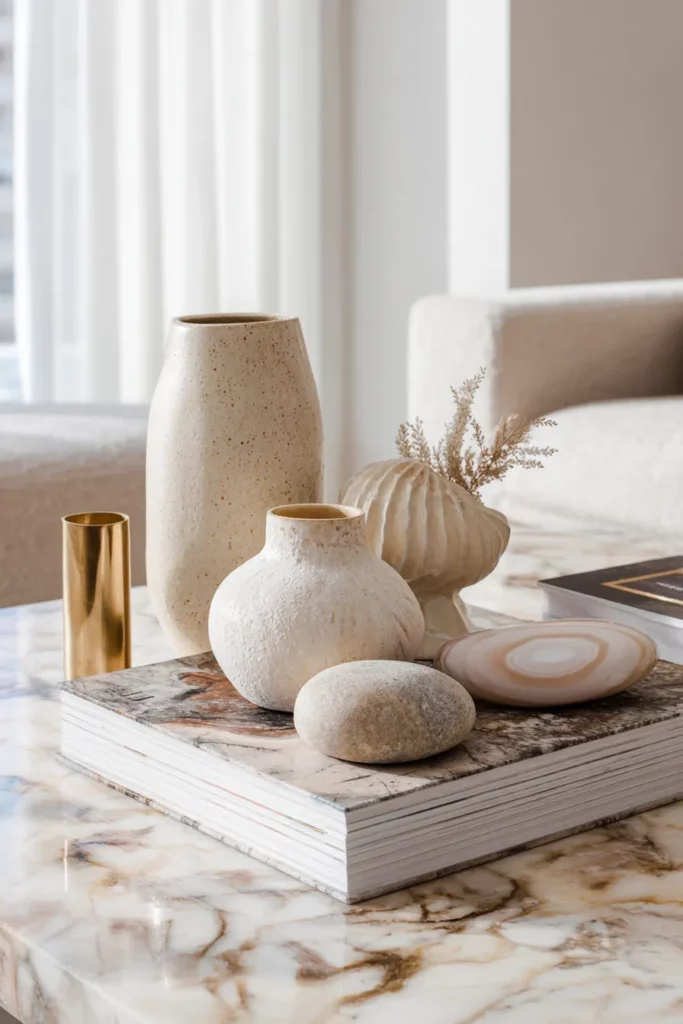
Group objects in odd numbers—three vessels of varying heights, five art books stacked intentionally, a single sculptural object on a pedside table. This creates visual interest without clutter.
Natural elements keep spaces feeling alive: a bowl of smooth river stones, a piece of driftwood, ceramic vessels with organic glazing. These touches prevent modern spaces from feeling sterile.
Maintenance and Care: Preserving Luxury
Protecting Your Investment
Luxury materials demand proper care. Treat leather furniture annually with appropriate conditioners, vacuum upholstered pieces weekly with proper attachments, and rotate cushions regularly for even wear.
Natural stone surfaces require sealing and specific cleaners to prevent staining or etching. Wood furniture benefits from occasional oiling or waxing depending on finish.
Professional cleaning for rugs, upholstery, and drapery every 12-18 months preserves both appearance and investment value. Many luxury furniture makers offer care services—use them.
Seasonal Refreshing
Luxury living rooms should evolve subtly with seasons. Swap lightweight linen cushions for velvet in autumn, exchange sheers for heavier drapery as days shorten, or rotate art and accessories to reflect seasonal shifts.
These changes need not be dramatic—a cashmere throw in winter, lighter cottons in summer, seasonal greenery, or shifting candle scents can refresh the space without requiring redecoration.
Your Luxury Modern Living Room Checklist
- Foundation: Neutral color palette with varied textures and quality materials
- Furniture: Low-profile, high-quality pieces with comfortable seating and purposeful arrangement
- Lighting: Layered system including ambient, task, and accent lighting on dimmers
- Materials: Mix of natural stone, quality wood, authentic textiles, and metallic accents
- Technology: Integrated smart home elements that enhance without disrupting aesthetics
- Art: Statement pieces properly scaled and lit to create emotional impact
- Sustainability: Conscious material choices and investment in lasting quality
- Textiles: Layered fabrics in complementary textures within limited color range
- Zoning: Clear functional areas defined through furniture and lighting rather than walls
- Details: Curated accessories that add personality without creating clutter
Key Principles Summary
| Design Element | Modern Luxury Approach |
|---|---|
| Color Palette | Sophisticated neutrals with strategic accent colors |
| Furniture Style | Clean lines, quality construction, comfortable scale |
| Materials | Natural, authentic, sustainable with visible craftsmanship |
| Lighting | Layered, dimmable, integrating natural and artificial sources |
| Technology | Seamlessly integrated, invisible when not in use |
| Accessories | Intentionally curated, fewer but meaningful pieces |
| Sustainability | Eco-conscious materials, investment in longevity |
The ERYLIN Approach: Where Luxury Meets Life
Creating a luxury modern living room isn’t about following trends or filling a space with expensive items. It’s about understanding how you live, what brings you comfort, and building a room that reflects both.
Every choice—from the linen on your sofa to the brass pull on a drawer—contributes to an atmosphere that either nurtures or drains. Choose wisely, choose personally, and choose pieces that will grow more beloved with time.
Your living room should feel like the visual equivalent of your favorite cashmere sweater: refined, comfortable, and something you reach for again and again without thinking. That’s the essence of modern luxury—not perfection, but a deeply personal version of beauty that supports your daily life with quiet elegance.
Let your space breathe. Let it evolve. Let it be both beautiful and wonderfully, authentically yours.
At ERYLIN, we believe luxury lives in the details—the way afternoon light catches on linen, the smooth coolness of marble beneath your fingertips, the quiet satisfaction of a room that simply feels right. Your living room awaits.
Frequently Asked Questions
What defines a modern living room?
A modern living room features clean architectural lines, minimal ornamentation, and a focus on function paired with form. It emphasizes open space, quality over quantity, and natural materials balanced with contemporary finishes. The aesthetic is uncluttered but warm, avoiding the starkness of strict minimalism while maintaining visual clarity and intentional design.
How can I achieve luxury in a modern living room on a budget?
Focus on key investment pieces like a quality sofa and lighting, then layer in affordable textiles and accessories. Paint in sophisticated neutrals provides instant elevation at minimal cost. Shop vintage for unique pieces, choose a few statement items rather than filling every space, and prioritize materials that age beautifully even if you start with fewer pieces. Luxury is more about curation and quality than quantity and cost.
What materials signify luxury in living room design?
Natural materials like marble, travertine, solid hardwoods, full-grain leather, and hand-woven natural textiles communicate luxury through their inherent quality and longevity. Metals like brushed brass, aged bronze, and blackened steel add refinement. The key is authenticity—real materials with visible craftsmanship rather than synthetic imitations, along with finishes that improve rather than degrade over time.
How does lighting affect a modern luxury living room?
Lighting creates atmosphere, highlights architectural features, and allows the space to transform throughout the day. Layered lighting with ambient, task, and accent sources on dimmers provides flexibility for different activities and moods. Natural light is maximized through thoughtful window treatments, while artificial lighting is positioned to eliminate harsh shadows, create focal points, and enhance the textures and materials throughout the room.
How do I choose furniture that balances style and comfort?
Test furniture in person whenever possible, prioritizing construction quality and comfort over appearance alone. Look for pieces with solid hardwood frames, quality cushioning, and proper ergonomics. In modern luxury design, low-profile silhouettes can still offer deep seats and supportive cushions. Choose timeless shapes in neutral colors for major pieces, allowing personality through smaller accent furniture and accessories that can evolve as your taste changes.