
Table of Contents
Your living room doesn’t need square footage to feel expansive. It needs intention, light, and a gentle hand that knows when to add and when to let go.
In small apartments, the living room becomes everything at once — a place to rest, work, dream, and welcome the people you love. And that’s precisely why it deserves more than generic advice. It deserves design that breathes with you.
This guide will walk you through sensory-rich, soul-nourishing ideas that make compact living rooms feel open, warm, and entirely yours. From curved furniture that softens sharp corners to mural wallpapers that transport you beyond four walls, we’ll explore how to layer texture, maximize function, and create a space that holds you gently at the end of every day.
Because small doesn’t mean compromise. It means curation.
How to Make a Small Living Room Feel Bigger
Embrace Light in All Its Forms
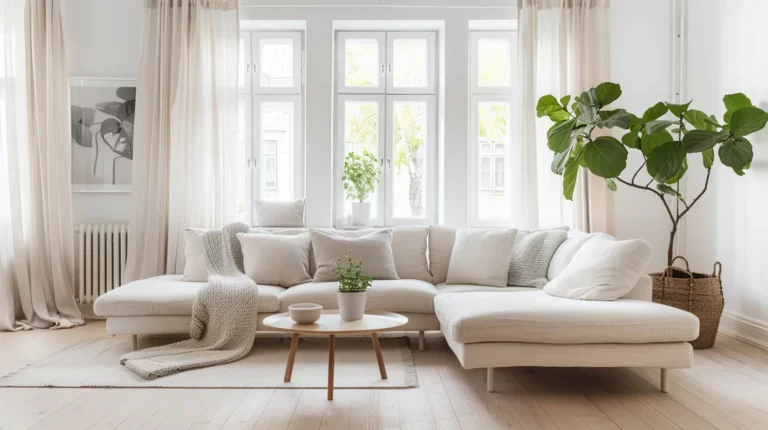
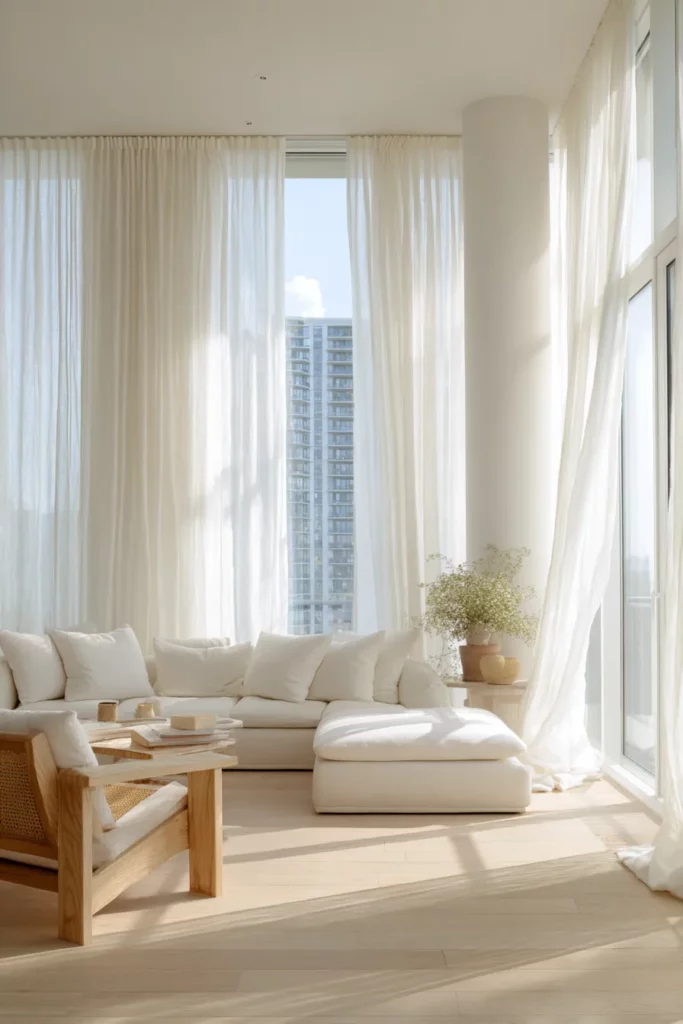
Natural light is your greatest collaborator. Keep window treatments sheer or minimal to let sunlight wash over walls and floors, creating the illusion of depth.
If privacy is a concern, consider linen curtains in soft ivory or pale gray. They filter light without blocking it, casting a gentle glow that makes even the smallest room feel like morning.
Artificial lighting matters too. Layer ambient lighting with task and accent lights — a sculptural floor lamp in one corner, a warm table lamp on a console, perhaps string lights draped softly along a shelf. The play of light and shadow adds dimension where walls cannot.
Choose a Focal Point That Draws the Eye Forward
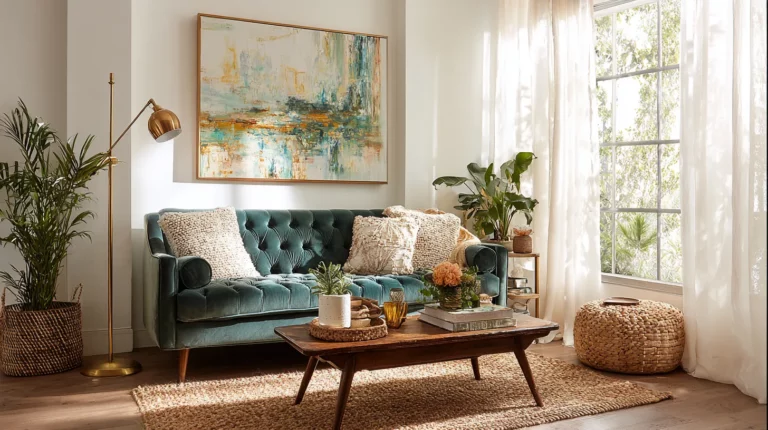
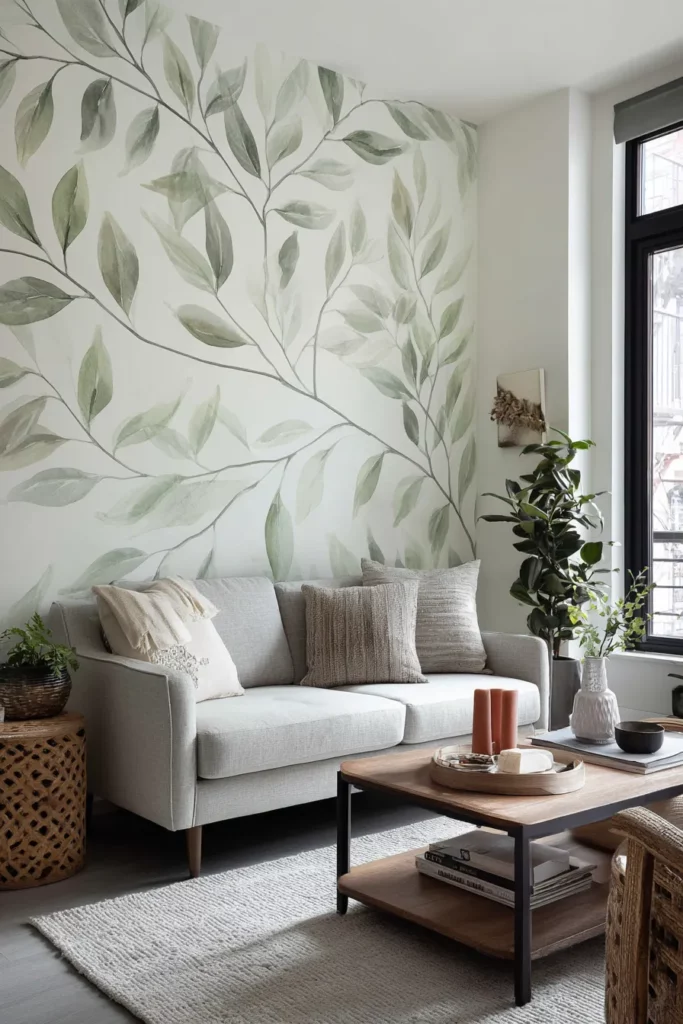
A focal window dressed simply or a statement piece like mural wallpaper can anchor your living room without overwhelming it. The key is to guide the gaze in one intentional direction, creating depth rather than clutter.
Murals depicting open landscapes, abstract horizons, or even subtle botanical prints invite the eye to travel beyond the physical space. This sense of movement makes walls feel less confining and more like portals.
If wallpaper feels too permanent, try a large piece of framed art or a gallery wall arranged with breathing room between frames.
Use Mirrors Strategically
Mirrors are quiet magicians. Place one opposite a window to double natural light, or lean an oversized mirror against a wall to reflect the room back on itself, making it appear larger and more luminous.
Choose mirrors with minimal frames — think natural wood or matte black — to keep the look clean and grounded. Avoid ornate designs that compete for attention.
Furniture That Works Harder and Feels Softer
Curved Furniture for Flow and Comfort
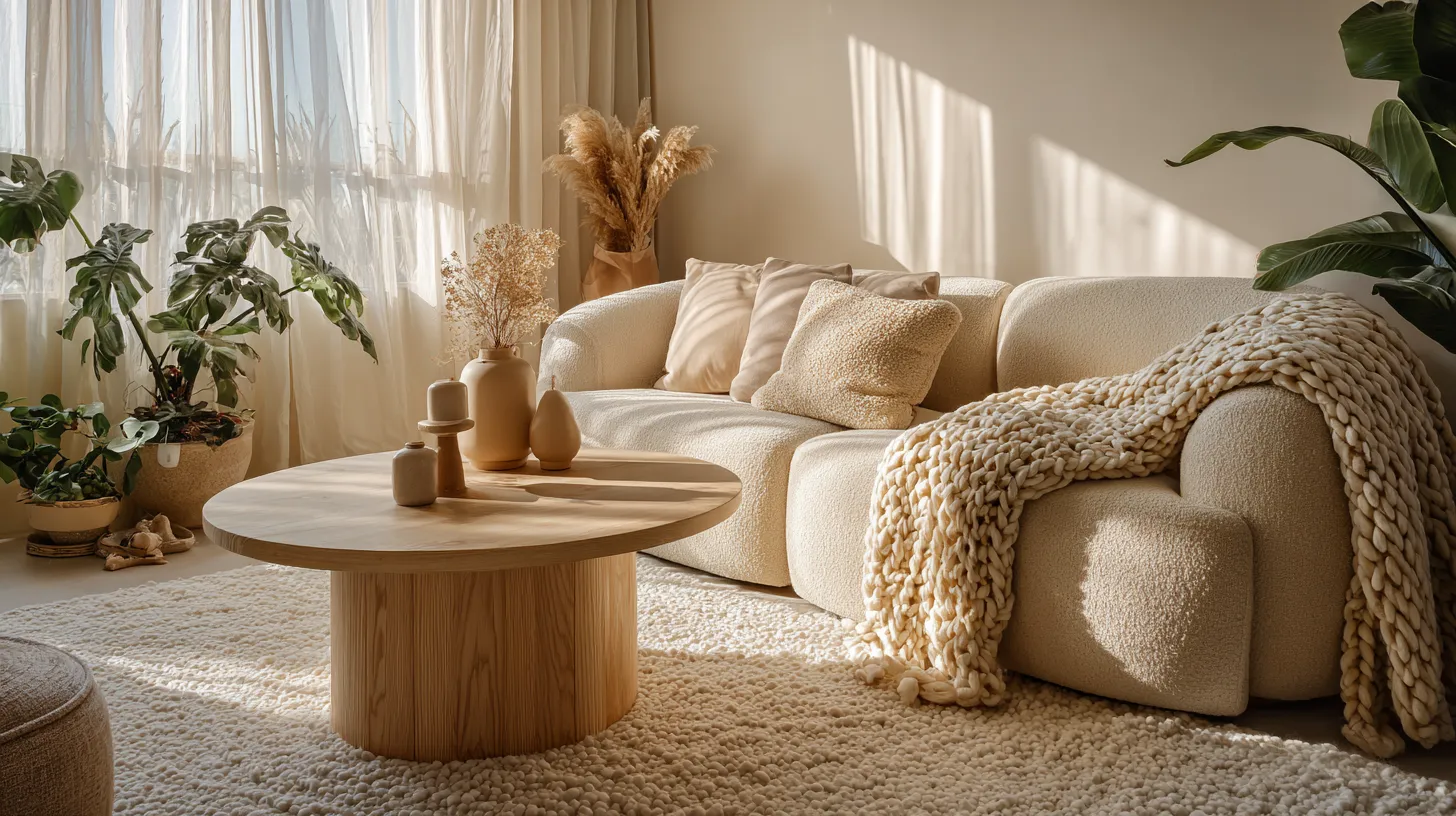
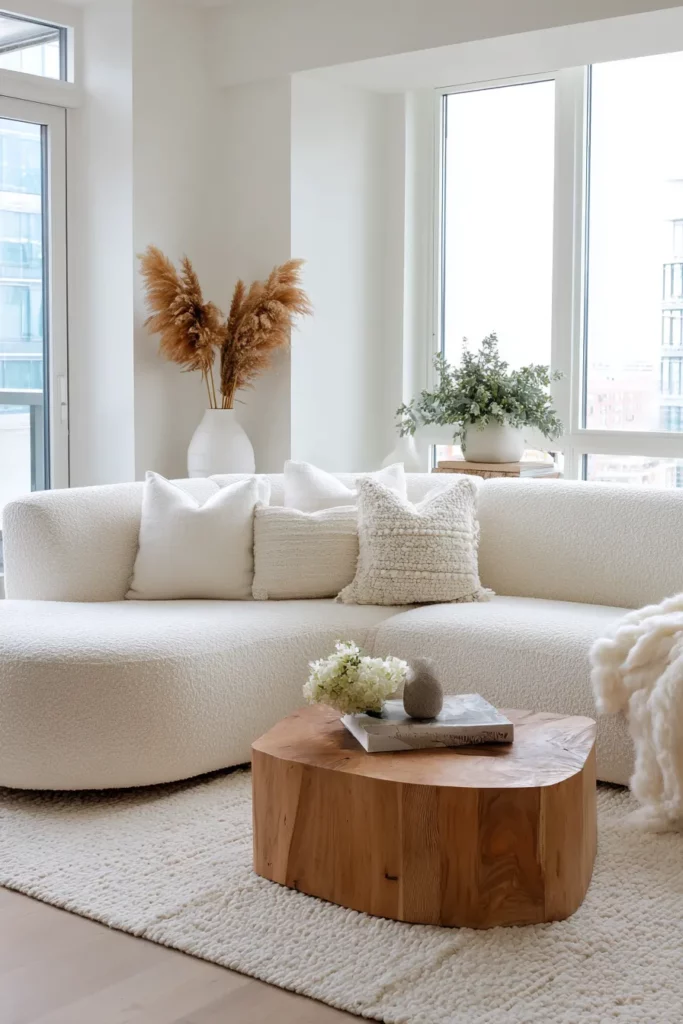
Sharp angles can make a small room feel boxed in. Curved furniture — a rounded sofa, an arched floor lamp, or a circular coffee table — softens the space and encourages better flow.
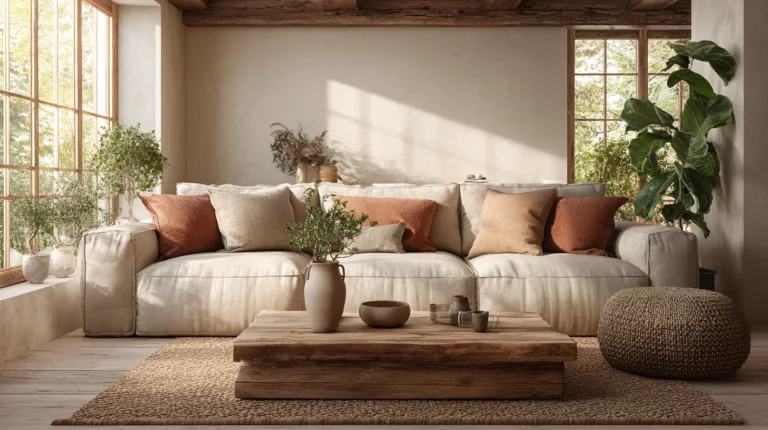
An oversize sectional with gentle curves might seem counterintuitive, but when positioned thoughtfully, it creates a cocoon of comfort without harsh visual breaks. The continuous line tricks the eye into seeing space rather than furniture.
Look for pieces upholstered in natural linen or boucle fabrics. They invite touch and add warmth without pattern overload.
Multifunctional Pieces for Living and Working
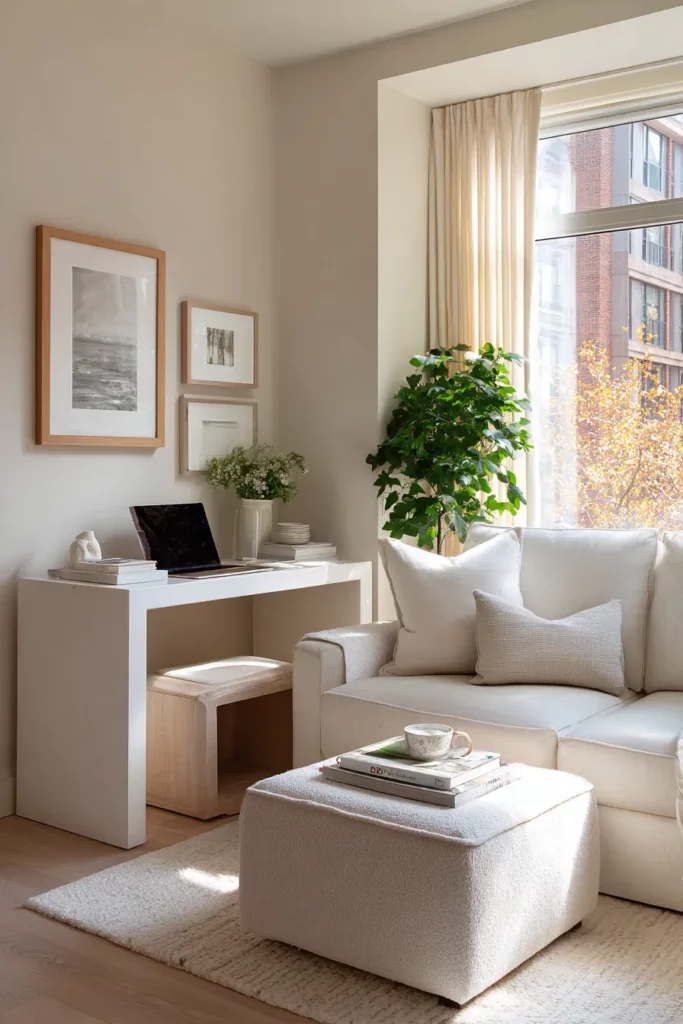
Your living room may also be your workspace, dining nook, or reading corner. Choose furniture that transitions gracefully between roles.
A slim console table behind the sofa can serve as a desk by day and a display surface by night. Nesting tables tuck away when not needed but expand for guests. An ottoman with hidden storage becomes seating, a footrest, and a place to stash blankets.
Sofa comfort is non-negotiable. Test cushions for support and consider modular designs that can be reconfigured as your needs shift.
Wall-Mounted Solutions
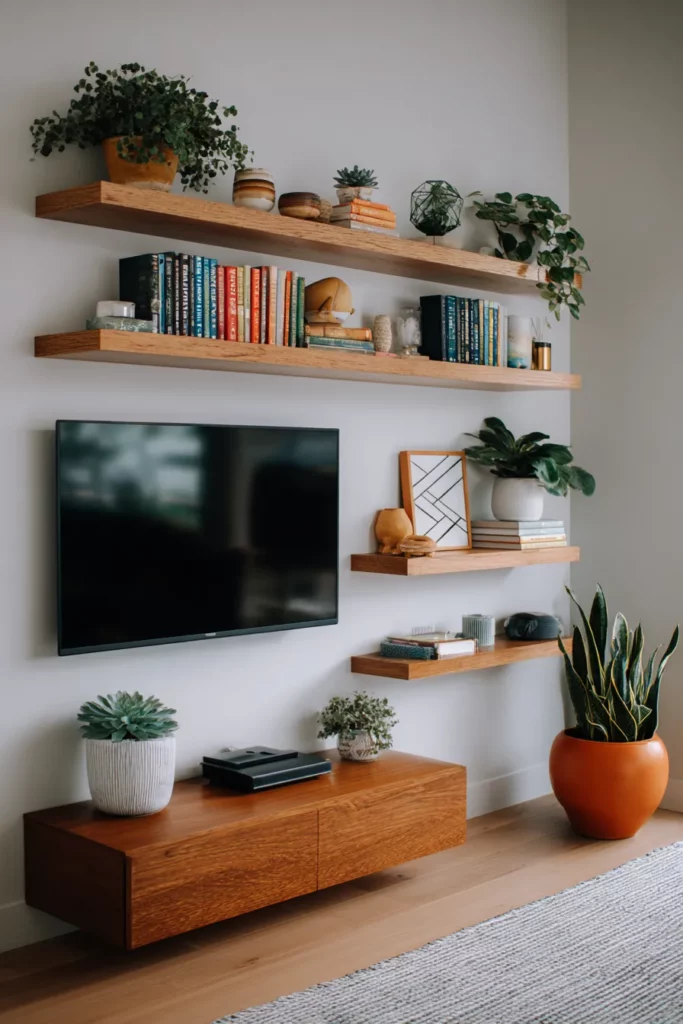
Free up floor space by going vertical. A wall-mounted TV eliminates the need for a bulky entertainment center, while floating shelves create display and storage without visual weight.
Consider wall-mounted sconces instead of table lamps to save surface area and add architectural interest. The more floor you see, the larger the room feels.
Color, Pattern, and Texture: Layering Without Overwhelm Start With a Neutral Foundation
Neutral decor doesn’t mean boring. It means building a calm canvas that lets you introduce personality through texture and accent pieces.
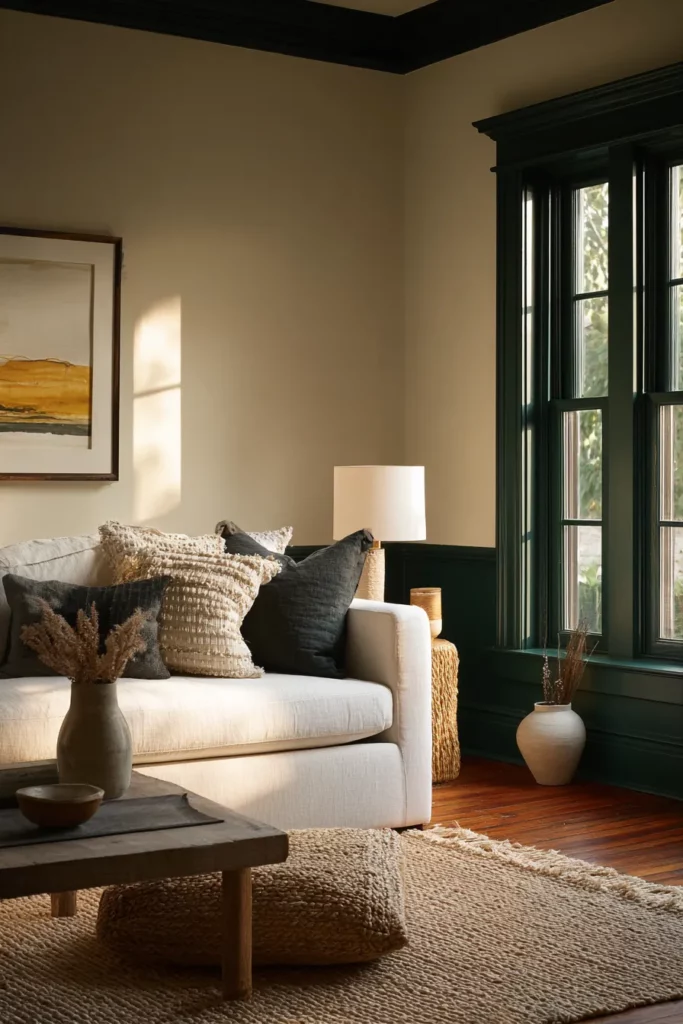
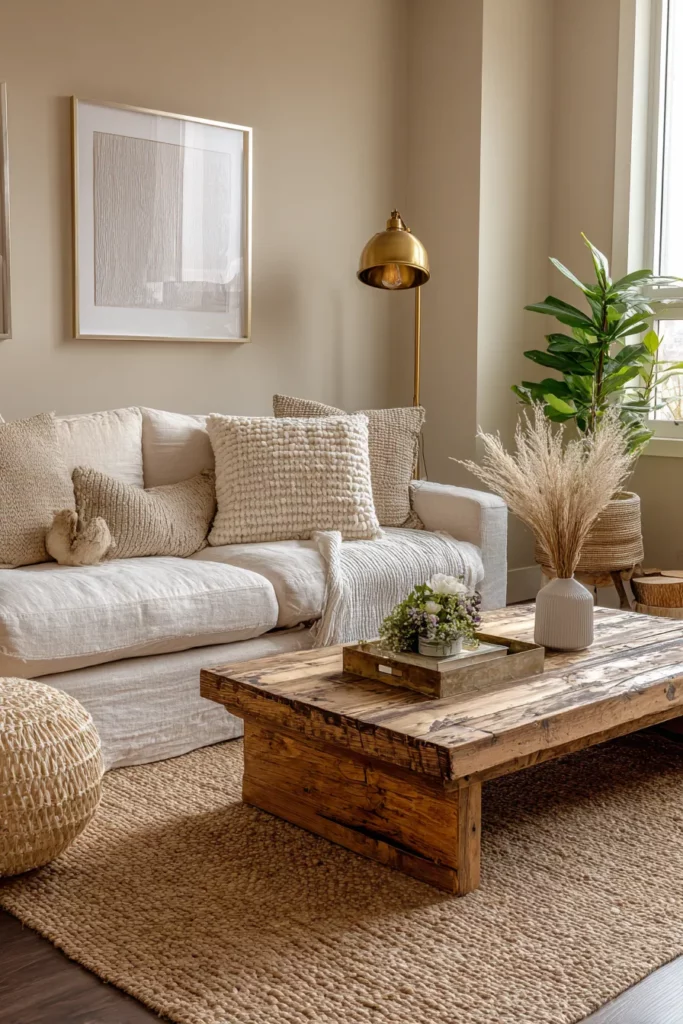
Walls in soft white, warm beige, or pale gray expand visually while allowing natural materials — like jute rugs, linen throws, and ceramic vases — to shine. This approach creates a backdrop that feels timeless and adaptable.
If pure neutrals feel too safe, try bold trim paint in charcoal, deep green, or terracotta. Painting window frames, baseboards, or even the ceiling in a contrasting shade adds definition and draws the eye around the room, creating perceived height and width.
Layer Patterns With Intention
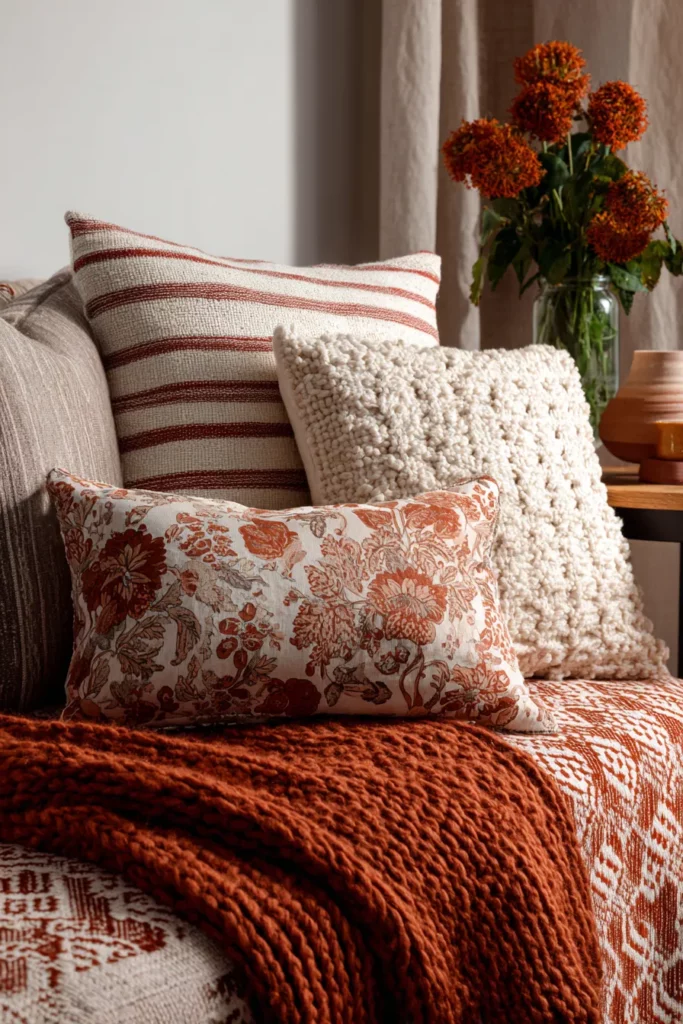
Busy pattern layering can work in small spaces, but only when done with restraint. Choose one dominant pattern — perhaps a geometric rug or a floral throw pillow — and let smaller accents echo it in different scales.
Mixing stripes, florals, and abstract prints feels cohesive when they share a common color palette. Think of it like music: different instruments, one harmonious song.
Avoid covering every surface. Let some areas rest in solid tones to give the eye a place to land.
Add Warmth Through Texture
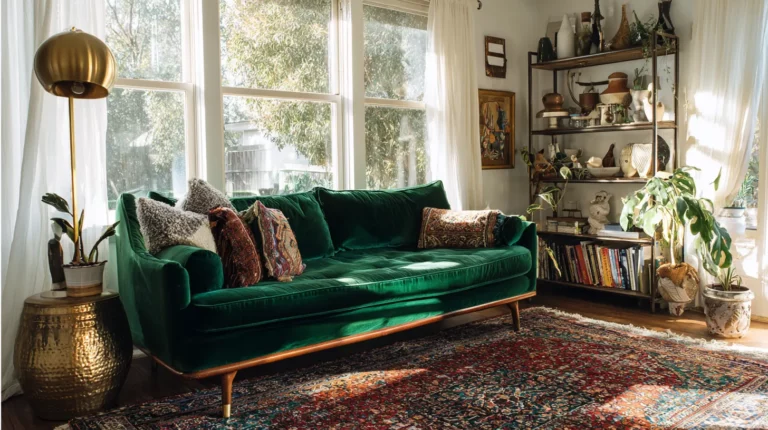
Texture is how a room speaks to your senses. Chunky throws draped over the arm of a sofa, woven baskets tucked under a bench, velvet cushions catching light — these details make a space feel lived-in and loved.
Natural materials ground a room. Wood, stone, wool, and clay connect you to the earth and bring an organic warmth that synthetic materials simply can’t replicate.
Creative Storage Solutions That Disappear
Rethink Vertical Space
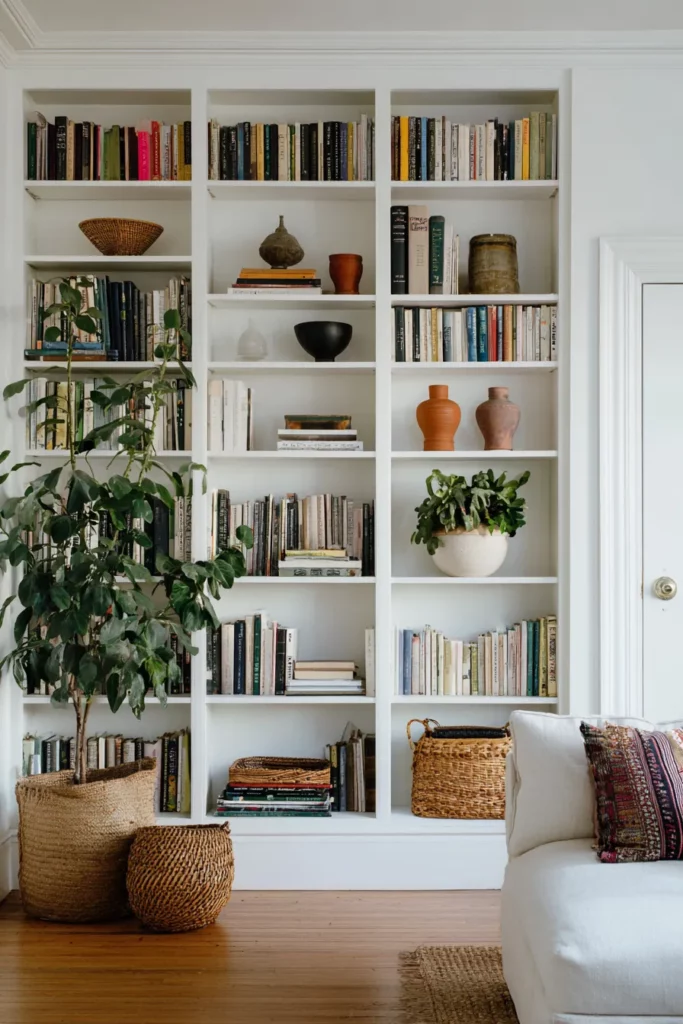
When floor space is limited, look up. Floor-to-ceiling shelving maximizes storage while drawing the eye upward, making ceilings appear higher.
Style shelves with intention: books arranged by color, ceramic vessels in varying heights, a few beloved objects rather than a crowded collection. Creative storage should enhance the room’s aesthetic, not detract from it.
Baskets on lower shelves hide clutter while adding texture. Choose natural fibers like seagrass or rattan for a cohesive, earthy feel.
Furniture With Hidden Storage
Ottomans, benches, and coffee tables with lift-top or internal storage keep essentials close without visual clutter. Store extra blankets, remotes, magazines, or tech accessories out of sight but within reach.
A storage bench beneath a window becomes both seating and a place to tuck away seasonal items. Every piece should earn its place by serving more than one function.
Keep Surfaces Clear
A cluttered surface makes even a large room feel cramped. Limit coffee table decor to a tray with a candle, a small plant, and perhaps a beautiful book. This restraint creates breathing room and lets the eye travel freely.
Bringing Nature and Life Into Small Spaces
Plants as Living Sculpture
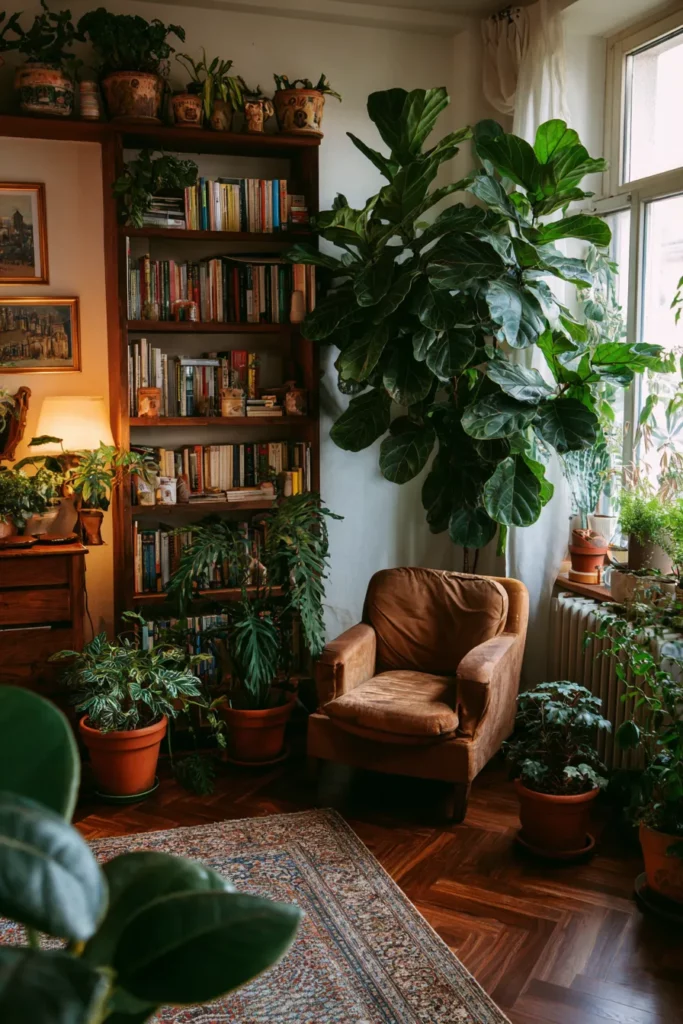
Plants are non-negotiable in any living room, but especially in small ones. They purify air, soften hard edges, and bring life into compact spaces.
Choose varieties that thrive in your light conditions. A tall fiddle leaf fig or snake plant adds height without width. Trailing pothos or string of pearls softens shelves and creates visual interest at different levels.
Group plants in odd numbers and vary their heights. Place them in ceramic or terracotta pots that complement your color palette.
Seasonal Flexibility for Year-Round Freshness
Design your living room to breathe with the seasons. In winter, layer wool throws and add warm brass candleholders. In summer, swap in linen pillows and lighter textiles.
This seasonal flexibility keeps your space feeling fresh without requiring a full redesign. Small changes — a new throw, different artwork, seasonal branches in a vase — shift the mood beautifully.
Consider a few versatile pieces that transition easily: neutral pillows with removable covers, a lightweight throw that works year-round, or a tray that can be styled differently each season.
Technology Integration for Modern Living
Smart Lighting for Mood and Function
Smart lighting transforms a small living room by allowing you to adjust ambiance with a voice command or phone tap. Dimmable bulbs set the mood for movie nights, bright light energizes morning work sessions.
Choose smart bulbs that mimic natural light temperatures. Cooler tones boost focus during the day; warmer hues encourage evening relaxation.
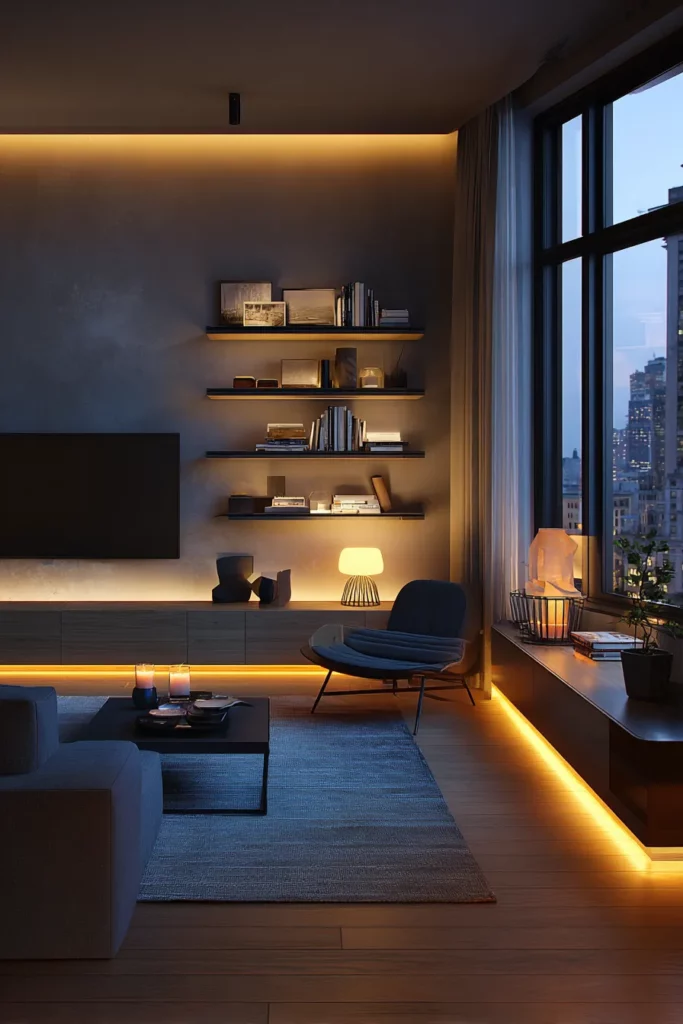
Integrate lighting controls into your decor seamlessly. Hidden LED strips under shelves or behind the TV add depth without visible fixtures.
Voice-Controlled Devices
Voice assistants help you control lighting, play music, and manage smart home functions without cluttering surfaces with remotes. Choose compact designs in neutral colors that blend into your aesthetic.
Position them thoughtfully so they’re functional but not dominant focal points. Technology should support your space, not compete with it.
Lifestyle Adaptations: Design for How You Actually Live
For Remote Workers
If your living room doubles as an office, create visual boundaries. A console table behind the sofa becomes a dedicated desk that closes the workday when you step away.
Choose a comfortable chair that works for both dining and desk use. Keep work materials in a decorative basket that slides out of sight after hours.
Good task lighting is essential. A sleek desk lamp or wall-mounted sconce provides focused light without taking up precious surface area.
For Pet Owners
Choose durable, washable fabrics like performance linen or tightly woven cotton. Darker neutrals hide pet hair better than pure white, while patterns camouflage minor wear.
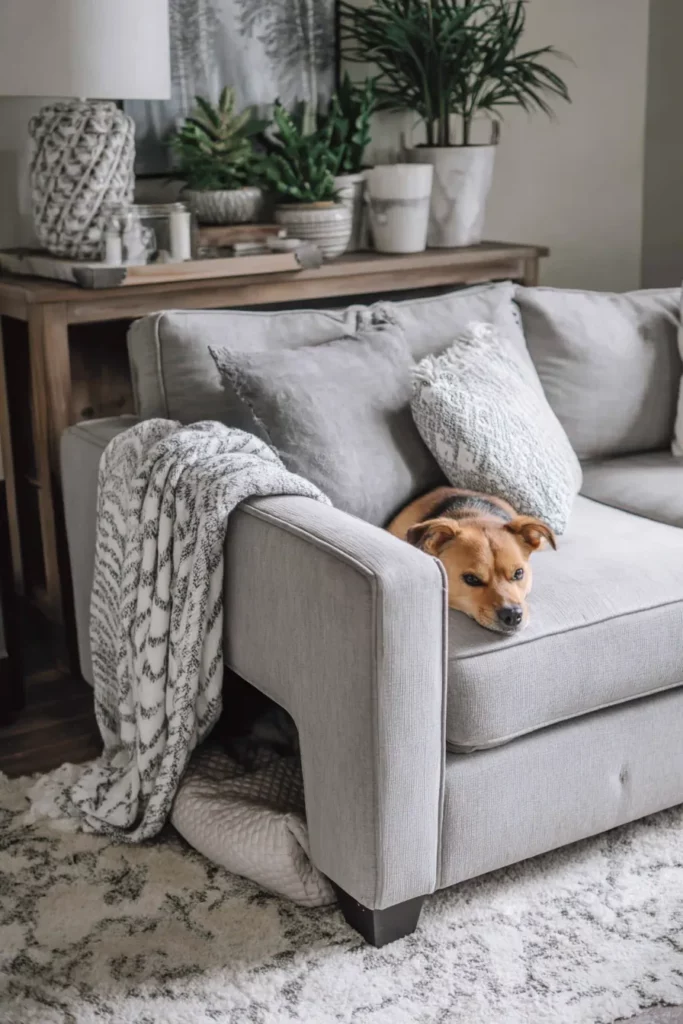
Create a designated pet zone with a stylish bed tucked under a console or in a corner. Elevated feeding stations can fit neatly into existing furniture layouts.
Storage ottomans keep toys and supplies organized but accessible. Your space can be both beautiful and functional for every member of your household.
For Frequent Entertainers
Flexible seating is key. Poufs and floor cushions store easily but provide extra seating when guests arrive. Nesting tables expand your surface area without permanently claiming space.
Keep entertaining essentials — a bar cart, serving trays, cloth napkins — organized in a nearby closet or storage bench so setup is effortless.
Sustainable and Eco-Conscious Choices
Choose Natural and Recycled Materials
Eco-friendly materials aren’t just better for the planet — they bring warmth and authenticity to your space. Opt for furniture made from reclaimed wood, organic cotton textiles, and recycled metal accents.
Vintage and secondhand pieces add character while reducing waste. A mid-century chair or antique mirror tells a story that mass-produced items cannot.
Look for low-VOC paints and finishes that improve indoor air quality. Small spaces concentrate air pollutants, so choosing healthier materials makes a real difference.
Invest in Quality Over Quantity
Sustainable living means buying less but choosing better. One well-made sofa will outlast three cheap ones, and it won’t contribute to landfill waste.
Timeless design transcends trends. Classic shapes, natural materials, and neutral palettes ensure your living room won’t feel dated in a few years.
Budget-Friendly Decorating Without Compromise
Prioritize Impact Pieces
Budget decorating succeeds when you invest strategically. Allocate more funds to items you interact with daily — your sofa, a quality rug, good lighting — and save on accessories.
Thrift stores, estate sales, and online marketplaces offer incredible finds. A vintage brass lamp or ceramic vase costs a fraction of retail while adding more personality.
DIY With Intention
Paint is the most affordable transformation. An accent wall in a rich, unexpected color creates a focal point for the cost of a gallon of paint.
Create your own art by framing botanical prints, pages from vintage books, or even fabric swatches. Group them in matching frames for a cohesive gallery wall.
Refresh existing furniture with new hardware, paint, or reupholstery. Sometimes a piece just needs a small update to feel entirely new.
Quick Reference: Small Living Room Essentials Checklist
- Curved or modular seating that promotes flow
- Multifunctional furniture (storage ottomans, console desks, nesting tables)
- Wall-mounted TV and shelving to free floor space
- Layered lighting (ambient, task, and accent)
- Large mirror to reflect light and expand space
- Neutral base with bold trim or accent wall
- Natural textures (chunky throws, woven baskets, linen pillows)
- Plants in varying heights
- Smart lighting for mood control
- Seasonal decor elements that swap easily
- Hidden storage solutions throughout
- Quality rug to anchor and define the space
A Final Thought
Your small living room is not a limitation. It’s an invitation to be intentional, to choose beauty over excess, to create a space that holds only what truly matters.
When you walk in at the end of a long day, let it feel like an exhale. Let the light be soft, the textures welcoming, the air clean and filled with green growing things. Let every piece have a purpose and a place.
This is the art of small-space living: not making do, but making sacred. Not filling every corner, but honoring each one.
Welcome home.
Frequently Asked Questions
How can I make my small living room look bigger?
Maximize natural light, use mirrors strategically, and choose furniture with legs that allow you to see underneath. Keeping a cohesive color palette and avoiding visual clutter also creates the illusion of more space.
What furniture works best in small living rooms?
Curved sectionals, wall-mounted pieces, and multifunctional furniture like storage ottomans and console tables optimize limited space. Choose items that serve multiple purposes and consider scale carefully.
How do I decorate a small living room on a budget?
Focus spending on key pieces like seating and lighting. Thrift vintage accessories, DIY artwork, and use paint for affordable impact. Swap decor seasonally rather than replacing everything at once.
What colors make small living rooms feel larger?
Light neutrals — soft whites, warm beiges, pale grays — reflect light and expand space visually. Bold trim paint adds definition without overwhelming. Monochromatic schemes create cohesion and flow.
How do I maximize storage without clutter?
Use vertical space with floating shelves, choose furniture with hidden storage, and keep surfaces minimal. Decorative baskets and bins organize essentials while adding texture.