
Table of Contents
There’s something about a mid-century modern living room that feels like stepping into a moment frozen in the best possible way. It’s not just about the furniture or the clean lines—it’s about a philosophy that says beauty and function belong together, never one without the other. When you walk into a room designed with this sensibility, you feel it immediately: the lightness of open space, the warmth of natural wood, the invitation to sit, breathe, and simply be.
If you’ve ever been drawn to the understated elegance of the 1950s and ’60s, or found yourself captivated by iconic pieces like a molded plywood chair or a teak credenza, you’re sensing something real. Mid-century modern isn’t just a style—it’s a return to intention. Every object serves a purpose, every line speaks truth, and nothing is overdone.
This guide walks you through creating that same sense of calm sophistication in your own living room, whether you’re starting fresh or gently evolving a space you already love. We’ll explore the history, the essential elements, the colors that sing, and the practical wisdom to make it work in real life—especially if you’re working with a tight budget or a smaller footprint.
Let’s create something beautiful together.
Understanding Mid-Century Modern: More Than a Timeline
Mid-century modern emerged during an extraordinary moment in design history—roughly the 1930s through the 1960s—when designers and architects fundamentally reimagined what modern living could look like. But this wasn’t just about aesthetics; it was a response to war, industrialization, and a hunger for optimism.
Designers like Charles and Ray Eames, Arne Jacobsen, and Florence Knoll believed that good design should be accessible, not precious. They experimented with new materials—molded plywood, bent metal, fiberglass—and proved that innovation and beauty could serve everyday people. In post-war America and Scandinavia, this movement felt like freedom: sleek forms, honest materials, and spaces that breathed.
What makes this era so enduring is its philosophy: form follows function, ornamentation is unnecessary, and nature’s organic shapes matter. A mid-century room isn’t trying to impress you; it’s inviting you to live well within it. This is why, nearly seventy years later, these spaces still feel contemporary and never dated.
The Foundation: Clean Lines and Organic Forms
The structural DNA of mid-century modern living rooms rests on two complementary ideas: the clean line and the organic form.
Clean lines appear in architectural details, furniture frames, and spatial planning. Think of a low-slung sofa with tapered legs, a wall-mounted credenza without ornament, or a room without visual clutter. These lines create clarity—they help your eye rest and your mind settle.
Organic forms live alongside this minimalism. They appear in the subtle curve of a chair seat, the gentle arc of a wooden leg, or the sculptural quality of a lamp base. These shapes echo nature without being literal; they’re what makes mid-century spaces feel warm rather than cold, inviting rather than austere.
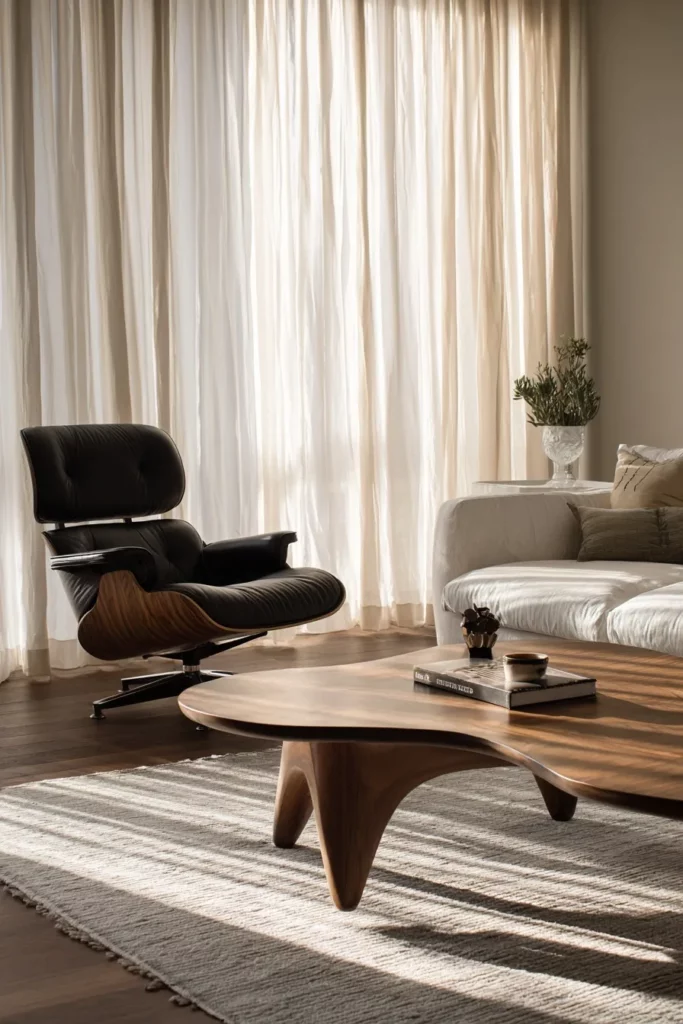
Together, these create visual poetry. A room might feature the rigid geometry of a rectangular sectional paired with the flowing contour of a Noguchi table—and somehow, both elements make sense. This balance is what separates mid-century modern from stark minimalism.
Essential Furniture: Building Your Foundation
Creating an authentic mid-century living room means choosing pieces that embody the era’s values. You don’t need a museum; you need intention.
The Sofa or Sectional
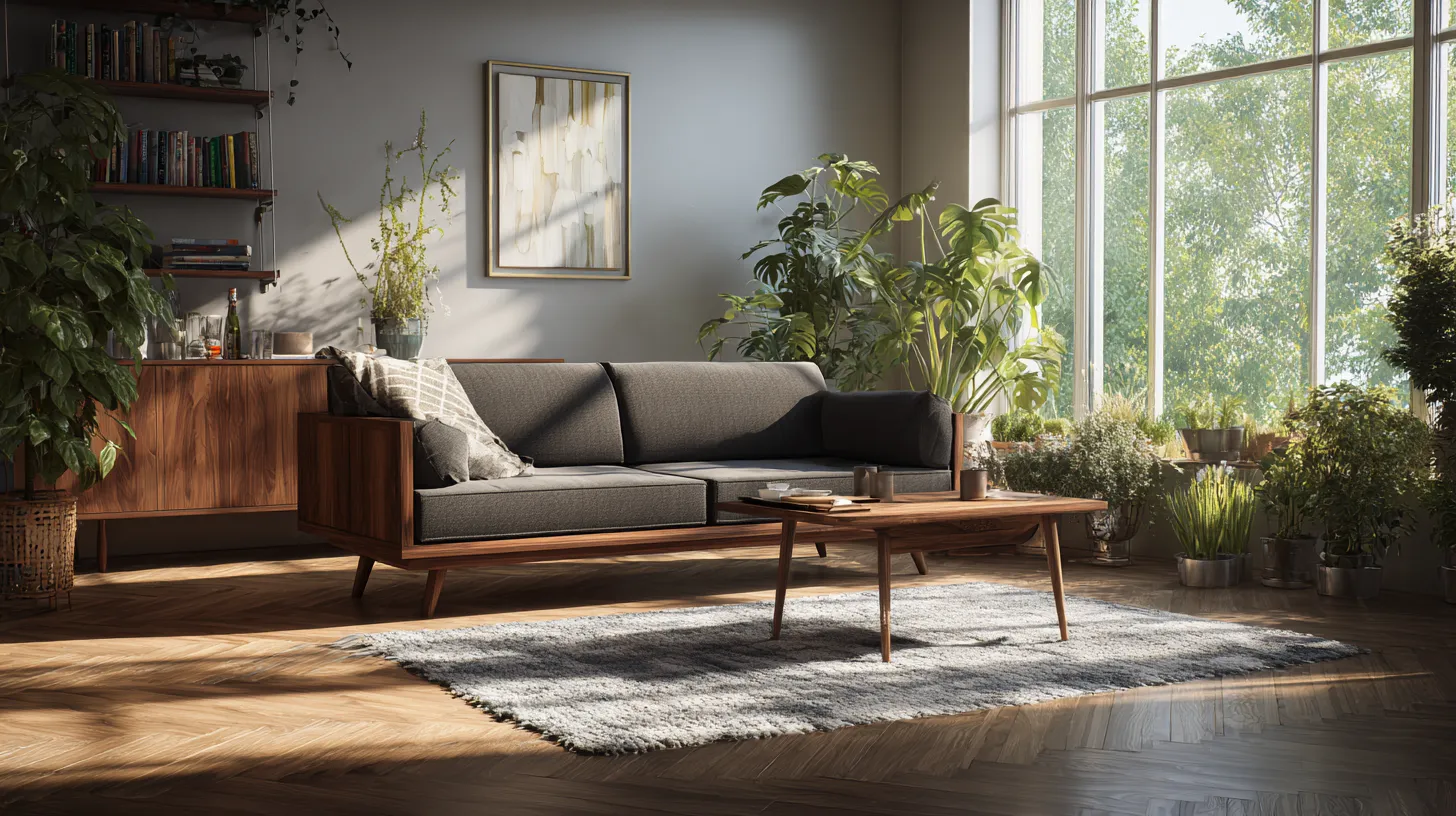
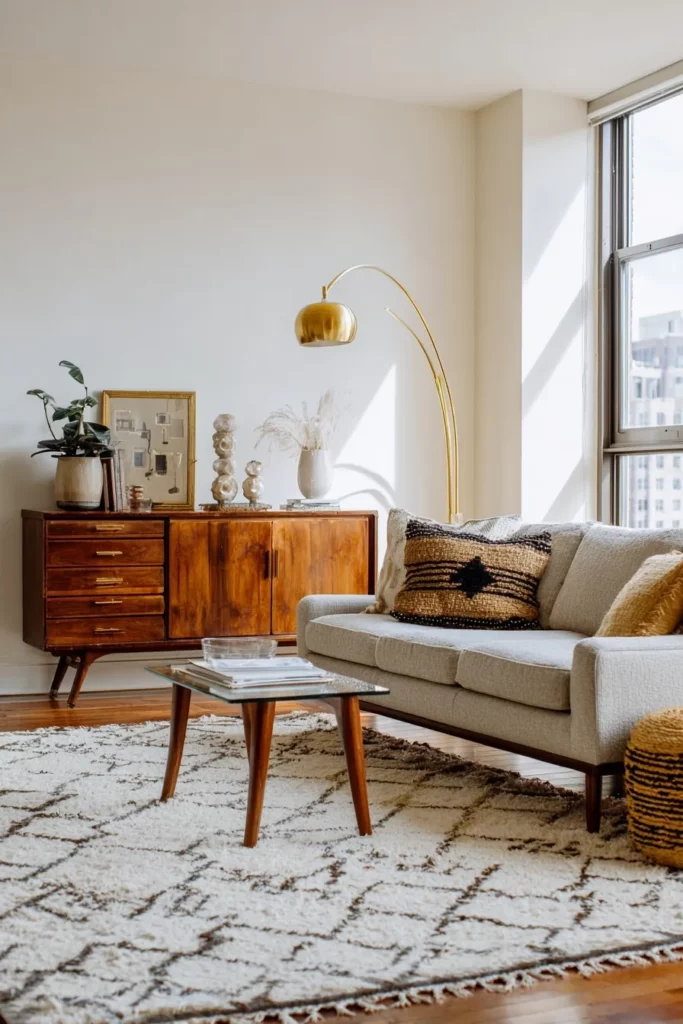
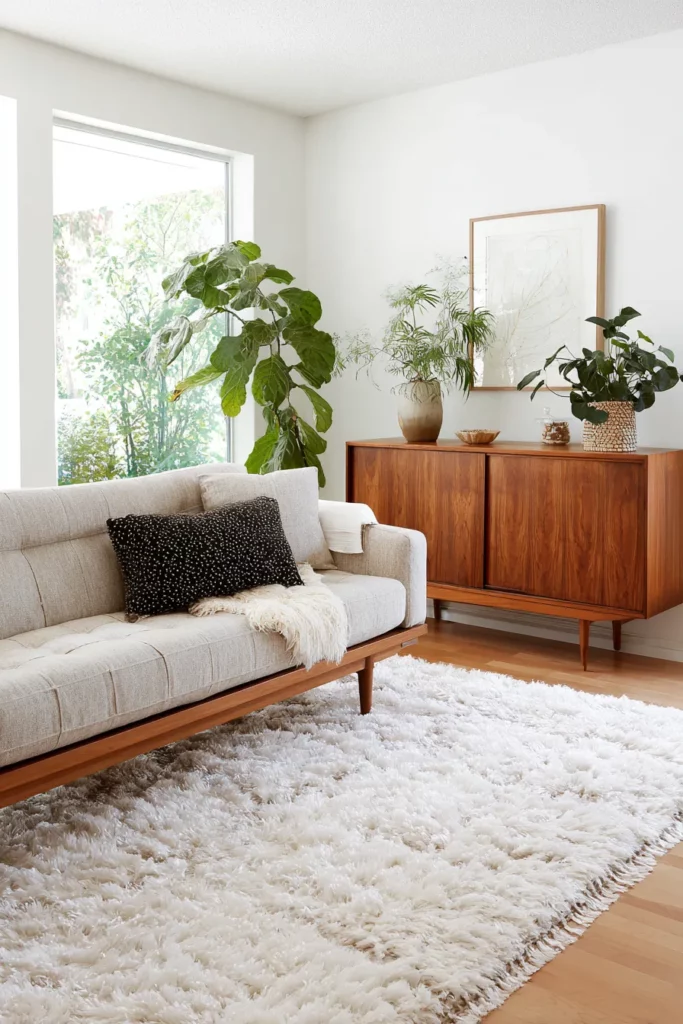
Your seating anchor should feature clean lines, minimal skirts, and tapered legs (usually splayed at a gentle angle). Look for upholstery in linen, wool, or leather—materials that age beautifully. A low-profile silhouette (think 30 inches high or less) creates that signature mid-century floatiness. If you’re drawn to color, warm grey or charcoal work beautifully; if you prefer neutrality, a soft cream or warm taupe becomes the perfect backdrop.
The Coffee Table
Opt for something with visible structure: a walnut table with clean geometric legs, or perhaps a glass top supported by a sculptural wood base. Avoid anything overly ornate. Height-wise, your coffee table should align roughly with your sofa seat height for proportion.
Storage: The Credenza
Mid-century design adores a credenza—it’s practical, sculptural, and oh-so-functional. Place one along a wall to anchor the room and provide storage for media, books, or those items you’d rather tuck away. Teak, walnut, or ash woods are ideal; look for tapered legs and clean hardware (think minimalist brass or oil-rubbed bronze handles).
Statement Lighting
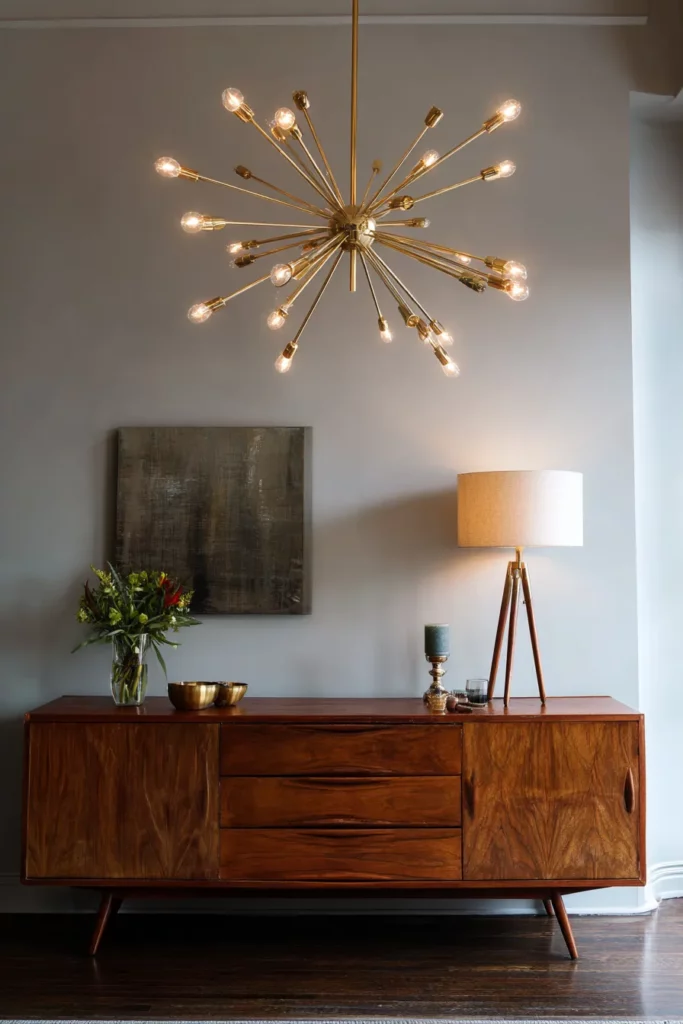
Lighting does more than illuminate; it sets the mood. A sculptural floor lamp with a tripod base or a brass arc lamp leaning gently over your seating area becomes functional art. Pendant lights with atomic-era sensibility (think starburst or geometric forms) also capture the spirit beautifully.
Color Palettes: Warmth Through Restraint
Mid-century color palettes were born from nature and carefully edited. Rather than a riot of hues, this era favored restraint—a backdrop of earth tones punctuated by strategic pops of warmth.
The Classic Palette
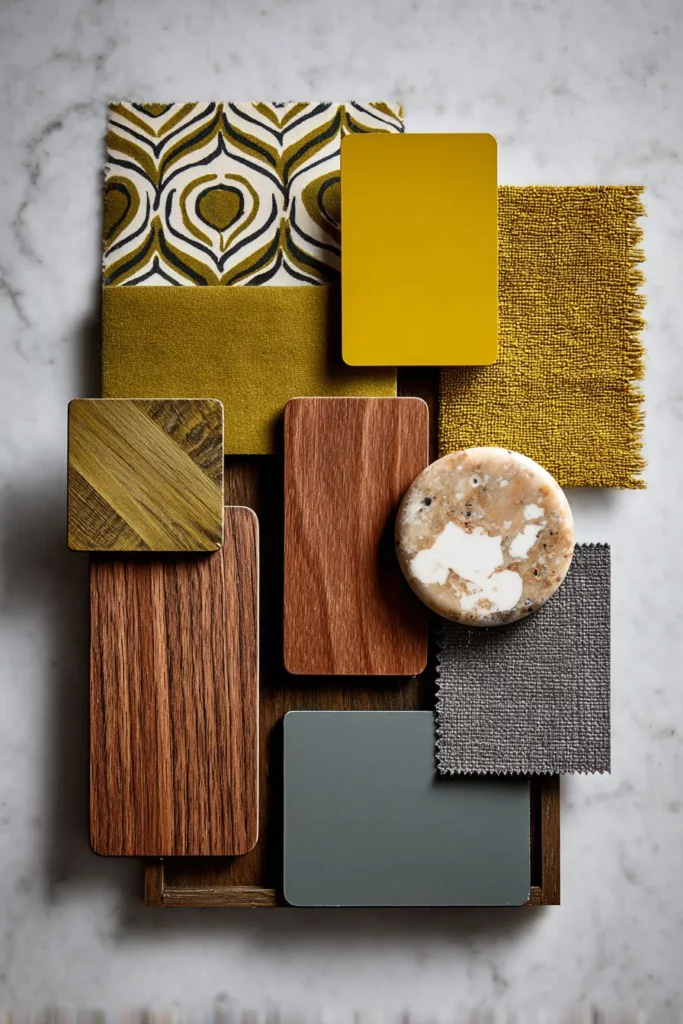
- Foundation neutrals: Warm whites, soft greys, warm beiges, and sand tones
- Wood tones: Teak, walnut, and oak in their natural warmth
- Accent colors: Mustard yellow, olive green, burnt orange, or warm terra cotta
Bringing Color to Life
Introduce these accent hues through pillows, throws, artwork, or an accent wall. A single wall painted in a muted mustard or sage creates focal-point interest without overwhelming the space. Textiles become your safest playground—a patterned throw pillow in burnt orange or a wool blanket in moss green adds personality without permanent commitment.
For those who love vibrancy, mid-century doesn’t shy away—but it remains selective. A room might feature a forest green sofa as its anchor with warm grey walls and natural wood accents. The color sings because everything else supports it.
Seasonal and Regional Adaptations
As seasons shift, refresh your room’s energy by rotating textiles and accent pieces. A burnt orange throw in autumn gives way to softer sage and ivory in spring. This keeps your space feeling alive without requiring major changes. Regional considerations matter too: a room in a sunny climate might embrace lighter, airier neutrals, while northern spaces might lean into warmer, deeper earth tones.
Lighting: Illuminating with Purpose
Lighting in mid-century design is never an afterthought. It’s sculptural, intentional, and deeply connected to the room’s overall personality.
Layered Lighting Approach
Consider three layers: ambient light (overall illumination), task lighting (for reading or working), and accent lighting (to highlight art or architecture). A sputnik-style flush mount provides ambient glow, a floor arc lamp handles task needs, and picture lights or wall sconces add visual interest.
The Iconic Forms
Look for fixtures with characteristic mid-century silhouettes: tripod floor lamps, dome pendants, geometric brass shades, and sculptural ceramic bases. These pieces work harder than standard lighting—they’re art that also happens to light your room.
Modern Integration: Smart Lighting
Contemporary smart bulbs and dimmers allow you to maintain mid-century aesthetics while enjoying modern convenience. Use warm color temperatures (2700K) to preserve that nostalgic glow, and dimmers to adjust ambiance without replacing your beautiful vintage or vintage-inspired fixtures.
Creating Space: Layout and Flow
Mid-century living rooms prioritize openness and purpose. This doesn’t mean empty—it means intentional.
Floating Furniture
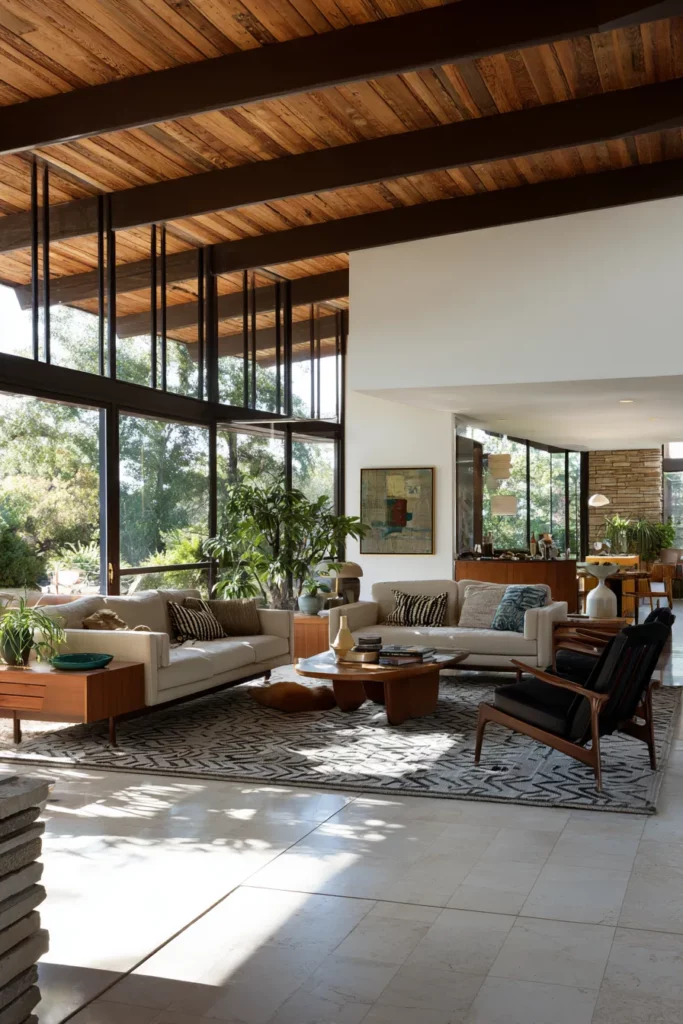
Rather than pushing everything against walls, create conversation groupings in the room’s center. A sofa and two accent chairs arranged around a coffee table, with perhaps a console table behind the sofa, creates intimacy and makes the room feel larger.
Small Space Solutions
Apartment living? Mid-century actually excels here. Choose a loveseat instead of a full sofa, select a compact credenza, and use vertical space with wall-mounted shelving. The style’s emphasis on open floor plans and minimal bulk means even a modest footprint feels uncluttered and breathable.
An Open Floor Plan: Defined zones for different activities—seating, display, work—flow naturally into one another.
Bringing Authenticity: Vintage, Reproduction, and Blending
You don’t need every piece from 1959 to capture this spirit. Smart mixing is the modern reality.
Authentic Vintage
Seek original mid-century pieces at estate sales, specialty antique dealers, or platforms focused on vintage furniture. Charles and Ray Eames designs, Herman Miller furnishings, and Scandinavian makers hold their aesthetic and structural integrity beautifully over decades.
Quality Reproductions
Contemporary brands now produce faithful recreations of iconic designs. These pieces offer accessibility without the hunt or the premium price tag—and they feel far more authentic than trend-driven “retro” furniture.
Blending Styles
Mid-century modern actually plays well with others. Pair it with:
- Industrial elements: Exposed brick, metal shelving, and concrete pair naturally with mid-century’s honest materials
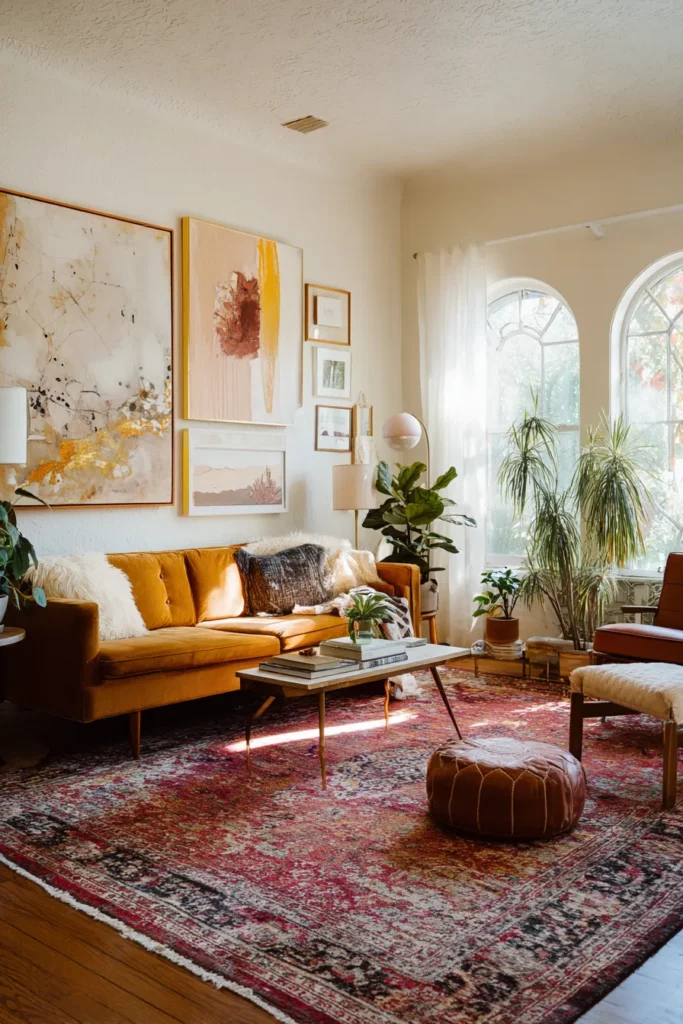
- Boho accents: Woven textiles and plants soften mid-century geometry
- Scandinavian touches: Light wood, minimal decoration, and functional design are kindred spirits
- Contemporary art: Modern paintings and sculptures look at home in a mid-century space
The key is maintaining the foundational values: function, honesty in materials, and restraint in ornamentation.
Budget-Conscious Design: Beautiful on Any Scale
Authentic mid-century modern needn’t demand a premium investment.
- Start with one anchor piece: A credenza or sofa becomes your foundation; build around it over time
- Hunt secondhand: Facebook marketplace, Craigslist, and local vintage shops often yield treasures at fraction of retail
- DIY restoration: A worn mid-century chair can be reupholstered; wooden pieces can be refinished—instructional videos abound
- Mix high and low: Invest in one quality original piece, fill in with smart reproductions and thrifted finds
- Upcycling perspective: An old dresser becomes a media console with some hardware changes; a worn credenza gains new life with fresh stain and updated hardware
Sustainability and Conscious Sourcing
Modern living demands mindful choices. Mid-century design, ironically, predates modern sustainability movements—yet embodies them perfectly.
Choosing Vintage and Secondhand
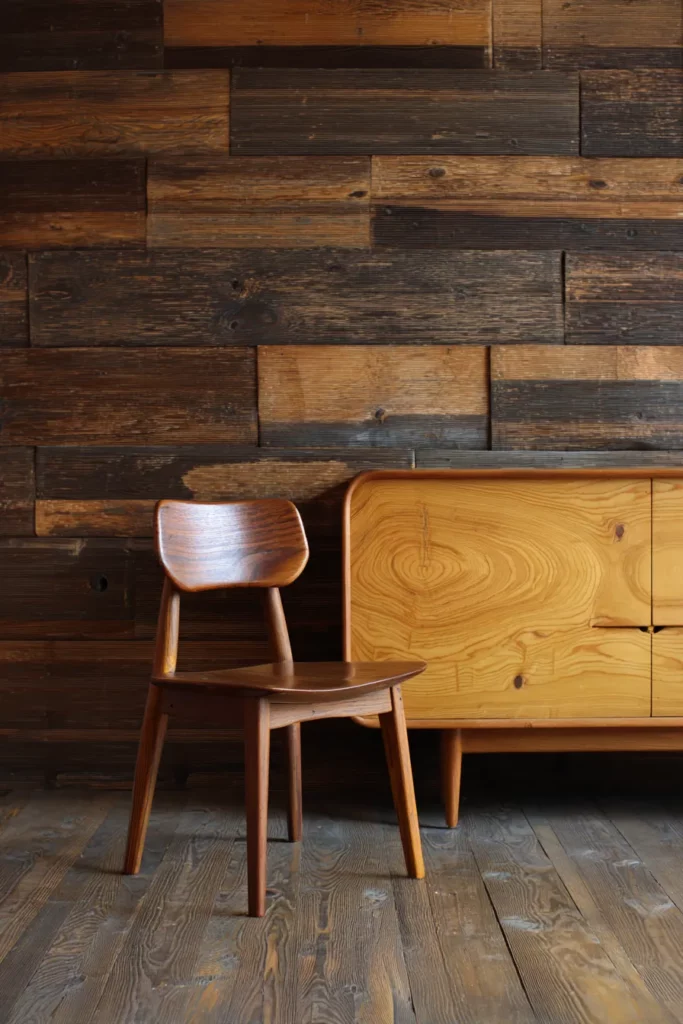
Buying vintage is inherently sustainable: nothing new needs to be manufactured, and pieces built decades ago prove their durability. A mid-century credenza outlasts three contemporary versions, reducing your lifetime consumption.
Restoration Over Replacement
Learn to refinish wood, reupholster chairs, and replace hardware. These skills connect you to your objects and extend their lives exponentially. Many communities offer furniture restoration workshops—worth exploring.
Supporting Ethical Contemporary Brands
If purchasing new, seek manufacturers committed to sustainable practices: certified wood, ethical labor, and timeless design that won’t become garbage in five years.
Keeping Your Space Fresh and Contemporary
Mid-century design ages gracefully, but evolution matters.
- Update artwork: Swap vintage abstract prints for contemporary photography or art that speaks to you
- Introduce greenery: Plants were less prominent in original mid-century rooms—modern versions embrace them for freshness and air quality
- Refresh textiles seasonally: Pillows and throws evolve your space without major investment
- Tech integration done quietly: Modern entertainment systems can nestle into a mid-century credenza with minimal visual disruption—consider cable management carefully
- Lighting updates: Replace old bulbs with warm-toned LED options for efficiency without sacrificing ambiance
Mid-Century Modern Living Room Essentials Checklist
- ✓ A low-profile sofa with tapered legs in neutral upholstery
- ✓ Coffee table with visible structure and natural wood or glass
- ✓ Credenza or media console in teak, walnut, or similar warm wood
- ✓ At least one sculptural floor or table lamp
- ✓ Wall art (abstract, geometric, or nature-inspired)
- ✓ 2–3 accent pillows in coordinating colors or patterns
- ✓ A natural fiber area rug (jute, sisal, or wool)
- ✓ Minimal window treatments (simple linen curtains or sheer panels)
- ✓ One or two accent chairs (optional but lovely)
- ✓ Greenery (indoor plants for contemporary freshness)
Final Thoughts: The Enduring Invitation
A mid-century modern living room isn’t a museum exhibit—it’s an everyday sanctuary built on the belief that we deserve beauty and function, that space should breathe, and that the objects we live with should tell a story of intention.
When you design this way, you’re not chasing a trend. You’re honoring a philosophy proven across decades: that thoughtful design makes life better. Your living room becomes a quiet rebellion against excess, a gentle insistence that less is more, and that the right chair in the right light, next to the right person, is all the luxury you need.
Begin where you are. Choose one piece that speaks to you. Let it guide the rest. Trust your instincts, honor your comfort, and remember—the most beautiful spaces are the ones you actually want to live in.
Welcome home.
Frequently Asked Questions
How do you design a mid-century modern living room from scratch?
Start by identifying your anchor piece—usually a sofa, credenza, or statement chair. Choose its color and material to reflect your style, then build around it. Prioritize function first: do you need storage? A work nook? Maximize natural light, keep the floor plan open, and add pieces intentionally rather than filling space.
What colors work best in mid-century modern living rooms?
Warm neutrals (soft greys, beiges, warm whites) form your foundation. Layer in earth tones like mustard yellow, olive green, burnt orange, or terra cotta through textiles and accent pieces. Keep the overall palette edited—fewer colors feel more intentional and sophisticated.
Can mid-century modern work in small apartments?
Absolutely. The style’s emphasis on open floor plans, minimal bulk, and vertical storage makes it ideal for compact spaces. Choose a loveseat instead of a full sofa, use floating furniture arrangements, and employ wall-mounted shelving. The result feels spacious rather than cramped.
How do you mix mid-century modern with other design styles?
Mid-century plays beautifully with industrial, Scandinavian, boho, and contemporary aesthetics. The key is maintaining core values: honest materials, functional design, and restrained ornamentation. One well-chosen piece from another era can add personality without diluting the room’s overall coherence.
How do you maintain or restore vintage mid-century furniture?
Dust regularly with a soft cloth. For wooden pieces, use appropriate wood oil or polish suited to the finish. Upholstered items benefit from gentle vacuuming and spot-cleaning. For restoration, research the specific piece’s period and original finish, then consult professionals or online communities dedicated to mid-century restoration. Many pieces can be refreshed beautifully without losing authenticity.