
Table of Contents
There’s something about the ocean that calls us home. The way light dances on water, how salt air softens the edges of weathered wood, the quiet rhythm of waves that seems to slow time itself. Coastal living room decor captures this magic—not by filling your space with seashells and anchors, but by embracing the feeling of standing barefoot on warm sand, breathing deeply, letting go.
At ERYLIN, we believe coastal style is less about literal beach themes and more about creating spaces that feel open, calming, and connected to nature. It’s the art of bringing light, texture, and tranquility indoors. Whether you live steps from the shore or miles from any coastline, these design principles can transform your living room into a peaceful retreat.
This isn’t about following strict rules or recreating a seaside hotel lobby. It’s about understanding how natural materials, thoughtful color choices, and airy arrangements work together to create rooms that breathe. Rooms that feel lived-in and loved, where comfort meets quiet elegance.
Let’s explore how to craft a coastal living room that feels authentically yours—modern, sophisticated, and wonderfully serene.
Understanding Modern Coastal Style
Modern coastal decor has evolved far beyond nautical clichés. Today’s coastal living rooms blend organic textures with clean lines, creating spaces that feel both relaxed and refined. Think of it as capturing the essence of coastal living rather than mimicking a beach house literally.
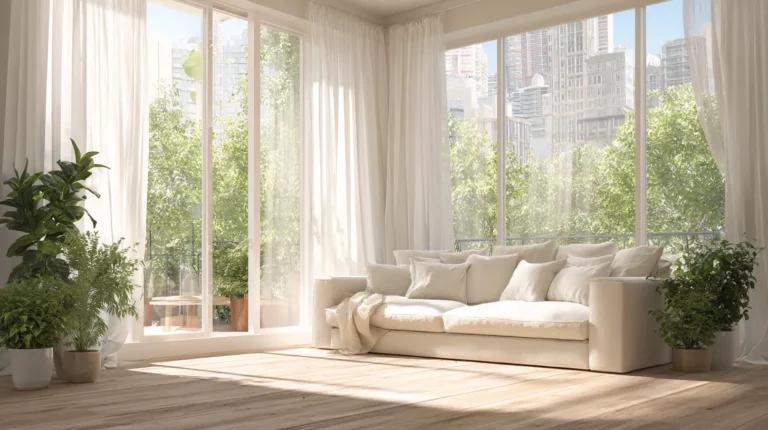
The foundation lies in embracing natural light and creating visual flow. Remove heavy curtains that block windows. Let sunlight stream across pale wood floors and reflect off whitewashed walls. The goal is airiness—rooms that feel spacious even when they’re not particularly large.
This approach honors sustainability too. Many homeowners now choose reclaimed driftwood, organic linen, and low-impact finishes. These materials tell stories while treading lightly on the earth. It’s coastal living that respects the very landscapes that inspire it.
The Coastal Color Palette: Beyond Blues and Whites
Foundational Neutrals
Start with a base of soft whites, warm creams, and gentle beiges. These aren’t stark or cold—they’re the colors of sun-bleached shells and morning fog. Paint walls in shades like “Pale Oak” or “Cloud White” to create a canvas that shifts with changing light throughout the day.
Layer in weathered wood tones—driftwood gray, sandy taupe, warm honey. These grounding neutrals prevent your space from feeling too precious or sterile. They add depth and warmth, reminding us that coastal spaces should feel welcoming, not museum-like.
Ocean-Inspired Accents
Introduce color through soft blue hues and sea glass greens. These shades work best as accents rather than dominant colors in modern coastal design. A faded indigo throw pillow, sage-colored ceramics on open shelving, or a watercolor painting with hints of aquamarine.
Avoid bright, saturated blues that veer into nautical territory. Instead, seek out colors that look sun-faded and gentle—the blue of distant horizons, the green of shallow tidal pools. These subtle tones create sophistication while maintaining that essential coastal calm.
Seasonal Adaptability
As seasons shift, your coastal palette can too. In cooler months, add warmer textures through terracotta accents, rust-colored throws, or deeper sand tones. The coastal foundation remains, but these touches prevent your space from feeling too cool when temperatures drop.
This seasonal layering keeps your living room feeling fresh and responsive to how you actually live. Coastal doesn’t mean frozen in eternal summer—it means connected to natural cycles and changes.
Natural Materials and Textures
Wood Elements
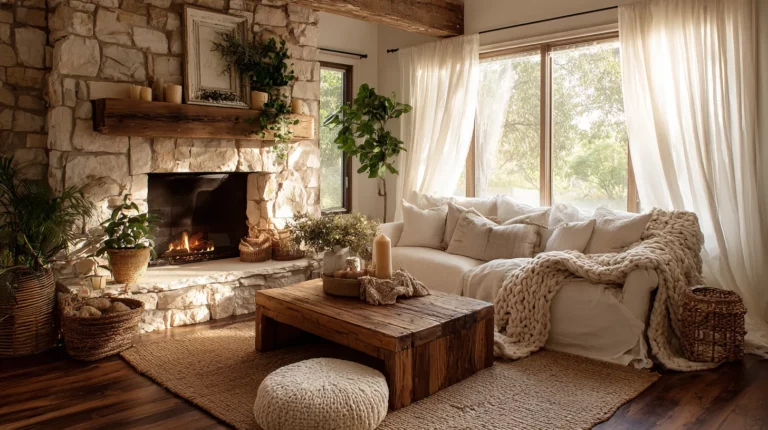
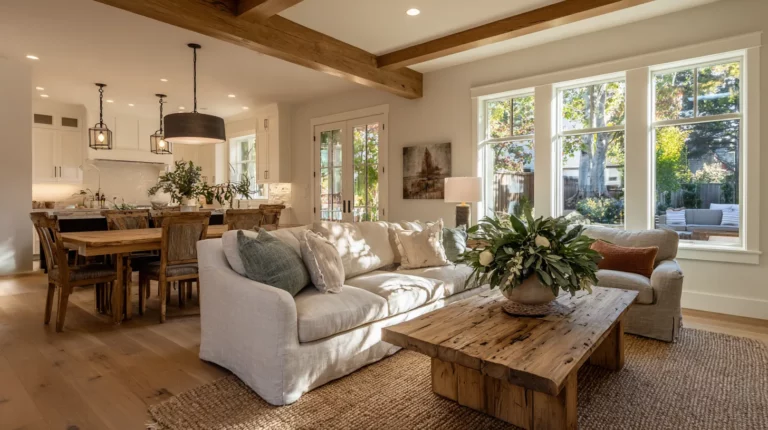
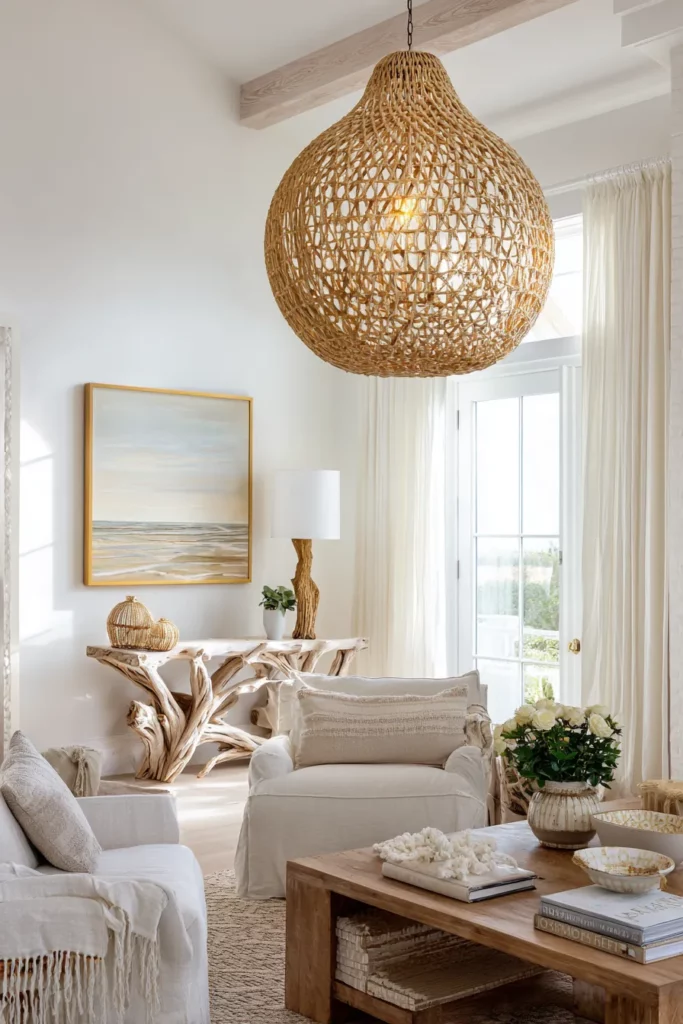
Weathered wood is the backbone of coastal texture. Look for pieces with visible grain, slight imperfections, or a sun-bleached patina. A reclaimed wood coffee table, floating shelves made from salvaged barn wood, or a driftwood-inspired console table all anchor your space with organic warmth.
Avoid overly polished or dark woods—they fight against the light, airy feeling you’re cultivating. Instead, choose blonde woods, whitewashed finishes, or pieces that look like they’ve spent years near the sea.
Woven and Natural Fibers
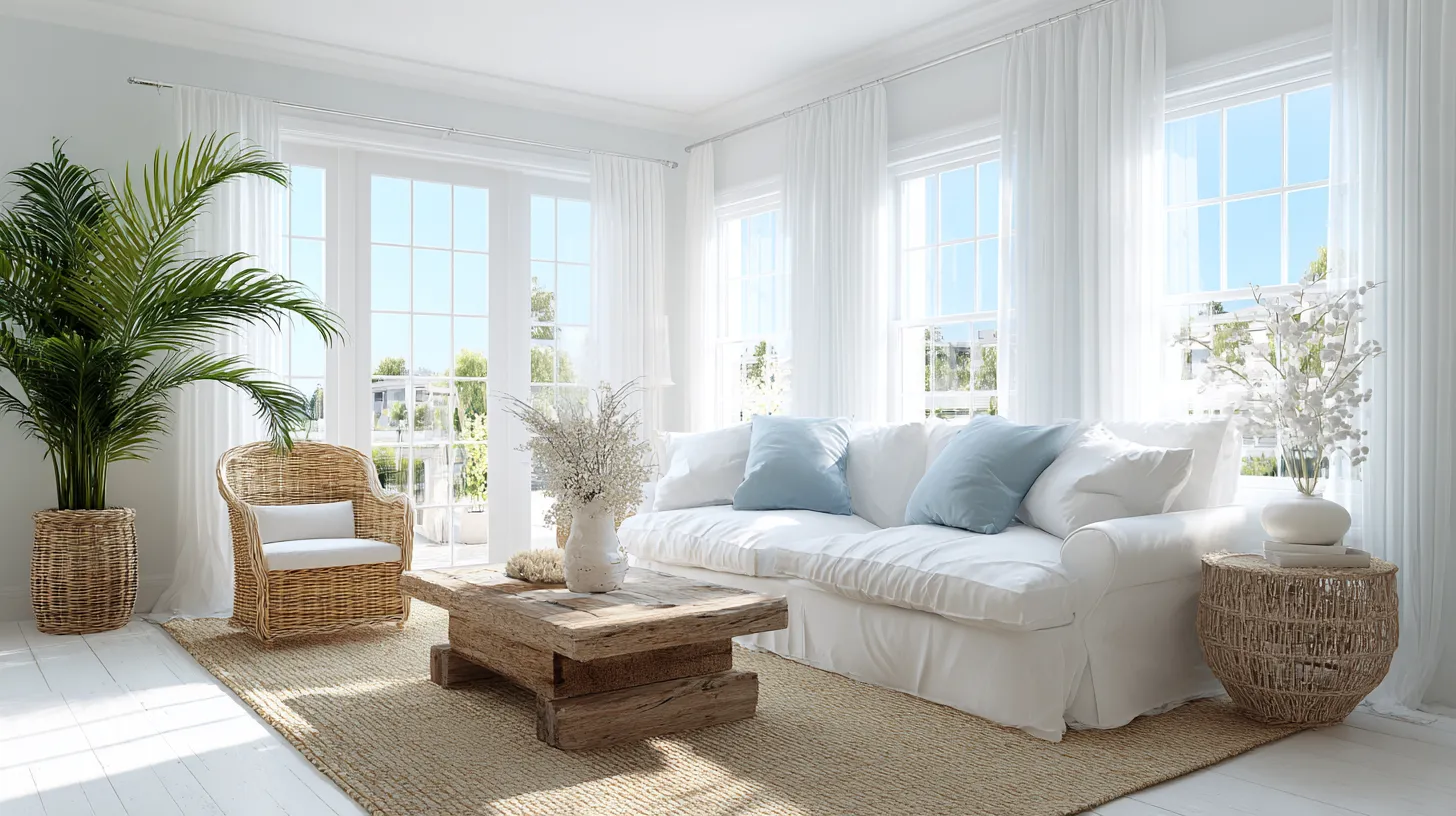
Rattan, jute, seagrass, and wicker bring essential texture to coastal rooms. A jute area rug grounds your seating area with natural pattern. Rattan accent chairs add visual interest without heaviness. Woven storage baskets keep clutter at bay while contributing to the organic aesthetic.
These materials also absorb and diffuse light beautifully, creating subtle shadows and depth. They make spaces feel handcrafted and intentional, never mass-produced or impersonal.
Textiles That Invite Touch
Layer your seating with linen cushions, cotton throws, and natural fiber pillows. These fabrics are breathable and relaxed—they wrinkle in ways that feel casual rather than careless. Choose solid colors or subtle patterns like thin nautical stripes or gentle geometric prints.
Avoid synthetic fabrics that look shiny or stiff. Coastal style celebrates materials that age gracefully, developing character over time rather than maintaining rigid perfection.

Coastal Furniture Selection
Seating Arrangements
Choose sofas and sectionals upholstered in neutral linen or cotton slipcovers. These pieces should feel sink-into comfortable while maintaining clean lines. White or natural linen is classic, but consider soft gray, warm sand, or even faded denim blue for versatility.
Accent chairs in rattan or wicker add texture without overwhelming the space. Position them to encourage conversation and take advantage of natural light from windows. Create intimate groupings that feel inviting rather than formal.
Multi-Functional Pieces
Modern coastal living embraces practicality. An ottoman with hidden storage holds extra blankets while serving as a coffee table. A console table behind your sofa provides display space and conceals electronics. These solutions honor both aesthetics and real life.
For small living rooms, consider furniture with dual purposes—nesting tables that expand when guests arrive, or a daybed that serves as both seating and overnight accommodation. Coastal style shouldn’t sacrifice function for beauty.
Statement Pieces with Soul
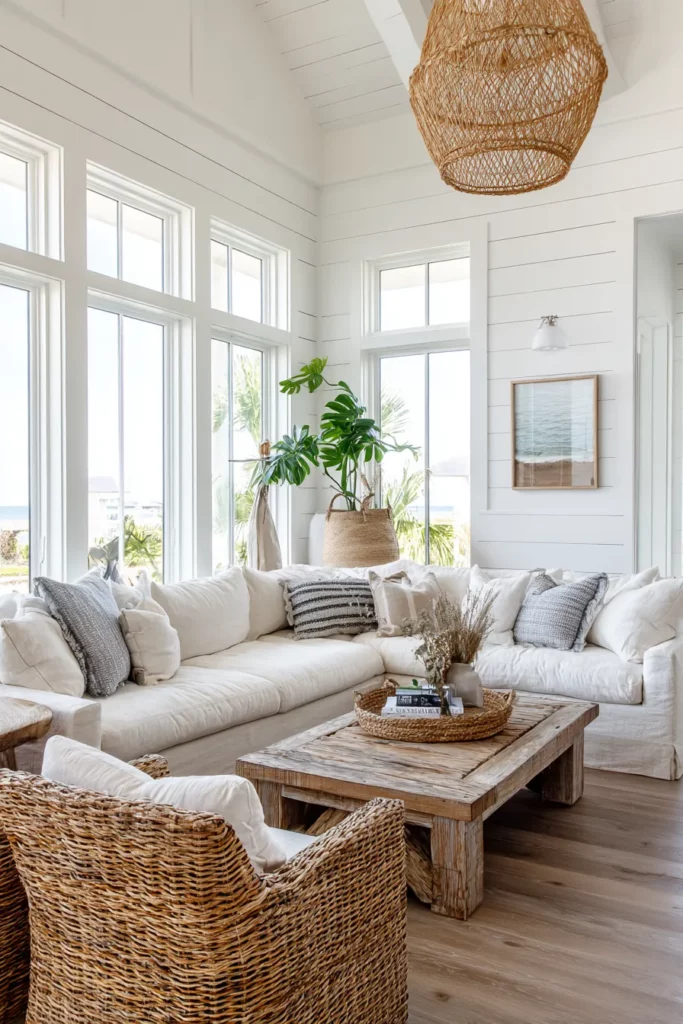
One or two larger pieces can anchor your design narrative. A weathered wood media console, an oversized woven pendant light, or a dramatic piece of driftwood displayed as sculpture. These elements give your room personality and prevent it from feeling too safe or generic.
Choose pieces that speak to you personally. Coastal decor works best when it reflects genuine connection rather than following a formula.
Lighting That Mimics Natural Sunlight
Maximizing Natural Light
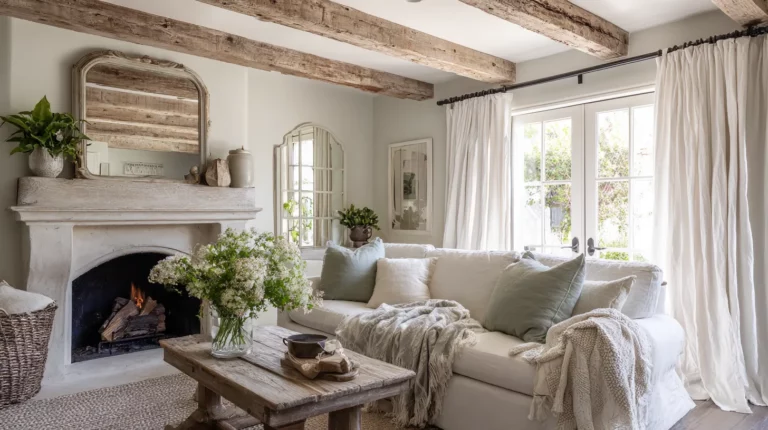
Windows are your greatest asset. Keep treatments minimal—sheer linen curtains or woven bamboo shades that can be fully raised. If privacy is a concern, consider bottom-up shades that let light in while blocking views at eye level.
Mirrors strategically placed opposite windows amplify light and create the illusion of more space. Choose mirrors with rope frames, weathered wood borders, or simple clean lines that don’t compete with your overall aesthetic.
Layered Artificial Lighting
Create warmth as daylight fades through layered lighting. Overhead fixtures in natural materials—woven rattan pendants, rope-wrapped chandeliers, or driftwood-inspired ceiling lights. These cast beautiful shadows and serve as sculptural elements.
Add table lamps with textured ceramic bases in soft neutrals or sea glass colors. Floor lamps with linen shades provide reading light without harsh glare. Dimmers on all fixtures let you adjust ambiance throughout the day and evening.
Beach-Themed Lighting Considerations
Modern coastal lighting avoids literal lantern shapes or overtly nautical designs. Instead, look for fixtures that suggest coastal elements through material and form—organic shapes, natural fibers, or glass that resembles sea-worn shards. Subtlety creates sophistication.
Consider smart lighting systems that adjust color temperature throughout the day, mimicking natural light patterns. This technology supports the relaxing, circadian-friendly atmosphere coastal spaces should provide.
Decorative Accents That Tell Your Story
Curated Collections
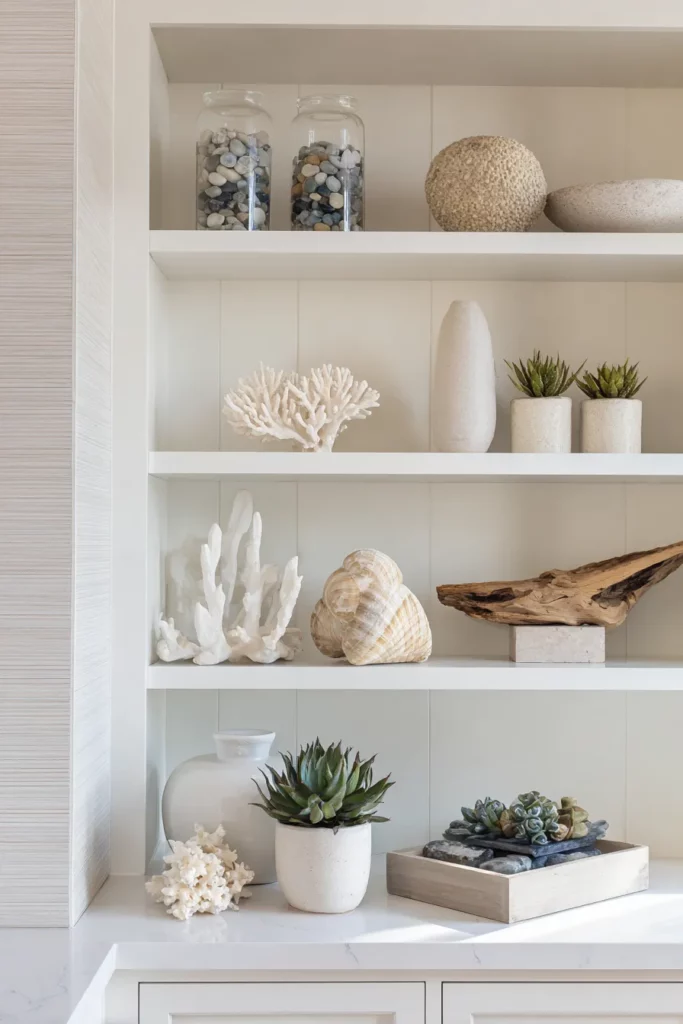
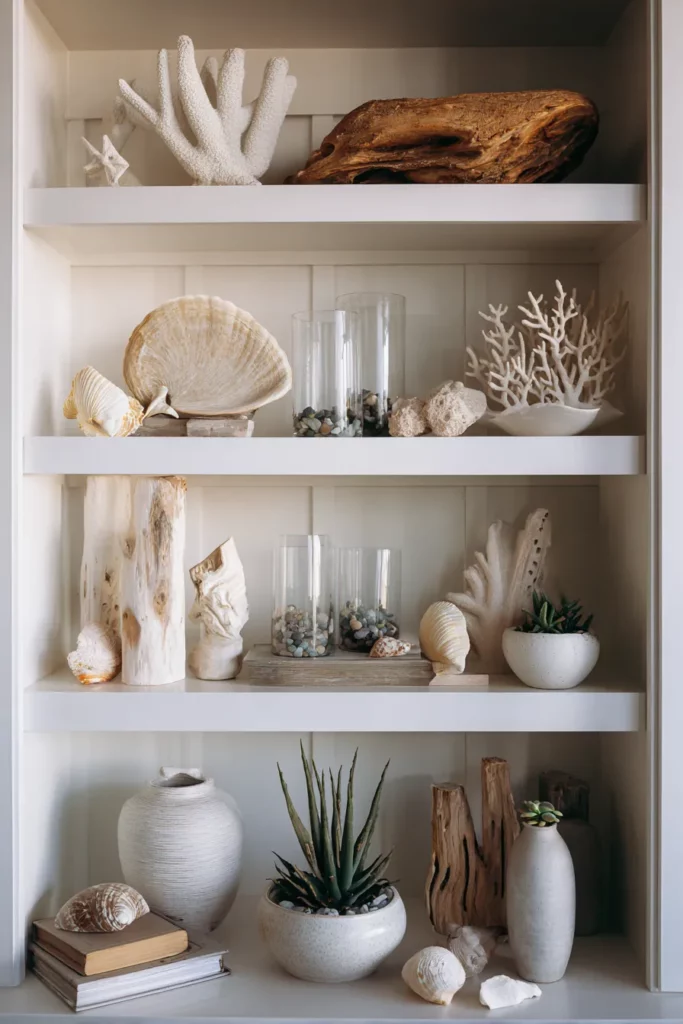
Display found objects from beach walks—smooth stones, interesting shells, or pieces of sea glass arranged in clear glass vessels. Keep collections edited and intentional. A single beautiful coral specimen makes more impact than dozens of scattered shells.
Rotate displayed items seasonally to keep your space feeling dynamic. This practice also prevents coastal decor from becoming static or overly themed.
Wall Art and Mirrors
Choose artwork that captures coastal feeling without being literal. Abstract paintings in ocean tones, black-and-white photography of seascapes, or botanical prints of coastal plants. Large-scale pieces make stronger statements than gallery walls of small prints.
Woven wall hangings in natural fibers add texture and warmth. Macramé has made a sophisticated comeback when done in neutral tones with clean, modern patterns.
Greenery and Natural Elements
Bring life into your space with plants that thrive indoors and complement coastal aesthetics. Snake plants, palms, fiddle leaf figs, or succulents in simple ceramic or concrete planters. Greenery purifies air while adding organic movement and color.
Fresh or dried grasses, pampas plumes, or eucalyptus branches in tall floor vases create dramatic, sculptural moments. These natural elements reinforce the connection to landscape that makes coastal design so appealing.
DIY Coastal Decor Projects
Personalized Touches
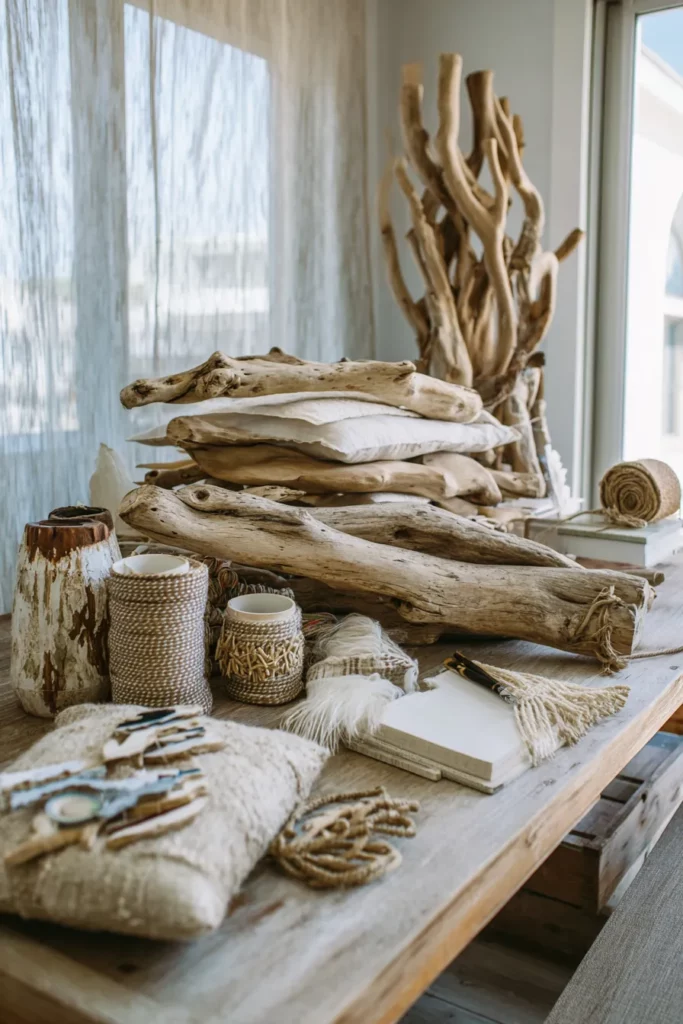
Create custom artwork by framing pressed seaweed, mounting sand dollars in shadow boxes, or arranging driftwood pieces into sculptural wall installations. These projects cost little but add immeasurable personality.
Make your own throw pillows from drop-cloth canvas or grain sacks. Add simple stripes with fabric paint or leave them plain for perfect neutral texture. The imperfections inherent in handmade items enhance coastal style’s relaxed elegance.
Upcycling with Purpose
Transform found driftwood into floating shelves or curtain rods. Repurpose vintage windows as decorative wall art or room dividers. Sand and whitewash old furniture pieces for instant coastal character.
These projects embrace sustainability while creating one-of-a-kind pieces that can’t be purchased. They also give you deeper connection to your space—knowing you crafted elements of it yourself adds emotional resonance.
Coastal Decor for Small Spaces
Maximizing Visual Space
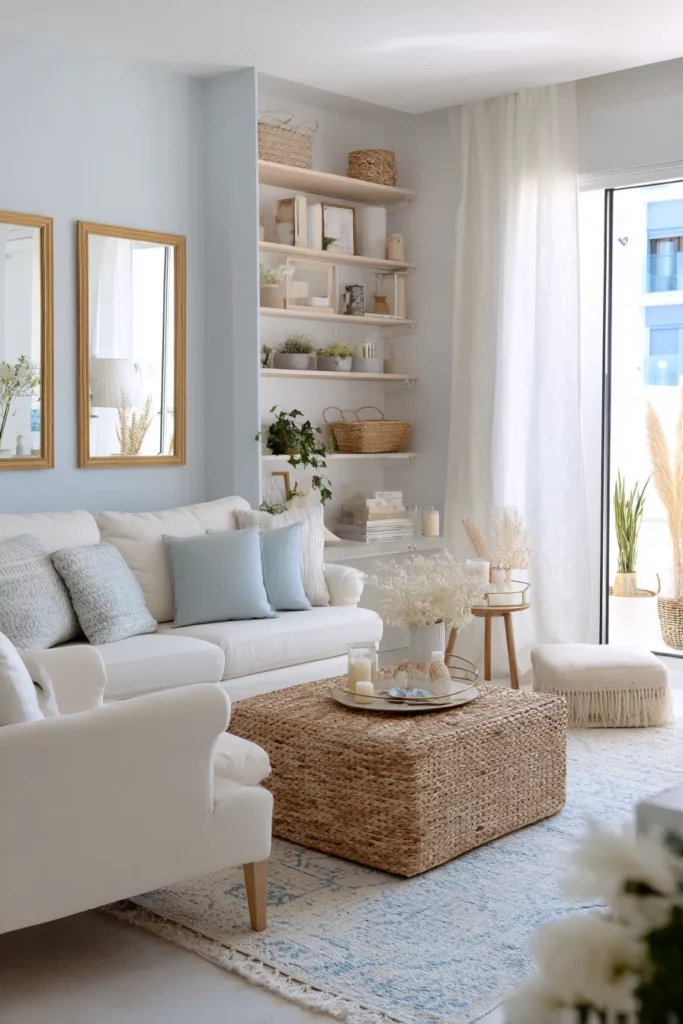
In apartments or smaller living rooms, coastal style actually works in your favor. The emphasis on light colors and minimal clutter naturally makes spaces feel larger. Paint walls, ceiling, and trim in similar soft whites to erase boundaries.
Choose furniture with exposed legs rather than skirted pieces—showing floor beneath furniture creates visual airiness. Glass or acrylic accent tables disappear visually while remaining functional.
Smart Storage Solutions
Incorporate natural baskets in various sizes for storing everything from magazines to throw blankets. These keep clutter hidden while adding essential coastal texture. Wall-mounted shelving in light wood provides display and storage without consuming floor space.
Select multi-functional furniture pieces carefully. A storage ottoman, a console with drawers, or a coffee table with a lower shelf all provide necessary function while maintaining clean lines.
Creating Focus
In small spaces, one statement piece carries more weight than multiple smaller items. A large piece of artwork, an oversized mirror, or a beautiful light fixture draws the eye and creates visual hierarchy. This prevents rooms from feeling cluttered or busy.
Health, Wellness, and Coastal Living
The Psychology of Coastal Colors
Research shows that soft blues and greens lower blood pressure and heart rate, promoting relaxation and reducing stress. These aren’t just pretty colors—they’re therapeutic choices that support mental wellness.
Natural materials like wood and fiber also positively impact mood. Humans respond to organic textures at a primal level, finding them more comforting than synthetic alternatives. Your coastal living room becomes a daily wellness practice.
Creating Mindful Spaces
Coastal design’s emphasis on simplicity and order supports mindfulness. Uncluttered surfaces and thoughtful arrangement create mental clarity. The connection to natural elements grounds us in the present moment.
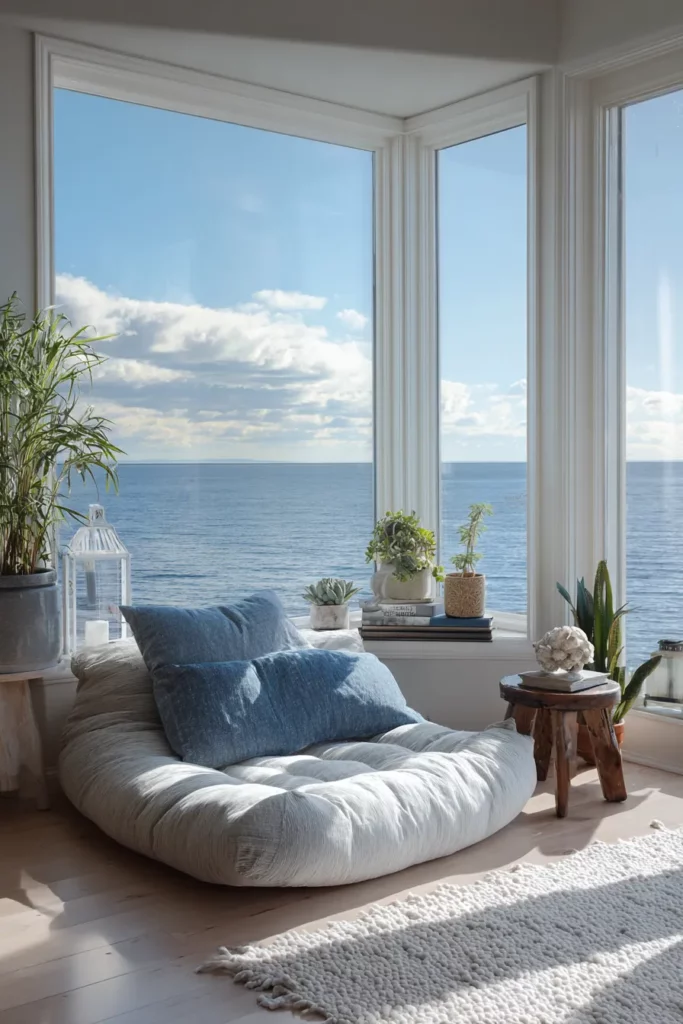
Consider creating a dedicated meditation corner with a comfortable floor cushion, a small side table, and a window view. This integration of wellness and design honors how we truly live in our homes.
Sound and Scent
While rarely discussed, subtle sound elements enhance coastal atmosphere. A small tabletop fountain provides gentle water sounds. Smart speakers can play ocean waves or seabird calls at barely perceptible volumes.
Scent matters too. Candles or diffusers in clean fragrances—sea salt, driftwood, eucalyptus, or coconut—engage another sense in your coastal narrative. These invisible elements complete the immersive experience.
Regional and Cultural Coastal Inspirations
Mediterranean Influences
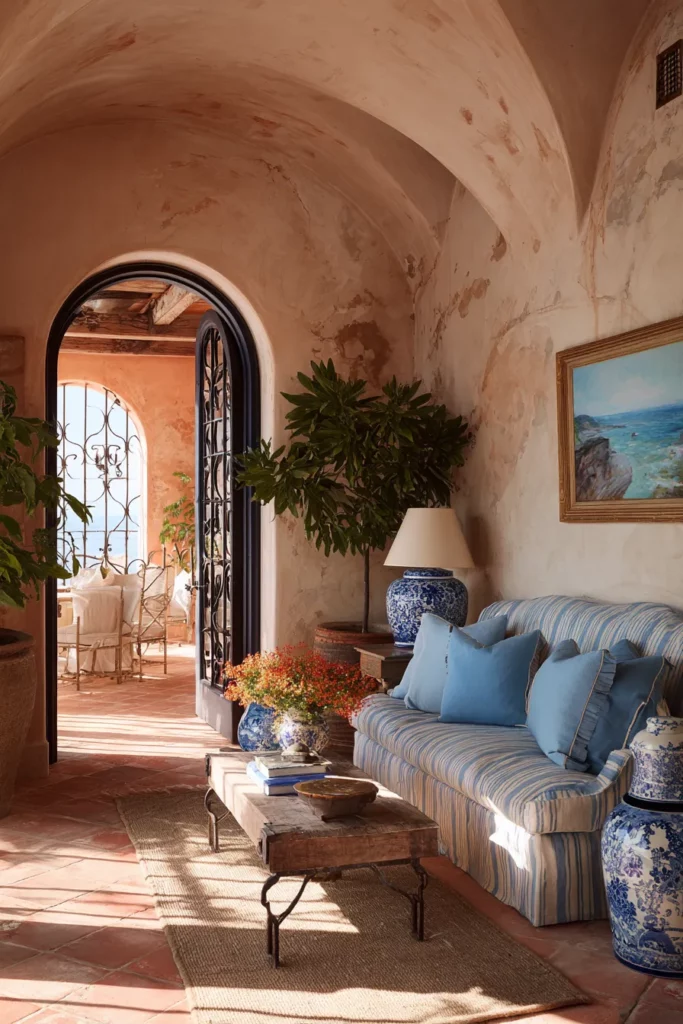
Mediterranean coastal style brings warmer tones—terracotta, saffron yellow, azure blue. Incorporate these through ceramic accents, tile details, or textured plaster walls. The effect feels sun-drenched and ancient, different from Atlantic coolness but equally coastal.
Arched doorways, wrought iron details, and painted furniture add distinctive Mediterranean character while maintaining coastal sensibility.
Caribbean Aesthetics
Caribbean coastal design embraces color more boldly—coral, turquoise, lime green—while maintaining relaxed casualness. If your personality craves more vibrancy, this regional variation offers permission to brighten your palette while staying coastal.
Tropical plants, banana leaf prints, and woven hammock-style chairs bring this island feeling home. The key is maintaining balance—even bolder coastal styles benefit from neutral foundations.
Pacific Northwest Coastal
This regional style skews darker and moodier—charcoal grays, deep teals, forest greens. It honors rocky coastlines and evergreen forests rather than sunny beaches. If your home receives limited natural light, this approach might suit your space better than traditional bright coastal design.
Incorporate river rocks, cedar wood, and plush textures that ward off dampness and chill. Coastal design adapts to regional reality rather than forcing one universal vision.
Coastal Living Room Essentials Checklist
Before you begin your coastal transformation, consider these key elements:
- Foundation: Soft white or cream walls, light wood or neutral flooring
- Seating: Comfortable sofa in natural linen or cotton, rattan or woven accent chairs
- Coffee Table: Weathered wood, driftwood-inspired, or glass with natural base
- Textiles: Linen curtains, jute area rug, cotton and linen throw pillows, soft blankets
- Lighting: Woven pendant or chandelier, ceramic table lamps, floor lamp for reading
- Storage: Natural woven baskets, light wood console or shelving
- Accents: Large mirror, ocean-inspired artwork, ceramic or glass vessels
- Greenery: At least one substantial plant, optional dried grasses or branches
- Personal Touches: Collected natural objects, family photos in simple frames, handmade elements
| Element | Material Choices | Color Palette | Style Notes |
|---|---|---|---|
| Walls | Paint, shiplap, textured plaster | Soft white, warm cream, pale gray | Keep light and neutral |
| Flooring | Light wood, whitewashed, natural fiber | Blonde, weathered, sandy tones | Visible and clean |
| Furniture | Linen, cotton, rattan, wicker | Neutrals, soft blues, natural wood | Comfortable and airy |
| Accents | Driftwood, jute, seagrass, glass | Ocean blues, sea greens, coral | Curated, not cluttered |
| Textiles | Natural fibers, organic materials | Layered neutrals with subtle pattern | Touchable and inviting |
Bringing It All Together
Creating a coastal living room isn’t about buying everything at once. It’s about gradual layering, thoughtful curation, and staying true to what makes you feel calm and happy. Start with your largest investment pieces—sofa, rug, coffee table—in neutral tones that will anchor your space for years.
Then slowly add texture through smaller elements. A basket here, new throw pillows there, a piece of driftwood from your next beach trip. Let your space evolve organically rather than forcing it into instant completion.
Remember that coastal style succeeds when it feels effortless. If something doesn’t bring you joy or serve a purpose, let it go. The beauty of this design approach lies in its breathing room—in what you choose not to include as much as what you do.
Most importantly, create a space that welcomes you home. Where you want to kick off your shoes, curl up with a book, and simply be. That feeling—more than any specific item or color—is what coastal living is truly about.
At ERYLIN, we believe your home should feel like your most peaceful place. Let these coastal living room ideas guide you toward creating a space that breathes calm, embraces natural beauty, and welcomes you home every single day.
Frequently Asked Questions
How do you decorate a coastal living room without making it look themed or kitschy?
Focus on materials and textures rather than obvious beach symbols. Choose weathered wood, linen fabrics, and natural fibers in neutral colors. Add subtle ocean tones through abstract art or solid-color accents. Display natural collected items sparingly—one beautiful piece makes more impact than many scattered decorations. The key is capturing the feeling of coastal living through light, airiness, and organic materials rather than literal representations of beach elements.
What colors work best in modern coastal living room decor?
Start with a foundation of soft whites, warm creams, and sandy beiges. Layer in weathered wood tones—driftwood gray, honey, and taupe. Add subtle accent colors like faded indigo, sea glass green, or dusty blue through pillows, art, and accessories. Modern coastal design uses these colors in muted, sun-bleached tones rather than bright or saturated shades. This creates sophistication while maintaining that essential calm coastal feeling.
How can I incorporate coastal decor into a small living room or apartment?
Coastal style actually benefits small spaces. Use light colors to make rooms feel larger and keep window treatments minimal to maximize natural light. Choose furniture with exposed legs to create visual airiness. Incorporate vertical storage like wall-mounted shelves and use natural baskets to hide clutter. Select one statement piece—a large mirror, oversized artwork, or beautiful light fixture—rather than many small decorations. Multi-functional furniture like storage ottomans or console tables with drawers adds necessary function without sacrificing style.
What natural materials are essential for achieving authentic coastal style?
Weathered or light-colored wood forms the foundation—look for driftwood, reclaimed wood, or whitewashed finishes. Incorporate woven materials like rattan, jute, seagrass, and wicker through furniture, rugs, and baskets. Use natural textiles including linen, cotton, and hemp for upholstery, curtains, and throw pillows. Add organic elements like smooth stones, dried grasses, or responsibly sourced coral and shells. These materials create the tactile, organic quality that defines genuine coastal design while supporting sustainable choices.
How do I maintain a coastal look throughout different seasons?
Keep your neutral foundation consistent year-round, then layer seasonal elements. In warmer months, use lighter textiles, display fresh greenery, and emphasize cool blue and green accents. As temperatures drop, add warmer textures through chunky knit throws, deeper sand tones, and rust or terracotta accents. Swap out lightweight linen pillows for heavier cotton or wool versions. This approach maintains your coastal aesthetic while making your space feel cozy and appropriate to the season, proving that coastal design works beautifully all year long.