
Table of Contents
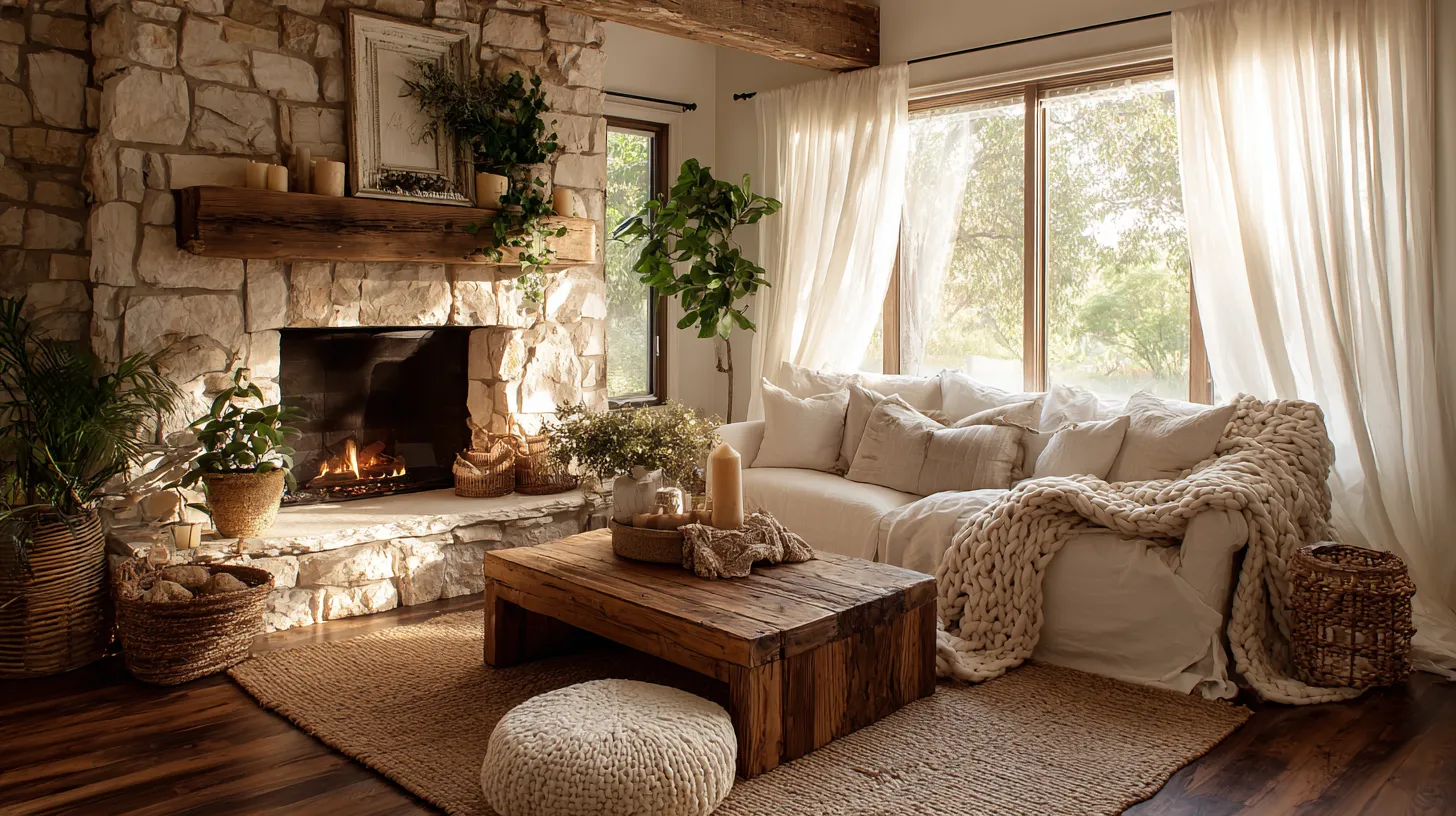
There’s something deeply magnetic about a rustic farmhouse living room. Maybe it’s the way sunlight pools across weathered wood floors, or how a chunky knit throw seems to whisper stay awhile. These spaces don’t just look beautiful—they feel like home.
A rustic farmhouse living room isn’t about perfection. It’s about layers of history, texture, and intention woven together with care. It’s the scent of aged leather mingling with fresh linen, the cool touch of stone against warm reclaimed pine.
This is where modern life slows down. Where vintage charm meets everyday function, and every element tells a quiet story. Whether you’re starting from scratch or refreshing what you already love, creating this sanctuary is both an art and a refuge.
Let’s explore how to bring this timeless style into your own space—with warmth, soul, and a touch of practical magic.
Understanding the Rustic Farmhouse Aesthetic
The rustic farmhouse style lives at the intersection of simplicity and soul. It honors natural materials, celebrates imperfection, and invites you to build a space that grows more beautiful with time.
Think weathered finishes rather than glossy shine. Distressed wood that carries decades of character. Stone fireplaces that anchor a room with quiet strength. This aesthetic embraces the earthy tones of nature—warm whites, soft grays, honey-toned wood, and the occasional whisper of muted sage or dusty blue.
Rustic simplicity doesn’t mean sparse or stark. It means thoughtful curation. Each piece serves a purpose, whether practical or emotional. A woven basket holds blankets but also adds texture. A vintage ladder becomes both storage and sculpture.
The magic happens in the details: jute rugs underfoot, textured walls that catch afternoon light, soft cushions that invite you to sink in and stay.
Choosing Your Color Palette: Beyond Neutral Territory
Neutral palettes form the foundation of rustic farmhouse design, but they’re far from boring. Start with a base of warm whites and creamy ivories that make spaces feel open and breathable.
Layer in natural wood tones—from pale driftwood to rich walnut. These variations create depth without demanding attention. Gray appears not as cold concrete but as weathered barn wood, river stone, or morning fog.
Accent colors elevate the entire space. While traditional farmhouse leans heavily on beige and brown, consider these fresh directions:
- Muted sage green brings the garden indoors without overwhelming
- Dusty blue adds calm sophistication, like a favorite linen shirt
- Terracotta warms a space with earthy Mediterranean charm
- Charcoal black in small doses (picture frames, candlesticks) adds modern grounding
The secret is restraint. Choose one or two accent colors and let them appear naturally—through textiles, pottery, or botanicals. Your palette should feel like it evolved over time, not like it arrived all at once.
Furniture That Lives and Breathes
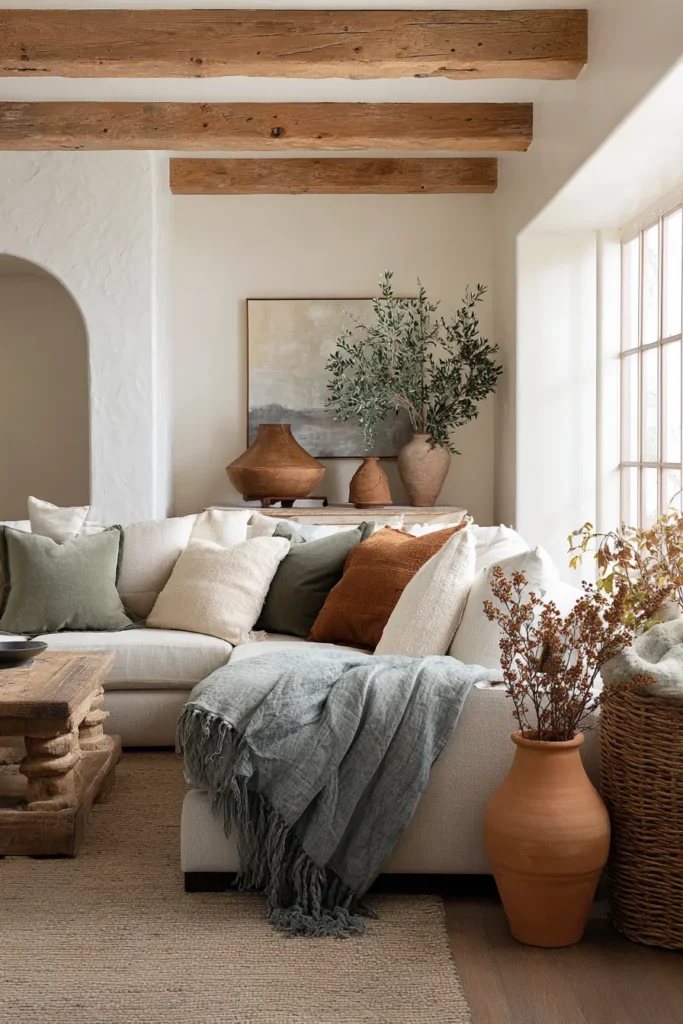
Rustic farmhouse furniture strikes a beautiful balance between sturdy and soulful. Look for pieces that could have been crafted by hand, even if they weren’t.
Reclaimed wood is the heart of this style. A coffee table made from century-old barn beams carries stories in every knot and grain line. Console tables with visible wear patterns remind us that beauty and utility can coexist for generations.
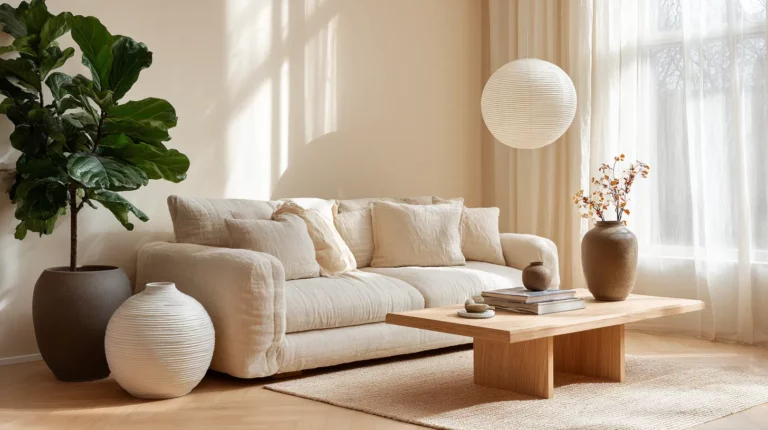
Seating should be inviting above all else. A linen-covered sofa in oat or cream becomes the room’s embrace. Add leather armchairs—the kind that develop a rich patina—for contrast and masculine balance. Avoid anything too precious or formal.
Multi-functional pieces solve modern challenges elegantly:
- Storage ottomans upholstered in grain sack fabric
- Wooden benches that serve as extra seating or coffee tables
- Vintage trunks that hide clutter while adding character
- Built-in shelving from salvaged wood planks
Scale matters in smaller spaces. Choose furniture with exposed legs to maintain visual flow. A farmhouse-style sectional works beautifully if balanced with open shelving and vertical elements that draw the eye upward.
Every piece should feel like it could be passed down. Quality over quantity. Function wrapped in warmth.
Layering Textures: The Secret to Cozy Depth
Texture is where rustic farmhouse rooms truly come alive. This isn’t about pattern—it’s about how surfaces feel under your fingertips and against your skin.
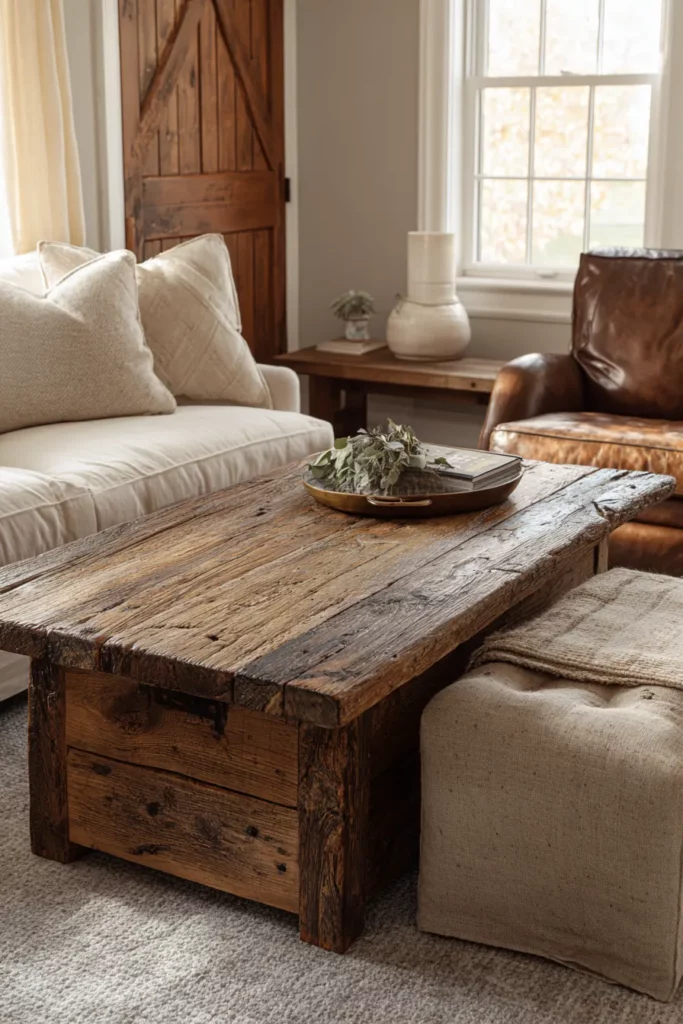
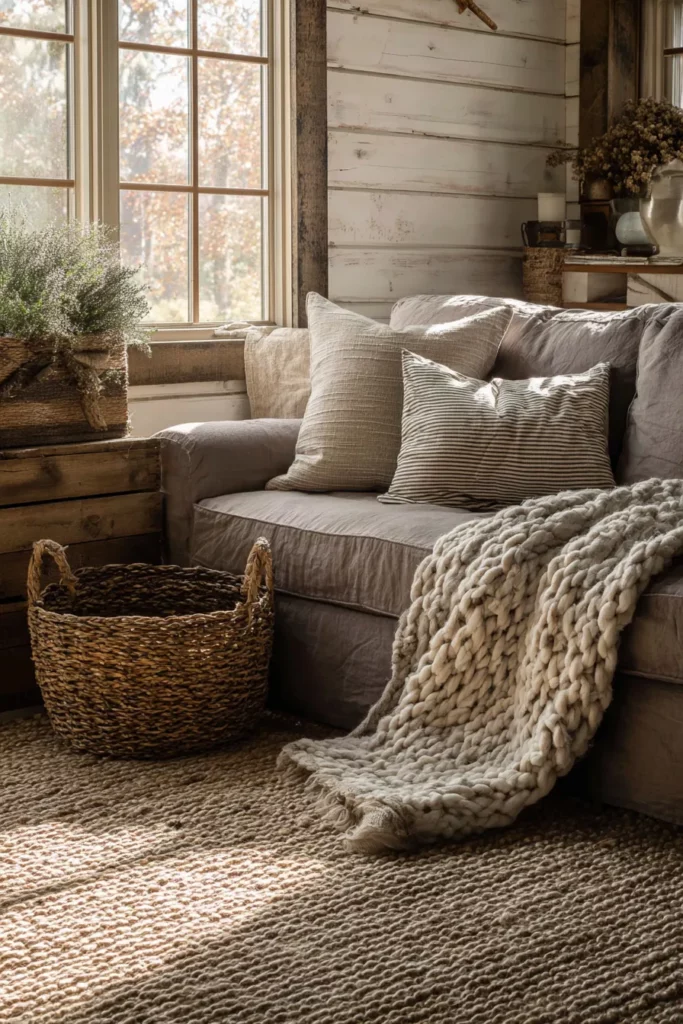
Start with textiles. Knitted throws in chunky wool or cotton drape over sofas like gentle hugs. Linen pillow covers wrinkle beautifully, softening with each wash. Mix these with burlap accents or vintage-inspired ticking stripes for contrast.
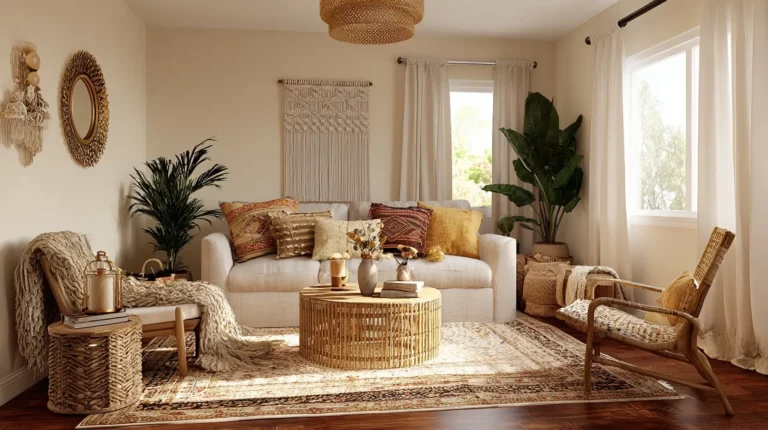
Rugs ground everything. Layer a sisal or jute rug as your foundation—these natural fibers add subtle texture and earthy warmth. Top with a smaller vintage wool rug or cowhide for visual interest. The layers create dimension while solving practical flooring challenges.
Don’t forget vertical surfaces. Shiplap walls offer gentle horizontal lines. Exposed brick brings raw, tactile beauty. Even smooth plaster walls gain character with matte paint that absorbs rather than reflects light.
Woven baskets scattered throughout add both texture and storage. Choose willow, seagrass, or rattan in varying sizes. These natural elements bridge the gap between rustic and refined.
The goal is creating a space where everything wants to be touched—where materials invite interaction rather than demand careful distance.
Lighting: Crafting Warmth and Ambiance
Farmhouse lighting does more than illuminate—it sets the emotional tone of your entire space. The right fixtures become sculptural focal points while creating layers of warmth.
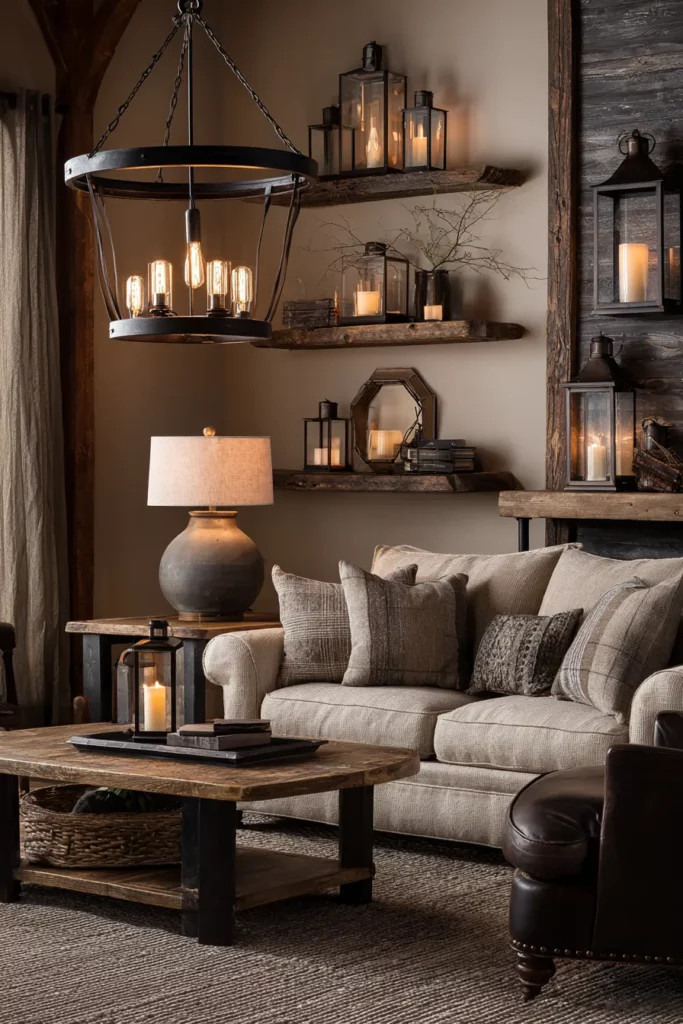
Overhead statement pieces command attention. A wagon wheel chandelier brings authentic rustic drama. Industrial cage pendants offer modern edge. Wrought iron fixtures with Edison bulbs bridge vintage and contemporary. Choose matte black or burnished brass finishes over polished chrome.
But overhead lighting alone creates harsh shadows. Layer your light sources:
- Table lamps with ceramic or wooden bases and linen shades
- Floor lamps in oil-rubbed bronze or weathered metal
- Candle lanterns (real or battery-operated) for flickering warmth
- String lights draped casually for unexpected magic
Natural light deserves special attention. Keep window treatments simple—linen curtains in white or natural tones that puddle slightly on the floor. Avoid heavy, formal drapes. Let sunshine pour across your reclaimed wood floors and dance on textured walls.
Dimmer switches are non-negotiable. They transform your space from bright and functional during the day to soft and intimate at night. This single upgrade does more for ambiance than almost any decorative choice.
Consider how light changes throughout the day. Morning should feel fresh and energizing. Evening light should wrap you in golden warmth, making you never want to leave.
The Power of Natural Materials
Rustic farmhouse style is rooted in what grows from the earth. Natural materials don’t just look beautiful—they age with grace, developing character rather than showing wear.
Wood appears everywhere, in many forms:
| Material Type | Best Uses | Character |
|---|---|---|
| Reclaimed barn wood | Accent walls, shelving, furniture | Deep patina, nail holes, weathering |
| Pine | Coffee tables, benches, frames | Warm honey tones, natural knots |
| Oak | Flooring, dining tables | Strength, prominent grain |
| Driftwood | Decorative objects, mirrors | Silvery-gray, smooth texture |
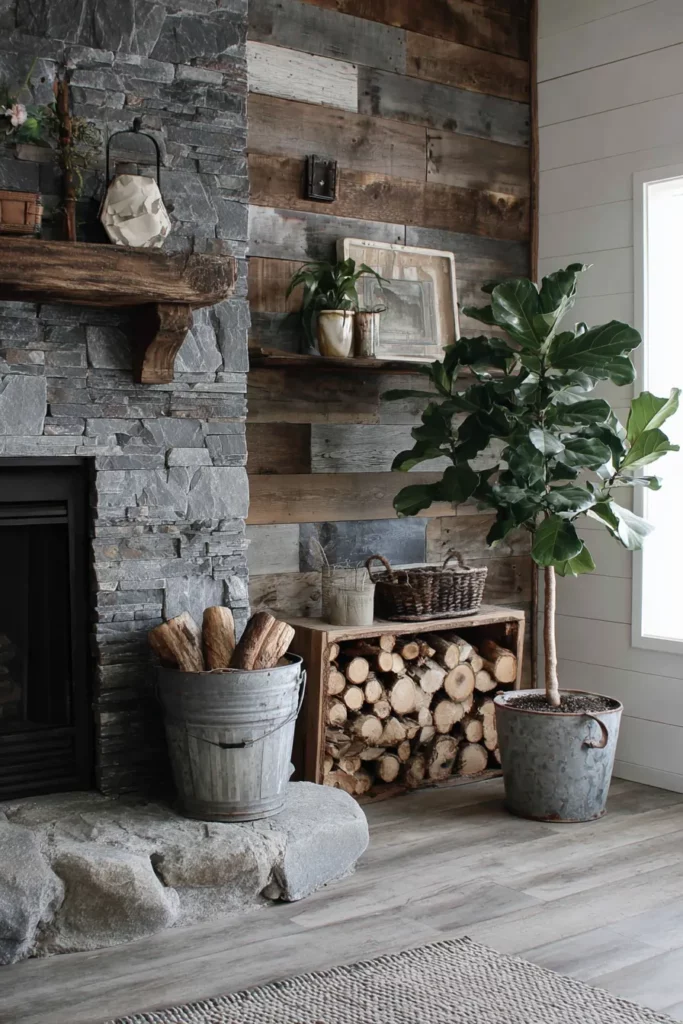
Stone grounds a space with permanence. A stone fireplace becomes the room’s anchor—the place everyone naturally gathers. River rock, limestone, or stacked slate each bring different energy. Even a simple stone accent wall adds cool tactile contrast to warm wood.
Metal should feel authentic. Look for wrought iron, aged brass, or galvanized steel. These industrial touches prevent the space from feeling too soft or precious. A metal bucket holds firewood. Iron hooks display vintage finds.
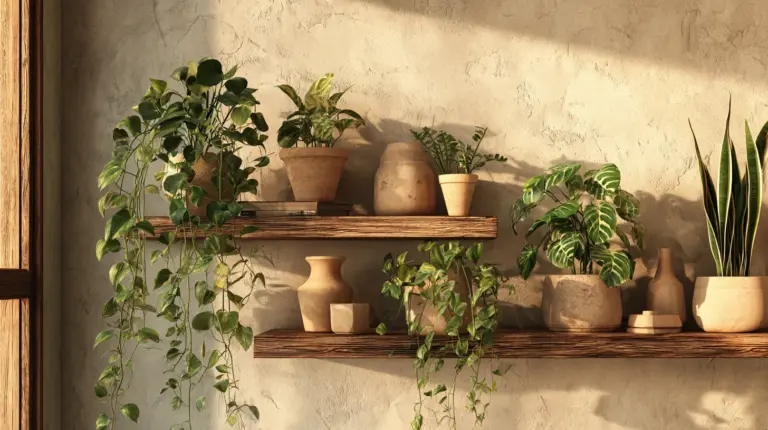
Plants are living natural materials. Place a fiddle leaf fig in a ceramic pot. Arrange eucalyptus branches in a stoneware pitcher. Set succulents in weathered wooden bowls. Greenery breathes life into rustic spaces while purifying your air.
Wall Decor That Tells Your Story
Farmhouse wall decor walks the line between intentional and effortless. The goal is curated, not cluttered—like your walls evolved naturally over years.
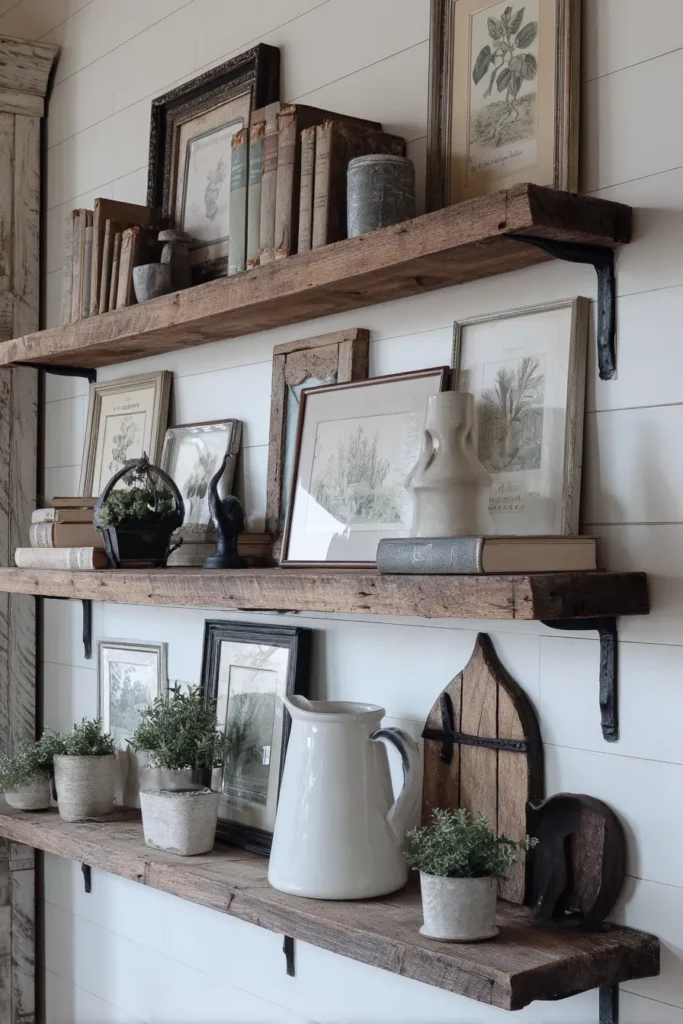
Floating shelves offer both display and function. Choose chunky wood shelves with visible brackets in black metal. Style them with a mix of:
- Vintage books with worn spines
- Ironstone pitchers and bowls
- Small framed botanicals
- Candlesticks in varying heights
- A single piece of meaningful pottery
Primitive antiques add instant history. A weathered window frame hung as art. Vintage farm tools mounted in a geometric arrangement. An antique mirror with chippy paint that reflects light beautifully.
Gallery walls work in farmhouse spaces when done thoughtfully. Mix frame styles—painted wood, distressed black, natural walnut. Include family photos alongside botanical prints and salvaged architectural elements. Keep matting simple and consistent.
Avoid anything too sleek or modern-abstract. This style honors heritage and handcraft. A framed vintage seed catalog feels right. A chrome geometric print does not.
Remember negative space. Walls don’t need to be filled. Sometimes a single oversized piece—a salvaged window, a woven wall hanging, an antique mirror—makes more impact than six smaller items fighting for attention.
Small Space Solutions: Rustic Farmhouse in Cozy Quarters
You don’t need a sprawling farmhouse to embrace this style. Rustic farmhouse elements actually enhance smaller living rooms by adding warmth and visual interest without overcrowding.
Strategic furniture placement opens up space. Float your sofa away from walls if possible, creating circulation paths. Choose a loveseat instead of a full sofa. Opt for armless accent chairs that take up less visual weight.
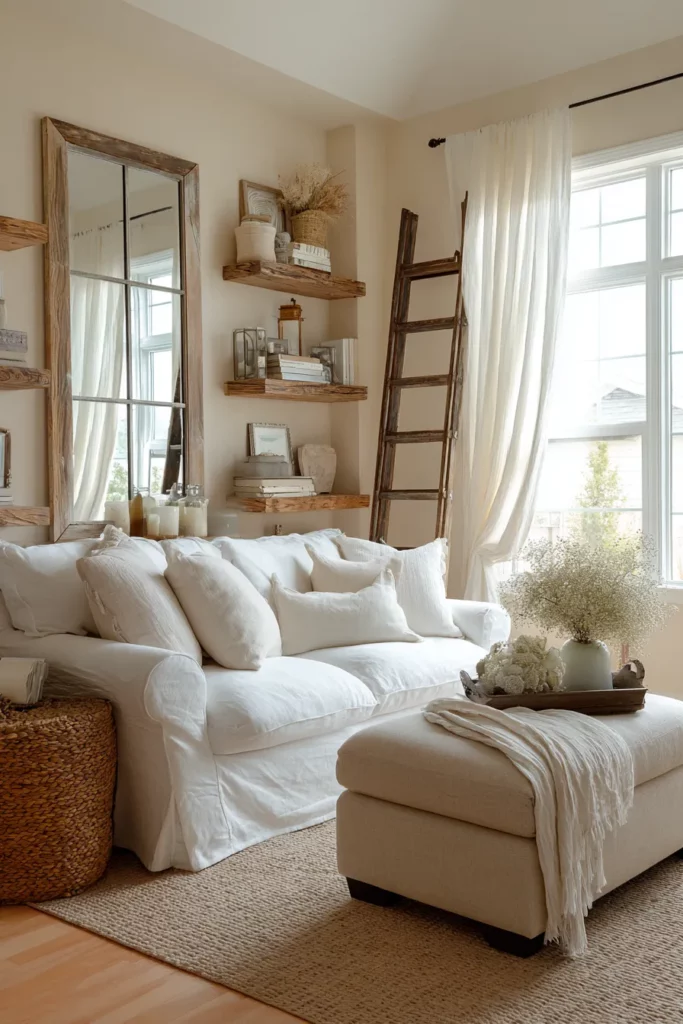
Vertical storage becomes your best friend. Install open shelving that draws the eye upward. Use wall-mounted hooks for decorative baskets. Lean a vintage ladder against the wall to display throws and magazines.
Light colors and natural light expand perception:
- Paint walls in warm white or pale cream
- Choose furniture with exposed legs (no skirted sofas)
- Hang mirrors opposite windows to bounce light
- Use sheer linen curtains instead of heavy drapes
Multi-functional pieces work overtime. A storage ottoman serves as coffee table, extra seating, and hidden storage. A console table behind the sofa creates display space without adding depth. Nesting tables tuck away when not needed.
Resist the urge to shrink everything down. One substantial piece—a beautiful reclaimed wood coffee table or a statement light fixture—gives the space confidence. Lots of tiny items create visual clutter.
Edit ruthlessly. Display only what you love. Store seasonal items. A small rustic farmhouse living room should feel cozy, not cramped.
Blending Rustic with Modern Convenience
The most livable farmhouse spaces honor tradition while embracing contemporary life. You can absolutely have rustic charm and modern technology—the key is thoughtful integration.
Smart home technology hides beautifully. Mount your TV inside a rustic sliding barn door cabinet that closes when not in use. Install smart bulbs in vintage-style fixtures so you control lighting from your phone. Choose a streaming device in black that disappears against dark shelving.
Sound systems matter less when speakers are small and wireless. Tuck a compact soundbar behind a driftwood bowl. Mount surround speakers inside vintage-style wall sconces.
Modern comfort meets rustic aesthetic:
- USB charging ports in table lamps with farmhouse bases
- Heated throws that look like chunky knit blankets
- Smart thermostats housed in wooden frames
- Wireless phone chargers disguised as wooden trays
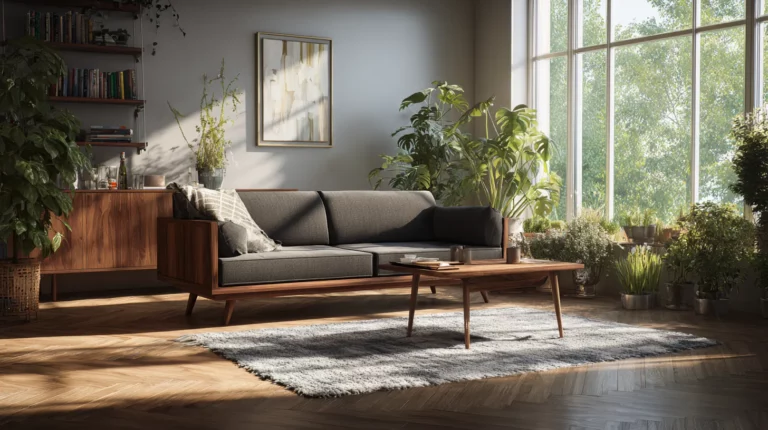
Furniture can bridge both worlds. A clean-lined sofa in neutral linen looks modern but feels farmhouse when dressed with textured pillows and vintage quilts. Mid-century modern chairs in walnut complement rather than clash with rustic elements.
The rule: technology should be accessible but not prominent. Your space should feel like a retreat from the digital world, even as it quietly incorporates modern conveniences.
Sustainable and Eco-Friendly Rustic Design
Rustic farmhouse style naturally aligns with sustainable living. This aesthetic has always valued longevity, natural materials, and repurposing—principles that benefit both your home and the planet.
Reclaimed materials are inherently sustainable. That barn wood accent wall? It’s keeping timber out of landfills while adding character no new wood can match. Vintage furniture means nothing new needs manufacturing. Salvaged architectural elements give old materials new life.
Choose natural, renewable materials wherever possible. Jute and sisal rugs are biodegradable and made from fast-growing plants. Organic cotton and linen textiles contain no harmful chemicals. Wool throws offer warmth and durability without synthetic fibers.
Eco-conscious shopping supports the aesthetic:
- Buy vintage and antique furniture from estate sales
- Source from local craftspeople who use sustainable practices
- Choose low-VOC paints in natural earth tones
- Select LED Edison bulbs that look vintage but save energy
- Invest in quality pieces that last decades, not seasons
Natural cleaning methods protect both materials and environment. Care for wood with beeswax and mineral oil. Clean textiles with plant-based soaps. Stone and metal need only water and gentle scrubbing.
Plants improve air quality while adding life and beauty. They’re nature’s most affordable, sustainable decor. Display them in vintage vessels, and they cost almost nothing while contributing endlessly to your space.
This approach isn’t about sacrifice—it’s about alignment. Rustic farmhouse style has always celebrated what lasts, what’s real, what connects us to the natural world.
Seasonal Decorating: Fresh Inspiration Year-Round
One of the joys of rustic farmhouse style is how beautifully it transitions through seasons. Your foundational elements stay constant while small changes keep your space feeling fresh and responsive to the world outside.
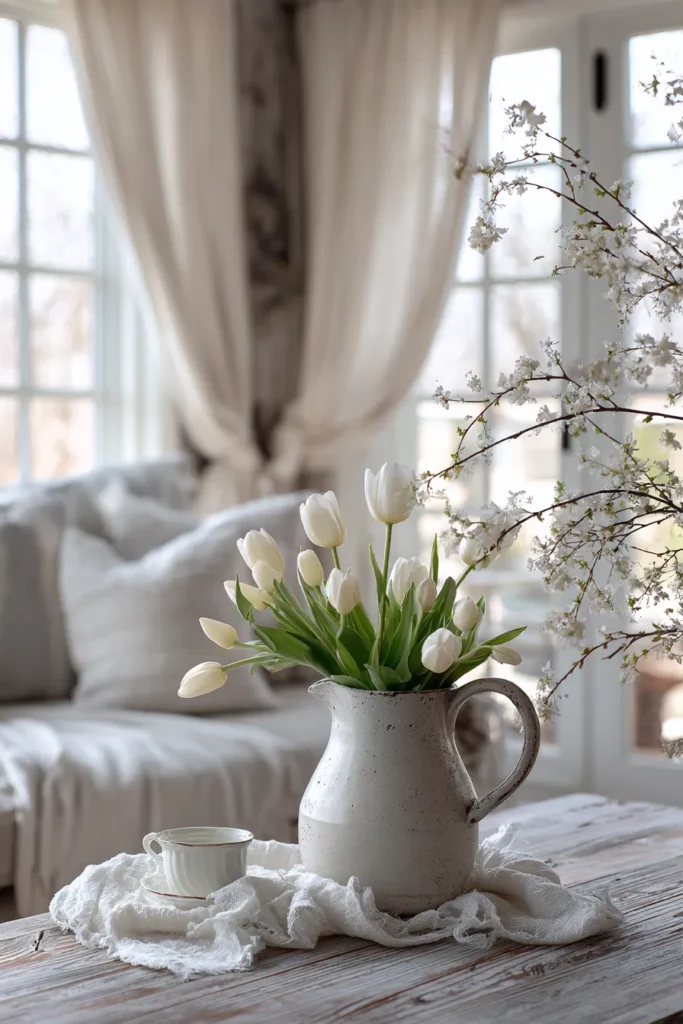
Spring brings renewal and lightness. Swap heavy wool throws for lighter linen. Fill pitchers with fresh tulips or flowering branches. Display vintage enamelware in soft pastels. Open windows wide and let cross-breezes carry the scent of growing things.
Summer embraces airy simplicity. Roll up area rugs to expose wood floors. Switch dark pillow covers for white or natural linen. Add woven fans as both decor and function. Place bowls of lemons or fresh herbs where light catches them.
Autumn invites warmth back in. Layer those wool throws again. Display gourds and dried wheat in wooden bowls. Bring in branches with turning leaves. Light candles in amber glass that smells of cinnamon and clove. Add rust and gold tones through pillows and small textiles.
Winter creates maximum coziness. Pile blankets in baskets near the fireplace. String simple evergreen garlands. Display white ironstone and mercury glass. Add extra candlelight. Place sheepskin throws over chairs. Create a space so inviting that no one wants to leave.
The beauty of this approach? You’re not redecorating—you’re refreshing. Small, natural changes that cost little but bring seasonal joy into your everyday life.
Essential Checklist: Creating Your Rustic Farmhouse Living Room
Before you begin transforming your space, use this guide to ensure you’ve covered all the foundational elements:
Foundational Elements:
- Neutral base palette (warm whites, soft grays, natural wood tones)
- At least one statement furniture piece in reclaimed or distressed wood
- Comfortable seating with natural fiber upholstery
- Layered area rugs (jute/sisal base plus decorative top layer)
Textural Layers:
- Mix of linen, cotton, and wool textiles
- Knitted or chunky throws
- Varied pillow textures and fabrics
- Woven baskets for storage and display
Lighting Strategy:
- Statement overhead fixture (chandelier or industrial pendant)
- Multiple light sources at different heights
- Dimmer switches for ambiance control
- Natural light maximized through simple window treatments
Decorative Touches:
- Vintage or primitive antiques
- Natural elements (wood, stone, metal, plants)
- Floating shelves or open storage
- Meaningful wall art (not too busy or modern)
Modern Integration:
- Hidden or camouflaged technology
- Multi-functional furniture pieces
- Smart home features that blend seamlessly
- Storage solutions that maintain aesthetic
Sustainable Choices:
- Reclaimed or vintage materials when possible
- Natural, renewable textiles
- Quality over quantity mindset
- Local or handcrafted items
Bringing It All Home
Creating a rustic farmhouse living room isn’t about following rigid rules or achieving magazine-perfect styling. It’s about building a space that feels like the best version of home—where history and modernity coexist, where beauty serves life rather than interrupting it.
Your space will be different from anyone else’s, and that’s exactly right. Maybe your story includes your grandmother’s quilt draped over a vintage leather chair. Perhaps it’s the reclaimed barn wood you sourced from a farm three towns over, each board carrying memories of seasons and storms.
These rooms work because they’re lived in and loved. The coffee table bears water rings from countless mugs. The sofa cushions hold the impression of Saturday afternoon naps. The throw blanket gets used every single evening because it’s that soft, that perfect.
Start with one element that speaks to you. A single piece of weathered wood. A linen sofa in the color of morning light. A vintage fixture that makes your heart beat a little faster. Build slowly, with intention. Let your space grow organically, the way the farmhouse style itself has evolved—through generations of hands that valued both beauty and purpose.
Your rustic farmhouse living room is waiting. Not in some distant, perfectly styled future—but right now, in the choices you make, the textures you layer, the light you invite in. Welcome home.
Frequently Asked Questions
How do I create a rustic farmhouse living room on a budget?
Start with paint and textiles—these offer maximum impact for minimum investment. Paint walls in warm white or cream, then add texture through thrifted linen curtains and layered blankets. Shop estate sales and flea markets for vintage furniture and accessories. DIY projects like refinishing a weathered table or building simple floating shelves cost little but add authentic character. Focus on a few quality natural materials rather than filling the space with inexpensive synthetic items.
Can rustic farmhouse style work in apartments or modern homes?
Absolutely. Rustic farmhouse elements actually soften contemporary architecture beautifully. Add warmth to modern spaces through natural wood furniture, textured textiles, and vintage accessories. You don’t need exposed beams or shiplap—a reclaimed wood coffee table and linen sofa create farmhouse feeling anywhere. Use removable elements like rugs, lighting, and furniture that you can take with you. The style adapts to any space that needs more soul and less sterility.
What’s the difference between rustic farmhouse and modern farmhouse?
Rustic farmhouse embraces weathered, distressed finishes and vintage authenticity—think aged barn wood and primitive antiques. Modern farmhouse leans cleaner with more white, streamlined furniture, and contemporary elements mixed with farmhouse touches. Both use natural materials and neutral palettes, but rustic shows its age proudly while modern maintains crisper lines. Many successful spaces blend both, using rustic textures within a more edited, contemporary framework.
How do I maintain and care for reclaimed wood furniture?
Treat reclaimed wood gently to preserve its character. Dust regularly with a soft, dry cloth. Clean with slightly damp cloth and mild soap only when needed—never soak wood. Apply furniture wax or mineral oil every few months to nourish the wood and protect from drying. Avoid harsh chemicals and excessive water. Keep away from direct heat sources and prolonged sunlight. Embrace the patina and small imperfections—they’re part of the story. Well-maintained reclaimed wood lasts generations.
What plants work best in rustic farmhouse living rooms?
Choose plants with natural, unfussy forms that complement rather than compete with your decor. Fiddle leaf figs add sculptural presence in corners. Eucalyptus branches (fresh or dried) bring silvery-green texture to vases and pitchers. Succulents clustered in vintage bowls require minimal care. Snake plants offer vertical interest with low maintenance. Fresh herbs like rosemary in galvanized containers add both greenery and scent. Display in ceramic, terracotta, or vintage vessels rather than glossy modern pots for authentic farmhouse feel.