
Table of Contents
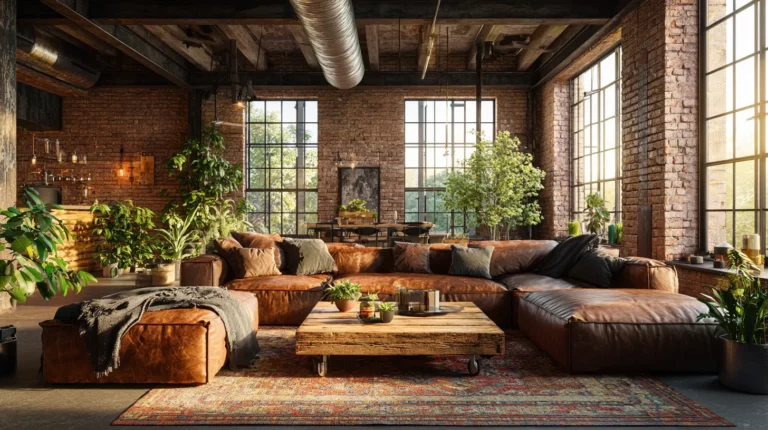
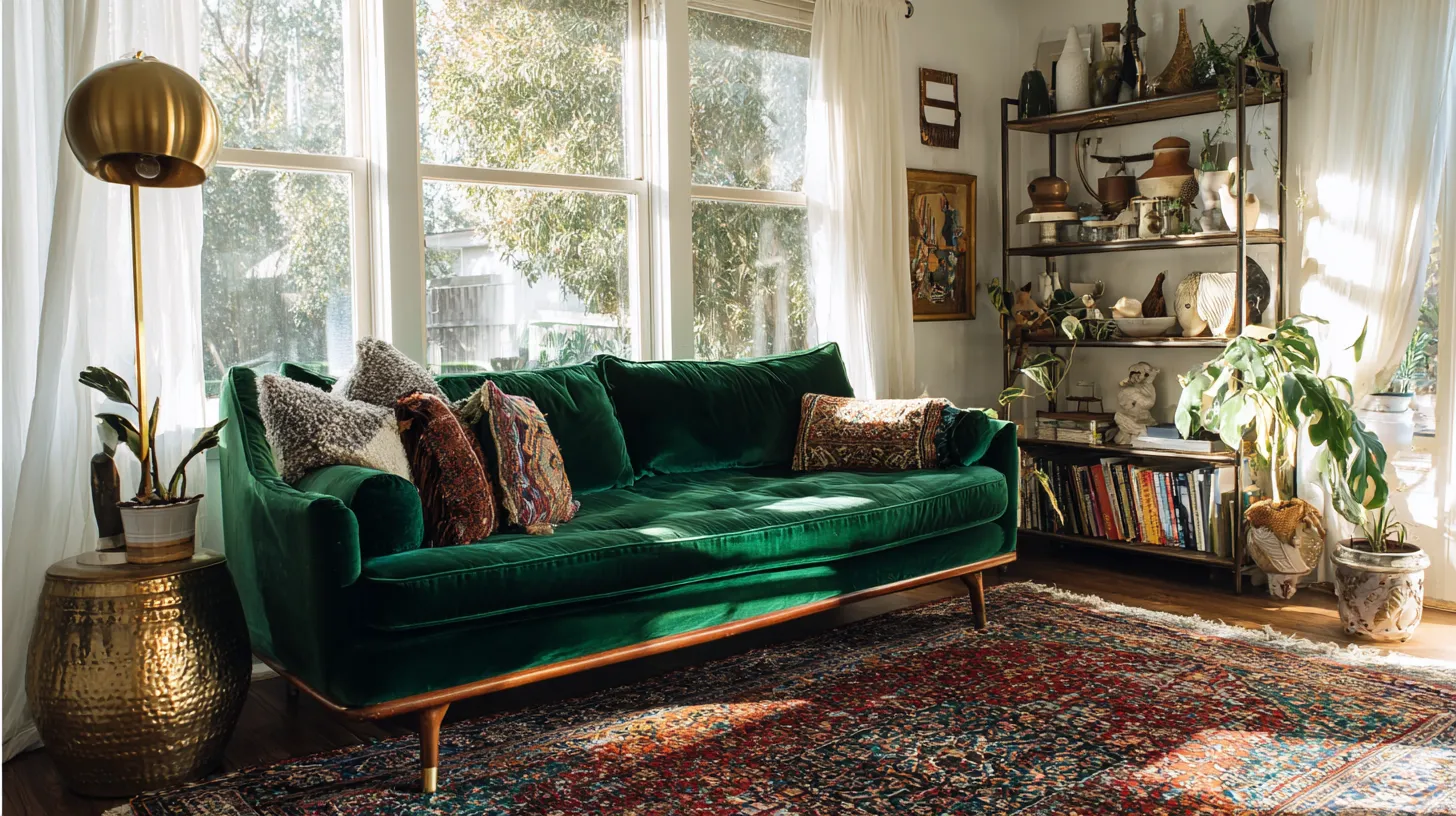
There’s something deeply personal about a living room that doesn’t follow a single rulebook. A space where a mid-century modern sofa sits comfortably beside a Persian rug, where industrial shelving holds bohemian ceramics, where every corner tells a different story yet somehow the whole room speaks in harmony.
This is eclectic living room design — not chaos, but curated contrast. It’s the art of layering textures, blending eras, and mixing styles until your space becomes a reflection of every journey you’ve taken, every treasure you’ve found, every mood you’ve wanted to capture.
And while it might look effortless, there’s intention behind the beauty. Let’s explore how to create a living room that celebrates contradiction while feeling utterly cohesive.
What Is Eclectic Living Room Design?
Eclectic design is the thoughtful fusion of different styles, periods, and textures into one harmonious space. It’s not about randomly throwing together furniture from different decades — it’s about finding the invisible threads that connect vintage and modern, rustic and refined, bold and subtle.
At its heart, eclectic design celebrates individuality. It gives you permission to love both minimalism and maximalism, to honor heritage pieces alongside contemporary finds, to create a living room that doesn’t fit neatly into any single aesthetic category.
The result? A space that feels collected over time rather than bought all at once. A room with depth, character, and soul.
The Key Elements of Eclectic Design
Mixing Furniture Styles with Intention
The foundation of eclectic living room design lies in how you combine different furniture pieces. A sleek contemporary coffee table can ground ornate vintage armchairs. A rustic wooden bench brings warmth to a room anchored by a streamlined sectional.
Look for a unifying element — perhaps it’s a shared wood tone, a repeated curve, or a consistent scale. These subtle connections create cohesion even when styles diverge. A mid-century modern credenza and a Victorian side table can coexist beautifully when they share similar proportions or wood finishes.
Don’t be afraid to pair high and low, inherited and new. The mixing of price points often adds to the authentic, collected-over-time feeling that makes eclectic spaces so inviting.
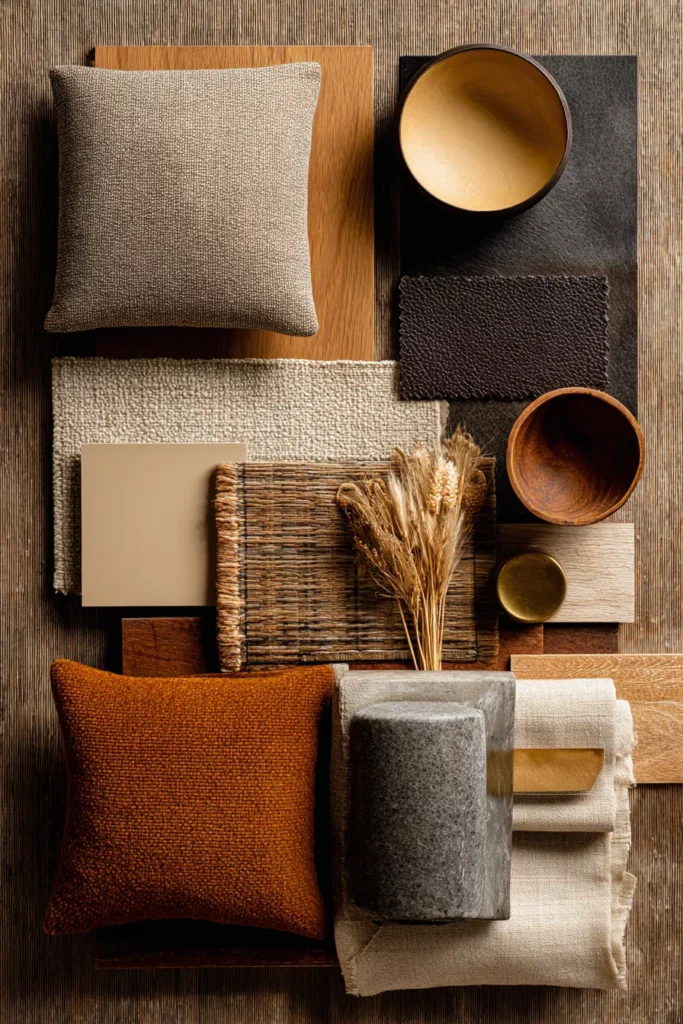
Layering Textures for Depth
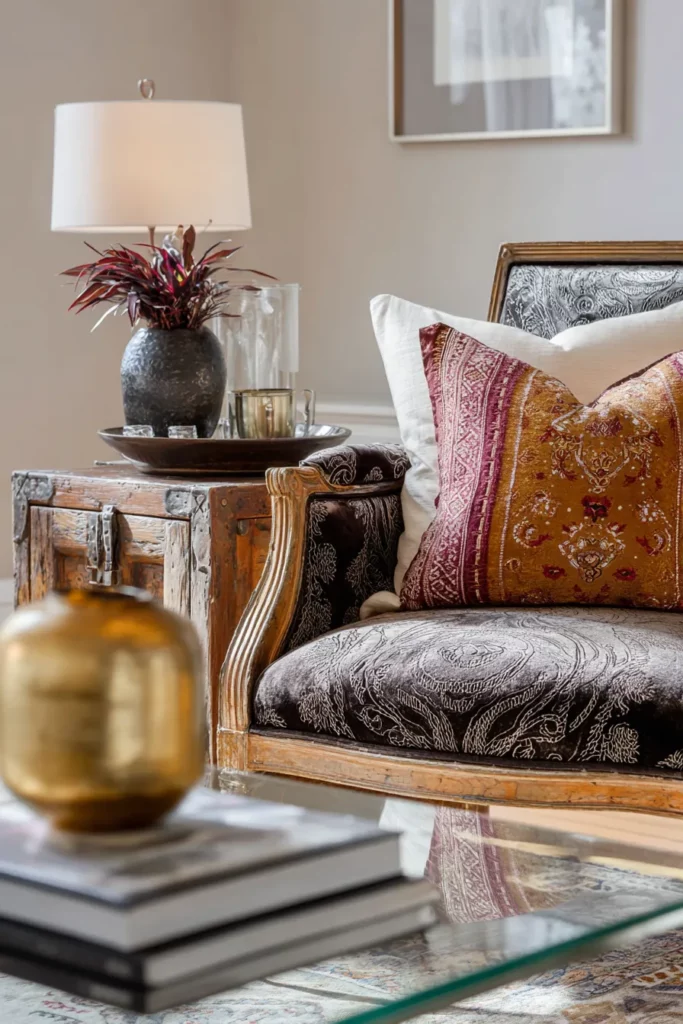
Texture is where eclectic design becomes truly sensory. Smooth leather against nubby linen, glossy ceramics beside rough-hewn wood, metallic accents catching light on woven textiles — this layering creates visual and tactile richness.
Start with your larger pieces: a velvet sofa, a jute rug, linen curtains. Then add smaller textural moments through throw pillows, blankets, baskets, and decorative objects. Mix natural fibers like wool, cotton, and rattan with more refined materials like silk, brass, and glass.
The goal is to engage multiple senses. You should want to touch your space, not just look at it.
Color Palettes That Tell Stories
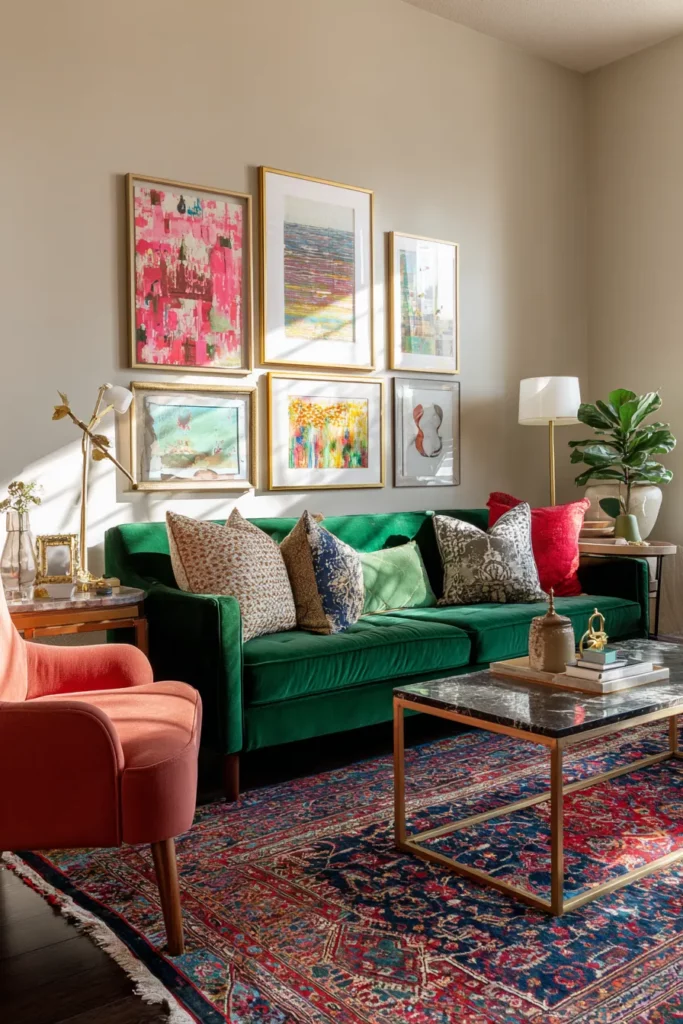
Eclectic living rooms often embrace color more boldly than other design styles, but that doesn’t mean they’re chaotic. The most successful spaces use color strategically — perhaps a cohesive neutral base with jewel-tone accents, or a repeated accent color that appears in unexpected places.
Consider starting with a statement piece — a vibrant Persian rug, a colorful piece of art, a richly patterned sofa. Let that piece inform your palette. Pull two or three colors from it and repeat them throughout the room in varying intensities.
Or try the 60-30-10 rule: 60% dominant color (often neutrals), 30% secondary color, and 10% accent color. This formula works beautifully in eclectic spaces because it provides structure while allowing for playful variety.
Statement Furniture Pieces as Anchors
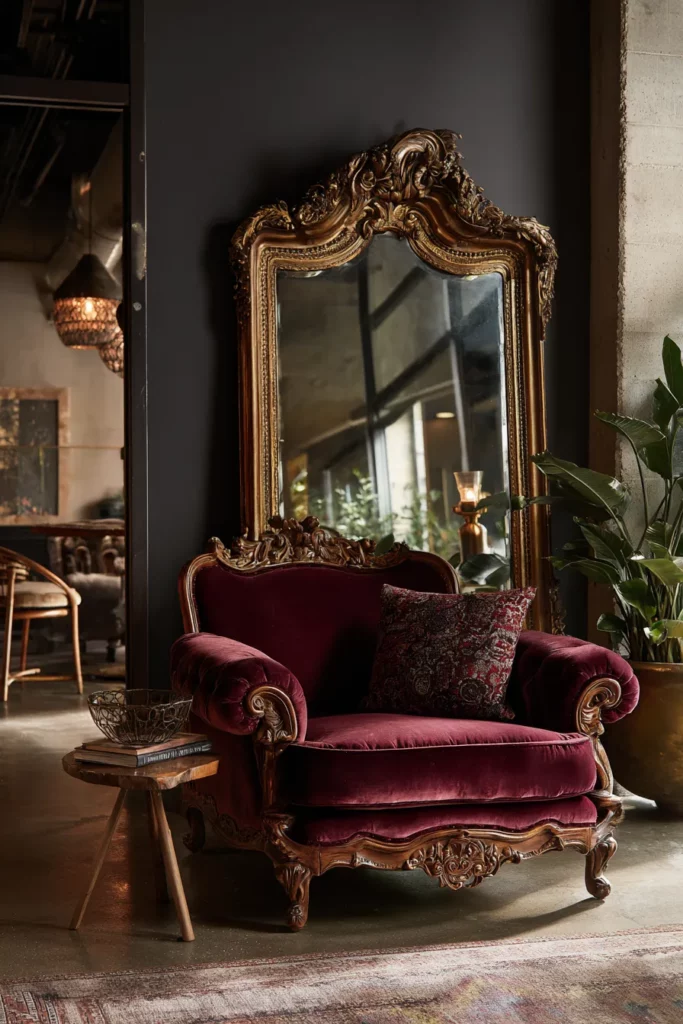
Every eclectic living room needs its heroes — those unexpected pieces that make people pause. A sculptural chair that doubles as art. An antique armoire repurposed as a media cabinet. An oversized floor mirror with an ornate gold frame leaning casually against the wall.
These statement pieces become conversation starters and memory makers. They give your room personality and prevent it from feeling too designed or generic. Look for furniture with interesting silhouettes, unusual materials, or compelling stories.
Balance is key: pair one bold piece with quieter companions so nothing competes for attention. An ornate chandelier shines brightest above simple, clean-lined furniture.
Creating Cohesion in Eclectic Spaces
The Power of Repetition
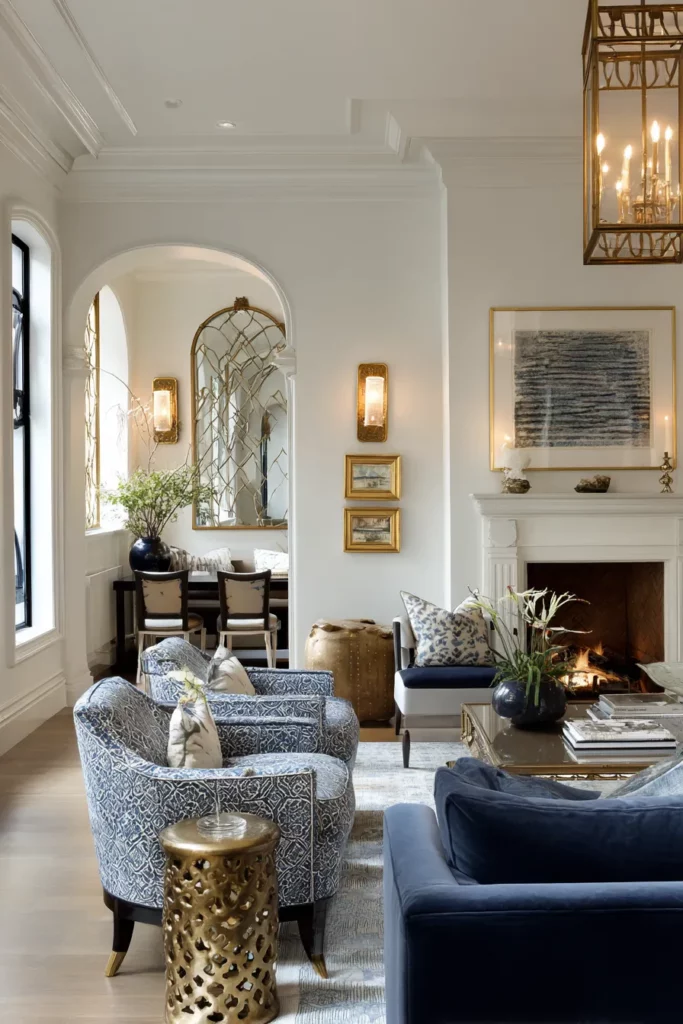
The secret to making eclectic living rooms feel intentional rather than random? Repetition. Choose two or three elements — a metal finish, a wood tone, a color, a shape — and repeat them throughout the space.
Maybe brass appears in your light fixtures, side table legs, and picture frames. Perhaps curved lines show up in your mirror, your chair backs, and your decorative objects. This subtle repetition creates rhythm and visual flow.
It’s the same principle that makes a beautiful outfit work: varied pieces unified by complementary colors or repeated accessories.
Grounding with Neutrals
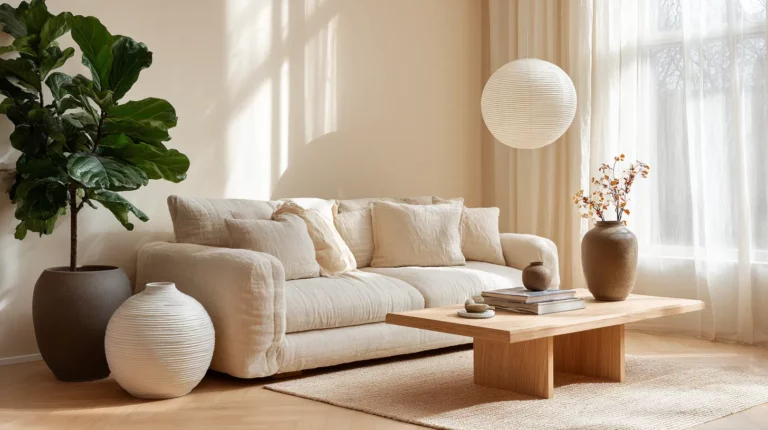
While eclectic design celebrates variety, it needs breathing room too. Generous doses of neutrals — white walls, natural wood floors, beige or gray upholstery — provide visual rest between more vibrant moments.
Think of neutrals as the canvas that makes your colorful, textured, pattern-rich elements pop. A neutral sofa becomes the perfect backdrop for an explosion of patterned pillows. Pale walls let your art collection command attention.
This balance between exuberance and restraint is what separates sophisticated eclectic design from overwhelming clutter.
Scale and Proportion Awareness
Even in a room celebrating contrast, furniture should relate to each other proportionally. An oversized sectional needs equally substantial companions — a large coffee table, tall floor lamps, sizeable art pieces. Delicate vintage chairs pair beautifully with slender side tables and refined accessories.
Mixing scales creates interest, but extreme disparities can feel jarring. Aim for intentional variety within a reasonable range.
Practical Eclectic Design Strategies
Sourcing Eclectic Furniture Affordably
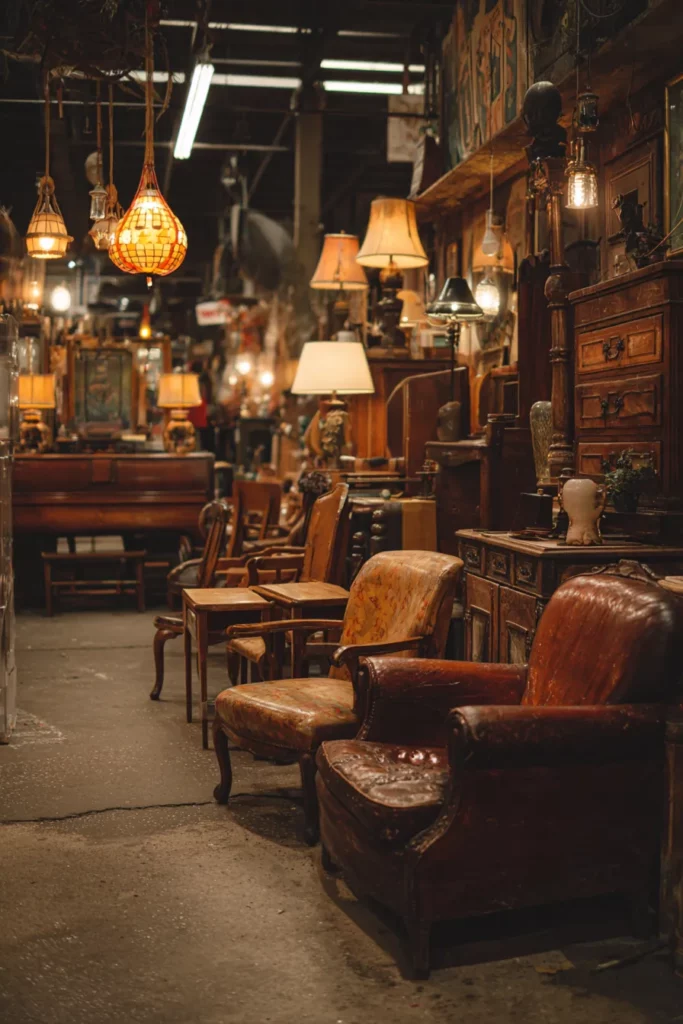
Creating an eclectic living room doesn’t require unlimited budget. Some of the most characterful spaces are built on thoughtful thrifting, vintage hunting, and strategic investment.
Affordable Sourcing Strategies:
- Estate sales and auctions for unique vintage pieces with history
- Online marketplaces like Facebook Marketplace, Craigslist, or Chairish for one-of-a-kind finds
- Thrift stores and consignment shops for hidden gems that need minor refreshing
- Investment pieces — splurge on your sofa or rug, save on accent furniture and décor
- DIY refinishing — transform dated pieces with new upholstery, paint, or hardware
The beauty of eclectic design is that imperfections add character. A vintage chair with worn patina often has more soul than pristine new furniture.
Sustainable and Eco-Friendly Eclectic Choices
Eclectic design naturally aligns with sustainability. By mixing old and new, you’re already practicing conscious consumption. Vintage and secondhand furniture have lower environmental impact than manufacturing new pieces.
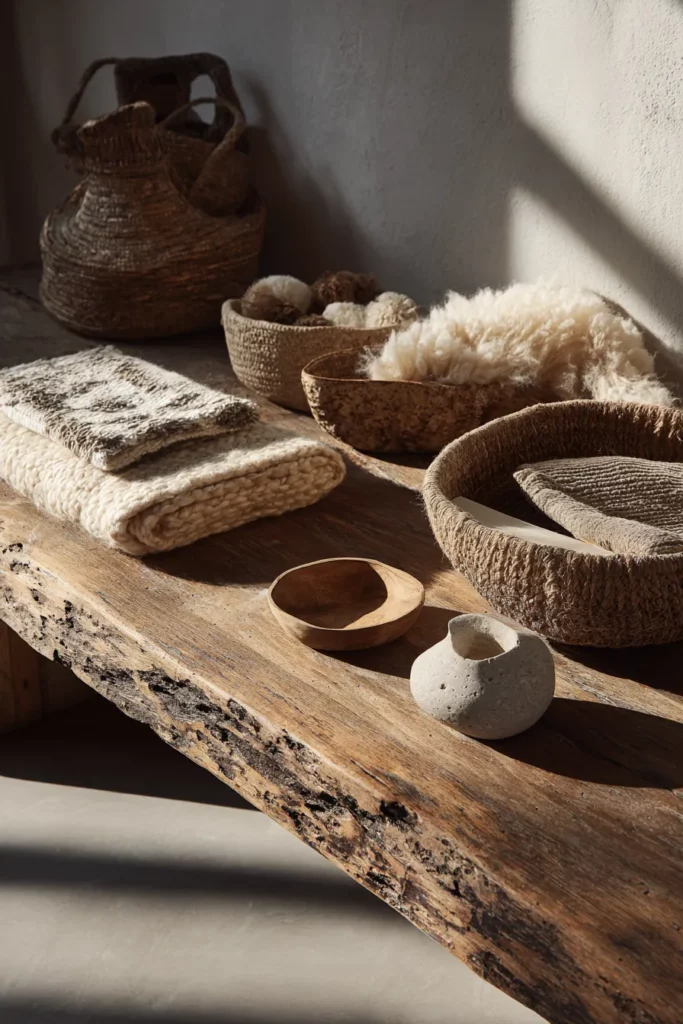
Enhance your eco-friendly approach by choosing natural, renewable materials: reclaimed wood furniture, organic cotton textiles, wool rugs, jute or seagrass baskets, stone or ceramic accessories. Look for low-VOC paints and sustainably sourced pieces.
Buying quality vintage furniture is inherently sustainable — you’re extending the life of well-made pieces and reducing demand for fast furniture. Plus, older furniture often features superior craftsmanship that modern mass production can’t match.
Maintaining Mixed-Material Furniture
The textural variety in eclectic living rooms requires thoughtful maintenance. Different materials have different care needs, but with simple routines, your diverse pieces will age beautifully.
| Material | Maintenance Tips |
|---|---|
| Leather | Condition every 6-12 months; wipe spills immediately; keep away from direct sunlight |
| Velvet | Vacuum regularly with upholstery attachment; blot spills, don’t rub; brush pile periodically |
| Wood | Dust weekly; use coasters; treat with appropriate oil or polish seasonally |
| Brass/Copper | Embrace patina or polish with lemon/salt mixture; avoid harsh chemicals |
| Natural Fiber Rugs | Vacuum regularly; rotate for even wear; spot clean with mild soap |
| Marble/Stone | Seal annually; wipe spills immediately; avoid acidic cleaners |
The key is addressing stains and damage quickly while embracing the natural aging process that gives eclectic spaces their lived-in charm.
Eclectic Design for Small Living Rooms
Making Bold Choices in Compact Spaces
Small living rooms can absolutely embrace eclectic style — in fact, the visual richness can make them feel more intentional and curated. The key is editing ruthlessly and choosing each piece deliberately.
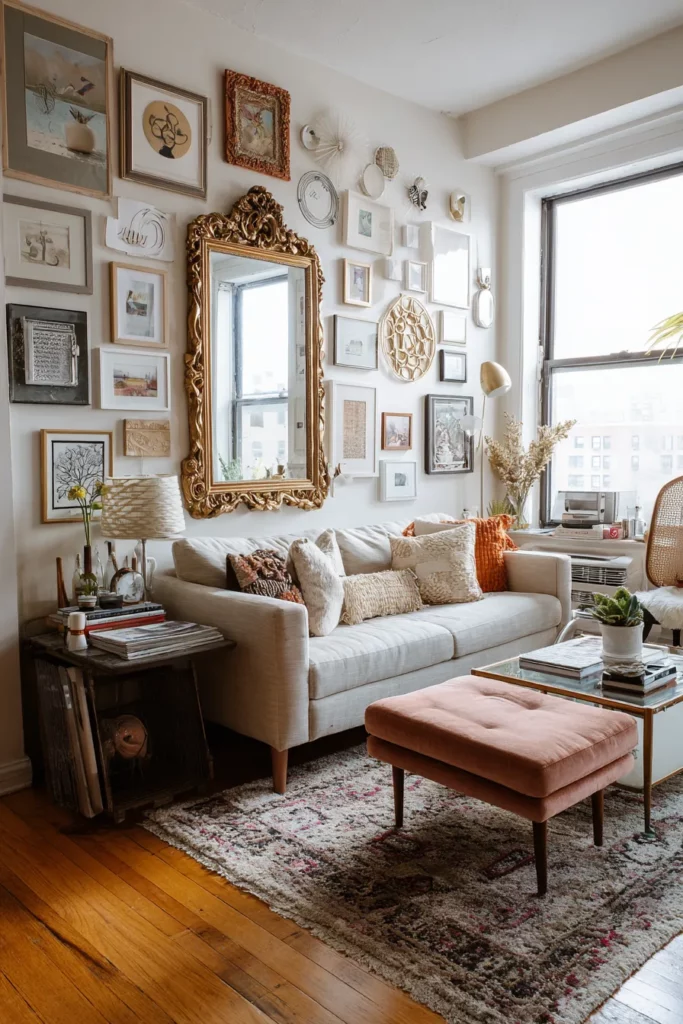
Focus on fewer, more impactful items rather than overcrowding. One stunning vintage chair makes more impact than three mediocre ones. Use vertical space with tall bookshelves or gallery walls that draw the eye upward.
Mirrors become essential tools, reflecting light and creating the illusion of expanded space. A large statement mirror can double your room visually while serving as a dramatic focal point.
Smart Furniture Choices
In small eclectic living rooms, multifunctional furniture earns its place. Ottomans with storage, nesting tables, convertible sofas — these pieces provide practicality without sacrificing personality.
Choose furniture with exposed legs rather than skirted pieces. The visible floor beneath creates a sense of airiness. Opt for transparent elements like lucite tables or glass shelving that provide function without visual weight.
Don’t default to small-scale everything. One properly sized sofa with character beats multiple undersized pieces fighting for space.
Integrating Modern Technology in Eclectic Spaces
Smart Home Features That Disappear
The 2025 eclectic living room seamlessly blends vintage soul with modern convenience. Smart technology enhances comfort without compromising aesthetic integrity.
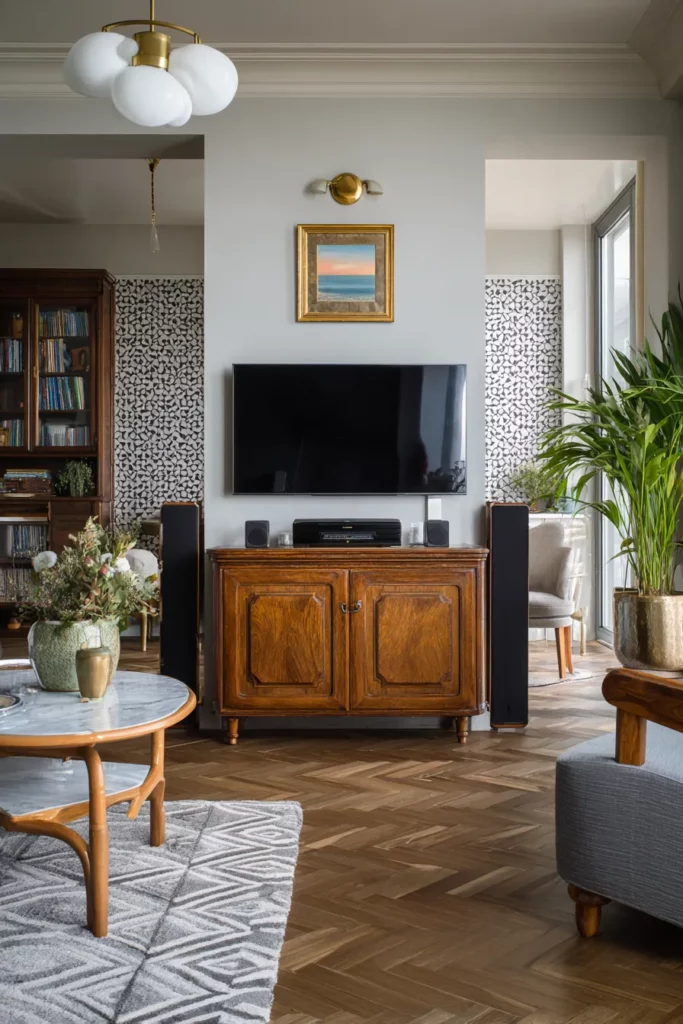
Consider cord-free solutions: wireless speakers hidden inside vintage cabinets, smart bulbs in vintage fixtures, a sleek TV concealed behind art or inside an antique armoire. Voice-controlled lighting lets you adjust ambiance without modern switches disrupting your vintage vibe.
Smart thermostats and motorized window treatments offer convenience while remaining virtually invisible. The goal is enhancing functionality without adding visual clutter or competing with your curated aesthetic.
Balancing Tech and Texture
When technology must be visible — TVs, sound systems, charging stations — treat them as design elements to integrate rather than hide. Mount your TV in a gallery wall arrangement. Display speakers on vintage shelving. Create a dedicated charging station in a beautiful bowl or vintage tray.
Cable management is crucial in eclectic spaces where clutter fights against visual harmony. Use cord covers, cable boxes, or simply route wires behind furniture and through vintage vessels.
The Psychology of Eclectic Living
Creativity and Comfort Combined
There’s research supporting what eclectic design lovers instinctively know: varied, personalized environments enhance creativity and wellbeing. Spaces that reflect your authentic taste rather than following rigid design rules feel more genuinely comforting.
The visual interest in eclectic rooms keeps your mind engaged. Unlike minimalist spaces that some find cold or overly designed rooms that feel precious, eclectic living rooms invite you to relax, explore, and truly inhabit the space.
There’s also psychological freedom in embracing contradiction. An eclectic living room says, “I contain multitudes.” It gives you permission to honor different aspects of your personality and history simultaneously.
Personal Connection Creates Belonging
Eclectic spaces built around meaningful objects — inherited furniture, travel souvenirs, handmade items, thrifted treasures — create deeper emotional connections than rooms filled with matching sets from a single store.
Each piece carries a memory, a story, a moment. This narrative richness transforms your living room from a decorated space into a reflection of your life.
Common Eclectic Design Mistakes to Avoid
Too Much of Everything
The line between eclectic and chaotic is thinner than you’d think. The most common mistake is adding too many patterns, colors, textures, and styles without enough visual rest.
If everything screams for attention, nothing gets heard. Practice restraint: balance bold moments with quiet ones, busy patterns with solid colors, ornate furniture with simple shapes.
When in doubt, remove one thing. Eclectic design benefits from editing as much as from collecting.
Lacking a Unifying Thread
Random isn’t the same as eclectic. Successful eclectic living rooms have invisible connections threading through the variety — repeated colors, similar wood tones, complementary styles from adjacent eras, or consistent proportions.
Before adding a new piece, identify what connects it to the existing room. If you can’t find that thread, it might not belong.
Ignoring Lighting Layers
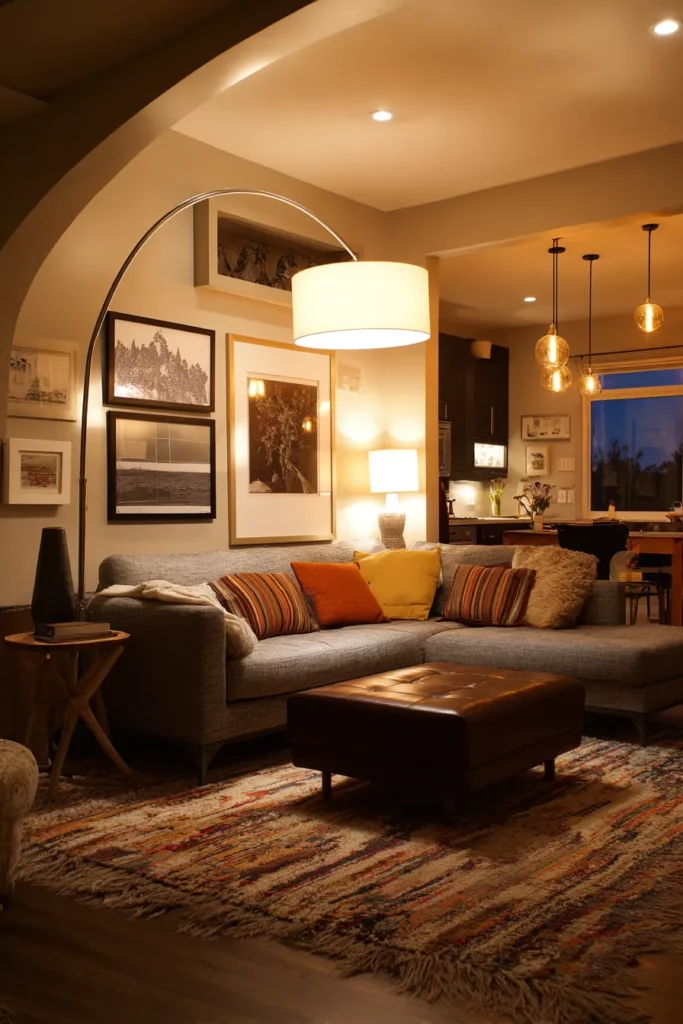
Eclectic spaces with all their texture and visual interest especially need thoughtful lighting ideas. A single overhead fixture flattens everything. Layer your lighting: ambient ceiling fixtures, task lamps for reading nooks, accent lighting highlighting art or architectural features.
Mix lighting styles just as you mix furniture — a modern arc lamp, vintage table lamps, Edison bulb pendants. This variety creates depth and allows you to adjust ambiance throughout the day.
Forgetting Function
Beauty without function creates frustration. Ensure your eclectic living room serves your actual life. Do you need surface space for drinks? Storage for remotes and books? Comfortable seating for entertaining?
Don’t sacrifice comfort for style. A gorgeous vintage chair that no one wants to sit in isn’t serving your space. Choose pieces that are both beautiful and genuinely usable.
Eclectic Living Room Essentials: A Checklist
Foundation Elements:
- Neutral base (walls, large furniture) for visual rest
- Statement rug anchoring the seating area
- Comfortable, characterful cozy furniture mixing styles
Layering Components:
- Varied textures across upholstery, pillows, throws
- Mix of materials: wood, metal, glass, natural fibers
- Pattern variety (geometric, organic, vintage-inspired)
Visual Interest:
- At least one statement piece (furniture or art)
- Gallery wall or curated art collection
- Mirrors for light reflection and space expansion
Finishing Touches:
- Layered lighting (ambient, task, accent)
- Living elements (plants, flowers)
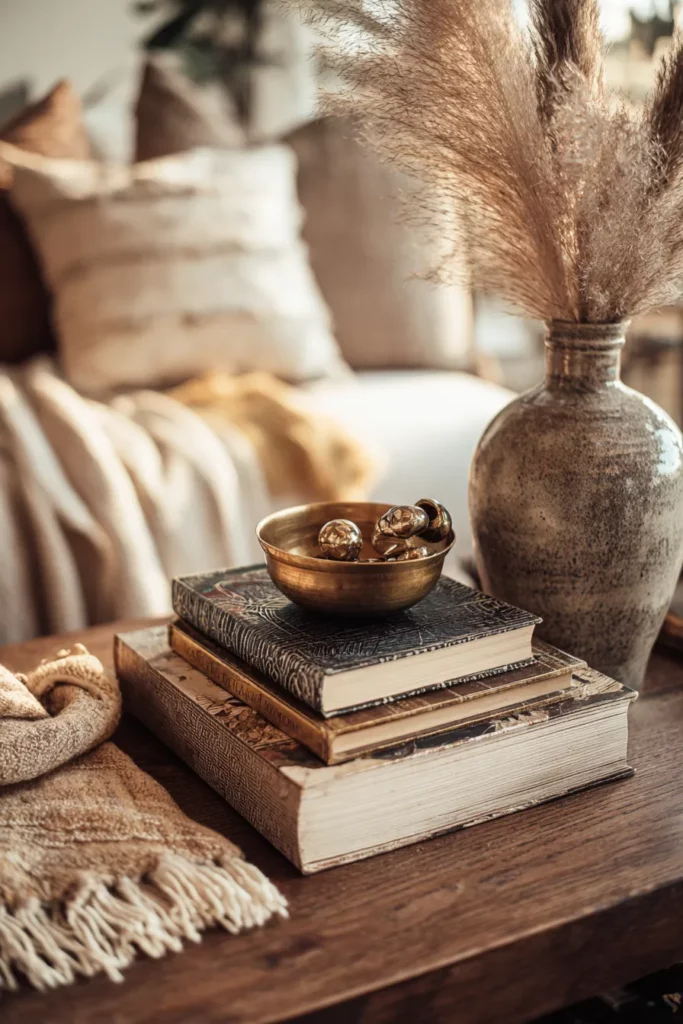
- Personal treasures (books, collections, travel finds)
- Functional beauty (beautiful storage, decorative trays)
Connecting Thread:
- Repeated element (color, metal finish, wood tone, shape)
- Cohesive color palette with intentional variety
- Proportional balance among different pieces
Bringing Your Eclectic Vision to Life
Creating an eclectic living room is a journey, not a destination. Unlike spaces designed from a catalog, eclectic rooms evolve organically as you discover pieces that speak to you.
Start with what you love — that inherited chair, the rug you bought on vacation, the modern sofa you can’t stop thinking about. Build around these anchor pieces, adding layers gradually. Trust your instincts about what belongs together.
Give yourself permission to experiment. Move things around. Try unexpected combinations. The beauty of eclectic design is that there’s no single right answer — only what feels right to you.
Your living room should feel like a visual autobiography — chapters from different times and places coming together to tell your unique story. That’s the soul of eclectic design. Not perfection, but personality. Not matching, but meaning.
Start where you are, with what you love, and trust the journey. Your space will find its own beautiful balance.
Frequently Asked Questions
What is the difference between eclectic and bohemian living room design?
While both styles celebrate variety, bohemian design specifically emphasizes global influences, natural materials, and relaxed, artistic vibes with lots of plants and textiles. Eclectic design is broader — it can incorporate bohemian elements but also includes industrial, mid-century modern, traditional, or any other style combinations. Eclectic is more about intentional contrast across any styles, while bohemian has a more specific aesthetic identity.
How do I keep my eclectic living room from looking cluttered?
Focus on three principles: use neutrals generously for visual rest, practice ruthless editing by removing pieces that don’t serve the space, and ensure clear sightlines and walkways. Not every surface needs decoration. Leave breathing room between furniture groupings, and choose storage solutions that hide everyday clutter while displaying only your most beautiful objects.
Can I mix warm and cool colors in an eclectic living room?
Absolutely. Mixing color temperatures adds richness to eclectic spaces. The key is balancing them thoughtfully — perhaps warm wood tones and terracotta balanced by cool gray walls and blue accents. Use neutrals as bridges between temperature extremes, and ensure one temperature slightly dominates to prevent the space from feeling disjointed.
What’s the best way to start designing an eclectic living room from scratch?
Begin with one anchor piece you absolutely love — a rug, sofa, or art piece. This becomes your jumping-off point for colors, textures, and style direction. Build slowly, adding pieces that complement without matching. Focus on creating one cohesive seating arrangement first, then layer in additional furniture and accessories. Remember: eclectic rooms are collected over time, so don’t rush to fill every space immediately.
How often should I update or refresh an eclectic living room?
The beauty of eclectic design is its flexibility. Small updates — swapping throw pillows seasonally, rotating art, adding new plants — keep the space feeling fresh without major overhauls. Larger furniture changes can happen organically as you discover pieces that speak to you. There’s no pressure to redesign; let your room evolve naturally with your life and changing tastes. Some pieces may stay for decades while others rotate more frequently.