
Table of Contents
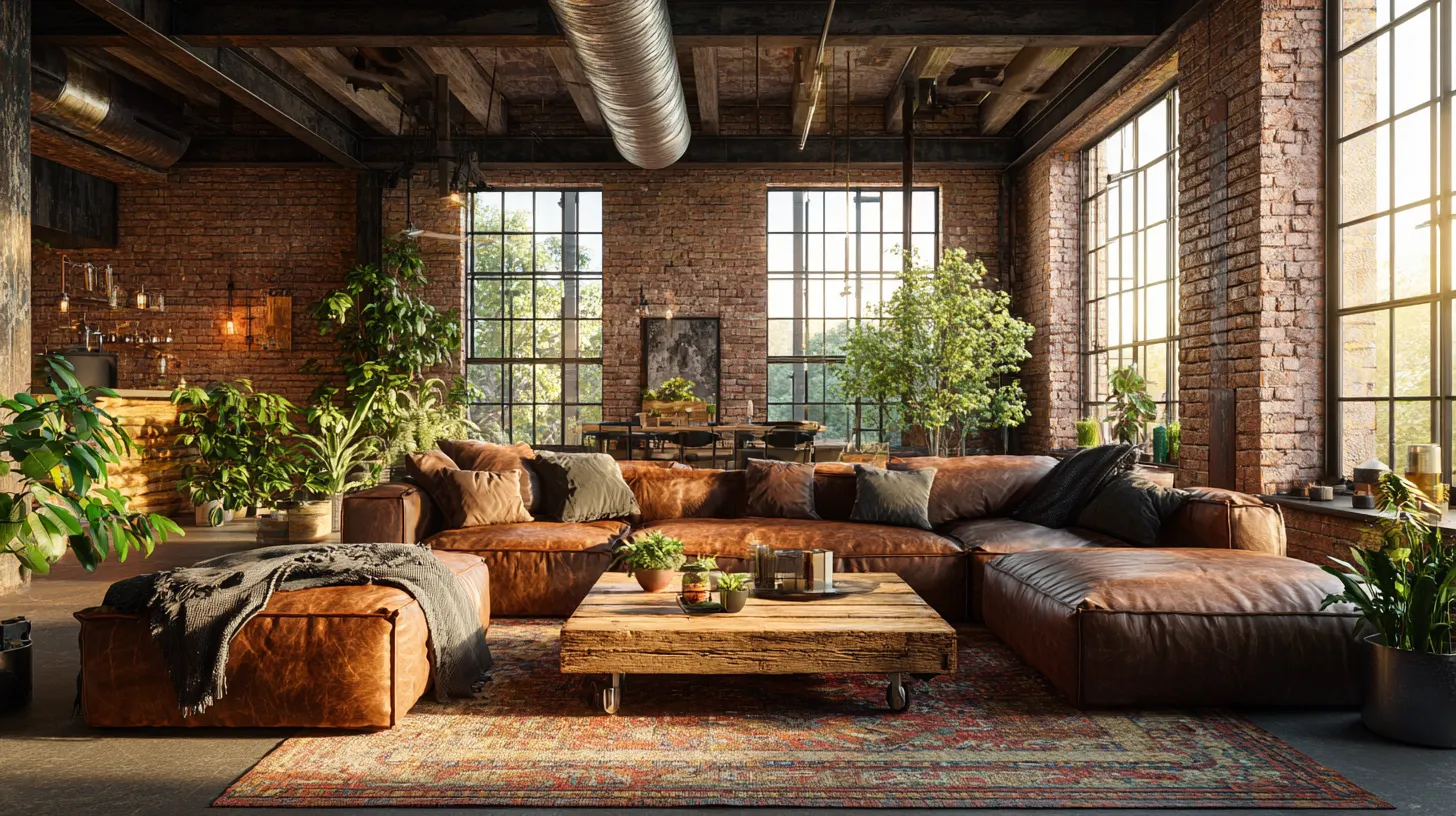
There’s something magnetic about stepping into an industrial loft living room. The soaring ceilings pull your gaze upward, while sunlight streams through oversized windows, painting shadows across exposed brick. It’s a space that whispers stories of old factories and urban renewal, yet feels entirely present—alive with possibility.
But here’s the beautiful truth: an industrial loft doesn’t have to feel cold or cavernous. With thoughtful layering, warm textures, and a few soulful touches, these dramatic spaces transform into sanctuaries that balance edge with embrace. The key is honoring the raw architecture while infusing it with the comfort your daily life craves.
This is where industrial design becomes personal. Where metal beams meet velvet cushions, where concrete softens under wool rugs, where history and home become one. Let’s explore how to create an industrial loft living room that doesn’t just look beautiful in photographs, but feels like the most authentic version of you.
Understanding the Industrial Loft Living Room
What Defines a Loft Space?
A loft is more than an apartment with high ceilings—it’s an architectural philosophy. Born from converted warehouses and commercial buildings, these open-plan spaces retain their industrial bones: exposed ductwork, steel columns, brick walls that tell decades of stories. There are no traditional room divisions, just flowing space that invites you to design your own boundaries.
Hard lofts are the purists—authentic conversions with original industrial elements intact. Soft lofts are new constructions that borrow the aesthetic: the exposed pipes might be decorative, the brick perhaps faux, but the spirit remains. Both offer that signature loft feeling: volume, light, and architectural honesty.
The Soul of Industrial Loft Design
Industrial style celebrates imperfection as beauty. It’s about revealing what other design styles conceal: the structural framework, the weathered surfaces, the utilitarian fixtures. This rawness becomes the canvas for your living room, asking not for perfection but for authenticity.
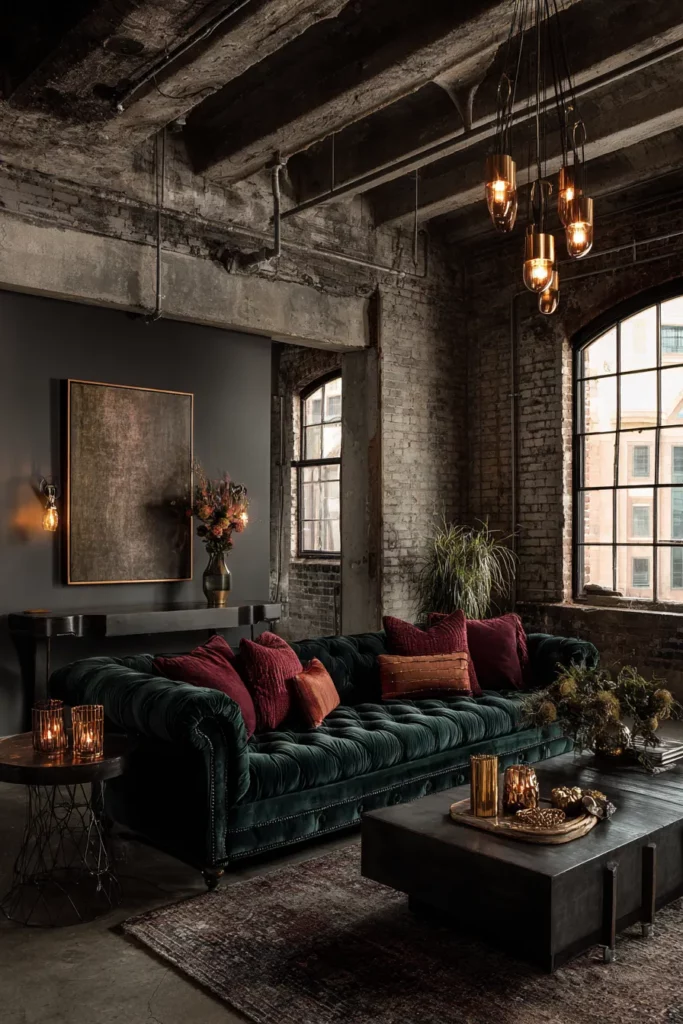
The palette tends toward muted sophistication—charcoal grays, warm browns, weathered metals, and natural wood tones. But don’t mistake muted for monotonous. These neutral foundations allow pops of color and personality to resonate more powerfully, like a burgundy leather sofa against concrete or emerald velvet pillows beside steel-framed windows.
Creating Warmth in Open Industrial Spaces
The Art of Textural Layering
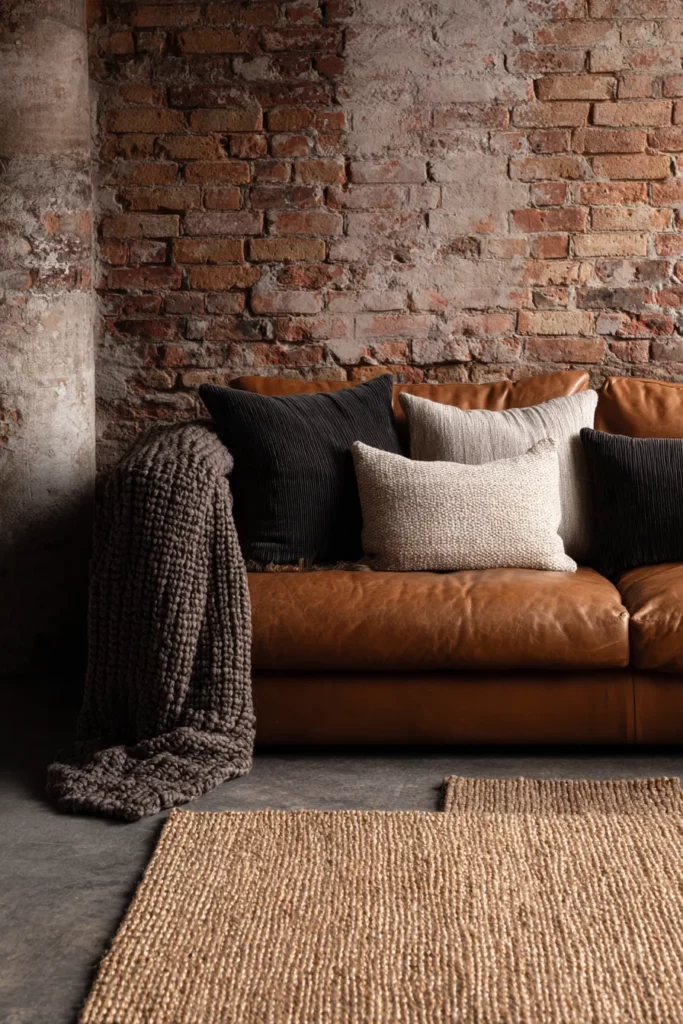
Here’s where magic happens: layering soft against hard, warm against cool. Your industrial loft living room needs this tension to feel complete. Start with area rugs—think oversized jute beneath a plush wool rug, creating depth underfoot. The contrast between rough and refined grounds the space while muffling that echo that can haunt open lofts.
Textiles become your warmth ambassadors. Drape chunky knit throws over leather seating. Pile linen and velvet cushions in varying sizes and textures. Consider heavy curtains in natural fabrics—even if you love those massive windows bare, curtains add softness to hard edges and offer flexibility for mood and privacy.
Don’t forget vertical textiles. A large woven wall hanging or vintage tapestry can transform a cold brick wall into something intimate and personal. These pieces absorb sound, add visual warmth, and create focal points that soften the industrial severity.
Lighting: Layering for Mood and Function
Industrial loft living rooms demand sophisticated lighting strategies. Those high ceilings and open layouts create shadows that overhead fixtures alone can’t address. Think in layers: ambient, task, and accent lighting working together to create atmosphere throughout your day.
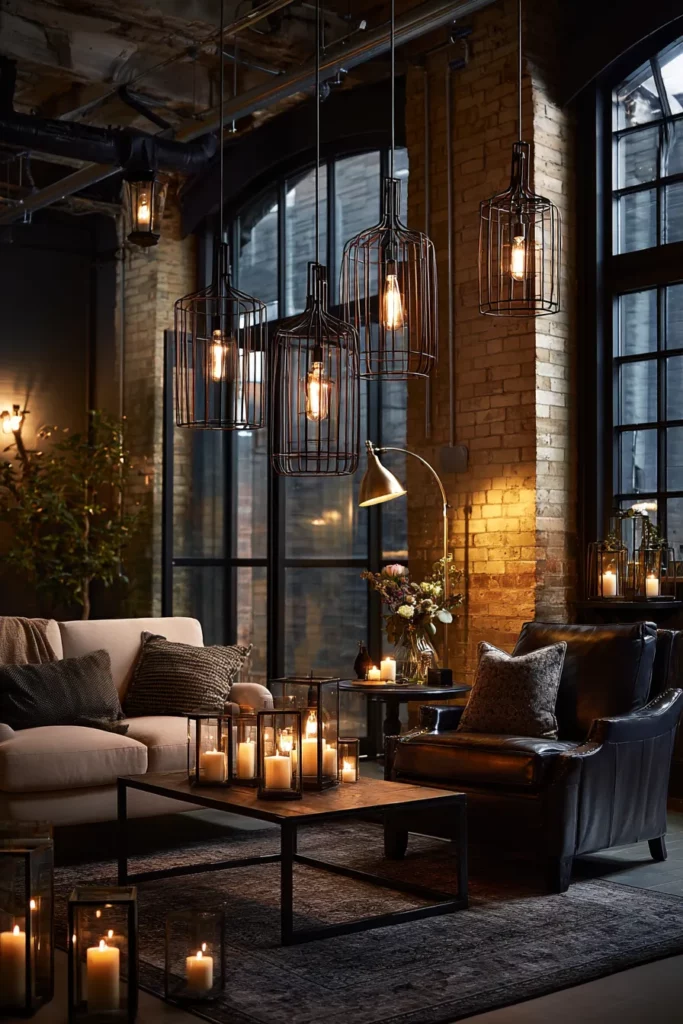
Start with statement pieces that honor the aesthetic—Edison bulb chandeliers, metal cage pendants, or adjustable factory-style fixtures. These provide ambient light while reinforcing your design narrative. But don’t stop there. Add floor lamps with warm-toned shades near seating areas, creating pools of intimate light that invite conversation and reading.
Consider the magic of dimmers and smart lighting. The ability to adjust brightness and color temperature transforms your space from energizing morning brightness to evening warmth. String lights or LED strips behind steel beams can add unexpected softness, while candles clustered on coffee tables bring flickering, human-scale light that no overhead fixture can replicate.
Layered Industrial Lighting
Furniture Selection for Industrial Loft Living
Finding the Balance Between Style and Comfort
Your furniture should echo the loft’s architectural honesty while prioritizing livability. Look for pieces with visible construction—leather sofas with exposed stitching, wooden tables showcasing grain patterns, metal-framed chairs that reveal their joinery. But ensure every piece invites use, not just admiration.
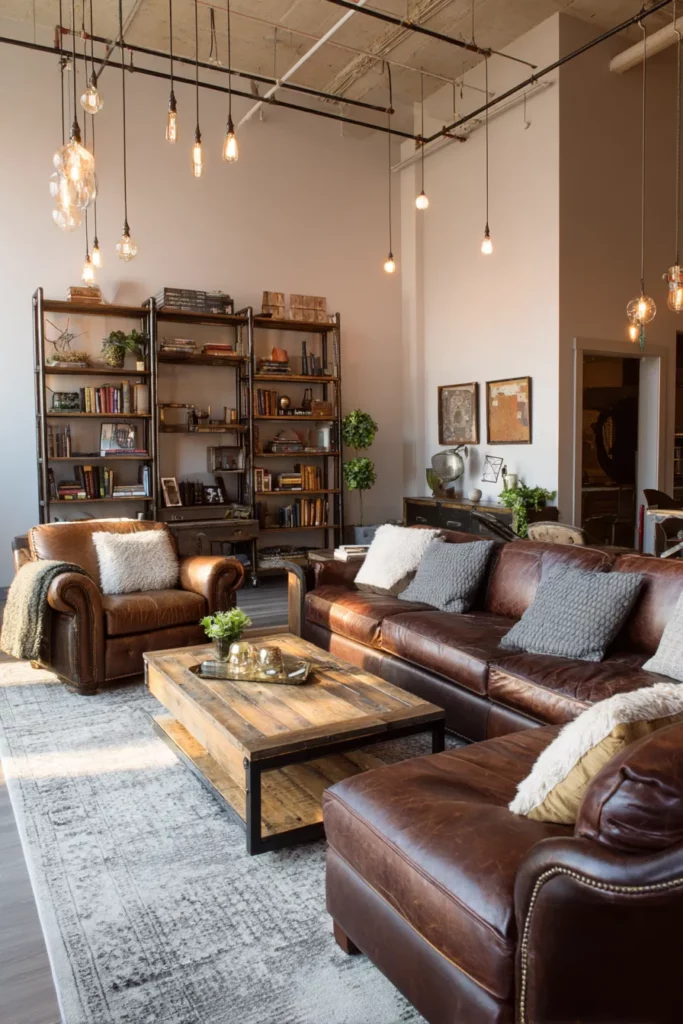
Sectional sofas work beautifully in open lofts, defining the living area without walls while offering generous seating. Choose low-profile designs that don’t compete with your vertical space. Pair with a substantial coffee table—reclaimed wood planks on metal legs, perhaps, or a vintage industrial cart repurposed as a functional centerpiece.
Mix periods and materials deliberately. A mid-century modern armchair beside an industrial metal bookshelf, a contemporary floor lamp near a vintage trunk used as storage. This eclectic approach keeps the space from feeling too themed or staged, adding the layers of personality that transform house into home.
Smart Furniture Placement in Open Floor Plans
Furniture becomes your architecture in a loft. Use it to create invisible rooms within your open space. Position your sofa perpendicular to walls rather than against them, instantly defining the living area while maintaining flow. Bookcases and open shelving units can act as permeable dividers that separate zones without blocking light or sightlines.
Consider scale carefully. In a space with twelve-foot ceilings, standard-sized furniture can look lost. Opt for pieces with visual weight—deeper sofas, taller bookcases, substantial coffee tables. But balance this with negative space. Overcrowding an open loft defeats its essential character; the emptiness is part of the design.
Create conversation areas that feel intimate despite the volume. Arrange seating in U-shapes or facing pairs, anchored by a generously sized rug. This clustering creates psychological boundaries that make sprawling spaces feel approachable and human-scaled.
Zoning Your Industrial Loft Living Room
Creating Functional Boundaries Without Walls
The openness you love can also challenge daily living. How do you separate relaxation from work when everything flows together? Strategic zoning answers this question, using visual cues and physical anchors to delineate different functions within your living room.
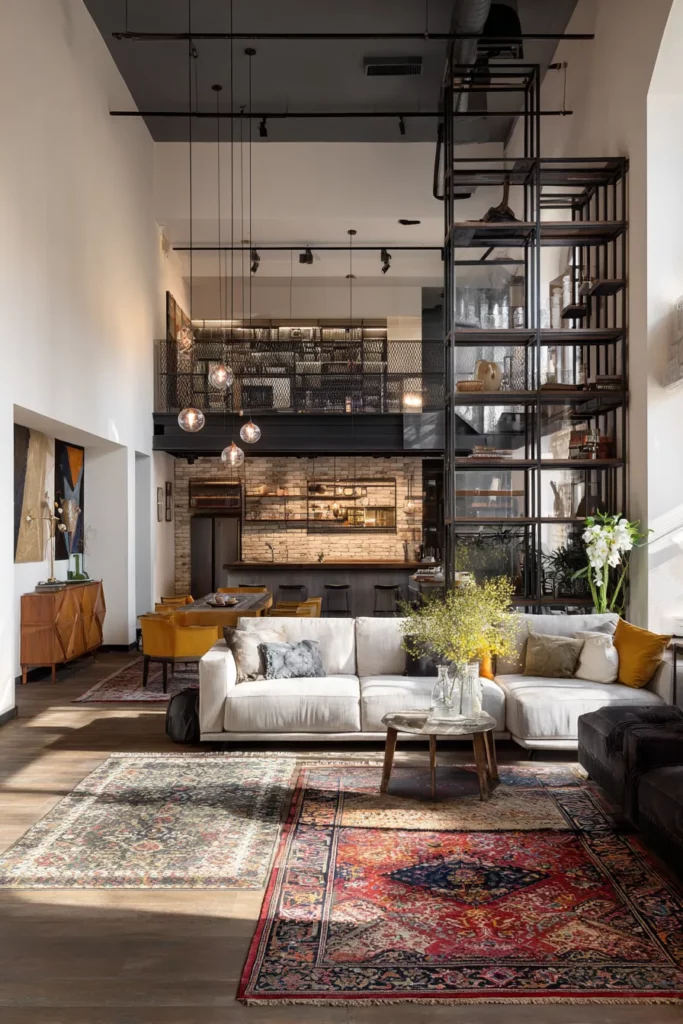
Area rugs are your primary zoning tool. A large rug under your seating arrangement signals “living space” distinct from surrounding areas. Change the rug texture or style when you move to a reading nook or workspace. This subtle shift in foundation tells your eye—and your mind—that you’ve entered a different zone.
Lighting reinforces these boundaries. A pendant fixture over a coffee table or reading chair creates a ceiling moment in a vast space, drawing the eye down and defining an area. Track lighting can spotlight different zones independently, allowing you to illuminate only the areas you’re using, making a large loft feel cozier in the evening.
Creative Division Ideas
Open shelving units perpendicular to walls create see-through dividers that maintain loft flow while establishing boundaries. Choose industrial metal units with wood shelves, keeping them at mid-height to preserve openness while defining space. Style them asymmetrically—books, plants, sculptural objects—so they’re interesting from both sides.
Sliding barn doors or metal-framed glass partitions offer flexible division. Open them to embrace the loft’s expansiveness during gatherings; close them when you need focus or privacy. These movable elements honor the industrial aesthetic while adding practical functionality that pure open-plan spaces sometimes lack.
Consider changes in flooring texture or level. If your loft allows, a small platform or step-up area naturally designates a different zone. Similarly, transitioning from concrete to wood flooring or adding interlocking floor tiles in a workspace creates clear visual boundaries without permanent walls.
Embracing Sustainable Industrial Design
Eco-Friendly Material Choices
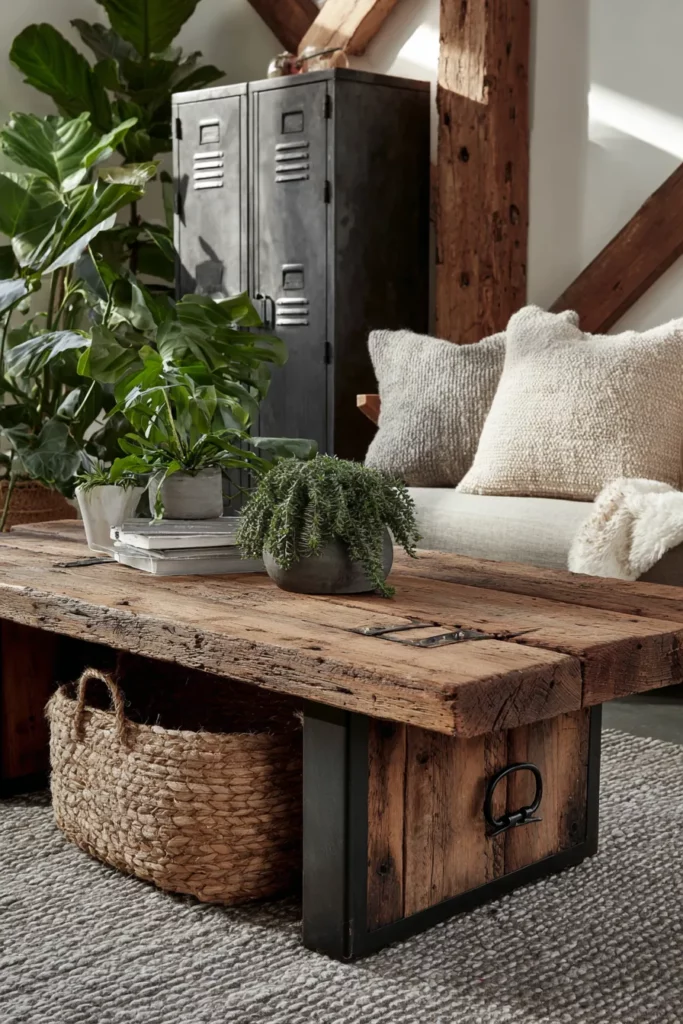
Industrial lofts and sustainability share natural alignment—both celebrate materials in their honest state. Choose reclaimed wood for furniture and accent walls, giving salvaged beams and planks new purpose. These pieces carry history and patina that new materials can’t replicate, while reducing demand for virgin resources.
Seek out vintage and secondhand industrial furniture. Original factory carts, metal lockers, and workbench tables offer authentic character while embodying the ultimate sustainability: reuse. These pieces often surpass modern manufacturing in durability and craftsmanship, becoming lasting investments rather than temporary solutions.
Consider eco-friendly textiles: organic cotton, linen, hemp, and wool. These natural fibers age beautifully, developing character rather than looking worn. They’re biodegradable at end of life and often require less chemical processing than synthetics. In an industrial setting, their organic texture provides crucial softness against hard surfaces.
Energy Efficiency in Large Spaces
High ceilings and large windows create heating and cooling challenges. Smart solutions preserve your loft’s character while reducing energy consumption. Install ceiling fans—industrial-style with metal blades—to circulate air effectively, pushing warm air down in winter and creating cooling breezes in summer.
Those magnificent windows need thoughtful treatment. Energy-efficient window films maintain views while blocking heat gain and UV damage. Thermal curtains in natural fabrics offer insulation when needed without compromising your aesthetic. Layer them with sheer linen panels for flexibility throughout seasons.
LED lighting throughout is essential, but choose warm color temperatures (2700K-3000K) to maintain ambiance. Smart lighting systems let you program schedules and scenes, reducing waste while enhancing daily life. Solar options for accent lighting—especially in window-adjacent areas—harness your abundant natural light practically.
Integrating Smart Technology Seamlessly
Hidden Tech in Industrial Spaces
Smart home technology can enhance loft living without disturbing your aesthetic. Wireless speakers hide in plain sight when finished in matte black or metallic tones that echo your fixtures. Voice-controlled systems eliminate visible controls, letting you adjust lighting, temperature, and entertainment without wall-mounted interruptions.
Smart thermostats learn your patterns and zone large spaces efficiently, crucial for open lofts where heating and cooling can be wasteful. Install them in vintage-inspired housings or position them as deliberate design objects rather than hiding them. The key is integration, not camouflage.
Motorized window treatments controlled via smartphone or voice command offer convenience in spaces with hard-to-reach windows. Choose industrial-style hardware—metal rods, chain-pull mechanisms—that look intentional rather than technical. The technology enhances your space without announcing itself.
Connectivity and Atmosphere Control
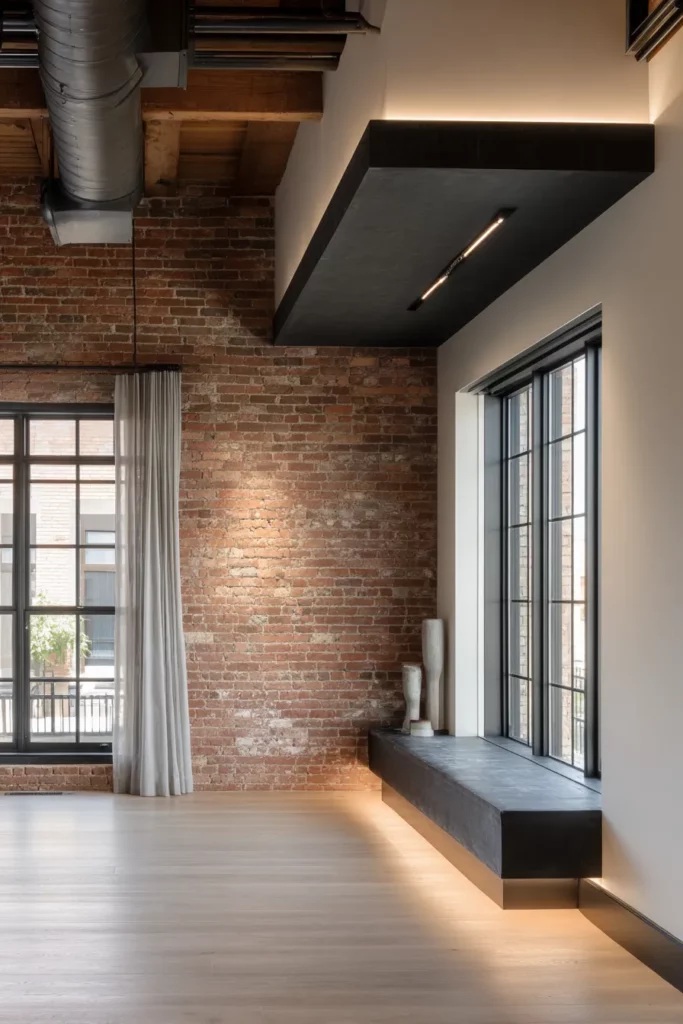
Hidden outlets and charging stations maintain clean lines essential to industrial design. Install floor outlets beneath furniture clusters, eliminating visible cords snaking across concrete. USB outlets in tables and beside seating areas provide modern convenience without visual clutter.
Smart lighting systems transform your loft’s mood instantly. Program scenes for different times and activities: bright and energizing for mornings, warm and dimmed for evenings, colorful for gatherings. When integrated with motion sensors, lights can illuminate paths through your loft at night without switches, adding safety and sophistication.
Consider smart air quality monitors and purifiers styled in industrial finishes. Large open spaces can have air circulation challenges, and these devices maintain health and comfort while looking like intentional design choices. Many modern options embrace minimal, sculptural designs that suit loft aesthetics perfectly.
Color and Accent Strategies
Building Your Palette
Start with your loft’s existing palette: the gray of concrete, the red-brown of brick, the black of steel. These aren’t just backgrounds—they’re your foundation colors. Build from here rather than fighting against them, choosing accents that complement rather than compete.
Warm metallics—brass, copper, bronze—add richness without brightness, glowing against gray and brown tones. Incorporate them in lighting fixtures, picture frames, decorative objects, and furniture details. Their lived-in patina suits industrial spaces perfectly, aging beautifully alongside brick and steel.
For upholstery and larger textiles, consider deep jewel tones: emerald, sapphire, burgundy, or ochre. These colors feel substantial and sophisticated against neutral industrials, adding warmth without sweetness. They ground the space emotionally, making vast volumes feel more intimate and intentional.
Accent Walls and Focal Points
If your loft lacks exposed brick, create texture through alternative methods. Concrete panel wallpaper or wood plank accent walls add dimension and warmth. Position these behind your primary seating area or media center, creating a focal point that draws the eye and defines space.
Large-scale art makes powerful statements in lofts with high ceilings. Abstract pieces in muted tones echo your palette while adding personality. Oversized photography—black and white urban scenes, industrial landscapes, architectural details—reinforces your aesthetic while filling wall space appropriately.
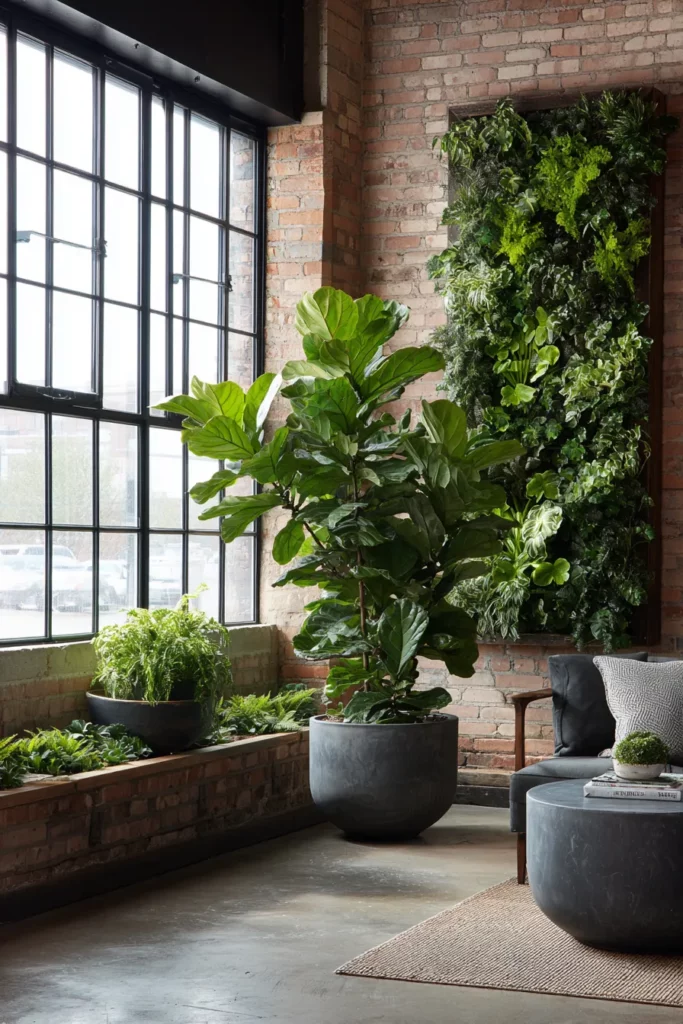
Living green walls or large-scale planters bring organic contrast to industrial materials. Install vertical gardens on brick walls or position tall plants—fiddle leaf figs, rubber plants, palms—in metal or concrete planters. This biophilic element softens edges while improving air quality and creating visual relief from hard surfaces.
Essential Elements Checklist
Here’s your foundation for a successful industrial loft living room:
- Architectural honesty: Exposed brick, visible ductwork, steel beams left visible
- Layered lighting: Ambient, task, and accent fixtures with dimming capability
- Textural contrast: Soft textiles (wool, velvet, linen) against hard surfaces
- Quality area rugs: Large enough to anchor furniture groupings and define zones
- Statement seating: Substantial sofas and chairs in leather, linen, or performance fabrics
- Mixed metals: Steel, iron, brass, or copper in fixtures and furniture frames
- Reclaimed wood: Tables, shelving, or accent pieces with visible grain and history
- Strategic greenery: Large plants in industrial-style planters for organic contrast
- Smart storage: Open shelving, vintage lockers, or metal cabinets for functional display
- Personal artifacts: Art, books, and objects that tell your story against the industrial canvas
Making It Your Own
Personal Touches That Matter
Industrial lofts can feel impersonal if styled from a catalog. Inject autobiography through collected objects, travel souvenirs, family heirlooms, and handmade pieces. Display them on open shelving or cluster them on coffee tables, creating vignettes that reveal who lives in this dramatic space.
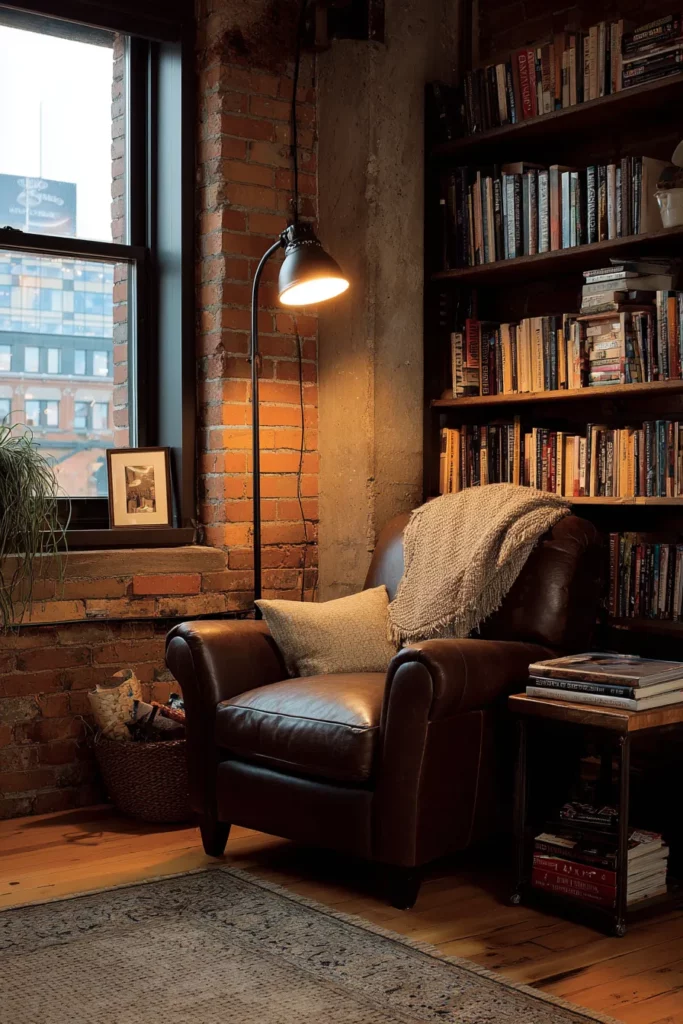
Books are both functional and decorative in lofts. Style them in multiple ways: stacked horizontally as side tables, lined vertically by color, displayed face-out on picture ledges. They add warmth, personality, and intellectual texture that softens industrial edges while inviting conversation.
Consider one unexpected element—something that shouldn’t work but does. Perhaps a vintage Persian rug in a space of jute and concrete, or a baroque mirror against exposed brick. This calculated surprise adds depth and prevents your space from feeling too curated or obvious.
Living Comfortably Long-Term
Think beyond aesthetics to daily functionality. In open lofts, sound management matters. Add acoustic panels disguised as art, heavy curtains that absorb noise, and upholstered furniture that dampens echo. Your beautiful space should also sound comfortable, not cavernous.
Storage challenges grow in open spaces without traditional closets. Invest in beautiful storage solutions—vintage trunks, metal lockers, open wardrobe systems—that organize while contributing to your design. Everything visible should be either beautiful or intentionally industrial.
Seasonal adaptations keep your loft comfortable year-round. Layer textiles heavily in winter—more throw blankets, heavier curtains, additional rugs. In summer, remove some layers, switch to linen slipcovers, and emphasize the coolness of concrete and metal. Your space should evolve with your comfort needs.
Conclusion: Your Industrial Sanctuary
An industrial loft living room isn’t about embracing coldness—it’s about celebrating contrast. The tension between hard and soft, rough and refined, vast and intimate creates spaces that feel both dramatic and deeply comfortable. When you honor the bones of your loft while layering in warmth, texture, and personality, you create something remarkable: a home that looks stunning and lives beautifully.
The beauty of industrial design lies in its honesty. There’s no pretense, no hiding, just materials and structure revealed in their authentic state. But authenticity extends beyond architecture—it’s also about creating a space that authentically reflects how you live, what you love, and who you are within these soaring walls and exposed beams.
Start with one corner. Layer a rug, add a reading chair, hang a pendant light, drape a throw. Feel how softness transforms raw space. Then expand outward, building your industrial sanctuary layer by layer, zone by zone, until your loft living room becomes the perfect balance of edge and embrace—utterly yours, undeniably beautiful.
Frequently Asked Questions
What makes an industrial loft living room different from other living spaces?
Industrial loft living rooms feature open floor plans, high ceilings (typically 10-14 feet), exposed architectural elements like brick walls and steel beams, and large windows often original to commercial buildings. Unlike traditional living rooms with defined walls, lofts require intentional furniture placement and zoning to create functional boundaries while maintaining the signature open, airy feel.
How can I make my industrial loft living room feel cozy and not cold?
Layer soft textures throughout—wool rugs over jute, velvet and linen cushions, chunky knit throws, and heavy curtains. Add warm lighting in multiple layers (table lamps, floor lamps, candles) rather than relying solely on overhead fixtures. Incorporate warm wood tones, brass or copper accents, and deep jewel-toned colors in upholstery to offset the coolness of concrete, metal, and brick.
What’s the difference between a hard loft and a soft loft?
Hard lofts are authentic conversions of former industrial buildings—warehouses, factories, or commercial spaces—retaining original features like exposed brick, concrete floors, and industrial windows. Soft lofts are newer constructions that mimic industrial aesthetics with decorative exposed pipes, faux brick, and high ceilings, but were purpose-built as residential spaces rather than converted from commercial use.
How do I create separate zones in an open loft living room?
Use area rugs to define different functional areas, position furniture perpendicular to walls to create implied boundaries, and employ open shelving units as permeable dividers. Lighting also creates zones—pendant fixtures and floor lamps illuminate specific areas, making large spaces feel more intimate. Consider changes in flooring material or low platform levels for additional visual separation.
What are the best furniture styles for an industrial loft living room?
Look for pieces with exposed construction and mixed materials—leather sofas with visible stitching, reclaimed wood tables on metal frames, and metal-framed chairs. Mid-century modern, vintage industrial, and contemporary minimalist styles all complement loft spaces. Choose substantial pieces with visual weight appropriate to high ceilings, and prioritize comfort alongside style since everything is visible in an open plan.