
Table of Contents
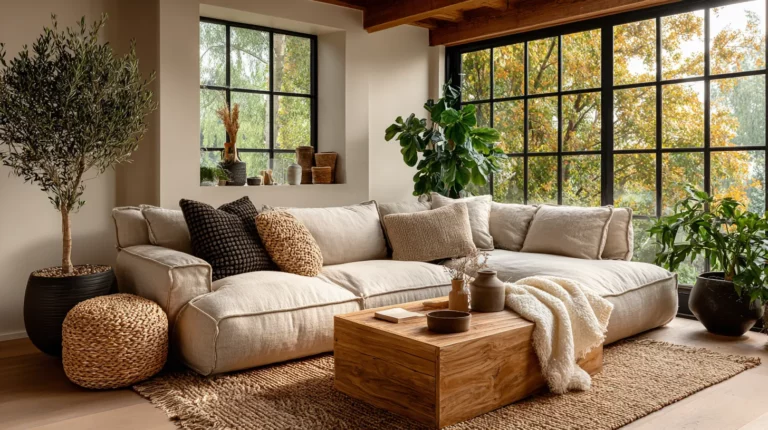
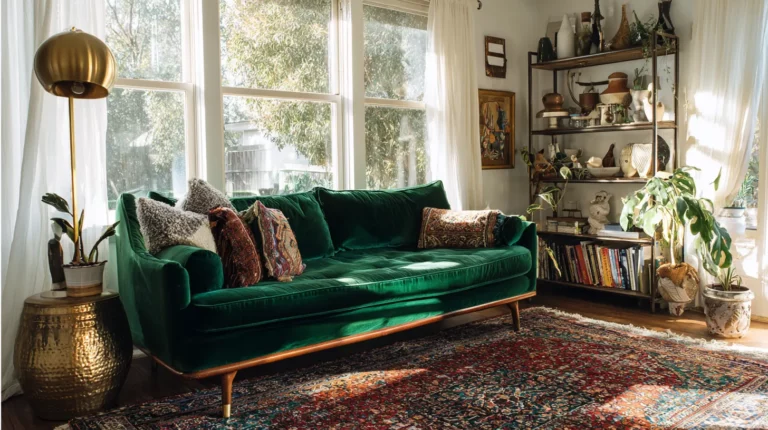
There’s something profoundly inviting about a bohemian chic living room—a space that whispers stories through every texture, pattern, and carefully chosen object. It’s the kind of room that makes you want to sink into a vintage-inspired armchair, pull a soft throw across your lap, and stay there for hours with a book and steaming tea.
Bohemian design isn’t about following rigid rules or chasing trends. Instead, it celebrates authenticity, handcrafted beauty, and the art of curating spaces that feel lived-in and loved. Whether you’re drawn to earthy neutrals, vibrant global textiles, or a blend of both, a boho living room becomes a reflection of your travels, your passions, and your unique creative spirit.
At ERYLIN, we believe your living room should feel like a sanctuary—a place where comfort meets artistry and every corner tells a part of your story. In this guide, we’ll walk you through the essential elements of bohemian chic design, from choosing the right textures and lighting to personalizing your space on any budget.
What Makes a Living Room Bohemian?
Bohemian chic is defined by a careful blend of natural materials, layered textures, eclectic patterns, and personal artistic touches that feel effortlessly collected rather than carefully curated. True boho doesn’t whisper; it speaks softly but with conviction, inviting you to mix and match without apology.
At its heart, bohemian design celebrates three core principles: natural authenticity, artistic expression, and comfort without compromise. A bohemian living room embraces imperfection, vintage finds, handmade elements, and global-inspired accents that tell a story of travel, creativity, and self-discovery.
The Five Pillars of Bohemian Design
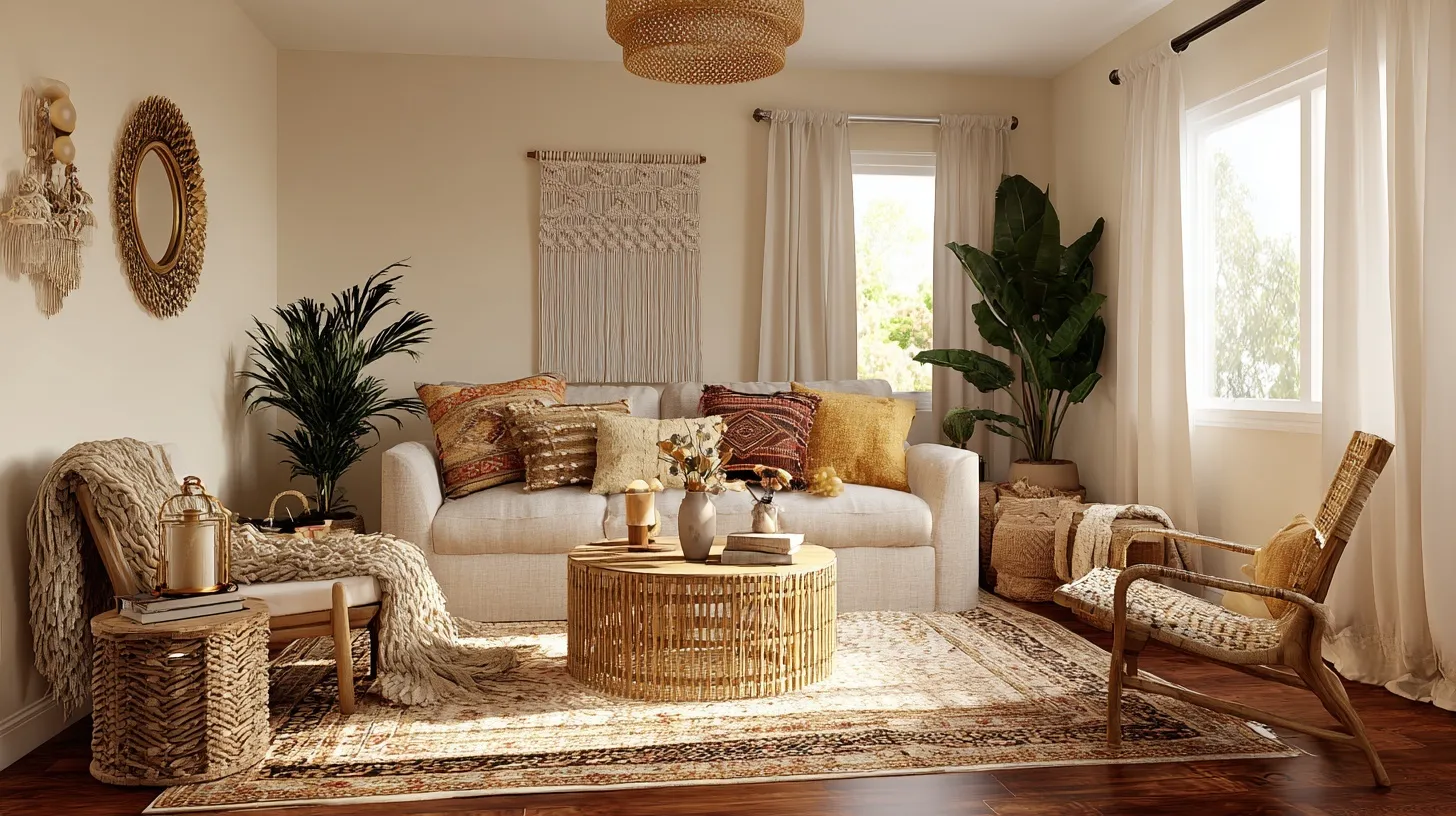
Texture Layering — Bohemian spaces are tactile and rich, combining soft woven fabrics, rough jute, smooth ceramics, and plush natural fibers. Think a chunky knit throw draped over a rattan chair, macramé wall hangings catching afternoon light, and layered rugs anchoring the seating area.
Neutral Base with Pops of Color — Start with warm, earthy tones—cream, beige, soft gray, warm white—then introduce color through textiles, artwork, and plants. This approach keeps your space calming while allowing personality to shine through.
Natural Materials — Wood, rattan, jute, linen, wool, and cotton form the foundation of boho style. These materials age beautifully and create warmth and visual interest without feeling cold or sterile.
Eclectic Global Patterns — Layer in tribal prints, ikat patterns, macramé details, and vintage textiles sourced from different cultures and time periods. The key is restraint; let patterns breathe and balance them with solid, neutral pieces.
Personal Collections and Vintage Finds — Bohemian rooms feel authentic because they feature meaningful objects: hand-painted vases, vintage books, travel souvenirs, artwork from emerging artists, and heirloom pieces passed down through generations.
Building Your Neutral Foundation
The magic of bohemian chic begins with a calm, neutral base that allows every other design element to flourish. Think of this as your canvas—neutral walls and large furniture pieces create a soothing backdrop while giving your artisanal accents room to breathe.
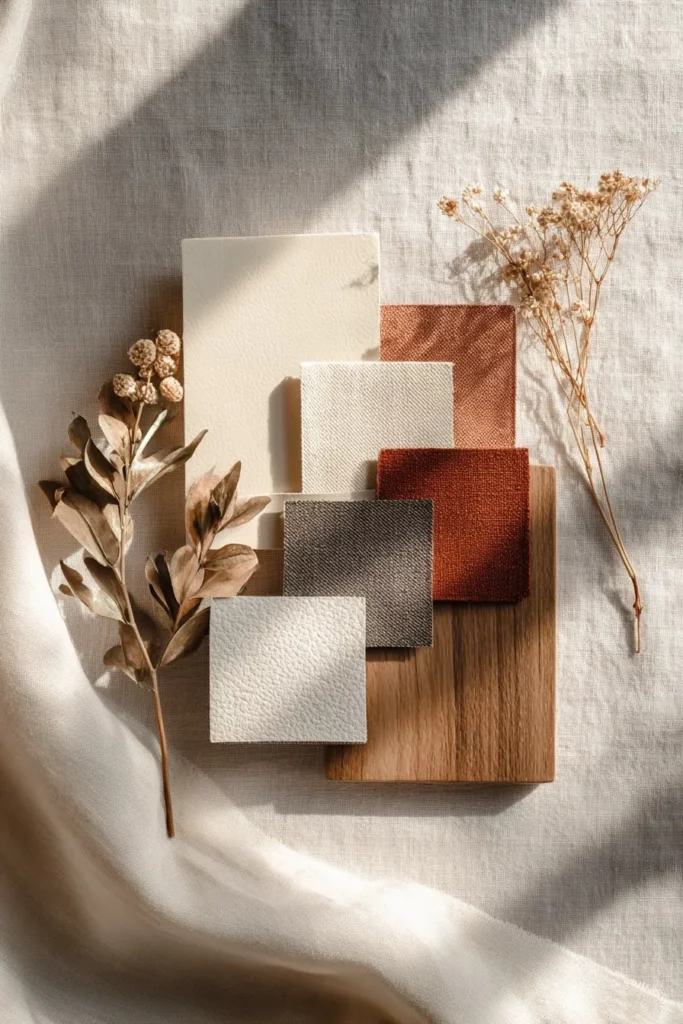
Paint your walls in warm whites, soft creams, warm grays, or pale terracotta that reflects light gently throughout the room. These neutral tones ground the space and make it feel larger, while naturally complementing wood tones and natural materials. Avoid stark white; instead, choose off-whites with warm undertones like ivory or eggshell that feel inviting rather than clinical.
Your large furniture pieces—the sofa, main chair, and media console—should also sit in this neutral palette. A cream linen sofa or a soft gray sectional becomes the breathing room your space needs, allowing you to layer visual interest through smaller, removable elements like pillows, throws, and rugs.
Layering Textures for Depth and Comfort
Texture is where bohemian design truly comes alive. A space that layers multiple textures feels dimensional, inviting, and genuinely comfortable rather than just beautifully decorated.
Start with your flooring. A jute or sisal area rug provides natural texture and grounds your seating area. Layer a smaller, patterned kilim or vintage Persian rug on top to add warmth and visual interest. This layering technique is essential to boho style—it prevents the space from feeling flat or one-dimensional.
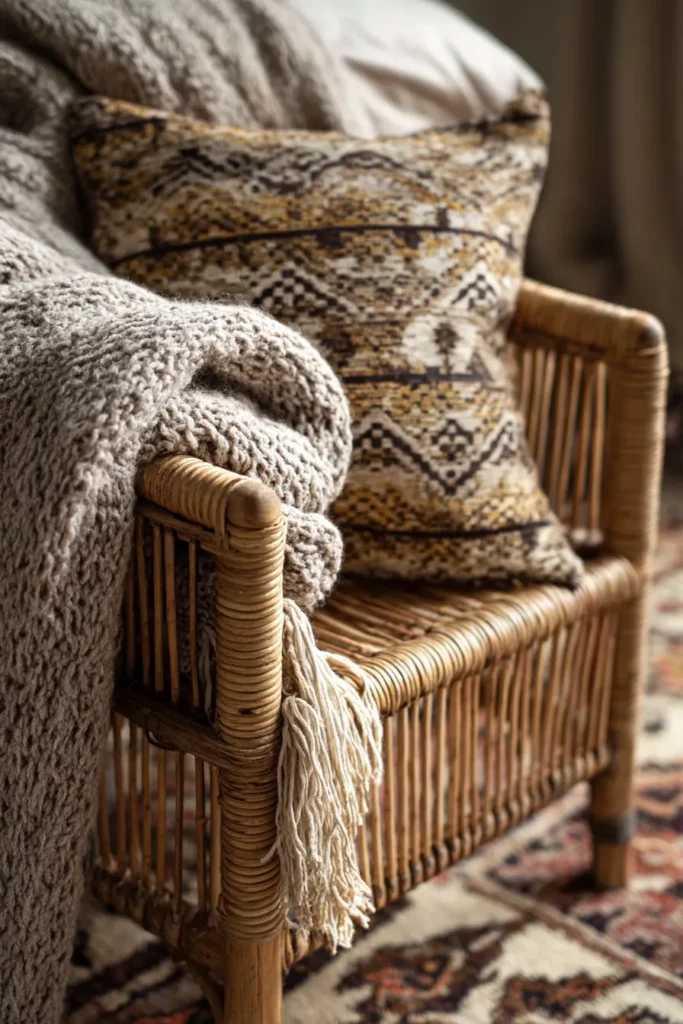
Next, think about your soft furnishings. A chunky knit throw drapes over the arm of your sofa, linen pillows in varying weaves nestle into corners, and a macramé wall hanging catches light behind your seating area. Mix smooth ceramic pieces with rough wooden elements; pair polished brass with unfinished brass. This contrast creates visual rhythm and prevents the space from feeling monotonous.
Textiles in bohemian rooms tell stories. Choose pillows in natural linens, hand-woven fabrics, and vintage textiles. If you source an authentic ikat pillow or a vintage kilim cushion, it becomes a conversation starter and a window into your design philosophy.
Lighting That Sets the Mood
Bohemian living rooms need lighting that feels warm, organic, and intentional. Harsh overhead lighting disrupts the calm, meditative quality that makes boho spaces so magnetic.
Layer your lighting with multiple sources at different heights. A brass or woven pendant light can hang above a side table, creating gentle pools of warm illumination. String lights or vintage Edison bulbs draped along a shelf add a whimsical, intimate quality. Lanterns with candles clustered on the floor or side table introduce warmth and movement through flickering light.
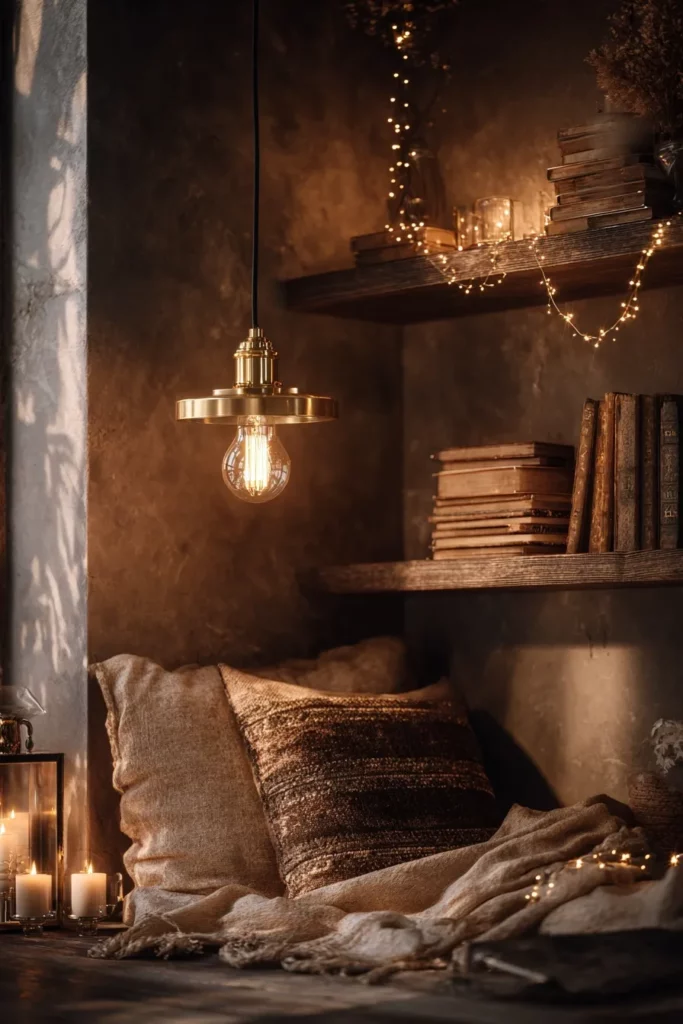
Aim for warm color temperatures—2700K or lower—that create that golden-hour feeling regardless of the time of day. Install dimmer switches to control ambiance throughout the day and evening. In bohemian spaces, lighting shouldn’t announce itself; instead, it should enhance the textures, colors, and artistry you’ve carefully gathered.
Bohemian Furniture Selection Guide
Large Seating Pieces
Your sofa or sectional should prioritize comfort and longevity over trends. Look for pieces in durable natural fabrics like linen or cotton canvas in neutral tones. Vintage or secondhand sofas often carry more character and authenticity than new pieces; their worn leather or faded fabric adds genuine soul to your space.
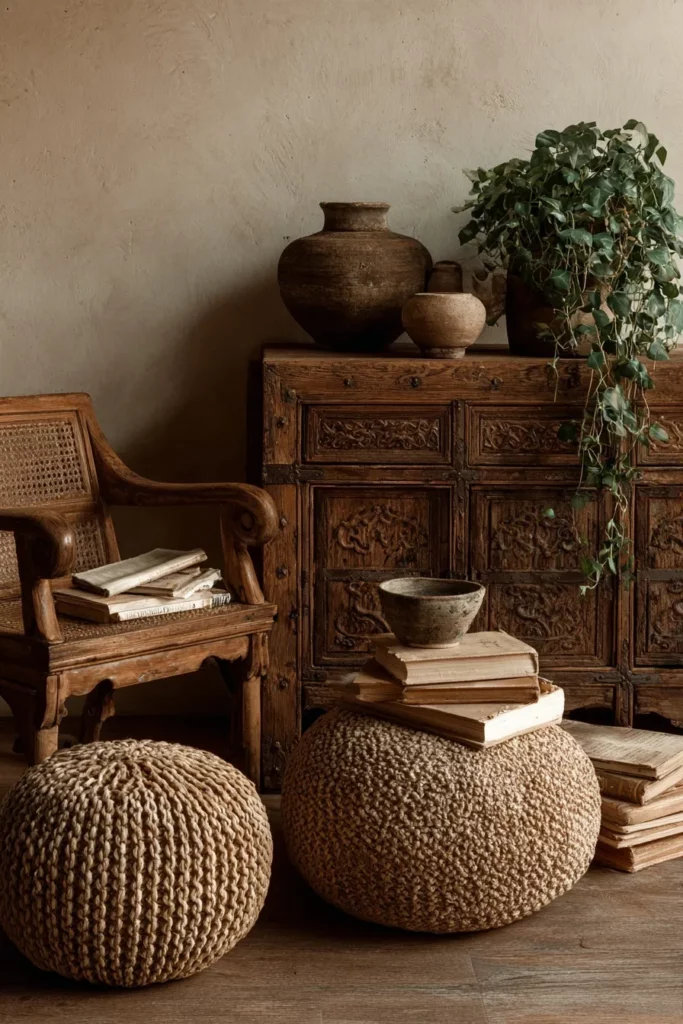
Pair your main sofa with accent chairs in rattan, wicker, or wood frames upholstered in soft natural textiles. These pieces should feel inviting—deep seats, soft cushions, and arms wide enough to curl up on. A vintage wingback chair recovered in linen or a low-slung rattan lounge chair complements boho aesthetics beautifully.
Coffee Tables and Storage
Choose low wooden coffee tables with natural finishes or reclaimed wood that shows grain and character. A carved wooden trunk can double as both storage and coffee table, adding authentic bohemian charm. Woven poufs or baskets serve as flexible seating and hidden storage for blankets, magazines, and personal items.
Consider floating shelves or vintage wooden étagères for displaying your curated collections without cluttering the floor. Bohemian spaces celebrate what you love, so don’t hide your books, plants, or art behind closed doors.
Adding Vintage and Thrifted Treasures
Vintage and secondhand pieces are the heart of authentic bohemian style. Hunt for mid-century wooden chairs, vintage rattan furniture, antique side tables, and one-of-a-kind accent pieces at local thrift stores, estate sales, or online marketplaces.
These pieces tell stories of their previous lives while adding genuine character that new furniture simply cannot replicate. A vintage macramé wall hanging, an antique brass mirror, or a set of mismatched ceramic side tables become focal points and conversation starters in your boho living room.
Personalizing Your Bohemian Space
The soul of your bohemian chic living room lives in personalization. This is where your space becomes distinctly yours rather than a generic interpretation of a style.
Display travel souvenirs from places you’ve explored: a woven basket from Marrakech, a painted plate from Portugal, or textile art from Southeast Asia. Hang artwork from emerging artists or create a gallery wall featuring prints, paintings, and photographs that move you emotionally.
Incorporate handmade elements: DIY macramé wall hangings, painted plant pots, or hand-bound journals stacked on a shelf. Your own creative contributions, no matter how humble, add authenticity and intentionality that speaks to the heart of bohemian philosophy.
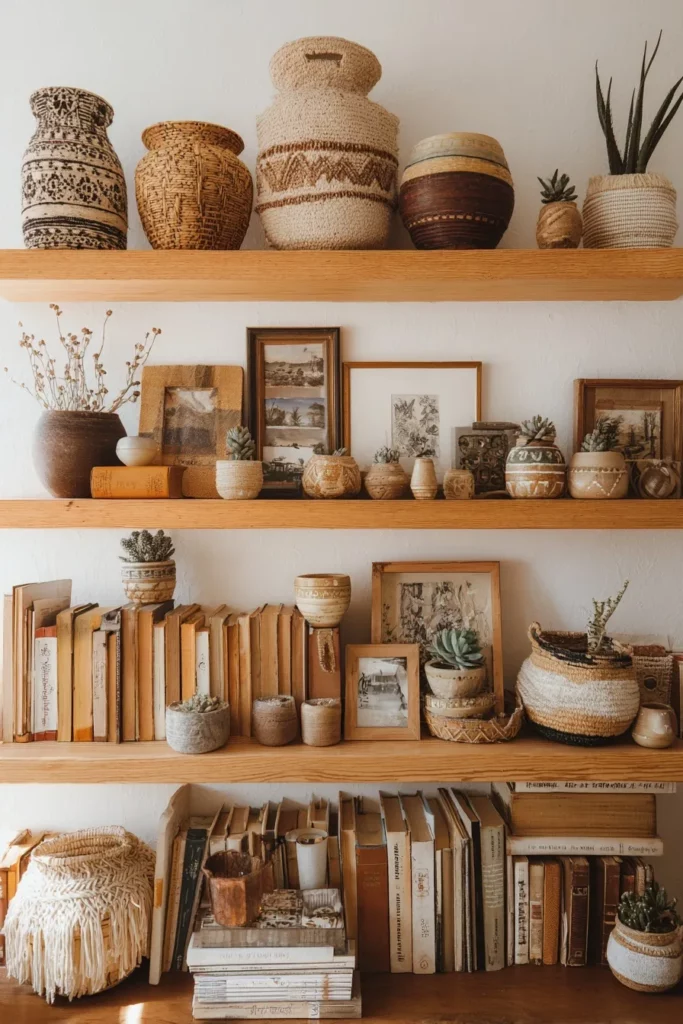
Create a reading nook or meditation corner with layers of comfortable seating, soft lighting, and meaningful objects within arm’s reach. This designated personal sanctuary reinforces the purpose of your boho living room: to nurture your spirit and celebrate who you are.
Plants: Living Bohemian Accents
Plants are non-negotiable in bohemian design. They introduce life, movement, and connection to nature while softening hard edges and filling vertical space.
Mix large statement plants like fiddle leaf figs or monstera deliciosas in corners with smaller succulents on shelves and trailing pothos draped from hanging planters. Vary pot styles—ceramic, woven baskets, vintage containers—to maintain visual interest while keeping a cohesive boho aesthetic.
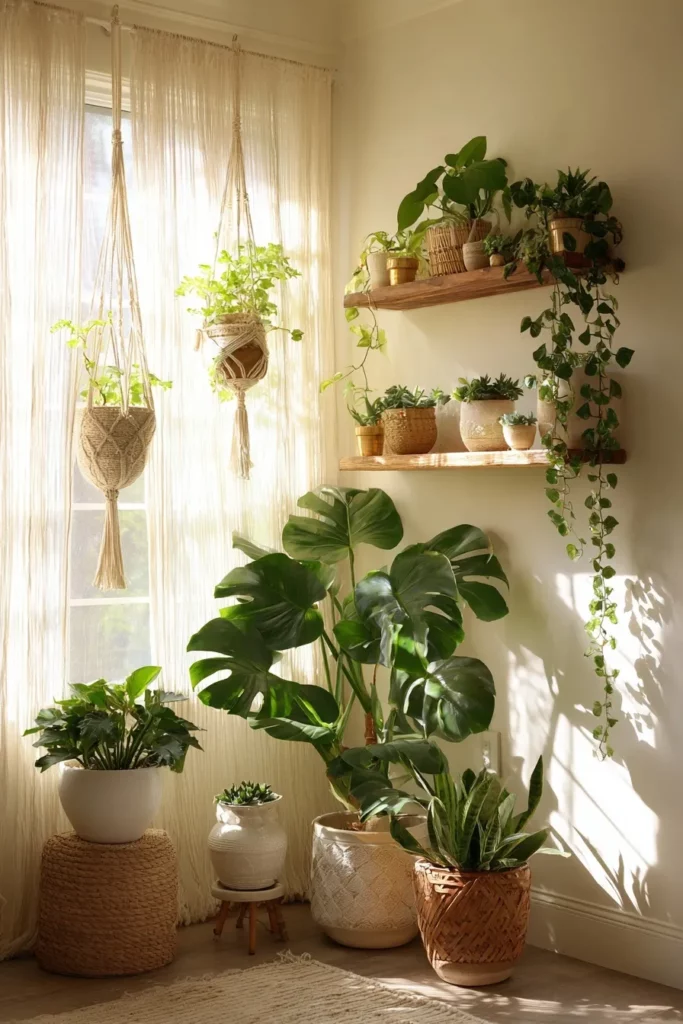
Group plants of varying heights at different points throughout the room to create layers. Place them near windows where they’ll thrive and cast beautiful shadows through the afternoon light. Bohemian spaces feel alive, and plants are essential to that vitality.
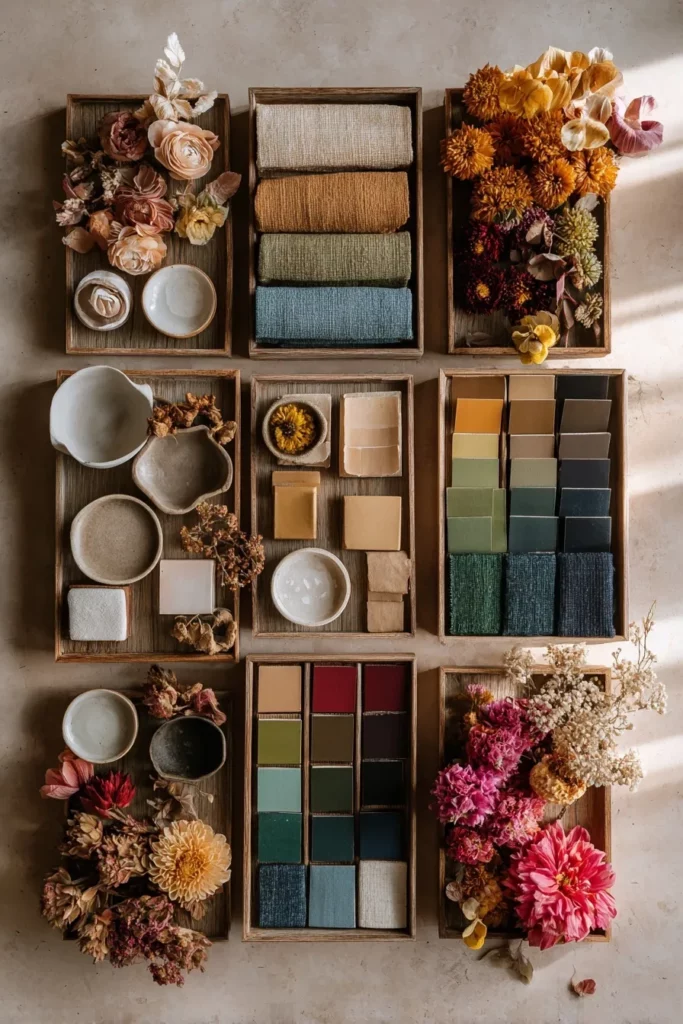
Color Palettes for Every Boho Mood
| Palette Name | Primary Colors | Accent Colors | Best For |
|---|---|---|---|
| Earthy Warmth | Cream, warm taupe, terracotta | Burnt orange, deep olive | Cozy, grounded spaces |
| Cool Minimalist Boho | Soft gray, ivory, pale blue | Sage green, dusty rose | Modern minimalist blending |
| Tropical Boho | Cream, soft white, sandy beige | Coral, turquoise, lime green | Warm climates, energetic moods |
| Jewel Tone Richness | Warm white, soft gray | Emerald, sapphire, deep plum | Statement-making, artistic spaces |
| Neutral Global | Cream, beige, soft taupe | Terracotta, warm brown, mustard | Timeless, versatile collections |
Budget-Friendly Bohemian Chic
Creating a bohemian living room doesn’t require a significant investment. Boho design philosophy actually celebrates resourcefulness, upcycling, and finding beauty in unexpected places.
Under $500: Start with a neutral paint color, layer affordable rugs from discount retailers, add budget-friendly woven poufs and baskets for texture, and source secondhand furniture and decor. String lights, DIY macramé projects, and thrifted artwork complete the look without breaking your budget.
$500–$1,500: Invest in a quality neutral sofa, add vintage wooden furniture pieces from local estate sales, purchase better-quality textiles and throws, and include more substantial plants and pottery. Your investment focuses on pieces that anchor the space.
$1,500+: Allocate budget toward a beautiful main sofa, quality vintage or artisan-made accent furniture, authentic global textiles and artwork, and professional touches like custom shelving or lighting fixtures.
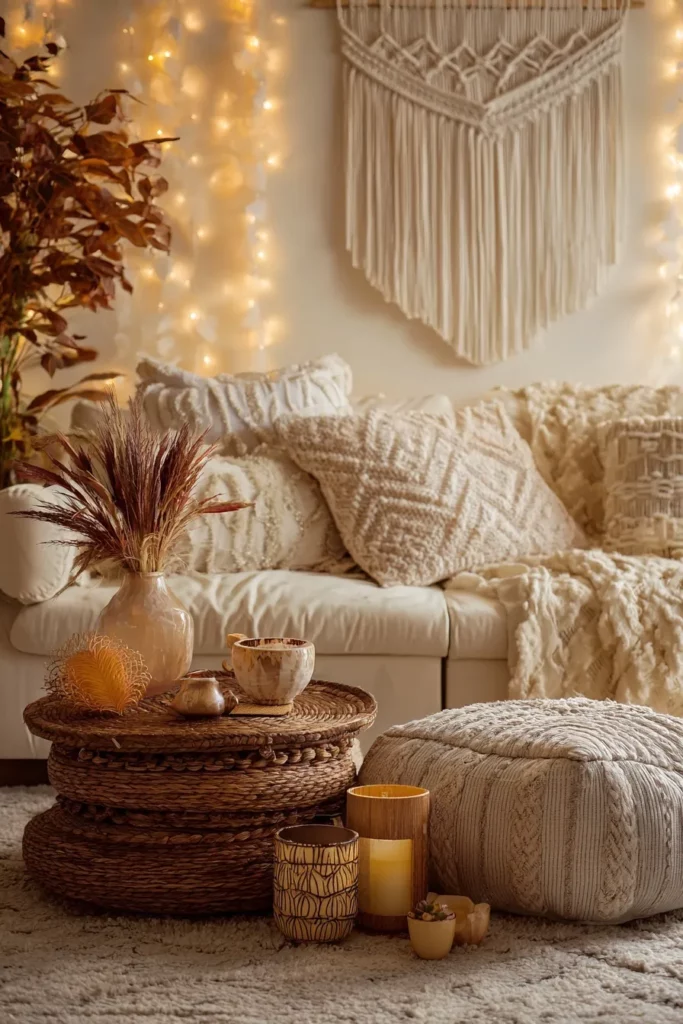
The key to budget-conscious boho styling is patience and intentionality. Hunt for pieces slowly, wait for sales, explore secondhand markets, and DIY elements like macramé wall hangings or painted pottery.
Modern Bohemian vs. Traditional Bohemian: Understanding the Difference
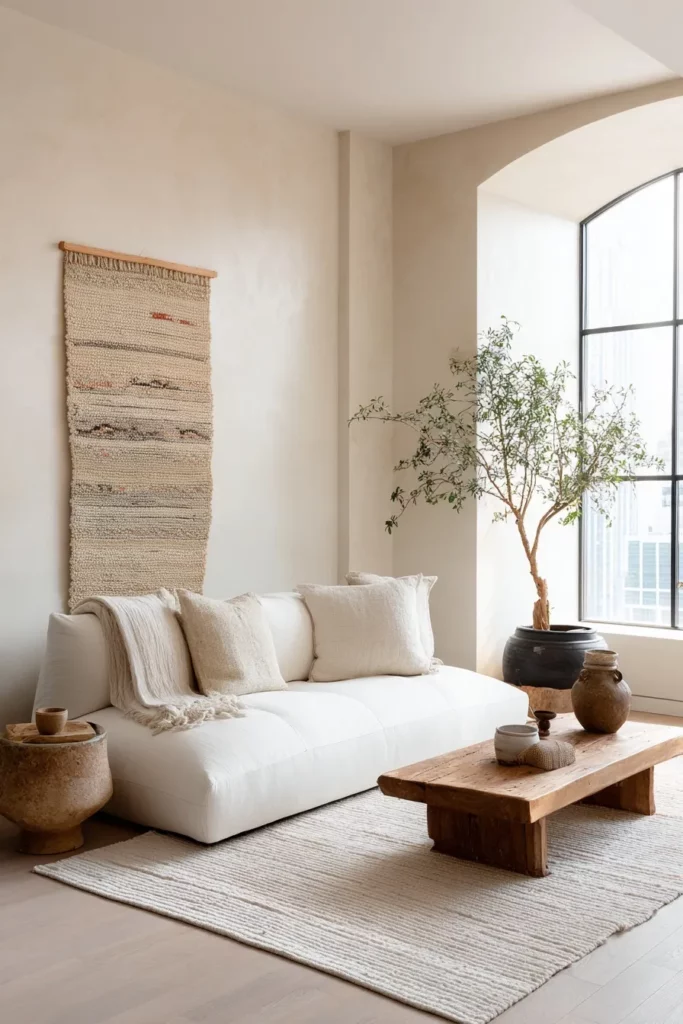
Modern Bohemian (Boho-Chic) blends bohemian aesthetics with contemporary minimalism and clean lines. It’s lighter, airier, and more edited—think fewer objects chosen more carefully, simpler color palettes, and a focus on negative space alongside texture and warmth.
Traditional Bohemian embraces maximalism, layering more objects, patterns, and colors. It celebrates abundance, artistic expression, and the collected nature of spaces that have grown organically over time. Colors may be richer, patterns more adventurous, and the overall feel more eclectic and traveled.
Most modern interpretations live somewhere between these two poles—enough restraint to feel intentional and calm, enough personality to feel authentically lived-in and creative.
Combining Bohemian with Minimalist Style
You don’t have to choose. Many contemporary spaces beautifully blend boho warmth with minimalist principles for a balanced, sophisticated result.
Keep walls and large furniture in soft, neutral tones with clean lines. Select fewer, more carefully chosen accent pieces rather than layering many items. Embrace negative space around your curated objects so each piece—the vintage chair, the global textile, the ceramic vase—receives proper visual attention.
This hybrid approach works beautifully for those who love boho’s warmth and authenticity but appreciate minimalism’s breathing room and intentionality. Your space feels calm and collected rather than chaotic or overstuffed.
Small Space Bohemian Living Rooms
Bohemian design adapts beautifully to smaller spaces when you focus on vertical layering rather than horizontal spreading.
Mount floating shelves to display collections and reduce floor clutter. Use tall plants to draw the eye upward and make ceilings feel higher. Choose multifunctional furniture like ottomans that offer seating, storage, and tabletop surface. Layer rugs strategically to define zones without physically dividing the space.
Select fewer, larger statement pieces rather than many small items. A substantial vintage chair or bold woven wall hanging commands attention and feels intentional in a compact room. Mirrors with ornate frames reflect light and create the illusion of more space while adding boho character.
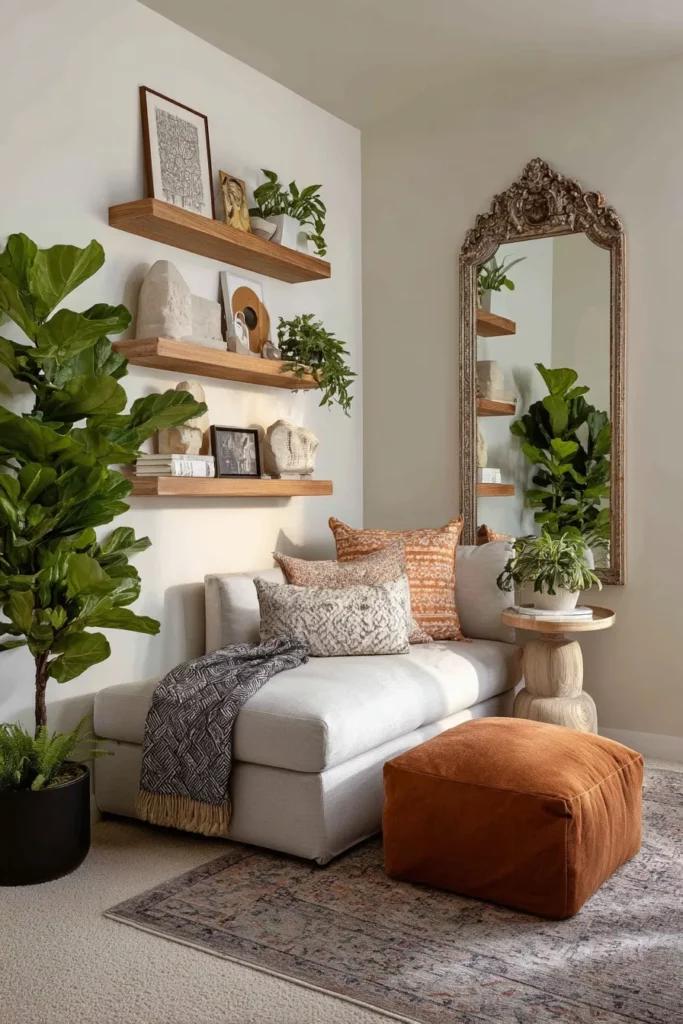
Keep your color palette consistent and limited to prevent the space from feeling visually overwhelming. Three to four colors, including your neutral base, maintains calm in a smaller footprint.
Creating Your Bohemian Checklist
- Walls & Foundation: Paint in warm neutral; add one or two pieces of meaningful artwork
- Flooring: Layer 2–3 rugs in complementary patterns and textures
- Main Seating: Invest in a comfortable, neutral-toned sofa or sectional
- Textiles: Add throws, pillows in natural fabrics and varying weaves
- Lighting: Incorporate layered lighting with warm color temperatures
- Plants: Include at least 4–5 plants at varying heights
- Vintage/Thrifted Pieces: Hunt for 2–3 statement furniture or decor items
- Wall Texture: Hang macramé, woven tapestries, or framed textiles
- Personal Collections: Display travel souvenirs, artwork, or meaningful objects
- Negative Space: Allow breathing room around larger pieces
Your Bohemian Journey Begins Here
A bohemian chic living room isn’t something you create all at once; it’s a space that grows and evolves with you. Each vintage find, each plant added, each personal collection displayed becomes part of your room’s story and your own creative journey.
Start with your foundation—neutral walls, a comfortable sofa, warm lighting—then slowly layer in textures, patterns, plants, and personal touches. Be patient with yourself and intentional with your choices. Your boho living room should reflect not what magazines tell you to like, but what genuinely moves your heart.
At ERYLIN, we believe the most beautiful spaces are those that feel authentically you—spaces where creativity flows freely, where comfort and artistry intertwine, and where every object tells a story worth remembering. Your bohemian chic living room is your sanctuary, your creative expression, and your invitation to live beautifully, intentionally, and truly.
Frequently Asked Questions
What is the difference between bohemian and eclectic décor?
Bohemian design follows a philosophy—it celebrates natural materials, warmth, texture, and personal authenticity within a cohesive aesthetic. Eclectic design mixes styles and periods freely without a connecting philosophy. A bohemian room feels intentionally collected; an eclectic room celebrates the unexpected combinations themselves.
How do you combine minimalist and bohemian styles?
Focus on fewer, more carefully chosen pieces. Use a clean, neutral foundation with minimal wall decor, but layer textures in your textiles and add plants for organic warmth. Choose 3–4 statement boho pieces rather than many items. This creates a calm, edited space that still feels warm and authentic.
Can bohemian chic work in small apartments?
Absolutely. Use vertical space with floating shelves and tall plants, choose multifunctional furniture, layer rugs to define zones, and keep your color palette consistent. Fewer, larger statement pieces feel more intentional in compact spaces than many small items.
What makes a living room bohemian?
A bohemian room combines natural materials, layered textures, eclectic patterns, warm lighting, and personal meaningful objects. It celebrates handcrafted beauty, vintage finds, global influences, and the authentic story of how you live rather than following design rules.
What is modern bohemian called?
Modern bohemian is often called “boho-chic”—a contemporary interpretation that blends bohemian warmth and artistry with minimalist principles like clean lines, edited color palettes, and intentional negative space. It’s lighter and more refined than traditional bohemian style.