
Table of Contents
The living room has always been more than four walls and a sofa. It’s where morning light spills across your favorite chair, where conversations linger over coffee, where you sink into softness after long days. In 2025, this gathering heart of the home is evolving—not with loud statements, but with thoughtful gestures that honor both beauty and belonging.
We’re moving away from trends that dictate and toward choices that reflect. The art on your walls tells your story. The textures beneath your fingertips invite you to stay awhile. Even the way light moves through your space feels intentional, curated, alive.
This year brings a beautiful balance: bold jewel tones paired with natural materials, sculptural furniture softened by organic shapes, personalized galleries that celebrate what matters to you. Whether you’re working with a sun-drenched loft or a cozy corner apartment, these trends adapt to your life, not the other way around.
Let’s explore how to transform your living room into a space that doesn’t just look beautiful—but feels like home.
The Return of Warmth: Earthy Browns and Natural Materials
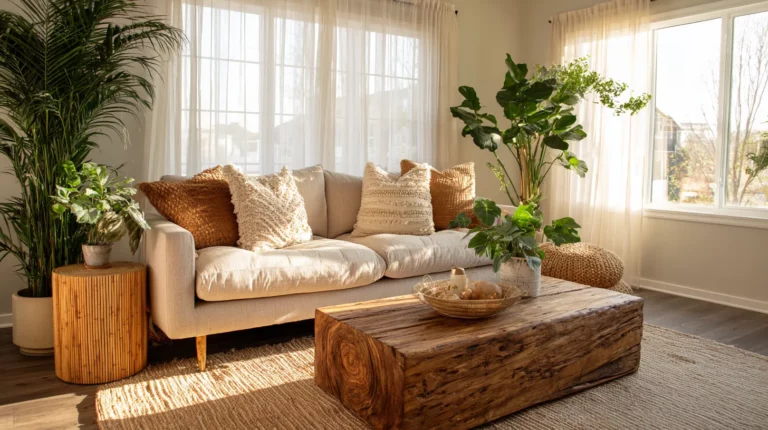
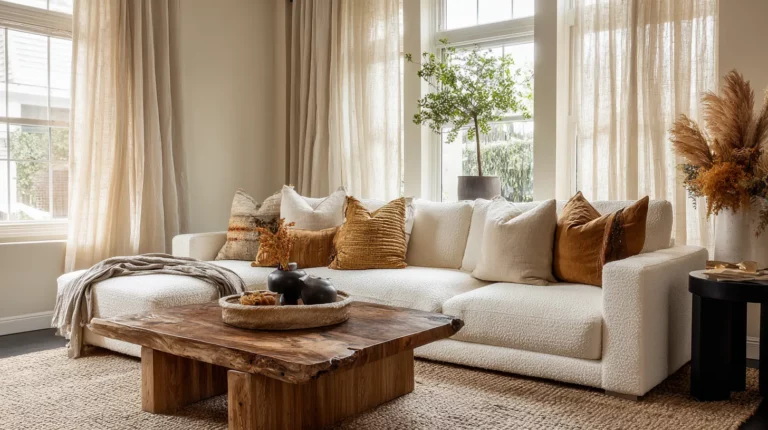
Rich, grounding tones are replacing the cool grays of years past. Think chocolate leather, terracotta clay, warm walnut wood—colors that feel like they’ve been borrowed from the earth itself. These shades create an instant sense of comfort, wrapping your space in organic warmth that never feels trendy or temporary.
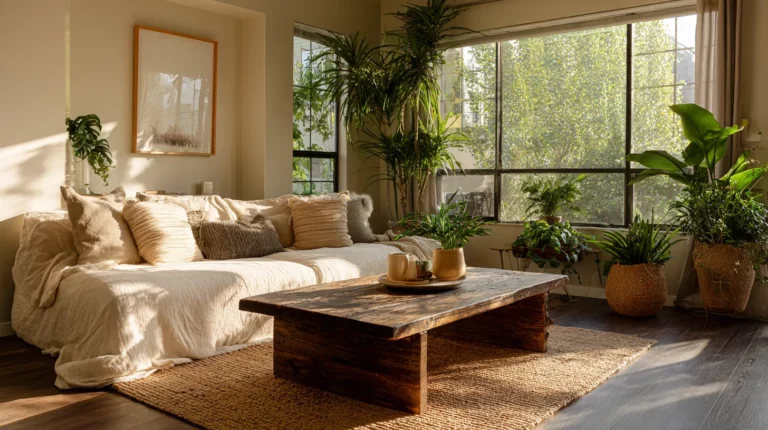
Natural materials are the foundation of this movement. Rattan coffee tables, jute rugs underfoot, linen slipcovers that soften with every wash—these elements bring texture and authenticity into your home. They age beautifully, developing character rather than showing wear.
Sustainability meets style in this trend. Reclaimed wood shelving tells stories through its grain. Cork wall panels add acoustic warmth while reducing environmental impact. Bamboo furniture grows back quickly, making it both renewable and resilient. When you choose these materials, you’re not just decorating—you’re making gentle decisions that honor the world beyond your windows.
Small Space Solutions with Natural Elements
Working with limited square footage? Natural materials are your secret weapon. A single jute rug defines your seating area without visual heaviness. Wall-mounted rattan shelves provide storage while keeping floor space open. Cork tiles on one accent wall add warmth and texture without overwhelming a compact room.
Consider vertical gardens using sustainable planters—they bring biophilic design into tight quarters while improving air quality. The eye travels upward, making ceilings feel higher and rooms feel more expansive.
Jewel Tones Meet Subtle Sophistication
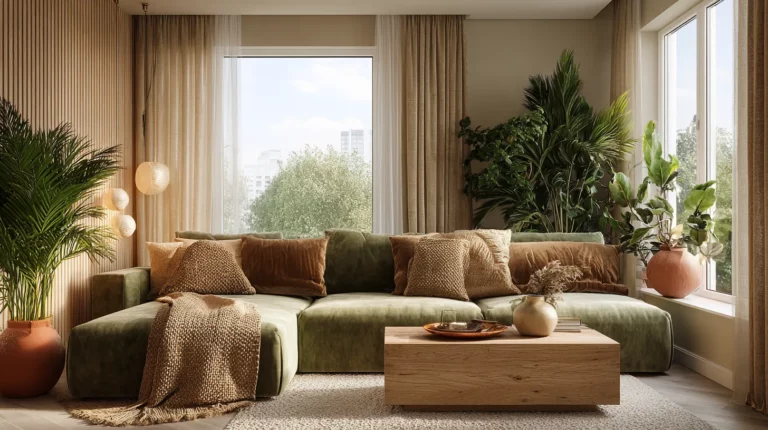
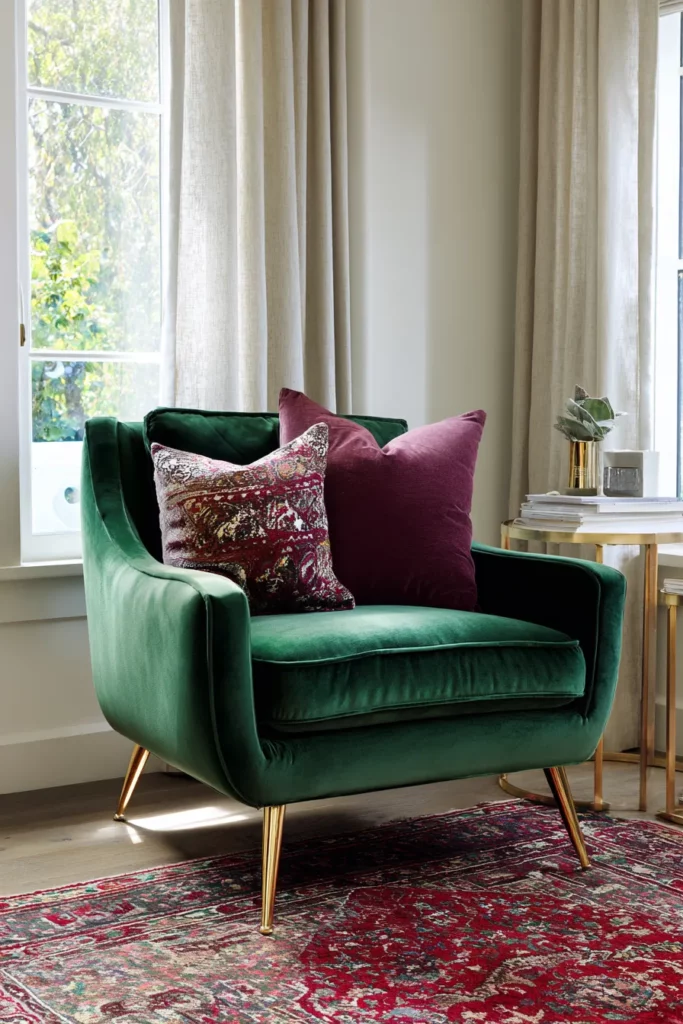
Deep emerald, sapphire blue, and rich garnet are making sophisticated appearances in living rooms that once played it safe with neutrals. But this isn’t maximalism run wild—it’s jewel tones used with restraint and intention. A single velvet armchair in forest green. Throw pillows in deep amethyst. A hand-painted ceramic vase catching afternoon light.
These colors work because they’re paired with calming backgrounds. Imagine sage green walls hosting a gallery of art in gilded frames. Picture a cream sofa anchored by a Persian rug where ruby reds dance with midnight blues. The jewel tones become treasures within the space, not the entire story.
Layering is key here. Start with a neutral foundation—warm whites, soft taupes, gentle beiges. Then introduce jewel tones through easily changeable elements: textiles, artwork, decorative objects. This approach lets you experiment with bold color while maintaining the flexibility to shift with seasons or moods.
Budget-Friendly Jewel Tone Integration
You don’t need to invest in expensive furniture to embrace this trend. Hunt for vintage velvet cushions at thrift stores—they often cost less than new synthetic versions and carry more character. DIY dye projects transform plain cotton curtains into custom jewel-toned treatments. Paint is your most affordable tool: one accent wall in deep teal changes everything while keeping costs minimal.
Frame fabric swatches in jewel tones from remnant bins—instant affordable art that looks intentionally curated.
Curved Furniture and Sculptural Forms
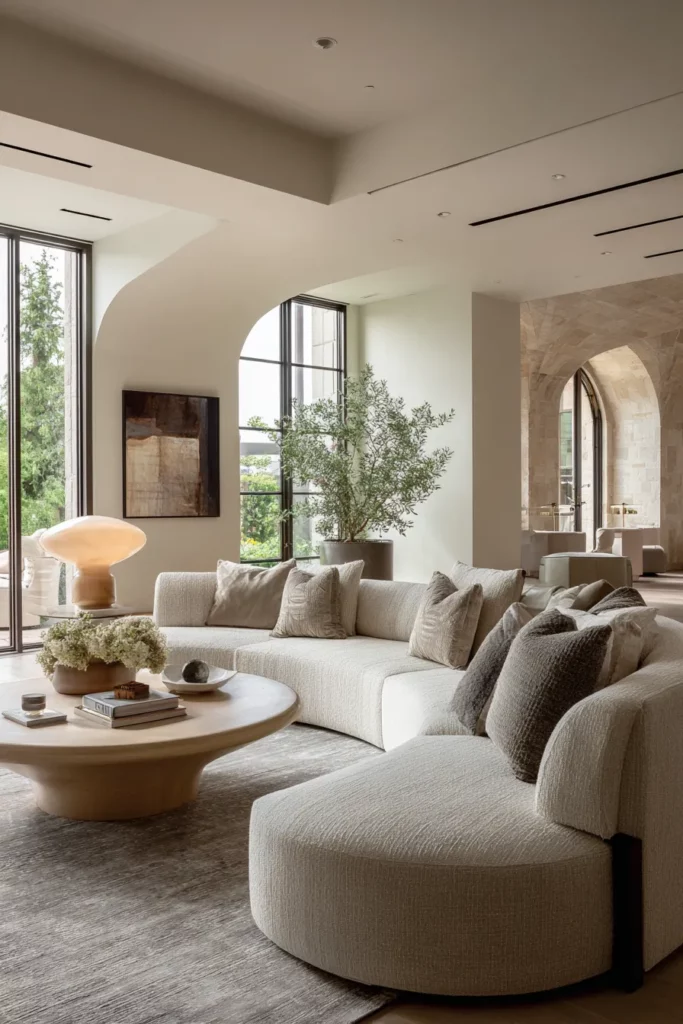
The hard edges are softening. Curved sofas, rounded coffee tables, and organic-shaped chairs are transforming living rooms into spaces that feel more human, more inviting. These pieces don’t just look beautiful—they change how we move through and interact with our homes.
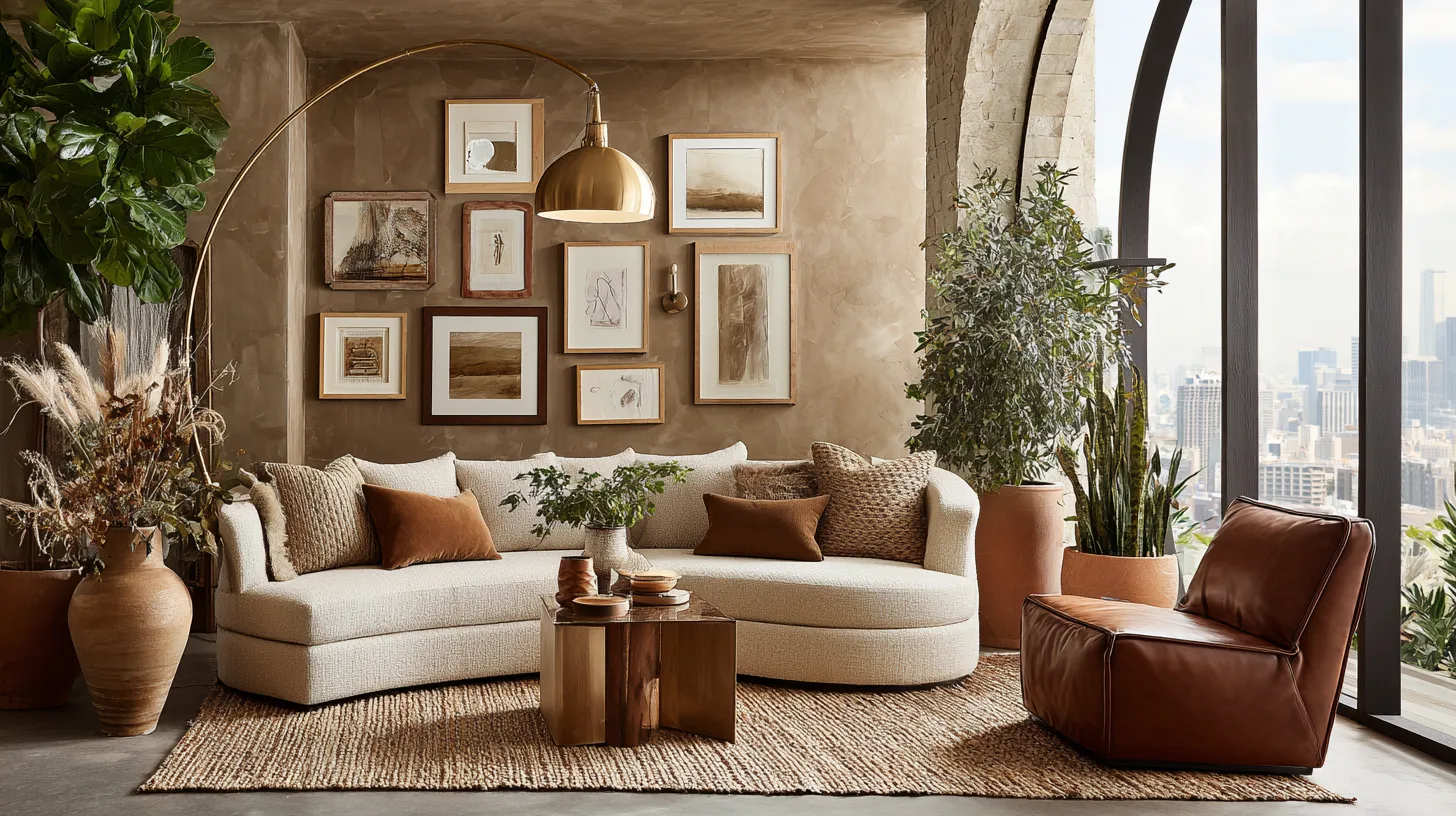
A kidney-shaped sofa creates natural conversation areas without harsh corners. An oval coffee table with sculptural legs becomes functional art. Even smaller touches matter: a round mirror instead of rectangular, drum side tables instead of square. Each curve softens the room’s energy, making it feel more restful and less rigid.
Sculptural furniture serves double duty—form and function dancing together. A chair that looks like modern art but cradles your body perfectly. A lighting fixture that’s essentially a sculpture casting beautiful shadows. These pieces justify their presence through both utility and artistry.
Adapting Curves to Different Room Sizes
In large living rooms, a curved sectional can define zones without blocking sightlines—perfect for open-concept spaces. For smaller rooms, choose one curved statement piece like a barrel chair paired with streamlined furniture. The single curve draws the eye without overwhelming limited square footage.
Multi-functional curved furniture works wonders in tight quarters: a rounded ottoman that serves as coffee table, extra seating, and storage keeps your space flexible and flowing.
Personalized Art Displays That Tell Your Story
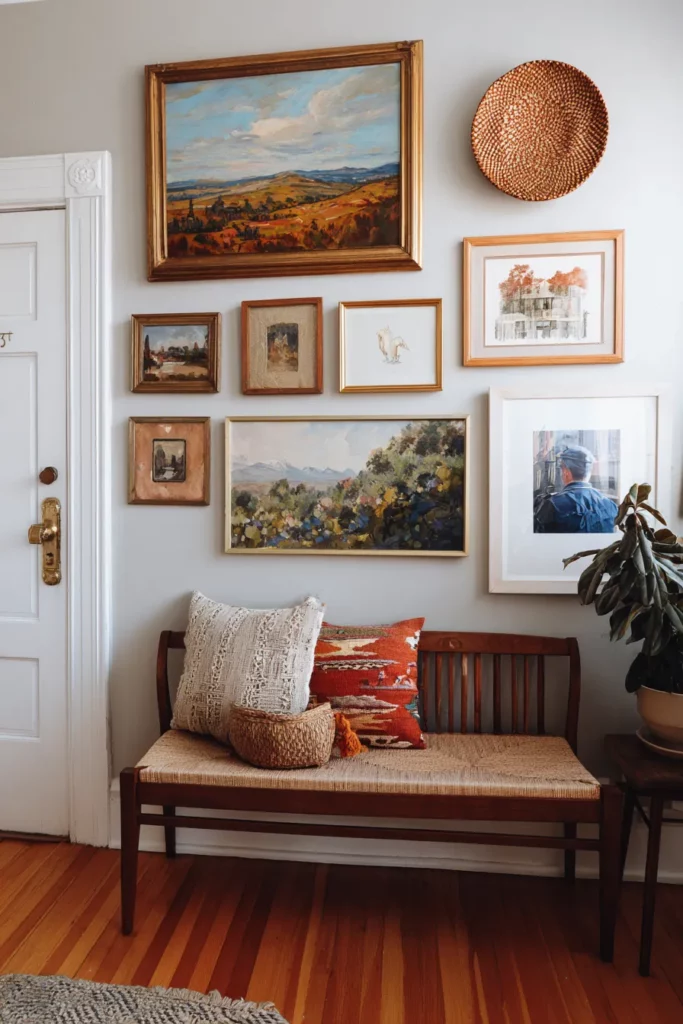
Gallery walls are evolving beyond matchy-matchy frames. Today’s art displays celebrate eclecticism—mixing mediums, sizes, styles, and even eras. Your grandmother’s vintage landscape hangs beside abstract prints from emerging artists. Family photos in mismatched frames share space with woven textiles and ceramic plates displayed as art.
This trend is deeply personal. Instead of buying complete wall art sets, you’re encouraged to collect slowly, choosing pieces that resonate with your experiences and values. A photograph from your travels. A painting from a local artist’s studio. A child’s drawing professionally framed. Each piece carries meaning, making your living room genuinely yours.
Creating a cohesive gallery wall doesn’t require design school training. Start by choosing a color palette—even disparate pieces feel unified when they share similar tones. Vary your frame styles but keep them within a mood (all warm woods, or mixed metals, or painted finishes). Lay everything out on the floor first, photographing different arrangements until one feels right.
Step-by-Step Gallery Wall Creation
Step 1: Gather more pieces than you need—having options helps during arrangement.
Step 2: Cut paper templates matching your frame sizes and tape them to the wall, playing with composition without putting holes everywhere.
Step 3: Maintain 2-3 inches between frames for breathing room.
Step 4: Start with your largest or most meaningful piece, positioning it slightly off-center for visual interest.
Step 5: Build outward, balancing visual weight rather than achieving perfect symmetry.
Don’t forget vertical space—extending your gallery from mid-wall to ceiling makes rooms feel taller while maximizing impact.
Textured Walls: Beyond Plain Paint
Walls are becoming tactile experiences. Limewash finishes that shift in the light. Clay plasters with organic irregularities. Textured wallpapers that beg to be touched. These surfaces add depth and dimension that flat paint can never achieve, transforming walls from backgrounds into active participants in your design.
The beauty of textured walls lies in their imperfection. Venetian plaster catches light differently throughout the day, creating subtle dramas. Grasscloth wallpaper introduces natural fibers and gentle variations. Even DIY techniques like rag rolling or sponging (yes, they’re back, but refined) add character without requiring professional installation.
Clay-inspired textures are particularly trending—think earthy, handmade finishes that connect interiors to ancient building traditions. These materials are often naturally antibacterial, regulate humidity, and improve indoor air quality. Function meets beauty in the most elemental way.

Accessible Textured Wall Options
If you’re renting or hesitant about permanent changes, removable textured wallpaper has evolved beautifully. Peel-and-stick options now include realistic grasscloth, linen weaves, and even three-dimensional patterns. For owned homes on a budget, texture paste applied with palette knives creates custom patterns at minimal cost—just practice your technique on poster board first.
One accent wall in texture makes maximum impact with minimum investment and effort.
Layered Lighting: Creating Atmosphere at Every Hour
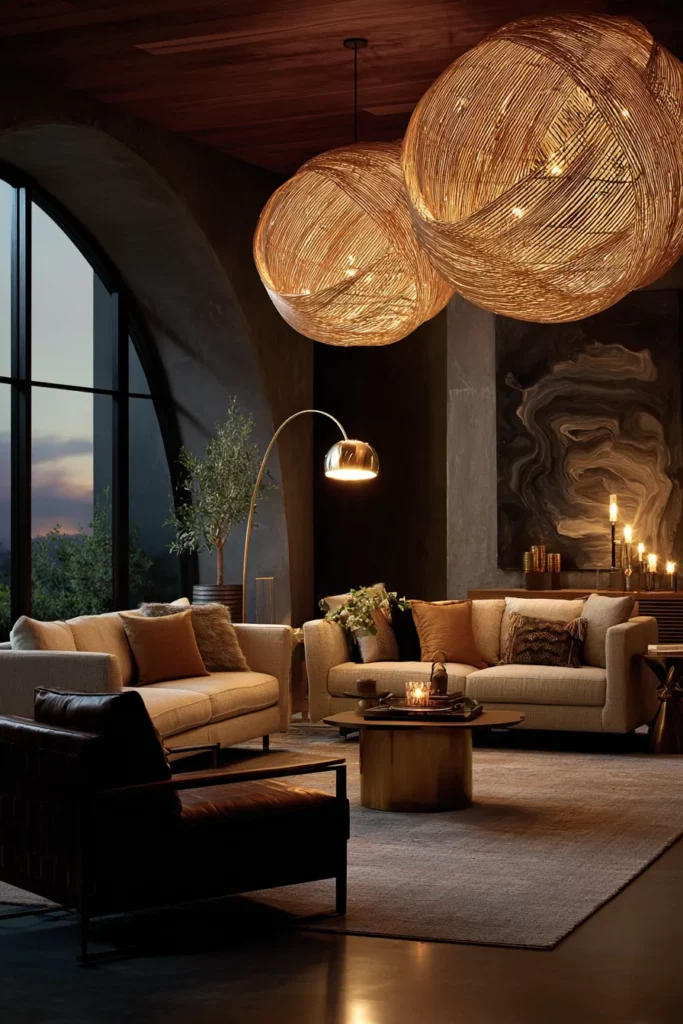
Good lighting design operates on three levels—ambient, task, and accent. Your living room needs all three, layered thoughtfully, to function beautifully from morning coffee through late-night reading. Overhead fixtures provide general illumination. Table and floor lamps add targeted light where you need it. Accent lighting highlights art, architecture, or treasured objects.
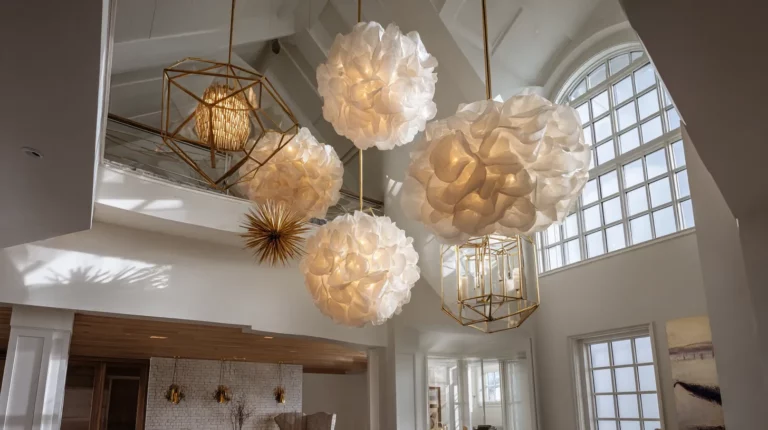
Statement lighting fixtures have become sculptural centerpieces. A woven pendant that casts intricate shadows. A brass arc lamp that curves gracefully over your seating area. These pieces work even when switched off, adding visual interest and personality to your space.
Dimmers are non-negotiable in 2025 living rooms. They let you adjust mood and energy consumption, creating bright workspaces by day and intimate gathering spots by evening. Smart bulbs take this further, allowing you to adjust color temperature—cooler light for morning energy, warmer tones as day fades into night.
Lighting Solutions for Small Spaces
Skip the large chandelier in compact rooms—it overwhelms the space and hangs at awkward heights. Instead, use multiple small-scale sources: wall sconces that save floor space, LED strips behind furniture creating ambient glow, slim floor lamps that tuck into corners. This distributed approach prevents shadows while making small rooms feel larger and more intentionally designed.
Mirror placement opposite lamps doubles their effective light output—ancient decorator wisdom that never stops working.
Biophilic Design: Bringing the Outside In
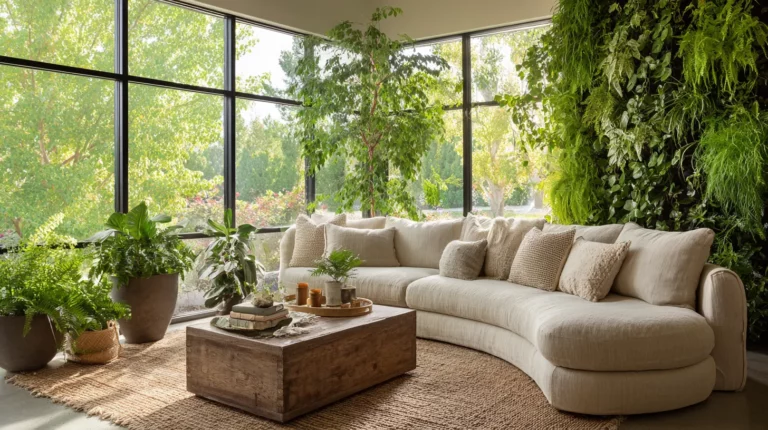
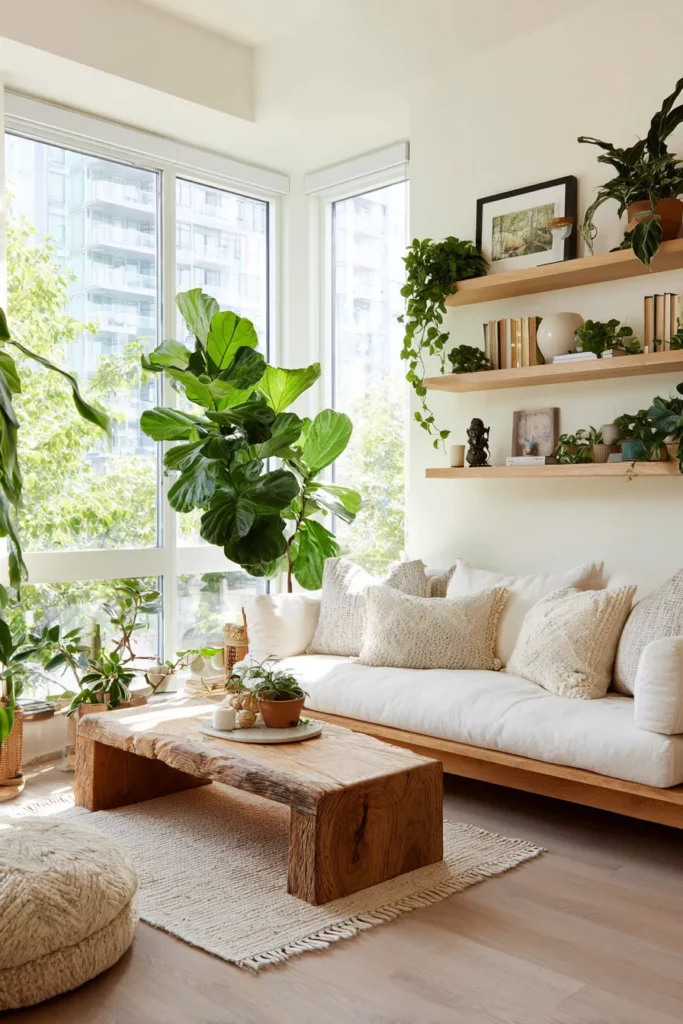
Humans crave connection to nature—biophilic design simply acknowledges this truth and works with it. It’s more than adding houseplants (though those help). It’s about incorporating natural materials, maximizing natural light, using organic shapes, and creating visual connections to the outdoors.
Large windows become focal points rather than being hidden behind heavy drapes. Natural wood furniture with visible grain patterns reminds us of forests. Stone accents echo geological formations. Even your color palette can embrace nature: soft greens, warm browns, sky blues, stone grays.
Living walls or vertical gardens take biophilic design to dramatic heights. A moss wall in your living room improves air quality, reduces noise, and creates a stunning organic focal point. For less commitment, clustered plants at varying heights achieve similar visual impact—tall fiddle leaf figs anchoring corners, trailing pothos cascading from shelves, small succulents on coffee tables.
Biophilic Design on Any Budget
You don’t need expensive renovations to embrace biophilic principles. Rearrange furniture to maximize views of windows and natural light. Swap synthetic materials for natural alternatives as items need replacing—cotton instead of polyester, wood instead of plastic. Forage responsibly for branches and stones to use in tablescapes. Visit local nurseries for affordable plants, starting with easy-care varieties like pothos or snake plants that thrive despite neglect.
Even nature photography or botanical prints create visual connections to the outdoors when actual windows are limited.
Pattern Mixing and Eclectic Maximalism
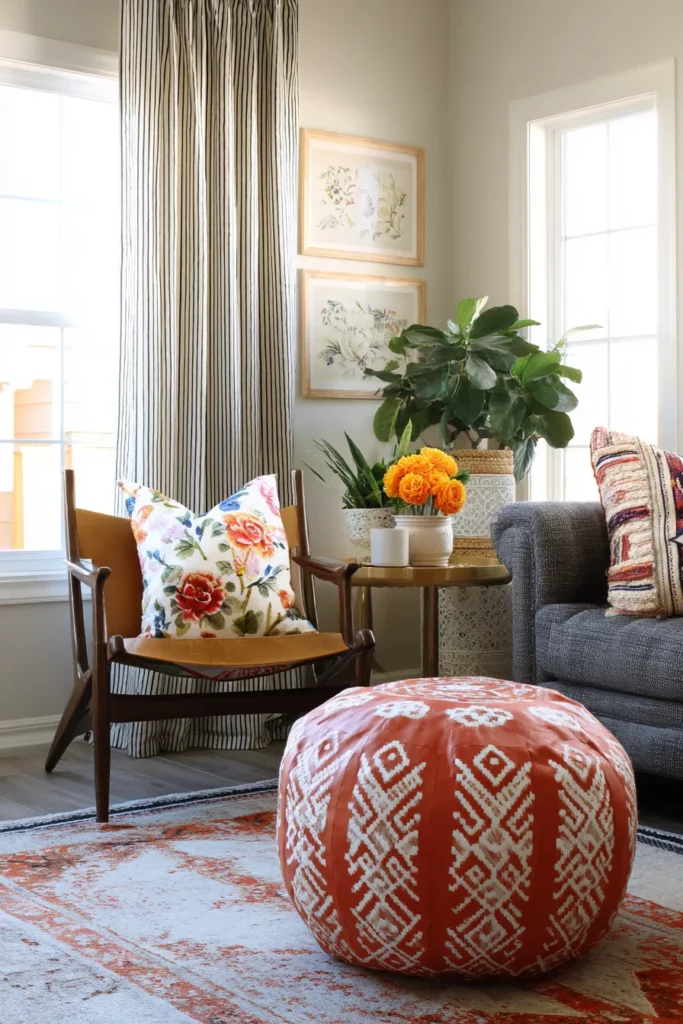
After years of minimalism, pattern is making a confident return—but it’s carefully curated, not chaotic. The key is finding a common thread: a shared color palette, similar scale, or complementary styles. You might mix geometric pillows with floral curtains and a striped rug, unified by tones of terracotta, cream, and olive.
This trend celebrates collecting over coordinating. Your Moroccan pouf sits comfortably beside your mid-century modern chair because both bring joy and interest to your space. That vintage Turkish rug grounds contemporary furniture. Hand-embroidered textiles from your travels add global influences that feel authentic rather than appropriated.
Start small if pattern intimidates you. Add one patterned element to a neutral room—maybe a bold area rug. Live with it for a week, then introduce a second pattern through throw pillows, choosing a different scale but similar colors. Build slowly, always maintaining some neutral breathing room.
Global Influences Done Right
When incorporating design elements from other cultures, authenticity matters. Purchase directly from artisans or fair-trade sources when possible. Learn the stories behind pieces—their traditional uses, cultural significance, crafting methods. Display items with respect and context rather than as random exotica. A single meaningful piece honors its origins better than a room full of mass-produced “ethnic” décor.
Japandi style (Japanese minimalism meets Scandinavian functionality) and Bohemian influences continue trending because they blend beautifully with Western interiors while maintaining their essential character.
Tech Integration That Disappears
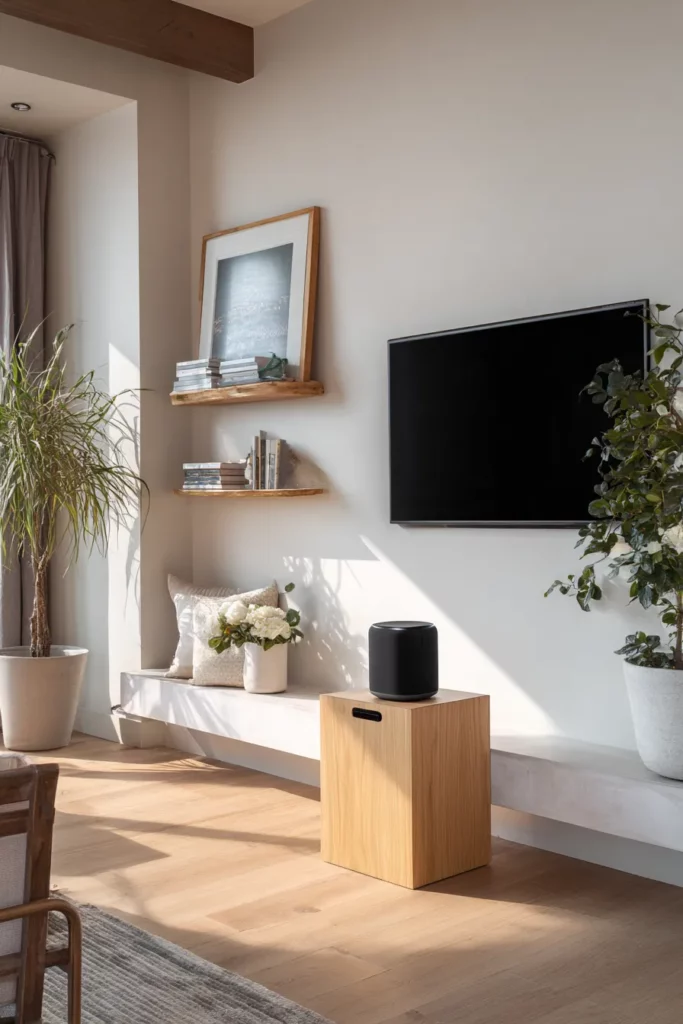
Smart home technology finally looks good. Hidden speakers in sculptural forms. TVs that become art when not in use. Charging stations disguised as decorative boxes. The goal is connectivity without visual clutter, functionality without futuristic coldness.
Cable management deserves attention in 2025 living rooms. Cord covers that match your walls. Furniture with built-in power outlets. Wireless charging surfaces integrated into side tables. These solutions keep your space feeling calm and intentional rather than dominated by technology’s necessary evils.
Voice assistants and smart controls let you adjust lighting, temperature, and entertainment without multiple remotes cluttering coffee tables. But choose devices that complement your aesthetic—wooden-cased smart speakers, touch panels in brushed metals, controls that blend rather than announce themselves.
Hiding Wires and Tech Clutter
Run cables behind baseboards using adhesive channels painted to match walls. Use cord clips under furniture edges to route wires invisibly. For wall-mounted TVs, invest in professional installation that conceals all connections within walls (or use cord concealer kits for DIY solutions). Designate one closed cabinet or drawer as your tech hub—router, modems, chargers all live there, organized but out of sight.
Furniture designed with tech in mind—media consoles with ventilated back panels, coffee tables with hidden compartments—makes integration seamless from the start.
Vintage and Artisanal Pieces: The Joy of the Hunt
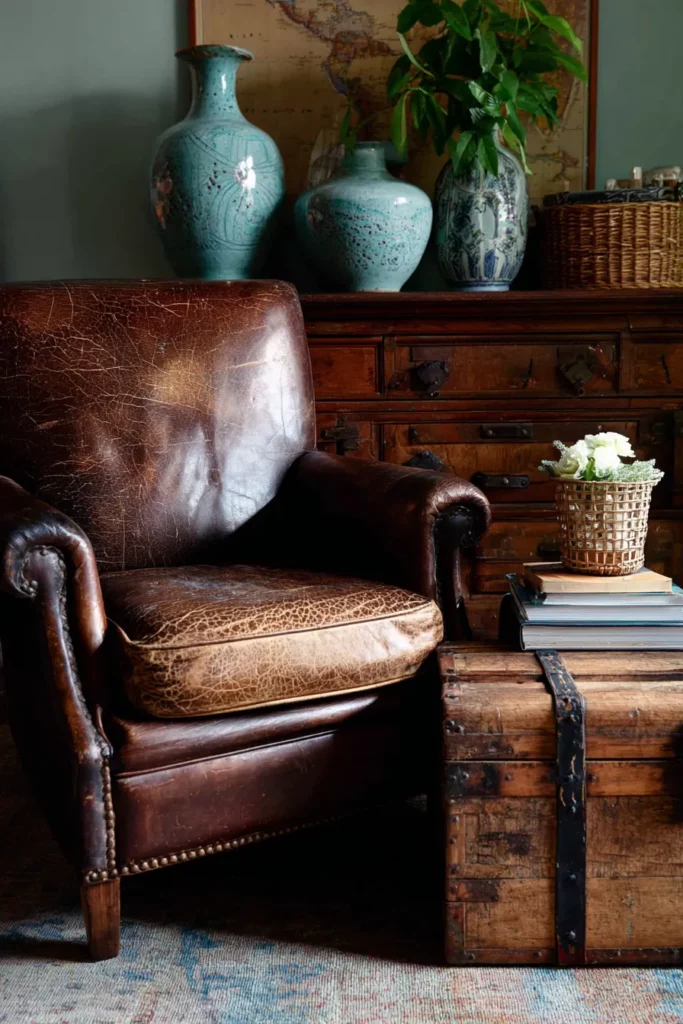
Mass production fatigue is real. More people are seeking furniture and décor with history, craft, and character. A vintage leather chair worn soft by decades of use. Handmade ceramic vases with fingerprints visible in the glaze. Woven baskets created by artisans keeping traditional techniques alive.
These pieces add soul to interiors in ways new items rarely can. They’re conversation starters, links to other times and places. They’re also often better made than contemporary equivalents, built to last through multiple lifetimes rather than a single trend cycle.
Mixing vintage with new creates dynamic tension—the old provides warmth and story while the new offers clean functionality. Your grandmother’s wooden trunk becomes a coffee table. Mid-century modern dining chairs surround a contemporary table. An antique mirror reflects your minimalist bookshelf.
Where to Find Vintage and Artisanal Treasures
Estate sales and auctions offer quality pieces at reasonable prices—arrive early for best selection. Online marketplaces like Facebook Marketplace and Craigslist require patience and careful inspection, but yield authentic vintage finds. Thrift stores in affluent neighborhoods often stock higher-quality donations. For artisanal items, Etsy connects you directly with makers, craft fairs let you meet artists in person, and fair-trade shops ensure ethical sourcing.
Always inspect vintage furniture for structural soundness and consider reupholstering worn pieces—fresh fabric preserves character while updating appearance.
Adaptive Reuse and Upcycling Projects
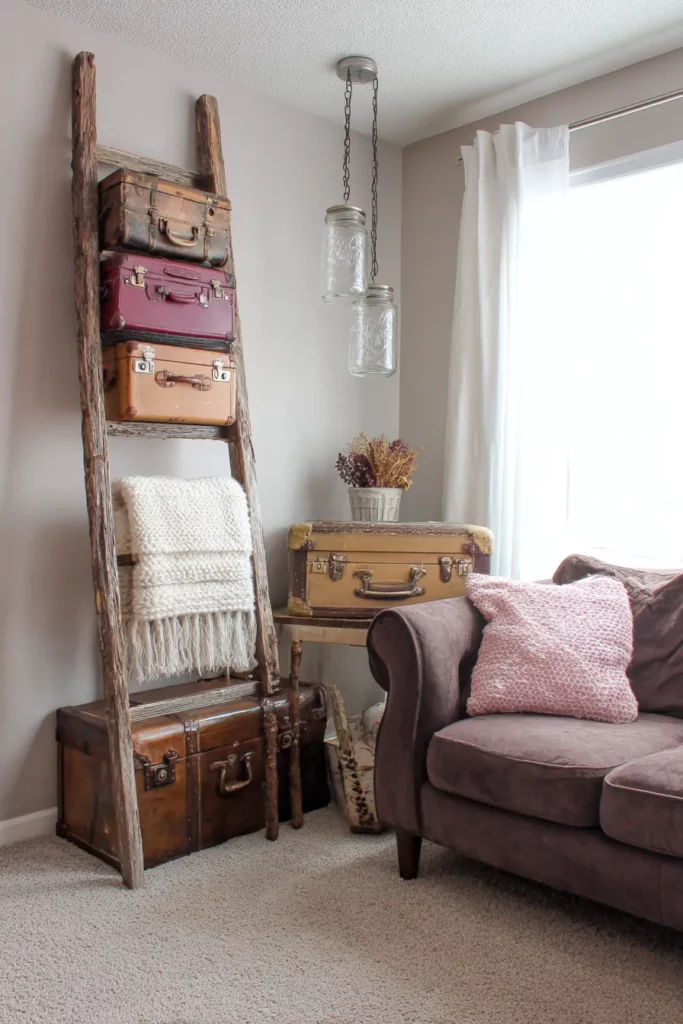
Sustainability extends beyond buying eco-friendly new items—it includes reimagining what you already own. That wooden ladder becomes a blanket display. Vintage suitcases stack into quirky side tables. Mason jars transform into pendant light fixtures. These projects reduce waste while creating truly one-of-a-kind décor.
Adaptive reuse takes creativity and vision, but the results carry personal meaning that store-bought items can’t match. You’re not just decorating—you’re problem-solving, crafting, leaving your mark on your space in tangible ways.
Popular upcycling projects for living rooms include: painting dated furniture in contemporary colors, replacing hardware on dressers and cabinets, turning old windows into coffee table tops, creating planters from unexpected vessels, framing vintage textiles or scarves as wall art, and building shelving from reclaimed wood.
DIY Upcycling for Beginners
Start with paint—it’s forgiving, affordable, and transformative. A dated wooden bookshelf becomes contemporary in matte black or soft sage. Move to simple upholstery projects like recovering cushions or creating pillow covers from vintage fabrics. Progress to furniture modification: removing cabinet doors for open shelving, adding legs to raise pieces higher, or installing new knobs and pulls for updated style.
YouTube tutorials and DIY blogs provide step-by-step guidance for nearly any project you can imagine—confidence grows with each completed transformation.
Wellness Corners: Spaces for Rest and Renewal
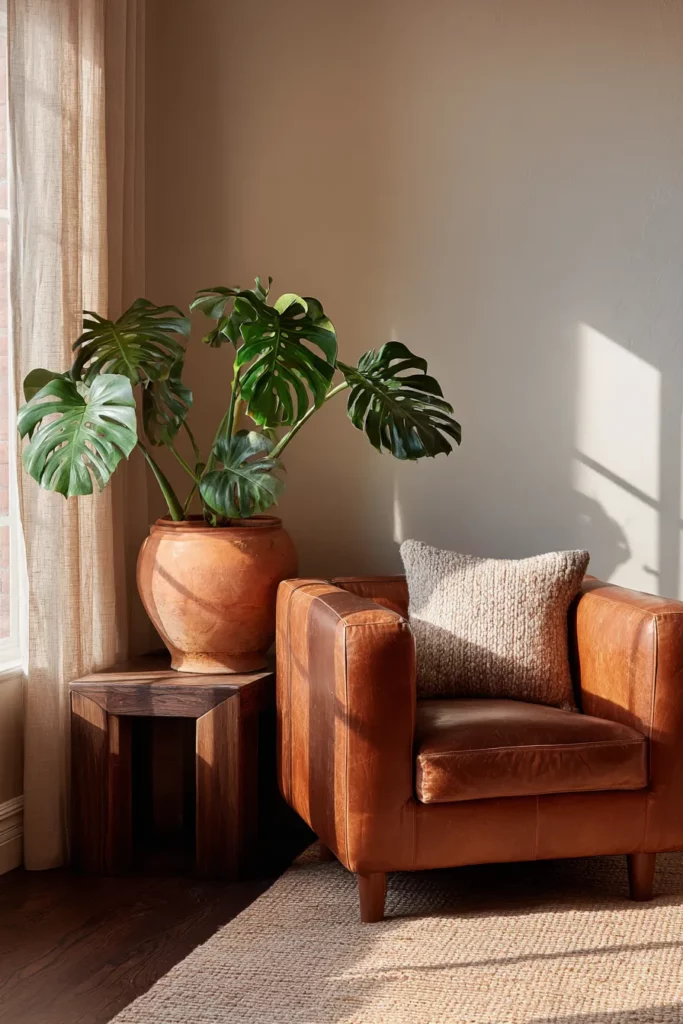
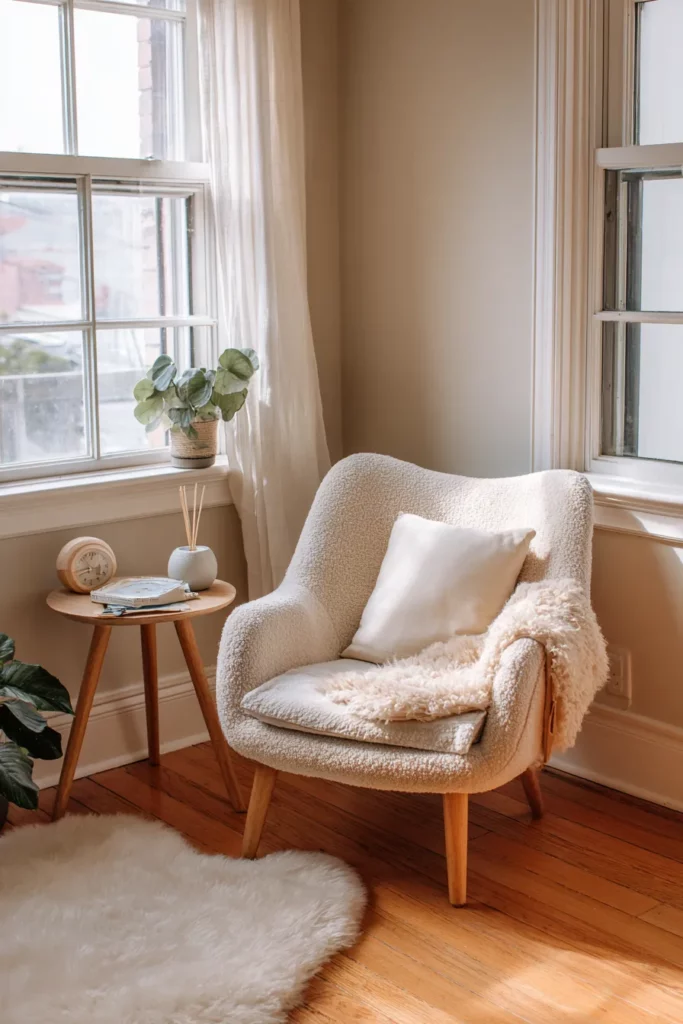
Living rooms aren’t just for entertaining anymore—they’re becoming sanctuaries for personal wellbeing. Designate a corner for meditation, reading, or simply sitting in silence. A comfortable chair with good light. A small side table for tea or journals. Perhaps a sound machine, essential oil diffuser, or small water feature creating gentle ambient noise.
This trend acknowledges what we learned in recent years: home must serve multiple needs including mental and emotional health. Your wellness corner doesn’t require elaborate equipment or large space—just intentional design that invites you to pause, breathe, and reconnect with yourself.
Elements that enhance wellness spaces include: ergonomic seating that supports long periods of stillness, natural light or full-spectrum lamps, plants that purify air and please the eye, soft textures that comfort touch, minimal visual clutter, and personal objects that bring joy without overwhelming.
Creating Wellness Space in Small Living Rooms
Even a chair by a window can become a wellness corner with thoughtful additions. A sheepskin throw adds luxury and warmth. A small bookshelf within reach holds current reads and journals. A floor cushion tucked beside your chair expands options for stretching or meditation. The key is intentionality—this spot is designated for rest, not scrolling phones or watching TV.
Consider room dividers or curtains to create temporary separation when you need psychological boundaries within open spaces.
Seasonal Decor Rotation: Keeping Spaces Fresh
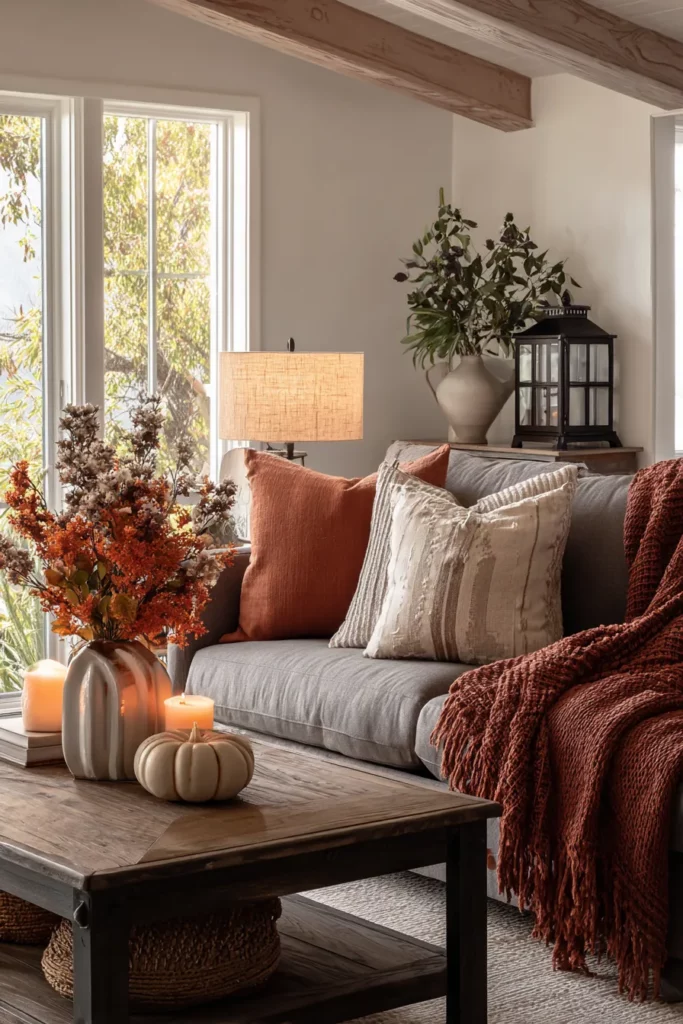
Your living room doesn’t have to look identical year-round. Seasonal rotations keep spaces feeling current and intentional without requiring complete redesigns. In spring, lighten up with floral textiles and pastel accents. Summer brings natural fibers and bright colors. Fall welcomes deeper tones and cozy layers. Winter embraces rich textures and moody lighting.
The foundation stays constant—your major furniture pieces, art, and structural elements. But throw pillows swap out. Blankets rotate. Accessories change. This approach keeps your space feeling fresh while extending the life and value of your investment pieces.
Strategic storage makes seasonal rotation manageable. Dedicate one closet or under-bed space to off-season décor. Label bins clearly—”Spring Textiles,” “Fall Accessories.” Photograph your favorite arrangements so you remember what worked. Purchase versatile items that transition across seasons, like throws in neutral tones that work alone in summer or layered with bold patterns in winter.
Budget-Friendly Seasonal Updates
You don’t need separate complete décor sets for each season. Invest in reversible pillow covers—flip them rather than storing. Use natural elements that are free: branches in fall, pinecones in winter, wildflowers in summer. Change scents through candles or diffusers rather than visual décor—the sensory shift creates freshness without storage needs. Focus your rotation budget on one or two key textiles that dramatically shift the room’s mood, like curtains or your main throw blanket.
Thrift stores stock seasonal items before each season at low prices—shop ahead for next year’s rotation.
Accessibility and Inclusive Design
Beautiful living rooms should be usable by everyone—regardless of age, ability, or mobility. This means wider pathways between furniture (minimum 36 inches for wheelchair access). Lever-style door handles instead of knobs. Light switches at accessible heights. Furniture with supportive arms for easier sitting and standing.
Inclusive design benefits everyone, not just those with disabilities. Adequate lighting helps aging eyes. Clear pathways prevent trips and falls. Furniture at appropriate heights reduces strain on backs and knees. These considerations integrate seamlessly into beautiful design—you’re not compromising aesthetics for function, you’re achieving both.
Universal design principles include: varied seating heights for different needs, strong color contrast for visibility, smooth flooring transitions without tripping hazards, adequate task lighting for various activities, and furniture arrangements that accommodate mobility aids without looking institutional.
Implementing Accessible Design Elements
Choose sofas with seats 18-20 inches high—easier to rise from than low-slung modern pieces. Ensure coffee tables have rounded corners to prevent injury. Install lighting controls near entryways and seating areas, not just by doors. Select rugs with low pile that won’t catch wheels or walkers, securing all rugs with non-slip pads. Consider furniture on legs rather than skirted pieces—easier to clean underneath and navigate around.
Consult occupational therapy resources or universal design guidelines for detailed recommendations—accessible design is sophisticated and attractive, never institutional.
Living Room Trends: Quick Reference Checklist
Here’s your at-a-glance guide to incorporating 2025’s art and décor trends:
Color & Materials:
- Embrace earthy browns, warm terracotta, and rich jewel tones
- Choose natural materials: rattan, jute, linen, cork, bamboo
- Select reclaimed or sustainably sourced wood pieces
- Consider clay-inspired textures and finishes
Furniture & Form:
- Incorporate curved sofas, rounded tables, organic shapes
- Seek sculptural pieces that function as art
- Mix vintage finds with contemporary pieces
- Choose multi-functional furniture for small spaces
Art & Walls:
- Create personalized gallery walls mixing mediums and styles
- Add textured wall treatments: limewash, plaster, grasscloth
- Display artisanal pieces and meaningful collections
- Vary frame styles within a cohesive color palette
Lighting & Atmosphere:
- Layer ambient, task, and accent lighting
- Install dimmers on all light sources
- Choose statement fixtures as sculptural elements
- Maximize natural light through strategic furniture placement
Nature & Wellness:
- Integrate biophilic design with plants and natural materials
- Create a dedicated wellness corner for rest
- Use organic shapes and nature-inspired color palettes
- Consider vertical gardens or living walls
Sustainability & Personalization:
- Upcycle and adaptively reuse existing items
- Support artisans through thoughtful purchasing
- Rotate seasonal décor for freshness without waste
- Hide tech integration for clean aesthetics
Accessibility:
- Maintain wide pathways (36+ inches)
- Choose furniture with appropriate heights and supportive arms
- Ensure adequate lighting at multiple control points
- Select low-pile rugs secured with non-slip pads
The Heart of Home
Your living room is more than a trend showcase—it’s the space where life unfolds. Where you curl up with books on rainy afternoons. Where friends gather and stories are shared. Where morning light reminds you to slow down, and evening shadows invite you to rest.
The most beautiful living rooms aren’t the ones that follow every trend perfectly. They’re the spaces that feel authentic to the people who live in them. That honor both beauty and comfort. That evolve slowly, thoughtfully, with intention rather than impulse.
Take what resonates from these trends. Leave what doesn’t serve you. Trust your instincts about what makes a space feel like home—because at the end of the day, you’re the one living in it.
Your living room is waiting to tell your story. Make it beautiful. Make it yours.
Frequently Asked Questions
What are the dominant color trends for living rooms in 2025?
Earthy browns, warm terracotta, and rich jewel tones (emerald, sapphire, garnet) are leading the palette. These colors are typically layered over neutral foundations like cream, taupe, or warm white rather than dominating entire rooms. The trend moves away from cool grays toward warmer, more grounding tones that create cozy, inviting atmospheres.
How can I make my living room more sustainable without a complete renovation?
Start by choosing natural, renewable materials as you replace items: bamboo furniture, organic cotton textiles, reclaimed wood accents. Upcycle existing pieces through painting or reupholstering rather than discarding. Add houseplants for improved air quality. Purchase from artisans and fair-trade sources. Even small swaps—switching to LED bulbs, using vintage décor, choosing quality over quantity—accumulate into meaningful environmental impact.
What’s the best way to incorporate curved furniture into a small living room?
Choose one statement curved piece rather than multiple—perhaps a barrel chair or rounded ottoman. Pair it with streamlined, space-efficient furniture to maintain balance. Curved pieces can actually help small rooms flow better by eliminating harsh corners that visually chop up space. Avoid oversized curved sectionals in compact areas; save those for larger rooms where they can truly shine.
How do I create a cohesive gallery wall with different art styles?
Unify diverse pieces through a consistent color palette—even eclectic art feels intentional when it shares similar tones. Alternatively, use matching or complementary frames to create visual connection. Lay out your arrangement on the floor before hanging, maintaining 2-3 inches between pieces. Start with your largest or most meaningful work slightly off-center, then build outward. Balance is more important than symmetry—distribute visual weight evenly across the wall.
What lighting changes make the biggest impact in living rooms?
Adding dimmers to existing fixtures provides instant mood flexibility and is surprisingly affordable. Layering light sources—combining overhead, table, and floor lamps—eliminates harsh shadows and creates depth. Statement lighting fixtures serve as sculptural art even when switched off. For maximum impact with minimum investment, replace standard bulbs with smart bulbs that let you adjust both brightness and color temperature throughout the day.